



Abstract
Classical performing musicians have command of a wide range of cognitive, physiological and musical skills. However, the literature on facilitating optimal music performance has tended to focus on treating the pathological aspects of performance: on reducing debilitating music performance anxiety (MPA). This study explores the suggestion from positive psychology that optimal functioning cannot be attained solely by the absence of pathology, but that methods for facilitating positive functioning need to be actively cultivated. Twenty-four music students participated in a semester Music Performance Skills course or wait-list control condition. The course comprised mental skills training, physiological awareness, enhancing musical communication and simulated performances. Significant pre-/post-test reductions in self-reported MPA, and significant improvements in performance quality, judge-rated MPA, positive and negative affect and state anxiety were reported in the intervention group. No significant changes in measures of flow were observed. The implications of the findings for musical educational establishments are discussed.
Keywords
Most of the literature devoted to helping musicians perform optimally is focused on the pathological aspects of performance: on treating the debilitating effects of music performance anxiety (MPA; Kenny, 2011). In contrast, research into optimal performance in the fields of work (Ilies et al., 2017), education (Bakker, 2005) and particularly sport (Jackman, Swann, & Crust, 2016), focuses on building on strengths and enhancing positive functioning. Seligman (2008, 2011) has suggested, from the framework of positive psychology, that optimal functioning cannot be attained solely when there is an absence of pathology, rather that one needs to actively cultivate skills to facilitate optimal functioning. The concept of “flow”, describing the subjective psychological state in which a person is completely immersed and fully concentrated in an activity which is enjoyable and rewarding, is often associated with optimal functioning (Csikszentmihalyi, 1975, 1990) and has been readily adopted in sports performance (Csikszentmihalyi & Jackson, 1999). Interest in flow in the field of music is rapidly developing (Chirico, Serino, Cipresso, Gaggioli, & Riva, 2015; Croom, 2015), with a number of recent studies investigating flow in music performance (Fullager, Knight, & Sovern, 2013; Iusca, 2015; Lamont, 2012; Marin & Bhattacharya, 2013; Sinnamon, Moran, & O’Connell, 2012; Wrigley & Emmerson, 2011).
Anxiety is generally regarded as having an antithetical relationship with flow (Csikszentmihalyi, 1975). Several authors have suggested (Fullager et al., 2013; Kirchner, Bloom, & Skutnick-Henley, 2008; Lamont, 2012, Wrigley & Emmerson, 2011) that fostering techniques for facilitating flow may provide a powerful tool for helping to alleviate the destructive influences of MPA, however to date there has been little empirical investigation of the relationship between MPA and flow. A recent study (Cohen & Bodner, 2018) found evidence of a strong, negative association between MPA and flow amongst 200 professional orchestral musicians, supporting Kirchner et al.’s (2008) earlier findings amongst music students. The clinical implications of this negative association between MPA and flow suggest that a two-pronged approach focusing on facilitating flow and positive functioning as well as reducing pathological MPA may bring about improvements in the performer’s subjective performing experience, as well as improvements in judge-rated Performance Quality (PQ). The use of this two-pronged approach for facilitating optimal musical performance has not yet been investigated in the literature.
Optimal performance and flow
Sports performance has incorporated many ideas from performance psychology and positive psychology (Williams, 2014) which have started to filter into the field of music performance (Greene, 2002). Sports and music performance share many common features (Braden, Osborne, & Wilson, 2015); both require the acquisition and execution of precise and complex motor skills (Coker, 2014; Kenny, 2011), an individual optimal level of physiological arousal in order to perform the tasks maximally (Greene, 2002) and the need for focused concentration (Connolly & Williamon, 2004; Nideffer & Sagal, 2001). Additionally, both are generally performed in the presence of an audience, providing opportunities for public recognition and enjoyment of excellence, but also for the possibility of psychological pressure (Braden et al., 2015; Yoshie, Kudo, Murakoshi, & Ohtsuki, 2009) and the need to develop techniques to help manage that pressure (Greene, 2002; Jackman et al., 2016).
Seligman’s (2011) most recent model of well-being, from the field of positive psychology, understands well-being as comprising five elements: Positive emotion, Engagement, Relationships, Meaning and Achievement (PERMA, Seligman, 2011). Positive emotion is accepted as an important component of optimal sports performance (Greene, 2002; Williams, 2014), but has been little explored in the realm of music performance (Patston & Waters, 2015). Seligman’s second element, Engagement, “is about flow: being one with the music, time stopping and the loss of self-consciousness during an absorbing activity” (Seligman, 2011, p. 11). Flow is generally understood as having nine dimensions (Nakamura & Csikszentmihalyi, 2009): three are defined as pre-conditions of flow: 1) perceived skill/challenge balance, 2) clear goals and 3) clear, immediate feedback, and the remaining six dimensions are defined as experiential characteristics of flow: 1) focused concentration; 2) the experience is intrinsically rewarding; 3) merging of action and awareness; 4) sense of control; 5) lack of self-consciousness; 6) distortion of temporal experience. Flow has been found to occur in a wide variety of domains, particularly in sport (Csikszentmihalyi & Jackson, 1999), but also in work (Eisenberger, Jones, Stinglhamber, Shanock, & Randall, 2005), education (Bakker, 2005), and leisure (Johnson, Wyeth, Sweetser, & Gardner, 2014). In the domain of music there have been investigations of flow in music listening (Diaz, 2012), composition (MacDonald, Byrne, & Carlton, 2006), music practice (Butkovic, Ullén, & Mosing, 2015), and also music performance (Fullager et al., 2013; Iusca, 2015; Lamont, 2012; Marin & Bhattacharya, 2013; Sinnamon et al., 2012; Wrigley & Emmerson, 2011).
Flow occurs across a wide spectrum of ages (Butkovic et al., 2015; Custodero, 2005), is stable across class, gender and culture (Nakamura & Csikszentmihalyi, 2009), is conceived of as a continuous variable rather than an all-or-nothing experience (De Manzano, Theorell, Harmat, & Ullen, 2010), and is thought to play a key role in motivation as it “encourages a person to persist in and return to an activity… and thereby fosters the growth of skills over time” (Nakamura & Csikszentmihalyi, 2009, p. 199). Despite recognition of the importance of flow in facilitating optimal athletic performance (Jackson & Csikszentmihalyi, 1999), investigations into the role of flow in encouraging optimal music performance have so far received little attention (Iusca, 2015; Rich, 2012).
Music performance anxiety (MPA)
There is a substantial body of Music Performance Anxiety (MPA) research providing evidence that MPA is a debilitating phenomenon (Kenny, 2011) which can affect musicians at any stage of their careers, from highly experienced professional performers (Fishbein, Middlestadt, Ottati, Straus, & Ellis, 1988; Kenny, Driscoll, & Ackerman, 2014) through to child beginners (Ryan, 2005). Students have been pinpointed in the MPA literature as a population suffering from MPA (Biasutti & Concina, 2014; Papageorgi, Creech, & Welch, 2013) and MPA has been found to be a significant factor in student musicians’ experiences of burnout (Bernhard, 2010) and in decisions not to take performing further (Fehm & Schmidt, 2006; Osborne, 2016).
MPA is regarded in the literature as having four partially independent yet interactive components: somatic, behavioural, cognitive and emotional (Kenny, 2011). A variety of models have been proposed to describe the factors that contribute towards the creation and maintenance of MPA (for an overview, see Kenny, 2011). Anxiety is often described as having an antithetical relationship to the experience of flow (Csikszentmihalyi, 1975), and it has been suggested that fostering techniques for facilitating flow may provide a powerful tool for reducing MPA and encouraging optimal performance (Iusca, 2015; Lamont, 2012; Wrigley & Emmerson, 2011). Fullager et al. (2013) found in their exploration of the relationship between MPA, flow and skill/challenge balance that: “when performance anxiety was highest, flow was lowest and vice versa … the presence of one minimises the magnitude of the other” (Fullager et al., 2013, p. 251), and a recent study found evidence of a strong, significant negative association between flow and MPA amongst 200 professional orchestral musicians (Cohen & Bodner, 2018), supporting Kirchner et al.’s (2008) earlier findings with music students. However, investigations of the clinical implications of the negative association between MPA and flow as a means of reducing MPA and facilitating flow, thereby encouraging optimal performance, have yet to be conducted.
Interventions for improving music performance
Despite recognition of the high prevalence of MPA (Kenny et al., 2014) and acknowledgement of the need for courses on music performance skills during musical training (Brodsky, 1996; Wrigley & Emmerson, 20113), few musical educational institutions provide such courses (Clark & Williamon, 2011). Those few existing courses tend to focus on reducing pathological MPA rather than a positive psychology approach that focuses on enhancing positive functioning (Patston & Waters, 2015). Investigations of the efficacy of existing methods for treating MPA indicate that Cognitive Behavioural Therapy based interventions are most effective (for an overview, see Burin & Osorio, 2016). However, evidence suggests that pharmacological methods, particularly beta-blockers, are most commonly used, often in the absence of medical supervision (Cohen & Bodner, 2018; Kenny et al., 2014) and that the subject of MPA is still stigmatised, with many musicians and teachers unwilling to talk openly about it (Patston & Loughlan, 2014).
Several recent investigations (Braden et al., 2015; Clark & Willamon, 2012; Hoffman & Hanrahan, 2011; Osborne, Greene, & Immel, 2014) have explored the effectiveness of methods from sports psychology for reducing MPA and improving music performance. Other than Clark and Williamon’s study (2011), these investigations found significant reductions in self-reported measures of MPA. Only Hoffman and Hanrahan (2011) found evidence of significant improvements in objective judge-rated performance quality (PQ), and all reports of judge-rated signs of performance anxiety had poor inter-judge reliability, so were inconclusive. Notably, these studies did not investigate the effect of the interventions on positive self-report outcome measures of positive emotion or flow, the first two components of Seligman’s (2011) model of well-being.
The current study aimed to investigate the effectiveness of a performance skills intervention for music students, a population pin-pointed in the literature as in need of performance skills (Papageorgi et al., 2013), that focused on facilitating positive functioning as well as reducing MPA. Outcome measures of self-reported MPA, flow and affect, as well as judge-rated PQ and signs of performance anxiety were examined. It was hypothesized that there would be: (1) pre-/post-test decreases in self-reported MPA in the intervention group compared to a wait-list control; (2) pre-/post-test increases in self-reported flow in the intervention group compared to a wait-list control; (3) improvements in self-reported affect and decreases in anxiety for the intervention group participating in simulated performances; (4) improvements in (a) judge-rated PQ and (b) judge-rated signs of MPA from videos of the intervention group participating in simulated performances.
Methods
Participants
Participants were 24 graduate music therapy students, 12 in both the intervention group (9 women) and wait-list control groups (10 women). Age of participants ranged from 23–45 years (M = 30.54, SD = 5.73), participants had 5–36 years of playing or singing experience (M =16.95, SD = 8.49), and daily hours practised ranged from 0–2 hours (M = 0.55, SD = 0.80). Participants had all passed performance auditions in order to gain acceptance onto the music therapy graduate programmes. Independent t-tests showed that there were no significant differences in these background variables between the two groups (Table 2). Instruments were strings (2), woodwind (1), brass (1), voice (4), piano (6), voice and piano (5), voice and strings (3), piano and brass (1), voice and brass (1).
Measures
Flow was measured using the Dispositional Flow Scale-2 (short), Martin and Jackson’s (2008) version of the 36-item Dispositional Flow Scale-2 (DFS-2; Jackson & Eklund, 2002), designed to measure an individual’s disposition to experience flow whilst participating in a specific target activity. The DFS-2 (short) contained nine items, each item representing one of Csikszentmihalyi’s nine dimensions of flow as follows: challenge-skill balance (“I feel competent to meet the high demands of the situation”), merging of action and awareness (“I do things spontaneously and automatically”), clear goals (“I have a strong sense of what I want to do”), clear feedback (“I have a strong sense of how well I am doing”), focused concentration (“I am completely focused on the task at hand”), sense of control (“I have feelings of total control over what I am doing”), loss of self-consciousness (“I am not worried about what others think of me”), transformation of time (“time passes differently from normal”), and autotelic experience (“the experience is extremely rewarding”). Items were rated on a 1 (strongly disagree) to 7 (strongly agree) Likert scale with higher scores reflecting a higher frequency of flow, and global flow scores calculated as the mean of the nine items. The DFS-2 (short) is a recognized tool for measuring dispositional flow, with good psychometric properties, and is recommended for measuring global flow and when time constraints prevent the use of the long measure (Martin & Jackson, 2008). The current project was concerned with global flow, and there was concern that a long battery of questionnaires would exhaust participants, so the DFS-2 (short) was deemed an appropriate tool.
Music Performance Anxiety (MPA) was measured using the Performance Anxiety Inventory (PAI; Nagel, Himle, & Papsdorf, 1981), a specifically developed and frequently used tool for investigating MPA (Biasutti & Concina, 2014; Kirchner et al., 2008), consisting of 20 items, scored using a 4-point Likert scale, from 1 (almost never) to 4 (almost always). Mean scores of the responses to all 20 items were calculated (reverse-scoring the first item) with higher scores indicating higher MPA and mean scores of 1.95 or less indicating few problems with MPA (Nagel et al., 1981). As no existing Hebrew versions of questionnaires for examining MPA and flow were available, the PAI and DFS-2 (short) were translated from the original English into Hebrew by a professional translator (a bilingual native speaker of both languages). To ensure the validity of the translated items, the translated questionnaires were back-translated into English by a second professional translator (also a bilingual native speaker of both languages). The back-translation was compared to the original by the first author (a bilingual English and Hebrew speaker with English as mother-tongue) and, in consultation with the first translator, minimal changes were made to adjust the Hebrew version until a consensus was obtained.
Brief Symptom Inventory(BSI)-18 (Derogatis, 2001) was used to rule out any differences in general levels of mental distress between the control and intervention groups and between pre-/post-test measurements, to ensure that any changes were not due to external situational influences unrelated to the study. Participants indicated on a 5-point Likert scale from 1 (not at all) to 5 (a lot) how much they experienced 18 symptoms over the previous two weeks, with higher scores indicating greater mental distress. The questionnaire was translated into Hebrew by Gelkopf, Berger, Bleich, and Cohen-Silver (2012).
The Positive and Negative Affect Schedule (PANAS; Watson, Clark, & Tellegen, 1988) consisted of 20 adjectives, 10 for positive affect (e.g., alert, excited) and 10 for negative affect (e.g., afraid, distressed). Participants rated on a 1 (very slightly or not at all) to 5 (extremely) Likert scale to what extent they experienced those feelings at a particular time. The questionnaire was translated into Hebrew by Tolmacz and Mikulincer (2011).
State and Trait Anxiety were measured using Spielberger’s (1983) State-Trait Anxiety Inventory (STAI) which has been used extensively in the MPA literature (Kenny, 2011). The state anxiety (SAI) subscale comprised 20 items and participants were asked to rate on a 1 (not at all) to 4 (very much so) Likert scale how they felt at a given moment. The 20-item trait anxiety subscale (TAI) measured how a person generally feels, and participants rated items on a 1 (almost never) to 4 (almost always) Likert scale, with higher scores indicating higher levels of anxiety.
Judge-rated Performance Quality (PQ) and Signs of Performance Anxiety (SPA) were based on Montello, Coons, and Kantor’s (1990) video rating scales which showed very high inter-rater reliabilities in the original study. The adapted PQ scale comprised seven items: emotional expression, consistency with rhythms and tempi, phrasing of music, being in tune, technical ability, accuracy in music and lyrics, aesthetic value. The adapted SPA scale also comprised seven items: nervous movements (e.g., tics, twitches, pulling faces, trembling), tense shoulders and body posture, lack of eye contact/deadpan face, technical problems (tuning, unstable rhythm, loss of fluency), breathlessness/lack of air, forgetting music/lyrics and stopping, lack of communication of music to audience. Both scales were scored on a 1 (lowest) to 6 (highest) Likert scale and mean PQ and mean SPA scores were calculated for each participant in each performance situation. Two judges were trained to use the PQ and SPA video rating scales which were pilot-tested for inter-rater reliability using a video-taped student performance that was watched once only, in order to re-create the experience of judging a performance. Intra-class correlation coefficients were computed in order to examine inter-rater agreement in the pilot, and were high (.84, p < .05 for the PQ scale, and .93, p < .05 for the SPA scale).
Demographic information regarding participants’ age and gender, and musical background (instrument, years of playing and hours of daily practice) was also gathered.
Procedure
The study received approval from the ethics committee at the authors’ University. Intervention participants elected to take the optional music performance skills semester course and received university credit for the course. Participants in the wait-list control group were from a comparable academic institution and registered for a performance skills workshop, given a month after all data had been gathered.
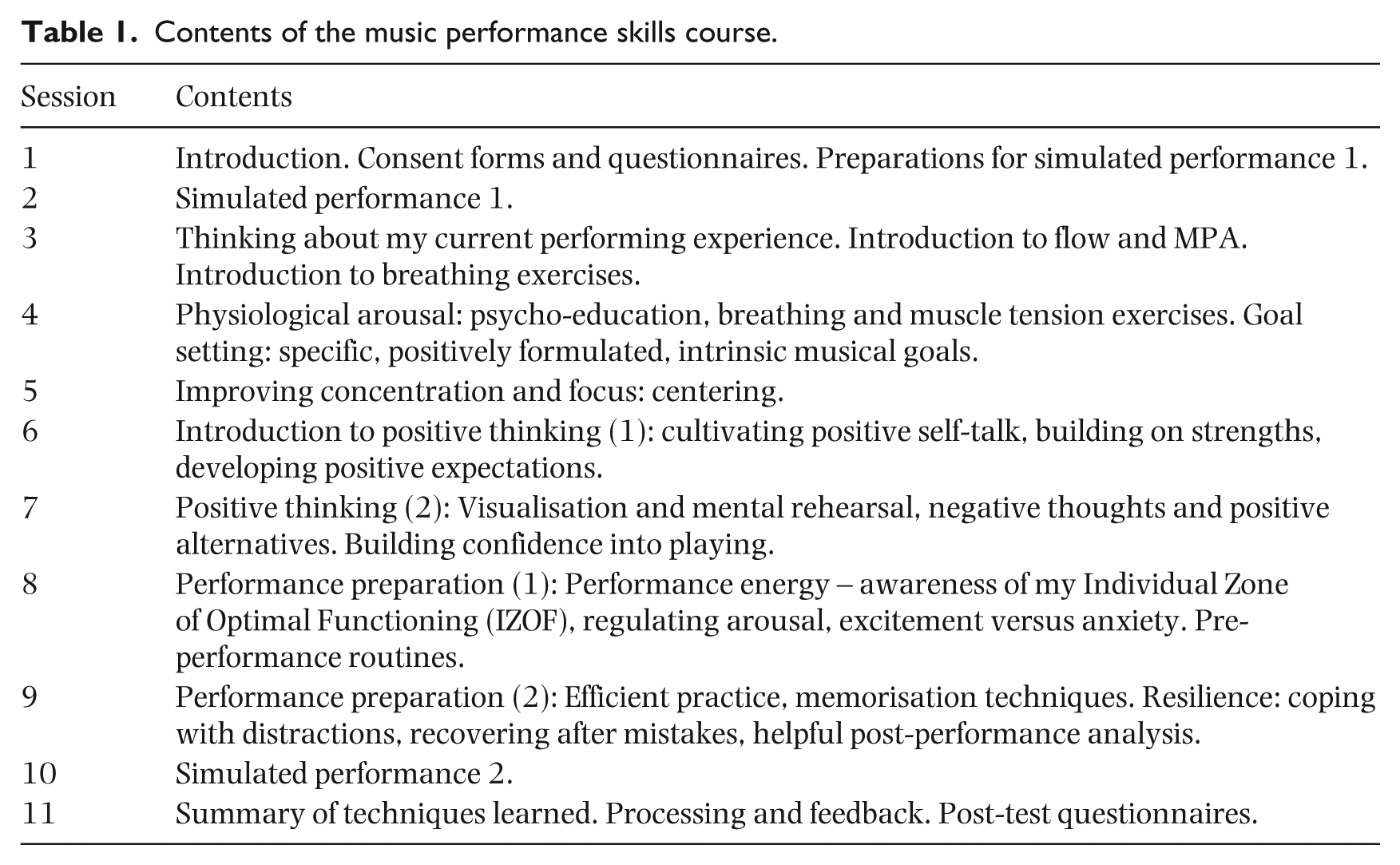
Intervention participants received an 11-week, 90-minute group music performance skills course comprising four components: 1) mental skills training – including an introduction to positive thinking (Seligman, 2011), goal setting (Lacaille, Whipple, & Koestner, 2005), mental rehearsal (Greene, 2002), concentration and focusing (Nideffer & Sagal, 2001), identification of negative automatic thoughts (Burns, 1999), performance preparation (Ericsson, Krampe, & Tesch-Romer, 1993) and resilience (Greene, 2002); 2) developing physiological awareness – identifying your individual zone of optimal functioning (Landers & Arent, 2001), regulating physiological arousal (Williams & Harris, 2001), reframing arousal as excitement (Brooks, 2014) and using “centering” – a technique for controlling autonomic arousal and re-focusing attention (Greene, 2002); 3) enhancing musical communication – improvisation exercises to focus on musical goals rather than “getting it right” (Montello, 2010); and 4) simulated performances – to implement newly learned skills. Simulated performances took place in sessions 2 and 10 in the University’s Recital Hall, in which intervention participants were required to play a 4-minute piece of their own choice (the same piece in both sessions) in front of the group. Video-taped performances were presented to two independent external judges, professional classical musicians with over 20 years of performing experience, who were blind to performance order (see Table 1 for session contents).
Contents of the music performance skills course.
All sessions were delivered by the first author, a professional orchestral musician and music therapist with 20 years of performing experience and training in cognitive behavioural therapy. The full battery of questionnaires was filled in pre- and post-test by all participants. Intervention participants completed the PANAS and state anxiety inventory immediately before and after the two simulated performances. Intervention participants were asked to document use of the exercises learned in weekly journals and post-intervention, and received a 20-minute individual meeting post-intervention with the first author, to discuss ways of maintaining changes that occurred.
Data analysis
Data for the pre-/post-test variables met assumptions of normality (K-S p > .05). Independent t-tests were used to compare baseline measurements between the intervention and wait-list control groups. Repeated-measures ANOVAs were conducted to assess changes in the intervention and wait-list control groups. In the intervention group, changes in judge-rated mean PQ and SPA scores, and in self-reported affect and state anxiety were analysed using paired t-tests, except for comparisons involving the post-performance measures of state anxiety in the second simulated performance which violated assumptions of normality (K-S p = .04) for which the Wilcoxon non-parametric related t-test was used.
Results
There was no student attrition in either the intervention or wait-list control groups. Two intervention group participants reported filling in the pre-test questionnaires for an instrument/voice other than that used during the course and simulated performances, and were excluded from the pre-/post-test analyses of MPA, flow, affect and anxiety (N = 10) but were included in the analyses of the simulated performances (N = 12). The PAI yielded pre-/post-test alpha Cronbach values of .92 and .89, respectively; the BSI pre-/post-test alphas of .87 and .89; the PANAS alphas ranging from .70 to .86 for positive affect and .84 to .92 for negative affect; the STAI alphas ranging from .88 to .96 for state anxiety, and from .85 to .89 for trait anxiety. The DFS2-short yielded pre-/post-test Cronbach alphas of .63 and .71, after the deletion of the item for “merging action and awareness”, an aspect of flow which was also found to have low scores in other studies of flow in music performance (Cohen & Bodner, 2018; Sinnamon et al., 2012; Wrigley & Emmerson, 2011). This item was excluded from all further data analyses, and the issue is addressed further in the discussion section. Intra-class correlations to examine inter-rater reliability for the mean PQ scores in the two performances were good, once the subjective item “emotional expression” was dropped (first performance: ICC = .68, p < .05; second performance: ICC = .76, p < .05). This item was excluded from all further PQ analyses and the revised PQ scale yielded alpha Cronbach values of .86 and .92 for the two judges in the first performance, and .92 and .91 for the second. Intra-class correlations between the two judges for mean SPA scores were very good in both simulated performance situations (first performance: ICC =.81, p < .01; second performance: ICC = .84, p < .01), and the SPA scale yielded Cronbach alphas of .67 and .92 for the two judges in the first performance, and .92 and .94 for the second.
Pre-/post-test measures
Preliminary analyses, using independent t-tests showed that there were no baseline differences between the intervention and wait-list control groups (see Table 2).
Baseline characteristics by group using independent t-tests.
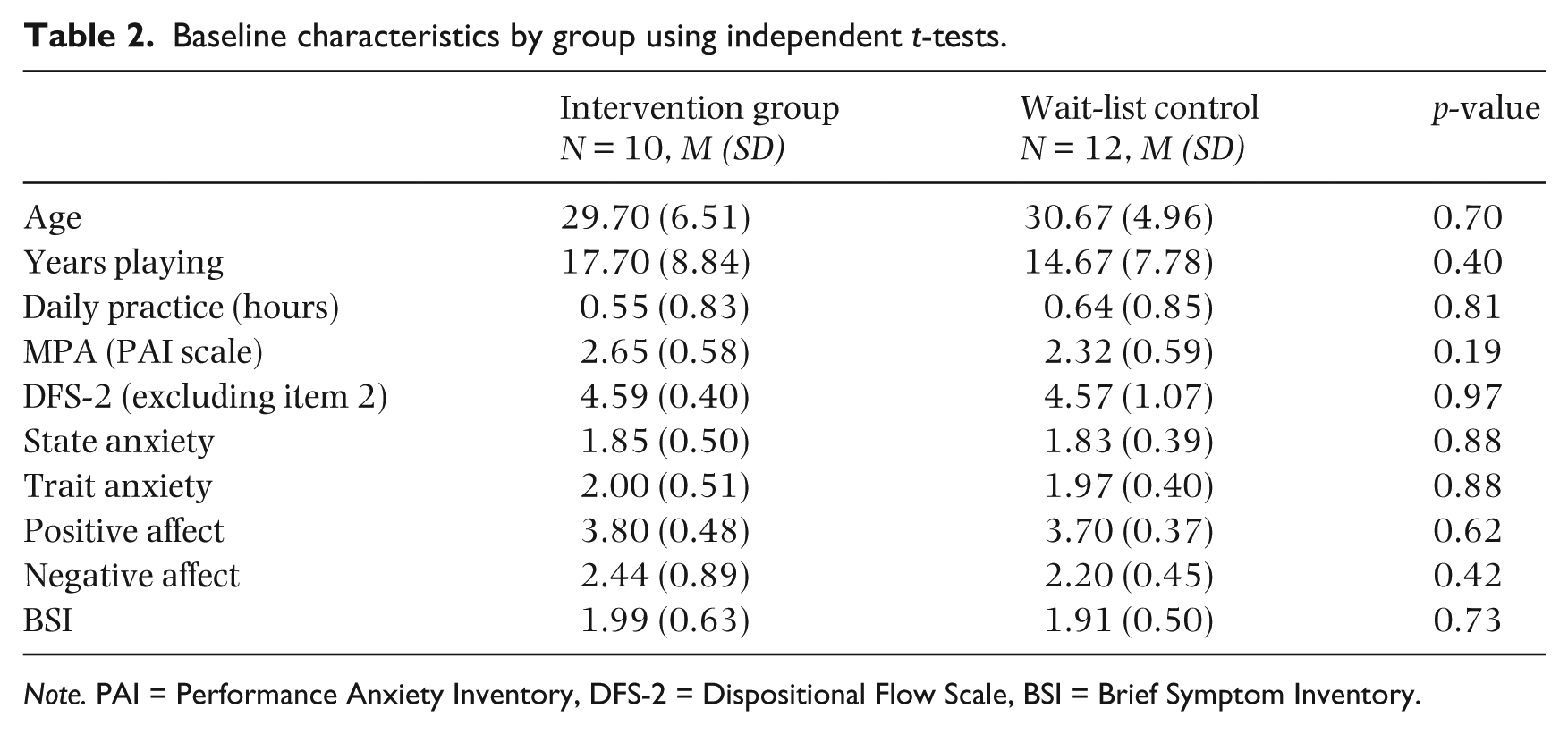
Note. PAI = Performance Anxiety Inventory, DFS-2 = Dispositional Flow Scale, BSI = Brief Symptom Inventory.
Mean baseline dispositional global flow for the total sample was M = 4.60, SD = 0.82 (N = 22), and mean baseline MPA was M = 2.41, SD = 0.60 (N = 22). Pre-test there was a significant negative Pearson correlation coefficient between MPA and flow in the full sample, r = - 0.44, p < .05, N = 22, which remained stable post-test. Pre- and post-test, there was evidence of significant positive inter-correlations between trait anxiety, state anxiety, general distress (BSI) and negative affect, ranging from r = .67 to r = .85, p < .05. Other than the significant correlations between MPA and flow pre- and post-test, there were no other significant correlations between either MPA or flow and the other study variables.
The results of the mixed model pre-/post-test repeated measures ANOVAs for the intervention and wait-list control groups are shown in Table 3.
Means (M), standard deviations (SD), differences and pre-/post-test 2 × 2 repeated measures ANOVAs.
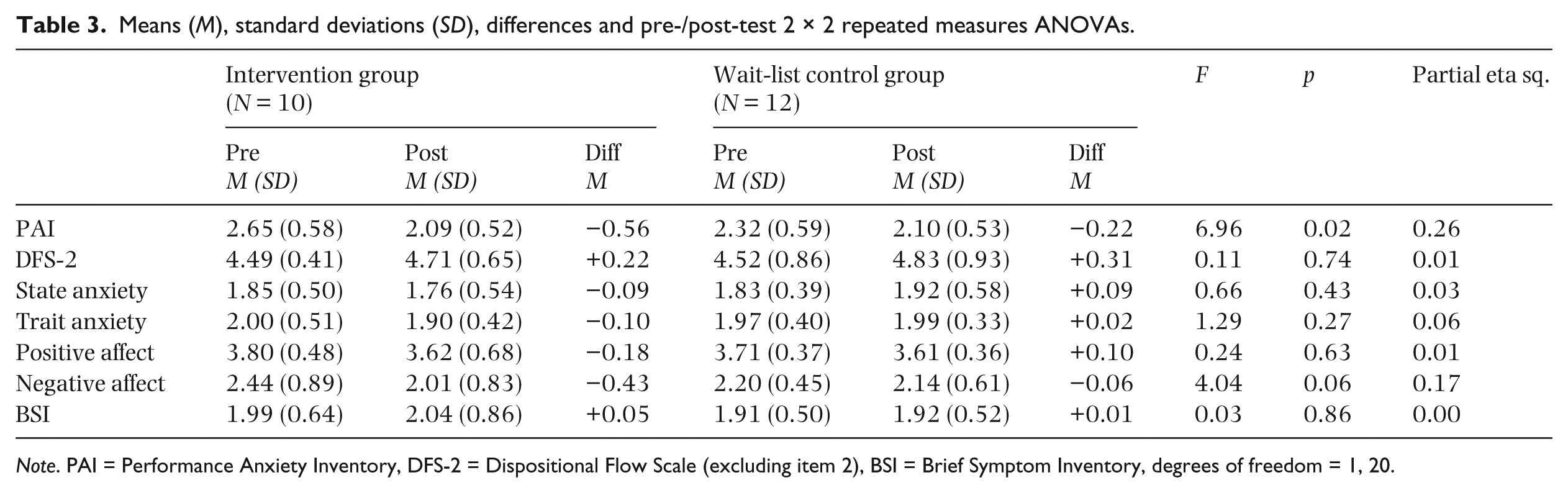
Note. PAI = Performance Anxiety Inventory, DFS-2 = Dispositional Flow Scale (excluding item 2), BSI = Brief Symptom Inventory, degrees of freedom = 1, 20.
The absence of change in pre-/post-test measures of BSI indicates that the changes in outcome measures were due to the intervention. There were significant reductions in MPA over time in both intervention and control groups, F(1, 20) = 36.18, p < .001, η2 =0.64, and there was a significant interaction between group and time, F(1, 20) = 6.96, p < .05, η2 =0.26. Simple tests of within-subject contrasts demonstrated that there was a significant difference in pre-/post-test MPA in the intervention group, t(9) = 8.39, p < .001, d = 2.71, but not in the wait-control group, t(11) = 2.10, p > .05, d = 0.61; see Figure 1. Thus, the hypothesis that there would be a significant decrease in self-reported pre-/post-test MPA in the intervention group was supported.
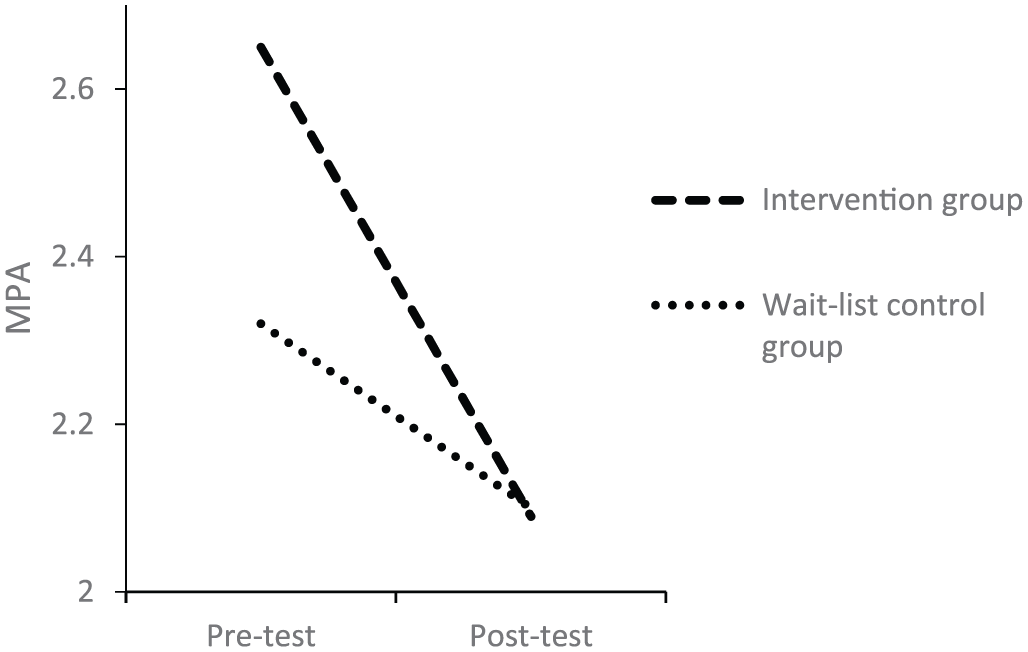
Pre-/post-test music performance anxiety (MPA) in the intervention and wait-list control groups.
Although there was an increase in flow over time, this was not significant, F(1, 20) = 4.27, p > .05, η2 =.18, and there was no evidence of a significant interaction between group and time, F(1, 20) = 0.56, p > .05, η2 = .03, indicating that the hypothesis that there would be an increase in self-reported levels of flow in the intervention group, was not supported. There was a significant reduction in pre-/post-test negative affect over time, F(1, 20) = 6.98, p < .05, η2 = 0.26, however the interaction between time and group for negative affect was not significant, F(1, 20) = 4.04, p > .05, η2 = 0.17. There were no other significant pre-/post-test changes.
Simulated performances in the intervention group
There were significant between-performance differences in self-reported state anxiety and affect. There was evidence of significantly lower levels of state anxiety, t(11) = 2.50, p < .05, d = 0.70, and negative affect, t(11) = 2.55, p < .05, d = 0.74, before the second simulated performance, compared to before the first simulated performance (see Figure 2) and a significant increase in positive affect, t(11) = -2.20, p < .05, d = 0.63, and decrease in negative affect, t(11) = 3.15, p < .01, d = 0.91, after the second performance as compared to after the first performance (see Figure 3). Although there was a decrease in state anxiety after the second performance compared to after the first performance, this decrease was not significant, Z(11) = -1.82, p > .05, r = 0.37.
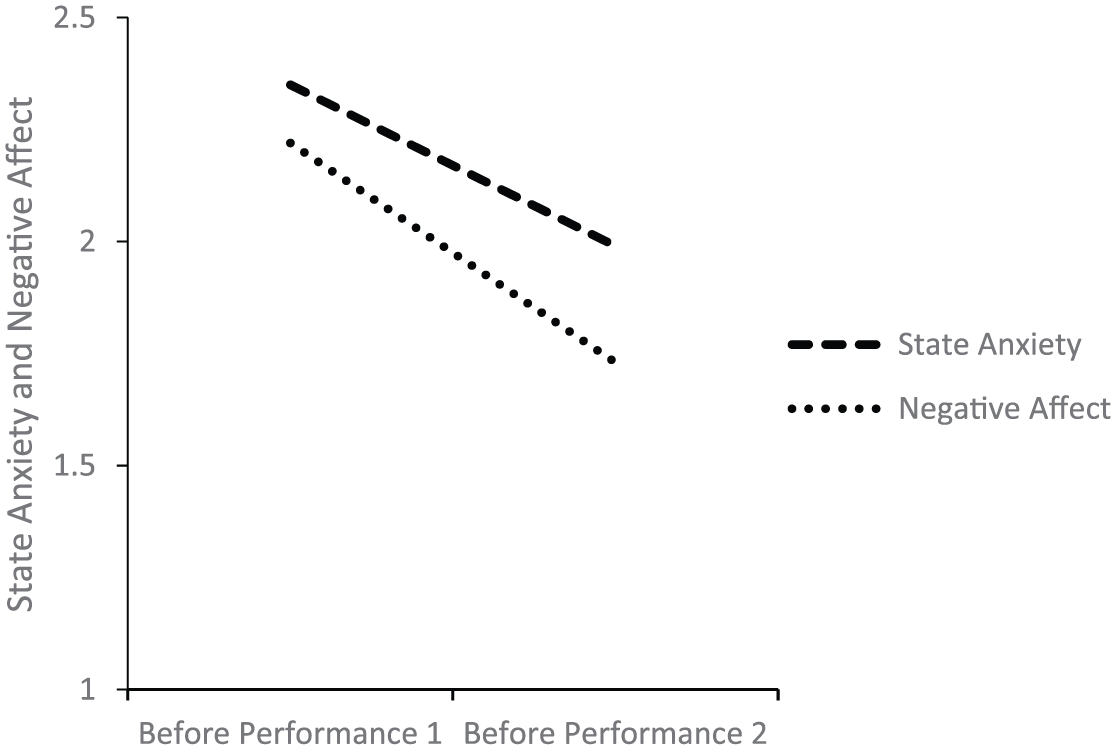
State anxiety and negative affect before simulated performances in the intervention group.
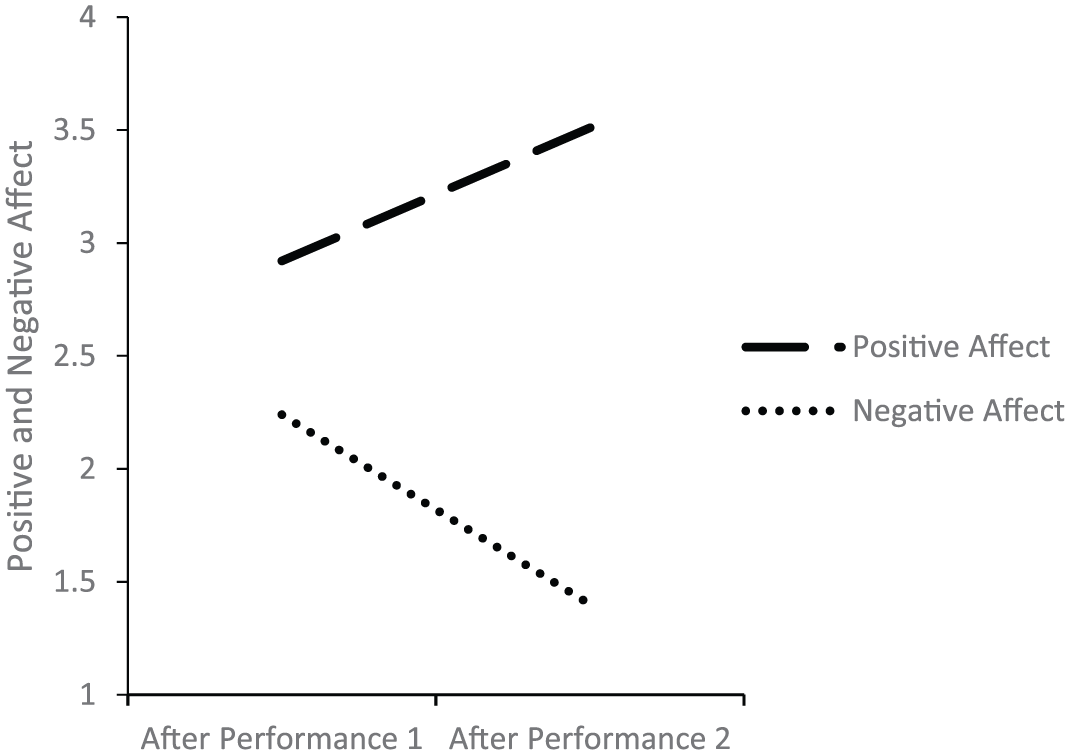
Positive and negative affect after simulated performances in the intervention group.
These results support the third hypothesis that intervention participants would experience improvements in affect and decreases in state anxiety.
Judge-rated measures of performance quality (PQ) and signs of performance anxiety (SPA)
Judge-rated mean PQ scores were significantly higher for the second simulated performance compared to the first (performance 1: M = 3.64, SD = 0.78, performance 2: M = 3.96, SD = 0.85, t(11) = -3.74, p < .01, d = 1.07) and there was a significant decrease in mean judge-rated SPA in the second performance compared to the first (performance 1: M = 3.53, SD = 1.01, performance 2: M = 3.01, SD = 1.11, t(11) = 3.78, p < .01, d = 1.08; see Figure 4).
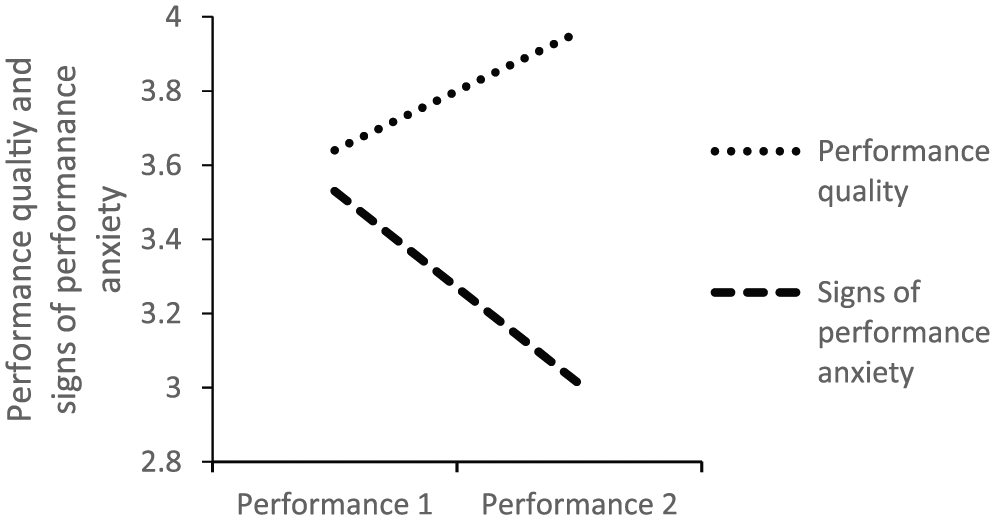
Judge-rated musical performance quality and signs of performance anxiety in the intervention group.
These results support the fourth hypothesis that there would be an increase in judge-rated PQ and a decrease in judge-rated SPA.
Discussion
Based on the suggestion that there is an antithetical relationship between MPA and flow (Csikszentmihalyi, 1975), and Seligman’s (2011) suggestion that optimal functioning cannot be attained solely by the absence of pathology, the current study adopted a two-pronged approach, in which the effectiveness of a music performance skills intervention comprising methods for actively cultivating positive functioning as well as methods for reducing MPA was examined. Results showed evidence of a significant negative association between MPA and flow, and three out of the four study hypotheses were supported: the music performance skills intervention was found to be effective in reducing pre-/post-test MPA in the intervention group compared to the wait-list control group; there were significant improvements in positive and negative affect and state anxiety associated with the performance situation in the intervention group; and there were significant improvements in judge-rated PQ and behavioural signs of performance anxiety. However, there was no significant change in pre-/post-test measures of flow. These findings will now be discussed in more detail.
The evidence of the significant negative association between MPA and flow supports existing findings in the literature amongst music students (Kirchner et al., 2008) and professional orchestral musicians (Cohen & Bodner, 2018). The significant reductions in pre-/post-test levels of MPA were also found in other interventions employing methods from sports performance to reduce MPA (Braden et al., 2015; Hoffman & Hanrahan, 2011; Osborne et al., 2014). The absence of significant pre-/post-test reductions in state and trait anxiety and negative affect in the current study, together with the absence of inter-correlations between MPA and these variables, suggest that participants were not generally anxious and that the intervention specifically targeted MPA. This supports the understanding of MPA as a specific type of anxiety, where the performer suffers from MPA without necessarily being generally anxious or impaired in any other areas of his/her life (Clark & Williamon, 2011; Hoffman & Hanrahan, 2011) and corresponds to Kenny’s (2011) description of the first and most mild of three types of MPA (for full coverage of this issue, see Kenny, 2011).
The current study found an absence of change in pre-/post-test levels of dispositional flow using the DFS-2 (short), and the levels of global flow reported in this sample of students were lower than those found using the same tool in a study of flow amongst professional musicians (Cohen & Bodner, 2018). Wrigley and Emmerson (2011) also reported low levels of global flow in their study of state flow amongst music students, using the 36-item Flow State Scale (Jackson & Eklund, 2002), and found in their analysis of the nine dimensions of flow that almost 60% of students did not experience a perceived skill/challenge balance, a dimension of flow described by Nakamura and Csikszentmihalyi (2009) as one of the pre-conditions for flow. It is possible that, similar to Wrigley and Emmerson’s (2011) findings, the low levels and lack of increase in flow in the current study, despite the significant reductions in pre-/post-test MPA, were due to the absence of a perceived skill/challenge balance amongst the participants. This possibility is also supported by the low average hours of daily practice reported in the current study. Ericsson et al. (1993) have described the need for many hours of deliberate practice in order to achieve high levels of music performance, and Marin and Bhattacharya (2013) have provided evidence of a positive association between flow and daily hours of practice in their study of student pianists. Thus, the absence in improvement in levels of flow in the current study could also be due to the low average hours of daily practice reported. Another explanation for the lack of change in pre-/post-test measures of dispositional flow could be that a longer period of time is required for changes in dispositional flow to be observed than the semester over which the measures were taken (Caspi, Roberts, & Shiner, 2005), and participants’ completion of their period of study shortly after the end of the intervention prevented the collection of follow-up data. It is possible that changes in flow might be more readily observed using state measures of flow such as the Flow State Survey (FSS; Jackson & Eklund, 2002), and so it is suggested that future investigations could also include the completion of the FSS, immediately after each simulated performance, in addition to the pre-/post-test measures of the DFS-2, and the collection of follow-up data. Furthermore, to allow investigation of changes occurring in the relationship between MPA and flow, directly in the performance situation, it might also be useful to collect measures of MPA immediately before the simulated performances.
The alpha Cronbach alphas yielded for the DFS-2 (short) were acceptable, once the item for merging of action and awareness was excluded, and it is possible that the somewhat low Cronbach alphas yielded may be a function of the small number of items in the DFS-2 (short) scale (Field, 2009). Regarding the exclusion of the item for merging of action and awareness, this item was also found to have low mean scores, frequencies and inter-correlations in other investigations of flow in music performance (Cohen & Bodner, 2018; Sinnamon et al., 2012; Wrigley & Emmerson, 2011). Jackson and Eklund (2002) have suggested that specific aspects of flow may be more or less prominent depending on the situation and domain. However, Jackson and Csikszentmihalyi (1999) have described the merging of action and awareness as “the most telling aspect of the flow experience” (p. 20) in the domain of sport, indicating that either this aspect of flow may not be essential for the experience of flow in music performance, or that maybe “flow is not being experienced as often as high global flow scores suggest” (Sinnamon et al., 2012, p. 20). The DFS-2 is probably the most commonly used tool for investigating dispositional flow across a variety of domains (Riva et al., 2017), however these findings indicate that there is a need to carry out further investigations of the psychometric adequacy of the DFS-2 for measuring flow in the domain of music performance. It is suggested that the full 36-item measure be used (Jackson & Eklund, 2002) in such investigations, together with qualitative studies of the experiences of flow with performing musicians, in order to provide a detailed, finely grained picture of the contribution of each of the nine dimensions of flow to the experience of flow in the domain of music performance.
The significant reductions in state anxiety and negative affect observed before the second performance compared to the levels observed before the first performance indicate that the intervention was successful in targeting the sensitive pre-performance period, when levels of anxiety have been found to be highest (Bissonnette, Dube, Provencher, & Moreno-Sala, 2016; Chanwimalueang et al., 2017). The increases in participants’ positive affect and decreases in negative affect after the second simulated performance compared to the first indicate that the intervention was effective in facilitating positive emotion, the first component of Seligman’s (2011) PERMA model of well-being. Evidence of improvements in judge-rated performance quality indicate that the intervention was also effective in facilitating the fifth (Achievement) component of the PERMA model. However, as discussed above, there were no significant improvements in measures of flow (or Engagement), the second component of the PERMA model.
There are few other studies in the literature investigating the effect of encouraging positive functioning and positive emotion on music performance. Broomhead, Skidmore, Eggett, and Mills (2012) found that positive priming, in which the trigger words “bold”, “confident” and “free” were repeated silently pre-performance, was effective in aiding expressive performance in junior high school singers, and Patston and Waters (2015) proposed a model of music teaching based on Seligman’s (2011) PERMA model of well-being, which includes the use of positive priming, strengths spotting and the positive pause (“what went right” as opposed to the more frequently used “what went wrong” approach), however this model has not yet been empirically investigated. Although there are investigations describing professional classical musicians’ well-being using the framework of Seligman’s PERMA model (Ascenso, Williamon, & Perkins, 2017), there has been little investigation of the use of the PERMA model as a possible framework for facilitating optimal performance. The current study suggests that actively focusing on encouraging positive functioning, as well as reducing debilitating MPA, may be a useful approach for developing performing musicians.
In addition to the study limitations already mentioned concerning the DFS-2 and the collection of follow-up data, it is recommended that future investigations include the participation of the wait-list control group in the simulated performances. Furthermore, the conclusions that can been drawn from this study are limited by the small sample size. Whilst this study made use of a variety of different methods for reducing MPA and facilitating positive functioning, it was beyond the scope of the current investigation to examine which parts of the intervention were responsible for bringing about which improvements. Further research into the mechanisms underlying these changes is needed.
In conclusion, although involvement in music making has been identified as a well-being enhancer (Croom, 2015; Lamont, 2012), professional music-making is still more often viewed as a threat to well-being (Kenny et al., 2014), and it has been remarked: “Ironically, it may be that the last people to receive some benefit from the therapeutic value of music may be the musicians themselves” (Brodsky, 1996, p. 95). The results of the current study provide support for Seligman’s suggestion that an approach which encourages positive functioning as well as reducing debilitating pathology may be very helpful for facilitating optimal performance and a sense of well-being. It is hoped that the adoption of the two-pronged approach described in this study will become routine in the provision of music performance skills courses in musical educational establishments, and that the incorporation of concepts from positive psychology into the field of music performance will help end the stigma that often accompanies discussions of the psychological aspects of music performance. Hopefully, such an approach will enable developing musicians to acquire the skills necessary to enjoy satisfying, successful and healthy lives as performing musicians, in which the threat of debilitating MPA and the need to recourse to beta-blockers are a thing of the past.
Footnotes
Acknowledgements
We thank Dr Avi Gilboa for his help and encouragement at all stages of the project. Thanks also to Dr Nechama Yehuda, Dr Morel Koren and Moshe Ganz for the technical assistance and to Tirza Gur-Arieh for help with translating.
Funding
The author(s) received no financial support for the research, authorship, and/or publication of this article.