




Abstract
Developing musicians typically engage in self-regulated practicing during the time that passes between lessons with their teachers. An important aspect of self-regulated practice is the ability to identify and correct areas of development in performance in the absence of a teacher’s feedback, but the effort required to perform as well as monitor a performance represents a challenge for any learner. Videotaping the performance and watching it afterwards to fully concentrate on each task could constitute a solution to this problem. In our study, we verified how video feedback could affect the self-evaluation of intermediate-advanced musicians while practicing a new piece of music. To attain this objective, we analyzed and coded the self-evaluative comments of 16 classical guitarists while practicing. We then compared the number of coding entries in each category of a group of participants who used video feedback (n = 8) on four occasions over a period of ten practice sessions with those of a group of musicians who did not use video feedback (n = 8). Our results indicate that musicians who used video feedback modified the way they formulated their self-evaluative comments while practicing, and that these changes were more marked with higher-performing musicians.
Acquiring expertise on a musical instrument requires a vast amount of practice that the musician undertakes typically in solitary conditions. A musician must therefore learn how to effectively self-regulate their practice to sustain improvement in the absence of a teacher’s support. Self-regulation of learning involves various cognitive processes, including a continuous cycle of planning, self-evaluation and adaptation (Zimmerman, 1998b) that can occur between each repetition during practice. The musician’s ability to adapt performance according to internal and external feedback obtained while performing constitutes a crucial component of self-regulated music practice (McPherson & Renwick, 2011). However, there is some evidence that developing musicians (McPherson & Renwick, 2001; Miksza, Prichard, & Sorbo, 2012; Pike, 2017) and even elite performers (Mornell, Osborne, & McPherson, 2018) can experience difficulty in self-regulating their music practice efficiently. A possible explanation is that the effort required to perform and monitor a motor task represents a challenge for any learner (Winne, 1995). In response, Zimmerman (1995) recommends videotaping performance of the task and watching it afterwards to fully concentrate on each process. In a similar vein, McPherson and Zimmerman (2002) suggest that video feedback could help musicians assess which sections of the pieces they need to work on and how much they have improved since their previous recording. Many studies have addressed the pedagogical use of video feedback in sports, but a comparably small number of studies has focused on its use by performing artists. The study examined whether the use of video feedback could influence the self-evaluation of college-level guitarists during their individual practice, and to explore whether this effect would be influenced by the length of time over which music students use it regularly in their practice, or by the participants’ performance level.
Music practice and self-regulated learning
A musician must practice daily to gain new instrumental skills and subsequently consolidate and refine musical competencies (Hallam, 2013; Miksza, 2011). Jørgensen (2004) considers music practicing as a self-teaching activity because student musicians undertake most of their instrumental learning autonomously, away from their teachers. Autonomous learning has been studied in different fields of learning under the construct of self-regulated learning (Cleary & Zimmerman, 2001; Kuo, Walker, Schroder, & Belland, 2014; Mega, Ronconi, & De Beni, 2014; Zimmerman & Schunk, 2012). Self-regulated learning refers to “the processes whereby learners personally activate and sustain cognitions, affects, and behaviors that are systematically oriented towards the attainment of personal goals” (Zimmerman & Schunk, 2011, p. 1). It involves various cognitive processes, including a continuous cycle of planning, self-evaluation and adaptation (Zimmerman, 1998b) that can occur, for example, between each repetition during a musician’s practice.
Self-regulation skills in music learning
Studies focusing on self-regulation skills in the practice of musicians of different levels have produced mixed results. More precisely, some studies found evidence of the presence of efficient self-regulation processes in the practice behaviors of elementary-level musicians (Bartolome, 2009), teenagers (Leon-Guerrero, 2008) and university-level musicians (Duke, Simmons, & Cash, 2009; Nielsen, 1999, 2001, 2015). A common aspect of the results of these studies is that the participants demonstrated an ability to identify and handle their performance mistakes effectively during practice. Nonetheless, other studies also reported that musicians of all levels can experience difficulties in monitoring their practice efficiently. McPherson and Renwick (2001) found no evidence of deliberate practice strategies in the practice sessions of seven instrumentalists aged between 7 and 9. Pike (2017) analyzed three practice videos of nine teenaged piano students recorded over a 2-month period and found that six of them could not identify problems and fix them while practicing. Miksza, Prichard, and Sorbo (2012) investigated how sixth- to eighth-grade band students self-regulated their practice and found that irrelevant playing was among the most frequently observed practice behaviors. Finally, Mornell, Osborne, and McPherson (2018) studied the practice planning and practice behavior of 14 elite performers and found that the participants lacked appropriate strategies associated with efficient self-regulated learning, despite their years of training and high level of performance. Specifically, they were unable to detect when they were improving, they often focused on more than one issue and these issues were more general than specific. Consequently, it appears that musicians do not develop self-regulation skills as a natural consequence of the development of their technical and musical skills over their years of training.
Overall, the evidence therefore supports the view that instrumental music students may benefit from support for the development of self-regulation skills. For example, ability to “self-teach” (Jørgensen, 2004) may be an important aspect of the practice behavior of advanced or professional musicians, who would rely more on personal resources such as metacognitive skills (Hallam, 2001) rather than external resources such as teachers, peers or materials (Araújo, 2016). Moreover, Bonneville-Roussy, and Bouffard (2015) found that practicing without elements of self-regulation such as goal direction and focused attention might actually be detrimental to musical achievement. In a meta-analysis on 25 studies focusing on self-regulation in musical instrument learning, Varela et al. (2016, p. 58) found that self-regulation instruction, defined as “any intervention by teacher and/or researcher(s) specifically designed to foster self-regulatory characteristics in students” was more strongly related to the presence of self-regulation processes in the participant’s practice behavior than typical instrumental teaching. Examples of pedagogical interventions that helped musicians develop different aspects of self-regulation skills include a practice checklist (Cremaschi, 2012) and self-regulation classes intended for high-school instrumentalists (Mieder & Bugos, 2017) or collegiate music students (Miksza, 2015).
The role of self-evaluation in self-regulated learning
The cyclical aspect of self-regulated learning implies that feedback obtained from prior performance helps the learner to adjust the following choice of strategy or goal definition (McPherson & Renwick, 2011). Consequently, the learner’s ability to adapt their performance on the basis of feedback obtained while performing represents a key component of efficient self-regulated learning (Zimmerman, 2000). This task-intrinsic feedback is the consequence of careful self-monitoring, which involves “observing and tracking one’s own performance and outcomes” (Zimmerman, 1998a, p. 78). In all types of self-regulated learning, self-monitoring while performing is critical in identifying information required for self-evaluating after the performance (Butler & Winne, 1995). For a musician, the ability to self-evaluate accurately may represent an essential aspect of efficient practice (Bartolome, 2009; Duke et al., 2009; Nielsen, 2001, 2015).
Video feedback
A possible explanation for difficulties in self-regulating individual practice efficiently is that self-monitoring performance and performing simultaneously represent a challenge for any learner. In fact, self-monitoring the performance of a task, conceptualized here as gathering information while performing to self-evaluate afterwards, could be detrimental to the learning effort when it hinders the mental charge already required for the performance itself (Winne, 1995). Zimmerman (1995) suggests that self-monitoring and performing could be separated by videotaping the performance and watching it afterwards to allow the learner to fully concentrate on each task. Many studies have addressed the pedagogical use of video feedback in athletic and sports disciplines, but a comparably small number of studies have focused on its use by musicians.
Video feedback in athletic disciplines
Video feedback could help a learner to evaluate certain aspects of a motor task that they cannot be aware of during performance (Rikli & Smith, 1980; Selder & Del Rolan, 1979). However, two studies on the effect of video feedback on athletic performance (Guadagnoli, Holcomb, & Davis, 2002; Selder & Del Rolan, 1979) found that the positive effect of video analysis on performance results may require time to reveal itself. Despite this, video feedback could enhance a learner’s reflective processes in ways that might not be observable with performance tests and external judging. For example, Hebert, Landin, and Menickelli (1998) studied the think-aloud verbalizations of four advanced tennis players as they were watching videos of their own performances of a particular type of tennis hit. The authors identified four stages of thought process: (a) getting used to seeing themselves; (b) detecting errors; (c) making connections and identifying tendencies; and (d) correcting errors and reaching closure. Three of the players reached the fourth stage of correcting errors and reaching closure, but only after 4 weeks of engagement with video feedback.
Video feedback in music learning
Little empirical research has focused on the use of video feedback in the preparation of a musical performance, although various authors have considered its potential benefits (Hallam et al., 2012, p. 670; McPherson & Zimmerman, 2002, p. 342; Pike, 2017, p. 11; Varela, Abrami, & Upitis, 2016, p. 69). Among the benefits that were empirically observed in studies involving university-level musicians, Daniel (2001) reported that 86% of the participants in his study declared they modified their perception of their original performance after watching it on video. More precisely, 49% reported they were able to identify deficiencies and mistakes in their playing more easily with video feedback, and 37% considered their performances as better than it had felt while performing. In the study by Masaki, Hechler, Gadbois, and Waddell (2011), 22 university-level piano students were filmed during a rehearsal and a public performance of a piece and used an observation grid to compare both performances immediately after playing and after watching the videos. The authors then compared the participants’ assessments in both situations with an external expert’s assessment of the same videos. The results showed the lowest correlation was found between the student’s assessment after playing and the expert’s assessment, whereas the highest correlation was found between the student’s assessment with video and the expert’s assessment. These results suggest that video feedback, when used by advanced musicians aided by an observation grid, could prove useful in evaluating and comparing their own performances from a more distanced and objective point of view than is possible during the moment of performance. In another analysis of the data from the present research (Boucher, Dubé, & Creech, 2017), a separate qualitative analysis of the post-performance and post-video feedback self-evaluative comments revealed the musicians who used video feedback made more ipsative (comparative: Hughes, 2011) self-assessment comments in their self-evaluation of the performance following each video feedback. Finally, the participants in a study by Deniz (2012) recorded their instrumental lessons over a 4-week period, including the performances of the piece and the following discussion with their teacher. The participants stated that re-watching and recalling the performance and the teacher’s feedback, providing the required motivation for practice, identifying their weak and strong sides and enhancing of the quality of their piano performance were the most prominent benefits.
Because the capacity to accurately self-evaluate performance is an essential component of self-regulated learning (Butler & Winne, 1995), self-regulation instruction should include strategies aimed at the development of musicians’ self-evaluation skills. The studies already discussed (Daniel, 2001; Deniz, 2012; Masaki et al., 2011) suggest that video feedback may enable musicians to assess their performances differently by separating the self-monitoring of the performance from the performance itself. To our knowledge, no previous studies have been undertaken to explore how developing musicians could use the information provided by video feedback in their practice, and if this information could affect how they self-evaluate while practicing. The present article addresses these research questions:
How could the information provided by repetitive video feedback influence college-level guitar students’ self-evaluation during their subsequent practice sessions?
Would the effect of video feedback as a self-regulation tool be influenced by the length of time over which music students use it regularly in their practice?
Would the effect of video feedback differ according to the musicians’ level of performance?
Method
An experimental between-group design was adopted with one experimental group and one control group, whereby the use/non-use of video feedback was the independent variable, and the frequency of the different types of self-evaluative comments, as measured by the number of coding entries in an observation scheme, was the dependent variable.
Participants
The study took place in a college in the province of Québec, Canada. All classical guitar students enrolled in a 2-year music program were offered the opportunity to participate and 13 males and three females volunteered. They completed a consent form and questionnaire regarding their age, instrumental level in the program (first/second year), years of experience in individual lessons, most recent grade obtained in an instrumental evaluation (0–100%), and frequency of using video or audio feedback. The participants all reported having used video/audio recording less than twice a month during the previous six months.
Participants (n = 16) were randomly assigned to either a control (n = 8) or an experimental group (n = 8) using random allocation software (http://mahmoodsaghaei.tripod.com/Softwares/randalloc.html). To ensure an even distribution, we first matched the participants for their level in the institution’s program (first/second year), and then ranked and paired them according to their most recent performance examination grade (Table 1).
Characteristics of the participants: years of experience, grade obtained on their last performance exam, age and distribution of the participants’ level in the music program (first or second year).
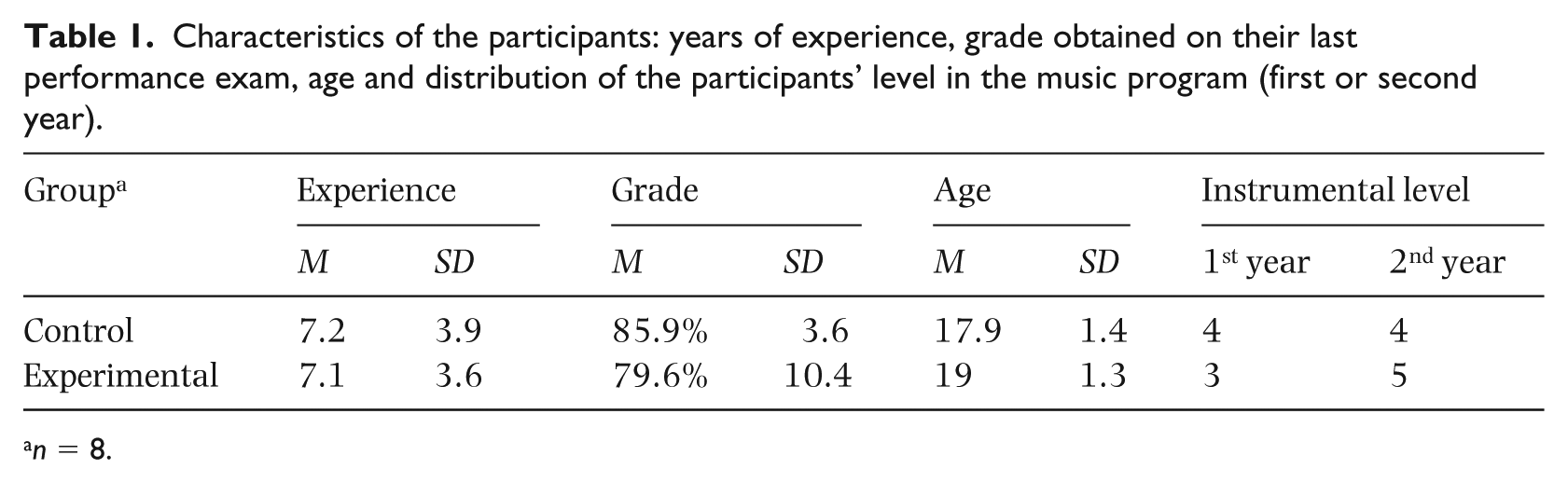
n = 8.
The music
All participants learned the same piece of unpublished, anonymized music, a waltz by French composer Thierry Tisserand. The piece comprises 78 bars in the key of E minor with an ABA form. It involves a wide variety of guitar techniques, such as harmonics, arpeggios, slurs and barrés.
Procedure
Both groups of participants (n = 16) practiced the piece during 10 video-recorded practice sessions of 20 minutes each (practice videos). We scheduled the practice sessions with each participant according to their availability and 12 to 18 days were needed to complete all 10 sessions. Participants received a personal copy of the score that they could annotate, but returned this to the researcher after each session to ensure practicing the piece happened only within the research protocol. To avoid affecting their practice behavior, there was no obligation to learn the entire piece by the end of the research period.
After practice sessions three, five, seven and nine, participants from both groups (n = 16) played the piece, or any part they were able to perform, while being filmed. We asked the participants to provide verbal self-evaluative comments immediately after each performance. For the experimental group (n = 8), the intervention consisted of watching their own recorded performance on a laptop computer equipped with speakers before beginning the following practice session (practice sessions four, six, eight and 10), and providing self-evaluative verbal comments once again (Table 2). This intervention, watching their own recorded performances and self-evaluating afterwards, will henceforth be referred to as “video feedback” in this paper.
Summary of the research protocol.
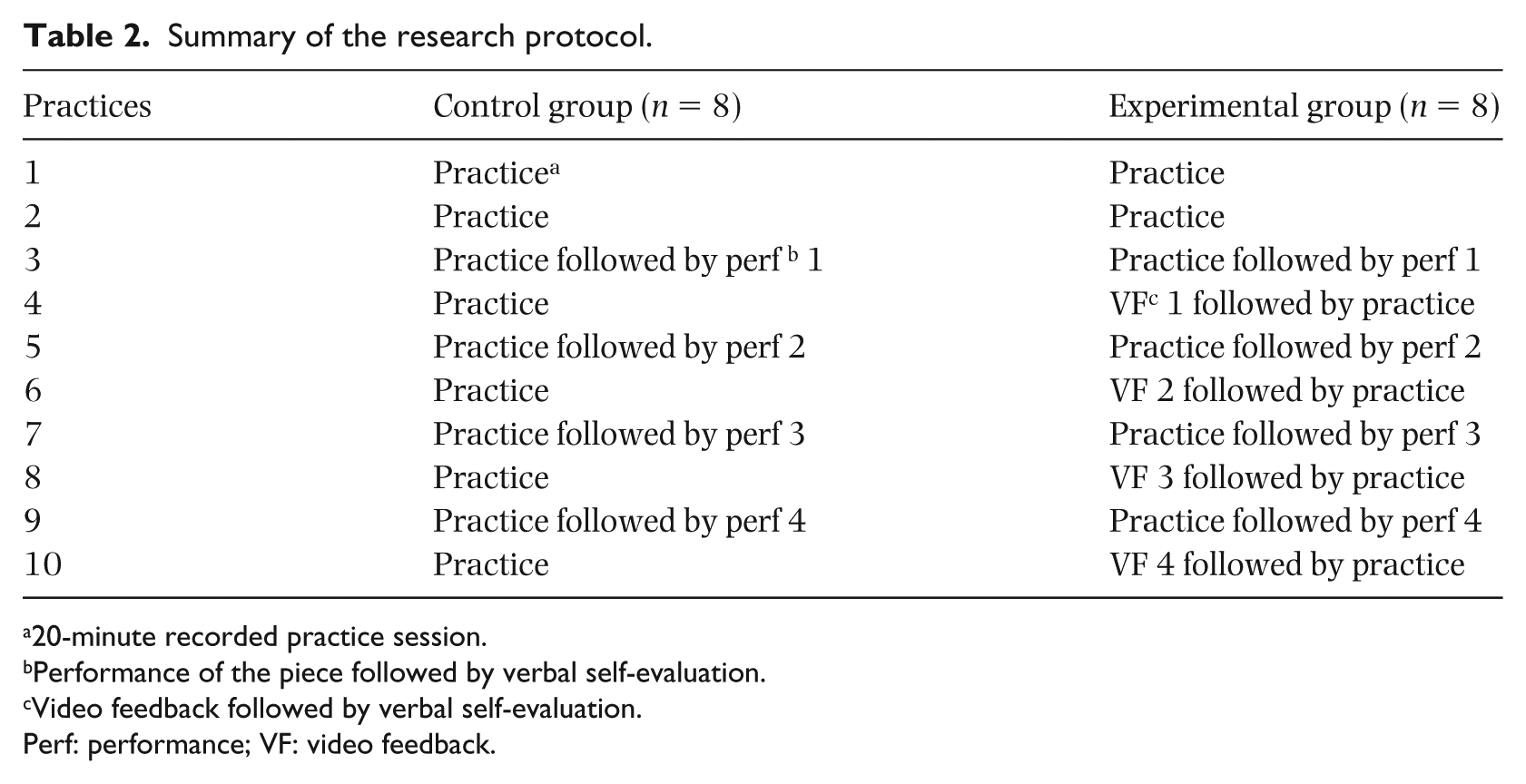
20-minute recorded practice session.
Performance of the piece followed by verbal self-evaluation.
Video feedback followed by verbal self-evaluation.
Perf: performance; VF: video feedback.
Think aloud during practice
We asked the participants from both groups to verbally express their thoughts whenever they stopped playing during practice. This method is called think-aloud protocol: “think-aloud protocol methodology includes techniques for eliciting, capturing, preparing, and analyzing verbalizations” (Greene, Robertson, & Costa, 2011, p. 315). Other studies have used this method to examine how musicians self-regulate their practice (Leon-Guerrero, 2008; Nielsen, 1999, 2001, 2015).
The demands of thinking aloud, which add themselves to the ongoing task, can interfere with the learner’s cognitive processes and affect the learning results (Ericsson & Simon, 1993). It is therefore suggested the participants rehearse thinking aloud in front of the researcher, preferably in a different context than the task that will be performed (Greene et al., 2011). In our study, participants met the researcher individually prior to beginning the experimentation and practiced an ear-training exercise while thinking aloud. The researcher provided feedback and made sure that all participants understood the nature of the think-aloud task.
To ensure the validity of the verbal data, Greene et al. (2011) suggest that participants should verbalize their thoughts concurrently rather than retrospectively during the problem-solving task. In this case, participants verbalized their thoughts whenever they stopped playing because talking while playing would interfere with the required concentration to play and disrupt the flow of the performance itself. Ericsson and Simon (1993) recommend there should be as little as possible in the form of interactions between the participant and the researcher during the task. In this study, the participants practiced alone and the researcher entered the room only to start and stop the camera. A sheet with two questions (“What do you think of what you just did?” and “What would you do next?”) was attached to the music stand to remind the participants to verbalize their thoughts when they stopped playing. The participants from both groups seldom forgot to talk when they stopped playing.
Approach to analysis
The videos
The practice videos were divided into playing and thinking-aloud segments using NVivo 8. A new thinking-aloud segment was defined whenever the participant stopped playing to express their thoughts. We conducted the preliminary coding of the verbal data using a model developed by Nielsen (2001), based on the self-regulation processes identified by Zimmerman (1998b). This model illustrates four problem-solving alternatives of skillful self-regulators, based on a problem to be solved, the student’s strategy use, performance of the piece, and self-evaluation of the performance:
The student was satisfied with the performance and focused on a new problem.
The student was unsatisfied with the performance but continued with the same strategy to solve the problem.
The student was unsatisfied with the performance and revised the strategy to solve the problem.
The student was unsatisfied with the performance and revised the problem to be solved and the strategy to solve it.
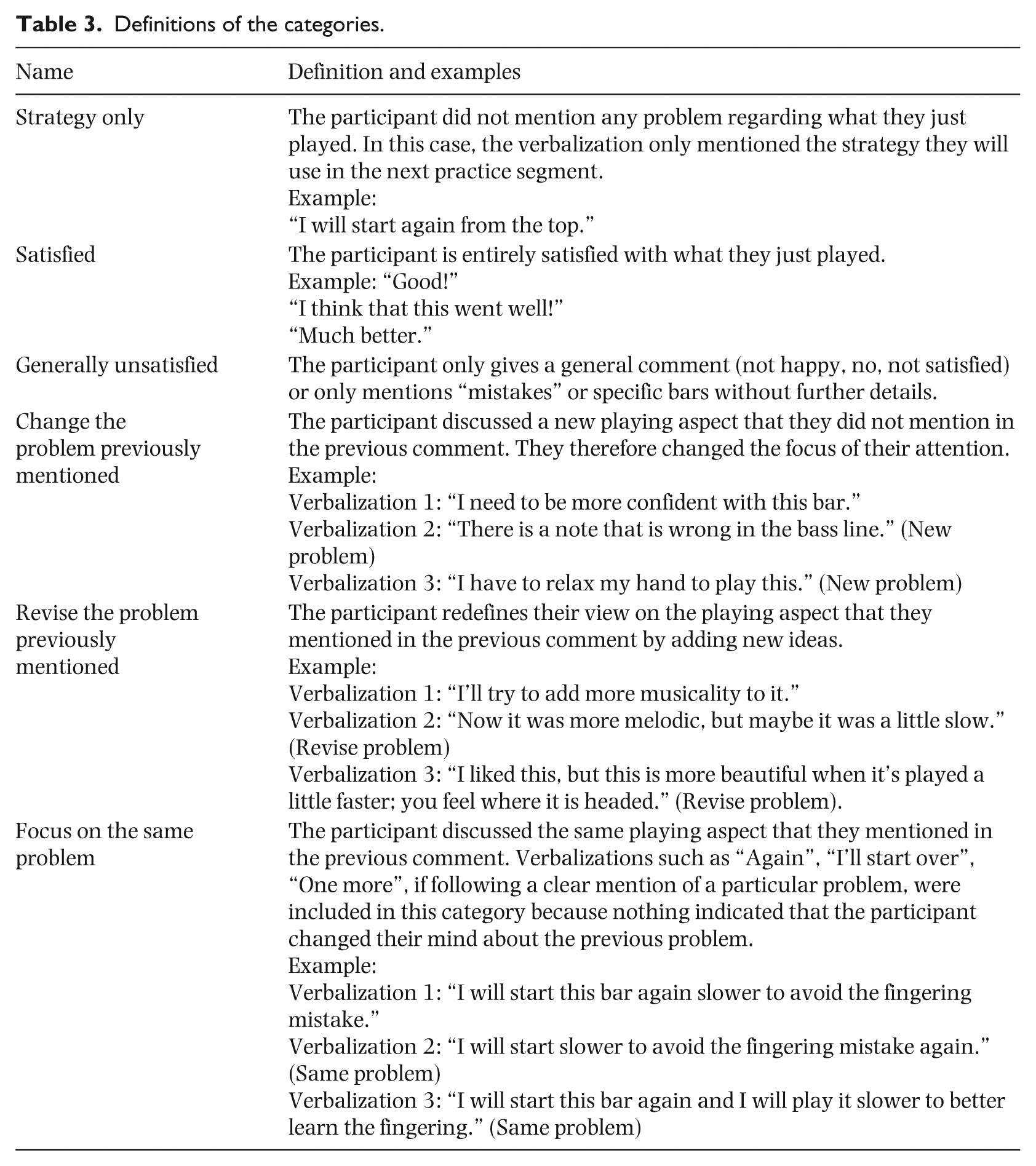
Nielsen’s model (2001) was developed based on the verbalizations of two highly skilled organ students who exhibited advanced self-regulation skills. After applying this model to code our data, we found it was necessary to integrate the possibilities of less skilled self-regulated behavior. Therefore, new categories emerged from the preliminary coding. In our study, we focused on the participants’ self-evaluation during practice (Table 3).
Definitions of the categories.
Quantitative analysis
We used the number of coding entries in each category of think-aloud comments from practice videos three, four, six, eight and 10 (see Table 2) for the quantitative analysis. During practice, participants could stop and think aloud whenever they wished, therefore leading to differences in the total number of think-aloud segments per practice session, although these differences were not statistically significant. Participants from the control group stopped between 11 and 73 times per practice session to think aloud (M = 31.88, SD = 17.31) whereas participants from the experimental group stopped between 10 and 63 times (M = 25.25, SD = 12.48). Because using the number of coding entries in each category could lead to misrepresentations, we used the proportion of the total number of verbalization segments per practice session for each category for the statistical analysis. Thus, for each practice session, we divided the number of coding entries in a category by the total number of verbalization segments to obtain a percentage of coding entries for each category and practice session.
To answer the first research question, we compared the percentage of coding entries between groups for each category to identify the potential effect of video feedback on the participants’ self-evaluation during practice. To answer the second research question, we also calculated the difference between the percentages of coding entries in practice three (immediately before the first performance) and practice 10 (immediately after the fourth and final performance/video feedback) for each category to verify if the length of time over which the participants used video feedback was a factor in the way they self-evaluated during practice, as was suggested in previous studies (Guadagnoli et al., 2002; Hebert et al., 1998; Selder & Del Rolan, 1979). Finally, guided by the results reported in Duke et al. (2009) where the three top-ranked pianists self-evaluated differently than their lower-ranked colleagues, we also compared the data for the three participants in each group (experimental and control) who had obtained the highest grades on their most recent performance examination with the data from the remaining participants to answer the third research question.
We analyzed the quantitative data following recommendations by authors advocating a new paradigm for statistical analysis called new statistics or statistical reform (Cumming, 2009, 2012, 2014; Cumming & Fidler, 2005; Kline, 2008, 2013), which we considered appropriate for a study with a small sample of participants.
According to Cumming (2008), the traditional p value gives only vague information about replication, regardless of the number of participants. He suggests that effect size and confidence intervals provide more complete information than does null hypothesis significance testing (Cumming, 2012, p. ix).
Kline (2013, p. 117) adds that “not only does the width of the confidence interval directly indicate the amount of sampling error associated with a particular effect size, it also estimates a range of effect sizes in the population that may have given rise to the observed result”. Cumming (2014, p. 13) thus suggests that “it is better to report confidence intervals and make no mention of null hypothesis significance testing or p values”. Therefore, in this study, the results of the participants who used or did not use video feedback will be compared using the confidence intervals, and the effect size of the video feedback treatment will be reported using Cohen’s d.
In Kline (2008, p. 153), effect size is defined as “the magnitude of the impact of the independent variable on the dependent variable”. Cohen’s d is a measure of effect size that represents change expressed in standard deviation units. The interpretation of this change can be reported using Cohen’s reference values: 0.2 for a small, 0.5 for a medium and 0.8 for a large effect.
To interpret the results for the confidence interval, Cumming (2012, p. 158) suggests a rule of thumb that works as follows:
An absence of overlap between two 95% confidence intervals implies that the outcome of the independent samples t test of the mean difference is p < .01. If the confidence intervals just touch end to end, p is approximately .01.
A moderate overlap of the 95% confidence intervals (about one half the length of each error bar in a graphical display) implies the p value for the t test is about .05, but less overlap indicates p < .05.
This rule, according to Cumming, would work best when n ⩾ 10 and the group sizes and variances are approximately equal.
Results
Self-evaluative comments while practicing: Between-group comparisons
The comments in which the participants expressed their satisfaction with what they just played were coded in the category satisfied. In these instances, the participant only mentioned positive comments and often moved to another part of the piece afterwards. Effect sizes for practice sessions three (d = 0.23), four (d = 0.47), six (d = 0.33) and eight (d = 0.55) represented a relatively small effect compared with practice 10 (d = 1.28). In every practice session, the proportion of “satisfied” comments was constantly smaller for the experimental group (Table 4). There was a particularly evident between-group difference for practices eight and 10, with a moderate overlap of the confidence interval (less than half the length of each error bar) in practice 10 (Figure 1).
Between-group comparison of the percentage of coding entries (and average number of coding entries) per practice session for the category satisfied (n = 16).
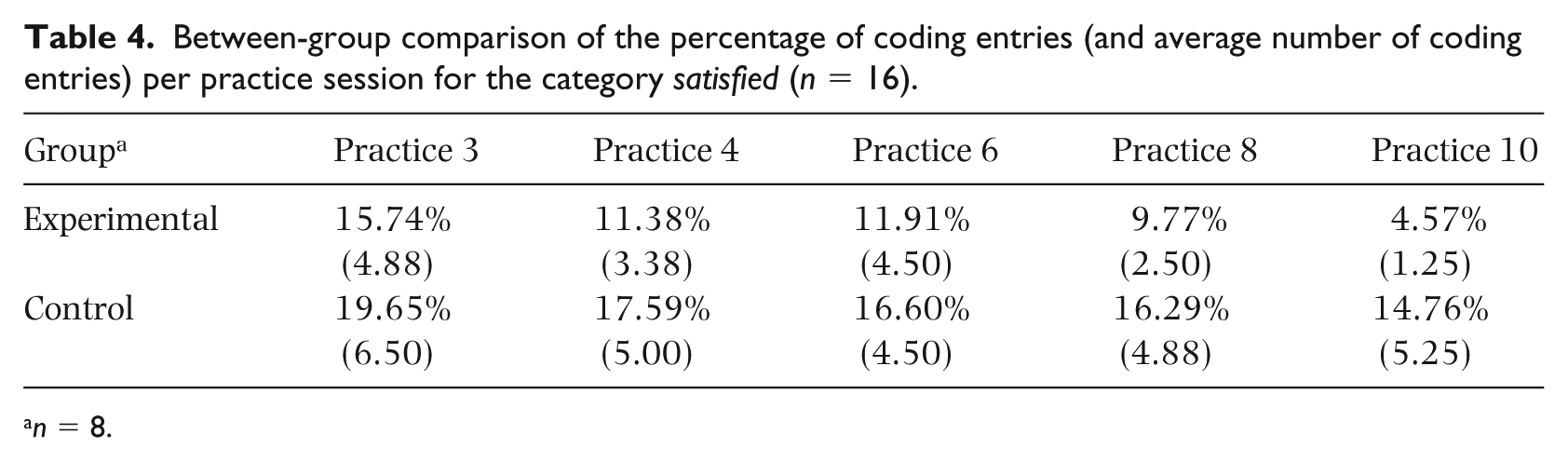
n = 8.
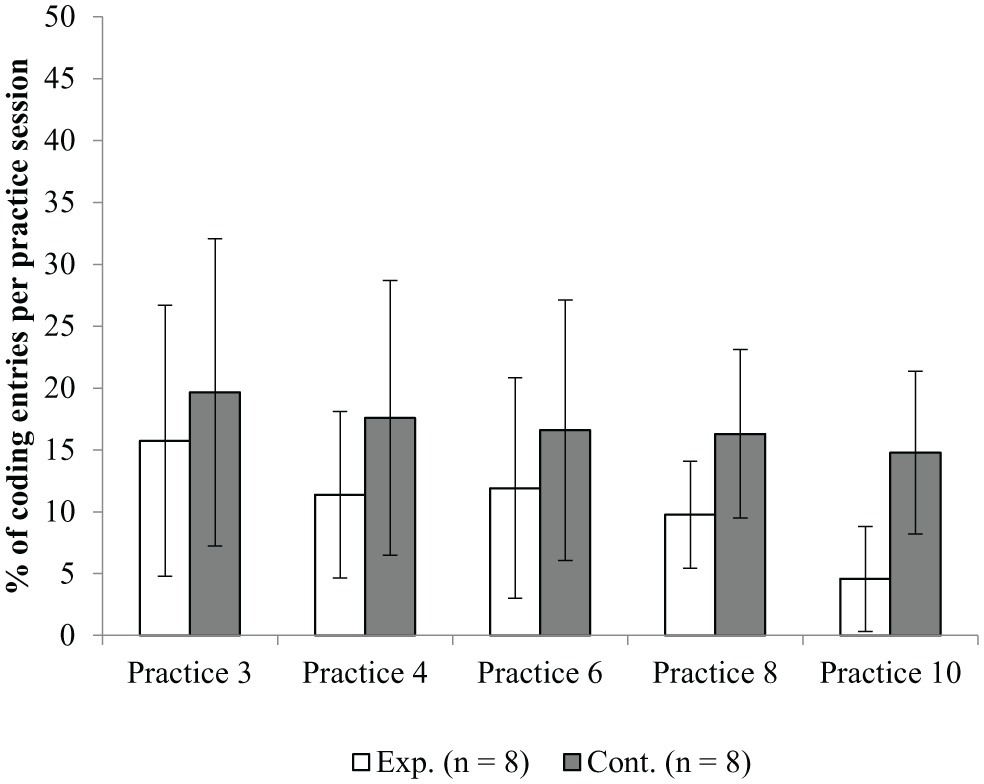
Between-group comparison of the percentage of coding entries per practice session for the category satisfied (n = 16). The bars represent the mean percentage of coding entries per practice session and the 95% confidence interval is displayed for each result.
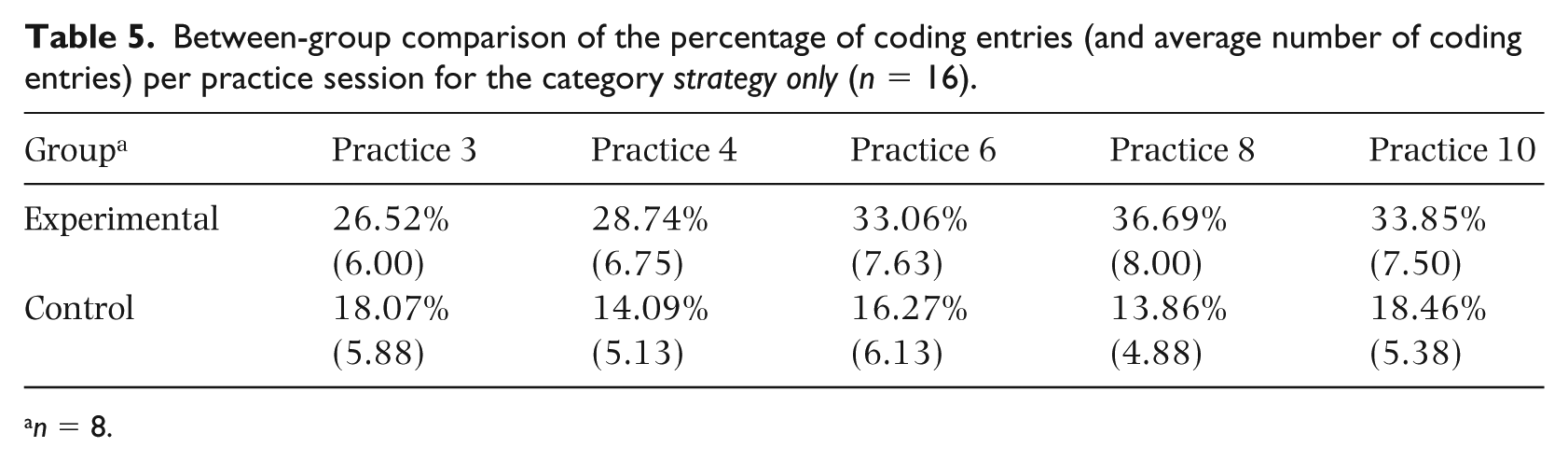
The participants’ comments in which they only mentioned a goal for the next practice segment without verbally self-evaluating were coded in the category strategy only. There were larger effect sizes for practice four (d = 0.96), six (d = 0.89), and eight (d = 1.1), with a moderate effect for practice 10 (d = 0.66). For every practice session, the proportion of comments coded as “strategy only” was greater for the experimental group, as compared with the control group, with larger discrepancies for practices six, eight and 10 (Table 5). We also observed a moderate overlap of the confidence intervals (less than half the length of each error bar) for practice eight (Figure 2).
Between-group comparison of the percentage of coding entries (and average number of coding entries) per practice session for the category strategy only (n = 16).
n = 8.
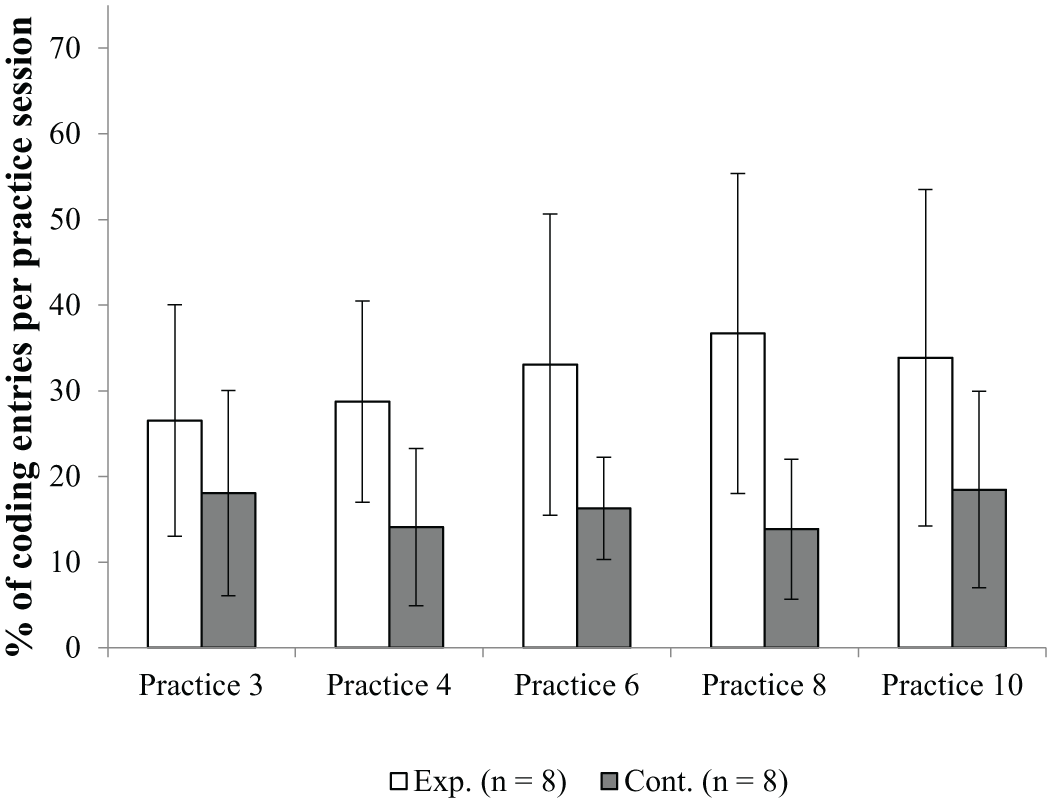
Between-group comparison of the percentage of coding entries per practice session for the category strategy only (n = 16). Again, the bars represent the mean percentage of coding entries per practice session and the 95% confidence interval is displayed for each result.
Self-evaluative comments: Evolution between the third and 10th practice session
For each category, we calculated the difference between the percentages of coding entries in practice three (immediately before the first performance) and practice 10 (immediately after the fourth performance/video feedback) and compared the results for each group to ascertain whether the length of time over which the participants used video feedback was a factor in the way they self-evaluated during practice. We observed a minor difference in the direction of change for the category same problem (Figure 3 and Table 6). For four out of the six categories (strategy only, generally unsatisfied, satisfied, revise problem), the differences between practices three and 10 in the types of comments made were greater for the experimental group than for the control (Table 6).
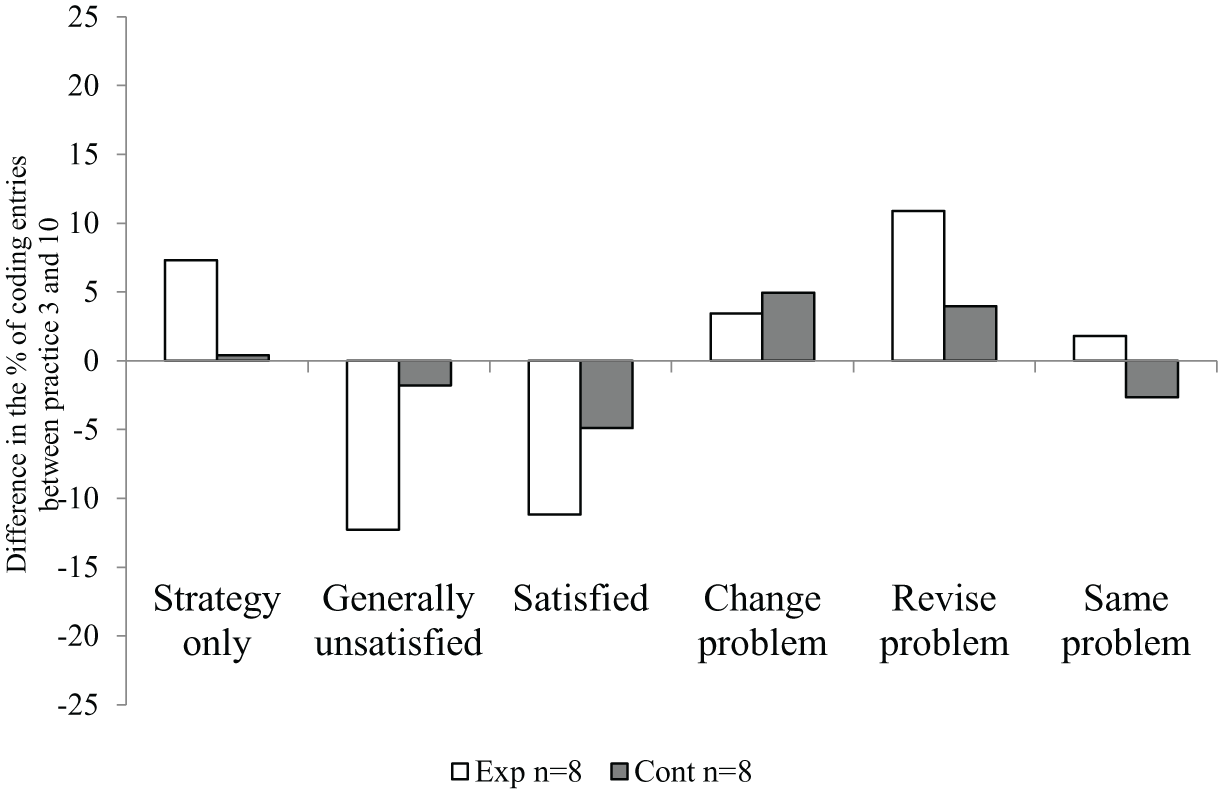
Difference in the percentage of coding entries between practices three and 10 (p10 minus p3) for each category, expressed with bars representing an increase (over 0) or decrease (below 0) of the percentage of practice segments for each category over time.
Difference in the percentage of coding entries between practices three and 10 (p10 minus p3) for each category.

n = 8.
Self-evaluative comments: Evolution between the third and 10th practice session regarding the performance level
We also analyzed the differences between practice sessions three and 10 with regard to the participants’ level of performance. We explored whether the three high-performing participants in the experimental group differed from their counterparts in the control group with regards to self-evaluation, and, furthermore, if the high-performing participants self-evaluated differently than their lower-performing colleagues within the same group. In our study, the three high-performing participants from the experimental group had received an average grade of 88.33% (SD = 2.89) on their last performance examination and had a mean 6.67 years of experience in individual lessons (SD = 5.03). The three high-performing participants from the control group had received an average grade of 89.33% (SD = 3.21) on their last performance examination and had a mean 5.83 years of experience in individual lessons (SD = 2.02).
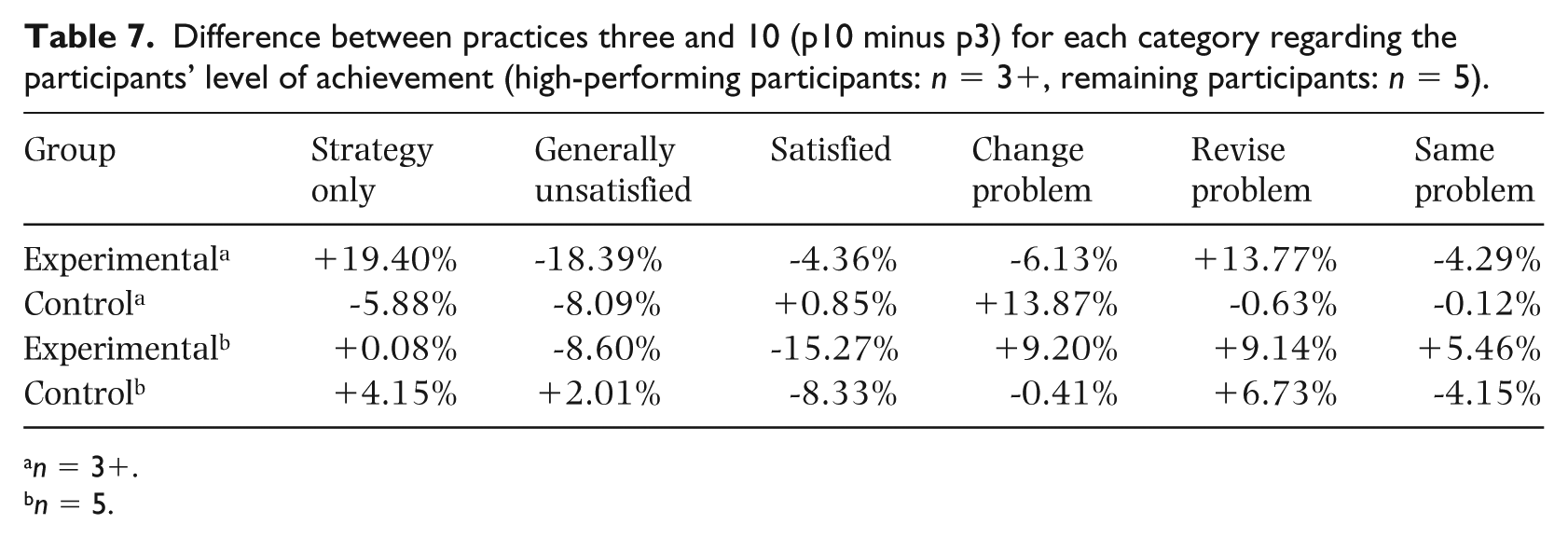
Regarding the direction of the changes (increase or decrease) between practices three and 10, the three high-performing participants in the experimental group exhibited tendencies that were opposite to their high-performing counterparts in the control group in four out of the six categories (strategy only, change problem, revise problem and satisfied; Figure 4). When comparing the high-performing participants with their lower-performing colleagues of the same group, we observed opposite tendencies for five categories in the control group, whereas the participants in the experimental group had similar tendencies for four categories (Figure 4). We found variations in the magnitude of change of more than +/- 10% in three categories (strategy only, generally unsatisfied and revise problem) for the three high-performing participants in the experimental group, whereas such variation was found in only one category (change problem) for the high-performing participants in the control group (Table 7). The most notable change among the lower-performing participants who used video feedback was found in the category satisfied (-15.27%).
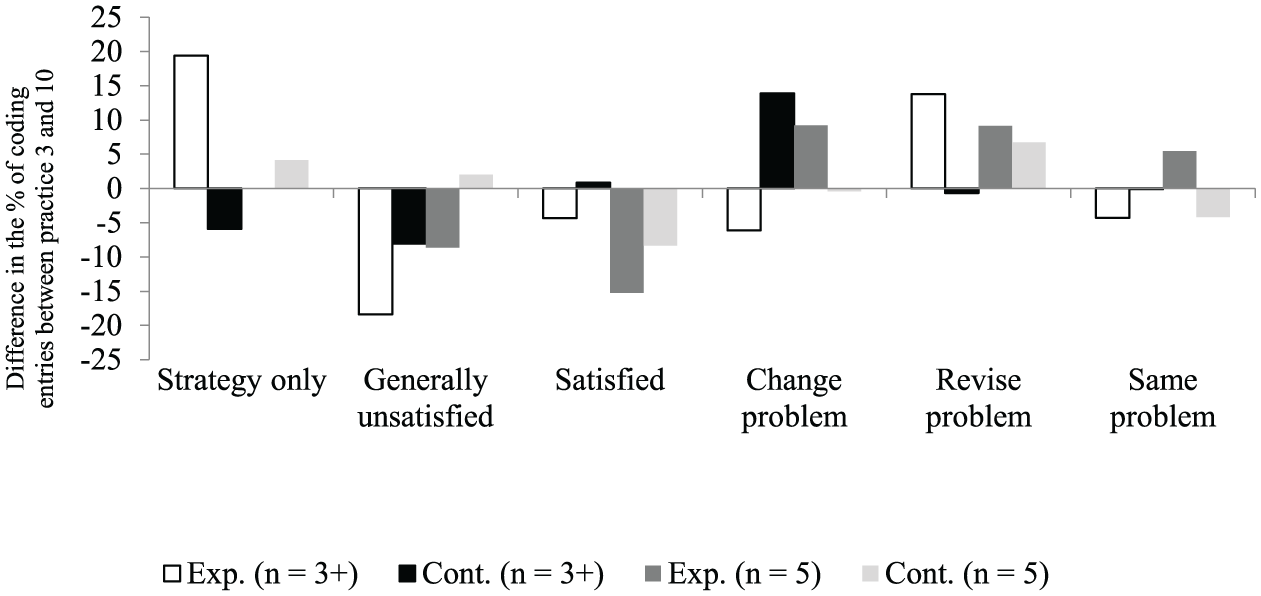
Difference between practices three and 10 (p10 minus p3) for each category to the participants’ level of achievement (high-performing participants: n = 3+, remaining participants: n = 5). Again, the bars represent an increase (over 0) or decrease (below 0) of the percentage of practice segments for each category over time.
Difference between practices three and 10 (p10 minus p3) for each category regarding the participants’ level of achievement (high-performing participants: n = 3+, remaining participants: n = 5).
n = 3+.
n = 5.
Discussion
This study explored how the repetitive use of video feedback while learning a new piece of music might affect college-level guitar students’ self-evaluation during practice, and if this impact would be influenced by the length of time over which the participants used it, or by the musicians’ level of performance. The results must be interpreted in the light of the study limitations. For example, the sample size and the fact that all participants were learning western classical written music in the same institution with the same group of teachers limited the generalizability of the findings to other groups of musicians. The experimentation took place in two different college semesters, and the randomized allocation of participants yielded a difference in the groups’ overall performance levels, with the experimental group having a lower average grade for their most recent performance prior to the experiment, as compared with the control group. Consequently, a more equal distribution of the participants in each group could have changed the results presented here. Finally, we asked the participants in the control group to reflect on their playing after each performance, but we cannot be sure the time they reflected was equal to the time spent by the experimental group for the video feedback treatment. Despite these limitations, we considered the sample size allowed an in-depth analysis of the data while still allowing the identification of tendencies that could be addressed more specifically in future research.
The various between-group differences that were reported here demonstrate the participants in the experimental group began to self-evaluate differently during practice after four video feedback sessions, and these changes were more evident among the three high-performing participants. Future studies could explore how long the effect of video feedback could last before the learner reaches closure, to provide guidelines for musicians as to how often they should use it to maximize its potential effect. Future studies could also involve a more in-depth qualitative analysis of how the musicians self-evaluate when using video feedback to examine whether they modify the nature of their self-evaluative comments, as was the case in the study by Boucher, Dubé, and Creech (2017).
The participants in the experimental group had a lower percentage of comments associated with satisfaction (where the participant is entirely satisfied with what they have just played) in practice 10, as compared with the control group. This decrease in the satisfaction with their playing can be related to other studies in which video feedback was found to help musicians find more or new problems while watching the recorded performance (Daniel, 2001; Deniz, 2012; McPherson & Zimmerman, 2002).
The fact that participants in the experimental group commented on strategy only (whereby the musician identifies a strategy for the next practice segment, but does not evaluate what has just been played) more often than the control group did for practice four, six and eight is rather surprising and will need to be further explored. This appears to contradict the aforementioned studies in which video feedback was described as a means to find new problems in a performance (Daniel, 2001; Deniz, 2012; McPherson & Zimmerman, 2002). In the context of self-regulated learning, one might expect the choice of strategy would be based on feedback obtained while performing (McPherson & Zimmerman, 2002). Even if, in these cases, the participants did not mention any self-evaluative comments when they stopped playing, we could speculate that video feedback might also elicit reflection towards the choice of strategy during practice. Discussing their choice of strategy only while practicing could be related to the fourth stage of thought processes described by Hebert et al. (1998) in which the participants were correcting mistakes after having identified them. Future studies could involve a design similar to ours but on a longer-term basis to explore how musicians could benefit from video feedback over many weeks of usage.
The participants who used video feedback made progressively fewer comments associated with a general satisfactory or unsatisfactory reaction (generally unsatisfied and satisfied), whereas they made progressively more comments associated with the choice of strategy, or the revision, change or continuity of a problem (strategy only, revise problem, change problem, same problem). Musicians practicing with a “problem-solving” attitude was associated with advanced self-regulated music practice (Duke et al., 2009; Nielsen, 2001, 2015), and the capacity to identify problem in performance was an important missing aspect among musicians who participated in studies in which issues regarding self-regulation were addressed (McPherson & Renwick, 2001; Miksza, Prichard, & Sorbo, 2012; Mornell, Osborne, & McPherson, 2018; Pike, 2017).
We observed that the increase or decrease in the percentage of comments was more substantial for the experimental group, in comparison with the control group, for four out of the six categories. It appears the participants who used video feedback began to change the way they self-evaluate during practice in a more evident way than the participants who did not use it. This could be an example of the changes in the video feedback user’s reflection that can occur before the period that would be required for observing changes in performance results (Guadagnoli et al., 2002; Selder & Del Rolan, 1979). In fact, future studies on the effect of video feedback on performance results could involve a long-term exposition to the treatment to avoid measuring performance results during a period in which the potential benefits of video feedback would not have appeared yet.
Our results support other studies where it has been found that high-performing musicians self-evaluated differently than lower-ranked colleagues during practice (Duke et al., 2009). More precisely, we observed variations in the direction and magnitude of changes between practices three and 10 that were related to the participants’ level of performance. The high-performing participants in each group had opposite tendencies for four out of the six categories. The most notable changes were found in the categories strategy only, change problem and revise problem. This could imply that video feedback elicited more change in the types of self-evaluative comments during practice for the high-performing participants who used it. These results add to earlier studies where it has been suggested that self-regulation skills exhibited by high-performing musicians are important to identify and understand (McPherson & Renwick, 2011; Nielsen, 2001, 2015; Pike, 2017). We also found that the already discussed decrease in the category satisfied for the experimental group was particularly evident for the five lower-performing participants. Future studies could address how video feedback, or other pedagogical interventions, may help foster self-regulation skills among lower-performing musicians.
Implications for education
The findings reported here indicate that the self-evaluation skills essential to self-regulate practice in the absence of a teacher’s feedback can be developed with an appropriate pedagogical approach. In our study, video feedback was found to be effective in helping the participants progressively change the way they self-evaluated while practicing. More importantly, it seems the participants used the information they obtained via video feedback in the following practice session.
The identification of errors was already mentioned as an important skill for solitary practice, and it appears that video feedback elicited more self-evaluative comments aimed at the solving of a problem rather than a general satisfied/unsatisfied reaction. Still, it seems that these changes were more evident among the high-performing participants who used video feedback. The high-performing musicians should therefore be encouraged to use video feedback to maximize their improvement between their instrumental lessons. In this study, the video viewing was purposely unguided to isolate the potential effect of video feedback, but teachers could develop observation grids to support their lower-performing students in analyzing their own recorded performances precisely.
Our study, reported here, suggests musicians who use video feedback as a means to separate the performance from its concurrent self-monitoring would develop more of a problem-solving attitude in their practice. The musicians’ use of the information obtained with video feedback in their self-evaluation during the following practice could help them become more efficient “self-teachers” in between their instrumental lessons. Video feedback could therefore be considered a promising pedagogical intervention for eliciting self-regulatory thinking among developing musicians.
Footnotes
Author note
This research project was approved by the Comité d’éthique de la recherche de l’Université Laval: Approbation No. 2011-291/2012-02-14.
Funding
The author(s) disclosed receipt of the following financial support for the research, authorship, and/or publication of this article: the first author conducted this study a part of a doctoral research for which he received a scholarship from the Fonds de recherche du Québec en société et culture.
