




Abstract
The purpose of this study was to explore the effects of using a self-directed practice diary on conservatory pianists’ self-regulated learning tendencies. We sought to determine whether the implementation of a self-directed practice diary based on the three-phase model of self-regulated learning would lead students to gradually demonstrate more self-regulated learning tendencies across a semester of practicing, and if the type and quality of their self-regulated learning tendencies varied as a function of performance ability. A marked and consistent improvement in metacognitive monitoring skills was observed across the semester for all seven participants. Variations between lower and higher ability students were most pronounced in the Forethought stage, with higher ability pianists reporting fewer goals and strategies and higher self-motivational beliefs than their lower ability counterparts. In the Performance phase, higher ability students invested more effort in help seeking and structuring their practice environment, and lower ability students reported more self-instruction. In the Self-Reflection phase, higher ability pianists reported being more focused in the practice session. Suggestions for further refinement of the technique to improve musicians’ ability to master their learning and achieve their personal best are provided.
Keywords
Self-regulated learning (SRL) researchers have sought to better understand “how students become masters of their own learning processes” for more than three decades (Zimmerman, 2008b, p. 166). A main approach within this broad area of research has focused on the self-directed processes and self-beliefs that empower learners to transform their mental abilities into performance skills (Zimmerman, 2008b). Such processes include goal setting, strategy selection, self-monitoring, and other related proactive strategies that aid learning. These are distinct from the reactive events that take place during learning when students respond to forces around them that might be distracting or unproductive to self-directed, optimized learning (see Zimmerman, 2013; Zimmerman & Labuhn, 2012).
Various methods have been devised to study a host of proactive strategies students use in various learning environments (McPherson, Osborne, Evans, & Miksza, 2019; Zimmerman, 2008a). Such “event measures” have often utilized fine-grained, contextualized techniques such as think-aloud protocols where students describe everything they were doing or are doing while involved in a learning event, and personal diaries where students report on their own learning and what they might do better (Cleary & Callan, 2017; Leon-Guerrero, 2008; McPherson & Renwick, 2001). SRL researchers have also used observation traces to document student learning by observing and interviewing teachers and students throughout the process of learning (Miksza, Prichard, & Sorbo, 2012; Miksza & Tan, 2015; Zimmerman, 2008b).
In recent years however, many of the techniques used across various disciplines have galvanized into more targeted strategies to document learning that have come to be described as microanalysis measures. The microanalysis technique attempts to map out the behaviors, thoughts, and feelings students experience across three phases of learning defined as forethought, performance, and reflection (Cleary & Callan, 2017). Through the microanalysis approach, researchers have been able to study the main aspects of motivation that students use to initiate and sustain changes in their own learning patterns, but also, and especially more recently, to devise interventions that help focus learners’ attention so that they can understand deficiencies in their own learning patterns and try to correct these through the application of more targeted strategies that help them break the types of habits that hinder efficient learning (Cleary & Callan, 2017). In this way, these focused interventions aim to help learners optimize their own learning (for more information on the microanalysis technique in SRL see McPherson et al., 2019).
Our ongoing work aligns with the goal of optimizing musicians learning, and has resulted in the development of techniques that can be used in music to study the types of self-directed processes that musicians can apply when practicing or performing on their instrument or voice (McPherson, Miksza, & Evans, 2017; McPherson et al., 2019; Miksza, Blackwell, & Roseth, 2018). Our approach, like other SRL researchers in other domains of learning (Artino, Cleary, Dong, Hemmer, & Durning, 2014; Cleary, Dong, & Artino, 2015; Kitsantas & Zimmerman, 2002), is based on a three-phase model of SRL involving a Forethought Phase in which musicians consider the components of their upcoming rehearsal or performance piece, contextualized within judgments of purpose and likelihood of successful execution; a Performance Phase, where musicians apply a diverse set of resources to track progress and maintain concentration and interest in the material being rehearsed or performed; and a Self-Reflective Phase, in which musicians review and evaluate the effectiveness of their strategies, informing planning and refinements for the next practice session or performance (see further, McPherson et al., 2017; McPherson et al., 2019).
The three-phase SRL model is shown in Figure 1. A key principle is the cyclical nature and dynamic processes of forethought, performance, and self-reflection. A musician experiencing optimal practicing of repertoire across multiple practice sessions would be constantly engaged in the SRL cyclical process, which would then lead to a continuous line of goal-directed, strategically defined, and emotionally satisfying improvement (Zimmerman, 2008a, 2008b).
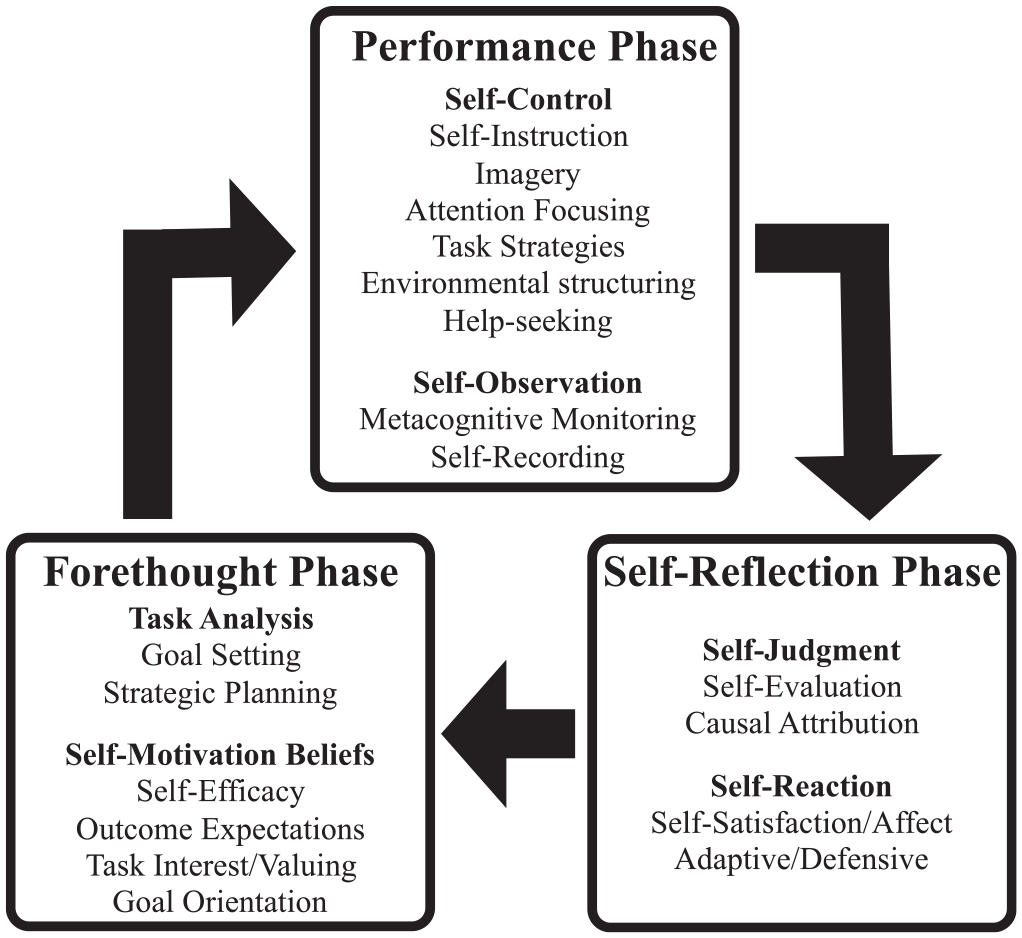
Phases and processes of self-regulated learning according to Zimmerman and Moylan (2009, Fig 16.1, p. 300. From Hacker, D. J., Dunlosky, J., & Graesser, A. C. (Eds.). (2009). Handbook of metacognition in education. Retrieved from https://ebookcentral-proquest-com.web.bisu.edu.cn on 2018-07-04 18:47:17).
Purpose of the study
McPherson et al. (2019) have described the process of developing, refining, and adapting a microanalysis technique to capture the SRL processes depicted in Figure 1. They developed a self-directed practice diary that enabled them to present case studies of the musical practice and performance of two first year Bachelor of Music pianists at a large Australian university music school with contrasting audition scores. They illustrated how their microanalysis technique can be used to cue students to plan, monitor, and then reflect critically on the strategies they can use to improve their playing.
The purpose of this follow-up study was to explore the effects of using this self-directed practice diary on university music school pianists’ self-regulated learning tendencies. Specifically, we sought to determine whether the implementation of the self-directed practice diary would lead students to gradually demonstrate more self-regulated learning tendencies across a semester of practicing, and if the type and quality of their self-regulated learning tendencies varied in any way as a function of performance ability.
Method
Participants
The participants for this study were drawn from the 33 piano students who gained acceptance into the Bachelor of Music at a prominent Australian University music program. Audition into the Bachelor of Music involves a performance of two contrasting works, and applicants are ranked on a scale of suitability to enter the course based on a seven-point scale, A+, A, B+, B, C+, C, D, where A+ indicates exceptional ability and eligibility for a financial scholarship, through to D which indicates unsuitable for entry. Because we wanted to tap into a range of student abilities to validate the protocol, students majoring in piano who had auditioned in the previous year and received audition results in the higher and lower range of the audition process (i.e., A+, A, and C+, C) were targeted during the recruitment process.
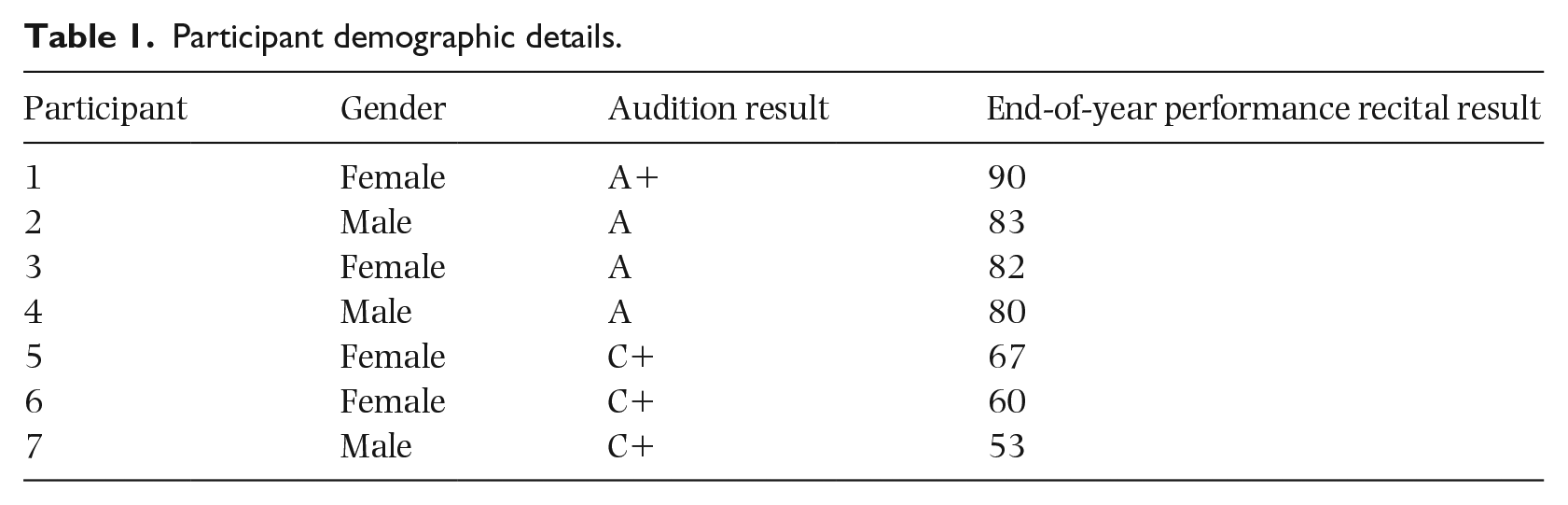
Seven first year Bachelor of Music students (three males, four females) majoring in classical piano agreed to participate in the study. Their average age was 18.88 years (range: 17–23 years), and they had been learning piano for an average of 11.21 years (range: 6–14 years). Participants’ gender, entrance audition result, and end-of-year performance recital results are listed in Table 1. This table shows a consistent trend from audition to the end-of-year performance recital, with the A+ student receiving the highest end-of-year examination score and all three C students receiving distinctly lower end-of-year performance results as compared to the A+ and A students.
Participant demographic details.
Approval for this study was granted by the researchers’ university human research ethics committees and participants received AUD$400 for compensation.
Procedure
Participants’ self-regulated learning tendencies during music practice were assessed in the first semester of the academic year as part of the program of developing and refining the microanalysis protocol used in the current study. This measurement protocol was designed to capture the types of behaviors (actions), cognition (thoughts), and affect (feelings) that these musicians apply when practicing (see McPherson et al., 2019 for a description of the measurement process as well as the type of data that it yielded).
For the current study, the participants met with one of the researchers during the third week of the second semester of the same academic year to (a) discuss the typical aspects of their practicing, (b) review the basic elements of Zimmerman’s (2002) three-phase self-regulated learning model, and (c) receive feedback on how they could work to become more proactive learners (Zimmerman, 2013). The pianists were then asked to practice a new piece of repertoire for their end of semester examination recital for the eight remaining weeks of the second semester. During these 9 weeks, they completed three entries within the self-directed practice diary during each of weeks 4, 8, and 12. This yielded nine completed self-directed practice diaries per student across the semester; from their early stages of learning a new piece of repertoire up until the final weeks before the end-of-semester examination recital. The first set of diary entries were reviewed for clarity and depth of responses, and soon after (and before week 8) students met individually with one of the researchers to discuss how they could improve their practice by providing even more probing personal reflections.
Self-directed practice diary
The self-directed practice diary, titled “The Optimal Music Practice Protocol” (OMPP), 1 consisted of a five-page booklet, the content of which was adapted from a self-regulated learning microanalysis practice protocol developed and validated by McPherson et al. (2019) as well as previous literature in other disciplines (Cleary, Callan, & Zimmerman, 2012; Panadero & Alonso-Tapia, 2014; Zimmerman, 2011). The OMPP was designed such that students responded to prompts reflecting the primary aspects of the three-phase model of self-regulated learning as they completed their practice sessions (Zimmerman & Moylan, 2009). This diary was divided into three sections—Forethought “Before starting my practice,” Performance “During my practice,” and Self-reflection “After my practice was completed.” Each of the three sections contained open-ended, Likert-type, and forced-choice items that were linked to the self-regulation sub-processes associated with each respective phase of self-regulation. The OMPP took participants approximately 10 min to complete.
The first section was completed prior to the students commencing their practice and included items that prompted them to reflect on their task analysis (i.e., goal setting, strategic planning) and self-motivation beliefs (i.e., self-efficacy, outcome expectancies, task interest, and task value) (see Table 2 for a summary of variables generated from the forethought section of the diary).
Forethought phase measurements: summary of “before practice” diary variables.
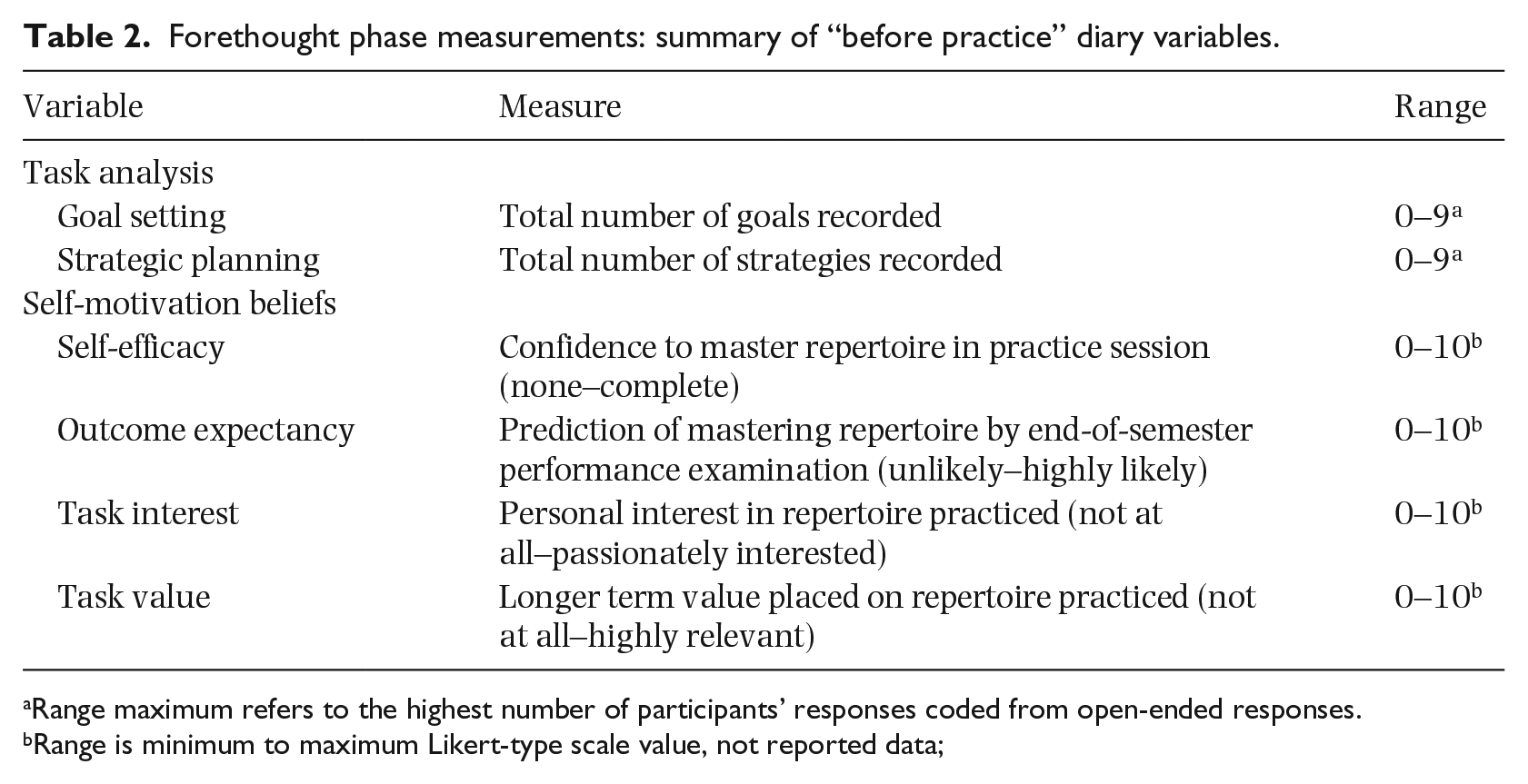
Range maximum refers to the highest number of participants’ responses coded from open-ended responses.
Range is minimum to maximum Likert-type scale value, not reported data;
Participants then commenced their practice, stopping to note the ways they may have engaged in self-control (e.g., maintenance of concentration and interest, tactics used, structuring of environment) and self-observation (e.g., self-talk during problem solving, keeping record of progress) during their practicing (see Table 3 for a summary of variables generated from the performance section of the diary).
Performance phase measurements: summary of “during practice” diary variables.
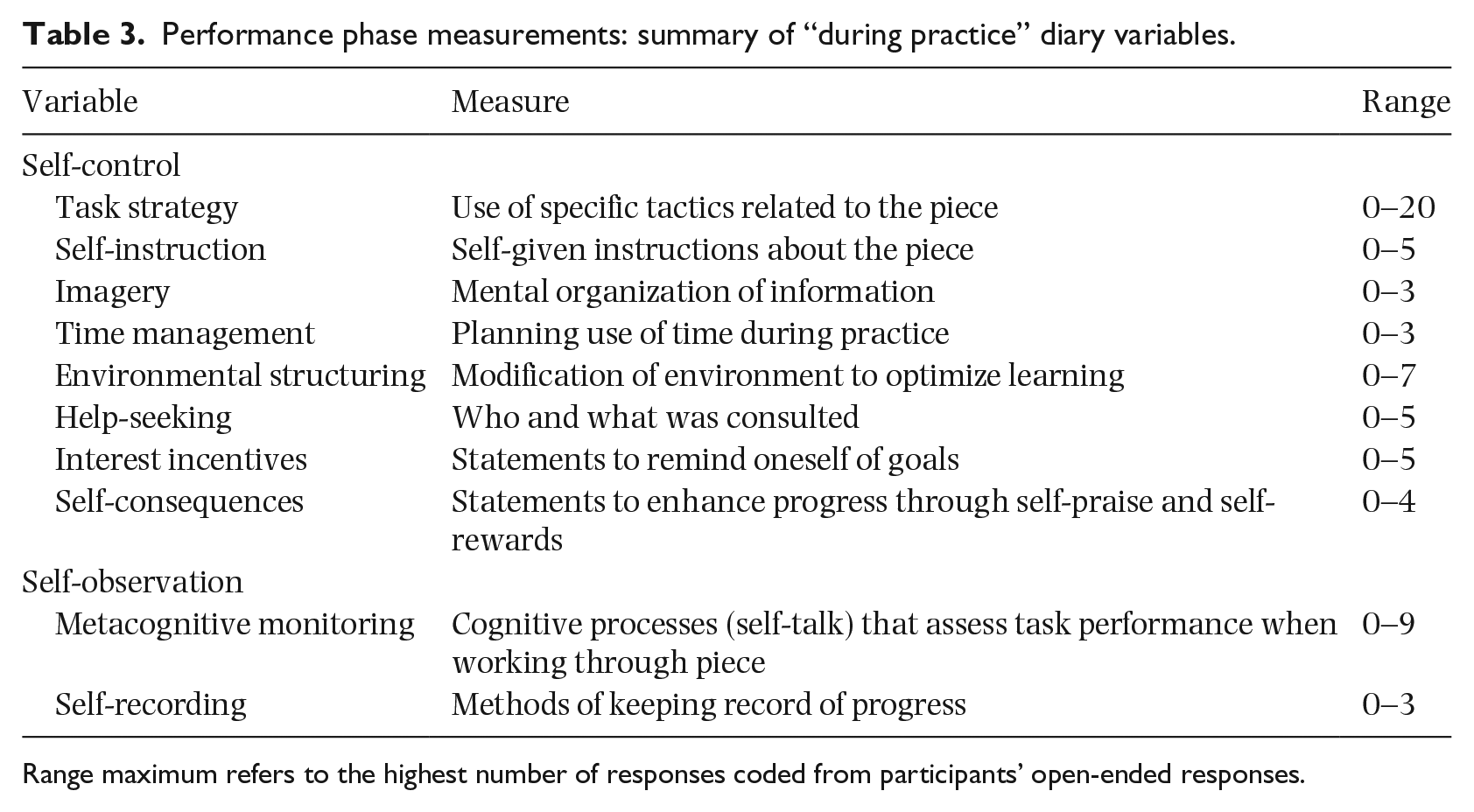
Range maximum refers to the highest number of responses coded from participants’ open-ended responses.
After their practice session was completed, the participants provided responses to their self-judgments by (a) evaluating the effectiveness of the practice, (b) indicating their causal attributions for the quality of their practice, and self-reactions by (c) describing their affect and overall satisfaction, and (d) specifying whether their disposition for future practice was adaptive or defensive (see Table 4 for a summary of variables generated from the self-reflection section of the diary). Finally, the participants also reported the amount of time they spent per practice session and provided an overall estimate of the percentage of time they had focused and concentrated during each practice session.
Self-reflection phase measurements: summary of “after practice” diary variables.
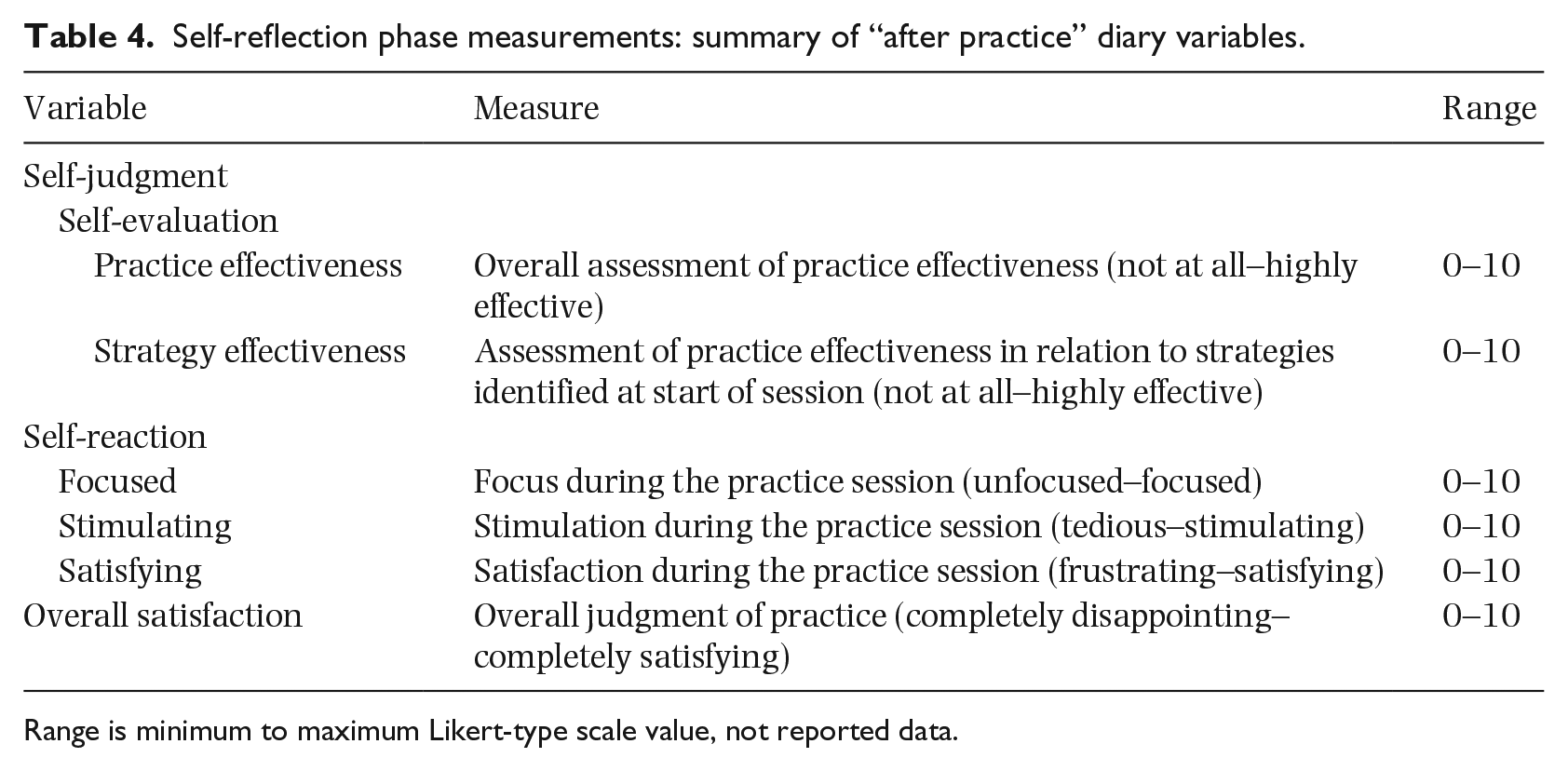
Range is minimum to maximum Likert-type scale value, not reported data.
Only responses to a selection of items from the OMPP were incorporated as variables in this study. With regard to measurement, some variables yielded from items on the OMPP were paired with quantitative rating scale response modes, whereas others called for open-ended comments. The participants’ quantitative ratings were averaged across their 3 days of diary reporting within each of the target weeks of the study to yield an average score for each variable at weeks 4, 8, and 12 for each participant. The participants’ open-ended, written responses on the OMPP were coded by one of the researchers. Regarding open-ended items in the “Before Practice”/Forethought section of the OMPP, the researcher simply summed the number of goals and strategies reported within each diary to yield a quantitative measurement. In contrast, open-ended responses in the “During Practice”/Performance section were summed and categorized as one of the performance phase sub-processes included in Zimmerman and Moylan’s (2009) model (i.e., task strategy, self-instruction, imagery, time management, environmental structuring, help-seeking, interest incentives, self-consequences, metacognitive monitoring, and self-recording). A second researcher checked the coding of all items and where applicable, any differences in coding were discussed and rechecked, until a consensus was achieved.
Results
Descriptive analyses of the variables yielded for the forethought, performance, and self-reflection sections of the OMPP diary entries were conducted to identify changes in self-regulation tendencies over time as well as whether these tendencies would vary as a function of performance ability as measured by the students’ entrance audition result and end-of-year performance recital result (see Table 1). For the purpose of these analyses, high-ability pianists refer to those students who received an entrance audition score of A+ or A, and between 90 and 80 for their end-of-year performance recital. Low-ability pianists were categorized as receiving C+ for their entrance audition, and a score of between 67 and 53 for their end-of-year performance recital. Because the small sample size precludes the use of inferential statistical analyses, we restrict our discussion to general trends revealed through descriptive statistics according to whether the data conform to theoretical predictions.
Forethought—“before practice”
Overall, the participants reported a fairly strong engagement with forethought processes during their practice (see Table 5), reporting, on average, approximately seven goals and seven distinct strategies in their plans for practicing each week. Although the mean reports of goals and strategies were quite consistent over time, the minimum and maximum values of these reports suggest substantial variability among them. For example, in 1 week two students (high range) reported 3–4 goals and 2–3 strategies. On the other hand, two participants (one high, one low range) consistently reported 9 goals and 8–9 strategies each week.
Descriptive statistics for all “before practice”—forethought variables.
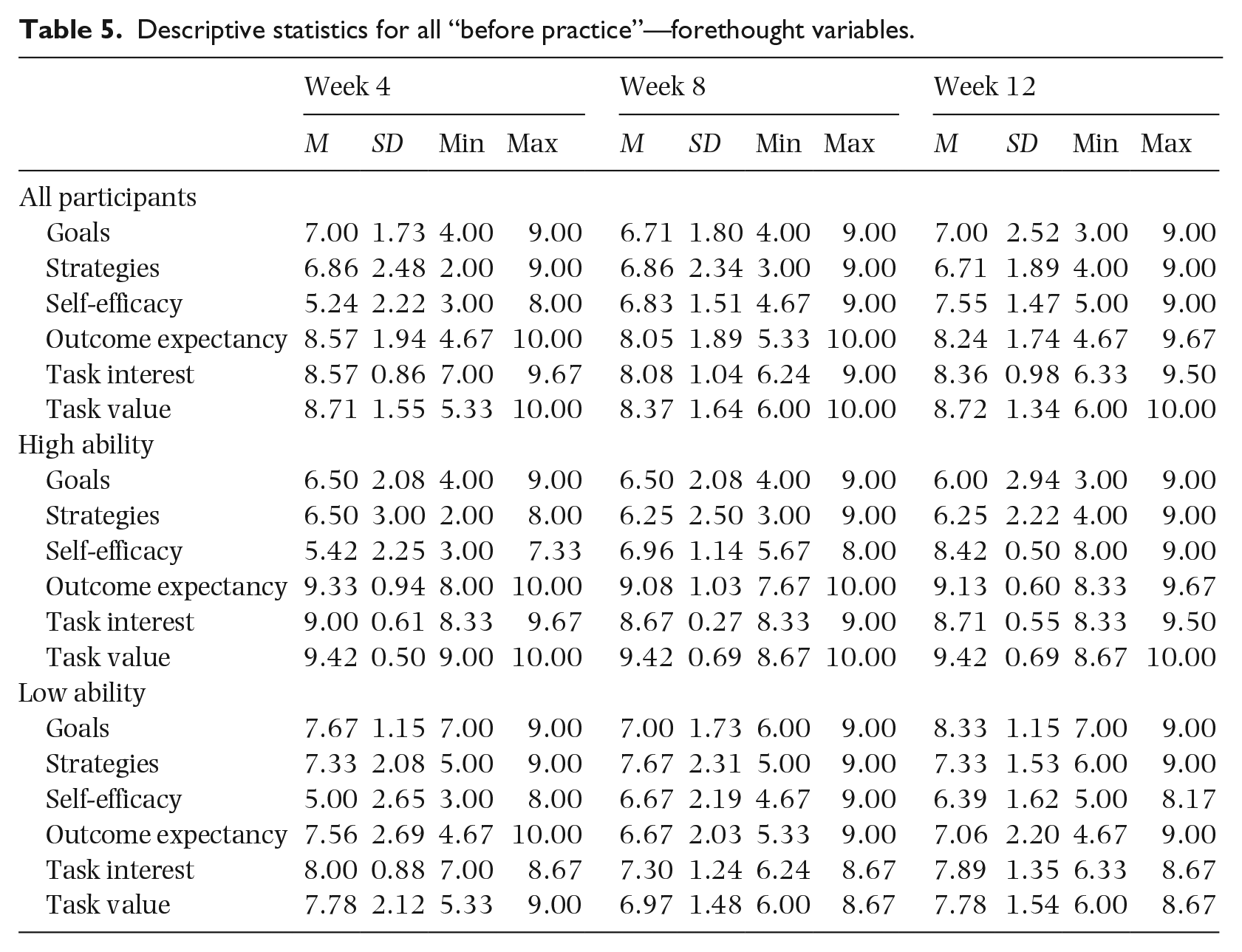
The participants’ motivational dispositions relevant to forethought phase processes were reflective of adaptive beliefs, with relatively strong mean ratings of positive outcome expectations, task interest, and task value for practicing each of the 3 weeks (i.e., ratings > 8 out of possible 10). In fact, some participants average reports for these dispositions each week were at the maximum of the scale with ratings of 10 for each of the 3 days of practice during a given week. In contrast, a clear trajectory of growth can be seen in their self-efficacy ratings with average reports increasing consistently from the middle range of the scale at week 4 to the upper range of the scale at week 12, the range becoming narrower across time as well.
Differences in forethought phase reports between relatively low- and high-ability participants are depicted in Figure 2. Interestingly, low-ability participants reported more goals and strategies on average than high-ability participants at each week, with the difference in goals between the two groups being most disparate at week 12. However, the opposite was found in regard to each of the motivational dispositions with the relatively high-ability participants reporting more adaptive dispositions than low-ability participants. The trend evident across ability levels for self-efficacy is unique among these variables in that the high-ability participants continue with a linear trajectory of increased self-efficacy, whereas a slight down-turn is seen among the low-ability participants.
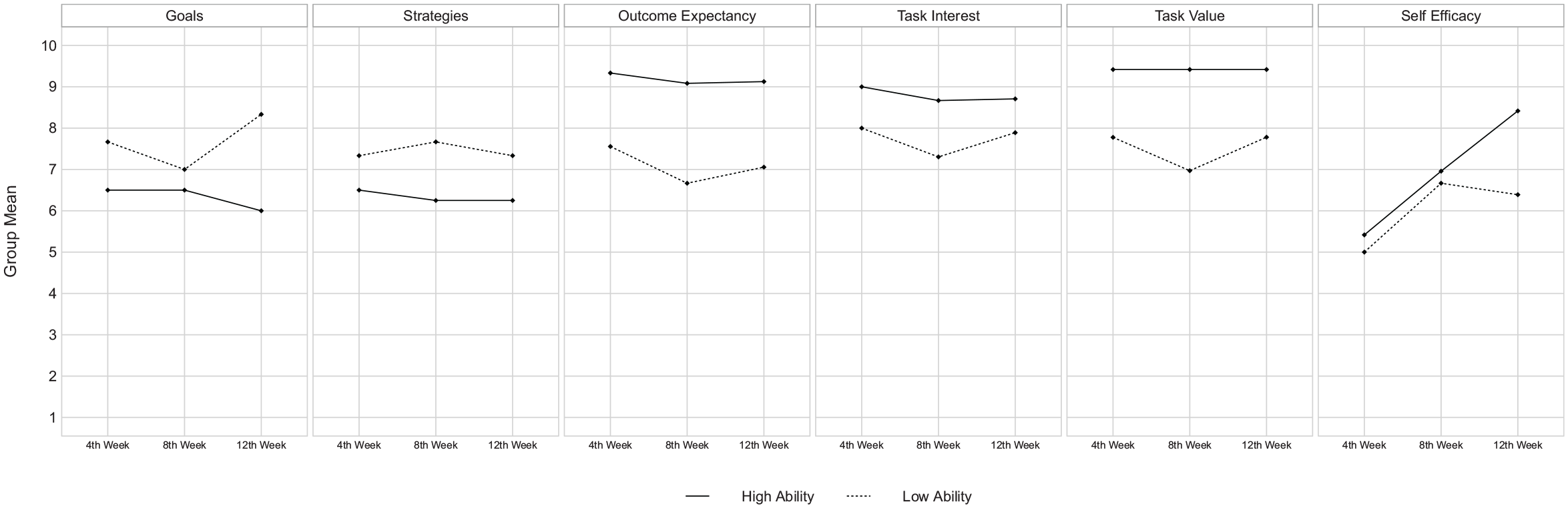
Mean values for forethought phase (before practice) variables across time.
Performance—“during practice”
In contrast to their forethought reports, the pianists’ reports of performance phase processes were much less pronounced (see Table 6). Most variables received between less than two comments per week, on average, whereas only comments coded as task strategy and metacognitive monitoring received more than an average of three comments at any given week. Moreover, all of the performance phase processes have minimum values of zero for each week, with task strategy being the single exception. The processes that varied most among the participants were task strategy, environmental structuring, help seeking, interest incentive, and metacognitive monitoring. The task strategy process was particularly varied with ranges of 19, 19, and 9 at weeks 4, 8, and 12, respectively. Only comments coded as task strategy and metacognitive monitoring displayed any notable change in quantity over time. Reports of task strategy increased from week 4 to week 8 and then decreased at week 12, whereas reports of metacognitive monitoring increased steadily across the three reports for both high- and low-ability pianists.
Descriptive statistics for all “during practice”—performance phase variables.
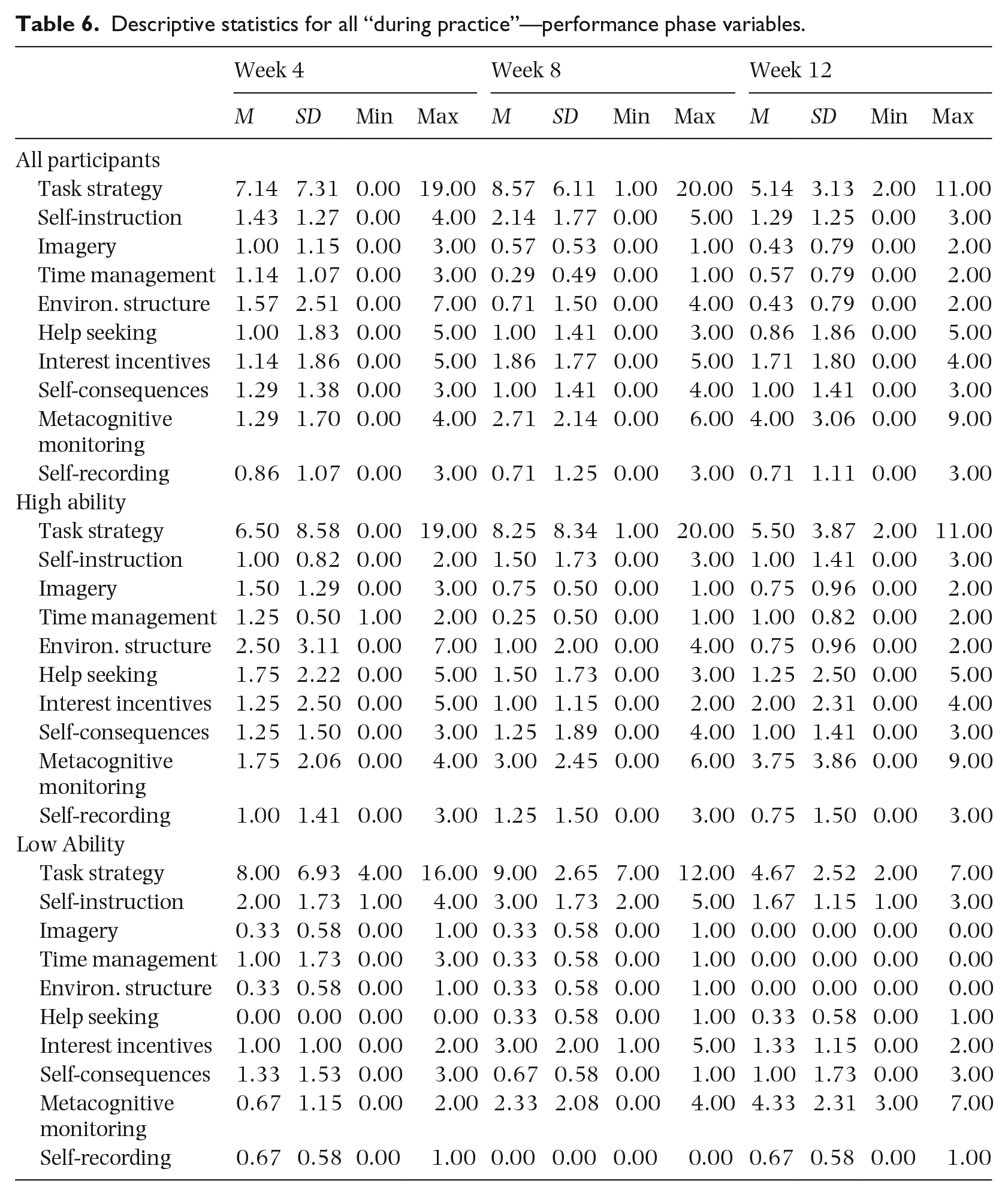
The differences between relatively low- and high-ability participants were similarly subtle (see Figure 3). Slightly more environmental structuring and help seeking comments were made by high-ability students, whereas slightly more self-instruction comments were reported by low-ability students. In addition, a small increase in interest incentive was evident from week 4 to week 8 among low-ability students, but not high-ability students.
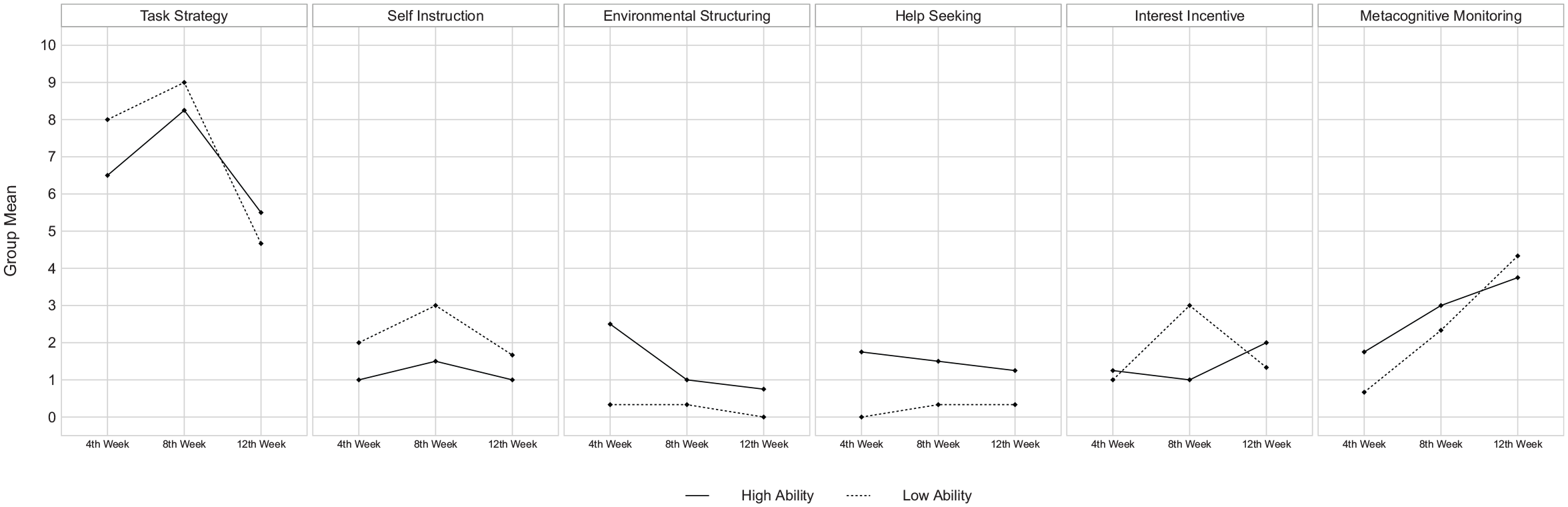
Mean values of selected performance phase (during practice) variables across time.
Self-reflection—“after practice”
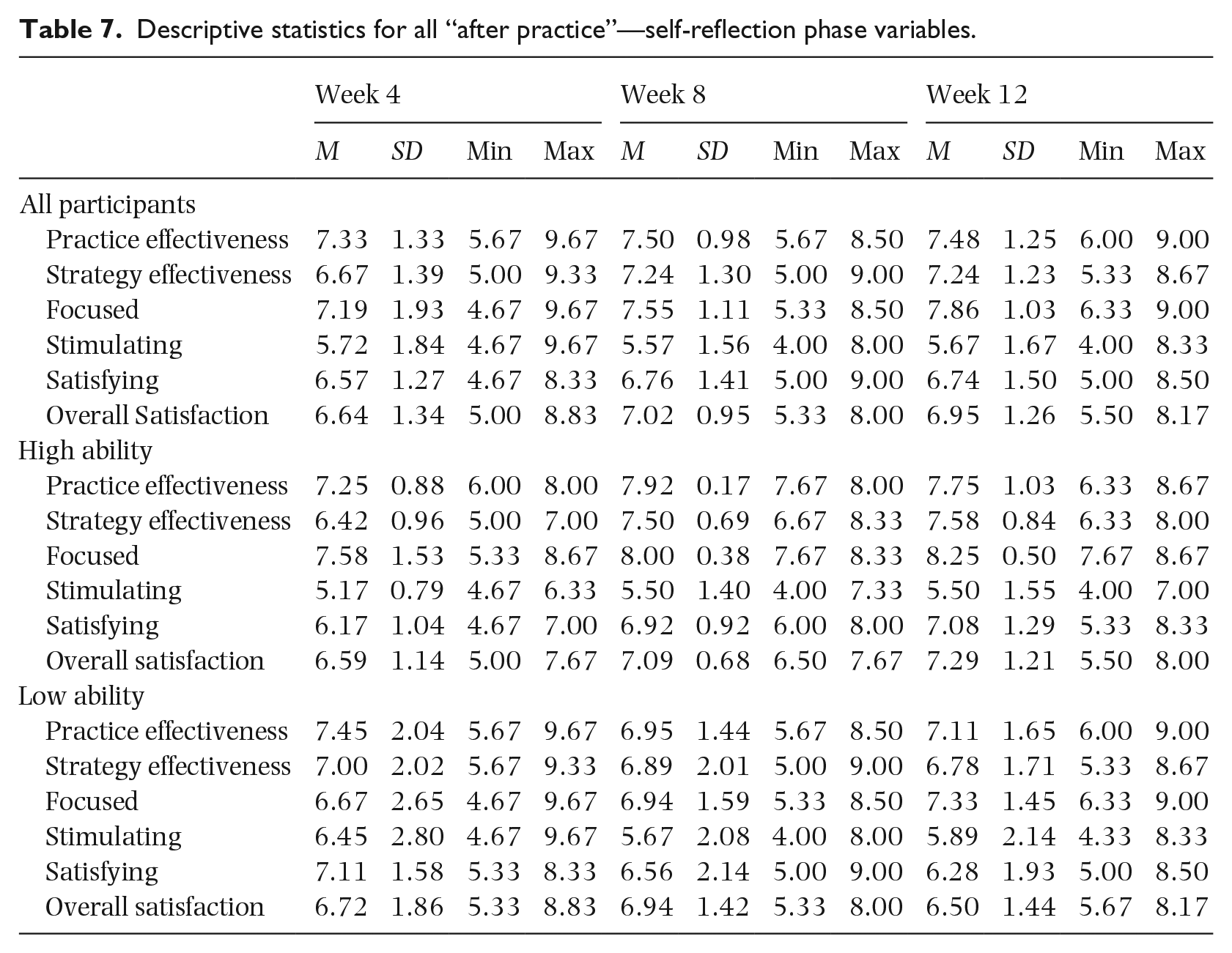
Participants reports of their practice effectiveness in general and their strategy effectiveness, specifically, were fairly strong with average values in the upper end of the scale (i.e., between 6 and 8 with a possible maximum value of 10; see Table 7). Reports of affective experiences following practice were more mixed with relatively strong reports of focused (vs. unfocused) affect, and weaker reports of stimulating (vs. tedious) affect, and satisfying (vs. frustrating) affect experienced during practice, and slightly more positive reports of overall satisfaction with practice (vs. completely disappointing). Standard deviations as well as minimum and maximum values for the self-reflection phase variables suggest relatively little variability in reports. In addition, only very small changes were evident in self-reflection phase variables across time, with small increases in reports of strategy effectiveness, feeling focused (vs. unfocused), feeling satisfied (vs. frustrated), and overall satisfaction (vs. disappointment).
Descriptive statistics for all “after practice”—self-reflection phase variables.
Differences between low- and high-ability participants across time were also slight (Figure 4). On average, reports for practice effectiveness, strategy effectiveness, satisfied (vs. frustrated) affect, and overall practice session satisfaction (vs. disappointment) increased very slightly for high-ability students but decreased very slightly for low-ability students. Also, high-ability students consistently reported somewhat greater feelings of focus (vs. distraction) than the low-ability students.
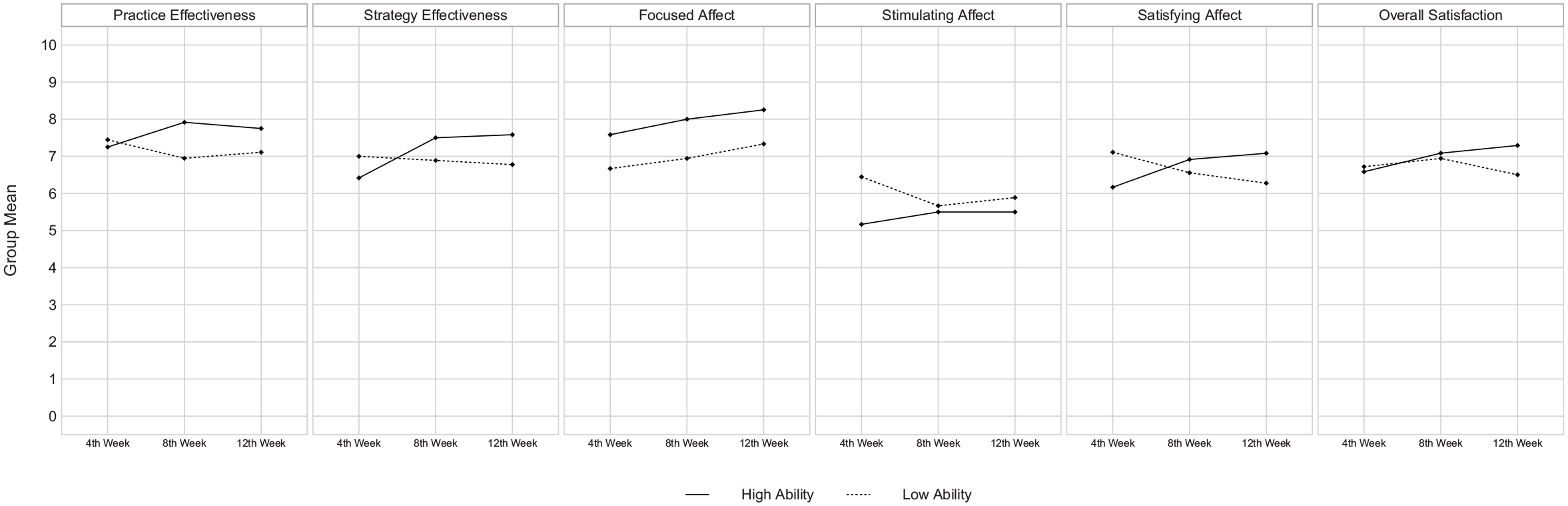
Mean values of selected self-reflection phase (after practice) variables across time.
Discussion
The purpose of this study was to examine the effects of using a microanalysis self-directed practice diary for learning a single piece of repertoire for an end-of-semester examination recital. Specifically, we sought to determine whether the implementation of the self-directed practice diary would lead students to gradually demonstrate more self-regulated learning tendencies across a semester of practicing, and if the type and quality of their self-regulated learning tendencies varied in any way as a function of performance ability.
The quality of student responses and their informal feedback during and after they had completed their practice diaries suggests that the pianists were all capable of understanding and completing the diary entries at each of the three time periods across the semester. Noting the small sample, our results provide preliminary evidence for the development of certain types of proactive self-regulation strategies as a result of a relatively short intervention period. Encouragingly, the most substantial improvement for all students was observed for metacognitive monitoring. This provides initial evidence that the protocol both targeted and improved the student’s ability to execute vital strategies and personal resources when learning to perform their musical repertoire. Focused affect also improved but to a lesser degree. Self-efficacy increased steadily in the lead up to the exam for the high-ability group, but tapered off for the low ability students in week 12.
Furthermore, even though we did not expect systematic differences based exclusively on level of pianistic ability, some differences in the quality and type of self-regulated learning tendencies did become apparent when comparing high- vs. low-ability groups. Before commencing their practice sessions, the higher ability pianists set fewer goals and strategies (i.e., Task Analysis) but expressed higher outcome expectations, task interest, and task value (i.e., Self-Motivational Beliefs) than their lower ability counterparts. These results make sense within SRL literature that indicates that the “quantity” of goals and strategies is not equivalent to practice “quality” with regard to specificity, clarity, breadth, and appropriateness (McPherson & Zimmerman, 2011; Usher & Schunk, 2018; Zimmerman, 2013). Low-ability participants reported more goals and strategies on average than high-ability participants at each week, with the difference in goals between the two groups being most disparate in the final week of the study. We believe this can be explained as follows. The low-ability pianists possessed more basic (vs. advanced) performance skills and so needed to detail more specific target goals and strategies to apply in their practice given the larger range of targets they believe needed to be accomplished. In other words, the greater number of listed goals and strategies of these pianists was a function of their competence rather than their self-regulation tendency per se. This is consistent with the data showing the biggest difference in goals at week 12. That is, the lower ability students continued to correct their work as their examination recital became closer, whereas the higher ability students mastered the piece they were learning earlier and had more time to refine the final performance for their examination recital.
The opposite was found for Self-Motivation Beliefs variables, with high-ability pianists reporting more adaptive dispositions (i.e., outcome expectations, task interest, task value) than their low ability peers. Interestingly, for self-efficacy reports, high-ability pianists continued with a linear trajectory of increasing confidence they would succeed in the examination recital, whereas a slight downturn was observed among low-ability pianists. Thus, high-ability pianists gained in confidence across the practice sessions, whereas low-ability pianists were distinctly less confident in the practice session immediately before the examination recital. Overall, low-ability students expressed lower outcome expectations, less task interest and valuing of the repertoire being learned. The low-ability pianists also entered the last practice session immediately before the examination recital feeling less confident about their ability to perform the piece.
In contrast to the distinct differences in diary entries in the forethought phase, participants’ reports of performance phase processes were much less pronounced, especially in the Self-Control dimensions of self-instruction, environmental structuring and help seeking. These performance phase SRL variables are highly specific, and consequently, tend to be highly individualized. Overall, high-ability pianists reported slightly more environmental structuring and help seeking, whereas low-level pianists reported more self-instruction.
Whether a student needs to declare these aspects of their performance could most depend on their individual needs, whereas forethought phase aspects such as goals and strategies and motivational dispositions such as “task value” are more likely to be reported by all learners irrespective of their specific needs and learning tendencies (McPherson & Zimmerman, 2011; Zimmerman, 2011; Zimmerman & Moylan, 2009). Future research interventions involving the performance phase of the model could emphasize helping musicians understand how to focus on the types of self-instruction, attention focusing, and task strategies that will enhance their practice and performance. This would seem to be especially important for learners who are struggling with mastering repertoire and who might benefit from interventions aimed at helping them refine these aspects of their practice and performance profile.
For the Self-Observation dimension of the performance phase, both high- and low-ability pianists reported an increase in the use of cognitive process such as self-talk to assess their task performance when performing through the work, even though the method they used to self-record their own progress were minimal.
Reports of Self-Reflection phase dimensions following practice show fairly strong Self-Judgment reports of practice effectiveness, with small increases across time in strategy effectiveness, feeling focused (vs. unfocused), and for Self-Reaction reports, feeling satisfied (vs. frustrated) and overall satisfaction (vs. disappointment). Only negligible differences between the two groups were observed across time apart from a slight, consistent difference across the three practice sessions for focused affect with high-ability pianists reporting slightly higher levels on this dimension than their low-ability peers.
In this study, we were able to demonstrate that a sample of university piano students could effectively use a practice diary based on the three-phase cyclic self-regulated learning model (Zimmerman, 2013). Regular self-assessment of learning processes and outcomes facilitated these musicians’ planning, monitoring, and reflection of practice progress in relation to immediate (practice session), as well as longer term (end-of-semester) goals and outcome expectancies.
The use of our microanalysis protocol demonstrated the highly individualized and complex nature of encouraging changes to practice habits for students who have already been learning for a number of years and reached a university level standard of performance within a Bachelor of Music degree. For this reason, much of the SRL microanalysis literature in other domains has tended to focus on specific dimensions of the three-phase model, and highly targeted aspects that help build understandings of the many varied dimensions of SRL that can be improved. To date, our work has sought to adapt and then refine the microanalysis technique for music performance, and then to explore its use with a sample of undergraduate piano majors. Having surveyed the use of the protocol with this group of students, the next stage of our research will explore the extent to which it is possible to create long-term behavioral change in student musicians. In accord with work being undertaken in other domains of learning, we intend to use our microanalysis protocol to identify those areas within an individual student’s overall practice profile that would benefit from focused attention and further refinement.
A key priority in our future work, now that the microanalysis technique has been adapted and refined, will be to involve a much larger sample of musicians compared with the small group of first year pianists involved in this study. For the purpose of this study, we restricted the sample in order to refine how our microanalysis technique would work with contrasting groups of relatively weak versus strong performance students. However, we recognize that further work in the area will need to not only expand the age and developmental trajectories of various types of music learners, but also the range of instruments and repertoires in which musicians of differing genre orientations perform.
Over time, we hope to be able to refine the microanalysis technique so that when students use it, they will be able to optimize their own practice regimes by adopting strategies that more adequately prime them to achieve their personal best. We acknowledge how difficult this will be given the nature of musical practice, the thousands of hours of practice students have undertaken before commencing in a music school, and therefore the ingrained habits that they exhibit in their daily practice schedules. Breaking old, unproductive habits is not easy, and, if the results of this study are to serve as a guide, will take more than a single semester to update and redefine into more optimal practice schedules. We are also very much aware that university level students will continue to rely heavily on cues from their performance teacher in the form of constant reminders about key aspects of their rehearsal of new works, which are often in the form of comments that build awareness of certain issues they need to take into account while refining their performance skills on specific repertoire. Self-regulated learning theory recognizes the need for learners’ efforts to be regulated in this way (i.e., socially by others such as a teacher) in addition to the need for learners to self-direct their own learning through self-awareness, self-motivation, and behavioral skills in ways that will enable them to take charge of their own learning (Zimmerman, 2002).
Our work has established techniques for helping students to monitor and control facets of their behavior, cognition, and affect when practicing their instrument. Such actions need to be reinforced through studio teaching focussed on encouraging students to monitor and control their progress as they refine their self-regulatory skills as learners. A logical next phase of our research will therefore attempt to integrate the techniques we have refined in this study to identify even better ways of enhancing musicians’ abilities to become masters of their own learning.
Footnotes
Funding
The author(s) disclosed receipt of the following financial support for the research, authorship, and/or publication of this article: This study is part of a larger study funded by an Australian Research Council Discovery Project (DP-150103330) held by the second, third, and fourth authors.
