



Abstract
Arousal imagery has been used to help performers regulate performance anxiety in order to perform well. Music performance anxiety research has been dominated by relaxation imagery and despite positive results, methodological limitations prevent causal conclusions regarding its efficacy. Further, arousal imagery strategies incorporating high arousal have helped performers in closely related performance domains, and these strategies might benefit musicians. In addition, emotion regulation models raise concerns about the efficacy of relaxation imagery. In light of these issues, understanding whether and how musicians use arousal imagery in their own practice is an important, yet understudied area. Building on earlier work, we developed the Musician’s Arousal Regulation Imagery Scale (MARIS) to measure musicians’ intentional use of different arousal imagery strategies in three samples of musicians with varying levels of expertise, who reported performing different musical genres and instruments from different musical families. Participants completed the MARIS and a musical background questionnaire. Results suggest that the MARIS has excellent psychometric properties and that it captures two broad classes of arousal imagery. Further, findings suggest that musicians use arousal imagery containing varying levels of arousal. Implications of the present study, limitations, and suggestions for future research are discussed.
Mental imagery
Musicians engage in a delicate balancing act each time they perform. In order to communicate their artistic ideas to an audience, musicians must manage the technical demands of their instruments, as well as the heightened emotions that can accompany performing. Mental imagery can be used to “hear,” “see,” and “feel” performances before they take place (Connolly & Williamon, 2004, p. 224; White & Hardy, 1998) and represents a powerful mental rehearsal strategy that can be used before musicians set foot onstage.
Cognitive science suggests that there is significant overlap in neurological processing between imagined and actual performances. For example, emotional centers of the brain are activated in response to both imagined and perceived stimuli (e.g., Kim et al., 2007) and imagining socially stressful situations increases anxiety more than verbally processing the same information (Holmes & Matthews, 2005). Similar brain areas are activated in response to perceived and imagined auditory pitches (Zatorre, Evans, & Meyer, 1994), and pre-motor and supplementary motor areas are activated when musicians imagine performing (Lotze, Scheler, Tan, Braun, & Birbaumer, 2003; Zatorre & Halpern, 2005). Research also suggests that imagery can be used to feel emotional aspects of performance (e.g., Kim et al., 2007) and musicians’ emotions play an important role in their artistic interpretation and expression of a piece of music (Van Zijl & Sloboda, 2011). Indeed, it is not surprising that imagery improves performance quality when used with physical practice (Driskell, Copper, & Moran, 1994; Ross, 1985). Clearly, mental imagery can be an immersive experience that shares important properties with the actual experience being imagined.
Although musicians use imagery in their own practice (Clark, Williamon, & Lisboa, 2007; Gregg, Clark, & Hall, 2008; Holmes; 2005; Lotze et al., 2003), little is known about whether and how musicians use imagery to regulate the heightened emotions (e.g., anxiety) that often accompany performing. This is an area of particular importance given the prevalence and impact of music performance anxiety.
Mental imagery and Music Performance Anxiety
Music performance anxiety (MPA) can make it difficult for musicians to perform well (Papageorgi, Creech, & Welch, 2013; Wan & Huon, 2005; Wesner, Noyes, & Davis, 1990). Even the most seasoned musicians experience MPA, and estimates suggest that it affects anywhere from 15% (Steptoe, 2001), to upwards of 70% of professional musicians (James, 1997). Further, approximately 33% of music students experience MPA (Studer, Gomez, Hildebrandt, Arial, & Danuser, 2011), and similar estimates have been reported in musicians with varying levels of expertise (Barbar, de Souza Crippa, & de Lima Osório, 2014). MPA impacts musicians in a variety of ways such as worried thoughts about performances (Kenny, Davis, & Oates, 2004), as well as elevated heart-rate, pain, or dry-mouth during performances (Leaver, Harris, & Palmer, 2011; Miller, 2005). Based on the distress and impairment it causes, MPA can be diagnosed as performance-only social anxiety disorder (SAD) (American Psychiatric Association, 2013), and many musicians experience clinical levels of this form of social anxiety (Barbar et al., 2014; Cox & Kenardy, 1993; Kenny, Driscoll, & Ackermann, 2014).
Due to the impact that imagery has on emotions, it is frequently used as a technique to modulate emotions and reduce anxiety in the presence of a feared stimulus or social situation (Hirsch & Holmes, 2007). Indeed, mental imagery has been used to help ameliorate MPA and competitive sport anxiety in applied research and we will briefly review this research in order to inform future imagery research in musicians.
Music Performance Anxiety and relaxation imagery
Although not explicitly termed relaxation imagery in existing MPA research, musicians have generally been instructed to use performance imagery either following a relaxation induction such as progressive muscle relaxation (Appel, 1974; Kim, 2008; Nagel, Himle, & Papsdorf, 1989; Sisterhen, 2005; Stanton, 1994), or instructed to imagine themselves performing in a relaxed state (Appel, 1974; Esplen & Hodnett, 1999; Nagel et al., 1989; Sisterhen, 2005; Stanton, 1994; Whitaker, 1985; Kim, 2008). Imagery has been included in mental skills training interventions, yet detailed information has not been reported regarding how imagery has been specifically employed to manage MPA (e.g., Gratto, 1998; Hoffman & Hanrahan, 2012). Thus, to date, relaxation imagery is the predominant approach in applied MPA research.
Despite the positive results that have been reported regarding the helpfulness of relaxation imagery used before performances (Appel, 1974; Esplen & Hodnett, 1999; Kim, 2008; Nagel et al., 1989; Sisterhen, 2005; Stanton, 1994; Whitaker, 1985), methodological limitations prevent causal conclusions about the effectiveness of relaxation imagery on MPA per se; relaxation imagery has been used in conjunction with other treatment techniques (e.g., Kim, 2008), and the only stand-alone imagery intervention did not include a control group (Esplen & Hodnett, 1999).
Further, relaxation imagery may be viewed as a form of imaginal exposure, whereby musicians are exposed to imagined anxiety-provoking performance situations before they take place (Finch & Moscovitch, 2016). Current best-practice guidelines for exposure therapy suggest that the use of anxiety control strategies (e.g., suppression) be avoided (Barlow, 2014), so that individuals can fully engage with all aspects of their feared stimuli (Foa & Kozak, 1986; Foa, Huppert, & Cahill, 2006; for a review of alternative perspectives, see Blakey & Abramowitz, 2016). Further, emotion regulation research suggests that anxiety control strategies such as suppression increase anxiety in clinical populations (Campbell-Sills, Barlow, Brown, & Hofmann, 2006a, 2006b), and that such strategies are used more often by those who struggle with problematic anxiety (Gross & John, 2003). Thus, for musicians who are not relaxed during performances, relaxation imagery might not be the most beneficial arousal imagery strategy and the above review suggests that it could be harmful for highly performance anxious musicians if used in an attempt to suppress the experience and expression of MPA.
It is possible that due to the predominance of relaxation-based strategies in the MPA literature, performance anxious musicians might be employing imagery in a manner that is inconsistent with “best-practice” exposure guidelines (Finch & Moscovitch, 2016), which may lead to a suppressive increase in anxiety, as per emotion regulation research (Campbell-Sills et al., 2006a, 2006b). Although the use of relaxation imagery with other treatment components in existing applied MPA research may have helped to counteract its potentially suppressive effects, used on its own, relaxation imagery may be detrimental to some musicians. Clearly, future research must investigate whether musicians use relaxation imagery independent of existing treatment research and whether this is helpful.
Competitive anxiety and imagery
Although there are differences between sport and musical performance, athletes and musicians perform in competitive settings, perform individually and in groups, and require fine and gross motor control to perform effectively. Thus, the imagery strategies used by athletes and those employed in applied competitive anxiety research are also of interest and offer suggestions about additional strategies which musicians might use.
The efficacy of relaxation strategies in sport research (e.g., deep breathing exercises) has been questioned because these strategies might lower physiological activation levels below an optimal level for some performers (Hanton & Jones, 1999). Indeed, imagery used to anticipate or accept heightened arousal and anxiety promotes a facilitative interpretation of competitive anxiety under certain conditions (Cumming, Olphin & Law, 2007; Mellalieu, Hanton, & Thomas, 2009). Specifically, high arousal imagery is effective when used concurrently with mastery or success imagery (Cumming et al., 2007; Mellalieu et al., 2009). Further, Jones and Hanton (2001) identified confident coping—wherein performers imagine performing with mastery and confidence while experiencing heightened anxiety—as an effective coping strategy that would not diminish optimal levels of arousal. Additionally, imagery used to reappraise or re-frame anxiety (i.e., imagining getting “psyched-up” or “revved-up” to compete) also engenders facilitative interpretations of anxiety (Cumming et al., 2007). However, the use of high arousal imagery without explicit success or mastery imagery is associated with increased cognitive and somatic anxiety in elite dancers (Monsma & Overby, 2004), and predicts cognitive anxiety in elite roller skaters (Vadocz, Hall, & Moritz, 1997). Furthermore, some research indicates that sport-confident athletes are more likely to imagine mastery and arousal imagery than low sport-confident athletes (Moritz, Hall, Martin, & Vadocz, 1996).
In summary, it is possible that similar to athletes, musicians use high arousal imagery strategies that might help to facilitate levels of arousal and anxiety which also optimize performance (e.g., confident coping). Alternatively, musicians might use high arousal imagery strategies without concurrent success or mastery imagery. Clearly, research must address whether and how musicians use high arousal imagery.
Functions of Imagery in Music Questionnaire
Although research suggests that musicians use imagery to “deal with nerves,” the specific approaches or strategies used by musicians have not been elaborated in current research (Clark et al., 2007) and little is known about whether musicians use imagery strategies akin to those employed in applied MPA and competitive sport imagery research. In sport research, the term arousal imagery has been used to describe performance imagery that integrates different levels of arousal, ranging from low (i.e., relaxation) to high (i.e., stress and anxiety; Martin, Moritz, & Hall, 1999). To our knowledge, the Functions of Imagery in Music Questionnaire (FIMQ; Gregg et al., 2008) is the only extant measure that has been developed to measure arousal imagery use in musicians.
The Functions of Imagery in Music Questionnaire (FIMQ; Gregg et al., 2008) was modeled after the Sport Imagery Questionnaire (SIQ; Hall, Mack, Paivio, & Hausenblas, 1998) which was developed to capture whether athletes use performance imagery based on Paivio’s Analytic Framework of Imagery Effects (1985). This framework suggests that performance imagery can be used for cognitive (e.g., skill or strategy rehearsal) and motivational (e.g., skill mastery, arousal regulation, and goal setting) purposes, to target either general or specific goals (Paivio, 1985). Thus, Hall et al. (1998) included four subscales in the original version of the SIQ: cognitive general (CG), cognitive specific (CS), motivational general (MG), motivational specific (MS).
In order to generate items for their measure, Hall et al. (1998) reviewed previous sport-specific imagery measures (e.g., the Imagery Use Questionnaire for Soccer Players [IUQ-SP; Salmon, Hall, & Haslam, 1994]), and reviewed the sport psychology literature. Items were initially reviewed by sport and cognitive psychologists and by elite athletes, and 46 items were retained. In order to determine the reliability and factor structure of the SIQ, 113 athletes who competed in different sports at different levels of expertise completed the measure, and rated items based on how frequently they used each form of imagery. The SIQ subscales demonstrated acceptable reliability, with Cronbach’s alpha coefficients ranging from .76 to .87. Exploratory factor analysis suggested that the motivational general subscale measured two factors, not one as suggested by Paivio’s (1985) framework. Specifically, motivational-general mastery (MG-M) items captured imagery used to be in control, mentally tough, and confident during competitions, while motivational-general arousal (MG-A) captured emotional imagery (e.g., imagining being calm, or imagining the stress associated with performing). Based on these results, a revised 30-item measure was studied in two additional samples of kinesiology students and athletes, and results suggested a clear five-factor solution (CG, CS, MS, MG-M, and MG-A), with adequate subscale reliabilities. Additionally, Stevens, Short, and Hall performed a confirmatory factor analysis and found that the five-factor solution demonstrated good model fit (as cited in Hall, Stevens, & Paivio, 2005).
In order to adapt the SIQ for musicians, Gregg et al. (2008) reworded items to reflect musical performances, and the content validity of the measure was assessed by three music professors and three advanced music performance majors. The FIMQ included 28-items designed to measure the cognitive and motivational subscales included in the five-factor Sport Imagery Questionnaire (Hall et al., 1998). In a sample of student and non-student classical musicians who performed a variety of instruments, Gregg et al. (2008) found that several of the FIMQ subscales demonstrated good reliability, including MS (α = .80) and MG-M (α = .85). The CS and CG subscales demonstrated poor reliability, and items from both were eliminated and a general cognitive subscale was formed, which demonstrated acceptable reliability (α = .75). However, of particular relevance to the current research, Gregg et al. (2008) found that the arousal regulation subscale (i.e., motivational-general arousal) demonstrated poor reliability (α = .57). Further, Gregg et al. (2008) did not report whether factor analyses were performed on the FIMQ. Thus, although this study was an important contribution to literature on imagery in music performance, the FIMQ does not capture whether musicians use arousal regulation imagery. Additionally, several other limitations associated with the measure must be addressed in future arousal imagery research.
First, similar to the SIQ (Hall et al., 1998), the FIMQ (Gregg et al., 2008) instructs participants to respond to how frequently they use imagery for different purposes. Although some items are clearly worded in this manner (e.g., “I imagine the anxiety associated with performing”), other items ask about musicians’ responses to imagery (e.g., “When I imagine a performance or competition, I feel myself getting emotionally excited”). Future research must make explicit the difference between imagery that is intentionally used to anticipate and regulate emotions related to performing from emotions experienced in response to performance imagery to provide a clearer picture of how musicians use arousal regulation imagery.
Second, the structure of the arousal regulation subscale of the FIMQ (Gregg et al., 2008) precludes a detailed analysis of the types of imagery that musicians use. As noted above, arousal imagery can be used to imagine different levels of arousal, ranging from low (i.e., relaxation) to high (i.e., stress and anxiety; Martin et al., 1999). Indeed, items on the arousal regulation subscale of the FIMQ capture different levels of arousal, ranging from calmness to excitement, stress, and anxiety. However, Martin et al. (1999) note that for imagery to be as effective as possible, the type or intended function of imagery should align with the desired outcome. Thus, it is possible that musicians use different arousal imagery strategies to achieve different goals such as using relaxation imagery to reduce arousal or excitement imagery to get motivated or “psyched-up” to perform. Thus, future music research must investigate discrete arousal imagery strategies (e.g., relaxation imagery) in order to assess their differential relations with variables such as MPA and performance outcome.
In summary, we know little about musicians’ use of intentional arousal regulation imagery during their independent practicing or rehearsals with other musicians. However, this is an area that warrants additional research because imagery is a powerful mental practice and rehearsal tool that is commonly employed in applied research to help musicians experience different aspects of performing such as anticipating and regulating arousal.
Initial development of the Musician’s Arousal Regulation Imagery Scale (MARIS)
The aim of the current research was to develop a new self-report measure, the Musician’s Arousal Regulation Imagery Scale (MARIS), to capture musicians’ use of different arousal imagery strategies and examine its reliability and factorial structure. To address limitations associated with the FIMQ (Gregg et al., 1998), we included items designed to capture intentional imagery incorporating varying levels of arousal. Further, we designed item subscales to measure arousal imagery strategies employed in existing applied imagery research. Based on the suggestion that the function of imagery should be related to a performer’s desired outcome (Martin et al., 1999), we hypothesized that our measure would have a four-factor structure capturing relaxation, psyching-up, anxiety, and confident coping imagery.
A relaxation imagery subscale was included as this is the predominant approach in applied MPA research. Further, because high arousal strategies have been used in existing competitive anxiety literature in different ways, we included three additional subscales to capture these strategies. Specifically, in light of different psyching-up and anxiety imagery scripts used in previous competitive anxiety research (Cumming et al., 2007), we included separate subscales to capture these approaches. Although we questioned whether musicians would intentionally use anxiety imagery as a practice or rehearsal strategy, we considered that some musicians might use anxiety imagery to help expose themselves to what they typically experience in performance situations and sought to include as many strategies as possible during measure development. Last, we included a confident coping subscale to capture imagery that musicians might use to imagine performing with control and mastery in the presence of anxiety similar to that used in competitive anxiety research (Cumming et al., 2007; Mellalieu et al., 2009).
In order to generate items for the different subscales, we incorporated elements of some of the arousal regulation items from the Functions of Imagery in Music Questionnaire (FIMQ; Gregg et al., 2008), elements of imagery scripts detailed in MPA and competitive anxiety research, as well as elements of qualitative research outlining how athletes use arousal imagery. Relaxation imagery scripts that have been used in existing intervention research emphasize both mental (e.g., being free from worried thoughts) and physical (e.g., breathing slowly) relaxation (e.g., Cumming et al., 2007; Esplen & Hodnett, 1999) and the relaxation subscale items were intended to capture these elements. Psyching-up imagery used by athletes prior to competitions (e.g., White & Hardy, 1998) and in competitive anxiety research focuses on imagining the excitement and energy associated with performing (e.g., imagining blood “pumping” through your veins; Cumming et al., 2007) and the psyching-up subscale items incorporate these approaches. Anxiety subscale items were based on the anxiety script used in Cumming et al. (2007) and elements of the FIMQ arousal regulation items (Gregg et al., 2008), which include imagining tight muscles and a racing heart. Last, confident coping imagery scripts in extant research combine imagery used to imagine performing well and with confidence while experiencing aspects of performance anxiety (e.g., heart racing, worried thoughts; Cumming et al., 2007; Mellalieu et al., 2009), and the confident coping subscale items aimed to capture these elements. Each subscale included five items and participants rated the frequency with which they intentionally used each item on a scale from 1 (never) to 7 (always).
Method
Participants
Participants included three samples of professional, student, and amateur musicians who reported actively performing over the 24 months preceding the online study. Participants in Samples 1 and 2 were recruited through Amazon Mechanical Turk (MTurk), while participants in Sample 3 were recruited through the University of Waterloo Research Experiences Group (REG), Wilfrid Laurier University’s Faculty of Music, as well as from Canadian symphonic orchestras, and community music groups in the Greater Toronto Area.
Self-report measures
Background questionnaire
Participants completed a background questionnaire concerning demographic information as well as their musical backgrounds (see Table 1).
Demographic Data.
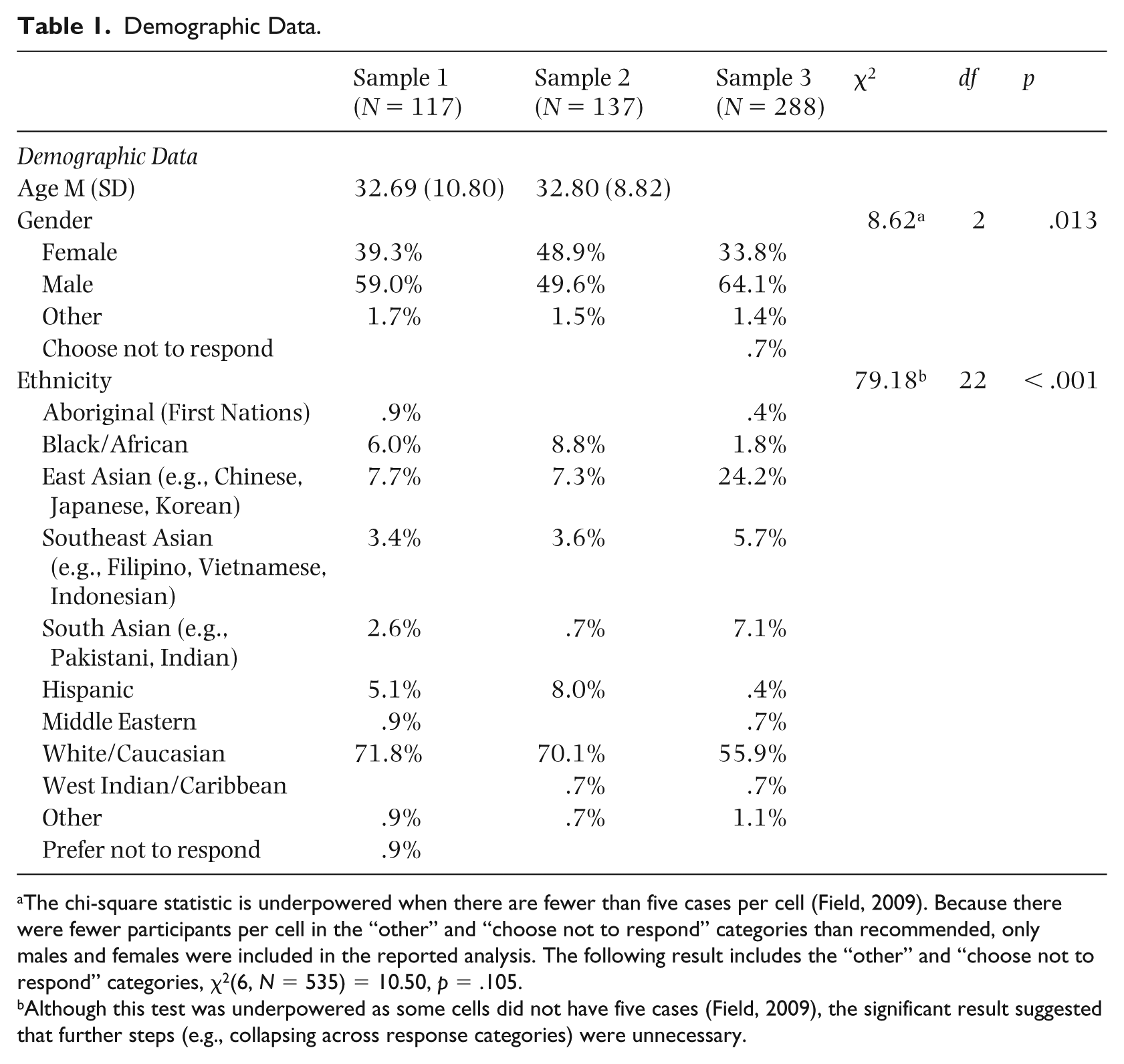
The chi-square statistic is underpowered when there are fewer than five cases per cell (Field, 2009). Because there were fewer participants per cell in the “other” and “choose not to respond” categories than recommended, only males and females were included in the reported analysis. The following result includes the “other” and “choose not to respond” categories, χ2(6, N = 535) = 10.50, p = .105.
Although this test was underpowered as some cells did not have five cases (Field, 2009), the significant result suggested that further steps (e.g., collapsing across response categories) were unnecessary.
Arousal imagery
Three samples of participants completed the Musician’s Arousal Regulation Imagery Scale (MARIS) to allow us to investigate its factorial validity in multiple samples (see Appendix A).
Data screening
In order to ensure the integrity of our data, participants were excluded from the analyses if they responded incorrectly to more than three data validation questions (e.g., “Please respond always to this question”), for failing to meet the pre-specified performance frequency criteria (i.e., over the past 24 months), and for completing the study in less than 2 seconds per question (as per Huang, Curran, Keeney, Poposki, & DeShon, 2012).
Sample 1
Based on the data validation questions, performance frequency criteria, and time analysis, 25% of Sample 1 participants were screened out (n = 39). After screening, Sample 1 included 117 participants who were recruited through MTurk. The average age of participants was 32.69 (SD = 10.81), ranging from 18 to 70, and 59% of the sample was female. Participants were from a variety of ethnic backgrounds.
Participants included musicians from different instrument families, 91.5% reported having a primary instrument (i.e., one they play the most), while 8.5% reported playing multiple instruments. Participants who reported playing multiple instruments included a variety of musical families. Of those reporting playing a primary instrument, the mean years of experience was 15.15 (SD = 11.14), ranging from 1 to 59 years, mean training was 5.97 years (SD = 4.14), ranging from 0 to 20 years. Primary instrument families included plucked strings (34.0%), keyboard (20.8%), voice (17.0%), woodwind (13.2%), strings (7.5%), brass (5.7%), and percussion (1.9%).
Participants also performed a variety of musical genres including classical (21.4%), popular (17.9%), variety/multiple genres (12.8%), religious (12%), rock (12%), jazz (6.8%), and other (17.1%). Of note, 11.1% of the sample were professional musicians and an additional 18.8% were student musicians.
Sample 2
Based on the same criteria used in Sample 1, 33% of Sample 2 participants (n = 68) were screened out. After screening, Sample 2 included 137 participants who were recruited through MTurk. The average age of participants was 32.80 (SD = 8.82), ranging from 18 to 68, and 49.6% of the sample was female. Participants were from a variety of ethnic backgrounds.
Participants included musicians from different instrument families, and 85.4% reported having a primary instrument, while 11.7% reported playing multiple instruments, and 2.9% did not specify an instrument (primary or secondary). Participants who reported playing multiple instruments included a variety of musical families. Of those reporting playing a primary instrument, the mean years of experience was 14.8 (SD = 10.52), ranging from 1 to 40 years, mean training was 5.75 (SD = 4.70), ranging from 1 to 22 years. Primary instrument families included plucked strings (30.8%), keyboard (24.8%), voice (17.9%), woodwind (11.1%), strings (6.0%), and brass (3.4%).
Participants also performed a variety of musical genres including classical (25.5%), rock (16.1%), popular (12.4%), religious (10.9%), variety/multiple genres (10.2%), jazz (5.8%), metal (5.8%), and other (13.3%). Of note, 15.3% of the sample were professional musicians and an additional 20.4% were student musicians.
Sample 3
Based on the same criteria used in Sample 1, 21% of Sample 3 participants (n = 75) were screened out. After screening, Sample 3 included 288 participants recruited through the University of Waterloo, Wilfrid Laurier University, as well as through Canadian symphonic and vocal groups. For participants who were recruited through the University of Waterloo, age data was collected in ranges (e.g., 17–22 years) and is thus reported in ranges for all of Sample 3. Age ranged from 17 to 75 years and the percentages of participants in each range were: 17–22 (41.5%), 23–28 (18.5%), 29–34 (15.3%), 35–40 (9.6%), 41–46 (5.3%), 47–52 (2.6%), 53–58 (1.7%), 59–64 (3.4%), 65–70 (1.7%), and 71–75 (.4%). The sample was 33.8% female and participants were from a variety of ethnic backgrounds.
Participants included musicians from different instrument families, and 91.3% reported having a primary instrument (i.e., one they play the most), while 6.6% reported playing multiple instruments, and 2.1% did not specify an instrument (primary or secondary). Participants who reported playing multiple instruments included a variety of musical families. Of those reporting playing a primary instrument mean years of experience was 15.73 (SD = 13.38), ranging from 1 to 65 years, mean training was 8.07 (SD = 5.49), ranging from 1 to 42 years. Primary instrument families included keyboard (26.6%), strings (21.7%), voice (16.3%), woodwind (13.3%), plucked strings (9.9%), brass (7.2%), and percussion (4.9%).
Participants also performed a variety of musical genres including, classical (52.4%), variety/multiple (24%), popular (11.8%), religious (2.4%), rock (2.4%), jazz (1%), and other (6%). Of note, 12.5% of the sample were professional musicians and an additional 12.5% were student musicians (see Table 1 for participant demographics for Samples 1, 2, and 3).
Results
Factor structure of the MARIS
In order to assess the factorial structure of our measure, we conducted principal components analyses in Samples 1 and 2, a parallel analysis on combined Sample 1 and 2 data, and a confirmatory factor analysis in Sample 3.
Sample 1
A principal components analysis was conducted with an orthogonal rotation (varimax) on the 20-item MARIS in Sample 1. The Kaiser–Meyer–Olkin measure indicated that there was sampling adequacy for the analysis, KMO = .877, with individual KMO measures all greater than 0.81, classifications of “meritorious” to “marvelous” according to Kaiser (1974). Bartlett’s test of sphericity, χ2(190) = 1449.56, p < .001, indicated that the magnitudes of the correlations between MARIS items were sufficient to perform this analysis.
In order to determine how many components to extract, we considered Kaiser’s (1960) eigenvalue-greater-than-one criterion, Cattell’s Scree Test (1966; see Figure 1), and the interpretability of the component solution. These guidelines suggested a two-component structure. The rotated solution explained 57.24% of the total variability.
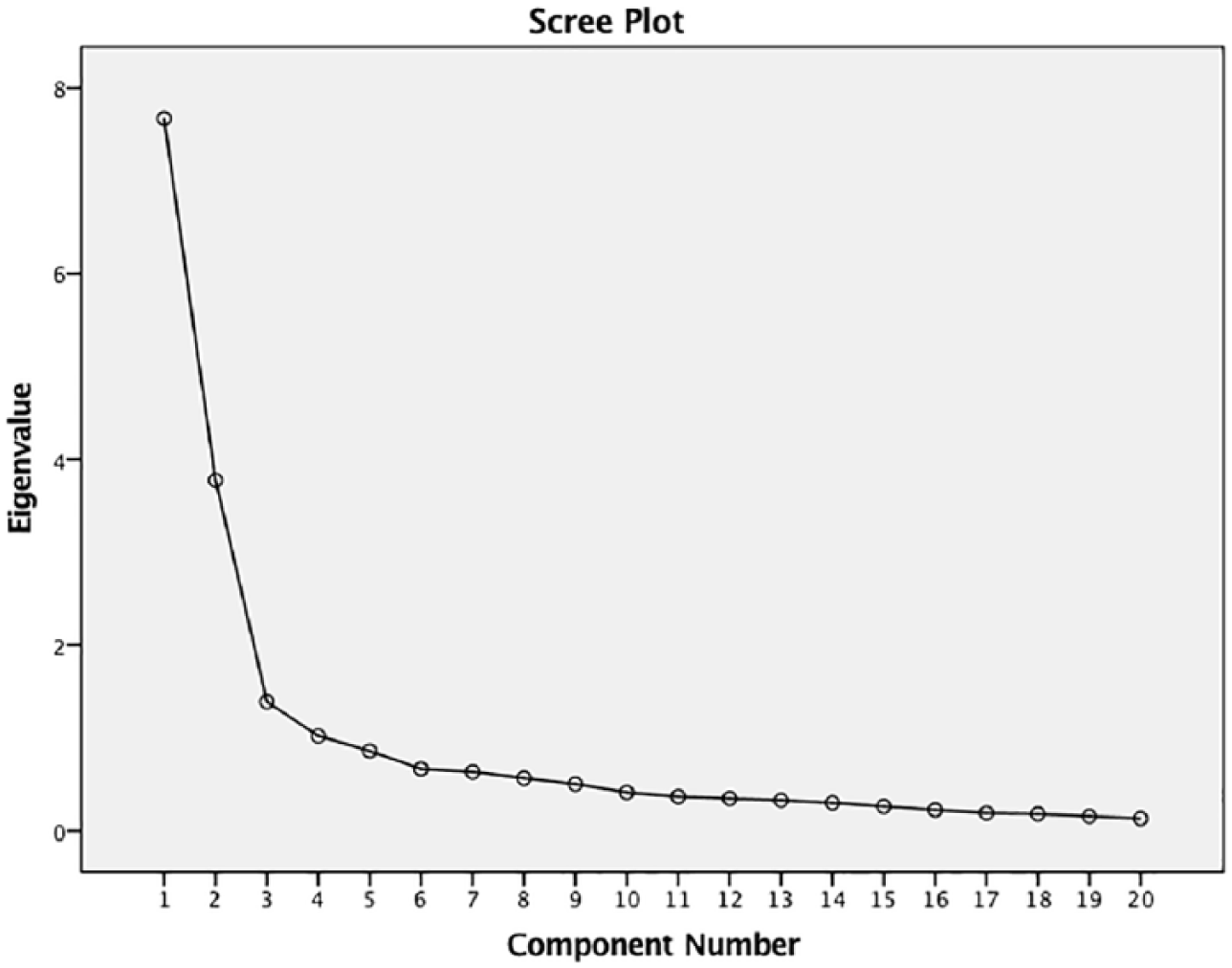
Principal component analysis scree plot for the MARIS for Sample 1.
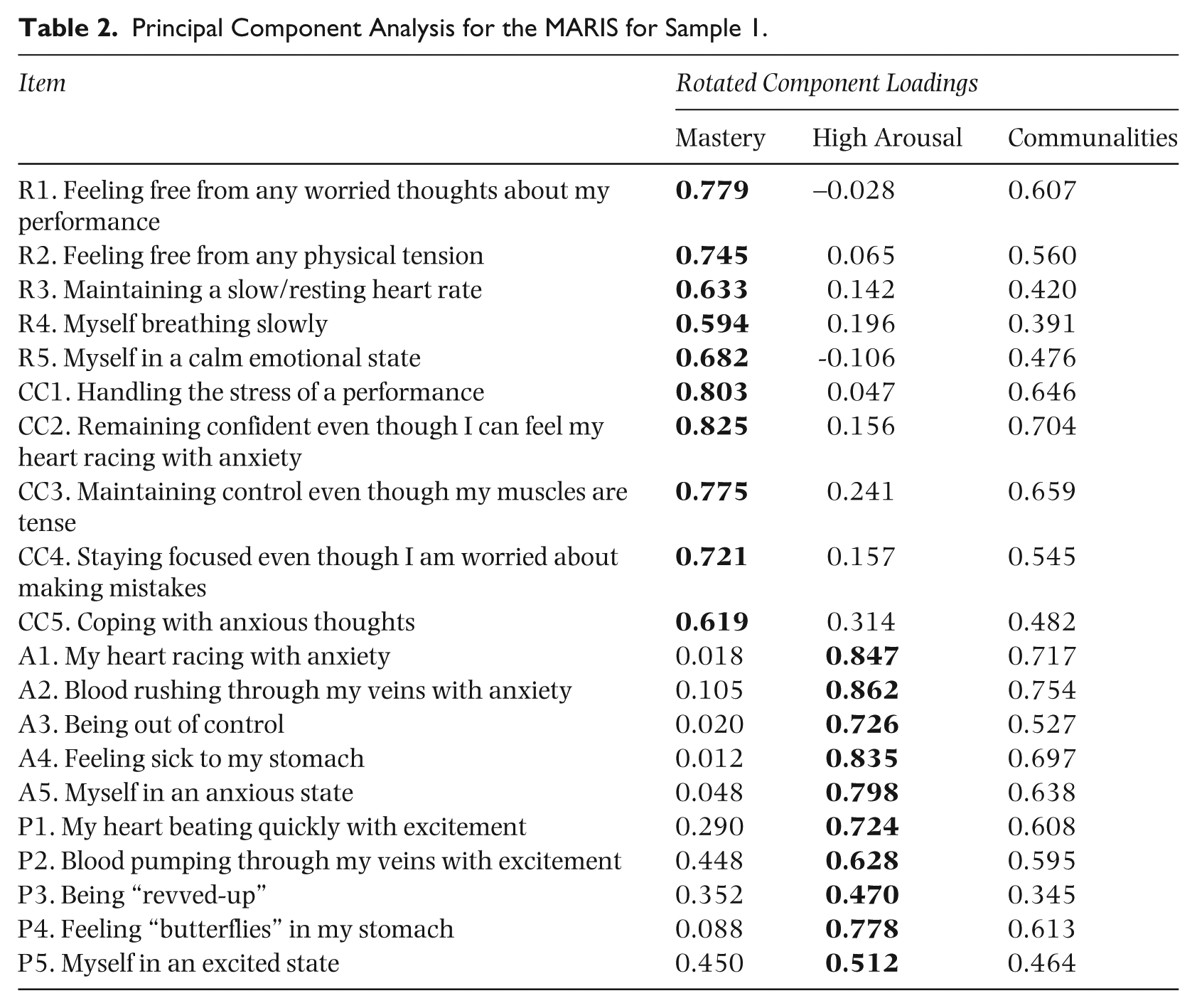
The first rotated component accounted for 29.29% of the variability in the MARIS. Both the relaxation and the confident coping items loaded onto this component. In order to name it, we considered that both relaxation and confident coping items—although differing in their level of arousal—suggest an element of mastery in relation to one’s performance, and this component was thus named mastery.
The second rotated component accounted for 28.04% of the variability. The anxiety and psyching-up items loaded onto this component. In order to name this component, we considered that these items include elevated arousal and thus named it high arousal.
Of note, psyching-up items 3 (“Being revved-up”) and 5 (“Myself in an excited state”) cross-loaded onto the mastery and arousal components. However, as this analysis was exploratory and these items can be viewed as theoretically important to high arousal imagery, they were retained for analysis in Sample 2 (see Table 2 for loadings and communalities).
Principal Component Analysis for the MARIS for Sample 1.
Sample 2
A principal component analysis was also conducted with an orthogonal rotation (varimax) on the 20-item MARIS in Sample 2. The Kaiser–Meyer–Olkin measure indicated that there was sampling adequacy for the analysis, KMO = .899, with individual KMO measures all greater than .84, classifications of “meritorious” to “marvelous” according to Kaiser (1974). Bartlett’s test of sphericity, χ2(190) = 1501.35, p < .001, indicated that the magnitude of the correlations between MARIS items were sufficient for this analysis.
We considered the same extraction guidelines as in the Sample 1 analysis (e.g., Kaiser’s (1960) eigenvalue-greater-than-one criteria). The rotated solution suggested a two-component solution and explained 56.95% of the total variability. The high arousal component accounted for 30.32% of the variability, while the mastery component accounted for 26.63% of the variability. Similar to the loadings in Sample 1, psyching-up item 5 (“Myself in an excited state”), cross-loaded onto both components.
Parallel analysis
Because concerns have been raised about commonly used methods for determining the number of factors or components to be retained in exploratory analyses (e.g., inspection of scree-plots and the eigenvalue-greater-than-one criterion), we conducted a parallel analysis (on combined Sample 1 and 2 data) on random data and permutations of our data, which can minimize the over-identification of factors (Wood, Akloubou Gnonhosou, & Bowling, 2015). Using O’Connor’s (2000) syntax for SPSS, results suggest a two-factor structure based on both random and permutation data as only the eigenvalues for the first two factors exceeded the 95th percentile values and are thus unlikely to be attributable to chance (see Figure 2 for permutation results).
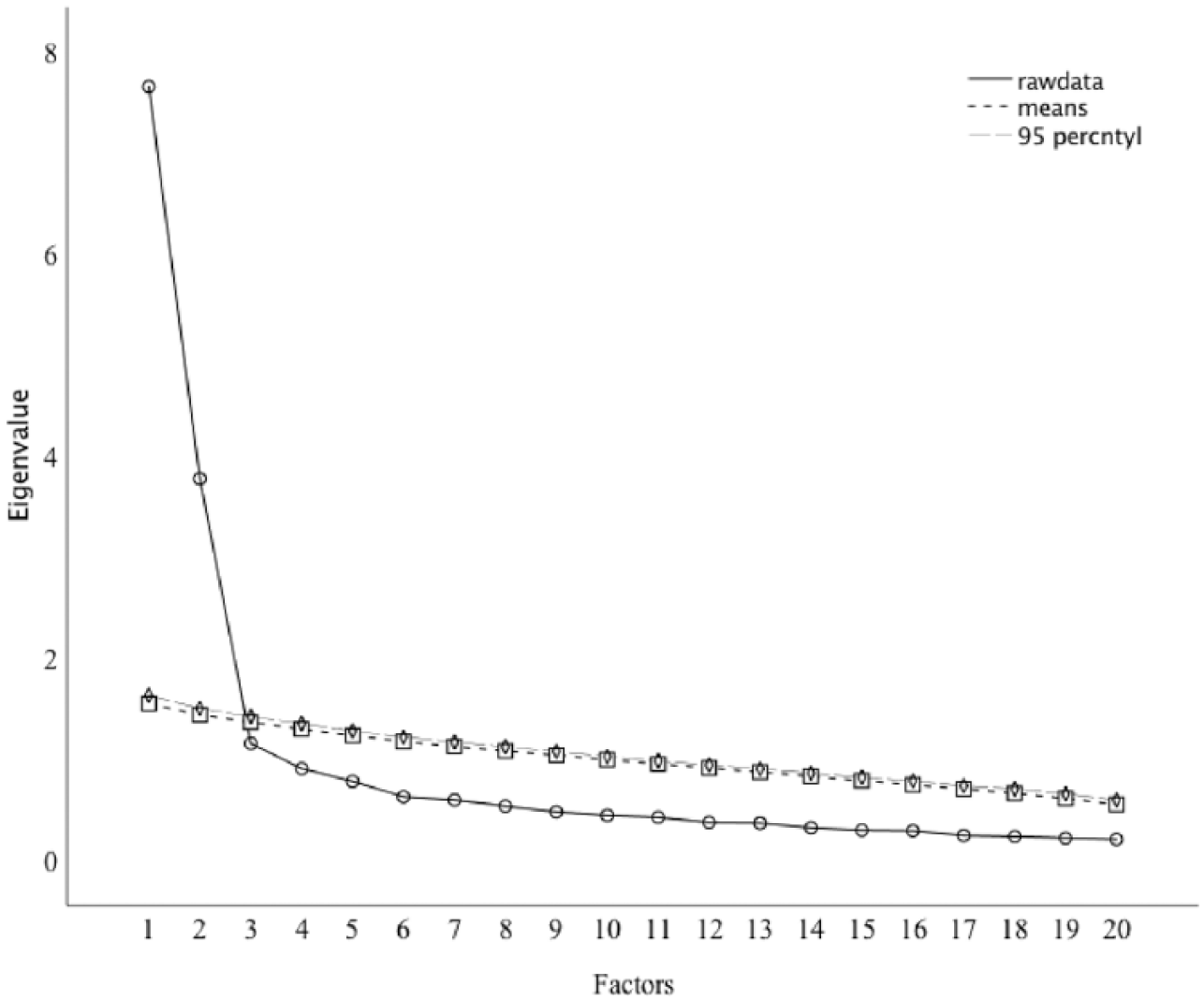
Eigenvalues for actual and permutations of combined Samples 1 and 2 data.
Sample 3
In order to determine how well the two-factor structure suggested by the exploratory factor analyses and parallel analysis fit the data, we conducted a confirmatory factor analysis in Sample 3 (no missing data) with the 20-item MARIS. In order to avoid poor model fit due to poor single item distributions, we created small item groupings (“testlets”) for each of the suggested factors from the exploratory analyses. 1
The model fit indices indicated a good model fit, χ2(8) = 13.86, p = .086. Further, the root mean square error of approximation (RMSEA) was .052, indicative of a good fit (Hu & Bentler, 1999). The comparative fit index (CFI) was .995 and the goodness of fit index (GFI) was .983, which both indicate good fit (Schreiber, Nora, Stage, Barlow, & King, 2006; see Figure 3).
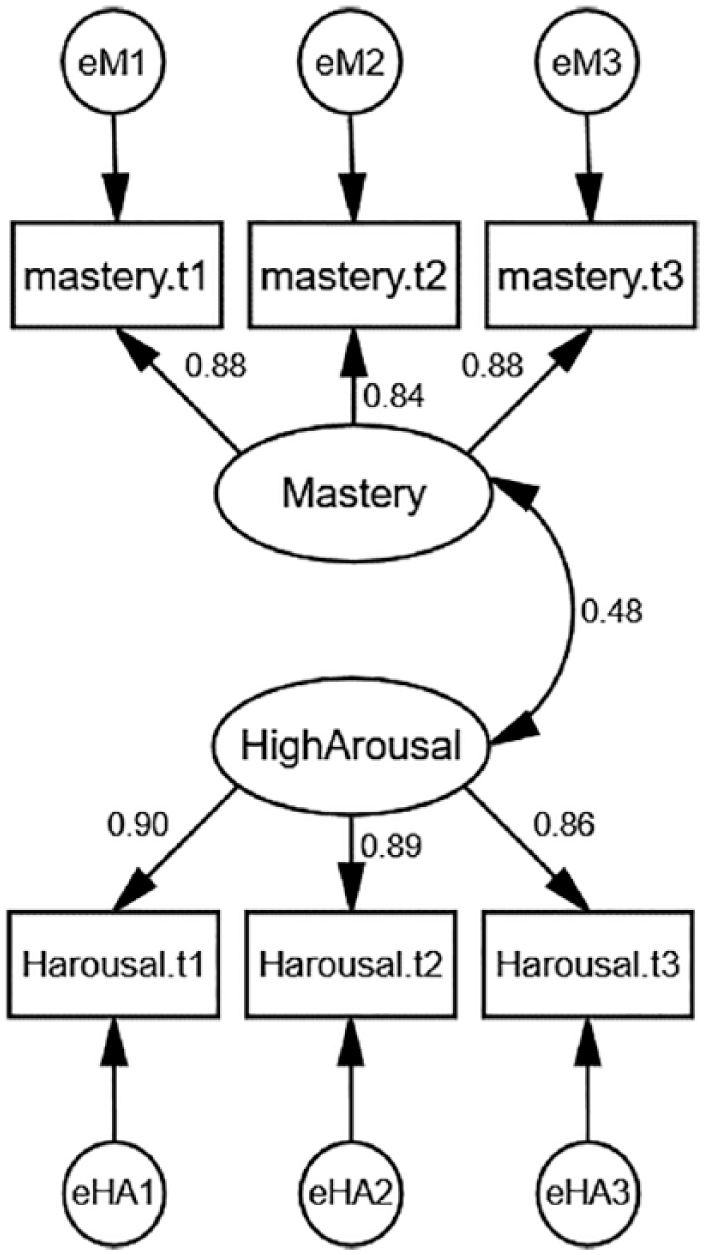
Confirmatory factor analysis model for Sample 3 of the MARIS, with standardized parameter estimates.
Internal consistency
The Musician’s Arousal Regulation Imagery Scale (MARIS) showed good internal consistency. The Cronbach’s alpha values for Samples 1, 2, and 3 for the mastery factor were .90, .89, and .89, respectively. Cronbach’s alpha values for Samples 1, 2, and 3 for the high arousal factor were .91, .92, and .90, respectively.
Relations between the MARIS Factors 2
Based on the two-factor structure suggested by the exploratory analyses in Samples 1 and 2, the parallel analysis on combined Sample 1 and 2 data, and the confirmatory analysis in Sample 3, sum scores for the subscales were computed so that the relation between the factors could be analyzed. The correlations between the factors were all positive and statistically significant, rs of .394, .350, and .436, ps < .001, respectively. The latent correlation is estimated to be r = .48 (see Figure 3).
Discussion
Prior to our study, little was known about whether and how musicians use arousal regulation imagery related to musical performances. The Musician’s Arousal Regulation Imagery Scale (MARIS) is the first instrument to reliably measure arousal imagery in musicians and demonstrates excellent psychometric properties in multiple samples of musicians.
Although we originally hypothesized that the MARIS would have a four-factor solution capturing distinct imagery strategies including relaxation, psyching-up, anxiety, and confident coping, results suggest that the MARIS has a more parsimonious two-factor solution.
The finding that both low and high arousal imagery items (i.e., relaxation and confident coping) loaded onto the mastery factor was surprising and suggests that mastery-oriented imagery does not preclude the experience of heightened arousal. Indeed, mastery imagery is more nuanced than simply imagining being relaxed and includes high arousal imagery which might help impart musicians with a sense of self-efficacy in relation to anxiety (i.e., I can handle this and it won’t derail my performance), or which might help to normalize the experience of anxiety. Further, because the high arousal items (i.e., confident coping) which loaded onto the mastery factor involve imagining performing with confidence, control, and focus in the presence of anxiety, the strategies musicians use to regulate anxiety might be intricately linked to those used to imagine successful performance outcomes.
Due to the use of distinct psyching-up and anxiety imagery scripts in previous research (Cumming et al., 2007), and the suggestion that the type of imagery performers use should be related to the intended outcome of imagery (Martin et al., 1999), the finding that psyching-up and anxiety items loaded onto the high arousal factor was surprising. Further, because psyching-up imagery has been used in intervention research to help athletes reappraise anxiety and view it in a more facilitative direction (e.g., Cumming et al., 2007), it could be viewed as a strategy containing an element of mastery. However, perhaps high arousal imagery must be more explicit in its mastery orientation than simply imagining getting “revved-up” to perform.
Although the factor analytic structure of our measure was surprising, the MARIS represents a significant contribution to research on imagery in music performance and suggests important avenues for future research. However, several limitations of the current research must first be noted.
Limitations
The three samples of musicians included in the current study formed a diverse, heterogeneous sample of musicians with different levels of expertise who also performed different genres of music and instruments from different musical families. With sufficient power, the factor analytic structure of our measure may be different in specific groups (e.g., pop vs. classical musicians), as arousal may be interpreted differently by musicians based on the task demands associated with their instruments and the genre of music performed.
Further, additional research must be conducted to determine whether musicians use high arousal imagery measured by the MARIS as a strategy in their practice and rehearsal. Compared to the arousal regulation subscale items on the FIMQ, which ask musicians about their use of imagery as well as their emotional experiences in response to imagery (Gregg et al., 2008), we only included items which were intended to measure musicians’ intentional use of arousal imagery. However, it is possible that the distinction between high arousal imagery used in practicing and rehearsal and the experience of excitement and anxiety in response to imagery may be difficult for musicians to distinguish. Although it is possible that musicians use high arousal imagery to imagine the excitement that can accompany performance, or expose themselves to MPA prior to performances, the surprising finding that both psyching-up items and anxiety items loaded onto the high arousal factor suggests that future research must investigate the validity of the high arousal subscale of the MARIS as one that measures an intentional imagery strategy.
Future directions
Our findings suggest that additional qualitative research into musicians’ use of intentional imagery is warranted. Such research will help to clarify whether the imagery strategies captured by the Musician’s Arousal Regulation Imagery Scale (MARIS) are used intentionally, or whether strategies such as high arousal confound emotions experienced in response to performance imagery.
Additionally, future qualitative research must explore why musicians use the arousal imagery strategies captured by the MARIS. The mastery factor of our measure suggests that in addition to the level of arousal in performance imagery, mastery is particularly important or salient to musicians. Future research should investigate whether such imagery is used to increase self-efficacy or normalize the experience of anxiety. Additionally, such research should investigate whether musicians use high arousal imagery to expose themselves to performance anxiety before going onstage.
Future research should also explore whether musicians use different arousal imagery strategies based on the anxiety or importance associated with a performance, whether different strategies are used at different time-points before performing (e.g., right before going onstage or during practicing), and how helpful musicians perceive such strategies to be.
Furthermore, future research must explore how the use of imagery strategies captured by the MARIS relates to performance outcomes. Of note, Simonsmeier and Buecker (2017) found that mastery-oriented imagery captured by the motivational-general mastery subscale of the Sport Imagery Questionnaire (Hall et al., 1998) predicted competitive performance in young athletes. Thus, mastery and high arousal imagery might differentially relate to performance outcomes in musicians.
Some research indicates that imagery vividness is higher in professional musicians as compared to amateurs (Lotze et al., 2003), yet little is known about whether imagery vividness or ability might relate to different arousal imagery strategies. Research in athletes suggests that kinesthetic imagery ability is positively associated with arousal imagery use, and that visual imagery ability is associated with mastery imagery use (Vadocz et al., 1997). Thus, the MARIS subscales might differentially relate to imagery vividness or ability. Additionally, future research should explore how the MARIS subscales relate to imagery used for cognitive and motivational purposes as measured by the FIMQ (Gregg et al., 2008) in order to further investigate the factorial validity of the MARIS.
Last, future research must explore the relation of the MARIS subscales and MPA. As reviewed above, emotion regulation research suggests that suppressing anxiety can paradoxically increase anxiety (Campbell-Sills et al., 2006a), and that emotional suppression is used more often as an emotion regulation strategy by those with problematic anxiety (Campbell-Sills et al., 2006b). To this end, it is possible that relaxation imagery is used by highly performance anxious musicians in an attempt to suppress the experience and expression of anxiety during performance imagery. Yet, the factor analytic structure of the MARIS suggests that mastery imagery, which does not preclude the experience of heightened arousal, is particularly salient or important for musicians. Thus, it is possible that highly performance anxious musicians might use mastery imagery more frequently than high arousal, as the former might impart them with a sense of control in relation to MPA. Relatedly, although expert musicians do not necessarily experience less MPA, it is possible that due to their expertise, they have different tools at their disposal to deal with MPA, and thus might prefer different arousal imagery strategies than musicians with less expertise (Finch & Moscovitch, 2016). Thus, research should investigate whether expertise is differentially associated with mastery and high arousal imagery measured by the MARIS.
In sum, the current research represents a significant contribution to our knowledge of whether and how musicians use arousal imagery in relation to musical performances and provides suggestions concerning future research on imagery in music performance.
Footnotes
Appendix A
Funding
The author(s) disclosed receipt of the following financial support for the research, authorship, and/or publication of this article: This research was supported by the Social Sciences and Humanities Research Council of Canada, the Ontario Government, and the University of Waterloo. The authors declare no conflicts of interest related to this study.
Ethics
This study received ethics approval from the University of Waterloo Office of Research Ethics and the Research Ethics Board of Wilfrid Laurier University.