




Abstract
Starting university can be challenging for students, and emerging research indicates that music listening may be a helpful coping resource. At this stage, little is known about the music listening motivations of international and domestic university students, and whether there are differences between these two cohorts in terms of whether their music listening is an effective coping resource for increased well-being. These questions were examined with an online cross-sectional survey of first-year students at a major Australian university (N = 475; 61.9% domestic, 38.1% international). Music listening was an effective coping strategy for managing stress for 72.6% of domestic students and 59.2% of international students. The relationships between music and well-being differed between cohorts—for international students (but not domestic), higher endorsement of music listening as an effective coping strategy was associated with greater well-being. In addition, a moderated mediation analysis demonstrated that, in contrast to international students, for domestic students, more music listening was associated with more use of music for emotional reasons and decreased well-being. Students’ relationship with music as a coping resource is complex, and further research is necessary to determine the direction of these effects.
Starting university can be challenging for students and can link closely with depression, anxiety, and stress (Morton et al., 2014). For Australian university students, the prevalence of mental health problems is approximately 20%, significantly higher than the 3% estimated in the general population (Australian Bureau of Statistics, 2008; Stallman, 2010). Alongside the typical challenges faced by transitioning domestic students (Morton et al., 2014), international students may face unique stressors such as cultural stress, intense pressure from family to succeed in their studies, and difficulties with language (Rosenthal et al., 2006). Loneliness and isolation are also common among international students, for reasons such as loss of contact with families, loss of networks, and separation from their cultural and linguistic environment (Sawir et al., 2008). International students may experience high levels of distress (Lu et al., 2014) and lack social integration and belongingness (Arkoudis et al., 2019).
While the majority of international students adjust well to life overseas, around 34% of international students show a “stressed” pattern of adjustment, and nearly 7% adjust in a “distressed and risk-taking” manner (Russell et al., 2010). International students are typically a quiet minority, who underutilize university counseling services and have lower mental health literacy than domestic students, even for issues as severe as suicidal ideation (Clough et al., 2019; Lu et al., 2014; Mori, 2000). It is essential to identify existing strategies that students use to manage their stress levels and to protect their well-being so that universities can understand how to provide support to their students, especially for those at higher risk of poor adjustment (Buchanan et al., 2015). Music listening has been shown to be among the most effective strategies for coping with stress for young people and may be a relevant resource for these students (Casey & Liang, 2014; Thayer et al., 1994).
Music listening habits and motivations
Music listening is a common leisure activity. A majority of adults listen to music for at least an hour per day (Krause et al., 2015), and young adults listen to music for 18 hr a week on average (Papinczak et al., 2015). Individuals listen to music for emotional reasons, social reasons, to play in the background, for entertainment, to relieve boredom, and even to reduce loneliness (Randall & Rickard, 2017; Tarrant et al., 2000). Across several cultures, individuals experiencing negative emotion use music for solitary emotional regulation, while those experiencing increased positive emotions use music as a proxy for social interaction (Fink et al., 2021). In addition, cross-cultural studies show some universality in the reasons and motivations for music listening—emotion regulation is the most important personal reason, bonding with others is the most important social reason, and expressing cultural identity is the most important cultural reason of music (Boer & Fischer, 2011). Intentional music listening is both a common and effective way for individuals to regulate their mood and may have implications for well-being (Cabedo-Mas et al., 2021; Dingle et al., 2021; Saarikallio, 2011; Thayer et al., 1994).
Music and well-being
Music listening is among the most effective strategies reported by domestic and international students for coping with stress, and students who find music an effective coping strategy show better well-being (Vidas, Larwood, et al., 2021). Research has found that musical engagement is linked with Chinese adolescents’ well-being (Leung & Cheung, 2018), and music listening relates to better well-being in an Australian population, such that specifically engaging with music for cognition and emotion regulation may enhance well-being, although the emotion regulation strategy used also plays a role (Chin & Rickard, 2014). Younger adults often emphasize affect regulation as a key reason for music listening, alongside social connection (Groarke & Hogan, 2016). Furthermore, listening to self-selected music may lower negative affect, and music listening can be soothing, providing a sense of consolation (Groarke & Hogan, 2019; Hanser et al., 2016).
Despite apparent emotional benefits of music listening, other research has found detrimental effects in the use of music for emotion regulation. Music listening may relate to high levels of depression, anxiety, and stress, although it is unclear whether the music itself is maladaptive or whether distressed individuals are more likely to use music for this purpose to reduce their symptoms (Thomson et al., 2014). Findings are also mixed on whether emotionally congruent music is helpful or harmful when in a negative mood state. Listening to sad music when sad may worsen mood (Garrido & Schubert, 2015; Larwood & Dingle, 2021; McFerran et al., 2015); however, self-selected sad music may evoke greater happiness than unfamiliar sad music, suggesting a benefit of familiar music (Weth et al., 2015). Listening to angry or violent music, on the other hand, can lead to positive emotional experiences for fans of this music (Sharman & Dingle, 2015; Thompson et al., 2018).
Similarly, research to date is mixed on whether music listening is harmful or helpful for loneliness. Music use may in some cases exacerbate loneliness (Davis & Kraus, 1989); however, reducing loneliness is another reported motivation for music listening (Randall & Rickard, 2017; Tarrant et al., 2000). Other research has found that strategies such as listening to music and watching TV relate to less loneliness (Paravati et al., 2021) and may act as a social surrogate, with people listening to preferred melodies when feeling lonely (Schäfer & Eerola, 2020; Schäfer et al., 2020).
In addition to the potential emotional benefits of intentional music listening, several other uses of music may also be beneficial across a range of health and well-being domains (Dingle et al., 2021). Musical activities, such as choir singing, have social bonding effects, (Dingle et al., 2019; Pearce et al., 2015; Weinstein et al., 2016), and participation in musical activities may contribute to positive physical, social, and psychological outcomes for at-risk migrant populations (Henderson et al., 2017). In addition, Chinese international students who listen to more English language music while studying in the United States show better cultural adaptation (Jia & Koku, 2020). Interestingly, individuals from collectivist cultures may be more likely to use music for social belonging than individualist cultures (Juslin et al., 2016). In the case of young people, music is frequently used to enhance concentration and motivation (Papinczak et al., 2015). Indeed, for students, music can alleviate boredom while studying and relax students, although the use of music while studying may differ cross-culturally (Kotsopoulou & Hallam, 2010).
Music listening and well-being models
Taken together, this research highlights that music listening may be uniquely suited as a coping strategy for first-year university students from a variety of cultural backgrounds. Several motivations for music listening may link effectively with well-being in young people. A model developed by Papinczak et al. (2015) from a qualitative analysis of focus groups with individuals aged 16–25 years found four mechanisms linking music listening with well-being: relationship building, modifying emotions, modifying cognitions, and emotional immersion. In the Papinczak model, relationship building refers to sharing music with others and attending live concerts; modifying cognitions refers to aiding concentration, evoking memories, and aiding problem-solving; modifying emotions refers to distraction from negative feelings and thoughts, and changing arousal levels; and immersing in emotions refers to intensifying emotions (Papinczak et al., 2015). While this relationship has been examined with university students broadly, whether there are differences between domestic and international students, who may experience different risks to their well-being, remains to be seen. In addition, other research has developed similar models of motivations and reasons for music listening, with emotional and social reasons typically the most crucial and relevant for well-being (Boer & Fischer, 2011; Groarke & Hogan, 2016).
The current study
The aim of this study was to understand international and domestic students’ music listening habits as a potential coping resource with a comprehensive survey. We investigated students’ intentional music listening habits in relation to their well-being. We also explored overall similarities and differences between domestic and international students on their well-being, musicality outside of music listening, and coping strategies.
We hypothesized that in both domestic and international students, better well-being would be associated with finding music a more effective strategy for coping with stress. Second, it was hypothesized that motivated music use would predict better well-being. Third, it was hypothesized that more intentional music listening (hours per week) would be associated with less loneliness in domestic and international students. Finally, we explored the mediation model shown in Figure 1 (Papinczak et al., 2015) with a validated measure of motivated uses of music, where more intentional music listening would predict better well-being in both domestic and international students. It was expected that, consistent with the model, the relationship between music listening (hours per week) and well-being would be mediated by using music for emotional regulation, social reasons for music listening, and cognitive reasons for music listening, in both domestic and international students.
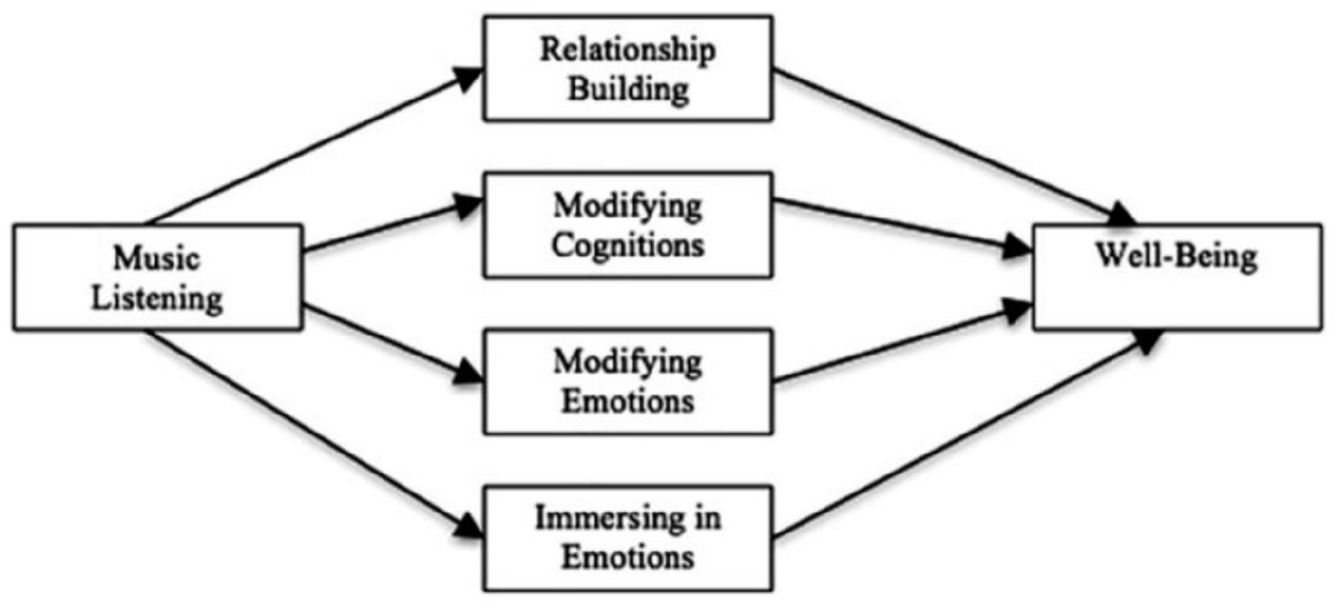
Thematic Map Displaying Common Reported Ways in Which Young People Saw Their Music Listening Being Linked with Their Well-being.
Method
Participants
Participants were first-year university students drawn from the department undergraduate pool, from email lists of international students, and from advertising in first-year lectures across the university. In total, 562 participants completed the survey. Of these, 87 participants in total were removed for: completing fewer than three of seven question blocks (N = 54), answering fewer than 50% of questions seen (N = 9), or completing the survey multiple times (N = 24). This left 475 participants in the final sample.
Of the participants included in our analysis, 69.4% were female, 29.5% were male, and 1.1% preferred not to answer. In addition, 61.9% of the sample were domestic students, and 38.1% were international students. Of the international students, 77.2% were from China, Hong Kong, or Taiwan; 4.4% were from Singapore; and 3.8% were from Malaysia. In the international group, participants were aged between 18 and 46 years (M = 21.6), and the majority (68.8%) were single. The domestic group were aged between 17 and 51 years (M = 18.9), and the majority (65.9%) were single. In total, 33.1% of students were enrolled in the faculty of health and behavioral sciences (including psychology), while the rest were split across the science faculty (18.9%), business, economics and law faculty (11.8%), humanities (10.9%), English language (10.3%), medicine (9.5%), and others (5.5%).
Materials
The full 15-min online survey is shown in Supplementary Materials. Relevant to this study, demographics questions included age, gender, relationship status, school of enrollment, domestic/international status, citizenship, and ethnicity.
Music listening habits and motivations
A range of musical activities were assessed, predominantly with questions adapted from the Music Use (MUSE) and Music Use and Background Questionnaire (MUSE-BAQ) scales (Chin & Rickard, 2012; Chin et al., 2018). Participants answered yes/no to whether they currently or in the past have played an instrument or sung in a choir. A single-item measure of musical identity asked for a title ranging from 1 = nonmusician to 6 = professional musician (Ollen, 2006; Zhang & Schubert, 2019). Participants were asked to estimate the number of hours they intentionally listen to music each day, the number of days per week they intentionally listen to music (excluding music videos), and how many hours a week they typically watch music videos, to form a summed hours of music per week variable. This ranged from half an hour of music listening per week to 142 hr per week. Where this variable was examined, the five participants who responded with over 112 summed hours (greater than 16 hr per day) of listening per week were removed from analysis. It was assumed that these individuals were unlikely to be genuinely intentionally listening to music for more than 16 hr per day, accounting for sleep and other activities. Finally, items from the emotion regulation, social, and cognitive regulation sections of Module 4 (motivations for music use) of the MUSE-BAQ questionnaire were included. While Module 4 of the MUSE-BAQ operationalizes the concepts of emotion regulation, social reasons for music listening, and cognitive regulation in a different way to Papinczak model’s concepts of relationship building, modifying emotions, modifying cognitions, and emotional immersion, we considered that this validated measure may assess this concept better.
Coping and stress measures
Next, students were asked about coping with stress both individually and in groups. Group strategies will be examined elsewhere (Dingle et al., 2021). Individual coping strategies were drawn from Thayer et al. (1994) and were rated on a Likert scale ranging from 0 to 5. The measure asked, “how often you find the following strategies effective for managing stress by yourself.” Students could select 0 if they did not use that strategy, and if they did use the strategy, they selected a point between 1 (not effective) and 5 (always effective). The addition of the option “do not use this strategy” for the coping strategies list allowed us to exclude students who had never tried the strategy and examine effectiveness only for those who have used the strategy.
Well-being, psychological distress, and loneliness
Although well-being was the focus of the study, we also measured psychological distress and loneliness as additional issues associated with well-being. While well-being and psychological distress are highly related, they are not exact opposites (Winefield et al., 2012).
Well-being was examined with the Short Warwick-Edinburgh Mental Wellbeing Scale ( SWEMWBS; Stewart-Brown et al., 2009). Participants responded on a Likert scale where 1 = none of the time and 5 = all of the time (α = .856) to statements about their experience of seven feelings and thoughts, over the last 2 weeks. Published norms for the SWEMWBS from a UK sample produced a mean of 23.7 for men and 23.2 for women (Ng Fat et al., 2017). Internal consistency for this study was good (α = .856).
Furthermore, participants also responded to PsyCheck, a mental health screening tool measuring psychological distress (Jenner et al., 2013), where participants answered yes or no in response to a list of symptoms they may have had in the past 30 days, α = .894. Cut-off scores ranging from five to eight symptoms is indicative of psychological distress. Finally, general loneliness was assessed using a three-item loneliness scale, α = .837 (Hughes et al., 2004).
Procedure
The between-groups cross-sectional survey study was conducted online. Students completed the survey in their own time and were rewarded with either a course credit or the opportunity to go into a draw to win 1 of 12 US$30 vouchers to a popular electronics retailer. The measures and procedure were approved by the University of Queensland Low and Negligible Risk Ethics Committee.
Changes to preregistration
This study was preregistered at https://osf.io/zs8mw/?view_only=7e834f96176f4ed299d08d020a3a12f8. Some changes were made to the final hypotheses for clarity: one main hypothesis from the preregistration—that English language confidence would relate to better well-being—is not examined here and will be examined in a future publication, and hypotheses were rearranged for a clearer narrative. In addition, several exploratory analyses listed in the preregistration are or will be presented elsewhere, including analyses related to students’ causes of stress (Dingle et al., 2020), the specific music listened to by students, language variables, and emotion words. Finally, the focus on the Papinczak model was added during analysis.
Results
Descriptive statistics
For the SWEMWBS, domestic (M = 21.44, SD = 4.03) and international students (M = 21.57, SD = 4.05) had similar levels of well-being, t(444) = –.32, p = .747, d = –.032. These numbers are comparable, although slightly lower, than the average for UK men (M = 23.7) and women (M = 23.2; Ng Fat et al., 2017).
In contrast, for the PsyCheck, domestic students (M = 8.45, SD = 5.44) reported more symptoms than international students (M = 5.53, SD = 4.78), t(441) = 5.62, p < .001, d = .560, scores which indicate that both groups were experiencing psychological distress. Finally, domestic students (M = 6.01, SD = 1.88) reported greater loneliness than international students (M = 5.54, SD = 1.57), t(426) = 2.92, p = .004, d = .272. Additional statistics, including test results comparing international and domestic students, are shown in Table 1.
Summary of Demographic Variables.
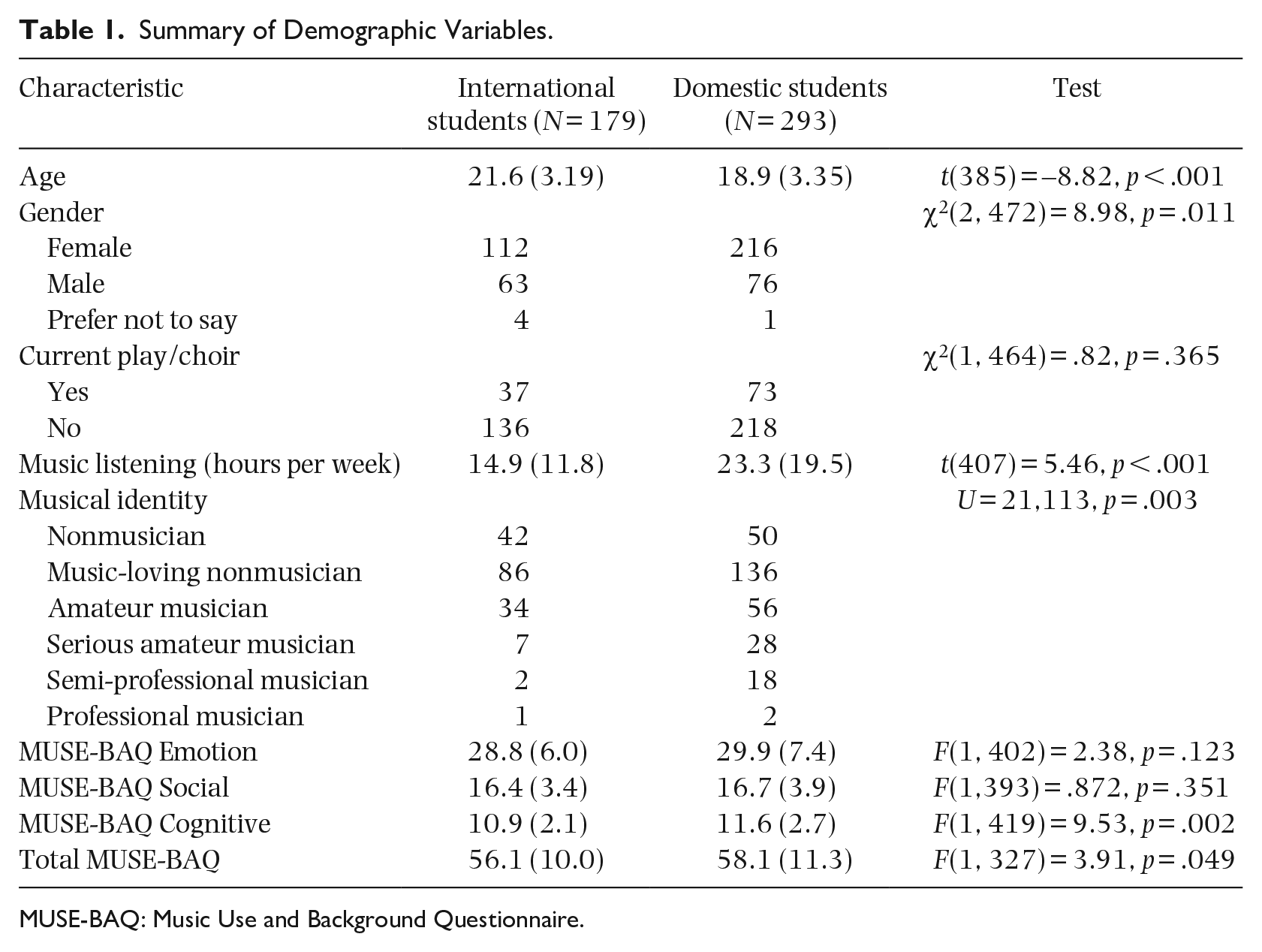
MUSE-BAQ: Music Use and Background Questionnaire.
Coping strategies
Table 2 shows the mean reported effectiveness of each coping strategy for coping with stress. For domestic students, the most effective coping strategies (on a 1–5 scale) were listening to music (M = 3.88), engaging in stress management (e.g., getting organized, planning ahead, making lists; M = 3.81), exercise (M = 3.69), and changing location (e.g., go for a drive or go outside) (M = 3.56). For international students, the most effective strategies included rest, nap, or sleeping (M = 3.72), music listening (M = 3.70), analyzing the situation (M = 3.41), and engaging in stress management (M = 3.30). For music listening, 1.37% of domestic students and 2.79% of international students never used music as a coping strategy.
Estimated Marginal Means for Domestic and International Student Coping Strategies.
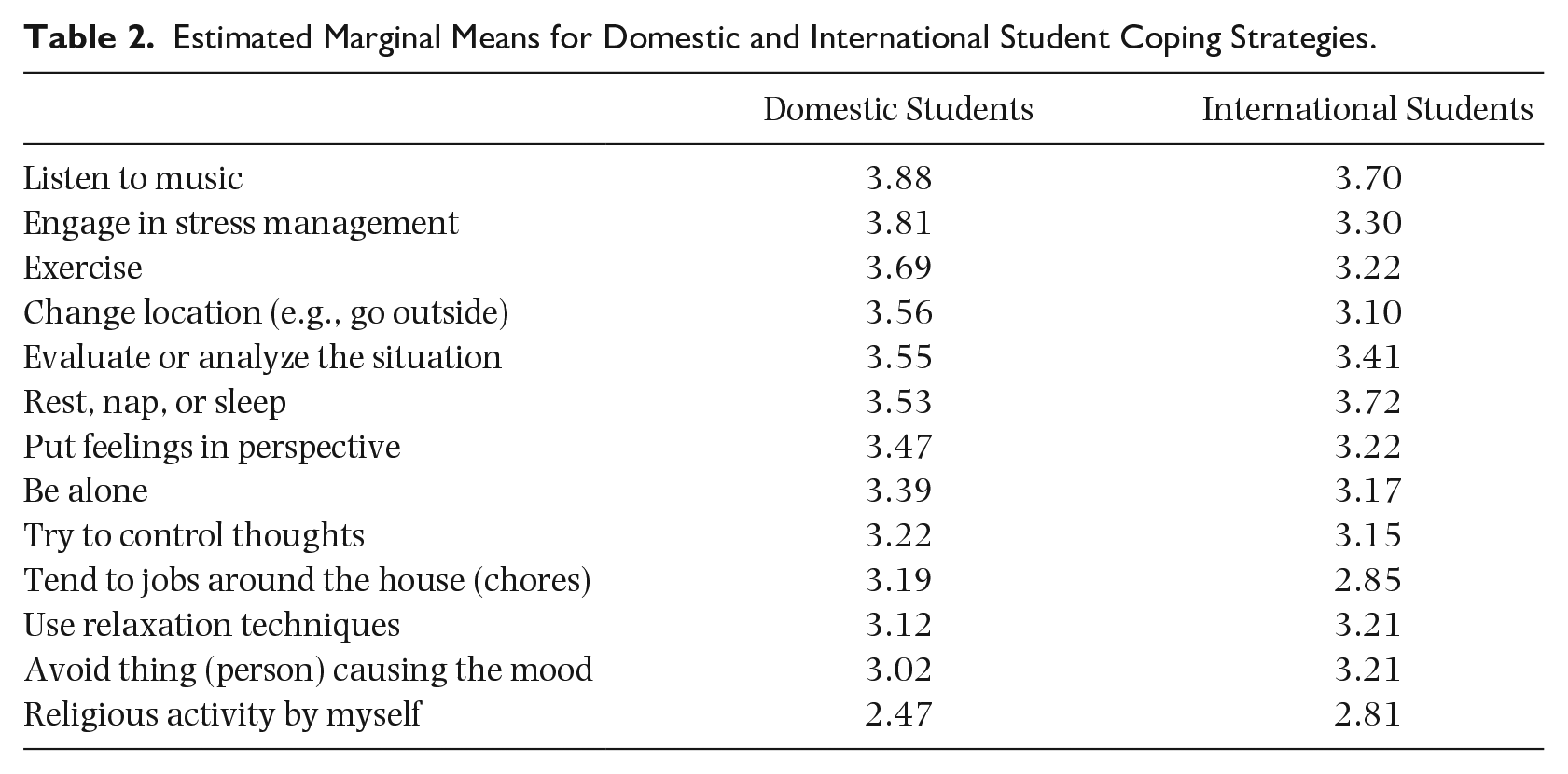
A 2 (student status: international and domestic students) × 13 (coping strategies) mixed analysis of variance (ANOVA) compared the effectiveness of individual coping strategies for coping with stress between domestic and international students. This revealed no main effect of student status, but showed an effect of the different types of coping strategies, F(9.98, 1486.35) = 14.87, p < .001,
To examine Hypothesis 1, we conducted correlation analyses to examine the effectiveness of music listening for coping with stress, as it relates to domestic and international students’ well-being and psychological distress. For international students, those who found music a more effective coping strategy had better well-being, r = .281, p < .001, and fewer symptoms of psychological distress, r = –.268, p < .001. In contrast, for domestic students, finding music an effective coping strategy was unrelated to psychological distress symptoms and well-being, ps ⩾ .128.
Motivated music use
Domestic and international students compared
A series of one-way ANOVAs compared international and domestic students on their overall motivations for music use, as well as for the three subscales used—emotion regulation, social reasons, and cognitive regulation. On a 5-point scale, students agreed on average that they use music for emotional, social, and cognitive reasons (MDomestic = 3.51, MInternational = 3.63). Table 1 outlines the comparisons between student groups. Overall, domestic students’ higher average MUSE-BAQ score indicated they were more likely to use music in a motivated way (M = 58.1, SD = 11.3) than international students (M = 56.1, SD = 10.0), F(1, 327) = 3.91, p = .049. As described in Table 1, for the individual subscales, there were no differences between domestic and international students for emotion regulation, or social reasons for music listening. For cognitive regulation, domestic students (M = 11.6, SD = 2.69) reported higher agreement that they use music for other tasks, to stay concentrated, or to block out noise, than did international students (M = 10.9, SD = 2.12), F(1, 419) = 9.53, p = .002. In addition, we found that domestic students (M = 23.3, SD = 19.5) listened to music for more hours per week than international students (M = 14.9, SD = 11.8), t(407) = 5.46, p < .001, d = .523.
Musicality outside of music listening
The median musical identity was “music-loving nonmusician” (a score of 2 on the 6-point scale). Table 1 describes the musical identities for domestic and international students. In addition, 57% of domestic students and 46% of international students had played an instrument or sang in a choir in the past, while 25% of domestic students and 21% of international students did so currently.
To explore whether playing an instrument or singing in a choir related to well-being or psychological distress, independent-groups t-tests for international and domestic students were examined. For international students, those who currently played an instrument/sang in a choir showed higher well-being (M = 23.04) than those who did not, (M = 21.18), t(157) = 2.38, p = .019. d = –.465. For psychological distress, those who played an instrument/sang in a choir (M = 4.8) reported a similar number of symptoms to those who did not (M = 5.7) t(153) = –.93, p = .354, d = .189. No effects were found for domestic students for well-being (MMusician = 21.00, MNonmusician = 21.59) or psychological distress (MMusician = 8.67, MNonmusician = 8.38), ps ⩾ .278.
Correlations
Domestic students
Correlations between music variables and well-being for domestic students are shown in Table 3. For domestic students, hours of music listening was positively related to using music for emotion regulation, r = .250, p < .001, cognitive regulation, r = .267, p < .001, and overall motivated music use, r = .264, p < .001, as well as more psychological distress symptoms, r = .151, p = .015. Better well-being was related to less use of music for emotion regulation, r = –.224, p < .001. More symptoms of psychological distress were related to using music for emotion regulation, r = .333, p < .001, social reasons, r = .184, p = .002, and cognitive regulation, r = .197, p < .001. Together, these results suggest that domestic students who score highly on the MUSE-BAQ have worse overall well-being.
Domestic Students: Correlations Between Variables.
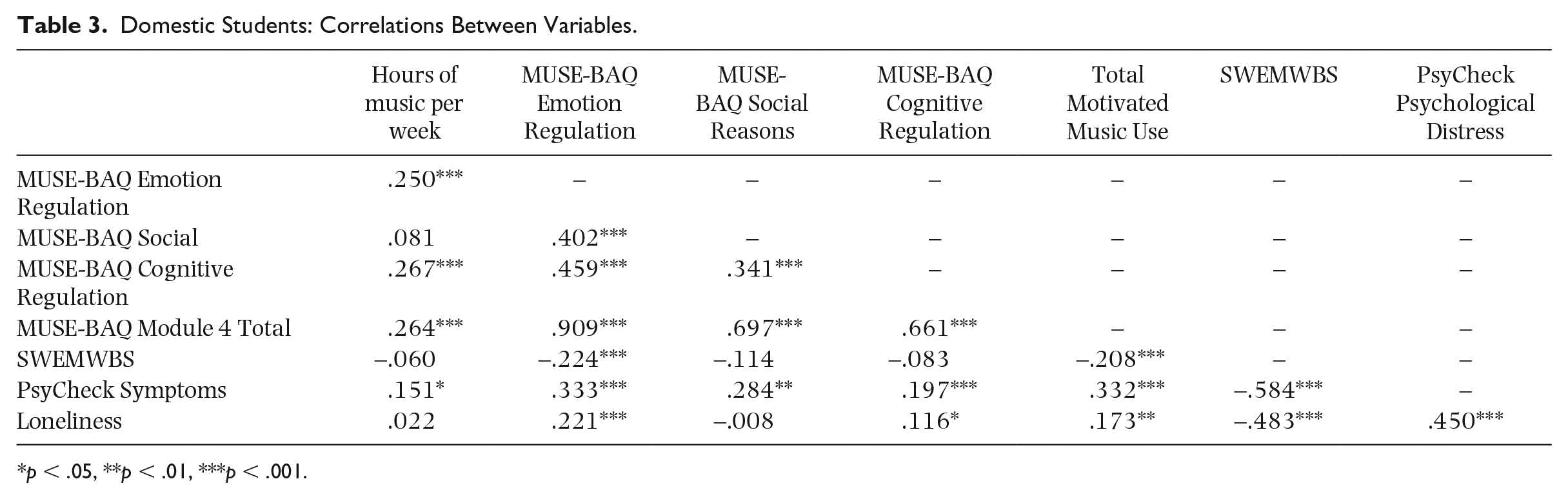
p < .05, **p < .01, ***p < .001.
Furthermore, contrary to the third hypothesis, that more music listening would be associated with less loneliness, there was no relationship between loneliness and hours of music listening for these students, r = .022, p = .720. Greater loneliness was related to more use of music for emotion regulation, r = .221, p < .001, and cognitive regulation, r = .116, p = .048.
International students
All correlations between music variables and well-being for international students are shown in Table 4. For international students, hours of music listening was positively related to using music for emotion regulation, r = .350, p < .001, social reasons, r = .398, p < .001, and cognitive regulation, r = .488, p < .001. In contrast to the domestic students, there were no correlations between motivated music use and psychological distress symptoms or loneliness. Again, contrary to the third hypothesis, there was no relationship between loneliness and hours of music listening for international students, r = .143, p = .083. Interestingly, the relationships with well-being were reversed compared with domestic students—better well-being was associated with more use of music for emotion regulation, r = .214, p = .008, social reasons, r = .206, p = .009, and cognitive regulation, r = .238, p = .003. This suggests that international students who use music in a more motivated way have better overall well-being.
International Students: Correlations Between Variables.
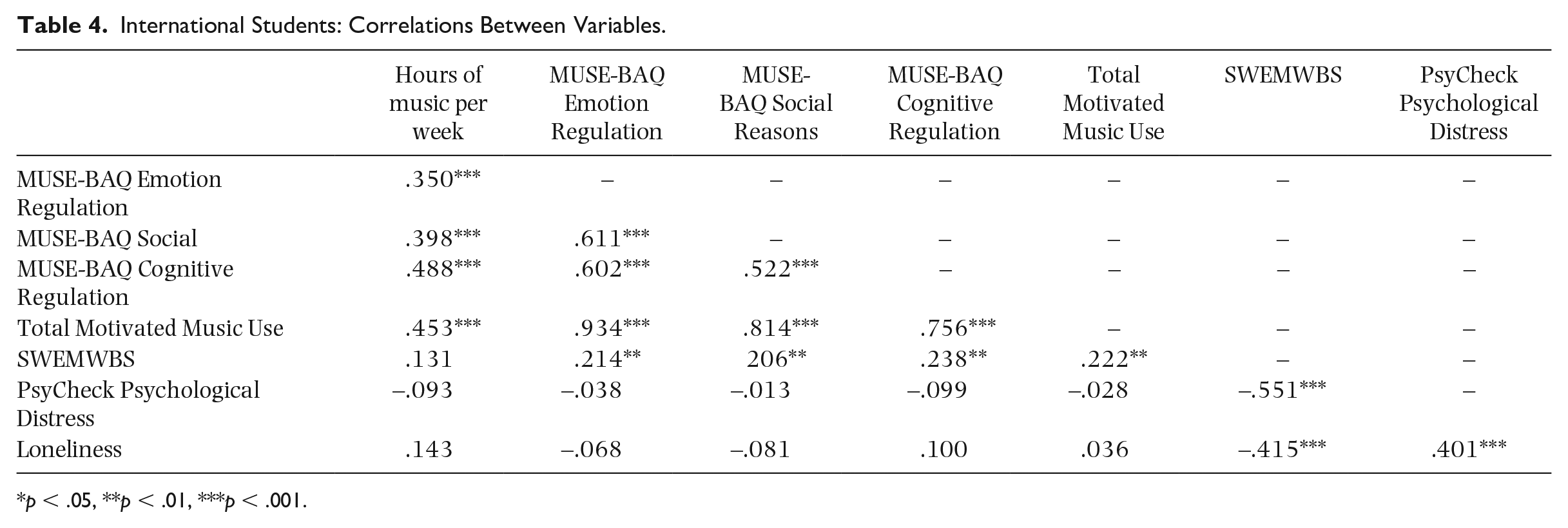
p < .05, **p < .01, ***p < .001.
Hierarchical regression
Short Warwick-Edinburgh Mental Well-being Scale
To determine the influence of demographic variables on the relationship between well-being and motivated music use and hours of music listening, a hierarchical multiple regression was conducted. The predictors Age, Gender (re-coded to be binary, excluding four participants who responded with “prefer not say”), and International Status were entered into the model at Step 1, while hours of music listening per week and MUSE-BAQ Total Scores (for the three subscales of motivated music use, emotional, social, and cognitive) were entered at Step 2. Well-being, as measured by the SWEMWBS, was the dependent variable.
The combined effects of age, gender, and international student status at Step 1 explained 2.5% of the variance in well-being, Fch (3, 379) = 3.3, p = .021. Age explained a significant 1.37% of the variance, β = .126, p = .021. International status and gender did not account for a significant amount of the variance. At Step 2, hours of music listening per week and MUSE-BAQ scores were included in the model, explaining a total of 2.7% of the variance, which was not significantly different from Step 1 (p = .792); thus, music listening and motivated music use did not account for a significant amount of variance in well-being once demographics were accounted for.
PsyCheck psychological distress screen
To investigate whether the results for well-being would be consistent with those for psychological distress, we explored whether psychological distress was related to motivated music use and hours of music listening when accounting for these demographic variables. The combined effects of age, gender, and international student status at Step 1 explained 13.4% of the variance in a number of symptoms, Fch(3, 375) = 19.3, p < .001. Gender explained 5.2% of the variance, β = .232, p < .001, such that females had more symptoms. International status explained 4.4% of variance, β = –.224, p < .001, such that domestic students had more symptoms. Age did not account for a significant amount of the variance. At Step 2, hours of music listening per week and MUSE-BAQ scores were included in the model, explaining a total of 16.6% of the variance, a further 3.2% of the variance in symptoms over and above the effect of the demographic variables. While hours of music listening did not explain a significant amount of variance, p = .305, motivated music use explained 2.22% of the variance, β = .160, p = .002, such that more motivated music use was associated with more symptoms.
Exploratory analyses
Papinczak mediation model
Despite the lack of significant results in the hierarchical regression between music variables and well-being, we attempted to replicate the model proposed by Papinczak et al. (2015), with a validated measure of motivated uses of music. We conducted a moderated mediation model, with the motivated music use scores broken down into their subscales. This examined the relationship between music listening, the three mediators (the three subscales of the motivated music listening scale), and well-being. Furthermore, international and domestic student status was added as a moderator. See Figure 2 for the model.
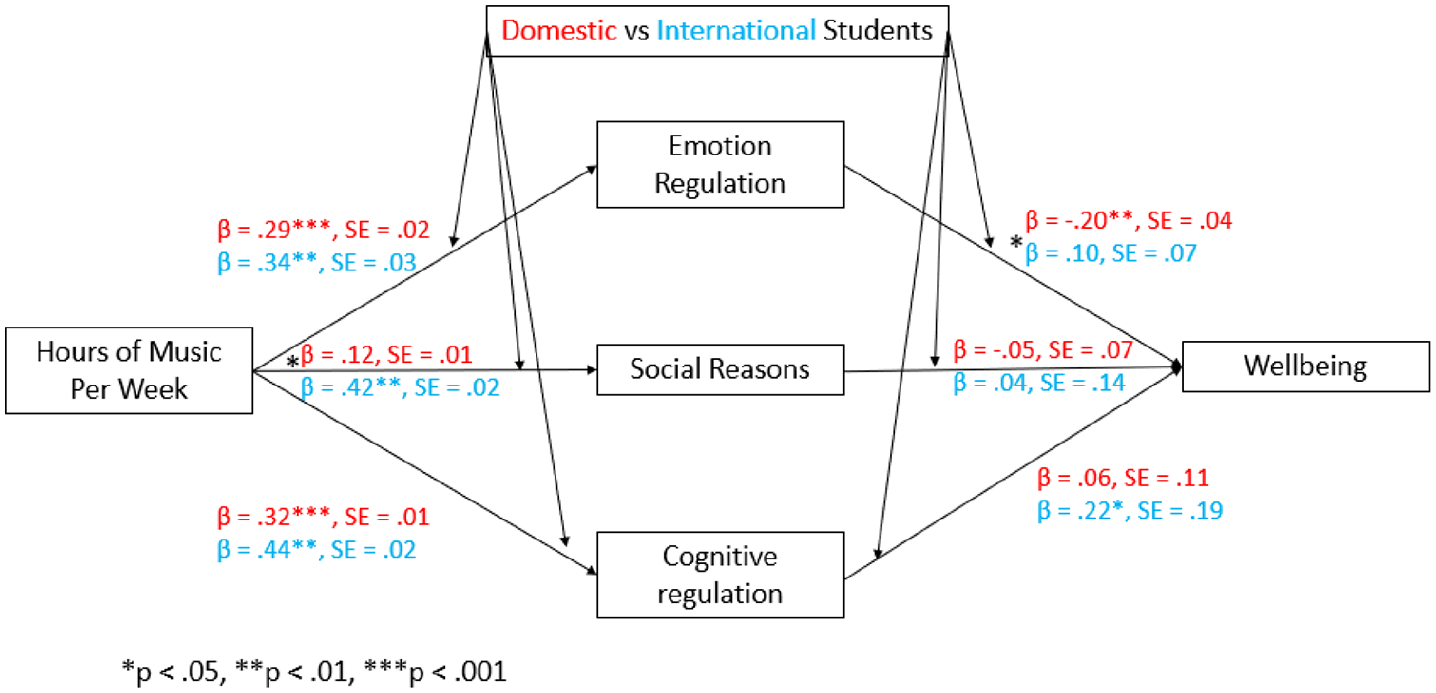
Moderated Mediation Model for the Relationships Between Hours of Music Listening, Well-Being, and Reasons for Music Listening for Domestic and International Students.
For international students, the indirect effects of hours of music listening for emotion regulation, social reasons, and cognitive regulation between music listening and well-being were nonsignificant, ps ⩾ .119. This indicates that for international students, hours of music listening per week was not associated with using music for any of the measured motivations for music use in the MUSE-BAQ, nor with well-being.
For domestic students, the indirect effects of hours of music listening on well-being for social uses of music and cognitive regulation with music were nonsignificant, ps ⩾ .406. For emotional regulation, however, the indirect effect was significant, p = .010. The pathway of listening to music for emotion regulation was significant, p < .001, as was the relationship between emotion regulation and well-being, p = .002, while the direct pathway from hours of music listening to well-being was nonsignificant, p = .663. This indicates that for domestic students, more hours of music listening per week was associated with using music for emotional reasons, which was associated with lower well-being.
Comparing domestic and international students, there were no differences between the groups for the majority of the pathways, as shown in Figure 1. The relationships between hours of music per week and the mediators were significant for both groups for emotion regulation and cognitive regulation; however, for social reasons for listening, a significant moderation effect was present, p = .050, such that only international students showed this relationship. Interestingly, a significant moderation effect was also present between use of music for emotion regulation and well-being, p = .023—as stated, while international students showed no relationship between these variables, domestic students who had higher use of music for emotion regulation showed lower well-being.
Discussion
The aim of this study was to derive an understanding of international and domestic students’ music listening habits as a potential coping resource. Specifically, we investigated students’ intentional music listening in relation to their well-being and found differences between domestic and international students.
Music and well-being
It was hypothesized that for both domestic and international students, better well-being would be associated with finding intentional music listening an effective strategy for coping with stress. Music listening proved to be an equally effective coping strategy for both domestic and international students. From the list of strategies, music was the most effective coping strategy for domestic students, and the second most effective for international students. For domestic students, those who found music listening an effective coping strategy had similar levels of well-being and psychological distress as those who found it less effective, opposing the hypothesis. In contrast, those international students who found music a more effective coping strategy had fewer psychological distress symptoms and better well-being than those who found it a less effective strategy, supporting the hypothesis.
The result for the domestic students opposes research that has found music listening to be effective at regulating mood (Thayer et al., 1994) and has linked well-being with finding music an effective coping strategy (Vidas, Larwood, et al., 2021). Importantly, we do not know specifically what music students are listening to for coping and in what way. Previous research has shown that coping music may not be a one-size-fits-all category (Howlin & Rooney, 2020; Vidas, Larwood, et al., 2021), and self-selected music may be key (Howlin & Rooney, 2021). Young people certainly believe that music will improve their mood, particularly if they are in a positive mood already; however, when in a negative mood, sad music may worsen their mood (Garrido & Schubert, 2015; McFerran et al., 2015). The specific emotion regulation strategies used by students may be key differences between the two groups and may explain the differing impact of music (Chin & Rickard, 2014). Despite this, the result that both groups found music effective for managing stress supports previous assertions that young people typically believe music will improve their mood (McFerran et al., 2015). This is the first specific evidence that for international students, music is a useful existing coping strategy.
It was also hypothesized that more intentional music listening would predict better well-being in both domestic and international students; however, hours of music listening and motivated music listening did not predict well-being over and above demographic variables. As such, we additionally explored whether these results would be consistent for psychological distress. In this case, the result was contrary to expectations—motivated music use explained a small amount of variance, such that more motivated music use was associated with more symptoms. Furthermore, for domestic students, more music listening related to more psychological distress symptoms, and those who engaged in music listening in a motivated way (for emotional, social, and cognitive reasons) also had more psychological distress symptoms.
Better well-being was also associated with less use of music for emotion regulation in domestic students. In contrast, for international students, better well-being was associated with more use of music for emotion regulation, social reasons, and cognitive regulation. The results may be explained by research that states that the benefits of music for well-being may depend on how music is used and the specific emotion regulation strategy employed when listening to music (Chin & Rickard, 2014; Miranda & Claes, 2009). Indeed, the use of music for emotion regulation may relate to high levels of depression, anxiety, and stress (Thomson et al., 2014). Furthermore, our results may be considered in light of previous work on the range of potential healthy and unhealthy uses of music (Saarikallio et al., 2015). Our results suggest that domestic students in our sample may be more prone to engaging with music in an unhealthy way, while this may be reversed for international students, who may be prone to engaging with music in a healthy way, although further research specifically measuring this construct is needed.
Importantly, outside of the domain of music listening, emotion regulation strategies differ between cultures (Ford & Mauss, 2015), such that those with interdependent cultural values are more motivated to regulate emotions using suppression, whereas this is not the case in more independent cultures. This may be due to cultural norms around emotion expression and is consistent with the fact that cross-culturally, average valence and arousal levels in popular music differ between cultures (Vidas, McGovern, et al., 2021). Interestingly, while there may be cross-cultural differences in emotion regulation and emotions in music, emotion regulation is still reportedly the most important personal function of music listening cross-culturally (Boer & Fischer, 2011). Together, this may partially explain this discrepancy between groups, even though domestic and international students’ scores for the use of music for emotion regulation were comparable. Furthermore, as domestic students showed more symptoms of psychological distress, it is possible that these students have dysfunctional habitual emotion regulation strategies—depression has been associated with difficulties in regulating positive emotion (Vanderlind et al., 2020).
Interestingly, domestic students tended to agree more to the items on motivated music listening than international students did overall, although domestic and international students used music listening for emotion regulation and social reasons at a similar rate. For cognitive regulation, domestic students agreed more that they listen to music when completing other tasks, to stay concentrated, or to block out noise, compared with international students. As the majority of international students in the present sample were from East Asia, this supports a similar trend identified previously—Japanese students are less likely to listen to music for several study tasks, such as revising for exams and doing coursework, compared with students from the United Kingdom or the United States (Kotsopoulou & Hallam, 2010).
Although more motivated music use was associated with more symptoms of psychological distress, the direction of these effects is not clear from the current evidence, due to the cross-sectional nature of the study. It may be that those experiencing more psychological distress may be more inclined to use music in a motivated way. Indeed, music listening can be soothing and provide a sense of consolation (Hanser et al., 2016); therefore, students with more distress may be employing music more for these reasons. Finally, it is important to note that while domestic and international students scored similarly on the well-being scale, domestic students reported more psychological distress.
Finally, when characterizing musical experience, we found that most participants were “music-loving nonmusicians,” around half of domestic and international students had played an instrument or sang in a choir in the past, and less than a quarter of students currently played. Interestingly, and in contrast to domestic students, international students who were current musicians showed better well-being. This supports previous research linking musical engagement with well-being in Chinese adolescents (Leung & Cheung, 2018), and with positive outcomes for at-risk migrant populations (Henderson et al., 2017), and highlights the potential benefits of music playing for well-being, at least for international students. It is especially important to identify whether intentional music listening may be beneficial for these students as an existing coping strategy, due to the difficulties faced by international students transitioning into their first year of university (Lu et al., 2014).
Furthermore, several differences emerged between the domestic and international students, which may also partially explain the contradictory results. Notably, domestic students reported more symptoms of psychological distress and greater loneliness than international students. In addition, international students were older on average, were more likely to be male, and listened to less music. While these demographic differences are important to note, such variables accounted for very little variance in well-being.
Music and loneliness
It was additionally hypothesized that more intentional music listening would relate to less loneliness in domestic and international students; however, there was no relationship between hours of music listening and loneliness, for either group of students. There was also no link between loneliness and motivated music listening for international students. In contrast, for domestic students, more loneliness was associated with more motivated listening for emotional and cognitive regulation. As stated, research is mixed on whether music listening is harmful or helpful for loneliness—while using music in a motivated way is unrelated to loneliness for international students, it may be impactful for domestic students, supporting research that music may exacerbate loneliness (Davis & Kraus, 1989). Importantly, however, we only asked about social, cognitive, and emotional reasons for music listening. Indeed, the music for emotion regulation questions in the present survey focused on using music to get through difficult times, rather than using it for social surrogacy (Schäfer et al., 2020). It is possible that targeted music listening to regulate emotions has a negative impact for domestic students and should be used with caution. Although strategies such as listening to music and watching TV can relate to less loneliness (Paravati et al., 2021), more research is needed to fully understand what kind of music specifically could be more or less helpful for loneliness and for different groups.
Papinczak mediation model
We also sought to further understand the predicted relationship between music listening and well-being by testing the model proposed by Papinczak et al. (2015), with a validated measure of motivated music uses. In line with previous research, we hypothesized that the relationship between music listening (hours per week) and well-being would be mediated by emotional reasons for music listening, social reasons for music listening, and cognitive reasons for music listening, in both domestic and international students. For international students, the Papinczak model did not effectively describe the relationship between hours of music listening and well-being. For domestic students, there was a relationship between hours of music listening and using music for emotional reasons and well-being. The other pathways, with social and cognitive reasons as mediators, did not show a relationship. This indicated that for domestic students, more music listening was associated with using music for emotional reasons, which was associated with lower well-being.
Much previous work has focused on similar motivations for music listening. The emotional motivations of music listening have had a particular emphasis, with participants in several studies reporting mood improvement as being a core reason for their music listening (Boer & Fischer, 2011; Groarke & Hogan, 2016; Papinczak et al., 2015; Saarikallio, 2011). Despite these robust findings, the links between music listening and well-being remain unclear. In this study, it is possible that students were using music for emotional reasons in a negative way, due to poor well-being. As stated, music listening can positively and negatively influence mood—when feeling stressed, music can worsen mood (McFerran et al., 2015). Furthermore, depression has been associated with difficulties in the regulation of positive emotion (Vanderlind et al., 2020); thus, students with lower well-being may be struggling to use music in a positive way.
Limitations and future directions
Due to the cross-sectional nature of the present survey, it is not possible to definitively determine the direction for the effect of music on well-being. As stated, the benefits of music for well-being, particularly with regard to emotion regulation, may depend on the strategies with which music is used (Chin & Rickard, 2014). Although the types of emotion regulation strategies were not tested in this study, it is evident that for international students, using music for emotional, social, and cognitive reasons is linked with better well-being. For the domestic students, it is possible that the emotion regulation strategies they use with regard to music listening are the reason for the link found between poorer well-being and more use of music for emotion regulation. This suggests that those experiencing more psychological distress may be more inclined to use music in a motivated way, although the direction of the effect remains unclear. Future research should investigate well-being across multiple time-points and aim to establish a long-term influence of music listening (Vidas et al., 2022). In addition, experience-sampling methodologies looking at the immediate impact of music listening on mood in a range of listening contexts may clarify the differences present between domestic and international students, particularly if the type of music (e.g., familiar music) is examined. International students are an under-researched group for whom results may differ when compared with the typical domestic student samples examined previously.
Conclusion
The adjustment to university is challenging for domestic students, but may be especially difficult for international students. Little research has examined international students’ existing coping strategies such as music listening, which may be an enjoyable and creative way for individuals to explore their thoughts and feelings. This study found that domestic and international students’ relationship with music as a coping resource is complex. Intentional music listening is reportedly an effective strategy for managing stress for domestic and international students; however, the relationship between using music as a coping strategy and well-being may differ between these groups.
These findings suggest that music listening is a key existing coping resource that international students find as an effective stress management tool and may be able utilize by themselves or in the community. Such results may, in future, inform university-based programs, advice, and applications, which may promote the use of music for positive emotion regulation and well-being outcomes. If music listening can benefit these struggling students, they may be better able to achieve their full potential as they adjust to university life overseas.
Supplemental Material
sj-docx-1-pom-10.1177_03057356211066964 – Supplemental material for Music listening as a coping resource in domestic and international university students
Supplemental material, sj-docx-1-pom-10.1177_03057356211066964 for Music listening as a coping resource in domestic and international university students by Dianna Vidas, Nicole L Nelson and Genevieve A Dingle in Psychology of Music
Footnotes
Acknowledgements
We thank Mengxun Hong for her assistance with collecting data.
Declaration of conflicting interests
The author(s) declared no potential conflicts of interest with respect to the research, authorship, and/or publication of this article.
Funding
The author(s) received no financial support for the research, authorship, and/or publication of this article.

Supplemental material
Supplemental material for this article is available online.
References
Supplementary Material
Please find the following supplemental material available below.
For Open Access articles published under a Creative Commons License, all supplemental material carries the same license as the article it is associated with.
For non-Open Access articles published, all supplemental material carries a non-exclusive license, and permission requests for re-use of supplemental material or any part of supplemental material shall be sent directly to the copyright owner as specified in the copyright notice associated with the article.
