



Abstract
This study examines the underlying mechanisms of the relationship between proactive personality and creative behaviors, and it does so by proposing and empirically testing a moderated mediation model that explains how the indirect effect of employees’ proactive personality on their creative behaviors via leader-member exchange is moderated by the employees’ political skill. Data collected from 153 subordinate-supervisor dyads was used to test the hypotheses. Using hierarchical linear modeling, this research finds support for the proposed hypotheses. Theoretical and practical implications are discussed.
Keywords
Introduction
Employee creative behavior is defined as the generation of new and useful ideas about products, processes, or solutions by employees in the workplace (Amabile, 1996; Zhang and Bartol, 2010). Given that today’s business environment is characterized by high levels of technological change and uncertainty, firms are increasingly relying on this type of behavior to respond to market changes (Shalley et al., 2004). Therefore, creative behaviors exerted by employees are not only important for firm survival, but it can also give organizations a competitive advantage (Zhang and Bartol, 2010). Given the significance that creative behaviors can have on organizations, a considerable amount of research has focused on uncovering factors that induce such behavior (Zhou and Hoever, 2014). Creative behaviors are primarily a function of individual agentic efforts (Karwowski and Beghetto, 2018; Zhou, 2003), and as such, scholars have paid considerable action to personal antecedents of this type of behavior (e.g., Kaspi-Baruch, 2019; Raja and Johns, 2010; Tse et al., 2018). In particular, proactive personality, due to its change-oriented nature, has been identified as an important dispositional factor that can lead to creative behaviors (Fuller and Marler, 2009; Li et al., 2020b). Proactive individuals are “relatively unconstrained by situational forces and who effect environmental change” (Bateman and Crant, 1993: 105). In other words, individuals with a proactive personality do not merely adapt to their surrounding environment, but they tend to change or find ways to improve processes that they consider ineffective to better suit their needs. This tendency to shape or change the surrounding environment may make proactive individuals more likely to manifest their creative side (Pan et al., 2018).
To better understand the mechanisms that make proactive individuals more likely to engage in creative behaviors, prior studies have primarily focused on intrapersonal processes such as positive and negative affect (Kong and Li, 2018; Li et al., 2017a), thriving at work (Alikaj et al., 2021), and meaning of work (Akgunduz et al., 2018). A common thread underlying the above explanatory models is the intrapersonal process that drives the behavior of proactive employees. The premise of these models suggests that an individual’s mind, encompassing cognitive, emotional, and motivational processes, is the driving force of innovative behavior. While these models greatly enrich our understanding of why proactive personality is positively associated with innovative work behavior, their focus on intrapersonal mechanisms has limited the inferences drawn from extant studies. Indeed, recent studies converge on the idea that individual creativity is shaped by social processes such as interpersonal interactions and relationship building (Harrison et al., 2022). These interpersonal interactions can consist of connections, communications, and associations between individuals within an organization. Such social processes can affect different aspects of the creative process such as by shaping the employees’ meaning-making processes linked to their creative ideas (Walia, 2019) or by offering various forms of support for their creative initiatives (Perry-Smith and Mannucci, 2017).
As such, this research offers an alternative perspective to prior research by taking a social approach to explain this relationship. A social process approach is especially appropriate to explain how proactive employees are more creative because important social relationships such as those with their leaders allow proactive employees to gain access to several resources that may be necessary for them to enact changes to their environments (Zhang et al., 2012) and exert their creative nature. To this end, the present research focuses on the quality of the interpersonal relationships between proactive employees and their leaders to explain how such social exchange contributes to employee creative behaviors. Specifically, this study posits that leader-member exchange (LMX) is a key mechanism underlying the positive association between proactive personality and creative work behavior because LMX is a construct that captures the quality of the ongoing exchange between supervisors and subordinates. In doing so, this research contributes to the literature by complementing prior studies with an examination of the underlying mechanisms from an unexplored, social perspective.
Furthermore, this study argues that proactive individuals would be more likely to build quality relationships with their leaders when they are also more politically skillful. This argument stems from the idea that work environments are characterized by a high degree of social complexity, and personality traits do not operate in isolation (Amabile, 2013). According to the socioanalytic theory of personality (Hogan and Holland, 2003), in complex social groups, the likelihood for individuals to succeed in achieving their desired goals varies from person to person as it depends on their level of motivation in pursuing their goals and on their level of social competence. This paper focuses particularly on political skill, which is defined as “the ability to effectively understand others at work, and to use such knowledge to influence others to act in ways that enhance one’s personal and/or organizational objectives” (Ahearn et al., 2004: 311). Compared to similar constructs (e.g., emotional intelligence, communication skills), political skill is a social competency that focuses on effective personal involvement and achievement in organizations and has been considered to be the most important social competence in organizational settings (Ferris et al., 2005; Kimura, 2015). Prior studies show that politically skillful employees are able to understand and navigate the power dynamics at play and use their influence to build strong relationships with their leaders (Munyon et al., 2015). This skill is especially important for proactive individuals if they are to appropriately demonstrate their change-oriented stance at work. Therefore, this study also examines the moderating role of political skill on the relationship between proactive personality and creative behaviors. By testing this moderating role, this research contributes to the literature by exploring the boundary condition of the relationship between proactive personality and creative work behavior. The approach used by this study to test the proposed relationships is by examining data collected via questionnaires from 153 supervisor-subordinate pairs and then conducting a moderated mediation analysis such that LMX mediates the relationship between proactive personality and political skill moderates the relationship between proactive personality and LMX.
Literature review
Creative behaviors
Creativity is defined as the generation of novel and valuable ideas that lead to the improvement of existing systems, products, and technologies (Amabile, 1983; Oldham and Cummings, 1996). This definition assumes that any changes that render an improvement in existing ways of doing things qualify to be novel and valuable, which means that creative behaviors may manifest as minor changes in existing work procedures while they could also take the form of groundbreaking scientific findings (Gilson et al., 2012). Furthermore, it suggests that anyone with normal cognitive abilities can engage in activities or endeavors that demonstrate certain degrees of creative behaviors. Translated into work settings, this definition of creative behavior applies to scientists who designed an innovative research method, entrepreneurs who devised an unprecedented business model as well as office clerks who came up with a more efficient way to arrange work orders (Amabile and Kramer, 2011).
Although creative behaviors are always preferred from a managerial perspective, these behaviors are, in fact, difficult to cultivate and rare to observe. According to Ford (1996), employees often have the freedom to choose from creative or conformist work behaviors. The former involves repeated cycles of mental efforts, including problem definition, information seeking, sense-making, and insight on possible solutions. In most cases, individuals will likely choose conformist behavioral options because of familiarity, experience, and certainty. Prior studies suggest that a variety of individual traits influence employees’ decisions to intentionally perform creative behaviors. Proactive personality is one of these individual traits affecting the degrees of individual creative behaviors (Li et al., 2020b).
Proactive personality and creative behaviors
Proactive personality, defined as a disposition toward taking personal initiatives that aim to influence one’s environment, describes a stable behavioral tendency to look for and seize environment-changing opportunities across a broad range of situations and activities (Bateman and Crant, 1993). Individuals with proactive personality generally take an active stance when working towards desired outcomes; they tend to seek ways to gain control of a situation and try to avoid potential problems ahead of time (Crant et al., 2016). This proactive approach differs sharply with that adopted by non-proactive individuals, who generally choose to adapt to a situation and are less willing to challenge the status quo (Bateman and Crant, 1993).
In organizations, employees with a proactive personality actively attempt to smooth their work situations by conducting forward-looking planning, securing support from supervisors, cultivating strong work relationships with coworkers, and engaging in extra-role behaviors. In doing so, such employees are able to gain control of their situations by eliminating problems before they appear. In contrast, reactive employees will more likely choose to accept existing work conditions and assigned objectives. Consequently, proactive personality has been found to be associated with several desirable work outcomes, including job performance (Bakker et al., 2012), reduced turnover intention (Altura et al., 2021), affective commitment (Yousaf et al., 2013), job satisfaction (Li et al., 2017b), intrinsic motivation (Joo and Lim, 2009), tolerance for work-related stress (Parker and Sprigg, 1999), team performance (Huang et al., 2020), work engagement (Young et al., 2018), and entrepreneurial behavior (Li et al., 2020a).
More importantly, proactive personality is found to have a strong, positive relationship with employee creative behaviors. This relationship has been generally based on the change-oriented inclination of proactive individuals. Theoretically, such individuals are relatively less limited by environmental constraints that affect a conformist influence on work behaviors; instead, they are more likely to make an adjustment to better suit their needs at work (Bateman and Crant, 1993). This active work agenda makes it more likely for proactive individuals to demonstrate their creative nature. To support these arguments, the study by Kim et al. (2009) showed that proactive employees in various companies in Hong Kong exerted higher levels of creativity. Similarly, Li et al. (2017a) found that proactive personality was positively related to creative behaviors for Chinese high-school teachers. More recent studies that establish a positive relationship between proactive personality and creative behaviors include the works of Li et al. (2020b, 2020c), and Alikaj et al. (2021). As such, this study takes the perspective that proactive personality is positively associated with creative behaviors.
Past studies have provided two major explanatory models to explain this positive relationship. One approach takes upon the perspective of emotional states to explain the positive effect of proactive personality on innovative work behavior. For example, Li et al. (2017a) suggest that proactive employees exhibit innovative work behavior because they are disposed to experience a higher level of positive affect and a lower level of negative work emotions relative to those who are less proactive, mainly due to their ability to better manage work emotions. On the other hand, a few scholars have adopted the perspective of psychological states to understand why proactive personality is positively related to innovative work behavior. For example, Akgunduz et al. (2018) explained the relationship through the lens of intrinsic work motivation by arguing that proactive employees are more likely to exhibit innovative work behavior due to a greater sense of meaning of work. Similarly, Alikaj et al. (2021) suggest that proactive employees are more likely to demonstrate innovative work behavior because they experience a higher level of thriving at work (e.g., enjoyment and growth).
This study offers an alternative perspective to prior research by drawing upon a social perspective to examine LMX as a mediator of this indirect relationship. Indeed, prior research highlights the role of social interaction in enacting employee innovative work behavior (Carnevale et al., 2017; Wang et al., 2015). By focusing on the social dynamics and relationships that shape such behavior, this research seeks to provide a nuanced understanding of why employees with proactive personality are more likely to demonstrate innovative work behavior.
LMX as a mediator
Leader-member exchange theory examines the quality of relationships between leaders and their followers. This theory suggests that leaders develop unique relationships with their subordinates by engaging differently with each member as opposed to treating them all the same way (Dansereau et al., 1975; Graen and Uhl-Bien, 1995; Martin et al., 2016). With some employees, leaders may develop a low quality LMX with their followers, which is characterized by formal exchanges that rely primarily on employment contracts (Martin et al., 2016), whereas, in high LMX relationships, the exchanges are more social in nature, with factors such as mutual respect, trust, open communication, and felt obligation becoming more important (Lee et al., 2019).
Employees with proactive personalities are more likely to establish a strong exchange relationship with their supervisors. Given that proactive employees are more motivated to shape their environment to perform better, they are more likely to exhibit behaviors that facilitate relationship building at work, especially with their supervisors (Crant, 2000). For instance, a proactive employee may identify a potential opportunity or a challenge and takes the initiative to discuss it with his or her leader. Rather than waiting for directions, the proactive employee comes up with well-thought-out plans and suggestions. The leader recognizes the proactive employee’s contributions and supports his or her development, leading to a stronger bond between them. Proactive employees may also choose to actively seek feedback on their performance so that improvement can be made. The leader would, in turn, appreciate having an employee who is receptive to feedback and is committed to personal growth, thus further improving the leader-member relationship. Moreover, proactive employees are found to be more likely to exhibit issue-selling behaviors that call others’ attention at the early stage of strategy formulation to understand and influence key issues that may affect them (Parker and Collins, 2010). These proactive behaviors allow supervisors to perceive that such employees are more reliable and more willing to fulfill organizational objectives (Goswami et al., 2022). Therefore, they may feel more comfortable delegating important work tasks and responsibilities to proactive employees and share more work-related information with these employees. As such, it is conceivable that the LMX between proactive employees and supervisors will be of higher quality than the exchange relationship formed by supervisors with non-proactive employees.
In turn, LMX is an important contributor to employee creative behaviors as shown by various studies (Basu and Green, 1997; Gu et al., 2015; Kirrane et al., 2019; Volmer et al., 2012). Relying on social exchange theory (Blau, 1964), exchange relationships are often explained by using the concept of reciprocity. Generally, employees in high LMX relationships tend to receive more resources and benefits from their supervisors when compared to employees low in LMX. As such, these employees will be more likely to feel obligated to reciprocate these additional exchanges, which can take the form of proposing more creative ideas in order to improve the existing environment (Hughes et al., 2018). Additionally, in a high-quality LMX, which is characterized by higher levels of mutual respect and trust, leaders are more likely to encourage and build confidence in employees to initiate creative solutions (Liao et al., 2010). Therefore, the research proposes the following hypothesis:
The relationship between proactive personality and employee creative behaviors is mediated by the quality of LMX.
Political skill as a moderator
Political skill is defined as “the ability to effectively understand others at work, and to use such knowledge to influence others to act in ways that enhance one’s personal and/or organizational objectives” (Ahearn et al., 2004: 311). In organizations, politically skillful employees gain a contextual understanding of others at work and apply various influence tactics to advance their own and/or organizational agenda. When interacting with their colleagues, such employees are characterized by a high level of flexibility and adaptivity and are adept in coordinating their behaviors to elicit desired responses from others. A growing body of literature provides ample evidence that political skill plays a significant role in predicting various organizational outcomes (Munyon et al., 2015). In addition, a good number of studies also noted the moderating role that political skill plays on employee behavior-performance relationships, supporting the notion that political skills are boundary conditions that make employees’ behaviors more effective in achieving their objectives (Brouer et al., 2011; Kacmar et al., 2013; Sun and van Emmerik, 2015; Treadway et al., 2007).
Given that organizational life can be socially complex and political in nature (Mintzberg, 1983; Pfeffer, 1981), political skills are crucial for employees to succeed in organizations (Crawford et al., 2019; Ferris et al., 2012). As such, various researchers have examined the relationship between the possession of political skill by employees and their performance in the workplace. The general consensus between studies suggests that politically skillful employees are more likely to receive higher performance ratings by their supervisors (Bing et al., 2011; Crawford et al., 2019; Treadway et al., 2013). In addition, recent meta-analytic findings suggest that politically skillful employees tend to have higher job satisfaction, organizational commitment, and career success (Munyon et al., 2015).
This study argues that political skill facilitates the development of positive LMX relationships for employees with proactive personality. While the personal initiatives of proactive employees are generally appreciated and welcomed by supervisors (Fuller et al., 2015; Li et al., 2010), they may also be misinterpreted by them, creating frictions to their leader-member relationship (Carsten et al., 2010). For instance, the power dynamics which characterize leader-member relationships may make supervisors think that the desire to take personal initiatives by proactive employees can be considered as acts of insubordination (Falbe and Yukl, 1992) or as a threat to their authority (Grant et al., 2011). As such, when proactive individuals are more politically skillful, they would be more capable of reading situations regarding what is preferred by their supervisors, thus reducing the risk of weakening the quality of the relationship with their supervisors. In doing so, employees with proactive personalities are more likely to demonstrate their proactive tendencies in situationally appropriate ways that would lead to greater endorsement and support from their leaders, thus increasing the quality of LMX. On the other hand, when proactive individuals lack political skills, they may not be effective in conveying their proactive tendencies in a way that may be considered as acceptable by their leaders, thus hindering the development of high-quality relationship. Therefore, this research proposes the following hypothesis and illustrates the conceptual model in Figure 1: Conceptual model.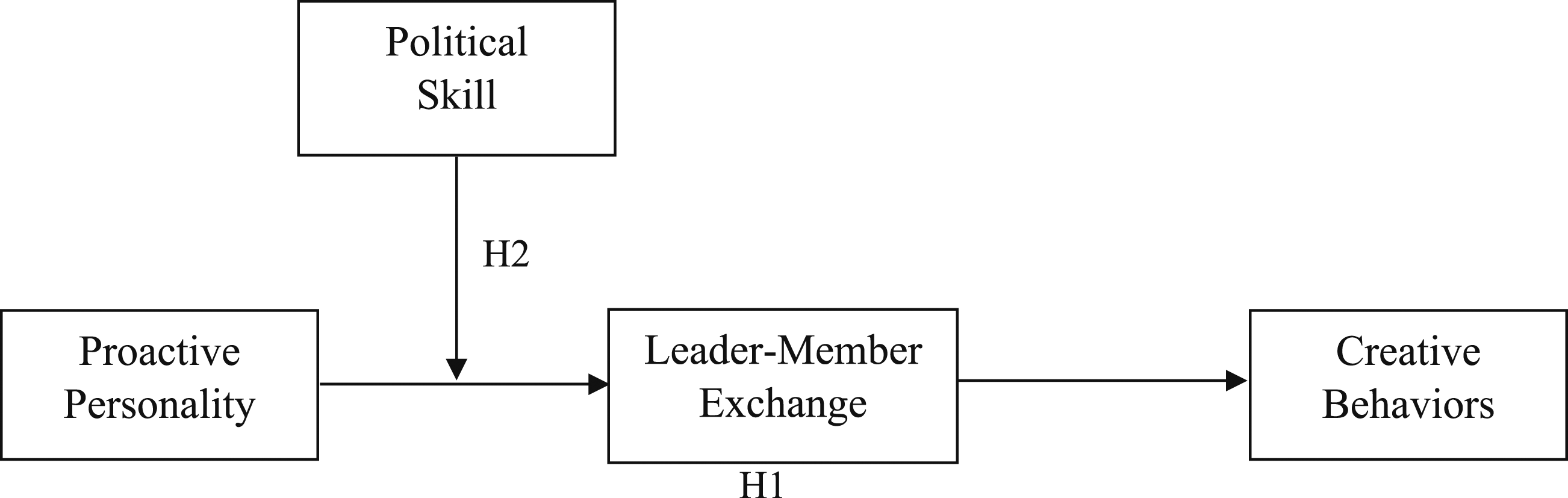
Political skill will moderate the relationship between proactive personality and LMX.
Methodology
Data collection and sample description
Data was collected from faculty and staff employees working in two large universities in southern Vietnam. The questionnaires distributed to employees included questions related to proactive personality, political skill, and LMX, whereas questions related to employees’ creative behaviors were filled by their supervisors. This collection of data from two different sources is also helpful in reducing the risk of common method bias (Podsakoff et al., 2012). All participants were told that the survey is part of academic research not linked in any way to their performance evaluation, and their participation is completely voluntary. In addition, following the suggestions of the participants were also acknowledged that their responses would remain anonymous. Lastly, following the suggestions of Podsakoff et al. (2003) in reducing the tendency of the respondents to provide socially desirable answers, respondents were told that there are no right or wrong answers and that they should answer the questions as truthfully as possible.
The data collection resulted in a total of questionnaires completed by 153 subordinate-supervisor pairs, which consisted of 42 supervisors. The respondents’ average age was 35.3 (SD = 10.78). Among the participants, 87 were males, while 66 of them were females. In terms of education, 3.3 percent of the respondents had a high school diploma, while 9.8 percent of them had an associate’s or technical degree, 51 percent had bachelor degrees, 26.8 percent had master’s degrees, and 9.1 percent had Ph.D. or some other terminal degree. The average tenure of the respondents was 6 years (SD = 5.35), while the time subordinates worked under the current supervisor was 3.83 years (SD = 2.83).
Measures
All items were measured on 7-point Likert scales (from 1 = “strongly disagree” to 7 = “strongly agree”). Because the scales were originally developed in English, this research followed the commonly used back-translation procedures (Brislin, 1970, 1986) to ensure the equivalence of meaning in Vietnamese. Two researchers with doctoral degrees who were fluent in both English and Vietnamese helped translate the questionnaire to Vietnamese and back to English separately.
Creative behaviors
This variable was measured by asking supervisors to rate their subordinates’ creative behaviors. The scale consisted of six items developed by Zhou and George (2001). Sample items include: “Searches out new technologies, processes, techniques, and/or product ideas” and “Suggests new ways to achieve goals or objectives.” The Cronbach’s alpha for this scale was 0.92.
Proactive personality
To measure proactive personality, a scale consisting of 10 items developed by Seibert et al. (1999) was used. Subordinates were asked to rate their own level of proactive personality. Sample items include: “I am always looking for better ways to do things,” “I love being a champion for my ideas, even against others’ opposition,” and “If I believe in an idea, no obstacle will prevent me from making it happen.” Cronbach’s alpha for this scale was 0.92.
Political skill
This variable was measured by using the 18-item scale developed by Ferris et al. (2005). Respondents were asked to rate their own level of political skills. Sample items include: “It is easy for me to develop good rapport with most people” and “I always seem to instinctively know the right thing to say or do to influence others.” Cronbach’s alpha for the composite scale was 0.96.
Leader-member exchange
To measure this variable, the study used the 7-item scale developed by Graen and Uhl-Bien (1995). Respondents were asked to use this scale to rate the quality of the relationship with their supervisors. Sample items included: “My manager has enough confidence in me that he/she would defend and justify my decisions if I was not present to do so” and “My manager understands my problems and needs.” Cronbach’s alpha for this scale was 0.94.
Control variables
Consistent with the previous literature on employee creativity, the study controlled for employee age, gender, education level, tenure, and time with their current supervisor, as these items may affect employee creative behaviors in certain settings (Frosch, 2011; Ng and Feldman, 2013; Zhang and Bartol, 2010).
Results
Analysis of validity and reliability
Comparison of measurement models.
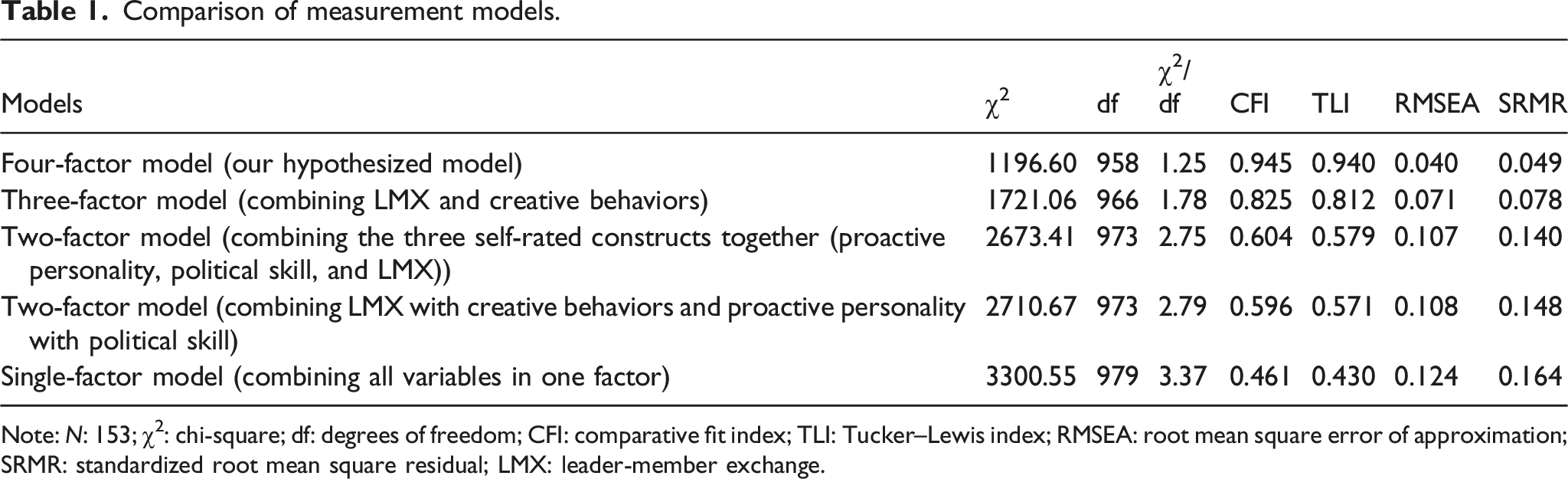
Note: N: 153; χ2: chi-square; df: degrees of freedom; CFI: comparative fit index; TLI: Tucker–Lewis index; RMSEA: root mean square error of approximation; SRMR: standardized root mean square residual; LMX: leader-member exchange.
Descriptive statistics.
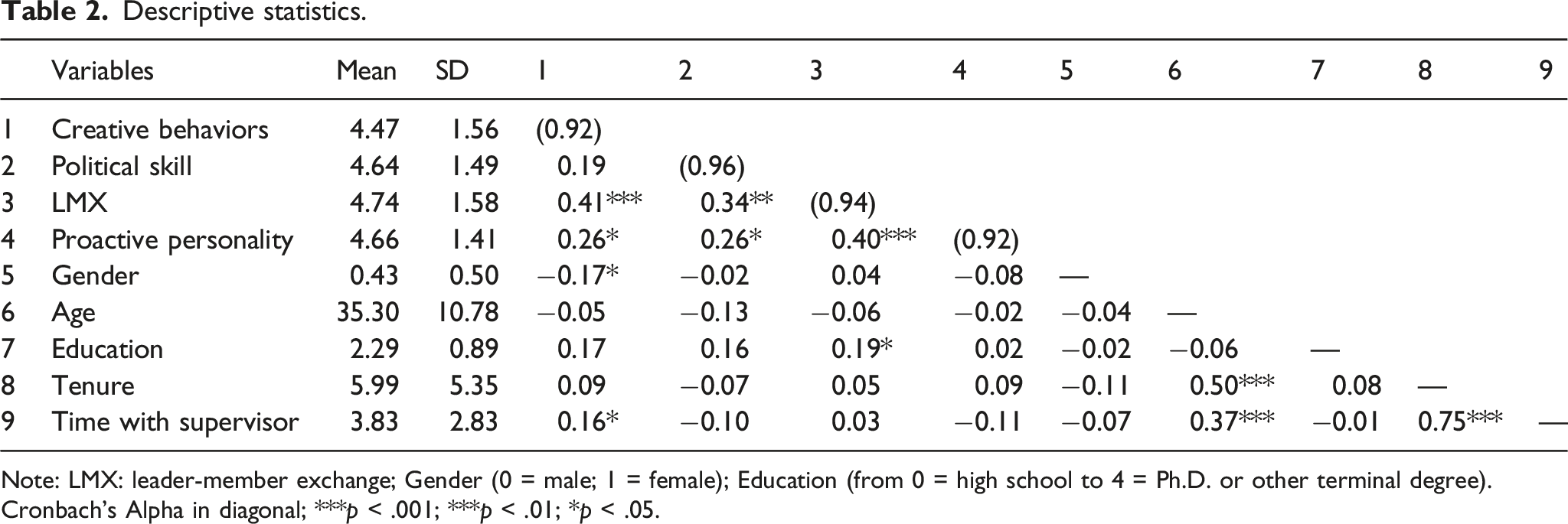
Note: LMX: leader-member exchange; Gender (0 = male; 1 = female); Education (from 0 = high school to 4 = Ph.D. or other terminal degree).
Cronbach’s Alpha in diagonal; ***p < .001; ***p < .01; *p < .05.
Data analysis
The data was collected in such a way that supervisors were providing ratings for multiple employees. As such, given the nested nature of the data, hierarchical linear modeling was conducted to account for any potential non-independence of the observations (Raudenbush and Bryk, 2002). Additionally, given that the proposed model includes both a mediation and a moderation, a moderated mediation analysis was conducted, as this type of analysis has the advantage of combining mediations and moderations into a single model (Preacher et al., 2007). To demonstrate a moderated mediation, Preacher et al. (2007) suggest that four conditions need to be met. First, the independent variable (i.e., proactive personality) significantly relates to the mediator (i.e., LMX). Second, the mediator significantly relates to the dependent variable (i.e., creative behaviors) after controlling for the independent variable. Third, the relationship between the independent and dependent variables depends on the mediator. Fourth, the mediation effect depends on the moderator (i.e., political skill).
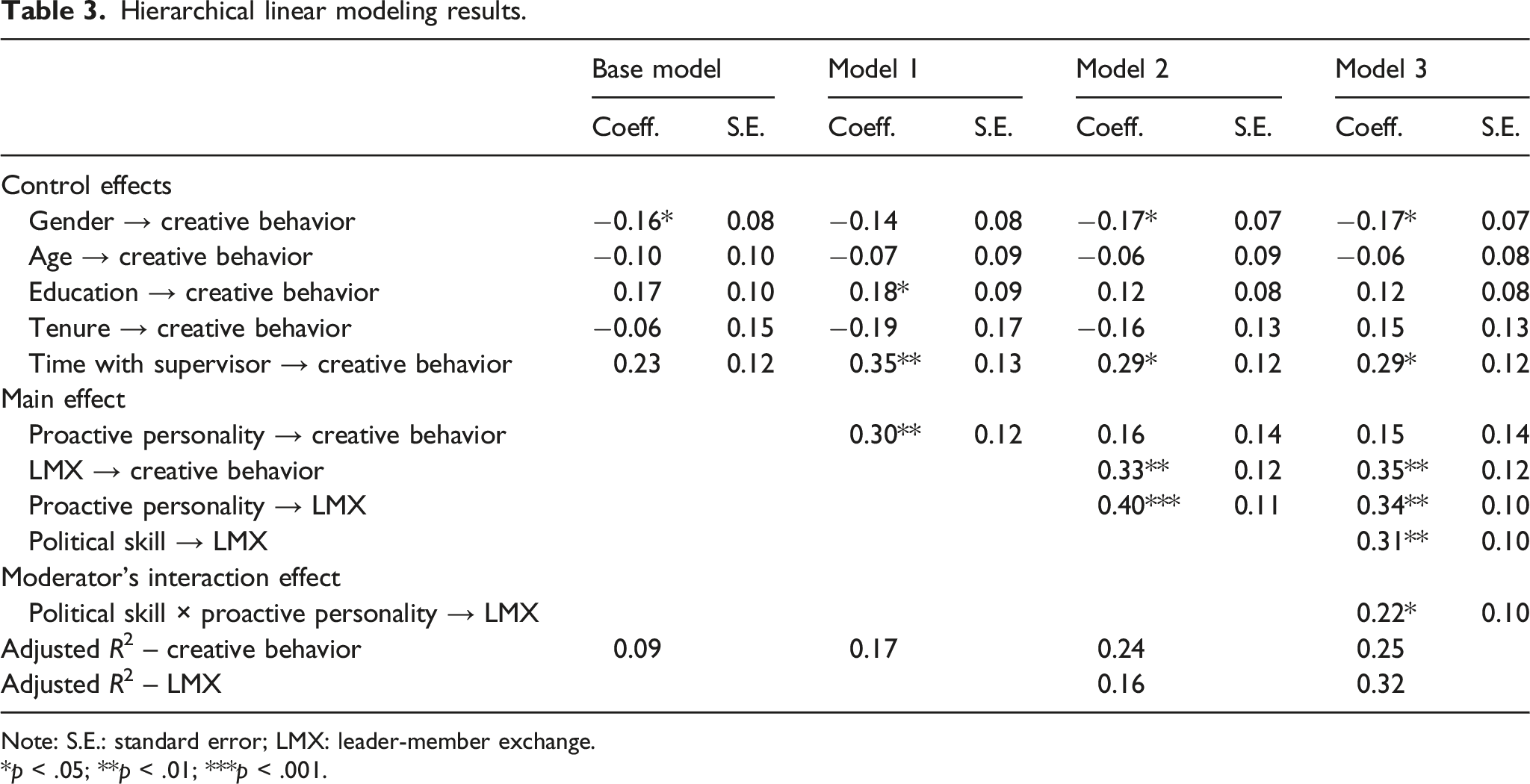
Hierarchical linear modeling results.
Note: S.E.: standard error; LMX: leader-member exchange.
*p < .05; **p < .01; ***p < .001.
Hypothesis testing
Hypothesis one proposes that LMX acts as a mediator of the relationship between proactive personality and creative behaviors. As shown in model two on Table 3, proactive personality significantly relates to LMX (β = 0.40, p < .001). LMX also significantly relates to creative behaviors (β = 0.33, p < .01). Additionally, when LMX is introduced, the direct effect between proactive personality and creative behaviors reduces from 0.30 (p < .05) to 0.16 (p > .05). The mediation effect was tested by conducting a bootstrap analysis, as this resampling technique tends to be very accurate in determining confidence limits for indirect effects (MacKinnon et al., 2004, 2012). The bootstrap analysis generated an indirect effect coefficient of 0.13 (p < .05; S.E. = 0.07) as well as 95% bias-corrected confidence intervals (Lower limit = 0.04; Upper limit = 0.32). The confidence interval did not contain zero, thus suggesting that the indirect effect is statistically significant. Therefore, hypothesis one was supported.
Hypothesis two proposes that political skill will moderate the relationship between proactive personality and LMX. To test this hypothesis, the independent variable and moderator were centered prior to calculating the product term to minimize problems with multicollinearity (Aiken and West, 1991). As can be seen in Model three of Table 3, the interaction between proactive personality and political skill significantly relates to LMX (β = 0.22, p < .05), which suggests that political skill positively moderates the relationship between proactive personality and LMX, thus providing support for Hypothesis 2.
Figure 2 provides the simple slopes of the interaction using the procedure proposed by Aiken and West (1991) to better interpret the moderation pattern of political skill. The simple slopes analysis showed that when political skill was high (+1 SD), the relationship between proactive personality and LMX is positive and statistically significant (b = 0.70, p < .01). When political skill was low (−1 SD), the relationship between proactive personality and LMX is not statistically significant (b = 0.21, p > .05). The interaction of proactive personality and political skill for leader-member exchange.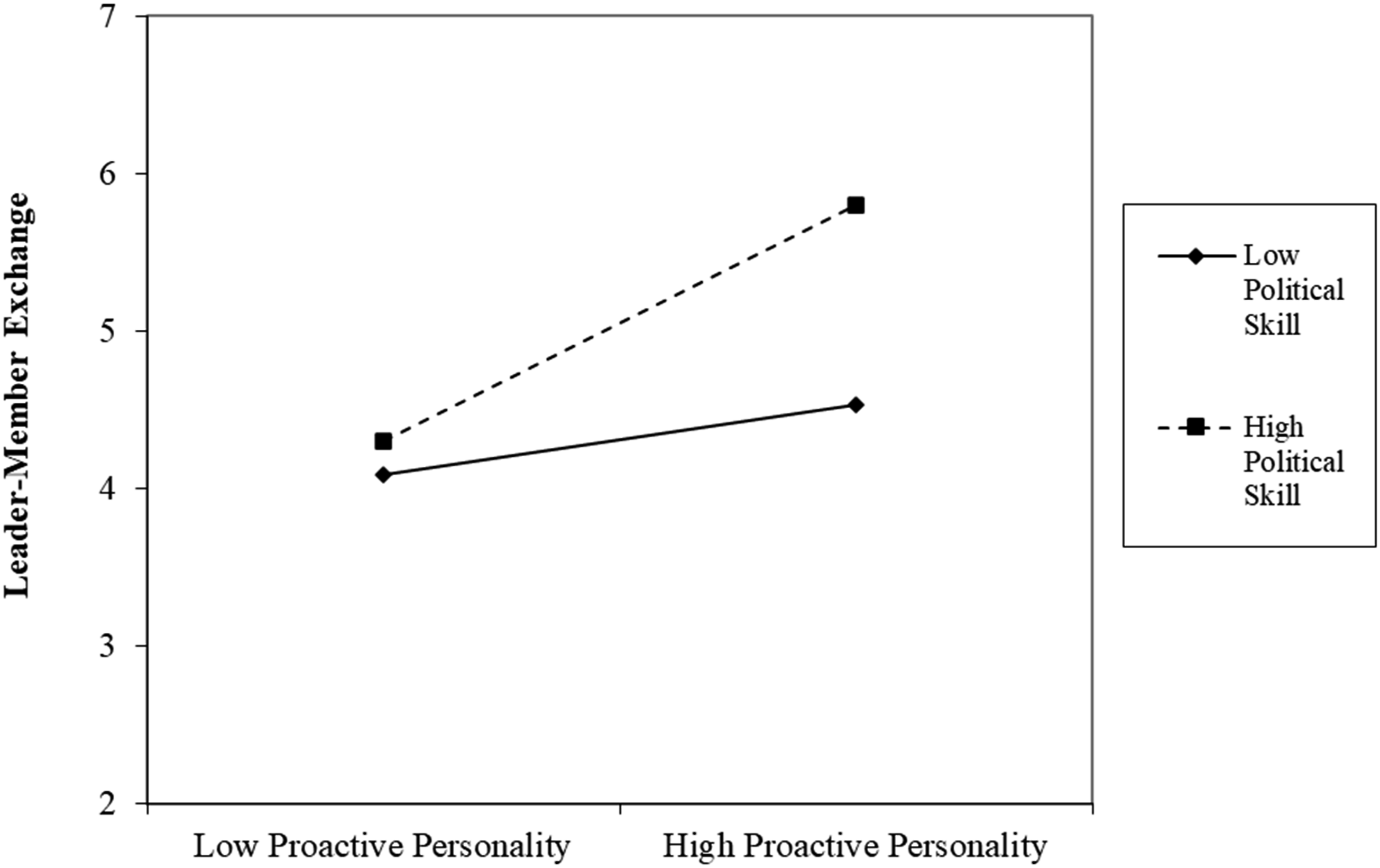
Bootstrap results.
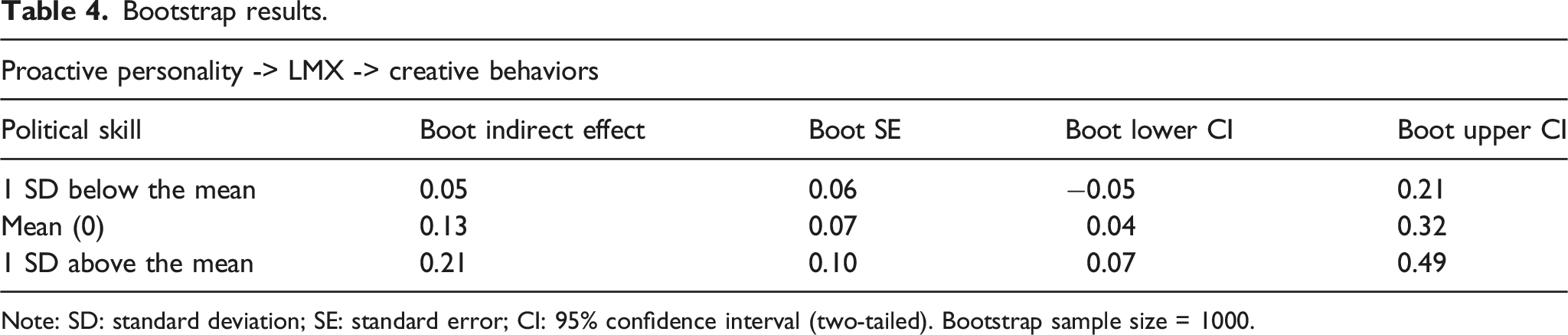
Note: SD: standard deviation; SE: standard error; CI: 95% confidence interval (two-tailed). Bootstrap sample size = 1000.
Discussion
The purpose of this study was to examine the complex relationship between employee proactive personality and creative behaviors. Departing from the prior studies that focused on intrapersonal processes as explanatory mechanism of the effect of proactive personality (e.g., Choi et al., 2021; Jiang and Gu, 2015; Li et al., 2017a; Sears et al., 2018), the current study proposed that LMX would act as an underlying mechanism of the relationship between proactive personality and creative behavior. After a statistical analysis of 153 supervisor-subordinate pairs, the results support the first hypothesis which states that LMX mediates the relationship between proactive personality and creative behavior. This means that proactive employees in LMX relationships of higher quality would be able to exert more creative behaviors than in cases of low quality LMX. Moreover, the results also provided support for the second hypothesis by showing that political skills strengthen the relationship between proactive personality and LMX. Consistent with the socioanalytic theory of personality which states that individuals are more likely to succeed in achieving desired outcomes when they possess a personality-driven motivation as well as a high level of social competence (Hogan and Holland, 2003), the findings suggest that when proactive individuals are more likely to develop a higher quality of LMX when they also possess higher levels political skill. Taken together, these findings provide evidence that employees with proactive personality show higher levels of creative work behaviors because of the high-quality exchange relationships they build with their supervisors, especially when the proactive employees are politically skillful.
Theoretical implications
These findings have important theoretical implications. First, the previous studies exploring the mechanisms between proactive personality and innovative work behavior focused primarily on intrapersonal processes (e.g., Akgunduz et al., 2018; Alikaj et al., 2021; Kong and Li, 2018). By examining LMX as a mediator, this study adopts an interpersonal perspective to understand how proactive personality may lead to innovative work behavior through social interactions. The findings of this study suggest that LMX mediates the positive association of proactive personality and innovative work behavior. Thus, this study makes an important contribution to the literature by indicating that the social relationship between employees and supervisors may play a key role in understanding the influence of proactive personality on innovative work behavior. Based on the social perspective on creativity (Perry-Smith and Shalley, 2003), this study is the first to emphasize the importance of the dyadic exchange relationship between supervisors and subordinates in the association between proactive personality and creative work behavior. Supervisors are often an important source of information, power and influence at work (Graen and Scandura, 1987). Thus, for proactive employees, their relationship with supervisors is a central part of the process by which they exert creative work behavior.
Second, with Hypothesis 2, this study further extends the interpersonal approach by examining the contingent relationship between proactive personality and LMX. The findings suggest that the quality of exchange relationships between proactive employees and their supervisors is not universal; rather, it is contingent upon the political skills possessed by the proactive employees. This finding contributes to the literature by indicating that political skill not only is a social competence that helps establish work relationships in general but also affects the extent to which proactive personality can be translated to high-quality exchanges between supervisors and employees. While recent studies have found political skill to be an antecedent of employee creativity (Clarke and Higgs, 2020; Grosser et al., 2018), the findings indicate that proactive individuals with a high level of political skill are more likely to indirectly increase their creative contributions via a high-quality LMX. These findings can also be considered as complementary to the limited number of studies that explore the social factors (Gong et al., 2012; Pan et al., 2018) by taking into consideration the degree of political skill of proactive individuals in exerting creative behaviors.
Practical implications
This study also offers practical implications. For instance, managers can undergo training to enhance their leadership skills, particularly focusing on building high-quality LMX relationships. Since a quality LMX is characterized by mutual trust, respect, and open communication (Graen and Uhl-Bien, 1995), this training can focus on active listening, empathy, and being approachable to create an environment where employees feel comfortable sharing their ideas and taking initiative. A positive and supportive LMX can encourage employees to feel comfortable sharing creative ideas and taking initiative without fearing negative consequences. Additionally, a quality LMX involves leaders trusting their employees and providing them with the necessary autonomy and resources to succeed (Lau and Liden, 2008). As such, leaders should feel comfortable granting employees with proactive personalities the autonomy to pursue creative projects and allocate resources to support their initiatives. Giving proactive employees the liberty to explore and experiment can result in increased innovative results.
Additionally, proactive employees should always keep in mind the social aspect of the organization, and, as such, they should aim to become more politically skillful as it can help them improve the quality of the relationship with their supervisors. To prevent conflicts arising from proactive employees attempting to initiate changes without the necessary political skills to understand the organization’s needs and implement initiatives in socially sensitive and adaptive manners, organizations would benefit from investing in the development of their employees’ political skills.
Limitations and directions for future research
Despite its significant contributions, this study has a few limitations, which can generate new directions for future research. First, this study is cross-sectional, meaning that the data was collected at one point in time. As such, causality cannot be established. Future studies could take a longitudinal approach to better examine the causal relationships between the variables included in this study.
Second, the location of the participants of this study limits the generalizability of the results. Data was collected only from employees working in Vietnam. However, various economic and cultural factors can influence the strength of the relationships proposed in this study for samples in other countries. For instance, the cultural dimensions model developed by Hofstede (2001) suggests that individuals under different cultures can differ in terms of their degree of power distance or how they develop relationships with others. These factors can influence the display of proactive and creative behaviors exerted by employees or even the quality of the relationship between leaders and their subordinates. For example, Vietnam is characterized by a high power-distance culture, where individuals are more prone to embracing authority, adhering to hierarchical systems, and yielding to those holding positions of power. As such, employees in high power-distance cultures may be less likely to exhibit proactive personality traits, as they may feel less empowered to challenge the status quo or take independent action (Carsten et al., 2010). Additionally, leaders in high power-distance cultures are more likely to prefer an employee that emphasizes follower subordination as opposed to proactive follower behaviors (Urbach et al., 2021). As such, these factors may determine the actions that employees take to develop quality relationships with their leaders, which ultimately may affect their creative contributions.
Future studies that take a social perspective in explaining the proactive personality-creative behavior relationship could also examine other organizational settings. The sample consisted of employees working in a university setting. Universities are primarily focused on education and knowledge creation. They provide an environment that encourages learning, exploration, and intellectual curiosity. As a result, there is often more room for experimentation and creative thinking compared to industries that are driven by profit or specific business objectives. Universities also tend to offer more academic freedom than many other sectors (Aarrevaara, 2010). Professors and researchers are encouraged to pursue topics of interest, even if they are unconventional or speculative. This freedom allows for unconventional and creative approaches to knowledge generation. Therefore, an examination of a variety of industry sectors would offer more insight in regards to how proactive employees exert their creative contributions.
Footnotes
Declaration of conflicting interests
The author(s) declared no potential conflicts of interest with respect to the research, authorship, and/or publication of this article.
Funding
The author(s) received no financial support for the research, authorship, and/or publication of this article.