



Abstract
This article describes the first 10 years of the implementation of Circles of Support and Accountability (Circles) in the management of sexual offenders in South-East England by Circles South East (CSE). The Circles of 71 core members are reviewed in detail, with reference to demographic data, offense and sentencing histories, risk assessment data, and considerations regarding Multi-Agency Public Protection Arrangements. A group of 71 comparison subjects who were referred to CSE and deemed suitable for but did not receive the service was identified. Follow-up behaviors of both groups are examined (including all forms of reconviction, breach of orders, and prison recall). Over a comparable follow-up period of 55 months, the incidence of violent and contact sexual reconviction in the comparison group was significantly higher than for the Circles cohort. Comparisons are made between expected and actual levels of sexual reconviction, with the Circles cohort showing lower than expected rate of sexual reconviction but not to a statistically significant degree.
Keywords
Introduction
Citizens and policy makers alike share common concerns regarding the presence of sexual offenders in our communities. Indeed, it is not uncommon for many persons to espouse particularly strong negative feelings and attitudes regarding sexual offenders and their potential placement in any individual community. Some authors have identified these sentiments and, in some cases, subsequent actions as a “moral panic” (e.g., Silverman & Wilson, 2002).
In an attempt to address these concerns, governments have enacted legislation to identify and control offenders in the community, with the goal being to manage risk for harm. Examples of such legislation include sexual offender registration and notification, specialized probation orders, residency restrictions, and electronic monitoring (e.g., Global Positioning System). While such measures enjoy popularity with law enforcement agencies and the community-at-large, researchers (e.g., Levenson & D’Amora, 2007) have questioned whether they actually achieve the goal they were created to meet—lower rates of reoffending. Furthermore, others have questioned whether such measures may actually increase danger to the community by leading to offender instability upon release (e.g., Willis & Grace, 2008, 2009).
Most legislative attempts at sexual offender risk management serve to increase the levels of external controls, which act to restrict offenders’ behaviors. However, the general criminological literature is clear in demonstrating that persons experiencing behavioral problems are more likely to show positive growth and a lessening of symptomatology with the application of human service (e.g., psychological programming, prosocial support and guidance, access to social service programs—see Andrews & Bonta, 2010). Simply put, contemporary approaches to sexual offender risk management have been all about accountability, but with very little focus on support. We contend that a successful risk-management scheme must address both of these critical elements.
Circles of Support and Accountability (Circles) in Canada
Circles was first established in Canada in 1994 in response to the high-profile release of a repeat child sexual abuser to an unaccepting community. Subsequent development and management of Circles in Canada by the Mennonite Central Committee was enhanced by the presence of a longitudinal evaluations using matched comparison groups (R. J. Wilson, Cortoni, & McWhinnie, 2009; R. J. Wilson, Picheca, & Prinzo, 2007b).
The Circles model consists of two concentric circles of participants (see Figure 1). The inner circle comprises a released offender (known as a core member) and 4 to 6 community volunteers. These participants meet regularly to address the risk and reintegration issues presented by the core member. From time to time, issues arise requiring expert consultation (e.g., probation/parole violations, indications of imminent risk to reoffend, mental health problems). This is when the outer circle—comprising professionals such as psychologists, probation and parole officers, social service workers, law enforcement personnel, and so on—becomes important. In essence, while the inner circle provides support and accountability to the core member, the outer circle functions in a markedly similar fashion for the inner circle.
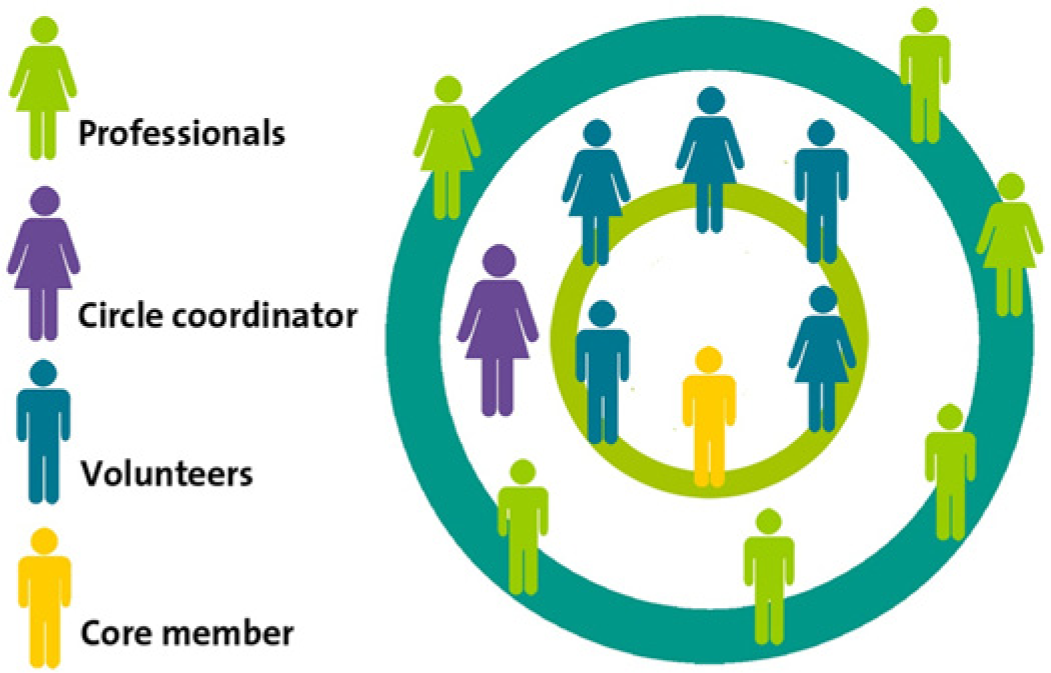
Graphic representation of Circles model (adapted from R. J. Wilson & Picheca, 2005, by Netherlands Probation Service, 2012).
Two Canadian studies have focused on the relative rates of reoffending between core members and matched comparison subjects who were not afforded participation in a Circle (see R. J. Wilson et al., 2007b; R. J. Wilson et al., 2009). In the first study, a group of 60 high-risk sexual offenders involved in Circles (core members from the original pilot project in South-Central Ontario in Canada) were matched to 60 high-risk sexual offenders who did not become involved in Circles (matched comparison subjects), with an average follow-up time of 4.5 years. Offenders were matched on risk, type of release, date of release to the community, and prior involvement in sexual offender treatment. Results showed that the core members demonstrated a 70% reduction in sexual recidivism in contrast to the matched comparison group (5% vs. 16.7%), a 57% reduction in all types of violent recidivism (including sexual—15% vs. 35%), and an overall reduction of 35% in all types of recidivism (including violent and sexual—28.3% vs. 43.4%). In the three instances in which a core member committed a new sexual offense, a harm reduction (Marlatt, 1998) effect was observed—the offenses for which they were convicted were categorically less severe and invasive than the offenses for which they had previously been convicted. The effect was not observed in the matched comparison group.
The second study consisted of a Canadian national replication of the study from the pilot project (see R. J. Wilson et al., 2009). The same basic methodology was used—comparing core members to matched comparison subjects. Participants for this study were drawn from Circles projects across Canada, but not including members of the pilot project. In total, the reoffending of 44 core members was evaluated against 44 matched comparison subjects, with an average follow-up time of approximately 3 years. Similar to the first study, dramatic reductions in rates of reoffending were observed. Specifically, there was an 83% reduction in sexual recidivism (2.3% vs. 13.7%), a 73% reduction in all types of violent recidivism (including sexual—9.1% vs. 34.1%), and an overall reduction of 70% in all types of recidivism (including sexual and violent—11.4% vs. 38.6%) in comparison with the matched offenders.
Recent research by Duwe (2012) has further supported the use of Circles as a way of reducing the risk of sex offenders released into the community. This research was the first to use a randomised control trial and compared a cohort of 31 core members who had worked with Minnestoa Circles of Support and Accountability (MnCOSA), established in 2008, with a group of 31 Level 2 sex offenders who were randomly assigned to a control group. Results from a Cox regression model showed that MnCOSA significantly reduced three of the five recidivism measures examined (e.g., rearrest, reconviction, reincarceration for a new offense, reincarceration for a technical violation revocation, and reincarceration for either a new offense and/or a technical violation revocation). The study was also able to evidence a high cost-benefit analysis showing that for every dollar spent on MnCOSA, the program has generated an estimated benefit of US$1.82 (an 82% return on investment).
Circles in the United Kingdom
In June 2000, the Religious Society of Friends (Quakers) invited five Circles dignitaries from Canada to share their experiences of the model and to provide information as to how Circles might be implemented in the United Kingdom. During that consultation, meetings were held with stakeholders associated with such organizations as the Religious Society of Friends, the Home Office, Her Majesty’s Prison Service (HMP; including a visit to HMP Grendon to meet with administrators, treatment providers, and inmates), the Parole Board, the Lucy Faithfull Foundation, and the National Organisation for the Treatment of (Sexual) Abusers (NOTA; R. J. Wilson, McWhinnie, & Wilson, 2008). These meetings helped establish a collective of persons and agencies interested in exploring innovative approaches to sexual offenders leaving prison and reentering the community. Furthermore, in modeling aspects of U.K. Circles development and implementation on the Canadian model, a foundation was laid for robust and valid measurement as to the potential success of such projects. The implementation of the Multi-Agency Public Protection Arrangements (MAPPA—see Wood & Kemshall, 2007) required that the development of Circles practice in the United Kingdom be based within a “Theoretical Framework” (C. Wilson & Saunders, 2003) that was appropriate to this new structure of risk management. Statutory agencies charged with the risk management of sexual offenders were interested in the implementation of Circles, but needed evidence that investment in such an intervention was worthwhile.
In 2001, the U.K. Home Office agreed to fund three projects over an initial 3-year period (Quaker Peace and Social Witness, 2005). These three projects were to be the Lucy Faithfull Foundation, Thames Valley, and Hampshire—the latter two projects combining into one project in 2006, becoming known as HTV Circles. In 2010, HTV Circles expanded further to include Kent, whereupon it became known as Circles South East (CSE).
Past U.K. Circles Evaluations
In 2005, Thames Valley Circles undertook a study (Bates, Saunders, & Wilson, 2007) examining 16 Circles over a 4-year operational period, the focus of which was to be the management and outcome of problematic behaviors recorded by the Circle. Nine of 16 core members displayed high-risk behaviors, which were subsequently reported to the police by their Circle volunteers. Of those 9, 4 core members were recalled to prison for breach of their parole conditions, while the remaining 5 were managed through MAPPA, continuing with their Circle and living in the community. For those returned to prison, their volunteers continued to have contact with them and when released, 3 returned to their Circle. The experience of being held to account but not abandoned was a profound one for these core members. Although the end result was a return to custody, these experiences were viewed by the evaluation as a success, because there were no further victims or reconvictions, and public protection was enhanced.
A further evaluation undertaken in 2009 (Bates, Macrae, Williams, & Webb, 2012) included, for the first time, those Circles created in Hampshire, with a total sample population of 60 core members. This study reported the first HTV Circles sexual reconviction, whereby a core member with a history of contact sexual offending against female children was convicted for downloading indecent images of children from the Internet. This evaluation is of note because of its focus on the positive outcomes achieved by HTV core members (as opposed to simple recidivism) by identifying how Circles activity was contributing toward risk management with reference to the National Offender Management Service’s (NOMS’s) seven Offender Assessment System (OaSYS) “pathways” (Howard, 2006). This evaluation recognized and acknowledged developments and changes in the United Kingdom’s nationally accredited treatment programs, which was important insofar as Circles was proving to be the practical embodiment—post-treatment—of strengths-based interventions and practice using theoretical constructs such as the Better Lives Model (Good Lives Model [GLM]—Ward & Stewart, 2003) and desistance theory (Laws & Ward, 2011; McNeill, 2010). The current article is able to significantly advance the cause of COSA evaluation by not only focusing on reconviction and other post-Circles behaviors exhibited by CSE core members but also comparing these outcomes with a group of broadly matched sex offenders released into the community without COSA support.
CSE Practice
At CSE, some offender self-referrals are considered, though the majority is received from Police or Probation. Potential core members are then assessed for suitability by CSE staff, who assess motivation, individual circumstances, and whether risk matches the level of resource being sought by referrers. Volunteers are trained in preparation for their role, with topics such as typology, manipulation, personal boundaries, and managing risk being covered. There is also input into volunteer training by the local probation Sex Offender Groupwork Programme staff, with particular reference to the Better Lives model and Wheel of Life exercises. Volunteers are then briefed on individual risk and needs issues prior to meeting the core member they are to work with.
CSE activity is never intended to replace Sex Offender Treatment Programmes (SOTPs), but rather to compliment treatment aims and outcomes. While offenders are held accountable to treatment gains made within the deviant sexual interests and offense-supportive attitudes (e.g., Risk Domains 1 and 2 of the Structured Assessment of Risk and Need [SARN]; Thornton, 2002), the “social” nature of a Circle can reinforce progress primarily within socioaffective and self-management spheres (Risk Domains 3 and 4 of the SARN). Circles routinely run while Core members are completing the Better Lives Block of sex offender treatment, priorities being governed by the application of goals described in individual Wheels of Life (often a considerable obstacle for those with low self-esteem and poor relationship skills).
Desistance Theory and Its Relationship to Circles
The importance of strengths-based theories in relation to reducing offending behavior and managing risk has now begun to significantly affect practice (Marshall, Marshall, Serran, & O’Brien, 2011). A number of criminologists (e.g., Ward & Laws, 2010; McNeill, 2010; McNeill & Weaver, 2010) have developed theories as to why some offenders desist from offending—that is, why and how do they stop, and how do they “stay stopped”? There are striking similarities between this collective “Desistance Theory” and the Circles model, with those similarities occurring chiefly in three areas:
two-way process . . . [in which] offenders’ efforts to contribute [to society] should be reciprocated by communities and society through recognition of those efforts and reinforcement of them. This would suggest the need, therefore, to build communities that are desistance-supportive, acting as partners in the process of sponsoring, supporting and sustaining rehabilitation. (p. 273)
Nowhere can this be more relevant than in the case of those convicted of sexual offenses, whose loneliness and social isolation (often causal to the original offending behavior) is often amplified by societal vilification and, ultimately, destabilization of the sort referred to previously. Circles are essentially small, desistance-friendly communities, rewarding desistance with a qualified welcome and, eventually, safe inclusion. In itself, this may be the most important aspect of what makes the model so effective.
Method
Procedure
Core Member and Circles Demographics
This study includes a description of demographic details and an analysis of the behavioral outcomes of the core members with whom CSE has worked since its inception. Reconviction data were also accessed from the U.K. Police National Computer (PNC) for 71 sexual offenders broadly matched on risk status and period of community follow-up who were referred to CSE and considered to be suitable but, for various reasons, did not receive a Circle.
Between November 2002 and March 2012, CSE has established 100 Circles. This study examines 71 of those Circles because, at the point of the study, 19 Circles had only been running for less than 6 months, and it was considered that this was not a long-enough period to warrant follow-up. A further 10 core members had been in a Circle for less than 90 days. While we were not of the view that the full recommended period of Circles involvement (1 year) needed to have been completed by all core members subject to follow-up analysis, in accordance with previous international Circles research (see R. J. Wilson et al., 2007b; R. J. Wilson et al., 2009), a “90-day rule” was instituted. This stipulates that any core member who had been in a Circle for less than 90 days would not be considered likely to have significantly benefited from the process and would thus be excluded from the group under analysis. Within this “90-day” group in the current study, there were 5 core members who were recalled to prison for breach of release conditions and a further 4 who decided to withdraw from their Circle. In a further case, a core member’s mental health deteriorated to a degree whereby continuation of the Circle became unfeasible.
At the time of the study (April 2012), the longest postrelease period for any CSE core member was 114 months (9 years 6 months) and 27 cases were followed up for a period in excess of 5 years. This allowed for comparisons to be made against reconviction rates using Risk Matrix 2000 (RM-2000) expectancies (Hanson & Thornton, 2000; Kingston, Yates, Firestone, Babchishin, & Bradford, 2008). RM-2000 is the Actuarial Risk Assessment Scale used to assess risk of reconviction in sex offenders by NOMS. In a recent meta-analysis of various actuarial risk assessment instruments (see Hanson & Morton-Bourgon, 2009), RM-2000 was found to provide moderate predictive accuracy regarding sexual recidivism (i.e., average d = .67, 95% confidence interval [CI] = [.56, .77], over 10 replications).
Across the 71 cases examined in the current study, the average time a core member was formally in a working Circle was 15.9 months (this is not to be confused with the longer total time at risk in the community, post-release). For the purposes of this review, a Circle is defined as being in existence while it is receiving formal supervision from a professional coordinator and fulfils the requirement to provide minutes of each meeting between core member and volunteers. The longest Circle lasted 63 months (this was a Circle based within a church congregation, which receives formal, albeit it is somewhat less than regular, supervision from a Circle coordinator) and the shortest 4 months. At the time of the study, 12 of the Circles included in the analyses were ongoing, in addition to the 19 that had been running for less than 6 months and whose data were not included in these analyses.
The average length of time following the commencement of the Circle for each core member to the cutoff date for the study was 52.57 months (4 years 4 months), with a range between 7 and 114 months. The average age of the 71 core members was 47.75 years at the start of the Circle, with a range from 19 to 75 years.
Figure 2 shows the index offenses for which the CSE core members had been convicted. It should be noted that the vast majority of these offenses are contact sexual offenses (58 out of 71, 80.5%), and the majority of these were committed against children (50 out of 58, 86.2%). This information shows the very serious nature of the offenses committed by the core members and the associated high levels of risk that they presented in the community.
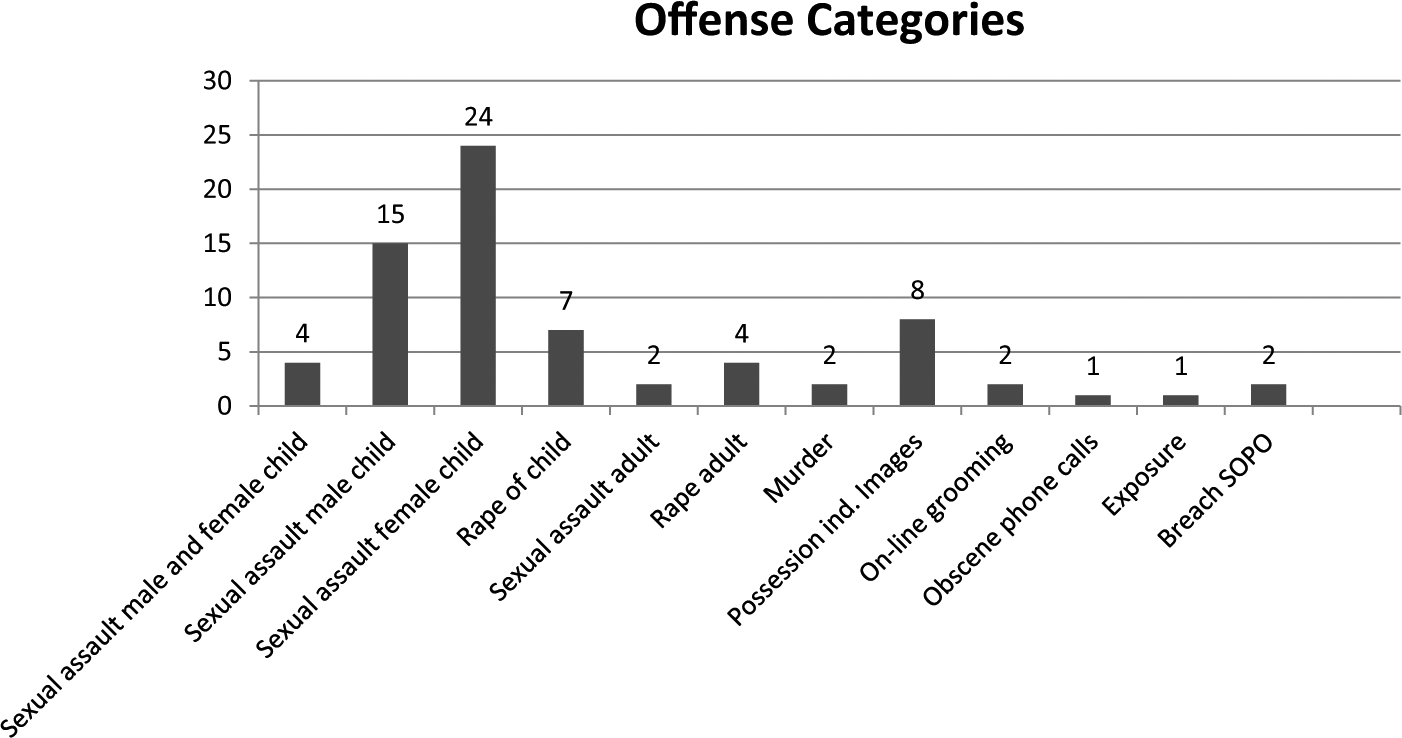
CSE core member offense categories.
Sentences Served by Core Members
Figure 3 below shows the sentences served by CSE core members. Fourteen served community sentences (19% of the total). All other core members served custodial sentences, the lengths of which are given in years. The lengthy custodial sentences served by the majority of core members are indicative of the serious nature of the offense patterns and proclivities CSE was seeking to address.
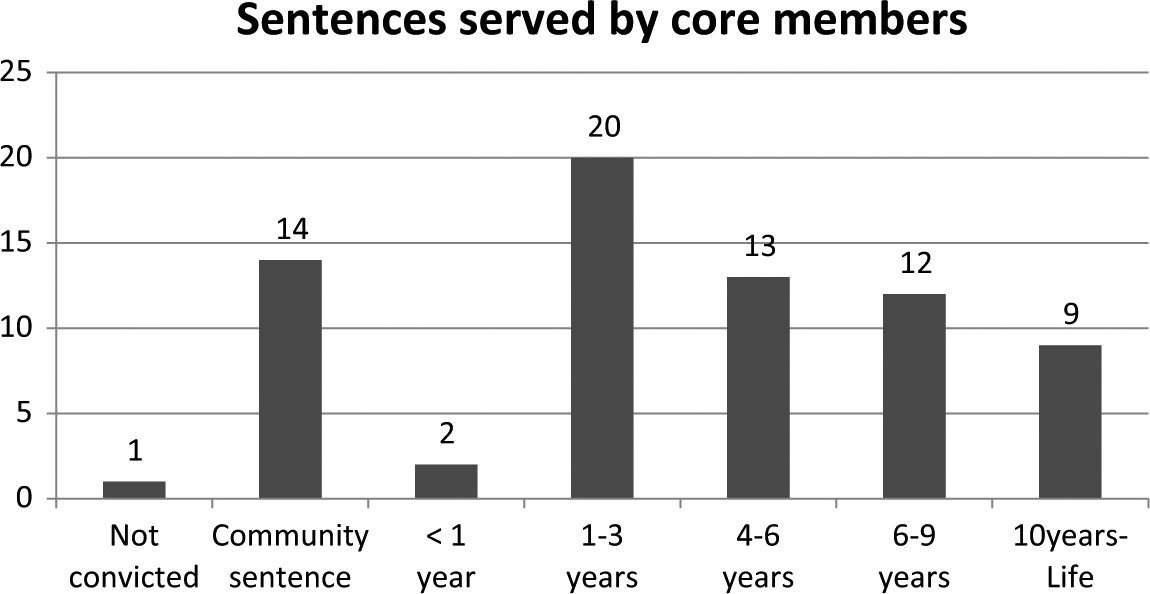
Sentences served by CSE core member.
All of the CSE core members were also registered sexual offenders and, as such, fell under the auspices of the U.K. MAPPA. MAPPA cases are registered at different levels, which are signified as above (see Table 1).
U.K. MAPPA Levels.
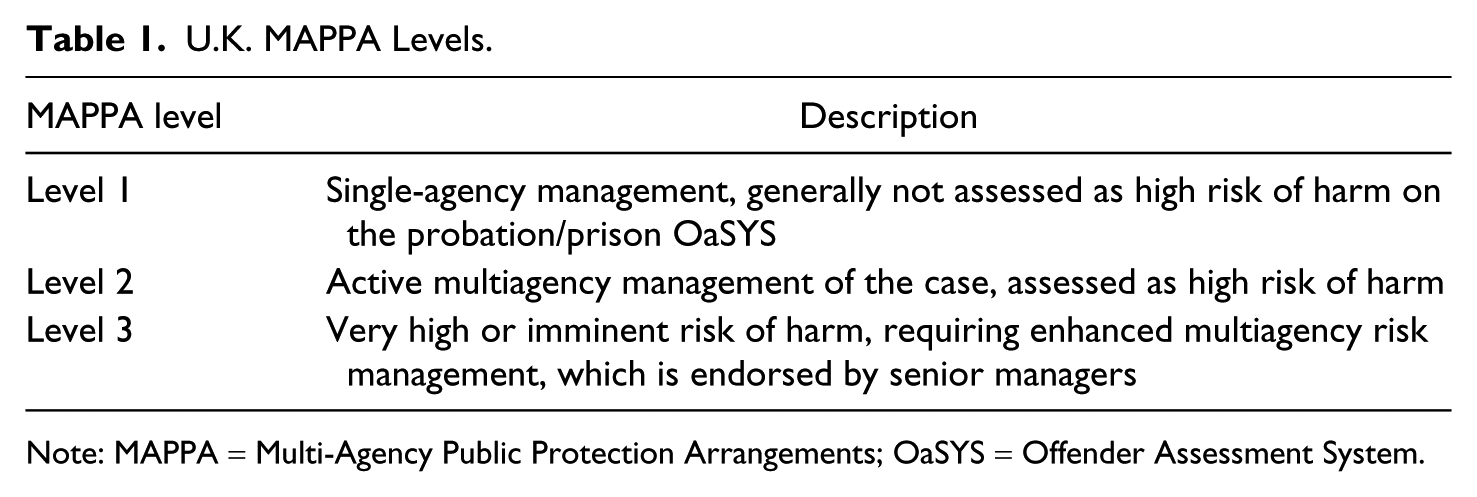
Note: MAPPA = Multi-Agency Public Protection Arrangements; OaSYS = Offender Assessment System.
Figure 4 shows the MAPPA levels at Circle point of entry for the CSE core members included in this study. Fifty-five were registered as Level 2 MAPPA cases—assessed as high risk of harm on the NOMS OaSYS, the system used to record key information about offenders including their actuarial risk of reconviction and clinically assessed risk of harm to various groups of potential victims (e.g., children, general public, staff, “known adult”). Ten were Level 3, and 6 were Level 1. It is of interest to note that even of these 6 Level 1 cases, 2 were assessed as high risk of harm to children on OaSYS, and a further 2 were assessed as high risk of reconviction on RM-2000 (see “Comparison Group” section), yet the lack of active multiagency management resulted in their lower MAPPA level. Again, these findings underscore the levels of risk posed by the core members, as well as the challenges these risks presented to criminal justice and community agencies.
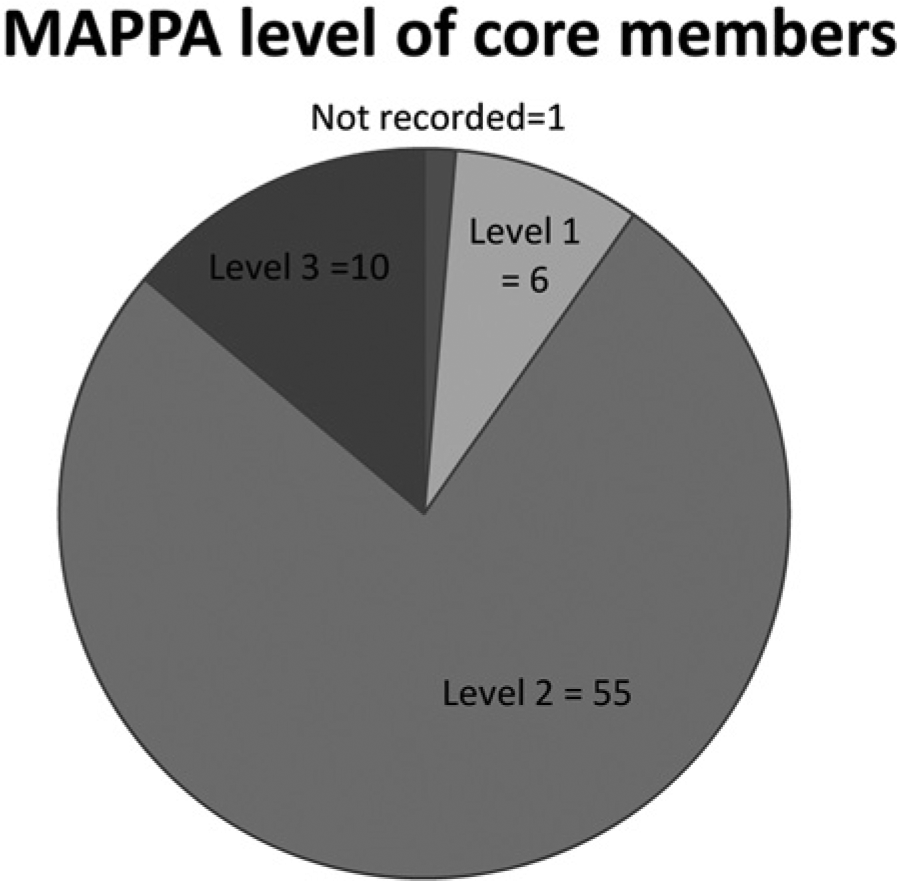
MAPPA levels of CSE core members.
Comparison Group
Data from PNC were available for a group of convicted sexual offenders who were referred to CSE but who, for a variety of reasons, were not accepted into a Circle. Records of this group were kept by CSE from February 2005 onwards although unfortunately this information did not extend to giving a full account of the reason why the offender did not receive a Circle. This complete list of unsuccessful referrals consisted of 149 cases, but on further examination of the information, which was available on each case (notably prospective prison release dates), many were identified as evidently not suitable for comparison with the CSE core member group. This may have been because the unsuccessful referral had not as yet been released from prison or because they were recorded as displaying evident lack of motivation to engage with Circles (the referral often initiating from another source, such as the offender manager). This full list was thus reduced to a revised total of 71 cases who it was considered could reasonably be compared with the CSE core member group, because it appeared that they were assessed as suitable but did not receive a Circle as there was none available in their area on their release from prison or because they withdrew from the process after being assessed as suitable. The average follow-up period for the comparison group was 55.04 months (SD = 19.03), slightly longer than the average follow-up period of the core member group of 52.57 months (SD = 32.04).
RM-2000
RM-2000 (Kingston et al., 2008) is valid for use with male offenders aged 18 or above convicted of a sexual offense since they were aged 16. It places an offender into one of four categories by using factors related to age and number of previous convictions, as well as so-called “aggravating factors” to do with relationship history, history of targeting of male victims, stranger victims, and incidence of noncontact sex offending. RM-2000 predicts risk of reconviction, but does not specify the kind of reconviction—that is, it does not predict the level of potential harm to the victim of any future behavior or the kind of sexual reconviction that might occur. As noted above, meta-analytic review has suggested that RM-2000 provides moderate predictive accuracy for sexual recidivism (average d = .67; Hanson & Morton-Bourgon, 2009). Figure 5 shows the distribution of core members over the RM-2000 risk categories.
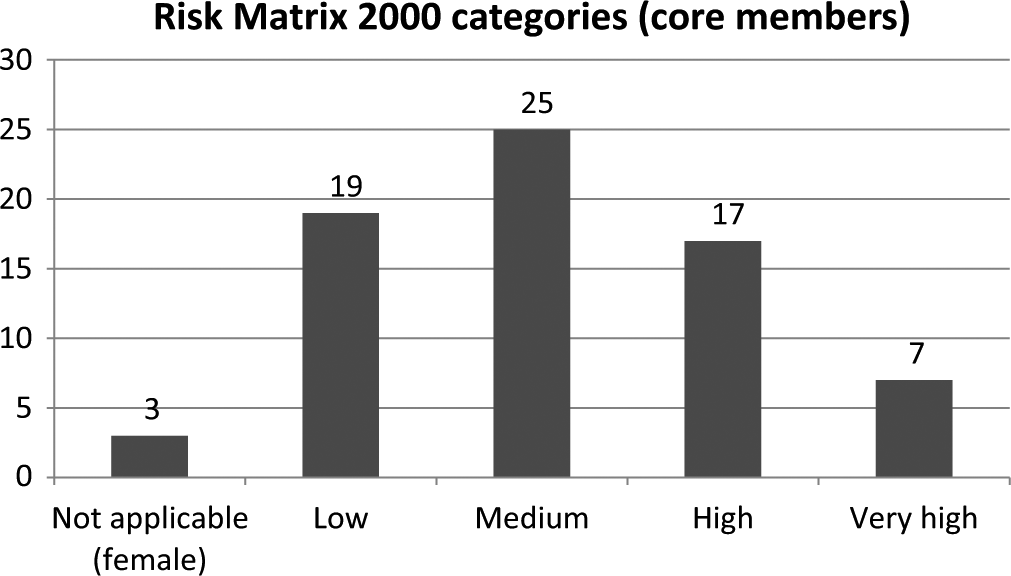
CSE core members RM categories.
Matching Core Members and Comparison Group on Risk Status
Using a calculation giving points according to each RM-2000 risk score (e.g., low = 1 point, very high = 4 points), a total group risk score was calculated for the Circles and comparison groups. Data were unavailable for three Circles participants and 15 comparison subjects. Perusal of Table 2 shows an average risk score for the Circles core members group of 2.17 compared with 2.21 for the comparison group, indicating general equivalence in overall expected level of risk for the two groups.
Comparison of Core Members and Comparison Subjects Risk Level’s Using RM-2000.
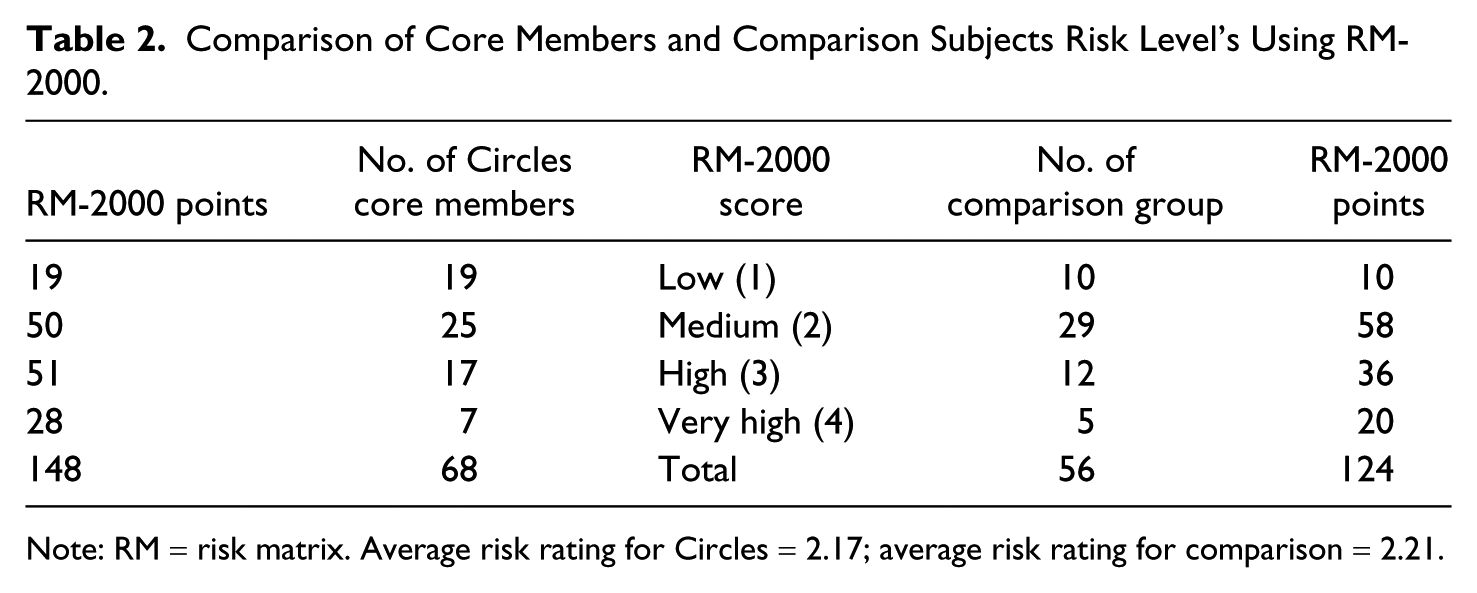
Note: RM = risk matrix. Average risk rating for Circles = 2.17; average risk rating for comparison = 2.21.
Twenty-seven CSE core members had been at large in the community for at least 5 years, meaning that the expected 5-year sexual reconviction rate could be calculated for this group. The 27 cases fell into the RM2000 risk categories as shown in Table 3 (RM is not designed for females, therefore n = 25 for Table 3).
RM-2000 Distribution and Expected Rates of Sexual Reconviction—Core Members.
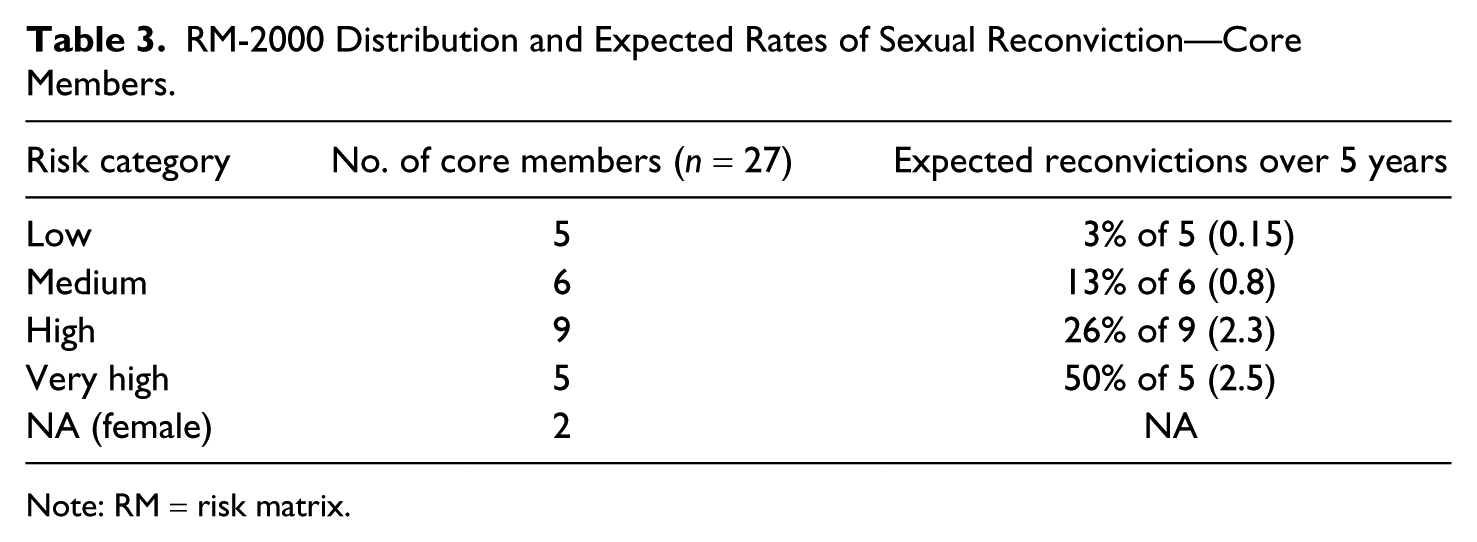
Note: RM = risk matrix.
Expected Rates of Sexual Reconviction According to RM-2000
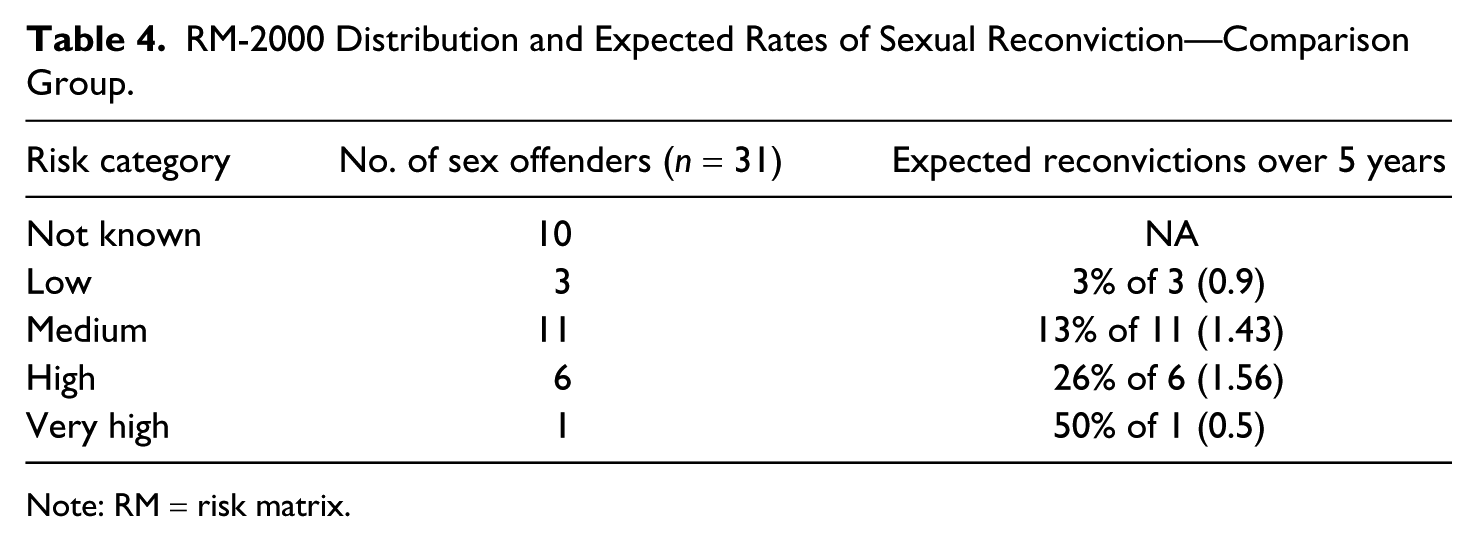
When we tally the expected rates of reconviction across the four categories according to RM-2000, a total of 5.75 instances of reoffending should have been observed in this subset of 25 subjects. However, only two actual instances of sexual reconviction of any kind were observed. This difference is not statistically significant (Fisher’s Exact, two-sided, p < .25), although there is a noticeable difference in the rounded absolute numbers (6/27 vs. 2/27). The RM-2000 scores of the comparison group were taken from Thames Valley Police ViSOR (VIolent and Sexual Offender Register) database and the results are displayed in Figure 6. A similar calculation to that shown in Table 3 was made for observed versus expected sexual reconviction rates in the comparison group (see Table 4).
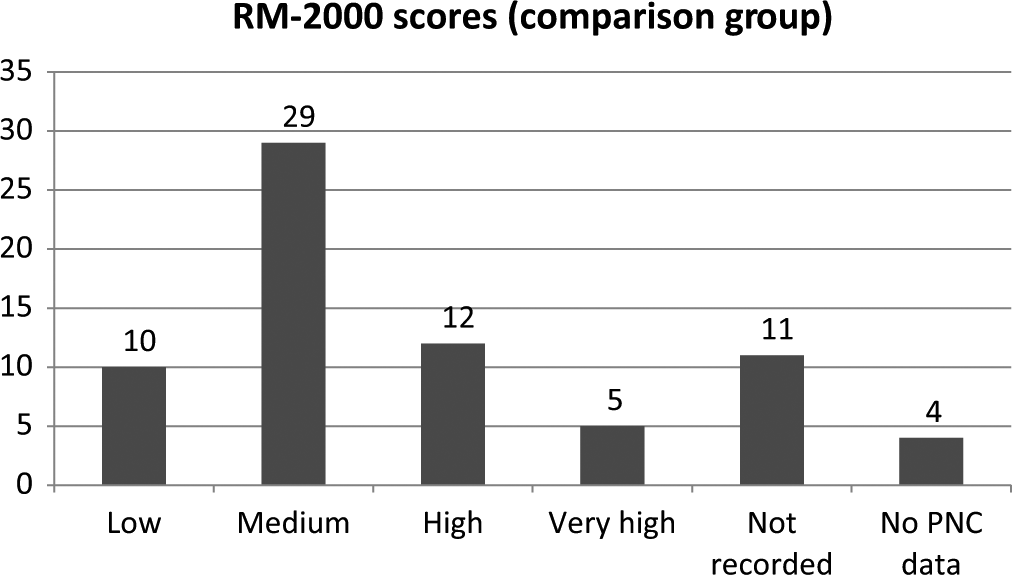
RM scores—Comparison group.
RM-2000 Distribution and Expected Rates of Sexual Reconviction—Comparison Group.
Note: RM = risk matrix.
Applying the same procedure to the comparison group produces an expected 4.39 sexual reconvictions for this group. Comparison of observed and expected reoffending yielded a nonsignificant result (Fisher’s Exact, two-sided, p > .50). Three actual qualifying sexual offenses were observed as well as further three violent offenses, although no V-scale scores on RM-2000 are available for either the Circles or comparison group so estimates cannot be provided for violent offenses.
Results
Follow-Up Behaviors in CSE Core Members
In reviewing CSE case files, as well as data gathered from PNC, it was found that 54 of the 71 core members had engaged in no behavior involving a legal sanction identified following their formal involvement in a Circle. Furthermore, no CSE core member was reconvicted for a contact sexual offense since being accepted into a Circle. Post-Circle behaviors, where recorded, are summarised in Figure 7. Some core members fell into more than one category.
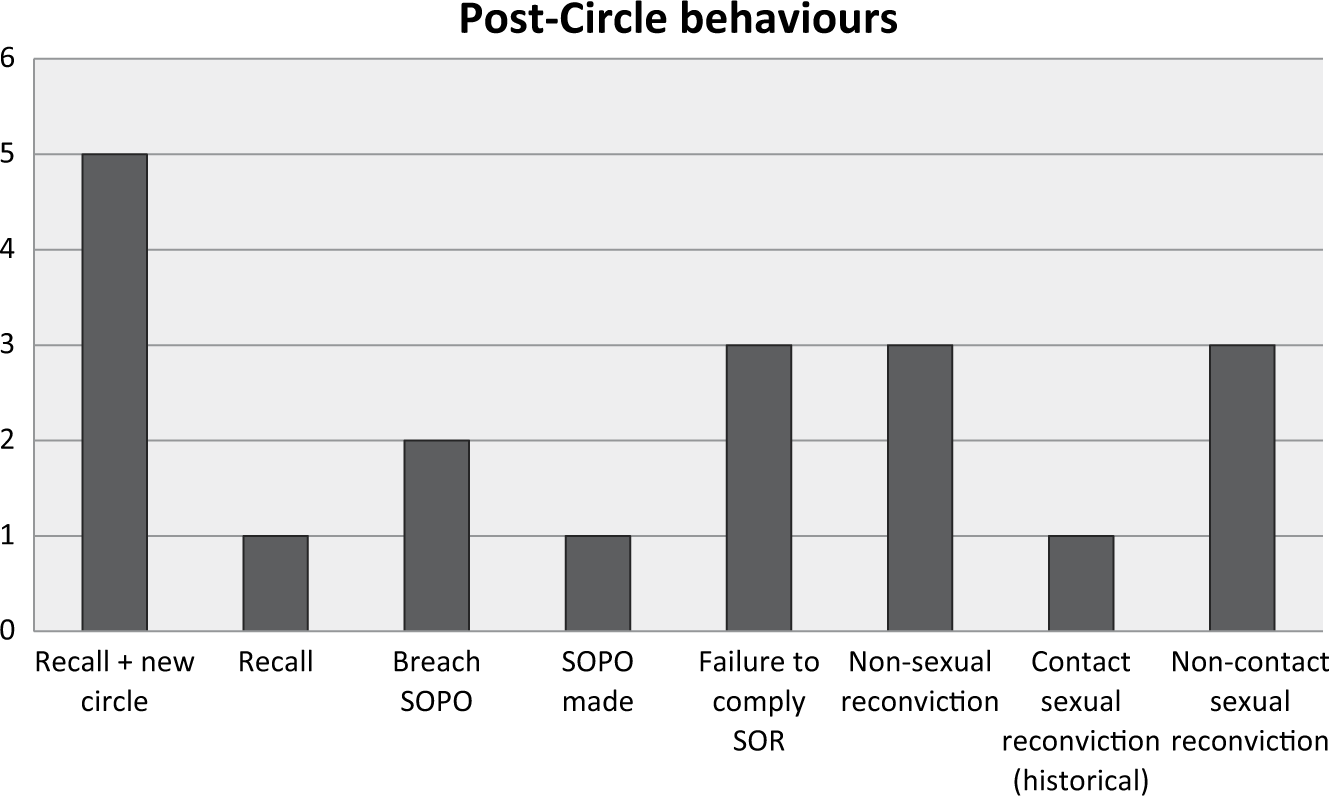
Post-Circle behaviors in CSE core members.
1. Sexual Reconvictions
Four sexual reconvictions were identified for core members:
One core member (RM-2000 score LOW) was convicted of Possession of Indecent Images of Children. This conviction happened over 4 years after the end of his Circle, in which he had been involved for 20 months. This man had prior convictions for a sustained series of contact offenses against two female children for which he had served a 6-year custodial sentence. He continued to actively and consistently voice paedophilic attitudes and beliefs since his conviction, including throughout his time in sexual offender treatment and the Circle. Despite acting reprehensibly and receiving a sexual conviction post-Circle, there is evidence of a harm reduction effect (see Marlatt, 1998), in that he was not convicted of a further contact offense and he did not personally victimize a child.
One core member (RM-2000 score HIGH) was convicted of Making Indecent Phone Calls, a practice he had unfortunately been committing at a very high rate over many years throughout sexual offender treatment and while being a core member for a year. This man also had a previous conviction for a contact sexual offense against a female child. As with the prior example, it should be noted that the reconviction was not for a contact offense. Although individuals (mainly helpline operators, such as Samaritans staff) were personally victimized by his behavior, this is another instance in which a harm reduction effect might be argued.
One core member (RM-2000 score HIGH) was convicted of Indecent Assault of a male child aged less than 14 years, but this was a historical offense predating his involvement in the Circle. Consequently, this is not considered a sexual reoffense for purposes of this study.
One core member (RM-2000 score HIGH) was convicted of Meeting With a Female Child Following Grooming approximately 14 months after he was removed from his Circle against advice after only 6 months because he moved out of the area to a location where Circles were not available. This offense might be classed as an attempted contact sexual offense, as face-to-face contact by the ex–core member with a potential victim took place, although no contact sexual offense was recorded. The core member’s original offenses were for precisely the same behavior and possession of indecent images of children.
None of the above reconvictions was for a new contact sexual offense, other than the historical conviction, which predated the Circle’s activity with the core member. In two cases, the fact that there had been serious previous contact sexual offenses committed against children supports an argument that the Circles involvement contributed toward harm reduction, even though there was a sexual reconviction.
1. Nonsexual Reconvictions
Three core members were identified as having nonsexual reconvictions—one for Driving With Excess Alcohol, one for Making False Representation, and another for Burglary. In the latter incident, there was possibly a sexual motive, as there was a lone female occupant of the house from which the core member stole a bottle of wine.
2. Recall to Prison
Four core members were returned to prison due to violations of the terms of their conditional release, but were subsequently placed in a further Circle on rerelease from prison. All of these were among the earlier core members to work with CSE (all in the first 28 cases, running up to May 2007). Since that time, there has only been one reincarceration of a core member who was in a Circle for more than 90 days. This core member had been in his Circle for 16 months and engaged well in general with his volunteers. His release was revoked due to concerns regarding his relationship with a vulnerable woman who had young children, and because he had taken voluntary work, which required him to deliver food to schools (although he never did this alone). This was the second time this particular individual was recalled to prison (the previous occasion was prior to the Circle commencing), and the Circle shifted from a supporting role to a monitoring role as the core member’s behavior became increasingly risky. He was still in prison at the time of writing this study.
3. Imposition or Breach of Sex Offense Prevention Order (SOPO)
One core member was made subject to a SOPO due to concerns about his behavior that arose while he was in the Circle. Two core members were convicted for violating the terms of their SOPOs. In one case, this came about due to the core member having a child in his home while he was still in a Circle. The Circle reported this incident to the police, leading to the breach of SOPO conviction. The other SOPO violation occurred more than 2 years after the core member’s Circle ended, and there was no further information available as to the behavior involved. Breach of SOPO is a criminal conviction in the United Kingdom, but does not involve the creation of a further victim and is not classified as a sexual offense.
4. Failure to Comply With Sex Offender’s Register (SOR) Requirements
Four core members were recorded on the PNC with convictions for failing to comply with the proscriptions of the SOR. Being on the SOR requires that registrants report to the police any change of address, or if they are to be away from their home address for 3 days or more. Failure to comply with the SOR is a criminal conviction but does not involve the creation of a further victim and is not classified as a sexual offense.
Follow-Up Behaviors in Comparison Group
Figure 8 details only the reconviction information available for the comparison group. There were no data available on the PNC regarding recall to prison on licence. Some offenders were reconvicted for multiple offenses crossing over categories described in Figure 8.
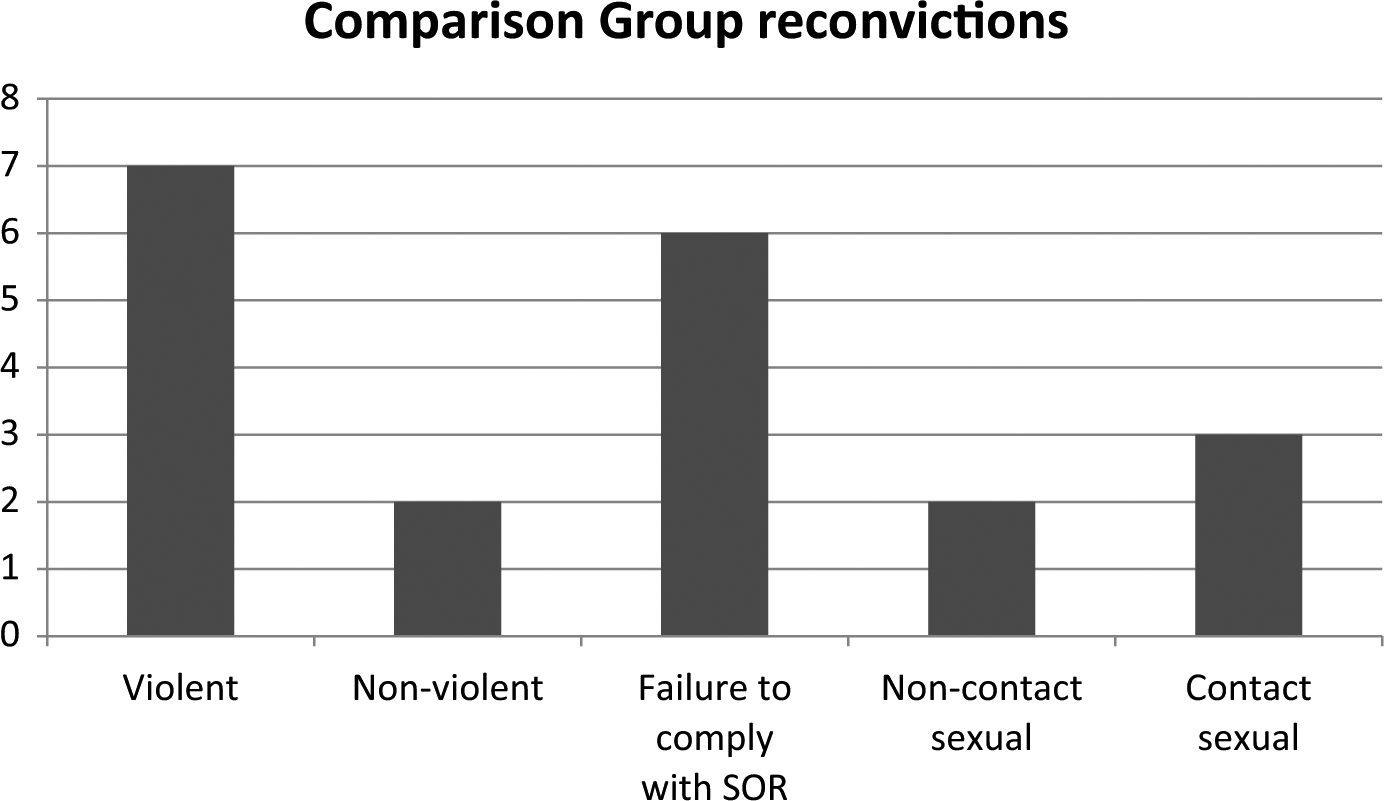
Comparison group reconvictions.
Seven members of the comparison group were reconvicted for violent offenses. These included Wounding With Intent to Cause Grievous Bodily Harm, several instances of Battery, and Damage to Property. No CSE core member was reconvicted of a violent offense. The rate of failure to comply with the SOR was double the rate for CSE core members, and we also note the presence of three contact sexual reconvictions in the comparison group, including Rape, Sexual Assault of a Female Under 13, and Sexual Assault of a Male Under 16. No CSE core member was convicted for a new contact sexual offense.
Comparisons of the core member group and the comparison group regarding group risk level and recidivism show that the former has broadly similar RM-2000 scores and yet a lower level of pertinent reconvictions. Comparisons of reconviction outcomes for the two groups (both N = 71) are displayed in Table 5. The comparison group incurred a statistically significant greater number of contact sexual or violent reoffenses than did the Circles core members (10 vs. 0). Similarly, when contact sexual, violent, and noncontact sexual reoffenses were combined, the comparison group again demonstrated significantly greater recidivism (12 vs. 3).
Comparative Reconviction Rates.

Note: CSE = Circles South East; SOR = Sex Offender Register; SOPO = Sex Offense Protection Order.
Fisher’s Exact, two-sided, p < .05. **Fisher’s Exact, two-sided, p < .001 (combined—contact sexual, violent, noncontact sexual).
Discussion
Results obtained in this study are largely consistent with those reported elsewhere (i.e., R. J. Wilson et al., 2009; R. J. Wilson, Picheca, & Prinzo, 2005), in showing that participation in a Circle of Support and Accountability assists higher risk sexual offenders in the difficult process of safe reentry into society after incarceration. Specifically, as a group, the Circles participants reoffended sexually or violently at a rate one quarter that of the comparison group of persons referred to, but not placed, in a Circle. No Circles core member reoffended with a violent or hands-on sexual offense. In those instances where a core member did reoffend sexually (i.e., with a noncontact sexual offense), a harm reduction effect was noticed, in that the new offense was presumably less invasive and harmful than his prior history of contact sexual offenses (see also R. J. Wilson et al., 2007b).
Results were not statistically significant when comparing observed offending with RM-2000 actuarial projections for the Circles group; however, there may be issues related to current base rates (i.e., recent literature regarding other common actuarial tools for sexual offense risk prediction has suggested that base rates tend to overestimate contemporary levels of reoffending—see Helmus, 2009). Length of follow-up reported in this study was comparable with that reported in the R. J. Wilson et al. (2007b, R. J. Wilson et al., 2009) evaluations and is of a magnitude likely to be useful in evaluating the model’s efficacy, using Helmus (2009) as a benchmark.
In comparison with prior U.K. reviews (Bates et al., 2007; Bates et al., 2012), this study benefited from the identification of a suitable comparison group. Ideally, the use of randomised clinical trials (as in Duwe, 2012) would have been preferable and, failing which, the use of matched comparison subjects; however, those options were unavailable to us. Nonetheless, the identification of a group of offenders who were referred to Circles, but who were not ultimately placed, provides us with a reasonable comparison group. To our knowledge, there were no systematic or biased processes involved in the failure of these persons to be placed in a Circle; thus, there is little to reason to believe that this group is critically flawed for comparative purposes.
Theoretical models relating to the treatment and risk management of those who commit sexual offenses have changed radically over the past 10 years. Desistance theory, the Good Lives Model, and other goal-focused approaches have begun to impact upon the Risk-Needs-Responsivity model (Andrews & Bonta, 2010; Bonta, 1996), which focused upon clinical factors to the exclusion of environmental context. In our view, Circles have always provided the environmental context for the clinical framework, but we are now able to demonstrate the embodiment of the theoretical theories of strengths-based practice, while facilitating the management of the core member’s dynamic risk.
Since research began regarding their efficacy, Circles have always appeared to prove effective in their practice (e.g., Bates et al., 2012; Duwe, 2012; R. J. Wilson et al., 2007b; R. J. Wilson et al., 2009). In spite of small regional and implementation differences, the theoretical framework (C. Wilson & Saunders, 2003) that underpins all Circles work remains constant, allowing for the successful transition of new theoretical models to be implemented into practice. This growing body of evidence should be considered by policy makers and commissioners of correctional services when considering the safe integration of sex offenders into communities everywhere and, indeed, this is becoming the case more and more across Europe and North America. The concept of the Circle model remains a simple one—restoration through meaningful and honest human relationships that facilitates a unique dynamic promoting an investment for the core member to lead an offense-free future. Regardless of the context, country, system, or structure in which Circles are implemented, it would appear that the “magic ingredient” of meaningful human relationships remains the same. It works because members of the community give of their time and selves through an apparently genuine desire to engage in constructive and creative ways of reducing sexual reoffending (see also R. J. Wilson, Picheca, & Prinzo, 2007a).
Attempting to evaluate the impact of any Circles program is a complicated task. Although there is a National Code of Practice to which compliance is important, Circles is not an accredited intervention obeying specific rules of “treatment integrity” (such as is the case with accredited treatment programs), whereby every planned engagement with a core member is closely monitored by professionals to ensure that it runs in precisely the same way every time. Indeed, each Circle is a unique entity in which a group of trained volunteers meet with a core member, to maintain them on their path toward avoiding further offending and building the sort of balanced, self-determined lifestyle that is incongruous with continued antisocial orientation. The approach and style of work in each Circle differs according to the core member and his or her needs, which may change over time. CSE has always sought to be as open and honest as possible in seeking to identify and examine any instance of offending behavior (or offense-related behavior) that takes place after Circles contact, and to learn from such occurrences.
Interventions targeting sexual offending have, in general, long been considered notoriously difficult to evaluate (Friendship & Thornton, 2001) because the baseline for sexual offender reconviction is low relative to other offending behaviors. Furthermore, data suggest that reconviction might happen over much longer periods of time (see Hanson & Thornton, 2000; Helmus, 2009). According to two seminal meta-analyses (Hanson & Bussière, 1998; Hanson & Morton-Bourgon, 2009), it would appear that approximately 15% of sexual offenders are reconvicted over about 5 to 7 years of follow-up. It has traditionally been thought that lengthy follow-up periods are required before any meaningful information about a lack of reconviction might be gathered; however, Helmus (2009) suggests that the majority of reoffending is likely to occur within the time frame outlined by the Hanson meta-analyses. This puts the focus for risk management precisely on reentry into the community. It should also be noted that the distribution of perceived risk relating to the possibility of sexual reoffending is positively skewed, meaning that there are many more offenders in the lower ranges of risk than there are in the higher ranges (see Helmus, 2009). As a model helpful in the sexual offender’s reentry into the community, Circles have traditionally been applied to those sexual offenders in the higher ranges of risk to reoffend. In this study, we included analyses of reconvictions for violent and other offenses, as these may occur with a higher frequency than sexual reconvictions, allowing for better short-term data gathering.
The formal aspect of the 71 Circles described and analysed in this study lasted an average of 15.9 months each (SD = 8.77). As such, participation by core members and volunteers represents a great deal of time and energy, particularly, as spent by volunteers in supporting the core member. This includes many hours attending Circles meetings, attending professional review meetings with coordinators, and myriad additional social activities. A previous study of CSE Circles (Bates et al., 2012; see also R. J. Wilson et al., 2007a) described the positive achievements made by core members during their time in a Circle according to various life elements as categorised in the NOMS OaSYS “pathways” toward and away from offending. However, in that review, it was difficult to evidence the progress a core member made on any particular pathway as being wholly a result of the input of Circles, especially without the availability of a suitable comparison sample.
Nevertheless, the 2010 CSE study was useful in that it allowed the project to focus on the positive outcomes achieved in the majority of Circles and, perhaps more importantly, the characteristics of those Circles where positive outcomes might be predicted. Such characteristics include commitment by volunteers to attend regular meetings; they being able to actively listen to the core member; good tripartite communication between the Circle, the coordinator, and statutory agencies; trust; and the volunteers’ ability to flip between support and accountability as circumstances demand. Core members have frequently reported the positive impact of not just being heard but, when trust has been earned, of being believed, this commonly reinforcing their belief in themselves to think and do the right thing. In addition, a Circle’s ability to remain intact through crisis, either in the core member’s life or on occasion, the volunteer’s (when appropriately disclosed) can demonstrate to the core member the benefits of sound, empathic adult relationships, and how to nurture them. In certain cases, where recidivistic behavior has led to recall into custody during the licence period (e.g., fraternising with other known registered sexual offenders, or obtaining forbidden Internet access), Circles have been allowed to meet within prisons, before reassembling on release. This process of “staying with” the core member, even when they lapse, appears to have strengthened self-belief and trust in others for the core member.
A reasonably typical post-Circle testimony comes from John (not his real name) who wrote
the circle’s effort and input into my life were certainly a major part in my recovery back to normal life. I cannot begin to stress how important this period is in terms of rehabilitation. So many people like me are discarded in society. However, with Circle’s help, I was able to return to being a meaningful member of society.
Of course, the long-term failure of a core member to refrain from reoffending may not relate entirely to the support and accountability provided by a Circle. The outcome might be related primarily to the level of motivation any individual core member had to desist from offending, as well as the opportunities available to him to access a balanced, self-determined lifestyle consistent with GLM frameworks. The Circle alone cannot be the sole factor in a core member’s life; other key issues will come into play in determining any behavioral outcome. This is especially true over the long periods of time such as those discussed in this study. Circles (and, indeed, most community-based criminological interventions) occur within the complexities of “real-world” situations and are not laboratory experiments where particular actions taken upon a human being can be isolated, included, or left out of various versions of similar interventions.
Above all, Circles is a societal response to a social and psychological problem—that problem being the fact that some people choose for whatever reason to sexually abuse and, thereby, victimize and harm others. Circles is an example of a way in which society, represented by members of the public who become volunteers, has taken steps to go beyond the dependence of state-provided interventions to reduce acts of sexual abuse (which includes changes in the law and the practice of criminal justice agencies such as police, prison, and probation services; Hanvey, Philpot, & Wilson, 2011). In this way, Circles is a remarkable example of public-spirited individuals giving their time to attempt to address what is considered in some contexts to be the scourge of our age. Circles, in the South East area of England and nationally, are now empowering members of the public to learn about and respond to the behaviors of known sexual offenders living in our communities. Through its training and practice, Circles has become a very significant factor in crime prevention and public protection. In the face of a moral panic about sexual abuse—much of which has been propagated by the popular media—Circles continues to receive constructive and responsible media support (for instance, All in the Mind, BBC Radio 4 broadcast, July 2010). In turn, this has enabled concerned members of the public to be better informed about those issues relating to sexual abuse and to engage in something practical to address the issue.
Flexibility to tailor a support structure appropriate to the risk and need of a core member remains important; however, providing a bespoke service within an organizational culture of contracts, targets, and payment by results is challenging and has the potential for funding to impact upon practice in a negative way. Adaptations and developments relating to the Circles model are particularly important in ensuring that Circles remains relevant and useful to risk-management practice (e.g., Circles for younger people, for those with Intellectual Disabilities and Autism, and using the Circles model in total institutions prior to release or discharge). It therefore remains vital that all projects delivering Circle services continue to review and revise practice, ensuring the continued growth of the movement. Projects delivering a service should avoid remaining static and aim to pursue opportunities that allow for the widening of services. Developments are necessary to effectively secure the financial support required for the long-term sustainability of projects. At present, an ad hoc network of Circles-friendly groups exists worldwide—held together by common interest and cause—but it appears that some international coordination may be required to ensure knowledge transfer and model fidelity.
As to further research, we suggest that it will be important to gain a deeper understanding of how volunteers engage core members so effectively; we need more information about the how (the process) of Circles, having thus far looked at the why (rationale) and what (descriptions of the model and outcome). Further study is required of the copious process/qualitative data found within the Circle minutes. These minutes are used to monitor the work of the Circles and all relevant information is shared with professionals. The information contained within these documents would allow for exploration of the work undertaken within Circles through the perspective of the volunteers, core members, and associated professionals—to track the progress of the Circle. However, the challenge will be to secure additional funding so that this can be pursued. It would also be beneficial to tap into similar national and international data being gathered by other Circles projects, so that this information can be collated centrally and continue to inform practice and development.
An International Post-Script
While Circles has grown in size and scope in the United Kingdom, the movement has continued to spread around the globe. In many ways, the United Kingdom has provided leadership through its Circles U.K. charity and the diligent work of Circles participants throughout England and Wales (with continued interest in Scotland and Ireland). We are aware that there is now a European Circles consortium that includes delegates from the Netherlands, France, Belgium, Spain, Latvia, and other interested countries, in addition to Circles in the United Kingdom (this group has recently received a grant from the European Union [EU] to support start-up projects in EU member nations). In the birthplace of Circles, projects are now found in virtually every major Canadian city centre (a total of 16 projects coast to coast). In the United States, the Office of Justice Programs of the Department of Justice is providing funding for a number of Circles-based projects, including evaluation studies, project start-ups, and training and technical assistance. Elsewhere, Australia, China, Japan, and New Zealand are just a few of the other international jurisdictions interested in innovative approaches to the safe and humane reintegration of sexual offenders.
Footnotes
Acknowledgements
The authors of this report would like to acknowledge and thank Dr. Nadia Wager of Buckinghamshire New University for her contribution toward the statistical analyses contained within this report and Andrea Jones, Thames Valley Police VISOR Central Point of Contact, for her work in accessing and summarizing reconviction data from the U.K. Police National Computer.
Declaration of Conflicting Interests
The author(s) declared no potential conflicts of interest with respect to the research, authorship, and/or publication of this article.
Funding
The author(s) disclosed receipt of the following financial support for the research, authorship, and/or publication of this article: Circles-South East funded Andrew Bates and Robin J. Wilson to undertake the research described in this article.