



Abstract
Much speculation has been made in the media as to the causes of mass murder in the United States, yet little empirical research exists to verify factors leading to violence. Prior research primarily relies on case study methodologies or small data sets, but none have focused on the underlying issues observed in a comprehensive national sample. Data for the current study include 152 mass murders reported through the FBI’s Supplementary Homicide Reports and USA Today from 2007 to 2011, which were then matched with media reports for each event. The current study shows that mass murders typically occur following a triggering event, are committed by non-strangers, and are rarely committed by persons with mental illnesses. A more realistic image of these incidents is critical, as misperceptions of offenders and case characteristics can improperly shape public policies.
Keywords
Arguably one of the most salient criminal justice topics to grip popular media in recent years has been the offense of mass murder. Defined by the FBI as four or more murders committed by one or more offenders without a cooling off period (FBI, 2005), certain mass murders have garnered an extensive amount of media coverage. Some sources suggest this phenomenon has worsened in recent years, leading to public outrage and subsequent cries for more punitive policies and increased gun control (Blair & Schweit, 2014). Despite this interest, research conducted on mass murders typically uses incomplete data that consist of the most publicized cases. In such studies, researchers point to specific causes or motivations that are contributing to mass murders, but the use of such data suggests the conclusions may be erroneous. Fox and Levin (2015) argue much of this early research does not account for all mass murder situations and only focuses on certain victim and offender types.
Greater attention must be paid to overall causes of mass murder because a narrow focus on motivation can potentially steer public attention and resources to a small subset of case types. Although prior research has begun to shed light on these events, most have included constrained definitions of mass murder or limited samples. In contrast to prior research that excludes certain types of weapons (e.g., arson), offenders (e.g., the mentally ill), offense precipitants (e.g., a triggering event), and locations (e.g., murders in private residences), the current study does not make any of these restrictions. To fill these gaps and provide a more recent portrayal of mass murder events, secondary data from the FBI’s Supplementary Homicide Reports (SHRs) and additional cases identified by USA Today of mass murders that occurred from 2007 to 2011 were used. These data were then matched with media reports of the events to present a comprehensive overview of offenders’ backgrounds and case characteristics. Following a review of the literature and methods, the study first examines how offender and case characteristics vary depending upon the precipitant for the offense. Analyses are then presented of the motivations of mass murderers and precipitating factors that result in the most serious and fear-inducing crimes—those committed by strangers and with high victim counts. Finally, policy solutions are addressed that respond more generally to mass murders instead of a small subset of offenses.
Media Portrayal of Mass Murder
Mass murder is a crime that generates an exceptionally large amount of public interest and results in frequent attempts to summarize exactly who typically commits such crimes and what their motivations are for offending. For example, one news article stated,
In the U.S., white crime is almost always individualized. The petty crimes committed by whites are often described in ways that humanize the criminal. Phrases such as “he’s a good kid who made a mistake” are sure to be heard. But for the more extreme crimes like Roof’s [a Caucasian male who murdered nine African Americans in a church in 2015], the criminal is literally dehumanized (mentally ill, psychopath, inhuman) and individualized (lone wolf). (Adams, 2015, para. 9)
Another CNN article that described offender characteristics began the article with a list of five of the most publicized mass murders and stated, “Their names stir painful memories . . . The killers have other characteristics in common too: They were, or are, young, white, and male” (Ford, 2015, para. 3). One media report analyzing 62 selected mass shootings found that 61% of offenders had a mental illness (Follman, 2012). Finally, an article focusing on race of mass murderers in the Washington Post argued because mass murders are frequently associated with White males, the solutions focus upon mental health issues. They suggest these solutions ignore the fact that,
Women and girls with mental health issues are not picking up semiautomatic weapons and shooting schoolchildren. Immigrants with mental health issues are not committing mass shootings in malls and movie theaters. Latinos with mental health issues are not continually killing groups of strangers. (Childress & Childress, 2013, para. 6)
It appears that overall, media coverage of mass murders commonly portrays offenders as young, White males with mental health issues.
Research confirms that the media portrayal of mass murders is drastically different from national data of these events (Duwe, 2000). Duwe matched 493 cases of mass murder identified in the SHRs data from 1976 to 1996 with local media reports to determine specific differences in mass murder portrayals depending upon the source. Duwe found nearly all mass murders were covered in the media, but very few received national media attention. Those that did were typically cases with the highest victim counts, that involved strangers, and that occurred in public. This was fairly consistent across both print and television coverage. Mass murders occurring in the workplace were also more frequently reported in the media. Few significant differences in demographics were found between cases that received extensive media coverage and those that did not, with the exception of age, where crimes committed by older offenders received more attention. Duwe concluded the disparities in media attention given to certain types of mass murders were the result of certain types of cases being “riveting, emotionally evocative incidents that epitomized news as theater—a morality play involving pure, innocent victims and offenders who seemingly went ‘berserk’ in a public setting” (p. 391). These findings suggest that the typical precipitants of mass murder portrayed in the media (e.g., mental illness) may be similarly misrepresented.
Mass Murder Precipitants and Motivations of Offenders
Due to the seriousness and publicity surrounding mass murder offenses, researchers have also attempted to determine their motivations for and precipitants to their offenses. Duwe (2007) conducted one of the most detailed studies of mass murders by analyzing 909 cases that occurred from 1900 to 1999 using the SHRs and supplementing them with New York Times coverage of mass murders that occurred prior to data collection by the FBI. Duwe found broader social issues (e.g., economic) impacted offending patterns and the majority of offenses were committed with a gun (69%), against family members and acquaintances (76%), by White offenders (61%), by males (94%), and by offenders with an average age of 29 (see also Fox & Levin, 1998). In addition, he found there has been an increase in offenders motivated by drug and other criminal offenses in recent years. Although Duwe collected extensive information on mass murders, motive was only examined in approximately 11% of select cases where he conducted case studies of offender motivation.
The identification of mass murderers’ motivations has been difficult due to inconsistent conceptualizations of offenders’ motivations or precipitants to offenses. For example, Levin and Fox’s review of select mass murder cases led them to conclude there are three general types of mass murderers: predisposers (i.e., those who had an accumulation of problems), precipitants (i.e., those who experienced an acute strain), and facilitators (i.e., situational conditions that led to the offense; Fox & Levin, 1985, 1994). Although this study provided an overarching portrayal of motivations based on a comprehensive sample, their later analysis (Fox & Levin, 1998) of the FBI’s SHRs allowed for a more nuanced portrayal of motivations, which included power (e.g., mission to change the world), revenge, loyalty (e.g., husband kills family during financial hardship), financial profit, and terror. However, their study excluded arson offenses, as it was argued it was difficult to determine the true motivation of these offenders. In contrast, Dietz (1986) developed mass murder offending typologies while relying on case studies of well-known incidents. This typology consisted of family annihilators where the male head of household kills because he is “depressed, paranoid, intoxicated, or a combination of these” (p. 482); pseudocommandos who enjoy guns; and set-and-run killers who commit their offense in a manner that allows for them to escape. Later, Holmes and Holmes (1994) expanded upon this typology to include disciples (e.g., killing for a leader) and disgruntled employees. Finally, Petee, Padgett, and York (1997) developed typologies of mass murderers, but they specifically focused on offender motivation in public places. The types of offenders they identified were anger/revenge, domestic/romantic situations, interpersonal conflict, and crime-related, gang-related, political, and a nonspecific motive. Although the aforementioned typologies attempt to categorize the reasons for mass murder offenses, most conceptualize motivation broadly or exclude specific types of offenders or locations from their typologies.
Most prior research also acknowledges that mental illness may contribute to a mass murder event, yet they rarely include mental illness in their typologies or report on prevalence (Fox & Levin, 1998). The resulting data sets and analyses make it difficult to determine the prevalence of mental illness among mass murder offenders. However, the growing recognition in recent years that mental illness may play a distinct role in these events indicates that prior research may be missing a critical aspect of causation (Fessenden, 2000). It is for this reason that Dutton, White, and Fogarty (2013) argue that “it is a mistake to dismiss psychological issues . . . It is also a mistake to perform a cursory psychiatric evaluation that seizes on an obvious symptom (e.g., anger) and looks no further” (p. 552). One of the few studies to consider the direct role that psychosis has on mass murder offending found that 23% of juvenile mass murderers “had a documented psychiatric history, [while] only 6% were judged to have been psychotic at the time of the mass murder” (Meloy, Hempel, Mohandie, Shiva, & Gray, 2001, p. 719). They further found that juvenile mass murders were more likely to have sought mental health treatment than the general population. In a more recent examination of school rampage killers, a typology was developed that classified offenders as traumatized, psychotic, or psychopathic (Langman, 2009). In their examination of 10 school shooters, they found that each offender fit into at least one of these categories. Although their typology was based on a limited sample of mass murders, it highlights the need of research to consider the role of mental illness in future research.
The development of these typologies is a useful first step in understanding offender motivations, but they have inherent challenges in presenting a comprehensive portrait of mass murder events. Issues with these studies include the lack of consideration given to offenders with mental health issues (Fox & Levin, 1998; Petee et al., 1997); very general categorizations of motivation (Fox & Levin, 1985); the failure to incorporate specific locations (e.g., the home), which prevents the inclusion of most mass murders motivated by familial issues (Blair & Schweit, 2014; Petee et al., 1997); and the failure to include arson offenses, which prevents the inclusion of many mass murders, especially those committed by females (Fox & Levin, 1998). The failure of several studies to consider factors such as mental illness, domestic issues, crime, and employment issues as motivations for offending leaves an incomplete perspective of these events.
Data Collection Strategies of Prior Research
An additional issue with prior research is the reliance on case studies and convenience samples using sensationalized news stories. For example, Souza (2002) studied mass murders occurring from 1900 to 1999 using “books, scientific journals, newspaper articles, and Internet articles” (p. 28), and identified only 84 cases of mass murder. The current study examined a 5-year time period, yet identified a much larger number of mass murders. Similar to the current study, some prior research has relied upon SHRs and media reports to examine the issue of mass murder, yet they focused more broadly on explaining mass murder trends and offenders and gave little consideration to precipitating factors and offender motivation (Duwe, 2000, 2007; Fox & DeLateur, 2013; Krouse & Richardson, 2015).
One primary reason, in addition to convenience, as to why mass murder has been sampled differently across studies is due to the specific purpose of certain studies. For example, Lott and Landes (1996) excluded robberies, gang shootings, and professional hits in their analysis of the impact of public policies on mass shootings. Recent research by the FBI similarly used a constrained definition of “active shooters,” which led them to warn that “caution should be taken when using this information without placing it in context, [as] the study does not encompass all mass killings . . . and therefore is limited in its scope” (Blair & Schweit, 2014, p. 5). Whereas Blair and Schweit intended to provide resources to law enforcement agencies in how to deal with active shooter incidents, Lott and Landes examined the direct impact of concealed weapons policies on shootings in public locations. In addition, studies vary on the number of victim deaths (i.e., three vs. four) for an event to be considered a mass murder (Krouse & Richardson, 2015). Another challenge that arises when trying to obtain an overall picture of mass murder events is that there is currently no nationally adopted definition of mass murder. It is for these reasons that Krouse and Richardson argue that “Congress might want to consider whether it would be beneficial for the FBI or other governmental agency to provide a consistent, complementary set of definitions for terms like ‘mass murder,’ ‘mass shooting,’ and ‘mass public shooting’” (p. 27).
Whereas the samples in prior studies may be appropriate for explaining specific types of mass murder events, Fox and Levin (2015) argued
research which purports to encompass mass murder in total should not arbitrarily include only those cases that fit some preconception . . . [This] not only fails to tell the whole story of mass killings, but unreasonably trivializes their importance and adds insult to injury for those victims. (p. 10)
It is clear based on the aforementioned studies that offenders commit mass murders for a variety of reasons; yet in many cases, only certain types of these mass murders are covered in detail in research and the media. These restrictions are not made in this study; instead, all circumstances surrounding mass murder incidents are considered simultaneously. In sum, whereas prior research has examined mass murderers’ motivations and precipitating factors, the current study takes a more exhaustive approach by focusing upon a more recent sample (i.e., 2007-2011), includes a variety of offense precipitants that are commonly excluded in research (e.g., mental health, triggering events), and does not make any exclusions for the type of weapon (e.g., arson) or location (e.g., private residence).
Method
The purpose of the study is to provide a comprehensive picture of mass murder events, as the portrayal of these events can directly influence public policy responses. Specifically, the current study will address how offenders’ backgrounds and offense types vary based on the reason for offending, as well as factors that predict high victim counts. It is critical that analyses of mass murder consider the role of mental illness in light of the recent violence committed by mentally ill persons. Although there has not been a change in the rate of mass murders committed since analyses of FBI data began in the 1970s, there has been an increase in the victim count (Fox & Levin, 2015). However, the increase in victims was driven largely by a few especially deadly events, all of which were committed by mentally ill offenders (i.e., Virginia Tech University shooting, an elementary school shooting in Connecticut, a movie theater shooting in Colorado). Such trends suggest that mentally ill persons may have higher victim counts than non-mentally ill persons. In addition, the public perception of mass murderers, especially those who commit their offenses seemingly at random, is that they are typically perpetrated by certain types of offenders, namely White males. However, minority males commit the majority of homicides (FBI, 2013), suggesting that they may also be overrepresented in mass murder offenses, especially those where crime was the motivation. To explore these issues, it is hypothesized as follows:
Sample
The current study used data from the FBI’s SHRs (a subset of the Uniform Crime Report [UCR]) and 50 additional incidents identified by USA Today that occurred from 2007 to 2011 to identify mass murder offenses. In 2013, USA Today released a report detailing issues with the FBI database (Overberg, Upton, & Hoyer, 2013). USA Today reporters found that the FBI had a 61% accuracy rate in reporting mass murders nationwide, because some law enforcement agencies do not report to the UCR and others had errors in their reporting practices. Among the issues USA Today reported were: some mass killings were presented in the FBI data as single events, murders that were unrelated to one another were classified by some law enforcement agencies as being committed by the same offender, some crimes reported by the FBI could not be located (USA Today staff reportedly checked local news sites and confirmed with law enforcement that the cases did not exist), one unsolved case that dated back 40 years was reported as a recent event, many killings involving federal agencies were not reported (e.g., Fort Hood shooting), and some states did not report to the FBI (e.g., Florida). By supplementing the FBI data with additional cases identified by USA Today, the result is a more comprehensive sample than has been used in prior studies that have relied primarily on the SHRs or case studies of the most salient mass murders.
The FBI’s definition of four or more victims being murdered by an offender or offenders without a cooling off period was used to identify cases for the current study. From 2007 to 2011, there were 137 cases of homicide reported to the FBI with four or more victims, not including the offender. Of the 137 cases, 12 could not be located after extensive searches of local and statewide newspapers (these were confirmed to have issues from the USA Today report), 17 cases of mass murder had no identified offender and were excluded for the purpose of the current study, and six cases had additional issues that disqualified them from the study (e.g., murders occurred 1 month apart, the number of victims was actually less than reported by the FBI). An additional 50 cases were identified by USA Today over this period of time as meeting the criteria for a mass murder (e.g., Fort Hood shooting) and were added to the data set. There were also two cases where the wrong number of victims was identified in the UCR, but this was corrected for inclusion in the current data set. This resulted in a final sample size of 152 cases, 102 that were identified by the UCR and 50 additional cases that were located by USA Today.
The SHRs provide information about specific cases including age, race, and ethnicity of victims and offenders; the type of relationship between victims and offenders; the location of the incident; the weapon used; and circumstances leading to the incident (e.g., burglary, “lover’s triangle,” gangland killing). In many cases, this information was missing. For example, in 52% of cases, there were no reported circumstances that led to the offense. Furthermore, only one circumstance was identified that led to the crime, which did not capture cases when there were multiple precipitants leading to the offense.
To supplement the FBI data and create the full case information for incidents identified by USA Today, online newspapers were used to collect additional information. To locate each case, identifying information from the event (e.g., city, number of victims) was used to locate media sources. Some cases received extensive media coverage and were easily accessible through national outlets (e.g., CNN). Most cases were only covered locally, so regional newspapers were accessed to provide case information. Because of the limited information that was released immediately following the criminal events, media articles were typically sought for a week or two after an event or following the conclusion of a trial, if there was one. At least three media sources for each event were identified, as certain case characteristics were reported in some articles, but not in others.
Variables
Data were collected on a variety of offense characteristics. Among the offense characteristics included were the number of offenders per incident, the number of victims reported per incident (including physical injuries), and the number of victim deaths reported per incident. Also included was the relationship between the victim and offender (0 = stranger, 1 = family, 2 = acquaintance [including friends and co-workers], and 3 = a combination of victim types [e.g., harming family and strangers]). The weapon used in the incident was coded as 0 = gun, 1 = arson, 2 = multiple weapon types, and 3 = an “other” type of weapon was used (e.g., strangulation, stabbing). Also considered was whether the offender had a prior criminal history (0 = no history, 1 = criminal history) or committed suicide following the incident (0 = did not commit suicide, 1 = committed suicide).
Prior mass murder research has operationalized motivation in several ways, as reviewed above, but these studies are not without issues (e.g., failure to consider the role of mental illness, exclusion of non-public killings, exclusion of criminally motivated offenses, exclusion of family violence). The current study incorporated multiple motivations reported across multiple studies to provide a comprehensive overview of mass murder motivations. For the purposes of the current study, Petee et al. (1997) provided the most useful operationalization of mass murder motivations, as they built on prior typologies, including those by Levin, Fox, and the FBI’s Crime Classification Manual. Their typology included offenders who were motivated by anger/revenge, domestic issues, interpersonal conflicts, crime, gangs, and political reasons. This typology was used as the foundation for offense precipitants identified in the current study.
Motivations identified for the current study included emotional triggers (i.e., the loss of a relationship, the loss of a job, a fight, or “other”), general relationship/domestic issues, financial issues, mental health issues, criminal gain, and political motivations (e.g., terrorism). Although anger and revenge have been used in prior typologies (Fox & Levin, 1998; Petee et al., 1997), these motivations were not included in the current study. The reason for this decision was because all mass murderers, identified for the study, who were motivated by anger or revenge had some precipitating event (e.g., divorce, affair, loss of job) that resulted in the anger and desire for revenge. It was believed that the catalyst for the event was more important for determining motivation than merely identifying anger. Instead, similar to Meloy and colleagues’ (2001) study of mass murders, triggering events were considered. Emotional triggers (0 = no trigger, 1 = trigger) included any type of identifiable incident that set the offender off. This included incidents such as breaking up with a significant other, divorce, the death of someone close to the offender, the loss of a job, and fights while intoxicated. In the descriptive statistics, overall emotional triggers are presented, as well as a breakdown based on relationship triggers (0 = no relationship trigger, 1 = relationship trigger), job triggers (0 = no job trigger, 1 = job trigger), a fight (0 = no fight, 1 = fight), and other triggers (0 = no other trigger, 1 = other trigger).
Petee and colleagues (1997) also considered how the impact of long-standing issues such as relationship troubles can contribute to mass murder events. In addition to specific triggering events (e.g., a breakup), more general relationship issues (0 = no relationship issue, 1 = relationship issue) were identified through statements made in media reports regarding a history of either spousal or familial turmoil, including fights and domestic violence. Financial problems (0 = no financial problems, 1 = financial problems) that influenced the offense such as gambling debts or general financial debt were also included. Because of the growing recognition that mental illness can be a significant precipitant for mass murder offenses (Dutton et al., 2013), as well as the fact that offenders are commonly portrayed as being mentally ill in the media, mental illness was captured in the current study. The presence of mental health issues (0 = no mental health issues, 1 = mental health issues) was captured using statements made by law enforcement, family, friends, or co-workers as to a specific mental health issue the offender had.
In contrast to Petee and colleagues’ typology, criminally motivated offenders and gang motivations were not separated in the current study. Only nine offenders in the current data set were reported to be gang members. In many cases, the gang member would be committing a specific crime (e.g., robbery), but it was unclear whether gang retaliation was the motivation. Crime motivation (0 = not motivated by crime, 1 = motivated by crime) consisted of offenders who committed mass murder with the primary intention of committing another type of crime (e.g., robbery, burglary, sexual assault, obtaining drugs). In this time frame, no offenses were identified that were committed for political or terror reasons, so they are not included in analyses for the current study. 1
Demographic characteristics of offenders for race/ethnicity (0 = Caucasian, 1 = African American, 2 = Hispanic, 3 = Other), gender (0 = male, 1 = female), and age were included in analyses. In four cases, there were two offenders of different races or ethnicities who offended together. For the purposes of analyses, the race or ethnicity of the offender who appeared to be the most responsible for the offense (e.g., initiator) was used. Similarly, in three cases, a male and female offended together, so the gender of the person who appeared most responsible was also used.
Analysis
Descriptive Statistics
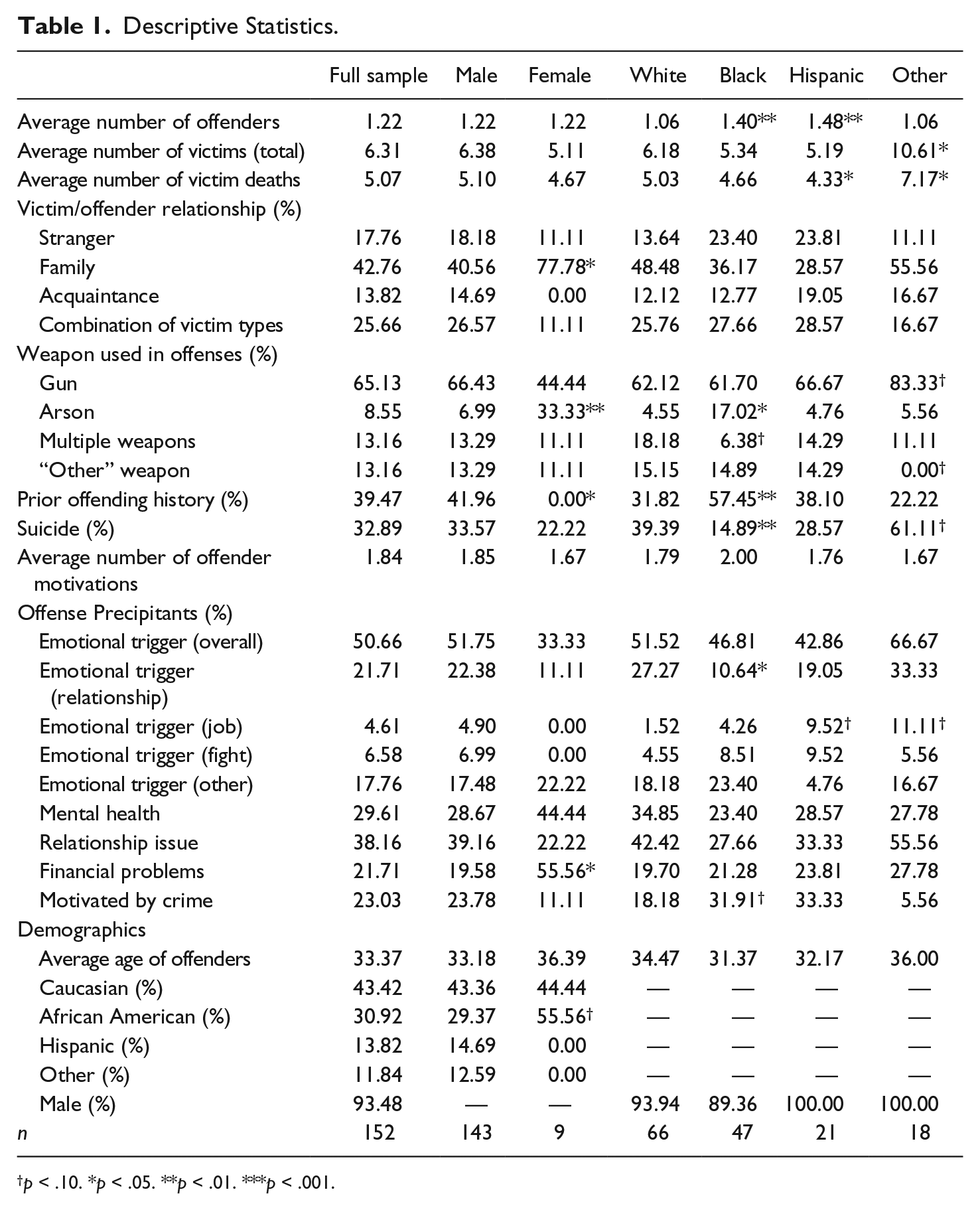
Consistent with prior literature, mass murders that occurred from 2007 to 2011 were overwhelmingly committed by males (Table 1; Duwe, 2007; Fox & Levin, 1998). Most offenses (87.5%) were committed by a single offender, with an average age of 33 and no criminal history (60%). Disproportionate to their representation in the United States, crimes were predominately committed by Caucasians (43%), followed by African Americans (30%). In the mass murder incidents, 33% of offenders committed suicide shortly after the incident, and had an average victim count of five victim deaths per incident. The victims of mass murders tended to be family members (42%), whereas only 18% of offenses were targeted solely at strangers. Twenty-six percent of incidents targeted a combination of victim types (i.e., family, stranger, and/or acquaintances). Offenders primarily killed with guns (65%), whereas some used a combination of weapons (13%). For example, many offenders would shoot or strangle their victims and then set a home on fire.
Descriptive Statistics.
p < .10. *p < .05. **p < .01. ***p < .001.
Offenders committed their offenses for a wide variety of reasons and in many cases, there were multiple reasons for committing the offense (on average there were 1.84 reasons for the offense; see Figure 1), but in four cases there was no identifiable motive. The majority of murders were committed following a specific event that “triggered” the offense (51%). These included the loss of a relationship or a divorce (22%), the loss of a job (5%), a fight (6%), and other triggering events (18%). In many cases, there was a long history of issues and then a trigger that ultimately led to the mass murder. For example, in 2008 Oliver Bernsdorff murdered four people, including his ex-wife and children, after a long history of financial issues (e.g., tax evasion), mental health issues (i.e., diagnosis of bipolar), and the loss of his marriage. The trigger that reportedly ultimately set him off was that his ex-wife was going to attempt to regain custody of their children (Lee, 2008). In other cases, there was a triggering event but no apparent reason as to why the offender became so enraged as to commit such a violent crime. One of the most extreme instances of this type of trigger was a mass murder committed in 2010 in Kentucky when a man murdered two family members and three neighbors because he “just got mad at his wife for not making his breakfast right” (Jabali-Nash, 2010, para. 7).
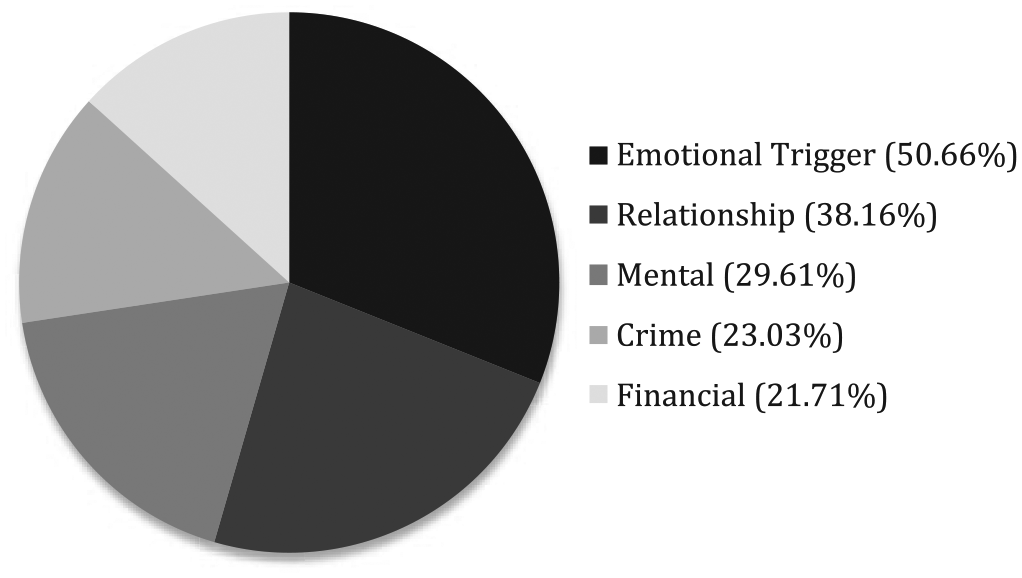
Percentages of motivations for committing mass murder.
Aside from specific triggering events, a variety of other factors reportedly preceded offenders committing mass murders over a period of time. The most frequently cited reason for committing a mass murder was a relationship issue (38%), where offenders typically killed spouses, children, or other family members. Only one offender reportedly killed just strangers because of a relationship issue. In the Carthage nursing home shooting in 2009, the gunman reportedly intended on killing his wife who worked at the nursing home, but ended up killing others when he could not locate her. Thirty percent of offenders had some type of mental health issue that was discussed in the media reports. Finally, 22% of offenders were motivated by financial reasons, whereas 23% of offenders had a criminal motivation. Of those offenders who were crime motivated, nearly half committed the murders while carrying out a drug deal or attempting to retrieve stolen drugs.
When comparing the offender and offense patterns of males and females, few significant differences were observed. Male and female mass murderers showed no significant differences in the number of victims they killed, demographic characteristics, and most of the motivations for offending. Notably, female mass murderers were significantly more likely to have victims who were family members, committed the murders using arson, and had some degree of financial motivation. For example, one woman who killed all her children in a fire reportedly had a long history of financial issues. After immigrating to the United States from Jamaica, the mother had reportedly lived in a rent-subsidized apartment, lived in a homeless shelter, and at the time of the arson, was being evicted from her current apartment. It was reported that she “fed her children food that neighbors had given her. Once . . . [she] divided a gyro sandwich in fourths to make a meal for her and her oldest three children” (Santos, 2010, para. 22). In another case, a South Carolina woman who squandered her inheritance killed multiple family members with the intent of collecting US$700,000 in life insurance (Brush, 2011; Nelson, 2013). Interestingly, none of the female mass murderers was reported to have a history of prior offending.
Whites and non-Whites similarly had few differences. When compared with White offenders, Black and Hispanic mass murderers were more likely to offend with another person. Offenders in the “Other” category, which included Asians, had the highest number of victims and victim death counts. The differences between the “Other” and White groups were largely driven by three of the deadliest mass shootings in recent years being committed by Asians (i.e., Virginia Tech, Ft. Hood military base, and an immigrant center in New York). Blacks were also significantly more likely than Whites to commit the offense with fire, more likely to have a prior history of offending, and less likely to commit suicide after the offense.
Motivations of Mass Murderers
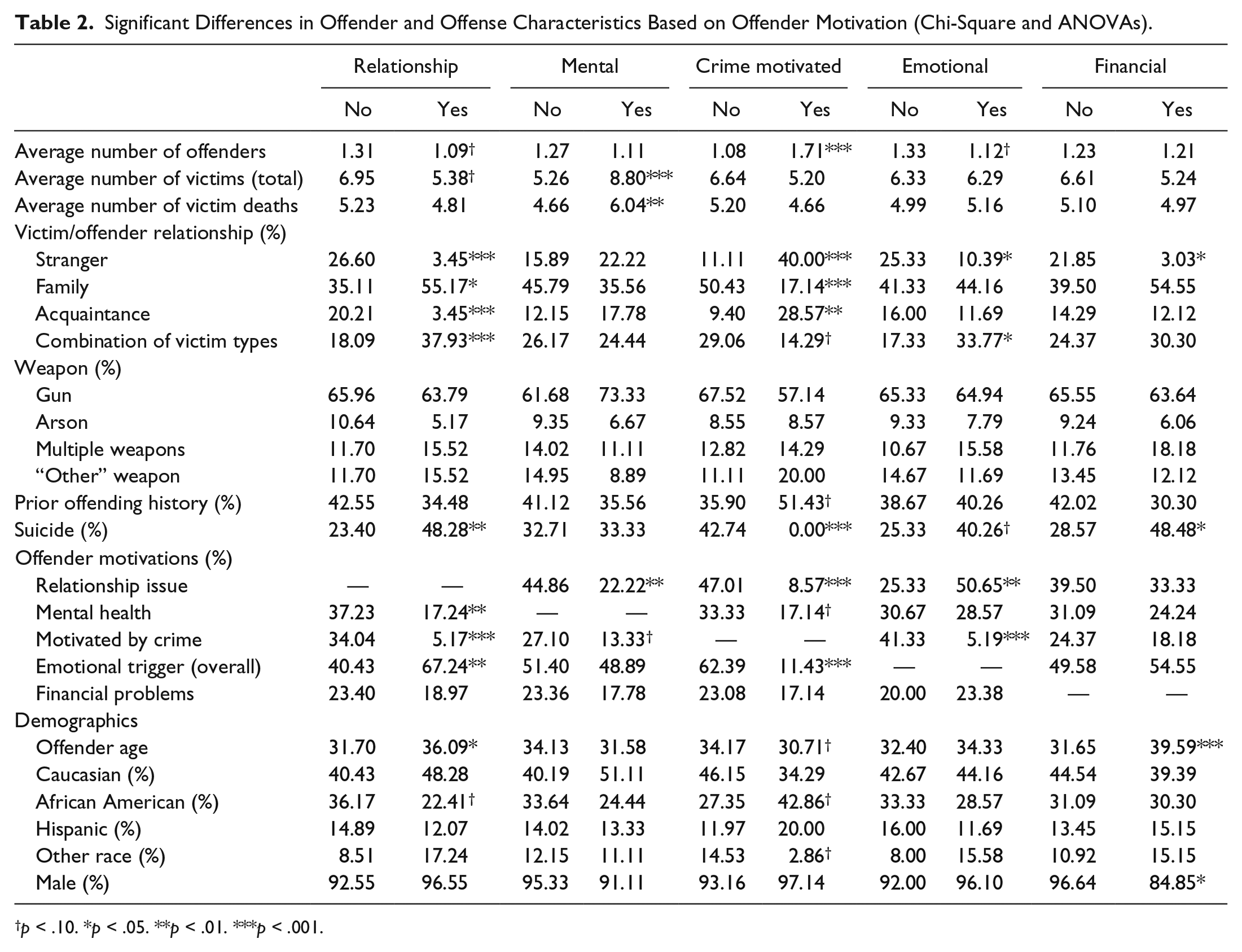
With the exception of four mass murderers, most offenders had an identifiable motive for committing the offense. The following section will examine differences in offense and offender characteristics based on motivations using ANOVAs and chi-square tests (Table 2). These offense motivations included relationship issues, mental health issues, criminal motivation, emotional triggers, and financial issues. Because many offenders had multiple motivations for offending (average of 1.84 motivations per offender), significant differences were examined for the overlapping of offender motivations (e.g., were those who offended because of an emotional trigger more likely to also have financial motivations?).
Significant Differences in Offender and Offense Characteristics Based on Offender Motivation (Chi-Square and ANOVAs).
p < .10. *p < .05. **p < .01. ***p < .001.
First, those who committed mass murders because of relationship issues were significantly less likely to murder an acquaintance or stranger, offend because of mental health reasons, and commit the mass murder as a result of another criminal offense. Following their offenses, relationship-motivated offenders were also more likely to commit suicide. There were few significant differences in demographic characteristics for committing an offense because of a relationship problem. The one exception to this was offender age, where older offenders were more likely to commit a mass murder due to relationship issues.
Far fewer factors were found to significantly differ between those who offended because of mental health issues and those without reported mental issues. In fact, the only factors that were related to mental health offending were the number of victims/victim deaths, and whether or not the crime was motivated by a relationship issue. In crimes committed by those with mental illnesses, there were significantly more victim injuries and victims who died in the incident. Finally, those with mental health issues were far less likely to be simultaneously motivated by a relationship issue or motivated by a crime, which was approaching significance.
The greatest number of differences was seen between offenders who were motivated by crimes and those who committed their offenses for non-criminal reasons. No offender demographics were significant (p < .05), but offender age and race were approaching significance, with younger offenders and African Americans being more crime motivated. Crime-motivated offenders were also significantly more likely to target non-relatives, as they typically offended against strangers and acquaintances. These offenders were usually only motivated by crime, as they were significantly less likely to have an emotional trigger, a relationship issue, or a mental health issue (p < .10) that simultaneously motivated them to offend. Furthermore, crime-motivated offenders never committed suicide following their offenses, whereas 43% of those motivated for other reasons committed suicide.
Some offenders committed their offenses because of “triggers”; however, in many cases these triggers occurred in conjunction with other motivations. These triggers included the loss of a job or relationship. Relatively few differences were seen between offenders who experienced triggers and other types of offenders. Those who offended because of a triggering incident were less likely to murder only strangers, but were more likely to kill a combination of victims (e.g., killing strangers and relatives). When committing their offenses, they were also more likely to be experiencing a relationship issue, but less likely to be motivated by an unrelated criminal act (e.g., robbery). No differences in demographic characteristics were seen between offenders who experienced a trigger and other offenders.
Finally, some offenders were motivated because of financial issues (e.g., debts, gambling, poor investments). These offenders tended to be older and were significantly less likely to be male. In fact, this was the only offense motivation where there was a significant difference in gender, with females representing about 15% of those who offended because of financial issues. Those motivated because of financial issues were less likely to harm strangers, but had very high rates of suicide when compared with non-financially motivated offenders.
Most Dangerous Mass Murderers
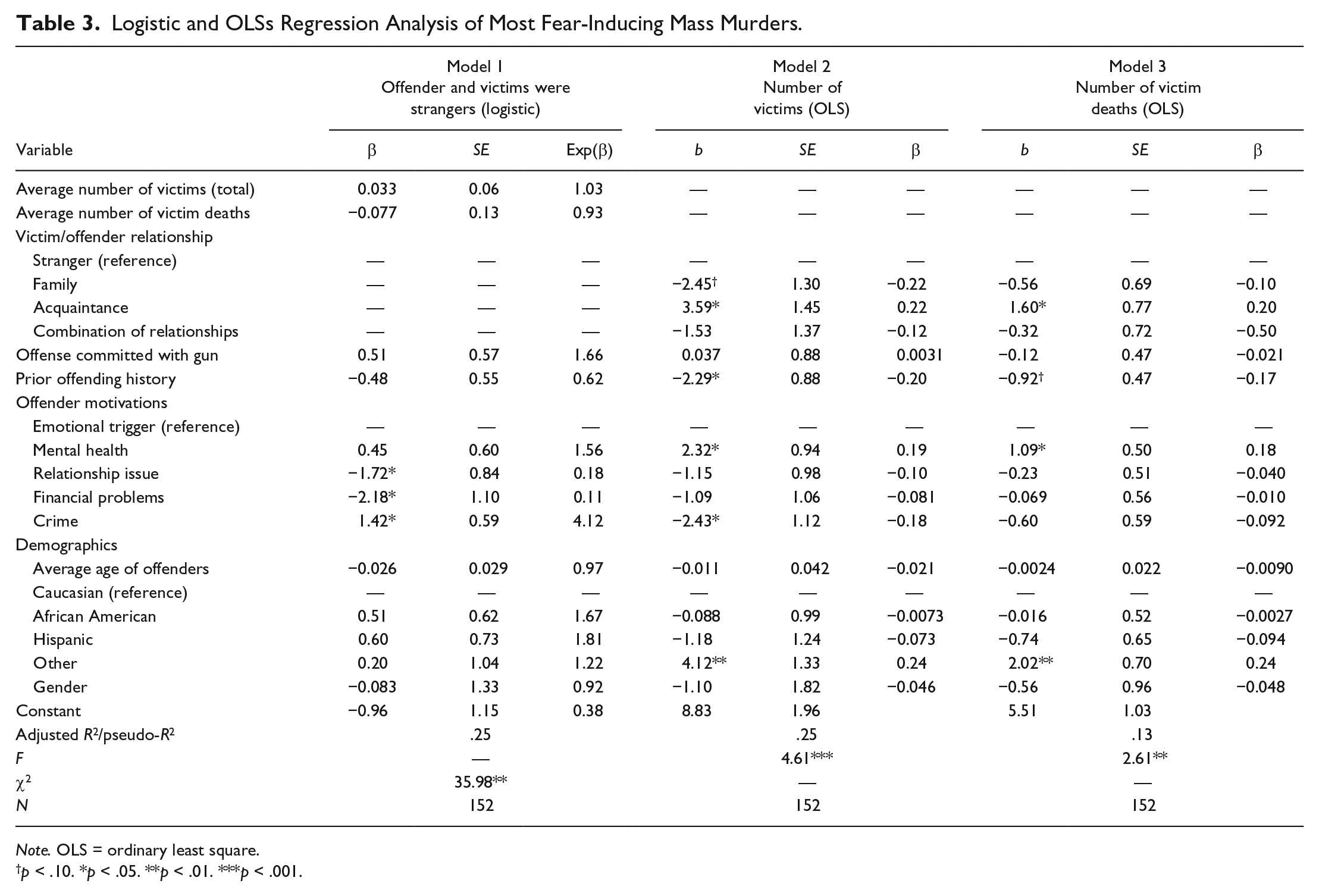
Specific types of people (i.e., young, White, males, and those with mental illness) appear to be disproportionately presented in the media as being the most serious and violent mass murderers (i.e., kill the greatest number of victims and strangers). To test this, Table 3 presents a logistic regression (Model 1) predicting whether the victim was a stranger, whereas Models 2 and 3 present ordinary least squares regressions of the number of total victims and number of victim deaths, respectively. Model 1 shows that when compared with those who offended because of an emotional trigger, the only offender motivation that significantly increased the probability that only strangers would be killed in the incident was if the offense was motivated by crime. In addition, offenders who were motivated by relationship and financial issues had decreased odds of killing strangers. Demographic characteristics and having a mental health issue did not appear to affect the odds of strangers being killed versus family members or acquaintances.
Logistic and OLSs Regression Analysis of Most Fear-Inducing Mass Murders.
Note. OLS = ordinary least square.
p < .10. *p < .05. **p < .01. ***p < .001.
In contrast to the types of victims in mass murder events, predictors of the number of victims and victim deaths appear to be partially consistent with media portrayals of offenders (Models 2 and 3). Most notably, offenders with mental health issues were predicted to have a greater number of victims and victim deaths than those who offended because of a trigger. Somewhat in contrast to media reports of the most deadly mass murders, when compared with offenses committed by strangers, offenses committed against acquaintances actually had significantly higher victim and victim death counts. Interestingly, the models show that there were significantly more victims and victim deaths when offenders were classified as having an “Other” race or ethnicity. This was driven in large part because three of the most deadly mass shootings in U.S. history occurred during the data collection period and were committed by offenders who were of Palestinian, South Korean, and Vietnamese descent.
Discussion
The current study showed that when considering a comprehensive sample of mass murders, in contrast to media reports of mass murders that focus primarily on a narrow subset of incidents (e.g., incidents that occurred in a public location), the majority of offenders were not mentally ill or White. When comparing offenders based on gender and race/ethnicity, offenders appeared to be very similar to one another in offending patterns. The only gender differences in motivation showed that females are more likely to offend because of financial reasons. Similarly, Whites, Blacks, Hispanics, and “Others” were very similar in their reasons for offending. The sole difference was Blacks were less likely than Whites to offend because of a relationship issue. Finally, when comparing reasons for the offenses, few differences were also present, but these largely centered on the victim–offender relationship type. Most notably, crime-motivated offenders were the most likely to kill strangers, whereas those who offended because of relationship issues were the most likely to harm family members. Such findings suggest that mass murders are more similar than different from one another in offense characteristics, especially in regard to their reasons for offending. This is further indicative of the challenges faced when attempting to identify and prevent mass murders.
Only 30% of offenders in the current study were identified as having either a confirmed or suspected mental illness. Such figures are consistent with Duwe’s (2007) study of mass murders that occurred from 1900 to 1999 using the SHRs, where he found approximately 28% of offenders had symptoms or had been diagnosed with a mental illness. Petee et al. (1997) similarly found, contrary to many media reports, most mass murders are actually committed by offenders who would be considered sane. Research suggests that of all homicides, 5% of murderers were schizophrenic, 7% had an affective disorder, and 9% had a personality disorder (Shaw et al., 2006). Only 5% and 6%, respectively, were found to be psychotic or depressed at the time of the murder. One study of general crime types found that only 5% of crimes were committed by persons with a severe mental illness (Fazel & Grann, 2006). These findings suggest that although most mass murderers likely had no history of mental illness, when compared with other offenders, the mentally ill represent a greater portion of mass murder offenders. In addition, offenders with mental health issues injured and killed significantly more victims than other types of offenders. This suggests that although the mentally ill are a smaller portion of mass murder offenders, their offenses result in the greatest level of harm and deserve attention.
Although the public perception is that “crazy strangers” are committing mass murders, the current study showed this is in fact not the case. Triggering events, not mental illness, actually influenced the majority of mass murders. It appears that these “triggers” were the “straw that broke the camel’s back” for many offenders, as they had long been dealing with relationship, financial, and even mental health issues, but it took a particularly traumatic event to occur that led to the crime. The issue is that the media attention is primarily focused on offenders with mental illness, resulting in the assumption that treating those with a recognizable mental illness is the main solution to preventing mass murders, but this is simply not the reality as 70% of mass murders stemmed from other sources (e.g., relationship issues). This does not mean that responding to mental health issues is futile, rather that preventing these acts of violence by basing mental health treatment of potential offenders upon a “typical profile” of a mass murderer (i.e., young, White males with a history of mental health issues) is going to be ineffective. This means that following a “triggering” event, it is critical for mental health services to be easily accessible to a potential offender so that alternative solutions to violence can be identified.
In addition to triggers, identifiable relationship/domestic issues preceded 40% of mass murders in the current data set. Due to the links between domestic violence and homicide, many states now restrict the ownership and usage of guns, especially by persons who have active restraining orders against them (Dugan, 2003). States that implemented restraining order policies for gun ownership had subsequent decreases in intimate partner homicide rates when compared with states that did not have similar policies (Vigdor & Mercy, 2003, 2006). Furthermore, when domestic violence–related deaths in the United States are compared with deaths in countries where gun ownership is more restricted, offenders in the United States are more likely to use a gun, whereas they were more likely to use strangulation and stabbing for their offenses in other countries (e.g., England, Canada; Aldridge & Browne, 2003). The positive impact that these policies have had on victimization rates suggests that they could have a similar deleterious effect on mass murder homicides related to domestic violence. In the current study, of the offenses that were preceded by a history of domestic or relationship issues, 78% were committed with a gun. In addition, of those with a history of domestic issues, 63% were committed following a triggering event. This suggests that for many offenders, there is a long build up to the offense, but that it takes a specific event to result in an extreme crime such as a mass murder. This means that the deterrent effect served by restrictions on gun ownership for domestic violence offenders could very well prevent an even greater number of mass murder events in states that do not currently have these types of laws. Future research could examine the direct impact that these types of policies have had on mass murder events by comparing prevalence before and after such policies were implemented to determine whether these policies do in fact deter mass murderers.
Fox and Levin (1998) argue that mass murders typically result when offenders are socially isolated and have limited social supports. This suggests that potential mass murderers who are socially isolated and experience a triggering event would likely benefit the most from mental health treatment. The problem is that an isolated offender who is considering violence after experiencing strain (e.g., losing a job or custody of children) is going to be unlikely to take the effort to make an appointment with a psychologist and wait to be seen before weighing the costs and benefits of committing a violent act. Making rudimentary psychological services extremely accessible, while at the same time serving a triage function (i.e., only the most high risk offenders are referred to additional services), could deescalate situations to the point where an offender no longer poses an immediate threat. Colorado has taken progressive steps in offering these types of services by passing legislation following the 2012 movie theater shooting in Aurora, Colorado, that requires walk-in and mobile counseling treatment (Coordinated Behavioral Health Crisis Response, SB 13-266, 69th General Assembly, 2013).
Mass murders are already such uncommon events, that further skewing the public perception of them by depicting only the most newsworthy cases is doing a disservice to the victims and making it more difficult to prevent such offenses in the future (see Fox & Levin, 2015). Similarly, mass murder research typically focuses on certain offender or victim types, which fails to provide a comprehensive perspective of the issue. The problem that arises is this extremely small subsample of cases can be used as evidence for policy changes. Duwe (2005) suggests that when certain types of mass murders are publicized, the result is oftentimes unwarranted and unnecessary policies. For example, the media attention given to mass shootings in the 1980s involving assault weapons led to a subsequent ban on assault weapons, even though these weapons were infrequently used in mass murders (Duwe, 2007). In other words, the policy solution appeared constructive, but in reality it was ineffective at reducing most mass murders. In addition, Duwe suggests that the attention given to juvenile mass murders in the 1990s in public schools has led to the perception that juvenile violence is on the rise, when in fact juveniles very rarely commit mass murders. Similar policies have been proposed and passed in recent years to make it more difficult to purchase weapons and ammunition, which may be a step in the right direction, but they should not be the sole solutions in preventing future acts of violence (Hoyer, 2013).
Limitations and Future Research
The data used for the current study identifying offender motivation were obtained from media reports on each case. Although it would be ideal to have police, court, and mental health records on all offenders, obtaining such records posed significant challenges for multiple reasons. Most notably, confidentiality restrictions prevent access to any mental health records, while obtaining criminal histories of all mass murder offenders would require a great deal of access from dozens of law enforcement agencies. In addition, it is possible that some of the background information may be skewed, where cases that received the most media attention would also have the most in-depth offender profiles. This means that cases that only received minimal media coverage may be less likely to include relevant information such as a history of mental illness or a criminal record. Despite this issue, media reports are arguably one of the few data resources for a study of this type and magnitude on mass murders. Although they may have some issues with accuracy, reports of such serious and violent offenses tend to include very detailed backgrounds of offenders. Not all mass murders may achieve national attention and the extreme in-depth reporting that follow such events (e.g., Virginia Tech), but practically all mass murders receive notoriety and intense local media coverage (Duwe, 2000).
One issue that is frequently addressed in the media and research is the type of weapon that was used in the mass murder and how that weapon was obtained. As discussed above, most studies on mass murders, including research of gun control, rely upon small convenience samples that fail to capture the full picture of offenses (Follman, Aronsen, & Pan, 2012; Kleck, 2009). One exception to this is Duwe’s (2004) study of 909 mass murders; however, Duwe only noted whether the crime was committed with an assault weapon, but did not provide more detail on weapons or how they were obtained. Future research should also provide a more comprehensive portrait of the location of mass murder incidents. Several studies censor the location of events, typically including only mass murders that occur in public settings (Blair & Schweit, 2014; Petee et al., 1997). Such research fails to consider the large number of these crimes that are committed in homes. As Fox and Levin (2015) noted, this limited focus on location “focuses attention on mental illness, but fails to address issues involved in the larger pool of mass murders, such as financial despair, family discord, or hate and prejudice” (p. 10). To continue the discussion of mass murder and develop meaningful policy solutions, it is important to have accurate knowledge of what types of weapons are being used and how they were obtained, as well as where these events typically occur. Although it may be true that many offenders are committing these crimes following triggering events, these events happen every single day and very rarely do they result in violence (see Fox & Levin, 1998). It is only when an offender has both the motivation and opportunity to commit such a crime that a mass murder will occur.
Footnotes
Declaration of Conflicting Interests
The author(s) declared no potential conflicts of interest with respect to the research, authorship, and/or publication of this article.
Funding
The author(s) received no financial support for the research, authorship, and/or publication of this article.