



Abstract
Although juvenile homicide has been a matter of concern in the United States since the 1980s, prior research has not addressed long-term recidivism patterns for convicted juvenile murderers. Furthermore, a prominent juvenile homicide typology had not previously been tested with U.S. offenders. The present study examined whether juvenile offenders who killed or attempted to kill during the commission of a crime differed from those who killed due to some type of conflict on pre-incarceration, incarceration, and post-incarceration variables. These offenders were sentenced to adult prison in the early 1980s. Follow-up data spanned 30 years. The results indicated that approximately 88% of released offenders have been rearrested. Analyses of pre-incarceration variables revealed that crime-oriented offenders were significantly more likely to commit the homicide offense using accomplices than conflict-oriented offenders, and the latter were significantly more likely to use a firearm during the homicide incident. The circumstances of the homicide, however, were not significantly related to any other pre-incarceration variables, release from prison, number of post-release arrests, and number of post-release violent offenses. The implications of the findings, their comparability to previous follow-up research on this typology, and avenues for future research are discussed.
Keywords
Homicide by youths under age 18 (i.e., juveniles) has been a matter of repeated concern in the United States since the mid 1970s. Arrests of juveniles for murder over the period 1960-1975 more than doubled (Heide, 2015). After a stabilizing period during the late 1970s and early 1980s, the number of juveniles arrested for murder increased every year between 1984 and 1993, culminating in 3,284 (16.2% of all homicide arrests) juvenile arrests in 1993—the highest number on record (Heide, 1999). Crime experts forecasted that if this trend continued, there would be a “bloodbath of teenage violence” (Zoglin, 1996) perpetrated by a rising group of predators who kill remorselessly, impulsively, and for fun (Dilulio, 1995).
Fortunately, the experts were wrong; the rate of juvenile-perpetrated homicide has declined since the mid-1990s (Heide, 2015; J. V. Roberts, 2004). Juvenile homicide, however, remains a serious problem; individuals under 18 years of age accounted for more than 7% of the 8,267 homicide arrests in 2014 (Federal Bureau of Investigation, 2015). Media stories on juvenile homicide cases continue to shock the American public and produce fear of juvenile killers (Boulahanis & Heltsley, 2004). Despite the public’s interest in these young homicide offenders, there is very little knowledge regarding their long-term recidivism patterns.
The U.S. Supreme court held, in Miller v. Alabama (2012), that mandatory life sentences without the possibility of parole for juveniles who committed murder were unconstitutional. This ruling will result in a higher proportion of juvenile homicide offenders (JHOs) being released back into society in the near future. Accordingly, it is increasingly important to obtain empirical data regarding the post-incarceration experiences of JHOs.
The present follow-up study was primarily designed to examine whether post-incarceration outcomes were influenced by homicide circumstances, over the span of three decades. The sample of JHOs was divided into two groups: offenders who perpetrated murder or attempted murder during the commission of another crime (e.g., robbery, burglary, etc.) and offenders who committed these crimes due to some type of conflict with the victims (i.e., arguments with family, friends, acquaintances, strangers, etc.). This particular typology was selected for investigation because it is the only one that focuses specifically on JHOs and it has only been tested once in prior research, as discussed below. Furthermore, Corder, Ball, Haizlip, Rollins, and Beaumont (1976) found over a mean follow-up period of 4.5 years that youths who killed a parent (predominantly, conflict-oriented homicides stemming from parental abuse) were more likely to be released from prison than youths who killed other types of victims. We aimed to examine whether the readjustment patterns found in prior research remained the same up to middle adulthood.
Review of the Literature
The majority of prior studies on post-homicide adjustment of JHOs focused on youths who completed or attempted a homicide against their parents (i.e., adolescent parricide offenders) and consisted of small clinical samples. The findings from these studies were mixed; whereas some studies found that the offenders in their sample had not recidivated after the parricide offense (Duncan & Duncan, 1971; Post, 1982; Schlesinger, 1999; Tanay, 1973), other studies reported on young parricide offenders who had committed new homicides (Anthony, 1973; Heide, 2013; Reinhardt, 1970) or had engaged in other types of violent behavior (Heide, 1992; Russell, 1984) after they were released back into society. The youths in the abovementioned studies had been released from a variety of settings, such as juvenile correctional institutions, jails, prisons, and psychiatric hospitals.
Recidivism Studies of Incarcerated JHOs
Follow-up research on larger samples of incarcerated JHOs is scarce. To date, there have been four studies that analyzed recidivism in moderate to large samples of JHOs following their release from secure institutions. In the studies discussed below, JHOs served time in juvenile correctional facilities (Hagan, 1997; Trulson, Caudill, Haerle, & DeLisi, 2012; Vries & Liem, 2011) or adult prisons (Heide, Spencer, Thompson, & Solomon, 2001).
Hagan (1997) followed up on 20 male offenders who were convicted as juveniles of a completed homicide or attempted homicide. The follow-up period ranged from 5 years to 15 years. Hagan found that none of the offenders had committed another homicide, but that 60% of them had recidivated, and 58% of recidivists had committed new violent offenses. Heide and colleagues (2001) tracked a sample of 59 male JHOs, which consisted of both murderers and attempted murderers, who were committed to adult prison between 1982 and 1984. The follow-up period ranged from 1 year to 16 years, and the authors used recommitment to prison for new offenses or violation of parole as measures of failure to reintegrate into society. They found that 60% of the 43 who were released from prison received new prison sentences after reoffending or violating the terms of their parole.
Vries and Liem (2011) conducted a follow-up study of 137 male and female Dutch JHOs. The follow-up period ranged from 1 year to 16 years. The results indicated that 59% of the sample committed additional offenses after release from incarceration during the entire follow-up period. Three percent of all recidivistic offenses were either completed (two offenses) or attempted (16 offenses) homicides.
Trulson and colleagues (2012) examined whether juveniles who committed gang-related homicides were more likely to recidivate than other types of juvenile offenders, over a period of 3 years. Their sample consisted of 1,804 serious and violent male juvenile offenders. The researchers reported that juvenile gang murderers (126 offenders) were more likely to be arrested again and be arrested for a felony offense, in relation to non-gang homicide offenders and non-homicide offenders. However, juvenile gang murder was not related to the frequency of new arrests. Descriptive recidivism information (i.e., percentage of recidivists in the sample) was not provided by the authors.
Crime Versus Conflict Typology
Cornell, Benedek, and Benedek (1987) divided a sample of 72 JHOs into three groups based on information concerning the murder contained in police reports and provided to forensic examiners during the period 1977 through mid-1985: (a) offenders who killed during the commission of a crime, such as robbery or burglary (51.4%); (b) offenders who committed homicide as a result of an interpersonal dispute (41.7%); and (c) offenders who exhibited psychotic symptoms (e.g., hallucinations or delusions) at the time of the homicide (6.9%). Following group assignment, the researchers investigated prior adjustment characteristics of the JHOs. They found that crime group offenders, compared with their conflict group counterparts, had significantly higher levels of school adjustment problems, prior criminal activity, and substance abuse problems, but had experienced less stressful events before the homicide incident. Cornell and colleagues hypothesized that crime-oriented JHOs, relative to the conflict-related counterparts, might be less amenable to treatment due to higher psychological maladjustment, and possibly more likely to engage in future criminal behavior. The authors called for further research to test the validity of the distinct types of homicidal adolescents.
Toupin (1993) replicated the study by Cornell and colleagues, and expanded it by comparing 41 crime-oriented and conflict-oriented JHOs on post-release recidivism. The Canadian sample was selected from police and youth court records, as well as records from a psychiatric hospital and several residential treatment centers, for the period 1975-1987. Consistent with the methodology used by Cornell and colleagues, the homicide offenders were also compared with a control sample of property offenders. The follow-up period was approximately 7 years.
Similar to Cornell and colleagues’ (1987) findings, crime-oriented JHOs had significantly higher levels of pre-homicide adjustment problems. Regarding post-release recidivism, the researcher found, as hypothesized by Cornell, Benedek, and Benedek, that the conflict-oriented JHOs recidivated on a smaller scale—in terms of any offenses, violent offenses, and serious offenses—compared with the crime-oriented JHOs, as well as the control group. Of the 18 crime-oriented JHOs, 66.7% recidivated after release from confinement, compared with 21.7% of the 23 conflict-oriented JHOs.
The review of prior literature revealed the following: (a) Previous follow-up studies of JHOs released from incarceration tracked offenders for relatively short periods of time, and (b) the juvenile homicide typology developed by Cornell and colleagues has not been validated in the United States with respect to post-release recidivism, as well as factors related to the homicide offense and pre-homicide conduct. The present study addressed these concerns by analyzing long-term offending patterns for the two primary homicide groups in this typology. The aims of this study were twofold: (a) to compare crime- and conflict-oriented offenders on pre-incarceration variables, including characteristics of the original homicide, and (b) to compare the two groups on incarceration-related and recidivism variables, during a follow-up period of approximately 30 years.
Method
The final sample in this study consisted of 59 offenders who were involved in homicidal incidents as juveniles in a Southeastern U.S. state; charged as adults with either first-degree murder, second-degree murder, or attempted murder; and convicted and sentenced to prison in the early 1980s (Heide, 1999; Heide et al., 2001). 1 The sample was originally identified in the 1980s through computer searches performed by the state Department of Corrections (DOC). The initial sample included all JHOs committed to prison during 1982; the sample was later expanded and included all JHOs committed during 1983 and January 1984. The following inclusion criteria were used in the selection process: (a) male 2 ; (b) under the age of 18 at the time of the homicide incident 3 ; (c) charged with murder or attempted murder and processed through the adult criminal justice system 4 ; (d) sentenced as an adult, and received by the DOC between January 1982 and January 1984 5 ; (e) incarcerated in the DOC less than a year at the time they were identified by the computer search; and (f) 19 or younger at the time of the initial interview. 6
Semi-structured psychosocial interviews were conducted by the researcher, who is one of the authors in the present study, with 59 participants. These included three offenders who were initially charged with murder and convicted of manslaughter. Perusal of record data and interviews with these three offenders confirmed that the charges of murder in the first or second degrees more accurately portrayed their homicidal involvement than the manslaughter charges to which they subsequently pled. The interviews were conducted in several adult correctional facilities throughout the state where these JHOs were incarcerated. In addition, extensive record data were reviewed, including probation department reports, indictment and charging documents, sentencing documents, and DOC records.
These 59 participants represented 94% of 63 juveniles charged as adults with murder or attempted murder; convicted of murder, manslaughter, or attempted murder; and incarcerated for less than 1 year in adult prisons during the 25-month sampling period. Moreover, study participants included 87% of the JHOs arrested for homicidal involvement in this state during this time frame. 7
The present sample was previously examined in the study by Heide and colleagues (2001), which was discussed in the literature review. In contrast to the previous study, which was descriptive and primarily focused on recommitment to prison, the present study constituted a case-control retrospective comparison of two distinct groups, as detailed below, and relied on arrest data to assess recidivism and consisted of a longer follow-up period. A second follow-up study for this sample was needed to investigate the utility of a prominent juvenile homicide typology and to provide a long-term portrait of these JHOs’ recidivism patterns.
Classification of Sample Participants Into Types
Similar to the work by Cornell and his colleagues, the method used to classify JHOs into the three types was based on the characteristics of the offense and the offender. Two of the authors read the original police reports and independently categorized homicide offenders. A homicide event was classified as crime-oriented if there was clear evidence of criminal motivation at the beginning of the incident. Both felonies and misdemeanors fit the criteria for this category. In contrast, a homicide was classified as conflict-oriented if there was clear evidence of a direct conflict between the offender and the victim. The third subgroup of JHOs in the typology—those who experienced psychotic symptoms during the homicide event—was not found.
Among the sample of 59 JHOs examined, inter-rater reliability was 93%. One of the raters had questions about four cases and did not rate them. When these cases were examined and discussed, both raters classified the offenders into the same homicide offender types. Questions that the one rater had concerning three of these JHOs stemmed from the lack of sufficient evidence regarding homicide motivation in the police reports; when other case record materials were reviewed (e.g., reports by mental health professionals in prison), the two raters reached the same conclusions. Regarding the fourth JHO, record data contained no information regarding the motivation for the crime. To resolve this issue, original interview data were reviewed, and once again, the two raters agreed on the group assignment.
Statistical Analyses and Follow-Up Data
To address the first aim of the study, the crime- and conflict-oriented JHOs were compared on eight pre-incarceration variables, measuring demographics, prior delinquency, and homicide characteristics. Chi-square analyses were used to test for significant differences on categorical variables (race, prior record, prior violent record, use of accomplices in homicide offense, and weapon choice in homicide offense), and t tests were used to analyze continuous variables (age at homicide arrest, age at first arrest, and the total number of pre-homicide arrests).
Follow-up data were obtained through two stages: Initially, a search of the DOC database on the Internet was performed to find how many JHOs had never been released from prison. Criminal record data on the offenders who had been released from their homicide-related incarceration were subsequently provided by the state DOC. Out of the 59 JHOs in the sample, eight offenders have never been released from prison for the index homicide conviction and five are known to be deceased. Two of the five deceased offenders died in prison, and a third offender was killed after escaping from prison. Accordingly, only 56 offenders (excluding the three offenders who died before they had the chance to be released) were included in the first analysis related to the second aim of the study, focusing on the relationship between homicide circumstances (hereinafter, Cornell homicide type) and release from prison. Chi-square was used to perform this analysis.
Subsequent analyses focusing on post-release outcomes included only the 48 JHOs who were released. The mean length of follow-up for all released offenders was approximately 368 months (30 years, 8 months), ranging from 354 months (29 years, 5 months) to 381 months (31 years, 8 months). Chi-square analyses were utilized to test for significant relationships between Cornell homicide type and two ordinal-level recidivism variables: number of post-release arrests and number of post-release violent offenses. Recidivism was measured by arrests for both new offenses and violations of probation or parole. Furthermore, t tests were used to assess whether there were mean differences between the two homicide groups with respect to the aforementioned post-incarceration variables. Statistical significance was set at the .05 level for all analyses in this study. Figure 1 illustrates the varying sample sizes examined at the three stages of analysis, as well as the sample breakdown by Cornell homicide type at each stage.
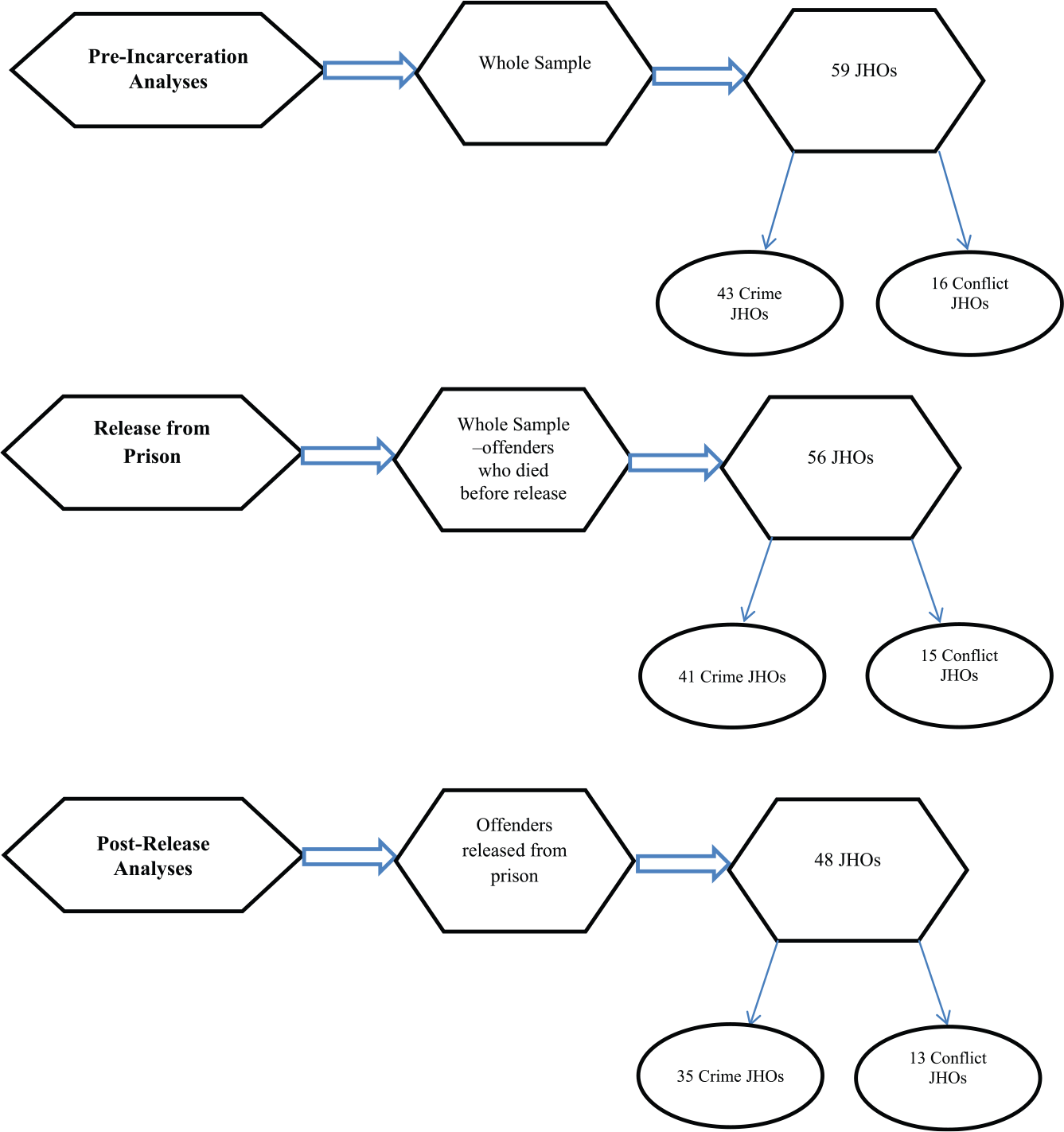
Sample size at each stage of data analysis.
The chi-square tests in the study consisted of 2 × 2 matrices; accordingly, phi was used to measure the strength of the association between the independent and dependent variables. Phi values of between .10 and .29 were considered small effects, values from .30 to .49 were considered moderate effects, and values at .50 and above were considered strong effects. Moreover, statistical significance was denoted using Fisher’s exact test on analyses that contained cells with values lower than five.
Post-release analyses were not limited to comparing the crime and conflict offenders at the 30-year mark. To examine whether there were initial differences between the two groups following prison release, the Kaplan–Meier survival analysis method was utilized to test for differences in time at risk between release from prison for the homicide conviction and the first post-release arrest. For the purpose of this analysis, time at risk was measured as the number of days that a released offender survived (i.e., managed to avoid arrest) before reoffending. Days were used in this analysis, as opposed to months, to allow for a more refined test of the relationship between homicide type and time to first arrest. The released JHOs who did not recidivate were censored, which means that their data were automatically removed from the analysis and had no effect on the mean values (Liu, 2012).
Regarding types of post-release offenses, the decision to limit the analysis to only include violent offenses was made due to the general public’s particular anxiety about post-incarceration violence (Harris, Rice, & Cormier, 1991). To provide a more accurate portrayal of post-release violence perpetrated by the offenders, the number of violence-related charges was recorded, rather than the number of violence-related arrests. For example, if an individual JHO was rearrested once and charged with four counts of violence (three counts of robbery and one count of sexual assault), the number of arrests for this particular offender was coded as 1 and the number of violent offenses was coded as 4. The variables representing arrests and violent offenses were originally continuous, but were recoded for some analyses.
Hypotheses
Two hypotheses based on the prior literature related to post-release recidivism were tested in this study:
Results
Sample Description
The crime group in the sample consisted of 43 offenders, representing 32 homicide incidents. Crime-oriented offenses included 25 robberies, four home burglaries, one vehicle burglary, one sexual assault, and one case of male prostitution. Attempted murderers constituted approximately 30% of the crime group (n = 13), whereas approximately 70% were involved in a completed homicide (n = 30). The following case excerpts illustrate the brutality and senselessness of many of the killings or attempted killings by crime-oriented JHOs in the present sample:
Three boys, ranging in age from 15 to 17, fatally beat a man with tree limbs, personal weapons (i.e., hands and feet), and a 2 × 4 board; the motive for the attack was robbery, and the property subsequently acquired consisted of US$2.50 and a bag of groceries.
A 15-year-old boy shot and killed a milkman during a robbery, after the victim turned over his money and pled for his life.
The conflict group consisted of 16 offenders, representing 15 homicide incidents. The homicides in this group stemmed from conflicts with acquaintances (five incidents), strangers (four incidents), friends (three incidents), and family members (three incidents). Among the cases that involved family members as victims, two of them involved parents who had a documented history of abusing the perpetrator (one of which is briefly described below), and the remaining case involved a young girl who was killed by her older brother, with whom she reportedly had a relationship that was characterized by discord. None of the three boys who killed family members had a prior juvenile arrest history. Attempted murderers represented 25% of this group (n = 4); the remaining 75% killed their victims (n = 12). The two case excerpts presented below demonstrate the trivial nature of some of the conflicts that resulted in a loss of life or grave bodily injury:
A 16-year-old boy shot and killed a man who reportedly cursed at him outside a nightclub.
A 16-year-old accused a female friend of stealing US$40 from him during a card game, and subsequently stabbed her in the head and face repeatedly; the victim survived the attack.
Pre-Incarceration Analyses
The demographic characteristics and prior delinquent behavior of the 59 JHOs are presented in Table 1. As demonstrated by the p values shown in the table, the two groups did not significantly differ from one another on any of the variables pertaining to demographics and prior delinquency. More than 60% of the sample participants were Black. These boys were between the ages of 14 and 18 at the time of their homicide arrest; their mean age was approximately 16 years. Approximately three quarters of the sample had a prior delinquent record; 45% had prior violent arrests. The mean age at first arrest was slightly younger than 13 for these boys, and their mean number of pre-homicide arrests was almost four. 8
Demographic Characteristics and Prior Record Information.

Prior record data were missing for one participant.
Data on age at first arrest were missing for five participants; 14 participants had no prior arrests.
Table 2 presents the cross-tabular analyses between homicide circumstances and homicide-related characteristics for all 59 JHOs in the original sample. Crime-oriented JHOs were significantly more likely than conflict-oriented JHOs to participate in group homicide incidents (86% vs. 37.5%). In contrast, conflict-oriented JHOs were more likely to act alone than their crime-oriented counterparts (62.5% vs. 14%), χ2(1) = 13.905, p < .001, ϕ = −.485.
Homicide Incident Characteristics (n = 59).

Non-firearm weapons included knives, blunt objects, strangulation, asphyxiation, personal weapons (i.e., hands, feet, knees), and multiple weapons.
p < .05 (Fisher), ϕ = −.315. **p < .01, ϕ = −.485.
A significant difference between crime- and conflict-oriented JHOs was obtained with respect to weapon choice as well, χ2(3) = 5.868, p < .05, ϕ = −.315. Conflict-oriented offenders were significantly more likely to use a firearm during the homicide incident than their conflict-oriented counterparts (75% vs. 39.5%), who were more likely to use weapons other than a firearm (listed in the footnote of Table 2).
Release From Prison
Table 3 displays the cross-tabular analysis between Cornell homicide type and release from prison for the 56 offenders who had not died in prison or on escape status. The relationship between the two variables was not significant, meaning that homicide type (crime vs. conflict) was not significantly related to whether an offender was released from prison.
Release From Prison by Cornell Homicide Type (n = 56).
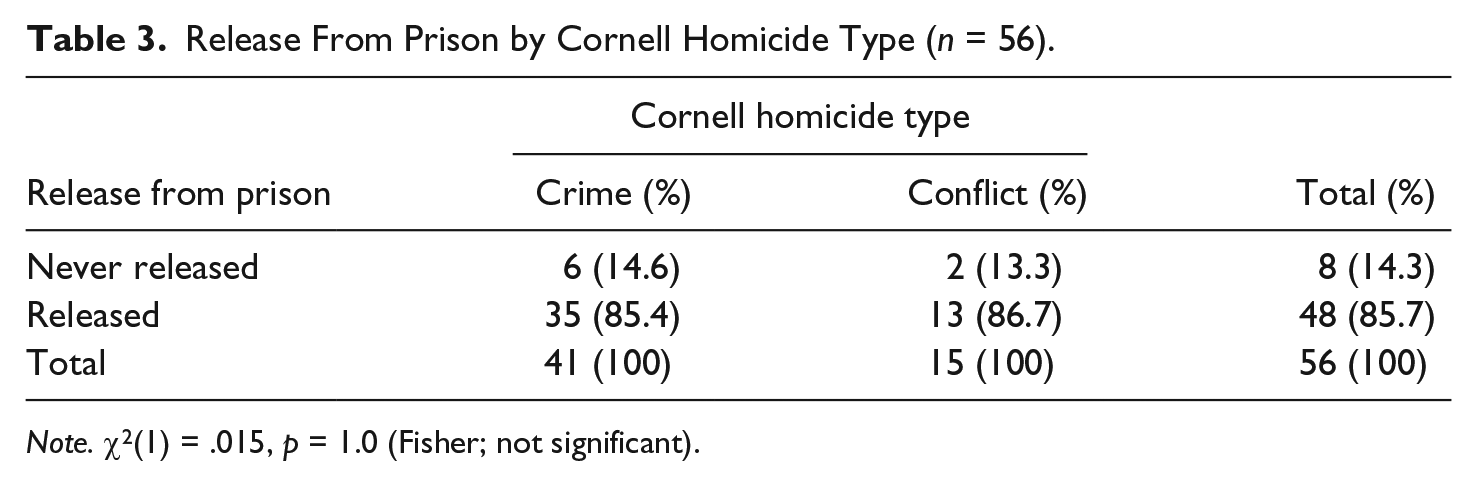
Note. χ2(1) = .015, p = 1.0 (Fisher; not significant).
Post-Release Analyses
Post-release data were available for all 48 JHOs who had been released from prison during the follow-up period; 35 of them were in the crime group, and 13 were in the conflict group. The mean time served in prison was 96 months (approximately 8 years) for crime-oriented JHOs and 99 months (approximately 8 years, 3 months) for conflict-oriented JHOs. The mean length of follow-up for crime-oriented offenders was 368 months (30 years, 8 months), compared with 369 (30 years, 9 months) for conflict-oriented offenders. There were no significant differences between the two groups on time served, t(46) = −.130, p = .897, and follow-up length, t(46) = −.661, p = .512.
Follow-up data indicated that 87.5% of the 48 released offenders had been rearrested. Only one JHO (from the crime group) was solely arrested for violating the terms of his probation/parole; all other recidivists had been rearrested for at least one new offense. The mean time at risk after release and before being rearrested was approximately 30 months (SD = 45.871), ranging from 1 month to 214 months (17 years, 10 months) for these offenders.
Of the 42 recidivists, 71.4% offenders had been rearrested for violent crimes. Ten percent of released offenders were rearrested for either completed (four offenders) or attempted (one offender) homicides. Three crime-oriented JHOs were involved in post-release homicide incidents, compared with two conflict-oriented JHOs. Violent recidivism also included many robberies of various types (e.g., armed, strong-arm) and aggravated assaults, several armed burglaries, numerous simple assaults, one sexual assault, among other crimes that were less severe in nature, such as resisting arrest with violence, firing a weapon, and threatening to use violence. The highest number of new arrests per released offenders was 30 (M = 7.48, SD = 7.760), and the highest number of violent offenses was 23 (M = 3.04, SD = 4.187).
Of the 48 released offenders, 12.5% have not been rearrested since their release from prison for the homicide conviction. All six of these offenders were involved in completed homicides. Three of them were in the crime group, and the other three were in the conflict group. Time at risk for these non-recidivists ranged from 40 months (3 years, 4 months) to 315 months (26 years, 3 months; M = 148.83, SD = 119.740).
Based on the distribution these data, the variable measuring the number of post-release arrests was recoded dichotomously (1 = 0-5 arrests, 2 = 7-30 arrests) to allow for testing of statistical differences between the two groups (no offenders were arrested exactly 6 times). Inspection of Table 4 revealed that the two groups did not differ significantly in terms of the number of arrests. A closer look at the data indicated that 37% of crime group offenders were rearrested 10 of more times, and equal percentages of conflict group offenders (23%) were either not rearrested or rearrested 10 times or more.
Total Number of Arrests by Cornell Homicide Type (n = 48).
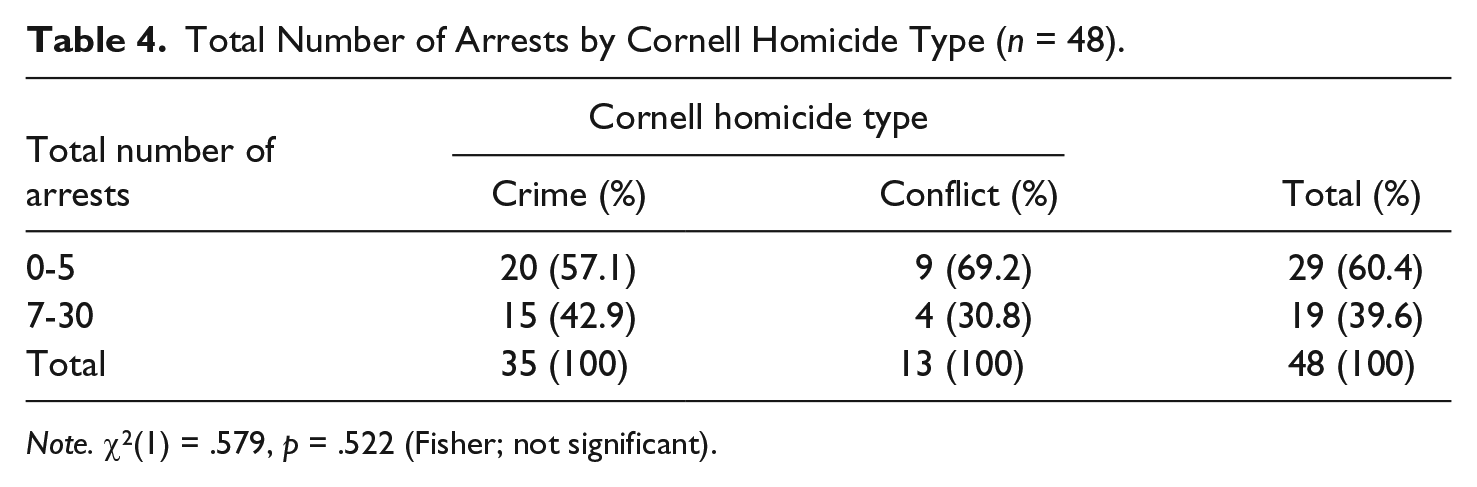
Note. χ2(1) = .579, p = .522 (Fisher; not significant).
The distribution of post-release violent offenses also necessitated recoding of the data into a dichotomous variable (1 = 0-1 offenses, 2 = 2-23 offenses). Prior to recoding, it was noted that more than 30% of offenders in the crime group either did not commit any violent offenses (34%) or committed four or more violent offenses (37%). The same pattern was found when the conflict group was examined; 46% of these JHOs did not commit any violent offenses, and 31% of them committed four or more. Evidently, with respect to post-release violence, the two homicide groups exhibited similar patterns of offending. Furthermore, as presented in Table 5, when the dichotomous measure of the total number of violent offenses was analyzed in relation to Cornell homicide type, no significant difference emerged.
Total Number of Post-Release Violent Offenses by Cornell Homicide Type (n = 48).
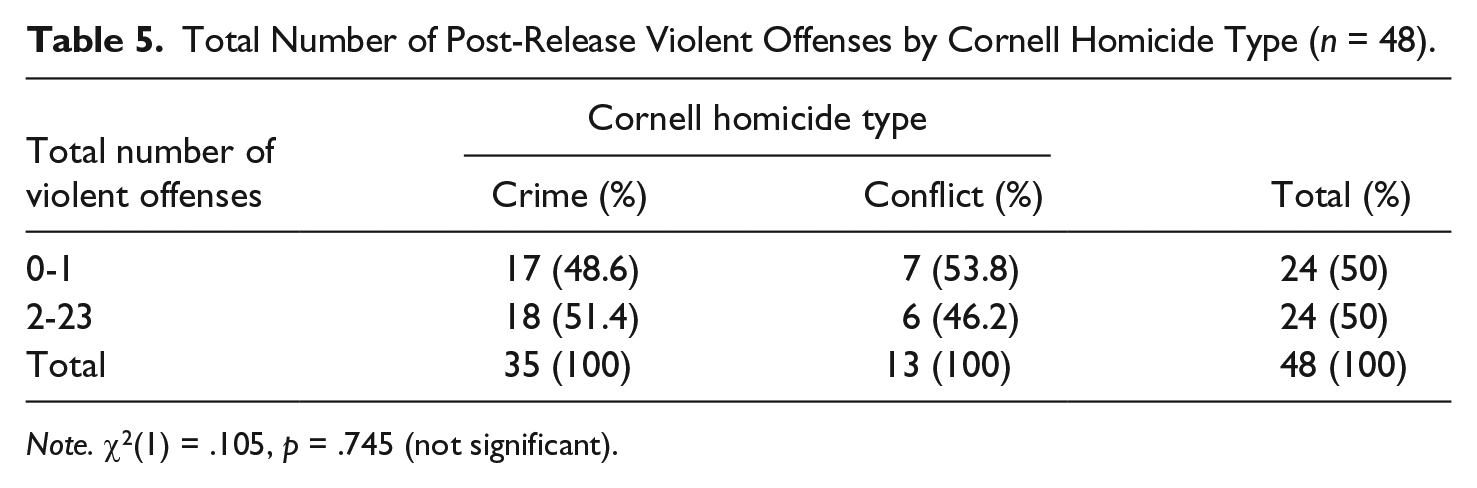
Note. χ2(1) = .105, p = .745 (not significant).
Table 6 displays the t test analyses between Cornell homicide type and the two dependent recidivism variables, to ensure that the non-significant chi-square findings were not a function of variable recoding. Crime-oriented offenders accumulated a mean of 8.14 arrests; they committed a mean of 3.26 violent offenses. Conflict-oriented offenders accumulated a mean of 5.69 arrests and committed a mean of 2.46 violent offenses. Although crime-oriented JHOs were arrested more often and had a greater number of violent offenses, the mean differences were not statistically significant. 9
The t Test Analyses of Recidivism Variables by Cornell Homicide Type (n = 48).
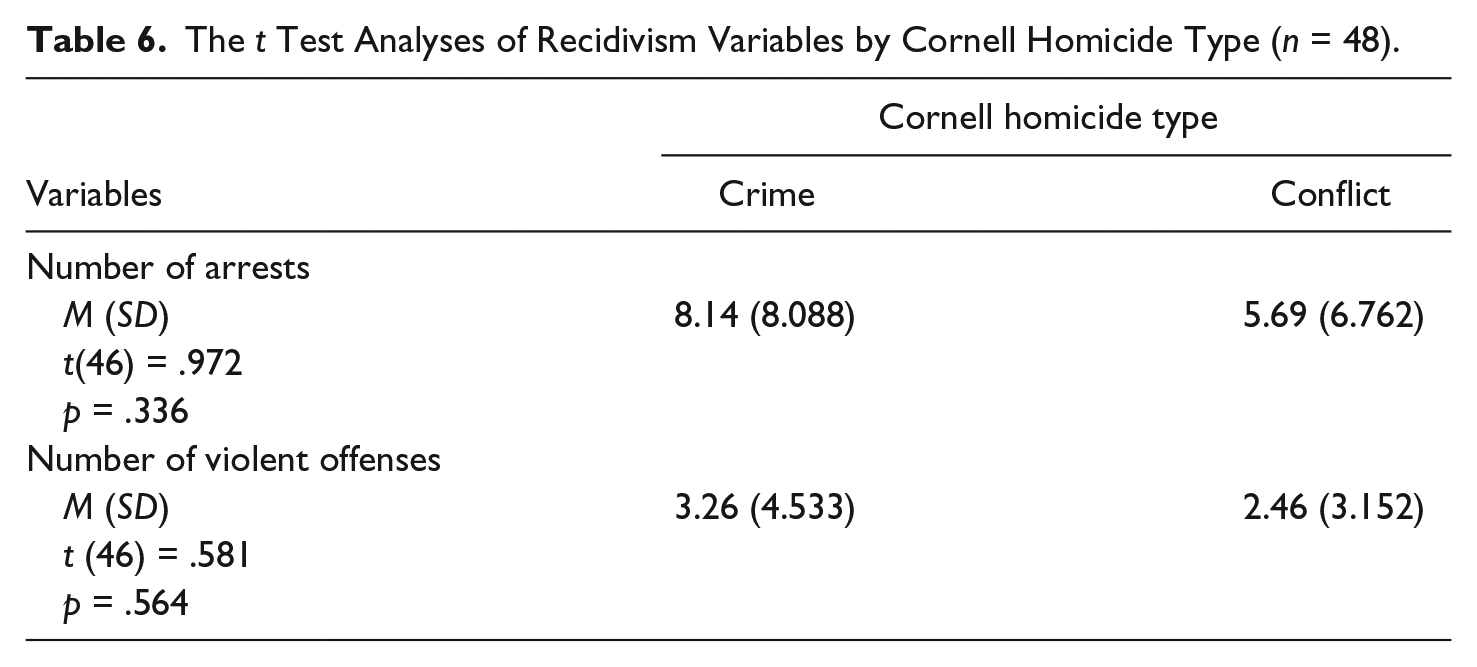
Figure 2 displays the survival curves for the two homicide groups. Each drop in a curve indicates that an offender was rearrested at that particular time point on the horizontal axis. The six offenders who did not recidivate are represented in the graph by the “censored” categories. As demonstrated by the graph and the mean values presented in Table 7, conflict-oriented offenders survived noticeably longer (approximately 45 months longer) after release from prison than their crime-oriented counterparts (2,675.20 days vs. 1,298.79 days). However, the difference in survival times until the first post-release arrest between the two groups was not statistically significant, as indicated by the Log-rank test.
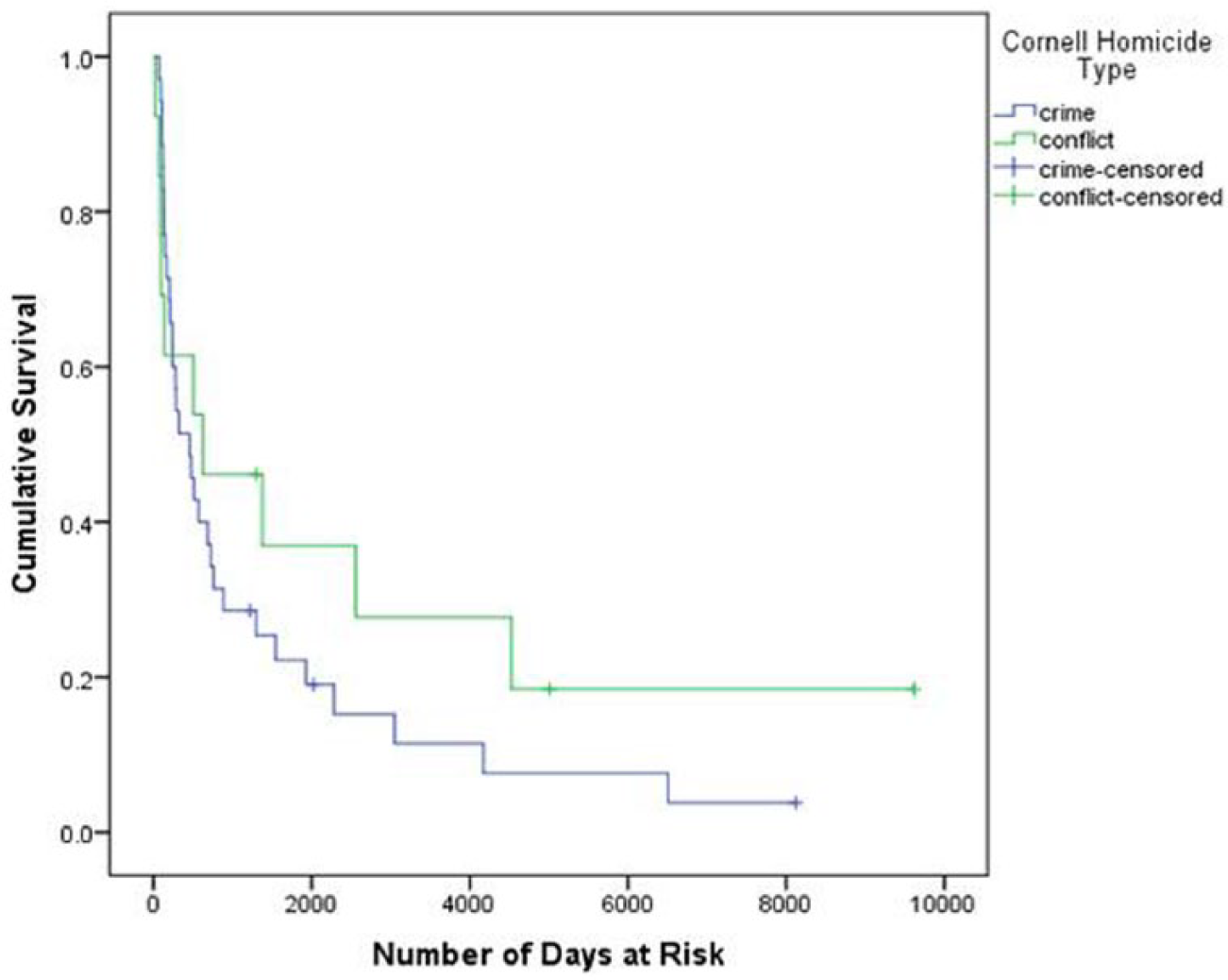
Survival time by Cornell homicide type.
Survival Before First Arrest Estimates by Cornell Homicide Type (n = 42).
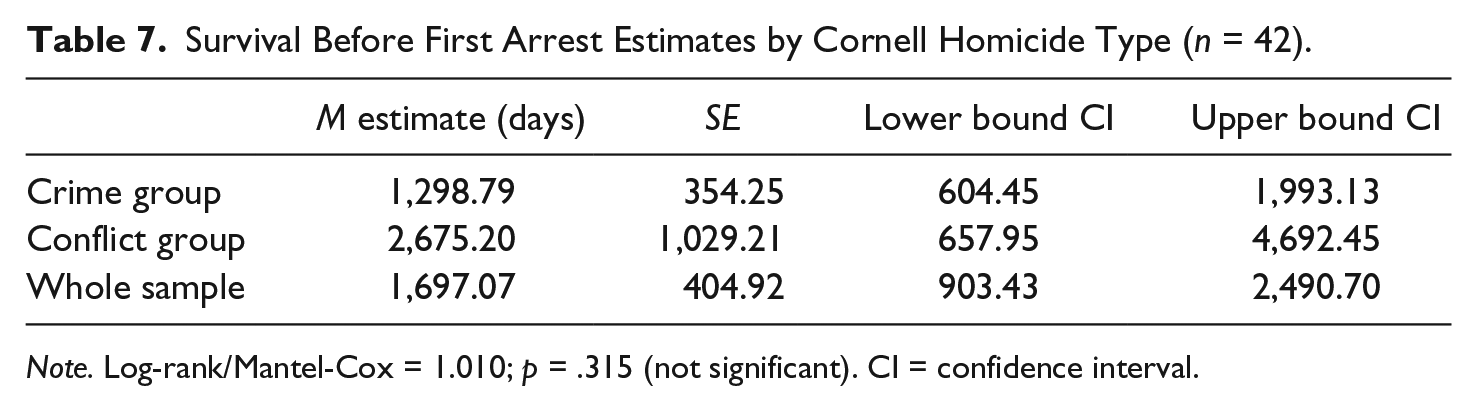
Note. Log-rank/Mantel-Cox = 1.010; p = .315 (not significant). CI = confidence interval.
Discussion
The present study was the first to investigate and attempt to validate Cornell and colleagues’ juvenile homicide typology since Toupin (1993), and the findings did not provide support for the hypotheses or the typology. The original homicide type (crime vs. conflict) appeared to have no effect on overall post-release recidivism, as well as violent recidivism. Furthermore, the two groups did not significantly differ on variables measuring demographics, delinquent record, and incarceration. We advise caution in drawing firm conclusions from our study, due to the small sample size used. At the same time, while calling for further research, we believe that the reported findings are noteworthy due to the rarity of studies related to recidivism of JHOs and the long follow-up period used.
Two variables in the present study were significantly related to Cornell homicide type, and they were both characteristics of the index homicide: presence of accomplices and weapon choice. Crime-oriented offenders in this study, consistent with those in the studies by Cornell and his colleagues and Toupin, were much more likely to act with accomplices than their conflict-oriented counterparts. In terms of social science research, this association (ϕ = −.485) is moderately strong (Ferguson, 2009). A possible explanation for this finding is that many crime-oriented incidents in the sample—particularly the robberies—occurred spontaneously, while juveniles were spending time with their friends or acquaintances. In three group crime-oriented cases, however, there was clear evidence of planning in three robberies. These incidents, for example, included a murder that occurred during a home invasion robbery by two JHOs who donned masks prior to entering the home.
Regarding the second statistically significant finding, the strength of the association between Cornell homicide type and weapon choice (ϕ = −.315) was moderate. Nevertheless, there is no clear explanation for the higher likelihood of conflict offenders to use a firearm during the homicide incident. Currently available data do not allow for further exploration of the relationship between Cornell homicide type and weapon choice. However, the fact that a very high percentage of conflict offenders (75%) carried a firearm and used it to commit a lethal or near-lethal act provides evidence of the anti-social character possessed by the JHOs in this group, as further discussed below. Due to the fact that the two groups did not significantly differ on recidivism variables, in addition to the paucity of significant findings with respect to pre-incarceration variables, the decision was made not to compare the groups using multivariate analyses.
The non-significant findings obtained from the survival analysis strongly suggest that the lack of differences between the two groups with respect to recidivism outcomes may not be simply a function of the long follow-up period. Crime- and conflict-oriented offenders have not exhibited distinctive patterns of criminal behavior since the original release from prison. The fact that the two groups did not significantly differ on survival time before first post-release arrest indicates that the speed at which a JHO recidivates may not be related to the motivation behind the index homicide.
The results in the present study were inconsistent with the follow-up study by Toupin (1993), who did observe significant differences between crime-oriented offenders and conflict-oriented offenders. There are several possible explanations for the discrepancy in results in recidivism between the two studies. First, the follow-up period in this study was much longer (30 years vs. 7 years). It is possible that differences in reoffending patterns between the two groups in this study simply disappeared over time. Second, the sample in Toupin’s study was collected from various institutional settings, such as prison, a psychiatric hospital, and four residential treatment facilities, whereas the sample in the present study only included JHOs who were incarcerated in adult prisons. Therefore, the inconsistent findings could be a product of differential experiences during confinement. Specifically, the fact that none of the offenders in the present study spent time in a treatment facility following their homicide arrest might account for the much higher percentage of conflict-oriented recidivists, compared with Toupin’s study (76.9% vs. 21.7%), thus contributing to the non-significant differences between the two groups. Third, and somewhat speculative, the offenders in Toupin’s study were all from the Quebec province in Canada, whereas the offenders in the present study were all from one U.S. state. Cultural differences between the two countries, such as differences in level of social support for released prisoners in the U.S. site, could have contributed to the two groups in this study exhibiting relatively similar levels of recidivism.
Fourth, the offenders in the two groups in Toupin’s study, similar to findings in the study by Cornell and his colleagues, were known to differ with respect to preadjustment characteristics (school adjustment problems, substance abuse, and levels of stressful event), variables that could not be tested in the present study due to a lack of official record data. Fifth, the conflict group in Toupin’s study contained a higher proportion of JHOs involved in killings of family members than the present study (39.3% vs. 18.8%); only two of the conflict JHOs in the present study committed parricide. The low representation of youths who murdered parents may have contributed to the null findings regarding recidivism, given the satisfactory post-homicide adjustment demonstrated by these types of JHOs in some prior studies (e.g., Corder et al., 1976; Duncan & Duncan, 1971).
It is important to note that in contrast to previous research (Cornell et al., 1987; Toupin, 1993), the crime-related and conflict-related homicide groups in this study did not differ significantly with respect to prior arrest history. This finding warrants a closer inspection of the conflict group. Of the 16 boys involved in conflict-related homicidal incidents, only five had no known prior criminal history. Three of these cases involved intrafamilial killings; another involved the attempted murder of a friend by a boy who felt wronged by the victim and the remaining one consisted of the murder of a stranger by a youth with a history of explosive behavior who felt threatened by the victim. The mean number of prior arrests of the remaining 11 JHOs involved in conflict-related incidents was five. The high proportion of conflict-related JHOs involved in prior delinquency and the extensiveness of the criminal involvement of most of them suggest that many of these youths might have met the criteria of conduct disorder (American Psychiatric Association, 2013), possibly blurring the distinctions of the two homicide groups in this study.
Comparing the recidivism experiences of the conflict-related homicide offenders without prior offense histories with those who had prior offense histories allowed us to see whether the two groups differed noticeably from one another. If the JHOs without prior histories were truly more representative of the more traditional concept of conflict-related homicide offenders (i.e., individuals whose involvement in homicide is not part of an overall anti-social orientation) than those with prior histories, then first offense conflict-related homicide offenders would be expected to do considerably better after release from prison than those with prior offense histories. This comparative analysis suggested that prior delinquency was a poor indicator of post-release success. Although the numbers are too small to do statistical analyses, they are instructive. As the data below illustrate, youths involved in conflict-related homicides without prior criminal histories, similar to their counterparts with known prior offenses, had significant post-release criminal involvement.
All five offenders in the conflict-related group without prior arrest histories were released from prison. Three of them were rearrested; the mean number of arrests was 5.3, and the mean time at risk from release to first arrest was 30 months. Two of the five were rearrested for violent offenses; the mean number of violent offenses was 7.5, and included one arrest for manslaughter. Turning now to the 11 conflict-oriented offenders with prior histories, eight were released from prison. Seven of these eight were rearrested; the mean number of arrests was 8.29, and the mean time at risk from release to first arrest was 34 months. Five of the seven offenders were rearrested for violent offenses; the mean number of violent offenses was 3.4 and included one arrest for second-degree murder. Evidently, the conflict-oriented JHOs in this study were different from those examined in prior research, both in terms of behavior prior to index homicide and post-release adjustment.
The findings have several tentative implications; more research is needed with respect to this typology and juvenile homicide recidivism in general before definitive policy implications can be proposed, due to the small sample size in this study. First, the fact that approximately 88% of JHOs who had been released from incarceration recidivated over the 30-year period is troubling. This failure percentage of JHOs in this study greatly exceeded previous recidivism findings, which averaged about 60, that used a shorter follow-up period (Hagan, 1997; Heide et al., 2001; Vries & Liem, 2011). This study, consistent with earlier research, provides additional evidence that prison does not have a deterrent effect and suggests that treatment and rehabilitative programs are not adequate for JHOs in adult prisons. Second, recidivism does not appear to be influenced by time at risk or severity of the offense. The non-recidivists in the sample had a much higher mean time at risk than the recidivists before they were rearrested (approximately 12 years, 5 months, vs. 2 years, 7 months), which suggests that spending a longer period of time in the community after release from prison does not increase the likelihood of reoffending.
Several non-recidivists were involved in particularly gruesome index homicides; one JHO repeatedly struck his younger sister in the head with a hammer, another JHO stabbed a man more than 10 times in the throat and back during a sexual act, and a third juvenile was the ringleader in the brutal group beating of a robbery victim that was briefly described in the “Method” section. The absence of post-incarceration arrests by these offenders suggests that severity of a homicide incident in and of itself would likely be a poor predictor of recidivism.
Third, our findings indicate that, in contrast to what Cornell et al. (1987) predicted, crime-oriented JHOs do not appear to represent a greater risk to society than their conflict-oriented counterparts, over a long period of time. Fourth, because there was no significant difference in post-release offending between the two groups, the results suggest that both groups need rehabilitative and re-entry assistance.
Last, in the context of the Miller v. Alabama case, the findings suggest that homicide circumstances alone do not affect whether a JHO will be granted an early release from prison, or how much time a JHO will be incarcerated. Recall that crime-oriented offenders were no more likely to be released from prison than their conflict-oriented counterparts, and there were no mean differences between the groups on time served in prison. Furthermore, the fact that the two groups did not differ on recidivism variables suggests that courts should exercise caution in placing great emphasis on homicide circumstances in sentencing decisions. In other words, juveniles who commit crime-oriented homicides should not necessarily receive harsher sentences than their conflict-oriented counterparts, and vice versa.
Limitations and Future Research
This research has three limitations due to its sample selection. First, this study followed up on JHOs who were prosecuted and convicted in adult courts and sentenced to adult prisons. During the 1980s, processing minors arrested for murder or attempted murder as adults was the norm in the Southeastern state examined in the study. This practice, consistent with legislative policy decisions, unfortunately did not allow for a comparison of the recidivism experiences of youths transferred to adult court with JHOs who were retained in the juvenile justice system. System processing data available from the sample JHOs’ home state indicated that 12% of the 67 cases referred for murder or manslaughter in 1983 were retained in the juvenile justice system (n = 3) or given non-judicial sanctions (n = 5). It is highly probable that the case circumstances and background characteristics of these JHOs differed from those of the JHOs who were transferred to adult court.
There is an impressive body of research that indicates that recidivism is higher among juveniles transferred to adult court, compared with youths retained in the juvenile justice system (Redding, 2008). None of these studies, however, specifically examined the recidivism rates of JHOs processed in the two systems. Evidence exists that intensive treatment of JHOs can reduce recidivism (Heide, 2013; Texas Youth Commission, 1997, 2006) and is more likely to be available to youths retained in the juvenile justice system (Redding, 2008). For example, evaluations of an intensive treatment program for JHOs and other types of violent juvenile offenders located in Texas have repeatedly indicated that violent juveniles who participated in this particular program had lower rates of recidivism than control groups of violent juveniles (Texas Youth Commission, 1997, 2006). A study that compares the long-term post-release experiences of JHOs who have received in-depth treatment in the juvenile justice system with those incarcerated for similar periods in the adult system, although difficult to achieve, would be invaluable in determining the recidivism rates of treated versus untreated youths in two different environments.
The two juvenile homicide groups examined in this study should be compared in future research with crime- and conflict-oriented offenders who killed when they were adults and were incarcerated in the same state or jurisdiction as their juvenile counterparts. A matching comparison group of adult homicide offenders (gender, race, prior arrest history, etc.) would be helpful in evaluating the effect of the age at which homicide offenders are incarcerated with respect to post-release recidivism, in the context of the circumstances behind the original homicide. A study of released offenders in New Jersey by A. R. Roberts, Zgoba, and Shahidullah (2007) found that adult offenders who killed during the commission of a felony and those who killed as a result of an argument had higher recidivism rates, compared with offenders who committed domestic homicide and those who killed by accident. However, no prior research has compared juvenile and adult homicide offenders on this typology.
Second, this study utilized a small sample of JHOs incarcerated in adult prisons from a single U.S. state, so the findings cannot be generalized to the overall juvenile homicide population incarcerated in adult prisons in the United States. It is possible that if the sample had been larger, differences observed with respect to total number of arrests and total number of violent offenses might have reached statistical significance. Clearly, the small sizes of the two homicide groups limited the scope of the findings. Statistical power calculated for this analysis using STATA Version 9 was revealed to be 0.2 (probability of detecting a meaningful effect), which is considered very low in social science research (Cohen, 1988).
Future studies should be conducted with larger, nationwide samples to produce more generalizable conclusions about JHOs. A larger sample would also allow for an examination of differences in recidivism patterns between offenders who acted alone and those who had accomplices, both within each homicide group and between the groups. Furthermore, as suggested above, future U.S. studies should investigate recidivism with respect to crime- and conflict-oriented JHOs from multiple institutional settings, including treatment facilities, to examine whether there is an institutional effect on post-release outcomes in the context of this typology.
Third, the sample in this study was selected during the 25-month period January 1982 through January 1984. This period preceded the dramatic escalation in juvenile homicide observed between 1984 and 1993, which was associated with youth involvement in drug selling and carrying weapons for protection, particularly in inner city communities (Blumstein, 1995). The finding that the JHOs used firearms in about half of the homicidal events in the present study is noteworthy. Analyses of homicide arrest data indicated that murders by JHOs using firearms nearly tripled from 1983 to 1991. In 1991, approximately 78% of juveniles used guns to kill their victims (Snyder & Sickmund, 1995). The extent to which the recidivism findings in this study would generalize to other samples of JHOs with higher percentages of gun-related homicides is not known and warrants further investigation.
Due to the scarcity of female-perpetrated juvenile homicide during the 2-year sampling period for this study, female JHOs were not included in the sample. Several studies have found that female juvenile offenders were significantly more likely to commit conflict-oriented homicides than their male counterparts (Heide, Roe-Sepowitz, Solomon, & Chan, 2012; Loper & Cornell, 1996; Sellers & Heide, 2012). It would be interesting to examine whether crime- and conflict-oriented female JHOs, after release from prison, behave similar to the male JHOs in the present sample.
In addition to refining sample selection and group comparisons, future research could benefit by broadening measures of post-release criminal involvement. The arrest data used in this study may not have revealed the true extent of recidivistic behavior for the two groups of JHOs. Qualitative studies need to be designed to gain a deeper understanding of how offenders from both groups fare after release from prison, in terms of recidivism, as well as non-legal aspects of life, such as employment and marriage. In-depth interviews with JHOs could be invaluable in identifying factors that made transitioning into society difficult or contributed to these individuals making a successful post-release adjustment.
Footnotes
Authors’ Note
An earlier version of this article was presented at the Homicide Research Working Group Annual Meeting, San Antonio, Texas, June 2014.
Declaration of Conflicting Interests
The author(s) declared no potential conflicts of interest with respect to the research, authorship, and/or publication of this article.
Funding
The author(s) received no financial support for the research, authorship, and/or publication of this article.