



Abstract
Currently, both researchers and criminal justice agencies recognize the need to consider evidence-based practices (EBPs) as means to provide effective supervision and reduce recidivism rates. Research documents the importance of organizational characteristics in relation to EBP adoption and implementation, including organizational climate, commitment to the organization, and cynicism for change. Using data collected through surveys of 251 probation staff nested within 12 probation agencies in the United States, the current study utilizes Hierarchical Linear Modeling to examine the association of these important organizational characteristics with probation staff reported attitudes toward EBPs. These findings are critical for understanding how probation staff perceptions relate to the transportability of EBPs and which/how contextual factors influence attitudes toward best practices.
Keywords
With approximately 5 million adults under community supervision in the United States, community corrections agencies represent a critical opportunity to provide effective services and treatment for offenders (Chiancone, 2010; Glaze & Bonczar, 2010). Over the past decade, mounting pressures to reduce prison populations and associated expenses yielded calls for system reform, with many justice organizations, including probation agencies, emphasizing use of evidence-based practices (EBPs) to reduce recidivism (Andrews & Bonta, 2010) and improve overall probation success (Taxman, 2008). EBPs, or practices supported by scientific evidence (e.g., risk and needs assessment instruments, targeting treatment interventions, and cognitive behavioral therapies), often bring substantial change in criminal justice agency perception and function.
Many correctional agencies across the United States are either in the process of adopting and/or implementing supervision strategies focused on the identification of risk and needs factors and use of appropriate provision of treatment and services. This trend results in a culture change within community supervision agencies in the United States, away from a control-oriented, authority-driven strategy toward an approach emphasizing behavior change and rehabilitation. These attempted culture shifts in American corrections mirror existing community supervision practice outside of the United States. For example, the culture of community supervision agencies in European countries differs from American practice primarily in their strong orientation toward social work and focus on achieving desistance (remaining crime free) through behavior change (see, for example, McNeill, 2006). European community supervision traditionally emphasizes humanistic and client-centered approaches, focusing specifically on helping probationers achieve behavior change (Annison, Eadie, & Knight, 2008; Deering, 2010). The adoption and implementation of EBPs seeks to integrate these common characteristics of European supervision into American practice through the use of standardized assessments, treatment matching, and behavior change models.
Despite the research evidence supporting such changes in American correctional practice, existing research also documents the challenges associated with introducing EBPs, which suggest changes in the organizational culture of correctional agencies and traditional risk management strategies (Battalino, Beutler, & Abraham, 1996; Ferguson, 2002; Rudes, 2012; Steiner, Travis, & Makarios, 2011). Street-level workers play a critical role in the development, sustainment, and change in organizational culture as they bring the organizations’ ideals, practices, and goals to life. Street-level workers continuously evaluate information and make strategic decisions about how to incorporate professional, political, and personal interests into their service delivery, which are often multiple and competing (Watkins-Hayes, 2009). Thus, staff play an important role in change and implementation efforts within organizations and can act in ways that advance or undermine goals of reform (Barley, 1986; Maynard-Moody & Musheno, 2000). In addition, growing research suggests the importance of staff attitudes toward EBPs regarding the ultimate success of implementation efforts (Aarons, 2004, 2005, 2006; Aarons, Cafri, Luho, & Sawitzky, 2012; Aarons, McDonald, Sheehan, & Walrath-Greene, 2007; Aarons & Palinkas, 2007; Aarons & Sawitzky, 2006; Alonso-Coello et al., 2009; Flores, Lee, Bauchner, & Kastner, 2000; Knops, Vermeulen, Legemate, & Ubbink, 2009; McColl, Smith, White, & Field, 1998; McKee, 2014; Melas, Zampetakis, Dimopoulou, & Moustakis, 2012; Patterson, Maguin, Dulmus, & Nisbet, 2013; Reding, Chorpita, Lau, & Innes-Gomberg, 2014; Rogers, 2003; Stahmer & Aarons, 2009; Young & Ward, 2001). This body of research overwhelmingly suggests practitioner attitudes toward EBPs can either facilitate or impede adoption and implementation of EBPs. Although research documents the important role attitudes toward adoption and use of EBPs play in implementation efforts as well as factors influencing attitudes, the bulk of this work has been done in non-criminal justice settings such as medical and clinical settings. The current study examines variation within and between 12 United States probation offices in probation officer (PO) attitudes toward EBPs as well as the impact of three factors that prior work suggests predict adoption and implementation of EBPs in other human service agencies are as follows: organizational climate, commitment, and cynicism for change.
Adoption and Implementation of EBPs
Previous research documents the importance of staff perceptions of their organization in relation to EBP adoption and implementation in various human service agencies including substance abuse, mental health, and correctional settings (Farrell, Young, & Taxman, 2011; Glisson & Green, 2006; Glisson et al., 2008; Henderson et al., 2007; Taxman, Henderson, & Belenko, 2009; Taxman & Kitsantas, 2009). This previous research identifies a number of organizational variables that influence adoption and implementation of EBPs including climate, commitment, leadership, cynicism for change, adequacy of training, available resources, and interagency collaboration.
Climate
An organizational climate represents the shared meanings and perceptions of employees of their organization and its environment (Aarons & Sawitzky, 2006; Glisson & James, 2002). The climate of an organization can influence actor’s attitudes (Aarons & Sawitzky, 2006), the overarching social context of an organization that can support adherence to organizational policies and procedures (Glisson, 2002), as well as attitudes toward adoption and implementation of innovation and EBP (Aarons, 2005). Research finds the organizational climate influences staff overall job satisfaction as well as commitment to their organization (Glisson & Durick, 1988; Morris & Bloom, 2002). Concerning implementation of EBPs, research in treatment settings finds organizations with positive climates characterized by cooperation, role clarity, personalization, and low levels of conflict are more likely to adopt and implement effective practices (Glisson & Hemmelgarn, 1998). In addition, Glisson and Green (2006) found supportive climates promoting positive interpersonal relationships and staff ability to succeed and develop skills encourage adoption and implementation of EBPs. In community corrections settings, research finds organizations with a learning climate, or climates prioritizing and supporting knowledge development and learning new skills (Friedmann, Taxman, & Henderson, 2007), and climates characterized by management emphasis on treatment quality predicting use of EBPs (Henderson, Taxman, & Young, 2008).
Commitment
Organizational commitment reflects the degree to which an individual identifies with and is involved in his or her organization (Mowday, Porter, & Steers, 1982). An individual who is strongly committed to his or her organization typically holds three main characteristics: (a) they believe in and accept the goals and values of the organization, (b) they are willing to exert considerable effort on behalf of the organization, and (c) they confidently wish to preserve their membership within the organization (Atchison & Leferts, 1972; Mowday et al., 1982). Research finds organizational commitment influences training effectiveness as staff levels of organizational commitment predispose them to view training as valuable or not (Tannenbaum, Mathieu, Salas, & Cannon-Bowers, 1991). In addition, criminal justice practitioners with higher levels of commitment to their organization and satisfaction with their jobs are more likely to possess positive attitudes and behaviors (Clegg & Dunkerly, 1980; Ostroff, 1992; Wycoff & Skogan, 1994), which relates to positive perceptions of rehabilitation (Kerce, Magnusson, & Rudolph, 1994). A variety of factors can positively influence levels of organizational commitment among correctional workers, including inclusion in decision-making processes, autonomy, communication, perceptions of equity, trust in management, quality leadership, and organizational support (Griffin, Armstrong, & Hepburn, 2005; Griffin & Hepburn, 2005; Lambert, 2004; Lambert, Pasupuleti, Cluse-Tolar, Jennings, & Baker, 2006; Stohr, Lovrich, Menke, & Zupan, 1994; Wright, 1997). While less abundant, research also documents factors associated with lower levels of organizational commitment, including role conflict and role ambiguity (Griffin, 2006; Hogan, Lambert, Jenkins, & Wambold, 2006; Lambert, Hogan, Paoline, & Clarke, 2005). Within criminal justice settings, research finds high levels of organizational commitment among correctional workers relate to positive outcomes, such as increased levels of job performance (Culliver, Sigler, & McNeely, 1991) whereas low levels of commitment relate to absenteeism and job turnover (Camp, 1994; Lambert, 2001; Stohr, Self, & Lovrich, 1992).
Cynicism
Cynicism for change reflects a negative or pessimistic perspective that organizational change efforts will succeed (Wanous, Reichers, & Austin, 2000). Cited as a common problem associated with criminal justice reforms, cynicism can significantly influence staff receptivity (Cochran, Bromley, & Swando, 2002) and resistance to organizational change attempts (Bazemore, Dicker, & Nyhan, 1994; Lawrence & Johnson, 1990; Lurigio & Skogan, 1994; Lynch, 1998; Miethe & Moore, 1988; Sadd & Grinc, 1996). Staff with higher levels of cynicism are less motivated to learn new skills and techniques (Tesluk, Farr, Mathieu, & Vance, 1995) whereas staff with lower levels of cynicism for change are more likely to use EBP reforms implemented by their organization (Farrell et al., 2011).
Practitioner Attitudes Toward EBPs
Given the existing gap between research and practice, researchers often characterize practitioner attitudes toward use of new practices as potential barriers to change. Consideration of attitudes can assist agencies to better tailor implementation efforts according to staff characteristics and/or needs (Aarons, Cafri, Lugo, & Sawitzky, 2012). In addition, many trainings build on the assumption of a link between attitudes and behavior (Shaneyfelt et al., 2006) with a belief that attitudes can predict human behavior (Ajzen, 1991). Attitudes toward EBPs can be an important precursor to an individual’s decision to try a new practice or disregard it (Melas et al., 2012). Attitudes are also potential predictors of uptake and sustainability of and fidelity to EBPs (Aarons, Hurlburt, & Horwitz, 2011) as well as the successful dissemination of innovations (Aarons, 2004; Rogers, 2003). Furthermore, Nelson and Steele (2007) found practitioner attitudes toward EBPs predict self-reported use of EBPs.
As a means of assessing provider attitudes toward adoption and implementation of EBPs in mental health and social service settings, Aarons (2004) developed the Evidence-Based Practice Attitude Scale (EBPAS). Aarons and colleagues validated and normed the EBPAS, providing a comprehensive set of attitude dimensions (e.g., burden, fit, and appeal) with a reliable factor structure (Aarons et al., 2012, 2007). Previous research examining the EBPAS finds both individual and organizational characteristics influence attitudes toward EBPs. At the individual level, practitioners with higher educational attainment report more positive attitudes toward EBP adoption (Aarons, 2004; Aarons & Sawitzky, 2006) and fewer years’ experience (Aarons & Sawitzky, 2006; Stahmer & Aarons, 2009) hold more positive attitudes toward EBPs. At the organizational level, higher levels of perceived agency bureaucracy and policies increase negative attitudes toward EBPs (Aarons, 2004). Other studies find implementation and change more successful in organizations where staff are autonomous and have a sense of control over their day-to-day routines (Amabile, Conti, Coon, Lazenby, & Herron, 1996; Isaksen & Ekvall, 2010). In addition, the organizational culture and climate (Aarons, 2005; Aarons et al., 2012; Aarons & Sawitzky, 2006) can influence attitudes toward EBPs. For example, Aarons and Sawitzky (2006) suggested a constructive organizational culture associates with positive attitudes and openness to EBPs while an organizational climate imbued with role conflict, depersonalization, and emotional exhaustion associates with negative attitudes toward EBPs. Research also finds transformational supervisor leadership (motivational and inspirational leadership; Aarons & Sommerfeld, 2012) and EBP training experiences (Lim, Nakamura, Higa-McMillan, Shimabukuro, & Slavin, 2012) can influence attitudes toward EBPs.
Existing research on attitudes toward EBPs typically focuses on practitioners in mental health, medical, and treatment settings. Several studies examine criminal justice practitioner attitudes toward specific practices/interventions, but not toward the use of research evidence to inform practice generally. For example, Murphy, Rhodes, and Taxman (2012) surveyed criminal justice practitioners from a variety of settings (probation, defense attorneys, prosecutors, judges, and treatment) regarding their attitudes toward use of incentives with criminal justice clients. Although respondents were mostly accepting toward incentive use, females and POs viewed use of incentives as less acceptable compared with lawyers, judges, and treatment personnel (Murphy et al., 2012). In another study examining the use of medication-assisted treatment (MAT) within community corrections settings, Friedmann and colleagues (2015) found training on MAT in addition to a year-long strategic planning and implementation process including both community corrections staff and addictions treatment staff resulted in more positive attitudes regarding use of MAT compared with community corrections staff who only received training.
To date, two previous studies examine the EBPAS and attitudes toward EBPs generally within a justice setting. McKee (2014) examined the EBPAs among a sample of juvenile justice professionals, finding individual predictors such as age, tenure, educational attainment, and gender has no significant effect on staff attitudes. Belenko, Johnson, Taxman, and Rieckmann (2016) found adult POs demonstrated moderately positive attitudes toward EBPs, but would be willing to adopt EBPs if they were required to do so or if EBPs appealed to them. The current study builds on this research by examining attitudes toward EBPs across 12 different probation offices and through a consideration of additional organizational factors that may influence attitudes. An examination of attitudes prior to behavior is critical in understanding the difficulty of adoption and implementation of best practices in a deeply challenging and contextual environment, such as the criminal justice system.
The Current Study
The extent to which organizational factors are helpful in explaining variation in the use of EBPs among adult POs remains underexplored. Many of the organizational factors traditionally associated with successful implementation of EBPs in other settings could feasibly prove influential in probation settings. This is a critical area to examine during times of change given the identified link between organizational factors and staff attitudes and behaviors (e.g., Clegg & Dunkerly, 1980; Kunda, 1992; Ostroff, 1992; Wycoff & Skogan, 1994). Furthermore, this line of inquiry is critical as EBP implementation efforts may be hindered from the start given potential challenges within the organization. Thus, identifying organizational factors that may thwart or facilitate organizational change efforts may provide agencies guidance in better structuring implementation and reform efforts.
The current study examines the association between individual and organizational factors and adult PO attitudes toward EBPs in the United States. The current study examines several research questions given as follows:
Method
Study Sites and Background
The current study took place in 12 probation offices in one mid-Atlantic state within the United States. This research is part of a larger, mixed method study examining the transportability and implementation of EBPs within adult probation offices. As part of this study, the researcher utilized maximum variation sampling to select a range of 12 adult probation offices that varied based on region, office size, and time period in which the office received EBP-related trainings. In 2006, the state began to support the use of EBPs and designed a gradual implementation process to slowly introduce the use of best practices across the state probation offices, with all offices receiving training by 2013. At the time of this study, all probation offices received EBP training and follow-up support. Training consisted of (a) foundation in EBPs, (b) motivational interviewing, (c) communication and relationship skills, (d) problem solving, (e) appropriate use of a standardized risk and needs assessment instrument, (f) quality case management and case planning, and (g) appropriate treatment and service referrals. The state utilized an in-depth and comprehensive training strategy consisting of in-person trainings, computerized trainings, follow-up or refresher trainings, identification of experts or coaches within each probation office, and formation of learning teams to practice newly learned skills. The sampling procedures for this study results in 12 sites distributed equally across exposure to EBP trainings and support, the three probation regions in the state as well as both large and small probation offices.
In addition to implementing specific EBPs, namely, a risk and needs assessment and motivational interview, the agency also underwent significant shifts in the overall probation strategy and culture. In the past, this agency relied on a contact-driven supervision strategy. Under this ideology, POs focused solely on enforcement responsibilities (e.g., urinalysis screens, frequent use of violations and revocations, and emphasis on conditions of supervision) and on making a high number of face-to-face contacts with probationers to ensure compliance. With their shift to become evidence-based, the agency also promoted culture change within this strategy to a “case-plan driven” supervision approach. The case-plan driven approach encouraged POs to make supervision and case management decisions based on individual probationer characteristics (e.g., criminogenic needs driven by risk and needs assessment instrument, probationer goals, and specific probation conditions). This shifted the culture of probation supervision to an individualized approach while shifting the role of the PO from law enforcer to that of a change agent. Under the case-plan driven approach, POs were directed to focus on each individual probationer’s specific needs, couched within an evidence-based framework.
Survey Procedures
An organizational survey was conducted in all 12 probation offices in July 2014, at least 1 year after all probation staff received some EBP education and training. The survey assessed probation staff attitudes and beliefs regarding the use of EBPs as well as self-reported participation in various evidence-based strategies. All POs and supervisors (N = 284) within the 12 probation offices received an email from the principal investigator inviting them to complete a survey via QuestionPro, an online survey software system. Then, staff received follow-up email reminders every 2 weeks for 2 months until the survey link was deactivated. Of the 284 probation staff members invited to complete the survey, 251 responded (88% response rate). Following the standardized definitions promoted by the American Association for Public Opinion Researchers (AAPOR, 2011), the overall survey response rate reflects the maximum response rate as defined by the AAPOR and is considered a high response rate for an online survey (Nulty, 2008).
The Sample
On average, the respondents in the current study were 40 years old (SD = 9.89, range = 23-65 years). Of the sample, approximately 68% were female and 81% were White. The majority of respondents completed a bachelor’s degree (74%), whereas approximately 26% completed a master’s degree. The majority of the sample were POs (62%), whereas the remaining participants fulfilled supervisory roles (38%). On average, respondents had 10 years (SD = 7.84, range = 1 month-34 years) experience working in probation and supervised roughly 60 probationers (SD = 36.54, range = 0-140) each.
Outcome Variable
EBPAS
The EBPAS consists of 50 items designed to measure general attitudes toward the adoption and implementation of EBPs. Respondents indicate their agreement with the items pertaining to their attitudes about adoption and use of new or different types of interventions and practices (1 = not at all, 2 = to a slight extent, 3 = to a moderate extent, 4 = to a great extent, 5 = to a very great extent). According to Aarons (2004), the EBPAS consists of 12 subscales: Appeal, Requirements, Openness, Divergence, Limitations, Fit, Monitoring, Balance, Burden, Job Security, Organizational Support, and Feedback. The Appeal scale contains four items that assess the extent to which POs would adopt an EBP if it were intuitively appealing (Cronbach’s α = .89). The Requirements scale consists of three items that assess the extent to which POs would adopt an EBP if it were required by a supervisor, the agency, or the state (Cronbach’s α = .98). The Openness scale contains four items assessing the extent to which the PO is open to trying new interventions (Cronbach’s α = .91). The Divergence scale contains four items assessing the extent to which the PO perceives EBPs as clinically useful and as less important than clinical experience (Cronbach’s α = .58). The Limitations scale includes seven items assessing the extent to which EBPs are unable to address client needs (Cronbach’s α = .94). The Fit scale consists of seven items to assess the extent to which POs perceive EBPs fit with their values and needs as well as their clients (Cronbach’s α = .93). The Monitoring scale consists of four items assessing the extent to which POs believe they do not require oversight by supervisors (Cronbach’s α = .92). The Balance scale consists of four items assessing attitudes toward the role of science in casework (Cronbach’s α = .60). The Burden scale, consisting of four items, measures perceived administrative burdens associated with implementing EBPs (Cronbach’s α = .86). The Job Security scale consist of three items measuring the extent to which learning EBPs helps staff keep their current job or find a new job (Cronbach’s α = .77). The Organizational Support scale contains three items that assess the extent to which training, ongoing support, and education credits influence willingness to learn EBPs (Cronbach’s α = .92). Finally, the Feedback scale contains three items assessing the extent to which staff value and utilize feedback from a supervisor (Cronbach’s α = .93). The primary outcome of interest in this analysis is an overall attitude index (referred to as the EBPAS) calculated by summing the item scores after reverse scoring the negatively worded items of the Divergence, Limitations, Monitoring, and Burden subscales (Cronbach’s α = .91; Melas et al., 2012; McKee, 2014).
Individual (Level 1) Variables
Probation staff demographics
The survey included respondent gender (female = 0, male = 1), educational level (graduate degree = 0, bachelor’s degree or below = 1), and job tenure (total number of years working for the agency). Age was excluded from the models because it was significantly correlated with job tenure (r = .671, p < .000).
Commitment to the organization
The Organizational Commitment scale averaged 12 survey items that reflect probation staff identification with the agency and agency values (e.g., “I talk up this organization to my friends as a great place to work,” “I am proud to tell others that I am part of this organization”; Caldwell & O’Reilly, 1990). Each item is rated on a Likert-type scale (1 = strongly disagree, 5 = strongly agree; Cronbach’s α = .77).
Organizational climate
The Organizational Climate scale averaged 20 survey items that reflect the degree to which probation staff feel their organization is open to change and supportive of new ideas (Taxman, Young, Wiersema, Rhodes, & Mitchell, 2007). This scale uses a 5-point Likert-type scale (from “strongly disagree” to “strongly agree”) and measures items such as the extent to which “ideas and suggestions from employees get fair consideration by management” and “employees are always kept well informed” (see Taxman et al., 2007 for more information; Cronbach’s α = .96).
Cynicism
The Cynicism scale captures cynicism about agency change among corrections staff (Tesluk et al., 1995; Taxman et al., 2007). This scale comprises five survey items: (a) I have pretty much given up trying to make suggestions for improvements around here; (b) changes to the usual way of doing things at this office are more trouble than they are worth; (c) when we try to change things here, they just seem to go from bad to worse; (d) efforts to make improvements in this office usually fail; and (e) it is hard to be hopeful about the future because people have such bad attitudes (Cronbach’s α = .94).
Office-Level (Level 2) Variables
At the probation office level, a dummy variable was used to control for probation office context. The number of offices included in the current study limits the sample size at Level 2. As a result, inclusion of additional probation office attributes is not possible due to Hierarchical Linear Modeling’s (HLM) limited ability to tolerate a low ratio of Level 2 cases to variables (Raudenbush & Bryk, 2002; see Welsh, Greene, & Jenkins, 1999; Welsh, Jenkins, & Greene, 2000).
Weighting
The current study also uses a probability weight variable to weigh the sample back to the population from which the sample was drawn. The sampling weight equals the total number of surveys received divided by the total number of surveys distributed (251 / 284; 0.88) and the probability weight equals 1 / 0.88 (1.14). Utilization of sampling weights compensates for differential nonresponse and frames under coverage, weighing sample data to correct for the disproportionality of the sample with respect to the target population of interested (Pfeffermann, 1993). As part of the current analysis, weighted and unweighted models were run. There were no significant differences between these models, thus the current study reports results from the weighted model.
Model Specification and Analytic Plan
Given the hierarchical nature of the data (251 probation staff nested within 12 probation offices) and the interest in examining the association of individual and organizational characteristics with probation staff reported attitudes toward EBPs, HLM (Raudenbush & Bryk, 2002) is used. Level 1 variables describe individual PO attributes and their individual perceptions of the probation agency in which they work. Level 2 represents the probation office context.
A null model with no predictors except the random effect for probation office confirmed significant outcome variation across probation offices in attitudes toward EBPs (p = <.001, ricc = .160). The average office interrater reliabilities suggested relatively strong intra-office consistency in attitudes (see Bliese, 2000; Kozlowski & Hattrup, 1992; LeBreton, Burgess, Kaiser, Atchley, & James, 2003). The null model does not include predictors at Level 1 or Level 2 as a means to assess total variance in the outcome measure (EBPAS) and evaluate whether the data are appropriate for multi-level analysis. A second model adds PO perceptions of their organization (organizational commitment, organizational climate, and cynicism) and demographics at Level 1 to examine whether there is variance in attitudes toward EBPs based on officer perceptions of their organization. A third model contains all fixed effects, including the dummy variable at Level 2, to assess the extent that perceptions of the organization influence PO reported attitudes toward EBPs, controlling for the probation office context.
To gauge a deeper understanding of attitudes toward EBPs, additional models were run to examine the subscales of the EBPAS. Twelve individual null models were run, with seven confirming significant outcome variation across probation offices in attitudes relating to EBP divergence, appeal, requirements, fit, burden, job security, and feedback (p = < .001). The same modeling strategy was used as described in the primary analyses above.
Results
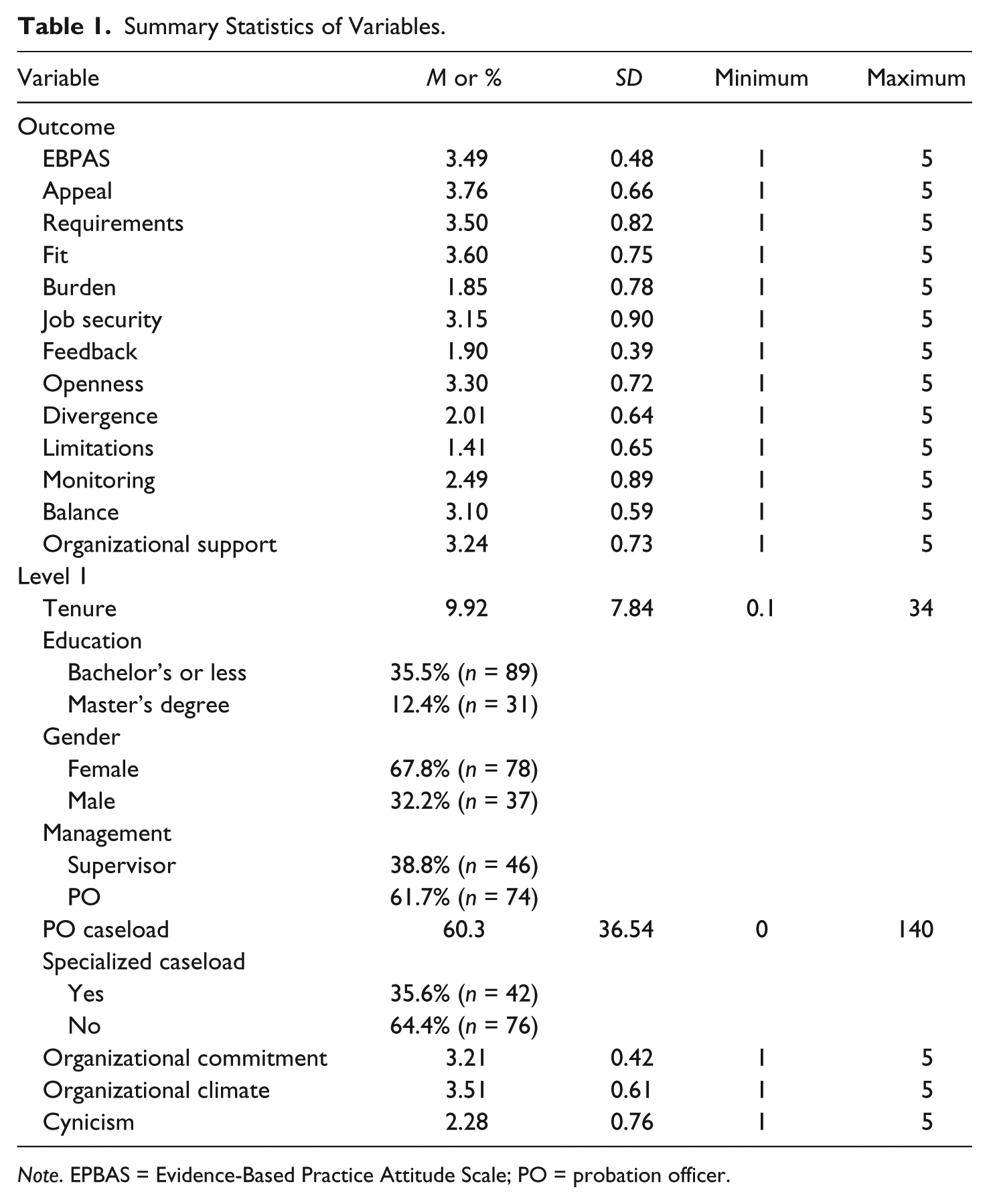
As shown in Table 1, the average attitude toward EBPs was 3.49 (SD = 0.48), reflecting moderately positive attitudes among probation staff in the sample. Probation staff also reported moderately positive attitudes regarding adoption of EBPs if they were intuitively appealing (M = 3.76, SD = 0.66) and required by a supervisor, the agency, or the state (M = 3.50, SD = 0.82). Probation staff reported moderately positive attitudes toward EBPs when they believed EBPs fit with their values and needs (M = 3.6, SD = 0.75) and would enable job security (M = 3.15, SD = 0.90). Probation staff reported low scores regarding both perceptions of EBPs as an additional burden to their existing workload (M = 1.85, SD = 0.78) and the extent to which staff valued and utilized feedback to improve their job performance (M = 1.90, SD = 0.39).
Summary Statistics of Variables.
Note. EPBAS = Evidence-Based Practice Attitude Scale; PO = probation officer.
Descriptive statistics for the organizational measures are also presented in Table 1. In this sample, the average organizational commitment score was 3.21(SD = 0.42), reflecting moderate levels of commitment to their organization. The average perceived organizational climate score was 3.51 (SD = 0.61), also reflecting moderate perceptions. Probation staff in this sample reported low to moderate levels of cynicism with regard to change in their organization, reporting an average score of 2.28 (SD = 0.76).
Descriptive Analyses
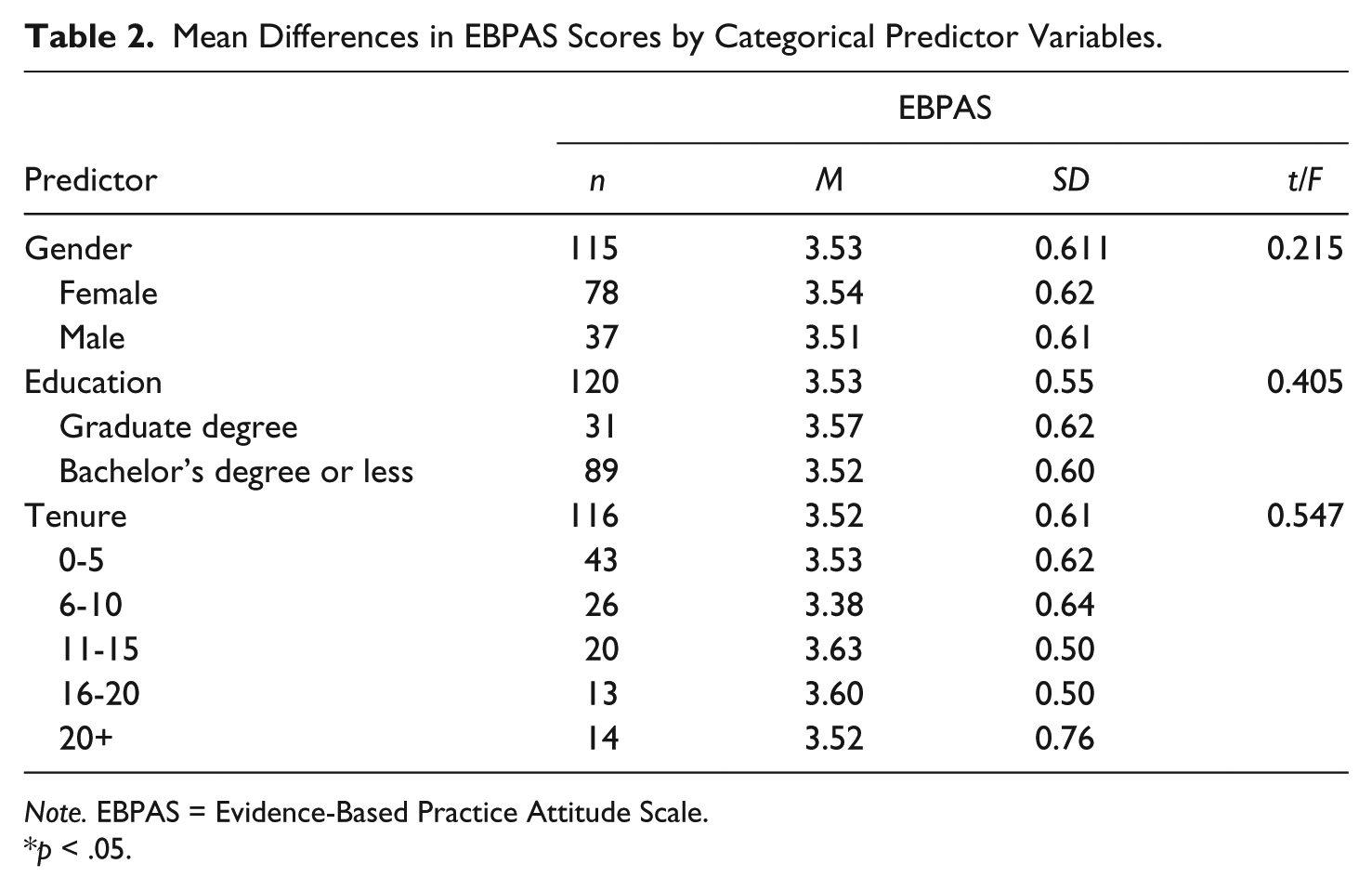
Preliminary analyses, utilizing independent t tests and ANOVA, were run with the overall attitudes toward EBPs outcome variable and all of the categorical predictor variables (see Table 2). In examining demographic variables, females report slightly more positive attitudes toward EBPs (M = 3.54, SD = 0.62) compared with males (M = 3.51, SD = 0.61), and those with a graduate degree report slightly more positive attitudes toward EBPs (M = 3.57, SD = 0.67) compared with those with a bachelor’s degree or less (M = 3.52, SD = 0.60), although none of these differences were significant. When examining tenure, respondents with a job tenure between 6 and 10 years reported the least positive attitudes toward EBPs (M = 3.38, SD = 0.64) whereas those with a job tenure between 11 and 15 years reported the highest attitudes toward EBPs (M = 3.63, SD = 0.50), although differences in tenure were not significant.
Mean Differences in EBPAS Scores by Categorical Predictor Variables.
Note. EBPAS = Evidence-Based Practice Attitude Scale.
p < .05.
Correlation Analyses
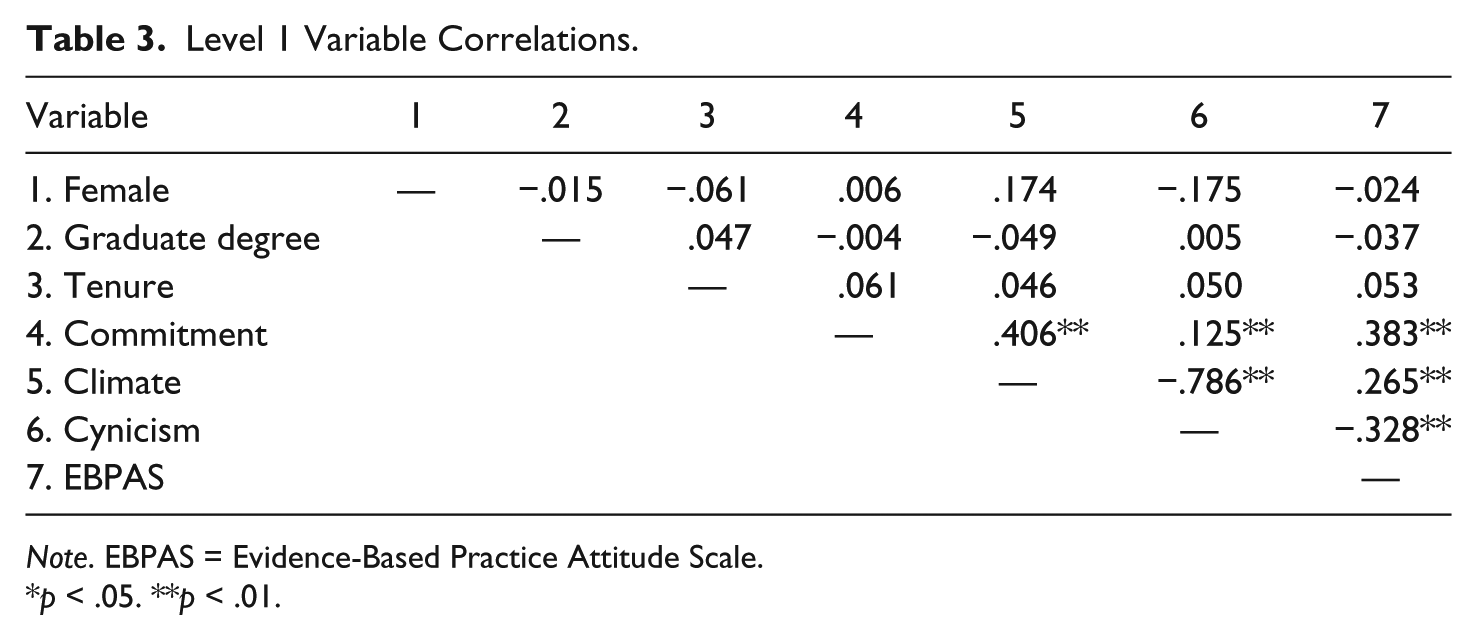
Examination of correlations among Level 1 variables reveals significant relationships between attitudes toward EBPs and organizational commitment (r = .38), organizational climate (r = .27), and cynicism for change (r = −.33; see Table 3). Correlations suggest respondents who are more committed to their agency and perceive a more positive organizational climate have more positive attitudes toward EBPs, whereas those reporting cynical views regarding organizational change within their agency is related to less positive attitudes toward EBPs. To gauge potential multicollinearity among Level 1 and Level 2 variables, regression models are used (Darlington & Hayes, 2016). Multicollinearity is not a concern (largest variance inflation factor [VIF] = 3.77 and smallest tolerance [tol] = 0.265).
Level 1 Variable Correlations.
Note. EBPAS = Evidence-Based Practice Attitude Scale.
p < .05. **p < .01.
PO Attitudes Toward EBP
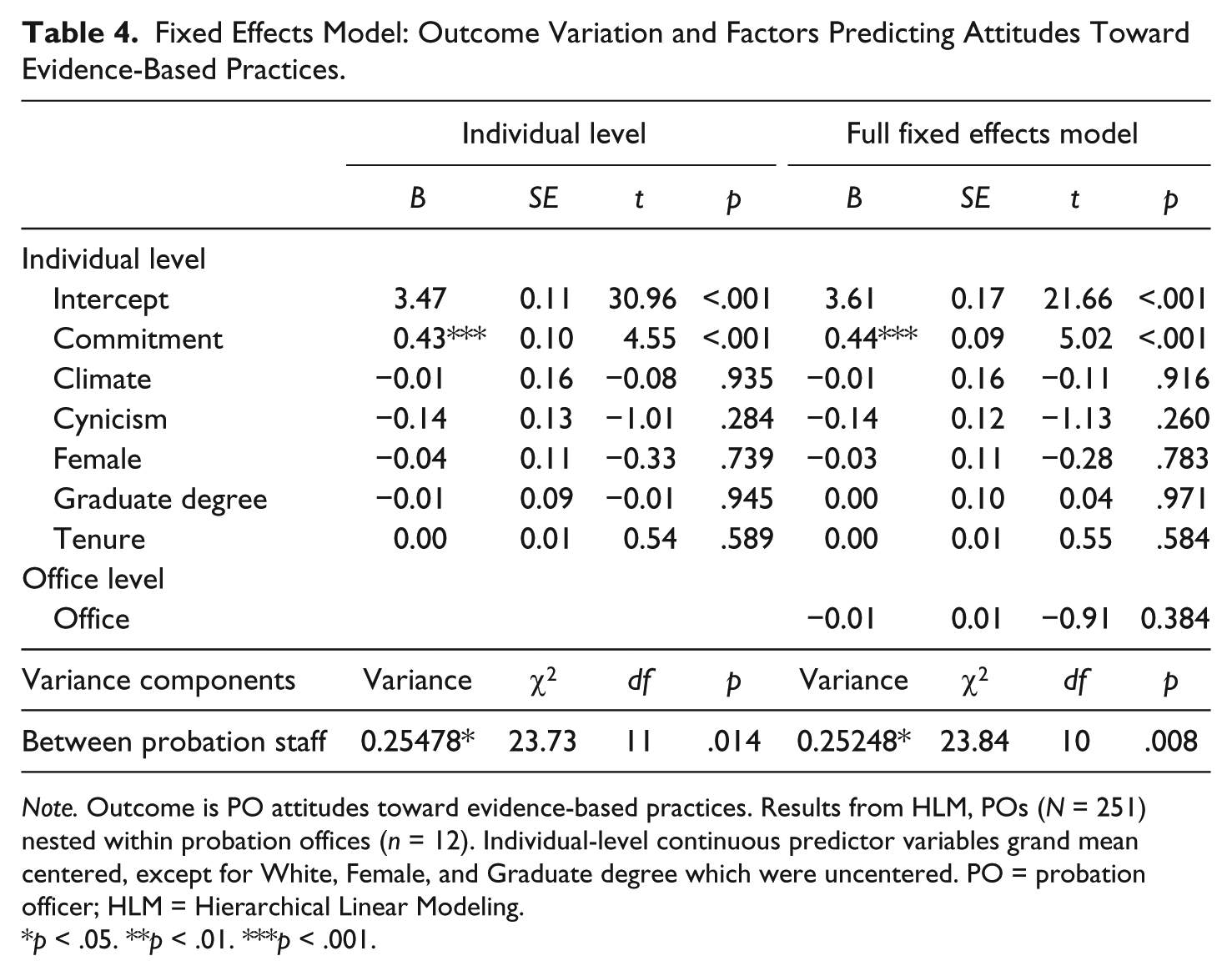
The model with only individual-level predictors appears in the left section of Table 4. The only significant factor, before adding the dummy variable at Level 2, is commitment (B = 0.43, SE = 0.10, t ratio = 4.55). Results of the multi-level model suggest respondents reporting higher commitment to their organization report significantly higher positive attitudes toward EBPs. The mean attitude toward EBP increases by 0.43 points with each one-unit increase in commitment scores. The model with all fixed effects at Levels 1 and 2 appears in the right section of Table 4. When the dummy variable is added at Level 2, commitment to the organization remains significant (B = 0.44, SE = 0.09, t ratio = 5.02), with attitudes toward EBPs increasing by 0.44 with each one-unit increase in commitment scores after controlling for probation office context.
Fixed Effects Model: Outcome Variation and Factors Predicting Attitudes Toward Evidence-Based Practices.
Note. Outcome is PO attitudes toward evidence-based practices. Results from HLM, POs (N = 251) nested within probation offices (n = 12). Individual-level continuous predictor variables grand mean centered, except for White, Female, and Graduate degree which were uncentered. PO = probation officer; HLM = Hierarchical Linear Modeling.
p < .05. **p < .01. ***p < .001.
To examine whether the impact of organizational commitment on attitudes toward EBPs varies across the 12 probation offices (Level 2), a random effects model was run by setting the Level 2 slope to vary (results not shown). The effect of organizational commitment on EBP attitudes, however, did not prove significant. Allowing the slope to vary also did not significantly alter the pattern of results derived from the fixed effects model shown previously. These results suggest the impact of organizational commitment on attitudes toward EBPs does not vary significantly among the POs within the offices examined in the current study.
To investigate the extent to which organizational factors may differentially predict the various dimensions of attitudes toward EBPs, separate HLM models were estimated. Final fixed effects models are presented in Table 5. While significant variation was present among seven of the attitudinal dimensions (divergence, appeal, requirements, job security, burden, feedback, and fit), significant variation remained after adding Level 1 variables only for EBP fit. In contrast to the overall model, organizational commitment did not predict attitudes toward the perceived fit of EBPs into respondent work. Rather, tenure and education significantly predicted the perception of EBP fit with individuals with longer tenure (B = 0.02, p = .038) and graduate degrees (B = 0.61, p = .001) reporting a more positive perception of EBP fit.
Fixed Effects Model: Outcome Variation and Factors Predicting Attitudes Toward Evidence-Based Practices Subscales: EBP Fit.
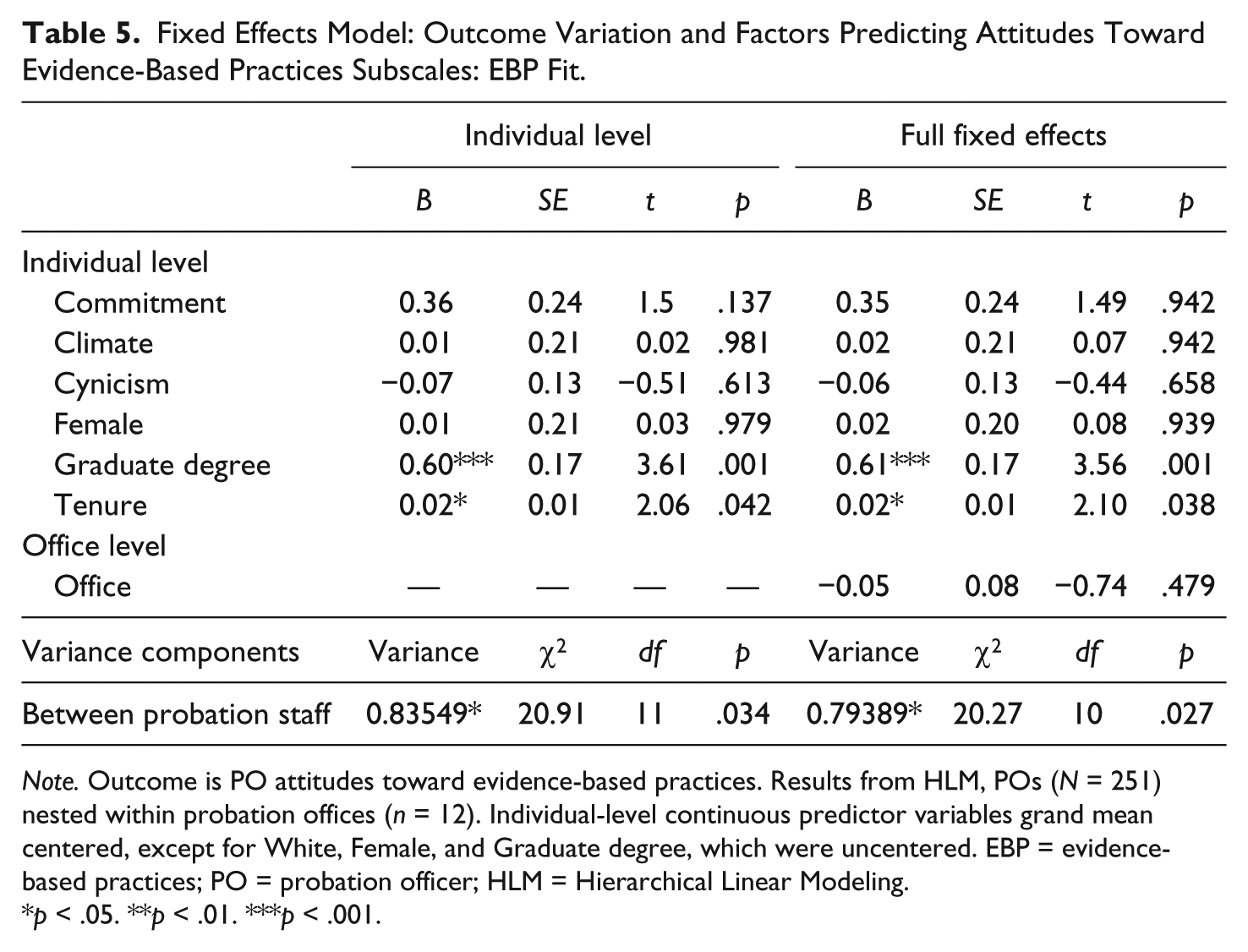
Note. Outcome is PO attitudes toward evidence-based practices. Results from HLM, POs (N = 251) nested within probation offices (n = 12). Individual-level continuous predictor variables grand mean centered, except for White, Female, and Graduate degree, which were uncentered. EBP = evidence-based practices; PO = probation officer; HLM = Hierarchical Linear Modeling.
p < .05. **p < .01. ***p < .001.
Discussion
The current study examines the influence of individual and organizational characteristics on PO attitudes toward EBPs. Data suggest staff report relatively positive attitudes toward EBPs, with probation staff who report being more committed to their organization more likely to have more positive attitudes. Prior research suggests when staff are committed to their organization, they develop intrinsic motivation to do their job well (Kunda, 1992). This, in turn, may influence how probation staff respond to new practices and how willing they are to accept change. Although organizational research suggests the important role commitment to one’s organization plays in accepting change (Iverson, 1996), previous research on EBP implementation in community correctional settings does not specifically explore the relationship between one’s commitment to their organization and their attitudes toward new policies and practices. Furthermore, the finding that individual characteristics, such as gender, education, tenure, and race, are unrelated toward overall attitudes toward EBPs illustrates the importance of organizational commitment. This suggests implementation of effective practices may be more challenging in probation agencies—and in fact all organizational environments—where staff do not feel committed to their organization. Surprisingly, staff perceptions of organizational climate and cynicism are unrelated to EBP attitudes in the present study. This suggests PO beliefs regarding whether change efforts will succeed (cynicism) and perceived shared meanings attached to the organizational environment (climate) do not independently affect PO attitudes toward EBPs. Although previous research on juvenile POs found lower levels of cynicism were significantly related to greater use of evidence-based supervision practices (Farrell et al., 2011), it may be that attitudes toward EBPs (compared with use) are more strongly influenced by an individual’s commitment levels. This may explain why the other organizational factors were unrelated to attitudes toward EBPs, as staff may not be concerned with factors relating to the climate or ability to change if they are struggling to identify with the core values and goals of the organization. Further research and replication is needed to determine if this finding remains consistent across samples and settings.
Given the vast amount of research documenting the challenge of change within criminal justice organizations (see, for example, Battalino et al., 1996; Ferguson, 2002; Latessa, 2004; Steiner et al., 2011; Rudes, 2012; Taxman, 2008; Taxman & Belenko, 2012; Viglione, Rudes, & Taxman, 2015), it is not surprising that organizational commitment influences PO attitudes toward reform (EBPs). The random effects models examining whether the impact of organizational commitment on attitudes toward EBPs varies across the 12 probation offices finds commitment influences attitudes similarly between the study sites. This suggests that regardless of the specific probation office one works in, commitment to the organization similarly influences attitudes toward EBPs (i.e., a high level of commitment in Site 1 has a similar influence on attitudes toward EBPs as a high level of commitment in Site 12). Thus, the Department of Corrections can potentially focus on identifying and developing organizational-wide strategies to build and sustain commitment for use across the probation offices in the state.
Developing and sustaining commitment within an organization can be a challenging task. To foster organizational commitment, organizations must create an environment, in which its employees identify and accept the goals and values of the organization, so much that they are willing to exert considerable effort on behalf of the organization to do so (Atchison & Leferts, 1972; Mowday et al., 1982). Thus, while reforming organizational policies and practices, it cannot be assumed that an individual staff member’s level of commitment remains constant. Rather, organizations must ensure staff understand, agree, and identify with changing policies in the first place. This requires agency administrators to make a concerted effort to thoroughly explain the rationale for change to staff members. For example, rather than sending out mass emails simply stating a policy change or new training staff must attend, administrators could carefully identify what was not working or why a change was necessary and how the proposed policy/trainings are an improvement upon prior practice. In addition, agency administrators can also include front-line staff throughout implementation efforts, which increases both engagement and commitment to organizational efforts (Cross, Gray, Gerbasi, & Assimakopoulos, 2012). Engaging staff from all levels of the organization in implementation efforts ensures that staff voices are heard, which can increase understanding and identification with changing policies and practices, perceptions of justice associated with change, and can increase their buy-in toward reform (Taxman & Belenko, 2012). Increasing staff participation in decision making can result in increased perceptions of value as well as understanding and buy-in toward organizational efforts and reform (Hemmelgarn, Glisson, & James, 2006; Maynard-Moody, Musheno, & Palumbo, 1990; Taxman & Belenko, 2012).
Previous research documents several factors associated with one’s commitment levels, including morale (Glisson & Durick, 1988), perceptions of organizational justice (Lambert, 2003), and feeling valued within the organization (Eisenberger, Fasolo, & Davis-Mastro, 1990; Scholl, 1981). Employees with high levels of morale have an attachment to their organization, which influences attitudes toward their specific job responsibilities, as well as the overall organization (Glisson & Durick, 1988). Furthermore, individuals who perceive they are treated both fairly and with respect report higher levels of commitment to their organization (Lambert, 2003). In addition, individuals are more committed to their organization when they feel valued and believe their skills are a valuable asset to their organization (Eisenberger et al., 1986; Scholl, 1981). Thus, commitment is more than identification with an organization’s goals and values, but it encompasses issues related to morale, justice, and perceived worth. Thus, part of promoting and sustaining commitment to an organization likely starts as early as hiring practices. Effective employee selection allows agency administrators to identify potential employees who are best suited for the job and existing values and goals of the organization and can encourage long-term commitment (Vance, 2006).
Implementing EBPs within probation agencies suggest significant shifts in the way POs conceptualize and carry out their job responsibilities. Previous research documents common challenges associated with EBP implementation, including lack of knowledge, understanding and trust in the reform, as well as believing EBPs removes professional discretion (Ferguson, 2002; Steiner et al., 2011; Rudes, 2012; Viglione et al., 2015). These common occurrences may result in staff feeling as though their existing skills are no longer needed or valued, and as a result, they may perceive a decline in their ability to contribute meaningfully to their organization. These perceptions may result in decreased levels of commitment to the overall organization (Eisenberger et al., 1986; Scholl, 1981) and may undermine attempts to implement EBPs. Although more research is needed to unpack the mechanisms associated with organizational commitment to understand how agencies can best frame and target implementation efforts, correctional agencies may benefit from dedicating time and resources toward building staff knowledge and understanding regarding the purpose, content, and value-added of the reforms (Lin, 2000). In addition, agencies can help mitigate potential challenges through carefully framing reform efforts by (a) emphasizing change as an improvement upon existing practice, rather than a complete divergence; (b) explaining changing policies and practices does not mean staff were inadequately performing their jobs; and (c) demonstrating how existing skills of staff play a critical role in ensuring the success of both EBP implementation and the organization as a whole. Perhaps if it is clear to staff how they fit and even play a critical role in the new direction of the organization, staff will feel valued and hold increased perceptions of morale, justice, and overall organizational commitment. And, unlike community supervision in European countries which emphasizes the social work role of supervising officers, the traditional focus on law enforcement role orientations in the United States poses unique challenges in implementing rehabilitative reforms. This is a critical area for further research as organizational studies report the important role that commitment to one’s organization plays in accepting innovations (Iverson, 1996). In addition, future research should conduct international comparisons of organizational cultures within community supervision agencies to better understand how American corrections agencies can better facilitate reform.
The additional HLM models run on the subscales of the EBPAS revealed several interesting findings. Interestingly, none of the organizational variables, including commitment, predict the perceived fit of EBPs. Rather, tenure and education predicted the perceived fit. Respondents who have worked within their current organization longer and those with a graduate degree were more likely to perceive EBPs fit with their philosophy and approach to the job and would be more likely to adopt EBPs when (a) they had a say in how they would use the EBP, (b) they had a say in which EBP was used, (c) they knew it was right for their probationers, (d) knew whether their probationers liked it, and (e) if their probationers wanted it. Thus, when thinking about more tenured and educated staff, the more they believe they have a say or voice in the adoption and implementation phase, the more likely they are to adopt an EBP. This supports the implementation literature promoting inclusion of front-line staff throughout implementation efforts to increase perceptions of value and fit of new practices with existing philosophies and strategies (Cross et al., 2012; Hemmelgarn, Glisson, & James, 2006; Maynard-Moody, Musheno, & Palumbo, 1990; Taxman & Belenko, 2012). In addition, agencies may consider selecting more tenured or educated staff members to champion change efforts and serve as internal coaches, assisting other staff with understanding the value and fit of new practices.
The current study has several limitations. The statistical power to test organizational factors at Level 2 is limited due to the number of cases sampled at Level 2 (n = 12). In addition, results are cross-sectional and may not inform longitudinal patterns in PO reported attitudes. Despite these limitations, the current study is strengthened through use of the analytic approach appropriate for nested data. In addition, the EBPAS measures attitudes toward EBPs broadly, rather than identifying attitudes toward specific practices. Future research should consider adapting the scale to identify attitudes toward a range of EBPs (e.g., risk and needs assessment, motivational interviewing). This specification can deepen our understanding regarding how attitudes might vary based on the specific practice/policy their organization may be implementing. Despite this limitation, understanding PO reported attitudes toward EBPs more generally is important given the historical context of probation work, in which rehabilitative/treatment practices were largely unsupported and POs traditionally relied on their gut instincts to make decisions regarding probationers. In addition, recent research suggests POs often conceptualize and identify individual EBPs (e.g., risk and needs assessment, motivational interviewing) as a singular practice (Viglione, under review), thus examining POs attitudes toward EBPs in general corresponds with common PO perceptions. An additional limitation is that data were drawn from participants in a single state, thus findings are not generalizable to other states as the current study cannot account for potentially important variables (i.e., political context, regional variations). Finally, survey data capture only the current office in which the respondent works; therefore, it is possible to account for whether a PO was trained or working in an office in a different implementation tier. This may have made identifying the effects of implementation tier challenging. Future research should attempt to control for this by collecting more data regarding training and previous work experience.
As attention toward EBP implementation grows, it is critical to understand factors that facilitate successful adoption and implementation. More research is needed to understand staff attitudes toward EBPs and how those attitudes influence the adoption, implementation, and sustainability of effective practices. The current study adds to the existing body of literature focusing on understanding individual and organizational factors related to attitudes, highlighting the importance of organizational context—namely, staff commitment to their organization. Findings suggest the need for organizations to incorporate strategies to improve staff morale perceptions of organizational justice, and perceived value through participation in decision-making processes as a means to increase understanding and buy-in toward implementation of EBPs. The current study takes a first step toward understanding the role staff attitudes and organizational characteristics play in influencing organizational change efforts. Future studies should examine the degree to which attitudes toward EBPs influences PO reported use, fidelity, and continued use of EBPs to better understand how attitudes influence the adoption, implementation, and sustainability of effective practices.
Footnotes
Acknowledgements
The author thanks Danielle S. Rudes, Faye S. Taxman, Stephen D. Mastrofski, and Steven Belenko for their comments on earlier versions of this article.
Author’s Note
All opinions are those of the author and do not represent the opinions of the National Institute of Justice or National Science Foundation or any governmental agency.
Declaration of Conflicting Interests
The author(s) declared no potential conflicts of interest with respect to the research, authorship, and/or publication of this article.
Funding
The author(s) disclosed receipt of the following financial support for the research, authorship, and/or publication of this article: This study was funded by the National Institute of Justice, #2014-IJ-CX-2004 and National Science Foundation, SES-1420311.