



Abstract
This study explores the body disposal patterns in a sample of 54 Korean homicides that occurred between 2006 and 2012. Based on information collected by the police during their investigation, factors that could influence body disposal patterns were examined, such as homicide classification, intention, whether an accomplice was present, and offender mental disorder. Bivariate analyses showed that the majority of the victims who were disposed of were acquaintances of the offenders. Moreover, several offenders were more likely to dispose of the dead body “within hours” of killing the victim. Dead bodies were usually recovered in agricultural areas, forest/wooded areas, as well as residential areas. It was also noteworthy that, in 47 cases, the offender had knowledge of the geographic area where the body was dumped. In cases of “expressive” homicide, victims were more likely to be disposed of somewhere far away (e.g., over 40 km) from the crime scene, whereas “instrumental” homicide victims appeared to be disposed of somewhere closer (e.g., within 30 km) to the crime scene. Results are discussed in light of their practical implications for homicide investigations.
Keywords
Introduction
In Korea, the homicide rate is 0.9 per 100,000 population, and the country is ranked sixth among the 32 Organisation for Economic Co-Operation and Development (OECD) countries, which is almost the same as Finland (0.7), Sweden (0.7), and the United Kingdom (1.0; UNODC, 2013). In Korea, the rate of homicide for this decade has rapidly increased to about 3 times the rate of other Asian countries such as Japan (0.3) and Singapore (0.2). Relatedly, it has been observed that the body disposal methods—a modus operandi strategy—have evolved based on what has been suggested as an increase in offenders’ forensic awareness to avoid police detection (Beauregard & Martineau, 2013; Beauregard et al., 2005). Nonetheless, body disposal sites are useful for solving homicide cases as they represent the most objective crime scene location (Lundrigan & Canter, 2001a; Häkkänen, Hurme, & Liukkonen, 2007; Häkkänen & Laajasalo, 2006). Moreover, previous studies have suggested that body disposal methods may reveal criminal experience, intelligence, and the presence of forensic awareness (Fox & Levin, 1994; Rossmo, 2014).
Body Disposal
Body disposal—or dumping—following a homicide may complicate the investigation, as the disposed body and the unrelated crime scene make the analysis of evidence more challenging. According to the existing research on body disposal, it is possible to differentiate direct and indirect body disposal. Direct body disposal involves the concealing of individual elements (e.g., fingers, teeth, hair, saliva) belonging to the victim to complicate his or her identification. On the contrary, indirect body disposal is described as concealing the body without trying to hide individual elements belonging to the victim (Preuß, Strehler, Dressler, Riße, Anders, & Madea, 2006). ). Common methods of body disposal involve covering (31.4%); dimpling (22.3%); burying (21%); leaving in an isolated location (14.2%); concealing in boxes, fountains, or caves (8.2%); combusting (2.9%); and dismemberment (70%; Preuß et al., 2006).
Factors Related to Body Disposal
Body disposal of certain victim types has also been investigated. Hanfland, Keppel, and Weis (1997) found that child abduction killers are more likely (52%) to conceal victim’s bodies than murderers in general (14%). Child murderers deliberately choose body disposal sites 49% of the time followed by the killers choosing a site at random (37%), and in 14% of the cases, the killers are forced by external circumstances to choose a certain site; hence, the importance of situational factors.
Previous research demonstrates that body disposal locations reflect conscious spatial decision making on behalf of the murderers (Godwin & Canter, 1997; Häkkänen et al., 2007; Snook, Cullen, Mokros, & Harbort, 2005). These studies have examined the distance patterns related to body disposal while some have also attempted to link specific offender characteristics (e.g., intelligence, personality disorder) to the distance traveled. Beauregard and Field (2008) analyzed a sample of 85 sexual murderers and showed that those who were in a relationship at the time of the crime and who presented organized psychological characteristics were more likely to move the victim’s body after the homicide, whereas older victims who were in a conflict with the offender prior to the crime were more likely to be left at the crime scene.
Another factor influencing body disposal patterns is the specific type of homicide. The expressive-instrumental dichotomy has been investigated in various samples of homicide offenders (Salfati, 2000, 2003; Salfati & Bateman, 2005; Salfati & Haratsis, 2001; Santtila, Canter, Elfgren, & Häkkänen, 2001). These studies show that offenders who transport or hide the victim’s body usually exhibit an expressive crime scene. Offenders who cover the victim’s body or leave it as is usually display an instrumental crime scene, indicating prior planning. Similarly, Kraemer, Lord, and Heilbrun (2004) found that single homicide offenders were more likely to have the initial contact, murder, and body disposal site at the same location, whereas serial offenders were more likely to use different locations for their crimes and to dump the body in a remote location.
Similarly, one of the most commonly cited typologies regarding homicide is the FBI’s organized-disorganized dichotomy. Organized killers are more likely to transport their victim during the crime, have multiple crime scenes farther away from their homes, and they usually conceal the victim’s body. Conversely, disorganized offenders are less likely to plan or to use a vehicle to transport their victim; they usually leave the victim’s body at the crime scene (Ressler, Burgess, Hartman, Douglas & McCormack, 1986; Ressler et al., 1988; Ressler et al., 1998). However, this model has been the object of many criticisms since its first publication (e.g., Beauregard & Proulx, 2002; Canter, 1994; Rossmo, 1999; Kocsis et al., 1998; Wilson et al., 1997; Wilson & Soothill, 1996). Specifically, Canter et al. (2004) suggested that there are no discrete subsets of offense characteristics that are distinctly related to the organization or disorganization of the killings. Instead, there appears to be a subset of organized features typical of most serial killings with disorganized features being rare and not co-occurring as a distinctive type.
Holmes and Holmes (2009) proposed two major types of serial killers according to their mobility. Geographically stable offenders live, kill, and dispose of their victim’s body in the same or nearby area. The bodies are usually transported from the crime scene to a disposal site, and the killing is thought to be very carefully planned with the method, location, and dump site chosen before abduction is attempted (Holmes & De Burger, 1988). The geographically stable offender is usually thought to be young, socially immature, and of average intelligence and is characterized by psychopathic personality traits. Conversely, the geographically transient or mobile offender travels during his murderous career, transporting the victim’s body to hide it (Holmes & De Burger, 1988). The geographically mobile offender tends to target a stranger victim, and considerable precautions are taken against being caught (Beauregard, Proulx, & Rossmo, 2005).
Aim of the Study
In Korea, there are still no guidelines for investigators to follow that deal specifically with how to search for and prioritize the geographic location of the victim’s body in homicide cases. As finding the missing body will keep the crime scene evidence preserved as well as ultimately bring closure to the victim’s family, it is essential for investigators to find the deceased quickly. In addition, when a suspect refuses to disclose the location of the dead body, it becomes crucial to be able to establish relationships between the crime scene, offender characteristics, and geographic information related to the crime to provide a better estimate of where to search for the disposed body (Canter, 2000). Considering the lack of empirical research on this issue and the fact that most of the literature has been mainly descriptive, the aim of the current study is to investigate different factors that are potentially useful to the police and their relationship with body disposal patterns. Specifically, the current study explores the following issues: (a) the influence of the offender–victim relationship, homicide classification, and planning on the spatio-temporal aspects of body disposal; (b) the distances traveled during the entire criminal event, including those needed to dispose of the victim’s body; (c) the type of body disposal location in relation to the surrounding area type; and (d) the interactions between the temporal and spatial characteristics associated with body disposal.
Method
Data
Information concerning homicide was obtained from the Criminal Behavior Analysis Unit (CBAU) in the Korean National Police Agency (KNPA). Forensic professionals (i.e., Criminal Behavior Analysts) conduct standardized psychological evaluations, interviews, physical evaluations, and reviews of material that include collateral data gathered from various sources (e.g., relatives, medical, criminal, school, and military records). This information is then entered into the Scientific Crime Analysis System (SCAS). The SCAS is comprised of criminal index files, collateral investigative files (e.g., witness statements, evidence), medical records, coroners reports (or medical examiners data), crime scene characteristics obtained from Division of Crime Scene Investigation (e.g., pictures, other evidence), and results of psychological evaluations (e.g., Personality Assessment Inventory [PAI], Psychopathy Checklist–Revised [PCL-R]).
The data used in the present study were drawn from the national SCAS database. From 132 homicide offenses recorded between 2006 and 2012, a total of 54 cases were retained for the current study as they met the following criteria: body was disposed of after the murder, there was substantial evidence of the offender’s culpability (i.e., he or she was convicted based on both critical DNA evidence [identified by the National Forensic Service] and his or her confession), and there was geographically reliable, well-documented information concerning the crime scene, disposal site, as well as offenders’ and victims’ movements.
The age of the offenders ranges between 17 and 77 years, and the mean age is 34.4 years (SD = 9.6), which is congruent with the age reported in the official crime statistics of South Korea (M = 37 years). Fifty-two (96.3%) of the 54 cases involve male offenders. As for employment status, 25.9% of the offenders were unemployed. In cases where they were employed, offenders worked in blue-collar (22.2%; that is, manual) and sales/clerk occupations (14.8%). Three quarters of the offenders had a criminal record. The mean time spent in prison was 62.3 months and more than a quarter (27.8%) of the offenders had experienced at least one imprisonment during adolescence. Almost half of the offenders (40.7%) had between one and four previous convictions, while 37.7% had over five convictions. A 10th of offenders (11.1%) experienced some form of mental disorder (e.g., schizophrenia, personality disorder). With regard to education, 13.8% achieved over college level while 44.4% only achieved ninth grade or lower.
Procedure
Information was coded for offender characteristics: age, education, occupation, marital status, criminal history, and presence of mental disorder. Mental disorder diagnosis (e.g., schizophrenia) was based on the results of one psychiatrist or psychologist belonging to Gongju Institute of Forensic Psychiatry who followed the guidelines set out in the Diagnostic and Statistical Manual of Mental Disorders (4th ed.; DSM-IV; American Psychiatric Association, 1994) as well as the International Classification of Disease (ICD-10; World Health Organization [WHO], 1994). In addition, information was coded regarding victim characteristics: sex, age, occupation, and his or her relationship with the offender. Information was coded for offense characteristics following guidelines set out in previous studies (Beauregard & Field, 2008; Puschel & Koops, 1987): homicide intention (impulsive/nonpremeditated, hybrid, first committed without homicidal plan but later for self-covering intention to commit homicide, and premeditated), disposal type (dumped, dumped with dismemberment, buried, buried with dismemberment), offender–victim relationship (continuous acquaintance: met at least three or more times [e.g., family members and partners]; slight acquaintance: met only one or two times [e.g., friend’s friend and partner’s friend]; stranger), homicide type (homicide with robbery and rape, homicide with rape, homicide with robbery, single homicide), mental disorder (e.g., schizophrenia, mood disorder), and accomplice (i.e., at least two offenders).
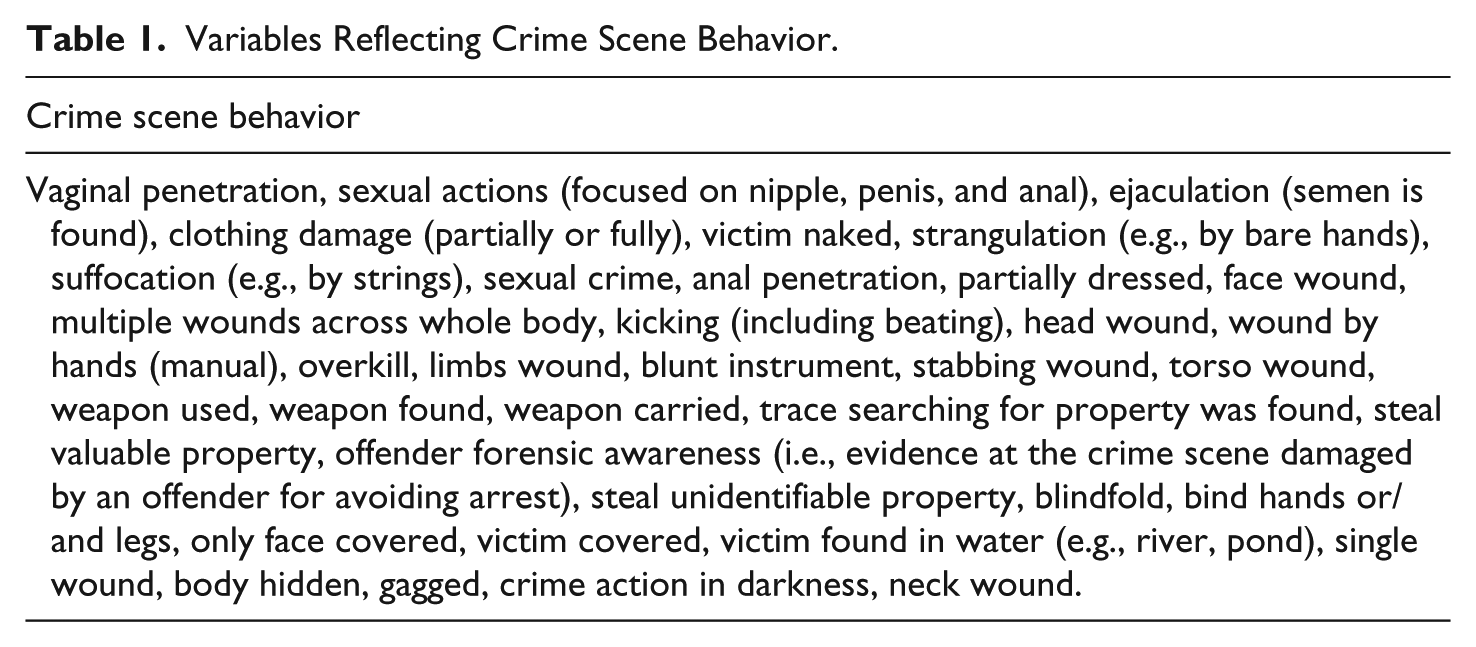
Using Salfati’s (2000) classification scheme for homicide, the 54 cases were identified based on whether they were expressive (i.e., behaviors that center on the victim as a specific person, the offender killing in a rage following an argument with someone known to him) or instrumental (i.e., behaviors focused on the benefits the victim provides to the offender such as sexual gratification or material gain). Specifically, the exploratory classification of offenders followed three different stages. First, five forensic criminal analyzers (profilers in KNPA) independently classified the cases based on 43 crime scene behaviors identified from the content analysis (see Table 1; the reliability between independent raters [intraclass correlation coefficient; ICC1] is .79). Second, the forensic criminal analyzers discussed the classification results to reach a classification consensus. Finally, the agreement was made except for one. According to this classification process, of the 54 cases, 19 cases (35.18%), 30 cases (55.6%), and four cases (7.4%) were classified as instrumental, expressive, and hybrid, respectively (with 1.9% as unknown; nonconsensus).
Variables Reflecting Crime Scene Behavior.
Temporal characteristics associated with body disposal were also computed for the purpose of the study (e.g., time spent disposing of the body, murdering time, dumping time) as well as spatial characteristics (e.g., dumping types by surrounding area type, distance from crime scene to disposal site by classification; the distance between crime scene and disposal site by homicide classification) and offender–victim relationship. Moreover, there were several important distances measured as follows: distance from first contact to crime scene, crime scene to disposal site, offender residence to disposal site, as well as the total distance traveled. Finally, the interaction between temporal and spatial characteristics was preliminarily explored in terms of distances and time spent from the murder site to the body disposal site. In terms of the methodology used to identify dumping/murdering time, it was typically determined by both forensic medical investigators and eyewitnesses. Forensic medical investigators or coroners (with criminal analyzers) typically constructed the timeline (e.g., murdering time, dumping time) for both types of homicide based on the forensic medical evidence such as the corpse’s characteristics (e.g., rigor mortis, decomposition) as well as eyewitnesses’ testimonies.
The interrater reliability of the above variables was assessed across the 54 homicides using Cohen’s kappa index. Separately, two criminal analyzers in a special team shared the same information file entered into the SCAS database. On the basis of the collateral files (e.g., interview information, psychological assessment, forensic reports), all 54 cases were independently coded by two profilers usually in the same team. Thus, the standard process for entering data in SCAS involves two criminal analyzers first coding the data independently, followed by group discussion to reach consensus on the final coding to be entered in the SCAS system. The kappa coefficient was .77 or higher. This level of agreement was achieved for over 85% of the items for offender, victim, and offense characteristics. Then, the disagreement was typically resolved through a consensus meeting with the criminal analyzers. Temporal and spatial variables (e.g., dumping types by surrounding area type) followed the same process, but the time and distance variables were automatically estimated based on the time and distance interval, using the Scientific Geographical Profiling System (SGPS; KNPA, 2006).
Data Analysis
In addition to chi-square analyses between our independent variables and our variables related to body disposal, the distance between first contact to crime scene, as well as crime scene to disposal site, was measured as a straight line using the spaceborne global positioning system SGPS, which was designed by Korean criminal analysts for the purpose of both criminal profiling and linkage analysis based on the nearness and buffer zone principles, as well as the circle hypothesis (Canter, 2004; Downs & Stea, 1973; Golledge, 1999). By imputing two coordinates or directly pointing to a place on the map, the Global Positioning System (GPS) automatically signifies the spot on the jurisdictional map and measures the exact distance among several significant places.
Results
As can be seen in Table 2, the offender dumped the body somewhere without any physical damage in all seven cases of stranger homicide. However, more than 50% of acquaintance homicides (both continuous and slightly) dumped the body with and without physical damage. Almost one fifth of acquaintance homicides had at least two offenders who were involved in either the murder and/or disposal of the body after the homicide, whereas three cases (42.9%) of stranger homicide had an accomplice. To dispose of the body, 80% of all offenders used a vehicle that they owned, 8% used a vehicle owned by the victim, and the remaining cases consisted of the offender using a friend’s vehicle (3%), a rental car (3%), or a stolen vehicle (3%). Only 3% of offenders walked to dump the victim’s body after the homicide. In these cases, the distance from the crime scene to the disposal site was within 300 m.
Homicide Intention, Disposal Type, and Homicide Type by Offender–Victim Relationship.
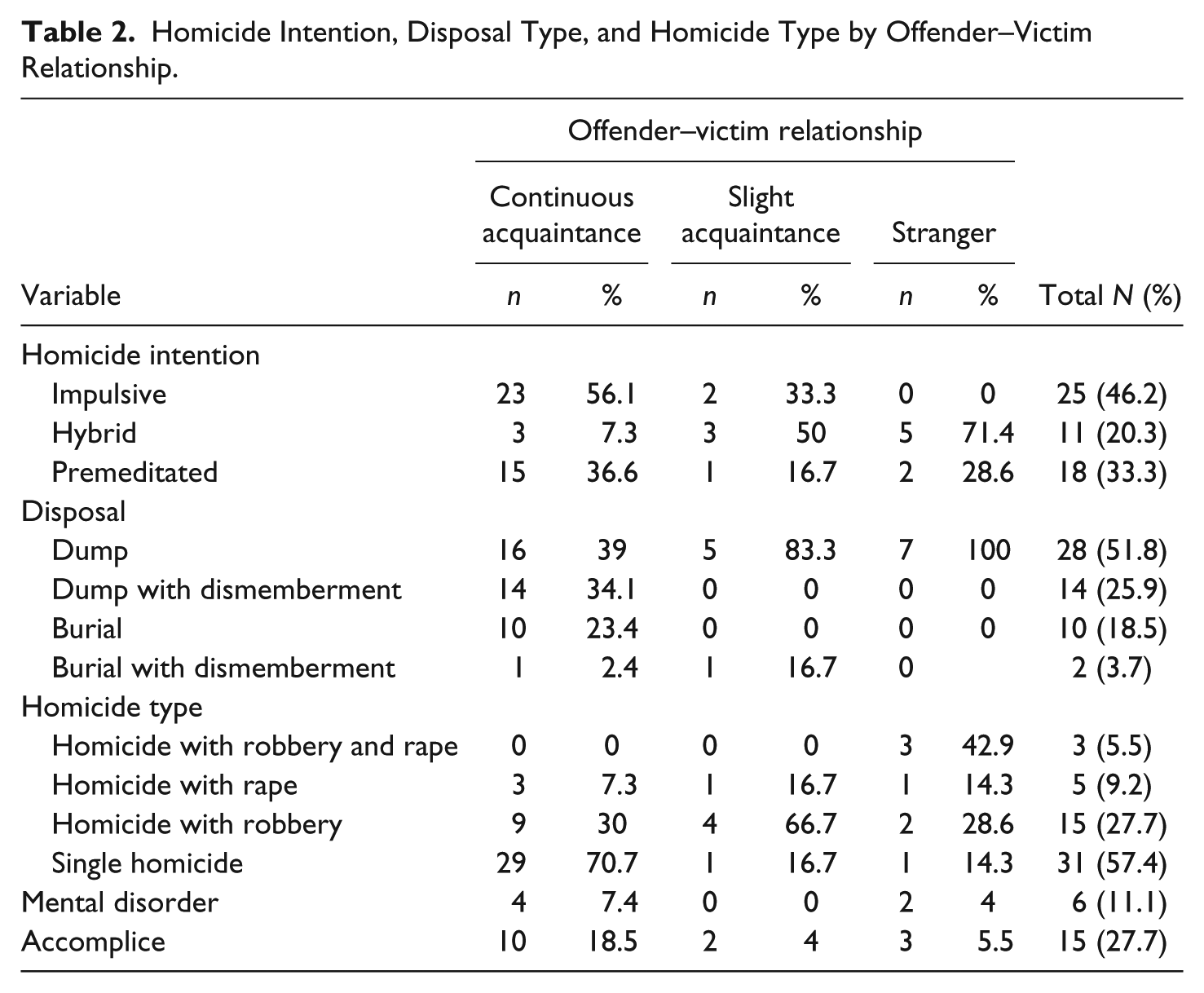
Table 3 shows that, of all cases, almost half of the offenders (40.7%) disposed of the body within hours after the homicide without an accomplice, whereas one fifth (20.4%) of the offenders worked with an accomplice. Regardless of whether an accomplice was involved in the homicide, a large number of offenders (61.1%) were more likely to dispose of the body within hours after the murder than delay disposing of the body over 1 day. Most homicides occurred during the night (e.g., 31.4% occurred between 00:00 and 04:00 and 20.3% between 20:00 and 24:00) while almost half (46%) of the victims’ bodies were disposed of between 00:00 and 04:00. In cases where the homicide was planned, the majority of offenders (86.2%) disposed of the body within 2 days, whereas when no planning was involved, 16% took more than 5 days.
Time Interval to Dispose of Dead Body by Accomplice, Homicide Plan, Murdering and Disposing Time.

Time interval to dispose body.
Table 4 presents the type of disposal site by surrounding area type. Of all the cases, 31.5% of the bodies were disposed of in an agricultural area, approximately one quarter (25.9%) were dumped in a residential area, and one quarter (25.9%) in a forested area. Specifically, in cases where the victims’ bodies were dumped in agricultural areas without closed-circuit television (CCTV) or a screening camera, 52.9% and 29.4% of the bodies were, respectively, on the road and in the mountains. In terms of residential area, 38.5% of the bodies were disposed of in a car. As to the forested area, over one half (64.3%) of the bodies were disposed of in valleys in the mountains.
Type of Disposal Site by Surrounding Areas.

Note. Big road: over 40 m in width, for example, highways; main road: 25m ~ 40m in width; middle road: 12 m ~ 24 m in width, for example, local highway, local road; narrow path: under 12 m in width, for example, inside road, alley, dead-end street, mountain path, according to Korean Rules About the Road Structure and Facilities Standards.
In terms of geographic knowledge, most offenders (87.3%) had previous site knowledge through their residence, previous visits, workplaces, and through leisure. To dispose of the body, in cases where the homicide was planned, 86.7% of offenders chose to dump the body on the road, whereas in cases where the homicide was not planned, over half of the offenders (61.1%) dumped the body in the mountains and valleys. Slightly more than half of the offenders (55%) used narrow paths as a disposal site, avoiding highways and middle or main roads where CCTV, checkpoints, and tollgates are more likely to be encountered. However, when offenders traveled far beyond the crime scene, the tendency to use highways and main or middle roads to travel substantially increased. When the distance from the crime scene to the disposal site was within 1 km, offenders preferred to dump bodies in the mountains, whereas if the distance was over 20 km, offenders decided to dump the bodies on the road instead.
Figure 1 shows that the distance between first contact to disposal site was less than 0.3 km for 72.2% of offenders and between 1 to 10 km for 18.5% of offenders. As to the distance between the crime scene and the disposal site, 24% of the offenders dumped the body within 0.3 km, 24% chose to dump the body between 1 and 10 km, and 16.7% dumped the body between 11 and 20 km. This suggests that most offenders commit homicide within 0.3 km after their first contact with the victim, and 87% dump the body within 30 km.
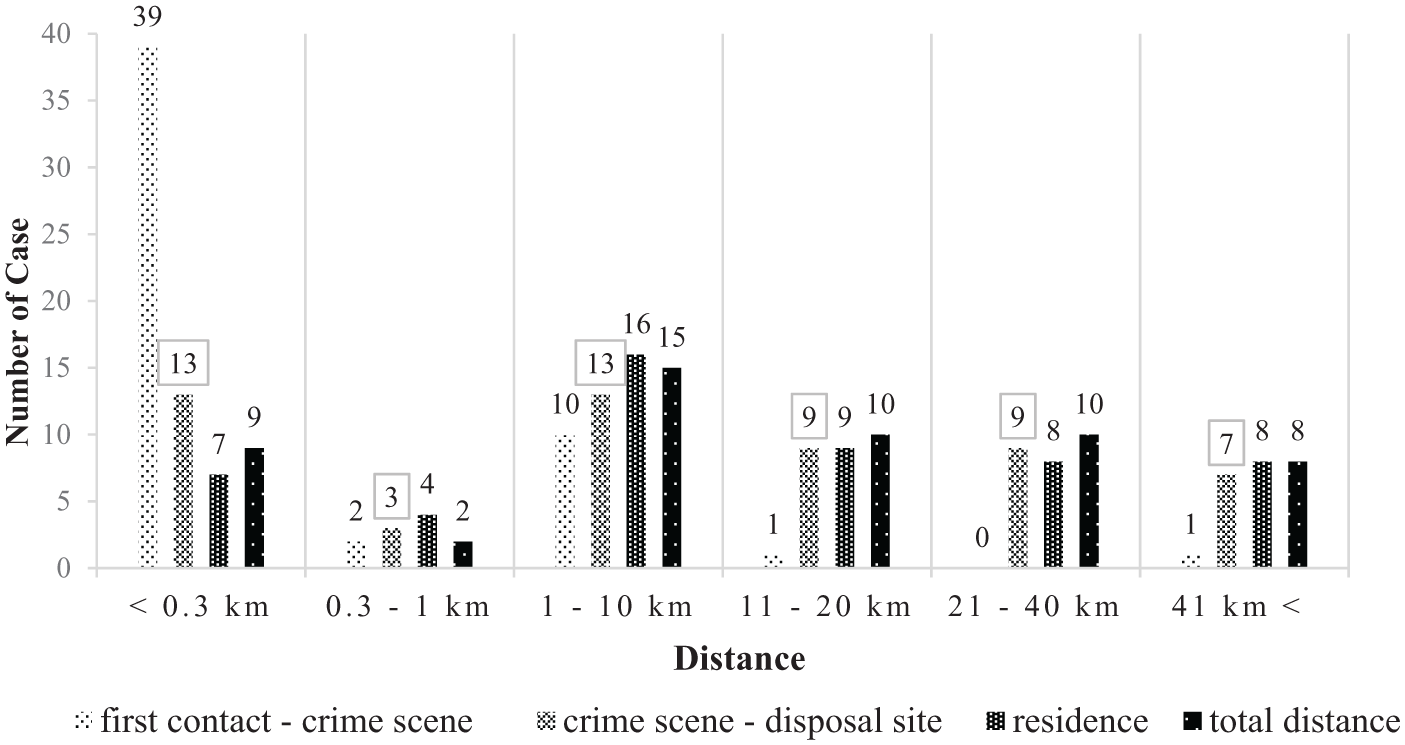
The distance from residence to first contact, to crime scene, to body disposal site.
As to the distance between the offender’s residence and disposal site, 29.6% of offenders disposed of the body between 1 and 10 km, 16.7% traveled between 11 and 20 km, and 14.8% traveled between 21 and 30 km. It is noteworthy that in terms of the total distance that offenders traveled from first contact to disposal site, more than half (62.9%) traveled between 1 and 30 km, and only a few offenders (20.4%) traveled less than 1 km.
Figure 2 shows the nine distance ranges between crime scene and disposal site for the three relationship categories and homicide classification. When the offender is acquainted with the victim (both continuous and slightly), 22.2% traveled between 1 and 10 km, 16.7% stayed within 0.3 km, and 14.8% traveled between 20 and 30 km. In cases where the victim was a complete stranger to the offender, the majority of offenders remained close to home (within 0.3 km).
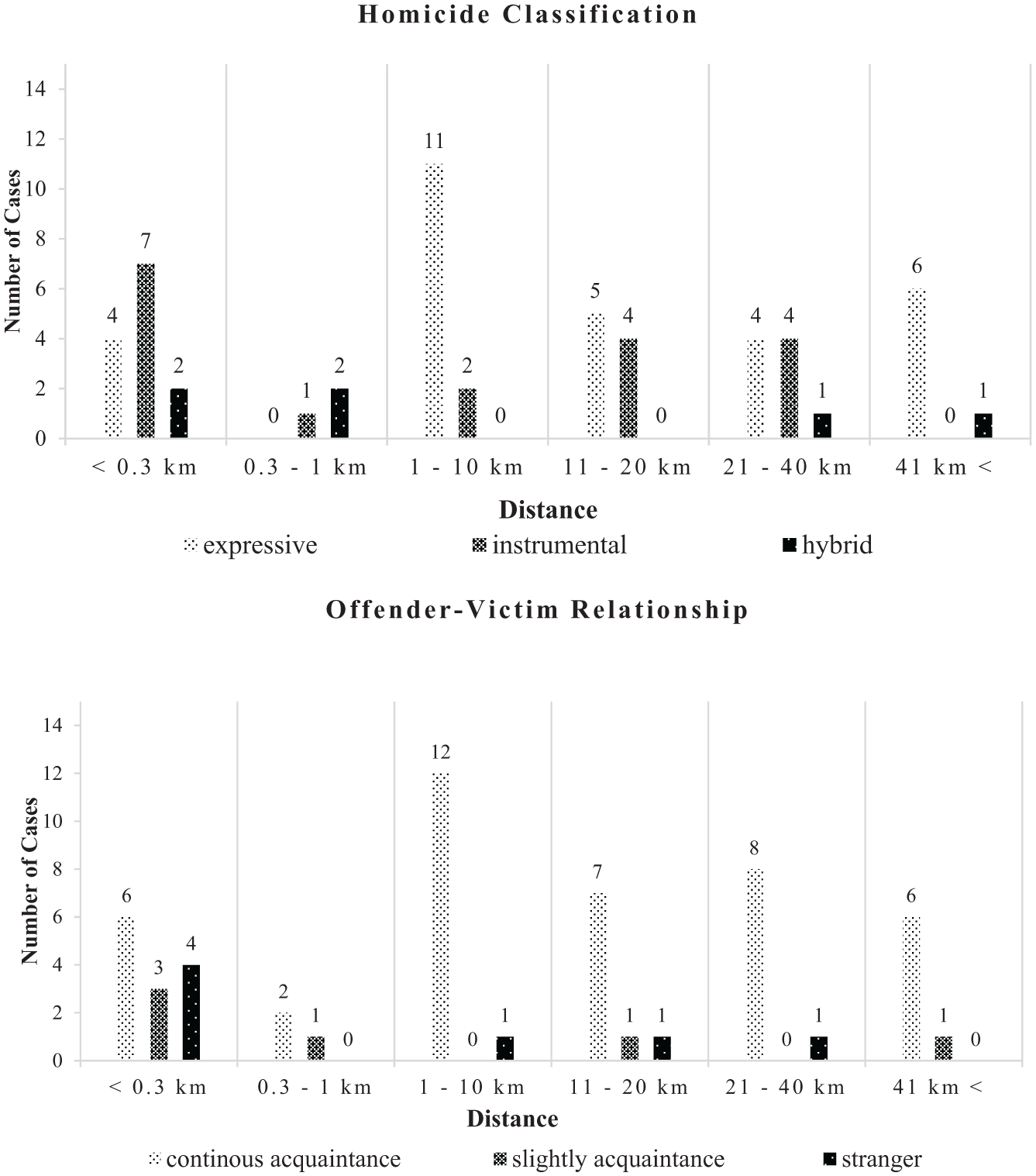
The distance in crime-scene-to-disposal-site by homicidal classification and relationship.
As to the homicide classification, 36.7% (n = 11) of expressive offenders dumped the body between 1 and 10 km, whereas 30% (n = 9) dumped it between 10 and 30 km. However, 36.9% (n = 7) of instrumental offenders dumped the body within 0.3 km while 42.1% traveled between 10 and 30 km. Hybrid offenders mainly traveled a short distance to dump the body with 40% (n = 2) of them traveling less than 1 km.
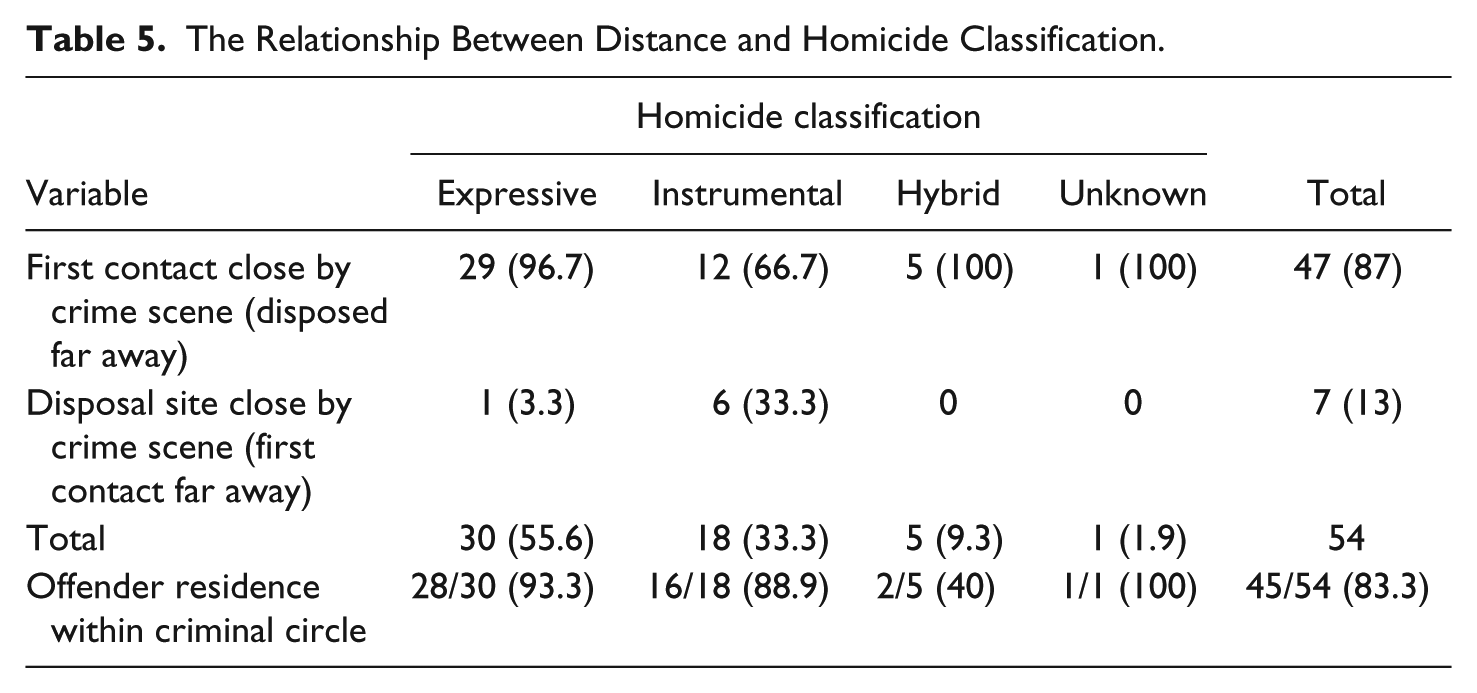
Table 5 shows that the majority (96.7%) of expressive offenders first encountered the victim close by and disposed of the body far away from the crime scene. However, over half (66.7%) of the instrumental offenders first encountered their victim close by but disposed of the body far away. In addition, about one third (33.4%) of the instrumental offenders dumped their victim close to the crime scene, but the first contact location was a great distance away. When the first contact to disposal site diameter circle was projected on the map, the offender’s residence in cases of expressive homicide was more likely to be included in the criminal circle compared with instrumental offenders.
The Relationship Between Distance and Homicide Classification.
As shown in Table 6, the offenders in almost half (46.3%) of the cases disposed of the body at midnight. During that time, over one half of the offenders limited the distance to 10 km to dispose of the body, whereas approximately 50% of the offenders endeavored to travel more than 21 km to dispose of the body after the homicide. Of all the cases that occurred after midnight (00:00-04:00), 40% (n = 12) of offenders dumped the body within hours of the murder. Next, 16.7% of offenders disposed of the body during the early evening (16:00-20:00), indicating that almost all of them did this within 20 km of the murder scene. Of those seven cases that were dumped at daybreak between 04:00 and 08:00, five were dumped somewhere within 10 km, while 28% traveled more than 100 km to dump the body. The time frame for dumping the body was within hours of the killing for all of them.
Interaction Between Temporal and Spatial Characteristics.

Discussion
The present study explored factors influencing body disposal (i.e., homicide intention, offender–victim relationship, classification, and accomplice) with a special focus on spatial and temporal characteristics associated with the homicide. Our study showed that in almost 30% of the cases, there were at least two offenders present at the time of the killing, which is lower than Häkkänen et al.’s (2007) results (i.e., nearly half of the homicide cases). However, it is noteworthy that in only one out of seven cases the offender acted alone when transporting the victim’s body to the disposal area. In line with Häkkänen et al. (2007) and Felson (2003), this may suggest that co-offenders not only increase the degree of violence in the criminal event (Laajasalo & Häkkänen, 2006), but also provide each offender with assistance in committing offenses.
As to the geographical areas that offenders select for disposing of the bodies, our findings are congruent with previous studies (e.g., Burton, 1998; James, 1991; Nethery, 2004). Our results showed that 30.5% of the bodies were recovered by a slide/on-the-road or path, 28.5% on a mountain, and 21.4% beside a river or sea by narrowing dumping sites. This is similar to Rossmo (2014) who showed that the body recovery site was most frequently a forest and wooded area (21%), followed by river, lake, or marsh (20%), residence (17%), and street or sidewalk (16%). Our findings also suggest that dead bodies were usually recovered in agricultural areas and forest/wooded areas. This could be explained by the fact that the selection of dumping sites reflects a conscious decision by the offender to remain off the beaten paths as well as an attempt to avoid checkpoints, CCTVs, or high traffic roads, which could increase the odds of avoiding police detection during the process of body disposal. Law enforcement may use the geographic profile to retrace the moving paths of the offender for disposing of the body. For instance, areas that have been determined to most probably be associated with an offender can be used as a basis for directed or saturation police patrolling efforts .
Also, it seems that the decision to dump a body at a certain site depends, in part, on the offender’s geographic knowledge of that area. Routine activity theory argues that for a crime to occur, there needs to be a convergence in space and time of offender and target (Clarke & Felson, 1993; Cornish & Clarke, 1986; Felson, 1986, 1987). Moreover, it is suggested that motivated offenders will create mental maps of neighborhoods when they spot potentially suitable targets (Rossmo, 1999). In this context, Felson (1986) emphasized that routine activities provide offenders with knowledge of various spatial areas, and they proactively make use of this knowledge in committing crimes. In a representative Canadian study, Nethery (2004) showed that all offenders were familiar with the body disposal areas; in approximately half of the cases, the offender lived nearby. In addition, Häkkänen et al. (2007) showed that in more than half of the cases, the offenders disposed of the bodies in areas that were familiar to them, most often because they were once and/or still living in the area. In our study, the offender had geographic knowledge of the area used for body disposal in 47 cases. This finding is congruent with the theoretical model of Brantingham and Brantingham (1981, 1993), who showed that the safety zone to select the crime sites are areas around the offender’s residence, leisure places, and workplace. As revealed by our study, the suspects’ geographic knowledge originated from their previous residence (25%), leisure place (20%), current residence (18%), usual activity place (workplace; 9%), family residence (7%), and places explored around the homicide site (5%). This pattern appears to be consistent regardless of the jurisdiction. In general, offenders—like all of us—prefer familiar places, places that make up their cognitive maps, so that they know what to expect once they get there or try to leave. Potentially, this type of finding allows law enforcement to direct the search for missing persons/bodies by prioritizing geographical areas familiar to the suspect, such as places where the suspect and/or his parents have lived.
Another important aspect for homicide investigations is the question of the distance that the offender is able and willing to travel to dispose of the body (nine cases by walking, 45 cases by cars and auto-cycles). The information on the distances from the body disposal site to the site where the killing took place is particularly important to the investigation, as this is the site where potential evidence of the killing may be recovered. Our findings show that the distance from the crime scene to the body recovery site in adult homicide was less than 1 km for 29.6% of the cases, while the distance between the first contact and the disposal site was less than 300 m for 72.2% of the cases. It was also reported that 50% of offenders traveled less than 10 km from the offender residence to the body recovery site while for 66.7%, they traveled less than 20 km with an average distance traveled of 28 km. Compared with the United States and Germany (Dern, Froend, Straub, Vick, & Witt, 2004; Hanfland et al., 1997), the distances traveled by Korean offenders seem to be farther in the case of body recovery site to the murder scene. However, generally, the distance between first contact and the crime scene was shorter than the distance between the crime scene and the disposal site. This is congruent with the nearness principle, also known in psychology as the least-effort principle (Cornish & Clarke, 1986; Luce, 1959; Tversky & Kahneman, 1981; Zipf, 1950). This suggests that homicide offenders in Korea are willing to travel up to 30 km to dump the body as this represents a “safety place” (Lundrigan & Canter, 2001b) with the least expenditure of effort to dispose of the dead body from the crime scene, while not being too close to their home base. These findings present implications for criminal analysis (e.g., police information systems) as they allow for a validation of the findings of previous studies from Western countries. This could lead to obtaining additional investigative leads from the information contained in various computerized police dispatch and record systems.
In line with previous studies (Salfati, 2000, 2003; Salfati & Bateman, 2005; Salfati & Haratsis, 2001; Santtila et al., 2001), expressive offenders were more likely to dispose of the body somewhere far away from the crime scene (e.g., over 40 km), whereas instrumental offenders appeared to dispose of the body somewhere closer to the crime scene (i.e., all cases were found within 30 km). The classification studies could provide the patterns (e.g., search range, criminal circle) of dumping places and motives (e.g., anger, revenge, release expression) to law enforcement (Block, 1995; Block & Christakos, 1995; Decker, 1993, 1996; Siegel, 1998). For example, if a lengthy list of suspects has been developed, the geographic profile in conjunction with the criminal offender profile could help prioritize individuals for follow-up investigative work. This is because our results and those of previous findings indicate that significant relationships between crime scene behaviors and offender characteristics do exist, which is also congruent with previous classification studies, thus reinforcing their external validity. Theoretically, the findings further support the homology assumption of offender profiling (Alison et al., 2002).
In terms of the temporal aspect of body disposal, contrary to previous studies (i.e., Hanfland et al., 1997; Nethery, 2004), in the current study most bodies were disposed of within hours after the murder, usually occurring during midnight. This may be because Korean residential areas are usually densely populated as well as structured in close formulation. This environmental phenomenon may cause stress and put psychological pressure on the offenders and thus force them to dispose of the body as soon as possible. According to some environment criminology studies on rape (e.g., Beauregard, Rebocho, & Rossmo, 2010), it has been suggested that the layout of the city (i.e., Portuguese cities vs. Canadian cities) may influence how offenders go about finding their target. The culturally different environments may impose restrictions on the movements of offenders, which in turn may have an impact on the temporal aspect of body disposal. Due to this finding, immediate searching of the offender’s residence with a seizure and search warrant could be recommended as soon as a suspect is identified.
In conclusion, the current study is not without its limitations. Despite having access to a relatively large sample of homicide cases, only a few cases involved the victim’s body being disposed of after the homicide. This small sample may not be representative of all Korean homicides as well as all the different regions of that country. Moreover, as different types of homicide were included, it is possible that specific body disposal patterns were lost in the analyses. Also, as the study was based solely on police data, it was not possible to examine the offenders’ rationales for their body disposal patterns. Another limitation is the self-selection of cases in which an offender was identified. This selection bias may have an impact on temporal and spatial information as offenders who dump bodies very far away may be less likely to be caught. Future studies need to interview offenders to ask about the decision making involved in the choices made during body disposal. As this study is exploratory in nature, there is a need to replicate the findings for them to be operationally useful for offender profiling. More importantly, body disposal is a very clear indicator that is easily observable by law enforcement when first examining a homicide at a crime scene. Paradoxically, the studies looking particularly at body disposal are scarce. Researchers in the field who focus on homicide need to take into account the entire criminal event.
In addition to using a larger sample, it is important to assess the practical usefulness of these results for the criminal investigations. Body disposal is one of the most important locations for the criminal investigation . Therefore, understanding what may influence the choice of such location becomes very important for the people in charge of investigating these homicides. Although only preliminary, our findings suggest that how, when, and where a body is disposed can reveal some valuable information about the offender. To better understand the entire criminal behaviors involved in homicide, future research needs to continue investigating the different interactions between people, places, time, and how offenders commit their crime. For instance, it would be interesting to look at more detailed interaction between locations (or time) and the objective measures of distance involved in the crime of homicide to see their effect on body disposal patterns. The offenders might travel short or long distance depending on where they are located at the time of the offense (e.g., bars, shopping center, workplace, or rural areas vs. urban areas) for disposing of the body. Also, future studies need to look at the relationship between offender characteristics (e.g., criminal background, drug substance abuse, mental illness) and distance patterns (e.g., residence-disposal site). Clearly, these findings need to be replicated before it is possible to make any further conclusions. Nonetheless, informal discussions with Korean homicide investigators suggest that these findings are useful. Moreover, the findings of the current study add to our knowledge on the geographic and environmental factors related to a specific aspect of the homicide, that is, body disposal.
Footnotes
Acknowledgements
The authors would like to acknowledge the Korean Criminal Profilers’ contributions and cooperation (Haeseon Kim, Sanghwa Shin, Hyeran Joe, Changu Choo in Criminal Science Behavior Unit) to the article.
Authors’ Note
The views expressed are those of the authors and do not necessarily represent those of the Korean Criminal Science Behavior Unit in the Korean National Police Agency (KNPA).
Declaration of Conflicting Interests
The author(s) declared no potential conflicts of interest with respect to the research, authorship, and/or publication of this article.
Funding
The author(s) received no financial support for the research, authorship, and/or publication of this article.