



Abstract
The sexual homicide of a child is an unusual event, and very few studies have been conducted on the topic. Previous studies have mainly focused on the differences between sexual homicide of child and adult victims. The current study aims to identify a typology of sexual homicide of children based on modus operandi, offenders’ and victims’ characteristics. Using two-step cluster analysis on a sample of 72 cases of extra familial sexual homicide of children (aged 16 years or below) from France, six clusters have been identified on the basis of eight modus operandi variables: intentional/prepubescent, inadvertent/prepubescent, intentional/preteen, inadvertent/preteen, indiscriminate/teen, and intentional/teen. External validity of the classification was tested using 51 additional variables related to victims, offenders, and other modus operandi characteristics. Findings showed that sexual homicide of children is a heterogeneous phenomenon, largely influenced by the actual age of the victim and the type of violence used. Implications of the findings are discussed considering prevention, criminal investigation, and correctional practices.
Introduction
It is now a well-established fact that sexual homicide represents a rare type of crime—estimates range between 1% and 4% of all homicides committed worldwide (James & Proulx, 2014). Needless to say, the numbers of sexual homicide of children are even smaller. In Canada, it was estimated that children constitute approximately 8% of the victims of sexual homicide (Firestone, Bradford, Greenberg, & Larose, 1998). Similarly, a study of the National Incidence Studies of Missing, Abducted, Runaway, and Thrownaway (NISMART; Finkelhor, Sedlak, & Hotaling, 1990) children in the United States showed that of the estimated 3,900 short-term nonfamily child abductions, around 8% were typical kidnappings involving the death of the victim. Moreover, Handfland, Keppel, and Weis (1997) showed that more than two thirds of their abduction-homicide cases involved sexual motivation. According to Boudreaux, Lord, and Dutra (1999), sexual homicides of children occur most often in school-age females, in elementary and middle school male children.
The research directly addressing the phenomena of sexual homicide of children has been scarce. In fact, Lanning (1994) pointed out that, in addition to the definitional problem of what a child is, the discussion of sexual homicide of children has been obscured by the fact that sexual murderers of children appear to be a diverse population of offenders. To illustrate his point, he cites the examples of a psychopath accidentally killing his partner’s 2-month-old daughter by vaginally penetrating her, an offender who abducts and tortures a 7-year-old boy to satisfy his sadistic fantasies, and a serial killer strangling a prostitute who turns out to be 17 years. Although these examples all fall within the typical definition of a sexual homicide of children, they do present different dynamics. Lanning (1994) further explained that the violence used in sexual homicide can take three different forms: inadvertent (i.e., killing for sexual gratification purposes), indiscriminate (i.e., killing if necessary), and intentional (i.e., varied categories including sadists, killing to avoid detection, misguided love from a pedophile or ambivalent hate). However, previous studies of sexual homicide of children have neglected to consider the existence of various types. Therefore, the current study tests the presence of multiple types of sexual homicide of children using a classification approach.
The Heterogeneity of Sexual Murderers
Previous studies have shown that sexual murderers are not a homogeneous group (Beauregard & Proulx, 2002; Higgs, Carter, Tully, & Browne, 2017). Several studies have examined samples of sexual murderers and identified subtypes (Beech, Robertson, & Clarke, 2001; Canter, Alison, Alison, & Wentink, 2004; Keppel & Walter, 1999; Kocsis, 1999; Malmquist, 2007; Ressler, Burgess, & Douglas, 1988; Revitch & Schlesinger, 1981; Sewall, Krupp, & Lalumière, 2013). When examining these typological studies, three main types of sexual murderers are revealed, with each study describing between two and four types. The sadistic type is mainly characterized by the use of manipulation, the use of a rape kit, tying up, and gagging the victim, as well as a prolonged and ritualized torture. This type of sexual homicide may also include unusual acts such as the insertion of objects into body cavities, dismemberment, and the retention of trophies or souvenirs belonging to the victim. The angry sexual homicide, on the contrary, is characterized by an explosive and violent attack of a known victim, often provoked by the victim’s words or actions, resulting in humiliation and extreme violence (Beauregard, 2017). In addition to these two main types consistently identified in previous studies, some researchers have identified a third type of sexual murderer who kills his victim to eliminate the witness. For these offenders, the sexual assault of the victim is the primary intent, but the murder is merely instrumental. The homicide may or may not be premeditated, depending on the murderer’s criminal experience.
Although previous typologies clearly demonstrate the heterogeneity of sexual homicide, these studies suffer from several limitations (see Beauregard, Proulx, & St-Yves, 2007). Probably the most important limitation is the fact that most of the typological studies comprise a wide spectrum of sexual murderers (serial and nonserial murderers, sexual murderers of women, men, children), completely ignoring the specific characteristics of each group.
Comparative Studies Involving Sexual Murderers of Children
To show the distinct aspect of sexual homicide against children, some researchers have compared sexual murderers of children to diverse groups of sex offenders. To our knowledge, seven studies have conducted such comparisons (Beauregard & Martineau, 2015; Beauregard, Stone, Proulx, & Michaud, 2008; Firestone et al., 1998; Firestone et al., 2000; Langevin, 2006; Proulx, James, Siwic, & Beauregard, 2018; Spehr, Hill, Habermann, Briken, & Berner, 2010). In terms of offender characteristics, studies have shown that sexual murderers of children scored higher on Factor 1 and Factor 2 of the PCL-R, exhibited more antisocial personality disorders and paraphilias (especially sexual sadism), were more likely to receive three or more Diagnostic and Statistical Manual of Mental Disorders (3rd ed., rev.; DSM-III-R; American Psychiatric Association, 1987) diagnoses, and demonstrated higher levels of deviant arousal to pedophilic and adult assault stimuli (Firestone et al., 1998). However, sexual murderers of children were less likely to report alcohol abuse and drug dependency, as well as to present sexual dysfunctions or a narcissistic personality disorder (Spehr et al., 2010). Sexual murderers of children were also more likely to live with another adult (Beauregard & Martineau, 2015) and to have committed sexual abuse prior to the sexual homicide crime. Studies, however, did not agree on the presence or absence of previous convictions for violent nonsexual and sexual offenses (see Firestone et al., 1998 and Spehr et al., 2010).
As to the crime characteristics, findings showed that sexual murderers of children were more likely to have purposefully carried out the crime without any provocation from the victim (Spehr et al., 2010). They are also more likely to report deviant sexual fantasies, use pornography prior to the crime, and to plan the crime, compared with sexual murderers of adults (Beauregard et al., 2008). In addition, sexual murderers of children were more likely to establish contact with the victim prior to the crime, to commit the crime during the day, to use strangulation to kill the victim, and to dismember and hide the victim’s body, as compared with sexual murderers of adults (Beauregard et al., 2008). Furthermore, sexual murderers targeting children were more likely to find the victim at home or outside on the street and to physically beat the victim during the criminal event, whereas sexual murderers who specifically target adults (mainly women) were more likely to attack a victim of thin build, leave the body in a residence, and remain undetected by the police (Beauregard & Martineau, 2015). According to Beauregard et al. (2008), most of the differences observed between sexual murderers of children and adults could be explained through a routine activity perspective (see Cohen & Felson, 1979). Thus, it appears that sexual murderers adapt their modus operandi to the type of victim they target, or, that the type of victim encountered will necessitate an adaptation of their modus operandi to suit the situation. Such adaptation of the modus operandi seems to be related to the victims’ routine activities (Deslauriers-Varin & Beauregard, 2010). This could be explained by the fact that victims’ characteristics and their situations influence the context of the crime and by extension, the crime process (Kaufman, Mosher, Carter, & Estes, 2006).
Although previous studies have provided a relatively coherent picture of the sexual murderer of children, a recent study conducted by Proulx et al. (2018) produced a portrait in stark contrast with the one from the studies discussed above. In this study, the authors compared a group of 26 sexual murderers of children with a group of 40 sexual murderers of women from France. When considering the personal characteristics of the offenders, the findings showed that sexual murderers of women presented a more severe profile than the sexual murderers of children. The sexual murderers of women were more likely to score higher on the interpersonal factor of the PCL-SV as well as on the SeSaS (specifically on the items of torturing the victim, humiliating the victim, mutilation of other body parts, insertion of objects, ritualistic behavior, and trophies). Also, the sexual murderers of women were more likely to report nondeviant as well as deviant sexual fantasies in adulthood. A similar pattern was observed with regard to other predisposing factors 1 year prior to the murder. More specifically, sexual murderers of women were more likely than the sexual murderers of children to report familial problems, social isolation, perception of being rejected, low self-esteem, pornography, financial and legal problems, as well as alcohol consumption problems. The pattern remained the same when looking at the precipitating factors 48 hr prior to the crime, with sexual murderers of women more likely to report social isolation, perception of being rejected, low self-esteem, pornography, as well as hypersexuality. With regard to the crime characteristics, sexual murderers of children were more likely to use physical violence to control the victim, to kill the victim for the purpose of eliminating a witness, and to commit the crime outdoors. However, sexual murderers of women were more likely to exhibit a structured premeditation, to preselect the crime site and body dump site, to use restraints, to kidnap and confine the victim, to humiliate the victim, to use expressive violence as well as torture, compared with the sexual murderers of children. Moreover, sexual murderers of women were more likely to commit a crime of longer duration as well as to use physical violence and kill the victim out of anger (Proulx et al., 2018).
Aim of the Study
To our knowledge, only seven studies have focused on the sexual murderer of children. Despite the lack of prior research, the overall findings suggest that sexual murderers of children are different from sexual murderers of women—not only with respect to their characteristics, but also in the way they commit the sexual homicide. Moreover, the findings from previous comparative studies—especially the conflicting results identified—seem to suggest that similar to sexual murderers of women and sexual murderers of men (e.g., Beauregard & Proulx, 2007), sexual murderers of children represent a very heterogeneous group of sexual murderers. However, to date, no study has examined the heterogeneity of this specific group. Therefore, the aim of the current study is testing whether different types of sexual murderers of children exist using a classification approach.
Method
Sample
This study is based on a sample of 72 cases of sexual homicide against children, which have occurred in France since the end of the 1970s to 2018. This sample was extracted from a French police national database focusing on extra familial violent crimes. All these cases have been solved by the police. As with most sexual homicide studies (e.g., Beauregard & Martineau, 2013; Porter, Woodworth, Earle, Drugge, & Boer, 2003), cases were identified using the definition suggested by Ressler et al. (1988). 1 As to the operationalization of what constitutes a child victim, we followed guidelines provided in previous studies and have chosen to include all victims aged 16 years or younger (Beauregard et al., 2008; Proulx et al., 2018).
Participants
The sample includes 72 single incident of sexual homicide against children. The victims are mostly female (73.6%) and they aged 11.4 years (SD = 4.22) on average, with a minimum of 4 years of age and a maximum of 16 years of age. They have been assaulted while they were traveling to or from somewhere (47.2%) or while they were playing (31.9%). The offenders are all male, with an average age of 32.4 years (SD = 14.49) with a minimum of 17 years and a maximum of 59 years. At the time of the offense, they were mostly single (43.1%). As to their lifestyle, 47.2% were considered as loners, 30.6% frequently engaged in criminal activities, 2 22.2% were homeless, and 40.3% had consumed alcohol, drugs, or both at the time of the offense. Finally, 43.1% of the offenders reported at least one paraphilic behavior.
Measure
Seven variables focusing on modus operandi were used to classify sexual homicide against children. Based on the previous studies, we have selected variables that represented the different steps of the modus operandi following the crime script approach described by Cornish (1994). Four dichotomous (1 = yes, 0 = no) variables were included to describe the precrime phase: (a) offender and victim are strangers, (b) offender has used a coercive approach (blitz approach), (c) offender is familiar with the crime location, and (d) crime occurs in a residence. As to the crime phase, we have included two dichotomous variables: (a) sexual penetration, (b) strangulation. Finally, for the postcrime phase, two dichotomous variables have been included: (a) offender acted on the crime scene 3 , (b) offender has moved the victim’s body from the crime scene.
To test the external validity of the typology, we have used 51 other variables that are presented in Appendix A. All of these variables are dichotomous except for two (age of victim and offender). In this set of variables, eight are related to the victims’ characteristics, nine to the offenders’ characteristics, 16 describe the modus operandi aspects, seven are related to sexual acts that have been performed, and 13 describe forensic awareness strategies as well as aspects related to body discovery.
Analytical Strategy
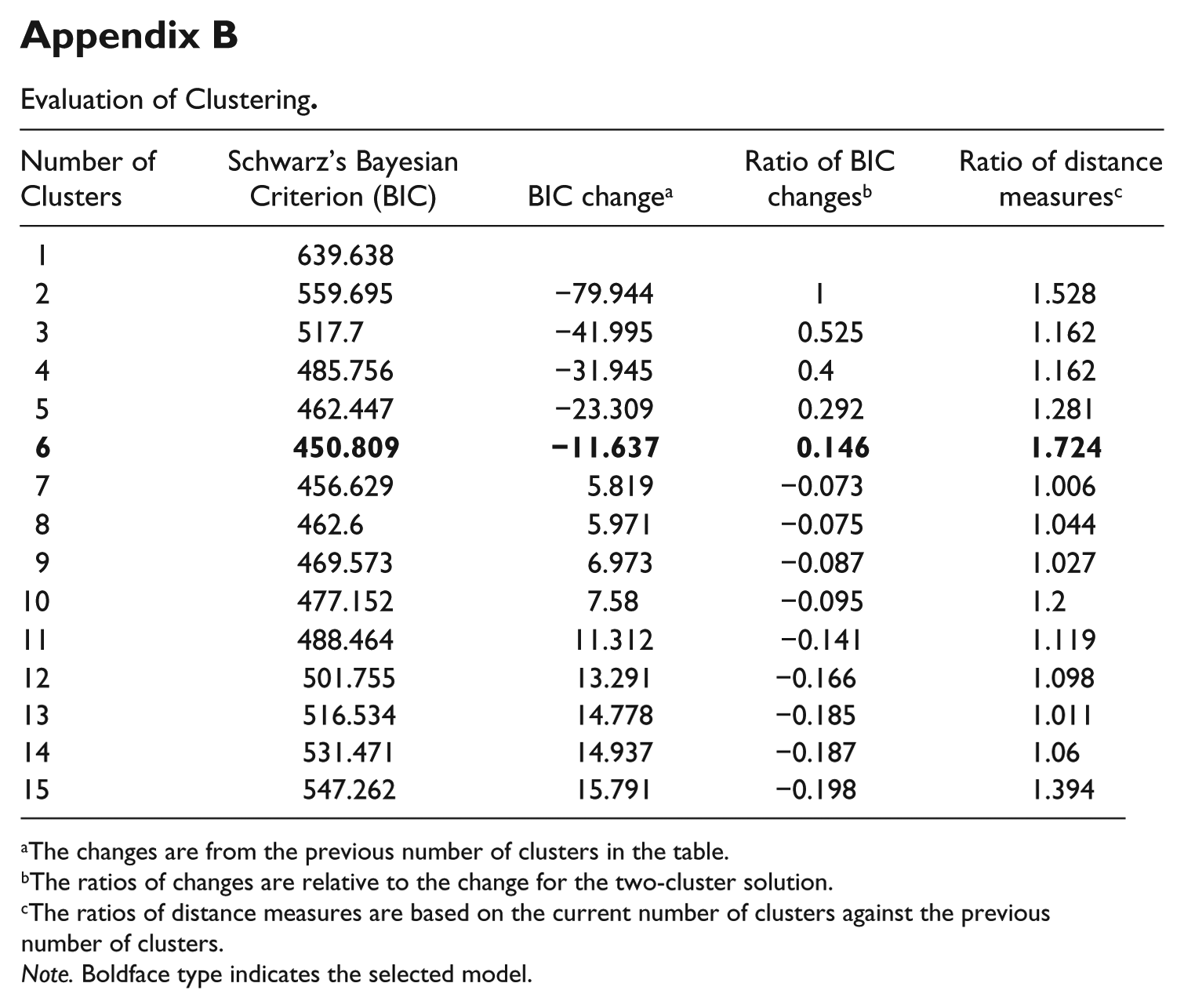
Our analytical strategy followed a two-step process. First, a two-step cluster analysis was performed using the eight variables related to the three stages of the modus operandi (i.e., precrime, crime, and postcrime). Schwarz Bayesian criterion was used to identify the best classification solution (Appendix B). Prior to conducting the two-step cluster analysis, the correlation matrix of the eight variables were examined for potential multicollinearity. No correlations were higher than .38 (available upon request). Second, to test for the external validity of our classification, we have examined the bivariate relationship (chi-square and ANOVA analyses) between the clusters and the 51 additional variables related to victims,’ offenders,’ and modus operandi characteristics.
Results
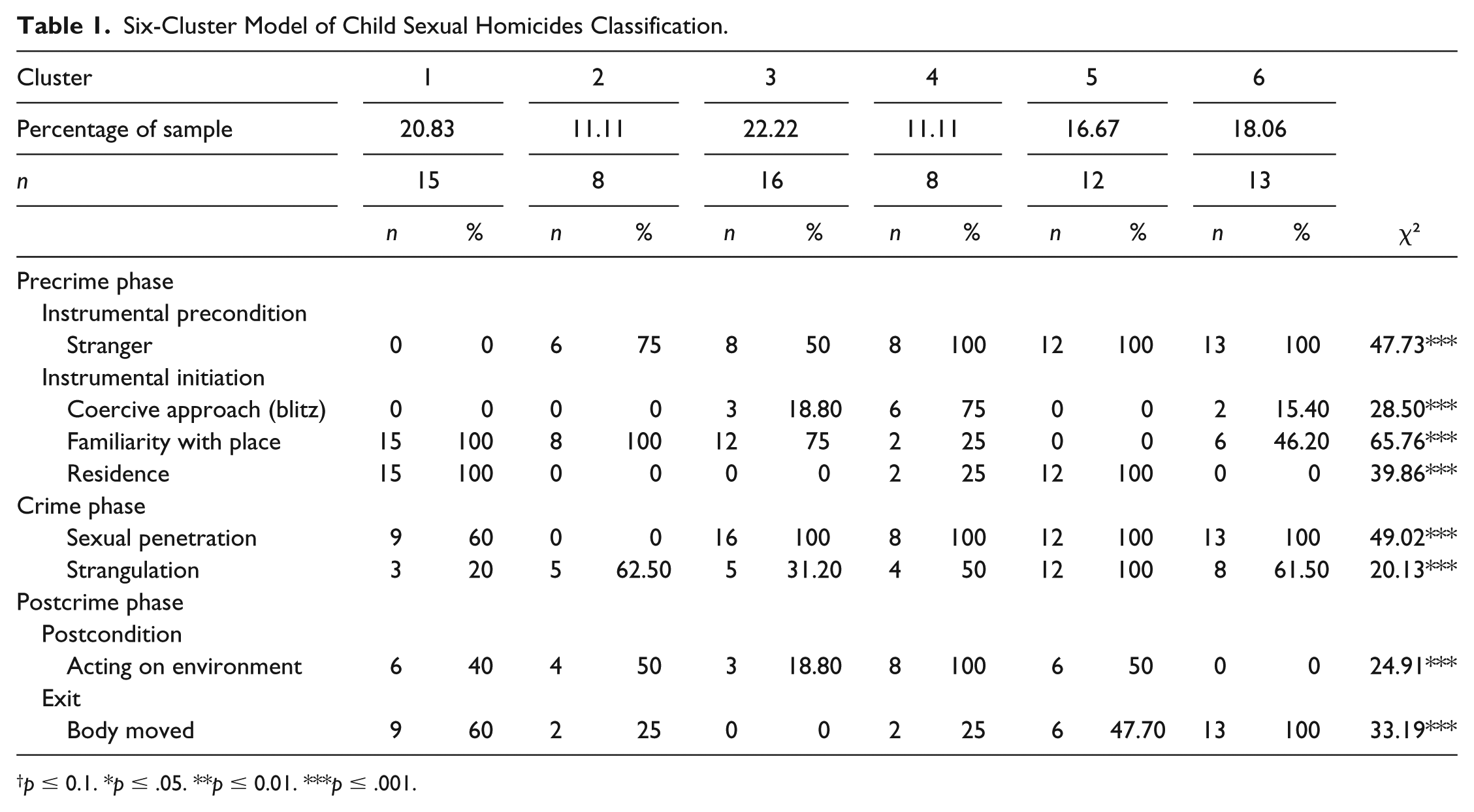
Schwarz’s Bayesian criterion (Appendix B) indicates that a six-cluster solution was the most appropriate to classify the 72 cases of sexual homicide against children (Table 1). All the clusters are distributed relatively evenly. The biggest cluster (Cluster 3) includes 22.22% (16 cases) of the sample whereas the smallest (Clusters 2 and 4) include 11.11% (8 cases) of the sample.
Six-Cluster Model of Child Sexual Homicides Classification.
p ≤ 0.1. *p ≤ .05. **p ≤ 0.01. ***p ≤ .001.
Cluster 1 includes 20.83% of the cases (n = 15). This category is characterized by the absence of stranger relationship between the offender and the victim. These offenders are not typically using a coercive approach, they are always familiar with the crime location, and they always choose a residence to assault their victims. They mostly perform sexual penetration (60%), but rarely kill their victims using strangulation (20%). Concerning the forensic awareness characteristics, in most cases, the offenders do not act on the crime scene (60%), but they do move the victim’s body to a different location following the homicide.
Cluster 2 includes 11.11% of the cases (n = 8). This cluster is characterized by the fact that most of offenders and victims (75%) were strangers at the time of the offense. These offenders never use coercion to approach their victim, and they are always familiar with the crime location, which is never a residence. One of the most prominent characteristics of this cluster is the absence of sexual penetration. Moreover, in most cases (62.5%), offenders kill their victims by strangulation and rarely move the victim’s body after the homicide.
Cluster 3 includes 22.22% (n = 16) of the cases. This category is mainly characterized by the fact that offenders generally do not use a coercive approach (18.80%), but they are familiar with the crime location, which is never in a residence. These offenders always perform sexual penetration, but rarely kill their victims using strangulation. This modus operandi is also characterized by the fact that offenders rarely act on the crime scene and never move the body after the crime.
Cluster 4 includes 11.11% of cases (n = 8) and is characterized by the fact that offenders and victims are always strangers, and, in most cases, offenders use a coercive approach with their victim (75%). Generally, they are not familiar with the crime location and it is not a residence. These offenders always sexually penetrate their victim, they act on the crime scene, but they rarely move the victims’ bodies following the homicide.
Cluster 5 includes 16.67% of the cases (n = 12). These cases are characterized by the fact that all offenders and victims were strangers and a coercive approach is not used at the time of the offense. The crime locations are always residential, but offenders are never familiar with them. Sexual penetration is always performed by offenders, and victims are always killed by strangulation. Approximately half of the offenders are acting on the crime scene and just below half move the body from the crime scene.
Cluster 6 includes 18.06% of the cases (n = 13). Offenders from this cluster are always strangers to their victims. Offenders rarely use a coercive approach and are not familiar with the crime location, which is never a residence. These offenders always perform sexual penetration and most victims are killed using strangulation. When we analyze the postcrime stage and especially the use of forensic awareness strategies, we observe that offenders never try to act on the crime scene, but always move the victims’ body following the homicide.
Offender, Victim, and Additional Crime Characteristics Associated With the Six-Cluster Solution
The analysis of victims’ characteristics (Table 2) according to the six clusters shows major significant differences. Concerning the victim age, we can observe significant differences between each cluster, F(5, 66) = 3.31, p = .010. Clusters 1 and 2 include the youngest victims, whereas Cluster 6 includes the oldest. Other clusters include preadolescent victims. Male victims are also more present in Clusters 1 and 2 and, to a lesser extent, in Cluster 3 (Cramer’s V = .46, p ≤ .001). Results indicate that victims included in Clusters 2 and 3 are more often assaulted during sports or recreational activities, whereas older victims are more often assaulted while they were traveling to or from somewhere (Cramer’s V = .51, p ≤ .01).
Victims’ Characteristics According to the Six Clusters.

ANOVA has been performed.
p ≤ 0.1. *p ≤ .05. **p ≤ 0.01. ***p ≤ .001.
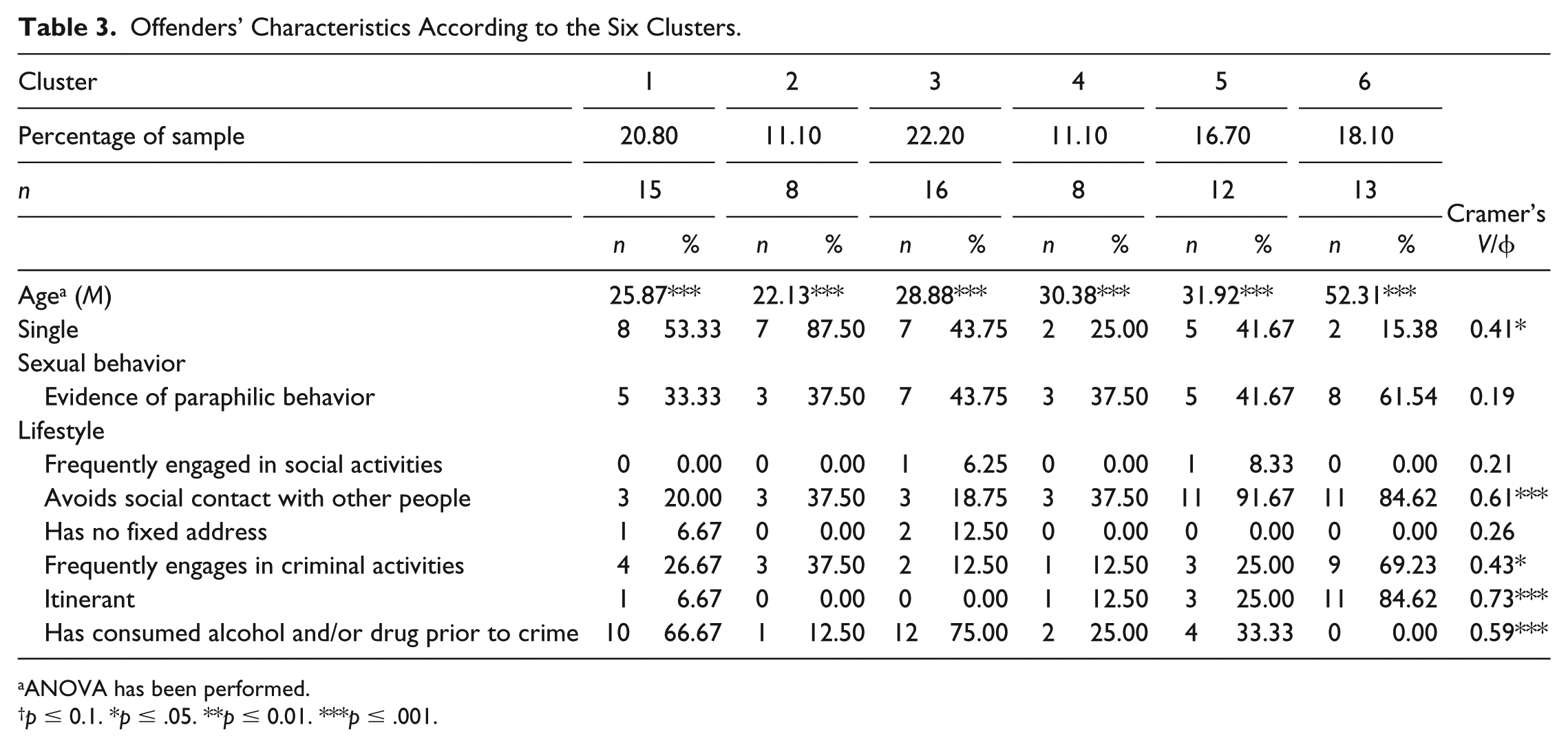
Table 3 reports the findings regarding offenders’ characteristics. The findings show major differences in the age of offenders according to the six clusters, F(5, 66) = 11.26, p = .000. Most notably, offenders included in Cluster 2 are the youngest with an average age of 22.13 years, whereas offenders included in Cluster 6 are the oldest with an average age of 52.31 years. Offenders of Cluster 2 are also more likely to be single, whereas the others are more likely to be in a relationship at the time of the offense (Cramer’s V = .41, p ≤ .05). As to the offenders’ lifestyle, offenders from Clusters 5 and 6 are characterized by an avoidance of social contact with others (Cramer’s V = .61, p ≤ .001). Offenders from Cluster 6 are also more frequently engaged in criminal activities than others (Cramer’s V = .43, p ≤ .001) and more often present an itinerant lifestyle (Cramer’s V = .73, p ≤ .05). Finally, offenders from Clusters 1 and 3 are characterized by their alcohol and/or drug consumption prior to the crime (Cramer’s V = .59, p ≤ .001).
Offenders’ Characteristics According to the Six Clusters.
ANOVA has been performed.
p ≤ 0.1. *p ≤ .05. **p ≤ 0.01. ***p ≤ .001.
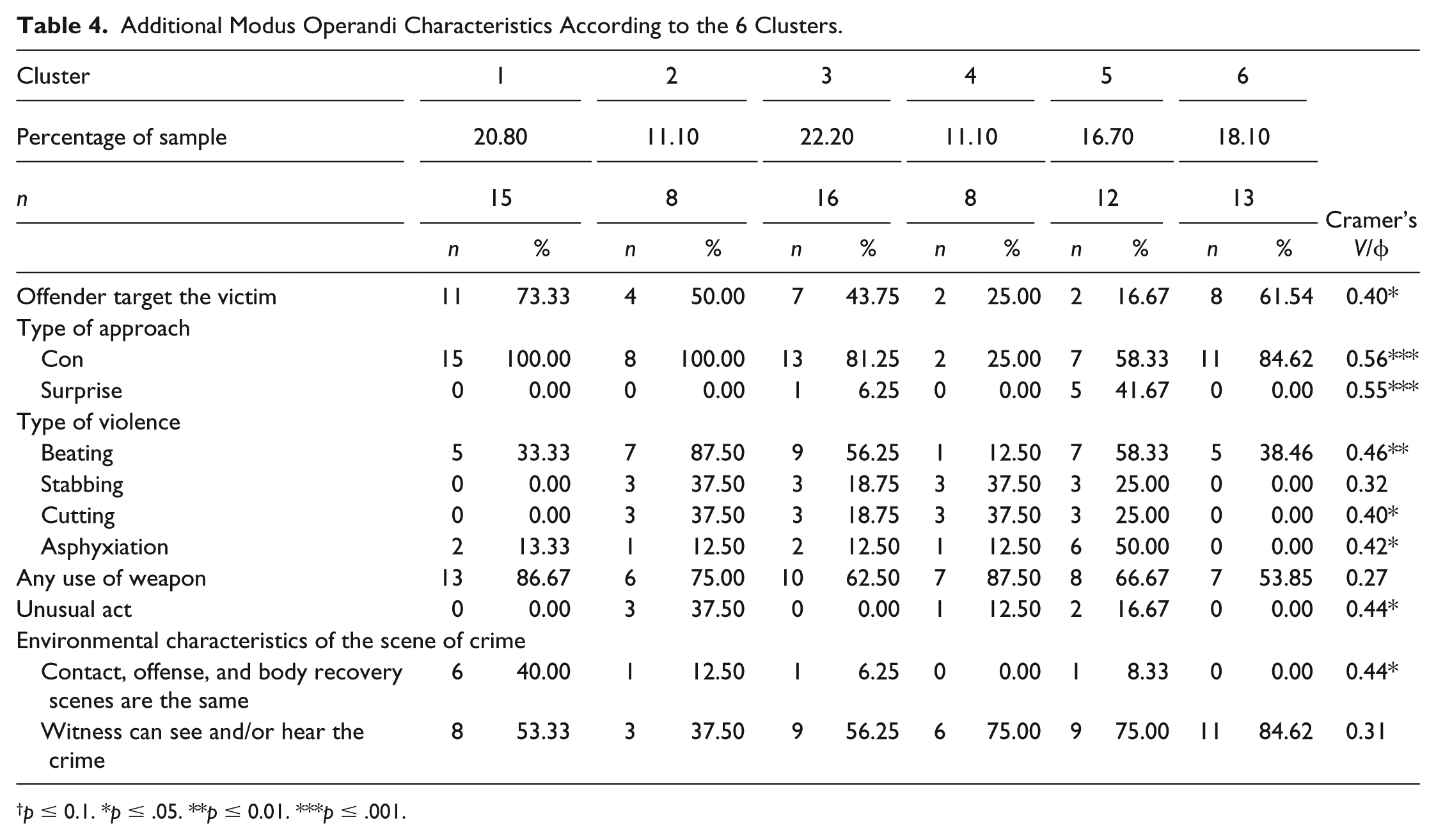
Other modus operandi information is reported in Table 4. Offenders from Clusters 1 and 6 more often target their victims compared with the others (Cramer’s V = .40, p ≤ .05). However, offenders from Clusters 1, 2, 3, and 6 mostly use a con approach (Cramer’s V = .56, p ≤ .001), whereas only offenders from Cluster 4 have used a surprise approach (Cramer’s V = .55, p ≤ .001). Offenders beating their victims are mostly found in Clusters 2, 3, and 6 (Cramer’s V = .46, p ≤ .01), whereas asphyxiation is more prevalent in Cluster 5 (Cramer’s V = .42, p ≤ .05). Concerning the behavioral aspects during the crime, offenders of Clusters 2 and 6 are less often angry than in other clusters (Cramer’s V = .65, p ≤ .001) and physical resistance of victims is especially prevalent in Cluster 5 (Cramer’s V = .46, p ≤ .01). Unusual acts are more often performed by offenders included in Cluster 2 (Cramer’s V = .44, p ≤ .05). As to the crime scene, the encounter, crime, and body recovery locations are more often the same for sexual homicides included in Cluster 1 (Cramer’s V = .44, p ≤ .05).
Additional Modus Operandi Characteristics According to the 6 Clusters.
p ≤ 0.1. *p ≤ .05. **p ≤ 0.01. ***p ≤ .001.
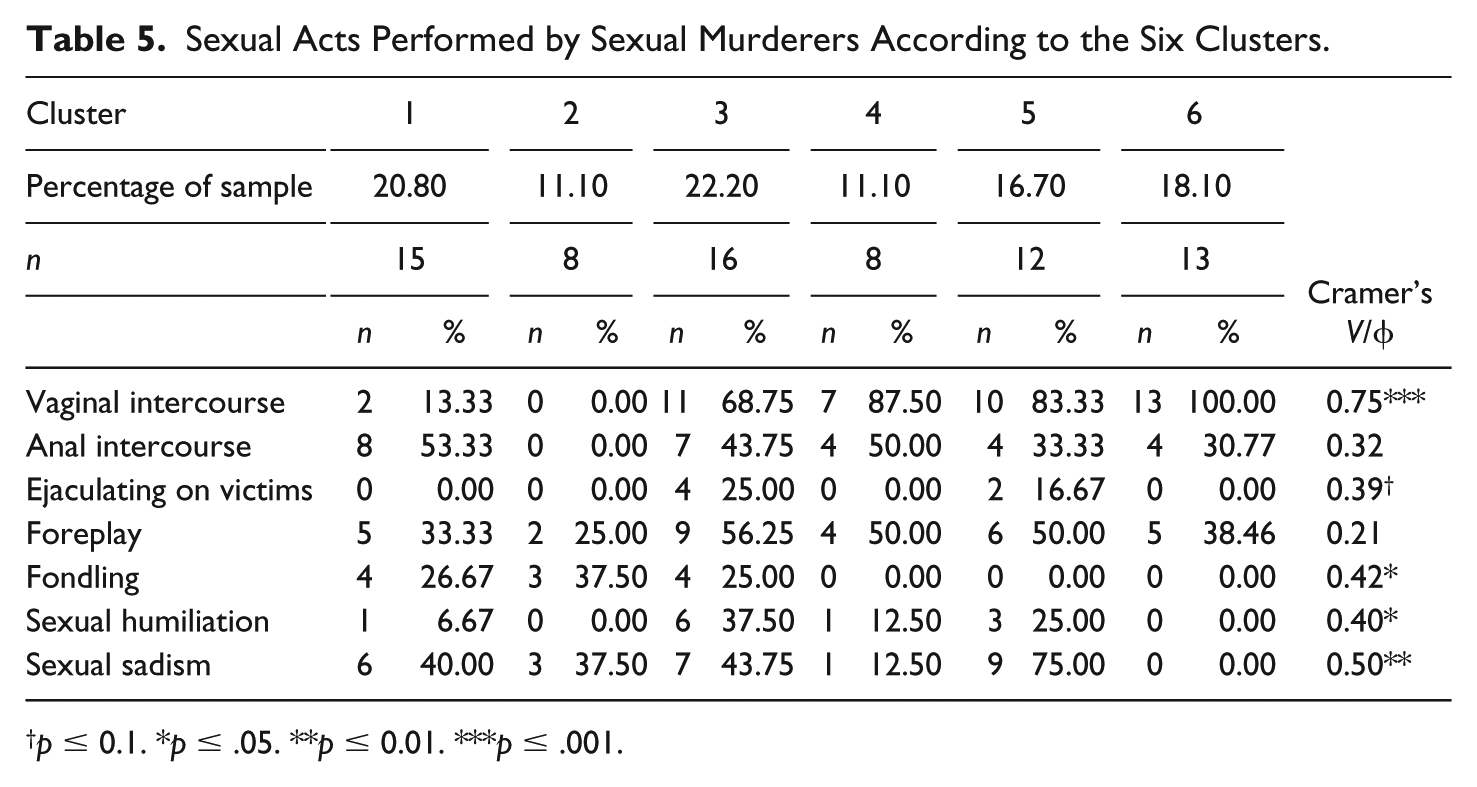
Table 5 presents the findings concerning the sexual acts committed during the crime. Results show that sexual intercourse, especially vaginal penetration, occurs more often in Clusters 3, 4, 5, 6, whereas it is quasi or totally absent in Clusters 1 and 2, respectively (Cramer’s V = .75, p ≤ .001). However, offenders from Clusters 1 and 2 are the ones where acts of fondling are the most prevalent (Cramer’s V = .42, p ≤ .05). Acts of sexual humiliation are more often committed by offenders from Cluster 3 (Cramer’s V = .44, p ≤ .05), whereas sexual sadism is mostly found in offenders from Cluster 5 (Cramer’s V = .50, p ≤ .01).
Sexual Acts Performed by Sexual Murderers According to the Six Clusters.
p ≤ 0.1. *p ≤ .05. **p ≤ 0.01. ***p ≤ .001.
Table 6 reports the findings regarding the postcrime phase. It is noteworthy that the number of forensic awareness strategies used by offenders is a distinguishing feature across Clusters 3. Offenders included in Clusters 4 and 6 do not use strategies to alter the crime scene (Cramer’s V = .61, p ≤ .001), and semen was identified by the police in Clusters 3, 4, and 5 (Cramer’s V = .40, p ≤ .05). Information about the victim body disposal show that offenders of Clusters 1, 2, and 6 try to hide the body in order not to be detected by the police (Cramer’s V = .45, p ≤ .05), whereas Groups 3, 4, and 5 do not show any indications of doing so (Cramer’s V = .39, p ≤ .05). Cluster 6 is the only category that did not include offenders who partially undressed their victim (Cramer’s V = .47, p ≤ .05), whereas offenders from Cluster 5 bury the victims’ bodies and offenders from Clusters 1 and 3 partially bury the body (Cramer’s V = .48, p ≤ .01).
Forensic Awareness According to the Six Clusters.

p ≤ 0.1. *p ≤ .05. **p ≤ 0.01. ***p ≤ .001.
Discussion
Heterogeneity of Sexual Homicide Against Children
Previous studies have shown that sexual homicide is a heterogeneous crime (e.g., Beauregard & Proulx, 2002). This perspective is also consistent with several studies, which have identified typologies of sexual murderers that vary between two and four types of sexual homicide (Beauregard & Proulx, 2002; Beech et al., 2001; Canter et al., 2004; Keppel & Walter, 1999; Kocsis, 1999; Malmquist, 2007; Ressler et al., 1988; Revitch & Schlesinger, 1981; Sewall et al., 2013). One of the key issues with most of these studies is that, despite being largely focused on sexual murderers of women, many of these studies have also included other types of sexual murderers—such as those who target children. However, studies have found important differences between those who target adults and those who target children (Beauregard & Martineau, 2015; Beauregard et al., 2008; Firestone et al., 1998; Firestone et al., 2000; Spehr et al., 2010). Yet, despite a number of significant differences observed between the two groups in terms of the offender and the crime characteristics, there are some conflicting results across studies (e.g., Proulx et al., 2018). One possible explanation could be that, similar to sexual murderers of women, those who target children may also be a heterogenous group.
Our findings are also consistent with this hypothesis. The results have indicated that six clusters could be identified among a sample of 72 sexual homicides of children using their precrime, crime, and postcrime behaviors. Moreover, the external validity of this classification was tested using 51 other variables related to offenders,’ victims’, and additional modus operandi characteristics, showing that approximately 70% of them (35/51) presented significant differences between the six categories. Our analysis of the six categories identified through the two-step cluster analysis allowed us to isolate the two main factors driving the classification: the victim age and the type of violence used. Lanning (1994) has suggested a theoretical classification of sexual homicides of children based on the type of violence used: inadvertent, indiscriminate, and intentional. These types of violence help characterize the criminal event by providing some context to the crime and by suggesting a potential motive. Moreover, Lanning (1994) has also raised the issue of victim age—suggesting that what constitutes a child could vary depending on the age cut-off used. Related to this, our findings have allowed us to uncover that depending on the age of the child, offenders’ behaviors could also be influenced. Thus, based on these findings, it was decided to label our six types identified using a combination of the type of violence used as well as the age of the child victims.
A New Typology for Classifying Sexual Homicide of Children
Intentional/Prepubescent
The first cluster can be labeled as the intentional/prepubescent. These offenders usually select very young male victims—around 9 years old—and they typically anally penetrate them, which suggests that they are looking for sexual gratification. In line with the study of Beauregard et al. (2008), these offenders have targeted victims who are not strangers but acquaintances, and they have assaulted them at a location they were familiar with, typically a residence. This type of sexual homicide is a good example of what Beauregard et al. (2008) have hypothesized, in that the modus operandi used by the offender represents an adaptation by the offenders to the routine activities of the young victim. As these young boys are often accompanied by a capable guardian (e.g., parents, babysitter, older brother/sister), opportunities to gain access to them are fewer (Cohen & Felson, 1979). This can partly explain why these offenders will also use a con to approach the victim. The decision to kill the victim is coherent with the intentional type of violence suggested by Lanning (1994) as well as by Proulx et al. (2018); as the offender is known by the victim and lives in the same area, getting rid of the victim becomes the best option, if the offender wants to avoid detection. This hypothesis is reinforced by the fact that these offenders will typically move the victim’s body from the crime scene following the murder. Offenders of this category are relatively young—around 26 years old—and they partially fit the description by Proulx et al. (2018), as they do not suffer from social isolation, but they have consumed alcohol and/or drugs at the time of the offense.
Inadvertent/Prepubescent category
The second cluster can be labeled as inadvertent/prepubescent. Similar to the intentional/prepubescent, this category of sexual homicide is characterized by young offenders—around 22 years old—targeting very young victims—close to 9 years old—who are mostly male. Offenders from this category are mostly single, are not loners, and generally have not engaged in previous criminal activities, as observed by Langevin (2006). However, their behavior is very violent, as these offenders are characterized by beating the victim and performing unusual acts. Contrary to the previous category, these offenders do not typically penetrate the victim, but instead will fondle the victim as well as inflict, to a lesser extent, some sadistic acts. The offenders generally use a ruse to approach the victim, who is typically a stranger to them. The crime scene is never a residence and in most cases, victims are killed by strangulation, congruent with the findings of Beauregard et al. (2008). These offenders will hide the victim’s body, but without moving it to a different location. This general description fits the inadvertent type of violence suggested by Lanning (1994). These offenders appear mainly motivated to obtain sexual gratification as opposed to a desire to kill the victim. It can be hypothesized that these crimes are committed by young, unexperienced pedophiles who try to have a first sexual experience with a child. This lack of experience can explain the absence of sexual penetration as well as the excessive violence used that could be linked to the offender’s nervousness. The death of the victim seems more as the result of a lack of care toward a physically vulnerable victim, than a premeditated desire to kill.
Intentional/Preteen category
The third cluster may be labeled as the intentional/preteen category. Contrary to studies on sexual homicide of children (Proulx et al., 2018; Spehr et al., 2010), offenders of this category present a high prevalence of alcohol and/or drug consumption during the criminal event. Similar to the intentional/prepubescent category, the high consumption of drugs and alcohol can be explained by the fact that these offenders need to be disinhibited to act out their deviant script. However, contrary to the two previous categories, offenders of the intentional/preteen sexual homicide select older female victims—aged around 11 years. This category of sexual homicide is mainly characterized by the diversity of sexual acts committed as well as the presence of sadism (high level of violence and degrading acts). These offenders typically use a con to approach the victim and they are generally familiar with the crime scene, which is most often not a residence. After the crime, these offenders usually do not worry about the victim’s body being discovered as they never move the body (avoiding putting themselves at risk of detection; Beauregard & Field, 2008), but can partially bury it, which is similar to the sadistic sexual homicide offender (Beauregard, 2017). Looking at the various components of the modus operandi, it can be hypothesized that these offenders are sexually motivated by the suffering and the death of their victims and that this is part of their script.
Inadvertent/Preteen category
Cluster 4 can be labeled as the inadvertent/preteen category. Offenders from this category exclusively target a female preteen victim, around 10 years of age. These offenders are particularly violent with their victim, but the sexual acts committed appear as less sadistic and less humiliating. However, one of the most distinguishable features of this modus operandi is the use of a coercive approach (i.e., blitz) by offenders to assault their victims. This is the only category of sexual homicide to use such a strategy. Offenders from this category of sexual homicide appear to be opportunistic (Proulx & Beauregard, 2009), as they do not target specific victims, but instead have encountered them while they were traveling to or from somewhere. Despite showing some concerns over forensic evidence left at the scene, these offenders are not really forensically aware as in half of the cases semen has been found at the crime scene. Moreover, these offenders do not move the victims’ bodies after the crime. This type of sexual homicide resembles the angry sexual homicide described in the literature (Beauregard, 2017). These homicides of children are characterized by an explosive attack of an unknown victim. Despite sexual gratification being the main objective, the assault and the death of the victim is more the result of a violent and impulsive attack against a vulnerable victim.
Intentional/Teen category
Cluster 5 is labeled as the intentional/teen category. Offenders from this type of sexual homicide only target female teenagers around 12 years. These sexual homicides are characterized by the penetration of the victim—especially vaginal penetration—and by acts of sexual sadism. Similar to the study by Beauregard et al. (2008), offenders from this category killed all their victims using strangulation. In these sexual homicides, the offender and the victim are complete strangers, but the offender will use a con to approach the victim. However, these offenders may also use a surprise approach with the victim, which is distinct from all other categories. These offenders always commit their crime in a residence, but are never familiar with the crime location. This suggests that these sexual homicides occur in the victim’s residence or in the common area of a residential building. Contrary to the findings of Proulx et al. (2018), this group of offenders is highly characterized by social isolation. It can be hypothesized that this category of offenders is socially isolated and are unable to establish “classical” relationships with other adults. Thus, they develop feelings of anger, triggering violent reactions directed toward children who represent a more vulnerable victim. As suggested by Lanning (1994), these offenders probably killed the victims because of “misguided love or ambivalent hate” (p. 43). The presence of sadistic sexual acts also suggest that the death of the victim is part of the offenders’ script.
Indiscriminate/Teen category
Cluster 6 is labeled as the indiscriminate/teen category. What is unique about this type of sexual homicide is the fact that the offenders are the oldest—aged around 52 years—and they target the oldest female child victims (around 14 years). These sexual homicides are characterized by the vaginal penetration of the victim and the use of strangulation to kill the victim, whereas in only a minority of cases the victim died after being beaten by the offender. Another distinguishable feature of these sexual homicides is related to the criminal career of the offenders. These sexual murderers are best characterized by their criminal experience, as two thirds of them frequently engaged in a variety of criminal activities, similar to the versatile sex offender identified by Beauregard, DeLisi, and Hewitt (2018). This criminal experience could also be related to the fact that all offenders have moved the victims’ bodies after the murder, which is a strategy developed by experienced offenders to avoid being detected by the police (Beauregard & Martineau, 2015). As a comparison, unexperienced offenders like in the inadvertent/prepubescent sexual homicide never move the victims’ bodies. The age of the victims involved in these sexual homicides suggests that these offenders are not pedophiles, the selection of victims being more opportunistic. Moreover, the type of sexual acts committed, and the absence of sadism and humiliation, suggest that these offenders are driven by a desire to obtain sexual gratification and the murder is not part of a deviant script, but an opportunistic decision to avoid being detected by the police.
Conclusion
The current study is aimed to identify a new typology of sexual homicides of children using the modus operandi of offenders and their associations with offender, victim, and crime characteristics. Contrary to previous studies, which have suggested that sexual homicide of children was a homogeneous phenomenon, our findings have shown that in fact, no less than six different types could be identified. These types were mainly based on the combination of the type of violence and the age of the children. Such a typology is congruent with the conclusion by Beauregard et al. (2008) who suggested that sexual murderers of children adapt their modus operandi to the victim characteristics. In fact, among our findings, only the category of indiscriminate/teen sexual homicide seems to result from a random choice of victims that can present very different characteristics according to the opportunity structure.
These findings present potential practical implications. In terms of prevention, it is possible to identify the strategies used by offenders who are linked to certain victim routine activities. For example, situational crime prevention strategies may be elaborated to prevent the encounter of a motivated offender with a vulnerable victim. Thus, some of the most effective strategies of crime prevention—for crimes against the person—consist of increasing the risks for offenders by reducing the opportunities to gain access to children during their routine activities. More specifically, measures could be put in place to extend children guardianship and to increase the formal and informal surveillance in nearby areas frequented by children (Leclerc, Smallbone, & Wortley, 2015). The new typology could also prove useful for the criminal investigations, such as in the prioritization of suspects and their interrogation (St-Yves & Kebbell, 2018). For instance, the combination of the type of violence and the victim age may provide investigators with a better understanding of the crime—and the motivation—and could be used to identify potential themes to develop with the offender during the interrogation (see Beauregard, Busina, & Healey, 2017). Finally, the typology may also be relevant for correctional practices. In terms of treatment interventions, it is important to consider that not all sexual murderers of children are the same. Moreover, even if two sexual homicides have been committed against child victims, they may present very different motivations. Therefore, we believe that this information could be useful for clinicians working with these offenders and making sure they receive appropriate intervention. Thus, the type of violence used—inadvertent, intentional, or indiscriminate—should help decide whether these offenders would benefit from a sex offender program or not.
Although the current study presents interesting findings with clear practical implications, it is not without methodological limitations. In general, as with every study using police data, biases may occur in terms of data validity and reliability (Aebi, 2006). It is important to keep in mind that only cases reported to the authorities have been considered. However, we can assume that the dark number of child sexual homicide cases is relatively low. For instance, Aebi and Linde (2012) have shown that the number of homicides reported to police in Europe is relatively high. Nonetheless, despite these cases being high profile, it is always possible that these crimes are not identified as sexual or that the victims are never recovered (Beauregard & Martineau, 2017). Finally, partly due to the sensitive nature of this specific form of crime, obtaining data on sexual homicide of children is difficult, which may have resulted in the small number of studies conducted on the topic to date. Therefore, comparisons of our findings with previous studies were difficult. Moreover, due to the rarity of this form of crime, the number of cases available for an empirical analysis was relatively small. Although our sample of 72 cases of sexual homicide against children is larger than most of the previous studies, it has limited the number of variables included in our cluster analysis, which may have affected the significance of some of our findings. Overall, the use of a small sample may have implications for the generalizability of the findings. Finally, data used for this study are exclusively based on solved extrafamilial sexual homicide of children. This implies that our results cannot be generalized to all types of sexual homicide of children. Modus operandi used by offenders involved in intrafamilial sexual murders could be very different from the modus operandi adopted in extrafamilial cases. Therefore, it is possible that the analysis of intrafamilial cases could provide a very different classification. At the same time, analysis of solved cases does not allow to identify specific patterns of unsolved crimes. It is possible that some cases remain unsolved due to the use of a specific modus operandi by offenders.
Therefore, it will be important for future research to test this typology with different data originating from other countries. If differences are found, it would be interesting to test whether these differences are due to the nature of the sample or if other types of sexual homicide of children exist in other countries due to various environmental/contextual factors.
Footnotes
Appendix
Evaluation of Clustering.
| Number of Clusters | Schwarz’s Bayesian Criterion (BIC) | BIC change a | Ratio of BIC changes b | Ratio of distance measures c |
|---|---|---|---|---|
| 1 | 639.638 | |||
| 2 | 559.695 | −79.944 | 1 | 1.528 |
| 3 | 517.7 | −41.995 | 0.525 | 1.162 |
| 4 | 485.756 | −31.945 | 0.4 | 1.162 |
| 5 | 462.447 | −23.309 | 0.292 | 1.281 |
|
|
|
|
|
|
| 7 | 456.629 | 5.819 | −0.073 | 1.006 |
| 8 | 462.6 | 5.971 | −0.075 | 1.044 |
| 9 | 469.573 | 6.973 | −0.087 | 1.027 |
| 10 | 477.152 | 7.58 | −0.095 | 1.2 |
| 11 | 488.464 | 11.312 | −0.141 | 1.119 |
| 12 | 501.755 | 13.291 | −0.166 | 1.098 |
| 13 | 516.534 | 14.778 | −0.185 | 1.011 |
| 14 | 531.471 | 14.937 | −0.187 | 1.06 |
| 15 | 547.262 | 15.791 | −0.198 | 1.394 |
The changes are from the previous number of clusters in the table.
The ratios of changes are relative to the change for the two-cluster solution.
The ratios of distance measures are based on the current number of clusters against the previous number of clusters.
Note. Boldface type indicates the selected model.
Acknowledgements
The authors would like to acknowledge the police chief of the French Central Office for the Repression of Violences Against Persons (Office Central de Répression des Violences aux Personnes) and the central director of the French Judicial Police (Direction Centrale de la Police Judiciaire).
Declaration of Conflicting Interests
The author(s) declared no potential conflicts of interest with respect to the research, authorship, and/or publication of this article.
Funding
The author(s) disclosed receipt of the following financial support for the research, authorship, and/or publication of this article: Authors want to acknowledge the Swiss National Science Foundation who kindly supported this research (Fund no. P2LAP1_178193).
