



Abstract
Fieldwork at Amarna from autumn 2018 through autumn 2019 included excavation at a previously uninvestigated cemetery, the North Desert Cemetery, located approximately 600 metres south-west of the North Tombs. Several post excavation projects also continued. Those reported on here comprise the study of skeletal materials from the North Cliffs Cemetery, hair and textiles from the North Cliffs and North Desert Cemeteries, and pottery from the North Cliffs Cemetery. A site management and outreach project also continued.
Keywords

This preliminary report summarises work undertaken on site by the Amarna Project during two periods: from 12 November to 14 December 2018 and 26 October to 12 December 2019. These saw excavations at one of the non-elite cemeteries (the North Desert Cemetery), a study of materials stored in the on-site magazines, and a programme of site management, focused largely on the development of outreach resources and a Site Management Plan.
Excavations at the North Desert Cemetery
Anna Stevens
Background
In Autumn 2018, the Amarna Project continued its long-term study of the non-elite cemeteries of Amarna. Several seasons of excavation had been undertaken previously at a large burial ground near the South Tombs (2005–13; the South Tombs Cemetery). 1 This was followed by two seasons at a second cemetery, possibly for labourers, in a wadi near the North Tombs (2015 and 2017; the North Tombs Cemetery) 2 and one season in Spring 2018 at a cemetery below North Tomb 6, belonging to the official Panehesy (the North Cliffs Cemetery). 3
In Autumn 2018, we shifted our focus to a small burial ground around 600 m south-west of the North Cliffs Cemetery (figs 1, 2). We have designated this site the North Desert Cemetery. Like all the cemeteries of Amarna, the site has been badly robbed, but it is still full of research potential. It has never been the subject of archaeological excavations before. Four weeks of excavation were conducted, from 12 November to 14 December 2018. The excavation team comprised Anna Stevens, Wendy Dolling and Melinda King Wetzel (site supervisors), Gretchen Dabbs (bioarchaeological director), Conni Lord, Sarah Ricketts, Kate Rose and Sofie Schiødt. Seventeen workmen from El-Hagg Qandil and El-Till were employed to assist with the excavations.
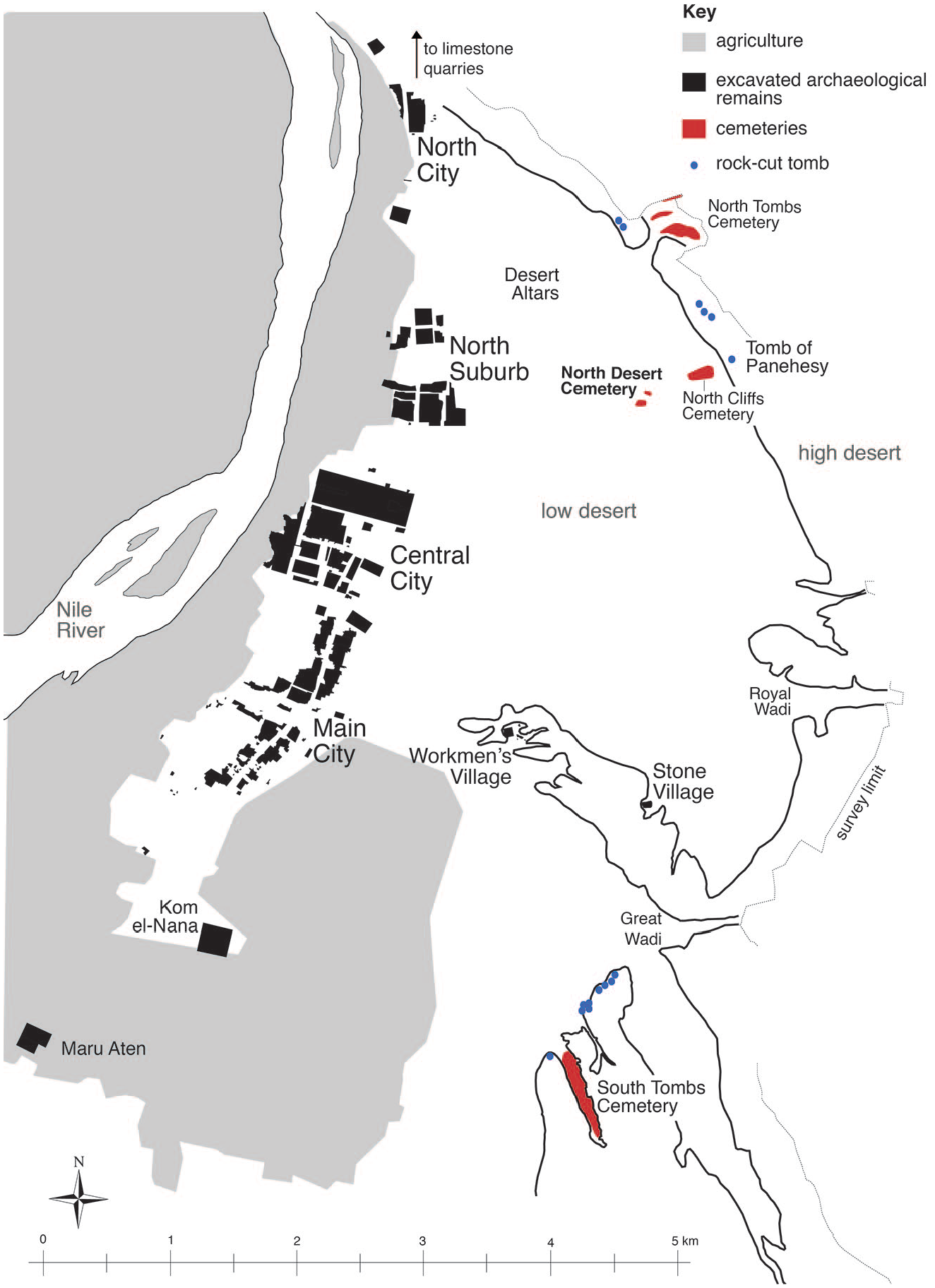
Map of Amarna showing the locations of the non-elite cemeteries (base map: Barry Kemp and Helen Fenwick, with additions by Anna Stevens).

A view from the North Desert Cemetery facing north-east across to the North Tombs.
Site setting
The North Desert Cemetery is located at the end of a low plateau of outcropping desert ‘marl’ clay and soft rock which branches across the low desert floor. The cemetery has three distinctive zones (see fig. 3):
An area of pit graves on a low sandy terrace on the desert floor immediately north of the low plateau.
A small group of seemingly robbed-out shaft-and-chamber tombs on top of the low plateau.
Graves situated around the sloping edges of the plateau.

Plan of the North Desert Cemetery showing the areas excavated in 2018. The contour lines are at 50 cm intervals (base map: Wendy Dolling).
Aims and fieldwork methods
The aims for the season were to open a series of test squares across the different zones, to collect a sample of human remains for comparison with those from the other Amarna cemeteries, and to acquire a preliminary understanding of the approach to burial here. Over the course of the season, a topographic plan was also made. A five-by-five metre grid was set out across the site and excavation was undertaken within a sample of these squares, in five main areas (fig. 3). Three groups of squares lay on the low desert terrace: squares AJ33+AJ34+AK33+AK34; AH36+AH37; and AD39+AE39. Another group was situated on the sloping northern edge of the low plateau: squares W32–X33. The fifth excavation area was located on top of the plateau, at a prominent robbed-out tomb (Tomb 1).
Desert terrace and plateau edge
On the desert terrace and sides of the low plateau, the excavation method was first to remove the layers of overburden: typically, a surface layer of gravel and sand, followed by a thin crust of orange ‘marl’. Below this, oblong patches of fill gradually begin to appear, being deposits that had accumulated in graves and robbers’ pits. These pit fills were then excavated one-by-one, and each burial photographed, planned and lifted. Nearly all of the graves this season had been looted, although the looters usually left at least part of the interment within the grave. The looting belongs to at least two main phases. One probably occurred in the distant past, but there is another more recent phase, likely to date within the past century. This more recent phase has left open robbers’ pits still visible on the surface of the site, while the pits from the earlier phase have been completely filled in by accumulations of sand.
Tomb 1
On top of the plateau at Tomb 1, the excavation first focused on removing a large spoil mound that encircled the mouth of the tomb shaft. The surface of the mound was removed entirely, before work focused on its western half, which was excavated down to gebel. The spoil was mostly sterile sand and marl dust, with occasional boulders, although in its lower horizon it contained a layer of mudbrick rubble. The mound likely represents at least two phases of looting at the tomb. Work then focused on clearing the tomb shaft of windblown sand, and modern rubbish, which exposed the entrance of a chamber to the east, cut into the natural clay and soft rock. The interior of the chamber was filled with windblown sand and collapse from the ceiling; it had been robbed of its original contents. A second chamber appears to open off the west side of the shaft, but there was no time this season to investigate it.
During the excavations, all deposits were sieved and all material culture and bioarchaeological material was collected. Each individual set of skeletal remains was given its own ‘Individual Number’. At the end of the season all of the graves were backfilled.
Results
A total of 32 pit graves, and part of Tomb 1, were excavated over the four weeks, yielding a total of 24 individuals. All but one of the individuals were recovered from the excavated pit graves; the remaining individual was recovered from the spoil around Tomb 1. Individual numbers are assigned during the excavations only once a set of skeletal remains can be matched with confidence to a grave. A few more individual numbers may be assigned when the human remains are studied in a future season. Initial observations in the field suggest that individuals of a broad age range were buried at this cemetery. It is too early to estimate the number of people interred here, but this is likely to number in the low hundreds. It is a much smaller burial ground than the South Tombs, North Tombs and North Cliffs Cemeteries.
Grave architecture and arrangement (pit graves)
The graves on the desert terrace and the edge of the plateau were simple oblong pits cut down into the sand, quite regular in shape and with vertical walls. No in situ evidence for superstructures was found, although these may often have taken the form of simple stone cairns. A reasonable number of loose boulders, which were perhaps used in grave cairns, were encountered in the bulk deposits and graves fills. One burial, of an infant, had a number of small boulders placed directly over the body in the bottom of the grave. A worked limestone slab found on the surface of the site might be the remains of a stela that once marked a grave, although it was very weathered. There was considerable variation in the orientation of the graves, although adjacent burials often followed a similar alignment. This is not obviously in response to landscape features, so it might be that these represent ‘plots’ of family or other groups.
Grave architecture (Tomb 1) 4
Tomb 1 on top of the low plateau comprised a vertical shaft measuring c. 3.2 by 1.1 m, lined at its base with mud brick and with a raised mortar floor. It opened to the east to a chamber. Little of the original walls or ceiling survived, having collapsed inwards and/or been truncated by looters, but the chamber likely measured c. 2.8 by 2.7 m. The entrance from the shaft opened onto the south-west corner of the chamber (fig. 4). The floor and lower 30–50 cm of the chamber walls were covered with a rough mortar, the same as on the floor of the shaft. In the north-east corner of the chamber was a small square structure made of mortared brick and boulders. A second such structure, badly damaged, was located in the south-east corner. The purpose of these emplacements is not clear, although they were perhaps coffin supports. Further (unexcavated) chamber/s may lie to the west. There was no direct evidence for any structure on top of the tomb, although the mouth of the shaft had been considerably widened by looters and this may have destroyed any structural remains. It is possible that the brick found in the spoil mound around the tomb originated from a superstructure, but it could also have come from the brick lining around the shaft.

The excavated chamber of Tomb 1. Top: views inside the chamber, showing the remains of two rough stone emplacements in the north-east and south-east corners. Below: view from the chamber into the shaft, showing the brick-lined entranceway (photo: Melinda King Wetzel).
Treatment of the body
As is the case at all of the non-elite Amarna cemeteries, the bodies had been prepared modestly for burial. Most individuals were wrapped first in textile and then rolled in a mat made of plant material (fig. 5). The textile was generally not well-preserved, although the matting was often in better condition. Examples of matting in gereed, tamarisk and finer materials, such as reed, were noted. Samples of matting were taken for future analysis. The presence of gereed matting at this cemetery is interesting, as this was rare among the excavated graves at the two other northern cemeteries (although common at the South Tombs Cemetery). 5 Two of the pit graves contained the badly preserved remains of wooden coffins. Both were rectangular box coffins. One unpainted coffin contained an infant. The other coffin was larger and had been painted. It was not well-preserved, but remains of vertical yellow bands on a black ground could be identified on its exterior. This coffin was located in square W32 on the slopes of the plateau and lay in a very deep rectangular grave, cut to imitate the shape of the coffin. Small fragments of a decorated wooden coffin were also found in the spoil heap that ringed Tomb 1. All the excavated pit graves accommodated a single individual. It is not yet clear how many individuals were buried in Tomb 1.
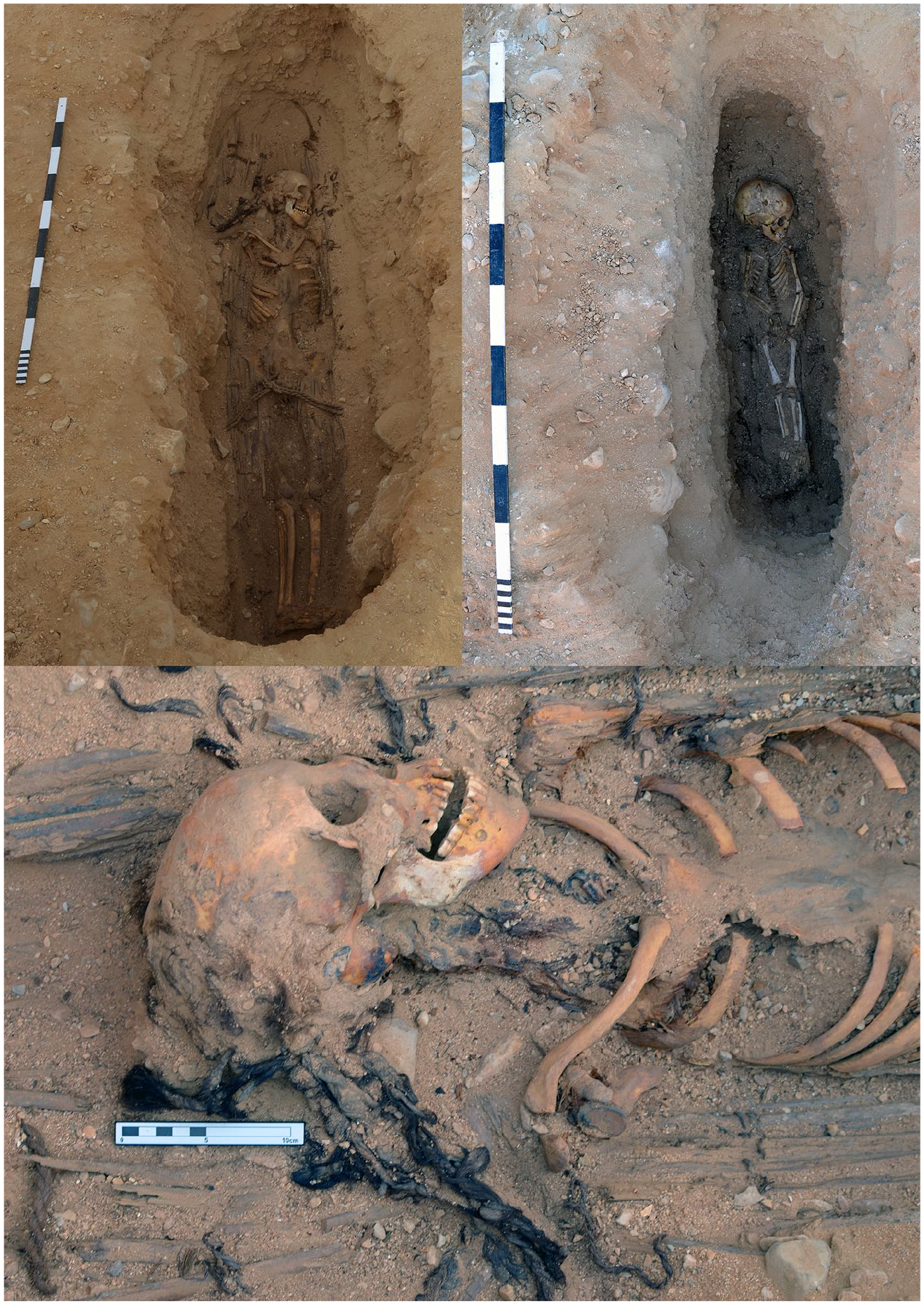
A sample of burials excavated at the North Desert Cemetery in 2018. Clockwise from top left: Ind. 3008, Ind. 3013 and Ind. 3008 again, showing its long braided hair, which included extensions.
Burial goods and offerings
Pottery was the most common find, predominantly from disturbed deposits. The pottery found seems initially consistent with the assemblages from the South Tombs and North Cliffs Cemeteries, however, the pottery remains to be analysed. A considerable quantity of Roman pottery was recovered, but this is likely connected with a period of looting or other secondary activity. Several examples of ‘spade sherds’ – potsherds reused as likely digging tools – were also recovered. A small number of other artefacts were found. Most were pieces of faience jewellery, the majority of which came from two burials. One grave, for a subadult, contained a group of finger rings and two sets of faience beads, which made up a necklace and a girdle. A nearby grave of an infant contained a short string of glass beads. One grave contained a dom-palm nut, but few other botanical remains were found.
Discussion
The North Desert Cemetery is a burial ground for a mixed population of adults and subadults who are again buried mostly in matting coffins and with occasional, simple burial goods such as faience and glass jewellery and pottery vessels. Although the skeletons and burial goods remain to be analysed, the cemetery seems initially to resemble the South Tombs and North Cliffs Cemeteries more closely than the very unusual North Tombs Cemetery (which contains mostly young individuals, often buried together). The small size of the North Desert Cemetery is unusual, however, as is the shaft-and-chamber tomb. The closest parallels to the latter occur at the Workmen’s Village and the Stone Village, both of which are built against the edges of a similar, although more prominent, plateau of marl clay. It is not yet clear where the people who were buried at the North Desert Cemetery lived, but it can be speculated that they were from the suburbs north of the Central City. The site has more of the feel of a small ‘community’ burial ground, as opposed to the large ‘public’ cemeteries elsewhere (especially the South Tombs Cemetery). Its focal point may be the chamber tomb/s on top of the low plateau – a prominent feature of the local landscape – which perhaps belonged to individuals who held elevated status within one particular sub-community of Akhetaten, but not to the degree of the city officials who were granted rock-cut tombs in the eastern cliffs proper. It is hoped that a further season of work will be possible at the North Desert Cemetery.
Skeletal analysis of individuals excavated from the North Cliffs Cemetery in Spring 2018
Gretchen R. Dabbs
Examination of the skeletal remains excavated from the North Cliffs Cemetery in Spring 2018 occurred from 26 October to 12 December 2019. The totality of the excavated sample was examined, including 57 distinct individuals, eighteen isolated skulls, and seven isolated mandibles. Isolated skulls and mandibles are those that cannot be associated with an individual or a grave. The presentation of demographic data is restricted to individuals, whereas the paleopathological discussions include the isolated skulls and mandibles where appropriate. As with other non-elite cemeteries at Amarna, the degree of overall preservation is extremely good in the North Cliffs Cemetery. Soft tissue is often preserved on the skeletal remains, with 24 individuals (42.1%) retaining some quantity of desiccated soft tissue. The degree of preservation varies from feet only to complete soft tissue preservation over the entire body. The presence of soft tissue precludes some skeletal analysis. Fifteen individuals (26.3%) have more than 50% of the soft tissue preserved. Combined with the small sample size, this preservation of soft tissue in such a large proportion of the sample suggests the findings of statistical analyses are likely to be affected and therefore the presentation of such is limited.
The demographic structure includes individuals of all age groups, 6 including infants and young children, who were all but absent from the North Tombs Cemetery. 7 Two infants (0–2.9 years) (3.5%) were encountered during the analytical work. Four individuals (7.0%) were estimated as early subadults (3.0–6.9 years). Twelve individuals (21.1%) were classified as late subadults (7.0–14.9 years). 39 individuals (69.6%) were classified as adults (over 15.0 years), but a near majority of these were classified as young adults, with nineteen individuals (33.3% of the sample analyzed from North Cliffs Cemetery) being aged between 15.0–24.9 years of age at death. Older adults are also represented, with five individuals (8.8%) having age estimates of 25–35 years, six individuals (10.5%) estimated to be 36–50 years and one individual (1.8%) estimated to be older than 51 years. An additional eight individuals (14.0%) were identified as adults, but no more precise estimate of age could be made from the remains available for analysis. Figure 6 illustrates the age structure of the North Cliffs Cemetery skeletal sample. Of the isolated skulls, fourteen are those of adults and four of subadults.
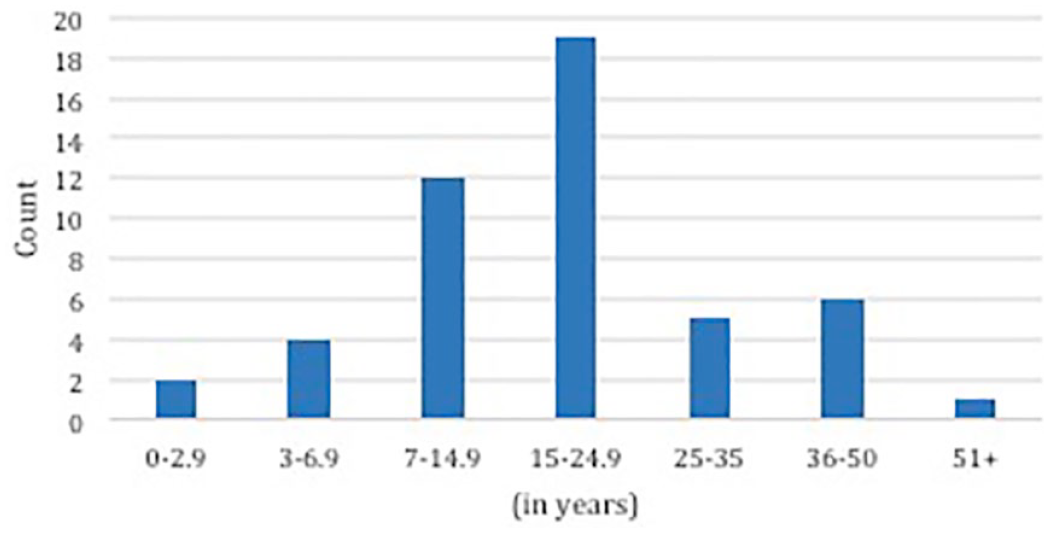
Age distribution of the analyzed skeletal sample from the North Cliffs Cemetery, individuals only; excludes eight individuals identified as ‘adult’ and isolated skulls.
Sex estimation was possible for 33 of the 39 adults in the skeletal sample. Eighteen individuals were identified as female (54.5%) and 15 as male (45.5%). Given the small sample size, this is essentially equal representation of both sexes. Figure 7 illustrates sex distribution within the sample.
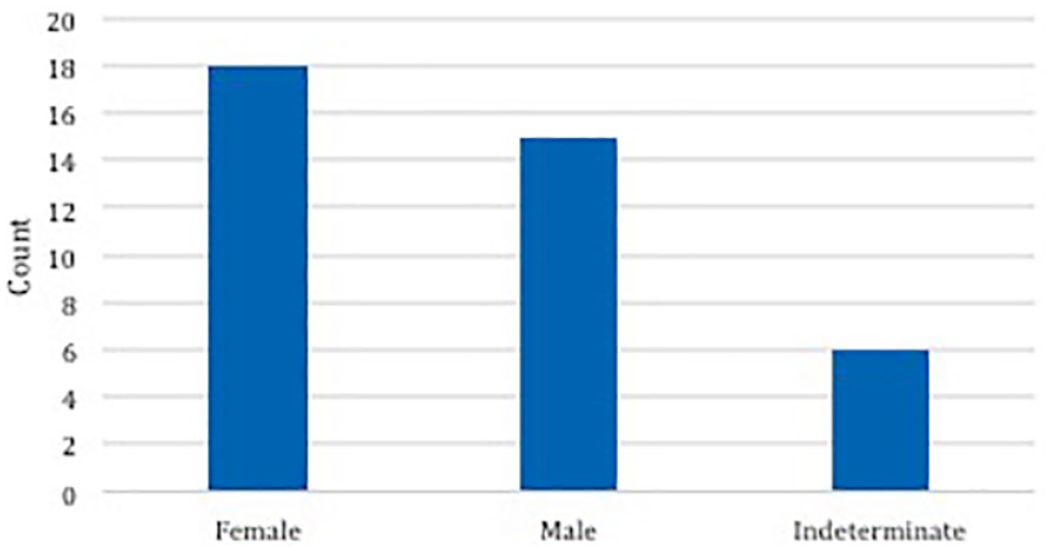
Adult sex distribution of the analyzed skeletal sample from the North Cliffs Cemetery (n=39).
As with the individuals excavated at other cemeteries at Amarna, the overall adult male and female statures are low, 8 although the average adult stature for both sexes is higher at the North Cliffs Cemetery than either the North Tombs or South Tombs Cemeteries. The average adult male stature is 164.0 cm (range 150.4–169.7 cm; n=11). The average adult female stature is 155.9 cm (range 147.8–166.3 cm; n=10). While the sample sizes remain too small for statistical analyses, figure 8 shows a comparison of mean stature for the three analysed cemeteries.
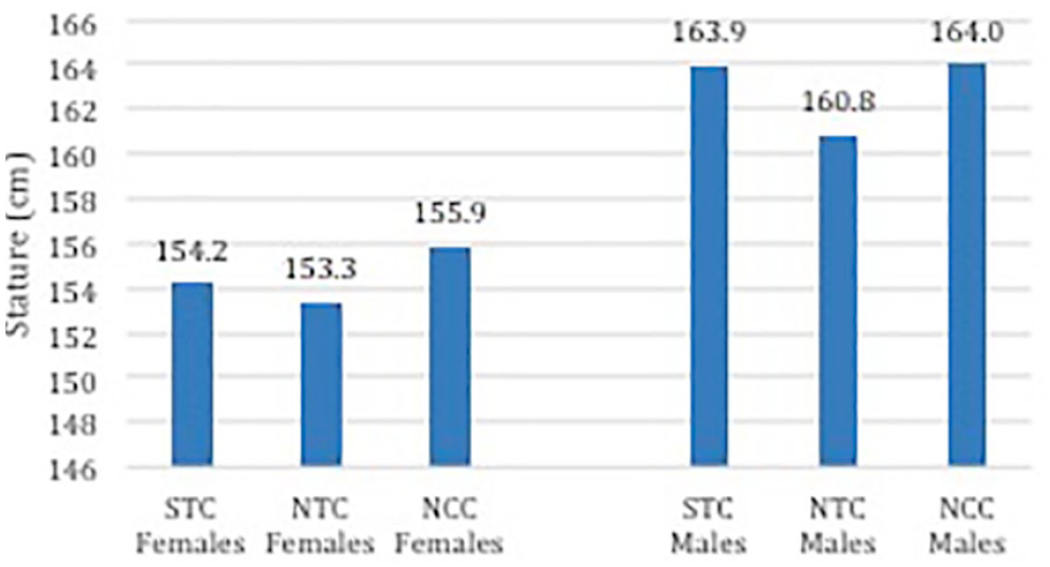
Average estimated stature for females and males at the three analysed Amarna non-elite cemeteries; estimated stature calculated using the formulae published by Raxter, et al., (American Journal of Physical Anthropology 136). Comparative data for South Tombs and North Tombs Cemeteries from published reports (Dabbs, et al., in Ikram, et al. (eds), Bioarchaeology; Dabbs, Bioarchaeology International 3:3, respectively).
Along with stature, the presence of linear enamel hypoplasia (LEH) on the permanent teeth is a non-specific measure of stressors, both physical and psychological, during the growth period. LEH are bands of reduced enamel thickness that represent periods where the rate of enamel production was slowed to a nearly imperceptible rate and indicate periods of extreme stress, where the body was attempting to stave off death. LEH, then, represents a survived period of stress and do not appear on the teeth of individuals who died as a result of the insult. Overall rates of LEH at the North Cliffs Cemetery are lower than observed in other cemeteries at Amarna, at 51.5% (17/33 individuals with at least one preserved anterior permanent tooth). Comparatively, the rates in the South Tombs and North Tombs Cemeteries are much higher, at 76.1% and 73.2%, respectively. Examining the presence of LEH by age group, specifically across the adult/subadult divide at 15 years, the frequency of LEH in the North Cliffs Cemetery sample is dichotomous, with the subadult sample showing only 22.2% (2/9 individuals) with LEH, while the adult sample has 62.5% (15/24 individuals). Additionally, only four individuals (of the 33 total observed) exhibit more than one LEH on a single tooth (12.1%).
As with the samples from other cemeteries at Amarna, the North Cliffs Cemetery sample exhibits high rates of Degenerative Joint Disease (DJD) in both subadults and adults in the vertebral column and other regions of the body. Overall, 63.2% of individuals in the cemetery exhibit DJD in an extra-vertebral joint and 73.5% of individuals exhibit DJD within the vertebral column. Rates among subadults are slightly lower than for adults, but not substantially so (subadults 57.1% 8/14 for both types; adults 65.1% 28/43 non-vertebral; 80.0% 28/35 vertebral). While these frequencies are high, and indeed higher than the samples for the South Tombs and North Tombs Cemeteries comparably, the severity of manifestation and variety of types of DJD is much lower in the North Cliffs Cemetery. For example, with the exception of a single likely trauma-related injury to an ankle joint, all of the non-vertebral trauma in the North Cliffs Cemetery is manifest as lipping around the occipital condyles (6/7 individuals; 85.7%). Conversely, within the North Tombs Cemetery, only 42.1% of non-vertebral DJD is manifest as lipping of the occipital condyles, while the remainder is largely represented as lipping of the articular facets of the feet (42.1%), which has been interpreted as an indicator of carrying heavy loads. 9 The absence of DJD in the feet of the North Cliffs Cemetery subadults suggests that while they may have been carrying loads on their heads, the loads were not as heavy as those of the North Tombs Cemetery, perhaps the difference between household-level chores and industrial-level work. Furthermore, the severity of vertebral DJD is less at the North Cliffs Cemetery and the manifestation is often in the superior and inferior articular facets and costal facets, not osteophyte development around the body margins, as is common in other cemeteries at Amarna (see figs 9, 10).
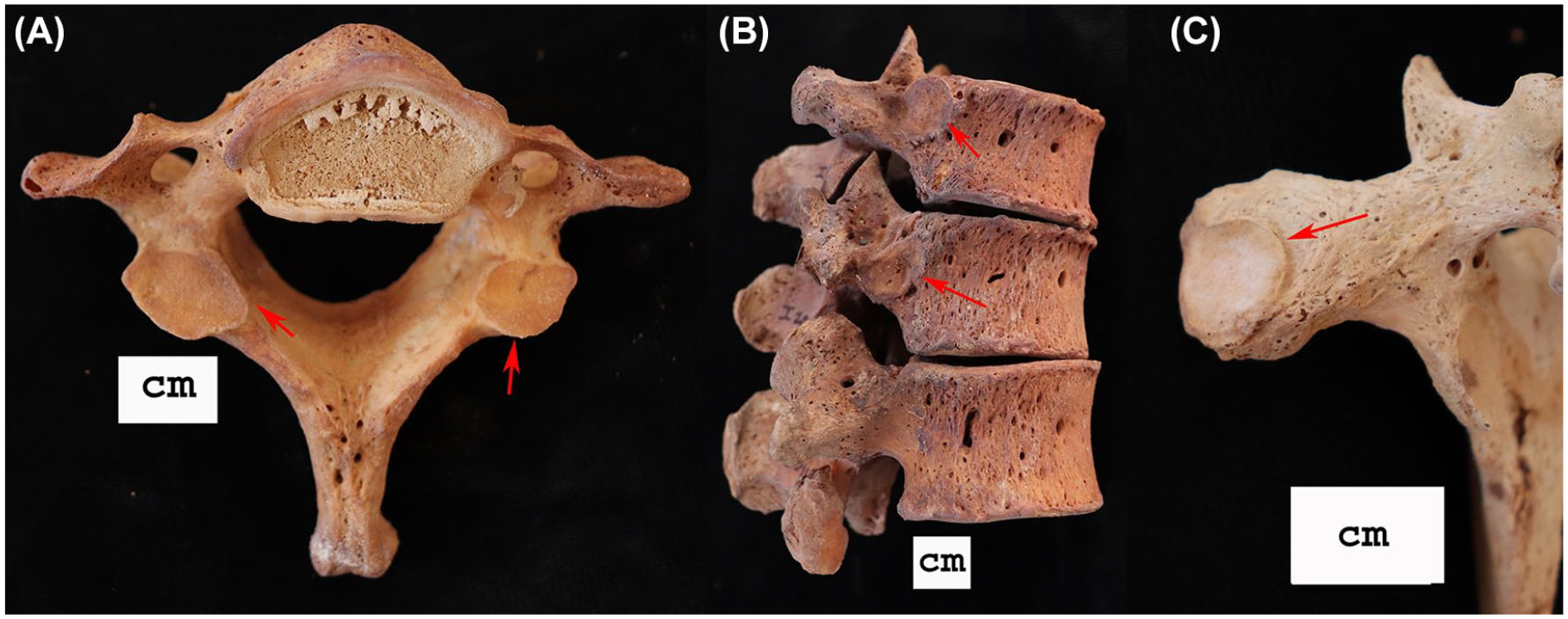
Typical Vertebral Degenerative Joint Disease observed at the North Cliffs Cemetery; A) lipping around the margins of the inferior articular facets; B) lipping around the costal facets of the body; C) lipping around the margins of the transverse process costal facet.
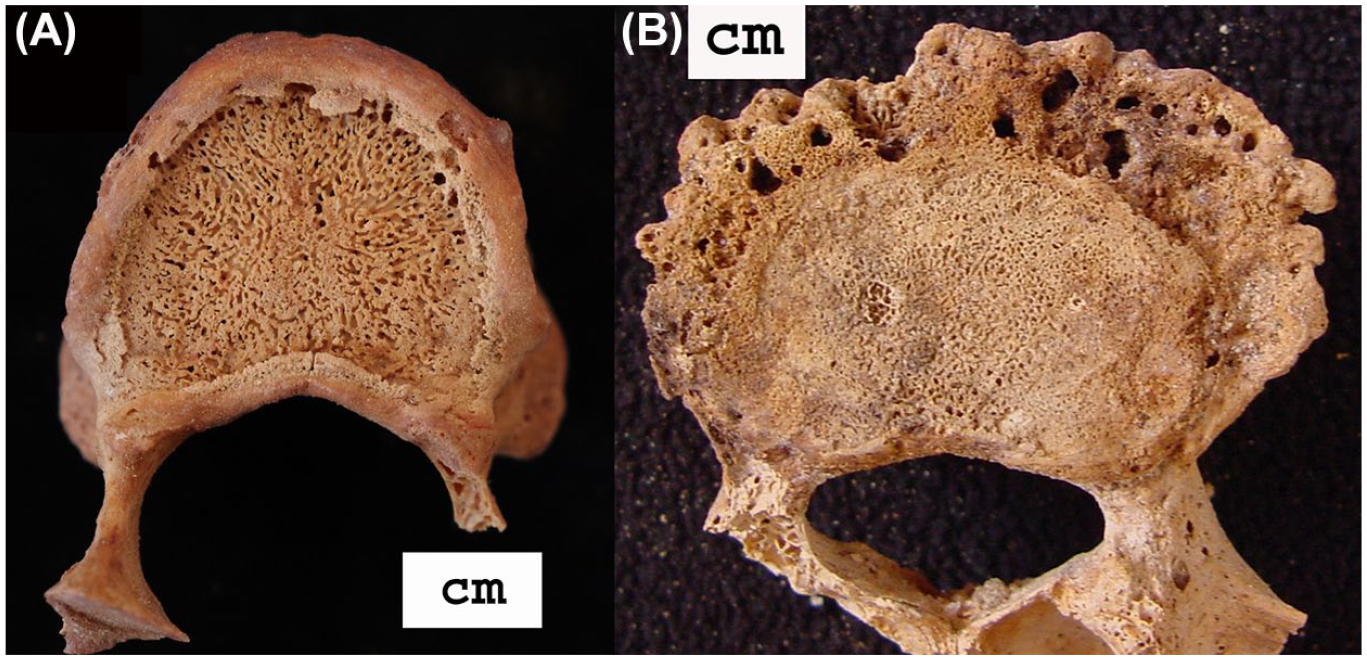
Examples of the typical degree of osteophyte development identified in the North Cliffs Cemetery (A) versus the South Tombs Cemetery (B).
Overall, the rates of traumatic injury in the North Cliffs Cemetery sample are comparatively low. Only 38.5% (20/52) of individuals with at least one complete skeletal element exhibit a fracture somewhere in the body. No subadult individuals exhibit any trauma anywhere in the body, although one subadult isolated skull did show a healed depression fracture of the posterior right parietal bone. Of particular interest is the complete lack of workload-related trauma to the spine in subadults, including compression fractures, spondylolysis, and Schmorl’s nodes. All three conditions were found in the subadults of both the South Tombs and the North Tombs Cemeteries. Trauma among adult individuals was highest for the spine (15/32; 46.9%) and arm (7/27; 25.9%). For adults, the overall rate of vertebral trauma is consistent with other Amarna cemeteries, including 39.4% (13/33) having compression fractures, 41.1% (14/34) having at least one Schmorl’s node, and 6.7% (2/30) exhibiting spondylolysis. As with DJD, the severity of traumatic injury is consistently lower in the individuals buried within the North Cliffs Cemetery. For example, the highest number of Schmorl’s nodes in a single individual here is ten, while at the South Tombs Cemetery 22 Schmorl’s nodes were observed on a single individual. Half of the individuals in the North Cliffs Cemetery with a Schmorl’s node (7/14) exhibit only one.
Overall rates of malarial infection 10 among the individuals buried in the North Cliffs Cemetery are substantially lower than those for individuals in South Tombs or North Tombs Cemeteries. Only 27.8% of individuals within the North Cliffs Cemetery were affected by malaria, which is one half (South Tombs Cemetery) to one third (North Tombs Cemetery) of what is observed at other non-elite cemeteries at Amarna. This value, however, should be considered with caution, as the number of individuals for whom a full assessment of the five criteria for malarial infection was possible is quite low. Only eighteen individuals in total were assessed for malarial infection, including only four subadults.
Discussion
Overall, the picture of life in ancient Egypt provided by the North Cliffs Cemetery is complicated and is muddled by small sample sizes and extreme soft tissue preservation. Seemingly, some aspects are clear. The biological toll of life at the ancient city clearly varied for different subgroups of the city, but exactly what those subgroups were within the city are unclear. For those individuals who were buried within the North Cliffs Cemetery, it is clear that the biological toll of city life was not as high as for those buried in other cemeteries. This is most clearly presented through an assessment of childhood health. Higher adult stature, lower linear enamel hypoplasia rates, and low levels of malarial infection clearly suggest the biological cost of life at the ancient city was lower for individuals ultimately buried in the North Cliffs Cemetery.
Other indicators of health and workload, especially evidence of traumatic injury and degenerative joint disease, suggest a more nuanced approach is necessary. While the individuals in the North Cliffs Cemetery exhibit traumatic injury and DJD generally at frequencies on par with their counterparts at the other Amarna cemeteries, the degree and types of trauma and DJD are different and in all cases suggest individuals in the North Cliffs Cemetery were biologically taxed at lower levels than individuals of similar age at the South Tombs Cemetery, and especially at the North Tombs Cemetery.
Finally, the skeletal analysis of the North Cliffs Cemetery does leave some questions to be answered, the most obvious of which is ‘where are the infants?’. It is immensely possible that the dearth of infants in the sample is reflective of the small sample size and that an expansion of the excavated areas at this cemetery would yield more infants simply as a chance factor of where burials were placed within the living landscape of ancient times. There is also potential that infants were intentionally buried in a different, as of yet unidentified, area either within the city, such as under house floors, 11 or perhaps in a specially designated section of the cemetery or a separate cemetery entirely. Specialised cemeteries for subadults of various ages are known from a small number of other New Kingdom sites, particularly at Deir el-Medina and Gurob. 12 Of course, the North Tombs Cemetery at Amarna is another example of a cemetery for a specific age group, if slightly older than the missing elements of the North Cliffs Cemetery.
Other archaeological explanations include differential looting, focused on small, potentially shallow burials, of likely subadults. The North Cliffs Cemetery has been very badly looted. 13 Preliminary analysis suggests that of the 72 grave-like features excavated at here, 27 (37.5%) were devoid of human remains, but had sufficient evidence of burial treatments (matting, textile, etc.) to suggest the structure was likely originally used as a grave. Some of these pits, at least, were relatively small. 14 Looting activity typically resulted in skeletal remains being displaced to the ancient ground surface and/or being disturbed within the grave. The degree of mineralization of infant skeletal remains suggests they would not be preserved under exceptionally adverse climate conditions, specifically sun exposure of the surface.
Finally, another contributing factor to the dearth of infants could be the disruption of moving to the new capital city and the resulting stress of navigating the new physical and social environments created by this transition, which may have lowered fertility and/or birth rates. If fewer infants are being born, fewer infants would be dying and therefore fewer infants would be included in any cemetery. Approximately 16% of the South Tombs Cemetery consists of infants, which is somewhat lower than expected for an ancient city, where infant mortality can reach 30% under ideal conditions. 15 Obviously, Amarna was not a city of ideal conditions and therefore we should expect at least this level of infant representation in the skeletal samples. Such an explanation is consistent with observations of modern migrants and refugees. One study demonstrates decreased fertility among refugees from the Tamasheq women of Mali during years of rebellion and forced migration of refugees (1985–98). Primary drivers of reduced fertility include physical and psychological stress, spousal separation, and loss of libido. After refugees settled in camps, the fertility levels increased to levels similar to those of non-refugee women in the same region. 16 It is impossible to quantify loss of libido in an ancient population, and spousal separation is less likely in the Amarna context, given the relocation of entire families to the new city. The physical and psychological stresses of forced refugee relocation, however, might find parallel in the abrupt transition to Amarna and the possibility that at least some segments of the population may have been under increased workload and/or dietary stress as the new city found its feet.
In sum, the skeletal analysis of the human remains from the North Cliffs Cemetery presents a picture of a generally less-biologically taxed section of the population than is present in either the South Tombs or North Tombs Cemetery. The diversity of types of injuries and degeneration of the joints, along with the lower severity levels of all conditions reflective of heavy workloads, suggests this population was engaged in activities outside of the heavy work of city building, but reflects the cost of living in the harsh landscape of Middle Egypt, and potentially the biological consequences of the transition to Amarna, elements shared by everyone who lived at the ancient city. Higher adult stature and low rates of linear enamel hypoplasias demonstrate that the biologically protected nature of this population began during childhood.
Hair from the North Cliffs and North Desert Cemeteries
Jolanda E. M. F. Bos
The focus of the hair research at Amarna lies in understanding how the different hairstyles reflect aspects of social stature as well as ritual practices. In this preliminary report the results of two seasons are presented. The autumn 2018 study season focussed on the hair samples from the North Cliffs Cemetery, where excavations have yielded eight desiccated bodies with hairstyles preserved to a certain extent, but also six skulls with partial hairstyles preserved and a number of loose hair fragments, registered as 168 separate registry entries. 17 The hairstyles were studied, documented and rewrapped for storage. In the autumn 2019 study season, hair remains from the North Desert Cemetery were analysed. This cemetery has not yielded any intact hairstyles thus far.
Research method
The hair samples were documented, registered in a database and photographed. Complete hairstyles were treated differently from loose hair fragments. This is due to their complexity and state of preservation. The fragility of the complete hairstyles prohibited full counting and documentation of all individual hairstyle features. Therefore, with the more complex hairstyles, individual features such as braids and extensions were estimated. Where possible, the individual hairstyle features were measured, the braiding techniques described, and the hair remains photographed. The hairstyling technique and hairstyle typology were also documented. The hair analysis was mainly done macroscopically, with microscopic magnification only used where necessary for the clarification of different hairstyle features.
North Cliffs Cemetery
In total, 76 registration numbers were given out, eight of which were ascribed to (near) intact hairstyles, and all others to loose hairstyle fragments. These loose fragments showed extensions, detached braids and loose hair without obvious styling. Several different hairstyles were encountered, some comprising short styles with the hair cut along the shape of the skull and without decorative elements, and long braided hairstyles with several extensions. The widths of the braids varied from 2–20 mm, and the diameter of the hair extension bulbs from 3–11 mm. The loose hair fragments that were studied showed several extensions per braid and per individual. Braiding techniques are fairly simple, displaying 3-strand braids, usually around 10 mm thick, and worn approximately 20–30 cm long, consistent with finds from the other Amarna cemeteries. The braids were mostly tightly braided with an inward braiding technique. In this technique – alternating from the left and the right side – the outer hair strands pass (directed inwards) over the centre strand, forming the braid. In an outward braiding technique, the outer strands pass alternatively (directed outwards), under the centre strand, forming the braid.
Most of the desiccated individuals wore loose, short hair, often cut to no more than a few centimetres in length. One of these individuals with short hair very clearly had a beard. Another complete hairstyle with long hair was quite remarkably well-preserved (fig. 11). It presented over 70 extensions, dressed into the hair in different layers, rows and columns. This individual (Ind. 2030, a 35–55 year old female) wore extensions of different donors, one type of extension being remarkably homogeneous and medium brown in colour. The uniformity of this hairstyle is unprecedented in the Amarna dataset and suggests a certain professional level of hairdressing. One other individual with shoulder-length hair was studied, without hairstyling features present (such as obvious cutting, braiding, or extensions).
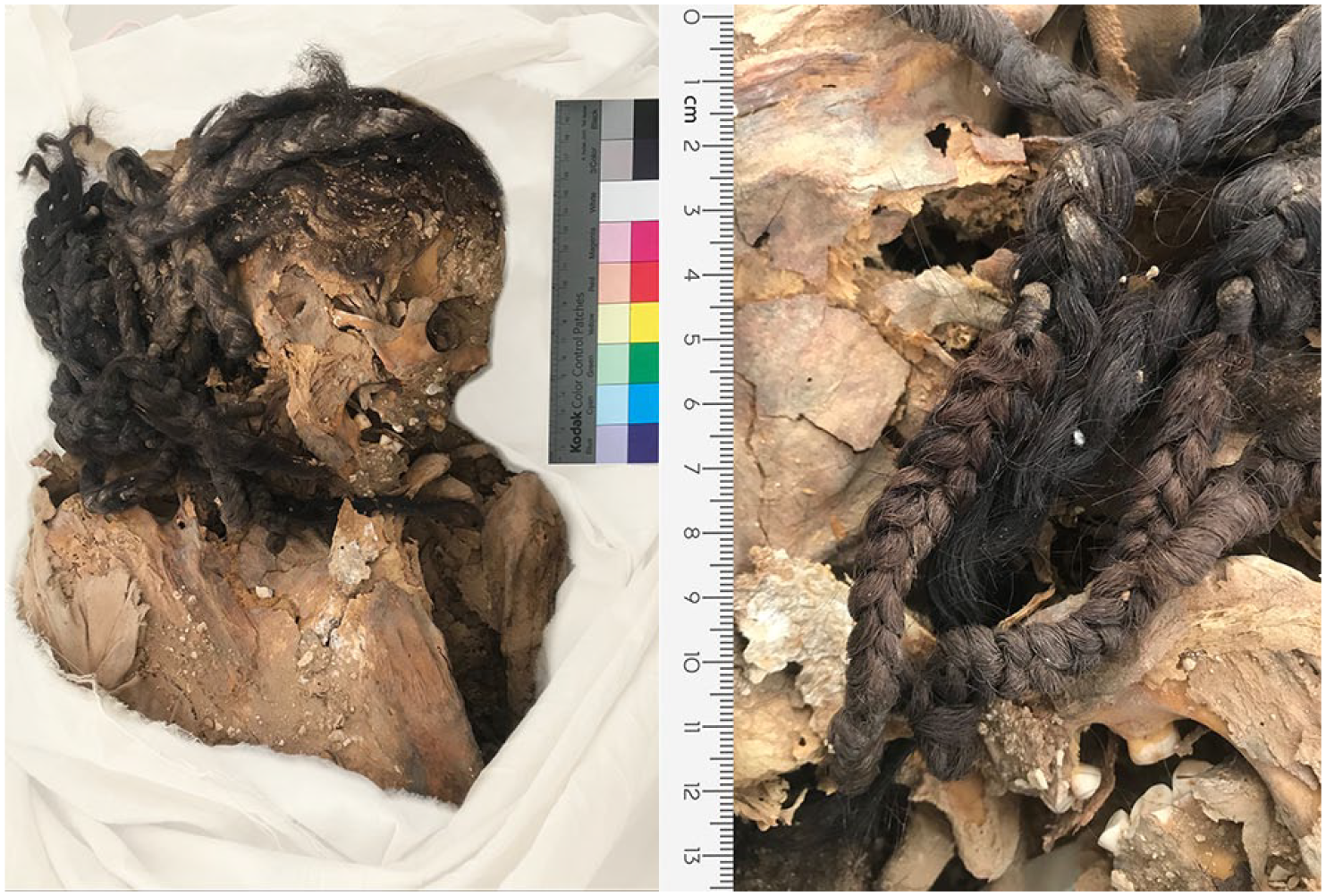
Ind. 2030, with a well-preserved hairstyle that incorporates a large number of extensions, some of which are strikingly uniform in their style and light brown colour (right).
The hair in the North Cliffs Cemetery is very well- preserved and its plasticity is outstanding. The number of excavated individuals from this cemetery is much smaller than the South Tombs and North Tombs Cemetery datasets. More research needs to be done on the material, but preliminary results suggest that the character of the North Cliffs Cemetery is similar to that of the South Tombs Cemetery, but less like the North Tombs Cemetery. Some of the hairstyles showed a remarkable consistency in the production of extensions and braids, suggesting a hairdressing quality that exceeds the South Tombs Cemetery hair samples and other Amarna cemeteries so far studied. Some individuals wearing extensions show more than one donor and a clear layering of the inserted extensions. The braid ends and the manner in which hairstyles were finished were also studied. Several different techniques of ending braids could still be discerned, showing looped and tied braid ends, round curls and pipe-curl ends, some of which were formed with extensions.
North Desert Cemetery
In total, 28 registration numbers were given out to hair fragments excavated in the 2018 autumn field season. Only loose hairstyle fragments were studied, with no completely preserved heads of hair found thus far. Braids of different widths (ranging from 2–30 mm) were found, as well as hair extensions (diameter of the extension knobs ranging from 2–15 mm; see fig. 5). All individuals had brown to dark brown hair. The loose hair fragments that were studied showed more than one row of extensions per braid. Braiding techniques are fairly simple, displaying 3-strands with approximately 20 cm long braids, usually around 10 mm thick. This is generally consistent with the South Tombs Cemetery, in particular. The braids were mostly tightly braided with an inward braiding technique. Although the hair fragments from this cemetery were very incomplete, the preservation of the extensions was good and techniques of attaching and producing the extensions could still clearly be discerned. The extensions were fixed into the hair in two different ways: they were either braided or tied in. In terms of production, swatches of hair could be bundled and tied together with other, thin hair clumps, or a swatch of hair seems to have been folded and then wound with another hair bunch to form the extension. Often, a thin cluster of hair was kept separately, protruding from the extension bulb. After the extension was formed, this thin cluster was then braided for a few millimetres and the braid then used to knot or braid the extension into the wearer’s hair. These results show strong similarities with hair fragments from the South Tombs Cemetery. 18
Work on the hair will be continued in future seasons.
Textiles from the North Tombs and North Cliffs Cemeteries
Amandine Mérat
North Tombs Cemetery
The study of the North Tombs Cemetery textiles, which commenced in spring 2018, 19 continued from 18 November to 1 December 2018. Following the protocols established in 2017 for the study of the South Tombs Cemetery textiles, 20 a first sorting was made to separate the better-preserved samples from the degraded ones in too poor a condition to be analysed. For example, some samples had degraded due to humidity and/or acidity and become very hard, making it impossible to analyse such features as fibre or weaving structure, thread- and layer-counts, and so on. 28 sets were selected for analysis. One consists of a large number of soft textiles in bleached linen (not quantifiable). Another comes from a single grave and comprises hundreds of fragments of covering, filling and wrapping textiles. The remaining 26 sets represented a total of c. 400 samples, among which around fifteen items were loose fragments, often attached to hair braids, coming from skulls. Initial observations reveal more variety in the type of structures and techniques used here than in the South Tombs Cemetery. Bleached linen fabrics were found in ten sets, often used together with undyed linen fabrics as covering and wrapping textiles, or used as ribbons for binding. Two samples preserve selvedges, rolled before they were sewn using hemming stitches and sewing threads in bleached linen (Z2S2s), while another sample in undyed linen also bears a row of hemming stitched in undyed linen (Z2s). Four sets were preserved samples of tabby weaves in undyed linen, four more of basket weave and three of half-basket weave, and the rest were woven in faced weaves. Rows of loops and plaited end-border fringes were seen on several fragments of basket weaves. Raw materials were also found, consisting of two bunches of threads (s-spun yarns for one and S2s threads for the other). With a better condition of preservation, the full layering of some fragments of covering and wrapping textiles are still visible and will be fully analysed and presented in the final publication.
North Cliffs Cemetery
The textiles excavated at the North Cliffs Cemetery, which were subject to an initial assessment in spring 2018, 21 were more fully examined from 22 November to 1 December 2019. 22 The work focused on sixteen desiccated bodies, which had particularly well-preserved textile remains. As at the South Tombs and North Tombs Cemetery, the sample was dominated by faced weaves, identified as warp-faced weaves where a selvedge was preserved. A few half-basket, basket and tabby weaves were also found. Only linen was identified, mostly bleached, and sometimes undyed. Very few specific technical details such as selvedges and borders were seen, while no decoration of any kind was found.
Noticeable differences were observed in the way the dead were prepared for the afterlife and it was possible to establish a draft typology. Five main types were identified:
Type 1: the most common type (found on seven individuals), which consists of wrapping the dead in bandages, starting with each appendage individually, then together with the rest of the body, with some filling textiles used to pad out the shape, before the body was bound with textile ribbons.
Type 2: seen twice, possibly three times, which presents the same preparation as Type 1, with bandages, wrappings and binding ribbons, before the preparation of the body is completed by wrapping, enveloping or inserting it in a large piece of fine cloth, used as a shroud that is knotted or twisted under the feet.
Type 3: seen once, where the body is only wrapped, enveloped or inserted in a shroud in fine cloth (as in the last preparation stage of Type 2) with no other preparation beforehand.
Type 4: seen 4 times. Here, large pieces of coarse textiles were used to envelop the deceased, mostly just once, but in one case two times. The ends were left pleated on the torso.
Type 5: seen only once, and comprising burial in a garment, here a bag-tunic. The tunic was made in a warp-faced weave cloth. Floating warps were fixed by a roll and sewn hem, using Z2s sewing threads in bleached linen. The neck opening was also finished by a roll and sewn hem. The sides were sewn inside out under the arms, with a blind hem and stem stitches. Whether the tunic was worn during life or was made for the purpose of the burial is impossible to know, but it is a type of garment that would have been commonly worn at the time by men and women alike.
Two other garments were also seen on two other bodies: one headband, associated with Type 4 wrapping (Ind. 2012, a 16–23 year old male), and a possible loincloth, associated with Type 2 wrapping (Ind. 2047, a 9–13 year old). Now that the typology has been drafted, the next step is to return to the South Tombs and North Tombs assemblages, which were in a much poorer state of preservation, in order to try and match the better-preserved fragments with the preliminary typology. This way we hope to be able to establish the function of as many of the textile samples as possible in the preparation of the dead and build up a comparative picture across the different cemeteries.
The North Cliffs Cemetery Ceramic Assemblage
Anna Garnett
The study of the ceramic assemblage from the North Cliffs Cemetery continued in November 2019, following initial observations by Pamela Rose in 2018. 23 The majority of the assemblage examined thus far represents closed forms of Nile silt clay, including ‘beer jars’, with sherds from large open vessels (hearths) also present in smaller quantities. 24 Marl clay sherds are notably rarer but include fragments of miniature vessels, a type also represented in the South Tombs Cemetery corpus. Reused ‘spade sherds’ of varying sizes occur frequently in the burials, the majority being of Nile silt clay with significantly fewer reused marl clay sherds. A small number of Late Roman sherds may indicate the date of a phase of robbery.
Much of the assemblage is regrettably of poor condition due to water and salt damage, meaning that much surface detail is now lost. Nonetheless, whilst the poor condition of the sherds overall often prevents joins being made across contexts, visual study suggests that reconstructions may reflect the pattern of post-depositional disturbance across the site. As noted by Pamela Rose in her initial study, the pottery is broadly consistent with forms from the South Tombs Cemetery. Further study of this material will help to shed light on the socioeconomic status of the burials and facilitate inter-site comparisons across the two cemeteries.
Site Management
Gemma Tully and Anna Stevens
Autumn 2018 saw the continuation of a site management initiative launched in partnership with the MoTA in 2017. 25 The project team comprises Kate Spence (PI), Gemma Tully, Anna Stevens, Barry Kemp (all University of Cambridge), Yasmin el-Shazly (PI), Rasha Kamal, Amr el-Tibei, Shreen Amin, Nagwa Bakr and Mohammed Abd el Fattah (all MoTA). The project aims to address the increasing loss of antiquities land at Amarna and develop the potential of the Amarna Visitor Centre to help engage local audiences and raise awareness of the site. In autumn 2018 we were able to test and modify several project outputs, with the help of MoTA colleagues Mr Hamada Kellawy, Mr Fathi Awad and Mr Helmi Hussein; namely, the Site Management Plan, Site Signage, Guidebook and Children’s Book. The Site Management Plan is now available online. 26 The Signs were installed in 2020, the Children’s Book has been printed and the Guidebook will appear in 2021.
Footnotes
Acknowledgements
We are grateful to the Egyptian Ministry of Tourism and Antiquities for permitting and facilitating the work at Amarna, with particular thanks to the staff of the Minia and Mallawi offices. Our site inspectors in autumn 2018 were Ms Martha Atef Eesa and Ms Asmaa Adel Wadee, and our magazine inspectors in autumn 2018 and 2019 were Mr Tharwat Shawky Demain and Mr Mohamed Abdel Mohsen, to whom we owe many thanks. The Amarna Project is a research expedition of the McDonald Institute for Archaeological Research, University of Cambridge, and is directed by Barry Kemp.
Funding
The author(s) disclosed receipt of the following financial support for the research, authorship, and/or publication of this article: The excavations at the North Desert Cemetery were funded by a National Endowment of the Humanities grant awarded to Southern Illinois University in partnership with the Amarna Project (PIs Dr Gretchen Dabbs and Dr Anna Stevens). 27 The outreach and site management project was funded by a Newton-Mosharafa Institutional Links grant awarded to the University of Cambridge and the Egyptian Ministry of Antiquities (PIs Dr Kate Spence and Dr Yasmin El Shazly).

1
B. Kemp, ‘Tell el-Amarna 2005–6’, JEA 92 (2006), 21–56; B. Kemp, ‘Tell el-Amarna, 2006–7’, JEA 93 (2007), 11–35; B. Kemp, ‘Tell el-Amarna, 2007–8’, JEA 94 (2008), 13–44; B. Kemp, ‘Tell el-Amarna, 2008–9’ JEA 95 (2009), 11–27; B. Kemp, ‘Tell el-Amarna, 2010’, JEA 96 (2010), 1–21; B. Kemp, ‘Tell el-Amarna, 2011–12’, JEA 98 (2012), 1–7; B. Kemp, ‘Tell el-Amarna, 2012–13’, JEA 99 (2013), 2–20. Also B. Kemp, A. Stevens, G. R. Dabbs, M. Zabecki, and J. C. Rose, ‘Life, Death, and Beyond in Akhenaten’s Egypt: Excavating the South Tombs Cemetery at Amarna’, Antiquity 87:335 (2013), 64–78.
2
A. Stevens, G. R. Dabbs, M. Shepperson, and M. King Wetzel, ‘The Cemeteries of Amarna’, in B. Kemp, ‘Tell el-Amarna, 2014–15’, JEA 101 (2015), 17–27; A. Stevens and G. R. Dabbs, ‘The North Tombs Cemetery Excavations and Skeletal Analysis’, in B. Kemp, ‘Tell el-Amarna, Spring 2017’, JEA 103:2 (2017), 137–49.
3
A. Stevens, G. R. Dabbs, C. Rogge, P. Rose, A. Mérat, J. Bos, J. Williamson, A. Garnett, L. Skinner, J. Dawson, A. Bettum, and G. Tully, ‘Tell el-Amarna, autumn 2017 and spring 2018’, JEA 104:2 (2018), 121–44; A. Stevens, G. Dabbs, A. Mérat, and A. Garnett, ‘The North Cliffs Cemetery at Amarna’, EA 56 (2020), 4–9.
4
Tomb description by Melinda King Wetzel.
5
A. Clapham, ‘Archaeobotany from the South Tombs and North Tombs Cemeteries’, in Stevens, et al., JEA 104:2, 138.
6
Age and sex estimation techniques used in this project are fully described previously, see G. R. Dabbs, J. C. Rose, and M. Zabecki, ‘The Bioarchaeology of Akhetaten: Unexpected Results from a Capital City’, in S. Ikram, R. Walker, and J. Kaiser (eds), Bioarchaeology of Ancient Egypt (Leiden, 2015), 36.
7
North Tombs Cemetery demographic data is available, see G. R. Dabbs, ‘Bioarchaeology of the Non-elite North Tombs Cemetery at Amarna: A Preliminary Assessment of the Non-elite Individuals of the North Tombs Cemetery at Tell el-Amarna, Egypt’, Bioarchaeology International 3:3 (2020), 174–86.
8
Stature calculated using published formulae in M. H. Raxter, C. B. Ruff, A. Azab, M. Erfan, M. Soliman, and A. El-Sawaf, ‘Stature Estimation in Ancient Egyptians: A New Technique Based on Anatomical Reconstruction of Stature’, American Journal of Physical Anthropology 136 (2008), 147–55.
9
Interpretation based on clinical literature showing excess weight can lead to increased levels of osteoarthritis of the foot joints. See C. Frey and J. Zamora, ‘The Effects of Obesity on Orthopaedic foot and Ankle Pathology’, Foot & Ankle International 28:9 (2007), 996–9.
10
Diagnostic criteria for malarial infection published in N. Smith-Guzman, ‘The Skeletal Manifestation of Malaria: An epidemiological approach using documented skeletal collections’, American Journal of Physical Anthropology 158:4 (2015), 624–35.
11
Although evidence of this practice at Amarna is currently limited, see A. Stevens, Private Religion at Amarna: The Material Evidence (Oxford, 2006), 209–10.
12
P. Onderka and J. Toivari-Viitala, ‘Eastern Cemetery Reconsidered’, in H. Navrátilová, J. Toivari-Viitala, A. Hallmann, A. Hilbig, K-H. von Stülpnagel, and H. Svobodová (eds), The Deir el-Medina and Jaroslav Černý Collections (Prague, 2014), 60–3.
13
Stevens, et al., JEA 104:2, 125.
14
See Stevens, et al., JEA 104:2, figs 6–7.
15
For more information on infant mortality in ancient times see E. Scott, The archaeology of infancy and infant mortality (BAR IS 819; Oxford, 1999).
16
17
See also J. Bos, ‘Hair from the North Tombs and North Cliffs Cemeteries’, in Stevens, et al., JEA 104:2, 42.
18
J. Bos and L. Beukenholdt, ‘Human hair from the South Tombs Cemetery’, in Kemp, JEA 100, 18–21.
19
A. Mérat, ‘Textiles from the Amarna cemeteries’, in Stevens, et al., JEA 104:2, 140–1.
20
A. Mérat, ‘Textiles from the South Tombs Cemetery’, in Kemp, JEA 103, 149–50.
21
A. Mérat, ‘Textiles from the Amarna cemeteries’, in Stevens, et al., JEA 104:2, 140–1.
22
See also A. Mérat, ‘New insights on burial textiles’, in Stevens, et al., EA 56, 5–6.
23
P. Rose, ‘Pottery from the North Tombs and North Cliffs Cemeteries’, in Stevens, et al., JEA 104:2 (2018), 137–8.
24
See A. Garnett, ‘Ceramic Study’, in Stevens, et al., EA 56 (2020), 7.
25
27
Any views, findings, conclusions or recommendations expressed here do not necessarily represent those of the National Endowment for the Humanities.