



Abstract
Fieldwork at Amarna from autumn 2020 through autumn 2021 included a second season of excavation at the North Desert Cemetery, and the continuation of several post-excavation projects. Those reported on here are the preliminary study of skeletal materials and hair from the North Desert Cemetery itself, along with the ongoing study of textiles from the South Tombs and North Cliffs Cemeteries. Site management initiatives included the construction of two protective boundary walls at the north end of Amarna.
Keywords

Introduction
This preliminary report summarises work undertaken on site by the Amarna Project 1 during two periods: December 2020 to March 2021 and November to December 2021. These saw excavations at one of the non-elite cemeteries (the North Desert Cemetery), the recording of materials stored in the on-site magazines, and a project to build two lengths of protective walling near the Desert Altars and the North City.
Excavations at the North Desert Cemetery (A. Stevens)
Background
In late 2021, the Amarna Project continued its long-term study of the non-elite cemeteries of Amarna, after a three-year break in the excavation programme, stemming largely from the Covid-19 pandemic. The study of Amarna’s cemeteries began in 2005, and focussed initially on a large burial ground near the South Tombs (the South Tombs Cemetery, investigated from 2005–13). 2 Since 2015, it has targeted three cemeteries at the northern end of the site (fig. 1): a large cemetery in a wadi between North Tombs 2 and 3 (the North Tombs Cemetery, excavated in 2015 and 2017), 3 a cemetery on the desert floor below North Tomb 6 (the North Cliffs Cemetery, excavated in Spring 2018), 4 and a smaller burial ground located around 600 m west of the North Tombs (the North Desert Cemetery, excavated in Autumn 2018). 5 The latter was the focus of our 2021 excavations, which ran from 6 November to 19 December. The excavation team comprised Anna Stevens and Melinda King Wetzel (site supervisors), Gretchen Dabbs (bioarchaeological director), Sarah Ricketts, Nick Brown, Sofie Schiødt and sixteen workmen from El-Hagg Qandil and El-Till: Waleed Mohamed Omar, Ahmed Mokhtar Mahmoud, Reda Omar Mohamed, Abdel Hafiz Abdel Aziz, Hussein Merai Nassar, Abdel Malek Mohamed, Mohamed Saleh Osman, Ahmed Mohamed Abdel Moyein, Bakr Amin Abdel Rahman, Abu Zeyd Ezz El Din, Mohamed Rabia Fatih, Mohamed Mahmoud Mohamed, Shahata Mohamed Sayed, Yahya Saddiq Abdel Fattah, Nassar Sayed Nassar and Mohamed Rafat Rabia. The rest of the research team comprised Amandine Mérat (textile study), Jolanda Bos (hair study) and Alice Salvador (illustrator).
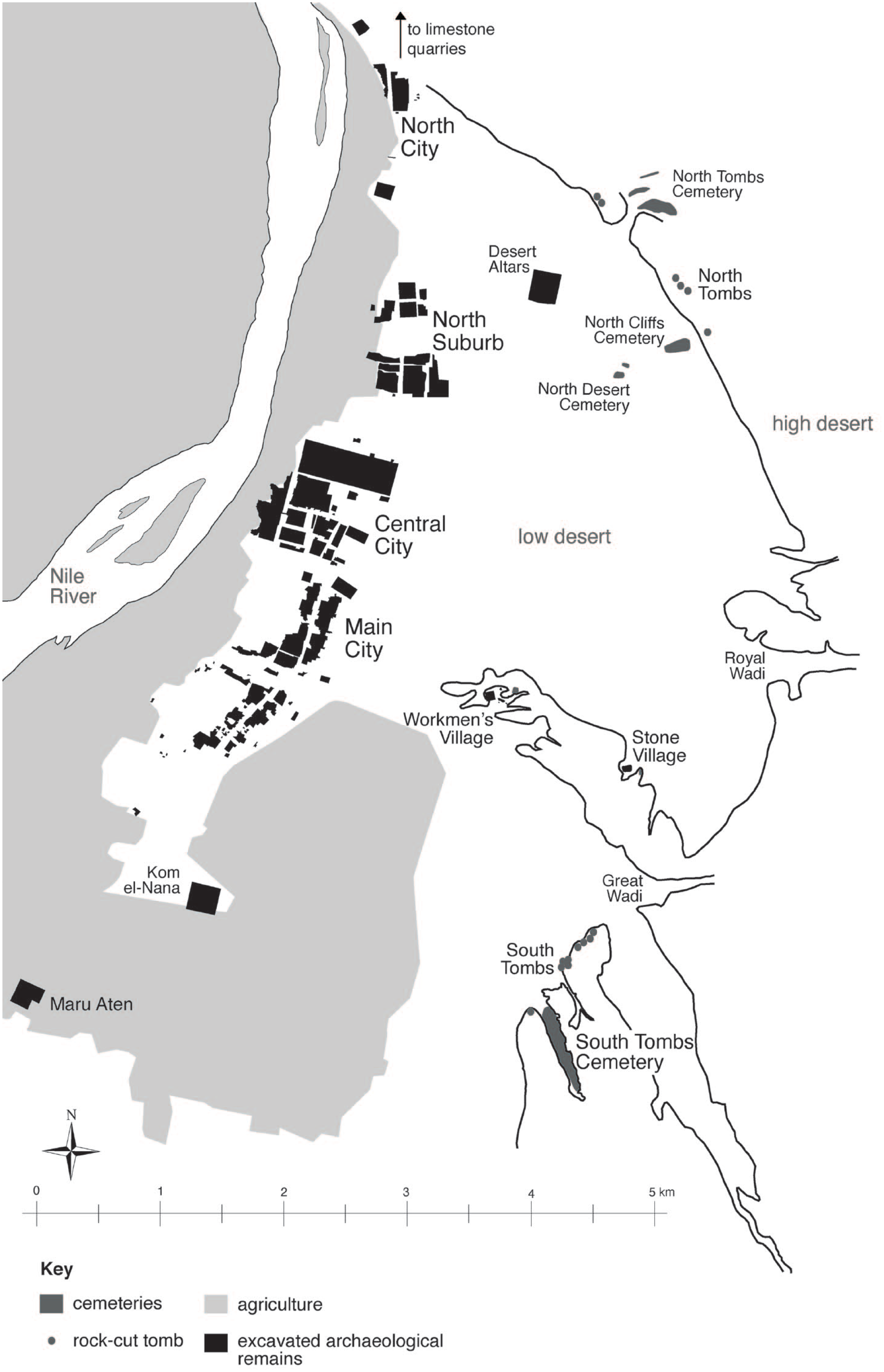
Map of Amarna showing the locations of the non-elite cemeteries (base map: Barry Kemp and Helen Fenwick, with additions by Anna Stevens).
The North Desert Cemetery is a small burial ground, likely to contain a few hundred interments, that is situated on and around the end of a low plateau of clay and soft rock that branches across the desert floor. The cemetery has three main zones (figs 2–4):
An area of pit graves on a low sandy terrace on the desert floor immediately north of the plateau.
A group of shaft-and-chamber tombs on top of the plateau.
Graves within and adjacent to a small wadi that extends down from the plateau to the desert floor.
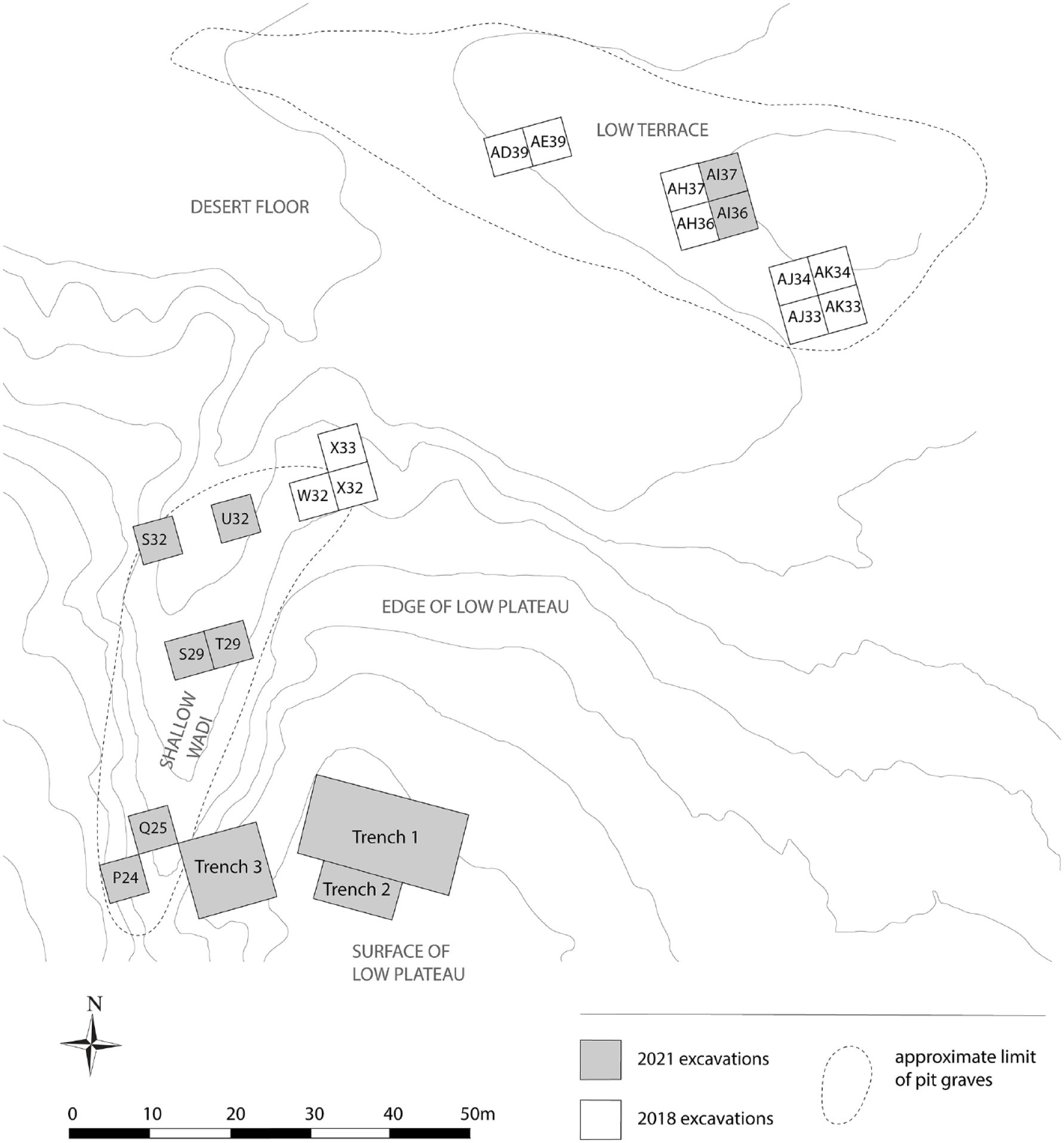
Preliminary map of the North Desert Cemetery, showing the areas excavated in 2018 and 2021. Note that Trenches 1 and 2 were investigated across both seasons. The contour lines are at 50 cm intervals (base map: Wendy Dolling).

A view across the North Desert Cemetery towards the eastern cliffs and the rock-cut North Tombs. The robbers' pit and spoil mounds in the foreground mark the location of Trench 3. The archaeologists in the mid-distance are working at Trenches 1 and 2. In the distance to the left, pit graves on the low terrace are being investigated.
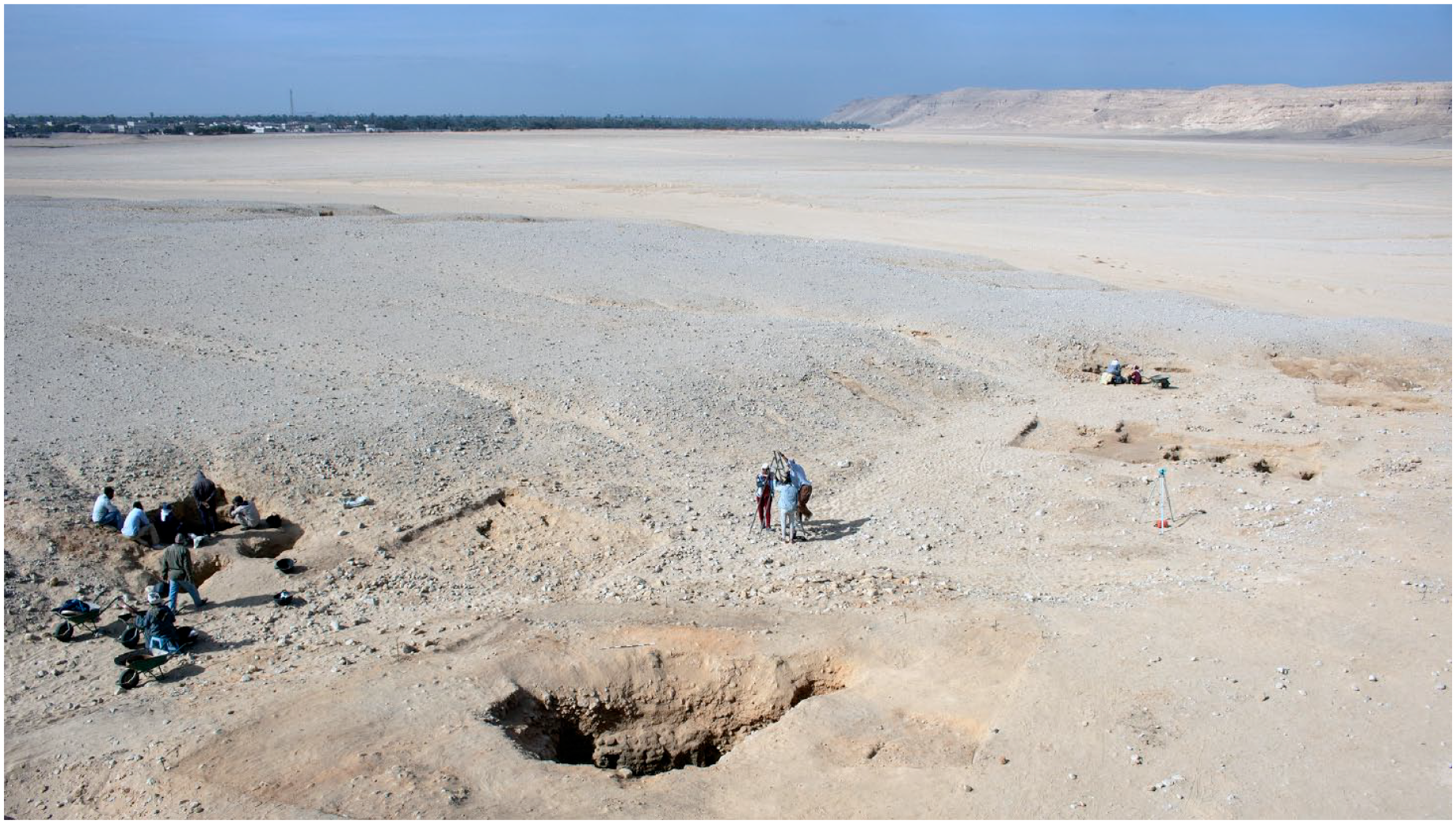
The small wadi, photographed from on top of the plateau and facing north-west. In the foreground, the large pit marks the mouth of Tomb 2 in Trench 3 at the close of the 2021 excavations.
During the 2018 season, 24 individuals were excavated from pit graves on the low terrace and adjacent to the small wadi. A large chamber tomb (Tomb 1/Trench 1) was partially excavated on top of the plateau and a surface plan was made of a nearby structure built of limestone boulders, and partly covered by sand and stone rubble (Structure 1/Trench 2). The aims for the 2021 season were to: complete the excavation and recording of Tomb 1; sample additional burials on the low terrace and within the wadi; excavate Structure 1; and investigate a second presumed chamber tomb south-west of Trench 1, marked by a robbers’ pit with adjacent spoil mounds. To this end, eight 5 x 5 m excavation squares were opened on the low terrace (squares AI36, AI37) and in the wadi (squares P24, Q24, S29, S32, T29, U32), as shown in figure 2. Work was continued in Trenches 1 and 2, and a new 10 x 10 m trench was laid out to encompass the robbers’ pit and associated spoil mounds marking the additional chamber tomb (Trench 3).
Preliminary Excavation Results
Low Terrace and Wadi
In total, 25 pit graves were encountered in the excavation squares on the low terrace and along the wadi, and these produced the remains of 38 individuals (fig. 5). On the low terrace, the graves had been cut into desert sand and gravel, but the subsurface matrix within the wadi was a brownish friable clay. Most of the graves had been robbed, but a few survived undisturbed. As in most burials at the Amarna cemeteries, the bodies had been wrapped in textile and in mats made of plant materials, which survived in varying states of preservation. Most individuals were buried in an extended supine position, or slightly twisted to the side. They were usually buried singly, although two of the pit graves in square S32 contained more than one person (fig. 5). In addition to the pit graves, excavations in the north-west corner of square P24, along the upper western edge of the wadi, revealed a small chamber tomb, grave <20330>. Here, a rectangular shaft had been cut to at least 1.5 m, and a single chamber measuring around 2 x 2 m then cut northwards. The tomb had been robbed, but its fill included small fragments of painted coffin wood and skeletal remains from at least five individuals. Further work is needed to complete the excavation and recording of this tomb. It remains to be determined how many of these individuals were buried here originally, or if some might have been deposited in the tomb during looting. There is no indication that the tomb was decorated, and if it had a superstructure, no trace of this has yet been encountered.
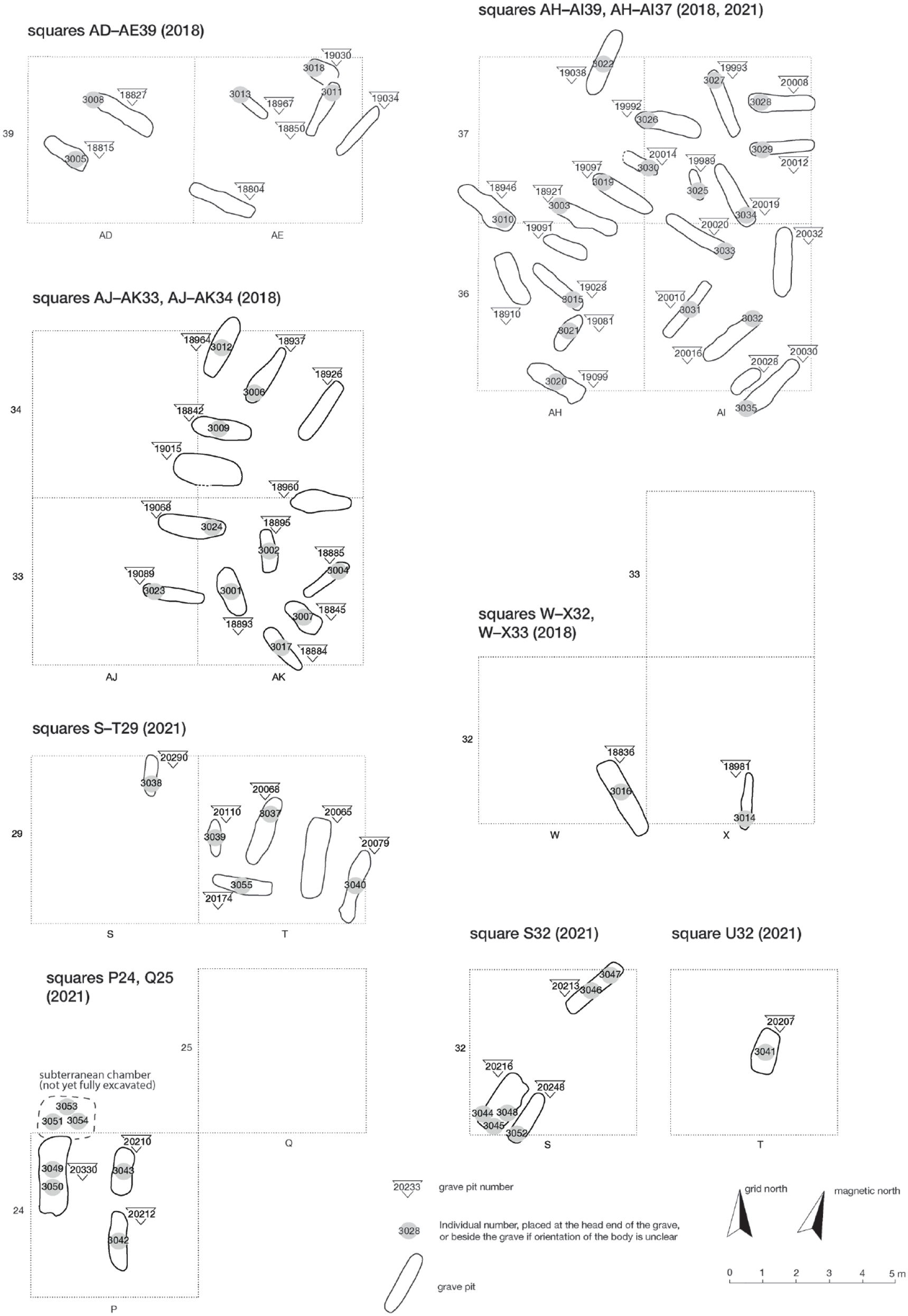
Pit graves excavated on the desert terrace and in the wadi across 2018 and 2021. See figure 2 for the locations of the grid squares.
Plateau
Tomb 1 in Trench 1: Tomb 1 is a large shaft tomb with two chambers, located on top of the plateau (figs 2, 6, 7, 8, 9). In 2018, the tomb shaft had been excavated (c. 1.8 x 1 m and 3 m deep), along with the large eastern tomb chamber (2.5 x 2.5 m). The tomb had been heavily robbed and few traces of the original contents remained inside the tomb, but much of its subsurface architecture is at least partially intact. Like the graves in the wadi, Tomb 1 was cut down into the brown clay that forms the matrix of the plateau. The north and south faces of the tomb shaft were lined with thick mudbrick walls. The walls of the eastern chamber were eroded, but there is no indication that they were decorated. The remains of two low emplacements in the north-east and south-east corners of the chamber were perhaps coffin supports. In 2018, the opening to a second chamber had been visible on the west side of the shaft, but was left unexcavated. This western area was cleared in 2021, revealing a smaller chamber measuring c. 2.2 x 1 m, which again shows no trace of decoration (fig. 8). Across the entrance to the chamber were the remains of a brick wall, presumably used to seal the interment. In the bottom of the shaft there was a large limestone boulder, c. 1 m long, around which the brickwork in the shaft had been constructed (fig. 8). The boulder seems to have been encountered within the natural matrix as the tomb was cut, and simply left in place. Excavations along the southern face of the tomb shaft also revealed a sloping staircase/ramp leading down from the surface of the plateau, presumably the original entrance into the tomb. Its steps were largely shaped by cutting out portions of the natural matrix, with the addition of brickwork and stones into some of the treads. At the top of the steps, there was a distinctive oblong pit. This may be a secondary cut, rather than part of the original tomb construction, although its purpose is unclear. It resembles a pit grave, but there was no trace of any burial material within it.
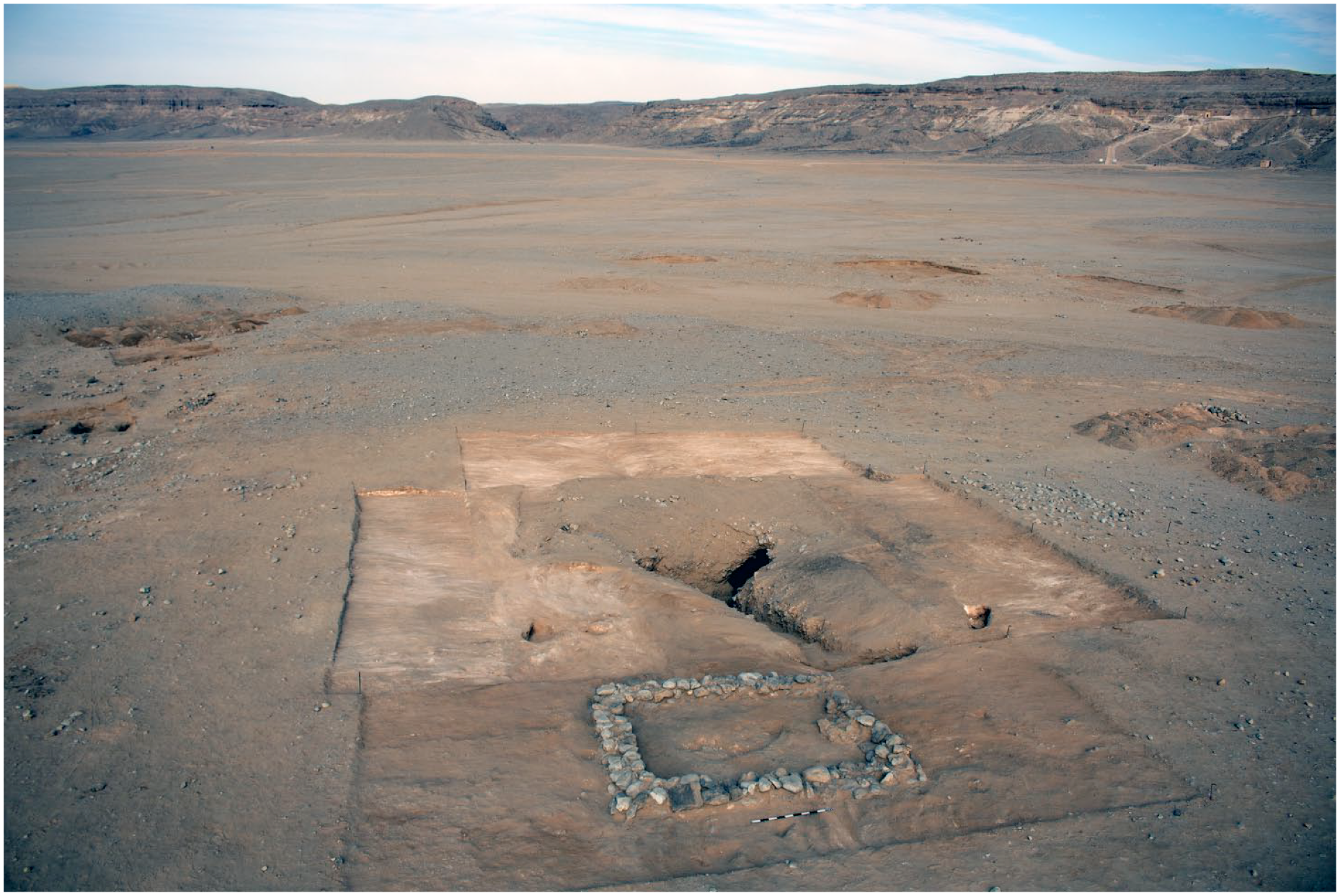
A view across the North Desert Cemetery, showing in the foreground Structure 1 and Tomb 1. In the left of the image, some of the excavation squares in the wadi are visible, and in the mid-distance to the right lies the low terrace with its excavation squares and piles of excavation spoil. In the background of the photo, the break in the cliffs marks the entrance to the wadi containing the North Tombs Cemetery.
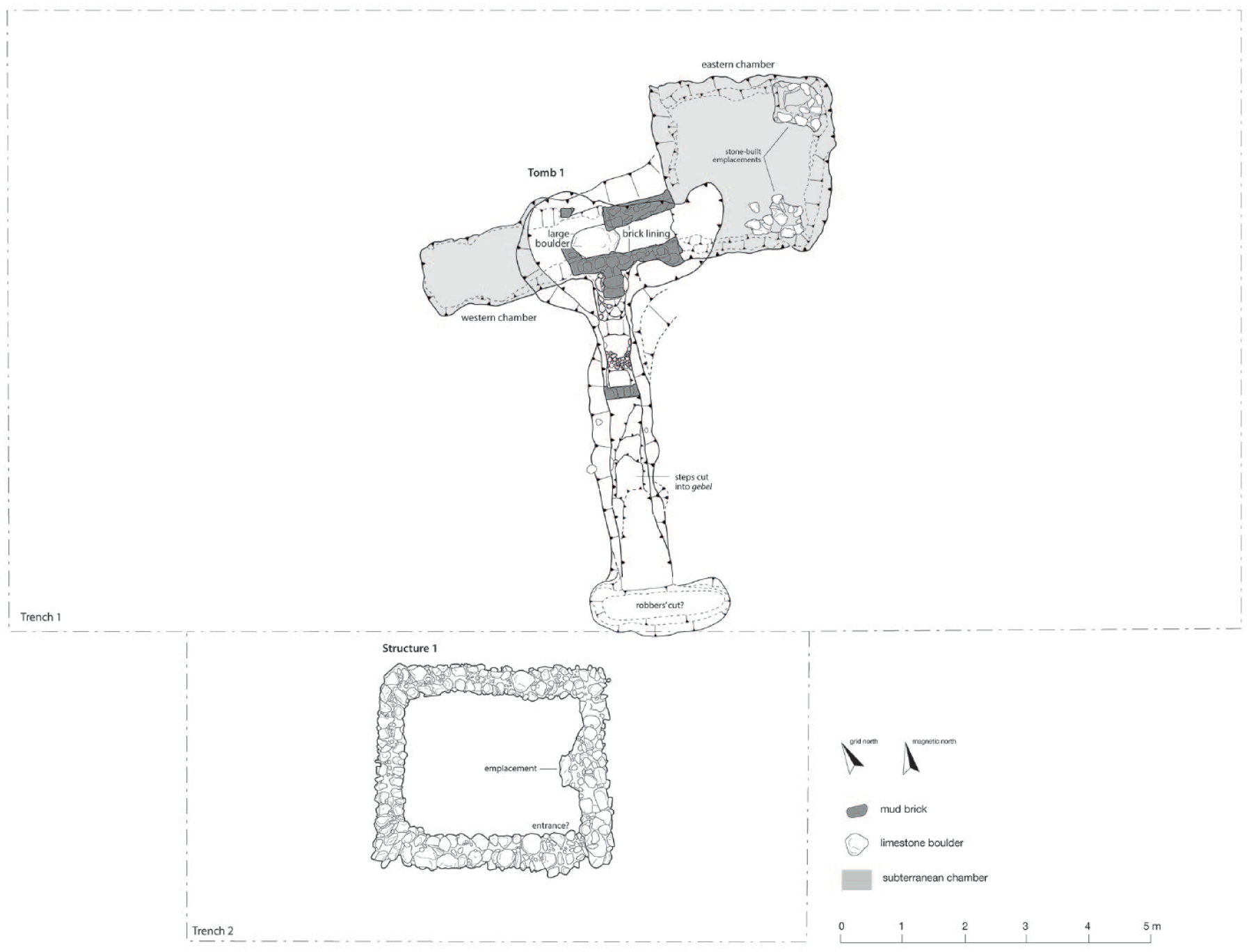
Top plan of Tomb 1 and Structure 1. Original plans by M. King Wetzel (tomb) and A. Stevens (structure).

The view from within the western chamber of Tomb 1, facing eastwards through the shaft and into the eastern chamber. Note the remains of the brick blocking wall in the foreground, the thick brick lining along the shaft and the very large boulder in the base of the shaft (photo: Melinda King Wetzel).
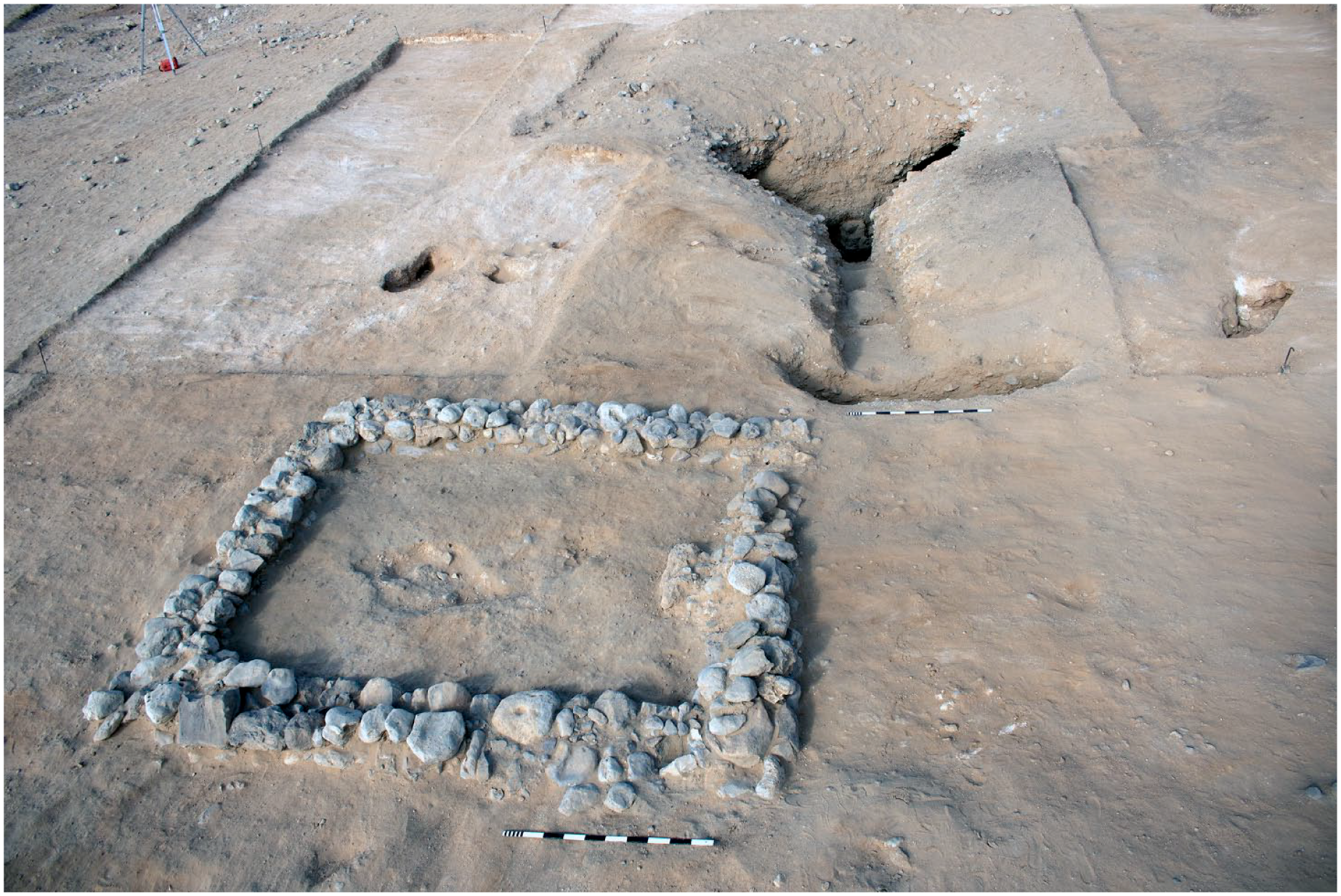
Structure 1 after excavation, facing north. Note the small emplacement on the inner east wall. The entrance into the structure was probably located where the scale is situated. The staircase leading down into Tomb 1 can also be seen.
The excavation of large piles of robbers’ spoil that encircled the mouth of the tomb was also completed in 2021. The spoil contained occasional pieces of pottery, bone, rope, faience jewellery and small fragments of painted wooden coffin that presumably represent, in part at least, the remains of the original burial/s here. Preliminary observations suggest there may have been at least two phases when material was removed from the tomb. One of these probably took place in or after the Roman Period, given the presence of potsherds of this date deep within the fill of the tomb itself. Preliminary analysis of the human bone found in the spoil heaps and within the tomb suggests these remains represent at least five different individuals, but further work is needed to determine how many and which of these individuals are likely to have been buried here originally.
Structure 1 in Trench 2: Excavations in Trench 2 revealed the lower courses of a simple rectangular structure (Structure 1) built of unworked limestone boulders that were partly mortared together with orange desert clay (figs 6, 7, 9). The walls survived to 1–3 courses of stone, and might not have been built much higher than this, given the fairly limited quantity of stone tumble present. In and around the structure, there were deposits of heavily degraded mudbrick rubble, suggesting that the upper parts of the walls were built in this material. There was no clear evidence of roofing material (ceiling plaster, lengths of wood, etc.), although this could have eroded away, given the very exposed setting. The floor was formed simply of the trampled plateau surface. It was largely clean, although a small deposit of ash and charcoal in the north-west corner marked a place where a fire had been lit, perhaps during secondary activity; a piece of Roman Period pottery lay nearby. A similar surface – a weathered-looking dusty crust – was present around the outside of the structure, and around the perimeter of Tomb 1. It occasionally contained flat-lying potsherds, and is potentially a trampled horizon associated with the original construction and/or use of these structures.
The most likely entrance point into Structure 1 was through the east end of its south wall, where the arrangement of the stones is suggestive of a possible threshold. If this is the case, the line of sight for someone approaching the structure from the south would have included the steps leading down into Tomb 1 (fig. 9). Against the inner east wall, there were the remains of a small, approximately rectangular, emplacement built of boulders and cobbles and mortared into the wall face. This is perhaps the lower part of an offering place. The close relationship between Structure 1 and Tomb 1 suggests that the former may have served as a tomb chapel (with an altar oriented toward the rising sun?).
Tomb 2 in Trench 3: Trench 3 was opened at the site of a robbers’ pit to the south-west of Tomb 1 (figs 2, 4). Excavations here revealed a second large shaft-and-chamber tomb (Tomb 2), which could not be fully excavated in the time available. During excavations, the robbers’ pit quickly widened into two separate looters’ pits, one to the north and one to the south. It is not yet clear if they represent different phases of robbery. They had been dug down into an ancient tomb shaft, which gradually resolved into a rectangular cut measuring c. 2.3 x 3.2 m. Loose deposits of sand containing windblown plant material and modern items (paper, textile, etc.) were excavated to a depth of c. 2.8 m. As they were removed, a thick mud-brick wall was revealed along the west face of the shaft. At a lower depth, the remains of brick walling were also exposed along the east face, and a shorter span of wall was revealed along the south face of the shaft. The results of this season suggest that the tomb has been very heavily robbed, but again its subsurface architecture seems to be largely intact. Preliminary study of the disturbed human bone found in the fill suggests the remains recovered represent at least five individuals, but it again remains to be determined how many and which of these were buried in the tomb originally. Further excavation will be needed to complete the recording of this tomb.
Artefacts and Pottery
The artefacts and pottery from the North Desert Cemetery have not yet been studied, but appear to align overall with those from other Amarna cemeteries, particularly the South Tombs and North Cliffs Cemeteries. The Amarna Period pottery observed in the field in 2021 included examples of blue-painted ware and miniature vessels. There were a number of sherds with worn edges, which may have been used as digging tools. Several pieces of jewellery were recovered: faience finger ring fragments, faience beads (including one with a scorpion motif), and floral pendants in faience and carnelian. Other finds included a single sandal in the undisturbed grave of a subadult (fig. 10), travertine vessel fragments, a hieratic jar label, and a potsherd with a drawing of an antelope-like animal. Several extremely eroded fragments of one or more limestone architectural elements were also recovered. Most were found in the vicinity of Tomb 1 and Structure 1, although one piece was found on the floor of the wadi to the west, near Trench 3. Little of the original decoration can be identified on the stone, although parts of the head and chair of a seated figure wearing a head cone survive. There are traces of an accompanying hieroglyphic inscription but it is heavily weathered. Although the stone presumably originated from Tomb 1/Structure 1, or another of the large tombs, it is not at the moment obvious where an architectural element of this kind would have been installed. Further study of the fragments may help to clarify this.
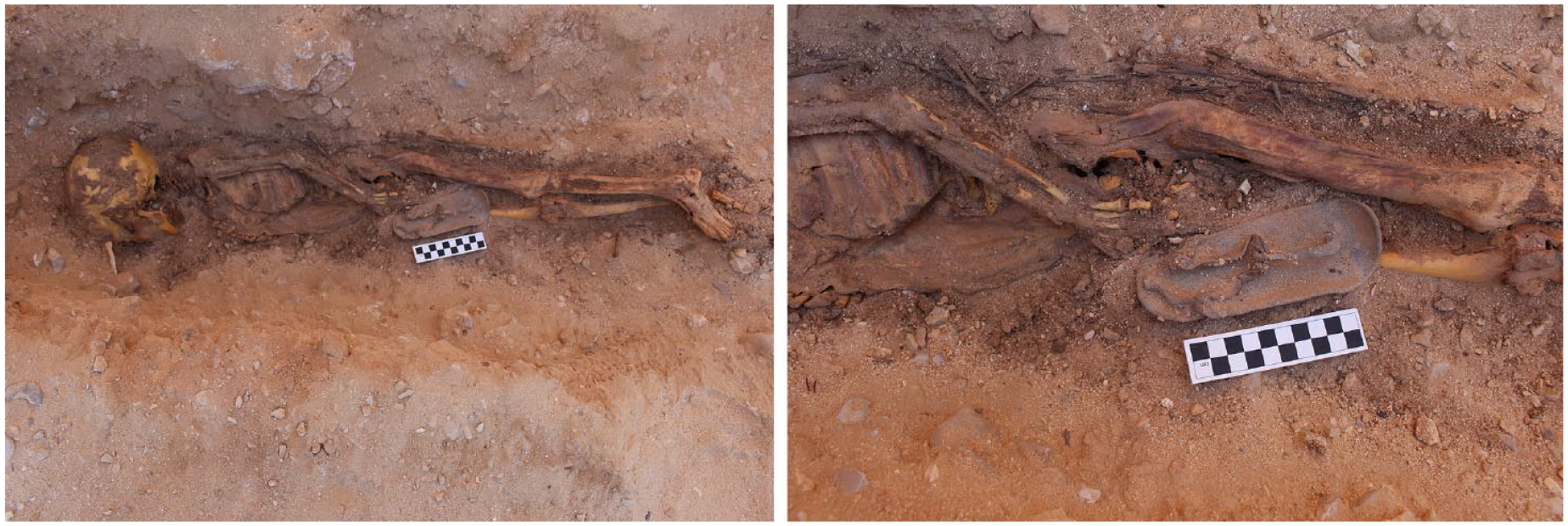
Ind. 3030, buried with a single leather sandal (obj. 43740).
Final Remarks
Excavations in 2021 confirmed that the North Desert Cemetery is one of the most diverse of the Amarna cemeteries, with both pit graves and shaft-and-chamber tombs of various sizes. Some of the latter were potentially family tombs. The tombs on top of the plateau are unique at Amarna. Similar structures are known from the Workmen’s Village and Stone Village, but they are smaller and much less complex. 6 Structure 1 is also unusual. 7 Other potential chapels may have been destroyed, 8 although they were certainly not common at any of the cemeteries that have been excavated since 2005. These tombs at the North Desert Cemetery add a layer of gradation in the burial landscape of Akhetaten, occupying a middle ground between the pit graves of the vast majority of the population, and the elaborately decorated rock-cut tombs of the city’s high officials. Their study promises to add important nuance to the understanding of non-elite society and expressions of diversity and status in the burial record of pharaonic Egypt. It is anticipated that a final excavation season will be undertaken in 2022 to complete the study of this site.
North Desert Cemetery: Preliminary Bioarchaeological Analysis (G. R. Dabbs)
Preliminary skeletal analysis to identify the demographic profile of individuals excavated from the North Desert Cemetery was performed in December 2021. The provisional nature of this data is heavily stressed, with analysis performed in the field using only the most obvious macroscopically visible traits for the assessment of both age and sex. A full study is planned for a later date. Generally speaking, based on the limited analysis, the demography of the North Desert Cemetery is broadly consistent with expectations based on both ‘normal’ bioarchaeological cemetery samples 9 and other cemeteries at Amarna, namely the South Tombs 10 and North Cliffs Cemeteries. 11
At least 64 individuals were excavated in the two seasons at the North Desert Cemetery (2018 and 2021). Ten individuals have been identified from Trenches 1 and 3, while 54 individuals were excavated from pit graves on the low terrace and in the shallow wadi. Six isolated skulls were also analysed and include two subadults (<15 years), an adult male, and three adults of unknown sex. It is possible, even likely, that some of these isolated skulls will be matched with postcranial remains from burial pits during the full bioarchaeological analysis.
Of the 64 individuals excavated, five could only be identified as subadults (<15 years). More extensive analysis is required to pinpoint a precise age for these individuals. Two individuals were foetal sized. The disturbed nature of the graves in which these remains were found precludes any statement as to the birth status. If the foetal remains are excluded, 46.8% (29/62) of the total excavated sample are subadults, including ten infants (<3 years), five early subadults (3–6.9 years), and nine late subadults (7–14.9 years). Of the adults, sex could only be estimated for thirteen individuals: seven females (53.8%) and six males (46.2%). The remaining 20 adult individuals did not preserve the cranium or the pelvis, requiring more in-depth study than was possible this year to estimate sex (fig. 11).
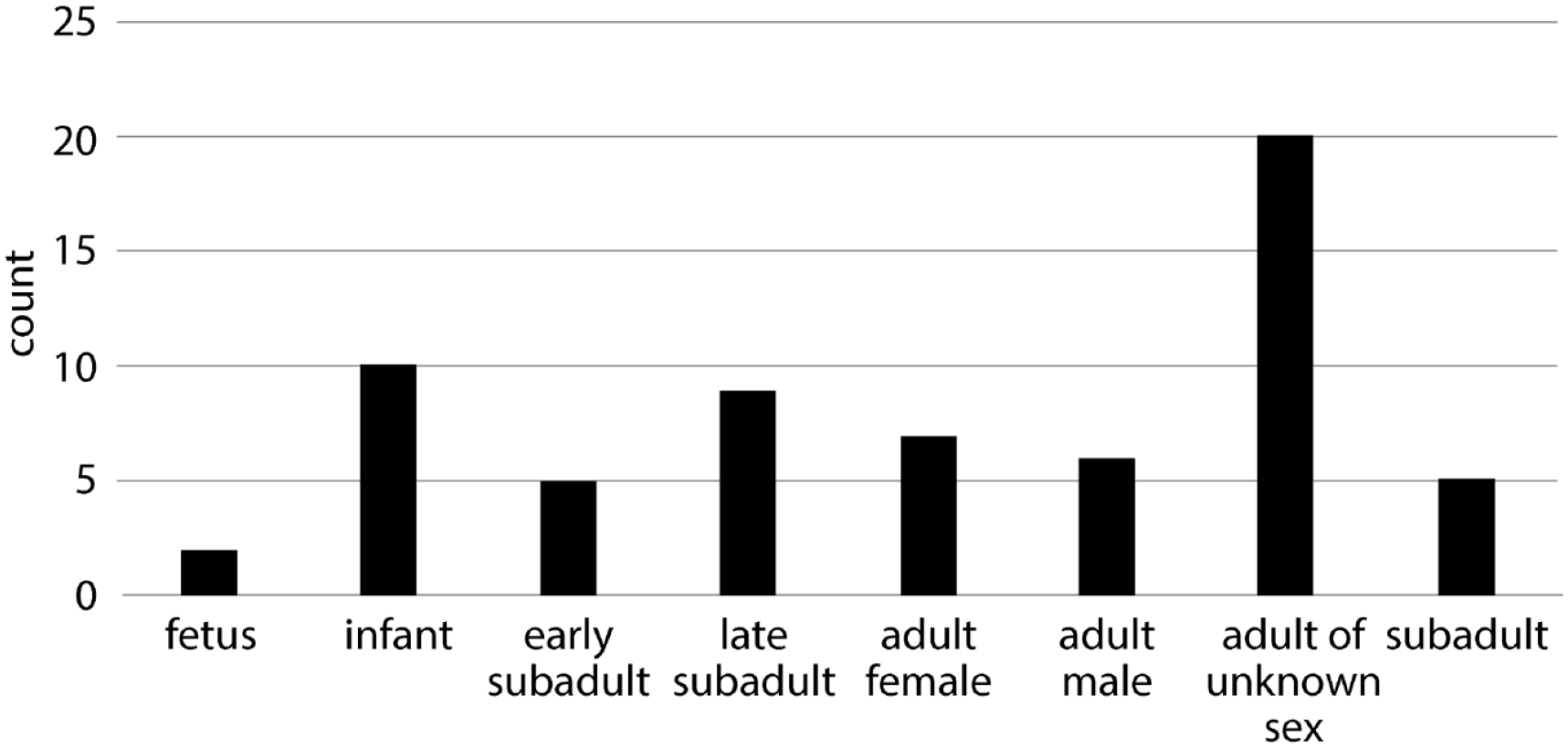
Preliminary demographic distribution of skeletal remains excavated from the North Desert Cemetery in 2018 and 2021.
North Desert Cemetery: Study of the Human Hair (Jolanda E. M. F. Bos)
One focus of the hair research at Amarna lies in understanding how the different hairstyles reflect aspects of social stature, as well as ritual practices. Another is the technology used in the production of these hairstyles and different hairstyle elements, such as hair extensions and braids. In this preliminary report, the results of the 2021 excavation seasons are presented. 12 These samples were analysed in autumn 2021. The hair was studied, documented and rewrapped for storage.
Research Method
The hair samples were registered in the database and photographed. Where possible, the individual hairstyle features were measured, the extension types defined and the braiding techniques described. The hairstyling techniques and hairstyle types were also documented. The hair analysis was mainly done macroscopically, with microscopic magnification (of 60–400x) only used where necessary for the clarification of certain features.
North Desert Cemetery
In total, 44 registration numbers were given out to hair fragments excavated in 2021. These registration numbers can contain more than one hair sample if they are thought to originate from the same individual. The hair samples were predominantly loose pieces, with no completely preserved heads of hair found. Only one skull (Ind. 3030, S. 3019) retained a partial head of (short) hair; other hairstyle features were preserved in a fragmentary state. The general preservation of hair at the North Desert Cemetery is nonetheless very good, and the preserved hair is still flexible to a certain degree, making it easy to handle and study. In this aspect, it is similar to the hair from the North Cliffs Cemetery. All fragments studied were light brown to black hair. In all observed cases, the extension hair was of a darker hue than the wearer’s original hair. If there is no taphonomic or preservation reason for this colour difference, this must have given these hairstyles, when complete, a multi-coloured appearance.
Braids of different widths were found this excavation season (ranging from 2–30 mm, in 73 registered braids), as well as small patches of loose hair fragments (47 registered samples) and hair extensions (88 registered extensions) (fig. 12). In nine cases, the studied braids showed more than one level of extension. In one instance, the braid (a complete example, with scalp hair and clear braid ending) contained as many as six extensions, set in at different heights. The observed braiding techniques were fairly simple, displaying three-strand braids. The original length of the braids could be determined in two cases (JB21-038 and JB21-041), and ranged from approximately 39–49 cm, with a width of around 20 mm (fig. 13). This hair length and style is generally consistent with the other cemeteries at Amarna, and particularly the North Cliffs Cemetery. 13 Depending, of course, on the size of the person, these braids would have fallen halfway down the upper torso and on the back between the shoulder blades. Notable in these two cases is the fact that the first level of extensions was set in very close to the scalp, leading to the idea that the wearers had their hair short and the length was mainly achieved by adding extensions at different levels. Other extensions were tied and braided into these hairstyles at 3–5 different levels, depending on the width of the extension and the desired braid thickness. The braids were most likely formed with an inward-braiding technique. These hairstyles ended in pipe-curled loops, for which separate extensions were used, tied and braided into the lower regions of the hair and shaped after the braiding took place.
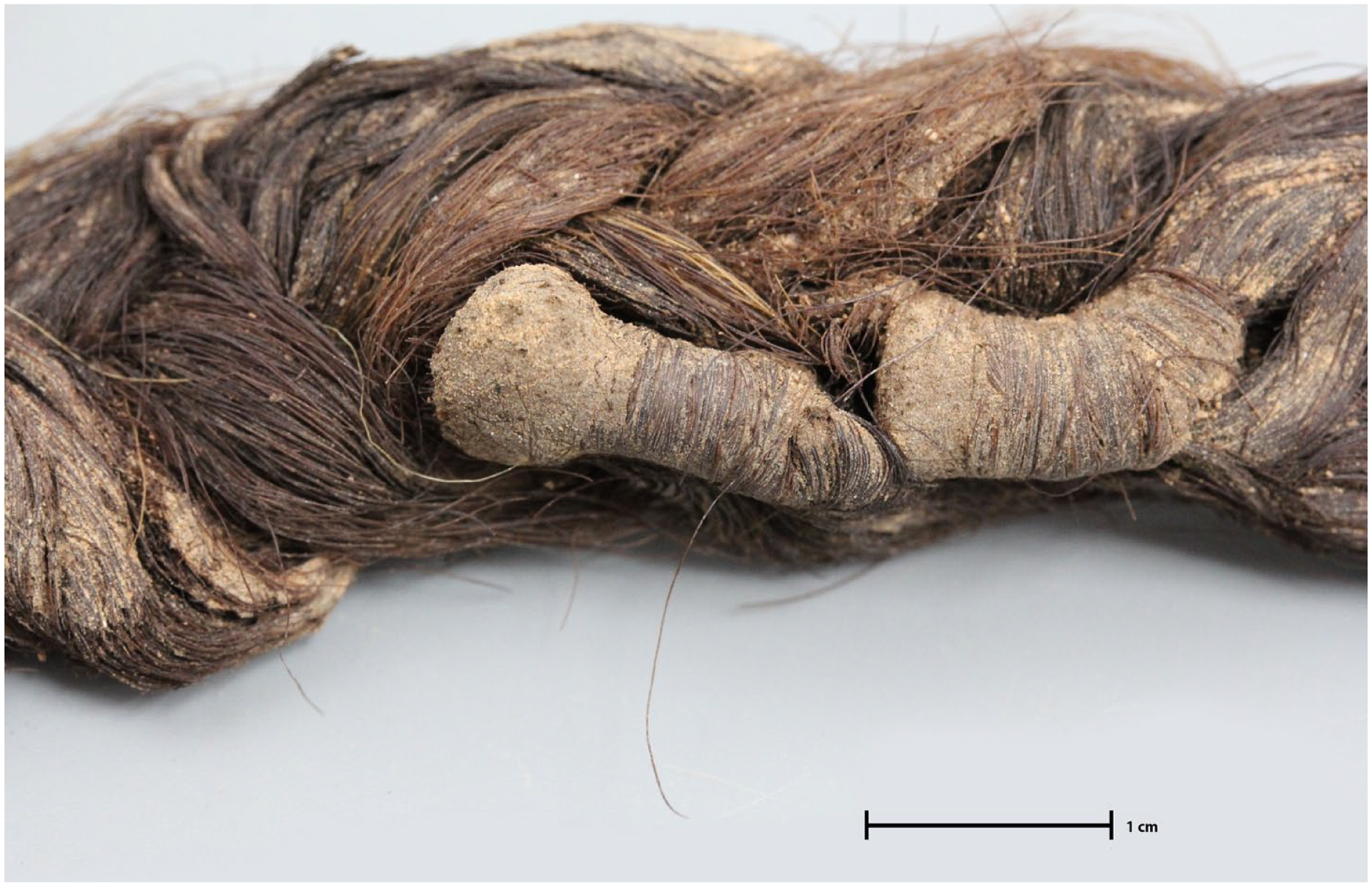
Example of hair extension knobs from the North Desert Cemetery (JB21-038B).
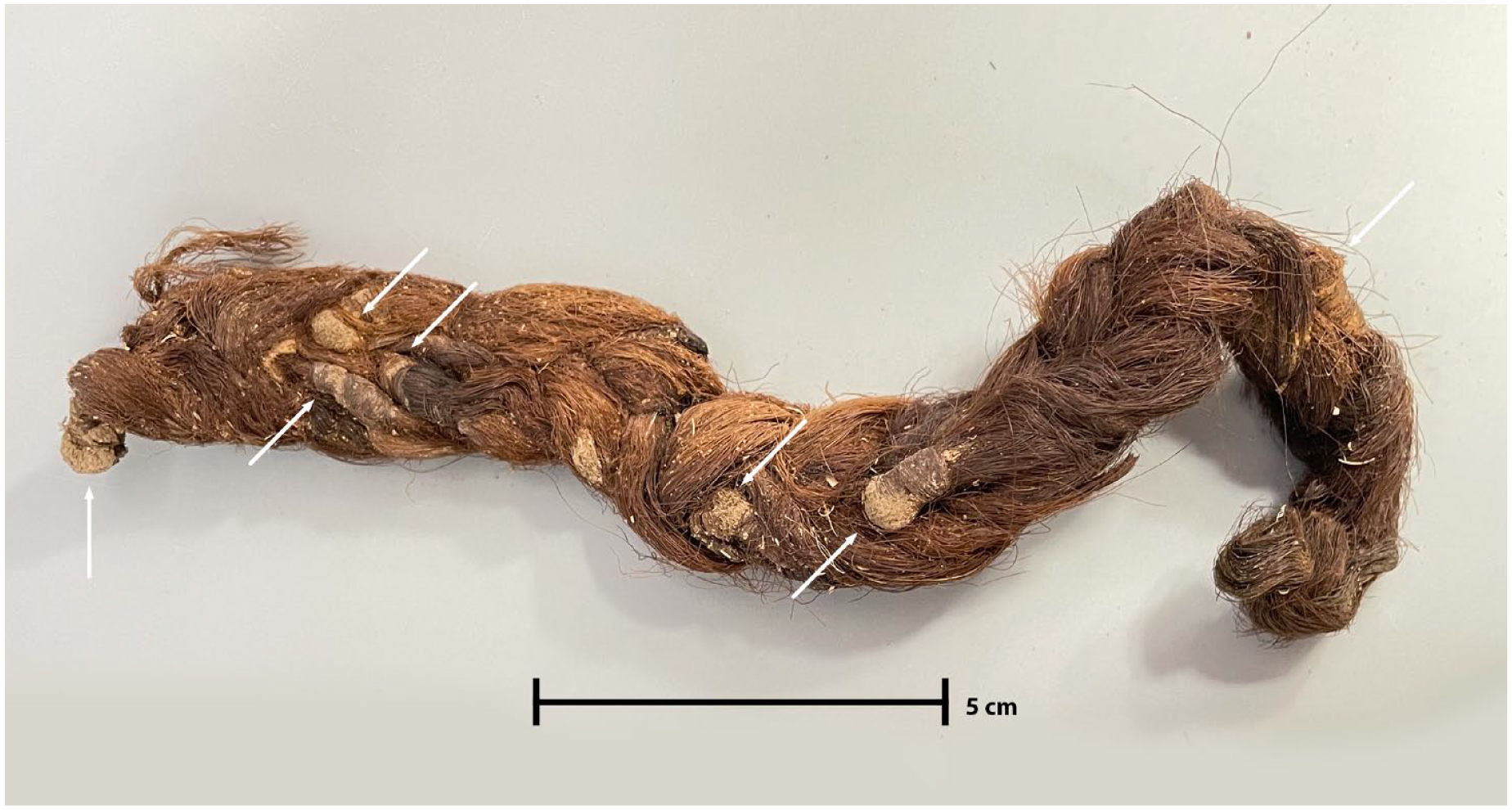
Example of several levels of extensions present in the braids (JB21-041A).
Although the hair fragments from this cemetery are very incomplete, the preservation of the extensions is good, and the techniques by which they were attached and produced could still clearly be discerned. The extensions were fixed into the hair by first knotting them into the hairstyle with the aid of tiny braids (ranging from c. 2–3.5 mm wide, and forming part of the extension itself) and then braiding the extension swatch into the hairstyle. In terms of the production of the extensions themselves, similar to what is found in other Amarna cemeteries, clumps of hair were bundled and with the aid of other thin hair swatches, tied to form the extension. The extension hair was wound with this swatch just below the top of the bundle. This end then formed a small bulb, the extension bulb, the diameter of which ranged from 2–15 mm. To form the extension braid, a thin cluster of hair was kept separate from the bulb and formed into a braid a few millimetres wide. This braid was used as a string to knot the extension into the wearer’s hair.
To sum up, this cemetery has not yielded any intact hairstyles. The loose fragments studied show extensions, detached braids and loose hair without visible styling features. The hair assemblage from the 2021 season shows strong similarities with those from the North Cliffs and South Tombs Cemeteries, in terms of hairstyles as well as hairstyling techniques. 14 Although the South Tombs Cemetery hair assemblage was generally in a poorer state of preservation, it did yield a higher diversity of hairstyles, most likely reflecting the large number of graves excavated there, rather than socio-cultural differences.
Textiles from the South Tombs and North Cliffs Cemeteries (A. Mérat)
Study of the textiles from the non-elite Amarna cemeteries has been ongoing since 2017. In general, while textiles seem to have been very widely used to wrap bodies at these cemeteries, it is not well preserved. One important exception is a group of seventeen naturally desiccated individuals with relatively well-preserved textiles that were recovered during excavations at the North Cliffs Cemetery in 2018, and subject to initial study in Autumn 2019 (fig. 14). 15 Noticeable differences were observed across these samples in the way the dead were prepared for the afterlife, and it was possible to draft an initial classification system, comprising five main ‘styles’ or approaches to providing the body with a textile cover. While it cannot be assumed that these represent the full range of ways in which textile was used across the Amarna cemeteries, this sample nonetheless provides an important point of reference, particularly when studying the burials with poorly preserved textile. With this in mind, from 4–17 December 2021, nine individuals from the North Cliffs Cemetery that were most representative of each of these five main body preparations were examined alongside textiles from the South Tombs Cemetery. The latter are generally in poor condition. The objective was to continue work started in 2019 to match the better-preserved fragments from the South Tombs Cemetery with the preliminary classification system derived from the North Cliffs Cemetery samples, in order to identify the mortuary function of as many of the South Tombs Cemetery pieces as possible, and build a comparative picture across the different burial grounds.
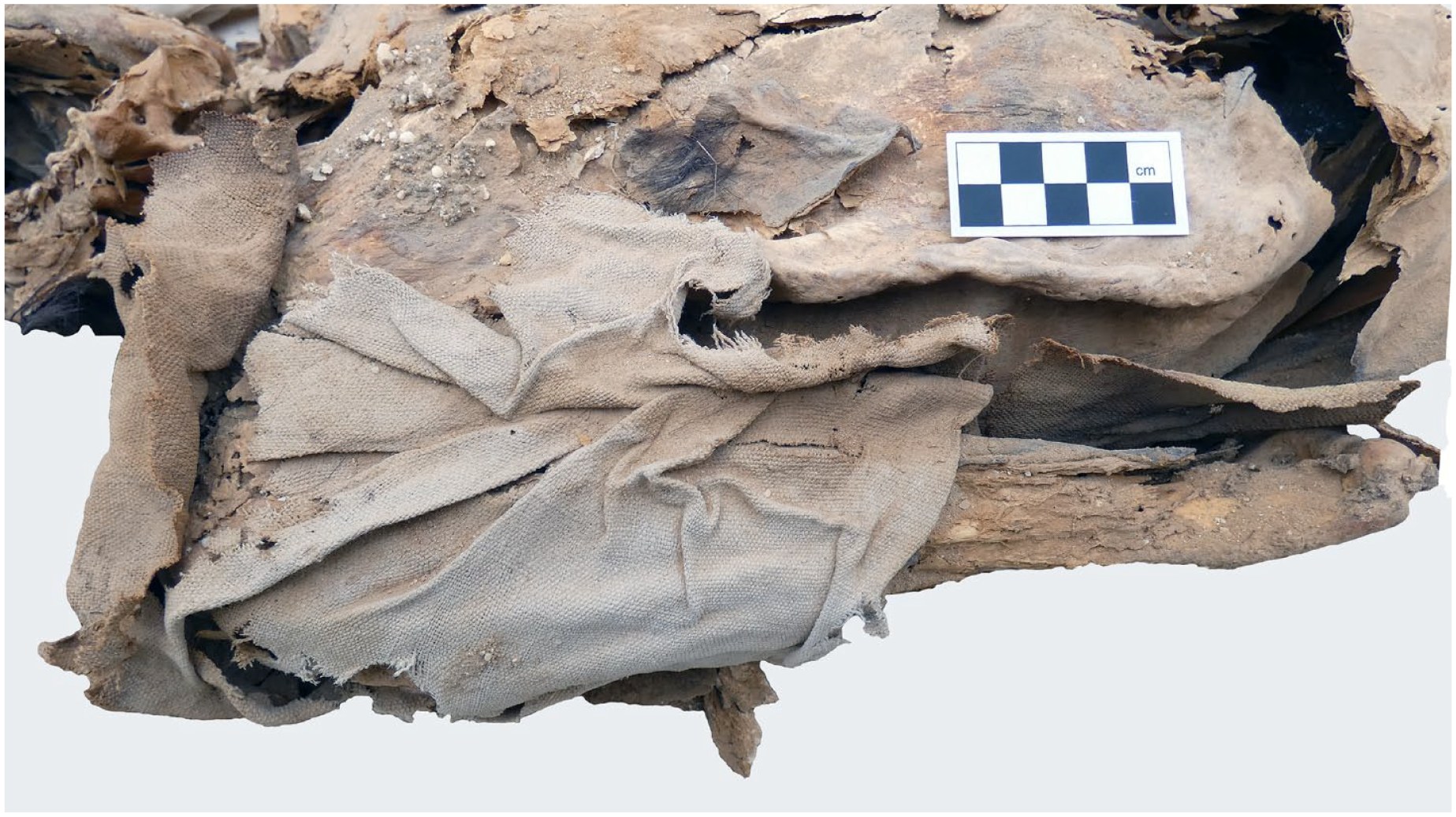
The right shoulder of Ind. 2030, excavated at the North Cliffs Cemetery, showing a partially preserved linen tunic.
As a result, it was possible to identify a probable manner of body preparation for fourteen of the South Tombs Cemetery individuals. So far, it seems they were mostly wrapped several times in large pieces of cloth, using different fabrics of varied weaving structures and thicknesses. The limbs were not individually wrapped, but bandages or strips were used at the end of the preparation to tighten the wrapping and give the body the shape of a mummy, with some extra care given to the neck area. In addition, hypotheses regarding the body preparation of another eighteen individuals were made, with the hope that further comparisons across the textiles databases will confirm these in the future. The rest of the South Tombs Cemetery textile assemblage is, unfortunately, too poorly preserved to be able to cross-match with the North Cliffs Cemetery examples.
Site Management
The Amarna Project undertook a number of site management initiatives in the period reported here. They include ongoing reconstruction work at the Great Aten Temple, 16 and the distribution of the Arabic-English children’s book Amarna: Life Under the Sun to local schools and community members. 17 Another major project was a joint initiative with the Ministry of Tourism and Antiquities to construct two protective walls at the northern end of the site. The work took place between December 2020 and March 2021. The target site was a parcel of privately owned agricultural land just north of the town of El-Till (fig. 15). The western and southern boundaries of the land parcel are marked by roadways, but to the east and north there were no visible boundaries to mark the edge of the adjacent Antiquities Land, other than occasional surveyors’ pegs. Substantial archaeological remains survive in both of these bordering areas, mostly as standing mudbrick ruins. To the north lies the North City, which includes a large palace and administrative complex. To the east, lie the Desert Altars, one of only two surviving temple complexes built around the outskirts of Akhetaten; at least three others have been lost beneath agriculture in recent centuries. The Desert Altars are a particularly vulnerable site, lying as a shallow layer of ruins on the desert floor. After local consultation, it was determined that the area was well suited to a pilot program of protective walling.
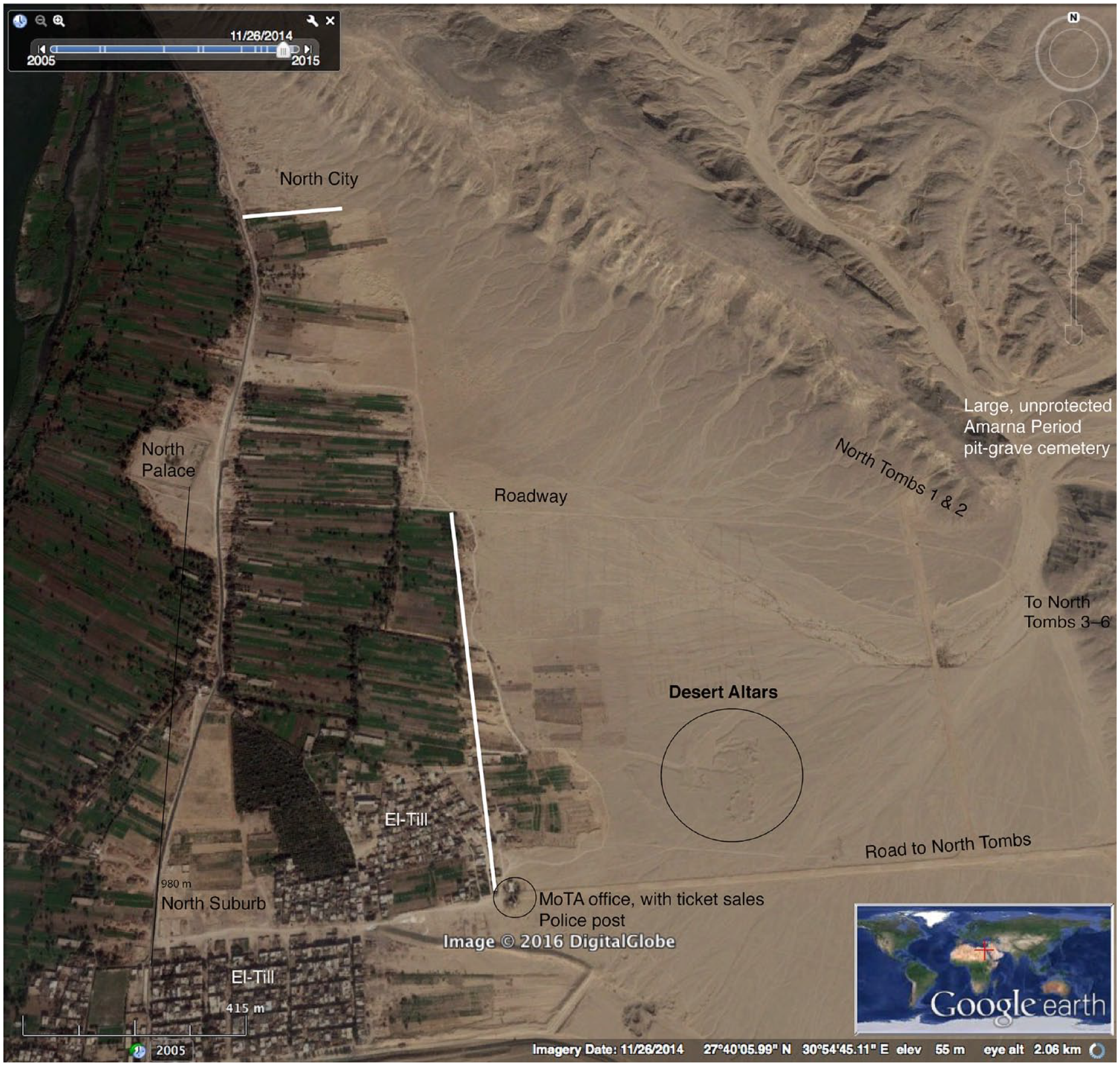
Lines of protective walling (in white) constructed from December 2020 to March 2021 near the ancient North City and Desert Altars.
As a result, two lines of stone wall were constructed along the north and east edges of the agricultural parcel, with the goals of: i) helping to protect the Desert Altars and the North City; ii) creating a buffer between modern settlement and the landscape of the North Tombs; and iii) providing greater clarity regarding site boundaries for landowners and heritage managers going forward. The walls were built to a height of 2 m (above ground) and 0.25 m wide. They are made from cemented limestone blocks, with buttresses every 3 m. The height ensures the wall cannot be easily scaled, but is also not visually intrusive. The eastern wall was built to a length of 782 m, starting at the MoTA Ticket Office/Rest House situated on the road leading to the North Tombs and then running northwards. After the wall was finished, the ground along its western edge was graded to create a local access road for farmers. The northern wall measures 180 m long. The project has been successful in setting up protocols and working relationships for similar work in the future. The local community impact of the project will continue to be monitored. The work has prompted discussions about which other parts of Amarna might benefit from this kind of initiative, which is best undertaken pre-emptively, before land is illegally occupied. The construction of the two walls has helped to better define legal boundaries in this area of the site, and serves to demonstrate the urgency of the threat to ancient settlement sites like Amarna from population expansion. 18
Footnotes
Acknowledgements
We are grateful to the Egyptian Ministry of Tourism and Antiquities for permission to undertake the work programme outlined here. The walling project was a collaboration with the Mallawi MoTA office, and we are particularly grateful to Mr Gamal Abu Bakr (Director of Middle Egypt Antiquities), Mr Fathy Awad (Director, Southern Minia Antiquities) and Mr Hamada Kellawy (Chief Inspector, Mallawi Antiquities) for their support of this initiative. The construction was overseen by Eng. Tarek El Sanadiki (Director of Projects Sector, Middle Egypt). Our MoTA Inspector for the work was Mr Mahmoud Mohammed Mohsen. Thanks are also due to Mr Salah Abdel Badea and Mr Ahmed Abdullah (Survey Department, Mallawi). For the 2021 cemetery excavation season, we thank our site inspectors Ms Tayseer Abo El Souad Ahmed and Ms Abeer William Matta, and our magazine inspectors Mr Mohamed Mohsen and Mr Tharwat Shawky Demain. We are also very grateful to Hisam Rabia Fatih and Abdu Mohamed Omar for their help in distributing the children’s books.
Funding
The 2021 excavations at the North Desert Cemetery were funded by the Michela Schiff-Giorgini Foundation, Amarna Trust, and the Institute for Bioarchaeology. The Thames Valley Ancient Egypt Society kindly provided funding for photographic equipment. The project to construct the boundary walls was generously supported by the American Research Center in Egypt’s Antiquities Endowment Fund.

1.
British Mission to Tell el-Amarna, McDonald Institute for Archaeological Research, University of Cambridge, directed by Barry Kemp.
2.
B. Kemp, ‘Tell el-Amarna 2005–6’, JEA 92 (2006), 21–56; B. Kemp, ‘Tell el-Amarna, 2006–7’, JEA 93 (2007), 11–35; B. Kemp, ‘Tell el-Amarna, 2007–8’, JEA 94 (2008), 13–44; B. Kemp, ‘Tell el-Amarna, 2008–9’, JEA 95 (2009), 11–27; B. Kemp, ‘Tell el-Amarna, 2010’, JEA 96 (2010), 1–21; B. Kemp, ‘Tell el-Amarna, 2011–12’, JEA 98 (2012), 1–7; B. Kemp, ‘Tell el-Amarna, 2012–13’, JEA 99 (2013), 2–20. Also B. Kemp, A. Stevens, G. R. Dabbs, M. Zabecki, and J. C. Rose, ‘Life, death, and beyond in Akhenaten’s Egypt: Excavating the South Tombs Cemetery at Amarna’, Antiquity 87:335 (2013), 64–78. Preparation of the final monographs is ongoing.
3.
A. Stevens, G. R. Dabbs, M. Shepperson, and M. King Wetzel, ‘The cemeteries of Amarna’, in B. Kemp, ‘Tell el-Amarna, 2014–15’, JEA 101 (2015), 17–27; A. Stevens and G. R. Dabbs, ‘The North Tombs Cemetery excavations and skeletal analysis’, in B. Kemp, ‘Tell el-Amarna, Spring 2017’, JEA 103:2 (2017), 137–49.
4.
A. Stevens, G. R. Dabbs, C. Rogge, P. Rose, A. Mérat, J. Bos, J. Williamson, A. Garnett, L. Skinner, J. Dawson, A. Bettum, and G. Tully, ‘Tell el-Amarna, Autumn 2017 and Spring 2018’, JEA 104:2 (2018), 121–44; A. Stevens, G. Dabbs, A. Mérat, and A. Garnett, ‘The North Cliffs Cemetery at Amarna’, EA 56 (2020), 4–9.
5.
A. Stevens, G. R. Dabbs, J. E. M. F. Bos, A. Mérat, J. Bos, A. Garnett, and G. Tully, ‘Tell el-Amarna, Autumn 2018 to Autumn 2019’, JEA 106:1–2 (2020), 3–15.
6.
A. Stevens and P. Rose, ‘Death and burial at the Amarna Workmen’s Village: A community cemetery in context’, in A. Warfe, J. Gill, C. Hamilton, A. Pettman, and D. Stewart (eds), Dust, Demons and Pots: Studies in Honour of Colin A. Hope (Leuven, 2020), 681–704.
7.
It is a much simpler structure than the well-known chapels at the Workmen’s Village: A. H. Bomann, The Private Chapel in Ancient Egypt: A Study of the Chapels in the Workmen’s Village at El Amarna with Special Reference to Deir El Medina and Other Sites (London, 1991).
8.
See A. Stevens, ‘Beyond iconography: The Amarna coffins in social context’, in J. H. Taylor and M. Vandenbeusch, Ancient Egyptian Coffins: Craft Traditions and Functionality (London, 2018), 144.
9.
For information on expected demographic profiles for archaeological cemeteries, see A. T. Chamberlain, Demography in Archaeology (Cambridge, 2006).
10.
For South Tombs Cemetery demographic information, see G. R. Dabbs, J. C. Rose, and M. Zabecki, ‘The bioarchaeology of Akhetaten: Unexpected results from a capital city’, in S. Ikram, R. Walker, and J. Kaiser (eds), Bioarchaeology of Ancient Egypt (Leiden, 2015), 31–40.
11.
For North Cliffs Cemetery demographic information, see G. R. Dabbs, ‘Skeletal analysis of individuals excavated from the North Cliffs Cemetery in 2018’, in Stevens, et. al., JEA 106, 8–11.
12.
Other hair samples from this cemetery were published in the preliminary report of the 2018 field season: J. Bos, ‘Hair from the North Cliffs and the North Desert Cemetery’, in Stevens, et al., JEA 106, 12–13.
13.
Bos, in Stevens, et al., JEA 106, 12.
14.
J. Bos, and L. Beukenholdt, ‘Human hair from the South Tombs Cemetery’, in B. Kemp, ‘Tell el-Amarna, 2014’, JEA 100 (2014), 18–21. And Bos, in Stevens, et. al., JEA 106, 12–13.
15.
A. Mérat, ‘Textiles from the North Tombs and North Cliffs Cemeteries’, in Stevens, et. al., JEA 106, 13–14.
18.
For a fuller report on the project, see A. Stevens, ‘Protecting the Amarna Desert Altars’, Scribe: The Magazine of the American Research Center in Egypt (forthcoming).