



Abstract
Introduction:
Engaging in meaningful activities contributes to health and well-being. Therefore, it is important to measure this with reliable and valid evaluation tools. The Engagement in Meaningful Activities Survey (EMAS-VL) has been cross-culturally validated in Flemish and the psychometric properties determined.
Method:
The adaptation process followed the guidelines ‘Translation and Adaptation of Instruments’ and ‘Cross-Cultural Adaptation of Self Report’. A forward and backward translation was performed. Three authors of the original EMAS were in close contact. Pretesting and cognitive interviews were performed on a sample of 10 chronically ill individuals. Psychometric analysis of survey data, collected during the COVID-19 lockdown (N = 1938 Belgian adults, Flemish speaking), was performed. Internal consistency, factorial validity and construct validity were examined.
Results:
The adaptation process involved an accurate analysis of the items of the EMAS by the expert panel and EMAS authors. The EMAS-VL showed high reliability (Cronbach’s α = 0.91). Exploratory factor analysis discerned an interpretable two-factorial structure of the EMAS-VL. As hypothesized, moderate associations were found between GHQ-12 (r = −0.57) and CD-RISC (r = 0.50) so the EMAS-VL possesses satisfactory construct validity as well.
Conclusion:
EMAS-VL is shown to be a reliable and valid instrument for evaluating meaning in activities in Flanders.
Introduction
Engaging in meaningful activities or occupations is a basic human need and forms the foundation for the occupational therapy profession. Meaningful activities are daily life activities that people engage in and which lead to the development of a personal identity (White et al., 2019). People, regardless of age and health conditions, are occupational beings in search of meaning in their everyday activities. Participation in meaningful activities has a positive effect on one’s health (Pizzi and Richards, 2017), well-being (Roepke et al., 2014) and quality of life (Morley et al., 2014), and protects against the risk of all-cause mortality (Smith et al., 2018). It is acknowledged that meaningful activities are culturally defined and fulfil important personal and cultural goals. There is, however, a lot of debate around the conceptual definition of meaningful activities. Based on the meta-analysis of Roberts and Bannigan (2018), the concept of meaningful activities encompasses different dimensions of personal meaning; engagement in meaningful activities provides a sense of fulfilment and restoration, shapes identity and provides social, cultural and intergenerational connection. These dimensions of meaning are dynamically interlinked. By operationalizing these attributes, it becomes possible to measure the engagement of meaningful activities. The synthesis of Eakman et al. (2018) of qualitative studies regarding meaning in activities identified themes of social, selfhood and pleasure meanings that were frequently linked together to 12 underlying forms of meaning: belonging and helping (Social), autonomy, mastery, continuity, self-esteem, health and well-being, purposes (Selfhood), enjoyment, stimulating and satisfaction (Pleasure). Given the different dimensions or themes in the meaning of activities, it is imperative to have evaluation methods that are comprehensive, but also reliable and valid (Eakman, 2011).
As a result of the growing body of knowledge on the concept; several scales have been developed to evaluate meaningful activities. For example; Meaningful Activity Wants and Needs Assessment (MAWNA; Eakman, 2013), Daily Meaning Scale (DMS; Steger et al., 2008), Meaning in Life Questionnaire (Steger et al., 2006), Perceived Personal Meaning Scale (Wong, 1998), Meaningful Activity Participation Assessment (MAPA; Eakman et al., 2010b) and the Engagement in Meaningful Activities Survey (EMAS; Goldberg et al., 2002). Each scale focuses on different elements or facets of the core construct of meaning such as ‘participation’ (MAPA), ‘needs’ (MAWNA), ‘perceived meaning’ (Perceived personal meaning scale) or ‘fluctuations in meaningfulness’ (DMS) or specifically as the EMAS does, the aspect of ‘engagement’. The EMAS is the only scale of which the items reflect a broad conceptualization of meaning as described in the qualitative research synthesis from Eakman et al. (2018). It includes the perceived capacity of the individual’s activities to be congruent with their values and needs, reflecting competence and mastery, and have value in their social and cultural group. The scale items assess creativity, pleasure, satisfaction, feelings of competence and control, the sense of belonging and the capacity for helping others. It is also designed to evaluate meaning in activities quickly, and easily which makes the survey feasible (Eakman, 2012). The 12-item EMAS uses a 5-point Likert-type response format to measure the extent of engagement in meaningful activities. A total sum score ranges from 12 to 48. The meaningfulness of a person’s activities can be either low (EMAS < 29), moderate (EMAS = 29–41) or high (EMAS > 41). So far, the EMAS has shown fair psychometric properties: a very good internal consistency (α = 0.88 in young adults, α = 0.89 in older adults), a very good construct validity (significant positive correlations between the EMAS and the subscales of the Basic Psychological Needs Scale and the Sources of Meaning Profile and negative zero-order correlations with short-form versions of the Boredom Proneness Scale and the Depression, Anxiety, and Stress Scales) and well-moderated test-retest reliability (r = 0.56) (Eakman, 2011; Eakman, 2014). Eakman et al. (2010a) completed an exploratory factor analysis of EMAS data from a sample of older people. This showed two components explaining 56.8% of the variance in the EMAS. Component 1 accounted for 47.2% of the EMAS variance containing 7 of the 12 items (items 6–12) and represented the Social-Experiential component (SEC). Component 2 accounted for 9.6% of the EMAS variance representing the Personal-Competence component (PCC) (items 1–5).
The EMAS has been translated into a multitude of languages; Spanish (Fernández-Solano et al., 2022; Prat et al., 2019), Japanese (Kawakatsu et al., 2022), Polish (Bożek and Tokarz, 2017), French (Lacroix et al., 2018), Persian (Cheraghifard et al., 2022), Norwegian (Nesse et al., 2021), Korean (Nam et al., 2018) and Lithuanian (Loh et al., 2021). Overall, they found a good internal consistency, some slightly better than the original version (Bożek and Tokarz, 2017; Kawakatsu et al., 2022; Prat et al., 2019). A good construct validity was reported in the Polish and Korean versions. The factorial validity of the scale has also been evaluated in Japanese, Korean, Polish and Spanish versions, with the EMAS consistently demonstrating a two-factor structure (Bożek and Tokarz, 2017; Kawakatsu et al., 2022; Nam et al., 2018; Prat et al., 2019). The confirmatory factor analysis of Prat et al. (2019) and Nam et al. (2018) confirmed the same components consisting of the same items as stated in the study of the original EMAS (Eakman et al., 2010a). Kawakatsu et al. (2022) conducted an exploratory factor analysis which resulted in different items in the two-factor structure. They named the first factor as ‘positive emotion component’ (items 1,4,8,9,10,11,12) and the second factor as the ‘social competence component’ (items 2,3,5,6,7). A reason for this discrepancy may be related to cultural differences in the construct of the self, which differs in Asia (interdependent versus independent). The authors of the Polish version of the EMAS (Bożek and Tokarz, 2017) conducted both exploratory and confirmatory factor analysis and found that the EMAS-PL was a one-factor scale and that the second factor was a fake factor created only by item 7.
The aim of this study was to cross-culturally adapt the EMAS into a Flemish version (the language spoken in the part of Belgium called Flanders) and to check the internal consistency, factorial validity and construct validity of the EMAS-VL in a general community-dwelling population of adults. Based on the evidence provided by other translated versions of the EMAS, we hypothesize that the EMAS-VL has good internal consistency, a two-factor structure and good construct validity in a general community-dwelling population of adults.
Method
Translation and adaptation process
The adaptation of the EMAS was conducted using both the Process of Translation and Adaptation of Instruments guidelines (WHO, 2008) and the guidelines for the Process of Cross-Cultural Adaptation of Self-Report Measures (Beaton et al., 2002). The reason for combining the two methods is because the latter guideline adds more than one translator in the forward translation and synthesis, to reach consensus. The aforementioned guideline was followed because of the added value of a cognitive interview in the pretesting phase.
Permission to translate the EMAS was given by three authors of the original assessment tool. Two of the original authors of the EMAS (SGB, BG) were in close contact with the research team during the translation process and assisted in the cross-cultural validation to ensure that the translation matched the original conceptual understanding of the various items in the scale.
Phase 1: Forward translation
Two members of the research team (MJ, PDV), both occupational therapists, native Flemish speaking and with expertise in the theoretical concept of meaningful activities, did the forward translation of the EMAS independently from each other. They both produced a written report of the translation and made comments to highlight challenging phrases or uncertainties.
Phase 2: Synthesis with expert panel
An expert panel consisting of eight members (occupational therapy experts and methodological experts in scale development and translation) was assembled with in-depth knowledge of the concept of meaningful activities. The two translations from the first phase were compared to each other in a consensus meeting. To do so, the items were projected in a PowerPoint presentation and both translations were read out loud by the first author. The two translators explained why they had translated it in the way they did. The first author (occupational therapist) opened a discussion by explaining the conceptual background of the instrument. Every item was discussed until discrepancies were resolved and consensus was reached. In the event that consensus was not reached, a decision was made by means of a voting round to ascertain the agreement of 70% or more of the attendees.
Phase 3: Back translation
The questionnaire was translated back to English by an independent native English speaker (CW) who speaks fluent Flemish. He had no knowledge of the questionnaire, no background in the theme or link with the research team. In this phase, the original authors of the questionnaire were also contacted in case of ambiguity in the terms appeared. The feedback from the original authors of the EMAS was discussed with the entire expert panel and adjustments were made only if there was an agreement of more than 70% of the attendees. Consensus was reached and a final version was agreed upon.
Phase 4: Pretesting and cognitive interviewing
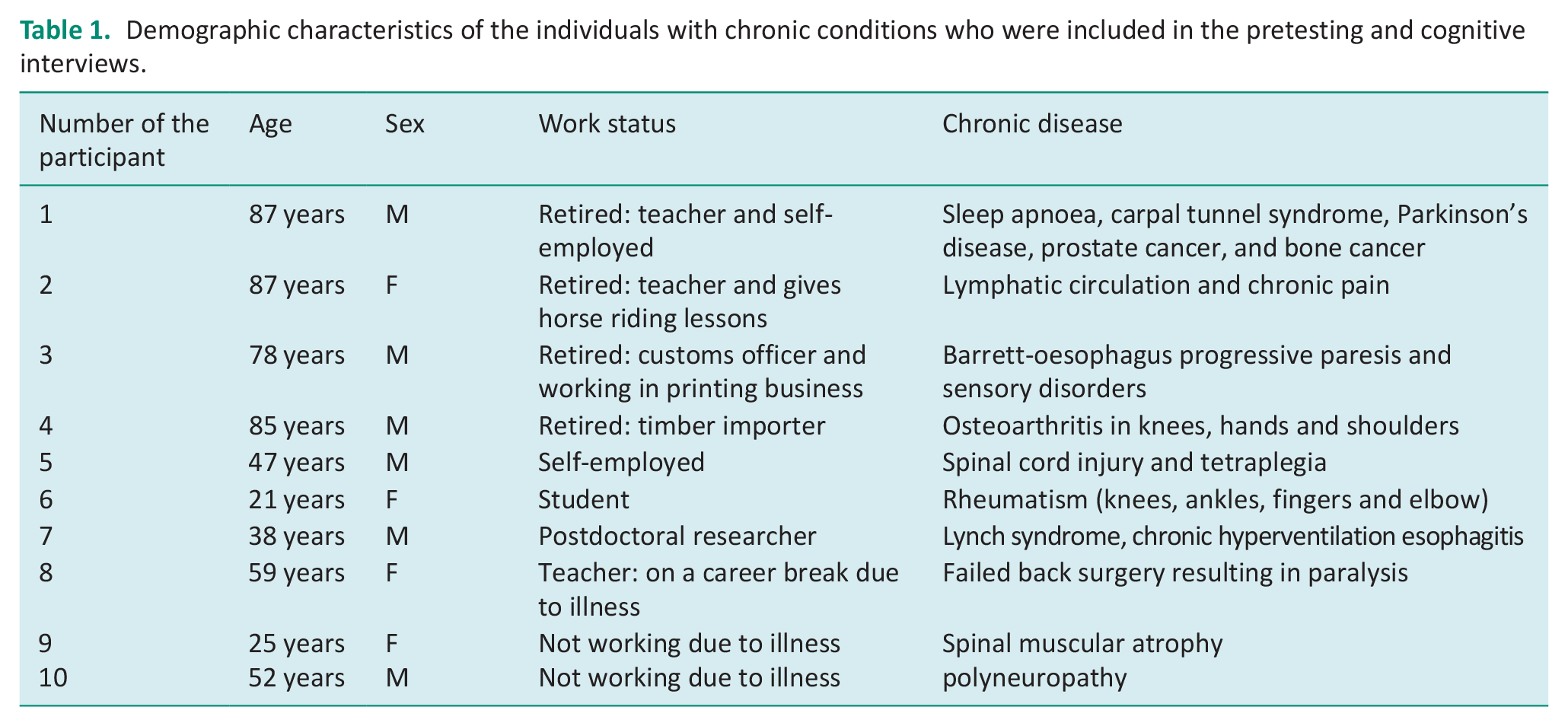
To perform a pretest and undertake a cognitive interview, patients with chronic conditions living in the Flemish-speaking region of Belgium were recruited. The rationale for choosing these people lies in the fact that people with chronic conditions might experience a substantial loss in engagement in meaningful activities and are more likely to discuss the conceptual foundation of engagement and its subsequent loss (Fong, 2019). Convenience sampling was conducted using a digital flyer shared on social media. Community care organizations were also contacted using the same flyer. The pretest and the interview took place in the person’s own environment. A written informed consent was signed for the pretest and cognitive interviews. After completing the assessment, the researcher and participant discussed item by item, the interpretation, understanding and acceptance. Each item was explained in the participant’s own words, and where needed, according to the participant, an alternative for (a part of) the statement was provided. In total, 10 native Flemish speakers with a chronic condition (four females, mean age 58 years) were included (see demographics Table 1).
Demographic characteristics of the individuals with chronic conditions who were included in the pretesting and cognitive interviews.
Phase 5: Expert committee review
The expert panel reviewed the suggestions of the participants in phase 4. If needed, changes were made, and a final version was created.
Phase 6: Final version
The final version was checked by the research team for spelling and grammatical errors.
Phase 7: Documentation
A final report was made containing all the documents from the cultural adaptation procedures.
The psychometric properties of the EMAS-VL
Quality criteria for internal consistency, factorial validity and construct validity were based on Terwee et al. (2007). The software packages Statistical Package for the Social Sciences 27 (SPSS Inc., Chicago, IL, USA) and AMOS were used to perform the analyses.
Target group and questionnaire
The translated EMAS-VL was included in a survey that was launched during the first lockdown in Belgium to evaluate mental health and its relation with meaningful activities in young adults (Cruyt et al., 2021) and older adults (Costenoble et al., 2022). Belgian citizens were in lockdown due to the prevailing situation of COVID-19. Every adult (aged 18–99 years) could participate. The survey was held both digitally and on paper to make it more accessible to those with limited digital options. The participant could choose the languages Flemish or French at the beginning of the survey. Online, the participants who conducted the survey in Flemish were used for the analysis. Individuals who had access to a computer could independently fill in the online survey which took around 15 minutes to complete. Informed consent was obtained by clicking a button to start the survey after the initial explanation. Individuals who did not have access to a computer, were contacted to complete the questionnaire by means of a telephone interview. Informed consent was given verbally at the start of the telephone call. Mental health was measured with the 12-item version of the General Health Questionnaire (GHQ-12; Goldberg et al., 1997). The total score ranges from 0 to 36, with higher scores indicating higher levels of psychological distress. A score of 12 or lower in adults suggests psychological well-being. Resilience was measured with the 10-item version of the Connor Davidson Resilience Scale (CD-RISC; Connor and Davidson, 2003). The total sum score ranges from 0 to 40. A higher score indicates higher resilience. In adults, the threshold score is 29 (Antúnez et al., 2015). The GHQ-12 has relatively good psychometric properties, and the CD-RISC in general population, primary care, psychiatric outpatient, and clinical trial samples support its internal consistency, test-retest reliability and convergent and divergent validity.
The study was approved by the University’s Research Ethics Committee from the Ghent University/Ghent University Hospital (BC-07585, B.U.N. 143201421976).
Internal consistency
To estimate the internal consistency of the EMAS-VL a Cronbach’s α and an item-total correlation were calculated. The cut-off criteria from Terwee et al. (2007) were used. ‘The scale mean’, ‘the scale mean if item deleted’, ‘the scale variance if item deleted’ and ‘squared multiple correlation’ were displayed for the sake of completeness. For the internal consistency a Cronbach’s α between 0.70 and 0.95 is considered good, between 0.50 and 0.70 is moderate and lower than 0.50 is considered weak. For the corrected item-total correlation, the same criteria were applied. In cases where the internal consistency was good, an exploratory factor analysis was applied to determine whether the items formed one overall scale or whether subscales could be defined.
Factorial validity
The factor validity of the EMAS-VL was first assessed through an exploratory factor analysis (EFA) by principal component analysis with oblique rotation method (Varimax with Kaiser Normalization) to allow the factors to correlate. Eigenvalue of one or more than one was extracted. A scree plot was generated. A factor loading of 0.40 or more was set to interpret the items that make up the factor. Communalities after extraction were calculated to determine whether the sample size was good enough to obtain distinct and reliable factors. This value should be above 0.60. If not, the Kaiser–Meyer–Olkin measure (KMO) of sampling adequacy was performed to check whether the data were appropriate to conduct the exploratory or confirmatory factor analysis. A KMO value of 0.80 is adequate for factor analysis. To ensure that the correlations in the dataset were appropriate to use in the factor analysis, the Bartlett’s test of sphericity was performed. A priori, the significant level of p < 0.01 was defined.
Furthermore, to explore the validity of the extracted factors by the EFA, a confirmatory factor analysis (CFA) was performed. In addition, we tested the fit of the two-factor structure identified by Eakman et al. (2010b) and confirmed by Prat et al. (2019). The comparative fit index (CFI), Tucker–Lewis index (TLI) and root mean square error of approximation (RMSEA) were reported to test the goodness of fit of the factor structure models.
Construct validity
To assess the construct validity of the EMAS-VL, the scale was correlated with the GHQ-12 (Goldberg et al., 1997) and the CD-RISC (Connor and Davidson, 2003). These two scales have included aspects of meaning in the formation of their respective constructs.
First, the Dutch version of the GHQ-12, validated by De Beurs and Zitman (2005), was selected because it measures the construct of mental health and psychological well-being and includes the following items related to meaningful daily activities: being able to feel useful in activities, to concentrate on daily activities, and take pleasure in daily activities. Previous validation results of the original EMAS correlated the EMAS with assessments measuring mental health (r = 0.32; Eakman, 2011).
Secondly, the Dutch version of the CD-RISC, validated by Markowitz and Peters (2014) was selected because is measures the construct of resilience and includes aspects relating to the perception of meaning in activities such as sense of purpose, positive affect and social support (Markowitz and Peters, 2014). Also here, other items that differ from meaning are included (Ostafin and Proulx, 2020; Zarobe and Bungay, 2017), for example, the CD-RISC covers coping strategies and perceived stress.
Because there is on the one hand a clear difference (divergent) between the constructs of meaning (EMAS) versus Mental health (GHQ-12) and Resilience (CD-RISC) and on the other hand the fact that both measures include items regarding meaning (convergent), we hypothesize that there will be a moderate correlation (r = 0.30–0.50) between the EMAS-VL and, respectively, the GHQ-12 and the CD-RISC.
Results
Translation and adaptation process
Phase 1 and 2: Forward translation and expert panel
When comparing the two translated versions, out of the 12 items, items 3, 9 and 10 were identically translated. Items 6 and 7 were worded slightly different but the meaning was the same and linguistically both were correct. Seven items (1,2,4,5,8,11,12) were translated differently by the two independent translators (Table 2). After discussion, the expert panel agreed on five items out of the seven. The original authors of the EMAS were requested to explain more deeply the meaning of items 1 and 4 making it possible for the expert panel to agree on the correct translation. Finally, the expert panel agreed on a third version based on the original conceptual idea about the EMAS. No voting rounds were necessary.
Overview of the seven original EMAS items that were translated differently in the phase of the forward translation from the original English into Dutch by two independent translators involved (two versions: V1 and V2) and the final agreed Flemish version (V3).

Bold words show the differences in the translation of the two translators.
Phase 3: Back translation
The third Flemish version (V3) was back translated by an independent English language translator. This new English version was sent to the two original authors of the EMAS and they reviewed and suggested some changes;
Item 1: They suggested deleting our self-added word ‘goed’ (good) (The activities I do help me to take
Item 4: The translated item 4 resulted in the same description as the original item 11, both with satisfaction as the central tenet. This resulted in the word ‘satisfaction’ in item 4 being replaced. Also, item 4 seemed to be missing ‘achieving something’ leading to a ‘sense of accomplishment’. These two elements needed to be coupled together. The back translation of ‘satisfaction’ in item 11 was ‘fulfillment’ but this communicates a deeper and more expansive emotional response so the two authors suggested using the word ‘tevredenheid’.
Phase 4 and 5: Pretesting and cognitive interviewing, expert committee review
The 10 native Flemish speakers with a chronic condition filled in the questionnaire and were then questioned about the content. The suggestions and recommendations were checked by the research team and a consensus was reached about the conceptual content of the items. Some participants debated words that did not require fundamental changes to the understanding of the items. General findings in the instruction section were that the word ‘activity’ was too vague (addressed by four participants). It was decided to extend the instructions to examples of activities, with or without passive activities, but adapted to the target group. We agreed with one participant who suggested adding the purpose of the questionnaire in the instructions. The majority of participants suggested providing a white box under each item for any comments or additions. This seemed a good proposition since it is recommended that the therapist is open to comments during the administration of the EMAS-VL. Three of the participants found the word ‘net’ (‘just’ as in ‘just enough’) in item 12 unnecessary. The research team considered this word as having added value because it makes it more appropriate to score with the four answer categories. It was also important not to deviate from the original content of the EMAS.
Phase 6: Final version
The final agreed version can be found in Table 3. This version was reviewed by the research team for spelling and grammatical errors. To develop the EMAS-VL further based on the article of Eakman (2012), the answer category ‘never’ was removed since it appeared to be extremely low in use. In addition, in a psychometric study using Item Response Theory to improve measurement accuracy and reliability of the EMAS, a 4-category response option, was recommended since people have a basic intrinsic motivation to find meaning in their activities (Heintzelman and King, 2014). The lowest categories (never and rarely) were collapsed and translated as one answer category ‘zelden’ (seldom). In addition, in the original EMAS instrument, an applied example of item 1 was given between brackets (e.g. keep clean, budget my money). Since this was not included in the further development of the EMAS-VL, and the participants understood this item fully, the decision was made to leave this example out.
The final version of the EMAS-VL.

Psychometric properties of the EMAS-VL
A sample of 1934 adults were recruited. Participants were mostly females (n = 1392; 72%) and averaged 40.1 years of age (range 18–99 years, SD = 22.66). Based on the age groups, 1186 young adults (range 18–40 years, SD = 5.84), 100 middle-aged adults (range 41–65 years, SD = 6.51) and 652 (range 66–99 years, SD = 3.43) older adults responded. The total score of the GHQ-12 was 15.54 (SD = 6.78, range = 0-36), the EMAS-VL was 31.13 (SD = 6.88, range = 12–48) and CD-RISC was 24.86 (SD = 6.48, range 0–40). Overall, participants displayed evidence of distress based on the mental health results (
Internal consistency
The Cronbach’s alpha coefficient for the EMAS-VL was 0.91 (
Item-total statistics of the EMAS-VL.

Factorial validity
EFA – The communalities after extraction ranged from 0.40 to 0.83 in which four items (1,2,3,9) were under 0.60, so the KMO measure of adequacy was conducted (0.94). The Bartlett’s test of sphericity was statistically significant (X2 = 11,917, df = 66, p < 0.01). A two-factor structure could be extracted explaining 60.07% of the total variance. Factor 1 explained 51.6% of the total variance. Ten items were loaded on the first factor (1-5,8-12) and two items were loaded on the second factor (6,7; Table 5). Factor 1 was associated with the engagement in activities offering self-development and developing or maintaining skills. This was named the ‘Development & Skills component’ (DS). Factor 2 was related to the social environment as a motivator to perform and engage in activities. This component was named the ‘Social confirmation component’ (SC).
Factor loading: Rotated component matrix.

The bold numbers illuminate the strongest factor.
CFA – —The results of the CFA of our two-factor model (DS = EMAS-VL items 1-5-8-12) were CFI = 0.935, TLI = 0.919 and RMSEA = 0.087 (90%CI = [0.082, 0.092]; Figure 1). The CFA results of the original two-factor model identified by Eakman et al. (2010a); Social-Experiential component (SEC) = EMAS items 6, 7, 8, 9, 10, 11 and 12; Personal-Competence component (PCC) = EMAS items 1, 2, 3, 4 and 5) were CFI = .930, TLI = 0.913 and RMSEA = 0.090 (90%CI = [0.085, 0.095]). The measures of goodness of fit in our two-factor model indicate a better fit, so the decision was made to retain the two-factor model, as it adequately reflected the EMAS-VL.

Confirmatory factor analysis of the EMAS-VL.
Construct validity
The construct validity of both the full EMAS-VL (12 items) and a shortened EMAS-VL (full version without items 6 and 7) was assessed by correlating both versions to the CD-RISC and the GHQ-12.
The total score of the GHQ-12 is negatively correlated with the total score of both EMAS-VL versions (both r = −0.57, α < 0.001) because of the inversed scoring system of the GHQ-12 (higher scores mean lower mental health), implying that the higher one reports engaging in meaningful activities on the EMAS, the better one’s mental health, as scored through the GHQ-12.
The total score of CD-RISC is positively correlated with the total score of both EMAS-VL versions (12 items version: r = 0.51, α < .001; shortened version: r = 0.50, α < 0.001), implying that the higher one report engaging in meaningful activities on the EMAS-VL, the higher one scores his/her resilience as assessed by the CD-RISC.
Both EMAS versions showed a moderate correlation with the two assessments (going from 0.50 to −0.57), confirming our hypotheses.
Discussion
To capture the versatility of meaning in activity and since there is no measurement available for use in Flanders, the aim of this study was to cross-culturally adapt the EMAS into a Flemish version and to assess its psychometrical qualities (reliability, factorial validity and construct validity) in adults. Therefore, the 12-item EMAS was translated and validated in a convenience sample of adults.
A rigorous cross-cultural adaptation process made it possible to have acceptable psychometric properties in the translation of outcome measures. Our analysis showed that the EMAS-VL was feasible, had high reliability and good construct validity. The internal consistency was similar to the original version. The Cronbach’s alpha was even slightly higher.
The factor validity of the EMAS-VL was evaluated using EFA and CFA. A two-factor structure was found when EFA was conducted showing a first component related to self-development and developing or maintaining skills (DS) – comprised of items 1–5 and 8–12. A second component related to social environment as a motivating factor to perform and engage in activities (SC)—comprised of items 6 and 7. The two-factor structure in the EMAS has been confirmed in the original EMAS (Eakman et al., 2010a) and the translated Korean, Spanish, Polish and Japanese versions (Bożek and Tokarz, 2017; Kawakatsu et al., 2022; Nam et al., 2018; Prat et al., 2019). However, the CFA showed a poor fit of the model of Eakman et al. (2010a) (SEC and PCC) in our sample of adults and demonstrated an improved model fit of the Flemish model. Our second factor SC contained only items 6 (The activities I do are valued by other people) and 7 (The activities I do help other people), two items related to socially related meanings. In the study of Eakman et al. (2010a), these two items were found in the primary SEC, confirmed by Nam et al. (2018) and Prat et al. (2019). It is important to reflect on these results bearing in mind that this questionnaire was administered in the first lockdown in Belgium. People were forced to stay at home, and it was forbidden to undertake social activities. Perhaps people scored very low on the social items (6,7) on the EMAS-VL causing a second factor in the factor analysis. In addition, the large sample of women included in this study could also attribute to that result. Studies demonstrated that women find more meaning in social activities compared to men, who found more meaning in physical activities which could be still performed during lockdown (Sharp et al., 2007; McHale et al., 2004). The EMAS-VL should be therefore registered again under ‘normal’ conditions of daily life to have certainty about this factor structure. However, items 6 and 7 seemed to be cause for concern in other translated versions. In the study of Kawakatsu et al. (2022) items 6 and 7 were associated with the second factor called the Social Competence component. They clarified this discrepancy by the cultural differences in the construct of the self where the western culture focused more on the independent self, versus East Asian culture focusing more on the interdependent construal of the self. The study of Bożek and Tokarz (2017) stated that item 7 was a redundant item and when deleting, a better one-factor model fitted.
Regarding the construct validity of the EMAS-VL, the results of correlation analysis confirmed the proposed hypotheses. The EMAS-VL was moderately correlated with the CD-RISC which assesses resilience. Further, strengthening the link between meaningful activities and resilience in previous research already linked meaningful activities to resilience (Christiansen, 2007). Moderate correlation can be explained by the related elements that both of the instruments measure such as sense of purpose, positive affect and social support. Other elements that are not related to the EMAS-VL are coping strategies and perceived stress. Therefore, a moderate positive correlation was found. The EMAS-VL also moderately correlated with the GHQ-12 which assesses mental health. Health-related measures have already been used to measure construct validity in translated EMAS versions such as the 36-Item Short-Form Health Survey (SF-36; Kawakatsu et al., 2022; Cheraghifard et al., 2022), Psychological Meaningfulness Scale (Bożek and Tokarz, 2017), or Center for Epidemiologic Studies Depression Scale (Cheraghifard et al., 2022). They all showed a moderate positive correlation with the EMAS. Items of the GHQ-12 that are likely not related to the EMAS are somatic symptoms, anxiety, and so on, explaining the moderate relationship.
Methodological considerations and limitations
By working with three EMAS original authors, valuable feedback and suggestions were obtained which increased high methodological quality, resulting in a reliable final version of the EMAS-VL. During the back-translation process, it appeared that the translation into Flemish meant that either a word had to be added to obtain the same meaning or the Flemish word was not the correct translation. Consulting the original authors helped us make the right adjustments.
A reliable use of a foreign measuring tool in a Flemish-speaking population demands a systematic and judicious cross-cultural adaptation to the Flemish language. Both the guidelines of the World Health Organization (WHO, 2008) and the guidelines for the Process of Cross-Cultural Adaptation of Self Report Measures (Beaton et al., 2002) were used to guide the researchers in the adaptation process. Blending two leading guidelines gave the opportunity to implement the best steps into a strong process of validation.
Limitations of the study should be recognized. Firstly, in the two applied guidelines for translation, it is recommended that the two translators should have different profiles or backgrounds. Our two forward translators were both occupational therapists which could have been a missed opportunity to translate the questionnaire from a different background. However, as occupational therapists, they have built up different expertise by working with different populations and in terms of clinical practice versus research.
Secondly, the participants in the pretest and cognitive interviews were people with chronic conditions and based on their profession, we could assume they were literate. It is suggested to test the EMAS-VL in non-literate people to see if the scale is also a valuable and understandable tool. Moreover, further testing of the tool in clinical target groups who were not included in the pretesting (e.g. stroke patients, persons with mental illness) might lead to different conclusions and might allow to assess the factorial validity in a confirmatory manner and determine measurement invariance of the EMAS across clinical and non-clinical samples.
Implications for practice
The EMAS-VL was cross-culturally adapted following evidence-based guidelines and psychometric properties demonstrating a valid instrument. Therefore, the EMAS-VL can be used in the Flemish part of Belgium. It is a quick and easy instrument to administer, which makes it feasible for practice. Based on previous research, the EMAS-VL can be used in different populations such as people with mental illness (Goldberg et al., 2002), young adults (Eakman, 2011), older adults (Eakman, 2012), healthy adults (Prat et al., 2019), stroke patients (Cheraghifard et al., 2022), women with breast cancer (Petruseviciene et al., 2018) and people who experience adversity such as a lockdown due to a pandemic (Cruyt et al., 2021).
Conclusion
As hypothesized, the EMAS-VL is a reliable and valid instrument in the evaluation of meaning in activities of adults speaking Flemish.
Key findings
The EMAS was cross-culturally adapted into the Flemish context for adults speaking Flemish.
The EMAS-VL showed a high reliability and possesses satisfactory construct validity.
Exploratory and confirmatory factor analysis discerned a two-factorial structure.
This study provides evidence that the EMAS-VL can serve as a client-centred assessment in Flanders (Belgium) for people speaking Flemish, yielding valid and reliable measures of meaning in activities.
‘What the study adds’
By cross-culturally adapting and validating the EMAS in Flanders, healthcare workers can use this assessment to measure the meaning of activities.
Footnotes
Acknowledgements
We thank Loubna Baddou, Anna Lamacz and Alexis Ortegat for helping in collecting the data in the cognitive interviews. We thank Colin Walker for the back translation of the EMAS-VL. We thank prof. dr. Sharon G. Brintnell and prof. dr. Bluma Goldberg for their valuable feedback and help.
Research ethics
University’s Research Ethics Committee from Ghent University/Ghent University Hospital (BC-07585, B.U.N. 143201421976). Year of approval: 2022.
Consent
Written and verbal consent
Patient and public involvement data
During the development, progress and reporting of the submitted research, Patient and Public Involvement in the research was included in the conduct of the research.
Declaration of conflicting interests
The author(s) declared no potential conflicts of interest with respect to the research, authorship, and/or publication of this article.
Funding
The author(s) disclosed receipt of the following financial support for the research, authorship, and/or publication of this article: This research was funded by the ‘Bijzonder Onderzoeksfonds (BOF)’ (Special Research Fund) an internal designated fund from the Flemish Government that makes resources available to Universities.
Contributorship
DVP and VDVD were the main promotors of the first author, made substantial contributions throughout the research, helped in the interpretation of data, improved writing, approved submitted version and agreed both to be personally accountable for the author’s own contributions. DLM, VP, CP, DPR and OK made substantial contributions throughout the research, improved writing, approved submitted version and agreed both to be personally accountable for the author’s own contributions. JM and EA were involved in the cross-cultural adaptation of the EMAS, they also reviewed the article and approved the version to be published. CA and BI made substantial contribution to the acquisition of the data, approved the version to be published and revised the article.
During the development, progress and reporting of the submitted research, Patient and Public Involvement in the research was: Included in the conduct of the research and included in the reporting of the research.

Data availability statement
Requests to access the data should be addressed to the corresponding author Ellen Cruyt on reasonable request.