



Abstract
The construction of offshore wind farms is highly complex, involving many factors at each stage, making it difficult to create an accurate preliminary plan. We propose a discrete event-driven simulation method for preliminary construction planning, which is both flexible and efficient. This approach is particularly suitable for large-scale offshore wind farms. The method begins by discretizing and modeling construction processes and key factors to build a simulation framework. Next, sequencing rules for activating discrete events are developed based on real construction practices, driving the dynamic simulation model. The result is a comprehensive simulation system that clearly outlines the construction timelines for various processes. A test on a real offshore wind project showed that this method accurately predicts manpower, material resources, and time requirements, considering specific influencing factors. Comparative validation with empirical-based simulation methods demonstrates that the integrated simulation system achieves a 9% improvement in accuracy for wind farm construction scheduling processes. This method also offers strategic long-term scheduling advice for future offshore wind farm projects.
Keywords
Introduction
Wind power is globally recognized as a crucial renewable energy source, attracting significant interest. On April 16, 2024, the Global Wind Energy Council (GWEC) released the “Global Wind Report 2024” in Abu Dhabi. The report highlighted that the global wind power capacity additions in 2023 reached a record-breaking 117 GW (Global Wind Energy Council, 2024). The construction of offshore wind farms involves several critical components, including the assembly of wind turbines, laying sea cables, and erecting booster stations. This construction process is characterized by high investment costs, long construction durations, significant challenges, and a substantial potential for environmental impact (Bhutia et al., 2025; Lerche et al., 2023; Mahtab et al., 2025; Qian et al., 2018). These characteristics make it complicated to plan the construction processes and allocate resources strategically for offshore wind energy projects.
In a case study of the Fujian offshore wind power project, Wu Dongkuan estimated the labor, material resources, technical procedures, and working schedules to develop a construction progress plan (Wudongkuan, 2019). However, the accuracy of this plan was compromised by the limitations of the project model and the manual estimation methods used. Weather factors that could affect crane operations and high-altitude tasks were not adequately considered, and the resource allocation was not fully integrated, resulting in a less accurate construction schedule. While focusing on short-term factors can improve the precision of construction planning, it may neglect comprehensive resource management and initial design planning, affecting the overall project timeline.
Offshore wind power resource-allocation-strategy optimization refers to the pre-planning of offshore wind farm construction projects, considering meteorological conditions, as well as human and material resources (Levitt et al., 2011; Yong et al., 2010). Computer simulations related to offshore wind farm construction usually focus on either mechanical structures or electrical systems (Tohbai and Wu, 2009; Li et al., 2021; Wang et al., n.d.). There is a pressing need for a method that can accurately plan the construction of offshore wind farms over an extended timeframe.
Discrete event simulation (DES) conceptualizes the temporal evolution of a system as a series of discrete events, each occurring at specific time points, with progress achieved by sequentially processing these events. This event-driven approach to simulation (Negahban and Smith, 2014) has been widely used in fields like engineering, logistics, and project management (Babulak and Ming, 2009; Kogler and Rauch, 2023).
Compared to other computer simulation systems, discrete simulation simplifies individual events, focusing on the logic between them, as shown in Figure 1. This approach is particularly effective in capturing and simulating the uncertainties of real-world systems, making it ideal for the complex planning involved in offshore wind farm construction, where numerous factors and long timelines are involved. Construction discrete event simulation timeline diagram.
Several scholars have applied DES to offshore wind energy projects to anticipate risks in construction scheduling. For example, Santos et al. (2022, 2023) proposed a maritime project vessel planning method based on meteorological uncertainty, using a discrete simulation and genetic algorithms, which ensures the stable operation of maritime projects while saving costs. Scholz-Reiter et al. (2010) proposed a mathematical model based on which an optimal ship construction scheduling table is calculated using weather forecast data to optimize the delivery of components for dockside WTGs; Y. Tekle Muhabie from the University of Liège analyzed the logistics chain of the offshore wind industry, using cross-validation to evaluate the effects of deterministic and probabilistic weather data on simulation outcomes (Tekle Muhabie et al., 2018). However, those studies mainly concentrated on meteorological data, with limited focus on practical engineering integration and validation. Zohreh Sarichloo conducted DESs for various construction processes, including assembly, hoisting, and jack-up vessel requirements. Yet, she overlooked crucial weather factors, reducing the realism and accuracy of her simulations (Sarichloo et al., 2022). B. Moverley Smith from the University of Edinburgh combined weather data with construction modeling in a DES, providing strategies based on multiple ports (Smith et al., 2023). However, the simplicity of the three case studies used failed to capture the complexity of real production scenarios, underrepresenting the benefits of DES-based planning for offshore wind farm construction and limiting its practical application.
To enhance the integration of DES into the construction planning of offshore wind farms and facilitate real-time resource scheduling and process optimization, we propose a novel, high-fidelity simulation model. This advanced model captures the idiosyncrasies of construction phases, integrating a comprehensive array of real-world constraints, including environmental, logistical, and technological factors. Leveraging a hybrid of discrete event-driven mechanisms and adaptive event scheduling algorithms, the model not only adheres rigorously to the operational logic of offshore construction but also optimizes for computational efficiency.
Using Python, we developed a state-of-the-art simulation framework tailored specifically for offshore wind farm construction. The efficacy of our proposed methodology and system was empirically validated through a case study of the Monson Wind Power Project in southern Laos. The results demonstrate that our innovative approach offers superior flexibility and computational efficiency, providing actionable insights for construction management. This breakthrough in simulation technology has the potential to revolutionize the planning and execution of offshore wind power projects, leading to significant improvements in construction productivity and cost-effectiveness.
Offshore wind farm construction model
The discrete model for offshore wind farm construction includes models that encapsulate construction processes and the constraints affecting them. These processes represent a generalized simulation of construction activities, driven by event-based mechanisms and influenced by constraints such as weather conditions, resource availability, and site-specific factors. The main relationships and interactions within this model are depicted in the accompanying Figure 2. Core relationships of DES system.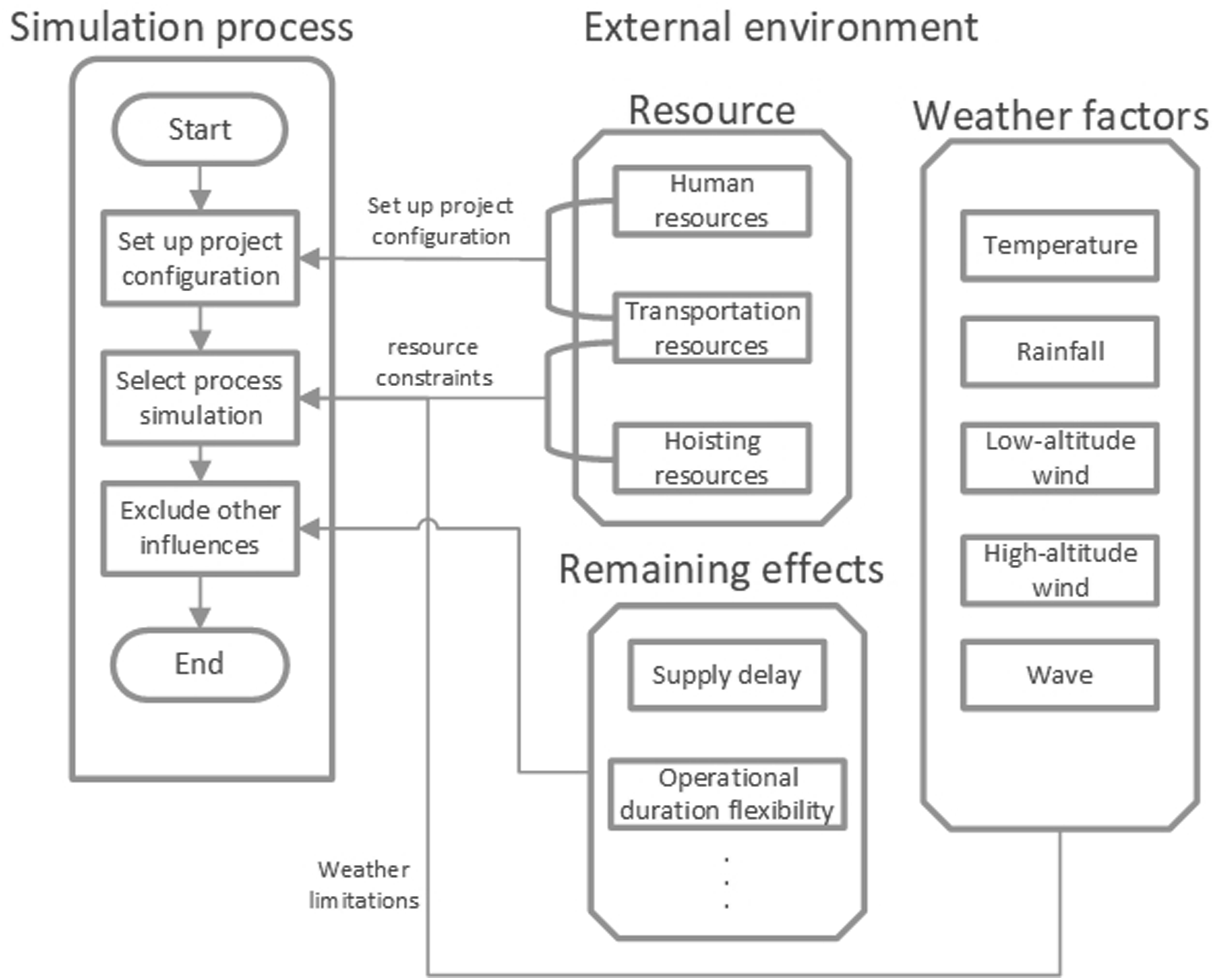
Construction simulation model
Based on the actual construction procedures of the Monson Wind Power Project and industry practitioners’ experiences, the construction components of an offshore wind turbine can be categorized into tower sections, nacelle, hub, and blades. Each of these components goes through transportation, transshipment, and hoisting processes. The tower sections, with their distinct attributes, are further divided into four parts, with a logical sequence governing the transshipment and hoisting of sections T4–T1. The construction process flows from the tower sections to the nacelle, then to the hub, and finally to the three blades, leading to the stretching and completion of the blades. The key attribute of each event is the time required for its execution. By iterating these processes across multiple turbines, a simulation model of the construction operations within a wind farm can be established.
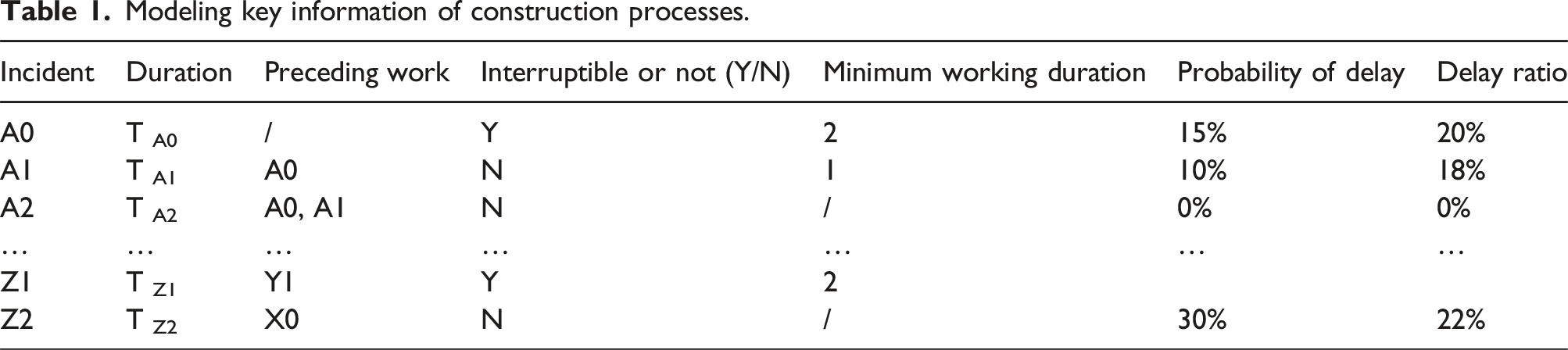
During DES, certain attributes of the construction steps can be represented as numerical identifiers and parameters within a computer system, which streamlines the simulation process. Each step in the construction sequence is assigned a unique identifier to denote the specific operation, which is linked to additional required parameters. A comprehensive construction model consists of a significant amount of information, requiring a systematic approach to effectively organize and categorize it. This paper suggests utilizing a nested structure of dictionaries and lists, based on computer language, to maintain the integrity of information, standardize its structure, and facilitate retrieval and simulation processes, as shown in Figure 3. Construction model data structure.
The basic framework for the model has been established with essential information as shown in Table 1. To align more closely with real-world construction scenarios, further refinement of the model is necessary, focusing on the following key areas: (1) Logical Sequence of Operations: Defining the logical precedence between construction steps is crucial. For instance, the transshipment and hoisting of the tower can only commence after its transportation has been completed. (2) Interruptibility of Processes: The model should incorporate the capability to pause and resume construction processes. For interruptible activities, any delays should be managed in a way that allows work to resume in increments aligned with the minimum required work duration. This approach has significantly enhanced the utilization rate during the short construction window period. (3) Duration Flexibility: After determining the baseline duration for each construction process, the model must also incorporate potential delays. This is achieved by assigning either a time buffer or a permissible duration range to account for unforeseen disruptions. During simulation runs, the system will probabilistically assess the occurrence of delay events and dynamically adjust the affected process timelines to mitigate uncertainty impacts. Modeling key information of construction processes.
Influence factor modeling
The maritime climate is unpredictable and can change rapidly, greatly affecting the installation of offshore wind turbines. Installation and hoisting operations must be paused when rainfall exceeds 10 mm per day or when wind speeds go over 6 m/s (Lerche et al., 2023; Xiao and Jia, 2010). High temperatures can also slow construction, and sea conditions often disrupt vessel operations (Yang et al., 2022). In real-world construction, there is a strong link between daily working hours and the start of construction projects. DES, which is driven by the timing of events, relies heavily on the duration of these events. The configuration of daily working hours plays a key role in determining the simulation timeline. When a process that can be interrupted is affected by both weather and daily working hours, the construction status becomes complex, requiring careful consideration in the simulation design.
Monte Carlo-based meteorological data fitting approach
Weather conditions have a potential impact on construction projects. Therefore, it is essential to consider five categories of meteorological data: rainfall, wind speed at 10 m, wind speed at 100 m, temperature, and wave height. However, obtaining accurate long-term future weather data for a project of extensive duration is challenging. To address this, a Monte Carlo-based method is proposed. By comparing historical weather data for the same month in a specific region, patterns can be identified. This method allows the fitting of historical weather data to generate data that closely approximates actual values. The project’s commencement is timed to coincide with the same month in previous years for the region, and an analysis of the results provides valuable insights into the expected simulation outcomes for the project.
Simplification of influencing factor modules
A single construction process can be influenced by multiple meteorological factors simultaneously. For example, hoisting operations depend on specific conditions such as temperature, rainfall, wind force, and wave height. When simulating a construction process, it is essential to consider both the specific working hours and the climatic conditions during that period. If the climatic conditions are not suitable, the working hours need to be postponed, requiring a new set of weather data for the rescheduled period. This can complicate the simulation logic. To simplify the logic and avoid complex loops, the influencing factors are modularized before the simulation begins. Weather data assessments are completed in advance, focusing only on the scheduling of process time slots during the simulation.
Apart from simplifying the weather factors, the impact of daily working hours can be addressed proactively before the simulation starts. Unlike traditional discrete simulation timelines, this simulation timeline is intermittent, reflecting the non-continuous nature of daily working hours. Assessing the timeline during the simulation process would make the conditions overly complex. Although weather factors and daily working hours are different types of influences, they both result in the same outcome—the process cannot proceed during the current time period (represented by a Boolean value of 0). Therefore, daily working hours are evaluated before assessing weather conditions. If the current time falls outside working hours, the period can be assigned a value of 0 directly. This bypasses the weather assessment phase and allows for a comprehensive judgment of multiple factors.
This logical simplification methodology enables minute-level execution of DES for complex wind farm systems involving tens of thousands of operational processes.
Resource pool modeling
Different construction processes have varying resource requirements. It is common for a process to be delayed due to the unavailability of required resources caused by other processes. To accurately represent construction conditions, it is necessary to model the construction resources at the project site, including transportation vehicles for transport and cranes for hoisting. A resource pool is established, with each resource being assigned a unique identifier.
Event-driven approach in offshore wind farm construction simulation
DES operates on an event-driven paradigm, where the state of resources and the progression of the simulation timeline are dynamically altered by events. These events correspond to distinct construction activities within the engineering project. Once the project details are established, the next step is to determine which construction activity to simulate initially. In the DES framework, the selected activity is assigned an initial position on the simulation timeline. Following predefined logical rules and constraints, the activity is simulated to determine its completion time. This completion time serves as a reference for scheduling subsequent activities on the simulation timeline. After simulating an activity, the system’s state is updated, and the simulation proceeds to select the next activity to simulate. This dynamic process continues until the entire simulation sequence is completed. The accompanying Figure 4 illustrates the flow of this procedure. Event scheduling in simulation process.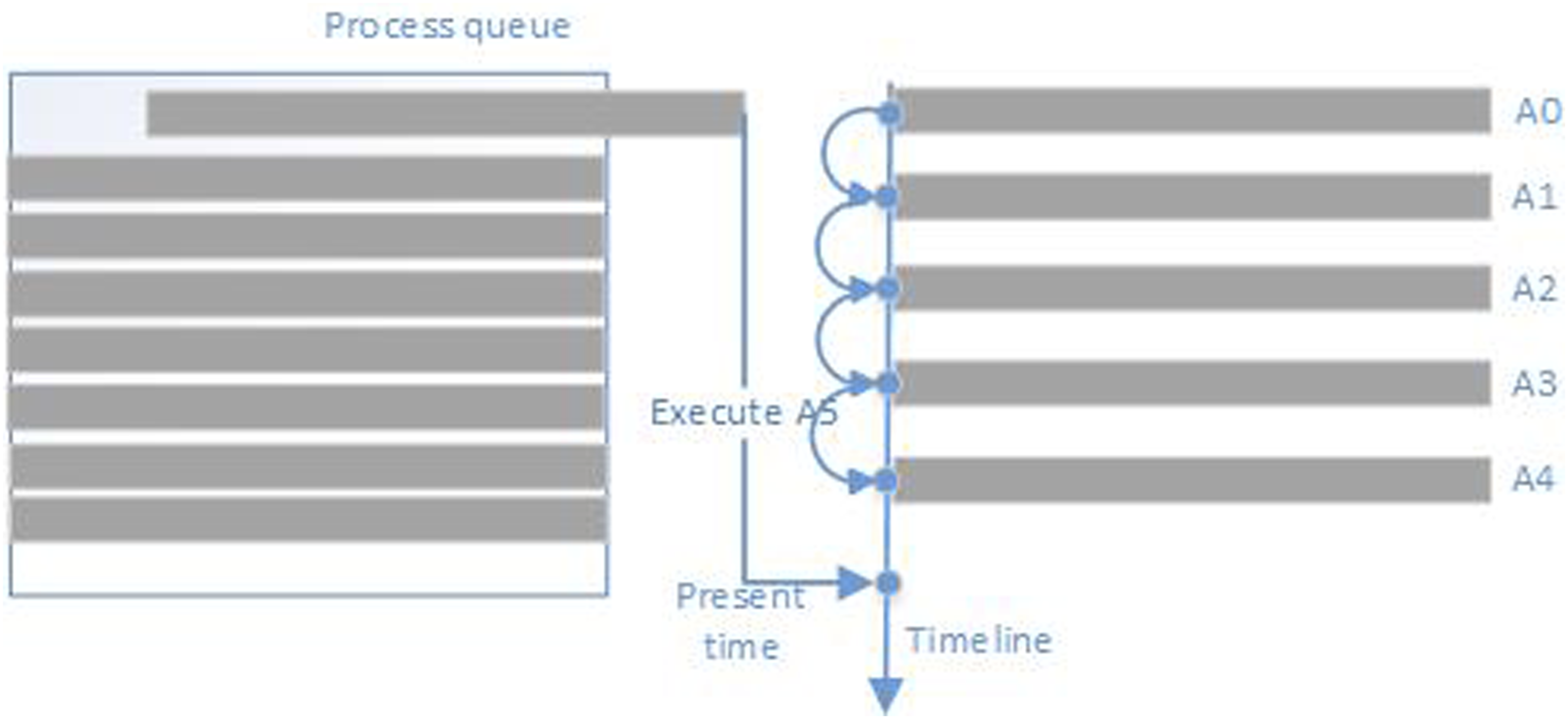
Rules for DES of construction processes
In discrete simulation, establishing the events and timeline is essential at the outset. For example, in the Monson offshore wind farm project, which comprises three working areas with varying numbers of wind turbines based on geographic location, the simulation begins with the first step, “Raising the ship.” The simulation timeline
This approach provides an overview of the simulation process for non-interruptible processes. In practice, however, many construction processes, such as tower transportation and blade hoisting, are conducted in stages. It is crucial to categorize these processes to ensure that the simulation accurately reflects the potential for early completion and avoids errors caused by prolonged inactivity due to unsuitable conditions.
The simulation process for non-interruptible processes has been outlined. However, in practical construction scenarios, many operations can be carried out in phases, such as the transportation of tower sections and the hoisting of blades. Without proper categorization and consistent logic, operations that could be completed earlier may miss suitable conditions, leading to inaccurate simulations. Additionally, there is a risk of system errors arising from extended periods of inactivity in processes that are too long to initiate without segmentation. To address this issue, it is important to segment these processes and establish a minimum duration for each segment that requires manual confirmation. For operations like transportation, which can be halted at any moment, the minimum construction unit could be set to 1 hour. For operations that require continuity, such as blade hoisting, the minimum working duration might be 5 hours, which can be adjusted based on field conditions. Once the minimum working duration is established, the simulation process will no longer solely rely on the total process duration. After confirming the simulation time coordinate, a search is conducted for Simulation logic flowchart.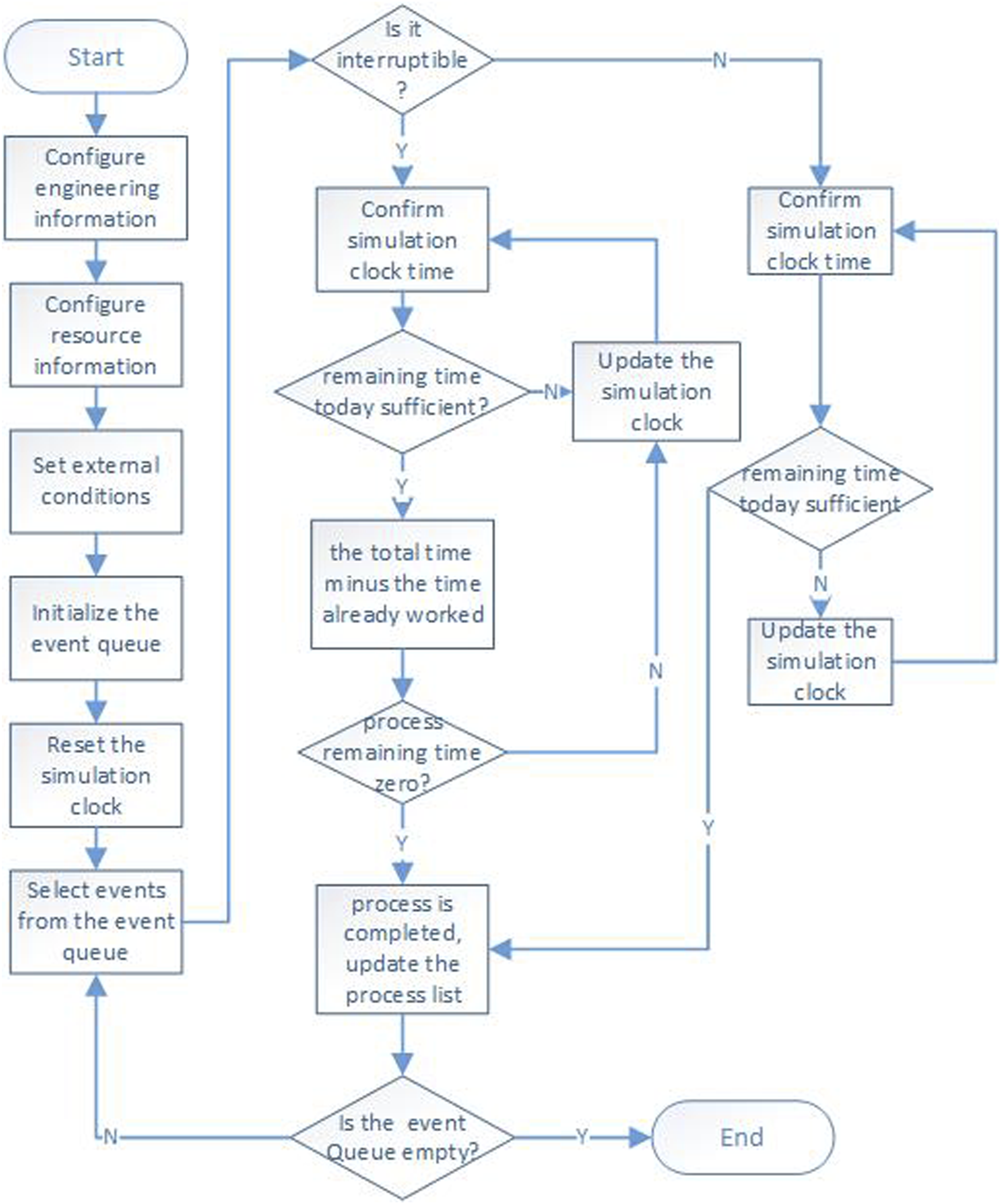
For instance, if the “Raising the ship” operation did not take place at time 
Updating system status
In the framework of discrete event-driven simulation, events serve as the driving force, propelling the simulation clock forward while the system’s state evolves accordingly. In order to ensure accurate selection of subsequent construction processes, each process within the wind turbine setup must be assigned a status indicator indicating its current stage: not started, ready for execution, or completed. Once a process has completed its simulation, its status is updated, enabling the system to bypass it in future selections. Given the interdependencies among processes, a process cannot begin if its predecessors are incomplete, which necessitates reassessing connected processes within the process pool once one process is completed. The completion time of a process establishes the theoretical start time for related processes, taking into consideration the latest completion time of all preceding processes. In practice, construction often involves concurrent operations, and effective management of potential conflicts between processes competing for the same resources is essential. Before initiating a simulation for a process, it is crucial to evaluate the availability of required resources. If the theoretical start time of a process clashes with the utilization of necessary resources, the simulation should be postponed until those resources become available. The simulation outcome is then recorded, reflecting the updated resource allocation status and ensuring orderly progress of the system. This approach guarantees that the simulation accurately captures the complexities of real-world construction, taking into account process dependencies, resource limitations, and concurrent activities.
Optimal selection strategy for upcoming construction stages
The construction workflow of assembling a wind turbine can be divided into approximately 40 distinct stages. As the simulation progresses, it becomes apparent that selecting subsequent processes solely based on their sequential order has its limitations. Each stage varies in duration and can be affected by weather-related delays. If an early-stage process is significantly impacted by weather, it can cause setbacks in the simulation and prolong the occupation of resources, potentially delaying other executable stages that could have started earlier. To address this issue, it is crucial to refine the logic for selecting which processes to simulate next. The inherent sequential dependencies between stages mean that aggressively reshuffling the process order to prioritize earlier completion can result in a high degree of complexity, making the algorithm significantly more challenging.
Since a project is composed of various stages, each with a predetermined construction duration, optimizing project efficiency is closely tied to optimizing resource utilization. By employing a greedy algorithm approach, we can prioritize maximizing resource usage to improve construction efficiency. For example, if at any given point in the simulation there are five stages ready for execution with no dependencies on prior stages, a preliminary simulation can be conducted for these stages in order to generate initial results. By comparing these outcomes, we can select the stage that can begin construction and utilize resources at the earliest moment for the next simulation phase. This strategy ensures that resource allocation receives priority and aims to enhance resource utilization rates. After simulating a stage, the system should be updated based on established principles to determine the impact on subsequent simulations. In the next set of available stages, the preliminary simulation is repeated, ensuring a systematic progression of the simulation process, shown as Figure 6. This method guarantees that the simulation process remains dynamic and responsive to the current state of the construction project, thus optimizing resource utilization and enhancing overall construction workflow efficiency. Optimization of event scheduling logic.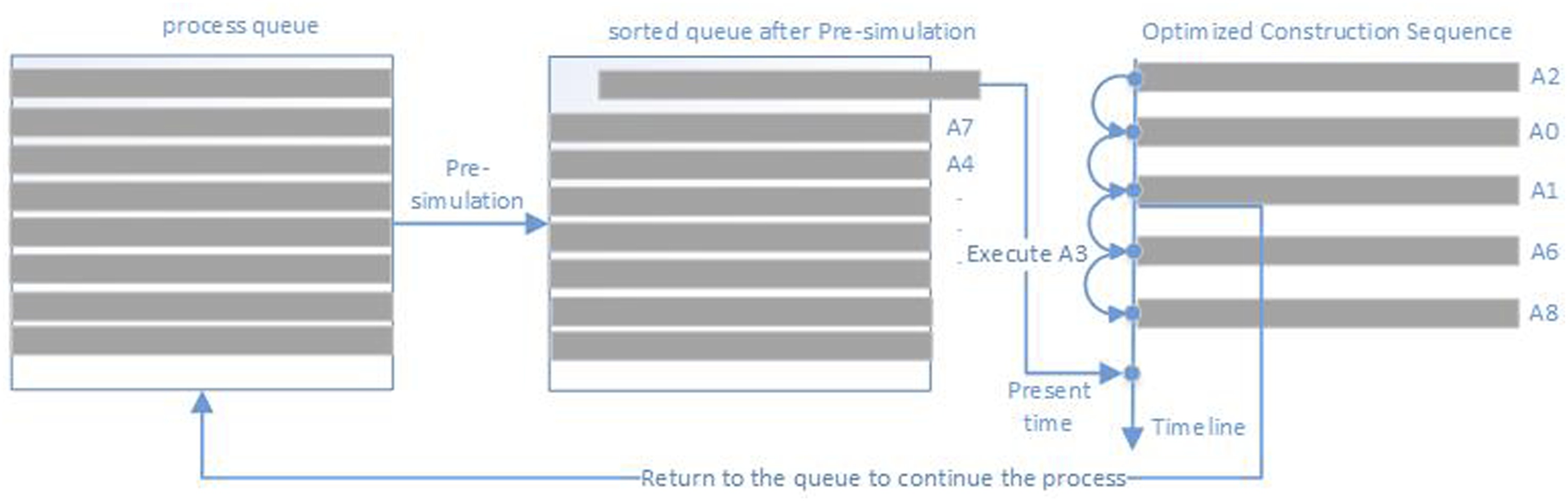
Application case study in engineering
Configuration of processes and resource systems
Standard process chart.

Duration estimates for hoisting, transshipment, and other construction processes are determined based on practical experience from the construction site. Conversely, the duration for transportation tasks is calculated by considering the travel distance between different construction site coordinates and the speed of the transport vehicles. In order to enhance the operational capabilities of the construction site, two cranes and two designated transport vehicles for transshipment have been allocated. If necessary, these resources can be increased strategically to shorten the construction timeline. The goal of this targeted enhancement is to reduce construction delays due to resource competition between processes. By optimizing resource allocation, the project can maintain a more efficient schedule and potentially speed up overall completion. The construction window is the time period suitable for construction under specific climatic and maritime conditions. Given the complexity and unpredictability of the offshore environment, the construction window is usually short, making the effective use of this window critical to improving the construction efficiency and ensuring that projects are completed on time.
Setting of influencing factors
To establish the environmental constraints for the simulation, weather data is sourced from the ERA5 open-source meteorological database. This data is processed to provide hourly climate conditions over several years. For the Monson construction site, specific geographic coordinates (E104.5913° longitude and N16.5071° latitude) are used to gather a decade’s worth of weather data, which informs the simulation’s parameters. The simulation imposes constraints of 6 m per second for wind speed, 3 mm for rainfall, and 36°C for temperature during hoisting operations. The construction workforce operates from 8:00 a.m. to 6:00 p.m., and the simulation adheres to these hours. Any time outside of this window is considered non-constructible. Additionally, if there are not enough remaining hours in the day to complete a process, work on that process will cease for the day.
Validation of simulation outcomes
A DES system for offshore wind farm construction has been developed using Python, as shown in Figure 7. This system enables simulations of individual construction processes, providing a detailed visual representation of the start and end times for each process of every wind turbine. By analyzing construction timelines, a Gantt chart is generated, offering a comprehensive view of the status of various construction processes, their interdependencies, and the primary external influences affecting them. This tool serves as a valuable reference and guide for planning and executing actual construction work. This methodology maintains its effectiveness even when applied to large-scale projects with extended construction durations. Notably, it achieves simulation completion within minutes without encountering logical inconsistencies, even when handling simulation durations exceeding 1 year and construction processes numbering in the thousands. This computational efficiency is primarily attributable to the discretized data processing mechanism that systematically decomposes complex project operations into discrete temporal units. Offshore wind power construction discrete event simulation system.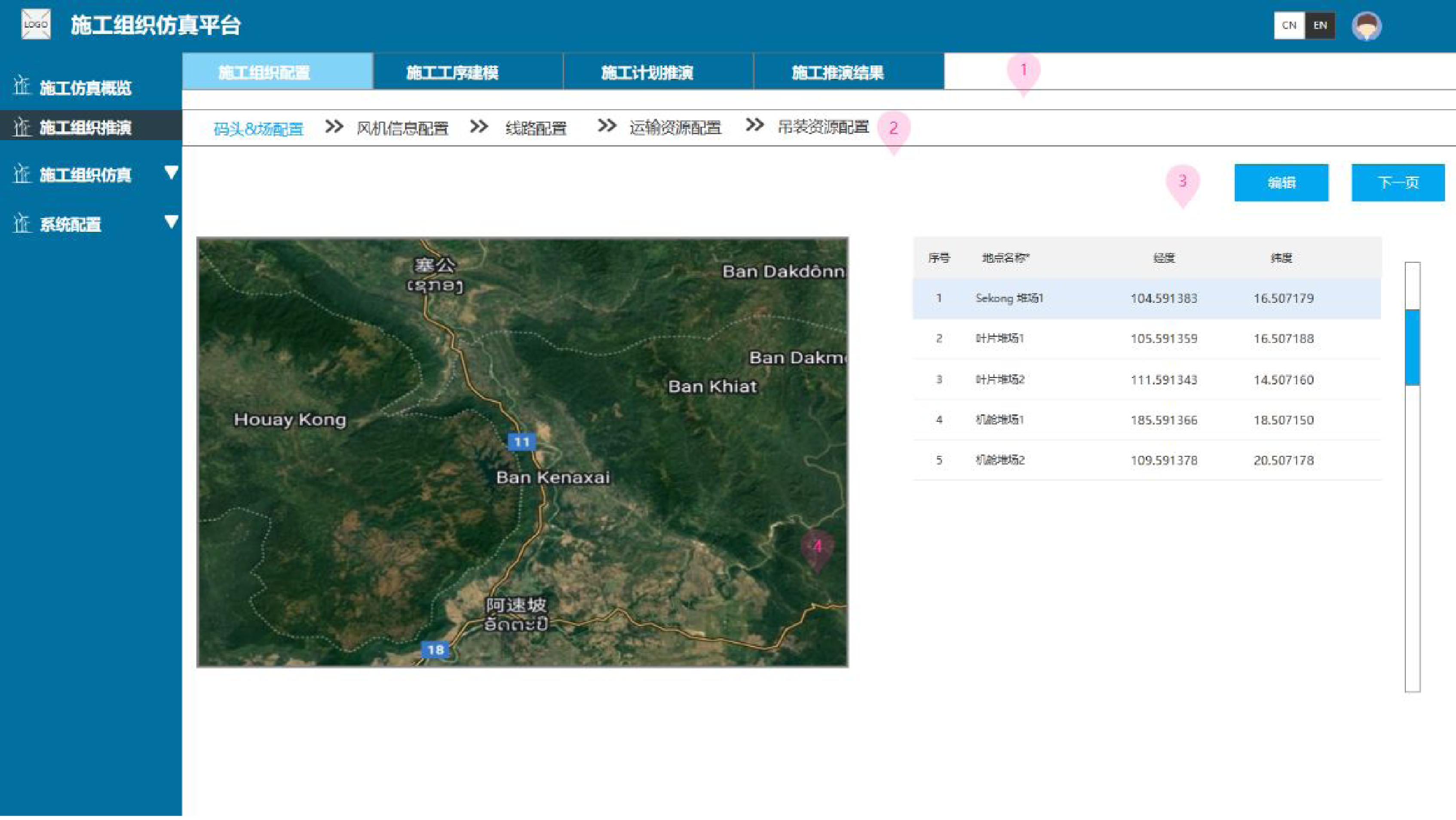

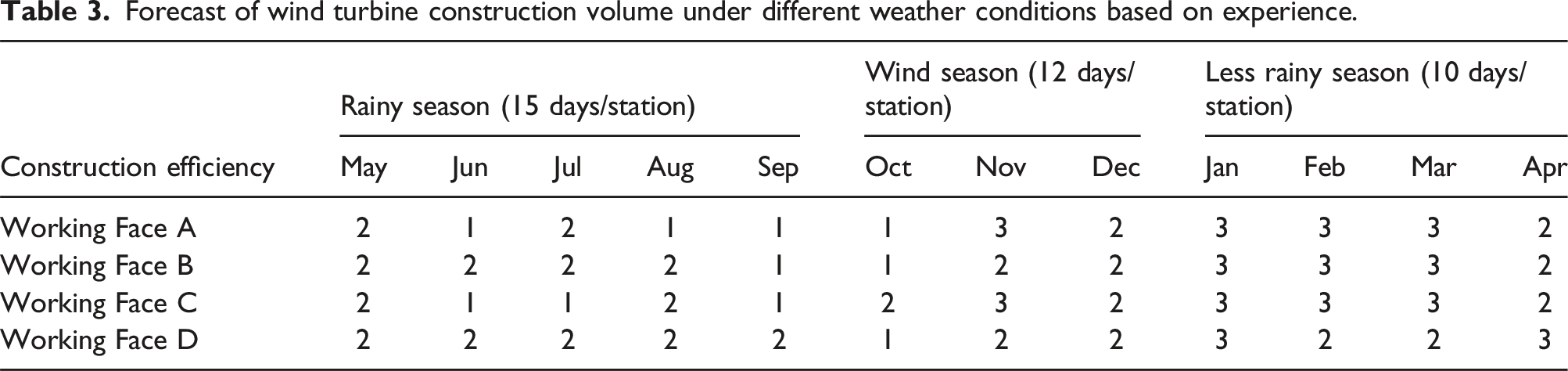
Forecast of wind turbine construction volume under different weather conditions based on experience.

Comparison of accuracy of simulation approaches with different constraints (a) and (b).
In contrast, Figure 8(b) demonstrates the simulation results with the constraint-driven model. The four construction phases exhibited deviations of 5.32%, 4.87%, 5.13%, and 5.06% from empirical data, yielding an overall error rate of 5.09%. This alignment meets the project’s precision requirements for predictive modeling. By integrating historical constraints with future meteorological forecasts (e.g., wave height, wind speed), the model enables reliable duration estimates for upcoming projects. Furthermore, it supports dynamic resource allocation based on predicted timelines, offering a robust framework for long-term project planning and risk mitigation.
The data from these simulations is then analyzed for trends, allowing the derivation of a predictive plan with practical reference value. If early simulations indicate potential delays, resource allocation can be adjusted, and the simulation can be rerun to help avoid construction delays. This approach supports more effective project management, aiding in the achievement of the specified deadlines.
Conclusion
In conclusion, the discrete event-driven simulation approach proposed in this study has effectively addressed the intricate challenges associated with offshore wind farm construction. By integrating realistic construction practices into the simulation model, it enables dynamic representation of construction processes and their key influencing factors, offering a more comprehensive understanding of the project lifecycle.
Compared with traditional empirical models, this method has achieved a notable accuracy improvement of 9%, reaching approximately 95% accuracy. The Python-based discrete event simulation system not only simulates the complexities of real-world construction scenarios but also provides actionable resource allocation recommendations through Gantt charts for offshore wind turbine construction. Focusing on critical attributes such as duration, resources, and constraints, while considering specific construction conditions in the model logic, the approach ensures high-fidelity simulations that closely mirror actual situations.
The method’s efficiency is equally remarkable, as it can conduct large-scale simulations of offshore wind farm construction on standard computers within minutes. Validation through a real offshore wind power project has demonstrated its ability to objectively evaluate and predict the manpower, materials, and time requirements of each process, taking into account various influencing factors. By optimizing resource scheduling during installation, this approach has significantly enhanced the overall efficiency of the offshore wind farm construction process, providing a robust solution for project planning and management in this field.
Footnotes
Author contribution
G.P.: conceptualization and methodology. Y.X.: software and writing—original draft preparation. N.W.: data curation and investigation. R.H.: supervision and validation. C.J.: software and visualization. L.Q.: writing—reviewing and editing.
Declaration of conflicting interests
The author(s) declared no potential conflicts of interest with respect to the research, authorship, and/or publication of this article.
Funding
The author(s) disclosed receipt of the following financial support for the research, authorship, and/or publication of this article: This research is financially supported by Key R&D Program of Zhejiang Province, China (2022C01244).

Data Availability Statement
The data that support the findings of this study are available from the corresponding author [Gb Pan] upon reasonable request.