



Abstract
Work passion is a critical driver of employee wellbeing, engagement, and performance; however, organisations often struggle to cultivate it effectively. Understanding what fosters work passion is essential because it not only deepens insight into employee motivation but also enables organisations to enhance passion and its positive outcomes. Despite growing interest, research has primarily focused on individual traits, leaving the role of organisational and leadership factors under-explored. To bridge this gap, we extend the Employee Work Passion Appraisal (EWPA) framework by examining how inclusive leadership and meaningful work influence employees’ work passion and whether the psychological authenticity climate mediates these relationships. Using a two-wave, time-lagged survey of 385 full-time Australian employees, our findings reveal that inclusive leadership indirectly fosters work passion by creating a psychological authenticity climate in which employees feel safe to express their true selves. Meaningful work also emerges as a strong predictor of work passion, underscoring its role in shaping positive work experience. By integrating self-determination theory with leadership and contextual factors, this study advances the theoretical understanding of work passion formation and offers practical insights for organisations seeking to build inclusive, meaningful, and authentic workplaces that spark passion.
Keywords
1. Introduction
Passion is a powerful force that shapes how individuals think, feel, and behave in many aspects of life (Vallerand, 2015). In today’s dynamic workplaces, passion is more than a personal trait; it is a critical driver of employee engagement, wellbeing, and organisational success. Employees who feel passionate about their work are more satisfied, healthier, and perform better; yet, many organisations struggle to ignite and sustain work passion (Pollack et al., 2020; Vallerand and Houlfort, 2019). Work passion is defined as “an individual’s persistent, emotionally positive, meaning-based, state of wellbeing, stemming from reoccurring cognitive and affective appraisals of various job and organisational situations that result in consistent and constructive work intentions” (Zigarmi et al., 2009: 310). Research has supported the link between work passion and numerous positive outcomes, including job satisfaction (Thorgren and Wincent, 2013), employee mental health (Forest et al., 2011), performance (Ho et al., 2011), and entrepreneurial success (Cardon et al., 2009). These benefits make work passion a cornerstone of thriving workplaces. However, the challenge lies in understanding what truly drives work passion.
Despite growing interest in work passion, research has largely focused on individual traits, overlooking the powerful role of organisational and leadership factors (Forest et al., 2012; Murnieks et al., 2014). This gap limits both theory and practice, making it imperative to explore how workplace contexts and leadership behaviours can spark and sustain passion at work. Addressing this gap is not only a theoretical necessity but also a practical imperative: uncovering how work passion develops can inform strategies that enrich work environments, enhance meaning and enjoyment, and ultimately improve employee commitment and performance (Pollack et al., 2020). As Oldham and Hackman (2010: 463) argued, workplaces should be “enriched rather than simplified”. Understanding the antecedents of and the mechanisms through which work passion is developed can contribute to this enrichment.
To respond to the need for deeper insights into work passion, we draw upon the Employee Work Passion Appraisal (EWPA) model (Zigarmi et al., 2011) and investigate the role of inclusive leadership and meaningful work on work passion and the mediating effect of psychological authenticity climate in the relationship between inclusive leadership and work passion. Investigating these relationships using the EWPA allows for further uncovering the environmental and contextual antecedents of work passion, which is “a cornerstone of talent development” (Hagel et al., 2014: 1) and has positive impacts on individuals’ work attitudes, behaviours, and wellbeing (Vallerand et al., 2014).
Egan et al. (2017) emphasised the critical role of leadership in creating environments where employees feel motivated and can bring their full selves to work. They identified behaviours such as sensitivity to diverse needs and fostering open, trusting, and respectful relationships as key to cultivating work passion. When leaders demonstrate these behaviours, employees’ need for a meaningful connection is fulfilled, promoting positive affect and passion (Gooty et al., 2010). These behaviours align closely with inclusive leadership, characterised by openness, accessibility, and valuing employee uniqueness (Carmeli et al., 2010; Nembhard and Edmondson, 2006). Inclusive leadership not only supports diversity and inclusion, but also enhances participation and creates workplaces in which employees feel respected and heard (Bao et al., 2022).
Despite its potential to influence motivation and engagement, little is known about the role of inclusive leadership in fostering work passion (Gürbüz et al., 2024). This study addresses the existing gap by examining how inclusive leadership, alongside meaningful work and psychological authenticity climate, shape employees’ work passion. Moreover, to understand the mechanism through which inclusive leadership can impact employees’ work passion, we focus on the psychological authenticity climate. Psychological authenticity climate refers to the “extent to which individuals perceive that being their true selves is supported at work” (Ostermeier et al., 2022: 2). It is crucial to understand employees’ perceptions and judgements about their organisational climate as it contributes to their attitudinal and behavioural responses (Parker et al., 2003). According to Ostermeier et al. (2022), employees perceive different degrees of psychological authenticity climate, a form of positive psychological climate, which can impact their work attitudes, motivation, and behaviours.
In addition, we explore the relationship between meaningful work and employees’ work passion because another important antecedent of work passion, as proposed in the EWPA model (Zigarmi et al., 2011), is job characteristics. Self-determination theory asserts that social contexts, including work environments that support individuals’ psychological needs for competence, relatedness, and autonomy, facilitate autonomous motivation and enhance performance (Deci and Ryan, 2000). Therefore, finding work activities meaningful is a job characteristic that can impact individuals’ work motivation.
By adapting the EWPA framework, drawing upon self-determination theory, and testing the proposed model, our study makes three main contributions to the extant research on work passion and inclusive leadership. First, we overcome the shortcomings of prior studies, which state that work passion formation lies within individuals’ abilities and identities, by expanding our focus on organisational factors, including inclusive leadership and meaningful work. This is supported by the self-determination theory (Ryan and Deci, 2000). Second, we demystify the process of work passion formation by investigating the mediating effect of perceived psychological authenticity climate. This is crucial because it helps us understand how inclusive leadership can influence employees’ work passion. Third, we extend the EWPA framework by examining three key variables, inclusive leadership, meaningful work, and psychological authenticity climate, in the context of Australian workplaces. This focus is timely given the recent evidence of declining employee wellbeing: only 39.1% of employees reported their work as valuable and worthwhile in 2022, down from 47% in 2021 and 52.9% in 2020 (Australian HR Institute, 2022). The report highlights that wellbeing, and positive outcomes depend on employees’ perceptions and experiences, which are shaped by complex social connections at the team and leadership levels. Understanding how inclusive leadership and meaningful work influence work passion is therefore critical, not only for Australian organisations but also for other contexts facing similar challenges.
2. Theoretical framework and hypotheses development
2.1. Inclusive leadership and work passion
Based on the EWPA framework, a key element in developing work passion is the appraisal process that determines whether an event, experience, or activity can impact appraisers’ (i.e. employees) wellbeing (Bandura, 1986; Pava, 1999). This is because humans constantly define experiences and events from perspectives that impact their wellbeing. This process of constant appraisal considers environmental experiences of the past and present, as well as emotions, values, and expectations, to shape future behaviours (Duffy and Lent, 2009; Lent et al., 2005). Individuals’ appraisals take place at both the affective and cognitive levels which means that both feelings and thoughts are central to the appraisal process and judgement of the event (Lazarus, 1982; Zajonc, 1980). According to Tzeng (1975), there are three dynamic elements in the appraisal process: individuals’ personal characteristics, appraised object attributes, and the meaning derived from the appraisal. Examples of appraisers’ personal attributes include their history, expectations, commitments, motives, and beliefs (Lazarus, 1982). Furthermore, the attributes of appraised objects involve the characteristics of a person, process, event, place, or experience, generally known as organisational and job aspects that can determine work passion.
The importance of organisational and job characteristics is emphasised to impact individuals’ positive outcomes from the lens of self-determination theory (Deci et al., 2017) because they help satisfy the basic psychological needs for autonomy, relatedness, and competence. Satisfying these basic psychological needs enhances employees’ motivation and engagement, leading to organisational effectiveness (Deci et al., 2017). In fact, the three needs of autonomy, competence, and relatedness are interrelated, and if supervisors and leaders support autonomy in employees, they are attuned to support the other two needs of competence and relatedness as well. Moreover, if employees experience autonomy, they can feel more connected to the organisation (relatedness) and become effective team members (competence) (Deci et al., 2017).
Situational factors in the work environment, such as leadership, can impact employees’ motivation. Leadership behaviours that support employee’s autonomy, provide meaningful feedback, welcome employees’ perspectives, and offer choices are believed to positively influence employees’ motivation (Deci et al., 2017). Inclusive leadership refers to leaders who exhibit openness, availability, and accessibility to their employees, recognise and welcome employees’ unique contributions, promote employees’ sense of belongingness and uniqueness, ensure justice and equity, provide shared decision-making, and ensure employees are heard, valued, and respected (Carmeli et al., 2010; Nembhard and Edmondson, 2006; Randel et al., 2018). Therefore, drawing upon self-determination theory (Deci et al., 2017), we contend that inclusive leadership operationalised as leaders who demonstrate respect and recognition for others, appreciate diverse perspectives, encourage open and honest communication, foster participative decision-making and problem-solving, uphold integrity and moral reasoning, and consistently employ a cooperative leadership style can help employees satisfy their needs for autonomy, relatedness, and competence (Shakil et al., 2023; Slemp et al., 2018).
Prior studies have shown that employees experience higher levels of autonomy when working with inclusive leaders because they are provided with choice, their perspectives are acknowledged, and they have opportunities to be involved in shared decision-making (autonomy) (Shakil et al., 2023; Slemp et al., 2018). Moreover, inclusive leaders help employees satisfy their need for competence by recognising their unique strengths and contributions (Qi et al., 2019). This has been confirmed in earlier studies, where inclusive leadership enhanced employees’ competence by helping them feel more confident and self-efficient (competence) (Fang et al., 2019; Javed et al., 2019). Moreover, inclusive leaders foster a work environment that promotes inclusivity, thereby enhancing employees’ sense of connection and belonging within their teams (Randel et al., 2018). Research supports the idea that inclusive leaders help employees satisfy their socioemotional needs and experience affection, emotional attachment, and relatedness (Jiang et al., 2022).
Three key factors make inclusive leadership distinct from other leadership behaviours: recognising and welcoming individuals’ unique contributions, being open, accessible, and available to hear all ideas and unique perspectives from employees, and involving employees in the decision-making process (Gürbüz et al., 2024; Shafaei and Nejati, 2024). Transformational leadership promotes personal growth (Bass and Riggio, 2006), whereas charismatic leadership relies on personal charm (Antonakis et al., 2016). Servant leadership focuses on serving employees’ needs (Van Dierendonck et al., 2014), empowering leadership emphasises sharing power, teaching, and coaching (Srivastava et al., 2006), ethical leadership highlights leaders’ ethical behaviours, and authentic leadership relies on leaders authentic behaviours (Walumbwa et al., 2008). Inclusive leadership creates an inclusive work environment where employees are respected, valued, and encouraged to make unique contributions to their teams (Korkmaz et al., 2022; Shafaei et al., 2024).
As highlighted by the EWPA framework, individuals’ appraisal of organisational aspects, including leadership behaviour, can determine their work passion. Through the appraisal process, individuals derive meaning based on their affective and cognitive conclusions of the experience (James and James, 1989). Therefore, employees’ appraisal of inclusive leadership behaviours could result in satisfying their needs for autonomy, relatedness, and competence (Sedlářík et al., 2024), which are essential in promoting individuals’ motivation and work passion, as stated by self-determination theory (Deci et al., 2017). Based on the empirical support and arguments above, we formulate the following hypothesis:
2.2. Psychological authenticity climate as a mediator
Psychological authenticity climate is defined as the degree to which employees feel safe to express their valued-true self within their organisation. Specifically, it focuses on employees’ perception of their organisation’s environment that allows them to be their true selves (Ostermeier et al., 2022). The concept of psychological authenticity climate (employees’ perception of a positive psychological climate) is rooted in identity literature that determines how employees define their group membership, valued roles, and unique traits (Ashforth et al., 2008). As highlighted by Ostermeier et al. (2022), psychological authenticity climate can lead to positive work attitudinal and behavioural outcomes at the individual level. Being true to oneself and behaving in accordance with it can result in wellbeing (Sutton, 2020; Zheng et al., 2020), work engagement (Van den Bosch and Taris, 2014), and positive self-esteem (Kernis and Goldman, 2006). Moreover, allowing employees to express their authentic selves at work could result in higher levels of job and life satisfaction (Kernis and Goldman, 2006; Sheldon et al., 1997).
According to Cha et al. (2019), employees’ experience of authenticity has several positive psychological outcomes and leads to organisational success. Through the lens of self-determination theory (Deci et al., 2017), which states that autonomy, competence, and relatedness are the three basic psychological needs of employees, and the critical role that inclusive leadership plays in helping employees satisfy these needs (Jiang et al., 2022), we argue that inclusive leadership can create a psychological authenticity climate for two main reasons. First, inclusive leaders treat employees as esteemed team members and value their unique contributions. They give employees autonomy in making work-related decisions, value each employee for who they are, and welcome their unique contributions (Randel et al., 2018). Working with an inclusive leader who treats employees as unique members of the team and values their thoughts and opinions stimulates employees to express their true selves at work and have a higher level of perceived psychological authenticity climate.
Second, inclusive leaders create a climate of trust and respect (Zeng et al., 2020) in which team members from diverse backgrounds and minorities feel valued and can express their true selves at work. In addition, by inviting and appreciating employees’ contributions directly and positively, inclusive leaders enhance employees’ engagement, work passion, and performance (Nembhard and Edmondson, 2006). Working in an inclusive and safe environment allows employees to share their emotions, speak up, and take interpersonal risks that can make them perceive psychological authenticity climate and satisfy their needs for autonomy, competence, and relatedness.
Consequently, psychological authenticity climate can promote work passion because, as Zigarmi et al. (2009) proposed, individuals’ perception of job and organisational conditions can stimulate work passion. This is because when individuals perceive that their work climate is safe to express their valued true selves, they can satisfy their basic psychological needs for autonomy, relatedness, and competence which are essential in enhancing positive work motivation and passion according to self-determination theory (Deci et al., 2017).
Through the lens of self-determination theory (Deci et al., 2017), inclusive leadership helps employees bring their true selves to work (i.e. psychological authenticity climate). Perceiving that the work context allows employees to express their valued true selves satisfies their needs for autonomy, competence, and relatedness, enabling positive motivation and passion. Based on the presented argument, we propose that inclusive leaders create a perception of psychological authenticity climate for employees, which leads to work passion among employees. Therefore, the following hypotheses are proposed:
2.3. Inclusive leadership, meaningful work, and work passion
As stated earlier, inclusive leaders demonstrate participative behaviours and provide a safe and inclusive work environment where employees can share their views and make work-related decisions (Nembhard and Edmondson, 2006). By emphasising respect, recognition, and responsiveness, inclusive leaders involve employees in decision-making, giving them the autonomy to voice their opinions, which is essential for meaning-making capabilities (Newman et al., 2017). The link between inclusive leadership and meaningful work is also justifiable through the lens of self-determination theory, which states that a leadership style that satisfies individuals’ needs for autonomy, competence, and relatedness can enhance autonomous (intrinsic) motivation, leading to meaningful work (Deci et al., 2017). Inclusive leadership plays a vital role in this regard, as it creates a culture of respect and trust, supports high-quality relationships, and values employees’ unique contributions (Martela et al., 2021; Trépanier et al., 2012). A recent study by Shafaei and Nejati (2024) provides empirical support for the positive relationship between inclusive leadership and employees’ meaningful work, further highlighting the vital role of inclusive leaders in creating meaningful work experiences for employees.
As postulated by the EWPA model (Zigarmi et al., 2011), individuals mentally connect their past and present experiences to their emotions, values and expectations to shape their future behaviours. Moreover, the EWPA model highlights the importance of meaning and humans’ continuous appraisal for creating meaning in their environment. According to Zigarmi et al. (2009), two main processes are involved in the EWPA model. First, employees appraise situations, environment, job, organisation, events, and interpersonal experiences to form a positive or negative affect, leading to developing a positive or negative sense of job wellbeing. Second, based on their appraisal, employees develop intentions to participate in work behaviours or activities. If the appraisal is positive, employees would be willing to actively engage in in-role and extra-role activities, be proud of their organisation, be altruistic members of their organisation, and develop work passion.
Notably, the appraisal process is recurring, making the work passion formulation process dynamic. This is a constant process of interpretation, making sense of, and appraising ever-changing work experiences (Egan et al., 2019). Prior research highlights the importance of the psychological meaning and significance that employees associate with their organisation, events, and processes (James et al., 2008; James and James, 1989). The individual process of work events guides employees’ future behaviours (Jones and James, 1979; Schneider and Reichers, 1983). Therefore, work environment characteristics, including task variety, meaningful work, and performance expectations are crucial in employees’ work passion appraisal processes (Zigarmi et al., 2011).
Meaningful work refers to work activity which is worthwhile or significant (Pratt and Ashforth, 2003). Research shows that meaningful work has a positive impact on employee outcomes such as job satisfaction (e.g. Steger et al., 2012), work engagement (e.g. May et al., 2004), and career development (e.g. Duffy and Dik, 2013). Moreover, meaningful work is related to work commitment, positive motivation, and overall wellbeing (Lepisto and Pratt, 2017; Martela and Pessi, 2018; Rosso et al., 2010). It is important to note that “meaning” refers to the meaning-making process by which people make sense of their experiences (Wrzesniewski et al., 2003), having a positive, negative, or neutral impact (Lepisto and Pratt, 2017). However, “meaningfulness” or “meaningful work” is defined as “work experienced as particularly significant and holding more positive meaning for individuals” (Rosso et al., 2010: 95). Therefore, meaningful work has a positive personal significance for individuals. According to Steger et al. (2012), meaningful work is purpose- and growth-oriented which reflects the personal significance of the most salient social activity in which individuals spend the largest amount of their awake time (Lysova et al., 2019).
Drawing on the EWPA model (Zigarmi et al., 2011), we argue that meaningful work is a job characteristic that can influence employees’ work passion. Tzeng (1975) postulated that one of the elements of the human appraisal process is the meaning that individuals derive from their appraisal of events and experiences.
Going through two phases of the appraisal process, individuals determine the significance of experiences by deriving meaning from events or experiences which form their intent for future behaviours Zigarmi et al. (2009). In the work context, individuals engage in work activities voluntarily without obligation and pressure because of certain characteristics of the job itself.
An example of these characteristics is whether a job task is meaningful and can satisfy individuals’ basic psychological needs for autonomy, competence, and relatedness according to self-determination theory (Deci and Ryan, 2000). As defined by Hackman and Oldham (1974), task significance which refers to the extent to which an individual’s work activity can impact the work or lives of other people inside and outside the work environment, has a positive impact on their motivation (Coelho and Augusto, 2010). From the perspective of self-determination theory (Deci and Ryan, 2000), roles that allow employees to perceive the meaningful impact of their contributions satisfy the fundamental psychological need for relatedness, fostering a sense of connection and purpose (Grant, 2007; Parker, 2014). Within the EWPA framework, appraising work as meaningful activates positive affective responses (e.g. enthusiasm) and cognitive evaluations (e.g. valuing the task), which together cultivate work passion. This process aligns with the Social Cognitive Theory (Bandura, 1986), as employees’ perception of task significance enhances self-efficacy and reinforces proactive behaviours. Consequently, integrating self-determination theory and the EWPA suggests that designing roles with high task significance (i.e. meaningful work) not only fulfils psychological needs but also drives positive appraisals that translate into work passion. Therefore, we formulated the following hypotheses:
Building on the EWPA model and self-determination theory, we developed our hypothesised model, as depicted in Figure 1.
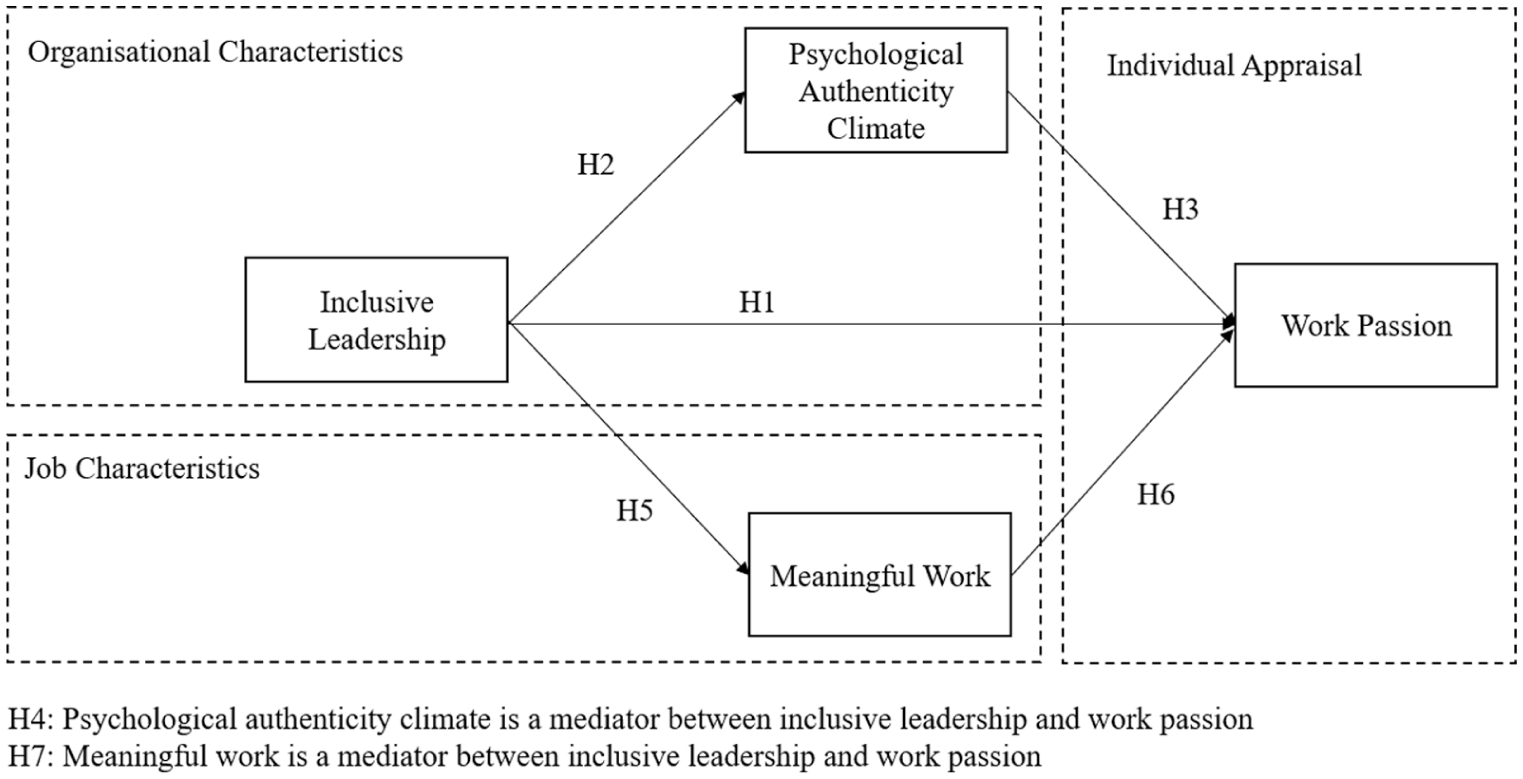
Hypothesised model developed based on EWPA framework.
3. Method
3.1. Questionnaire design and measures
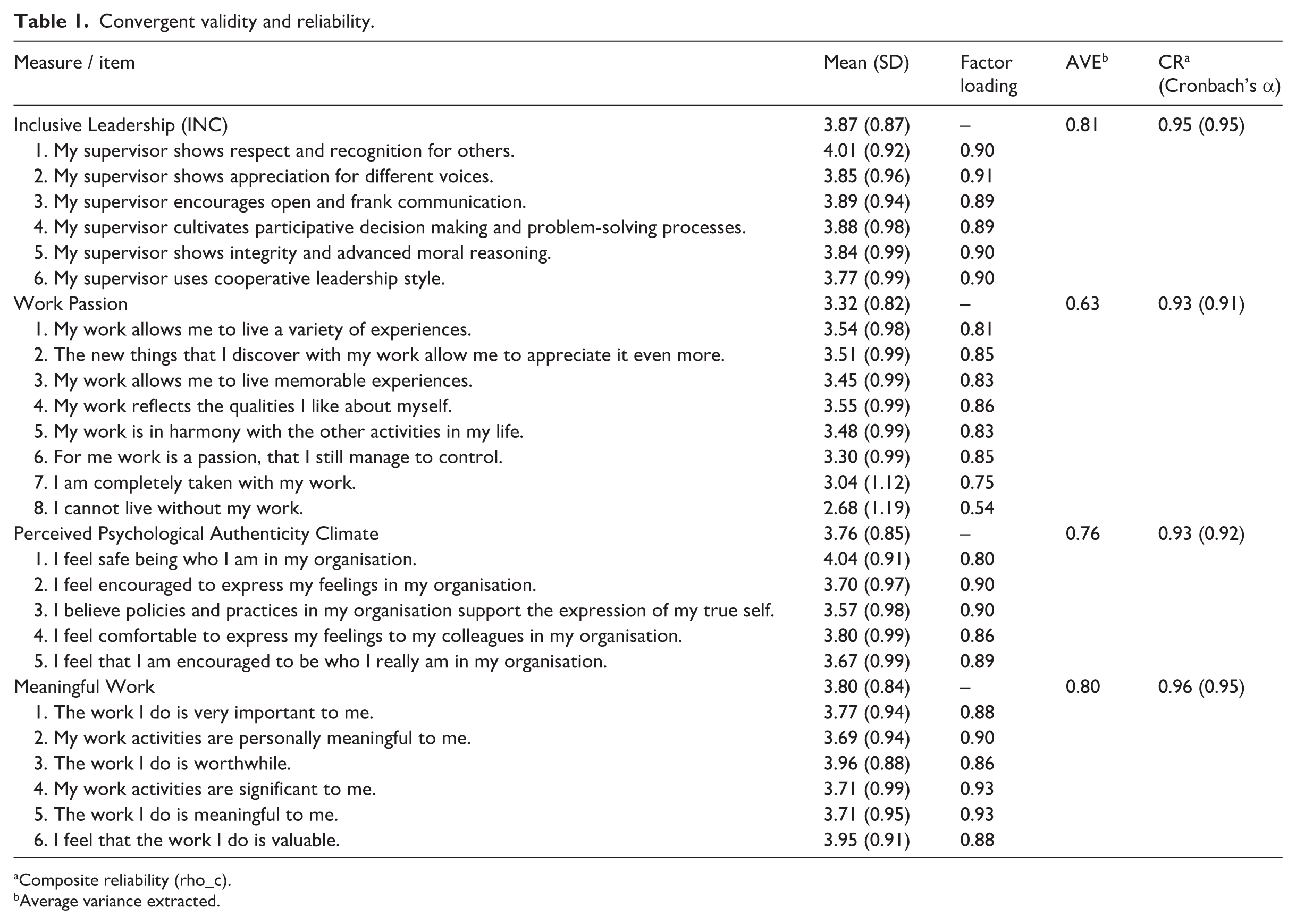
We used validated measures and established scales from the literature to measure the study variables. All variables were measured on a five-point Likert-type scale ranging from 1 = strongly disagree to 5 = strongly agree. Using previously validated scales is a recommended approach because they have undergone a rigorous process to ensure validity and reliability (DeVellis and Thorpe, 2021). Inclusive leadership was measured using six items adopted from Zheng et al. (2017). Perceived psychological authenticity climate was measured using five items adopted from Ostermeier et al. (2022). Work passion was measured using eight items of harmonious passion adopted from Tolentino et al. (2022). Finally, we measured meaningful work using six items adopted from May et al. (2004). A list of all items is provided in the measurement assessment table (Table 1).
Convergent validity and reliability.
Composite reliability (rho_c).
Average variance extracted.
3.2. Sampling and data collection
To examine the hypothesised model, we conducted a field study collecting data from 385 full-time Australian employees in two waves, using an online survey. Qualtrics was used to collect the data required for the study because it allowed researchers to access an online panel of respondents who met the study’s inclusion criteria (i.e. full-time employees working in Australia). At Time 1, respondents rated their direct supervisor’s inclusive leadership behaviours and whether they perceived their work as meaningful. We received a total of 645 responses in the Time 1 survey. Two weeks later, the Time 2 survey was administered to the respondents who had participated in the Time 1 survey. The 2-week time lag is a common practice in the literature because it allows sufficient time to reach participants, send reminders, and ensure a representative sample and a smaller drop-out for Time 2 (Bao et al., 2022; Shafaei et al., 2024; Zhao et al., 2024). In line with common practice in the literature and the feasibility of data collection from participants, we used a two-week lag between the two waves to ensure a smaller number of dropouts after Time 1. The Time 2 survey contained questions regarding work passion and perceived psychological authenticity climate. In total, 385 complete responses were received after Time 2, yielding a 60% response rate.
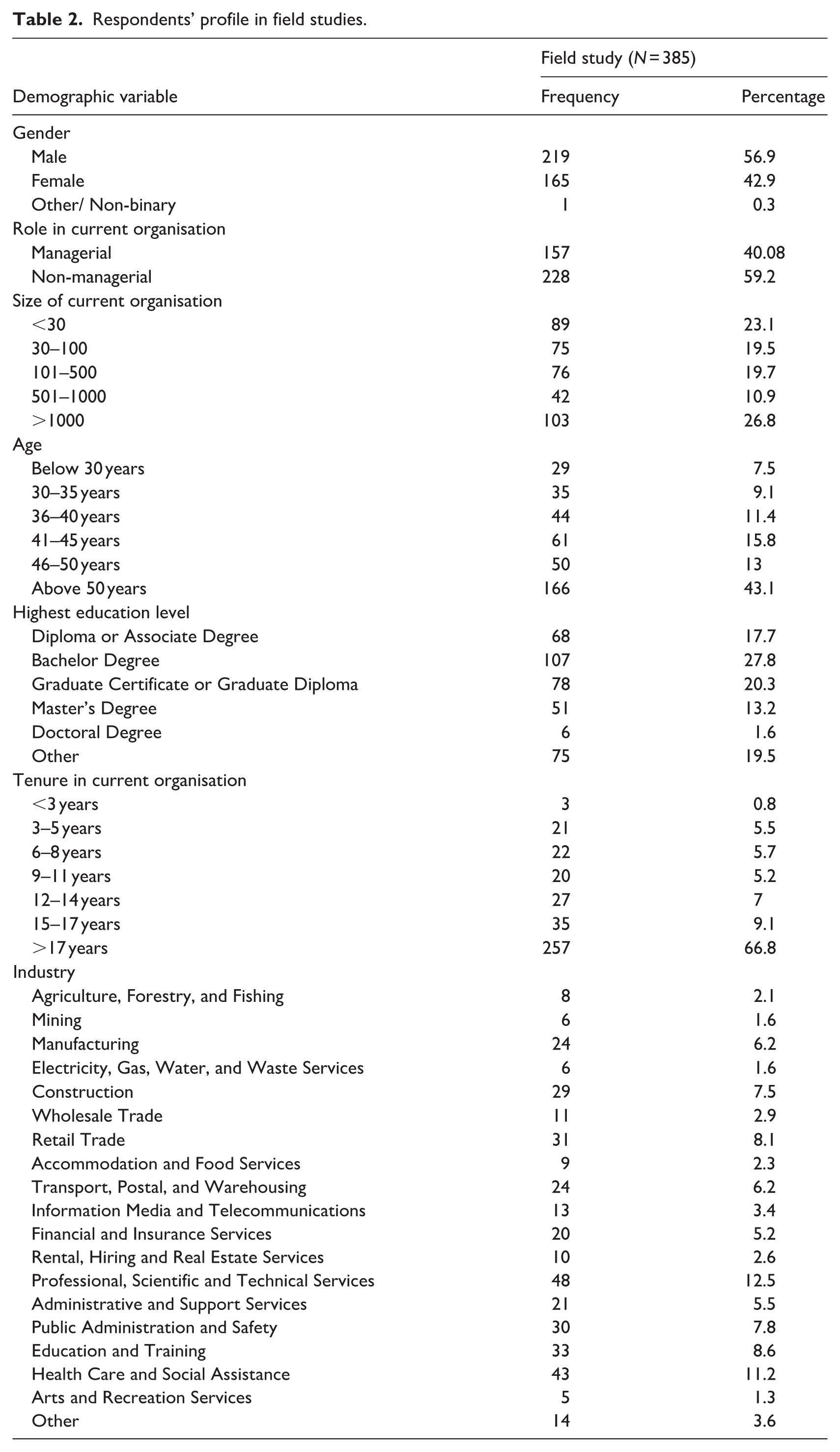
Our study sample included 42.9% female, 56.9% male, and 0.3% others. Majority of the respondents were in the age range of above 50 years (43.1%), followed by 41–45 years (15.8%) and 46–50 years (13%). In terms of tenure in the current organisation, the majority of the respondents had a tenure of more than 17 years (66.8%), followed by 15–17 years (9.1%) and 12–14 years (7%). The highest education level of the respondents was bachelor’s degree (27.8%), followed by Graduate Certificate/Diploma (20.3%). Among the respondents, 40.08% held managerial roles, while 59.2% were in non-managerial roles. Most respondents came from organisations with more than 1000 employees (26.8%). Most of the responses came from Professional, Scientific, and Technical Services (12.5%), Health Care and Social Assistance (11.2%), Education and Training (8.6%), Retail Trade (8.1%), Public Administration and Safety (7.8%), and Construction (7.5%) industries. Table 2 provides a summary of the respondents’ demographic information.
Respondents’ profile in field studies.
3.3. Common method bias
In addition to adopting the procedural measures proposed by Podsakoff et al. (2024) to avoid potential causes of common method bias (CMB), we conducted a full collinearity test using variance inflation factors (VIFs) (Kock and Lynn, 2012). Our results did not find CMB to be a potential threat to the findings, as the VIF values were below the recommended threshold of 3.3, with the highest VIF recorded as 2.415.
3.4. Data analysis
Data for this study were analysed using component-based structural equation modelling (SEM) through partial least squares SEM (PLS-SEM). PLS-SEM was selected as a suitable approach because it fits the research objectives and data characteristics. PLS-SEM is an appropriate method for exploratory studies that focus on the prediction of the outcome variable. The normality assumption for data distribution is not a concern in PLS-SEM, and it can address the multicollinearity issues that might occur in traditional regressions (Avkiran, 2018).
As supported by Hair et al. (2022), PLS-SEM is the preferred method when the research objective is theory development and explanation of variance (prediction of the constructs). Specifically, the logic of the PLS-SEM approach is that all indicators’ variance should be used to estimate the model relationships, with a particular focus on the prediction of the dependent variables (e.g. McDonald, 1996). Our study focused on uncovering the impact of inclusive leadership and meaningful work on the dependent variable (i.e. Work Passion). This study adapts the Employee Work Passion Appraisal framework and draws on self-determination theory to propose a new research model that investigates how inclusive leadership, psychological authenticity climate, and meaningful work can predict work passion in the workplace. We followed a casual-predictive purpose in our study, which can be achieved using PLS-SEM (Guenther et al., 2023; Sabol et al., 2023). This study also aligns with the criteria outlined by Sandberg and Alvesson (2021) in their general definition of theory. By integrating elements from self-determination theory with the EWPA framework, this study demonstrates a theoretical extension, which is a form of theory building that, as noted by Sandberg and Alvesson, modifies existing theoretical structures to generate new insights.
We used SmartPLS 4 to analyse the data (Ringle et al., 2022). First, we assessed the measurement model to confirm the convergent validity and reliability of the measures and to ensure that the data fit the model. Upon establishing convergent validity, reliability, and discriminant validity, in the next step, we performed structural model analysis to evaluate whether the hypothesised paths in the model are significant.
4. Results
4.1. Measurement model assessment
For the measurement model assessment, we checked item loading, average variance extracted (AVE), composite reliability (CR), Cronbach’s α, and the heterotrait–monotrait ratio (HTMT) for discriminant validity. All item loadings were above 0.70, which is the recommended threshold, except for item number 8 in work passion, which was 0.54. Although it was below 0.7, we did not remove it because it did not affect the AVE and CR of the construct (Hair et al., 2017). All the AVE values for the constructs were above the recommended threshold of 0.50, and the CR and Cronbach’s α values for all the constructs were above 0.70 (Hair et al., 2017). Thus, we confirmed the reliability and convergent validity of the constructs.
To confirm the discriminant validity of the constructs, we evaluated the HTMT and the construct correlations. All the HTMT values for the constructs were below 0.85, which is the recommended threshold (Seles et al., 2019). Moreover, the correlations between none of the variables exceeded 0.80, which makes multicollinearity unlikely to affect the results (Gujarati and Porter, 2008). In Table 3, the diagonal and italicised elements are the square roots of the average variance extracted (AVE). The values below the diagonal elements are the HTMT values, and the values above the diagonal elements are the correlations between the construct values.
Correlations and discriminant validity using heterotrait–monotrait ratio (HTMT).
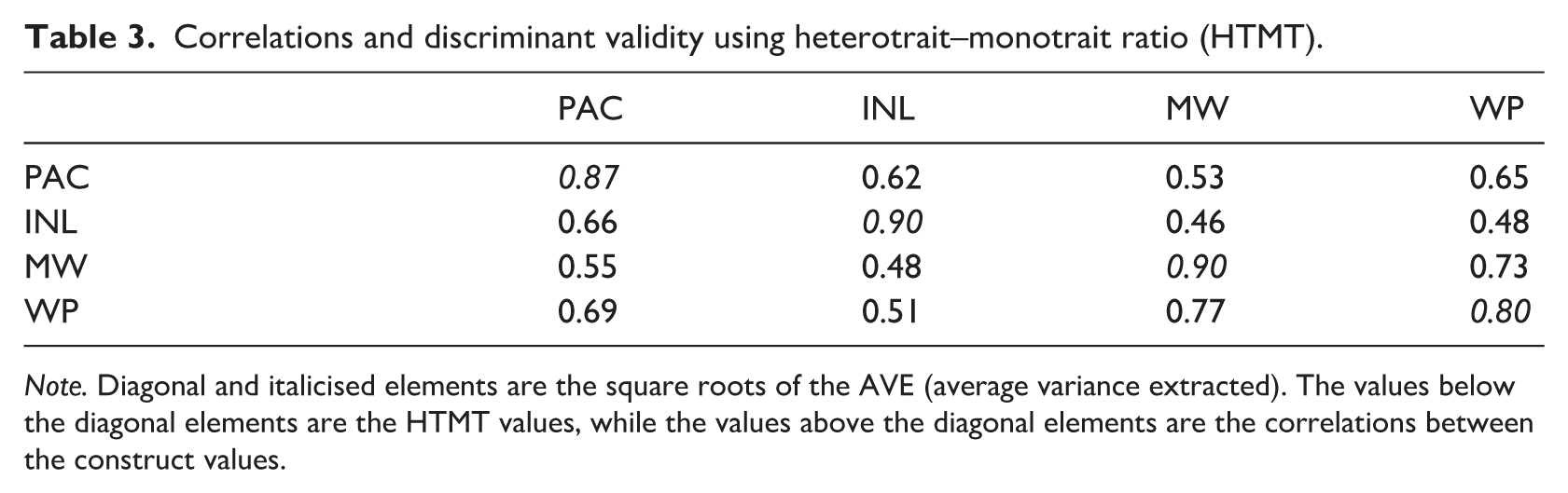
Note. Diagonal and italicised elements are the square roots of the AVE (average variance extracted). The values below the diagonal elements are the HTMT values, while the values above the diagonal elements are the correlations between the construct values.
4.2. Structural model assessment
The structural model assessment included the coefficient of determination (R2), effect size (f2), and hypothesis testing using bootstrapping (bias-corrected and accelerated: BCa) with a 5000 resample and no sign changes. As shown in Table 4, except for Hypothesis 1, all the hypotheses were supported. Specifically, the direct relationship between inclusive leadership and work passion (Hypothesis 1) was non-significant (beta coefficient: 0.02, p-value: 0.717); however, the indirect link between inclusive leadership and work passion, mediated through the perceived psychological authenticity climate (Hypothesis 4), was significant (beta coefficient: 0.21, p-value: 0.000), indicating a full mediation process. The link between inclusive leadership and perceived psychological authenticity climate (Hypothesis 2) was significant (beta coefficient: 0.62, p-value: 0.000). The link between perceived psychological authenticity climate (Hypothesis 3) was significant (beta coefficient: 0.34, p-value: 0.000). The relationship between inclusive leadership and meaningful work (Hypothesis 5) was significant (beta coefficient: 0.46, p-value: 0.000). The relationship between meaningful work and work passion (Hypothesis 6) was also significant (beta coefficient: 0.54, p-value: 0.000). The indirect link between inclusive leadership and work passion, mediated by meaningful work (Hypothesis 7), was found to be significant (beta coefficient: 0.25, p-value: 0.000). We also measured the effects of age, gender, role in the current organisation, size of the current organisation, and length of tenure as control variables. Given that employees’ perception of work passion can vary depending on their age, gender, and other contextual variables, we included the above-mentioned control variables in the hypothesised model assessment (Yukhymenko-Lescroart and Sharma, 2022). The results revealed that only age (beta coefficient: −0.17, p-value: 0.000) and role in the organisation (beta coefficient: −0.23, p-value: 0.000) had a significant relationship with work passion. The significant effects of age and role indicate that they may be potential moderators, which should be further investigated in future studies.
Results of structural model analysis.
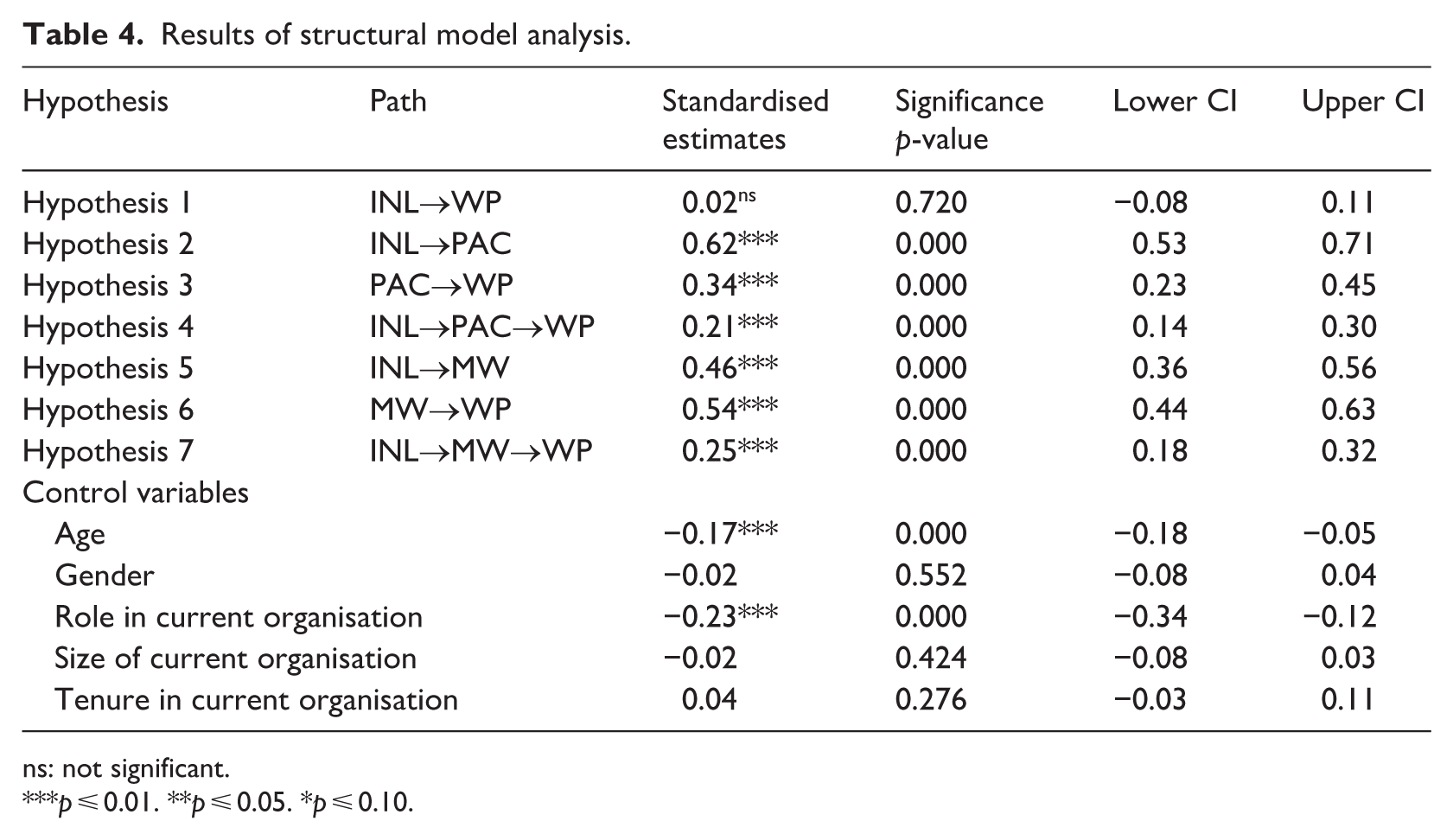
ns: not significant.
p ⩽ 0.01. **p ⩽ 0.05. *p ⩽ 0.10.
The results of the structural model assessment indicate that inclusive leadership can explain 39% of the variance in the psychological authenticity climate and 21% of the variance in meaningful work. In addition, 66% of the variance in work passion can be explained by the predictors (i.e. inclusive leadership, meaningful work, and psychological authenticity climate) in the model.
Furthermore, we assessed the effect size of each predictor variable to understand its unique contribution to explaining the variance of the dependent variables. The f2 value of inclusive leadership on the psychological authenticity climate was 0.63, representing a large effect size. The effect size (f2) of inclusive leadership on meaningful work was medium (0.26). The effect size (f2) of meaningful work on work passion was large (0.57). Finally, the psychological authenticity climate had a medium effect size (0.18) on work passion.
We confirmed the robustness of our analysis using predictive relevance (Q2) and the model’s out-of-sample predictive power. The Q2 value in the proposed model was meaningful (i.e. greater than zero), and the predictive power of the research model was established. We evaluated the model’s out-of-sample predictive power, which involves generating holdout sample-based point predictions. Using 10 folds and 10 repetitions, and by comparing the root mean squared error (RMSE) values from the PLS model analysis with those generated by a naïve linear benchmark (Hair et al., 2019), we observed that the prediction errors were lower for the PLS model than for the naïve benchmark for all indicators, further supporting the model’s predictive power. In addition, Q2 predict values were greater than zero, indicating that the proposed model outperformed the naïve benchmark (Shmueli et al., 2019).
To further assess the robustness of our analysis and rule out the potential of endogeneity, we used the Gaussian copula approach (Hult et al., 2018) by focusing on the most complex regression of the hypothesised model, work passion regressed to inclusive leadership, meaningful work, and authenticity climate. Upon confirming that all the antecedent variables had a non-normal distribution, we analysed the Gaussian copula in SmartPLS and found no evidence of endogeneity in the model, further confirming the robustness of our analysis. Table 5 presents a summary of the Gaussian copula analysis for the most complex hypothesised regression model, indicating that none of the coupla terms were statistically significant at the 5% probability of error level.
Results of the Gaussian copula approach.
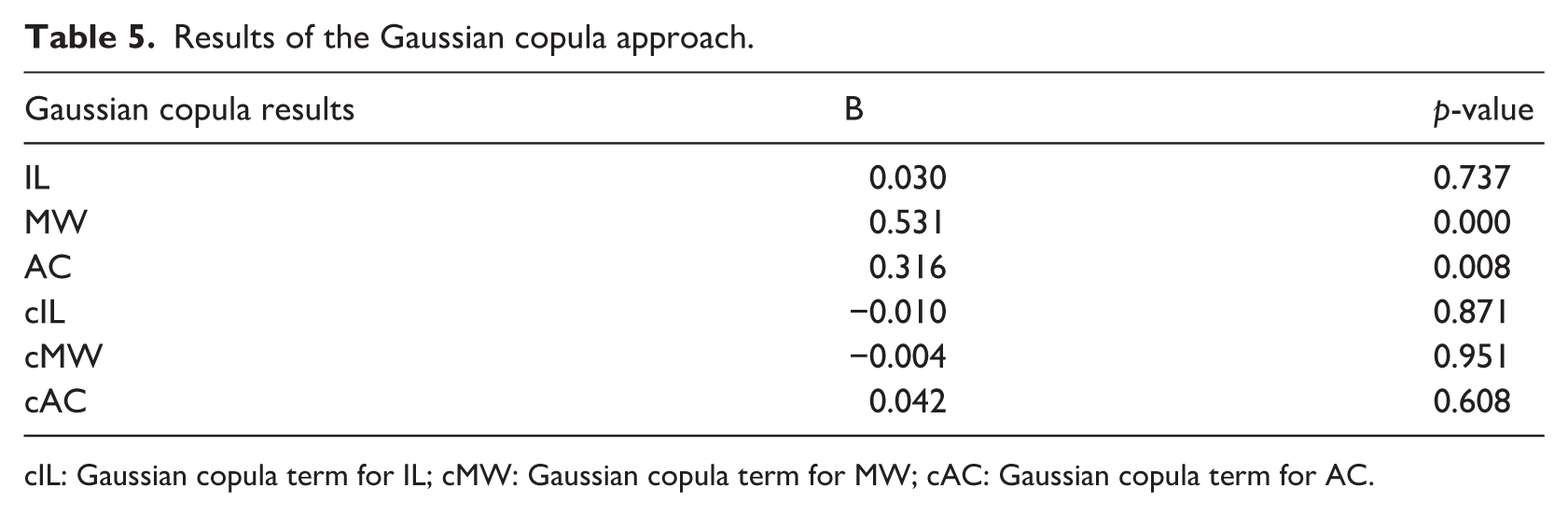
cIL: Gaussian copula term for IL; cMW: Gaussian copula term for MW; cAC: Gaussian copula term for AC.
In addition, we evaluated the robustness of the proposed model and its linear effect for any potential nonlinear effects in the model by assessing the quadratic effects on all paths within the model (Sarstedt et al., 2020). As none of the possible quadratic effects were found to be significant, we ruled out the possibility of any nonlinear effects in the proposed model.
We further performed a combined importance-performance map analysis (cIPMA) and necessary condition analysis (NCA) to detect antecedents with a high impact on the outcome of interest (in this case, work passion), but also with the potential for improvement, and identify sets of variables that are sufficient but not explicitly necessary for influencing the target construct (Dul et al., 2023; Richter and Hauff, 2022).
4.3. cIPMA
To further assess the role of inclusive leadership, psychological authenticity climate, and meaningful work in fostering work passion and prioritising actions that improve the target construct WP, we conducted cIPMA following the guidelines proposed by Hauff et al. (2024). To do so, we first performed IPMA, followed by an NCA, and then integrated the results. Using 80% as the desired outcome level, we determined the percentage and number of cases that did not achieve the required antecedent construct levels for the corresponding work passion levels (See Table 6).
Results of bottleneck CE-FDH table for work passion (WP).
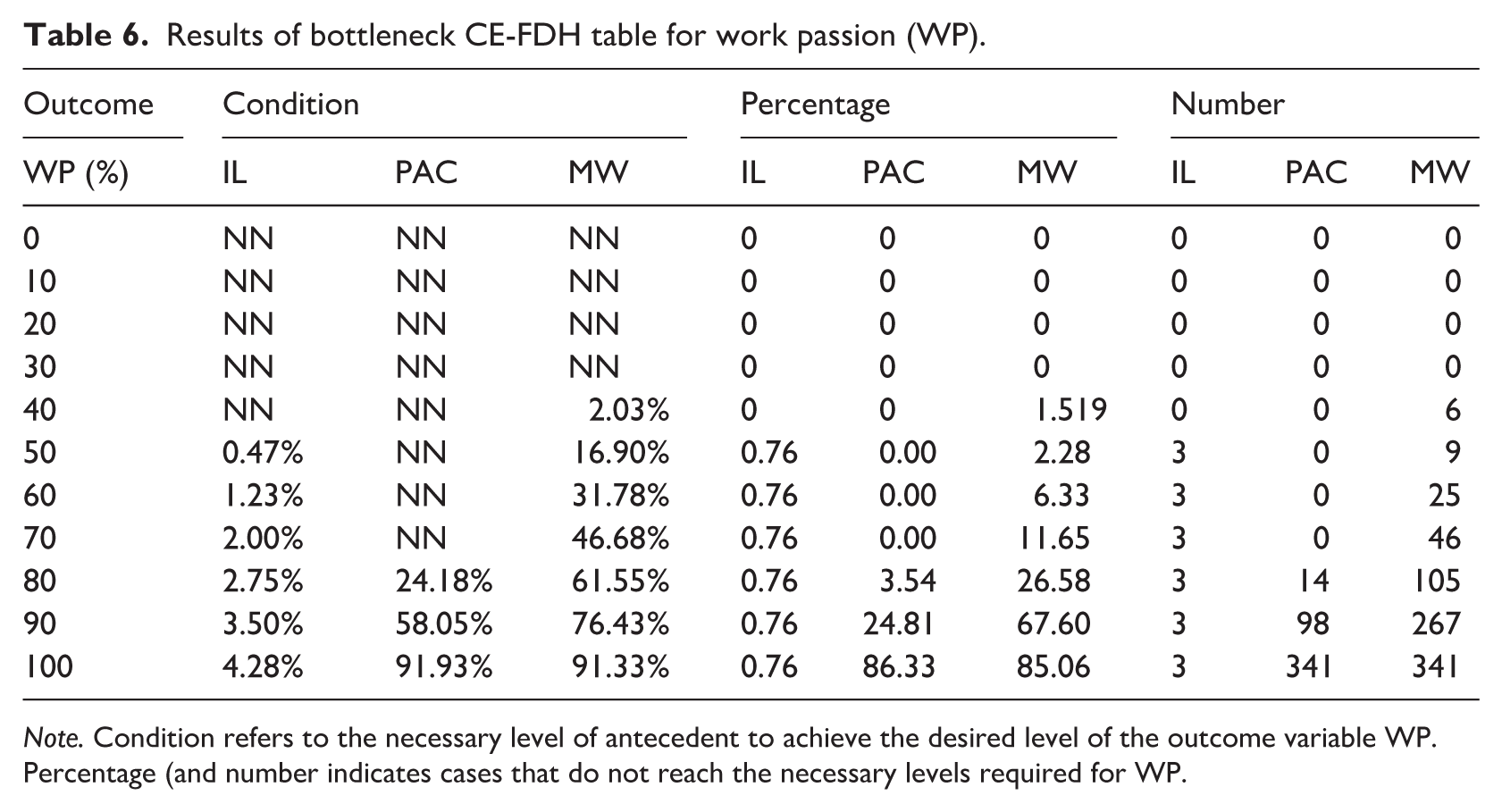
Note. Condition refers to the necessary level of antecedent to achieve the desired level of the outcome variable WP. Percentage (and number indicates cases that do not reach the necessary levels required for WP.
This information was then integrated with the matrix generated from the IPMA to create the cIPMA of the target construct, namely, work passion. Our results (Figure 2) indicate that among the predictors examined in this study, both psychological authenticity climate and meaningful work had below-average performance. Meaningful work is of the highest importance. Finally, the bubble size indicates the percentage of cases that remain below the antecedent constructs’ levels required to achieve the desired work passion outcome of more than 80%. Since 67.7% of cases in our study did not meet the desired 80% level of work passion, creating meaningful work can be a priority as the appropriate measure to enhance work passion among employees.
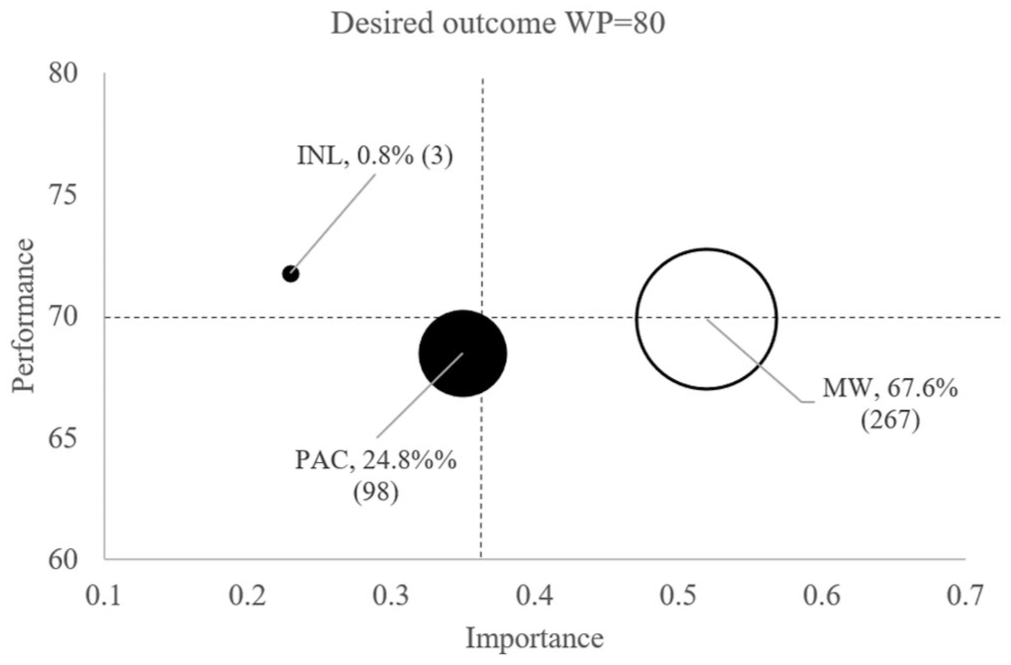
Combined importance-performance map analysis (cIPMA) of the target construct work passion (WP).
5. Discussion
Although leadership has been mentioned as a crucial factor in the literature to influence employees’ psychological wellbeing, positive outcomes, productivity, and performance (Lord et al., 2017), few studies have investigated the role of leadership behaviours in the EWPA model impacting work passion (Egan et al., 2017, 2019). This highlights the importance and timeliness of this study, as it provides novel insights into the important role of inclusive leadership and meaningful work and how they can impact employees’ work passion. Adapting the EWPA model and drawing on self-determination theory, we identified inclusive leadership as an organisational characteristic and meaningful work as a job characteristic that can positively influence employees’ work passion. Although the direct link between inclusive leadership and work passion was found to be non-significant, this does not indicate a lack of positive influence of inclusive leadership in fostering work passion, as inclusive leadership had a significant positive total effect on work passion. Rather, the non-significant direct relationship can be explained through the full mediation effect of the perceived psychological authenticity climate in the mentioned link.
Overall, our findings indicate that inclusive leadership, psychological authenticity climate, and meaningful work can each operate as sufficient conditions for fostering work passion. In other words, the presence of any one of these factors can contribute to creating work passion. However, our analysis also shows that meaningful work is the only condition that consistently emerges as necessary for achieving the desired level of work passion. This means that while other factors may help generate work passion, meaningful work must be present for work passion to reach the targeted outcome threshold.
By distinguishing between sufficiency and necessity, our study provides a more nuanced understanding of how these variables interact to shape work passion. It clarifies not only which factors can independently generate the outcome, but also which factor is required for its occurrence (Bokrantz and Dul, 2023).
5.1. Theoretical implications
This study advances the EWPA model by identifying inclusive leadership as a key organisational antecedent of employees’ work passion and by clarifying the mechanism through which it operates. Our study shows that inclusive leadership fosters work passion by shaping a psychological authenticity climate, thereby illuminating a previously underexamined pathway in the model. This extends prior research by specifying a distinct leadership style that enables employees to express their authentic selves and engage with work in ways consistent with their values. Integrating self-determination theory further reinforces this contribution by demonstrating how inclusive leadership supports employees’ needs for autonomy, competence, and relatedness, which underpin authentic engagement and sustained motivation. Taken together, our findings deepen theoretical insight into the ways organisational environments and leadership behaviours jointly influence the formation of work passion.
Overall, our findings are consistent with the literature. Houlfort et al. (2013) found that leadership behaviours and work culture that promote autonomy result in harmonious work passion. Egan et al. (2019) found that leaders’ supportive behaviour, other-orientation, and self-concern had indirect effects on work intentions via employees’ positive affect. Although this study explored the specific behaviours of leaders that influence employees’ work passion, it did not specify any leadership style. In this study, we uncovered the critical role of inclusive leadership as an antecedent in the EWPA model that impacts employees’ work passion via the mediating path of the perceived psychological authenticity climate. Inclusive leaders are critical for organisations because they provide a psychologically safe environment for employees to bring their true selves to work. Regardless of their background, inclusive leaders welcome and appreciate employees’ unique contributions and promote a sense of belonging to the team. Examining this relationship through the lens of self-determination theory can clarify this relationship. Self-determination theory (Deci and Ryan, 1985) contends that individuals need to be psychologically connected to what they do and involved in activities that are utterly driven by their own desire and identity to achieve positive motivation and functioning. To attain this psychological connection, individuals must satisfy three psychological needs: competence, autonomy, and relatedness. Inclusive leaders create a resourceful work environment where employees feel safe to bring their true selves to work without being judged, which makes them feel connected to their work group, satisfying their need for relatedness. Moreover, inclusive leaders encourage employees to make work-related decisions and provide their opinions. This satisfies an individual’s need for autonomy. In addition, inclusive leaders value employees’ unique perspectives and give them a voice to contribute to their team, which can empower employees and satisfy their need for competence. As highlighted by Deci et al. (2017), leaders who acknowledge employees’ perspectives, provide opportunities for employees to voice their unique contributions, and involve employees in decision-making are more successful in facilitating employees’ positive motivation. Thus, by satisfying the three needs of competence, autonomy, and relatedness, inclusive leaders help employees feel engaged, motivated, and perform well (Gürbüz et al., 2024).
Another important theoretical contribution of this study is the investigation of the role of meaningful work in the relationship with work passion. As a job characteristic, we found that meaningful work was a significant predictor of work passion. This relationship can be understood in the context of self-determination theory and the EWPA model. In the process of appraising work activity, individuals tend to draw meaning from their experiences, which can determine their future work behaviour and attitude (Tzeng, 1975). Through the lens of self-determination theory (Deci and Ryan, 2000), when individuals perceive their work as meaningful, it can help them become self-determined and motivated to engage in it. Having meaningful work makes employees feel that their work benefits others inside and outside the work environment, thereby satisfying their need for relatedness (Grant, 2007). This makes individuals more autonomous in taking initiatives and feeling competent (Baard et al., 2004), resulting in positive motivation and work passion.
5.2. Practical implications
Our study has several implications for practitioners. First, it is crucial to note that passion is key to every individual’s personal and professional life (Vallerand, 2015). This highlights the affective dimension of work and the role of emotions in business (Egan et al., 2019). Individuals constantly appraise their work activities, and the first part of the appraisal is how it makes them feel before forming an attitude towards their work activity. Positive affect is a significant emotional state related to perceptions of leadership behaviour, leading to positive organisational outcomes. Therefore, it makes the role of leaders more pronounced in being sensitive to who their employees are and creates a psychologically safe work environment where employees can bring their true and unique selves to work. Human resource development (HRD) practitioners should ensure that when recruiting people for leadership positions, consideration is given to the inclusive behaviours of leaders. Leaders must demonstrate an understanding of their employees’ diverse backgrounds and ensure that they help employees unleash their potential by valuing, respecting, and empowering them.
The second lesson for HRD practitioners is to execute training programmes to develop and upskill managers. This involves cultivating a culture of trust in which every individual is respected and motivated to share their unique contributions. Inclusive leaders support their employees by actively listening to their opinions and engaging them in decision-making (Benson et al., 2012). Another important focus of inclusive leaders is enhancing employees’ sense of uniqueness and ensuring that they belong to a team.
The practical implication of our study is the unpacking of the psychological process through which employees experience work passion using self-determination theory (Deci and Ryan, 1985). Our study supports the role of meaningful work in relation to work passion. Meaningful work occurs when employees perceive their work to be significant, benefitting others inside and outside the work environment and having a purpose. Therefore, HRD practitioners should focus on helping individuals to experience meaningful work. This can be achieved through job design activities that engage employees in crafting their jobs to satisfy their psychological needs for autonomy, competence, and relatedness. Job design workshops can facilitate the redesign of work tasks to better align with employees’ needs and enhance their meaningfulness, while also fostering harmonious work passion.
One effective way to enhance leaders’ effectiveness and organisational success is to focus on leadership programmes (Arthur Jr et al., 2003; Collins and Holton, 2004). Our study findings show that leaders’ inclusive behaviours make individuals feel safe to bring their true selves to work, resulting in harmonious work passion. This provides HRD practitioners with insights into the specific leadership skills they should focus on in their training. Leadership training programmes that help leaders and managers practice inclusivity by respecting employees and creating trusting relationships with them can allow them to be their authentic selves. This will help create positive work motivation and harmonious work passion among employees.
5.3. Limitations and recommendation for future research
As with all studies, our study had some limitations. We drew conclusions based on a time-lagged correlational study and used various measures for the robustness of the analysis, including endogeneity tests, predictive power of the model, and common method bias. However, the causality of the relationships in the model requires a randomised experimental study design, which can be suggested for future studies. Another limitation of this study is that our data were collected from full-time Australian employees. This may inhibit generalising the findings to other contexts, especially societies with different cultural values, norms, and structures (i.e. collectivists). Although the findings can help other contexts understand the important role that inclusive leadership and meaningful work play in creating work passion, future studies can validate the model in other contexts and account for cultural and societal differences. Finally, the main respondents to the survey questions were employees who rated their immediate managers and work. Future studies should consider collecting data from managers and conducting a multi-level analysis.
6. Conclusion
Steve Jobs’ statement, “The only way to do great work is to love what you do”, aptly encapsulates the essence of this study. We utilised the EWPA model and self-determination theory to understand whether inclusive leadership (i.e. organisational characteristics) and meaningful work (i.e. job characteristics) can impact work passion. We also sought to determine whether the relationship between inclusive leadership and work passion was mediated by perceived psychological authenticity climate. Using a time-lagged correlational study design, we found that inclusive leadership has a significant positive indirect relationship with work passion via perceived psychological authenticity climate. In addition, we found that meaningful work was significantly and positively related to employees’ work passion. Our research sheds light on and adds novel contributions to the EWPA model and work passion literature, while offering insights into how to positively impact employees’ work passion.
