



Abstract
This research explored the current state of the continuing professional development of Thai academic librarians and the roles of continuing professional development providers, employing a mixed-methods approach. An online questionnaire was completed by 243 Thai academic librarians and in-depth interviews were conducted with 20 library directors and deputy directors. The quantitative data was analysed using descriptive analysis, while the qualitative data was examined through thematic analysis. The research found that academic librarians recognized the importance of participating in continuing professional development activities and exhibited a preference for online continuing professional development, with ‘in-house’ providers and academic library networks assuming significant roles. The study recommends focusing on information technology skills and English proficiency. Concise and dynamic guidance is offered for academic libraries and continuing professional development providers to reshape continuing professional development activities to post-pandemic dynamics, based on academic librarians’ needs, and align their offerings with contemporary academic library challenges and trends, better suiting Thailand’s evolving educational context.
Keywords
Introduction
The rapid advancements in technology and the new ecology of education present challenges to higher education institutions and academics across the world. The trends towards online or hybrid teaching and learning appear to be lingering following the COVID-19 pandemic, and they seem to be here to stay for the foreseeable future (Abdrasheva et al., 2022; Farliana et al., 2023; Rapanta et al., 2021; UNESCO, 2020). Consequently, higher education institutions need to adapt and adjust to this rapidly changing environment in order to remain relevant in the digital age. These pressing challenges have led to difficulties for academic libraries and librarians in terms of keeping abreast with developments in the field of library and information science (LIS) that were partly instigated by the recent pandemic (Ocholla, 2021). As a result, educational institutions have been required to reconsider their mission and methods of transferring knowledge, and also take into account the roles of academic libraries and professional librarians in the process. Simultaneously, academic librarians and staff have been required to acquire new knowledge and competencies in order to manage their tasks and fulfil stakeholders’ expectations (Jayasuriya and Majid, 2022).
Continuing professional development (CPD) is compulsory and crucial for academic librarians, as well as for other professionals. It is enshrined in the professional code of conduct and often required for professional advancement. CPD offers academic librarians new knowledge and competencies, and provides the possibility of making meaningful contributions to their respective teams, workplace and community (Gunasekera, 2021). Furthermore, CPD is a vital tool to maintain and advance individuals’ knowledge and the required skills to stay relevant, keep pace with current LIS standards and cope with ever-changing trends in the LIS profession. It is noteworthy that CPD training not only affects the personal development of individuals in terms of gaining more skills for the purposes of career advancement, but also enhances the competency, quality and productivity of their respective libraries and universities (Brine et al., 2022; Namaganda, 2020).
Although CPD is essential for professional development and improving the quality of libraries’ service offerings, librarians around the world face difficulties accessing CPD opportunities. For instance, in Botswana, some academic librarians have never participated in any type of training course to advance their knowledge and skills (Mooko and Oladokun, 2021). Likewise, academic librarians in Uganda face CPD-related constraints due to inadequate support from their employers, insufficient funding, heavy workloads and a general lack of information regarding available CPD activities (Namaganda, 2019). Meanwhile, most academic librarians in Indonesia and Sri Lanka appear to regularly participate in CPD activities. However, despite the opportunity to take part in CPD-related courses, these librarians still experience limitations in terms of upgrading their skills due to the high costs of information technology training, time constraints and a lack of financial support from their employers (Gunasekera, 2021; Maesaroh, 2012).
In Thailand, limited research has been done on the state of CPD for academic librarians. There has been only one study, conducted in 2015, which focused on CPD programmes for academic librarians affiliated with Rajabhat universities across the country (Kaewkongsup et al., 2016). This research revealed that academic librarians were indeed aware of the significance of CPD activities and their benefits. The research also highlighted that these academic librarians enjoyed both on- and off-site training and seminars, and that the English language was a significant barrier to them taking full advantage of the available CPD activities. Other CPD studies in Thailand relate to specific academic libraries.
As suggested by Shonhe (2020), extensive research in the area of CPD is required, as it is crucial for upgrading employees’ skills and enhancing the effectiveness and productivity of customer services in libraries. Therefore, this research attempts to investigate the current state of CPD as it relates to Thai academic librarians and the roles of CPD providers in enhancing their service offerings. Furthermore, this study aims to provide guidelines to assist universities and their directors with their decision-making processes as they pertain to CPD programmes. In particular, the study attempts to offer recommendations for improving the planning, design, development and implementation of CPD activities and programmes that are appropriate in a Thai context. Finally, the recommendations presented in this study aim to help all stakeholders to better cope with the changes, challenges and paradigm shift in the profession with the objective of increasing job satisfaction and competence, and aiding career advancement and productivity in this new ecology of education in the post-pandemic era.
Research objectives
The research has two objectives: (1) to explore the current state of CPD and the need for CPD activities to develop Thai academic librarians’ competencies and (2) to investigate the roles of CPD providers in developing the competencies of Thai academic librarians.
Literature review
CPD plays an important role in human resource management and in the LIS profession. CPD is a general mandate for professional associations, and it is required by the code of conduct or code of ethics in organizations’ charters. CPD programmes help to ensure that academic librarians provide high-quality customer services that meet the expectations of their customers.
There are a number of definitions for CPD that have been proposed, altered, revised, elaborated and extended, and have evolved, over time – for example, continuing professional education, in-service training, professional education, continuing education and professional development (Saleem and Ashiq, 2020). CPD, as defined by IFLA, is the cycle pertaining to the stages of employees’ development, which includes planning, acting and evaluating. This is a critical process to ensure that librarians and LIS professionals keep pace with changes in the industry and achieve their personal and professional goals (Varlejs et al., 2016).
CPD programmes have become compulsory in the LIS profession, and academic librarians are well aware of the importance of CPD activities (Moonasar and Underwood, 2018). Academic librarians engage in CPD in multiple ways, both formal and informal – for example, through in-house training, coaching and mentoring systems, conferences, seminars, workshops, short courses, communities of practice or skill portfolios (Chukwusa, 2021; Gunasekera, 2021). Librarians with a preference for participating in traditional activities, focusing on conferences, seminars, and workshops, constitute the most dominant portion of the overall participants (Mooko and Oladokun, 2021). Other non-traditional activities include online courses and self-paced learning (Namaganda, 2019), as well as training provided through social networking platforms such as Facebook, Twitter and Instagram, with the intention of having professionals meet in cyberspace to exchange knowledge and skills that are aligned with their profession (Aslam, 2019).
The adoption of e-learning programmes for CPD among library professionals has significantly increased, driven by evolving workplace environments, technological advancements and the changing landscape of libraries (Shahzad et al., 2023). The expansion of online learning, including CPD for LIS professionals, has become a necessity and the new norm in the member countries of the Association of Southeast Asian Nations, and notably Thailand, with online programmes playing a pivotal role in enhancing professional expertise (Sacchanand, 2014, 2021). Policymakers are encouraged to establish sustainable policies to support the development of e-learning programmes, ultimately leading to value-added outcomes for university library staff.
The IFLA guidelines propose that CPD programmes be designed ‘to support the employing organization’s goals for excellent service’ (IFLA, 2016: 2). And the goal of employees should be to learn new skills to contribute to their profession’s development and improvement, and to fulfil their organization’s objectives (Varlejs et al., 2016). CPD should be associated with individuals’ need to include ‘critical thinking’ in their practice, which is based on collaborative environments that endorse sustained learning and active experimentation (Namaganda, 2019). Planning is one of the fundamental principles of management, and its importance for effective CPD should not be overlooked (Adanu, 2007). Librarians should develop individualized learning plans to help them monitor and enhance their current and future career prospects within the profession (Oladokun and Mooko, 2023), and CPD programmes should also be aligned with librarians’ needs and career paths.
Several studies have investigated the topics that should be included in CPD programmes. These studies agree that there are a number of popular topics that CDP programmes should incorporate, including information and communications technology (ICT) skills, communication skills and research support skills, which are all related to academic librarians’ tasks. For example, librarians in Nigeria claimed that topics such as effective communication skills, technical skills, computer literacy and information-seeking skills ought to be included in their CPD programmes (Chukwusa, 2021). Similarly, librarians in Sri Lanka preferred topics relating to open access and digital repositories, writing papers, bibliometrics and conducting reference interviews to be part of their CPD programmes (Gunasekera, 2021). Moreover, Arua (2019) suggested that academic librarians should make a deliberate attempt to use information technology and innovations as much as possible. They should attend various CPD activities and courses, and relevant events, as different CPD programmes offer different competencies, knowledge and skills. Rafiq et al. (2017) noted that CPD programmes should be provided based on the needs of the audience.
CPD providers
CPD activities can be provided by many actors, such as employers, professional associations, higher education institutions and government or other organizations, as well as the information industry and entrepreneurs. The role of employers in CPD can take various forms. In-house programmes are the most popular. Others include employers’ support in terms of ‘paid time to attend’ and ‘budget to attend’ training and/or conferences (Gunasekera, 2021). A supportive library environment and a clear employer CPD policy motivate librarians to engage in CPD programmes (Adanu, 2007). In particular, employers have a significant role to play in encouraging and motivating their staff to participate in CPD activities, as they have the ability and power to create interaction and networks between colleagues nationally and internationally (Moonasar and Underwood, 2018). Therefore, a supportive employer is critical for librarians’ professional development. As such, Adanu (2007) noted that the involvement of professional librarians in CPD should be the shared or dual responsibility of both the library and individuals.
As for the CPD programmes offered through libraries and professional associations, they are provided in the form of seminars, conferences and workshops to enhance the hard and soft skills that are essential for the promotion and advancement of LIS professionals (Ahmad et al., 2019). National, regional and international LIS libraries and professional associations are thus important CPD providers. Among these, IFLA, the oldest and largest international LIS association, plays a remarkable role in offering various activities to promote opportunities to gain skills and develop capabilities at both the individual and national levels. Moreover, IFLA supports professional growth and extends the opportunities for librarians to connect with other professionals in the same area of interest. Furthermore, it has developed diverse professional networks and activities, such as annual conferences and a webinar.
CPD is the core focus for library associations – for example, the American Library Association, Chartered Institute of Library and Information Professionals, and Australian Library and Information Association conduct a series of CPD events, activities and programmes through their CPD sections or affiliated associations or groups. In particular, the Association of College and Research Libraries (2017), the largest division of the American Library Association, develops programmes, products and services to help librarians who work with academics and research libraries. In South Africa, academic librarians stated that the Library and Information Association of South Africa had a potentially important role to play in promoting CPD (Moonasar and Underwood, 2018). In Sri Lanka, most librarians realized the value of obtaining membership of the Sri Lanka Library Association, which provided them with better access to resources, news and professional networks.
LIS schools and institutions, as well as LIS educators, have a vital role to play in formal training in librarianship. They offer LIS programmes at both the undergraduate and graduate levels, and encourage ongoing learning for academic librarians. Furthermore, LIS graduate programmes play an important role in generating research in the field of LIS. The study by Rafiq et al. (2017) found that library schools played a critical role in the continuing education of LIS professionals in Pakistan. This was due to the fact that LIS schools have well-educated faculty members with strong coordination capabilities, and the curricula and infrastructure to allow LIS students to align themselves with market needs and future trends.
As LIS is an interdisciplinary area, academic libraries are naturally involved with a wider scope of knowledge. Consequently, CPD providers are not limited to the field of LIS, but also include providers in ICT and the education sector, and library vendors. The providers are crucial to the success of CPD, which can be highlighted through collaboration and collaborative management, and activities among the LIS professionals. As such, the findings of Moonasar and Underwood (2018) and Arua et al. (2017) confirm that professionals, employers, institutions and library information associations should work together to encourage and promote CPD activities in order to build valuable programmes and activities that are suitable for LIS professionals.
Methodology
This study employed an explanatory sequential design using mixed methods to investigate the current state of CPD programmes and Thai academic librarians’ need for them. The research then focused on the roles of CPD providers for academic librarians in Thailand. In the initial stage, online questionnaires were used to explore the current state of CPD programmes and the participants’ need for CPD among 243 librarians in public and private universities across the country. The sampling methodology employed in this context adhered to the principles of simple random sampling, ensuring that each librarian within the target population had an equal and independent probability of being selected for participation in the survey. The questionnaires were developed and enriched using insights derived from the study ‘CPD for Academic Librarians in Selected Asian Countries’ (De Alwis Jayasuriya et al., 2022). This study was initially carried out in the Republic of Maldives between 2019 and 2020. Furthermore, the questionnaires underwent a rigorous validation process and were reviewed by three experts in the field of LIS, thereby affirming the validity of the questions through the index of item-objective congruence.
In the process, document analysis was used to review, evaluate and interpret relevant documents and elicit sufficient details regarding the roles of CPD providers in developing Thai academic librarians. Thereafter, in-depth interviews were conducted with 20 academic library directors and deputy directors in order to gain a broader perspective on the roles of CPD providers. This study sought to address inquiries regarding the roles of CPD providers in the professional development of academic librarians within their respective universities. To collect data, a two-phase interview approach was implemented.
The initial data collection stage occurred during the constraints posed by the COVID-19 pandemic, primarily in the years leading up to 2022. During this phase, interviews were conducted with the participants using phone calls and the Line application, which were chosen as suitable virtual communication channels that facilitated real-time audio recording. Subsequently, in the second phase, with an improvement in the COVID-19 situation post-2022, the interviews with the participants transitioned to an online format, facilitated by an interview form distributed via Google Forms. This change in the data collection method enabled a more comprehensive and flexible approach to acquiring responses and insights, while also considering the safety and convenience of the participants.
The sampling strategy employed for this part of the study adhered to the snowball sampling method. This technique was employed to harness the expertise and perspectives of those deeply entrenched in the realm of CPD provisioning, thereby affording a more comprehensive and insightful examination of this facet of professional development within academic library leadership.
The research methodology employed in this study is characterized by a mixed-methods approach, which integrates both quantitative and qualitative data analysis techniques. For the quantitative analysis, a descriptive analysis was initially applied to gain insights into the present conditions and CPD requirements of Thai academic librarians. This phase involved the computation of descriptive statistics, including frequencies, percentages and means. These statistical measures were instrumental in quantifying and summarizing the survey data, providing a numerical snapshot of the state of CPD needs among the target population.
With regard to the qualitative analysis, following the quantitative phase, a thematic analysis was conducted to explore and categorize the roles of CPD providers. Here, the focus shifted from numerical data to textual content. The qualitative approach allowed for the identification and grouping of CPD provider roles into two overarching themes: personal competency development and professional competency development. This thematic analysis was essential for providing a deeper, context-rich understanding of the roles that CPD providers play in enhancing the personal and professional competencies of academic librarians in the Thai context.
By combining quantitative and qualitative methods, this study sought to offer a comprehensive and nuanced exploration of CPD needs and provider roles among Thai academic librarians. The quantitative data provided a statistical foundation, while the qualitative analysis delved into the intricacies and nuances of the roles played by CPD providers. This mixed-methods approach enabled a more robust understanding of the research subject, adding depth and context to the findings, which are further elaborated below.
Results
The findings of this study are divided into two main parts: (1) the current state of CPD for Thai academic librarians and (2) the roles of CPD providers in developing the skills of academic librarians in Thailand.
Current state of CPD
The first set of findings can be further divided into the following subtopics: background of the academic librarians; academic librarians’ participation in CPD programmes during 2018–2022; academic librarians’ perceptions of CPD programmes; barriers preventing academic librarians from participating in CPD; and academic librarians’ needs in terms of CPD programmes.
Background of the academic librarians
In this study, the population comprised 243 academic librarians from public universities, public autonomous universities, Rajabhat universities and private universities across the nation. Public autonomous universities are government-funded higher education institutions that have greater independence with regard to their curriculum, admissions and administrative decisions compared to traditional public universities. The distinction between public universities and public autonomous universities lies in the degree of control they have over their academic and administrative affairs. Public autonomous universities have more flexibility and autonomy, while public universities typically operate with greater government oversight and regulation (Mumbansao, 2022). Rajabhat universities were established to provide teacher training and education programmes with an emphasis on preparing educators for schools and educational institutions. However, Rajabhat universities have evolved over time, and their specific programmes and offerings may vary between different institutions. They continue to play a significant role in the education and development of teachers and other professionals in Thailand (Quigley and Kanjananiyot, 2022). It is notable that a significant number of these academic librarians were affiliated with institutions in small cities (92, 37.86%), with a slightly smaller representation in major cities (79, 32.51%) and the remainder in Bangkok (72, 29.63%).
As is evident from Table 1, the majority of the academic librarians in this study were female (217, 89.30%) and held a Bachelor’s (113, 46.50%) or Master’s (112, 46.09%) degree in LIS. The academic librarians in this study commonly worked in public autonomous universities (142, 58.44%), followed by Rajabhat universities (65, 26.75%) and public universities (20, 8.23%).
Background of the academic librarians (N = 243).

a Multiple responses allowed.
A significant number of the participants worked as practitioners (163, 67.08%), while others held managerial positions (94, 38.68%). Most of the participants were employed at the director or deputy director level (40, 16.46%), followed by the division head (29, 11.93%) and head (25, 10.29%) levels. Moreover, the majority of the academic librarians were responsible for library services (132, 54.32%), reference services (129, 53.09%), classification and cataloging (109, 44.86%), and information literacy instructors (89, 36.63%), respectively.
In terms of work experience, the majority of the participants had offered 11–15 years (57, 23.46%) of library service. Others had worked in the field for more than 25 years (56, 23.05%). In respect of professional membership, most of the librarians did not have a professional affiliation with any organization (168, 69.14%). There were, however, 62 (25.51%) librarians who were members of the Thai Library Association, while the rest were members of other associations or clubs (13, 5.35%).
Academic librarians’ participation in CPD programmes during 2018–2022
It appears that, during 2018–2022, most academic librarians participated in the CPD programmes (162, 67.00%) that were offered by their libraries. Notably, only half of these participants joined in with the activities more than three times a year (91, 56.17%).
Additionally, the study revealed that almost half of the academic librarians (45.06%) in this research participated in CPD programmes offered by their affiliated libraries or the Provincial University Library Network (PULINET), with a similar number and percentage of participants for each CPD provider. Meanwhile, the smallest number of participants (4.94%) engaged in programmes hosted by the Thai Library Association. It is worth noting that PULINET, a library network system in Thailand that primarily serves the academic libraries of provincial universities, plays a crucial role in fostering resource sharing, technology support and cooperation among these libraries. This collaboration enhances the accessibility of library materials and services for their respective institutions and allows academic libraries to work together on collection development, digital initiatives and other library-related activities to better serve the educational and research needs of provincial universities throughout Thailand (Provincial University Library Network, 2023).
For those librarians who participated in CPD events one to three times a year, the majority joined programmes that were hosted by PULINET (142, 87.65%), followed by the Thai Library Association (121, 74.69%), their affiliated libraries, library vendors and service suppliers, such as publishers and database providers (111, 68.52%), and the Thai National Library (93, 57.41%).
Most of the academic librarians in this study had heard about CPD programmes through the official websites of the hosting organizations (148, 60.91%), followed by Facebook (141, 58.02%) and invitation letters (139, 57.20%). A large majority of the academic librarians were of the view that CPD programmes were very important (155, 64.00%), followed by important (71, 29.00%) and slightly important (17, 7.00%).
In a comprehensive analysis of the opportunities for academic librarians to engage in CPD programmes provided by various sources, including in-house providers, academic library networks and LIS schools, carried out with 2355 multiple responses, this study has produced intriguing insights. Among the academic librarians who attended CPD programmes more than three times a year, the majority were predominantly affiliated with institutions in Bangkok (133, 5.65%), closely followed by those in small cities (124, 5.27%) and large cities (123, 5.22%). In contrast, the academic librarians who attended CPD programmes one to three times a year were primarily linked to institutions in small cities (342, 14.52%), with those in Bangkok (285, 12.10%) and large cities (282, 11.97%) close behind. Interestingly, a substantial number of the librarians had never attended CPD programmes, with the highest representation belonging to institutions in small cities (418, 17.75%), followed by those in Bangkok (342, 14.52%) and large cities (306, 12.99%). These findings provide valuable insights into the distribution of CPD participation among academic librarians, considering various types of institutions and geographical locations.
Academic librarians’ perceptions of CPD programmes
The study indicated that the motivating factors for participating in CPD programmes for the academic librarians included personal and career development and for the purpose of gaining knowledge.
In terms of personal development, the participants commented that one motivation for participating in CPD programmes was their general interest in the subject matter (164, 67.49%). Half of the participants (125, 51.44%) stated that joining a programme would help boost their self-confidence. Meanwhile, 102 librarians (41.98%) remarked that joining a programme encouraged them to achieve their goals. In regard to career development, a large majority of the librarians (205, 84.36%) indicated that participating in such programmes would increase and update their knowledge base and skills. Others said that these programmes would allow them to work more effectively (182, 74.90%) and improve their productivity at work (164, 67.49%).
As for gaining knowledge and upgrading skills, a significant number of the participants (215, 88.48%) attested that these programmes were indeed beneficial in respect of learning new skills and gaining knowledge. Over two hundred of the librarians (212, 87.24%) commented that attending these programmes would enrich their professional knowledge, while 199(81.89%) indicated that programmes related to new technologies and trends would be extremely advantageous and relevant for their profession. Moreover, 195 (80.25%) of the librarians claimed that these programmes were indeed important for their professional development.
Barriers preventing academic librarians from participating in CPD
The participants stated that there were a number of barriers that hindered their participation in CPD programmes – namely, personal reasons, challenges regarding online instruction and learning, the nature of the hosting organizations, and the high cost of joining the programmes making it difficult for their affiliated libraries to provide support.
The majority of the participants claimed that a number of ‘personal’ factors prevented them from participating in CPD programmes, including their routine tasks (127, 52.27%), obstacles relating to travel (116, 47.47%) and the high costs involved with participation (89, 36.63%). As stated above, another barrier for the participants in attending CPD programmes was the challenges related to online instruction and learning. The complaints about this channel of instruction mainly pertained to technical issues – for instance, unstable Internet connections (116, 47.74%), followed by inadequate online learning skills (34, 13.99%) and insufficient infrastructure to support online learning in their organizations (7, 2.88%). Moreover, a small number of the participants argued that the low quality of the hardware and software available for their purposes further prevented them from participating in CPD activities (7, 2.88%).
A further challenge regarding participation in CPD was the hosting organizations. Nearly half of the librarians (98, 40.33%) noted that the high cost of registration fees played an important role in their decision as to whether to participate in such programmes, and repetitive and outdated topics were mentioned as a factor by others (72, 29.63%). Finally, the participants also stated that their affiliated libraries did not have sufficient funds to allow them to attend the programmes offered (76, 31.28%). Others attested that they failed to attend CPD activities due to a shortage of staff to cover their absence (68, 27.98%).
Academic librarians’ needs in terms of CPD programmes
The study found that the participants expected to gain both personal and professional competencies by participating in CPD programmes. Table 2 outlines these expectations.
Academic librarians’ needs in CPD programmes (N = 243).
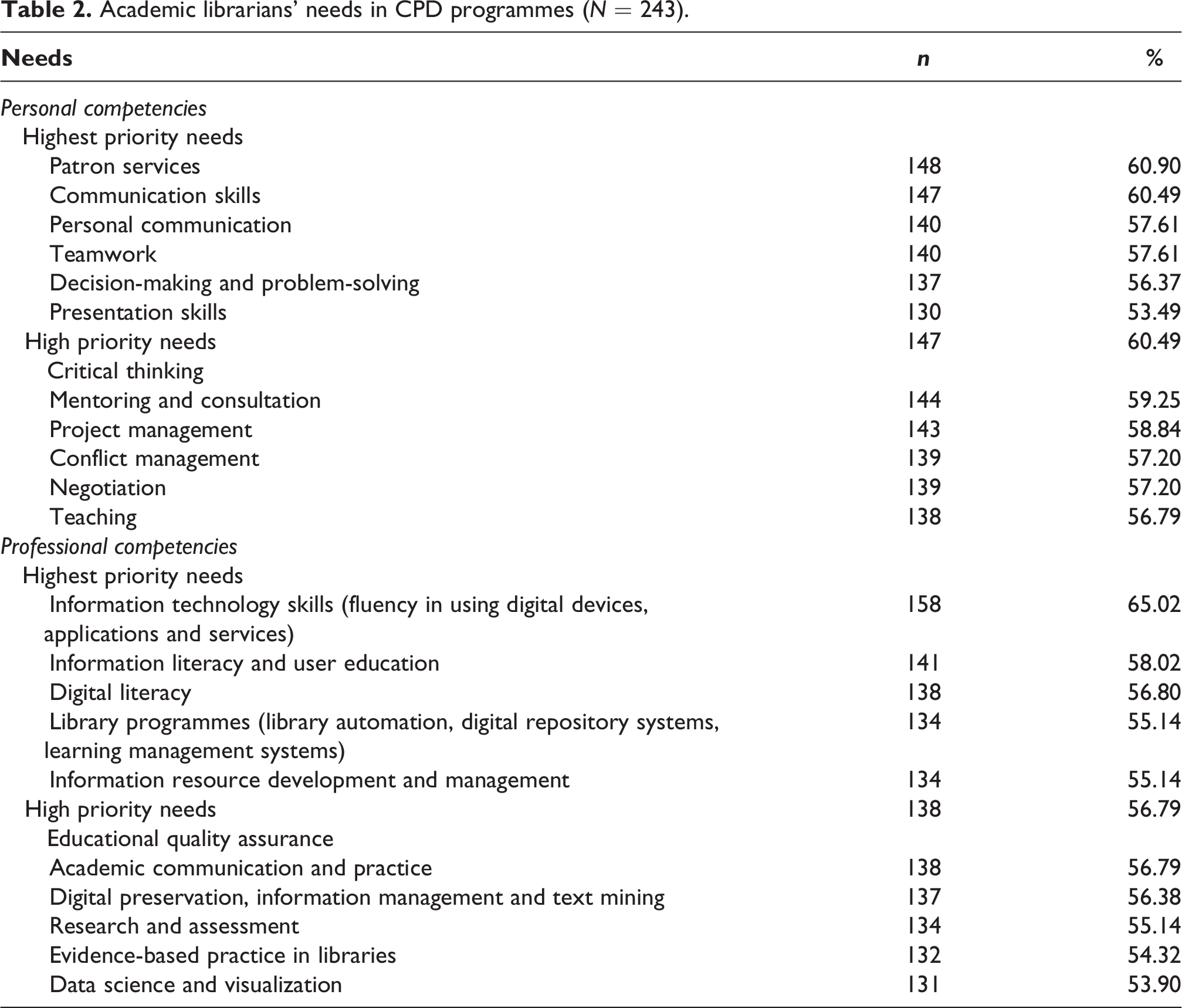
With regard to personal competencies, a significant number of the academic librarians (148, 60.90%) underscored the significance and importance of gaining the competencies required in the area of patron services. This was closely followed by communication skills and critical thinking skills (both 147, 60.49%). Developing other personal competencies – such as mentoring and consultation, project management, conflict management and negotiation skills – was also of significant interest to the participants.
With regard to professional competencies, programmes offering information technology skills were found to be the most needed among the librarians (158, 65.02%), followed by programmes focusing on information literacy and user education (141, 58.02%), and digital literacy (138, 56.80%). Other professional competencies – including Library programmes, and Information resource development and management (all 134, 55.14%). Meanwhile, the educational quality assurance, and academic communication and practice (all 138, 56.79%) – were also noted as highly needs. Significantly, all of the listed professional competencies were deemed necessary by more than half of the respondents.
Table 3 illustrates that academic library networks (129, 53.08%) were the most sought-after CPD providers for the academic librarians, followed by the Thai Library Association (112, 46.09%), in-house providers (96, 39.50%) and LIS schools (92, 37.86%). CPD programmes offered by the Thai National Library ranked lower and proved to be less in demand (79, 32.51%).
Preferred CPD providers and delivery methods (N = 243).
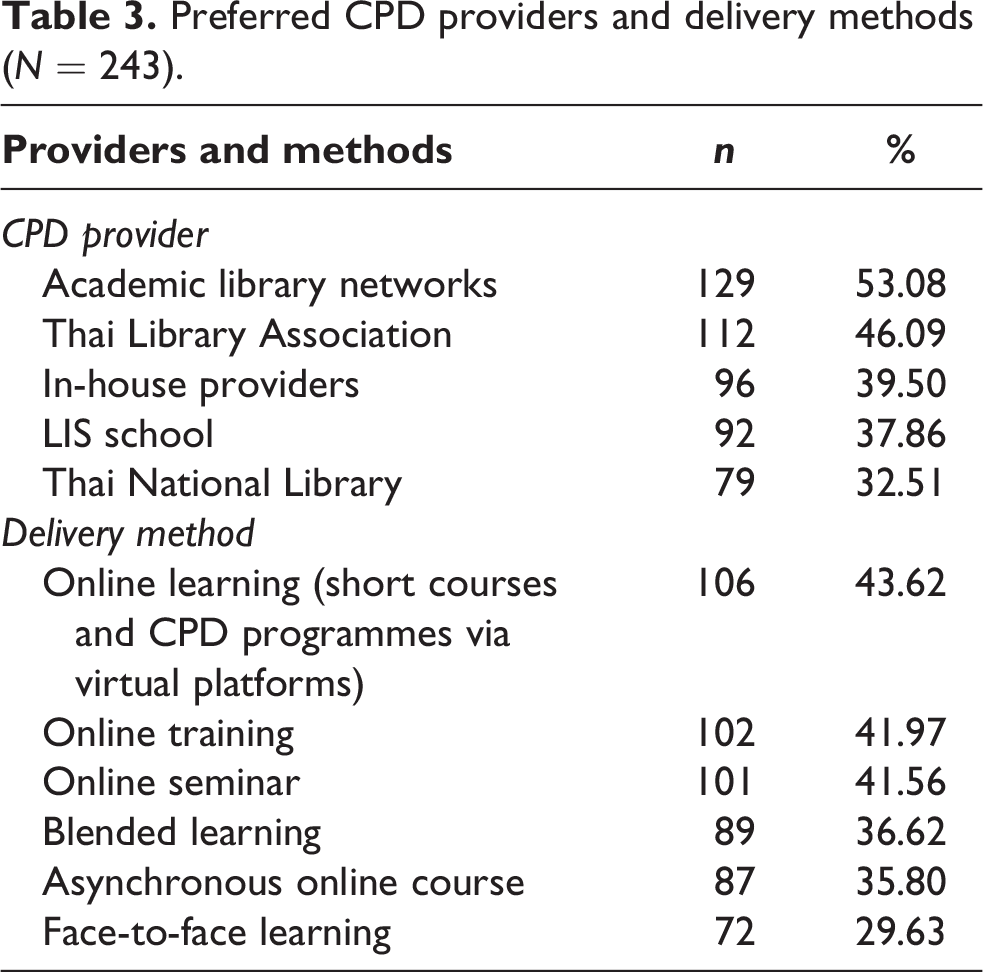
In terms of the mode of delivery of CPD programmes, the most demanded mode appears to have been online learning in both short courses and CPD programmes via virtual platforms (106, 43.62%), followed by online training (short courses or continuing programmes) (102, 41.97%) and online seminars (101, 41.56%). The participants ranked face-to-face learning as their least preferred mode of knowledge transfer (72, 29.63%).
Roles of CPD providers
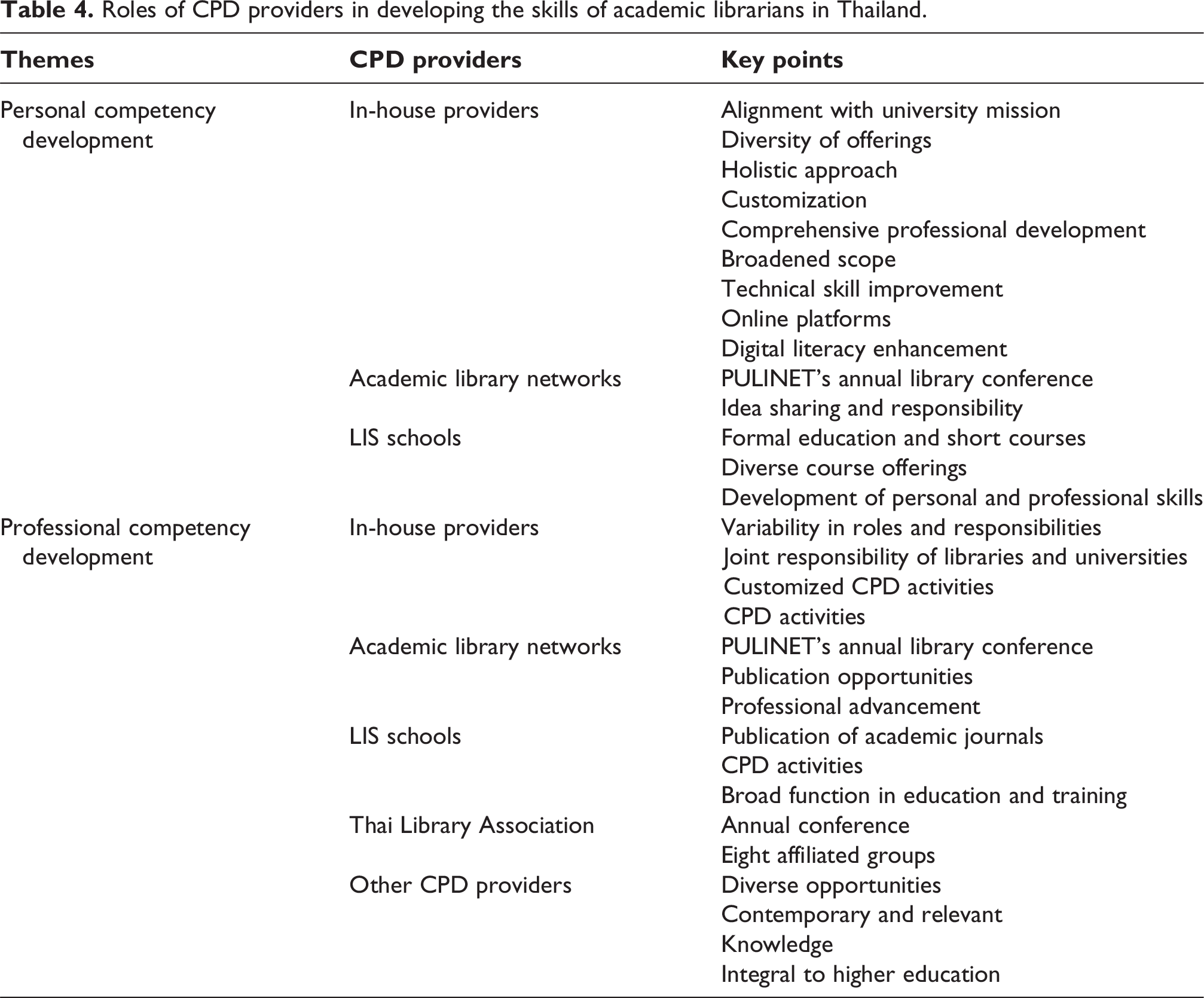
The results of the interviews with the 20 directors and deputy directors of academic libraries in Thailand highlighted the roles played by five types of CPD provider – in-house providers, academic library networks, the Thai Library Association, LIS schools and other CPD providers. The roles of CPD providers in developing the skills of academic librarians were grouped into two overarching themes – namely, personal competency development and professional competency development, which are further elaborated below (see Table 4).
Roles of CPD providers in developing the skills of academic librarians in Thailand.
Personal competency development
The key points concerning personal competency development reveal that the CPD activities offered by in-house providers are well aligned with the university’s mission. These CPD activities adopt a diverse and holistic approach, providing customization options and fostering comprehensive professional development. They also expand the scope of expertise, enhance technical skills, utilize online platforms and contribute to the enhancement of digital literacy.
On the other hand, the CPD activities organized by academic library networks are noteworthy for the inclusion of PULINET’s annual library conference and their emphasis on promoting idea sharing and instilling a sense of responsibility among the participants. In addition, LIS schools play a pivotal role by delivering formal education and short courses. They offer a wide range of courses that encompass diverse subjects and fields. Through these educational initiatives, they actively contribute to the development of both personal and professional skills among their students.
Professional competency development
The key points related to professional competency development emphasize that the CPD activities offered by in-house providers not only entail variability in roles and responsibilities, but also involve a collaborative effort shared by both libraries and universities. Furthermore, these CPD activities are characterized by customization and cost-effectiveness.
In the realm of academic library networks, several key points highlight the importance of PULINET’s national library conference, which is held on an annual basis. The conference provides a valuable platform for academic librarians, offering opportunities for publication and professional advancement within the CPD sphere. This event not only fosters knowledge exchange, but also serves as a catalyst for career growth and scholarly contributions within the academic library community.
On the other hand, it is imperative to consider the role of LIS schools. Here, there must be recognition of the role played by academic journals published by LIS schools, the CPD activities facilitated by these institutions, and the broader function they serve in educating and training LIS professionals. Within the Thai Library Association, there are two notable offerings. The Association’s annual national conference is a cornerstone event, which is complemented by the presence of eight affiliated groups, each catering to the specific and specialized needs of their members. Finally, other CPD providers are a source of diverse opportunities, offering contemporary and relevant knowledge that is integral to the higher education landscape.
Discussion
Current state of CPD for Thai academic librarians and their needs
The results of this study revealed that academic librarians recognize the importance of participating in ongoing professional development activities. They exhibit a strong motivation to acquire new knowledge, enhance their competencies and gain valuable experience, reflecting a trend observed with academic librarians worldwide. This finding is consistent with the research conducted by Moonasar and Underwood (2018), emphasizing the high regard that academic librarians have for CPD activities. In parallel, IFLA (2020) advocates for information professionals to elevate their awareness and expertise through the continual development of their knowledge and skills. This aligns with the assertions made by Jayasuriya and Majid (2022), who emphasize the essential role of academic librarians and staff in acquiring new knowledge and competencies to effectively manage their responsibilities and meet the expectations of stakeholders.
Namaganda’s (2020) work corroborates the multifaceted impact of CPD, not only on individual professional growth and career advancement but also on the overall competency, quality, and productivity of libraries and universities. Brine et al. (2022) further emphasize the pivotal role of CPD as a fundamental component for all involved in the learning and development process, encompassing individual learners, employers, professional associations, LIS educators and training providers. As a result, academic librarians must harness innovative methodologies and accessible modes of CPD to keep pace with the evolving landscape of their field (Arua, 2019). It is increasingly imperative for individuals to assume proactive responsibility for their own professional development (Jayasuriya et al., 2022).
CPD topics
This study further highlighted the notion that Thai academic librarians are enthusiastic about CPD activities, especially as they relate to ICT competencies and customer service. The majority of the participants in this study were responsible for library services (132, 54.32%), reference services (129, 53.09%) and teaching or instructional activities (89, 36.63%), which makes ICT and customer-service-related courses even more critical. It is important to reiterate that the roles of academic librarians, as teachers or instructors, have changed dramatically due to disruptive technologies and innovations, and as a result of transformations in learning environments and users’ behaviour (IFLA, 2020). The necessity for academic librarians to work diligently, acquire additional skills and take on new responsibilities is underscored by current demands. This requirement implies that librarians must commit to bridging skill gaps and embracing a proactive learning approach, whether through self-directed efforts or library-organized CPD activities (Oladokun and Mooko, 2023). This imperative aligns with Appleton’s (2018) perspective, emphasizing the incorporation of pertinent trends and emerging subjects within CPD programmes. Given the rapid technological changes, innovations and emergence of new fields, academic librarians are compelled to remain agile and adaptable, constantly enhancing their knowledge and competencies. Gunasekera (2021) further reinforces this viewpoint, highlighting the significance of CPD programmes that focus on both current and future skills development for academic librarians. Additionally, librarians must upskill and expand their capabilities to address the requirements not embedded in their current roles.
Teaching and instructional roles
Teaching and instructional activities have challenged the traditional roles of academic librarians. The findings of this study revealed that information literacy and users’ education are two required professional competencies in the field. This is supported by several literature reviews. For instance, according to the Association of College and Research Libraries (2017) in their publication ‘Roles and Strengths of Teaching Librarians,' it is noted that teaching librarians serve students in roles resembling those of a coach, guide, or mentor. This involves assisting students to derive information from complex ecosystems at different stages of their personal and cognitive development. This significance became more pronounced during the COVID-19 pandemic, which shifted online learning into the norm. Consequently, a crucial emerging responsibility for academic librarians is to support online activities and courses. Steele (2021) further emphasized that academic librarians play a more extensive role in online courses than solely providing traditional services.
Moreover, current knowledge of LIS as well as communication and instructional competencies are becoming more vital in this new ecology of education. In Canadian academic libraries, teaching and instructional activities are implemented as core library tasks – approximately 94% of the librarians in Ducas et al.’s (2020) study confirmed that teaching was part of their workload. Teaching roles not only boost librarians’ confidence, but also allow them to achieve higher job satisfaction, while enhancing the status of librarians and professionals in the field in general (Ducas et al., 2020). This resonates with Ma’s (2019) viewpoint, which underscores the necessity for the inclusion of teaching and learning as essential CPD topics for academic librarians. In light of these imperatives, librarians are required to be well versed in pedagogy to establish or innovate teaching and learning methods. Furthermore, an extension of their information technology competencies is vital to enable interactive presentations and tutorials, coupled with a proactive engagement with relevant literature in the field for a comprehensive grasp of the subject (Mohtar and Mohamad, 2023).
CPD delivery methods
The study also uncovered a notable demand for CPD delivery methods that emphasize online learning, online training and online seminars. Interestingly, the traditional face-to-face method of delivery was found to be less appealing to the participants, being preferred by only 29.63% of the respondents. This preference for online formats reflects the proactive approach of academic librarians to stay abreast of current academic and professional developments that are closely aligned with the contemporary social context and technological advancements. These findings resonate with the research by Sacchanand (2014, 2021) highlighting the increasing activity of online learning in LIS CPD in Thailand and member countries of the Association of Southeast Asian Nations, as well as the rapid growth of online learning programmes and courses in Thailand.
Furthermore, these insights are consistent with the research conducted by Arua (2019), Gunasekera (2021), Hornung (2015), IFLA (2020), Ma (2019), Mooko and Oladokun (2021), Namaganda (2019) and Shahzad et al. (2023), which emphasizes the transformative impact of the COVID-19 pandemic and social distancing on academic libraries and institutions. These challenges have necessitated an adaptation to online technologies – including online learning, virtual conferences and webinars – to ensure the continuous provision of services, further underscoring the significance of online delivery methods in the context of CPD.
Significantly, this study brought to light a compelling pattern: academic librarians primarily affiliated with institutions in Bangkok demonstrate a higher propensity for participating in CPD programmes compared to their peers in small and large cities. In contrast, academic librarians linked to institutions in small cities often refrain from engaging in CPD programmes altogether. These findings emphasize the necessity for a more deliberate distribution of CPD opportunities, considering factors such as location and accessible formats, to ensure that all academic librarians can readily take part in these programmes. Therefore, it is imperative to fully embrace online learning not merely as an alternative but also as a multifaceted delivery method to bridge gaps, enhance equal access to CPD opportunities, and extend the reach of education in evolving learning environments.
Roles of CPD providers in developing the skills of academic librarians in Thailand
The outcomes of this study also revealed that associated academic libraries and affiliated universities are the main CPD providers. In the Thai context, past studies have revealed that most academic librarians at Rajabhat universities in Thailand are required to participate in CPD programmes offered by in-house providers (e.g. Kaewkongsup et al., 2016). This is due to the fact that in-house providers can serve the specific needs of an individual academic library, with its unique mandates and goals based on the university’s mission, vision and objectives. This aligns with the findings of Gunasekera’s (2021) study, which states that university libraries in Sri Lanka have employed several strategies to encourage and support staff development. Significantly, IFLA also confirms that academic libraries and affiliated universities are important CPD providers for their librarians. They not only offer training programmes and activities that are aligned with a library’s and university’s mission, vision and goals, but also showcase the organization’s commitment and leadership through budget and time allocations for professional learning (Hallam and Varlejs, 2021). In addition, due to the COVID-19 crisis, it became evident that CPD for academic librarians, offered by in-house providers, was crucial to ensure that the goals, vision and needs of each university and academic library were met. Even though all universities have the same mission, their identities and focus may differ.
This research also found that academic librarians need to participate in CPD activities organized by academic library networks, with a particular emphasis on the annual conference of PULINET. This conference serves as the sole platform directly responsible for allowing academic librarians in Thailand to present their research. This is because PULINET was established with CPD at its core. Its organized CPD activities are open to all librarians as well as LIS educators and interested parties. On the other hand, Academic Resources and Information Technology Network (ARIT Network) is more focused on its network’s members. This study found that academic librarians can use this network as a tool for their career development and promotion. This practice mirrors the approach employed at Yale University, where academic librarians have the opportunity to seek promotion by submitting scholarly papers and other contributions, including active involvement in committees, conferences and programmes – all of which are taken into account as potential criteria for promotion (Yale Library, 2021). A comparable policy has been implemented at Virginia Commonwealth University (2022) as a pilot initiative.
Library associations
The findings of this study revealed that the Thai Library Association played a less significant role compared to PULINET as a CPD provider. Nearly half of the academic librarians in this study (121, 49.79%) participated one to three times a year in CPD programmes offered by the Thai Library Association, with only 8 (4.94%) participants attending such programmes more than three times a year. Surprisingly, only a quarter of the librarians were members of the Thai Library Association (62, 25.51%), despite the fact that the roles of the Association in providing CPD are constantly and widely promoted to its members and the LIS community at large. Various national library associations – for example, the American Library Association, Chartered Institute of Library and Information Professionals, and Australian Library and Information Association – also play active CPD roles for their members and the entire LIS community. A commitment to CPD as a core value for professional development within the code of professional practice is therefore needed (Ma, 2019). As such, Lamptey and Corletey (2011) recommend that national library associations play a greater role in evaluating the needs for CPD among their members and LIS professionals; coordinating programmes that meet librarians’ needs; assessing the availability of effective communication channels; examining the appropriateness of the training delivered; and ensuring an increase in the number and variety of refresher courses for members to scale up their skills. Institutions and professional bodies, as well as library and information associations, should thus collaborate to encourage and promote CPD activities (Moonasar and Underwood, 2018).
Nonetheless, the Thai Library Association has demonstrated a commitment to the formulation of CPD policies and the establishment of standardized professional benchmarks for academic librarians in Thailand. The Association’s ongoing initiatives are closely aligned with the design and implementation of strategic plans aimed at fostering the development of LIS professionals, thereby equipping them with the requisite skills and competencies to function efficiently. Furthermore, these endeavours are instrumental in improving career opportunities at the national level – a fact substantiated and elucidated during the 2023 annual academic conference, organized by the Academic Library Group (Dissamana, 2023).
LIS schools
It is important to note that most LIS schools in Thailand focus on offering LIS programmes at the undergraduate and graduate levels. The mandate for LIS schools affiliated with Rajabhat universities around the country is ‘local development’. Therefore, the LIS schools in Rajabhat universities are to focus on programmes or activities that benefit school and public libraries. This is due to the fact that these libraries often experience difficulties since they are underfunded and lack appropriate learning materials and resources. Conversely, academic libraries have a higher status, with larger budgets, manpower and resources. In particular, the autonomous universities receive comprehensive support from their respective faculties, which enhances their flexibility in both the management and the provision of services (Swasdee and Suwannarat, 2015).
This study also revealed that academic librarians are more likely to be interested in CPD programmes that are hosted by LIS schools with a focus on short courses and training sessions, which are not essentially part of a ‘formal programme’ offered by LIS schools in higher education. Notably, IFLA (2016) recognizes that LIS educators play an important role in promoting the required ongoing learning among academic librarians. In an interview, Songphan Choemprayong, an Associate Professor at Chulalongkorn University, suggested that library schools should cooperate closely with academic libraries and librarians. This is due to the expertise that academic librarians and scholars can offer, which may benefit both career progression and research advancements within the field of LIS (Buangam, 2015).
National libraries
The findings of this research showed that academic librarians do not perceive the Thai National Library as a CPD provider. The Thai National Library does play a small role in CPD compared to other more prominent CPD providers. This is the result of the Library’s mandate, which is primarily to offer CPD support to its own staff and to provide services for the lifelong learning of people across the entire country. Meanwhile, the national libraries in other countries have different mandates. For instance, the National Library of India plays an essential role in supporting information professionals via webinars, and the objective of the Trinidad and Tobago national libraries is to encourage their staff to collaborate in various activities (IFLA, 2020). In Ireland, the Academic and National Library Training Co-operative was established through cooperation between the Irish National Library and academic libraries. Its objective is to identify training needs within member Irish academic and national libraries and to provide cost-effective training opportunities to library staff. This enables Irish academic and National Library professionals to enhance their competence, share experiences and build networks. Even though the Co-operative has continued to provide various programmes, training and consortia economically, it is still facing difficulties with regard to running costs, particularly at a location outside the capital city (Cannon, 2017). Meanwhile, the National Library of Maldives has encountered multiple challenges. These include a lack of expertise in curriculum development among the team; the necessity to benchmark its programmes against LIS courses offered regionally and internationally; and the need to align with the specifications of the Maldives Qualification Framework (Oladokun and Mooko, 2023).
Recommendations
The outcomes of this research lead to a number of recommendations that could benefit academic librarians and academic libraries, as well as CPD providers, and help them orient their programmes post-pandemic and prepare for the future: Academic librarians should prioritize the enhancement of their information technology skills by leveraging existing and emerging technologies, in addition to making the most of online learning opportunities and social media platforms. CPD programmes for academic librarians should be prioritized by connecting libraries and universities, whether through self-organization, workplace learning or learning organization environments, and by facilitating librarians’ transition into new contexts and environments. The roles of academic librarians as teachers and instructional partners should be highlighted, despite their non-academic standing. The academic library network PULINET is an important element and plays a critical role in LIS development. The network should thus broaden its scope to become a national university library network and provide the opportunity for Academic Resources and Information Technology Network (ARIT Network) to become a member or associate member so that both organizations can benefit from such collaboration and enhance the country’s overall development. Furthermore, CPD-related topics of interest to academic librarians based on their needs, current issues and trends in academic librarianship should be prioritized. Professional associations and LIS schools should take advantage and make full use of digital technology and online learning to play more proactive roles in developing new CPD approaches, especially through online programmes. They should organize CPD activities in various formats on topics pertinent to current issues and trends for various groups of LIS professionals. In addition, the Thai Library Association should work together with all CPD providers in Thailand and abroad, and act as a network for CPD to develop librarians and LIS professionals and staff.
Conclusion
In summary, this research sheds light on the state of CPD for academic librarians in Thailand and the pivotal roles of CPD providers. The study’s recommendations underscore the importance of academic librarians honing their information technology skills and embracing technology for professional growth. It also advocates for a stronger focus on CPD programmes that foster closer ties between libraries and universities while recognizing academic librarians’ instructional roles. Furthermore, it highlights the need for academic library networks to expand and collaborate at both the national and international levels. Lastly, it encourages professional associations and LIS schools to leverage digital technology for innovative CPD approaches aligned with current trends. In essence, this research provides thoughtful guidelines for adapting and thriving in the evolving post-pandemic educational landscape, with the aim of ensuring that academic libraries in Thailand can remain responsive to the changing needs of the academic community. Moreover, it serves as a valuable model for other countries facing similar challenges, offering insights and strategies that can be adapted to their specific contexts.
Footnotes
Acknowledgements
The authors thank all the academic library directors and academic librarians for their contributions and feedback.
Declaration of conflicting interests
The authors declared no potential conflicts of interest with respect to the research, authorship and/or publication of this article.
Funding
The authors received no financial support for the research, authorship and/or publication of this article.

References
Supplementary Material
Please find the following supplemental material available below.
For Open Access articles published under a Creative Commons License, all supplemental material carries the same license as the article it is associated with.
For non-Open Access articles published, all supplemental material carries a non-exclusive license, and permission requests for re-use of supplemental material or any part of supplemental material shall be sent directly to the copyright owner as specified in the copyright notice associated with the article.
