



Abstract
Truck platooning for the transportation of loads is a strategy recently proposed by the automotive sector to cope with traffic congestion, fuel consumption, and operational costs. This new way of configuring trucks changes the typical pressures pavements structures experience. For this reason, the research efforts of the pavement sector should be aligned with the automotive sector to propose road-friendly platoon configurations. This is one of the objectives of the European project ENSEMBLE. ENSEMBLE, as indicated by its acronym, works on ENabling SafE Multi-Brand pLatooning for Europe. In this context, the present study presents a real scale test done in the Applus IDIADA facilities to evaluate the fatigue behavior of a pavement structure subjected to individual and platoon truck configurations. The effects of parameters such as traffic distribution through the year and by time of day, percentage of platoons, truck loads, number of trucks in platoon configuration, lateral wandering, and inter-truck distances were evaluated. The study’s findings revealed that the reduced rest times between trucks in the platoon configuration reduce the recovery time of the asphalt layers, increasing the fatigue damage to the pavement at high temperature conditions. This underlines the need for further research to allow the proper implementation of truck platoons. For example, research is needed to define strategies to make truck platoon configurations more pavement-friendly and analyze the costs associated with the changes in the required road maintenance/rehabilitation treatments, among others.
Keywords
Background
Partially or fully self-driven trucks in platoon configurations are part of the most recent and innovative advances presented by automotive companies in the last decade ( 1 – 3 ). These technologies seem to be capable of providing benefits in reducing congestion for a better traffic flow, improving the braking/acceleration abilities of vehicles, reducing fuel consumption, and more generally reducing vehicle operating costs and enhancing road safety (1, 2, 4–17).
However, platooning trucks introduce new traffic multi-load configurations with the following two characteristics: (1) reduced deviation of the lateral position of the vehicles forming the platoon and therefore load channelization (1, 11, 12, 18–24) and (2) reduced inter-truck distances between the trucks in the platoon, which may hinder the self-healing capacity of asphalt concrete materials ( 11 , 12 , 22 ). In this sense, a truck platoon deployment without precaution could accelerate pavement damage in the form of lower fatigue cracking/permanent deformation (1, 11, 12, 20, 21, 23, 24) and lead to earlier rehabilitation/maintenance treatments ( 18 , 23 ).
In this context, since 2018, the European Union has been developing a research project called ENSEMBLE. ENSEMBLE’s objectives are to pave the way for adopting multi-brand truck platooning in Europe to improve fuel economy, traffic safety, and throughput ( 2 , 3 ).
ENSEMBLE is a European project co-funded under the Horizon2020 Research and Innovation Programme, grant agreement No 769115. This project is coordinated by TNO (The Netherlands Organization), and associates main European truck manufacturers (DAF, DAIMLER Truck, IVECO, MAN, SCANIA, VOLVO Group), the European Association of Automotive Suppliers (CLEPA), ERTICO (European Road Transport Telematics Implementation Coordination Organization, which is a link with the European truck platooning community), and several research organizations: IDIADA, Gustave Eiffel University, KTH, and VU Brussel.
ENSEMBLE is composed of six work packages that integrate the different sectors related to truck platoon development tasks in Europe. WP1 is related to management, WP2 to specification of a generic solution, WP3 to platooning in-vehicle technology, WP4, from which is part of this document, to infrastructure, logistics, and impact analysis, WP5 to testing and demonstration and WP6 to exploitation and dissemination of results.
In this regard, the objective of this paper was to assess the effect that individual and platoon truck configurations can produce on the fatigue service life of a real scale pavement section located in the test track facilities of Applus IDIADA in Tarragona, Spain, which are commonly used for vehicle testing and development activities. The approach used in this project is based on an original fatigue model developed by Homsi et al. ( 25 – 27 ) to consider the effects of multiple axle loads. This model was used to evaluate the fatigue life of the pavement structure for three potential scenarios of truck platooning, using a mechanistic-empirical approach based on the cumulative damage concept.
Cumulative Damage
Miner’s (
28
) rule is the most popular and widely used damage model for materials. As shown in Equation 1, Miner’s rule states that damage (

where
For asphalt materials, different test protocols are used to define fatigue equations to determine the number of cycles to failure according to different strain/stress levels. In Europe, several test protocols are standardized by the European Committee for Standardization (CEN) under the EN 12697-24. New protocols have recently been defined to try to extend these fatigue equations to more complex loading conditions (non-sinusoidal signals, multiple loads). In the model proposed by Homsi et al. (18), new parameters are introduced, based on the shape of the strain signal obtained by the passage of multi-axle configurations.
Fatigue Test Protocols for Asphalt Materials in Europe
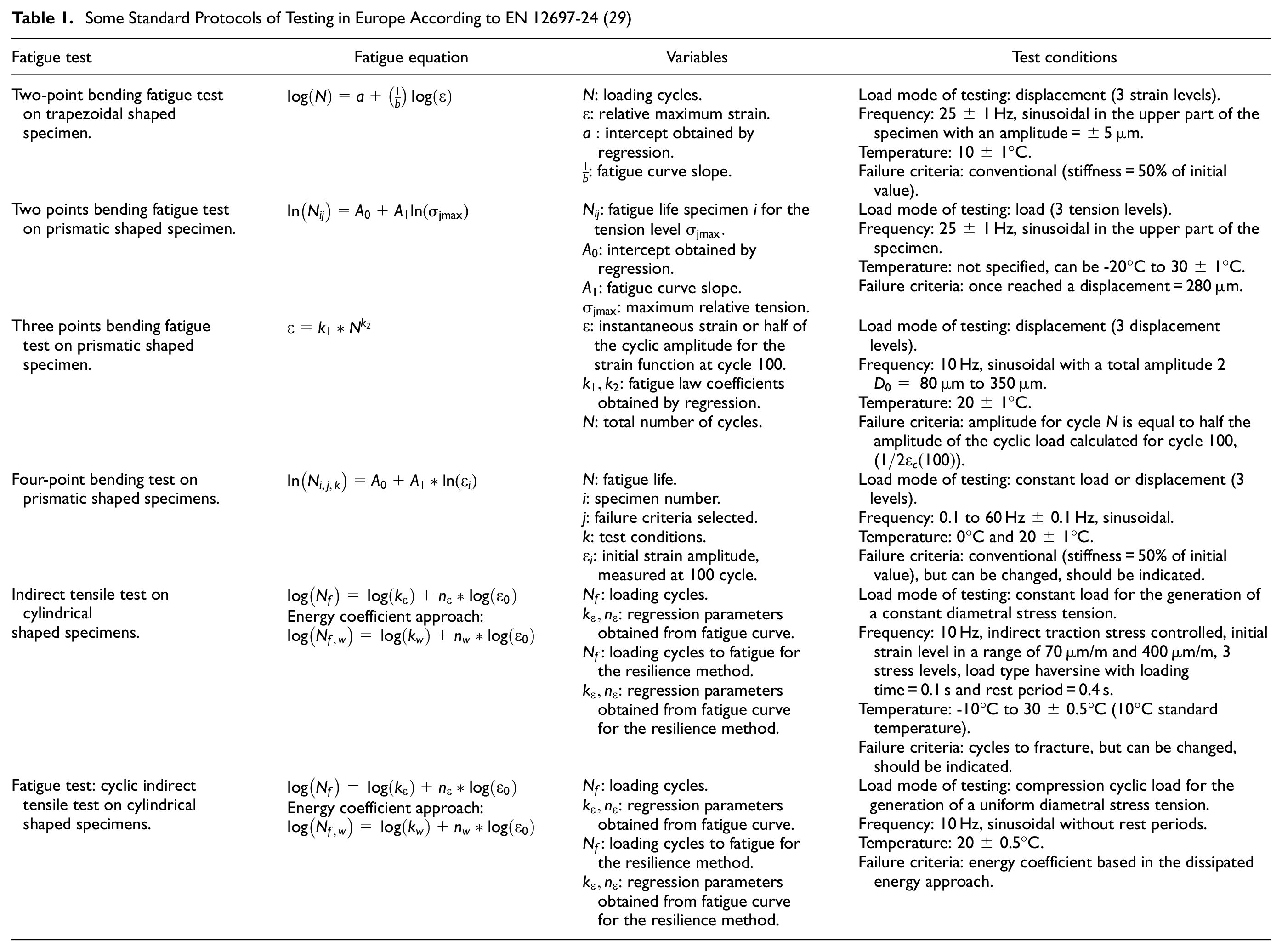
Based on EN 12697-24, there are six fatigue tests used in Europe to study the fatigue behavior of asphalt materials. Table 1 summarizes the test conditions applied in these six tests, as well as the fatigue equation proposed to fit the results. The different fatigue models are expressed by relationships between the applied cyclic strain or stress and the logarithm of the number of cycles to failure when specific temperature and frequency conditions are applied.
Some Standard Protocols of Testing in Europe According to EN 12697-24 ( 29 )
Since the equations described in Table 1 do not consider the effect produced by multiple axle configurations, Homsi et al. (25–27, 30) proposed the fatigue model shown in Equation 2. Homsi’s model is based on the laboratory reproduction of 12 synthetic strain signals obtained from the real strain signals obtained from the Accelerated Pavement Testing facility of IFSTTAR–Gustave Eiffel University (from the French acronym: French Institute of Science and Technology for Transport, Development, and Networks) under single, tandem, and tridem axles. The laboratory test used to reproduce the 12 synthetic signals was the two-point bending fatigue test, on trapezoidal specimens conditioned at 20°C (common European fatigue test standardized as UNE EN 12697-24(22)), which was adapted to apply frequencies ranging from 8.33 Hz to 40 Hz and strain levels ranging from 47 µm/m to 550 µm/m. The fatigue failure criterion used to calibrate the model considers the point when there is a 50% reduction in the initial stiffness value of the material.
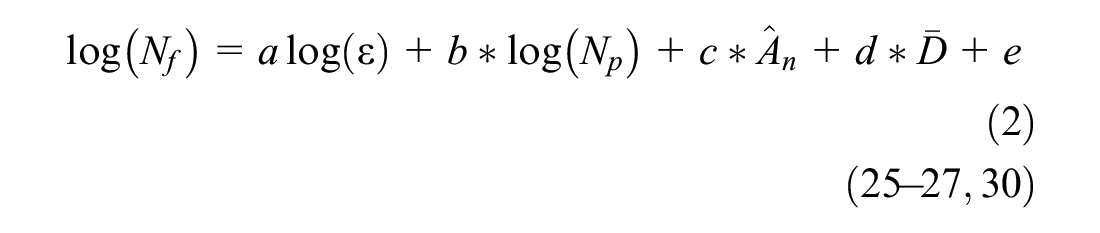
where (see Figure 1)
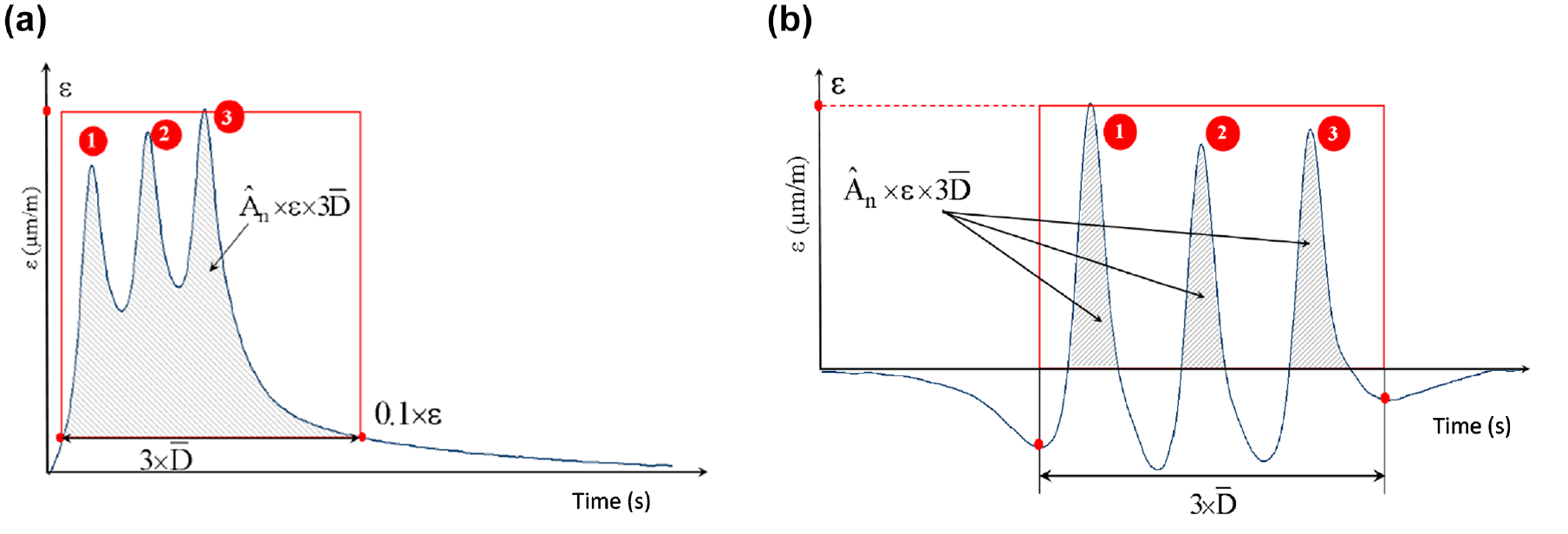
Example of parameters used to characterize the (a) transversal and (b) longitudinal strain signals of a tridem axle.
Full-Scale Experiment
Pavement Section and Instrumentation
The test section used in the study was located in the facilities of the automotive company IDIADA, in Tarragona, Spain. The pavement structure consisted of three asphalt layers: a 4 cm thick wearing course, a 6 cm thick binder course, and a 15 cm thick base course. According to the standard UNE EN 13108-1, the types of asphalt mixture for each layer are respectively: asphalt concrete mixture with 11 mm maximum particle size used for surface layers (AC11 surf [D12]), semi-dense graded asphalt concrete mixture with 20 mm maximum particle size (AC 22 S [S-20]), and coarse graded asphalt concrete mixture with 22 mm maximum particle size (AC 22 G [G-20]). The mixtures were manufactured with a polymer-modified binder type PMB 45-80/65 according to the UNE EN 14023, reaching densities of 2.38 to 2.39 g/cm3 and air voids of 4.7% to 6.8%.
As shown in Figure 2, the section was instrumented with an array of 24 strain gauges of type KM-100HAS Tokyo Sokki Kenkyujo, placed at 0.85 m, 1.05 m, and 1.25 m from the edge of the right lane. Twelve strain gauges (six longitudinal and six transversal), were placed at the bottom of the binder course and 12 other gauges at the bottom of the base course. Thermocouples were also installed at the bottom of each asphalt layer, to measure the temperature conditions during the tests.
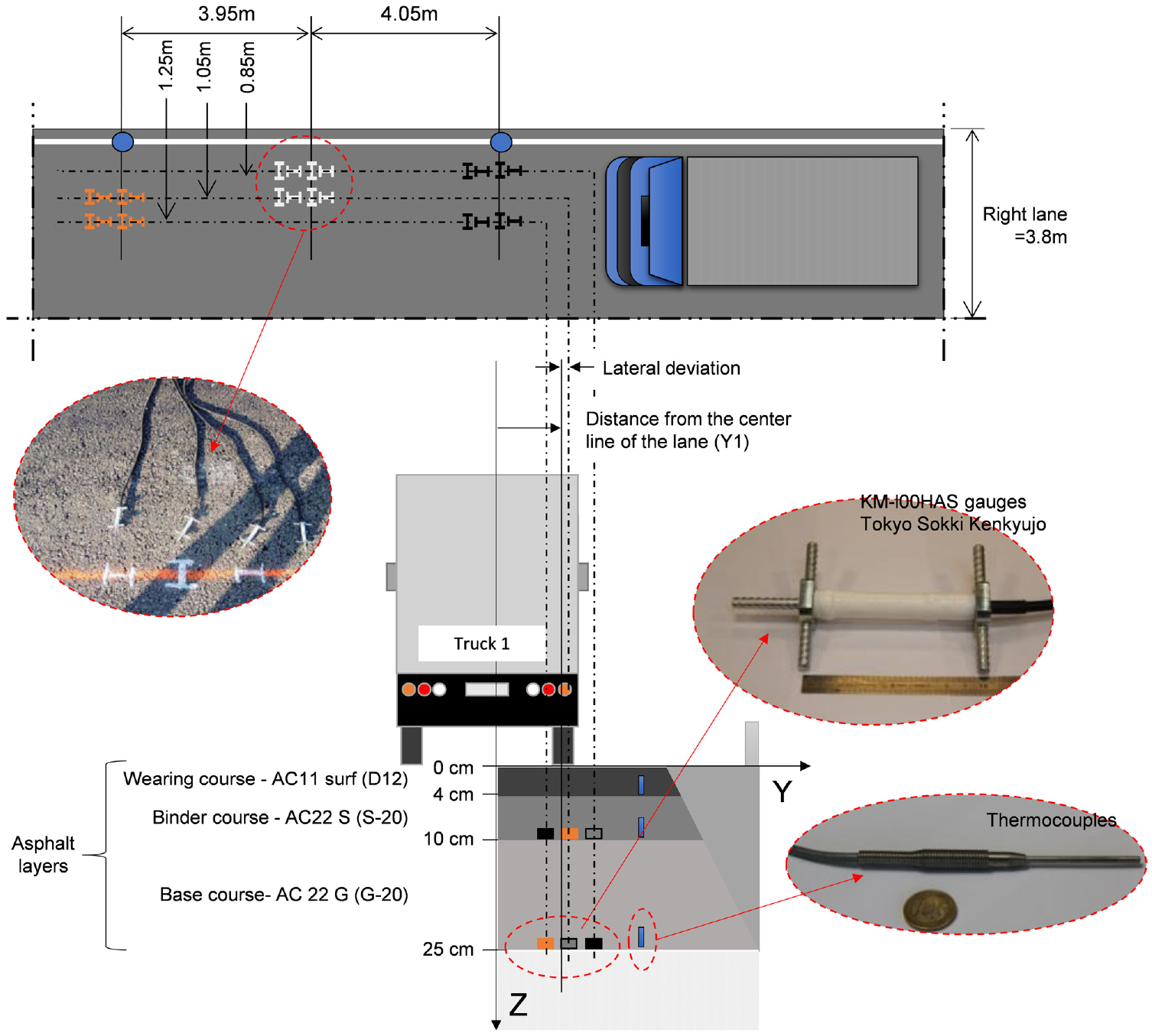
Schema of the pavement structure and instrumentation (not to scale).
Test Protocol
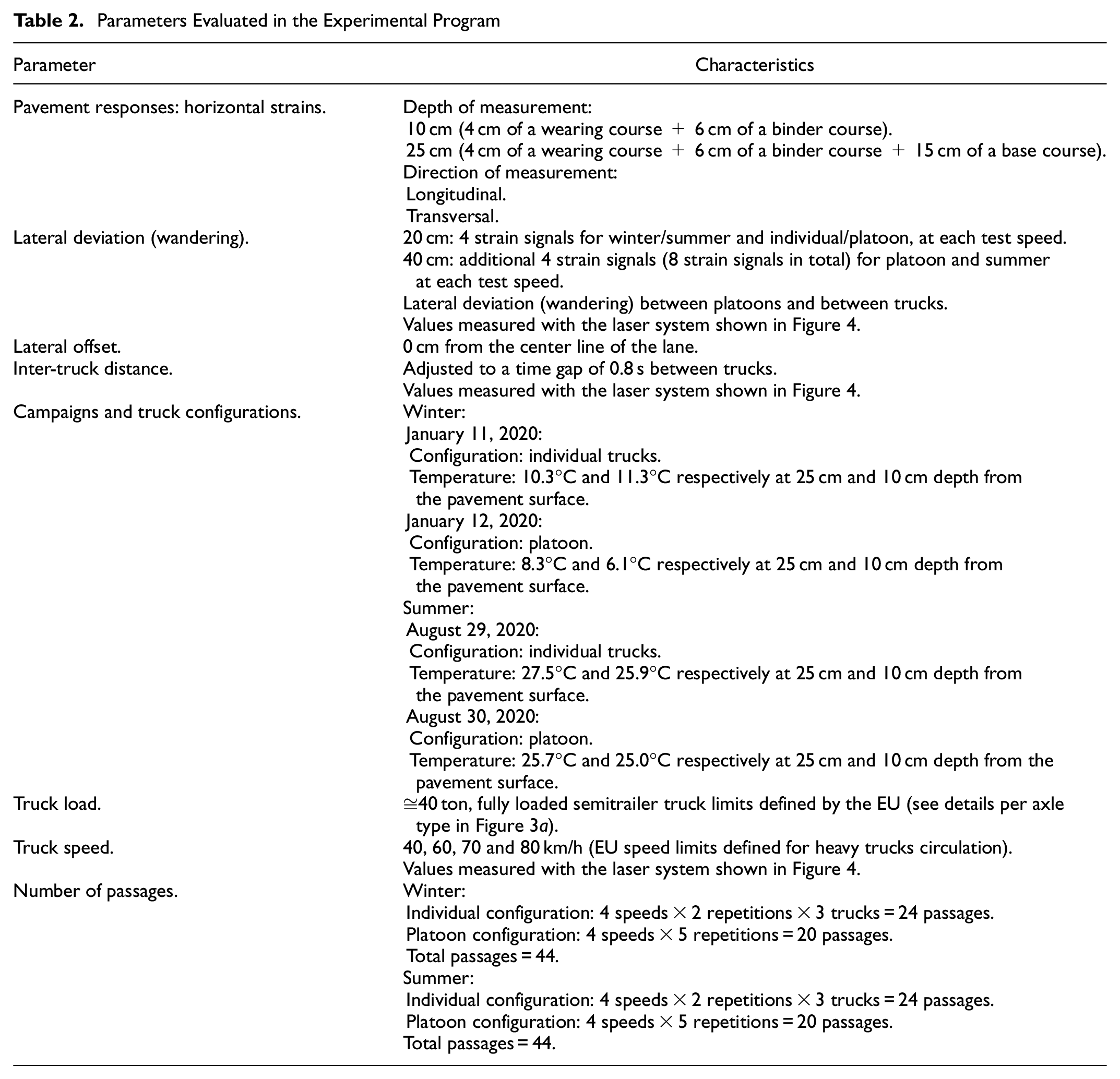
The objective of the tests was to compare the pavement response under individual trucks and trucks in platoon configuration. Two test campaigns were performed, one in the winter, and one in the summer, to cover both cold and hot temperature conditions. The different test conditions are summarized in Table 2 and Figure 3, and include:
Two test campaigns, one done in the winter and the other in the summer,
20 cm of lateral deviation (wandering) for the first four strain signals and addition of four extra strain signals with a lateral deviation (wandering) increased to 40 cm during the summer campaign (see Figure 3b),
Lateral offset of 0 cm from the centerline of the lane (see Figure 3b),
Inter-truck distances adjusted to a time gap of 0.8 s,
Four truck speed values, and
Individual and platoon truck load configurations.
Three five-axle human-driven semitrailer trucks, fully loaded at their maximum legal load in Europe (40 tons), were used for each test campaign. The main characteristics of the vehicles used are shown in Figure 3a. The use of human-driven trucks following platoon truck configurations is the cause of the variation in the loads per truck and test campaign. Figure 4 shows the laser system used to measure the ability of the human drivers to follow platoon truck configurations. The parameters measured by the laser system were the truck speed, lateral deviation (wandering), and inter-truck distances.
Parameters Evaluated in the Experimental Program
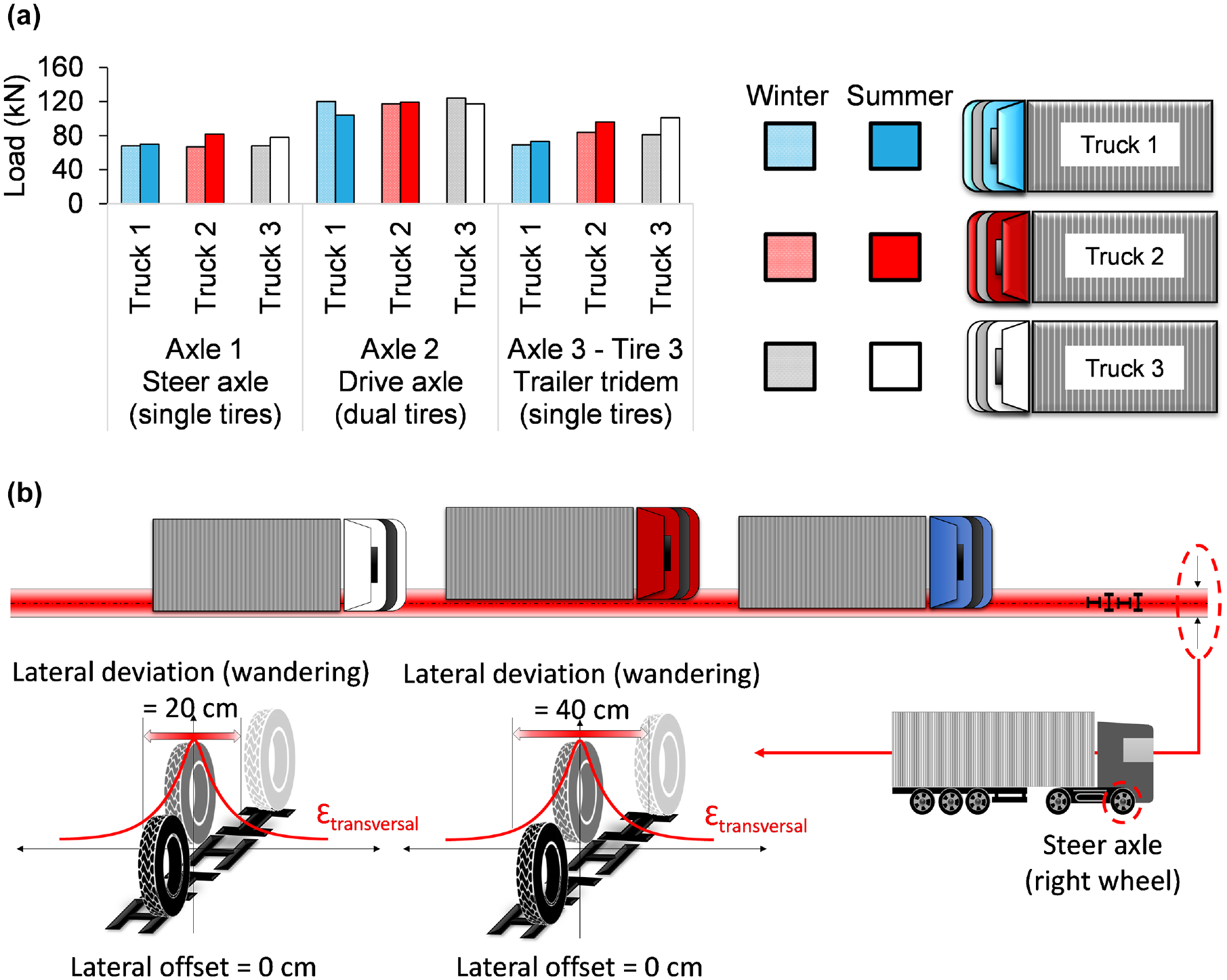
(a) Truck loads and (b) lateral deviation (wandering).
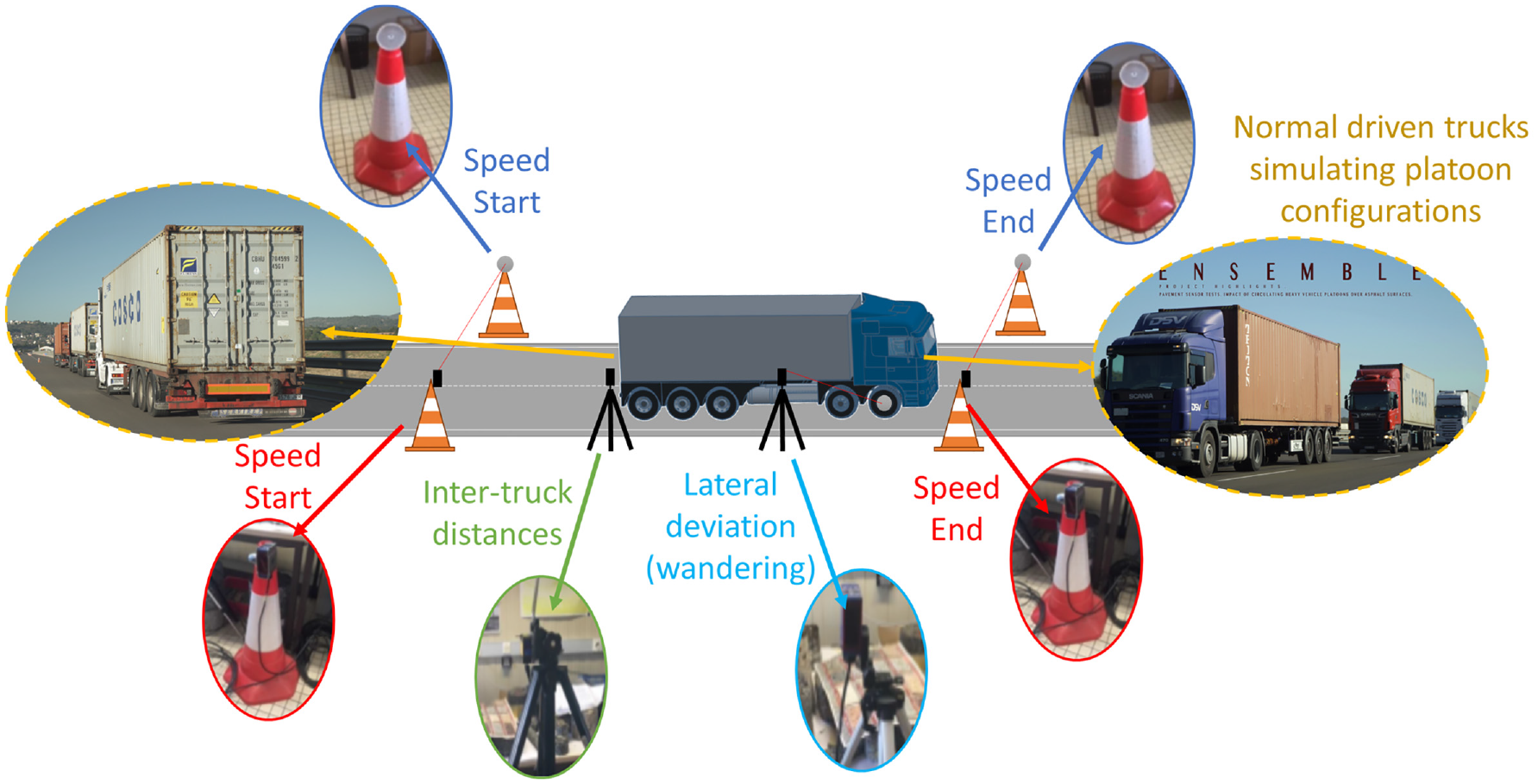
Laser system for monitoring truck speeds, and longitudinal and lateral positions.
The tests were performed first with each individual truck and then with the platoon configuration for each test condition. The longitudinal/transversal strains were measured at the bottom of the binder course and base course during each truck passage. Four strain signals per truck speed were selected to analyze the fatigue behavior in the first lateral wandering interval. And four additional strain signals were added to the analysis of the summer campaign to study the effect of increasing the wandering.
Examples of Measured Strain Signals
Figure 5 presents examples of longitudinal and transversal strain signals measured at the bottom of the base course, at 25 cm depth from the pavement surface, during the winter and summer test campaigns. The figure compares signals obtained for an individual truck, and the platoon of three trucks, at a speed of 40 km/h. The selected signals correspond to truck passages where the lateral wandering is close to 0, which means that the truck wheels are centered on the position of the strain gauges. For this position, the tensile strains recorded by the gauges are maximum. The following observations can be made about these strain signals:
Strains measured in summer (at temperatures between 25.0°C and 27.5°C) are much higher than the strains measured in the winter (at temperatures between 6.1°C and 11.3°C)
The shape of the longitudinal and transversal strain signals is very different. The longitudinal signals present alternatively strains in compression (negative) and in extension (positive). The transversal strains are only in extension.
The tensile strain values are significantly higher in the transversal direction because of the single wheels of the trailer tridem axles of the semitrailer trucks commonly used in Europe at present ( 31 ). This could explain the predominant emergence of longitudinal cracking patterns on the pavement surface.
The transversal strain signals present delayed deformations that are only slowly recovered after the passage of the vehicles as a result of the viscoelastic behavior of asphalt materials. These delayed deformations increase with temperature (summer conditions) and when inter-vehicle distance is small (platoon configuration).
Considering that the main objective of this work is the study of the fatigue cracking phenomena under individual and platoon truck configurations, in the next part of the paper, the analysis will focus only on the transversal strain signals, which generate the highest tensile strains, with values slowly returning to zero, and possibly some permanent deformations.

Examples of longitudinal and transversal strain signals obtained at 25 cm depth from the pavement surface (at the bottom of the base course) for a test speed of 40 km/h.
Data Treatment—Calculation of Pavement Damage
Definition of Fatigue Damage and Calculation of the Coefficient of Aggressiveness
The concept of the coefficient of aggressiveness (CA) of a vehicle, used in the French pavement design method, is introduced to evaluate and compare the fatigue damage produced by the different vehicle configurations.
In the case of fatigue damage, the CA of a vehicle is defined as the

where
The concept of cumulative damage is used for the calculation of the fatigue damage

where
In this study, to consider complex strain signals, the number of cycles to failure
In the case of the strain signal corresponding to the reference 130 KN axle, as this signal was not measured, it was obtained by modeling, using the multilayered elastic software ALIZE, for the same pavement structure, same temperature, and loading speed conditions.
From all the experimental data, only four-strain signals where the lateral wandering values between passages for the individual trucks and platoon configuration were less than 20 cm for both test campaigns were considered. In the case of the summer campaign, four additional strain signals with an increased lateral wandering (40 cm) were added to compare the effect of this increased lateral wandering.
Finally, to evaluate the fatigue life and fatigue damage corresponding to different traffic scenarios, the approach of the French pavement design method was followed. In this approach, after determining the CA of each truck (

where

Traffic Scenarios for the Calculation of Pavement Fatigue Life
To evaluate the impact of different proportions of platoons in the heavy vehicle traffic, five different traffic scenarios (shown in Figure 6) have been considered:
The reference scenario represents traffic with no platoons and with a lateral wandering of the vehicles of 20 cm.
Scenario 1 represents traffic with 100% of platoons in the winter and no platoons in the summer, with the same lateral wandering of 20 cm.
Scenario 2 represents traffic with 100% of platoons in the summer and no platoons in the winter, with the same lateral wandering of 20 cm.
Scenarios 3 represents traffic with 100% of platoons during the whole year, with the same lateral wandering of 20 cm.
Scenario 4 represents traffic with 100% of platoons during the whole year, but with an increased lateral wandering of 40 cm.
These traffic scenarios have been applied to calculate the fatigue life of the pavement structure of the full-scale experiment (Figure 2). For these fatigue life calculations, typical data corresponding to heavy traffic roads, category T00 according to EU definitions, were used:
- An average daily truck traffic (ADT, for the weighing highways in Spain where the experiment took place) of 15,951 for winter and 28,587 for summer was used, corresponding to a two-way road with light and heavy vehicles, according to the traffic database of the Spanish Road and Highway Administration ( 32 ).
- The corresponding cumulative traffic was then calculated using

where


Scenarios of analysis.
Pavement Damage and Pavement Fatigue Life Results
Winter Tests Campaign
As described before, the equation proposed by Homsi et al. (25–27, 30) for multiple axle configurations was used to determine the number of cycles to fatigue for each truck under each load configuration and test campaign. The different parameters of the fatigue model obtained for each axle (axle 1: single wheels, axle 2: dual wheels, and axle 3: tridem with single tires), for each truck, either in single truck configuration or in platoon configuration, are shown in Figure 7.

Fatigue parameters of the strain signals for the winter campaign.
For this winter test campaign, there is no significant difference between the model parameters obtained for the single trucks and the platoon, probably because for the temperature range corresponding to this campaign (between about 6°C and 11°C), the behavior of the pavement is relatively elastic, and there is no significant effect from the application of multiple truck loads in a short time interval.
The relationship between the damage obtained from each axle and the equivalent standard axle (130 kN) (which represents the aggressiveness of each individual axle) is shown in Figure 8. This figure shows that the tridem axles cause the highest damage, as was expected. The corresponding coefficients of aggressiveness for entire trucks (
The
There is no clear difference between the
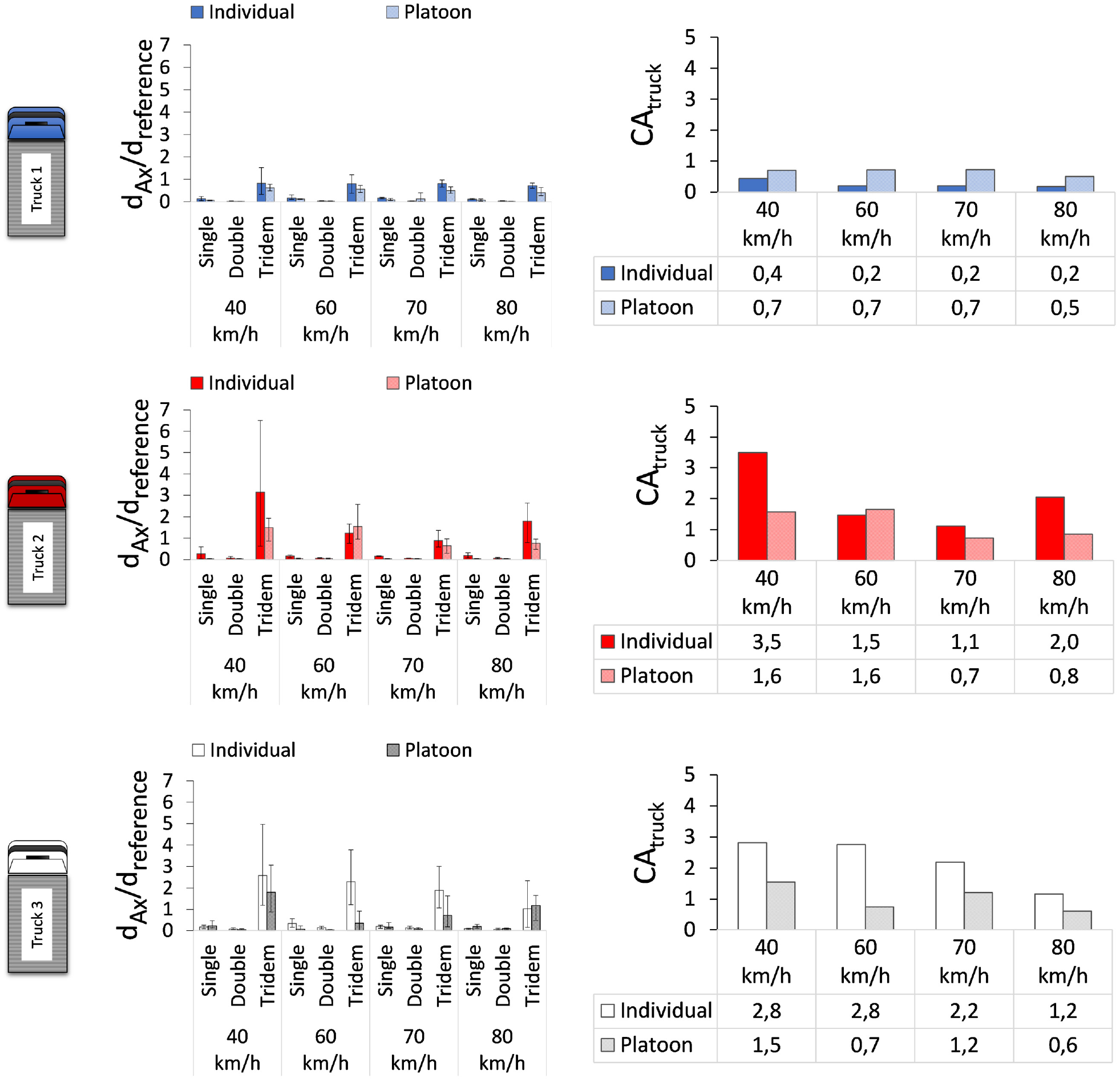
Values of fatigue damage induced by each truck axle (relatively to the reference 130 kN axle), and
Summer Campaign
Figure 9 shows, for the summer campaign, the values of the parameters of the fatigue model of Homsi, for each truck and each axle, under both individual and platoon load configurations. Understanding that the positive or negative sign of each coefficient in the multi-axle fatigue equation indicates an increase or decrease in the number of cycles to fatigue, the results indicate that (1) platoons increase the maximum transversal strain values and (2) platoons also decrease in general the positive normalized area under the transversal strain signal. As a result, the platoon configuration reduces the number of cycles to fatigue, for the test conditions present in summer (temperatures between about 25°C and 27°C).

Fatigue parameters of the strain signals for the summer campaign.
Figure 10 shows the damage ratios of each axle, relative to the reference 130 kN axle. The highest damage values are obtained for the tridem axles, in the platoon truck configuration. The aggressiveness values of each truck,
In the individual truck configuration, the
In the platoon configuration, contrary to what was observed in the winter campaign, the
Additionally, increasing the lateral wander significantly reduces the aggressiveness (
In conclusion, for the warm summer temperatures (here about 27°C), platooning clearly increases fatigue damage compared with individual trucks. The values are between 28% and 376% higher for a wandering equal to 20 cm at all the test speeds.

Values of fatigue damage per axle and
Fatigue Life for the Different Traffic Scenarios
Using the
The first scenario, corresponding to a traffic distribution with 100% of platoons during the winter and no platoons during the summer, does not change the remaining fatigue life of the pavement structure.
In contrast, scenarios 2 and 3, corresponding to a traffic distribution with 100% of platoons just during summer or all through the year, significantly decrease the remaining fatigue life, with a maximum reduction of -68% at 70 km/h.
However, as shown in scenario 4, this effect can be reduced by increasing the lateral wander of the platoons, which is also supported by other results from the literature (11, 12, 18, 20–22, 24).
Considering that these measurements were done with fully loaded trucks, and assuming 100% platoon penetration, the negative impact of platoons could be reduced by varying these parameters, as well as by changing the inter-truck distances ( 11 ), the truck speeds, and also the time of the day ( 23 ) at which platoons are allowed to circulate. It is important to add that the CA values determined in this study are only valid for this pavement structure. Therefore, for different conditions, the corresponding values should be appropriately calibrated.
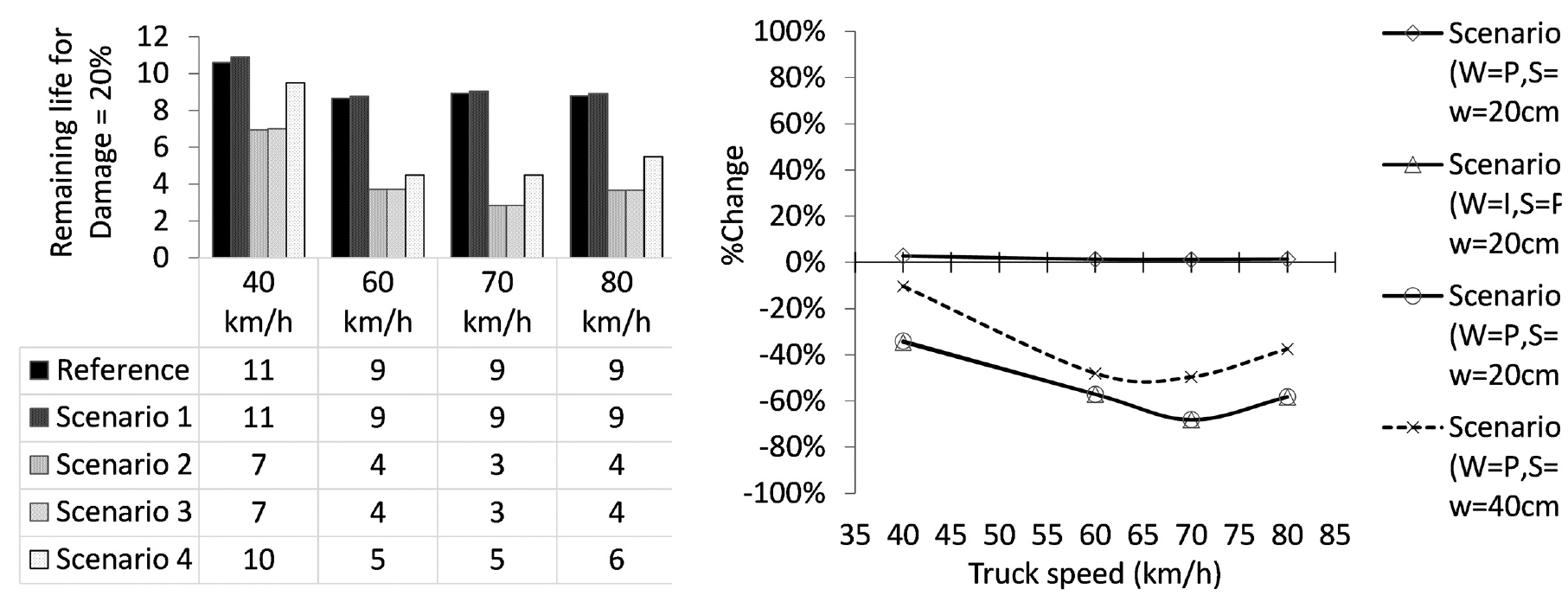
Calculated pavement fatigue lives, for 20% of damage, for different platoon traffic scenarios.
Conclusions
This paper presents the results of a study on the effect of platoons on the fatigue life predictions of a European pavement test section. The test protocol and the data treatment proposed in this document are based on an original fatigue model for multiple axle loads, which considers the maximum tensile strain, the number of peaks of the strain signal, the area, and the duration of the strain signal. This approach was applied to strain signals measured by strain gauges installed in an experimental pavement section but can also be used with strain signals obtained by modeling. The following conclusions can be drawn from this study:
The strain measurements performed on the pavement structure, under five-axle semitrailer truck loading, indicated that at the bottom of the asphalt layers, the transversal strains were significantly higher than the longitudinal strains. Strain accumulation effects were also more important for transversal strains, especially at high temperatures (during the summer test campaign).
With the fatigue model used, which considers the shape of the strain signals, it was clearly shown that for the same loading conditions (same axle loads, speed, and lateral wander), the fatigue damage produced by platoons (compared with single trucks) varies significantly with temperature. At low temperatures (around 10°C), there was no difference between the damage induced by individual trucks and by platoons. However, at higher temperatures (around 27°C), the damage induced by platoons was significantly higher because of strain accumulation under multiple loads.
Despite the good predictions obtained with the new fatigue model, further research should be carried out, based on laboratory studies, to consider better the most significant effects related to platoon loadings: influence of rest periods and accumulated deformations.
For the case study presented in this document, truck platoon configurations showed considerably higher fatigue life reductions during summer. In this sense, limiting platooning during this season, or potentially during hours with the highest temperatures, could be a possible management strategy to limit/avoid early pavement fatigue damage. It was also found that the lateral wandering of the trucks has a significant effect and that increasing the lateral wandering could also help limit fatigue damage.
Following these results, the ENSEMBLE work package related to infrastructure is currently developing further research studies based on parametric studies with a pavement modeling program. The objective is to make a more general analysis of the effects of: (1) traffic distribution through the year and by time of day, (2) percentage of platoon penetration in the daily and annual traffic, (3) level of loading of the trucks, number of trucks in platoon configuration, (4) lateral wandering, (5) inter-truck distances, and (6) representative existing pavement structures. From these simulations, recommendations to limit the impact of platoons will be proposed.
Footnotes
Author Contributions
The authors confirm contribution to the paper as follows: study conception and design: P. Leiva-Padilla, J. Blanc, F. Hammoum, P. Hornych; data collection: J. Blanc, A. Salgado; analysis and interpretation of results: P. Leiva-Padilla, J. Blanc, F. Hammoum, P. Hornych; draft manuscript preparation: P. Leiva-Padilla. All authors reviewed the results and approved the final version of the manuscript.
Declaration of Conflicting Interests
The author(s) declared no potential conflicts of interest with respect to the research, authorship, and/or publication of this article.
Funding
The author(s) disclosed receipt of the following financial support for the research, authorship, and/or publication of this article: The research presented in this paper is part of the European project ENSEMBLE, which is co-funded by the EU under the Horizon2020 Research and Innovation Program, grant agreement No 769115.
