



Abstract
There is no doubt that technological changes and globalization have increased the importance of the logistics industry. The effectiveness of logistics services is directly related to expanding the trade network between countries, increasing foreign direct investments and growing the economy. The World Bank evaluates the logistics competitiveness of countries by using its Logistics Performance Index. However, logistics performance evaluation includes multiple criteria, and a realistic assessment process, such as the multi-criteria decision-making (MCDM) technique, is needed. In this study, a comparative analysis of hybrid MCDM methods is utilized to evaluate the logistics performance of 160 Organisation for Economic Co-operation and Development countries by using a group decision-making approach. In the first step, the importance levels of the logistics performance criteria were calculated. Then, the logistics performances of the countries were analyzed. In the last step, the Borda count method was implemented for the results of different hybrid MCDM methods to give final rankings.
Keywords
The logistics industry has an important role in today’s competitive business environment because of the importance of time, quality, and cost in the success of supply chain management. In recent years, logistics activities driven by production and consumption have become the backbone of the global economy ( 1 ). The quality and productivity of logistics activities facilitate international trade and play a crucial role in the growth and development of a country’s economy. Moreover, in most countries, the logistics industry has a significant share of the gross domestic product at the national level. For example, in the United States, the logistics industry accounts for about 8% of the annual domestic product ( 2 ).
In most research, a logistics performance index (LPI) is derived from a standardized questionnaire which is generally conducted online. Principal component analysis is used to combine data for six different criteria into a single index. These criteria are “logistics quality and competence,”“international shipments,”“customs, infrastructure,”“tracking and tracing,” and “timeliness.” Experts assign a value from 1 to 5 (worst performance to best performance) to each of the criteria in the survey. LPI consists of a model in which each expert scores different countries by using these six criteria. In this model, the weights of the criteria are considered equal ( 3 ). But in reality, these criteria weights are not equal. This situation differs according to the importance level of the criteria.
Logistics performance evaluation includes multiple conflicting criteria, and there is a need for approaches that include multi-criteria decision-making (MCDM) methods. MCDM is a concept that enables the selection of the most suitable alternative among predetermined alternatives in cases of many conflicting criteria ( 4 ). MCDM methods classified under conventional and fuzzy environments are utilized to effectively enumerate the alternatives. It is known that conventional MCDM methods may be insufficient to deal with the imprecise nature of linguistic assessments. However, it is not always possible to assign exact numerical values to evaluate alternatives in the real world, and this is accompanied by uncertainty and ambiguity. In this case, the use of linguistic variables can help decision-makers (DMs) properly assess MCDM problems. Therefore, MCDM methods are combined with fuzzy sets to deal with uncertainty in the decision-making process, for providing more concrete results.
Recently, Pythagorean fuzzy sets (PFSs) have emerged as a tool effective in describing the uncertainty of MCDM problems ( 5 ). PFSs are a powerful tool for addressing uncertainty, ambiguity, and inaccuracy in the decision-making process ( 6 ). Although many studies on the evaluation and applications of LPI have been published so far, no attention has been paid to studies involving MCDM methods under Pythagorean fuzzy environments as far as the authors know. In this context, this study aims to develop an evaluation model that can be handled under both traditional and fuzzy environments to analyze the logistics performance of countries. The following objectives have been determined for the evaluation model to be developed:
To determine the weights of the LPI under the relative traditional and fuzzy environments;
To obtain a ranking by logistics performance among the evaluated countries;
To provide managerial implications about the model to be developed.
To achieve these goals, LPI criteria have been evaluated in this research based on both traditional and different fuzzy environments. Criteria weights were calculated by applying traditional analytic hierarchy process (AHP), Buckley’s fuzzy AHP (FAHP) ( 7 ), and Pythagorean fuzzy AHP (PFAHP) methods. The ranking and selection of countries were made using three common MCDM methods—the technique for order of preference by similarity to ideal solution (TOPSIS), vise kriterijumska optimizacija i kompromisno resenje (VIKOR), and combinative distance-based assessment (CODAS). In the last step, the Borda count method (BCM) was used for final score evaluations.
The remainder of this work is presented as follows. The next section provides a detailed literature review of the methods used in evaluating countries’ logistics performance. The third section covers the different MCDM methods applied in this study. The implementation of the proposed evaluation model is presented in the fourth section for 2018 data. The managerial implications of the proposed model are discussed in the fifth section.
Literature Research
While studies dealing with logistics performance mainly focus on company-level benchmarking, the evaluation of LPI is one of the macro-level research areas. In this section, studies used to compare the LPI of countries are presented.
Ekici et al. ( 8 ) analyzed the relationship between logistics performance and competitiveness at the national level. They investigated the logistics performance of countries by integrating the artificial neural network (ANN) and the cumulative belief degrees (CBD) approach. Çakır ( 9 ) combined Peters’ fuzzy linear regression (FLR) model with criteria importance through intercriteria correlation (CRITIC), together with simple additive weighting (SAW) methods, to measure the logistics performance of Organisation for Economic Co-operation and Development (OECD) countries according to the 2014 data. Martí et al. ( 10 ) proposed three models based on data envelopment analysis (DEA) to compare the logistics performance of countries. Liu et al. ( 1 ) discussed logistics performance and environmental sustainability issues in the context of international green supply chain management using data from 42 Asian countries between 2007 and 2016.
Rezaei et al. ( 11 ) surveyed 107 participants, and, as a result of the implementation of the best worst method (BWM), infrastructure was found to be the most important criterion. The weights found were multiplied by the values in the World Bank’s 2016 LPI report to create a weighted LPI and the scores of the weighted LPI and the 2016 LPI report were compared. Ozmen ( 12 ) analyzed the logistics competitiveness of OECD countries with the data from 2016 and, as a result, logistics quality and competence was determined as the most important factor. Lu et al. ( 13 ) presented an environmental LPI to evaluate the overall performance in green transport and logistics practices of 112 countries.
According to the research of Ulutas and Karakoy ( 14 ), LPI data of European Union (EU) countries were examined with stepwise weight assessment ratio analysis (SWARA), CRITIC, and proximity indexed value (PIV) methods. From that, international shipments was obtained as the leading criterion using objective weights (CRITIC), and infrastructure was determined as the leading criterion using subjective weights (SWARA). In the research, LPI rankings of EU countries were obtained by the PIV method. Rashidi and Cullinane ( 15 ) proposed a new index of the sustainable logistics performance of OECD countries, taking into account economic, environmental, and social criteria by using a DEA-based model. Karaman et al. ( 16 ) tested the link between green logistics performance and the presence and number of sustainability reports in the logistics sector with logistic regression analysis using data collected from 2007 to 2016 for 117 countries. Mercangoz et al. ( 17 ) ranked 28 EU countries and five candidate EU countries according to their logistics performance scores using the complex proportional assessment of alternatives with grey relations (COPRAS-G) method. Yıldırım and Adiguzel ( 3 ) analyzed the logistics performance of OECD countries using FAHP and grey additive ratio assessment (ARAS-G) methods between 2010 to 2018 and compared the current LPI rankings. According to the literature review and the recent studies, a few researchers have used 2018 data for LPI assessment ( 18 ). Other researches are generally worked with a limited number of countries such as the EU countries.
MCDM methods are widely used as approaches for the evaluation of logistics performance in recent research work ( 19 – 21 ). Based on the literature review, it can be said that there has been an increasing interest in LPI evaluation using MCDM approaches in recent years. However, because fuzzy set theory and its extensions are more successful than classical sets in dealing with DMs’ judgments, it is unfortunate to observe that most researchers have not used fuzzy set theory to resolve the uncertainty and incomplete information of DMs in LPI assessment. Generally, two MCDM methods are integrated into the recently proposed approaches. The rankings between multiple integrated methods have not been compared so far. On the other hand, no studies use the PFAHP method described in the literature and apply it as an integrated MCDM method under different fuzzy environments.
Proposed LPI Assessment Approaches
In this study, AHP-TOPSIS, AHP-VIKOR, and AHP-CODAS methods are examined under both classical and different fuzzy environments, and a group decision-making (GDM) approach is proposed to give an LPI assessment approach. The evaluation matrix of each decision-maker is obtained based on linguistic comparisons, and then, using fuzzy numbers, the opinions of DMs are determined. In the first step, AHP, FAHP, and PFAHP methods are used to calculate the relative weights of the evaluation criteria. Then, integrated approaches (AHP-TOPSIS, AHP-VIKOR, FAHP-CODAS, FAHP-TOPSIS, FAHP-VIKOR, PFAHP-CODAS, PFAHP-TOPSIS, PFAHP-VIKOR, and AHP-CODAS) are used to evaluate each country. Finally, countries are compared, using different integrated methods, and BCM is used for evaluating the final ranks. The representation of the proposed methodology is given in Figure 1. The methods used in the research and purpose of usage are given in Table 1. Also, brief algorithms of used methodologies are given in the following subsections.
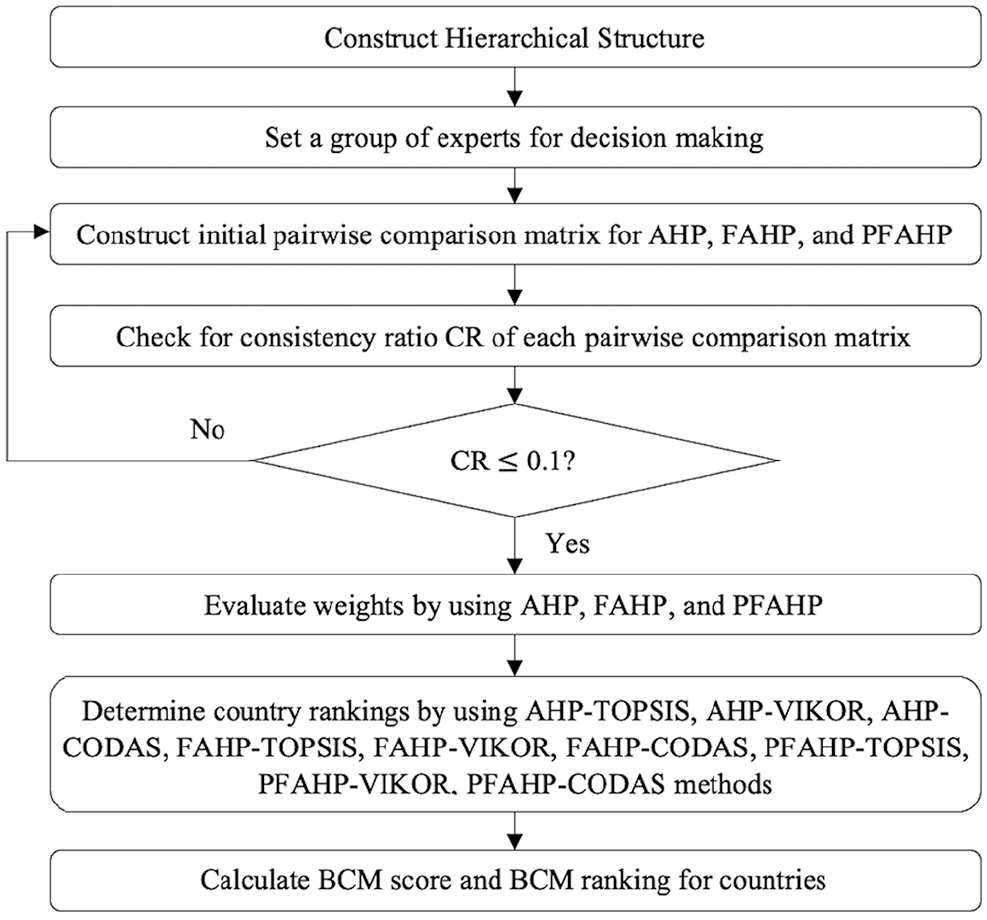
Steps of the proposed logistics performance index assessment approach.
Methods and Purpose of Usage
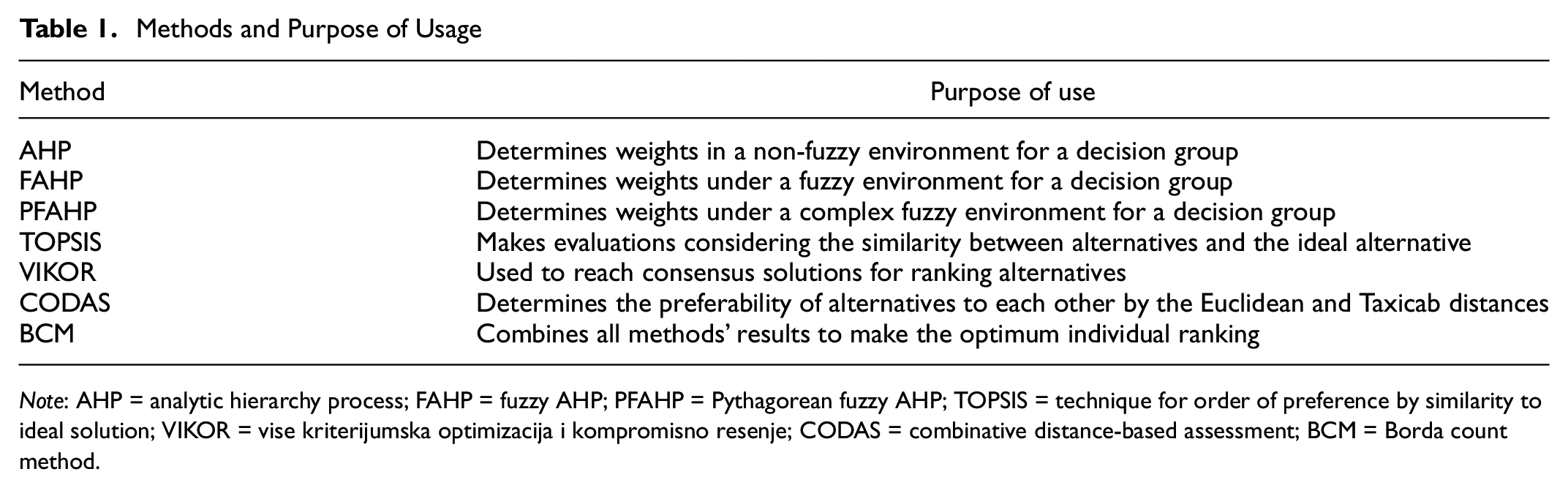
Note: AHP = analytic hierarchy process; FAHP = fuzzy AHP; PFAHP = Pythagorean fuzzy AHP; TOPSIS = technique for order of preference by similarity to ideal solution; VIKOR = vise kriterijumska optimizacija i kompromisno resenje; CODAS = combinative distance-based assessment; BCM = Borda count method.
AHP Method
The AHP method can be represented as follows:
Step 1: Create the decision-making group
Step 2: Determine the criteria
Step 3: Create the decision tree
Step 4: Create the pairwise comparison matrices. The linguistic terms and importance weights for AHP are given in ( 22 ).
Step 5: Calculate and check the consistency ratio (CR must be smaller or equal to 0.1).
Step 6: Determine the criteria weights by using a GDM approach.
FAHP Method
The FAHP method of Buckley ( 7 ) consists of the following steps:
PFAHP Method
The steps of interval-valued PFAHP are presented as follows:
Step 1: Construct the pairwise comparison matrix
Step 2: Calculate the difference matrices
Step 3: Compute the interval multiplicative matrix
Step 4: Calculate the determinacy value
Step 5: Multiply the determinacy degrees by the
Step 6: Normalize the priority weights
TOPSIS Method
The TOPSIS method is an MCDM method used by Hwang and Yoon ( 24 ) which considers the similarity between alternatives and the ideal alternative. The steps of the fuzzy TOPSIS method are briefly explained below:
Step 1: Define evaluation criteria and alternatives according to the objective.
Step 2: Form a decision matrix with the opinions of the DMs.
Step 3: Create a normalized decision matrix.
Step 4: Calculate the weighted normalized matrix by multiplying the weights of the evaluation criteria by the normalized decision matrix.
Step 5: Calculate the positive ideal solution (PIS) and negative ideal solution (NIS) values for each criterion.
Step 6: Calculate the closeness coefficient (
VIKOR Method
The VIKOR method is an MCDM method used to reach consensus solutions in ranking the alternatives. The basic steps of the VIKOR method are presented below:
Step 1: Create a decision matrix is created for alternatives.
Step 2: Determine the best and worst values of all criteria.
Step 3: Calculate the weighted and normalized Manhattan distance (
Step 4: Calculate maximum group utility (v) value. Here, 1 – v also represents a minimum of individual regret.
Step 5: Calculate the compromise value (
Step 6: Determine the alternative with the minimum
CODAS Method
The steps of the CODAS method first presented by Keshavarz Ghorabaee et al. ( 25 ) are as follows:
Step 1: Construct the decision matrix for alternatives.
Step 2: Normalize the decision matrix.
Step 3: Calculate the weighted normalized decision matrix.
Step 4: Determine NIS values.
Step 5: Compute Euclidean and Taxicab distances of alternatives from the NIS.
Step 6: Determine the relative assessment matrix.
Step 7: Calculate the assessment score of each alternative.
Step 8: Rank evaluation scores for each alternative in descending order.
Borda Count Method
BCM was proposed by the French scientist Jean Charles de Borda in 1781 in Paris. It is considered an important step in the development of innovative electoral systems and general voting theory. BCM is a social selection method that is generally used for GDM problems. BCM is an approach that can generate the optimum individual ranking. It has advantages such as easy implementation and tolerance of unnecessary classifications and mistakes ( 26 ).
Assume that there are

where B(i) is the Borda score and
Application and Results
In this section, the performance of the proposed LPI assessment approach is investigated, using 2018 LPI data (all data used in this study were acquired from World Bank, 2019 (28)).
In 2007 the World Bank (WB) proposed the global LPI, which is the first comprehensive assessment index for the level of development of logistics performance in various countries, to measure the logistics performance of countries. Since 2007, it has been conducting a global LPI survey every 2 years. LPI is an interactive benchmark tool created to help countries identify the challenges and opportunities they face in their logistics performance. This index has been calculated for nearly 160 countries within a few years. Each country’s performance is calculated according to six main criteria, for which explanations are given below.
Logistics quality and competence (C1): Competence and quality of logistics services—shipping, forwarder, and customs brokers
International shipments (C2): Ease of arranging competitively priced shipments to markets
Customs (C3): Efficiency of customs clearance processes, such as the speed, simplicity, and predictability of formalities in customs procedures
Infrastructure (C4): Quality of infrastructure related to trade and transportation such as ports, railways, highways, information technology
Tracking and tracing (C5): Ability to track and trace shipments during shipping to market
Timeliness (C6): The timing of shipments arriving at their destination within the planned or expected delivery time
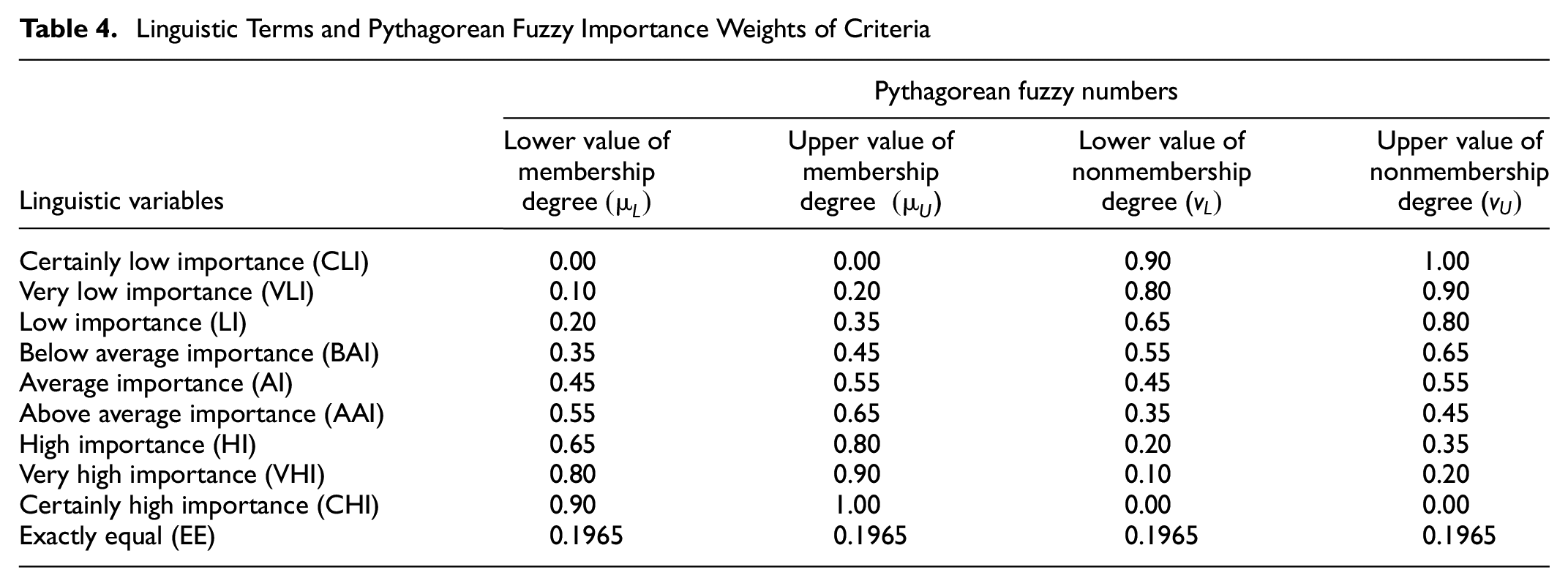
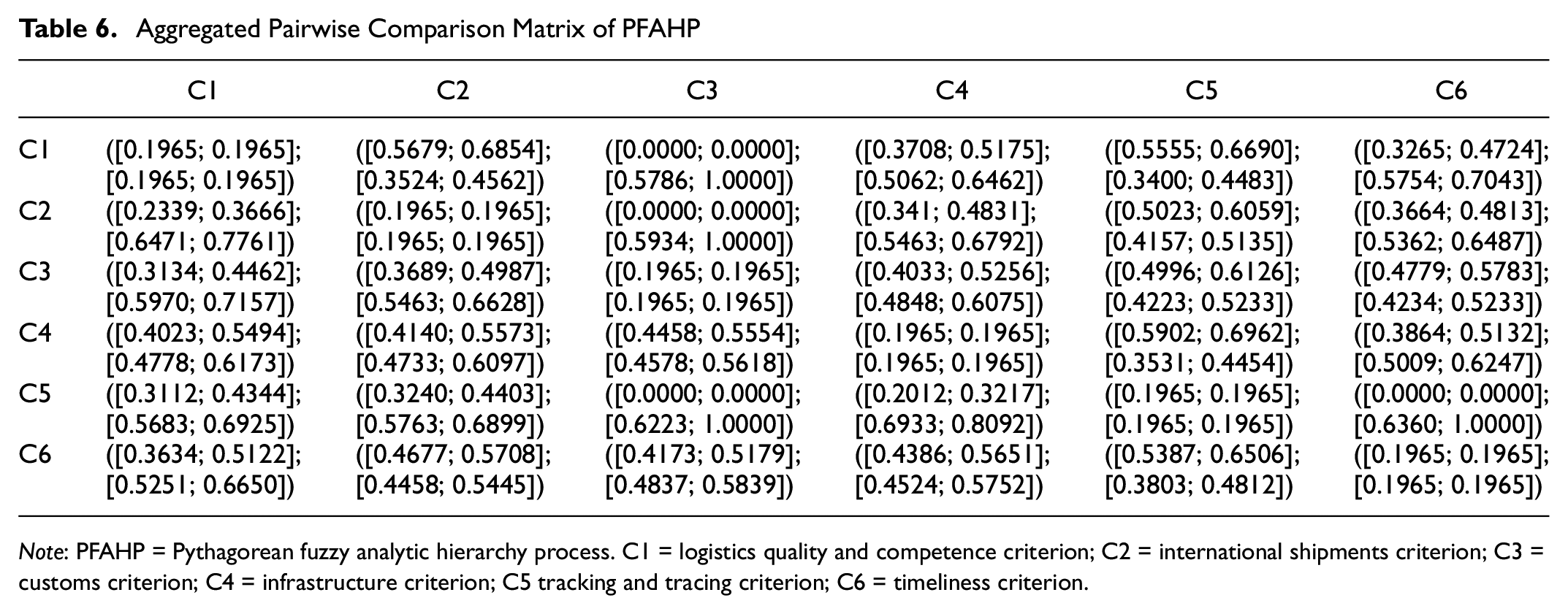
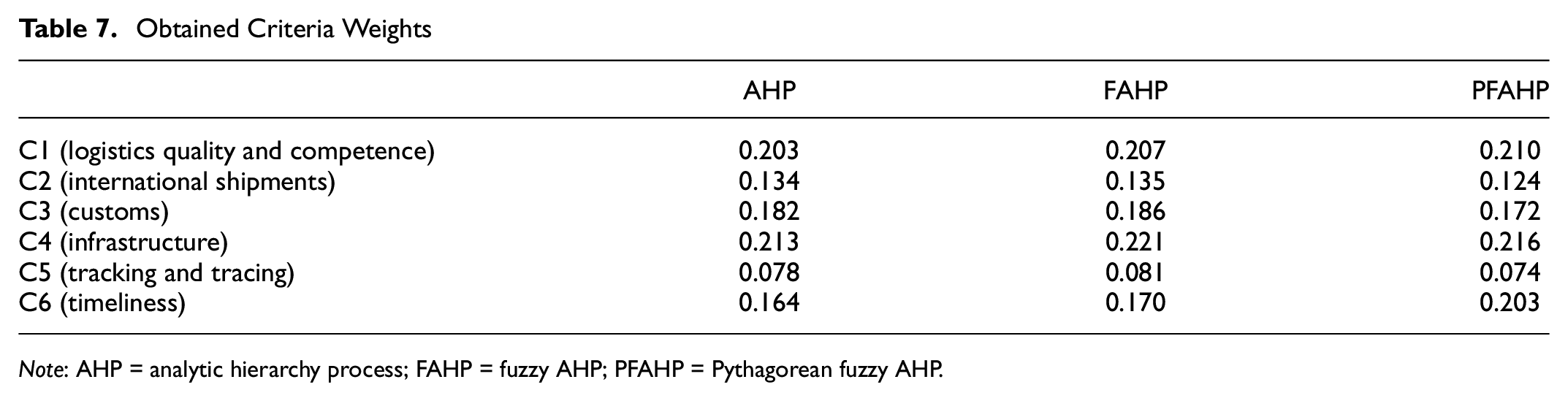
The proposed LPI approach is based on a survey of experts in the field. For this study, five DMs who are experts in their fields (DM1, DM2, DM3, DM4, DM5) were invited to submit their opinions in respect of the LPI evaluation criteria. Two academicians, of whom one has expertise in international trade and the other in supply chain management, one supply chain director, one logistic specialist, and one procurement and logistics analyst were invited to a meeting. At the meeting, experts compared the criteria by using the linguistic scale given in Table 4. The criteria were compared in pairs. Then, the consistency ratios of the pairwise comparison matrices were computed and the consistency ratios checked (for whether they were equal to or lower than 0.1). Tables 2 to 4 show the linguistic variables used by the DMs in the pairwise comparisons. These linguistic comparisons were converted to the corresponding crisp numbers, fuzzy numbers, and interval-valued Pythagorean fuzzy numbers. Pairwise linguistic comparisons of the DMs are given in Table 5. In the first stage, the consistency ratios of the pairwise comparison matrices were calculated for each decision-maker. The linguistic variables given in Table 2 were matched with the corresponding crisp numbers and all comparison matrices were found to be consistent (equal to or lower than 0.1). Then, the aggregated pairwise comparison matrices of AHP, FAHP, and PFAHP were obtained by using GDM. The initial matrix of PFAHP is presented in Table 6. After that, the weight calculation procedure using AHP, FAHP, and PFAHP was applied. As a result, obtained criteria weights are presented in Table 7.
Linguistic Terms and Importance Weights of Criteria
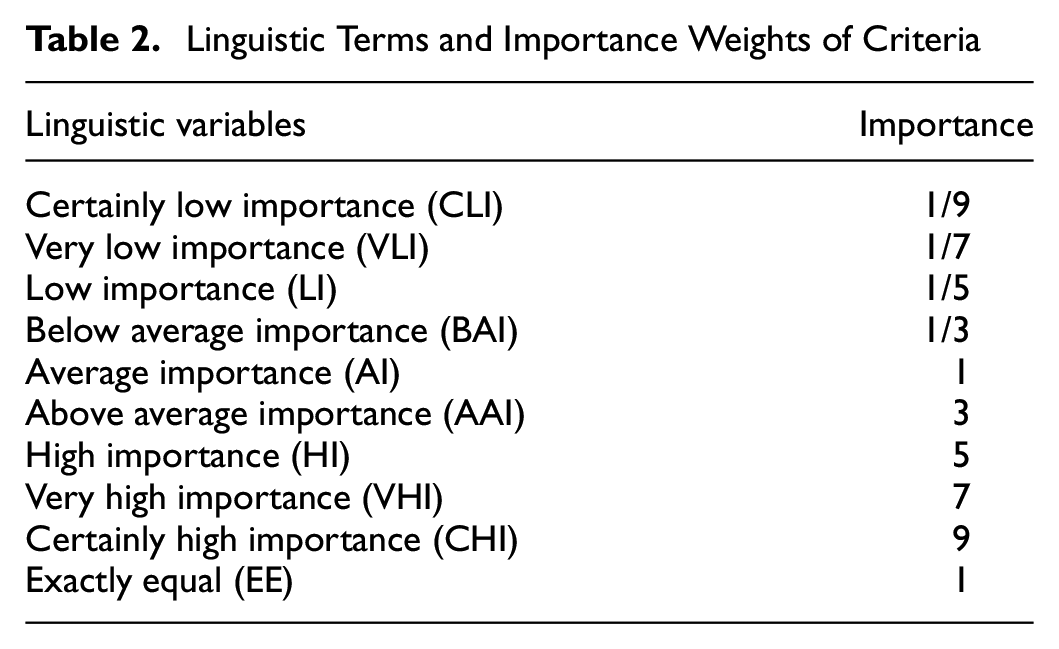
Buckley’s Linguistic Terms for Importance Weights of Criteria
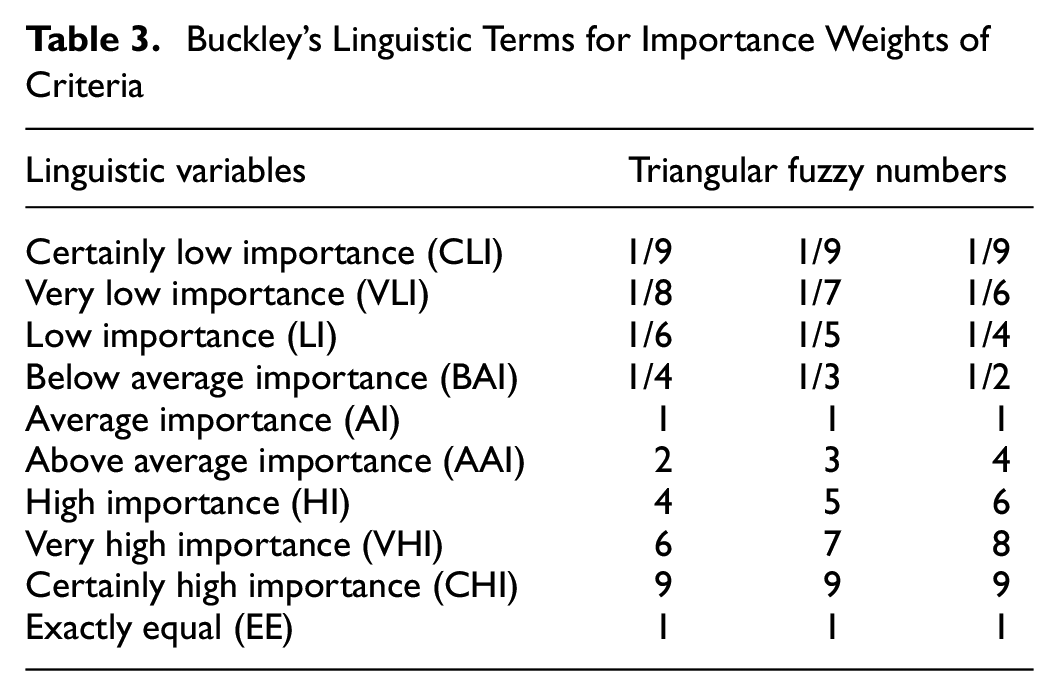
Linguistic Terms and Pythagorean Fuzzy Importance Weights of Criteria
Linguistic Pairwise Comparison Matrices for DMs
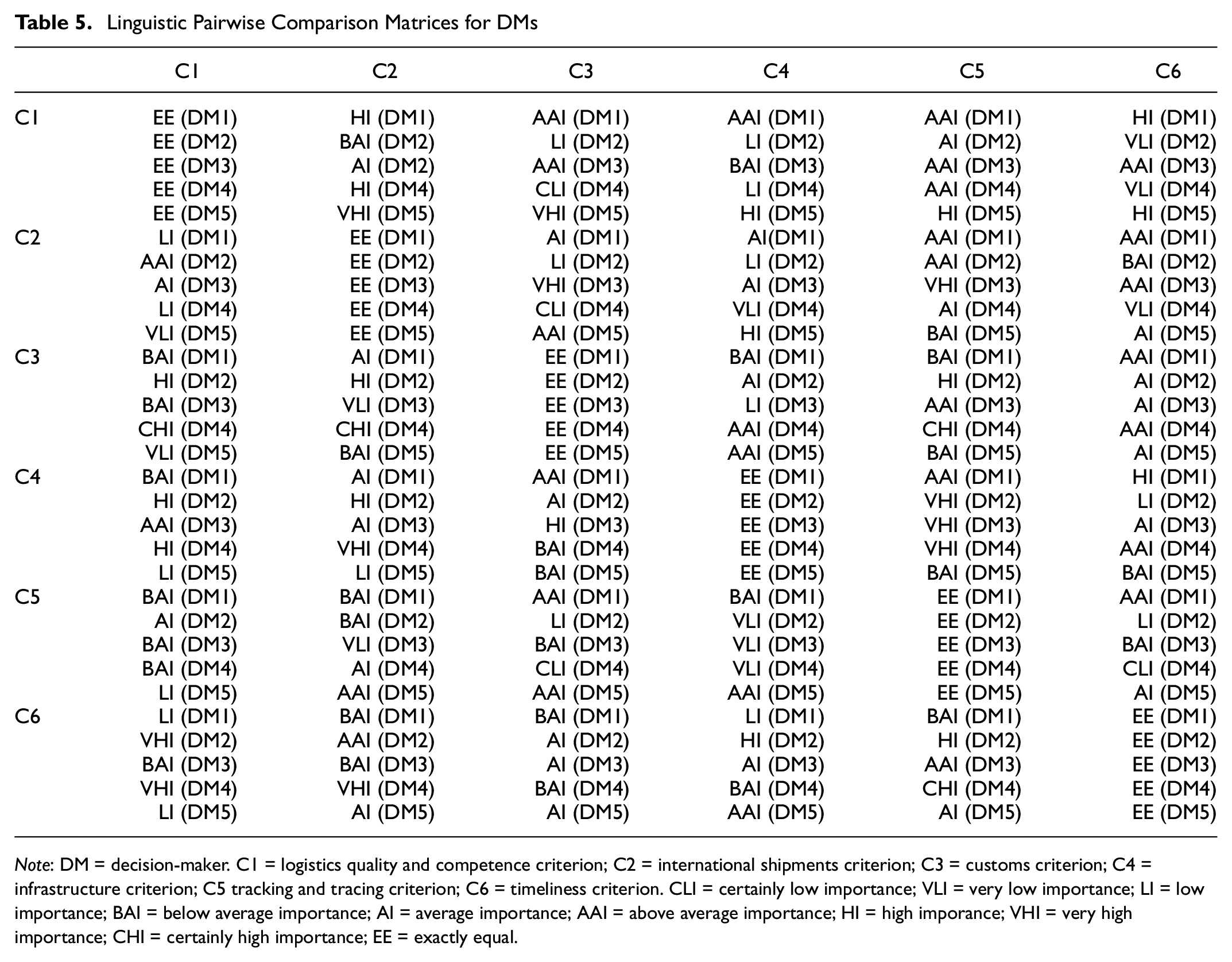
Note: DM = decision-maker. C1 = logistics quality and competence criterion; C2 = international shipments criterion; C3 = customs criterion; C4 = infrastructure criterion; C5 tracking and tracing criterion; C6 = timeliness criterion. CLI = certainly low importance; VLI = very low importance; LI = low importance; BAI = below average importance; AI = average importance; AAI = above average importance; HI = high imporance; VHI = very high importance; CHI = certainly high importance; EE = exactly equal.
Aggregated Pairwise Comparison Matrix of PFAHP
Note: PFAHP = Pythagorean fuzzy analytic hierarchy process. C1 = logistics quality and competence criterion; C2 = international shipments criterion; C3 = customs criterion; C4 = infrastructure criterion; C5 tracking and tracing criterion; C6 = timeliness criterion.
Obtained Criteria Weights
Note: AHP = analytic hierarchy process; FAHP = fuzzy AHP; PFAHP = Pythagorean fuzzy AHP.
In summary, five experts expressed their judgments, which are given in Table 5, by using the scale given in Table 4. After that, the linguistic evaluations were converted to Pythagorean fuzzy numbers. Finally, DMs’ subjective judgments were aggregated toward a compromised pairwise matrix. Table 6 represents the aggregated pairwise comparison matrix for criteria.
Accordingly, while the “infrastructure” (C4) criterion (0.2162) emerged as the most important feature, the “tracking and tracing” (C5) criterion (0.0740) emerged as the least important for the PFAHP method. After obtaining the criterion weights, TOPSIS, VIKOR, and CODAS methods were applied to reach the ranking of countries. All rankings are shown in Table S1.
Germany is ranked first by all methods. The countries are ranked in an order from best to worst in Table S1. In the TOPSIS method, higher values are better. On the other hand, lower values are better in the VIKOR method.
In the CODAS method, Euclidean and Taxicab distances of alternatives from the NIS were calculated. Then, a relative assessment matrix was constructed. Finally, the assessment scores of each alternative were computed and ranked in descending order. The assessment scores of each alternative were based on these distances. Thus, negative signs can be reached in the CODAS method. To demonstrate the validity and stability of the results, BCM ranks and WB’s 2018 LPI ranks were compared.
Discussion and Conclusion
The logistics sector has an important role in the growth and development of countries because it includes transportation, customs procedures, freight transportation, inventory, and storage. The LPI is a tool that was developed to help countries compare their logistics performance and identify opportunities for countries that could benefit. The high quality of logistics infrastructure and services has resulted in increased foreign direct investment (Blyde and Molina) ( 29 ). Businesses with access to high-quality and cost-effective logistics capabilities can improve their performance if the quality of the country’s logistics services changes with the infrastructure (Kabak et al.) ( 30 ).
This study applies a novel integrated approach to the LPI assessment problem using hybrid MCDM methods in different fuzzy environments. The weights of the LPI evaluation criteria were obtained with various AHP methods based on expert opinions. In traditional MCDM approaches, the weights of criteria are determined with crisp numbers. On the other hand, fuzzy approaches allow for the representation of linguistic ambiguity in the weighting process. In the proposed approach, fuzzy and non-fuzzy methods were combined for the weight determination process. As a result, more consistent results were obtained.
In this paper, the rankings of the countries were determined by using TOPSIS, VIKOR, and CODAS methods. The weights of the criteria and the steps of the methods used could affect the rankings. Each methodology follows a different set of procedures and employs a different method of evaluation. Therefore, three AHP methods and three ranking methods were used. In the final step, the combined results of ranking algorithms were evaluated using the BCM approach, and the results were compared with WB’s 2018 LPI.
The global ranking of 160 OECD countries is shown in Table S1. According to the table, the countries with the highest rankings are Germany, Sweden, the Netherlands, Japan, Austria, Belgium, Singapore, United Kingdom, Denmark, and Hong Kong SAR (Special Administrative Region) China, respectively. On the other hand, the LPI is lowest in Haiti, Libya, Iraq, Zimbabwe, Eritrea, Burundi, Niger, Sierra Leone, Angola, and Afghanistan. As shown in Table S1, the BCM approach has results very similar to WB’s 2018 LPI Rank.
For the LPI rankings, the WB assumes that all six criteria are equally important. However, the effects of these criteria on logistics performance may differ from one another. As stated in the introduction, criteria weights vary depending on their importance level, which has an impact on the rankings. According to the results of this study, C4 (infrastructure) and C1 (logistics quality and competence) are the most important and leading criteria. On the other hand, C5 (tracking and tracing) is the least important criterion. The disparity between the proposed method and WB’s rankings is because of this.
Another contribution of the study is that it gives countries that want to improve their logistics performance an advantage. These countries can prioritize their investments based on the proposed recommendations. As a result, the recommendations provide an economic advantage in the process of performance improvement.
Supplemental Material
sj-docx-1-trr-10.1177_03611981221113314 – Supplemental material for Novel Integrated Hybrid Multi-Criteria Decision-Making Approach for Logistics Performance Index
Supplemental material, sj-docx-1-trr-10.1177_03611981221113314 for Novel Integrated Hybrid Multi-Criteria Decision-Making Approach for Logistics Performance Index by Ahmet Çalık, Babek Erdebilli and Yavuz Selim Özdemir in Transportation Research Record
Footnotes
Author Contributions
The authors confirm contribution to the paper as follows: study conception and design: Ahmet Çalık, Babek Erdebilli, Yavuz Selim Özdemir; data collection: Ahmet Çalık; analysis and interpretation of results: Ahmet Çalık, Babek Erdebilli, Yavuz Selim Özdemir; draft manuscript preparation: Yavuz Selim Özdemir. All authors reviewed the results and approved the final version of the manuscript.
Declaration of Conflicting Interests
The author(s) declared no potential conflicts of interest with respect to the research, authorship, and/or publication of this article.
Funding
The author(s) received no financial support for the research, authorship, and/or publication of this article.

Supplemental Material
Supplemental material for this article is available online.
References
Supplementary Material
Please find the following supplemental material available below.
For Open Access articles published under a Creative Commons License, all supplemental material carries the same license as the article it is associated with.
For non-Open Access articles published, all supplemental material carries a non-exclusive license, and permission requests for re-use of supplemental material or any part of supplemental material shall be sent directly to the copyright owner as specified in the copyright notice associated with the article.
