



Abstract
An examination was conducted on the correlation between burnout, job satisfaction, fatigue levels, and the demographic characteristics of yacht crew. In March 2023, a survey was administered to 81 yacht crew of various ratings operating in the South Aegean. The Maslach Burnout Inventory, Minnesota Satisfaction Questionnaire, and Piper Fatigue Scale were used in the study, and the subdimensions of these scales analyzed in detail in relation to the yacht crew. Low burnout levels, moderate emotional exhaustion, low depersonalization and a lack of personal accomplishment was found among participants. Job satisfaction was moderate, primarily influenced by internal factors. Overall fatigue levels were moderate, with varying subscale levels. Deckhands had higher burnout and fatigue levels, whereas able seamen had the highest job satisfaction. Statistically significant relationships were found between participant age and years of service and burnout; between job satisfaction, competence, and years of service; and between fatigue and marital status. A statistically significant relationship was found between crew burnout and their levels of job satisfaction and fatigue. Another finding of the research was that males had higher job satisfaction than females, however, male crew members reported higher levels of burnout and fatigue. Furthermore, since there is dense yacht traffic in the Aegean Sea, the high levels of fatigue among yacht crew in the region could be affecting the safety of commercial vessel navigation. Excluding captains, this study is the first to research job satisfaction, burnout, and fatigue levels among yacht crew.
Keywords
According to the World Tourism Organization, tourism is defined as the collection of activities that involve individuals traveling to and residing in locations outside of their usual environment for the purpose of leisure, business, or other objectives ( 1 ). Yacht tourism, in particular, is a growing industry in coastal regions of Mediterranean countries ( 2 ). The economic growth in Europe in the past 30 years has helped yacht tourism become important for holidays ( 3 ). As a form of recreational tourism, yacht tourism plays a significant role in the experience economy and has a positive impact on coastal regions, contributing significantly to the local economy. In Turkey, yachting is a rising trend and is popular among both foreigners and locals ( 4 ).
Yacht tourism is often compared with cruise tourism ( 5 ). Although the responsibilities of the cruise crew are predetermined and limited, those of the yacht crew are more flexible ( 6 ). The ratio of crew to passengers on yachts is approximately 1, depending on the yacht’s size and length. Therefore, yachts offer a more personalized and attentive service to guests compared with larger commercial cruise ships ( 7 ). Owing to the small size of yachts, customers and yacht crew are forced to share the same environment. However, to maintain privacy, passengers and crew are occupy different social and spatial interactions for their comfort.
The crew on ships and yachts work in confined spaces and are isolated from their social relationships on land. Seafarers are faced with various psychosocial stressors on the ship, and their capacity to deal with these stressors is limited in the confined space they work in ( 8 ). Despite advancements in safety regulations, shorter contract durations, and improved technology for communication with families, the shipping industry remains a challenging, high-stress, and high-risk occupation ( 9 – 14 ). Crew hierarchies and factors such as shift work have a direct impact on interpersonal relationships among crew members and also on their relationship with the ship, the surrounding ocean, and the home port they depart from or return to ( 15 , 16 ).
The job descriptions of the yacht crew according to the International Convention on Standards of Training, Certification and Watchkeeping for Seafarers (STCW) 1978 and the STCW-2010 amendments are as follows:
Yacht captain: A qualified person with the knowledge and skills to prepare the yacht for navigation, take passengers on board, approach and depart from shore, and oversee the maintenance and cleaning of the yacht’s interior and exterior.
Deckhand: A seafarer with the necessary qualifications according to Article II/5 of the Convention, accountable for maintaining and cleaning the yacht, boat, or ship.
Engineer: A qualified person with the appropriate qualifications according to Articles III/1, -2, or -3 of the Convention, with a license and knowledge of mechanics and electronics.
Chef: A crew member who plans meals, prepares and cooks food, and organizes kitchen work on ships and yachts.
Hostess/steward: Crew who provide service on yachts or passenger ships.
Cadet: Crew undergoing training to become seafarers, and are legally recognized as such by laws or regulations.
Electro-technical officer (ETO): A crew member with the necessary qualifications according to Article III/6 of the Convention. ETO maintains a wide variety of complex onboard electronic and electrical equipment on yachts.
In addition to the necessary qualifications and skills, yacht crew are expected to present themselves well at all times, ensure customer satisfaction, tidiness, be a friendly face, and possess a high proficiency in foreign languages. Yacht crew members face demanding challenges in both maritime and tourism aspects ( 17 ). Research on burnout, job satisfaction, and fatigue in this context is therefore crucial for the well-being of the crew ( 18 ) and the success of the yachting industry. Previous studies have highlighted the high workload, pressure to provide exceptional service, and potential negative effects of these on crew members’ well-being ( 19 ). Addressing these factors is essential for improving crew retention and creating a positive work environment ( 20 ). Understanding and managing burnout, job satisfaction, and fatigue will contribute to the industry’s sustainability.
Seafarers are reported to have low job satisfaction, and identifying the factors that might influence and enhance this requires research ( 21 ). Fatigue has been recognized as a major contributor to occupational- and maritime incidents alike, and is linked to serious health and safety consequences for seafarers ( 22 – 24 ). During high season, the intensity of yacht traffic in the South Aegean region increases ( 15 ). There are also heavily utilized shipping routes in this area that are used by commercial vessels ( 25 ). Olgaç and Bayazit analyzed data on maritime accidents in the Aegean Sea Turkish Search and Rescue Region ( 26 ). They undertook descriptive analyses of 576 maritime accidents that occurred in the region between 2001 and 2020. According to their analysis, the ship type with the highest number of accidents in the region is the yacht/cruise boat (n = 274). Fifty-nine people lost their lives in these yacht accidents. The authors stated that owing to its topography and high volume of vessel traffic, the Aegean Sea poses a risk for marine accidents. They also indicated that, as a peninsula country, Turkey has been experiencing annual growth in both private and commercial yacht activity; it is therefore not surprising that the accident rate of these vessels is increasing. The increase in levels of fatigue among yacht crews implies an increase in maritime accidents, resulting from the negative impact on navigation safety in the region. Burnout also poses a significant threat to professional sustainability (8,27,28). Thus, the study of burnout is a critical and sensitive issue for all stakeholders in the shipping industry. In this study, the effects of burnout, job satisfaction, and fatigue on yacht crew were analyzed in detail, and solutions presented. This study represents the first examination of the job satisfaction, burnout, and the fatigue levels of all yacht crew, except the captains.
Literature Review
The International Maritime Organization’s fatigue guidelines identify poor sleep quality and sleep deprivation resulting from disrupted circadian rhythms as the primary causes of fatigue ( 29 , 30 ). Ongoing international research on maritime accidents has shown that fatigue continues to be a major reason or correlative elements in a significant number of accidents that result in loss of life, environmental damage, and property damage ( 22 , 31 ). According to the results of a study by Akhtar and Utne, the likelihood of a ship with a fatigued crew running aground is 16% higher than that of a ship with nonfatigued crew ( 32 ).
In their study, Bal et al. aimed to determine the levels of fatigue among seafarers working on commercial ships and to identify the quantitative priorities of the factors contributing to fatigue using analytic hierarchy process methodology ( 33 ). They also collected lactate data from the participants via the lactate test (an unbiased technique for assessing fatigue) at distinct times and under realistic circumstances. This showed that sleep is central to the development of fatigue among seafarers. They also found that seafarers are usually drained and fatigue levels are high, especially while loading and discharging operations in ports.
Jepsen et al. provided a general overview of basic issues related to seafarer fatigue in their literature review; specifically, gathering information on fatigue risk, short- and long-term health and safety repercussions, and potential solutions for reducing fatigue at sea ( 22 ). They concluded that working on ships includes numerous fatigue-related risks and that these contribute to the onset of certain diseases, which are highly common among mariners, through the acute effects of cognitive impairment and through autonomic, immune, and metabolic pathways.
Österman and Hult presented the results of a study on how Swedish sailors cognize fatigue, anxiety, and excessive effort at work ( 34 ). The sample consisted of 1,309 participants who worked on commercial ships. A multiple regression model with adjusted effects was used to analyze the data (ordinary least squares regression). Employees in the catering department reported the highest levels of effort and fatigue.
According to Dohrmann and Leppin, comprehensive analyses and quality evaluations of all objective research on fatigue in seafarers were lacking ( 35 ). In response, they conducted a systematic review of scientific journal articles published between 1980 and 2016. They examined 19 of the 98 studies that met the criteria. Nights were found to be the most tiring: at the end of a shift or watch, fatigue levels were higher, and the 6-h watch scheme was the most strenuous. There was less focus on specific job requirements, specifically, the psychological and social working atmosphere, but they emphasized that pressure could be a major factor.
Burnout can lead to a lower quality and quantity of work in one’s professional life ( 36 ). Notwithstanding the duration of the vessel’s voyages or the rating of the crew member, all ship crews have limited social lives and are subjected to long-term solitude—as a result, burnout levels are high ( 37 ).
Oldenburg et al. aimed to investigate indicators of burnout syndrome among seafarers and administered the Maslach Burnout Inventory (MBI) and the emotional exhaustion subscale of the Epworth Sleepiness Scale to 251 seafarers working on commercial ships to assess job-related burnout and daytime sleepiness risks ( 8 ). They found that seafarers’ burnout risk was at a medium level. They additionally recommended extending sleep duration, avoiding long working hours, improving supervisor communication and management abilities, stress reduction from organizational tasks, and encouragement for cheaper telecommunications for communication with seafarers’ families to reduce EE among seafarers.
Chung et al. sought to examine the link between burnout and seafarers’ health and well-being, as well as the potential impact of burnout on safety ( 27 ). They proposed a theoretical framework in their articles to identify the explanatory connection between work stress, sleepiness, emotional regulation, burnout, and maritime events. They claim that personal and job-related burnout influence each other among seafarers, but only job-related burnout has a significant impact on events. They also emphasized that occupational stress and sleep conditions improve both personal and job-related burnout.
Uğurlu et al. investigated the relationship between occupational burnout levels and demographic characteristics among male Turkish seafarers working on commercial vessels in a study published in 2021 ( 37 ). The MBI was used by the researchers to assess burnout levels in 303 participants. The study aimed to gain a better understanding of the factors that may contribute to burnout among this specific population. They discovered that seafarers’ demographic characteristics had only a slight effect on job burnout.
Turan et al. studied the impact of work–family conflicts (WFC) on job satisfaction among prominent stakeholders in the maritime sector ( 38 ). They analyzed data collected from 372 participants working on commercial ships using structural equation modeling (SEM) and found that burnout had a moderating effect on work motivation. This suggests that WFC plays a critical role in the modeling of burnout and job satisfaction among those working in the maritime industry.
Job satisfaction, a widely studied concept in organizational behavior research, is typically conceptualized as an emotional variable arising from an examination of a person’s work experience ( 39 ). A satisfied worker will perform better than an unsatisfied colleague ( 40 ). According to research, a satisfied employee tends to have lower error rates, is more productive, and is more likely to stay with the organization ( 41 – 44 ). In parallel, the relationship between seafarers’ job satisfaction and their intention to disengage or continue working has also been supported by empirical evidence ( 45 , 46 ).
Slišković and Penezić conducted an investigation to assess the extent and sources of job satisfaction and dissatisfaction among Croatian seafarers who occupy different roles on cargo ships ( 11 ). The study included 530 participants, and the researchers used a survey to collect information on job satisfaction and dissatisfaction. The results of their study showed that, on average, the participants expressed the highest level of satisfaction with their compensation and the lowest level of satisfaction with the organizational structure of work on the ship.
In their article, Österman and Hult presented the results of a survey that investigated how Swedish seafarers perceived their own levels of work-related fatigue, stress, and overexertion ( 34 ). The material consists of 1309 participants, resulting from a random selection procedure. They applied multiple regression analysis (OLS regression), which allowed for adjusted effects. The highest levels of effort were reported by employees in the food service department, positions not usually associated with a high administrative burden.
Toz et al. applied the MBI’s emotional exhaustion approach to investigate burnout levels among 42 Turkish yacht captains, evaluating the risks of job-related burnout. The study revealed low levels of emotional exhaustion and cynicism among yacht captains in general ( 47 ).
In a study examining the key determinants of job satisfaction and -performance among seafarers, Yuen et al. administered surveys to 116 ship officers working on commercial vessels and analyzed the resulting data using SEM ( 46 ). According to their findings, job satisfaction was significantly related to job performance among seafarers. They also discovered that the level of anxiety caused by working on a ship, as well as the desirability of bonuses, were important predictor variables of job satisfaction. They emphasized that seafarers’ attitudes and the attractiveness of the job design also had significant effects on job satisfaction. They also suggested a methodology that included strategies and guidelines for motivating and retaining seafarers.
Tavacıoğlu et al. administered the MBI and Minnesota Satisfaction Questionnaire (MSQ) to 203 mariners between the ages of 18 and 60 to examine the factors that influence job satisfaction and burnout levels among Turkish ocean-going mariners actively working on Turkish vessels ( 48 ). Through correlation analysis, they found a negative relationship between job satisfaction and burnout, and discovered that overall burnout decreased as job satisfaction increased.
An et al. empirically investigated what affects the performance of seafarers. Information was gathered from the crew working on commercial ships at Shanghai’s Yangshan Port ( 49 ). 337 seafarers participated in the study. Using hierarchical regression analysis, they revealed that work–family conflict and job stress negatively affected performance and job satisfaction, had a positive effect. The results also revealed that job satisfaction has a moderating effect on crew performance.
Kandemir attempted to establish a link between job satisfaction among yacht crew and demographic characteristics like age, gender, marital status, education level, and experience ( 50 ). The study revealed a statistically significant distinction between the job satisfaction levels of those with more than 31 years’ experience in the field, those with 5 years or less, 6–10 years, and 11–20 years of experience; they also identified that job satisfaction decreased as educational levels attained increased. Job satisfaction was also found to increase with age.
Danacı and Yazır conducted a study to look into the variables that influence the fatigue, job satisfaction, and burnout levels of yacht captains ( 51 ). The study’s findings revealed that the yacht captains’ perceived levels of emotional burnout were high, their perceptions of personal achievement were very high, their levels of depersonalization were low, and their overall job satisfaction was high. The overall state of fatigue among the captains was moderate. As they became more satisfied with their jobs, their perceived fatigue levels decreased; further, with increasing age came decreasing levels of fatigue. Perhaps not surprisingly, as fatigue increased, burnout also increased.
To summarize, fatigue among seafarers is a significant concern in the maritime industry, with poor sleep quality and disrupted circadian rhythms identified as primary causes ( 29 , 30 ). The consequences of fatigue can lead to accidents, including ship groundings, with fatigued crews being 16% more likely to experience such incidents ( 32 ). Several studies have assessed the factors contributing to fatigue among seafarers, emphasizing the role of sleep deprivation and the high levels of fatigue experienced, especially in port environments ( 33 , 35 ). Burnout among seafarers is another critical aspect, affecting their well-being and job performance ( 36 , 37 ). The MBI has been used to measure burnout levels, and interventions such as extending sleep duration, reducing working hours, and improving communication have been recommended in response to findings ( 8 , 37 ). Job satisfaction is also crucial in the maritime industry, with studies highlighting its connection to performance, turnover intention, and various factors influencing satisfaction levels, including compensation and organizational structure ( 11 , 34 , 46 ). The findings suggest the need for interventions targeting job satisfaction, fatigue management, and burnout prevention to enhance the well-being and performance of seafarers ( 38 , 48 , 49 , 51 ).
There has been a significant amount of research conducted on the job satisfaction, fatigue, and burnout levels of seafarers working on commercial ships. Nevertheless, there is a noteworthy lack of studies on yacht-crew-related topics ( 47 , 50 , 51 ). By addressing this gap—being the first study conducted on the job satisfaction, fatigue, and burnout levels of yacht crew other than captains—the current study could provide valuable insights and solutions specific to the high-value yachting industry, contributing to the well-being and effectiveness of yacht crew members.
Method
The MBI, MSQ, Piper Fatigue Scale (PFS), and Pearson’s correlation analysis were selected for this study to assess burnout, job satisfaction, fatigue, and their interrelationships among yacht crew members. The MBI captures burnout dimensions, the MSQ measures job satisfaction, and the PFS evaluates fatigue levels. Pearson’s correlation analysis examines the associations between variables. The selected instruments and statistical analyses are well-established and widely used in research related to occupational well-being ( 52 , 53 ) and organizational psychology ( 54 , 55 ), making them suitable for investigating the current research questions and generating meaningful findings.
According to the yacht statistics ( 56 ), the number of Turkish crew members on private and commercial yachts that received transit logs from the southern Aegean marinas in July and August 2021 was 14,954. Considering that this number includes captains, who were not included in this study, it is obvious that the size of population will be below this figure. However, since the exact number of crew members is not certain enough to indicate rank, calculations were made based on this population size.
The Roasoft online calculator was used to determine the sample size. According to the population size, an appropriate sample was calculated to be 266 with a 90% confidence level and 5% error. Three hundred participants were selected randomly. The questionnaires were administered online using Google Forms. One hundred thirteen responses were received, however, the questionnaires that had missing data were excluded from analysis. Responses from 81 seafarers were included in the survey.
The results of this study may not apply to the entire population because of the limited sample size, but as a pilot study it lays the groundwork for future research into different aspects of our research topic.
The 81 yacht crew included deckhands, able seamen, hostesses, cooks, engine crew, cadets, and ETOs who were working in the South Aegean yacht tourism sector at the time.
Data collection was carried out in March 2023, which is the beginning of the season for yacht crew who will be in a busy schedule soon. In the first part of the study, demographic data including gender, age, education, professional experience, and position worked on the yacht were gathered from yacht crew. The participants then completed last three parts which are; MBI, MSQ, and PFS measurement surveys.
Participants answered questions on a 5-point Likert scale, with 1 indicating “never” and 5 indicating “always” for both the MBI and MSQ. A 10-point Likert scale was used for the PFS.
The following hypotheses were developed based on the connection between the variables presented:
H1: There is a significant relationship between age and burnout.
H2: There is a significant relationship between job satisfaction and competencies.
H3: There is a significant relationship between fatigue and marital status.
H4: There is a significant relationship between burnout and years of service.
H5: There is a significant relationship between job satisfaction and years of service.
H6: There is a significant relationship between burnout and job satisfaction.
H7: There is a significant relationship between burnout and fatigue.
H8: There is a significant relationship between job satisfaction and fatigue.
The hypotheses were created based on existing literature and theoretical considerations, to investigate specific relationships and associations between variables within the study. These hypotheses were put forward to explore the following:
H1: To examine whether there is a significant relationship between age and burnout among yacht crew members. It is hypothesized that older crew members may experience higher levels of burnout ( 57 ).
H2: To explore the potential relationship between job satisfaction and competencies. The hypothesis suggests that crew members who perceive themselves as competent in their roles are more likely to have higher levels of job satisfaction ( 58 ).
H3: To investigate the connection between fatigue and marital status. The hypothesis assumes that crew members’ marital status may have an influence on their levels of fatigue ( 59 ).
H4: To assess the relationship between burnout and years of service. The hypothesis suggests that crew members with longer years of service may exhibit different levels of burnout compared with those with less experience ( 60 ).
H5: To examine the potential relationship between job satisfaction and years of service. The hypothesis proposes that crew members with more years of service may have different levels of job satisfaction compared with those with fewer years of experience ( 61 ).
H6: To explore the association between burnout and job satisfaction. The hypothesis suggests that higher levels of burnout may be associated with lower levels of job satisfaction among yacht crew members ( 62 ).
H7: To investigate the potential relationship between burnout and fatigue. The hypothesis suggests that crew members with higher burnout levels may also experience higher levels of fatigue ( 48 ).
H8: To assess the relationship between job satisfaction and fatigue. The hypothesis suggests that crew members with higher levels of job satisfaction are likely to experience lower levels of fatigue ( 49 ).
By formulating these hypotheses, the study aimed to systematically identify and analyze the relationships between burnout, job satisfaction, fatigue, and various demographic characteristics of yacht crew members, thereby contributing to the understanding of these factors within the context of the maritime industry.
Maslach Burnout Inventory
In 1974, Herbert Freudenberger provided one of the earliest clinical definitions of burnout, as a state of “professional danger” among psychologists working in a medical facility, characterized by exhaustion, frustration, and wanting to leave the job ( 63 ). He further defined burnout as “the depletion of a person’s internal resources resulting from failure, wear and tear, loss of energy and strength, or unfulfilled desires.” The term “professional burnout” is widely used in empirical literature ( 64 ).
Maslach and Jackson claim that burnout syndrome manifests as physical exhaustion, chronic fatigue, helplessness, and hopelessness in individuals who are exposed to high emotional job demands, who must interact with others, in addition to experiencing negative attitudes toward their work, lives, and others ( 65 ). Symptoms of burnout syndrome include fatigue, insomnia, headaches, recurrent colds, stomach pain, alcohol or drug addiction, and interpersonal difficulties ( 66 ). Such feelings of ineffectiveness, helplessness, and loss of control are more commonly found in service-oriented industries that require a high level of face-to-face interaction with customers.
The MBI model, as depicted in Figure 1, provides a comprehensive framework for understanding the dimensions of burnout. According to Maslach and Jackson, burnout is characterized by three dimensions: emotional exhaustion, depersonalization, and reduced personal accomplishment ( 65 ). These dimensions are not independent processes but rather interconnected ( 67 ).
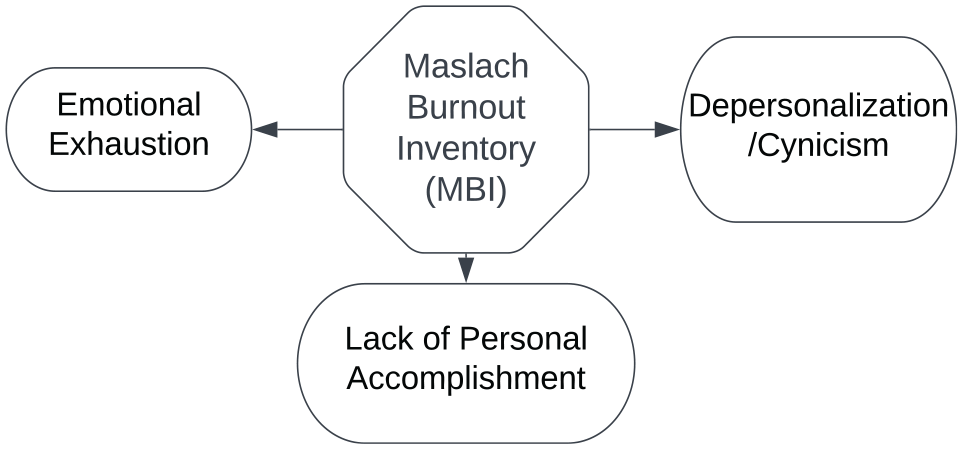
Maslach Burnout Inventory model ( 36 ).
Emotional exhaustion, the first dimension of burnout, is closely linked to workplace stress and represents the physical and emotional tiredness experienced by individuals, along with the depletion of their energy reserves ( 36 ). It reflects the draining nature of jobs and feeling of being overwhelmed.
Depersonalization, also known as cynicism, is the second dimension of burnout. It refers to employees’ lack of emotional response, or detachment, toward the customers they interact with or the individuals they serve ( 68 ). It manifests as a negative and detached attitude toward others, potentially resulting from prolonged exposure to job-related stressors.
The third dimension, reduced personal accomplishment, pertains to an individual’s perception of their competences, influence, and achievements in the workplace. It signifies a sense of diminished effectiveness, reduced motivation, and a decline in one’s self-perceived competence and accomplishments. Individuals experiencing reduced personal accomplishment may feel disengaged, uninterested, and dissatisfied with their work and surroundings ( 69 ).
By considering the interconnectedness of these dimensions, the MBI model offers a comprehensive understanding of burnout as a complex phenomenon influenced by emotional exhaustion, depersonalization, and reduced personal accomplishment. The model helps to capture the multifaceted nature of burnout and its impact on individuals’ well-being and job satisfaction.
The Minnesota Satisfaction Questionnaire
Job satisfaction is a significant psychosocial and behavioral notion that has garnered the interest of many researchers in organizational studies. A plethora of definitions of job satisfaction have been proposed, with the majority encompassing similar elements such as the employee’s relative importance of “input” versus “output/reward” or “pain” versus “pleasure” ( 70 , 71 ). In simple terms, job satisfaction is the extent to which individuals appreciate their jobs, whereas job dissatisfaction is the extent to which people do not enjoy their jobs ( 72 ). Employees’ emotional well-being and organizational loyalty are affected by their level of job satisfaction ( 73 ).
Figure 2 illustrates the MSQ model, which offers a framework for understanding the factors influencing job satisfaction. Developed by Herzberg ( 74 ), MSQ categorizes these as internal and external factors.
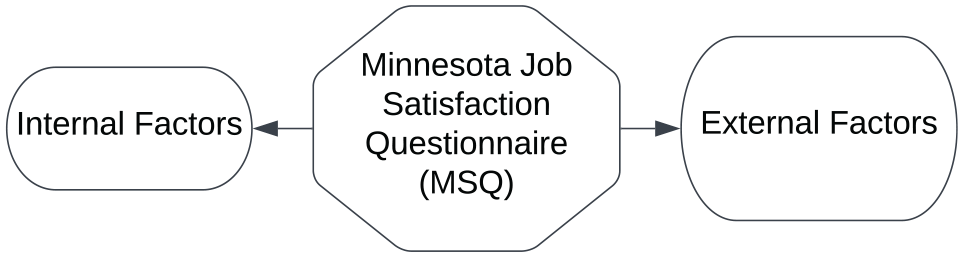
Minnesota Satisfaction Questionnaire model ( 74 ).
Internal factors primarily focus on job-specific aspects and are more subjective in nature. They are measured using a single global criterion, which considers an individual’s overall satisfaction with their job. These internal factors capture the individual’s perception of intrinsic motivators, such as the meaningfulness of their work, the level of autonomy, the opportunities for growth and advancement, and the recognition received for their contributions. The use of a single global criterion in measuring internal factors provides both psychometric and practical advantages, allowing for a concise assessment of overall job satisfaction ( 75 ).
On the other hand, external factors encompass a broader range of dimensions and require multidimensional measures to evaluate the work environment. These factors consider aspects such as organizational policies, supervision, salary and benefits, coworker relationships, and work–life balance. By taking into account multiple dimensions of the work environment, the MSQ model offers a more comprehensive understanding of job satisfaction and the various external factors that contribute to it.
The MSQ is a widely used tool for measuring job satisfaction at different levels within an organization. It provides a structured approach to assess employees’ overall satisfaction, allowing for comparisons across individuals, departments, and organizations. By utilizing the MSQ, researchers and practitioners can gain insights into the key factors influencing job satisfaction and identify areas for improvement to enhance employees’ overall satisfaction and well-being ( 76 ).
Piper Fatigue Scale
According to the International Maritime Organization, “fatigue is a condition characterized by physical and/or mental impairment caused by physical, mental, or emotional stress.” This impairment can manifest in the form of reduced physical and/or mental capabilities, including power, pace, reflexes, cooperation, judgment, and stability ( 77 ).
The PFS consists of 22 items divided into four subscales that measure the following dimensions of fatigue: behavioral/severity, affective meaning, sensory, and cognitive/mood ( 78 ). Figure 3 shows the PFS model.
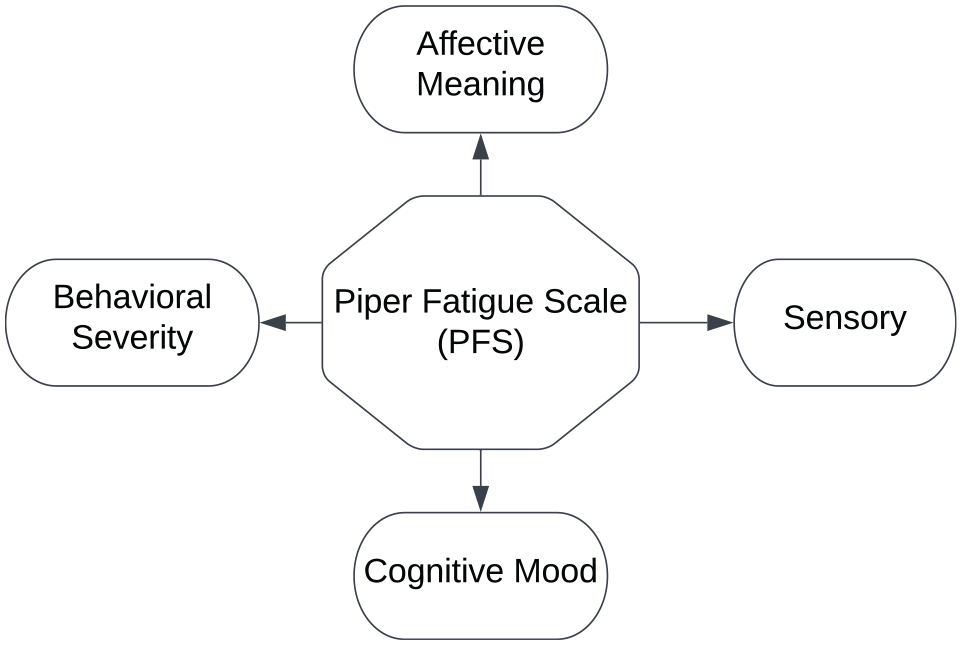
Piper Fatigue Scale model ( 78 ).
Correlation Analysis
Correlation analysis typically reveals the direction and intensity of the association between variables. The correlation coefficient was defined more than a hundred years ago by Pearson ( 79 ) and Stanton et al. ( 80 ). A negative correlation indicates an inverse relationship between the two variables being compared. To elaborate, such a relationship exists when rising values in one parameter correspond to decreasing values in the other. Conversely, a positive correlation denotes a direct interaction between the two parameters under consideration, such that increases or decreases in one variable correspond to increases or decreases in the other. Table 1 provides an interpretation of the correlation coefficients.
Interpretation of Correlation Coefficients ( 81 )

The interpretation of the strength of the correlation coefficient is generally based on practical rules, as is the case with p-values: if p < .05, the expression is statistically significant; if p > .05, the expression is not statistically significant. Modern statistical significance is based on the work of R. A. Fisher, who defines it as a situation in which the null hypothesis (H0) is rejected when the significance level is below a specified criterion. If the resulting p-value is less than the specified level of significance, it is concluded that the data are inconsistent with the null hypothesis. In other words, if the obtained p-value is less than .05, it can be said that the probability of the observed difference being a result of random chance is less than 5%.
Results
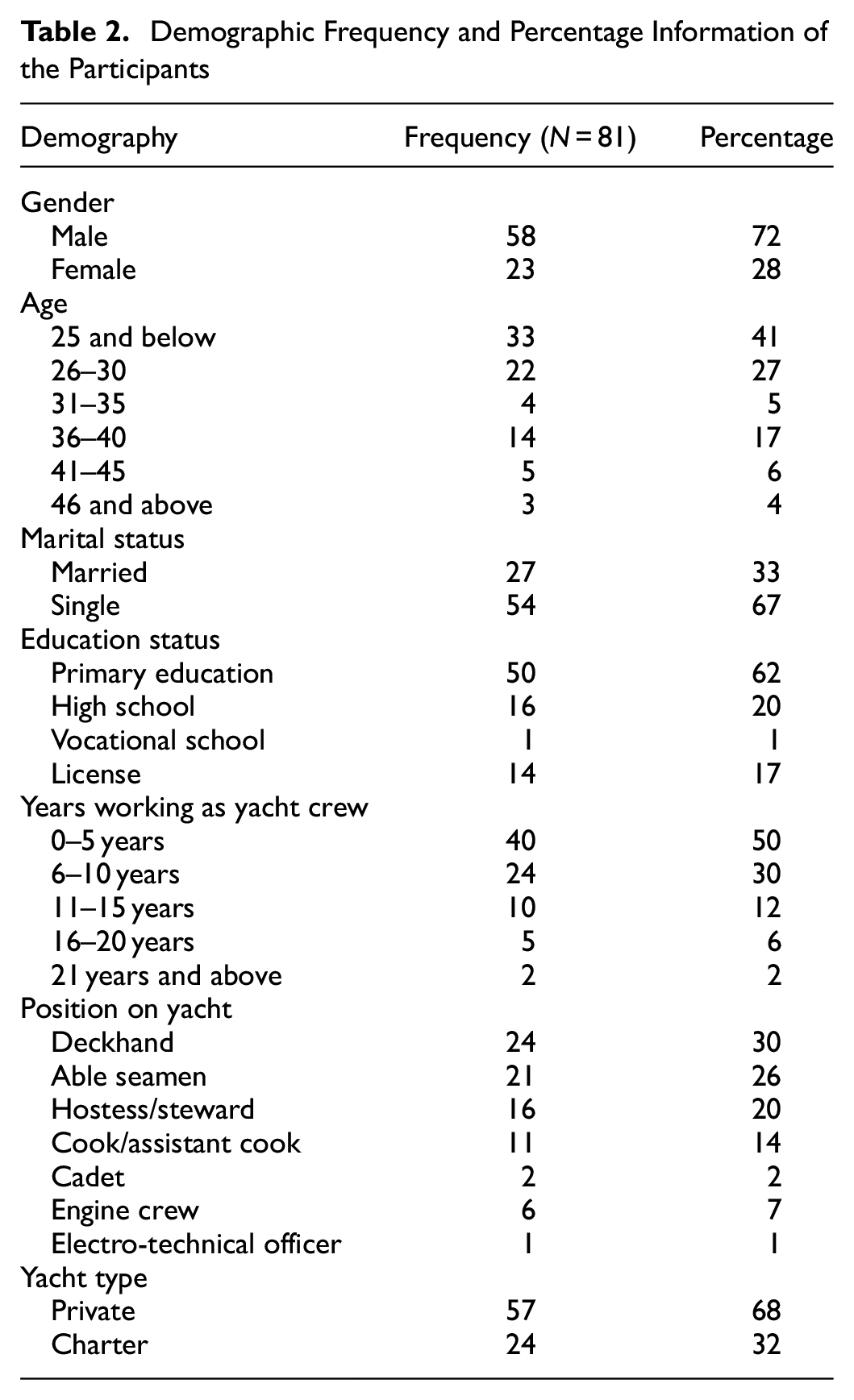
This study was carried out with crew who were working on yachts after the summer, during which yachts make the most voyages and organized tours. Table 2 gives the demographic frequency and percentage details for the study participants: 72% were men; 41% were determined to be in the 25 and under age group; 67% of the yacht crew participating in the study were single workers. The majority (62%) of the population had only completed primary education. The proportion of individuals who had graduated from university was 14%. It was determined that half of the participants had worked on yachts for between 0 and 5 years, 56% held the rank of deckhand or able seaman, and 68% of the participants worked on privately owned yachts.
Demographic Frequency and Percentage Information of the Participants
The results obtained were subjected to normality tests such as the Kolmogorov–Smirnov and Shapiro–Wilk tests. Examination of the results (Table 3) revealed that the data for each scale exhibited a normal distribution (p > .05). Therefore, parametric tests were applied in the analyses.
Kolmogorov–Smirnov and Shapiro–Wilk Normality Test Results of the Scales

Note: MBI = Maslach Burnout Inventory; MSQ = Minnesota Satisfaction Questionnaire; PFS = Piper Fatigue Scale.
Variables with an alpha value of .70 or higher, according to Nunally and Bernstein, can be considered to be reliable (83). The reliability analyses of the scales used in the study are given in Table 4. MBI was found to be extremely reliable, with a Cronbach’s alpha value of .858.
Reliability Analysis Results of the Research

Note: MBI = Maslach Burnout Inventory; MSQ = Minnesota Satisfaction Questionnaire; PFS = Piper Fatigue Scale.
According to Mitrany, Cronbach’s alpha values <.50 are not reliable, >.70 are sufficient, >.80 are very good, and >.90 are excellent ( 84 ). The MSQ and PFS were found to have excellent reliability with Cronbach’s alpha values of .920 and .965, respectively.
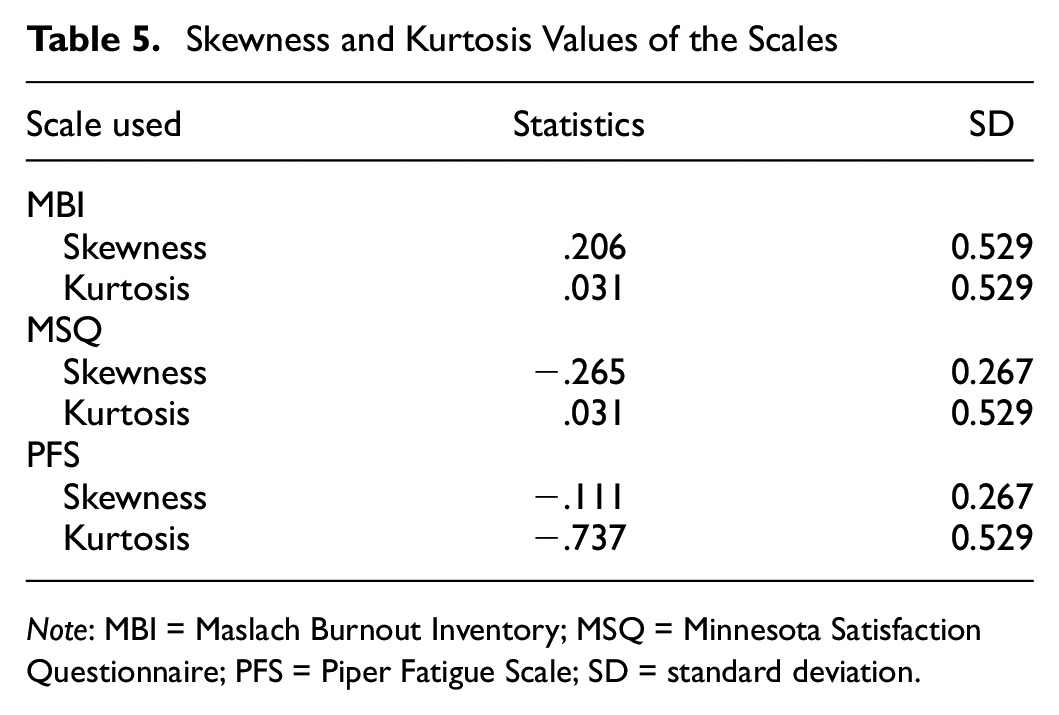
Before testing, the data were examined to see whether they were normally distributed. According to Tabachnick and Fidell, skewness and kurtosis values between −1.5 and 1.5 indicate that the data have a normal distribution ( 85 ). The skewness and kurtosis values of the scales used in the study are given in Table 5; as can be seen, the responses to the scales were normally distributed.
Skewness and Kurtosis Values of the Scales
Note: MBI = Maslach Burnout Inventory; MSQ = Minnesota Satisfaction Questionnaire; PFS = Piper Fatigue Scale; SD = standard deviation.
In this study, IBM SPSS version 21 (IBM SPSS Inc., Chicago, ILL) was used to analyze the collected data. The internal correlation between the model’s components was analyzed using Pearson correlation coefficients and p-values in the statistical analysis of the results.
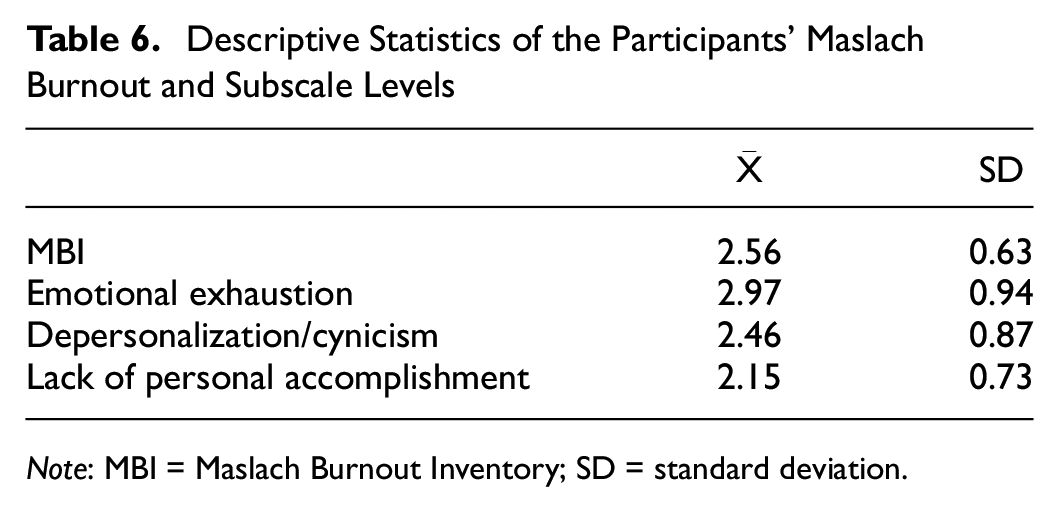
The mean (
Descriptive Statistics of the Participants’ Maslach Burnout and Subscale Levels
Note: MBI = Maslach Burnout Inventory; SD = standard deviation.
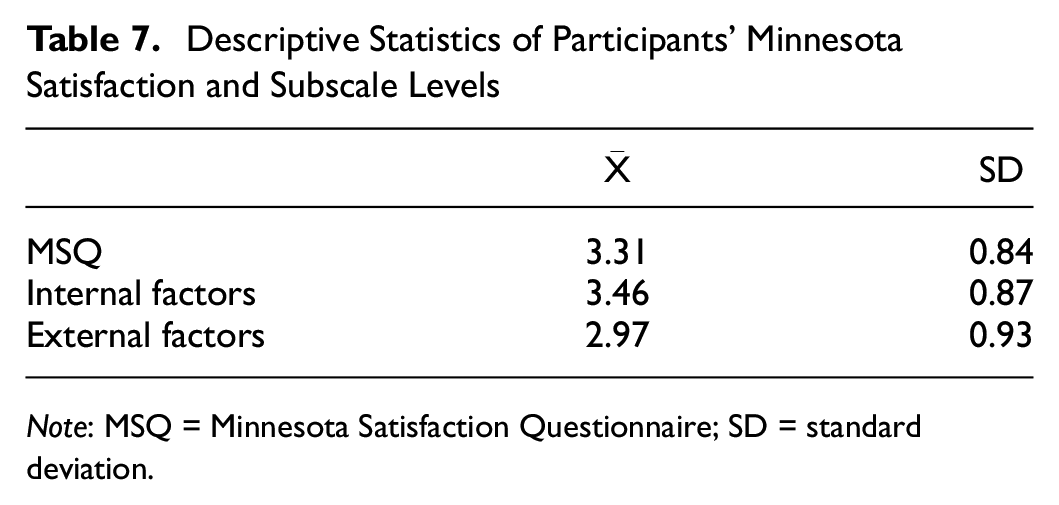
The mean job satisfaction levels of the yacht crew participating in the study, according to the 5-point Likert scale of the MSQ, are given in Table 7. The participants’ overall satisfaction was found to be moderate, with a mean of 3.31 ± 0.84. The level of external factors influencing employee job satisfaction was found to be medium, with a mean of 2.97 ± 0.93. Internal factors influencing job satisfaction were found to be significant, with a value of 3.46 ± 0.87.
Descriptive Statistics of Participants’ Minnesota Satisfaction and Subscale Levels
Note: MSQ = Minnesota Satisfaction Questionnaire; SD = standard deviation.
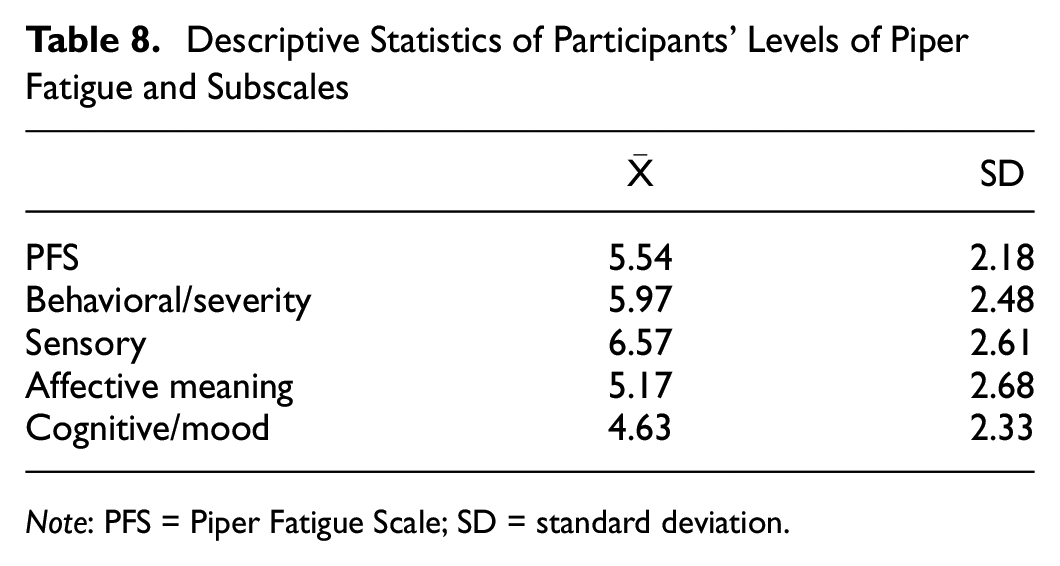
The mean fatigue levels of the employees participating in the study, according to the 10-point Likert scale used with the PFS, are given in Table 8. The overall fatigue level of the yacht crew was found to be 5.54 ± 2.18. The mean sensory level of the subscales constituting the PFS was 6.57 ± 2.61, the mean behavioral violence level was 5.97 ± 2.48, the mean affective meaning level was 5.17 ± 2.68, and the mean cognitive level was 4.63 ± 2.33.
Descriptive Statistics of Participants’ Levels of Piper Fatigue and Subscales
Note: PFS = Piper Fatigue Scale; SD = standard deviation.
The mean burnout, fatigue, and job satisfaction levels of the yacht crew participating in the study according to their ranks are given in Table 9. The deckhand rank had the highest burnout, with an average of 2.75 ± 0.62. Additionally, deckhands had the highest fatigue level, with an average of 6.23 ± 1.83. In other words, the burnout and fatigue levels of deckhands were higher than those of the other yacht crew. Able seamen had the highest level of job satisfaction, with an average of 3.77 ± 0.99. Since there were insufficient crew holding the rank of cadet (n = 2) and ETO (n = 1), the descriptive statistics of these two ranks have not shown.
Descriptive Statistics of Burnout, Job Satisfaction and Fatigue Levels According to Participants’ Ranks

Note: MBI = Maslach Burnout Inventory; MSQ = Minnesota Satisfaction Questionnaire; PFS = Piper Fatigue Scale; SD = standard deviation.
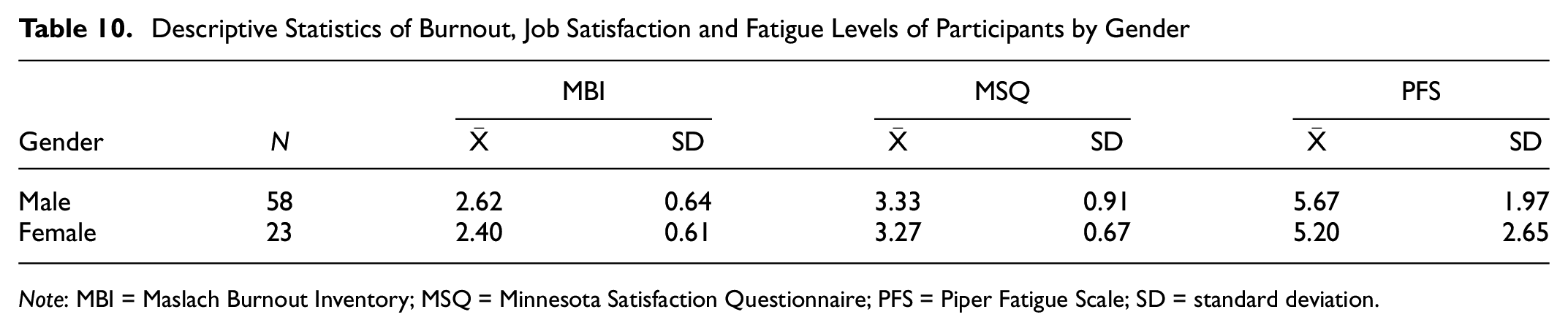
The mean burnout, fatigue, and job satisfaction levels of the yacht crew participating in the study according to gender are shown in Table 10. As can be seen, male employees experienced more burnout and fatigue than their female counterparts. However, the job satisfaction of males was also found to be higher than that of females.
Descriptive Statistics of Burnout, Job Satisfaction and Fatigue Levels of Participants by Gender
Note: MBI = Maslach Burnout Inventory; MSQ = Minnesota Satisfaction Questionnaire; PFS = Piper Fatigue Scale; SD = standard deviation.
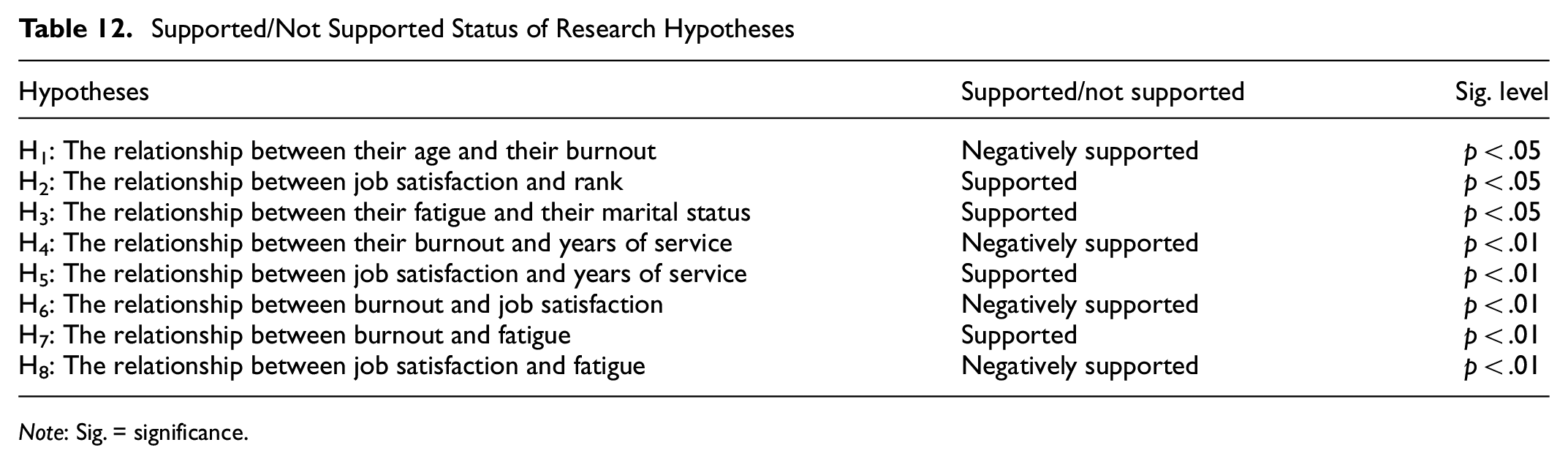
According to the results of the correlation analysis (Table 11), a statistically significant relationship was found between the age of the participating yacht crew and their experience of burnout (r = −.282, p < .05), their job satisfaction and rank (r = .254, p < .05), their fatigue and marital status (r = −.258, p < .05), their burnout and years of service (r = −.311, p < .01), their job satisfaction and years of service (r = .402, p < .01), their burnout and job satisfaction (r = −.745, p < .01), their burnout and fatigue (r = .643, p < .01), and their job satisfaction and fatigue (r = −.619, p < .01).
Correlation Analyzes Among Participants’ Demographic Characteristics, Burnout, Job Satisfaction and Fatigue

Note: Mar. stat. = marital status; MBI = Maslach Burnout Inventory; MSQ = Minnesota Satisfaction Questionnaire; PFS = Piper Fatigue Scale.
p < .05; **p < .01.
When the relationship levels between the variables were examined, the strongest relationship was observed between employee burnout and job satisfaction (r = −.745). Note, this was a negative correlation: in other words, as participant burnout levels increased, job satisfaction levels decreased. There was also a negative relationship between age and burnout, burnout and years of service, and between job satisfaction and fatigue. In contrast, the relationships between job satisfaction and years of service and rank, as well as between burnout and fatigue were positive. A negative relationship was also found between fatigue and marital status: married crew reported feeling more fatigued than crew who were single.
The significance levels of the eight hypotheses tested and whether the theories were supported or not are shown in Table 12.
Supported/Not Supported Status of Research Hypotheses
Note: Sig. = significance.
Discussion
Crew members of ships work periods without any days off in a fast-paced environment that can negatively affect their physical and mental health. Studies show that fatigue and burnout, which occur under such working conditions, negatively affect mental health ( 25 , 86 , 87 ). Dachev and Lazarov further showed that operation of specific maritime devices, the risk of falling into the sea, vibrations, confined spaces, and the natural microclimate onboard ships can cause sailors to experience a variety of distressing and mental health conditions ( 88 ). Furthermore, Kirkby’s research on the psychological dangers of living and working under the isolating conditions of a ship supports the findings of this study ( 89 ). Additionally, this study can provide various arguments for understanding the causes of mental problems experienced by seafarers. Despite conducting mental and physical examinations on seamen on a regular basis, Kınalı et al. found that 33.2% of the seafarers they studied were experiencing mental problems ( 90 ).
Burnout levels of ship crew were found to decrease as they aged. This finding confirms the idea that experience can help reduce the effects of job stress ( 91 ).
Another finding to emerge from the analysis related to gender. Because there are relatively few female crew, comparisons between men and women in the male-dominated shipping profession are rarely statistically significant ( 46 , 48 , 92 ). The proportion of female employees, steward/steward rank, is much higher on yachts than on commercial shipping. In the current study, 28% of the participants were women. Although data analysis showed that men have higher levels of burnout and fatigue than women, they reported being happier in their profession than the women. There are studies focusing on female seafarers in the literature ( 93 – 100 ), however, the specific issues faced by female workers on ships have not been adequately addressed.
Participants’ levels of insensitivity and personal achievement were found to be low. This indicated that the yacht crew did not exhibit negative, mocking attitudes toward the people they served, nor behave toward them unemotionally. This result agrees with the findings of Danacı and Yazır’s study ( 51 ). Even with depleted levels of energy, the interest in their work and environment did not decrease and the individuals considered their performance to be sufficient.
As stated, married yacht crew felt more tired than those who were single. However, in contrast, Kınalı et al. found the depression levels of single seafarers to be higher than those of married seafarers ( 90 ).
Recently, it has become very difficult to find yacht cooks. Regardless of their position on the yacht, Turkish crew members want to raise their rank to the captain, which they believe will suffer less burnout. Under current regulations, all yacht cooks can obtain yacht captain competency 6 years after starting in the profession. Turkish yacht owners are therefore forced to hire foreign yacht cooks because there are no Turkish yacht cooks on their private yachts ( 101 ).
The study has clearly shown that yacht crew are more vulnerable to the harmful effects of fatigue and, as a result, risk damage to their health, safety, and well-being at work. Studies show that when managers have to choose between reducing crew fatigue and increasing company profits, they often prioritize the latter ( 102 , 103 ).
Thai and Latta state that the shortage of mariners and the reduction in crew size on ships have significantly increased the workload of mariners, leading to more demanding and extended work schedules ( 104 ). Additionally, STCW’s work and rest hours criteria ( 105 ) do not apply to crew working on yachts, especially during high season. Therefore, regulators must take preventive measures.
According to the demographics of the yacht crew participating in this study only 8% of the employees have more than 16 years of experience. This suggests that individuals do not tend to remain in the yachting profession for extended periods.
Conclusion
To mitigate the rising prevalence of fatigue-related factors among seafarers, it is necessary to implement regulations for employment practices and the dynamics of the work environment. Given the inherently stressful nature of the shipping industry, it is important to provide support to seafarers in managing their fatigue.
This study is specific to the South Aegean region: yachts pass through the areas where commercial vessels navigate. Such a working environment where fatigue is high can also increase the risk of marine accidents occurring. Well-rested crew members are more likely to be able to safely perform their duties, which will contribute to overall safety on the seas. Therefore, the living and work conditions of crew must be improved. Regulatory authorities must take preventive measures to ensure that yacht crews’ requirements for rest can be met. Working and living in a socially restricted area are the primary causes of seafarers’ burnout. Organizations must focus more attention on improving working conditions to minimize burnout, for example, improving seafarers’ feelings about their work, cabins, salaries, and working hours. STCW and related regulations must be amended in a way that meets the needs of the sector as a whole.
It is essential that experienced crew contribute cumulatively to the development of the yachting profession by transferring their experiences to newcomers, as is the case in other branches of tourism ( 106 , 107 ). To achieve this, solutions must be sought to retain experienced crew. Effective human resource management strategies, such as motivation and retention efforts, could be used to enhance the job performance of seafarers. By implementing tailored, appropriate measures, it could be possible to improve the overall performance of this workforce.
Conducting detailed research on the specific challenges faced by women working in the yachting industry and presenting potential solutions will be necessary to support the well-being and happiness of female seafarers. Such research could help to address any issues unique to women that may be affecting their experience in this profession.
The MBI provided valuable insights into the psychological well-being of yacht crew, although its primary focus being on individual experiences of burnout may limit its ability to capture certain contextual factors or organizational dynamics contributing to burnout. On the other hand, the MSQ allowed for a comprehensive assessment of factors influencing job satisfaction among yacht crew members. However, this instrument relies on self-reporting, which introduces the potential for response bias and fails to capture objective indicators of job satisfaction. The PFS offered a comprehensive evaluation of the fatigue experienced by members of yacht crews. Nonetheless, the self-report nature of the measures may have been influenced by subjective perceptions and therefore may not have fully captured the multifaceted nature of fatigue. Finally, while Pearson’s correlation method provided valuable insights into the associations between burnout, job satisfaction, fatigue, and participant demographic characteristics, it should be noted that correlation analysis alone cannot establish causality or provide explanations for the underlying mechanisms of these relationships.
Owing to the limited number of participants, the findings of this study may not be generalizable to the population as a whole, however, as a pilot study it has set the stage for further research into the many facets of this issue.
In future research, the levels of yacht crew fatigue, job satisfaction, and burnout should be examined using additional multicriteria, decision-making models and different scales, and these studies should be evaluated using a larger number of participants. Comparative analyses of yacht crew holding different ranks should be conducted with a larger sample size. Since the number of cadets and ETOs was small in this study, efforts should be made to involve crew at this rank in future studies. By taking this approach, it will be possible to obtain reliable results and gain a deeper understanding of the challenges faced by the yachting industry. This could prove valuable in addressing and resolving any issues that may be present within the sector.
Footnotes
Acknowledgements
This study was based on an unpublished PhD dissertation by C. S. Danacı: “An Approach Recommendation for Evaluation of South Aegean Sea Traffic in Terms of Navigation Safety” from Istanbul Technical University, Graduate School, Department of Maritime Transportation Engineering.
Author Contributions
The authors confirm contribution to the paper as follows: study conception and design: C. S. Danacı; data collection: C. S. Danacı, T. Keçeci; analysis and interpretation of results: C. S. Danacı, T. Keçeci; draft manuscript preparation: C. S. Danacı; supervision: T. Keçeci. All authors reviewed the results and approved the final version of the manuscript.
Declaration of Conflicting Interests
The authors declared no potential conflicts of interest with respect to the research, authorship, and/or publication of this article.
Funding
The authors received no financial support for the research, authorship, and/or publication of this article.
