



Abstract
Merchant seafarers, the key workers of the global economy as stated by the International Maritime Organization, are becoming targets of armed attacks, even if they have nothing to do with weapons. Several ships have been assaulted, and their crew members have suffered in the ongoing Russian-Ukrainian war in the Black Sea. There is a developing area of interest in the mental well-being of seafarers; however, current studies mostly focus on the effects of piracy. This research aims to offer a novel model that may identify the effects of war on seafarers, and the importance of each contributing factor that may potentially induce a concern in merchant seafarers. According to the results, financial pressures dominated over other sources of concern, which include life safety risks. The findings of this study may offer valuable data to policymakers for developing strategies with respect to the protection and well-being of seafarers.
Wars and armed conflicts have devastating effects on the lives of merchant mariners in humanitarian, social, and financial aspects, besides life safety concerns.
The monetary considerations were revealed to be the primary cause of concern and came to the forefront for merchant seafarers.
The study points out a need for a legislative framework governing seafarers’ Occupational Health and Safety in armed conflicts.
All the survivors of the war had reached their homes and so put the perils of battle and the sea behind them.
Wars have devastating effects on people. Not only innocent civilians but also various occupational groups can face these effects. Among these groups, seafarers, who are called the hidden heroes, have been declared “key workers” by the International Maritime Organization (IMO) ( 1 ). Merchant seafarers are trying to do their job so that global trade can continue uninterrupted, even during periods of war and epidemics, where life safety cannot be ensured.
Maritime transport accounts for 88% of international transport ( 2 ). It is a more cost-effective and sustainable way of transporting raw materials and manufactured goods in large volumes. To sustain the global economy, it is essential to ensure that ships are adequately maintained and the well-being of seafarers is safeguarded. The physiological and psychological threats to seafarers should be minimized ( 3 – 5 ).
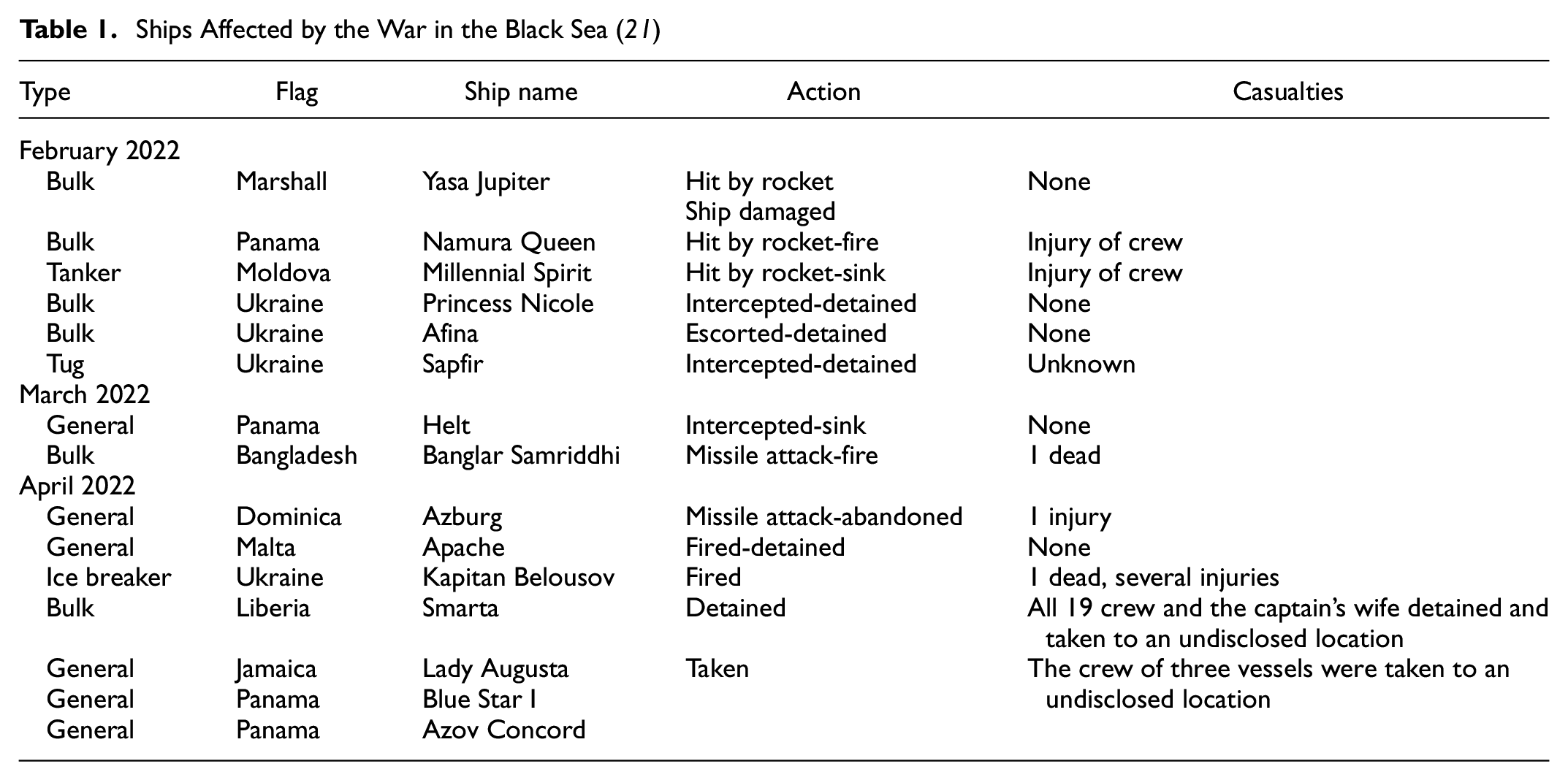
Ships operate without national borders and route the entire world like a spider web; sometimes, they may have to navigate unsafe places such as epidemic regions, piracy areas, and war zones. Because of the very nature of the occupation, there is an excessive weight on a seafarer’s shoulders. Such insecure navigational areas will cause extra pressure on seafarers’ concerns ( 6 – 8 ). Even in the 21st century, ships are exposed to pirate attacks in the Red Sea, Gulf of Aden, Indian Ocean, Arabian Sea, and so forth. There have been several reports involving seafarers taken hostage, kidnapped, threatened, injured, or even killed. In 2022, the number of ships attacked by pirates was reported to be 131 ( 9 ). There are many studies evaluating the psychological effects of piracy activities on seafarers. These psychological factors affect the health, family relations, labor conditions, and financial status of seafarers in various aspects adversely ( 10 – 12 ). Likewise, wars, armed conflict zones, and unresolved legal controversies in maritime exclusive zones ( 13 , 14 ) also cause significant adverse effects on sea-borne trade and seafarers ( 15 – 17 ), as observed in the ongoing Russia-Ukraine war ( 17 – 19 ). On February 24, 2022, Russia announced a blockade, which led to the establishment of MARSEC (maritime security) Level 3 and the closure of Ukrainian ports. At the beginning of the conflict, around 2000 seafarers on 94 ships were stranded in Ukrainian ports; subsequently 10 ships successfully departed the Sea of Azov; however, in late July 2022, 84 merchant ships with nearly 450 crew remained ( 20 ). While the crew of these vessels struggled to reach food and medical services, they also had serious life safety concerns with the threat of being attacked at any moment. Some of the significant cases in the ongoing Russian-Ukrainian war are presented in Table 1.
Ships Affected by the War in the Black Sea ( 21 )
Although this notification disrupted maritime trade in the region, the United Nations (UN) initiated the establishment of the Safe Black Sea Grain Initiative to allow the continuation of the transport of goods ( 22 ). As of early 2023, over 60 merchant vessels remain stranded in various ports throughout Ukraine, rendering them unable to engage in this initiative. The IMO Secretariat continues to focus its efforts on facilitating and supporting the departure of these vessels.
Seafarers have been negatively affected by war on many fronts. Besides the life safety concern, supply operation disruptions, social issues, and financial pressures may potentially effect seafarers. It is observed that replenishments of provisions, consumables, spare parts, and fuel supply could not be provided to ships in war environments ( 23 , 24 ). During the Russia-Ukraine war, bunker supply obstacles are realized for Russian-flagged ships ( 17 ). As a supply-related problem, crew changes in the war zone become problematic and the seafarers cannot leave the ships and return home even though their contracts have expired ( 25 , 26 ). These situations cause an additional concern for seafarers who may already be in a risky environment. Ships operating in a war zone are kept on alert at all times. In this situation, seafarers’ work–rest periods may be violated, which may cause excessive fatigue ( 27 – 29 ). Seafarers generally live isolated from the world. The social life on board is mostly limited by the number of people involved in safe manning and the relationships among these crew. Other ways that enable a seafarer to socialize are external phone calls and internet connections. In a war environment, mass communication channels may also be interrupted ( 30 – 32 ). Furthermore, given studies indicating the presence of cyber-attack risks, it is imperative to address the matter of cyber-seaworthiness ( 33 ). Disruption of communication, conflicts about national identity on board ships, and shore leave restrictions can affect the social life of seafarers. Problems arising from war may lead to extra concerns for seafarers. Seafarers may also encounter financial obstacles because of the economic sanctions imposed on financial institutions. For instance, because of the constraints on the Russian economy caused by the most recent Russia-Ukraine war, shipping companies have struggled to pay sailors’ salaries ( 34 , 35 ). This situation may also affect the livelihood of seafarers and their families. One of the main concerns in a war environment is naturally about the safety of life. Seafarers serving on a ship in a war zone may face the risk of death or injury. Lack of medical service for injuries besides possible illnesses in a war zone may cause serious concerns ( 32 , 36 ). Concerns for the safety of life may also vary depending on the ship’s size and type of cargo. It is considered that the risk levels may differ according to these factors in possible military attacks.
This study focuses on analyzing the concerns of seafarers who may have to work in a war environment, and to the best of our knowledge, no single study has dealt with this problem. Therefore, this study makes a major contribution to research on seafarers’ mental well-being.
In the study, a fuzzy Bayesian network (FBN) method was developed to provide an approach for determining the weights of factors while assessing the causes for seafarers’ concern about the war. FBN analysis is a useful method that is frequently used by researchers in the maritime field ( 37 – 41 ). In addition, the study tries to convey the experience of seafarers in war zones with a qualitative approach, as seen in the relevant literature ( 42 – 44 ). Interesting findings, which were obtained through in-depth interviews with the experts, provide important foresights for the FBN results.
The presented study consists of four sections. The introduction draws attention to the impact of war on seafarers and provides an overview of the literature. The second section deals with the methodology used. The third section presents the results and discussions of the analysis. Finally, the concluding section highlights important findings and includes recommendations for future research.
Method
This study uses both quantitative and qualitative methods to gain insights into seafarers’ concerns in war conditions. In addition to the FBN model used in this study, including quantitative and qualitative aspects, in-depth interviews with experts as a qualitative approach also contribute to the research findings. It was considered that representing the statements from experts during depth interviews would usefully supplement and extend the results. Before proceeding to explain the FBN model, a flowchart of the methods is presented in Figure 1.
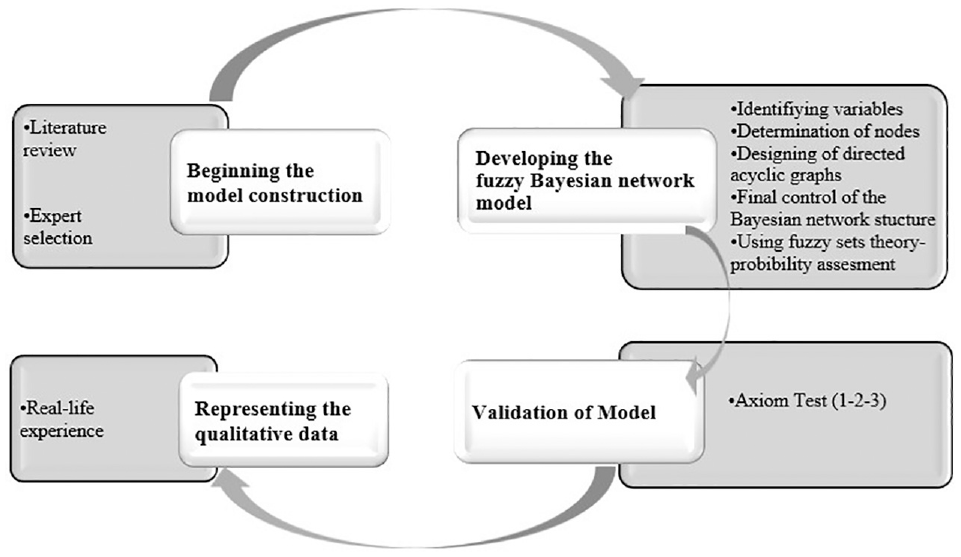
Methods flowchart.
Building the Fuzzy Bayesian Network
The Bayesian network (BN) model was developed as a generic approach for representing uncertain information ( 45 ). BNs, which are probabilistic models of categorical nodes determined by experts or real data, present probabilistic dependencies or causal pathways for complex systems ( 46 ). A BN is a potent tool that combines knowledge and expert opinion to estimate the likelihood of various scenarios and occurrences, making it useful for evaluating identified risks ( 47 ). Causal inference, the representation of uncertainty via a conditional probability function, and the display of probabilistic relationships between variables are possible thanks to the BN graph model ( 48 ). The BN is appropriate for context reasoning because it demonstrates the relationship between factors using both qualitative and quantitative components ( 49 ). The qualitative components illustrate the dependencies and independencies between variables in the system, and the quantitative components show the intensity and type of dependencies between variables. BNs are direct representations of reality rather than reasoning processes, which is their most significant feature ( 50 ). A BN can be informed by combinations of expert judgments, data from empirical studies, surveys, or simulation models. Pearl’s original Bayesian model was a network for categorical nodes informed by expert opinion ( 46 ).
The basis of the BN is the chain rule, which deals with the joint probability distributions of variables (
51
). Determining the probability of the network nodes is a critical step with respect to BN results. In this direction, the use of the chain rule provides the marginal and conditional probabilities for each network node. The following equations show the joint probability of the variable Xi, if

where Pa(Xi) is the parent set of variables and j≠i. The probability of Xi is computed as follows:

The Bayes theorem calculates posterior probabilities of events based on updated observations, also referred to as evidence (E), in the form of incident occurrence using Equation 3. This equation is employed to determine the probability of specific events occurring (where U is the universe of variables

The BN model developed in this study is based on the evaluation of expert opinions and a variety of literature reviews. In addition to these experts, one psychiatrist’s opinions were also used. While seven experts evaluated the probability of root causes and the conditional probabilities of the network, a psychiatrist contributed to the creation of the overall structure of the network by evaluating the events that could be a source of concern for seafarers.
Expert Elicitation and the Determination of Variables
Firstly, the probabilities need to be defined to calculate the risk probability of seafarers’ concern (the leaf node) and the importance of the nodes. Expert elicitation, which is widely used to calculate the probabilities of uncertain events, gives useful insights into the evaluation of risk. When experimental or historical data are not available, expert elicitation provides the critical inferences for BN design ( 54 ). Data for this model were retrospectively collected from both expert opinions and Equasis statistic reports, between May and July 2023 ( 55 ). The judgments were obtained from a panel of seven maritime experts through face-to-face and online interviews. In general, the weighting factors of the heterogeneous group of maritime experts who contributed to the survey are derived from several calculation tables ( 56 ). The expert panel profile of the survey participants that were selected based on their work experience in the armed conflict zones (especially the Russia-Ukraine war), total sea service time, and competency are presented in Table 2. Five levels of ranking were used for each parameter: war zone experience was scored from 1 to 5 as follows (if >12 = 5; 10–11 = 4, 7–9 = 3, 4–6 = 2, 1–3 = 1); total sea service (if ≥15 = 5; 11–14 = 4, 5–10 = 3, 3–4 = 2, ≤2 = 1); and competencies (if Master = 5; Chief Officer [C/O]/First Engineer [1/E] = 4, Second Officer [2/O]/Third Engineer [3/E] = 3, Able Seaman [A/B] = 2, Cadet = 1). The weight scores of the experts were then calculated according to the Equation 4 ( 57 ). It is considered that the key factor in selecting an expert for this model is to have work experience on board in armed conflict conditions:
Expert Panel Profile

Note: C/O = Chief Officer; 2/O = Second Officer; A/B = Able Seaman; 1/E = First Engineer; 3/E = Third Engineer.

As seen from Table 2, two out of seven experts (E1 and E5) have over 12 months of armed conflict zone experience, four experts (E3, E4, E6, E7) have 4–6 months of armed conflict zone experience, and one expert (E2) has 7–9 months of armed conflict zone experience. According to the weight factor column, while the expert with the lowest weight factor is E4, the expert with the highest weight factor is E1. Turning now to the determination and identifying variables in the model, Table 3 is presented.
Determination and Description of Variables Used in the Model

Note: GSM = Global System for Mobile Communications; MARSEC = maritime security; LPG = liquefied petroleum gas.
Bayesian Network Method under Fuzzy Logic Theory
Fuzzy sets are an expansion and simplified version of a traditional numerical set. In this study, expert judgments were processed in phases of fuzzification, aggregation, and defuzzification within the framework of fuzzy theory to incorporate the weighting of expert differences in effect. In this direction, a linguistic measurement scale ( 57 ), as shown in Table 4, was used to evaluate the probability distribution of the uncertainty of the nodes, and the triangle membership function (Equation 5) ( 58 ) was preferred to construct linguistic variables:

As shown in Equation 5,
Fuzzy Linguistic Scale

Note: TFN = triangular fuzzy number.
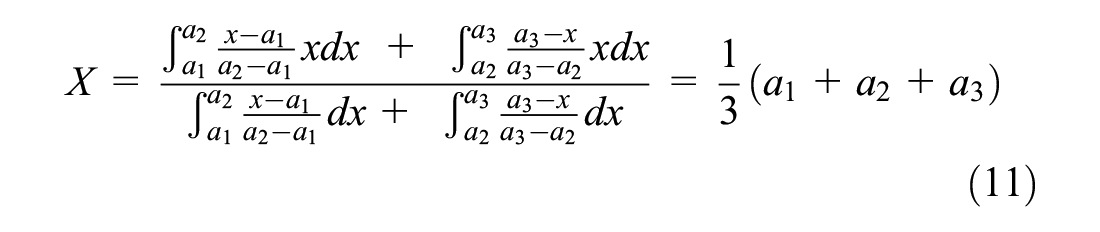
Expert opinions should be formulated as a single term to reach a consensus. To incorporate the ideas from diverse expert groups, algorithms referred to as the similarity aggregation approach by Hsu and Chen ( 60 ) were proposed. The judgments of each expert are expressed in linguistic terms formulated as Eu (u = 1, …, m). The linguistic terms can be converted into corresponding fuzzy numbers. The steps of the algorithms are computing the degree of agreement (Equation 6), average agreement, (Equation 7), and relative agreement (Equation 8) between expert judgments, as well as calculating the consensus coefficient (Equation 9), aggregating the expert judgments (Equation 10), and defuzzification (Equation 11). The detailed algorithm is described as follows:
Calculate the degree of agreement

2. Calculate the average agreement (AA) degree between expert judgments

3. Calculate the relative agreement (RA) degree,

4. Estimate the consensus coefficient (CC) degree,

where β (0 ≤ β ≤ 1) is the proposed method’s relaxing factor. In this study, β = 0.5 was considered.
5. Aggregation of expert judgments

6. Defuzzifying of aggregated experts’ judgment (fuzzy possibility)
The aim of defuzzification is to extract measurable information from fuzzy numbers. It is important to clarify fuzzy numbers when making decisions about imprecise issues. Methods used for defuzzification include mean-max membership, the centroid method, the weighted average method, the center of largest field, and the center of sums ( 61 ). The equation for TFNs (a1, a2, a3) is as follows:
The expert decisions of probabilities on root nodes of the study are presented in Table 5. In addition, the experts provide fuzzy conditional probabilities of the intermediate and leaf nodes. Table 6 presents an example of conditional probabilities (CPT), which takes into account the financial pressures, late/non-payment of salary (occur), and remittance barriers (exist), which are the root nodes. Taken together, all these stages resulted in the root nodes’ marginal probability being achieved. Similarly, from the assessments of the experts, fuzzy conditional probabilities for the intermediate and leaf nodes were also computed.
Expert Decisions of Probabilities and FPS (Fuzzy Probabilities Scores) on Root Nodes

Note: L = low; ML = medium low; M = medium; MH = medium high; H = high; VH = very high.
Conditional Probabilities of Financial Probabilities

Examining the states listed in Table 5 alongside the model network shown in Figure 2, two possibilities were evaluated for each node. For example, both supply interruption (State 1) and no supply interruption (State 2) states were evaluated for the ship chandlery node.
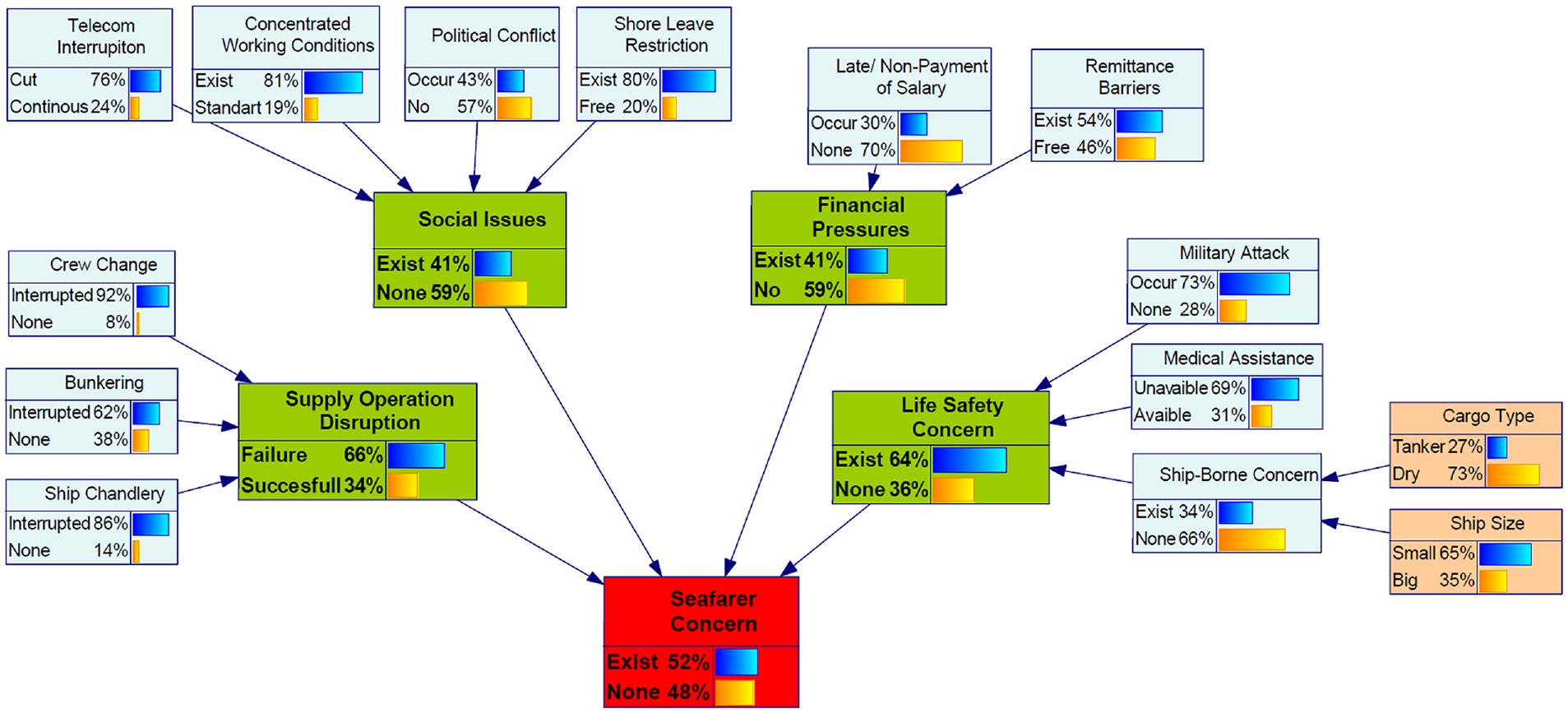
A proposed Bayesian network model for seafarers’ concern because of war conditions.
By the end of the model construction process completion, BN was modeled using GeNle Academic Version 4.0 software. FBN model, which evaluates the causes of the seafarer’s concern is presented in Figure 2.
It is essential to emphasize that “cargo type” and “ship size,” which are the only data-driven nodes of the entire network, are extracted from reports. Therefore, two data-driven Bayesian nodes are incorporated into model.
Model Validation
A large amount of research illustrates that there are several methods for determining whether a model is valid or not ( 62 – 64 ). It is important that the model should be validated for trust in the outcomes, in particular. The validation tests (axioms) for this study were performed by using the following techniques ( 65 , 66 ).
The axiom 1 of Figure 3 shows that the network behaves as expected and increasing or reducing the value of each parent node of “financial pressures” changes probabilities at the child node. For example, if “late/non-payment of salary” becomes a high-risk value, the probability of “financial pressures” increases from 41.3% to 78.3%. Similarly, if “late/non-payment of salary” has a low-risk degree, the probability of a “financial pressures” decreases to 25.4%. In addition, axiom 2 presents the change of probabilities for the node “financial pressures” under alterations made to its parent variables “late/non-payment of salary” and “remittance barriers.” The line shows that there are no sharp-kneed or outlier characteristics. Because of changes in the probability of “late/non-payment of salary” and “remittance barriers,” a consistent change of probability is detected in “financial pressures.” Last of all, axiom 3 illustrates that the collective influence of parents is greater than the effect of each parent independently for a child node with more than one parent node. Axiom 1 in “life safety concern” demonstrate that the network behaves as expected and increasing or reducing the value of each parent node changes probabilities at the child node. For example, if “military attack” becomes a high-risk value, the probability of “life safety concern” increases from 63.9% to 79.0%.
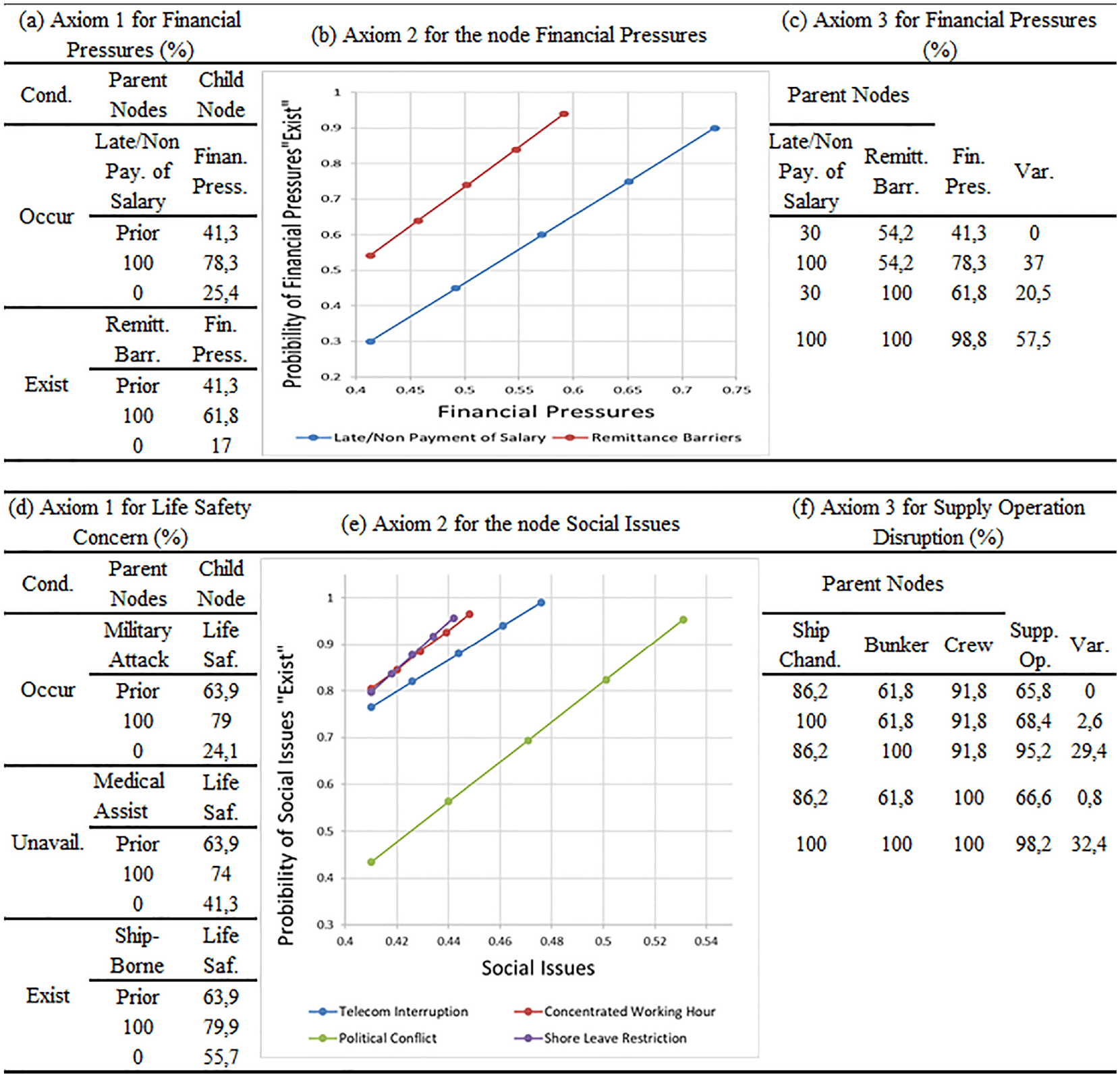
Validation tests of the model.
In addition, axiom 2 of “social issues” shows how the node’s probabilities vary when changes are made to its parent nodes of “telecom interruption,”“concentrated working hours,”“political conflict,” and “shore leave restriction.” Because of changes in the probability of these nodes, a consistent change of probability is obtained in “social issues.” Finally, axiom 3 illustrates that the collective influence of parent nodes is greater than the effect of each parent independently.
Results and Discussion
The level of seafarer concern, as shaped through the study structure, depends on the probability of supply operation disruption, social issues, financial pressures, and life safety concern. According to the BN model for seafarers’ concern because of war conditions in Figure 2, the probability of seafarer concern because of war was found to be 52%.
According to the sensitivity table (Table 7), the results show that “financial pressures” (54%) followed by “life safety concern” (33%), “supply operation disruption” (31%) and “social issues” (26%) and have a potential influence on seafarer concern, which are determined from the effect values, respectively. In the “financial pressures” node, the key factors to consider are “remittance barriers” (24%) and “late/non-payment of salary” (28%). For the “life safety concern” child node, the “military attack” (18%), “medical assistance” (11%), and “ship-borne concern” (8%) parent nodes have variable effects. Among the nodes that constitute “ship-borne concerns,”“cargo type” had an effect of 6%, while “ship size” was the variable that had the lowest impact in the model, with a ratio of 1%.
Sensitivity Analysis Results
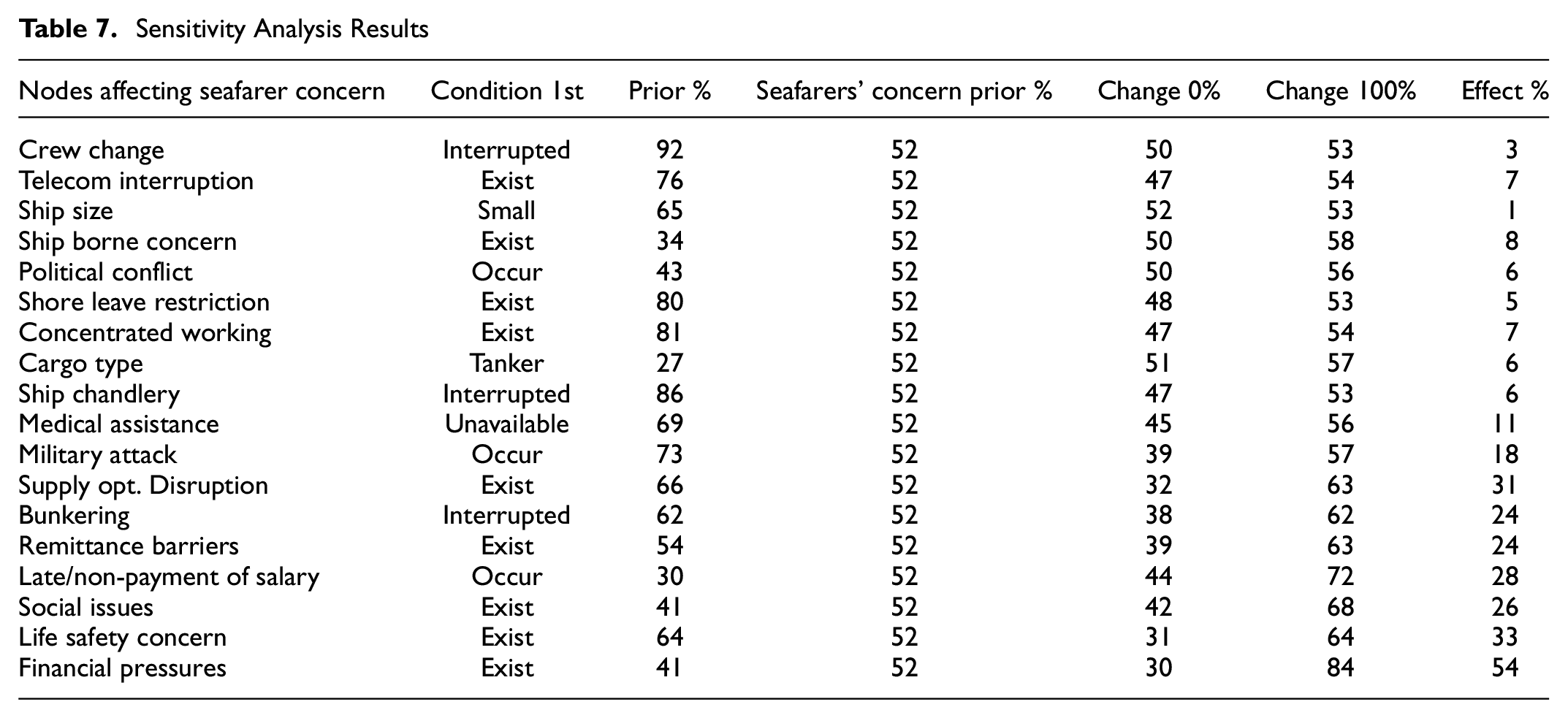
In the “social issues,” the main factors to be taken into account are “shore leave restriction” (5%), “political conflict” (6%), “telecom interruption” (7%), and “concentrated working conditions” (7%). On the other hand, for “supply operation disruption” as the child of three root nodes, “bunkering” (24%), “ship chandlery” (6%), and “crew change” (3%) have various effects, respectively. The sensitivity analysis results of all variables are presented in Table 7.
Remarkably, “remittance barriers” and “late/non-payment of salary,” which are the nodes of “financial pressures,” are among the most effective root nodes according to the model. Monetary concerns come to the forefront, even compared to concerns for safety of life. It is known that seafarers are accustomed to existing in high-risk environments (
67
–
70
), being exposed to a heavy working atmosphere (
71
–
74
), and coping with piracy terror (
6
,
7
). This situation may be explained by how seafarers put these vital concerns in second place. In in-depth interviews with the experts, stunning expressions are made, as the quotations below show:
In the beginning of the voyage, the crew reported that “we don’t sail in (war zone), we want to sign-off from the ship”. Even some of them disembarked. Then, when the company offered a “double salary” everyone accepted… To me, the only thing that holds people on-board is money, everybody is talking about the same topic: the war payment. (Yankee, Deck Cadet, 4 months in war zone).
It is also interesting to see that the effect of “bunkering” is by far more effective in seafarers’ concern than “ship chandlery,” in which both nodes are vital for the ship and their entire crew. The “bunkering” node has one of the highest values in the entire network and pinpoints the priority of fuel, which is related to the ship’s main energy source. Absence of this source will naturally end up with vital problems in heating, cooling, power cuts, and proper nutrition of crew members on board. Seafarers are well aware that ship galleys mostly rely on electric power for preservation and preparation of food. In most ships, food, water, and consumption materials are supplied in large quantities, especially the potable water and dry provision stores, which may last for even months. Consolation of seafarers with respect to “ship chandlery” may arise from this point of view; however, the literature offers contradictory findings about the situation, because war conditions adversely affect the supply of very basic human needs (
36
,
75
). Seafarers are somehow affected by this issue, as reported by two experts, with exactly the same words:
We were without potable water. (Yankee, Deck Cadet, 4 months in war zone), (Romeo, Able Seaman, 12 months in war zone).
“Crew change” is found weakly effective according to the model. The seafarers have rights with respect to safely joining or leaving their ships. The MLC (Maritime Labor Convention) ensures rights for merchant seafarers in this context, and repatriation is underpinned in this convention ( 76 ). However, these rights may have been disregarded by ship operators often and merchant mariners suffer from prolonged working periods, as experienced during the COVID-19 period ( 27 , 28 ). Also, the minor effect of “shore leave restrictions” may be explained with measures of the COVID-19 pandemic, which the seafarers seem to be accustomed to in this period.
Experts reported disturbing information with respect to “concentrated working conditions” and the conditions of war, which may be considered as a response to each other:
We worked in these areas (Black Sea) with precautions such as 6 knots cruising speed during the day, staying at drift at nights, extra lookouts on the bow and bridge (because of sea mines) and leaving the engine room unattended. (Bravo, 2. Officer, 6 months in war zone)
and:
More intensive work will be encountered normally due to the severity of conditions. Since we have already experienced such situations frequently, it will not be a problem. (Charlie, Chief Officer 7 months in war zone)
The expressions above enlighten the weak effect of this factor in the model. Seafarers frequently work under intense conditions.
The other factors under the “social issues” node, namely “political conflict” among crew members and external “telecom interruption,” are also found to be weakly effective in seafarers’ war concern. Ships are generally equipped with multinational crew, but the social relations among crew members seem to be becoming less important. This may result from the hard-working environments of ships. Crew members do not have enough time to socialize each other, which is reported as the isolation of mariners ( 77 ).
However, the effect of “telecom interruption” was found to be relatively low according to results, and the number of experts’ comments with respect to this issue is surprising:
When the Ukrainian chief engineer had problems reaching his family, his productivity decreased significantly, he worried a lot. People live for their family… There was local internet-telephone cut-downs in the war zone. (Alpha, Master, 12 months in war zone)
There were network problems in vicinity of bombardment zone (Odessa). We realized communication problems. (Yankee, Deck Cadet, 4 months in war zone).
Because of the very nature of seafaring, mariners already work with limited social opportunities, and this situation seems to be normalized by workers. Seafarers have already submitted to this situation; however, they are not happy with the case:
Social life (out in ports) becomes a problem (especially at nights). This affects me. There were curfews…. (Yankee, Deck Cadet, 4 months in war zone).
In cases of military aggression, ships carrying hazardous materials will be expected to incur greater damage than other ships; fire and explosions will naturally lead to terrible results in these ships. Surprisingly, “cargo type” was weakly effective according to the model, and experts seemed to ignore this factor.
Conclusions
While war-related studies constitute a considerable body of literature, issues related to merchant seafarers’ considerations in war conditions have nevertheless been overlooked so far. The purpose of the current study was to determine the causes of seafarer concern in a war environment and to develop a network model for evaluating the weights of the effects on these concerns. It has been detected that, during war conditions, seafarers suffered from various issues, such as financial pressures, life safety concerns, social issues, and supply operation disruption. The concern for life safety is expected to be ahead of all concerns in war conditions, but contrary to expectations, the study shows that financial concerns are the primary source of concern for merchant mariners. Seafarers attend the ship with the aim of earning money by taking many risks, including life safety. Therefore, that other sources of concern are at lower levels compared to financial concerns confirms this situation. Seafarers’ working environments naturally have restricted opportunities and various perils. It is seen that these undesirable conditions are adopted by merchant mariners. The motivation to earn money comes to the fore despite all the negativities.
The present study makes several noteworthy contributions to the effect of war on seafarers’ well-being. The study primarily draws the general outlines of the negativities that the sailors may encounter in war. In this context, a key policy priority should therefore be developed for seafarers in war conditions. Addressing seafarer concerns in war conditions requires a comprehensive approach involving governments, international organizations, insurance providers, and industry stakeholders. It is essential to prioritize the financial security, life safety, well-being, and rights of seafarers who operate in high-risk environments. In the light of the findings discussed in this paper, it may be recommended to evaluate the legislative frameworks for merchant seafarers’ occupational health and safety in wartime conditions.
Shipping companies should provide crew training and familiarization for unsecure navigational areas and prepare their crew mentally. Before embarking on the ship, seafarers should be informed of the challenges posed by wartime conditions through awareness training. There is existing literature on post-traumatic syndromes commonly experienced by seafarers in high-risk piracy and armed conflict zones ( 6 , 78 ). To mitigate the likelihood of developing post-traumatic syndromes, it is recommended that seafarers be closely monitored on disembarking and be offered medical and psychological support if required. To prevent concentrated working hours in conflict zones, it is advisable to enhance the size of the crew. Furthermore, shipping companies should be encouraged to address the risks associated with conflict zones in their ship safety culture concept. Recent armed conflicts have highlighted the importance of this issue. In this context, close coordination and communication in the shipping society is crucial to prevent the detrimental effects of war on seafarers.
Furthermore, it is expected that this research will serve as a base for future studies related to war effects on seafarers. Further research with respect to seafarers’ concerns that could assess the effects of war would be worthwhile.
Footnotes
Acknowledgements
The authors would like to express their gratitude to the anonymous experts and reviewers for their invaluable feedback, which significantly contributed to enhancing the quality of the study. In addition, the authors would like to thank M.D. Burcu Ece Kök Özyürek for providing psychiatric suggestions during the practical implementation of the model.
Author Contributions
The authors confirm contribution to the paper as follows: study conception and design: Ş.E. Kartal, O.B. Öztürk, Ş. Şanlıer Uçak; data collection: Ş.E. Kartal; analysis and interpretation of results: Ş.E. Kartal, O.B. Öztürk; draft manuscript preparation: Ş.E. Kartal, O.B. Öztürk, Ş. Şanlıer Uçak. All authors reviewed the results and approved the final version of the manuscript.
Declaration of Conflicting Interests
The author(s) declared no potential conflicts of interest with respect to the research, authorship, and/or publication of this article.
Funding
The author(s) received no financial support for the research, authorship, and/or publication of this article.
