




Abstract
In this paper we pay tribute to Stephen Resnick (1938-2013), a major contributor to the Marxian theoretical tradition. We present a brief introduction to the works of Stephen Resnick and trace his intellectual journey to highlight the factors that had major influence on his work, in particular the influence of Louis Althusser. We note the emphasis on epistemological considerations and class exploitation in Resnick’s Marxist works.
Source: Image courtesy of Erik Olsen
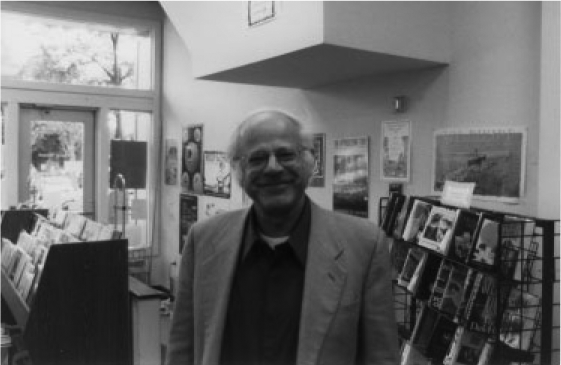
1. Introduction
In the wake of the recent economic crisis in richer countries and the subsequent slowdown in many countries worldwide, there is a discernible and growing interest in those traditions of thought, including the Marxian tradition, that emphasize the contradictory, exploitative, and unstable nature of the capitalist economy. At this conjuncture, it is only appropriate to remember one of the major contributors to the Marxian theoretical tradition, Stephen Resnick, who passed away on January 2nd, 2013. In October of 2009, at a round table of faculty members, organized by the Department of Economics at the University of Massachusetts at Amherst (UMass), Resnick told students that a door opened up in the 1960s and he chose to walk through the door in search of ideas that could explain the inequality, exclusion, and exploitation he saw. He believed that a door has again opened up in the current social context for students to walk through in search of different ideas, without being fearful of the consequences of such intellectual adventure. 1
Resnick is best known for his contributions to Marxian theory, which he taught and wrote about for close to forty years. Together with his life-long collaborator and friend Richard Wolff, colleagues, and students, he shaped a new Marxian tradition that emphasized the epistemological and ontological “breaks” that he identified (following Louis Althusser) as Marx’s most fundamental contributions. Resnick was an overdeterminist thinker in his epistemological position (emphasizing non-determinism or anti-essentialism) and a classical Marxist in his ontological standpoint (emphasizing class exploitation). His works thus contributed to and shaped what is referred to as overdeterminist Marxism.
Like many contemporaries of his generation, Stephen Resnick, too, was radicalized by the experience of the 1960s, which made him question dominant economic theories. In his early academic career, despite his left-leaning sensibilities and interest in Marxism, he mostly used neoclassical economic theory and standard empirical methods, like econometrics, to address economic problems. The radical phase of his career—spanning almost forty years of writing and teaching Marxian theory—is mostly associated with the Department of Economics at the University of Massachusetts, Amherst (UMass). It was at UMass that his long and uninterrupted collaboration with Richard D. Wolff produced the body of Marxian work that he is best known for and his organizational and academic work with students and colleagues gave birth to a radical community around the Association for Economic and Social Analysis (AESA) and the journal Rethinking Marxism.
The main contribution of Stephen Resnick (in his works with Richard Wolff) was to place epistemological considerations and class exploitation at the heart of Marxian theory and to produce a thinner but analytically more distinctive Marxian theory. This inevitably stirred a controversy over what it means to be a Marxist and what kind of politics flows from particular epistemological and ontological standpoints. The importance of these questions can hardly be overemphasized in the current conjuncture in global capitalism which offers new opportunities for Marxists to intervene and contribute a critical edge to social thought and practice.
In the remainder of this essay, we try to present a brief introduction to the works of Stephen Resnick and trace his intellectual journey to highlight the factors that had major influence on his work. We begin with the early phase of his career within the economics “establishment,” trace the transition to the radical phase of his career, and then discuss, in broad strokes, his main works and his contributions to Marxian theory. We also emphasize his contributions as a teacher in getting hundreds of undergraduate and graduate students interested in critical theory in general and Marxian theory in particular. We conclude with a few reflections on such an extraordinary career.
2. Early Career
Coming from a working-class family in Boston and having read some Marx in high school, Resnick chose to study economics to have a better intellectual grip on the surrounding reality that he found to be less than acceptable (Resnick 2012b). He had a successful launch into the academic establishment, obtaining his Bachelor’s degree from the Wharton School at the University of Pennsylvania in 1960 and his Ph.D. in economics from Massachusetts Institute of Technology (M.I.T.) in 1964. 2 While taking courses in neoclassical and Keynesian economics from Evsey Domar, Charles Kindleberger, Paul Samuelson, and Robert Solow at M.I.T., Resnick was exposed to the heady debates between monetarists and Keynesians and the famous “Cambridge Capital Controversy.” Regarding the latter, he made sure to attend a series of lectures on the subject given by Joan Robinson at Boston College and at M.I.T. in response to neoclassical positions that Samuelson and Solow defended at M.I.T. At the same time, he attended lectures at Boston College by Milton Friedman, who, by virtue of his extreme free-market views, was “radical” in those days of high Keynesianism. This experience made him aware of theoretical differences in economics, the contingent hegemony of dominant approaches, and the shifting locations of radical positions. 3
It was also at M.I.T. that Resnick met Stephen H. Hymer, who later became a friend and his most important collaborator in the early years of Resnick’s career. Both Hymer and Resnick ended up being hired by Yale University during the early 1960s, where they joined the Economic Growth Center, which at the time was directed by Gustav Ranis. However, their collaboration would be cut short by Hymer’s tragic death in a car accident in February of 1974. Arguably, the most famous product of the collaboration between Hymer and Resnick is their 1969 American Economic Review paper, where they modelled the set of alternative activities faced by rural households. By including non-agricultural and non-leisure activities (what they refer to as Z-goods) in their model, Hymer and Resnick went beyond the standard dual-economy models à la Arthur Lewis, to an analysis that recognized that “a major substitution that occurs in the process of development is not the replacement of leisure or idleness by work, but rather the shift from inferior methods of home production to superior methods based on specialization and exchange” (Resnick and Hymer 1969: 503). 4 This article—a seminal contribution to development economics—paved the way for more elaborate models of developing economies, foregrounding the importance of rural non-agricultural activities in the process of economic development (Ranis and Stewart 1993).
Resnick was deeply interested in the economic problems of developing countries, partly due to the years he spent as a visiting assistant professor at the University of the Philippines during 1964-65 and as a member of the International Labor Organization’s Comprehensive Employment Strategy Mission to the Philippines in 1973 headed by Gustav Ranis. While at Yale, Resnick was also a part of and taught in the International Foreign Administration Program for students coming from outside the United States (Truman 2013). In 1970 Resnick was a member of the first editorial board of the Journal of Contemporary Asia. Gustav Ranis referred to Resnick as “a ‘man of the left’ but always sensible and a major contributor to the mainstream of development economics” (Ranis 2013). At Yale, he would support doctoral students working on developing countries using a political economy perspective. Victor Lippit, a student at that time, recalls: I was writing my dissertation on the Chinese economy when [Stephen Resnick] arrived [at Yale]. I was comparing the use of the surplus before and after the Chinese Revolution, arguing that the shift from luxury consumption to investment was the key to the investment surge in the 1950s, and a key to China’s starting on a development path without depressing popular living standards, which were extremely low to start with (the dissertation was published as an entire issue of Chinese Economic Studies and then as a book by M.E. Sharpe). The approach I used was based on the concept of the surplus developed by Paul Baran, although I made a number of changes to improve it conceptually and to use it in practice. The problem I faced with my committee at Yale was that one member absolutely insisted that the surplus was not an economic concept and the only valid use of it was as consumer surplus. Then that committee member took a two-year leave of absence and Steve came to Yale and agreed to become a member of my committee; that was about 1969-70. Of course he had no problem with the concept of surplus—not consumer surplus—and I was able to complete my dissertation. (Lippit 2013)
Even though Resnick was open to heterodox ideas, he continued to work within the methodological confines of the economics “establishment” until the mid-1970s. Apart from development economics, Resnick’s major works in this period were in the field of international economics, covering trade theory and policy (Resnick 1968; Balassa and Resnick 1974; Resnick and Truman 1973, 1974), international political economy (Hymer and Resnick 1971), and economic history (Resnick 1973; Birnberg and Resnick 1973, 1975).
Despite his methodological moorings in neoclassical economics, Resnick’s works occasionally betrayed his interest in Marxism (Resnick 1973; Hymer and Resnick 1971), as the following quote illustrates.
Another important influence was a conversation one of us had with [Paul] Samuelson in which the following question was posed: “What is there in Marx that is (a) valid and (b) not included in the M.I.T. graduate economics curriculum. His reply was “The Class Struggle.” (Hymer and Resnick 1971: 493)
However, it was Resnick’s association with Wolff—who had transferred to Yale as a graduate student from Stanford when his advisor, Paul Baran, suddenly passed away in 1964—which subsequently helped him move further towards Marxism.
3. Radicalization
Richard Wolff connected Resnick with an important institution of radical thought within the United States: the Monthly Review School of American Marxism. Resnick and Wolff’s respective partners also came to be acquainted with each other through the early experiences of the women’s liberation movement in New Haven, Connecticut. 5 In 1968, Resnick, Hymer, and Wolff took part with others in the development of the Union for Radical Political Economics as an alternative to what they considered to be apologetic positions that the American Economic Association represented in the face of the evident instability, poverty, oppression, and exploitation that were inherent in the way the capitalist system worked.
Resnick moved to City College of New York (CCNY) in 1971 6 where he taught courses in economic theory and economic development. Jack Amariglio, a student of Resnick’s at the time, recalls his experience in one of Resnick’s classes.
In 1972 he gave the undergrad[uate] course on economic development. It was the most exciting course of my life. There were close to 40 students in the class, and they came from every conceivable nation of the world, and from many different race, class, and other ethnic backgrounds in New York City. It was an exciting time period anyway (the war in Vietnam was still raging), and the critique of “imperialism” was in the air for sure. Steve’s course, both because of him and because of other students, made the experience electrifying every single day of it! I learned the most “economics” in that class than I ever did in any other taught by anyone else at any level! It was remarkable. (Amariglio 2013)
Resnick and Wolff, now colleagues at CCNY, gradually developed a lasting friendship and sustained an extraordinary academic collaboration that produced the body of work both are best known for. 7 By the time Resnick arrived at CCNY in 1971, his intellectual journey had already taken a radical turn and his years at CCNY moved him further towards “Left Marxism.” 8
Before I arrived at UMass in 1973, I had several working lives. I arrived at Yale in 1963 working and publishing mostly in applied micro theory, international trade theory, development, and applied econometrics. As the 1960s proceeded I moved more to the left but it was one in which I tried to graft considerations of power to neoclassical and even Keynesian economics. . . . When I left Yale to go to CCNY I was ripe for a more radical approach: many events—a previous year in the Philippines around 1964-65, the persistent poverty in the U.S. (Harrington’s “Other America”), the civil rights movement, Vietnam War, women’s rights movement—overdetermined that ripeness. (Resnick 2012)
In his last published article in the American Economic Review (1975)—a journal for which he was member of the editorial board from 1974 to 1977—there are clear signs of influence on his ideas of radical traditions in general and the Marxian tradition in particular. Exploring and criticizing several of the tenets of standard development theory, Resnick accused neoclassical theory of being useless for understanding how one class or one country exploits another (Resnick 1975: 322). Further, from the methodological perspective, Resnick argued that mainstream development economists “have taken the institutional and historical development data into their academic offices, beaten the theory out of it, and come out with an ad hoc policy package of applied micro theory, no more useful in this field than in any other” (ibid: 317). Coming from someone who had until then published several theoretical and econometric works on developing economies and who had first-hand experience of how development policies for countries are formulated, his critique is an indictment of the development theorists and professionals who were and still are powerful actors in shaping the future of poorer societies. Resnick’s critique of the ascent of technique in the economic literature remains as trenchant as ever.
Sometimes the power of technique lies in its ideological dimension which allows the economist as technician to ignore both the theory upon which it ultimately rests and the political economy that produces that theory. (ibid: 318)
In 1973, Resnick was hired, along with Richard Wolff, Samuel Bowles, Herbert Gintis, and Richard Edwards, by the University of Massachusetts Amherst administration as part of a “radical package” of economists to revive the then struggling Economics Department (Katzner 2011), but now with a distinct radical political economy orientation. 9 Over time, the Economics Department at UMass emerged as an important heterodox department in the United States where students were exposed to a range of theoretical traditions—e.g. various Marxian traditions, neoclassical and Keynesian theories, Post-Keynesian approaches, feminist economics— as part of the coursework. This constituted one of a very few graduate programs whose objective was not only to train young graduate students in the “tools” of economics but also to expose them to theoretical differences that constitute the discipline of economics itself. It was an exhilarating, often daunting, but ultimately enriching experience for generations of students who came out of the program with a richer understanding not only of economics, but also of their role in society.
Resnick was a remarkable teacher in both graduate and undergraduate classes, winning every teaching award at UMass, where he taught for four decades. His courses were renowned for the energy, passion, and pedagogical skill that reflected a love for his job and his enduring interest in the way knowledge is produced. This last aspect was evident in Resnick’s respect for schools of thought that he did not agree with, a respect that he asked from his students at every level while trying to convey the logics of the different theoretical and ideological positions. At the same time, he remained a tireless critic of neoclassical and Keynesian economic theories and a champion of Marxist economics the way he had helped re-theorize it. These and other aspects of Resnick’s teaching and writings motivated, inspired, and guided many doctoral students and in the process helped to create a whole new tradition of radical thought in the United States, which influenced many scholars in other countries too. He was respected and loved for his commitment to students, for the integrity and honesty of his work, and for his ability to combine strength of conviction with genuine appreciation of others’ convictions.
Resnick and Wolff contributed a unique intellectual tradition to the graduate program in economics—the overdeterminist Marxian school—which consolidated itself over the next four decades as a unique school of thought within Marxism that definitively broke away from the dominant strands of twentieth century Marxism. With their graduate students at UMass, Resnick and Wolff created the Association for Economic and Social Analysis (AESA) in the late 1970s. This collective came out with the journal Rethinking Marxism (RM) and its first issue in 1988. The journal has since then been the “home” for the political and academic community that grew around this school of Marxism. Resnick was a member of the editorial board of RM from 1987 to 1994 and steered it through its infancy.
4. Contributions
Resnick’s intellectual journey took him through the Marxism of the Monthly Review School, the neo-Marxist works of Gunder Frank and Samir Amin, the works of British sociologists Barry Hindess and Paul Hirst, and finally to Althusser. 10
It was actually the book by Hindess and Hirst on Pre-capitalist Modes of Production in the mid-1970s that provoked discussions that led to reading Althusser since Hindess and Hirst had indicated their heavy intellectual debts to Althusser. We wanted to read the original Althusser since we had questions and reservations about Hindess and Hirst alongside our appreciation for the advance in Marxist thinking about modes of production achieved by their book. Our work - then as “economic historians” - had led us to see major theoretical problems in how the Marxist tradition had come to understand the evolution of and transitions between/among modes of production from primitive society through to the present. (Wolff 2012b)
At the same time non-Marxist works, like those of Willard Van Orman Quine and Richard Rorty, helped Resnick and Wolff sharpen their epistemological departures from dominant strands of Marxian thought. 11 However, it was the French Marxist Louis Althusser’s ideas, particularly his concept of overdetermination, which were pivotal in shaping the new Marxian theory they produced. 12 Resnick and Wolff were the first in North America to produce a Marxian theoretical system using Althusserian concepts. Within the Marxian tradition, the overdeterminist Marxist theory remains controversial; it continues to attract as much admiration as criticism. 13
Resnick and Wolff’s collaborative work began with the publication of their article “The Theory of Transitional Conjunctures and the Transition from Feudalism to Capitalism in Western Europe” in the Review of Radical Political Economics (1979a). In a series of articles that immediately followed in journals like Social Text (Resnick and Wolff 1982a), The Journal of Economic History (Resnick and Wolff 1982b), the Review of Radical Political Economics (Resnick and Wolff 1982c), and Socialist Review (Resnick and Wolff 1986), Resnick and Wolff did two things. First, they established their epistemological position (overdetermination) and their entry-point (class understood in terms of the production, appropriation, and distribution of surplus labor), and thus distinguished their position from neoclassical and Keynesian approaches as well as from those Marxist approaches which, according to them, relied on essentialist epistemology and/or employed power or property-based notions of class. Second, they applied their framework to concepts traditionally addressed within Marxism like class, state, and firm, and within economics in general like income distribution and international trade. This body of work culminated in their co-authored books Knowledge and Class and Economics: Marxian versus Neoclassical, both of which were published in 1987. While the former was written for the advanced reader, the latter served as the textbook for undergraduate students interested in Marxian theory and its difference from the neoclassical theory which they learn in their undergraduate curriculum. Some months before he passed away, Resnick’s last book (with Wolff) Contending Economic Theories: Neoclassical, Keynesian, and Marxian (Resnick and Wolff 2012) was published. This was a new version of their earlier undergraduate textbook, incorporating an elaboration of Keynesian economics and new developments in mainstream economics, and re-establishing the difference between their approach and these other theories.
In their collaborative works, Resnick and Wolff never tired of emphasizing the centrality of epistemological considerations. They firmly broke away from what they regarded as epistemological essentialism that dominated much of the twentieth century Marxian tradition, avoiding the teleology of historical materialism as well as the reductionism of the base-superstructure framework. As Resnick was so fond of saying in his classes, the answer to what may happen in the future to any given object of analysis is: “it depends.” According to them, any process is literally brought into existence by all other processes occurring in the society; one cannot reduce any entity to an essence, i.e. a subset of processes more important than others in bringing it into existence. Thus, the complex totality of the social and natural processes that constitute, in a contradictory way, a particular object of study is brought right into the heart of the analysis. Recognition of this complexity also makes contradiction central to any understanding of society. This has immense political implications. Since nothing can be pre-ordained, and since society is a contradictory totality, it can potentially change “at the drop of a hat” (Althusser 2006: 196). It can reinvigorate political activism and free Marxist politics from bouts of euphoria and depression that inevitably accompany politics based on a teleological understanding of social evolution.
Marxists, according to them, have a unique way of contributing to the knowledge of society. Given the irreducible complexity of society, Marxists can adopt a particular entry-point, one or several among the infinite set of processes, and use “it [them] as a focus, a means to bring a particular order or coherence to the initial chaos of mutually interacting social activities” (Resnick and Wolff 1992a: 16). According to Resnick and Wolff, the class perspective—where class is understood in relation to the processes of production, appropriation, distribution, and receipt of surplus labor—was Marx’s unique contribution to producing a particular kind of knowledge of society. Their notion of class differed from those in other strands of Marxism in that society was not reduced to its class aspects, nor was class considered any more important than other processes. Second, the surplus-based notion of class was quite distinct from power- or property-based definitions of class. It defined class at the core of the economic process of production, enabling a new emancipatory politics around democracy at the workplace (Wolff 2012a).
Finally, this epistemological openness and unique class-focus made them critical of the etatism that pervaded Marxian politics in the twentieth century. The Marxian political imagination in the twentieth century had been dominated by the figure of the state as the ultimate instrument in the hands of the ruling class. Resnick and Wolff’s approach highlighted the problematic character of this reductionist and centered idea of the state. On the contrary, they argued that the state is pulled and pushed in different contradictory directions by the complex social totality. Hence, intervening in individual social processes cumulatively could have as much, if not more, of a transformative effect on the state as any political practice targeted at the state. Thus, Resnick and Wolff strived to make visible the opportunity and the reality of class struggles at individual social sites and their transformative effect on the society at large. In the context of the recent economic crisis, triggered by the financial collapse of 2008, as public opinion swung from pro-business to pro-government ideology, one could see the relevance of their critique of dominant politics, including some Marxian political positions, as being trapped in the endless oscillation between state and market, while keeping capitalist class exploitation intact (Resnick and Wolff 2012: 311-346).
Their major influential works subsequent to the publication of Knowledge and Class were an explanation of their departure within the Marxian tradition from determinist readings of Marx and class analysis of a variety of economic issues like monopoly, economic efficiency, and income distribution; the extension of their framework to the household and family; a class analysis of the rise and fall of Soviet Russia; a class analysis of the transformations in China under the “Communist” government; the relationship between class, culture, and identity; an analysis of contemporary U.S. capitalism; and the latest economic crisis in capitalism (Resnick and Wolff 2006; Fraad, Resnick, and Wolff 1994; and Resnick and Wolff 2008; Resnick and Wolff 2002; Gabriel, Resnick, and Wolff 2011; Amariglio, Resnick, and Wolff 1988; Resnick and Wolff 2003; and Resnick and Wolff 2010, respectively). Through all these times, they had continued to emphasize their distinct approach to Marxian theory, theoretical differences within economics and in radical theories, their commitment to overdetermination, and the importance and distinctiveness of their notion of class.
5. Conclusion
Stephen Resnick exemplified the classical image of a radical thinker on campus, passionate in teaching, engaging and challenging students, and opening up minds to critical thought. He was theoretically aware of his own and others’ partisan positions, laid them bare in lectures and writings, and urged others to do so too. Resnick believed that by doing all of these he was participating in a process that would add to the numerous other determinations that make the student or the reader choose a particular theoretical position, recognizing that “everything that happens in philosophy has, in the last instance, not only political consequences in theory, but also political consequences in politics: in the political class struggle” (Althusser 1976: 42). He is fondly remembered by many of those who knew him and/or his works as an extraordinary man, who insisted on understanding how knowledge is produced and the social consequences of participating in production of particular kinds of knowledge. In the discipline of economics, this is as rare as it ever gets.
Footnotes
Acknowledgements
The authors would like to thank Jack Amariglio, Jagdish Bhagwati, Victor Lippit, Gustav Ranis (1929-2013), and Edwin Truman for answering our queries, confirming facts, sharing personal anecdotes, and giving us permission to quote from personal email communications. We are grateful to Richard Wolff for giving useful comments on an earlier draft of the manuscript and giving us permission to quote from personal email communications. The authors also thank the referees David Kotz, Enid Arvidson, and Jonathan Goldstein for their comments and suggestions. All the usual caveats apply.
Declaration of Conflicting Interests
The author(s) declared no potential conflicts of interest with respect to the research, authorship, and/or publication of this article.
Funding
The author(s) received no financial support for the research, authorship, and/or publication of this article.
1
2
3
Source: See footnote 1.
5
6
In 1970 Resnick had been promoted at Yale to the rank of Associate Professor but without tenure, due to his signing an anti-war petition against recruitment on campus by the ROTC. (Source: Richard Wolff in his remarks at the memorial for Resnick organized at UMass on April 26, 2013 available at  (last accessed April 19, 2014)).
Sometime earlier Hymer himself would be denied tenure and promotion at Yale, an event that seems to be related to his explicit embrace of Marxism at the time. Earlier, even though not explicitly Marxist, his Ph.D. dissertation, defended in 1960, was denied publication by MIT Press until 1976. He would end up, from the autumn of 1970 to his death in 1974, teaching at the New School for Social Research ().
7
All of Resnick’s publications in overdeterminist Marxian theory, except , had Richard Wolff as a co-author, a testimony to their sustained joint commitment to the political-academic project they had embarked on in the mid-1970s. Resnick himself always resisted any academic inquiry into his (or Wolff’s) separate contributions to their joint work. This was evident to the present authors in their academic and personal interactions with Resnick.
8
9
Some of Resnick and Wolff’s students at CCNY joined UMass, among whom Jack Amariglio and Antonio Callari went on to contribute significantly to the Marxian work produced by Resnick and Wolff and to the development of AESA and Rethinking Marxism.
10
12
See Resnick and Wolff (1987a, 1991, for the influence of Louis Althusser on their work.
13
See Gintis (1979), Peet (1992), Silverman (2013), and Park (2013) for a critique of Resnick and Wolff’s works and their replies to them (Resnick and Wolff 1979b, 1992b, ).