



Abstract
This mixed-methods study examined the health information-seeking behavior of Latino caregivers of people living with dementia. A structured survey and semi-structured interviews were conducted with 21 Latino caregivers in Los Angeles, California. For triangulation, semi-structured interviews were also conducted with six healthcare and social service providers. The interview transcripts were coded and analyzed via thematic analysis, while the survey data were summarized using descriptive statistics. The results show that caregivers sought information on what changes to expect as dementia progresses. Some desired detailed (limited) information to be better prepared (to worry less). The most common action to address their information needs was searching the Internet. However, those who did this tended to be concerned about the quality of information. Overall, this study sheds light on how much detail Latino caregivers desire in the information they need and the actions they take to obtain this information.
Keywords
• A better understanding of the health information-seeking behavior of Latino caregivers of people living with dementia. • Qualitative description of the level of detail Latino caregivers desire in the information they want about caregiving-related topics. • Qualitative and quantitative description of Latino caregivers' actions when they have an information need and the barriers they encounter in the process.
• Tailoring the amount of information provided to Latino caregivers on particular topics according to their individual preferences. • Improving Latino caregivers' access to online information and ensuring high-quality Spanish translation of websites. • Ensuring that all people living with dementia and their family caregivers have access to healthcare, social, and other supportive services, regardless of English proficiency, immigration status, and medical conditions.What this paper adds
Applications of study findings
Family members are the largest source of care for people living with dementia. However, caregivers typically perform caregiving tasks without adequate information, training, or support (Schulz & Eden, 2016). Notably, over 60% of caregivers report that they want more information about or help with caregiving, with caregivers in higher-intensity care situations more likely to report this (National Alliance for Caregiving, 2020). In the U.S., Latino caregivers provide more intensive care (≥200 hours of care/month) than white caregivers (Friedman et al., 2015). As the number of Latino people living with dementia in the U.S. is projected to increase to 3.5 million by 2060 (Wu et al., 2016), the number of Latino caregivers seeking information about caregiving will also increase.
Several studies have focused on the health information-seeking behavior of family members providing care to people living with dementia (Soong et al., 2020). Lambert and Loiselle (2012) operationalize health information-seeking behavior via four components: (1) type of information, (2) the level of detail in the information (hereafter, amount of information), (3) information sources, and (4) actions taken to obtain information. Notably, research has mainly focused on the first and third components. For instance, caregivers seek the following types of information: dementia and its progression, healthcare services and treatment, and caregiver self-care (Iribarren et al., 2019; Mastel-Smith & Stanley-Hermanns, 2012; McCabe et al., 2016; Peterson et al., 2016; Steiner et al., 2016; Whitlatch & Orsulic-Jeras, 2018). Meanwhile, the main sources of information for caregivers are clinicians, support groups, family members/friends, and websites (Allen et al., 2018).
However, fewer studies have focused on the other two components. First, the amount of information (i.e., how much detail) caregivers seek about different topics remains unclear. This aspect is highly individualized. For instance, some people may search for detailed information on a topic, whereas others may seek brief or no information at all (Ford et al., 2002; Friis et al., 2003; Leydon et al., 2000). In Latino communities, stigma can be associated with the diagnosis of Alzheimer’s disease or related dementias, receiving mental health services, and placing aging parents in assisted living facilities (Beyene et al., 2002; Cabrera et al., 2021; Fripp & Carlson, 2017; Martinez & Acosta Gonzalez, 2022). This can influence the amount of information Latinos seek about these topics. Second, caregivers' methods of obtaining information are often understudied, particularly whether caregivers directly ask questions to practitioners or other individuals, ask for clarifications, exchange information with other individuals, read educational materials, or browse the Internet (Lambert & Loiselle, 2012). Finally, few studies focus on Latino caregivers of people living with dementia (Iribarren et al., 2019).
This study examined the health information-seeking behavior of Latino caregivers of people living with dementia in Los Angeles County, California. Besides the type and sources of information, this study also investigated the amount of information Latino caregivers seek and their methods of obtaining this information. This study’s findings can shed light on the underexplored health information-seeking behaviors of Latino caregivers. Using these insights, health professionals can plan culturally appropriate information interventions tailored to Latino caregivers' individual needs.
Methods
A mixed-methods approach was used. First, a structured survey and semi-structured interviews were conducted with Latino caregivers. Second, for triangulation, semi-structured interviews were conducted with healthcare and social service providers who had worked with Latino caregivers.
Ethical Approval
The Institutional Review Board (IRB) at the University of Southern California and Rancho Los Amigos National Rehabilitation Hospital approved the study (applications UP-17-00875 and #257, respectively). The study fell under the exempt Category 2 for interview research because the study was not greater than minimal risk (USC OPRS, 2022). Consequently, informed consent from participants was not required. Finally, all participants were provided with a printed form with information about the study.
Participant Recruitment
Both caregivers and healthcare providers were recruited from Los Angeles County, California. Caregivers were recruited between March 2018 and February 2019 using four recruitment methods. First, the Rancho Los Amigos/USC California Alzheimer’s Disease Center distributed recruitment flyers during routine visits and generated a list of caregivers interested in participating in the study. Second, a study staff member attended multi-ethnic caregiver support group meetings to explain the study and generated another list of interested caregivers. The caregivers on these two lists were then contacted via the phone numbers they provided and invited to participate in the study. Third, the study was advertised on the Facebook page of Alzheimer’s Greater Los Angeles and on the Alzheimer’s Association TrialMatch website. Fourth, interested participants were asked to share information about the study with other caregivers. For the latter two recruitment methods, caregivers were instructed to call the provided phone number to learn about participating in the study.
Caregivers were eligible if they: (1) were a family member or friend of a person living with dementia; (2) were the primary person responsible for the care of the person living with dementia; (3) self-identified as Latino/Hispanic; and (4) spoke English or Spanish. In total, 21 caregivers met the eligibility criteria and participated in the study (Figure 1). Flow chart of caregiver recruitment.
Next, for triangulation, a convenience sample of 10 healthcare and social service providers of dementia services was invited to participate in the study via email and phone. Four providers could not be reached after multiple emails and telephone calls. In total, six invited providers participated in the study: one dementia caregiver support group facilitator, one neurologist, one physician assistant, and three social workers.
Data Collection
Caregivers were interviewed via telephone, with twelve interviews conducted in Spanish and nine in English. Providers were interviewed in English either in-person at their workplace or via telephone, depending on their preference. Interviews lasted 20–60 minutes and were audio-recorded.
Using a semi-structured interview guide (Online Appendix), participants were asked about the information-seeking behavior of Latino caregivers. The questions inquired about the information sought by a caregiver with regard to the common aspects of caregiving (Black et al., 2013; Callahan et al., 2012; Hodgson et al., 2013). These included gaining access to personal health information of the person with dementia, managing behavioral and psychological symptoms, managing medications, coordinating with healthcare and social service providers, and learning about dementia and how to provide care. The interview guide also enquired about information sources, access to information, use of information, and barriers encountered in gaining access to and using information.
Furthermore, an optional structured survey was verbally administered to caregivers at the end of their semi-structured interviews. In total, 18 caregivers completed the survey. The survey contained questions about caregivers’ most recent search for information about health or medical topics (Online Appendix).
The caregivers received $60 gift cards for the interview; those who completed the survey were given an additional $40 gift card. The providers received $100 gift cards for the interview.
Data Analysis
Three data sources were analyzed: caregiver interviews, caregiver surveys, and provider interviews. The first two were the primary sources of evidence to understand Latino caregivers’ health information-seeking behaviors. Findings from these two sources were corroborated using data from provider interviews.
Thematic analysis was used to code and analyze the interview data (Braun & Clarke, 2006). A professional transcription company first transcribed audio recordings, which contained no personally identifiable information (List of HIPAA Identifiers, 2022). The transcripts were then analyzed in their original language (Spanish or English) by the researchers. Dedoose version 8.1.8 was used to manage the coding process. First, the first author (MR) read all transcripts and made brief notes about the content of the data. Second, the same author began developing an initial codebook. The codes were “theory-driven,” in that transcripts were approached with specific topics in mind that the research team wished to code around (Braun & Clarke, 2006). Specifically, the researchers mainly relied on codes directly representing the four components of health information-seeking behavior (Lambert & Loiselle, 2012) and common types of information that caregivers need (Iribarren et al., 2019; Mastel-Smith & Stanley-Hermanns, 2012; McCabe et al., 2016; Peterson et al., 2016; Steiner et al., 2016; Whitlatch & Orsulic-Jeras, 2018). Third, three researchers independently coded transcripts and met to reconcile coding disagreements, clarify code names and definitions, and add codes that emerged from the data. When the codebook was finalized, one research team member independently coded the remaining transcripts. Fourth, the first author collated all coded excerpts to search for themes related to the four components of health information-seeking behavior. After re-reading all excerpts within each code, the various codes were sorted into themes based on the excerpts' contents. During this process, the relationships between codes, themes, and levels within the themes were considered. This resulted in a collection of candidate themes and relevant excerpts for each theme. Fifth, the research team reviewed the candidate themes to ensure that excerpts within themes were coherent and different themes were clearly distinct. The first author first read all collated excerpts for each theme and refined the themes as needed. Subsequently, the researchers reviewed the themes and provided additional input to produce the final two themes.
Frequency distribution was used to summarize caregiver responses to each survey question. Finally, bivariate analysis was used to examine the relationship between information sources and caregivers’ experience with seeking information.
Results
Characteristics of Latino Caregivers
Characteristics of Latino Caregivers.

Latino Caregivers’ Experience with their Most Recent Search for Information
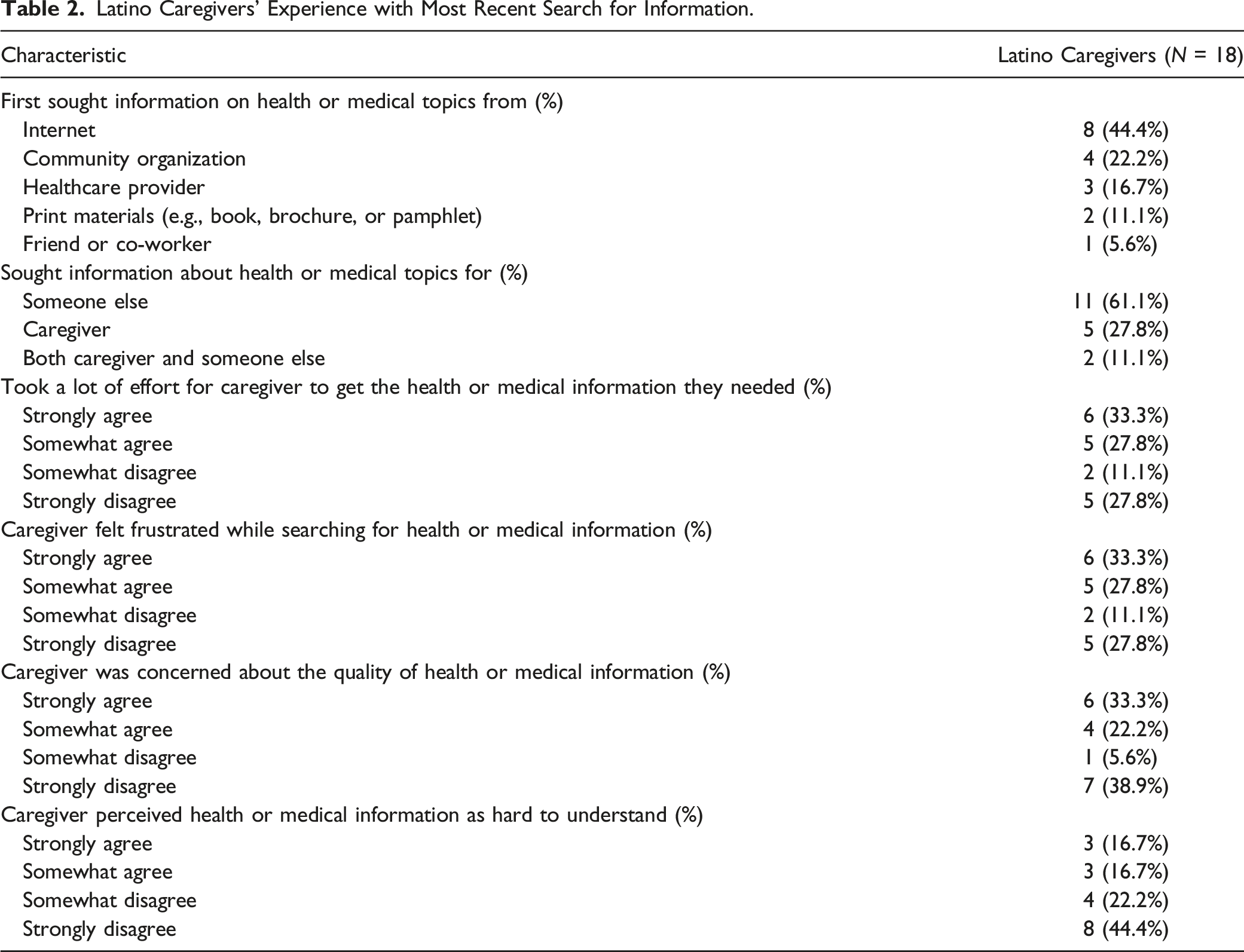
Latino Caregivers’ Experience with Most Recent Search for Information.
Relationship Between the Internet Being the First Source of Information and Caregivers’ Information-Seeking Experience.
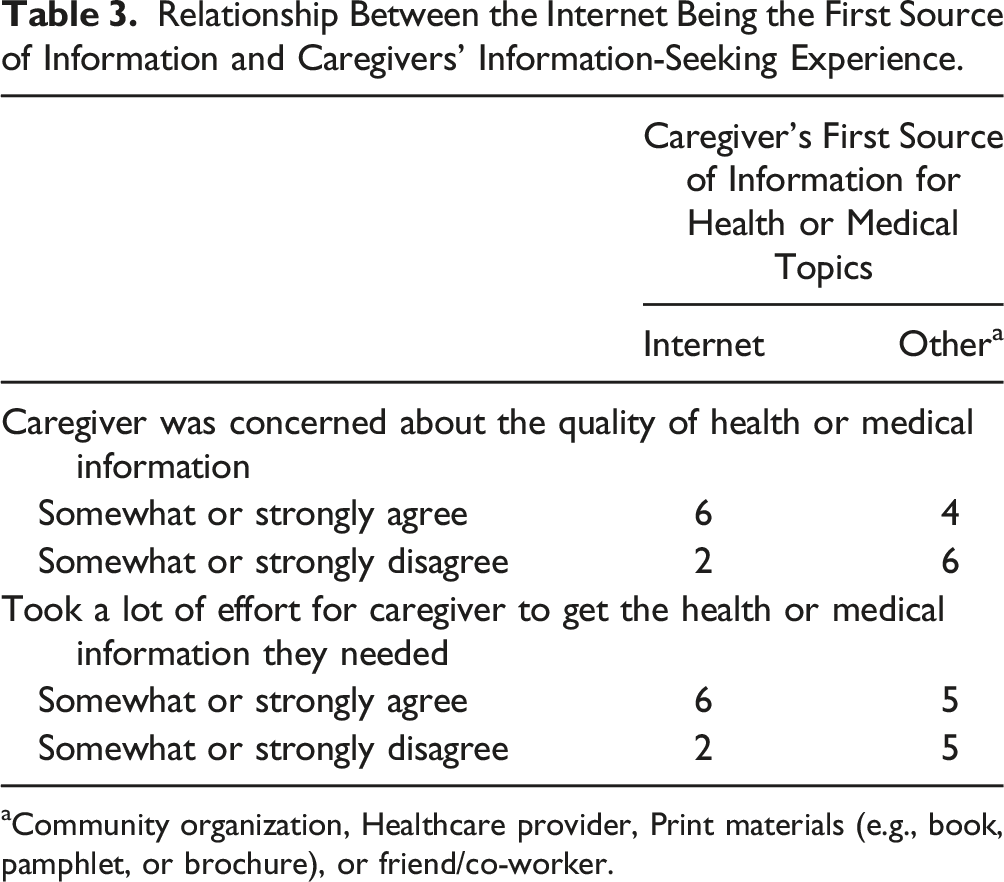
aCommunity organization, Healthcare provider, Print materials (e.g., book, pamphlet, or brochure), or friend/co-worker.
Theme 1: Latino Caregivers' Information Needs and their Desired Level of Detail of Information Depends on the Topic
The caregivers sought information about dementia and its causes after their family member was diagnosed with dementia. Many caregivers received general information on dementia risk factors from healthcare providers. However, some caregivers wanted to know the specific circumstances which led to their family members developing dementia, and their connection with past events. A Spanish-speaking caregiver described how her mother experienced a crisis a decade prior to the diagnosis, which caused her mother to suffer depression: “I want information specifically about my mother, because I don’t know exactly … if this is related to what she had in the past.” Many caregivers appeared unsatisfied with only receiving general information about the causes of dementia.
Next, Latino caregivers sought information on what to expect as the dementia progressed. Some caregivers wanted to prepare for the type of help their family members would require as the dementia progressed. One of the service providers, a neurologist, also observed that Latino caregivers asked the same questions during clinical encounters. However, other caregivers sought minimal information on this topic because details about how a person living with dementia changes over time only worried the caregivers. A Spanish-speaking caregiver said, “I sometimes go on the Internet, but not too often. I don’t know, it’s because I’m afraid about that … I’m afraid of when a person completely loses their memory that they don’t even know who they are or where they are. I know we’ll get there eventually, but I’m afraid of that. I don’t want to know too much about it yet.” Other caregivers also noted this as a sensitive topic. Thus, the amount of information sought by caregivers was highly individualized. Some caregivers sought detailed information to be better prepared, while others sought minimal information to worry less.
Latino caregivers also sought information on healthcare services and appropriate treatment. Caregivers were interested in performing additional evaluations and tests for their family members, especially if caregivers were dissatisfied with the current healthcare provider. A few caregivers wanted specific details about the training and experience of potential healthcare providers. A Spanish-speaking caregiver described searching for, “How long have they [neurologists] have been a doctor, where have they worked, what school did they attend …” Through these details, caregivers gauged the credibility of healthcare providers and made an informed decision about their healthcare provider. Furthermore, many caregivers wanted to better understand the prescribed medications. This was echoed by the physician assistant, who noted that Latino caregivers would ask questions about medications during clinical encounters. In response, the assistant encouraged families to talk to pharmacists. One caregiver noted: If I have questions[,] I'll ask. If it's like a new drug or something that they want to give her, I'm always looking that up, you know, what is that? What does that do? What are the side effects? Just like the drugs for dementia, the two main drugs that they have for dementia, their number one side effect is weight loss and appetite suppressant. Well, my mom doesn't need that. She's down to a hundred pounds … I've heard that a lot of people have really strange side effects. Just like they either get shakier or just kind of really lose it even more, and it's like she's okay without them.
Next, Latino caregivers sought information about caregiver support groups, training, and seminars. They wanted to learn how to assist with personal care, perform first aid, manage behavioral and psychological symptoms, and facilitate pleasant activities. One caregiver stated that healthcare providers only discussed “just like the basic stuff,” and if caregivers wanted to learn about something in detail, they “have to get some classes or seminars, and things like that.” Although healthcare providers suggested that caregivers attend support groups, training, and/or seminars, they rarely provided logistical details. Caregivers wanted detailed information on location, date, and time; whether services were offered in Spanish; and whether their family member with dementia could accompany them. The neurologist noted that the care team referred caregivers to community-based organizations for training on nonpharmaceutical treatment of behavioral and psychological symptoms. The physician assistant also noted, “We try to provide very specific information and we try to follow up on it.”
Finally, Latino caregivers sought information on options for short- and long-term care. They were interested in different types of respite care, including care provided at home and in care settings. A Spanish-speaking caregiver described searching for an adult day care, finding one near her home, and enrolling: “I was looking for an Alzheimer’s daycare, right? I would click on different links. Then slowly, I narrowed down the options until I found this place, which has been a huge help.” For long-term care, some caregivers sought information on assisted living facilities when their family member’s behavioral and psychological symptoms became severe. One Spanish-speaking caregiver reported that she had asked the healthcare team to help her in finding a nursing home because her mother’s physical aggression (a symptom of dementia) was becoming unbearable for the family. While searching for information about short- and long-term care, caregivers sought detailed information regarding location, cost, and qualifications. The caregiver support group facilitator also noted that caregivers often asked about location and that she tried to find services near caregivers’ homes. Finally, caregivers were concerned whether care was available for people who were undocumented and/or had dementia. Multiple caregivers found it challenging to identify long-term care facilities which fulfilled these two criteria.
Theme 2: Latino Caregivers Act to Address Information Needs, but Face Barriers
When Latino caregivers needed information, their most common action was to turn to the Internet. 44% of surveyed caregivers reported the Internet as their primary source of information (Table 2). However, these caregivers were also more concerned about the quality of information than those who sought information from other sources (Table 3). Caregivers also noted the same in the interviews. A Spanish-speaking caregiver, caring for her father with dementia, used Google to search for caregiving-related information: “Back to the same thing. I go to ‘Saint Google,’ and there I look for activities I can set up for him, things that we can do with him.” The caregiver support group facilitator also mentioned the same for a subgroup of Latino caregivers she worked with: “You have those [caregivers] who are a different generation, and they do everything through the websites.” Caregivers also visited municipal websites (e.g., to find social events in the community for people with dementia), websites of the Alzheimer’s Association and Alzheimer’s Greater Los Angeles (e.g., to find caregiver support groups), and YouTube (e.g., learn about dementia). However, caregivers had limited time to search for information online because they were constantly occupied with their family members. They intermittently used the Internet when their family member was sleeping, calm, or doing well on their own. Furthermore, over one-third of the caregivers worked outside their homes (Table 1). This finding was echoed by the caregiver support group facilitator, who noted that caregivers would approach her for help with looking up information online because the high-intensity caregiving situation and/or full-time work outside the home meant that caregivers had limited time to do it themselves.
Two Spanish-speaking caregivers noted that they did not use the Internet themselves, but instead relied on adult children to search for information online. The caregiver support group facilitator also observed this: “Some [caregivers] do not go into the computer because of that particular generation, and so they do have family and friends that they can have them assist … Those without a computer at home, they have their grandchildren, or their daughter or son do it for them.” However, these adult children/family members also encountered barriers while searching for information online, like the lack of high-quality Spanish translations of websites. A Spanish-speaking caregiver reported that her daughter preferred to view online information in Spanish, but had to revert to English: “Sometimes, she [my daughter] finds it easier to just read it in English because when the websites translate information to Spanish, they aren’t done correctly. My daughter speaks and writes well in Spanish, and she doesn’t think the translations are done well.” Another barrier was the delay in reporting information back to caregivers. Sometimes, adult children did not live in the same house as the caregivers and were occupied with their own personal lives. One Spanish-speaking caregiver had asked their adult children to look up information about a prescription medicine, particularly the medication’s side effects. However, the caregiver had still not heard back.
Next, Latino caregivers turned to their communities to address their information needs, like a local union supporting caregivers of older adults and people with disabilities; senior centers; the Red Cross; and caregiver support groups, seminars, and training. Some caregivers were initially hesitant to attend a caregiver support group because they were not convinced that it could help. After repeated nudging from healthcare providers, caregivers started attending and found the experience to be helpful. Caregivers enjoyed learning from and problem-solving with other caregivers, appreciated having the support group facilitator as a resource, and found solace in the emotional support provided by the group. One caregiver stated, “The support group helps a lot because you release yourself talking and sharing with the counselor and the other family members that are going almost through the same problems.” However, a common barrier to attend such in-person events was the lack of respite care for caregivers. Many caregivers sought community services that allowed family members with dementia to participate. Another common barrier encountered by Spanish-speaking caregivers was locating community services, like caregiver support groups, which were offered in Spanish.
Latino caregivers also turned to health care providers for information, with 17% of surveyed caregivers reporting this as their primary source of information (Table 2). During the interviews as well, caregivers explicitly mentioned requesting information from neurologists, pharmacists, primary care physicians, psychiatrists, and social workers both in-person as well as via telephone calls and email. Caregivers relied on providers not only for medical expertise, but also for information about community resources. The social workers noted that caregivers often inquired about in-home supportive services, like respite care.
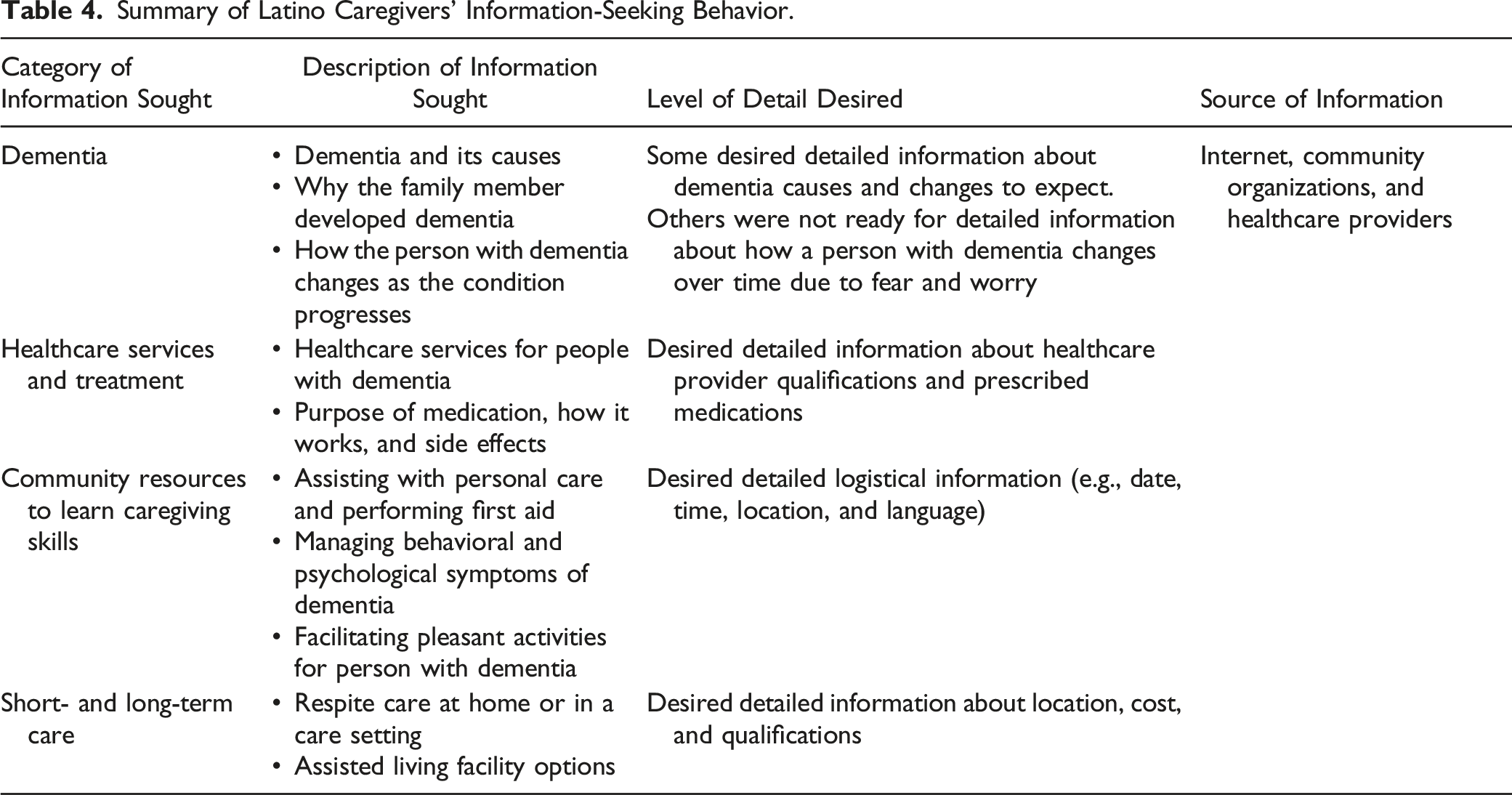
Summary of Latino Caregivers’ Information-Seeking Behavior.
Discussion
This mixed-methods study found that Latino caregivers of people living with dementia sought information to learn about dementia and related healthcare services and treatment, community resources to learn caregiving skills, and short- and long-term care options. Some caregivers desired detailed information about the causes of dementia and what changes to expect as the dementia progressed. By contrast, others did not want detailed information on how their family members would change over time because it caused these caregivers to worry. Next, caregivers desired detailed information about the qualifications of healthcare providers, prescribed medications, community resources to learn caregiving skills, and care options. Caregivers most often turned to the Internet to obtain information, and then to healthcare providers and community organizations. However, when asked about their most recent search for information, most caregivers felt frustrated and noted that it took substantial effort to find the desired information. Notably, those who sought information through the Internet tended to be concerned about the quality of the information. Further, some caregivers reported the lack of high-quality Spanish translations of websites. Overall, the findings reveal that experiences of Latino caregivers while seeking health information are suboptimal.
Studies on the health information-seeking behavior of caregivers of people living with dementia have predominantly recruited non-Latino white study populations. Similar to our findings, these studies reported that caregivers seek information about dementia, healthcare services and treatment, and short- and long-term care options, as well as information to improve caregiving skills (Gillespie et al., 2015; Mastel-Smith & Stanley-Hermanns, 2012; McCabe et al., 2016; Peterson et al., 2016). Caregivers obtain this information from various sources, including physicians, caregiver support groups, family or friends, and the Internet (Allen et al., 2018). Unlike previous studies, our study found that the Internet is the primary source of information for most Latino caregivers. However, while Latino caregivers may be turning to the Internet first to obtain information due to convenience, healthcare providers, community organizations, and printed materials (e.g., books) are more trusted for quality information.
Extant research on caregivers' health information-seeking behavior typically focuses on the type and sources of information. To the best of our knowledge, this study is among the few to examine other aspects of these behaviors (Lambert & Loiselle, 2012): the amount of information caregivers want, and their actions to address the information needs. Research on cancer care shows that some people seek general information, while others prefer detailed information (Butow et al., 1997; Hack et al., 1994). Furthermore, this study sheds light on how much detail Latino caregivers desire in the information they need. This study identified two particular topics on which caregivers' preference for the desired level of detailed information differs. Many Latino caregivers wanted to know why their family members had developed dementia. They were unsatisfied with the general information that healthcare providers gave them regarding the dementia risk factors. This may be because the sampled Latino caregivers may have attempted to understand the diagnosis of dementia within the particular context of their own culture-specific health beliefs about the disease process, which differs from Western medicine (Gallagher-Thompson et al., 1997). Finally, Latino caregivers desired different levels of detailed information about how people living with dementia change as their condition progresses. Some caregivers wanted detailed information to be better prepared; however, others avoided obtaining too much detail about the topic because this caused them to worry about the future. This finding is important because a meta-review found that coping strategies involving avoidance, denial, and wishful thinking were associated with negative outcomes among caregivers of people living with dementia (Gilhooly et al., 2016).
This study has some limitations. First, over half of the caregivers who were initially interested in participating in the study could not be reached. Recruitment happened between 2018 and 2019, which was a tense time of political incivility towards Latinos in the U.S. Consequently, Latino caregivers may have been unwilling to speak to the researchers due to feelings of distrust or perceived risks from participating in the research. Research shows that political incivility during this period indeed deterred Latinos from participating in research (Sage et al., 2018). Nonetheless, the final sample size was similar to that of similar qualitative studies on the information needs of people living with dementia and their family caregivers (Iribarren et al., 2019; Mastel-Smith & Stanley-Hermanns, 2012; McCabe et al., 2016; Peterson et al., 2016). Second, the sample size was not conducive to stratification for examining how information-seeking behavior differed by dementia stage. Nonetheless, the identified information aligns with what is known to be important for caregivers as dementia progresses. Caregivers need information about dementia in the early and middle stages; how to manage behavioral and psychological symptoms in the middle stages; and alternative living arrangements in the late stages (Whitlatch & Orsulic-Jeras, 2018).
Overall, this study found that Latino caregivers sought various types of information, like basic dementia knowledge, the availability of community resources, and short- and long-term care options. The amount of information desired by caregivers depended on the topic. To access information, caregivers turned to the Internet, healthcare providers, and community organizations. Notably, caregivers had to expend substantial efforts for searching information and were frustrated at times. They were concerned about the quality of information found on the Internet and lack of high-quality Spanish translations of websites. Note that Latino caregivers were recruited from healthcare and community-based service organizations in Los Angeles, California. While not aiming for generalizability (Tolley et al., 2016), this study can be replicated in other populations of Latino caregivers and the findings may be applicable to similar populations of urban Latino caregivers. Finally, healthcare and community-based social service providers can incorporate the insights from this study while developing programs that can better meet the information needs of Latino caregivers and help translate information access into improved health outcomes (Bruening et al., 2020; Topo, 2009).
Supplemental Material
Supplemental Material - Health Information-Seeking Behavior of Latino Caregivers of People Living with Dementia: A Mixed-Methods Study
Supplemental Material for Health Information-Seeking Behavior of Latino Caregivers of People Living with Dementia: A Mixed-Methods Study by Magaly Ramirez, Sofia De Anda, Haomiao Jin, Joseph R. Herrera, and Shinyi Wu in Journal of Applied Gerontology
Footnotes
Acknowledgments

Declaration of conflicting interests
The author(s) declared no potential conflicts of interest with respect to the research, authorship, and/or publication of this article.
Funding
The author(s) disclosed receipt of the following financial support for the research, authorship, and/or publication of this article: This work was supported by the University of Southern California Suzanne Dworak-Peck School of Social Work Research Council. Dr. Wu was the Principal Investigator. Dr. Ramirez was supported by grant number T32HS00046 from the Agency for Healthcare Research and Quality. Dr. Ramirez was also supported by grant number K12HS026369 from the Agency for Healthcare Research and Quality. The content is solely the responsibility of the authors and does not necessarily represent the official views of the Agency for Healthcare Research and Quality.
IRB Approval Numbers
University of Southern California (UP-17–00875); Rancho Los Amigos National Rehabilitation Hospital approved the study (IRB #257)
Supplemental Material
Supplemental material for this article is available online.
References
Supplementary Material
Please find the following supplemental material available below.
For Open Access articles published under a Creative Commons License, all supplemental material carries the same license as the article it is associated with.
For non-Open Access articles published, all supplemental material carries a non-exclusive license, and permission requests for re-use of supplemental material or any part of supplemental material shall be sent directly to the copyright owner as specified in the copyright notice associated with the article.
