



Abstract
The aim of this evaluation was to assess caregiver experience and burden during their first year in a geriatric home-based primary care (HBPC) program with qualitative interviews and surveys. HBPC included in-home visits for homebound, older adult patients. Seventeen caregivers, with varied amount of experience with HBPC, participated in semi-structured interviews. Change in caregiver burden from baseline was captured for 44 caregivers at 3 months post-enrollment, 27 caregivers at 6 months, and 22 caregivers at 12 months. Satisfaction survey was administered at these timepoints, but the last response of 48 caregivers was analyzed. Caregiver interviews revealed three themes: caregiving stressors, reliance on HBPC in relation to other medical care, and healthcare in the home. Surveyed caregivers were highly satisfied, but burden did not change substantially over the 1 year intervention. Caregivers appreciated HBPC reduced patient transportation and provided satisfactory primary care, but additional research is needed to tailor this care to reduce caregiver burden.
Keywords
• Caregivers’ experience and burden were captured through semi-structured interviews, a satisfaction survey, and a validated burden questionnaire during their first year in a home-based primary care (HBPC) program at an academic medical center. • Caregivers were highly satisfied with HBPC and they, especially caregivers of patients with cognitive impairments, reported the program partially addressed burden related to transportation to primary care, but measured caregiver burden remained stable throughout the first year.
• These findings, in particular the identified caregiver stressors and needs, can inform the development of future HBPC programs as well as improve the evaluated program.What this paper adds
Applications of study findings
Introduction
Frail, older adults pose unique challenges to high-quality care provision, and a substantial proportion become homebound with functional and cognitive limitations (Klein et al., 2017; Norman, Orton, et al., 2018). Homebound older adults lacking access to primary and preventive care often experience clinical deterioration and have greater utilization of the emergency and acute hospital care (Ornstein et al., 2015; Rohrmann, 2020). Home-based primary care (HBPC) is an alternative to a clinic-based model for frail, older adults and their caregivers.
Fewer than 12% of homebound patients receive primary care in their home, and few U.S.-based healthcare organizations offer in-home care, even though research supports its efficacy (Kling et al., 2023; Qiu et al., 2010; Totten et al., 2016). The services offered by published HBPC programs vary widely, but delivering in-home medical care and support has several reported advantages for older adults, such as increased access, care tailored to their environment, decreased use of hospital services, and improved caregiver support (Klein et al., 2017; Qiu et al., 2010; Shafir et al., 2016; Stall et al., 2014; Totten et al., 2016). These programs can also have a positive impact on patients’ health (e.g., lower mortality and lower depressive symptoms) and quality of life and caregivers’ experienced burden (Totten et al., 2016).
Most literature on HBPC programs focuses on patient experiences and outcomes (Totten et al., 2016; Zimbroff et al., 2021). Many older adults require informal caregivers and as this population grows, caregivers experiencing high burden will become more prevalent. As a result, it is important to understand caregivers’ burden and experience of healthcare services for older adults to better address the needs of both patients and their caregivers (AARP and National Alliance for Caregiving, 2020; Reckrey et al., 2013). Caregivers for frail or ill patients can have wide range of duties and are vulnerable to both physical and psychosocial effects from these demands (AARP and National Alliance for Caregiving, 2020; Haley et al., 2020). While some caregivers report positive effects of the caregiving role, others experience anxiety, depression, loneliness, role stress, and family conflict, as well as physical health problems (AARP and National Alliance for Caregiving, 2020; Brodaty & Donkin, 2009; Pinquart & Sörensen, 2003; Schulz & Sherwood, 2008). Further, a recent analysis showed that caregiver-reported burden mediated the effect of a home-based care program on patients’ physical, emotional, and psychological symptoms (Pereira-Morales et al., 2020). Thus, understanding caregivers’ burden and experience during in-home programs is essential to understand who benefits from the offered services and what additional services are needed.
Here our aim was to describe caregivers’ experience during the first year of a newly launched HBPC program focused on primary care and social work. Results presented here are a part of a larger evaluation; the impact of HBPC on patients’ healthcare utilization was also evaluated (Kling et al., 2023). To address the present aim, qualitative interviews were conducted with caregivers to understand their caregiving activities, experience with home, clinic, and acute care, previous caregiving experience, and contributors to experienced burden. Additionally, caregiver satisfaction was assessed in the interviews and in a survey. Lastly, caregiver burden was assessed with the 12-item Zarit Burden Inventory (ZBI-12) at baseline and 3, 6, and 12 months post-enrollment into HBPC (Bédard et al., 2001).
Methods
Home-Based Primary Care Program
A home-based primary care (HBPC) program was developed by a multidisciplinary team at an academic medical center, Stanford Health Care, located in a suburban area of Northern California, USA. HBPC targeted older, homebound patients who were high utilizers of healthcare services. HBPC had elements of successful HBPC models, including home visits by medical providers and social workers, after-hours care, and caregiver support. The HBPC program was launched in late 2018 and is still ongoing; it serves about 70–100 patients at any given time.
Primary care providers from academic primary care clinics, Medicare insurance case managers, or inpatient hospital teams assessed and referred patients to the HBPC program. Referred patients were then assessed for eligibility by HBPC medical providers. HBPC medical providers used the patients’ electronic health record to determine eligibility. Eligible, older adult patients (≥65 years) met the following criteria: (1) functional impairment of ≥2 activities of daily living (ADLs) or ≥1 ADL plus memory impairment; (2) one hospital or two emergency department visits in the past 12 months (Katz et al., 1970). Patients were ineligible if they were expected to die within 2 weeks or lived outside the service area (Kling et al., 2023).
The HBPC team included two part-time social workers and two geriatrics-trained medical providers, a nurse practitioner and physician assistant under physician supervision. All social work and medical visits took place in the patients’ residence or residential care facilities. An initial home visit was conducted by a medical provider; the medical provider scheduled a visit with a social worker for all patients (Kling et al., 2023). The social worker assessed the caregiver’s burden and psychosocial needs and screened for elder abuse during their first visit. After the initial visits, patients were engaged in shared decision-making with HBPC providers and social workers to determine need and frequency for HBPC. Typically, patients and their caregivers had in-home visits with medical providers every 1–2 months and as needed phone contact with the social worker. However, utilization of HBPC services was variable as described elsewhere (Kling et al., 2023). HBPC used mobile radiology and lab courier companies to provide common diagnostic procedures in the home. Specialty and other medical care were available through traditional clinic-based visits and/or e-consults.
Evaluation Recruitment and Eligibility
The medical provider introduced patients and caregivers to the evaluation with an informational flyer at their initial home visit. The flyer described the evaluation and indicated that evaluation staff would call within approximately 2 weeks to invite them to enroll into the program evaluation that aimed to evaluate impact on patient healthcare utilization and caregiver experience (Kling et al., 2023). If patients had the decision-making capacity, they were asked to identify caregivers who provided most of the assistance for daily activities. Identified caregivers were contacted to participate in the caregiver experience component of the evaluation. In instances where cognitive impairment was listed on the patient’s medical record, if the patient did not speak English, or if the patient had other limitations to participating in the evaluation (e.g., no internet access and hearing loss), the caregiver listed as a contact in the patient’s medical record was invited to enroll in the evaluation. Participants were recruited and enrolled in the evaluation from February 2019 to March 2020.
This evaluation received non-research determination from Stanford’s Institutional Review Board (IRB#49007) as an evaluation to inform program quality improvement. All participating caregivers gave verbal informed consent and were told confidentiality would be maintained.
Baseline Characteristics of Caregivers and HBPC Patients
To describe the patient population caregivers cared for, demographics, functional status, and clinical characteristics were collected from patients, if able, and caregivers, at enrollment (i.e., baseline) or were extracted from the electronic health record. Functional status was measured with activities of daily living (ADLs) using Barthel Index and obtained from participating patients or their caregiver (Mahoney, 1965).
Baseline Hospital Frailty Risk Score (Gilbert 2018) and the modified Charlson Comorbidity Index (Charlson et al., 1987) were calculated using ICD-10 diagnostic codes documented in the patient electronic health record in the 12 months prior to enrollment in HBPC (Charlson et al., 1987; Gilbert et al., 2018). We dichotomized frailty risk scores as low/intermediate frailty risk (0–15) and high frailty risk (>15) (Gilbert et al., 2018; Quan et al., 2005).
Descriptive statistics were calculated for baseline patient and caregiver characteristics.
Caregiver Interviews
Caregivers were interviewed to capture their experiences with caregiving activities; HBPC, clinic, and acute care; and caregiving burden. The topic guide (Supplemental Materials) was developed to get a better understanding of how HBPC was different from clinic-based care for these patients and if HBPC prevented acute care utilization.
Two researchers (MY and ASL) interviewed caregivers to explore their experiences with HBPC. MY is a PhD-trained nurse scientist. ASL has a Master of Public Health (MPH) and 3 years of experience as a qualitative interviewer. Both are female and were affiliated with Stanford Health Care and Stanford University School of Medicine, respectively. Participants were not known to the researchers prior to the evaluation.
Interviews were conducted March to November 2020. All caregivers who consented to participate, had not withdrawn, and still cared for an HBPC patient during this time were invited to participate in a semi-structured interview via telephone. A total of 39 caregivers eligible at the time of the interviews and were invited to participate. Participants were given a brief description of the purpose of the interview at the start. Interviews were conducted via telephone, audio-recorded (except one), and then transcribed for analysis. Notes were taken when the one caregiver did not consent to recording. One interview was conducted per participant. Transcripts were not returned to participants, nor did they provide feedback on the findings.
Analysis
Interviews were analyzed with a deductive and inductive approach guided by an a priori coding framework based on the topic guide but also allowed for emergent themes. All transcripts were imported into NVivo (released March 2020). First, eight transcripts were independently coded by each researcher (total of three) who met after coding each transcript to discuss and revise code definitions as needed. At least two researchers coded each of the remaining transcripts. The team met on a weekly basis to discuss emergent codes, definitions of emergent codes, discrepancies, compare coding application, and generate themes. We used two strategies described by Miles et al. (2018) to verify conclusions: checking for representativeness of themes across the dataset and checking the meaning of outlier experiences.
Caregiver Surveys
Surveys were administered at four points: baseline (i.e., enrollment) and 3 months, 6 months, and 12 months post-enrollment into the evaluation. Survey data collection was conducted independently of the interviews. Caregivers were given the option of completing surveys on the phone or electronically.
Satisfaction Survey
Caregivers were asked to complete a survey that was previously developed by the Home Centered Care Institute at 3, 6, and 12 months post-enrollment (Home Care Institute, n. d.). Caregivers indicated if they perceived HBPC prevented healthcare utilization (after hours, emergency department visits, hospitalizations, and nursing home placement) with four separate questions that had four response options (Yes, Uncertain, No, and Unable to Answer). Satisfaction with HBPC was captured with nine questions on a 5-point scale (1 = poor, 5 = excellent).
Caregiver Burden Survey
Caregiver burden was assessed at the four timepoint with the 12-item Zarit Burden Inventory (ZBI-12), a validated measure that uses a 5-point scale (0 = never to 4 = almost always) (Bédard et al., 2001). A score of <10 indicates no to mild burden, 10–20 indicates mild to moderate burden, and >20 indicates high burden.
Analysis of Surveys
Descriptive statistics were calculated for caregiver’s last completed satisfaction survey. Responses to the satisfaction-related questions were collapsed into three levels: poor/fair, good, and very good/excellent.
Caregiver burden surveys with five or more missing items, a natural cutoff in frequency of missing items, were excluded; this balanced the need for complete data without losing excessive information. Two surveys had five or more missing items. Seven surveys had 1–4 missing items. To address missing data, sensitivity analyses were conducted with two different imputation methods for total scores: 1) zero-imputed and 2) mean-total-score-imputed methods. Results were similar and zero-imputed total scores are reported. Boxplots display change in caregiver burden from baseline to each timepoint by frailty status. Boxplots depict mean, median, first quartile, third quartile, minimum (third quartile − 1.5*interquartile range), and maximum (first quartile + 1.5*interquartile range).
Median and 25% and 75% quartiles are reported in the text. p-values were not generated for this exploratory program evaluation. Data were processed in SAS (Version 9.4; SAS Institute Inc.) and boxplots were created in R.
Results
Patient and Caregiver Baseline Characteristics
Characteristics of Caregivers Who Participated in Baseline Surveys of the Home-Based Primary Care (HBPC) Program.

an = 56.
bn = 68.
cn = 10.
dn = 12.
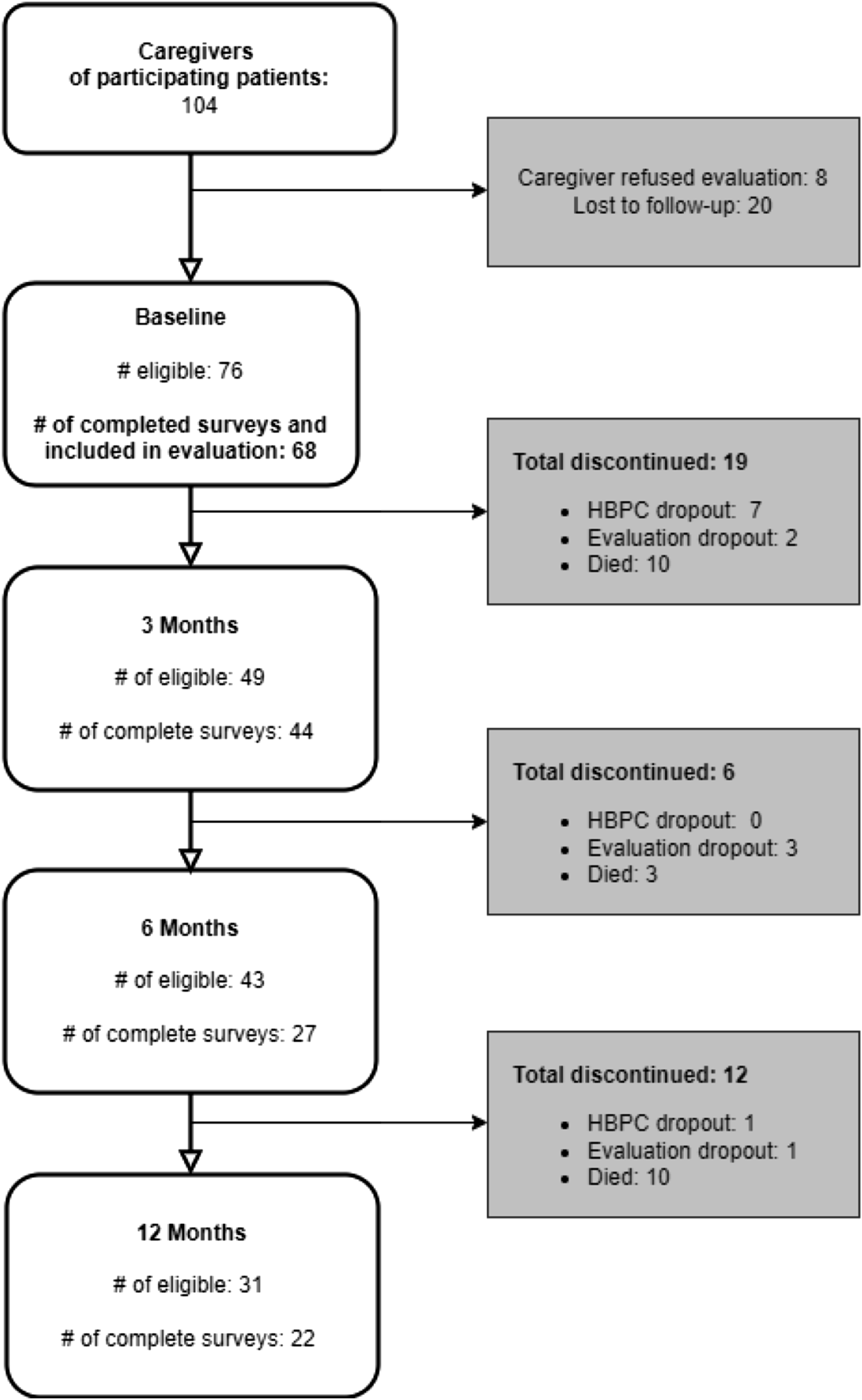
CONSORT diagrams of enrollment and completion of caregiver burden surveys at the four evaluation timepoints (baseline, 3 months, 6 months, and 12 months) during a 1-year home-based primary care program.
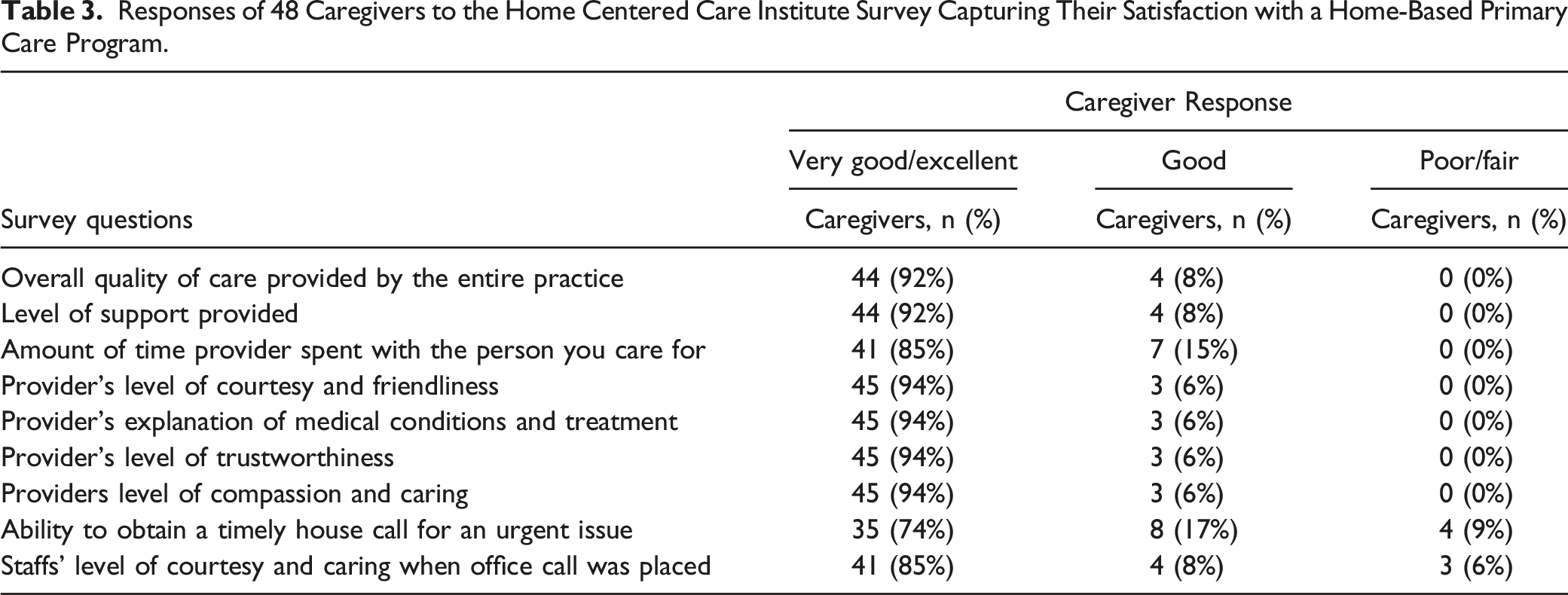
Forty-eight caregivers completed a satisfaction survey during the first year of enrollment. Baseline characteristics of this sub-sample are not shown.
Interviews were conducted with 17 caregivers (Table 1). Interviewed caregivers were exposed to HBPC for a median of 10 months (range 2–23). Thirteen interviewed caregivers cared for a patient with some form of cognitive impairment. Nine patients resided in a private residence, seven of whom lived with their family caregiver. Eight patients lived in a residential care facility (e.g., memory care or assisted living facilities). Less than half were patient-child dyads (41%). Interviews ranged from 12 to 39 minutes (median = 23 minutes) were conducted between March and November 2020.
Interviewed Caregiver Quotations by Theme.

Caregiving Stressors
Interviewed caregivers identified three causes of caregiving stress: transporting patients to clinic-based appointments; financial concerns; and watching the patient decline.
“Anything Can Happen”: Stress from Transporting Patients with Cognitive Impairment
Interviewed caregivers reported transporting HBPC patients was physically difficult and had psychological, emotional, and financial impacts. Patients were physically difficult to move, especially since caregivers were at least middle-aged and sometimes a similarly aged spouse. Immense stress was caused when moving an immobile or uncooperative person, particularly when using their personal car. Interviewed caregivers described that patients could be unpredictable out of the home which caused distress and impacted the patients’ and caregivers’ relationship. Transportation challenges and other practical issues, such as taking a patient an opposite gender bathroom while out, could require additional assistance from family or costly paid services, such as ambulance or a professional caregiver. Interviewed caregivers said these difficulties could lead in-clinic visits to take half a day or more; thus, shifting primary care to the home was the primary benefit of HBPC, especially for caregivers of patients with cognitive impairment.
Financial Concerns
Interviewed caregivers had concerns about the affordability of other in-home services which could be costly especially once insurance maximums were met. This financial barrier was prohibitive and impacted patient health. Some caregivers of patients who resided in a care facility worried about the long-term affordability of this care as prices continue to increase.
Stress from Watching Patient Health Decline
Interviewed caregivers described the stress of watching someone decline and having total responsibility for them as they perceived having fewer care options available.
Reliance on HBPC in Relation to Other Medical Care
There was variability in how interviewed caregivers relied on HBPC for medical care in relation to other care. Some caregivers described there were a range of other healthcare services needed and used by the patient in addition to HBPC. While they were greatly appreciative of the home care program, it did not alleviate the need to travel to specialty care.
Some interviewed caregivers expressed concerns about coordination with other services, such as hospice care or connecting with social work. These concerns were not home care specific and rather reflected the need for many services requires communication and coordination. In contrast, some interviewed caregivers reported decreased utilization of other health care due to transportation issues and saw HBPC as the patient’s sole medical care provider. These interviewed caregivers relied on HBPC provider to alert them to issues needing specialist care which the caregiver then arranged.
Healthcare in the Home Environment
Receiving healthcare services in the home was noted to be different from clinic-based care in several ways. First, as described previously in the first theme, one of the notable positive impacts of receiving care in the home environment was not having to travel for primary care and other related services (e.g., having blood drawn). Second, for patients who resided in residential care facilities, a HBPC visit meant they were getting an “additional” visitor, which was viewed positively by interviewed caregivers who felt that patients needed human contact, especially during COVID when visitors were limited.
However, one interviewed caregiver noted an unexpected challenge. Because the HBPC team came in plain clothes, this caregiver found that the patient who had dementia was not cooperative and combative. The caregiver noted that this behavior was different to when he was in a healthcare facility where visual cues led to more cooperative behavior.
Caregiver Satisfaction Survey
Responses of 48 Caregivers to the Home Centered Care Institute Survey Capturing Their Satisfaction with a Home-Based Primary Care Program.
Caregiver Burden Survey
Baseline caregiver burden scores indicated mild to moderate burden with median score of 18 (10.5 and 24.5) amongst surveyed caregivers. Caregivers of patients with low-moderate frailty risk reported moderate burden with a median score of 15.0 (25% and 75% quartiles: 8.0, 21.0) whereas caregivers of high frailty risk patients had a median score of 19.0 (12.0 and 25.0), approaching high burden cutoff (>20). As shown in Figure 2, caregivers of patients with low-moderate frailty risk reported stable caregiver burden between baseline and 12 months (−0.5 (−3.0, 4.0)), and caregivers of patients with high frailty risk reported a marginal decrease in burden between baseline and 12 months −3.5 (−6.0, 0.0)). The minimal changes in burden over time seen in surveyed caregivers are consistent with results from the caregiver interviews that suggested that the HBPC program did not completely address caregiving challenges. Change in caregiver burden total score from baseline to each follow-up timepoint (3, 6, and 12 months) post-enrollment into home-based primary care program. Line indicates the median change score. Diamond indicates the mean change score.
Discussion
The experiences of caregivers for patients in a HBPC program were captured though qualitative interviews and surveys measuring satisfaction and burden. Caregivers identified three stressors in the interviews: transporting patients to clinic-based appointments; financial concerns; and watching the patient’s health decline. Caregivers appreciated that HBPC reduced the need for transportation to primary care, especially for patients with limitations or impairments, but did not address the other two concerns or, for some patients, provide all needed medical care. Caregivers were mostly satisfied with HBPC and the majority reported that HBPC prevented unnecessary utilization of emergency and hospital services as well as prevented nursing home placement. Caregiver burden, however, generally remained stable over the 1 year intervention. Overall, caregivers appreciated that the HBPC reduced patient transportation needs and provided satisfactory primary care, but additional services and/or resources are needed to better address caregiving stressors to ultimately decrease burden.
Caregivers appreciated that HBPC saved them time, resources, and alleviated stress related to transporting patients for primary care but accessing other healthcare services remained burdensome. This HBPC has been shown to increase access to primary care through HBPC aligning with interviewed caregivers’ views that the program provided essential care and support to patients (Kling et al., 2023). However, transportation was required for specialty care appointments, comprehensive laboratory and imaging services, and other healthcare needs. HBPC social workers did provide information about transportation options, but other studies have emphasized that addressing logistical and financial barriers around transportation are a major benefit of home-based care, especially for homebound or wheelchair-dependent patients, addressing an unmet need of caregivers (Ornstein et al., 2009, 2011; Shafir et al., 2016; Wool et al., 2019). In some instances, interviewed caregivers reported HBPC was their main source of care for patients with limited mobility. HBPC allowed for care to be accessed in a comfortable environment, provided beneficial social interaction, helped patients and caregivers determine when to seek and/or prioritize out-of-home care, and, in some cases, served as pre-hospice care. Caregivers recognized the benefits of increased access to primary care, but transporting patients, especially those with limited mobility or cognitive limitations, for other healthcare needs remained a substantial concern.
In addition to primary care and social work, effective home-based care programs tend to include a fully integrated interprofessional team comprised of a variety of professionals that includes other healthcare professional (Stall et al., 2014). In particular, patients in other programs have emphasized a need for in-home physical therapy, dentistry, specialty care, and caregiver-focused mental health support (Klein et al., 2017; Shafir et al., 2016; Stall et al., 2014). Expanding care to specialties through in-home visits or e-consults and in-home laboratory and imaging services for all patients would be beneficial here. However, it may be more feasible for smaller and/or growing home-based care programs to provide coordination services for clinic-based care and travel for specialty care, in particular.
HBPC addressed some concerns related to transportation, but our HBPC program did not relieve caregiver-reported concerns related to finances or future care options as patients continue to decline and care needs increase. Social work can assist with finding care options for persons with dementia—a noted need in the literature (Waymouth et al., 2023). In the present HBPC program, social workers provided patients and caregivers information about available transportation options, future care options, and respite care services. However, identifying these services for patients and caregivers does not resolve all barriers; the cost of these programs are often prohibitive, especially in a high cost of living areas, such as the Bay Area of Northern California, and coordination of these services is needed (Norman, Wade et al., 2018; K. Ornstein et al., 2009; Reckrey et al., 2014; Waymouth et al., 2023). These concerns have been observed across various other HBPC programs with social work assistance (K. Ornstein et al., 2009; Reckrey et al., 2014).
During their participations in HBPC, caregiver burden remained stable, on average, and those with high frailty risk may have experienced reduced burden while in the program (Mets et al., 2007). This is particularly notable as observational research has shown that caregiver burden tends to as older adults age, especially for those without support services (Connors et al., 2020). At baseline caregiver burden scores indicated that caregivers were experiencing mild to moderate burden aligning with other studies using the 12-item Zarit Burden Inventory indicating this caregiver population needed support (Bédard et al., 2001; Branger et al., 2016; Rajovic et al., 2021). The variability in services offered by the various published HBPC programs, targeted patient populations, and evaluation approaches across home-based care programs and lack of reporting on and variety in measures of caregiver burden demonstrates further research is needed to determine how home-based care programs can be tailored to the targeted caregivers and their patients (Stall et al., 2014; Totten et al., 2016).
Tailoring healthcare services to each patient and caregiver dyad is needed. Other characteristics also relate to experienced burden; caregivers who have a high risk of burden include those who cohabitate or are the child of the patient and those caring for patients with risk of falls, limitations of daily living activities, depression, behavioral problems, and previous nursing home admissions (Black & Almeida, 2004; Kuzuya et al., 2006; Mello et al., 2017; Reckrey et al., 2013); common characteristics of the caregivers included here. Further, the timing of home care in a patients’ life on caregivers’ experience is important; one study showed that home-based care reduced objective, but not subjective, burden and improved the quality of life of caregivers of terminally ill patients (Hughes et al., 2000). Here the HBPC patients had multiple physical and cognitive limitations but were not yet eligible for hospice care, perhaps a more stressful and burdensome time in a patient’s life.
Limitations
This evaluation has several limitations. First, this study was conducted at a single healthcare organization, which limits generalizability of these findings. Second, the survey analysis was limited to descriptive statistics as the sample size substantially decreased throughout the 1-year evaluation. It is also possible there was survival or response bias preventing caregivers with the frailest or dying patients from responding throughout the evaluation. Third, interpretability of the survey results is further limited by the lack of a control group. Fourth, the HBPC program directly addressed very few items on the 12-item Zarit Burden Inventory (ZBI-12) indicating this scale was too general to detect the impact of HBPC on caregiver burden. Fifth, for the qualitative interviews, we contacted all eligible caregivers at the time of the interviews, but many did not agree to be interviewed, partially due to fatigue related to survey data collection, indicating a selection bias that limits generalizability. While we perceive our themes are comprehensive for the data we collected, a larger sample size might have added nuance to these themes.
Conclusions
This pragmatic evaluation found that caregivers appreciated that the HBPC program reduced the need for patient transportation to primary care and social worker visits. Caregivers were satisfied with the HBPC services and reported that HBPC prevented unnecessary emergency room and hospital visits. Concerns related to transporting patients to other clinic-based services, financial limitations, and worry from watching patients deteriorate, however, were not addressed. Results indicate that transportation to or in-home specialty care would benefit this patient population while additional resources are needed to help caregivers navigate financial concerns and future care needs. Caregiver burden remained over the 1-year intervention for most caregivers. Caregivers appreciated that the HBPC program reduced patient transportation needs and provided satisfactory primary care, but additional resources are needed to understand how HBPC impacts caregivers, what additional support they need, and how to tailor care to the caregiver-patient dyad.
Supplemental Material
Supplemental Material - Caregiver Experiences Participating in a Home-Based Primary Care Program: A Pragmatic Evaluation Including Qualitative Interviews and Quantitative Surveys
Supplemental Material for Caregiver Experiences Participating in a Home-Based Primary Care Program: A Pragmatic Evaluation Including Qualitative Interviews and Quantitative Surveys by Samantha M. R. Kling, Anna Sophia Lessios, Laura M. Holdsworth, Maria Yefimova, Siqi Wu, Marina Martin, Meera Sheffrin, and Marcy Winget in Journal of Applied Gerontology
Footnotes
Acknowledgments
We thank Darlene Veruttipong, MPH, MS, of the Evaluation Science Unit at Stanford School of Medicine for conducting preliminary analyses for this study. We appreciate the efforts of Debbie Hsieh, MS MHA Business Manager at Stanford Healthcare in obtaining the electronic medical record data for this project. We also thank Marika Blair Humber, PhD, Health Services Research Fellow at the VA Elizabeth Dole Center of Excellence for Veteran and Caregiver Research for assisting with caregiver interviews.
Declaration of Conflicting Interests
The author(s) declared no potential conflicts of interest with respect to the research, authorship, and/or publication of this article.
Funding
The author disclosed receipt of the following financial support for the research, authorship, and/or publication of this article: This work was supported by Stanford Healthcare.
IRB Information
This evaluation was deemed non-research by Stanford Institutional Review Board (IRB#49007).

Supplemental Material
Supplemental material for this article is available online.
References
Supplementary Material
Please find the following supplemental material available below.
For Open Access articles published under a Creative Commons License, all supplemental material carries the same license as the article it is associated with.
For non-Open Access articles published, all supplemental material carries a non-exclusive license, and permission requests for re-use of supplemental material or any part of supplemental material shall be sent directly to the copyright owner as specified in the copyright notice associated with the article.
