



Abstract
This study investigates the flows of downward intergenerational transfer to adult children of different gender and birth order, and their influence on parental expectations towards old-age care and financial support, using data from the 2015–2016 China Health and Retirement Longitudinal Study (CHARLS). Based on the analytic sample of 1218 parents and 3237 adult children, we found that in multi-child families, sons are more likely to be expected by their parents as future caregivers if both they and their siblings received parental housing support, while it is the case for daughters when only they themselves received parental housing support. Parents’ downward housing support shows a stronger effect on care expectations than on expectations of future financial support. This study contributes to our understanding of intergenerational transfer norms and expectations from parents’ perspective and has important implications for old-age care policies in contemporary China.
• Sons are more likely to be expected by their parents to provide old-age care if they and their siblings received housing support from parents, suggesting patrilineal norms and parents’ need-driven care expectations. • Firstborn daughters are more likely to be named as expected future caregivers if they received parental housing support by themselves only, suggesting parents’ reciprocity-based care expectations. • Parents’ housing support to children demonstrates stronger effects for expectations of long-term, intensive care than for expectations of financial support.
• This research indicates a cultural lag in mid-aged/older parents’ ideology of old-age support, which may result in discrepancy between their support expectations and actual receipt of support, leading to unmet needs among vulnerable older populations. • Educational opportunities should be offered that challenge the traditional gendered division of labor, so that future generations of men and women are sensitized towards their responsibilities within the arena of family and care. • It is essential to build up carer-friendly social and working environments to facilitate adult children to fulfil their care commitments when their older parents are in need.What this paper adds
Applications of study findings
Introduction
China has seen rapid population aging and faces increasing demands of old-age support. Much of the existing research has focused on the current provision of support to vulnerable older people, overlooking the preferences and expectations of younger and healthy older adults for support in the future (Qin et al., 2020). Research has shown that parents’ expectations of support can largely predict support processes and outcomes (Cong & Silverstein, 2014); expectations also influence the appraisal of actual support received which further influences parents’ mental health status (Hu & Chen, 2019). Among the studies focusing on older adults’ care expectations, few have explored parents’ expectations of care from children of different gender and birth order within a multi-child family context, where the dynamics of intergenerational reciprocity and expectations are transitioning and complex. It is vital to fill this gap to better understand older parents’ preferences, meet their needs, enhance their wellbeing and inform the design of policy for future older adults.
Among the factors that influence parents’ future support expectations, intergenerational transfers especially in forms of financial and time have been emphasized (Cong & Silverstein, 2012; Wu & Li, 2014). Less attention has been paid to the role of downward intergenerational housing support in shaping parents’ expectations of future old-age support, both for care and financial support, especially within multi-child families. Traditionally, Chinese parents were obligated to make some provision for a new home when marrying off their sons (Cui et al., 2020; Jiang et al., 2015). However, with reduced fertility and a shifting gendered culture, parents in modern China are now increasingly involved in providing housing support for their daughters (Chen & Yu, 2020). Parents’ housing support to their children has generally been viewed as a responsibility, although it may also determine the degree of future care as repayment from their children (Zhou, 2010). As one of the largest downward financial transfers, housing support to adult children may also fundamentally affect parents’ disposable financial resources for their own old-age security, potentially increasing their need for later life support.
To the best of our knowledge, only one recent study has examined the relationship between intergenerational housing support and parental future care expectations, finding support for both traditional norms and reciprocity (Tang & Wang, 2022). However, that study failed to consider the complexity of reciprocity of flows of intergenerational support within multi-child families. Given the current transitioning away from traditional patriarchal system and gendered norms of intergenerational support under social modernization in China, understanding the intergenerational flows of support and related expectations thereof that take account of adult children’s gender and birth order within multi-child families is vital. Furthermore, existing research has generally considered expectations around future old-age support from adult children at an aggregated level, not recognizing that parents may have different expectations and preferences depending on the type of support required/provided, and that these in turn may reflect different intergenerational transfer motives. The current study aims to address these gaps by both taking into account adult children’s gender and birth order and by differentiating between parental expectations around future assistance in daily life and for financial support.
Intergenerational Flows and Expectations in Multi-Child Families: The Influence of Child’s Gender and Birth Order
Intergenerational transfers and old-age support practices have been, until recently, highly gendered in Chinese society. Traditionally, under patriarchal practice, parents only support their sons’ home ownership, while the daughter’s housing is viewed as the responsibility of her husband’s family (Liu, 2014). However, recent evidence suggests that within more recent cohorts, more women are relying on their natal families for housing, although their chances of parental support maybe negatively affected by having brothers (Chen & Yu, 2020). Regarding family support, under the Confucian ethic and patrilineal tradition, parents often expect their sons rather than daughters to provide material support and physical care (Hu & Chen, 2019). Parents’ preference for sons over daughters has been explained by proximity, intergenerational exchanges, and fathers’ stronger patrilineal values (Cong & Silverstein, 2014). However, in recent years, social modernization, lower fertility, and internal migration have shifted the patrilineal norm of family support, with daughters becoming increasingly prominent in providing care and support to their natal parents, although persistent gendered practices and cultural lags allow sons to receive more transfers or bequest from parents (Gruijters, 2018; Hu, 2017; Liu, 2014). The extent to which the changing gender patterns of family support are reshaping parents’ housing support to both sons and daughters and impacting their preference for future material and instrumental support, requires further scrutiny.
In addition to gender, children’s birth order may also influence parental investments and care expectations in multi-child families. Existing research has shown that birth order was a strong indicator of familial sentiments, with firstborns more family oriented and closer to parents than middle-borns (Salmon, 1999). Under the traditional patrilineal system, the eldest son is viewed as the second authority to the father within the family; reflecting the norms of primogeniture, they are entitled to the inheritance and thus are more likely to be seen as the preferred caregiver by parents (Hu, 2017; Hu & Scott, 2016). Research in rural China suggested that rural parents adopted an “exchange” motive in raising the firstborn children and rely heavily on their eldest child for old-age support, while their transfers to younger children were driven by altruism, with lower expectations for the younger children comparatively; however, they found no difference of child gender in determining the motivations for intergenerational transfers (Zhou, 2010).
Motives Underlying Intergenerational Downward Housing Support and Old-Age Support Expectations from Children
Existing research has highlighted three motives explaining intergenerational transfers and expectations: the normative expectation, altruism, and equity-based reciprocity. Influenced by the deep-rooted notion of filial piety underpinned by the norms of patrilineality, parents with normative expectation will expect their children, especially sons, to provide for old-age care and support (Hu & Scott, 2016). Under this tradition, parents are obligated to support their sons’ housing and marriage even at the cost of their own resources depletion; while sons, especially the eldest and his wife are expected to take on the duty of old-age care in all aspects (Hu & Scott, 2016; Jiang et al., 2015).
Altruism is another motive underlying many intergenerational transfers. The basic assumption is that parents care about the wellbeing of their children and make transfers to enhance or maintain that wellbeing (Becker, 1974; Eggebeen & Davey, 1998). Some western studies have found evidence of a significant altruistic orientation from the perspective of parents; the desire for autonomy and self-reliance has become a norm for many older parents of developed countries, whose sense of a “proper role” is to be a giver than receiver, therefore, they do not expect much from their adult children (Logan & Spitze, 1995). In the Chinese context, parents’ altruism behavior may also reflect their benevolence to children, as dictated by Confucian doctrines of filial piety (Qiu et al., 2022).
A third motive for intergenerational transfer and expectations is equity-based reciprocity. According to this perspective, contributors to family transfers can expect to receive some resources back in the future (Wu & Li, 2014). Although transfers in family life are often not formal, simultaneous, or in the same form, exchanges over the long run generally need to be viewed as being equalized for reciprocity to operate (Edwards, 1969). The feeling of “fair” is vital for sustaining transfers (Cao, 2018). Recent evidence from China supports the notion equity-based reciprocal relationships by showing a concordance between the past support-receiver and future caregiver (Bui et al., 2022; Tang & Wang, 2022). However, further scrutiny of the motives of transfers within multi-child families needs to consider support to siblings. As argued in Heath’s (2018) research on siblings’ competing claims for parental support, intergenerational fairness is often intertwined with intragenerational fairness.
This study aims to investigate the relationship between downward intergenerational support in the form of housing and parents’ expectations of future care and financial support from their adult children in the multi-child family context. To examine equity-based reciprocity and the influence of birth order, we focus on mid-aged/older parents who have provided downward housing support and have multiple married children, given that data on parental housing support are only available for married children. We first examine how the provision of housing support for a child and/or his/her sibling(s) may affect the parent’s care and financial support expectations towards this child. Secondly, we examine how these effects differ by children’s gender and birth order.
Data and Methods
Data
This study uses the 2015–2016 China Health and Retirement Longitudinal Study (CHARLS), an open cohort survey on Chinese adults aged 45 and older. Applying multi-stage stratified probability proportional to size (PPS) sampling, the CHARLS randomly selects households and individuals through three stages (i.e., county/district, village/residential committees, and households), yielding a nationally representative sample. Respondents have been interviewed face-to-face biennially since 2011, with data collected on demographics, family structure/transfer, work and retirement, insurance and pension, health, and socioeconomic status (Zhao et al., 2014). The 2015 CHARLS dataset contains information on 19,282 participants who were born before or in 1970. For the current study, we only include the 14,219 parents who have at least two married children. We further focus on the 1770 of parents who report having provided financial support for at least one child’s housing acquisition. The final analytical sample includes 1218 parents and 3237 observations (i.e., parent–child pairs) with non-missing values for all the variables in the analysis of future care expectations. The final sample sizes for the other models are shown in Table 3 and Table 4.
Future Care Expectation
This dependent variable indicates whether an adult child is expected by his/her parent to provide long-term care when help is needed with the parent’s basic daily activities (0 = no; 1 = yes). It was constructed using the following questions asked of their parents: (a) “Suppose that you needed help with basic daily activities like eating or dressing in the future. Do you have relatives or friends (besides your spouse/partner) who would be willing and able to help you over a long period?” (b) “What is the relationship to you of that person or those persons?” If the respondent expects children to provide care, we identify which child would be an expected caregiver by another question asking, (c) “For the children, children-in-law, grandchildren who will help you in future, which children’s family are they from?”
Future Financial Support Expectation
This dependent variable indicates whether an adult child is expected by his/her parent to provide financial support for old-age (0 = no; 1 = yes). It was constructed using the following questions asked of their parents: (a) “Who do you think you can rely on financially for old-age support?” Respondents can choose one from “Children,” “Savings,” “Pension or retirement salary,” “Commercial pension insurance,” and “Other.” If the respondent selects “children,” we identify which child is an expected supporter by another question asking, (b) “Which child(ren)?”
Downward Housing Support
Parents’ housing support was measured by this question: “Did you buy a house for [child name] when he/she got married?” 1 We then construct the independent variable indicating a child’s receipt of parent’s housing support (0 = only the child’s sibling(s) received the support, 1 = only the child him/herself received the support, 2 = both the child and his/her sibling(s) received the support).
Other Covariates
Regarding adult children’s characteristics, we included child’s gender (0 = male, 1 = female), birth order (0 = firstborn, 1 = non-firstborn), 2 educational attainment (1 = elementary school uncompleted, 2 = elementary school completed, 3 = middle school completed, 4 = high school/vocational school diploma, 5 = some college/associate degree/bachelor’s degree and above), and the previous year’s income, a continuous variable ranging from level 1 to 12.3. 3 As for parents’ characteristics, we controlled for age, gender (0 = male, 1 = female), self-rated health (0 = fair/poor; 1 = good/very good/excellent), marital status (0 = married with spouse present or cohabiting, 1 = living without spouse/partner), number of living children (0 = 2–3 children, 1 = 4–6 children, 2 = 7–10 children), educational attainment, work status (0 = agricultural work, 1 = employed in public sector, 2 = employed in state-owned enterprises, 3 = employed in collective-owned firms, 4 = employed in the other firms, 5 = work for non-firms, 6 = self-employed, 7 = neither retired nor working), and household registration (Hukou) type 4 (0 = agricultural, 1 = non-agricultural). The employment sector of the last job is used for retired individuals.
Analytic Strategy
We began with descriptive statistics for all the variables included in the full sample. Then by adult children’s gender and birth order, we summarized the distribution of parents’ expectations of care and financial support and housing support towards children for each of the subgroups. We estimated logistic regression models to examine the relationship between downward housing support and old-age care and financial support expectations among multi-child families with parental housing support. We first examined the overall effects of housing support for a child and for their sibling(s) on the child’s likelihood of being an expected future caregiver. To examine the roles of children’s gender and their combined impact with birth order, we estimated the effects of housing support on parents’ expectations of care and financial support from children separately for males, females, and firstborn/non-firstborn males and females. Robust standard errors clustered at the parent level were calculated to adjust for the within-parent correlation. We further illustrated the predicted probabilities of old-age care and financial support expectation by housing support status for each of these models, adjusting for the other predictors.
Results
Descriptive Statistics.
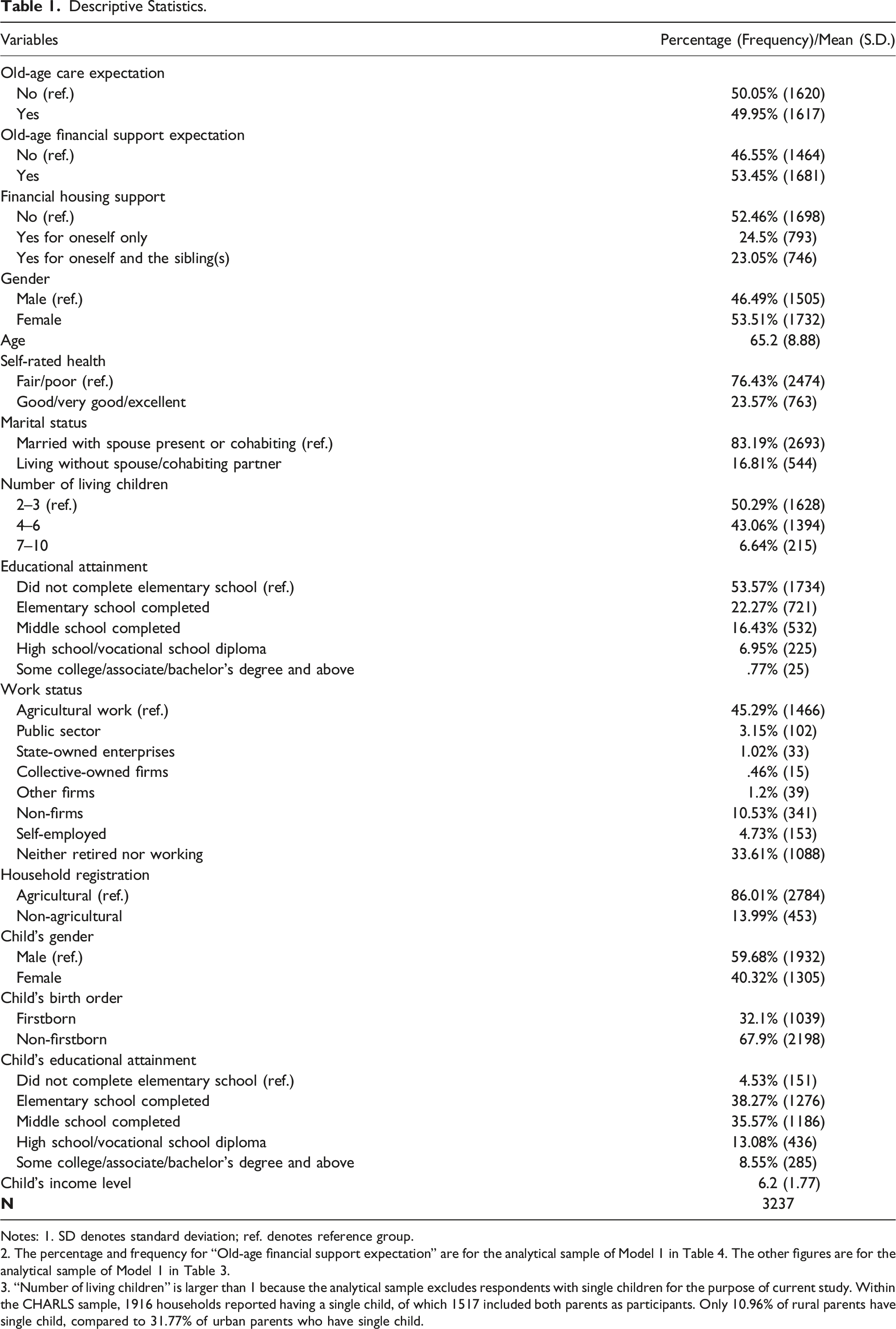
Notes: 1. SD denotes standard deviation; ref. denotes reference group.
2. The percentage and frequency for “Old-age financial support expectation” are for the analytical sample of Model 1 in Table 4. The other figures are for the analytical sample of Model 1 in Table 3.
3. “Number of living children” is larger than 1 because the analytical sample excludes respondents with single children for the purpose of current study. Within the CHARLS sample, 1916 households reported having a single child, of which 1517 included both parents as participants. Only 10.96% of rural parents have single child, compared to 31.77% of urban parents who have single child.
Distribution of Care and Financial Support Expectations and Housing Support, by Adult Children’s Gender and Birth Order.
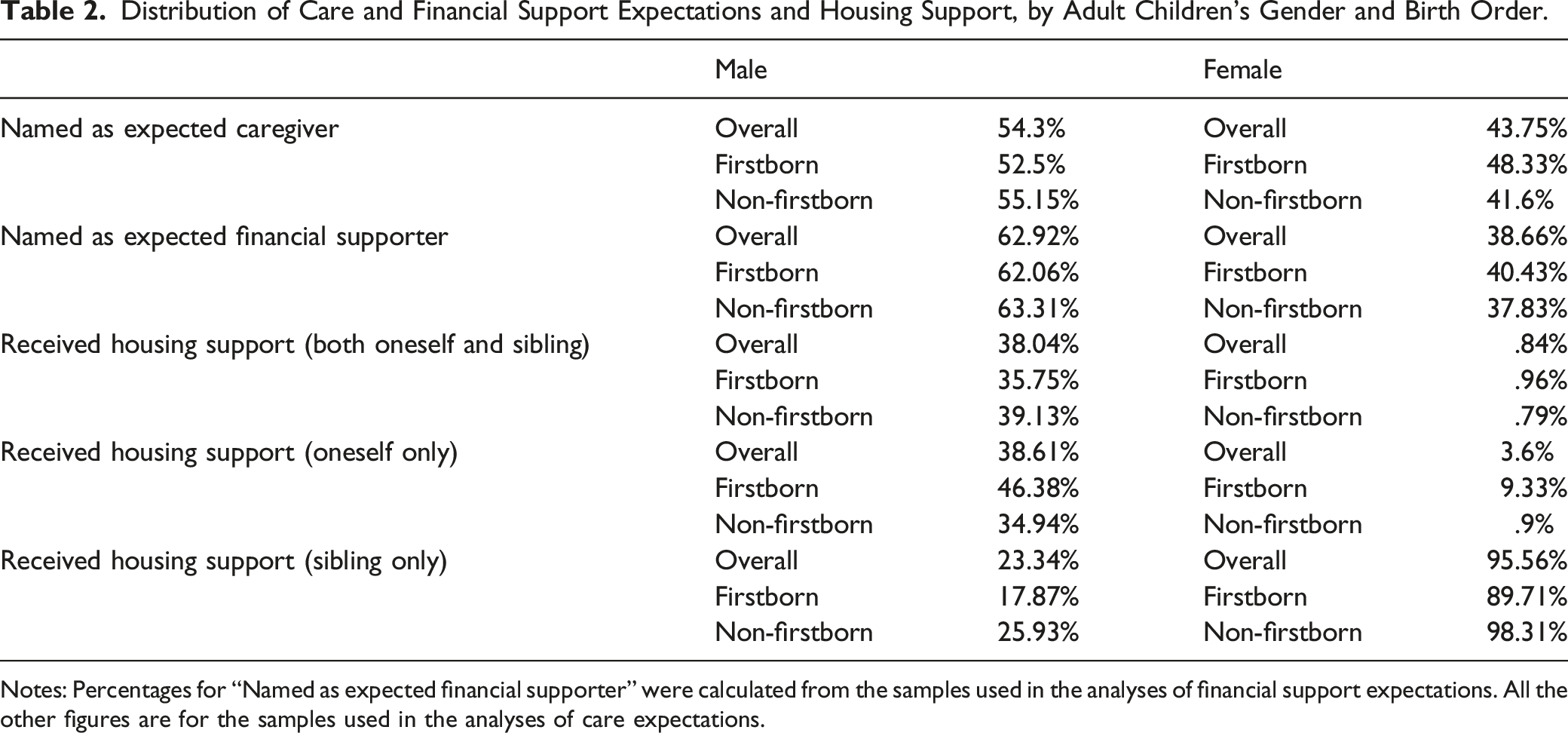
Notes: Percentages for “Named as expected financial supporter” were calculated from the samples used in the analyses of financial support expectations. All the other figures are for the samples used in the analyses of care expectations.
Odds Ratios From the Logistic Regression Models Predicting Old-Age Care Expectations of Adults Aged 45 or Older, Overall and by Children’s Gender and Birth Order.
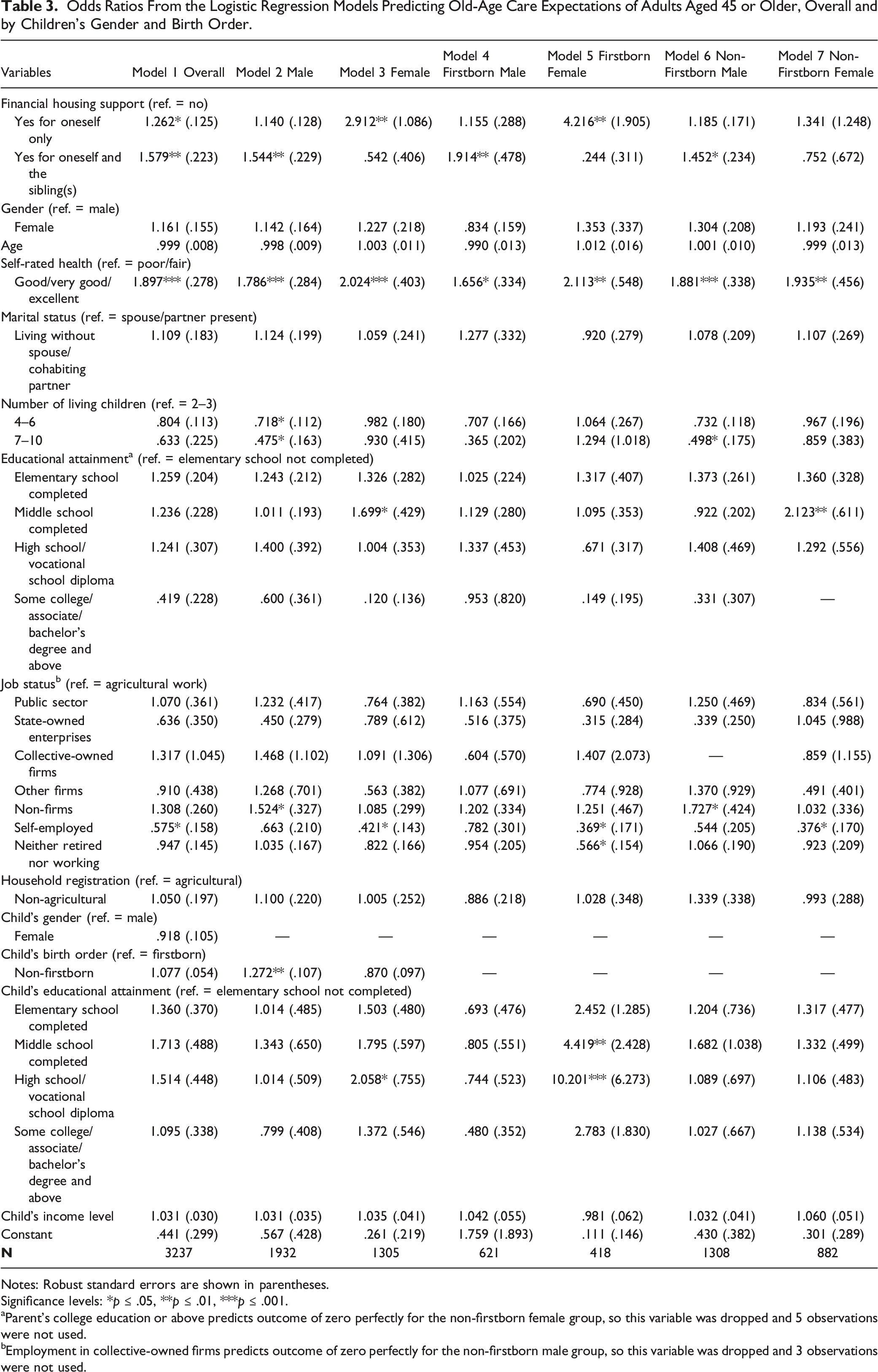
Notes: Robust standard errors are shown in parentheses.
Significance levels: *p ≤ .05, **p ≤ .01, ***p ≤ .001.
aParent’s college education or above predicts outcome of zero perfectly for the non-firstborn female group, so this variable was dropped and 5 observations were not used.
bEmployment in collective-owned firms predicts outcome of zero perfectly for the non-firstborn male group, so this variable was dropped and 3 observations were not used.
Models 4–7 in Table 3 estimate the effects of parents’ housing support on old-age care expectations for firstborn and non-firstborn sons and daughters, respectively. When receiving parents’ housing support together with their siblings, sons who are firstborn children are 91.4% more likely to be expected caregivers; non-firstborn sons are 45.2% more likely to be expected caregivers. Firstborn daughters are much more likely to be expected caregivers if they are the only ones who received the support (OR = 4.216). Parents’ housing support does not demonstrate significant effect on the likelihood of being expected caregivers for non-firstborn daughters. Notably, parents’ care expectations towards daughters and firstborn daughters are subject to the daughters’ moderate educational attainments (i.e., high school/vocational school diploma), while such effect is not significant for sons.
Estimations from Models 2–3 in Table 3 are translated into Figure 1, which illustrates the predicted probabilities of adult children being named by their parents as future caregivers, adjusting for the other covariates. Overall, for sons, receiving housing support together with their siblings predicts the highest probability of being expected caregiver, followed by receiving it by themselves only and receiving no support. By contrast, females are most likely to be expected caregivers when they are the only ones having received housing support from parents. Old-age care expectations by downward housing support and child gender.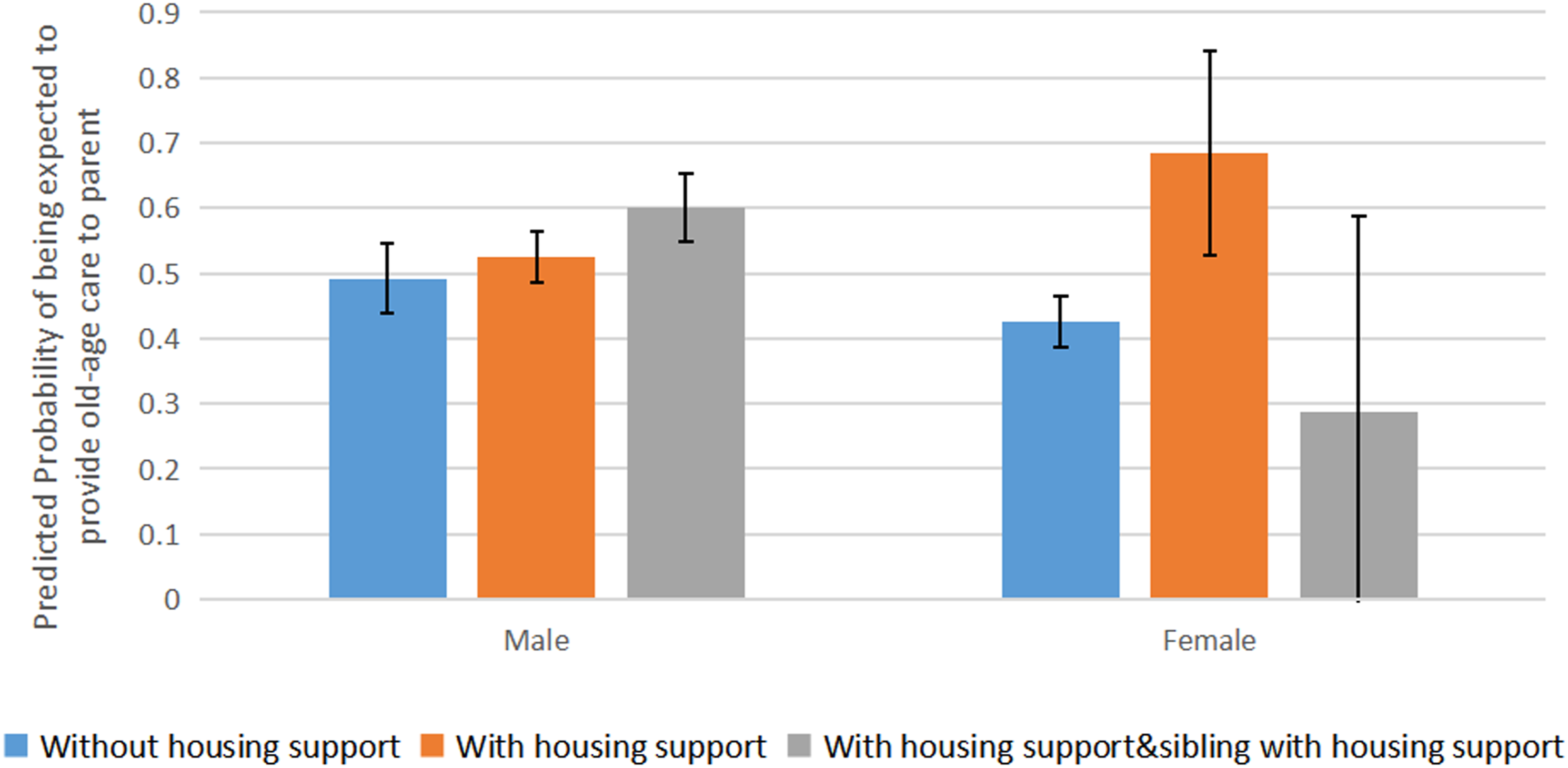
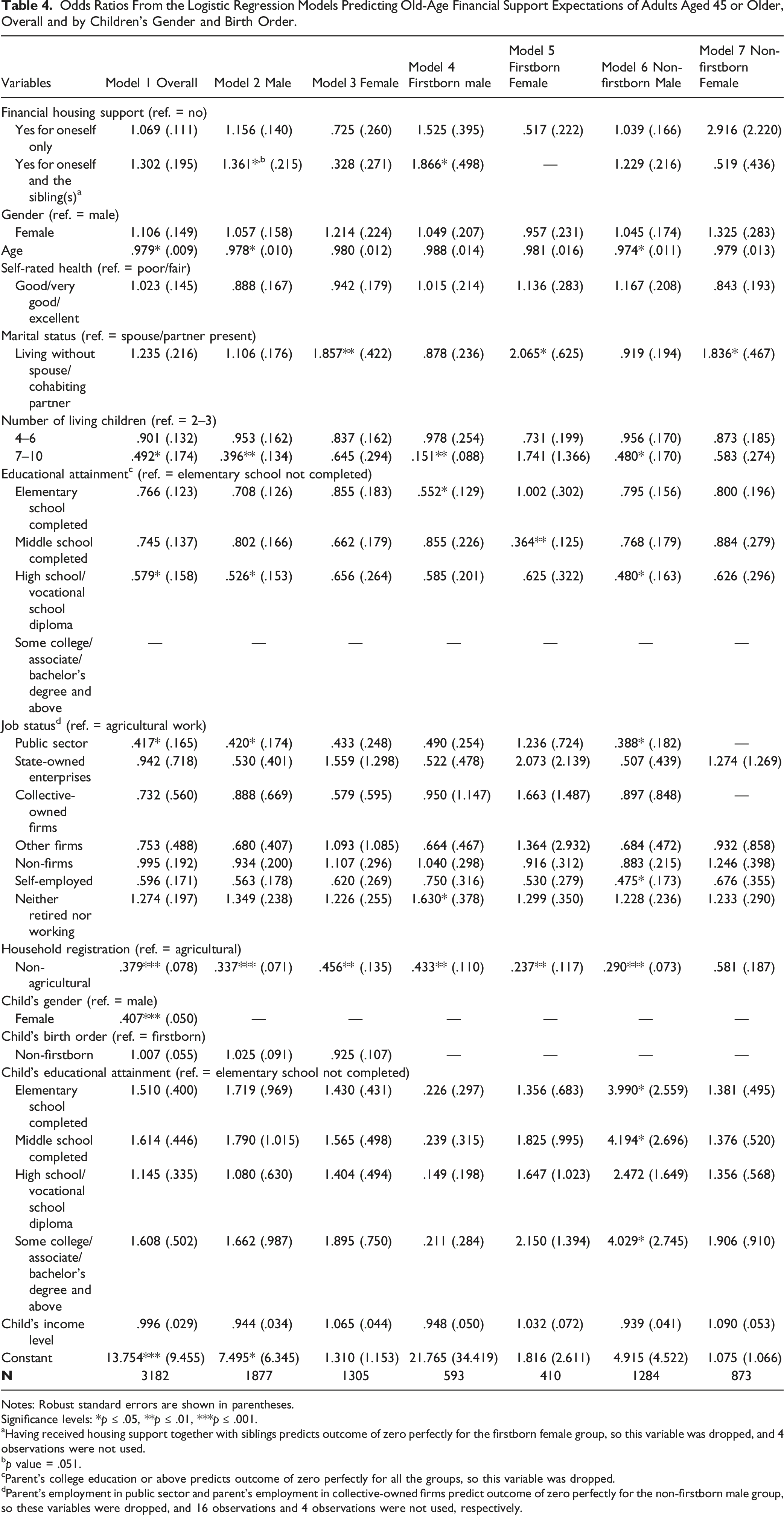
Odds Ratios From the Logistic Regression Models Predicting Old-Age Financial Support Expectations of Adults Aged 45 or Older, Overall and by Children’s Gender and Birth Order.
Notes: Robust standard errors are shown in parentheses.
Significance levels: *p ≤ .05, **p ≤ .01, ***p ≤ .001.
aHaving received housing support together with siblings predicts outcome of zero perfectly for the firstborn female group, so this variable was dropped, and 4 observations were not used.
bp value = .051.
cParent’s college education or above predicts outcome of zero perfectly for all the groups, so this variable was dropped.
dParent’s employment in public sector and parent’s employment in collective-owned firms predict outcome of zero perfectly for the non-firstborn male group, so these variables were dropped, and 16 observations and 4 observations were not used, respectively.
Estimations from Models 2–3 in Table 4 are translated into Figure 2. Overall, sons are much more likely to be expected financial supporters than daughters. Sons who received housing support together with their siblings demonstrate the highest probability of being expected financial supporters. Daughters appear most likely to be expected financial supporters when they received no housing support, which may result from their higher financial capability. Old-age financial support expectations by downward housing support and child gender.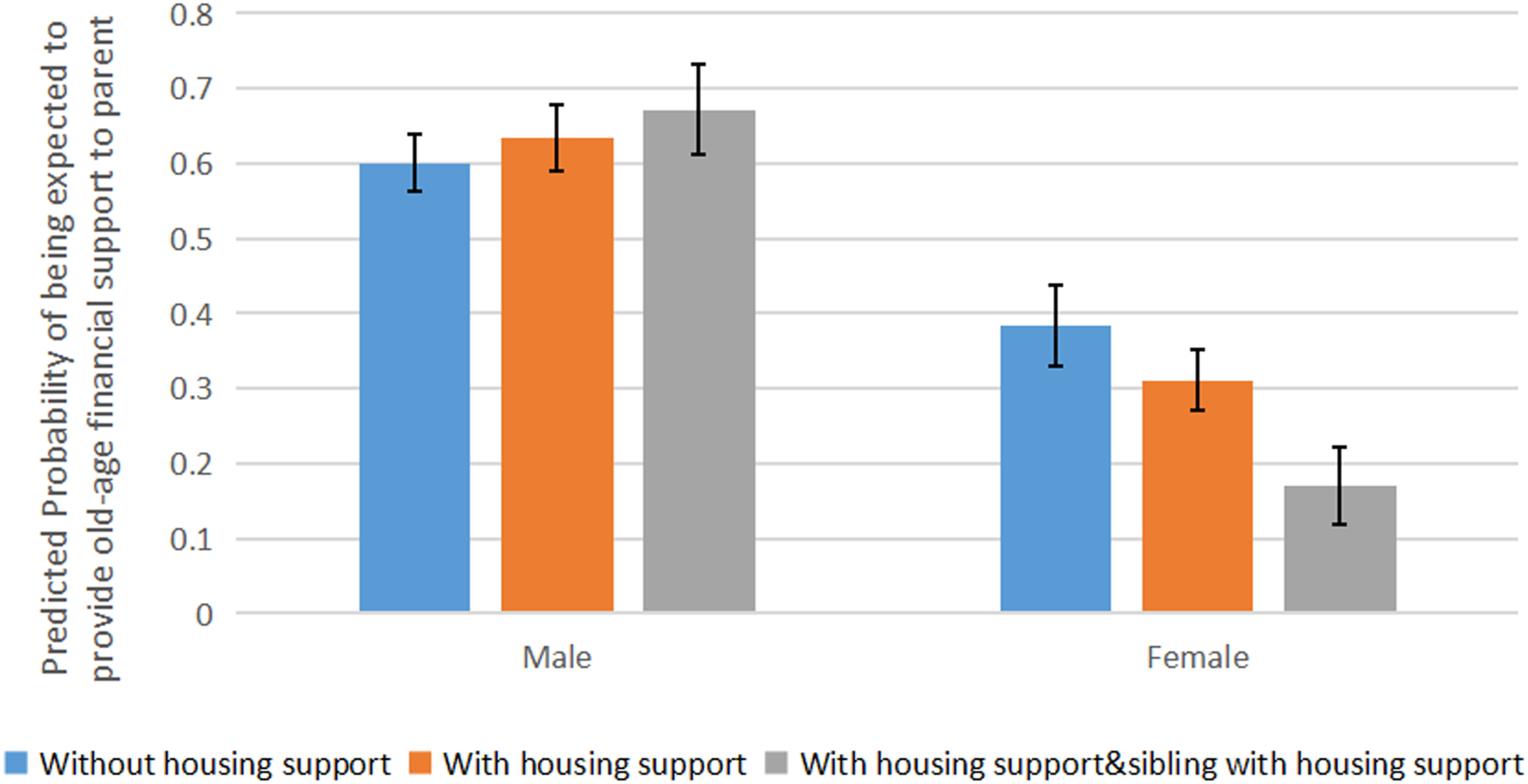
Discussion
This study investigates intergenerational transfer motives from the parent’s perspective in multi-child families through the lens of downward housing support, and reveals how gender and traditional patriarchal norms of family support continue to influence contemporary Chinese mid-aged and older adults’ intergenerational transfers and expectations of old-age support. Results show that overall, in multi-child families with downward intergenerational housing support, those adult children who received parent’s housing support are more likely to be named by their parents as expected caregivers than those who did not. It echoes previous findings that highlight fairness-based “one-on-one” reciprocity in intergenerational transfers (Bui et al., 2022; Tang & Wang, 2022). Moreover, providing housing support to more than one adult child raises the likelihood of expecting old-age care from each of the recipients even more than providing it to one child only, reflecting the joint effects of equity-based exchange as well as potentially increased future need arising from a drain on financial resources. Results from gender-birth order-specific models show that parents’ expectations of old-age care from sons and especially firstborn sons are mainly driven by the traditional norms of patrilineality, whereas the expectations of receipt of care from daughters and especially firstborn daughters largely support the principle of reciprocity. This is contrary to Wu and Li’s (2014) finding based on actual upward transfer behaviors that the exchange motive of transfer to older parents only appears among sons. The finding that females are much more likely to be expected caregivers when they are the only recipients of the parent’s housing support is in line with notion of rational exchanges based on intergenerational and intragenerational equity (Cao, 2018; Deng et al., 2020; Heath, 2018). Although daughters are generally much less likely to receive parent’s housing support and to be expected old-age supporters than are sons, they are expected to return the favor, preferably in the form of future care provision, when parents make large and important investments in them. The gender and birth order differences among multi-child families demonstrate the long-standing patriarchal norms in older adults’ perceived familial commitments and intergenerational transfer.
Regarding the old-age financial support expectation, we found a weaker role of older adults’ downward housing support. Receiving parent’s housing support together with one’s siblings shows a marginally significant positive effect on sons’ likelihood of being an expected financial supporter. Firstborn sons, in particular, demonstrate higher odds of being an expected financial supporter if they received housing support together with their siblings. As is the case with old-age care, receiving the housing support by oneself only does not increase a male child’s odds of being named as a future financial provider, which reflects no precise reciprocity but need-based consideration. When the need arises, parents are still used to turning to their firstborn sons for financial support, suggesting their normative expectation when in need. We found no evidence of a significant effect of housing support on parents’ expectations for financial support from children for the other models, suggesting that parents have no expectation of return in the form of future financial transfers when providing housing support to female or non-firstborn children. This again is consistent with Chinese patriarchal tradition, by which sons have always been expected to be the ultimate financial providers (Zhan & Montgomery, 2003). In contrast to old-age care, parents’ expected economic reliance on children is only weakly (if at all) influenced by the housing support provided to them. A possible explanation is that the basic old-age financial support is less demanding than the long-term, intensive old-age care, and would be less likely to be subject to previous input from mid-aged/older parents’ perspectives. Housing support to non-firstborn daughters shows no significant effect on their likelihood of being expected old-age supporters. This may reflect parents’ altruism in the intergenerational transfers due to their great affection for younger daughter(s), especially in families willing and able to help non-firstborn daughters with housing acquisition. Another possible explanation is the small percentage of non-firstborn daughters who received parental housing support (1.7%).
Additionally, the significant effect of daughters’ education in predicting parents’ care expectation, rather than sons’, again suggests parents’ care expectations toward sons are normative and not subject to their socioeconomic status. But for daughters, parents are more likely to expect those with middle-level education to provide care possibly for their lower opportunity cost. Similarly, having fewer support sources and having better educated children only increase older adults’ financial reliance on daughters and non-firstborn sons, respectively. However, their expectations towards firstborn sons’ seem not conditional on these factors.
In sum, expectations for daughters show stronger exchange motives, while the expectations for sons reflect the persistence of traditional norms; old-age care expectations demonstrate more of equity-based exchange values and less of the patrilineal filial norms than old-age financial support expectations. We found no clear evidence directly supporting the altruism motive.
This study is subject to several limitations. First, because of the CHARLS sampling approach and lower response rates in urban areas, respondents with agricultural household registration constitute the majority of our analytical sample. Future research on urban samples is needed as rural-urban gap in sociocultural and economic development can make the intergenerational transfer patterns and expectations different in urban areas. Second, to explicitly examine the intergenerational transfer motives and the birth order and gender effects, our sample is restricted to parents with multiple married children and downward housing support. They are slightly healthier, more likely to be married/partnered, and about 3.5 years older than the other survey participants, who are marginally more educated and more likely to hold urban Hukou. Finally, we did not adopt fixed-effects models due to the very small group sizes (i.e., number of married children per parent) and subsample sizes (e.g., (non)firstborn sons/daughters) and thus did not control for all potential confounders at the parent level. We reported clustered standard errors instead to adjust for within-parent correlation, which is commonly used in literature studying intergenerational arrangements and old-age care (Korinek et al., 2011).
Despite these limitations, this study has important implications for aging and old-age care policies in China. A key finding of the current research is that helping adult children with home purchase increases parents’ expectations of future care and financial support from their adult children, either out of need or the notion of reciprocity. However, there are risks that these parental expectations will not be fulfilled (Zhong & Li, 2017) as a result of social modernization and the eroded practice of filial piety (Yeh et al., 2013). The discrepancy between parental care expectations and their actual receipt of care from adult children may result in unmet need and the “disappointed expectation” may also negatively impact upon the psychological wellbeing of the older adults. With the stubbornly high housing prices in China and parents’ increasing involvement in intergenerational housing support, it is crucial to make policies available to protect older people’s interests. In rural China, there has emerged a form of intergenerational contract, known as the “Family Support Agreement” (FSA) (Jiating Shanyang Xieyi), in which details of parental support are negotiated, agreed upon, and signed by older parents and their adult children, and notarized by local officials (Chou, 2011). However, the current FSA has been criticized for its limitations (Yu, 2020). Future policy may consider extending this form of intergenerational contract to urban China along with introducing relevant legislation to support its enforcement.
In addition, although many recent studies have found that daughters have played an increasing role in providing care for their natal parents and occasionally have even taken over some care responsibilities traditionally expected from their brothers and sisters-in-law (Liu, 2014; Yi et al., 2016), this study has evidenced that from the perspective of parents, a considerable cultural lag of son-preference for old-age support still exists (Wang et al., 2022). Moreover, parents’ expectation regarding the future receipt of care from sons appears not to be conditional on the housing support given to them, reflecting the persistence of a gendered care perception from the patrilineal tradition. This may not be sustainable going forward.
In conclusion, this study examines the influence of parents’ downward intergenerational housing support on their old-age care and financial support expectations and found differential patterns across children’s gender, birth order, and support types. It is among the first attempts to take into account the complexity of children’s gender and birth order in differentiating parents’ support-and-expectation relationships. It also utilizes an understudied but increasingly prominent type of downward intergenerational transfer—housing support as the investigation lens. Moreover, by distinguishing and comparing two major types of old-age support, this study demonstrates disparities in older adults’ expectations of long-term intensive care and financial support and contributes to understanding the modes and motives of intergenerational transfer in varying situations. Finally, this study is among the first studies to investigate intergenerational transfer norms from the parents’ perspective. Contrary to existing studies emphasizing the modernity trend of intergenerational transfers (i.e., equity-based reciprocity, increasing significance of daughters, etc.) based on the examination of actual transfer patterns, this study found the long-standing norms of the Confucian ethic and patrilineal tradition in shaping the multi-child family parents’ transfers and care expectations. This indicates a cultural lag in parents’ ideology of old-age support, which may result in discordance between their support expectations and their actual support-receiving, potentially leading to significant unmet needs among future generations of vulnerable older adults. In order to narrow the gap between parents’ expectations around social care and the support that is actually realized, and thus mitigate the impact on their psychological well-being of unrealized expectations and/or unmet need, materials promoting ideas around gender equality of old-age care responsibilities could be made widely available in the community to inform the view that both sons and daughters are equally able to provide old-age care (Yi et al., 2016). Furthermore, educational opportunities should be offered that challenge the traditional gendered division of labor, so that future generations of men and women are sensitized towards their responsibilities within the arena of family and care. On top of this advocacy, it will be essential to build up carer-friendly social and working environments to facilitate adult children—both daughters and sons—to fulfil their care commitments when their older parents are in need.
Supplemental Material
Supplemental Material - Expectations Regarding Reciprocity of Flows of Intergenerational Support in China: Does Gender or Birth Order Matter?
Supplemental Material for Expectations Regarding Reciprocity of Flows of Intergenerational Support in China: Does Gender or Birth Order Matter? by Zequn Tang, Ning Wang, Maria Evandrou, and Jane Falkingham in Journal of Applied Gerontology
Footnotes
Acknowledgments
The authors acknowledge the CHARLS research and field team and every respondent in the study for their contributions.
Declaration of Conflicting Interests
The author(s) declared no potential conflicts of interest with respect to the research, authorship, and/or publication of this article.
Funding
The author(s) disclosed receipt of the following financial support for the research, authorship, and/or publication of this article: This work was supported by Chinese Social Science Foundation Youth Project (20CSH014).

Supplemental Material
Supplemental material for this article is available online.
Notes
References
Supplementary Material
Please find the following supplemental material available below.
For Open Access articles published under a Creative Commons License, all supplemental material carries the same license as the article it is associated with.
For non-Open Access articles published, all supplemental material carries a non-exclusive license, and permission requests for re-use of supplemental material or any part of supplemental material shall be sent directly to the copyright owner as specified in the copyright notice associated with the article.
