




Abstract
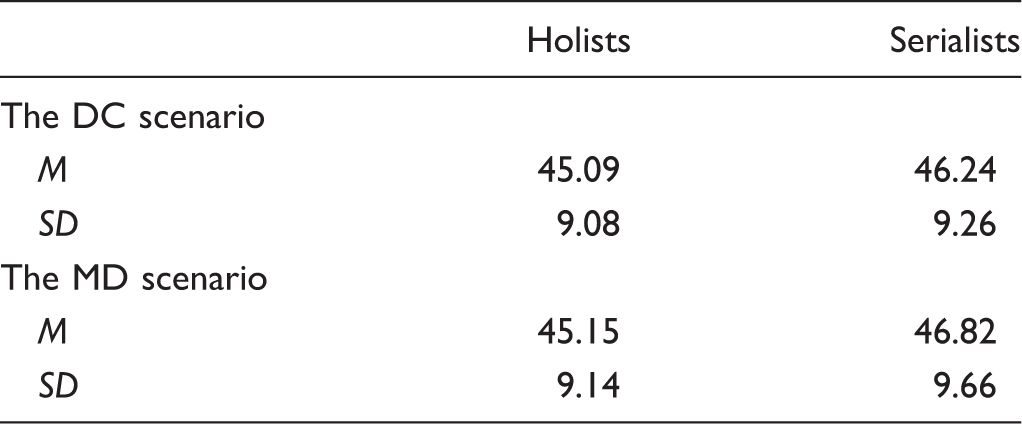
Mobile devices (MDs) change the way of teaching and learning. However, not every student can appreciate the value of MDs. Thus, it is necessary to consider individual differences. Among various individual differences, cognitive styles particularly affect student learning because they refer to individuals’ information processing habits. In this vein, this study aimed to compare the effects of desktop computers (DCs) and MDs on student learning from a cognitive style perspective. The results demonstrated that students in the MD scenario showed more positive reactions than those in the DC scenario. Students in the MD scenario generally performed better than those in the DC scenario. In addition, Holists and Serialists performed differently in the DC scenario, while they demonstrated similar performance in the MD scenario. However, they spent a similar amount of time for completing the tasks, regardless of the DC scenario and MD scenario.
Introduction
Theoretical Background
Mobile devices
Mobile devices (MDs) have become essential communication instruments for delivering documents (Lin, Lin, Yeh, & Wang, 2016). Thus, an increasing number of people in the world use MDs (Page, 2016). Because of such popularity, MDs are extensively employed to provide business information for consumers at the point of purchase (Watts & Wyner, 2011). Furthermore, MDs are also widespread in all educational sectors (Chen, Sivo, Seilhamer, Sugar, & Mao, 2013; Pegrum, Howitt, & Striepe, 2013), especially Web-based Learning (Wu et al., 2012).
For example, Chen, Chang, and Wang (2008) developed a Web-based Learning system with MDs. Their results showed that their proposed system could improve students’ learning performance, task achievement rates, and the achievement rates of learning goals. In addition to Web-based Learning, MDs were also applied to support professional education. For instance, Lin and Lin (2016) developed a mobile interactive learning and diagnosis system to support nursing education. Their results indicated that the mobile interactive learning and diagnosis system was helpful to improve students’ learning performance and to reduce their cognitive load. In brief, these studies showed that MDs offered great innovations in the delivery of learning materials (Vinu, Sherimon, & Krishnan, 2011) and had potential to improve student learning (Hung & Young, 2015).
This may be owing to the fact that MDs can facilitate information access and increase active engagement (Domingo & Gargante, 2016). Regarding information access, MDs change the way of how we retrieve information (Clarke, Symes, Saevanee, & Furnell, 2016). More specifically, MDs provide direct interaction and involve human-like communication because learners are allowed to interact with instructional materials via voice input and touch screens (Morris, Lambe, Ciccone, & Swinnerton, 2016). Regarding active engagement, MDs are small and lightweight and can be carried around for a long period of time so that it is convenient for learners to bring them to participate in classroom discussions (Wallin, Kelly, & McGinley, 2012). Accordingly, there is a possibility to enhance social interaction between peers and between teachers and learners (Fabian, Topping, & Barron, 2016).
Nevertheless, using MDs to support student learning is not totally without problems (Lan & Huang, 2012) because hardware and software technologies used by MDs are different from those used by desktop computers (DCs; Güler, Kılıç, & Çavuş, 2014). For instance, Stockwell (2008) investigated students’ usage patterns of MDs and found that some students felt that DCs were more suitable than MDs for learning activities that required a longer attention span. In other words, MDs do not always provide students with positive experience.
To enhance students’ positive experience with MDs, there is a need to consider a variety of factors, including usability, cost, safety, reliability, maintainability, and manufacturability (Lottridge, Chignell, & Straus, 2011). Further to these factors, the effectiveness of MDs largely particularly depends on whether students believe that their particular needs are supported (Mac Callum & Jeffrey, 2013). However, learners have diverse background due to their preferences, skills, and needs. Thus, individual differences play an important role (Billi et al., 2010). To this end, it is necessary to examine relationships between individual differences and the use of MDs.
Cognitive styles
Among various individual differences, a number of studies have indicated that cognitive styles have considerable effects on student learning (Chen & Liu, 2011; Chen & Yeh, 2017; Ku, Hou, & Chen, 2016). This is because cognitive styles influence a person’s information processing habits, capturing an individual’s preferred mode of perceiving, thinking, remembering, and problem-solving (Messick, 1976).
Differences Between Holist and Serialist Characteristics (Pask, 1979).
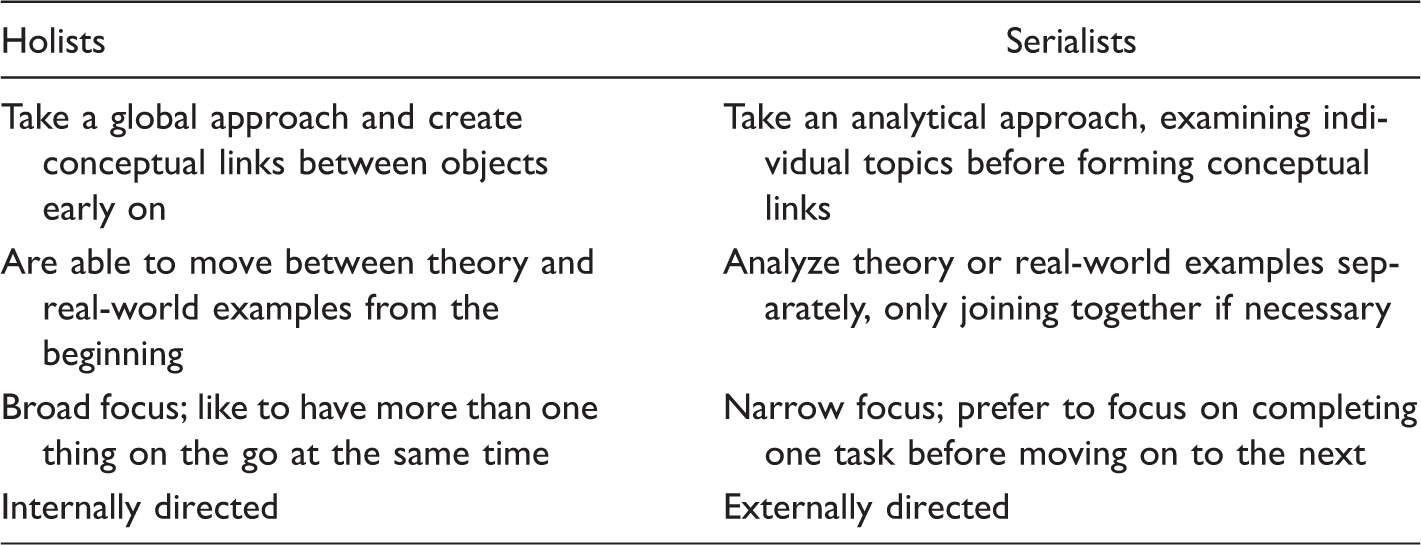
In past 10 years, several studies found that Holists and Serialists demonstrated different learning behavior. A study by Clewley et al. (2010) investigated the relationship between cognitive styles and learners’ preferences for search engines with a data mining approach. They found that Holists preferred to have multiple options, but Serialists did not demonstrate such a preference. Subsequently, these authors further examined different cognitive style groups’ preferences for Web-based Learning (Clewley, Chen, & Liu, 2011). Their results showed that Holists felt more difficult to use back/forward buttons, while Serialists did not meet such a problem. Thereafter, Chan, Hsieh, and Chen (2014) examined how Holists and Serialists used electronic journals. The results showed that Holists and Serialists used different ways to judge the relevance of documents. More specifically, Holists tend to use a variety of approaches, while Serialists prefer to use a single approach. Recently, Chen and Chang (2016) investigated how member grouping affected users’ reactions to mobile collaborative learning from a cognitive style perspective. The results indicated Serialists needed additional support in the context of mobile collaborative learning.
In addition to investigating differences between Holists and Serialists, some researchers attempted to find solutions to adapt the needs of Holists and Serialists. For instance, Mampadi, Chen, Ghinea, and Chen (2011) further developed a personalized learning system, which tailored to the needs of Holists and Serialists. The results showed the personalized learning system had positive effects on users’ perceptions and performance. In other words, matching the needs of Holists and Serialists is an essential issue.
The Present Study
Motivation and aim
As shown in the last section, previous empirical works demonstrated fruitful results. However, paucity of empirical studies examined the different needs and preferences of Holists and Serialists using DCs and MDs. Such empirical studies are paramount because they can provide concrete prescriptions for the implementation of personalized mobile learning that can accommodate the needs and preferences of different cognitive style groups.
In this vein, the study presented in this article attempts to address this essential issue. More specifically, the present study aims to compare the effects of MDs and DCs on student learning from a cognitive style aspect.
Contributions and research questions
The present study is an interdisciplinary work, which makes contributions to two communities: digital learning and human–computer interaction. With respects to digital learning, this study offers guidance for designers and instructors to use the potential benefits of MDs effectively. By doing so, the value of MDs can be maximized. With respects to human–computer interaction community, this study provides reliable descriptions for relationships between learners’ cognitive styles and their preferences for the use of MDs. In other words, this study provides the deep understandings of the importance of cognitive styles in the development of MDs by presenting empirical evidence.
To disclose the aforesaid contributions comprehensively, both learning performance and learning perceptions are taken into account. Thus, this study includes the following four research questions:
How students, in general, perceive differently in the DC and MD scenarios? How students, in general, perform differently in the DC and MD scenarios? How Holists and Serialists perceive differently in the DC and MD scenarios? How Holists and Serialists perform differently in the DC and MD scenarios?
Methodology Design
Research Instruments
Research instruments work as a guide to make sure that the same information is obtained from different participants. The research instruments used for the present study included (a) Web-based Learning system, (b) Study Preferences Questionnaire (SPQ), (c) pretest and posttest, (d) questionnaire, and (e) task sheet. The details of these research instruments are presented in the following sections.
Web-based Learning system
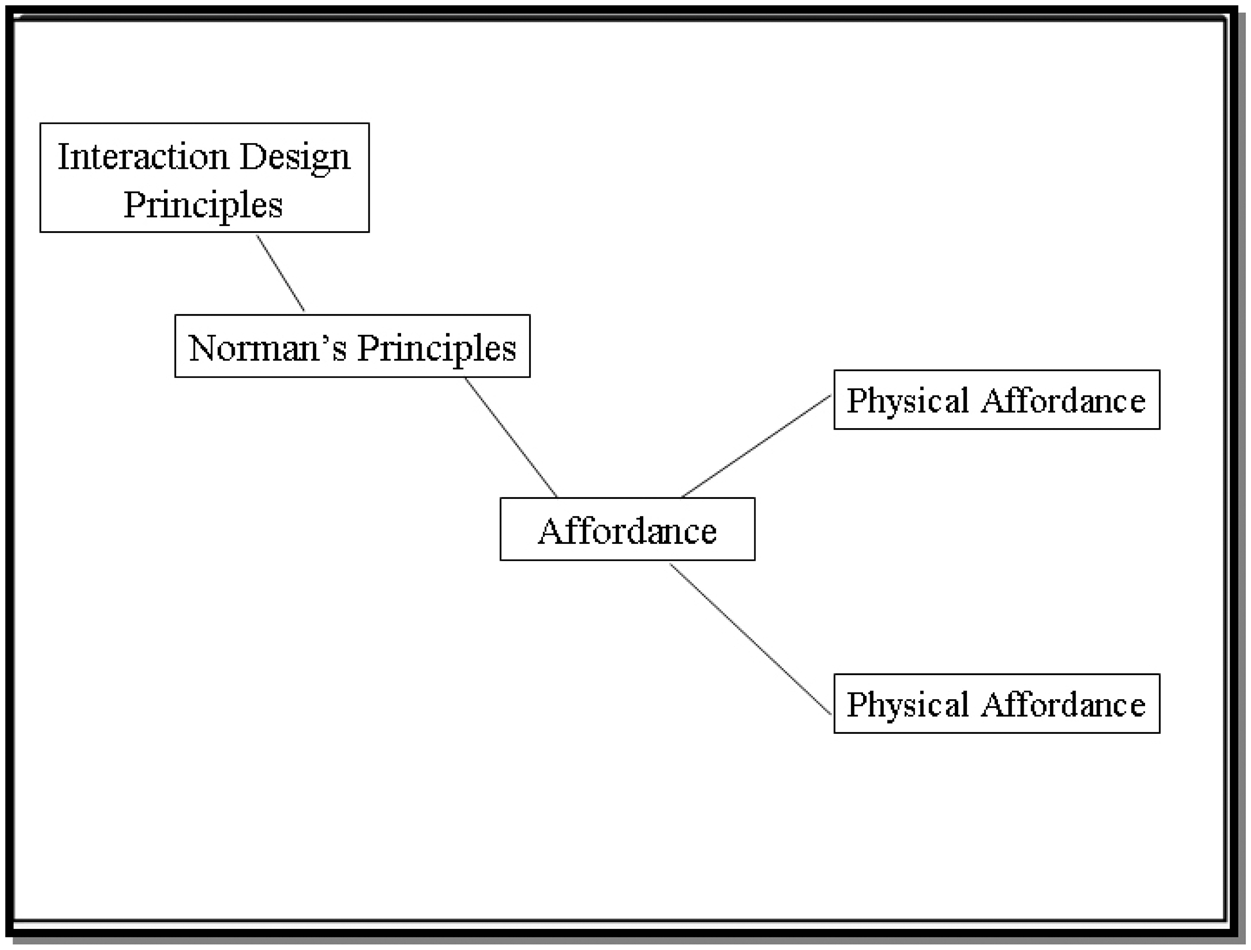
In the present study, a Web-based Learning system was developed to give the lecture of “Interaction Design” and includes eight sections. Moreover, the Web-based Learning system provides two kinds of navigation tools: Keyword Search (Figure 1) and Hierarchical Map (Figure 2). The Keyword search facilitated students to locate specific information based on their particular needs. On the other hand, the Hierarchical Map provided a global picture of the subject content. In other words, these two navigation tools served different purposes and were complementary to each other. This was the reason why we selected these two navigation tools. By doing so, students were allowed to choose a suitable navigation tool based on their requirements.
Keyword search. Hierarchical Map.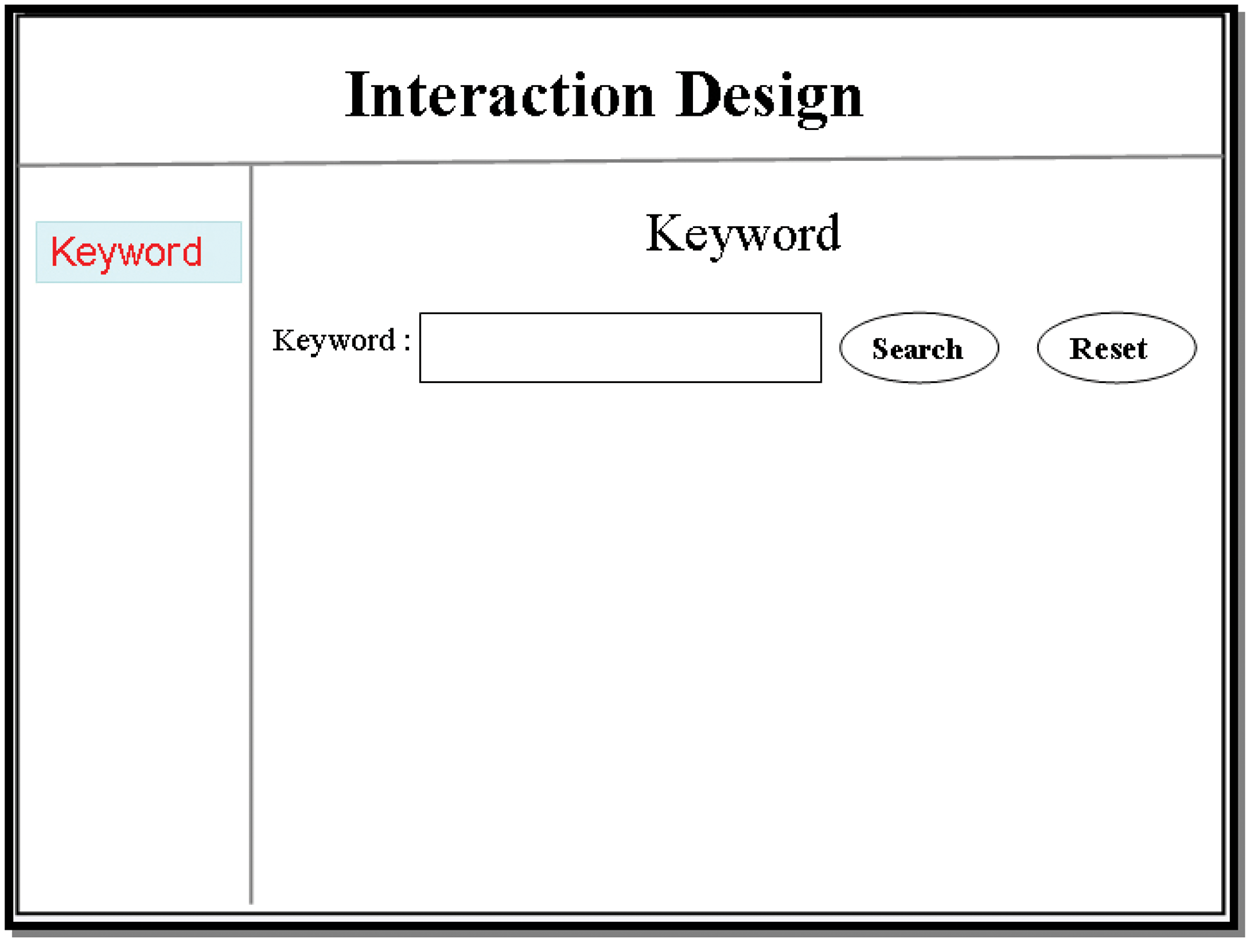
The Keyword Search was the main entry to access the Web-based Learning system. Because all of participants were low prior knowledge learners, who did not have any understandings of the subject content of the Web-based Learning system, there was a need to provide them with visual cues (Chen, Fan, & Macredie, 2006). Thus, keywords displayed in the results were highlighted with yellow (Figure 3) so that students could easily identify relevant results. Furthermore, the participants could view relationships between different topics by clicking the “Map,” which can help them construct knowledge through exploration.
The display of the results.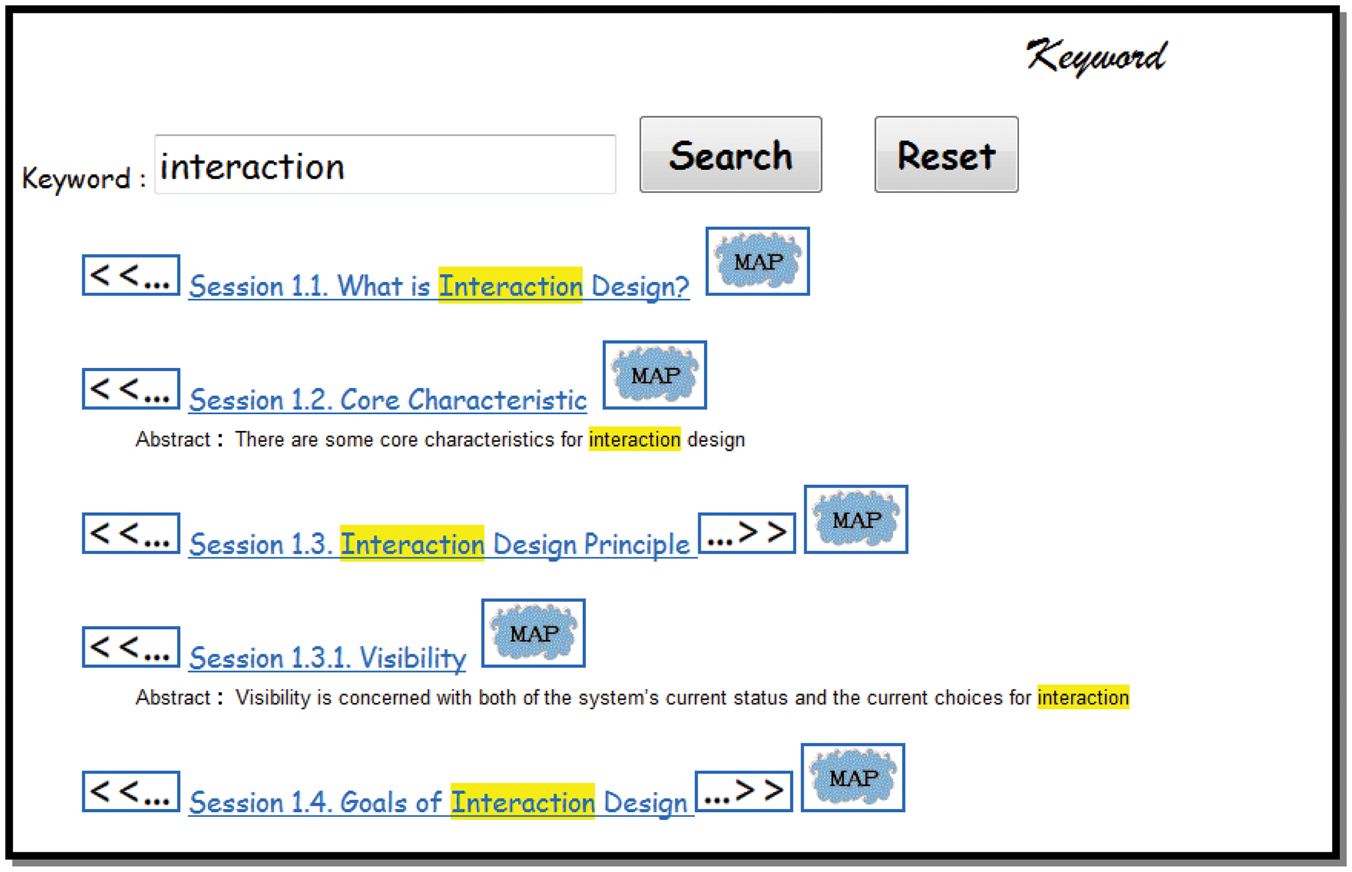
Study Preferences Questionnaire
As mentioned in the Introduction section, the present study emphasized on Pask’s Holism/Serialism, instead of Witkin’s Field Dependence/Field Independence. To this end, the students’ cognitive styles were administered with Ford’s (1985) SPQ, which showed adequate reliability (α = .77). This instrument was chosen for the current study because several researchers agreed that the SPQ provided a relatively quick and easy measure (Clewley et al., 2010, 2011; Ellis, Ford, & Wood, 1993).
The SPQ was presented with two sets of 17 statements. The students were asked to choose the statements that they agreed or to indicate no preferences. The current study identified Holists and Serialists by using criteria suggested by Ford (1985): (a) If students agreed with more than half of the statements related to Holists, they were identified as Holists; (b) if students agreed with more than half of the statements related to Serialists, they were then considered as Serialists. Such criteria were simple so it was not necessary to take an excessive amount of time to identify students’ cognitive styles with the SPQ.
Pretest and posttest
The pretest and posttest were employed to evaluate the participants’ levels of knowledge of the subject domain both before and after learning from the Web-based Learning system, respectively. Furthermore, the students’ learning performance was also measured by examining the difference between the posttest score and pretest score (i.e., the gain score). Both tests were presented in a computer-based format and included 20 multiple-choice questions about the principles of “Interaction Design,” each with three different answers and an “I don’t know” option. The participants were asked to circle an answer that the participants believed to be correct. The pretest and posttest questions were compatible so that each question on the pretest had a corresponding similar (but not the same) question on the posttest. Creating similar questions was achieved by either rewriting the questions or providing the possible answers in a different order or, where appropriate, by substituting different numbers or variables into the questions. The item difficulty index was ranging from 0.21 to 0.78, which was of moderate difficulty (Hopkins, 1998). Overall, the reliabilities of the pretest and posttest scores were acceptable. The alpha coefficient of the pretest scores was .74, while the alpha coefficient for the posttest scores was .85.
Questionnaire
The questionnaire was applied to examine students’ reactions to their specific learning scenarios. Thus, the questionnaire included two parts. The first part was committed to realize students’ reactions to the Web-based Learning system described in the Web-based Learning System section, while the second part was dedicated to examine students’ reactions toward the DC scenario or the MD scenario. Regardless of the DC scenario or the MD scenario, there were 30 statements, and all of statements were based on 5-point Likert scale, which consisted of the following: strongly agree, agree, neutral, disagree, and strongly disagree. Students were required to indicate agreement or disagreement with each statement that most closely reflected their opinions. To reduce the bias of the present study, both of favored statements (e.g., The mobile device is useful to collect information anytime and anywhere) and nonfavored statements (e.g., I feel difficult to identify relevant information with the mobile devices) were included in the questionnaire. In addition, there were an almost equal number of the favored statements (N = 16) and the nonfavored statements (N = 14) in the questionnaire. The reliability of the questionnaire was found to be acceptable (DC: α = .81; MD: α = .78).
Task sheet
When interacting with the Web-based Learning system, the participants were given a task sheet, which described the tasks that learners needed to undertake. In total, the task sheet listed 15 factual questions, each of which had only one correct answer. The participants were required to find an answer to each question via accessing information from the Web-based Learning system. The purpose of finding an answer to each question was to (a) maintain the learners’ motivation (Scanlon, 2000) and (b) guide the learners to locate information with keywords from the Web-based Learning system. Moreover, the amount of time that each participant spent for finding the answers could be applied to assess his or her learning performance.
Experimental Procedures
The experiment took place in a university in Taiwan. Prior to conducting the experiment, a request was issued to students in lectures, and further by email, making clear the nature of this study and their participation. The students took part in the experiment on the basis of volunteering. The experiment consisted of two phases held on different days. The details of these two phases are described in the following sections.
The first phase
Seventy students took part in the first phase of the experiment, which took 1 hour or so, and they were asked to take the SPQ to classify their cognitive styles. Once this was done, they were requested to fill out a personal information sheet, which was designed to identify their personal background, including the levels of their prior knowledge to subject content, and the levels of their previous system experience in using computers, the Internet, and MDs. Subsequently, quota sampling was applied to select the sample for the next phase based on the participants’ previous system experience and their prior knowledge to the subject content. Quotas were selected according to the data shown in the personal information sheet of each student. We chose the quota sampling because it could provide sufficient statistical power to detect group differences (Ramirez-Correa, Rondán-Cataluña, & Arenas-Gaitán, 2014). The final sample size included 56 students who had a fundamental understanding of how to interact with a DC or MD and were inexperienced in the subject content.
The second phase
The Distribution of the Sample.

Note. MD = mobile device; DC = desktop computer.
Regardless of the DC scenario or MD scenario, all of the participants were initially briefed about the purpose of this study and were instructed how to use the navigation tools provided by the Web-based Learning system. Moreover, there was also a basic introduction on how to use the DC and MD. This instruction was meant to minimize the experience gap between each individual. Then, they were required to take the pretest to identify their preliminary understandings of the subject content. Afterward, all participants were required to complete the tasks described in the task sheet by interacting with the Web-based Learning system via a DC or MD. They could discuss with their peers or teachers during the process of completing the tasks if they met problems. Thereafter, the participants were requested to take the posttest independently without any discussions. Finally, they had to fill out the questionnaire to express their learning perceptions toward the assigned scenario. In total, the participants spent 2 hours for completing the aforementioned activities.
Data Analyses
The present study examined how students reacted differently to the MD scenario and the DC scenario from a cognitive style perspective, in terms of learning perceptions and learning performance. The independent variable was the participants’ cognitive styles. The dependent variables included (a) learning perceptions and (b) learning performance. The former was collected from the participants’ responses to the questionnaire based on the 5-point Likert scale (5 = strongly agree, 4 = agree, 3 = neutral, 2 = disagree, 1 = strongly disagree). The latter was measured according to students’ task time, posttest scores, and gain scores, which were computed by finding the difference between the posttest scores and pretest scores. Furthermore, the results were analyzed from both the macro view and micro view. The macro view was applied to find answers to the first two research questions, while the micro view was employed to find answers to the last two research questions. By doing so, we not only can get a complete understanding of how students react to these two different scenarios but also can clearly differentiate students’ reactions from a cognitive style perspective.
Results and Discussions
The results from the Shapiro–Wilk test showed that the normal distribution was observed. Thus, the testing of statistical significance for the differences between the MD scenario and the DC scenario was done by independent t tests, which were also employed to find statistical differences between Holists and Serialists. This is due to the fact that the independent t tests are suitable to compare the means of two independent samples (Stephen & Hornby, 1997) who have normal distribution.
The results from the independent t tests were employed to find answers to the research questions defined in the Introduction section. More specifically, the section “An Overview” discusses results related to the first two research questions. On the other hand, the “Learning Perceptions” section and the “Learning Performance” section discuss results associated with the third research question and the fourth research question, respectively.
An Overview
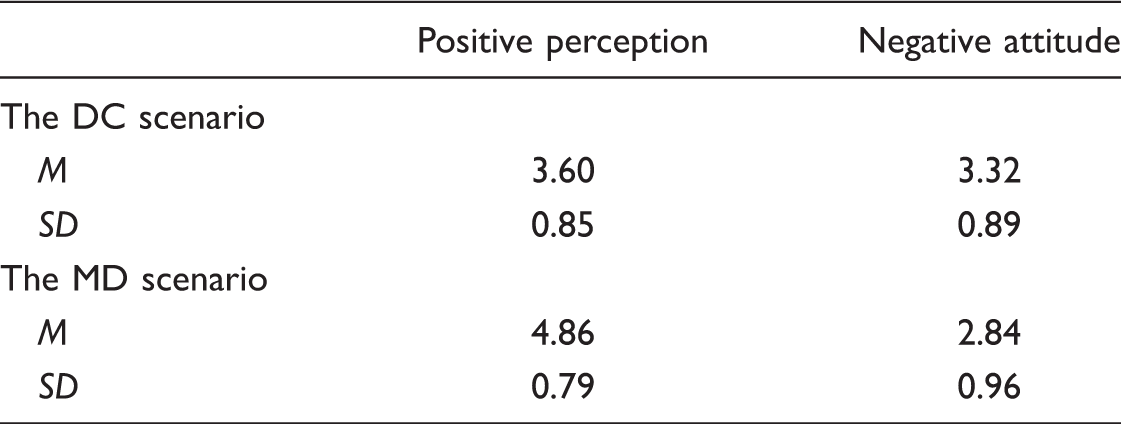
DC Scenario Versus MD Scenario (Perceptions and Attitudes).
Note. MD = mobile device; DC = desktop computer.
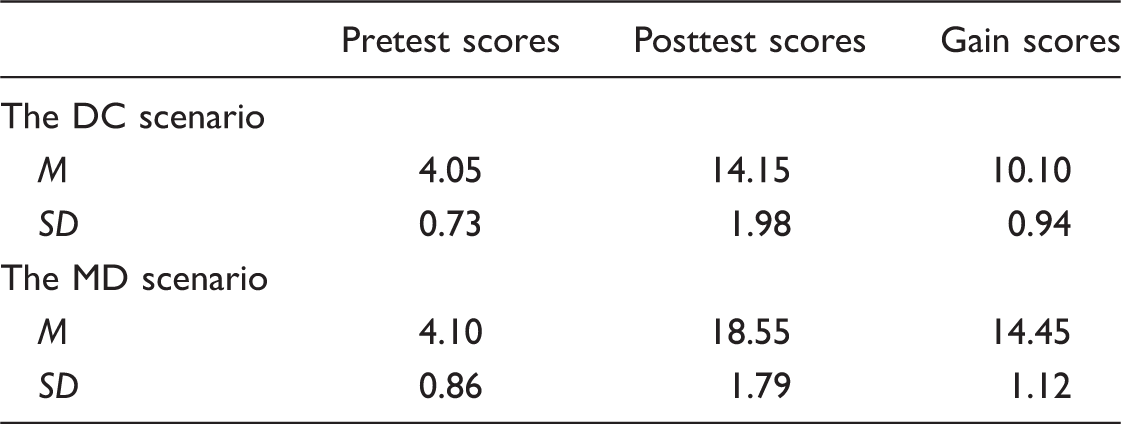
DC Scenario Versus MD Scenario (Learning Performance).
Note. MD = mobile device; DC = desktop computer.
These findings suggested that the MD scenario was useful for students to achieve better learning performance. In general, the aforementioned results were consistent with those from Hwang, Wu, and Ke (2011), which indicated that MDs could not only enhance students’ learning perceptions but also improved their learning performance. This might be due to the fact that MDs had touch screens and voice input, which could facilitate students to engage with instructional materials. Thus, students could demonstrate better performance and showed more positive perceptions.
Learning Perceptions
DC scenario
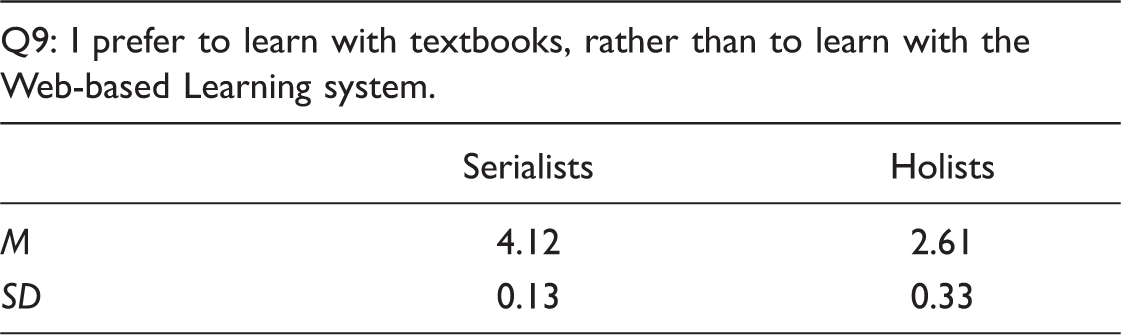
Students’ Responses to Q9 in the DC Scenario.
Note. DC = desktop computer.
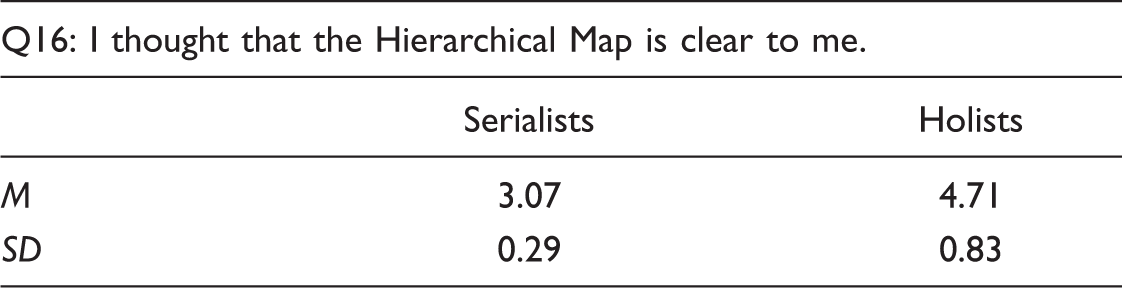
Students’ Responses to Q16 in the DC Scenario.
Note. DC = desktop computer.
Furthermore, Holists significantly demonstrated more positive reactions to the Hierarchical Map than Serialists (Q16; t = 2.45, p < .05). In other words, the Hierarchical Map was favored by Holists. The Hierarchical Map used a single graph to give a global picture of the subject content (Danielson, 2002) so it was beneficial for learners to obtain an overview, which was helpful for Holists to concentrate on building a conceptual framework. The findings also echoed those from Ellis et al. (1993), which indicated that Holists strongly favored to have an overview provided by a Hierarchical Map. On the other hand, the Hierarchical Map lacked sufficient detailed information so it might not be appreciated by Serialists, who emphasized on procedural details. In brief, the aforementioned results showed that students with different cognitive styles reacted differently to the DC scenario.
MD scenario
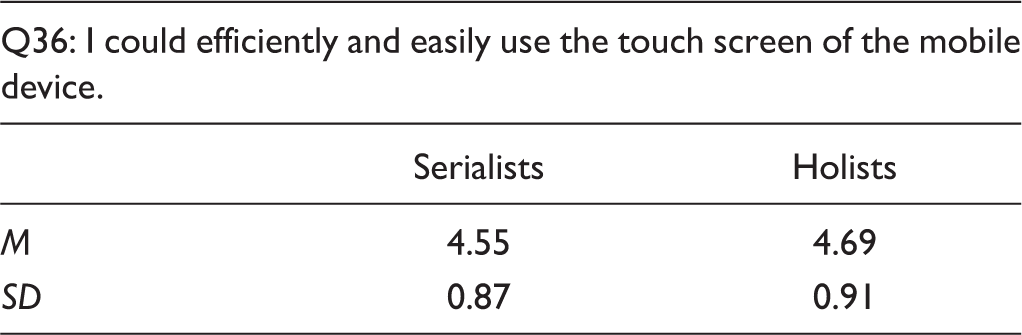
Students’ Responses to Q36 in the MD Scenario.
Note. MD = mobile device.
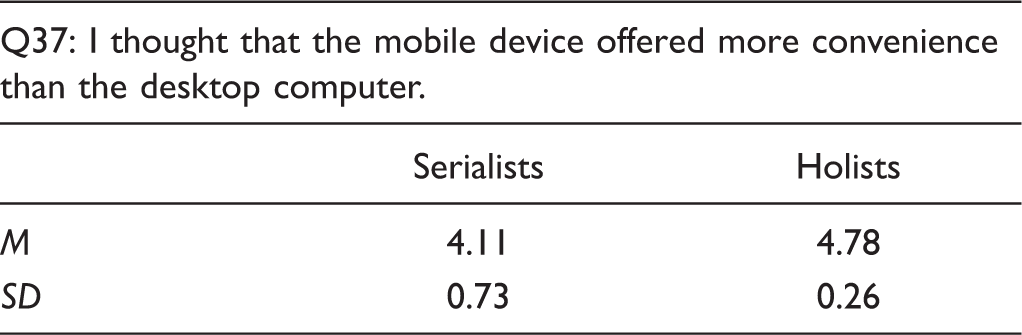
Students’ Responses to Q37 in the MD Scenario.
Note. MD = mobile device.
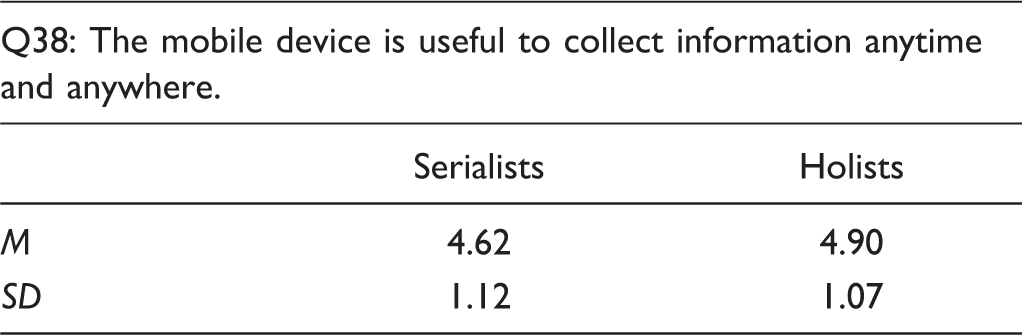
Students’ Responses to Q38 in the MD Scenario.
Note. MD = mobile device.
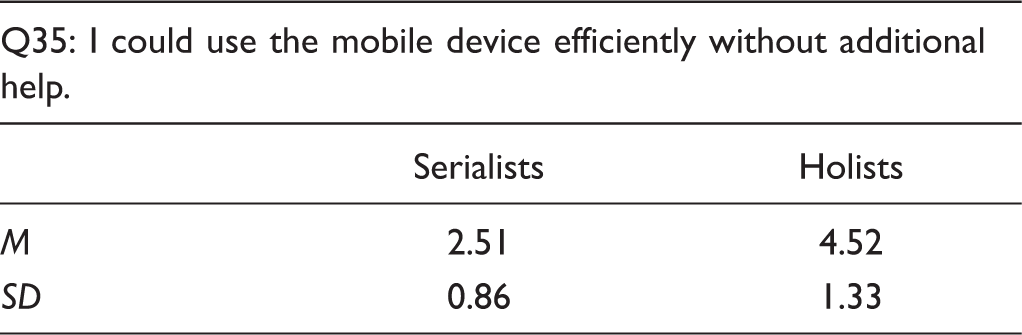
Students’ Responses to Q35 in the MD Scenario.
Note. MD = mobile device.
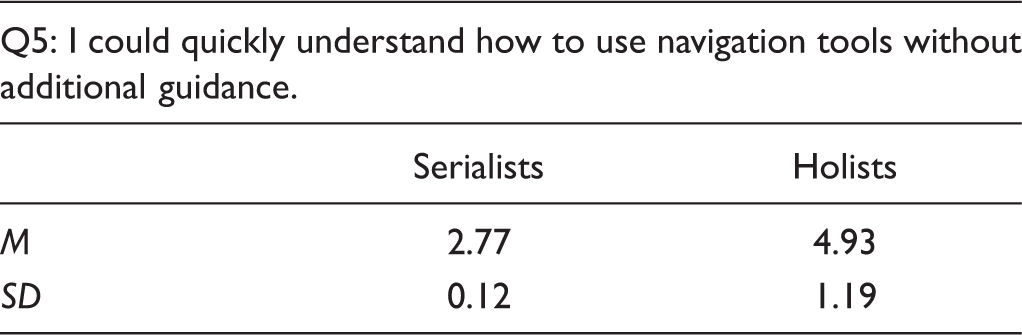
Students’ Responses to Q5 in the MD Scenario.
Note. MD = mobile device.
Learning Performance
Task Time (Holists vs. Serialists).
Note. MD = mobile device; DC = desktop computer.
Pretest Scores, Posttest Scores, and Gain Scores (Holists vs. Serialists).
Note. MD = mobile device; DC = desktop computer.
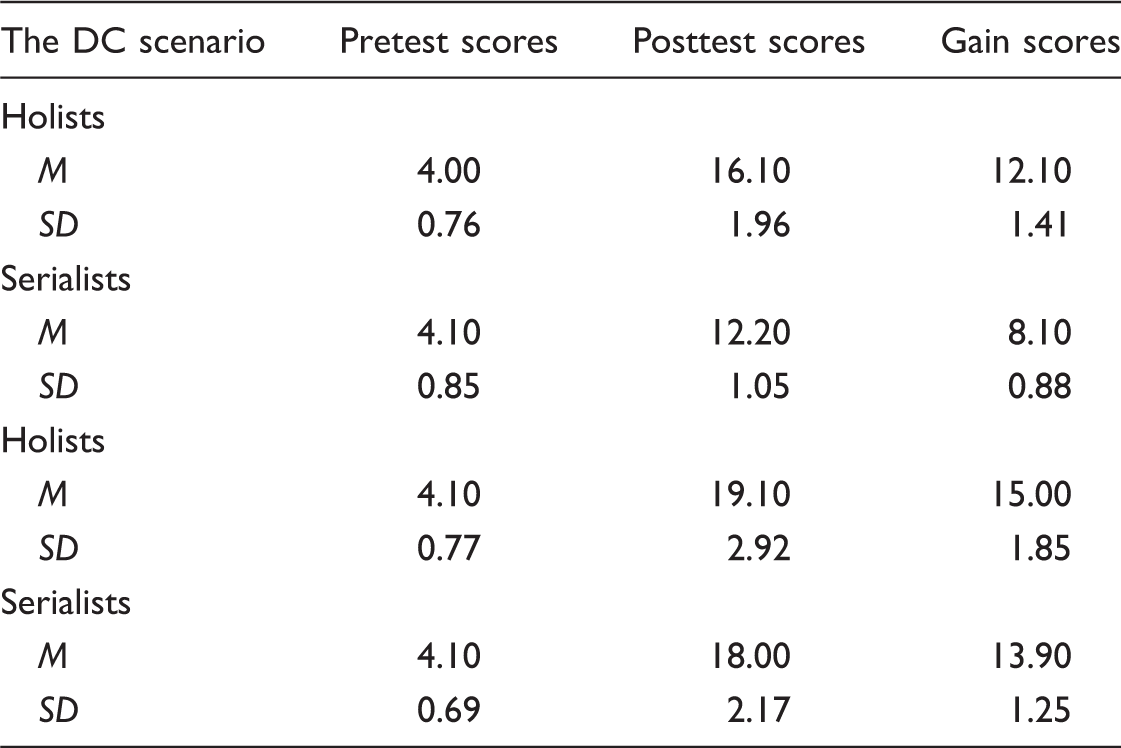
In other words, the performance difference between Holists and Serialists could be minimized in the MD scenario. These findings suggested that the MD scenario was beneficial to reduce the gap between Holists and Serialists. This might be due to the fact that MDs were moveable and could be easily taken with students so students could take them to seek additional support. Accordingly, they could be actively engaged in inquiry discussions.
Concluding Remarks
How to make information accessible by various learners via MDs is a major challenge (Terras & Ramsay, 2012). Such a challenging issue was addressed in the present study, which included four research questions: (a) how students, in general, perceive differently in the DC and MD scenarios; (b) how students, in general, perform differently in the DC and MD scenarios; (c) how Holists and Serialists perceive differently in the DC and MD scenarios; and (d) how Holists and Serialists perform differently in the DC and MD scenarios?
The answer to the first research question was that students in the MD scenario generally showed more positive perceptions than those in the DC scenario. The answer to the second research question was that students in the MD scenario generally performed better than those in the DC scenario though they spent a similar amount time for completing the tasks. The answer to the third research question was that Holists and Serialists demonstrated different perceptions for the DC scenario. Conversely, Holists and Serialists showed positive perceptions for the MD scenario though the former were more confident than the latter. The answer to the fourth research question was that Holists and Serialists performed differently in the DC scenario, while they demonstrated similar performance in the MD scenario. These answers suggested that the MD scenario could reduce differences between Holists and Serialists, regardless of learning performance or learning perceptions. In other words, the MD scenario had the potential to accommodate the needs of both Holists and Serialists. Thus, using MDs to promote Web-based Learning was helpful to learners with different cognitive styles.
The results from the present study show important findings, which the designers of both MDs and Web-based Learning systems can use as guidelines to develop personalized mobile learning systems or other mobile applications, for example, electronic readers. By doing so, such mobile leaning systems and mobile applications can accommodate learners’ individual differences, especially cognitive styles. However, there are several limitations. First, this study used only a small-scale sample. Hence, it is recommended that further studies should be undertaken with a larger sample to provide enough evidence. The other limitation of this study is that only cognitive styles were investigated. Thus, other human factors, such as prior knowledge (Chen & Huang, 2013) and culture factors (Wallace, Reid, Clinciu, & Kang, 2013), will be considered in our future research. Furthermore, our future work will take into account other variables, such as learning satisfaction or learning ways. The findings from the present study and those from our future work can be combined together to build robust learning models, which can not only be useful to promote mobile learning, but they can also be helpful for the development of personalized technology-based tools that can accommodate learners’ individual differences.
Footnotes
Declaration of Conflicting Interests
The authors declared no potential conflicts of interest with respect to the research, authorship, and/or publication of this article.
Funding
The authors received no financial support for the research, authorship, and/or publication of this article.