



Abstract

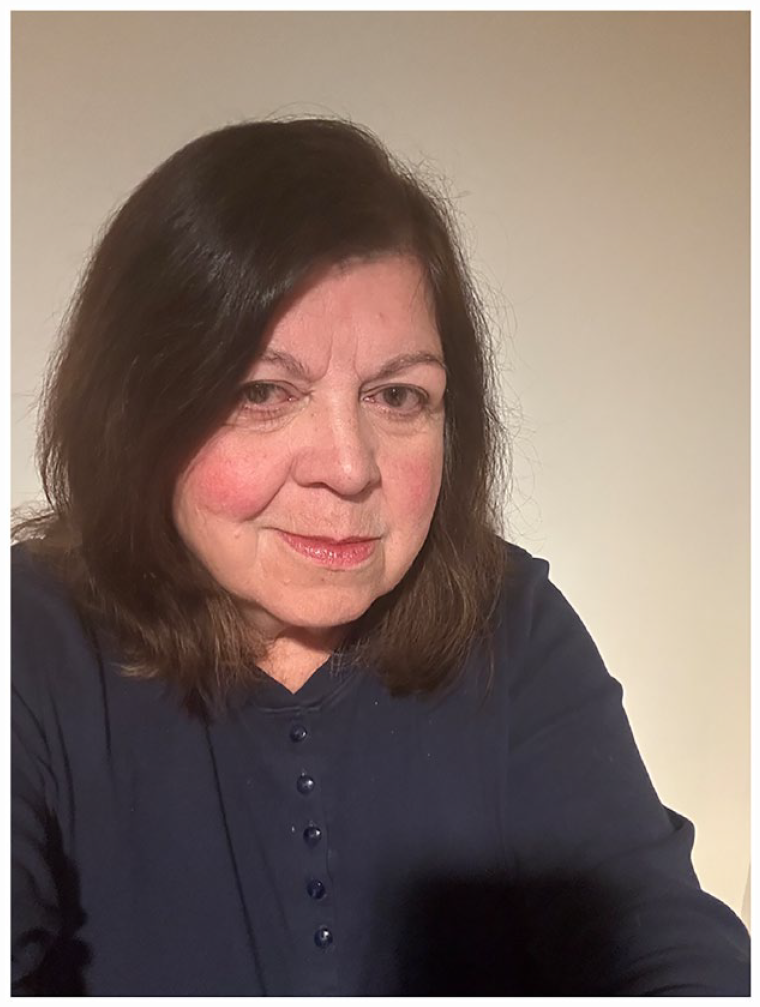
This essay is the twenty-eighth in a series on the recipients of the Association of Collegiate Schools of Planning Distinguished Educator Award, ACSP’s highest honor. The essays appear in the order the honorees received the award.
“Say ‘yes’ loudly for the record,” UC Berkeley Professor Elizabeth (“Betty”) Deakin encouraged me, gesturing to the tape recorder during my response at a crowded, high-stakes public meeting. This was the early 1990s when tape recorders and fax machines were finicky workhorses of professional communication. It also was my first time overseeing a meeting as a newly minted planner for the Metropolitan Transportation Commission, the San Francisco Bay Area’s metropolitan planning organization (MPO). Knowing it would be intense, Betty had carved out time to attend this meeting to provide personal support as well as to voice scholarly input—she forcefully set the record straight when speakers stated misconceptions about the controversial topic at hand, congestion pricing where bridge tolls could vary by the time of day. Her impactful nudge of being on the record while righting the record and affecting change is Betty par excellence, embodying her trifecta of scholar, educator, and mentor catalyzing confidence, broader awareness, and critical considerations in all with whom she interacts.
Betty’s laser focus on effecting change developed while a political science undergraduate at the Massachusetts Institute of Technology (MIT), where she was one of just sixty-one women among the class of 1971’s 1,000 students. In one of her classes, a professor presented cost minimization algorithms which routed highways though areas with low property values. Recognizing that such roads would tear through communities of color and neighborhoods with low-income households, Betty decided she needed a degree in civil engineering to effectively fight such injustices. Becoming a trained engineer (MIT CE 1972) allowed her to spar with engineers on an even playing field.
MIT faculty including Marvin Manheim and Nigel Wilson in engineering and Hayward Alker, Frank Colcord, and Michael Lipsky in political science cultivated her interest in urban areas, and the data and analysis approaches that could draw attention to critical social, environmental, and political issues. Professor Suzanne Berger was a critical female mentor and role model of how to make a difference in male-dominated academia and arenas.
Betty went on to earn a Juris Doctorate at Boston College (1975), studying land use, environmental, and civil rights law while teaching a graduate politics of transportation course to government professionals at nearby Northeastern University and working as a research associate at the MIT Urban Systems Lab. At MIT, she co-authored a policy paper for the U.S. Congress examining why the transportation provisions of the Clean Air Act of 1970 had failed to be implemented. Recognizing that state air quality agencies lacked the subject matter expertise and the political connections needed to redirect urban transportation investments and operating policies, she collaborated with congressional staff and members to shift key transportation—air-quality planning responsibilities to the metropolitan level. The resulting Clean Air Act Amendments of 1977 led to improvements in air quality, but equally importantly, shifted analytical and planning attention to the regional level and added nonmotorized transportation and demand management alongside highway building and transit as part of a MPOs’ responsibilities.
Betty moved to Berkeley in 1976. She set up a west coast office of Cambridge Systematics, then joined the research staff at the UC Berkeley Institute of Transportation Studies, and taught part time at Stanford. Shortly after arriving in Berkeley, she was appointed Chair of the city’s newly formed Transportation Commission. She joined UC Berkeley’s Department of City and Regional Planning in 1985.
She began to be called upon to advise MPOs, the California Legislature, mayors, and transport officials across the United States. She also began to work internationally, conducting research and teaching in France, Sweden, Germany, Australia, Mexico, and the People’s Republic of China. Her research applied interdisciplinary mixed methods to a wide range of topics, including the politics of growth and growth management; transportation, land use, and environment interconnections; social equity; transportation technologies and innovation; and institutional barriers and opportunities. In the words of the ACSP nomination committee for her Distinguished Educator award,
. . . [S]he helped to transform transportation planning into a field that integrates transportation, land use, and environmental planning—yet “that hardly captures the breadth and depth of her work, which targets crucial housing, environmental justice, freight, financing, and equity concerns.” (Association of Collegiate Schools of Planning [ACSP], N.d.)
Her research in support of the Clean Air Act Amendments of 1990 led to a change from uniform regulatory standards to a tiered system with varying regulations based on the severity of a region’s air quality area’s problems. With colleagues, she testified in support of a larger urban and regional role in transportation planning and funding, which led to the Intermodal Surface Transportation Efficiency Act of 1991’s creation of the Congestion Mitigation Air Quality (CMAQ) program. She chaired a Congressionally mandated committee of the National Research Council (NRC) whose recommendations led to the creation of a federal transportation and environment research program funded under the federal Safe, Accountable, Flexible, Efficient Transportation Equity Act of 2005 and addressed a wide range of transportation-related issues including sustainable development, social equity, greenhouse gas reduction, and road ecology.
During this period, she often was the only woman testifying on transportation issues before Congressional members and staff. Congressional members, fellow panelists and staff would routinely reference Betty’s testimony in strong endorsement and seek her insights to their key questions and concerns to expand their understanding of complex issues at stake, as I gleaned through close reading of Congressional Record archives. During one such notable hearing in 2002, a staff person of a conservative Senator asked her what he should communicate to the Senator because he strived to secure the Senator’s support for recommendations on social justice that drew from her leadership and work on the previously mentioned NRC committee.
Throughout her endeavors, Betty deeply considered organizational culture and behavior, institutional capacity building, and implementation. “Passing a law versus changing a practice are two very different things and sometimes legislatures like the semiotics of passing a law over the reality of implementing change,” she remarked to me during a recent conversation. She has strived to help decision makers argue comfortably that the steps they were taking are fact-based. She has further sought to have policies instituted that serve the priorities of people with greatest needs while seeking to include more people in the planning process. In so doing, her research has combined detailed rich policy analysis with quantitative and qualitative data including in-depth interviews of upward of forty to eighty people to uncover differences in perspectives and build trust, communication, and broader understanding (e.g., Deakin 2007).
In a recent conversation, when asked her greatest career accomplishments, she remarked without missing a beat, “I love to work with students and see my students thrive and succeed and . . . being able to encourage people to find their courage and live up to their potential and see the potential in themselves that I see in them.” In a prior reflection, she noted being “ . . . inspired every day by [her students’] initiative, creativity, and determination and . . . filled with admiration of their subsequent accomplishments as professors and professionals” (ACSP, N.d.)
Her former students, faculty colleagues, and policymakers resoundingly agree. Noted one student now professor, “Another of Betty’s remarkable strengths as a teacher and mentor came from her phenomenal knowledge of what felt like . . . everything. During conversations about my work, she consistently helped me to identify relevant literature and concepts from diverse fields, many far outside planning.” Another mentee stated, “She lets you know what you need to know before you even know you need to know it. This ability to see around corners is essential” (ACSP, N.d.).
Betty points to Professors Marvin Manheim of MIT and William Garrison of UC Berkeley as mentors who believed she could achieve more than she ever thought possible. From them she learned to “have confidence in my students, because usually the biggest impediment they faced was their own uncertainty about whether they were up to the challenges—and they were.” She also deeply credits women faculty mentors — Professors Judith Innes and Sally Fairfax of UC Berkeley, Rachelle Alterman of the Technion, and Sandi Rosenbloom of the University of Texas, Austin, and the University of Arizona—from whom she learned, “Women didn’t always face an even playing field, but speaking up and speaking out was worth the risks.”
Drawing inspiration from her mentors, not only does she fiercely mentor and advocate for students and colleagues, particularly women, students of color, and first-generation students, she raised substantial funding to support their studies and faculty research. She served as Director of the University of California Transportation Center headquartered at UC Berkeley for a decade (1999–2009) and wrote/co-wrote over half a dozen competitive federal grant proposals including authoring the first proposal in 1989 that led to the center’s creation. The resulting grants generated millions of dollars annually in federal and state funds to support graduate studies and multiple affiliated centers at UC campuses. She also was Co-Director of UC Berkeley’s multi-disciplinary Global Metropolitan Studies program (2004–2008) and garnered numerous grants to support research and students while growing the initiative to seventy faculty members across twelve departments and hiring three tenure track faculty with home departments in political science, engineering, and planning. If this were not enough, she then served as Vice Chair and Chair of UC Berkeley’s Academic Senate (2012–2014).
Betty became Professor Emerita of City and Regional Planning and Urban Design in 2015. She has continued to promote public policy engagement and interdisciplinary dialogue through the publication of two expansive books—as editor and author of a comprehensive book focused on transportation, land use and the environment (Deakin 2019), and co-editor of a book examining high-speed rail in the United States and abroad (Henríquez and Deakin 2017). She has also been conducting research with colleagues and students on women and cycling, the role of e-bikes, e-commerce and urban freight patterns, and micro mobility options for the suburbs, and the history of women in planning at UC Berkeley. She led a major study for the State of California on its landmark efforts to connect transportation, land use and climate change (Deakin et al. 2021) and investigated strategies for renaming or removal of racist and derogatory names and monuments in California state transportation right of way (Deakin, Muñoz, and Son 2022).
She continues to mentor undergraduate and graduate students, advising on capstone projects and student-run courses and serving on dissertation committees. Her latest adventure was teaching a short course at New York University Abu Dhabi, where she and students engaged in a site visit/study tour of Athens, Greece, as well as field work in Abu Dhabi and Dubai, allowing students to comparatively assess the cities’ vastly different approaches to historic preservation, city design, and service provision. (To wit, Journal of Planning Education and Research [JPER] readers here might be thinking, as am I, “Wouldn’t it be amazing to be on a study tour with Betty!”) Thus, Betty’s trifecta par excellence of scholar, educator, and mentor continues to excite opportunities for learning and “aha” moments of discovery while also shaping and transforming scholarship, policy, and practice.
Footnotes
Declaration of Conflicting Interests
The author declared no potential conflicts of interest with respect to the research, authorship, and/or publication of this article.
Funding
The author received no financial support for the research, authorship, and/or publication of this article.