




Abstract
This article presents findings from a content analysis of 707 articles appearing between 2011 and 2020 in five journals issued by the National Council of Teachers of English (NCTE), a major teaching and research organization in North America. We examined topics and theoretical frameworks, finding that while core topics such as academic writing, curriculum, cultural studies, literacy, and teacher development remained stable, the latter part of the previous decade (2016–2020) showed increased attention to labor, diversity, social justice, and writing program administration, alongside declines in work focused on history, educational policy, ESL, and community writing. Many articles lacked explicit theoretical grounding, often using broad labels like “critical theory,” though use of specified frameworks (e.g., feminist and postcolonial theory) has grown. We identify differences among the journals and discuss the implications of these findings for NCTE, for content analysis as a method and for scholars’ efforts to navigate a complex and expanding field.
Introduction
Scholars’ responsibility to stay current with research in their field can be difficult in a discipline like Writing Studies, which has experienced rapid growth and change (Adler-Kassner & Wardle, 2015; Middendorf & Pace, 2008). In the United States, the expansion of Writing Studies is evidenced by increased enrollment in writing courses across the curriculum as well as additional graduate and doctoral programs in universities (Anson, 2021). While the field’s boundaries remain a point of spirited disagreement among scholars (Dobrin & Jensen, 2017; Downs & Wardle, 2007; Nickoson et al., 2012), there is nonetheless broad agreement that the scope and scale of writing studies are expanding at a remarkable pace (Roozen & Lunsford, 2011).
This growth has prompted greater attention to the roles of writing in societies, schools, and workplaces, as well as its implications for human development. However, because of the wide-ranging, international, and interdisciplinary nature of Writing Studies (Anson et al., 2022; Donahue, 2023), it can be difficult for scholars to enter into and keep up with the multidimensional and often multidisciplinary conversations regarding the problems, questions, theories, methodologies, data sources, and epistemologies that are relevant to their own research and practice. A greater effort to systematically map the field is required both to provide clearer insights into research gaps and to present lenses through which to observe changing perspectives on writing and education over time, all of which can aid scholars by contributing to a more sophisticated and nuanced portrait of the broader scholarly ecosystem in which they position themselves and their work.
Beyond the sheer volume and pace of scholarship, mapping the field is further complicated by the diverse and often idiosyncratic ways in which literature is appraised and interpreted. Researchers in Writing Studies draw on a wide range of theories and methodologies, shaped by varying professional and institutional contexts that influence research questions and areas of focus. This diversity contributes to the field’s richness but also its fragmentation, underscoring the importance of identifying and tracing the full spectrum of topics and theoretical frameworks that structure the discipline. As Pedersen et al. (2020) note, literature reviews rarely contain their own methodological discussions. Instead, the scholarship that informs and situates our own research, especially in the literature reviews that accompany nearly every written publication, is typically shaped by specific personal and professional exigencies and experiences. As a result, scholarly portrayals of the field are continually, recurringly, and often incongruously shaped through interpretive practices that remain largely implicit. Morevoer, reviews of research within articles offer curated accounts of scholarship that seldom clarify how sources were selected, read, or situated. These choices, though often obscured, actively construct the contours of disciplinary knowledge.
Even authors writing about the same topic and using the same theoretical approach may cite completely different works, and those that discuss the same work might illuminate different aspects of the topic and draw very different types of conclusions (Hellqvist, 2010). Combining these idiosyncratic impressions with the sheer scale of the field can result in a great deal of “distance” between texts, the discourses surrounding them, and individual authors’ parochial conceptions of how they fit into the disciplinary conversations, or what Chris Anson (2021) has called “the cost of intellectual dissociation and fragmentation” (p. 5). This is all to say that understanding Writing Studies at the field level requires a volume of content analysis likely beyond the bounds of any one individual scholar’s ability (Dryer, 2019).
While this study does not endeavor to offer a process-level account of how researchers locate and interpret sources when composing literature reviews, it does attempt to surface the broader contours of disciplinary activity through a large-scale examination of published scholarship. As LaFrance et al. (2021) suggest, “all researchers benefit from ongoing conversations about why we do what we do and how common research design practices reflect a field’s larger ethos” (p. 572). If Writing Studies is to make sense of its own growth, it must also account for the patterns—as well as the omissions—that have shaped and continue to shape its trajectory.
To this end, we present the results of a content analysis of five journals from a national teaching and research organization. We start by introducing the National Council of Teachers of English (NCTE) to frame the context of our inquiry before reviewing previous “distant readings" of the history of research on this organization. Next, we detail the study design and the many methodological considerations we negotiated throughout the project. After presenting our results, we discuss the implications for our understanding of NCTE, the use and potential of content analysis in the discipline, the limitations of our study, and how mapping a national organization in this way might aid researchers to navigate an increasingly large and fragmented field. Finally, we sketch several potential future directions for this line of research.
The Research Context
The National Council of Teachers of English
Founded in 1911, NCTE is the oldest and largest organization of language educators in North America (National Council of Teachers of English, 2021). Toward its current mission of promoting “the development of literacy, the use of language to construct personal and public worlds and to achieve full participation in society, through the learning and teaching of English and the related arts and sciences of language,” it offers a variety of different journals, publications, and other resources for language educators (Lindemann, 2010; National Council of Teachers of English [NCTE], 2021).
Because of its size and long history, NCTE is one of the central professional organizations for English language learning professionals in the United States, in spite of the appearance of many more specialized organizations, assemblies, and journals. It is also important to point out that NCTE positions itself primarily as a teachers' organization, dedicated to improving English and language arts instruction across educational levels, with research activities serving to support this educational mission (NCTE, 2021).
Because NCTE’s membership is largely composed of English and Language Arts teachers and because it publishes a wide range of journals that reflect the organization’s dual commitments to teaching and research across educational levels, it is an attractive venue for researchers to share and promote their work. This study focuses on five of NCTE’s journals—College Composition and Communication (CCC), College English (CE), English Education (EE), English Journal (EJ), and Research in the Teaching of English (RTE)—which together span the scholarly and pedagogical interests of writing studies across K–12 and postsecondary contexts. 1
Given the organization’s large and diverse membership base, NCTE’s journals are positioned to reach a wide audience of teaching and learning professionals across fields related to writing, language learning, literacy, and education. Many foundational articles of historical import have been published in NCTE journals, which have won accolades, awards, and recognition both internally and from other related groups and organizations (e.g., Literacy Research Association, American Educational Research Association, etc.). We chose to focus on NCTE journals for this project because doing so allows us to focus on a bounded sample of journals that are published in context with one another. That is, NCTE purposely positions these journals to publish work in different related areas and disciplines and across different grade and developmental levels. Selecting journals from across different associations and ideological traditions, we felt, might unintentionally conflate (or even diminish) the scope of our collection.
This long history allows for the potential for comparisons over time that would not be possible for more recently established journals (see Methods for more on our specific selection criteria). Finally, we chose to focus on NCTE because it represents an organization that spans the professional gamut and serves a wide range of different types of professionals and interests. As writing research continues to develop in varying international contexts, we believe that the composition and makeup of NCTE and its journals may serve as an instructive point of reference for other regional or national organizations that are themselves evolving as they seek to serve memberships with increasingly diverse and specialized interests. In the next section, we sketch previous “distant readings" of NCTE journals to illuminate their findings as a part of the context from which we considered the design of the current project.
Distant Readings of NCTE
Recent scholarship has undertaken broad reviews of published research across NCTE journals, particularly in light of the organization’s centenary in 2011, in order to identify key developments, trace disciplinary shifts, and examine the evolution of research priorities over time. For example, Dutro and Collins (2011) found both continuity and change in research on elementary education across Language Arts, Primary Voices, and Research in the Teaching of English (RTE), noting a persistent focus on social inequalities as well as a need to interrogate how research questions are framed. Brass and Burns (2011) examined secondary research in the English Journal and RTE, documenting the shift from positivist to sociocultural paradigms after 1990, while also highlighting ongoing attention to curricular and instructional contexts. Roozen and Lunsford (2011) extended this line of inquiry across five journals, pointing to an increase in attention to diversity, writing outside English departments, and the effects of technology, alongside a broader move toward situated, context-sensitive research. Conversely, Hassel (2013), focusing on Teaching English in the Two-Year College (TETYC), found that a relatively small proportion of articles addressed diversity, assessment, or working conditions in depth. Collectively, these studies underscore both the evolving research priorities and longstanding tensions in published NCTE research, and by extension, the field of Writing Studies.
While their purposes and scopes vary, all of this historical review work shares a commitment to examining how scholarly conversations shift over time. Building on that foundation and picking up where prior research tied to NCTE’s 2011 centennial left off, the present study analyzes five NCTE journals from 2011 to 2020 to explore whether these earlier trends have persisted, intensified, or receded over the past decade. The following section outlines the methodological approach used to guide this analysis.
Methods
Data Sources
This project marks the first phase in a broader effort to map trends in Writing Studies scholarship across time and venue. In what follows, we explain how we selected the specific NCTE journals included in our analysis and determined which content to code.
After a review of the stated missions and publication schedules of all 11 NCTE journals, we conducted a randomized survey of articles within each journal to identify which journals seem to prioritize what Hassel (2013) describes as “feature articles”: studies with a formal research design that utilize systematic methods and analysis and engage in “sustained argumentation drawn from systematic research” (344–345). Based on this preliminary analysis, we limited the scope of our content analysis to College Composition and Communication, College English, English Education, Research in the Teaching of English, and Teaching English in the Two-Year College. 2 While all NCTE journals take up diverse perspectives that are essential to the field and advance knowledge and praxis, because our emphasis was on research trends, we focus on these five venues because they predominantly produce the type of “feature articles” in which we were interested.
Next, we constructed a second layer of exclusion criteria based on article type. In an effort to focus on original research, we reviewed the different genres of publication in NCTE journals and excluded items such as newsletters, book reviews, review essays, letters to/from the editor, editorials, responses, colloquia, forum entries, retrospectives, (Re)Active Praxis pieces, Instructional Notes, TYCA Reports, Provocateur Pieces, and Presidential Addresses. By focusing on peer-reviewed articles that present original research or substantive theoretical contributions, we aimed to develop an independently verifiable sampling method that was both data-driven and potentially replicable across future studies. Finally, to ensure relevance to current scholarly activity, we limited our analysis to the most recent 10 years for which complete volumes were available (2011–2020) at the time of data collection, coding each article for up to three topics and two theoretical perspectives.
Developing the Codebook and Norming
We started developing our codebook and coding procedures, per Krippendorff (2004), by speaking with other experts and scholars in the field who either had experience with content analysis and/or an extensive knowledge of NCTE. We then sought to utilize “existing theories or practice” and “previous research” (Krippendorff, 2004, p. 26) by reviewing the most recent “Annotated Bibliography of Research in the Teaching of English” and the glossary at CompPile.org as well as drawing from the tables of content, index, and bibliographies of the major writing research handbooks (Bazerman, 2008; Christenbury et al., 2008; MacArthur et al., 2025; Smagorinsky, 2005). Finally, topics were cross-referenced with NCTE’s list of Position Statement topics (“NCTE Resources”) as well as each journal’s “Aims and Scope” sections to be as exhaustive as possible. Through discussion, the coding team rearranged topics, breaking them out into multiple categories (e.g., Writing/Composition into academic, community, professional, narrative, and creative writing) or condensed related topics into one coding category (e.g., Literacy was merged with Reading). The same process was repeated to develop potential coding categories for theoretical perspectives.
We then engaged in multiple rounds of norming with a team of coders to refine the codebook and ensure consistency in its application to a practice set of similar articles (Riffe et al., 2019). During this process, questions emerged about how to handle cases where theoretical perspectives were implied but not explicitly named. To maintain consistency and reduce coder inference, we decided that all codes (whether for topic or theory) must be anchored in directly observable textual evidence (Rourke & Anderson, 2004). While most articles included clear topical indicators, some theoretical perspectives were only implied, raising reliability concerns. As a result, we added the categories “Not Specified” and “Other” to the Theoretical Perspectives codebook. Articles that lacked any clearly identifiable theoretical perspective were marked as “Not Specified,” while those that used a theory not represented in the original coding scheme were marked as “Other” and the specific perspective noted (Holsti, 1969). This decision ensured consistency across coders and preserved the transparency and verifiability of the data set.
We also used these norming sessions to define coding procedures, which began by reading the title, keywords, and abstract in order to seek observable, documentable textual evidence of the topical and theoretical perspectives. If the topic and theoretical perspective were not fully apparent after these procedures, coders read through the rest of the article as needed, flagging difficult or problematic articles for group discussion and adjudication. During these discussions, several interpretive incongruities surfaced, and we had to discuss and revise coding categories and procedures.
The coding definitions in our codebook went through two major revisions to differentiate the boundaries among related codes and difference-in-use cases, continuing to degranulate certain categories (e.g., Writing/Composition) while combining others (e.g., combining all ESL, TESOL, TEFOL, and multilingual topics into ESL/Multilingual or expanding Professional Writing to include Technical Communication). These evolving coding definitions helped us, over time, to refine our coding categories and procedures and overcome inferential ambiguities.
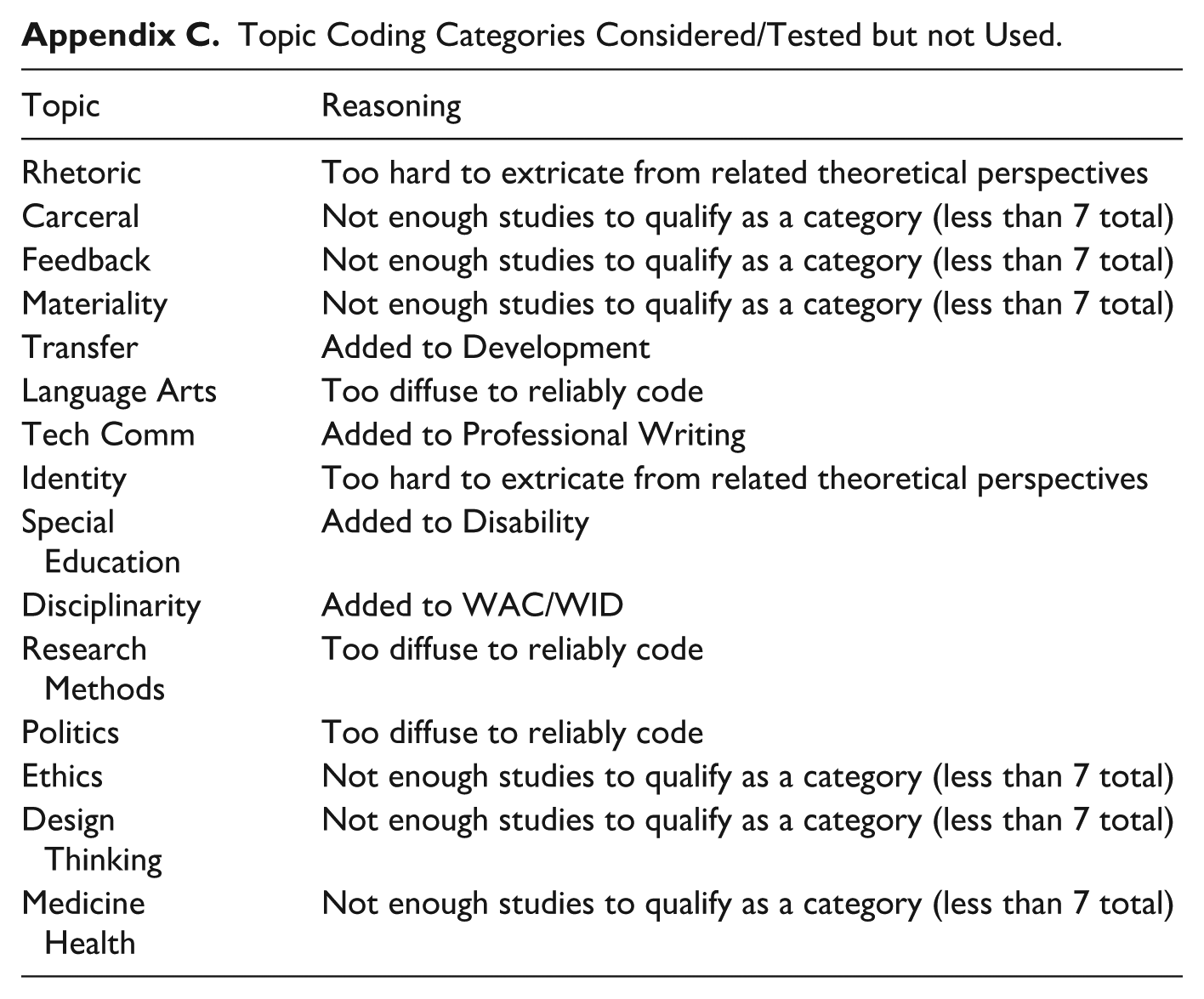
For example, it was initially unclear whether an article written about tenure in higher education would be coded under both the “Working Condition/Labor” or “Educational/Institutional Policy” topic codes. We eventually decided that if the article was more focused on the policies and programmatic requirements of tenure, it would be coded as “Educational/Institutional Policy;” if the article was more focused on the actual labor involved in working toward tenure, then it was coded as “Working Conditions/Labor.” We revised the coding definitions accordingly, and, of course, it bears noting that many articles concerning tenure in higher education focus on both of these aspects (labor and policy) and would thus be coded with both topic codes. However, it was in large part the conversations among the team exploring these liminalities that helped to prevent coders from “drifting from the descriptive to the inferential” and guided us toward quantifying the frequency of the directly observable, textually anchored occurrences that the content analysis sought to measure (Rourke & Anderson, 2004, p. 8). We also tested and kept track of topic and theoretical coding categories that we considered or tested but did not use (see Appendix C).
Indeed, one hypothesis we wanted to test from the outset was whether researchers were explicit in identifying their theoretical approaches. Of particular note in this regard, there were a number of articles relying on grounded theory as a methodology, which, as a practical matter, would mean that the authors would give primacy to the data itself rather than specifying a theory (Charmaz, 1996). So, even though we are aware that grounded theory is a methodology, we included it as a “theory” in the coding to provide a possible explanation for why those specific articles may not have specified another theory. The resulting taxonomy produced 29 potential topic coding categories (see Appendix A) and used 24 theoretical coding categories (see Appendix B). The research team used these codes in a round of data analysis of 707 articles from the five NCTE journals from 2011 to 2020.
Accounting for the “Other”
The use of “Other” as a coding category for theoretical perspectives proved useful for identifying potential theories that we had missed or not considered in the original coding scheme. Researchers coding “Other” in topics or theoretical perspectives explicitly recorded what theory was specified as a note for further clarification. These notes were then reviewed to identify whether a particular topic or theory not initially considered should be added. In most instances, the topics and theories coded as “Other” were unique but statistically insignificant in the analysis. However, when there were more than three articles with the same theory indicated as “Other,” we added that theory and replaced “Other” with the appropriate theory. Additional theories identified through the analysis of coding as “Other” were “Grounded theory,” “Identity theory,” “Activity theory,” “Historical theories,” “Feminist theory,” “Queer theory,” and “Disability.”
Calculating Interrater Reliability and Chi-Square Tests of Independence
After the final round of the analysis, we analyzed inter-coder consistency to establish reliability among coders using a random number generator to select 10% of the total coded articles. Each researcher then independently coded a set of articles that had already been coded by another team member, and then the two sets of codes were compared. This inter-coder consistency check revealed 84% agreement between coders. We then used Cohen’s kappa to calculate inter-coder reliability, resulting in a corrected agreement score of κ = .81, an acceptable threshold for qualitative research (McHugh, 2012). Most disagreements involved overlapping or ambiguous categories (e.g., “teacher development” vs. “curriculum”), and coders resolved these discrepancies through discussion and consensus.
To investigate whether or not there was a relationship between the topics and theoretical perspectives and the five journals in our study, we also ran two chi-square tests of independence to determine whether there was a relationship between these variables (i.e., topics and theoretical perspectives) and the journals in which they were published. The chi-square tests also allowed us to determine whether the distribution of coded topics and theoretical perspectives differed significantly across the five journals in our study.
Results
In this section, we first present the most frequent codes for each of these coding categories overall. Then, we present the trends over time for these coding categories. Next, we present correlations across coding categories. Finally, we present differences across specific journals. Of note, because one article could have up to three topics and two theories, the percentage of articles coded with a specific topic or theory exceeds 100%.
Topics
Frequency counts (Figure 1) demonstrate that the five topics most written about in these five journals as a percentage of all articles (n = 707) are (a) Academic Writing (27.9%), (b) Curriculum/Textbooks (20.8%), (c) Cultural Studies (17.7%), (d) Literacy/Reading (17.0%), and (e) Professional Development/Teacher Education (16.4%). These five topics comprise 44.2% of the 1,596 topic codes identified in our research and appear at least once in 71.3% of all the articles reviewed. A chi-square test of independence was conducted to examine the relationship between article topics and the journals in which they were published. The relationship between these variables was significant, χ²(df = 16, N = 707) = 1,620.20, p < .001. The effect size, V = .787, indicates a strong effect (Cohen, 1988). These chi-square results indicate that these topics are not evenly represented across the journals in our study.
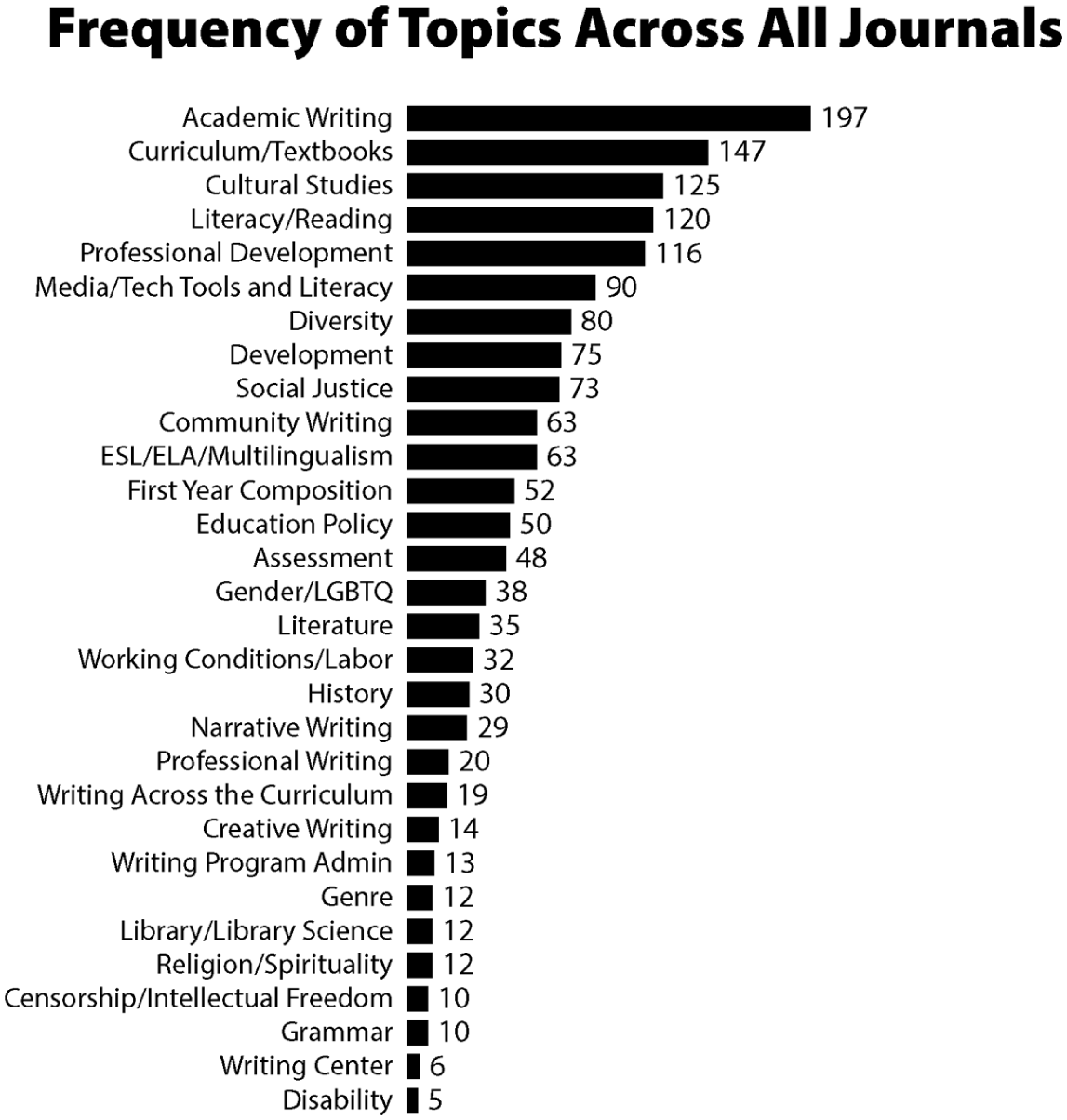
Frequency of topics across all journals.
Theoretical Perspectives
Theoretical perspectives (Figure 2) were not specified in 41.6% (n = 294) of the articles. Of the 413 articles that did specify one, 26.2% identified a theoretical perspective outside our codes, and 29.3% (n = 121) of the articles present multiple theoretical perspectives. The most frequently reported theoretical perspectives were (a) Critical (17.9%), (b) Sociocultural (15.7%), and (c) Rhetorical (14.0%). These three perspectives were used in 47.7% of the 413 articles where a theory was specified. In total, the theory codes of Critical, Sociocultural, Rhetorical, and Not Specified, accounted for 69.4% of all coded articles. We conducted another chi-square test of independence to examine the relationship between the theoretical perspectives and the journals in which they were published. The relationship between these variables was found to be significant, χ2(200, N = 707) = 526.43, p < .001. These results indicated a moderate effect size, V = 0.38 (Cohen, 1988).
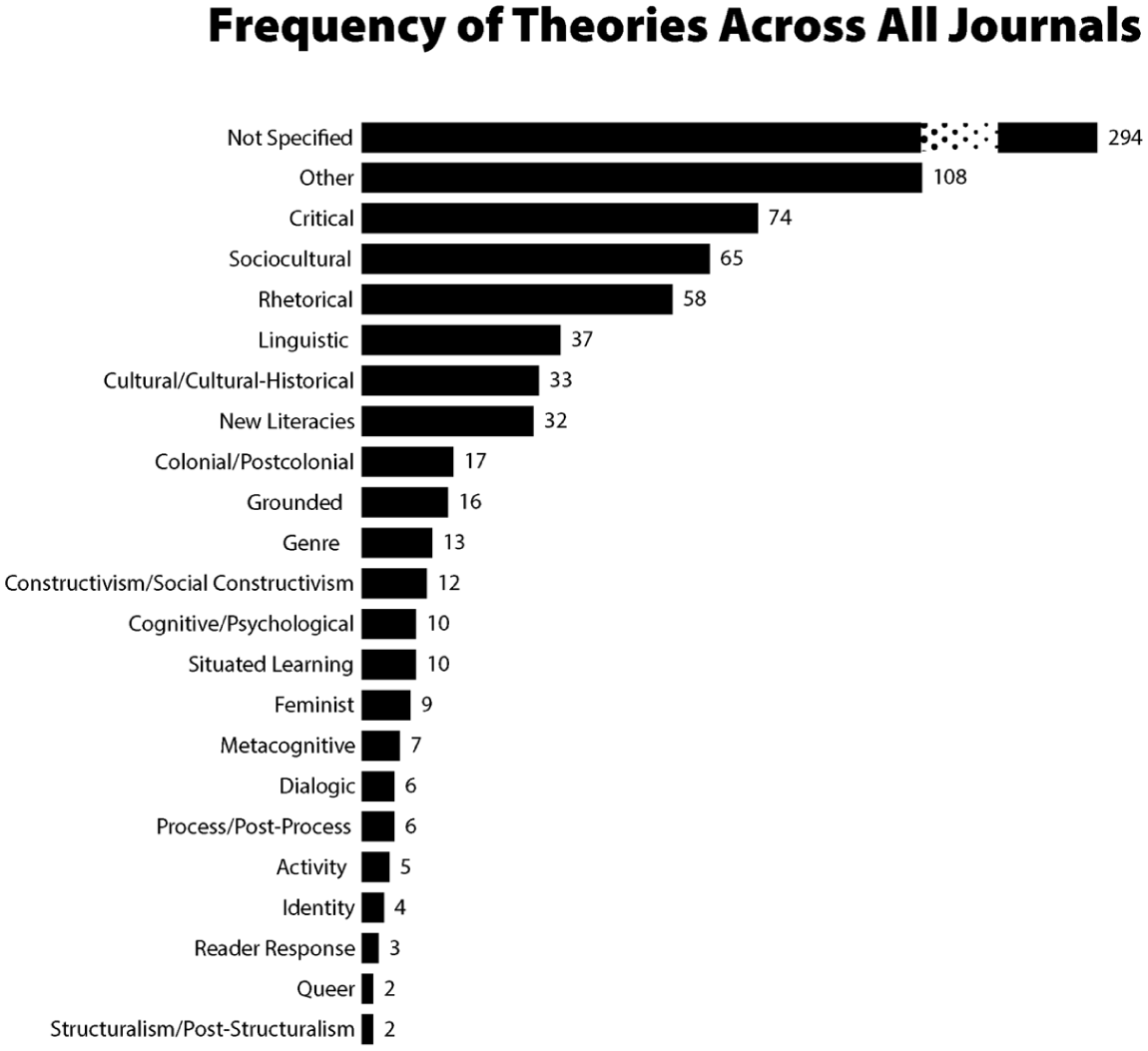
Frequency of theories across all journals.
Relationships Across Topic and Theoretical Perspectives
By tabulating the number of articles addressing a specific topic and cross-referencing with the theory from which they approach the topic, strong relationships begin to emerge (Figure 3). For example, the topic of Diversity strongly overlaps with Critical theory with 25.5% of all articles coded for Diversity approached from a Critical theory perspective. Linguistic theory is most commonly used in articles addressing ESL/ELA/Multilingualism, with 29.5% of articles coded for ESL/ELA/Multilingualism utilizing Linguistic theory. Theoretical perspectives on New Literacies are used primarily for Media/Tech Tools & Literacy. Articles coded for the topic of Gender/LGBTQ+ used a Rhetorical theoretical perspective 20.8% of the time.
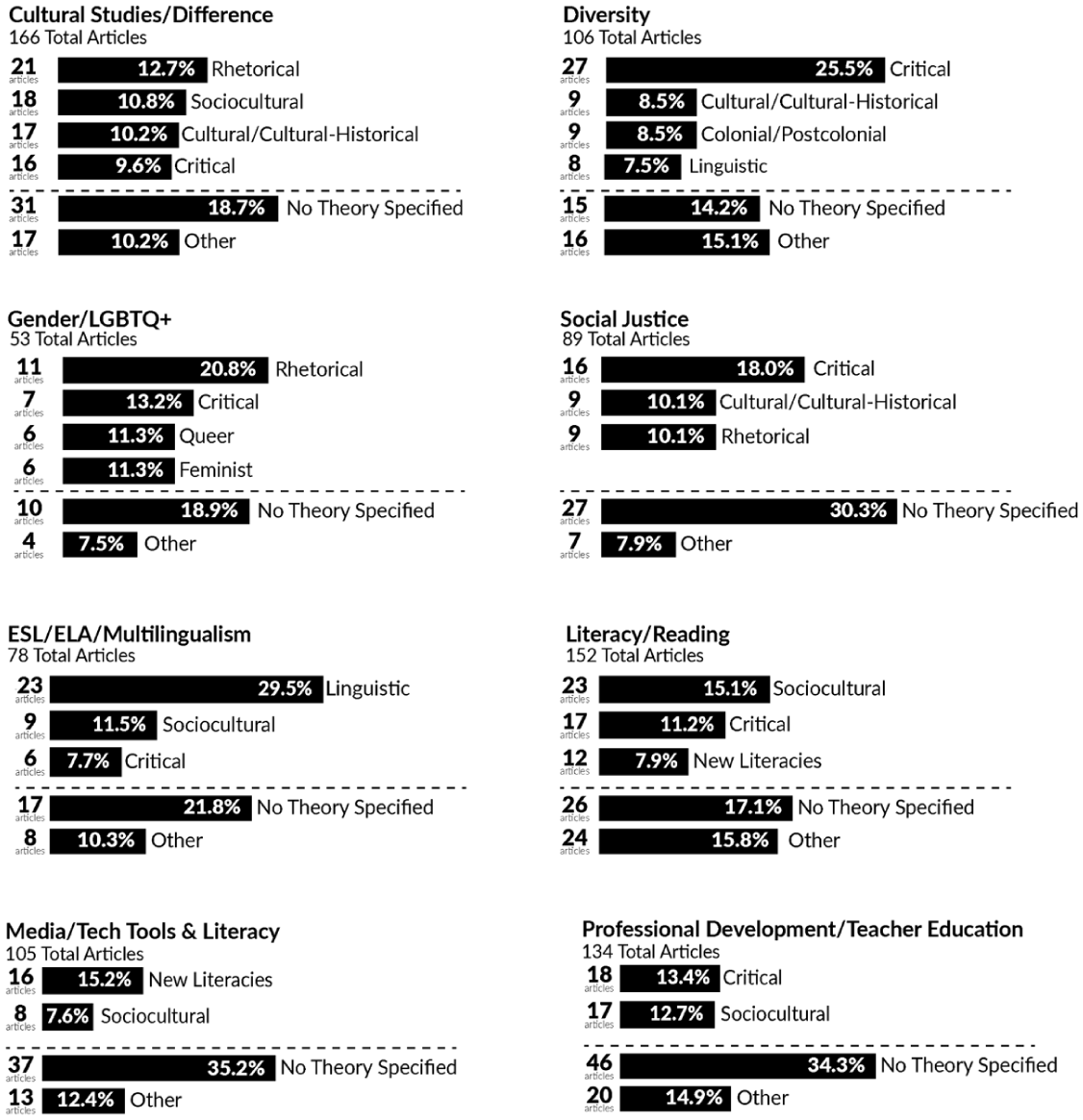
Topic-theory correlations.
Topics Over Time
Our results show that topic areas have fluctuated over the past 10 years (Table 1), with some remaining relatively stable while others have gained or declined in prominence. However, comparing the first 5 years of our corpus (2011–2015) with the most recent 5 years (2016–2020), we found clear trends. Notably, since 2016, the topics of Working Conditions/Labor (90.9% increase, +10 articles), Diversity (58.1% increase, +18 articles), Social Justice (43.3% increase, +13 articles), and Gender/LGBTQ (37.5% increase, +6 articles) have garnered greater attention.
Topic Increases/Decreases from 2011 to 2020.
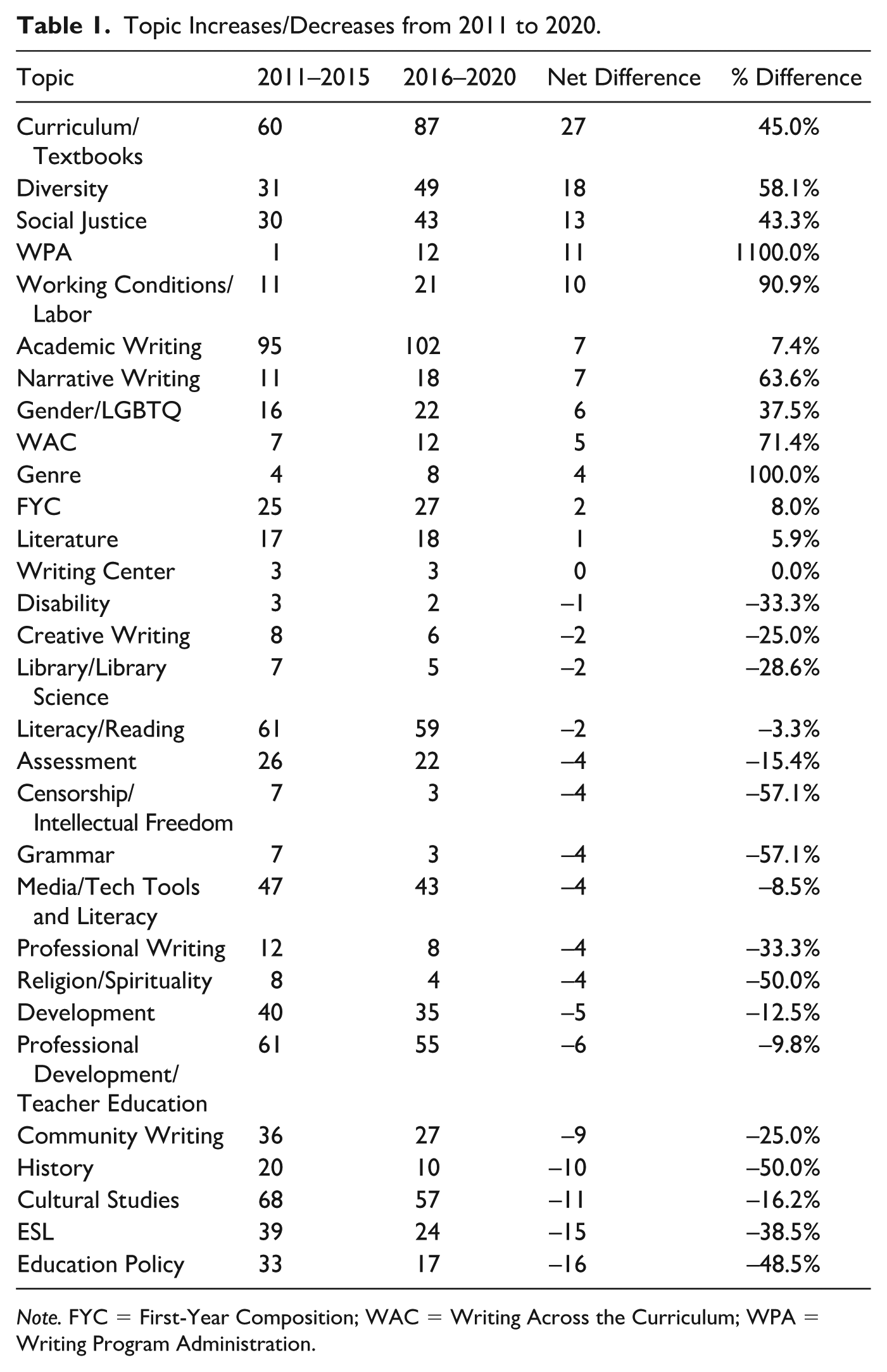
Note. FYC = First-Year Composition; WAC = Writing Across the Curriculum; WPA = Writing Program Administration.
Additionally, scholarship investigating specific approaches to the teaching of writing have shifted in notable ways (Table 2). While some topic areas showed modest gains from relatively large starting points, such as Curriculum/Textbooks (+27 articles) and Writing Across the Curriculum (+5 articles), other topics saw sharp relative growth from smaller baselines, including Writing Program Administration (WPA), which increased from 1 to 12 articles. Narrative Writing also saw a modest absolute increase (+7 articles). Conversely, we observed declines in topic areas such as History (–10 articles), Education Policy (–16 articles), ESL (–15 articles), Professional Writing (–4 articles), and Community Writing (–9 articles) (see Table 1). These patterns suggest a redistribution of scholarly attention, with growth concentrated in institutional and pedagogical concerns and reductions in historically significant subfields. Other interesting trends emerged in our coded topics over time. 3
Topic Trends by Year (All Journals).
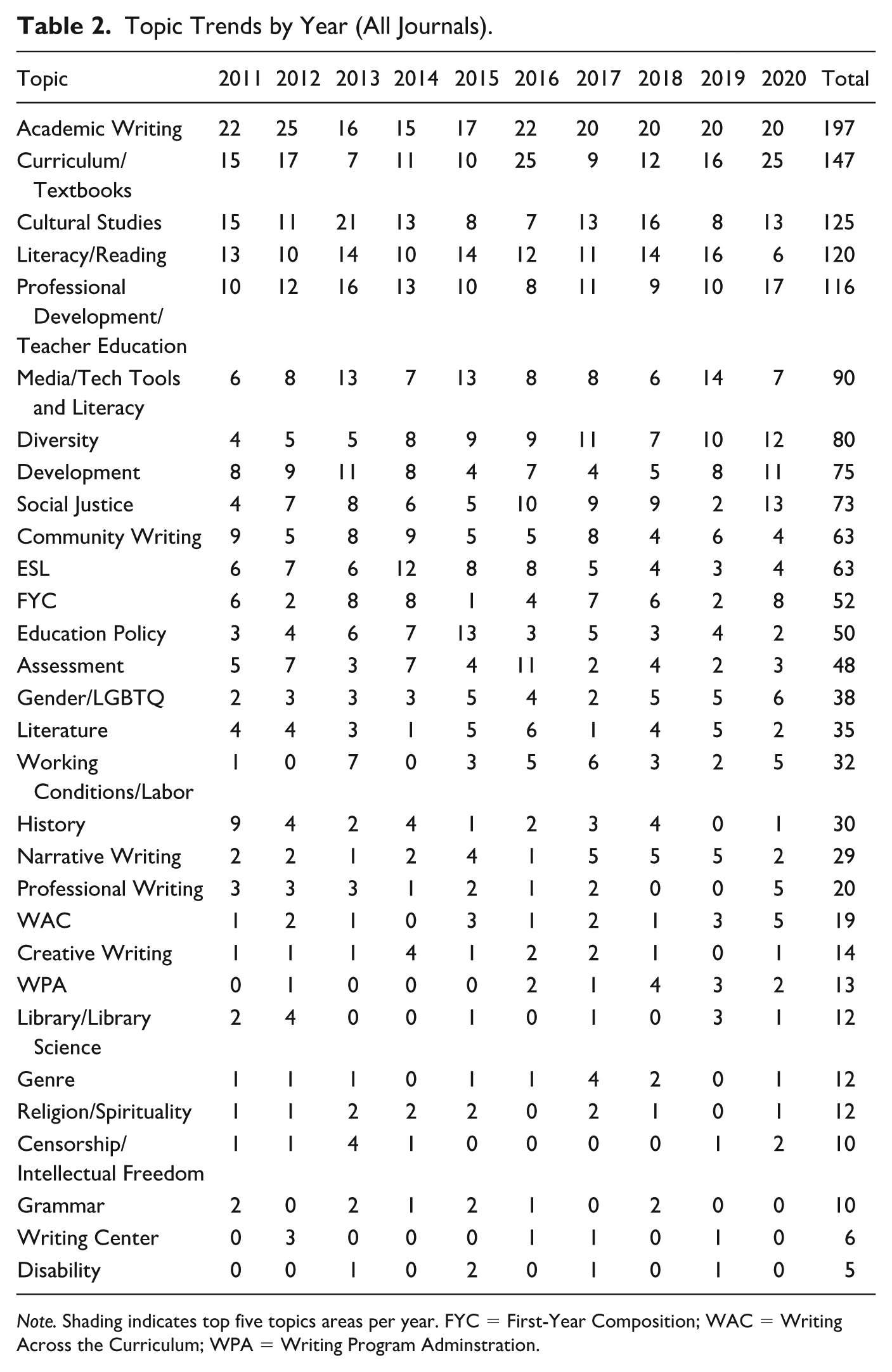
Note. Shading indicates top five topics areas per year. FYC = First-Year Composition; WAC = Writing Across the Curriculum; WPA = Writing Program Adminstration.
Theoretical Perspectives Over Time
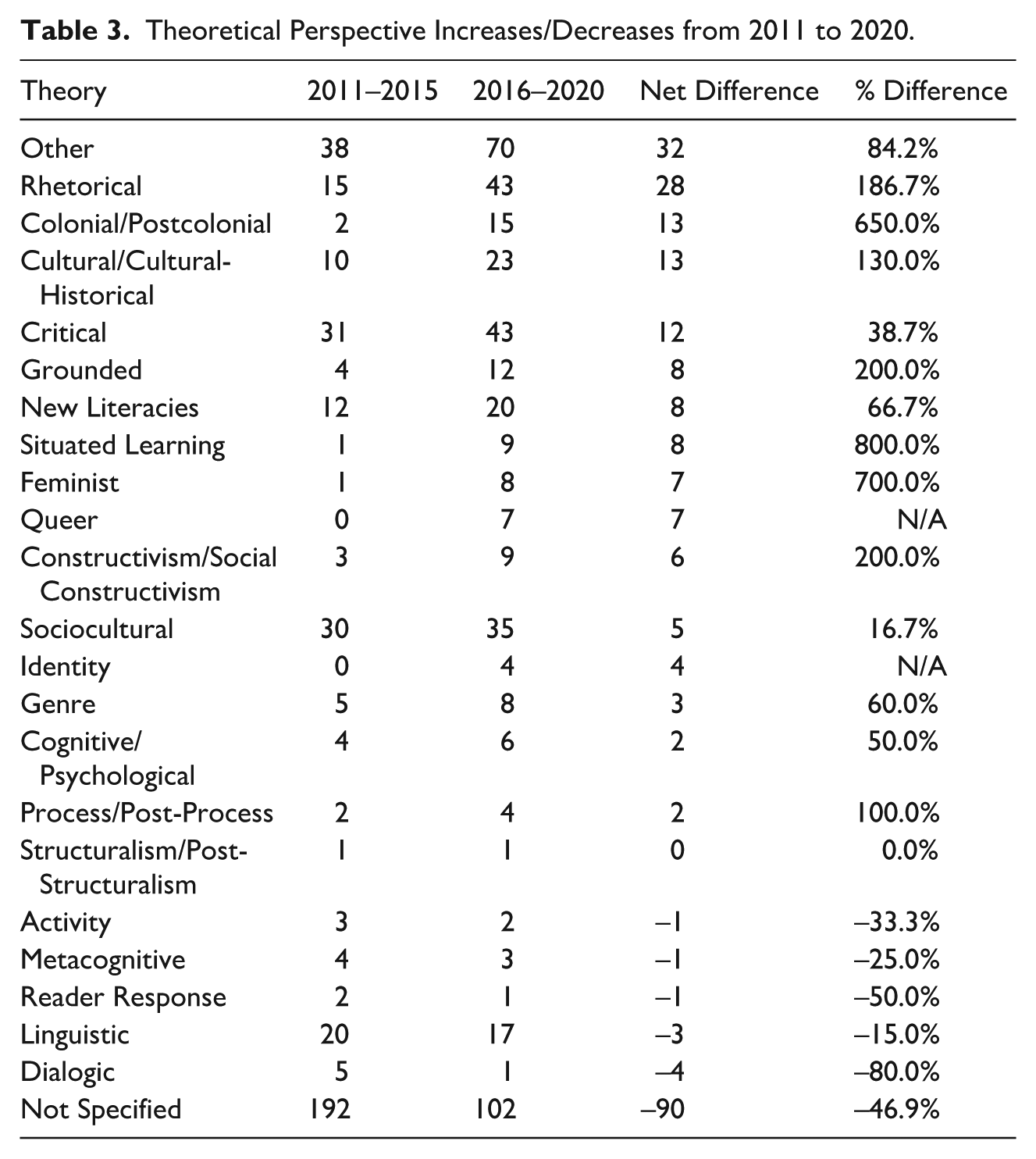
Our results also showed changes in theoretical approaches over the past 10 years (Table 3). Comparing the first 5 years of the corpus (2011–2015) with the most recent 5 years (2016–2020) certain theories have seen significant changes in the frequency of use. Specifically Feminist theories, Colonial/Postcolonial theories, Grounded Theory, Rhetorical theories, and Cultural/Cultural Historical theories have seen notable increases in use over the past 5 years. Alternatively, Dialogic theories, Linguistic theories, and Metacognitive theories have all seen a decline in use over the past 5 years. Of particular note is that scholarship is more intentional about identifying the theoretical approach over the past 5 years with a marked decrease (–46.9%) in the number of articles where the theoretical approach is Not Specified.
Theoretical Perspective Increases/Decreases from 2011 to 2020.
Differences Across Journals
Across the five NCTE journals analyzed, several distinct patterns emerged in both topic focus and theoretical framing. While Academic Writing, Curriculum/Textbooks, and Cultural Studies were the most frequently addressed topics overall, particular journals showed specific emphases and thereby (at least potentially) specializations. For example, English Education emphasized Professional Development, Research in the Teaching of English highlighted Literacy/Reading and Multilingualism, and TETYC gave greater attention to First-Year Composition. Meanwhile, College English stood out for its focus on Social Justice (Table 4).
Topic Areas by Journal (All Years).
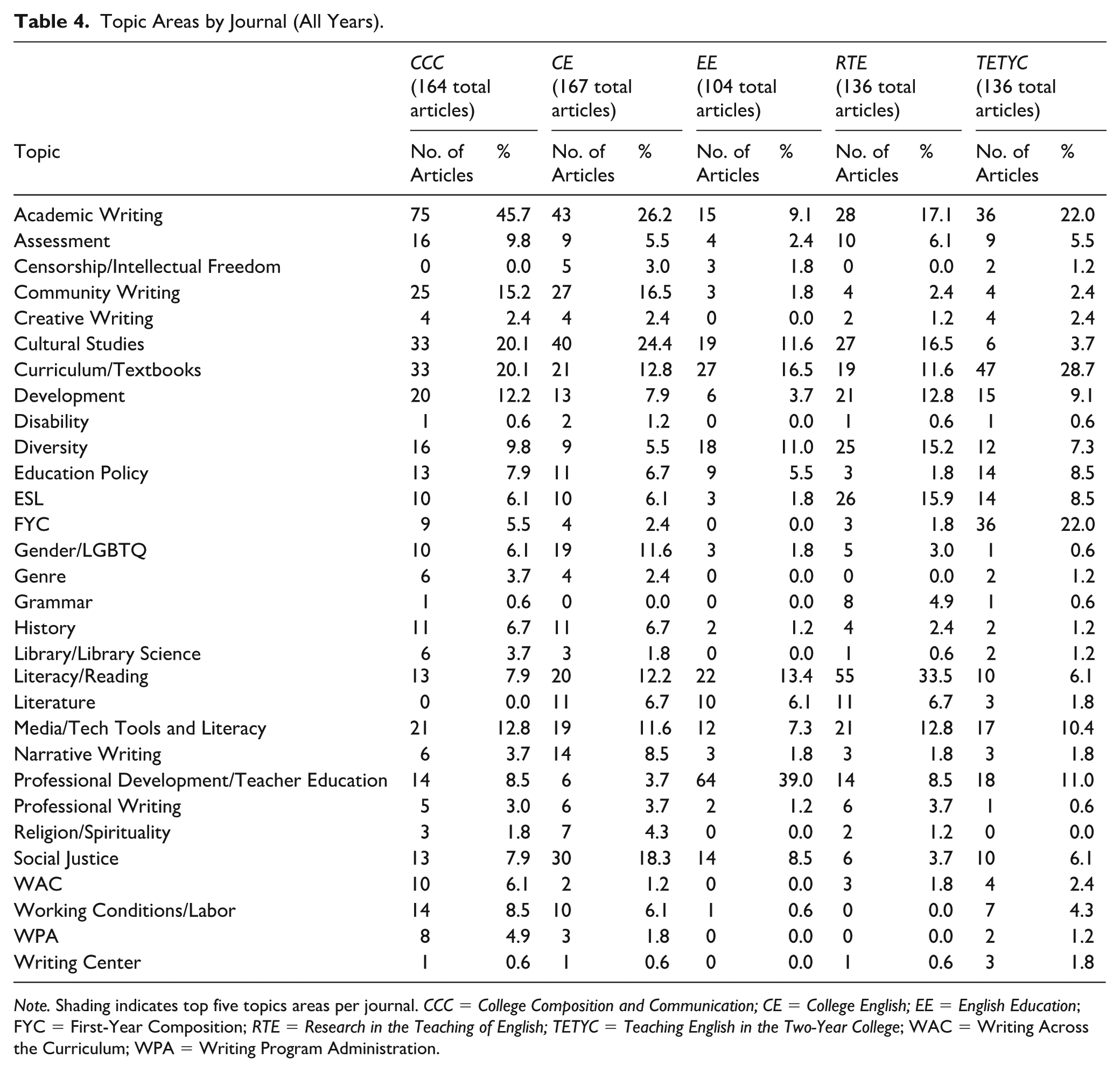
Note. Shading indicates top five topics areas per journal. CCC = College Composition and Communication; CE = College English; EE = English Education; FYC = First-Year Composition; RTE = Research in the Teaching of English; TETYC = Teaching English in the Two-Year College; WAC = Writing Across the Curriculum; WPA = Writing Program Administration.
Meanwhile, patterns of theoretical engagement revealed similarly uneven terrain across the journals. While some publications consistently employed explicitly named frameworks, others reflected a more implicit or unspecified approach. RTE and EE demonstrated the most consistent use of explicitly named theoretical frameworks (especially Sociocultural and Critical theory) while TETYC and CCC featured the highest proportion of articles without a specified perspective. Rhetorical theory appeared most prominently in CE and CCC, while Linguistic theory clustered around RTE and TETYC (Table 5).
Theoretical Perspectives by Journal (All Years).
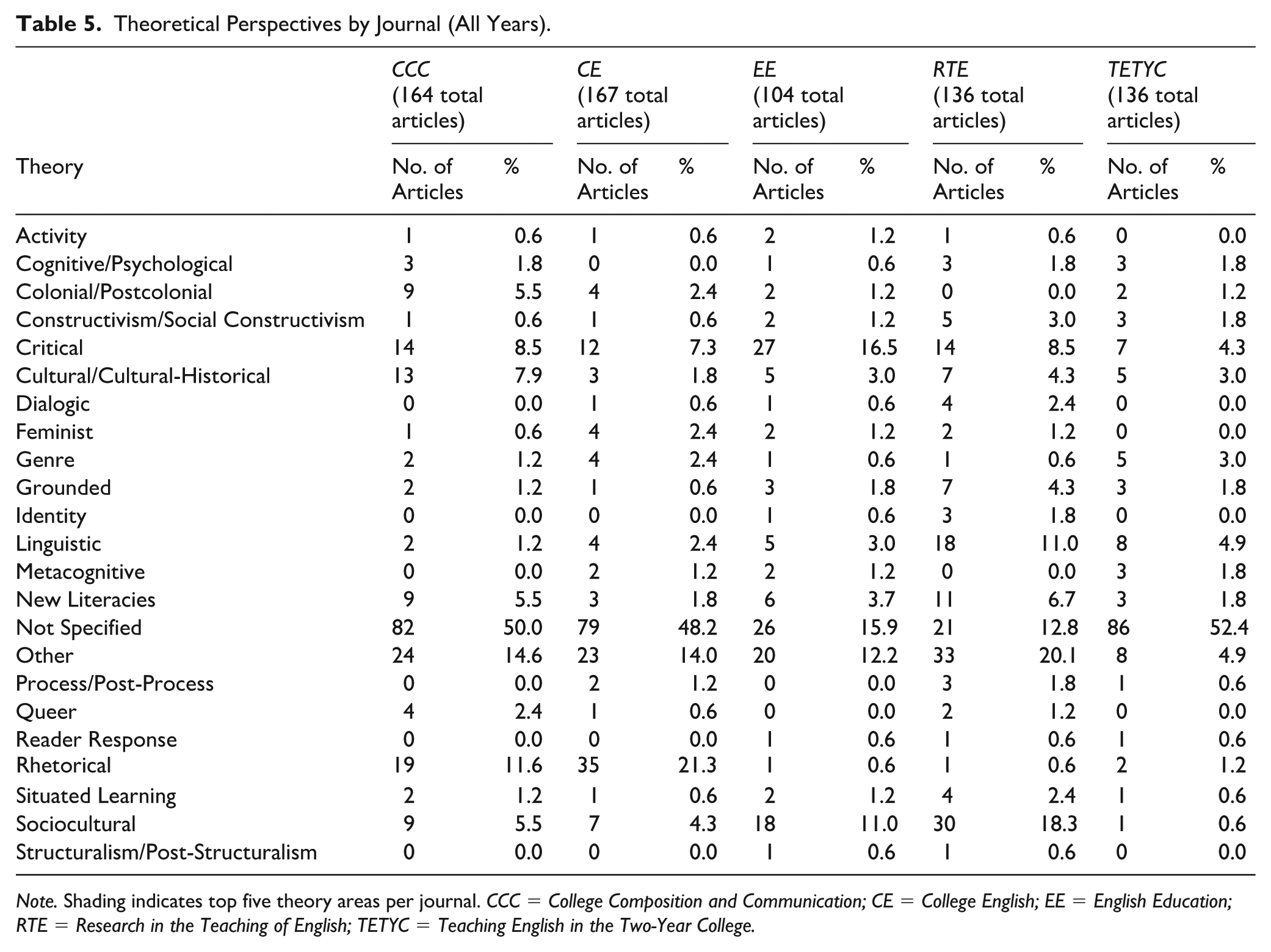
Note. Shading indicates top five theory areas per journal. CCC = College Composition and Communication; CE = College English; EE = English Education; RTE = Research in the Teaching of English; TETYC = Teaching English in the Two-Year College.
We note that the Critical Theory category in particular warrants additional explanation. Rather than denoting a singular tradition (e.g., Frankfurt School), we used this label in cases where authors self-described their framework as “critical” (e.g., “critical literacy studies,” “critical emotion studies,” or “critical cultural materialism”) without anchoring it to a more specific theoretical lineage. In this way, the code functioned less as a unified category and more as an indicator of a critical stance across multiple domains. This approach, while pragmatic, also reflects a broader challenge in the field: the frequent use of generalized theoretical descriptors in lieu of precise frameworks. Similar issues emerged with the Rhetorical and Linguistic theory codes, where broad labels often stood in for more specific (and variegated) approaches. Taken together, these patterns underscore both the distinct identities and audiences of each journal and broader disciplinary tendencies toward specialization, fragmentation, and terminological ambiguity.
Discussion
In this section, we first summarize our overall results before discussing how other related studies both complement and complicate them. We then examine the relevance of content analysis as a methodological approach that, despite its long-standing utility, has been largely marginalized in Writing Studies in favor of more interpretive methods. Next, we address some limitations of our study. Finally, we reflect on how tracking conversations in the field through methods like content analysis can offer critical insight and practical guidance to scholars at all stages of their careers.
Trends and Implications
After analyzing 707 articles published across a 10-year time frame (2011-2020) in five NCTE journals, our biggest takeaway is the marked consistency of the most frequent topics. The top five topics (Academic Writing, Curriculum/Textbooks, Cultural Studies, Literacy/Reading, and Professional Development/Teacher Education) comprised 44.2% of all codes, and at least one of these coded topics was present in more than 71% of all the articles reviewed. That said, within this consistency, we also found changes across the NCTE publication landscape: there was a perceptible increase from 2011 to 2020 of work focused on Social Justice, Diversity, and related inclusivity and equality-focused topics.
We were somewhat surprised to find that almost half of the articles coded in our study did not explicitly specify a theoretical perspective, and that the most utilized theoretical perspectives were from admittedly capacious categories such as Critical, Sociocultural, and Rhetorical theories. Also noteworthy is a shift to more explicit naming of theoretical perspectives during this decade. The number of articles that specified a theoretical perspective increased substantially in the second half of the decade, with unspecified articles declining by 46.9%, from 192 in 2011–2015 to 102 in 2016–2020. One representative example of an interesting connection between topics and theories in our study is that articles coded for Diversity were more likely to specify a theoretical focus than articles coded for other topics. Future research might consider why such attention to theory seems more prevalent for certain topic areas.
In terms of journal profiles, four of the five journals reviewed had Academic Writing as one of their top two topics (first in CCC and CE, second in RTE and TETYC). This is noteworthy given that NCTE positions itself as supporting English education broadly (e.g., across reading, writing, speaking, and listening), yet the journal content suggests a strong institutional emphasis on academic writing, particularly in postsecondary contexts. Chi-square tests of independence demonstrated significant differences in the topics these journals are publishing (i.e., these journals are publishing articles on different topics at varying frequencies), clearly indicating that these NCTE journals are, as intended, covering different ground. While this balance in topical coverage feels like good news for a field that is increasingly specialized, it also means that there are particular topics that are better suited to some journals than others. In this way, it is significant that TETYC seems to be trending in a different direction than the other NCTE journals included in our study, with topics such as Diversity and Assessment decreasing over the previous decade.
The disparity in explicitly denoted theoretical perspectives across journals is also worth contemplating. Specifically, RTE and EE were far more likely than other journals to explicitly name a theoretical approach of focus. RTE articles specified a theoretical perspective 87.2% of the time, while EE articles specified a theoretical perspective 84.1% of the time. This disparity is particularly interesting because the three journals in our study dedicated to higher education all specified a theoretical perspective considerably less frequently (CCC = 50%, CE = 51.8%, TETYC = 47.6%). Yet it bears reminding that chi-square tests of independence demonstrated only moderate differences in the theoretical perspectives that these journals are publishing. In other words, while these five NCTE journals are all publishing articles on different topics at varying frequencies, they use different theoretical perspectives less and less diversely across journals, and this difference is most pronounced across the divide between journals dedicated to higher education versus those focused on K-12 (EE) and all grade levels (RTE).
The limited use of explicit theoretical frameworks is notable, as such frameworks can strengthen research by providing common reference points for analysis and enabling broader disciplinary conversations about learning and social behavior (Bazerman, 2008; Dressman et al., 2011). Still, the extent to which these frameworks serve as shared resources across Writing Studies remains uncertain. With this in mind, we want to once again acknowledge that theoretical perspectives are often not explicitly stated but bound up in and implied by, among other things, the literature being cited, the data being collected, the analysis being used, etc. To this end, we consider Parsons et al.’s (2016) content analysis of literacy journals, in which they suggested that scholars may not always feel the need to articulate their theoretical frameworks because those frameworks are implicitly shared within a given “thought collective.” However, the formation of such collectives, the benefits and limitations they impose, and the challenges they pose for newcomers to the field remain open and important questions that exceed the scope of this study but merit future investigation. That said, the overall trend identified in this project is that authors are trending toward explicitly denoting theoretical perspectives, and we see this as a positive development, and one that we hope continues because we believe it enhances transparency, interpretability, and the field’s collective capacity to build on prior work.
As we continue to discuss these results and especially how they compare to previous “distant readings” of NCTE, it is important to keep NCTE’s unique national context at the forefront. For example, our results square with Dutro and Collins (2011) observations about “entrenched inequalities in U.S. school.” Whether it is the increased prevalence of Social Justice as a topic over the last decade (up 43% from 2016–2020 as compared to the preceding 5 years), or the pervasiveness of articles coded for Diversity (seventh overall), research on teaching and learning in NCTE journals continues to strive to account for the broader social contexts in which students live and learn and their effect on student achievement. Indeed, Dutro and Collins (2011), Brass and Burns (2011), and Roozen and Lunsford (2011), all found evidence of increased attendance to gender, racial, and ethnic diversity over time as well as “a move away from ‘the search for universals’ regardless of setting and toward more fully situated studies in order to take social context more fully into account” (p. 202). That these findings align with our own results demonstrates that attention to issues of equality has not only continued but heightened in the time period since this previous scholarship was published—another positive development in our estimation, and one long called for in our field. Given recent political developments in the United States, it will be important to see whether these trends continue, intensify, or face new forms of resistance in the years ahead.
Brass and Burns (2011) focused on the evolving role of Research in the Teaching of English (RTE) within NCTE’s journal landscape, noting that since the 1990s, the journal has drawn primarily on sociocultural conceptions of literacy (p. 182). Our findings suggest this trend has continued, with sociocultural theory remaining the most frequently named theoretical perspective in RTE articles from 2011 to 2020. The prominence of New Literacies as the third most common perspective further supports Brass and Burns’s observation that conceptions of literacy have expanded and continue to evolve, especially in light of the fact that Literacy/Reading was by far the most frequently coded topic in RTE. More broadly, the dominance of topics such as Academic Writing, Curriculum/Textbooks, and Literacy across our data set reinforces earlier claims by both Brass and Burns and Dutro and Collins that RTE maintains a strong emphasis on classroom-based research and writing instruction.
Roozen and Lunsford’s (2011) study most closely aligns with the scope of our data set, differing primarily in their inclusion of the English Journal (EJ) instead of English Education (EE). Like Roozen and Lunsford, we found that research on gender, diversity, working conditions, and Writing Across the Curriculum (WAC) has increased over the previous decade. These sustained and growing areas of inquiry suggest several tentative conclusions. First, as previously noted, there is a continued and now more widely distributed focus on social equity and inequality across NCTE journals. Second, there also appears to be a rising emphasis on the impact of technology and digital media on writing instruction. Third, interest in writing beyond English departments—for example, WAC and Writing in the Disciplines (WID)—has also grown in U.S. contexts, echoing Roozen and Lunsford’s findings on the increased attention to writing across the undergraduate curriculum (p. 181). These developments mirror shifts documented in recent content analyses of literacy research more broadly (Parsons et al., 2016, 2020), suggesting that these changes are not confined to Writing Studies alone but reflect a wider transformation in the language and literacy disciplines.
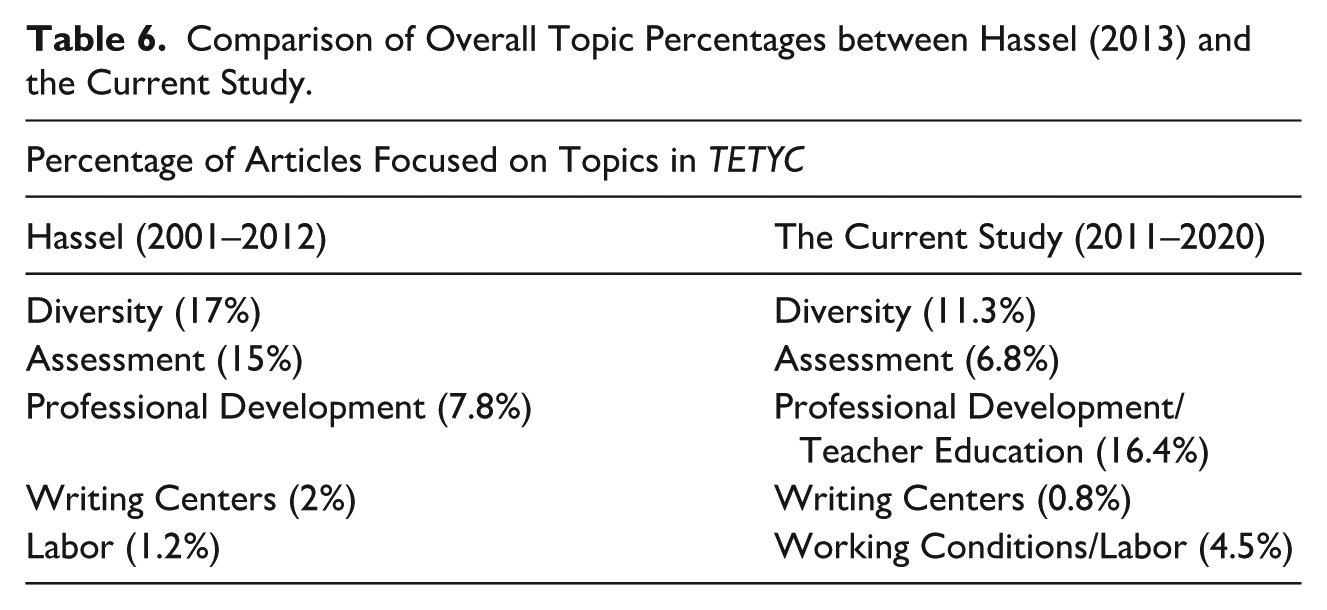
Questions of social justice, inequity, and classroom teaching and learning are perhaps at their most pronounced at the 2-year college level, the focus of Hassel’s (2013) work reviewing TETYC from 2001 to 2012 (Table 6). And it is remarkable that TETYC seems to be trending in its own direction. While topics like Professional Development, Writing Centers, and Work Conditions/Labor have remained stable, the prevalence of Diversity and Assessment fell off dramatically during the previous decade. The way these coding categories were defined makes this less than a perfectly equivalent comparison across studies. However, if speaking in broad generalities, research across NCTE journals focused on other grade levels trended in a different direction than research at the 2-year college level, then what might that tell us about how these different publications and their constituent readerships privilege or value certain conversations? To what degree should the concerns of educators and researchers at 2-year colleges align with those of researchers at other grade levels and in higher education more broadly?
Comparison of Overall Topic Percentages between Hassel (2013) and the Current Study.
While we want to avoid conjecture concerning potential causes behind NCTE journals’ interests or foci, we suggest that researchers in other national contexts might usefully map (or analyze the content of) their own associations and assemblies, and especially those dedicated to teaching and writing, with their own national or regional circumstances in mind. In this way, the long history of NCTE, and especially its negotiation of the social turn 4 and continued attention to issues of social inequality, might prove a useful reference point for other burgeoning organizations seeking to, as Dutro and Collins (2011) so aptly put it, “be inclusive of all developmental levels and the several informing disciplines” (p. 142).
Furthermore, the long historical record of NCTE may also hold lessons for the oversight of any growing professional association and publication lineup working to avoid competing against itself as it specializes over time. As Writing Studies continues to develop in new international contexts, NCTE’s multivalent publication ecosystem may prove instructive for other teaching and learning organizations seeking to grow and serve their members in a field of increasingly specialized interests.
Limitations and Future Directions
While our content analysis provides important insight into the field of Writing Studies, it is also partial on many different levels. First, we only analyzed certain types of publications in five NCTE publications, themselves only a portion of the broader NCTE imprint. We also recognize that NCTE is only one organization, however large and long-established. As a result, generalizing from our findings to the field level is limited.
Second, we anticipate that the composition of our coding scheme, however reliable, may need further refinement across future studies. Applied to another organization, to other types of publications, and especially to other fields, our topical and theoretical perspective codes might not convey as effectively or reliably. While we are pleased that they seemed, through much discussion and iterative revision, to find a final form that held up across the current data set, how those results might compare to other content analyses with their own codes and coding definitions remains a relevant question.
In particular, theoretical codes such as Rhetorical, Critical, and Linguistic are capacious and arguably of a different hierarchical ordinance level than other, more specific theories like Sociocultural and Post-Colonial. As a result, it is no surprise that these were the most prevalent theoretical perspectives found in our study; they are, in essence, the largest theoretical perspective coding categories. Much as we tried to keep the number of articles comparable to one another across journals to weigh the distribution of the results evenly, it remains important to construct coding categories that seek to collect phenomena of the same magnitude. Future studies will need to address the taxonomical balance baked into these coding schemes by weighing the need for sophistication against the need for generalizability.
Finally, we note that there are several ways in which we could add context to our analysis. For example, tracking the changing editorial teams and special issues would likely illuminate some of the forces at work in the changing emphases of these journals over time seen in our results. While an analysis of this type is beyond the bounds of the current project, we recognize that it would deepen our analysis. We hope to consider such an undertaking in our future work.
Supporting Scholars at All Career Stages
This snapshot of NCTE research from the past decade provides a basis for tracking changes in scholarly focus over time. It highlights both prevailing areas of emphasis and underexplored topics and theoretical perspectives. More systematic, field-level mapping can complement the often-partial perspectives offered by individual literature reviews by making patterns in the field more visible and comparable. Content analysis provides an efficient, replicable approach to coordinating large-scale textual analysis across teams and time, which is an especially valuable asset in a field like Writing Studies, where the objects of study are themselves textual and rhetorically complex (Dryer, 2021). As Geisler & Swarts (2019) observe, nearly half of all empirical studies in the field already involve some form of language coding, underscoring the method’s relevance. Given Writing Studies’ continued expansion across international, interdisciplinary, and multilingual contexts, the potential for content analysis as a cumulative and scalable research tool is likely to grow.
Beyond methodological utility, however, the findings suggest meaningful differences in topical and theoretical emphasis across these five journals, distinctions that may prove especially useful to scholars at various career stages, and particularly those seeking to better understand or contribute to NCTE-affiliated venues. We firmly believe that there is value for any scholar in knowing where work in the field is taking place and where it isn’t as well as how topics and theories cluster together. In fact, while our results show weaker associations between specific theoretical frameworks and individual journals than between journals and topical areas, we believe this finding makes the identification of named theories especially valuable, as these patterns offer a potential starting point for revealing the implicit “thought collectives” described by Parsons et al. (2016).
In fact, we question whether the lack of explicitly denoted theoretical perspectives in our study reflects genuine flexibility and choice or whether it merely signals the persistence of implicit frameworks—a kind of hidden disciplinary lexis that, intentionally or not, obscures the standpoints of those with the insider knowledge necessary to participate in these conversations. We hypothesize that the more established an area of research is, the less need there may be to name an explicit theoretical approach. If this is the case, it may help explain why scholars working in emergent or increasingly visible areas, such as Diversity are more likely to articulate a clear theoretical stance than those writing within more institutionally embedded domains.
This observation also points to broader possibilities for future research. Our project represents an initial step toward mapping the evolving contours of Writing Studies through systematic content analysis. Future work might extend this study to earlier decades, additional journals, or subcorpora organized by topic or theoretical lens, offering deeper insight into shifts in foci. Expanding the coding framework to include research methods, data types, and authorship patterns could further clarify how knowledge is produced and circulated within the field. Analyses of this kind not only help us understand what Writing Studies has been but also illuminate what it is becoming. In continuing to trace these patterns, we hope to move closer to understanding not only the current contours of the field but also its layered past and emergent future, a dynamic landscape shaped by intersecting lines of inquiry, evolving centers of intellectual gravity, and the shifting lexicons that weave its scholarly community into conversation across time.
Footnotes
Appendix
Topic Coding Categories Considered/Tested but not Used.
| Topic | Reasoning |
|---|---|
| Rhetoric | Too hard to extricate from related theoretical perspectives |
| Carceral | Not enough studies to qualify as a category (less than 7 total) |
| Feedback | Not enough studies to qualify as a category (less than 7 total) |
| Materiality | Not enough studies to qualify as a category (less than 7 total) |
| Transfer | Added to Development |
| Language Arts | Too diffuse to reliably code |
| Tech Comm | Added to Professional Writing |
| Identity | Too hard to extricate from related theoretical perspectives |
| Special Education | Added to Disability |
| Disciplinarity | Added to WAC/WID |
| Research Methods | Too diffuse to reliably code |
| Politics | Too diffuse to reliably code |
| Ethics | Not enough studies to qualify as a category (less than 7 total) |
| Design Thinking | Not enough studies to qualify as a category (less than 7 total) |
| Medicine Health | Not enough studies to qualify as a category (less than 7 total) |
Acknowledgements
The authors would like to thank the many colleagues who supported and gave feedback on this project at the 2021 Dartmouth Summer Writing Research Seminar.

Funding
The authors received no financial support for the research, authorship, and/or publication of this article.
Declaration of Conflicting Interests
The authors declared no potential conflicts of interest with respect to the research, authorship, and/or publication of this article.