



Abstract
Clothing is an integral part of our lives, yet modes of producing, using, and disposing of apparel have significant impacts on the environment. Our research explored the role transformative learning plays in the transition to more sustainable thinking and actions about clothing to illuminate instrumental learning processes and examine the relationship between instrumental and communicative learning. Using a qualitative case study approach, we gathered data on behaviors and attitudes (n = 32), and examined in depth the learning participants underwent and the action they took (n = 17). The data reveal that instrumental and communicative learning outcomes were plentiful, with participants discussing the array of skills, knowledge, and communicative insights they learned. Results indicate that instrumental learning makes action possible by allowing individuals to identify problems and solutions and to develop plans of action. Results also reveal the important interaction among instrumental and communicative learning as an individual seeks to understand an occurrence.
Keywords
Introduction
Clothing is not only a physical necessity it is an integral part of our self-image, a tool for self-expression, and a means of communicating with others (Damhorst, Miller-Spillman, & Michelman, 2005). Unfortunately, conventional modes of producing, using, and disposing of apparel have significant adverse impacts on the environment, diminishing natural resources and producing emissions and solid waste (Chen & Burns, 2006; Fletcher, 2014). These impacts are intensified by unsustainable consumption patterns—that is, frequent purchases, large volume purchases, selection of poor quality of garments, and short periods of use before disposal.
In reaction to these negative conditions, some consumers have chosen to live more sustainably by making wiser choices regarding their clothing. These individuals were the focus of our work—consumers who had chosen to adopt more sustainable practices related to clothing selection, use, maintenance, and disposal, and/or engaged in collective social action to improve clothing production and use.
Perhaps the essential factor inducing and supporting the overall movement toward a sustainable consciousness is learning (e.g., O’Sullivan, 1999; Wals, 2007). We turned to Mezirow’s transformative learning theory (TLT) to facilitate our exploration of learning and clothing sustainability, relying on the considerable literature on TLT (e.g., D’Amato & Krasny, 2011; Mezirow, 1991, 2003; Moore, 2005; Newman, 2012), as well as the more specific research addressing TLT in the context of sustainability (e.g., Diduck, Sinclair, Hostetler, & Fitzpatrick, 2012; Kerton & Sinclair, 2010; Kovan & Dirkx, 2003; McDonald, Cervero, & Courtenay, 1999; Walker, Sinclair, & Spaling, 2013). The purpose of our article is to explore the role that Mezirow’s domains of instrumental and communicative learning, which underpin transformative learning, play in the transition to more sustainable thinking and actions in relation to clothing. In doing this, we sought to contribute to TLT by further unraveling instrumental learning processes as well as illuminating the relationship between instrumental and communicative learning.
Transformative Learning in the Context of Sustainability
The outcome of transformative learning is ideally an emancipated, autonomous thinker—that is, an individual who is willing to reflect on his or her values, beliefs, and assumptions in order to develop a frame of reference that is more open and malleable, yet discriminating, rather than uncritically accepting and acting on the opinions of others (McDonald et al., 1999; Mezirow, 1997b; Moore, 2005). In contemporary Western culture, the rapid pace of societal change and the diminishing role of traditional authoritative figures have increased the importance and value of autonomous thinking (Mezirow, 1994, 1997b). This is particularly true in the case of environmental issues, in that political leaders, scientists, academics practitioners, and activists often disagree about the nature, severity, and best means of handling environmental problems, leaving citizen-consumers uncertain of what to believe and what action needs to be taken. Transformative learning allows individuals to build their personal knowledge and formulate their own values and beliefs about sustainability issues. These new, or refined, understandings can then guide their actions in relation to both their lifestyle and any collective acts they may engage in to slow, or reverse, environmental damage.
Instrumental and Communicative Learning
The key mechanisms of learning in Mezirow’s TLT, and the focus of this article, are instrumental learning and communicative learning; without these domains of learning, transformation will not occur (Mezirow, 1981). Both are essential to adult development, together helping further our understanding of the objective and subjective realms of our world (Diduck et al., 2012; Mezirow, 1991). Furthermore, when instrumental and communicative learning lead one to question and evaluate the premises and assumptions of our understanding, transformative learning or perspective transformation can occur (Cranton, 2006; Mezirow, 1991; Moyer, Sinclair, & Diduck, 2014).
The primary differences between instrumental and communicative learning lies in their purpose, process, and outcome. Our understanding of the purpose of instrumental learning is to develop and enhance our knowledge and command of both the concrete and the rational spheres of our understanding (Diduck & Mitchell, 2003; Mezirow, 1994). Mezirow (2003) explains that “instrumental learning is about controlling and manipulating the environment, with emphasis on improving prediction and performance” (p. 59). In other words, it is the process through which we hone our proficiencies, knowledge, and understandings, as well as our ability to anticipate future outcomes. In contrast, the purpose of communicative learning is to advance our understanding of human communication (Mezirow, 2003). Diduck and Mitchell (2003) explain that this form of learning involves an individual interpreting the “values, intentions, feelings, moral decisions and, normative concepts” (p. 341) of themselves and others. Stated otherwise, it involves learners endeavoring to decipher and discern the meaning of their social experiences. The ultimate goal of communicative learning is for an individual “to negotiate his or her own purposes, values, feelings, and meanings rather than to simply act on those of others” (Mezirow, 2000, p. 10).
The essence of the learning process, whether instrumental or communicative, is assessing claims. According to Mezirow (2003), instrumental learning involves assessing truth claims, which requires a learner to ascertain whether “something is as it is purported to be” (p. 59). We have come to understand this assessment as a task-oriented process involving empirically testing either (a) the actions of others or oneself or (b) the information gained through communication with another (e.g., book, website, lecture, or casual conversation). Conversely, the communicative learning process “involves assessing claims to rightness, sincerity, authenticity, and appropriateness rather than assessing a truth claim” (Mezirow, 2003, p. 59). To do this, learners must attempt to reach a common understanding with one or more people; an understanding that is subject to change if new information or events call it into question (Mezirow, 1994, 1997b).
The outcomes of instrumental and communicative learning also differ, with instrumental learning yielding concrete products, such as skills and knowledge, and communicative learning generating insights into our own, other’s, and society’s values, beliefs, and normative expectations. Various studies delving into learning in the context of resource and environmental management that have found evidence of both instrumental and communicative learning outcomes (e.g., Diduck & Mitchell, 2003; Najjar, Spaling, & Sinclair, 2013; Sims & Sinclair, 2008; Sinclair, Collins, & Spaling, 2011). For example, Kerton and Sinclair (2010) in their study of organic foods found evidence of participants gaining food preparation skills (instrumental learning), insight into their food consumption patterns (communicative learning), and an understanding of the health risks posed by food (communicative learning).
Although this overview of instrumental learning and communicative learning, and related learning and action outcomes, seems clear, the theory remains in transition (Moyer & Sinclair, 2016; Taylor & Cranton, 2012). For example, the role of instrumental learning in the process of transformation is downplayed in descriptions of the theory, some studies now underscore the importance of such learning (e.g., Sims & Sinclair, 2008; Taylor, Duveskog, & Friis-Hansen, 2012; Walker et al., 2013). In fact, Taylor et al. (2012, p. 738) suggest that “instrumental learning has been given short shrift in its relationship to fostering transformative learning and has seldom been discussed, and/or identified in previous research on transformative learning.” Likewise, while the relationship between instrumental and communicative learning has been recognized by researchers and theorists (e.g., Diduck et al., 2012; Mezirow, 1996; Najjar et al., 2013), this relationship is yet to be fully explored.
Method
Employing a case study approach (Yin, 2009), we narrowed our inquiry to the residents of the city of Winnipeg, Manitoba, Canada. Winnipeg is considered an ideal test market for new products and ideas (and is often used as such) as its consumers are fairly representative of the wider North American market and it is not in close proximity to other large markets (Onkvisit & Shaw, 2004).
The participants were selected for their self-identified concern about the sustainability of clothing and their engagement in acts to lessen the environmental and social impacts of clothing. Since no data are available on this population in Winnipeg, participants were recruited using a variety of means, including placing posters in businesses and organizations supporting more sustainable clothing practices, e-mailing groups of potentially “clothing-conscious” individuals, and utilizing participants’ networks. In the end, usable data were collected from 32 people.
The study had two phases—the first gathered data on behaviors and attitudes, while the second phase targeted a smaller group, examining more in depth the learning they underwent and the subsequent action they took. As noted above, 32 participants participated in the initial phase, which involved a survey of their clothing practices and a 60- to 90-minute interview. The vast majority of the participants were women (84%). They ranged in ages from 18 to 65 years, with 50% falling between the ages of 26 and 35 years. The majority of participants were married/common law (69%), had no children (59%), and held a university degree or college diploma (56%).
Based on the data we collected in Phase 1, select participants demonstrating either a true commitment 1 toward clothing sustainability or a strong desire to be more clothing conscious were asked to participate in the second phase. This phase examined 17 participants’ journey to clothing sustainability, from childhood to the present, through an in-depth interview called a Life Grid interview. A Life Grid is a tool that aids in the recollection of retrospective data, mapping an individual’s relationship to the study topic (i.e., clothing sustainability) throughout their life span. The Life Grid is a table that uses temporal reference, both personal (e.g., family, work, location) and public (e.g., 9/11, man on the moon) to trigger more “humdrum” routine aspects of daily life (Bearney & Blane, 1997; Blane, 1996).
To further advance our knowledge, a subset of these participants (n = 5) were invited to engage in a journal exercise, capturing both their current and past thoughts and experiences related to clothing and sustainability. These individuals were selected because they were aware of, and concerned about, clothing sustainability, yet they were unable/unwilling to commit to changing their practices. As these individuals struggled with conflicting views and strived to acquire essential skills and knowledge, they underwent both instrumental and communicative learning, thereby providing us with a unique glimpse into these processes as they unfolded.
QSR NVivo was used to identify nodes and themes emerging from the data collected through the initial interview and the Life Grid interview. We have used an identification system that includes a number and a letter (F for female and M for male) to identify our respondents. These qualitative data are illustrated below with quotes from participants, which have been chosen because they best capture the views of many of the participants, unless otherwise stated. It is important to note that the majority of the discussion in this article relates to the second phase data, as those 17 participants provided the most rich and relevant data for our purpose.
Instrumental and Communicative Learning Outcomes
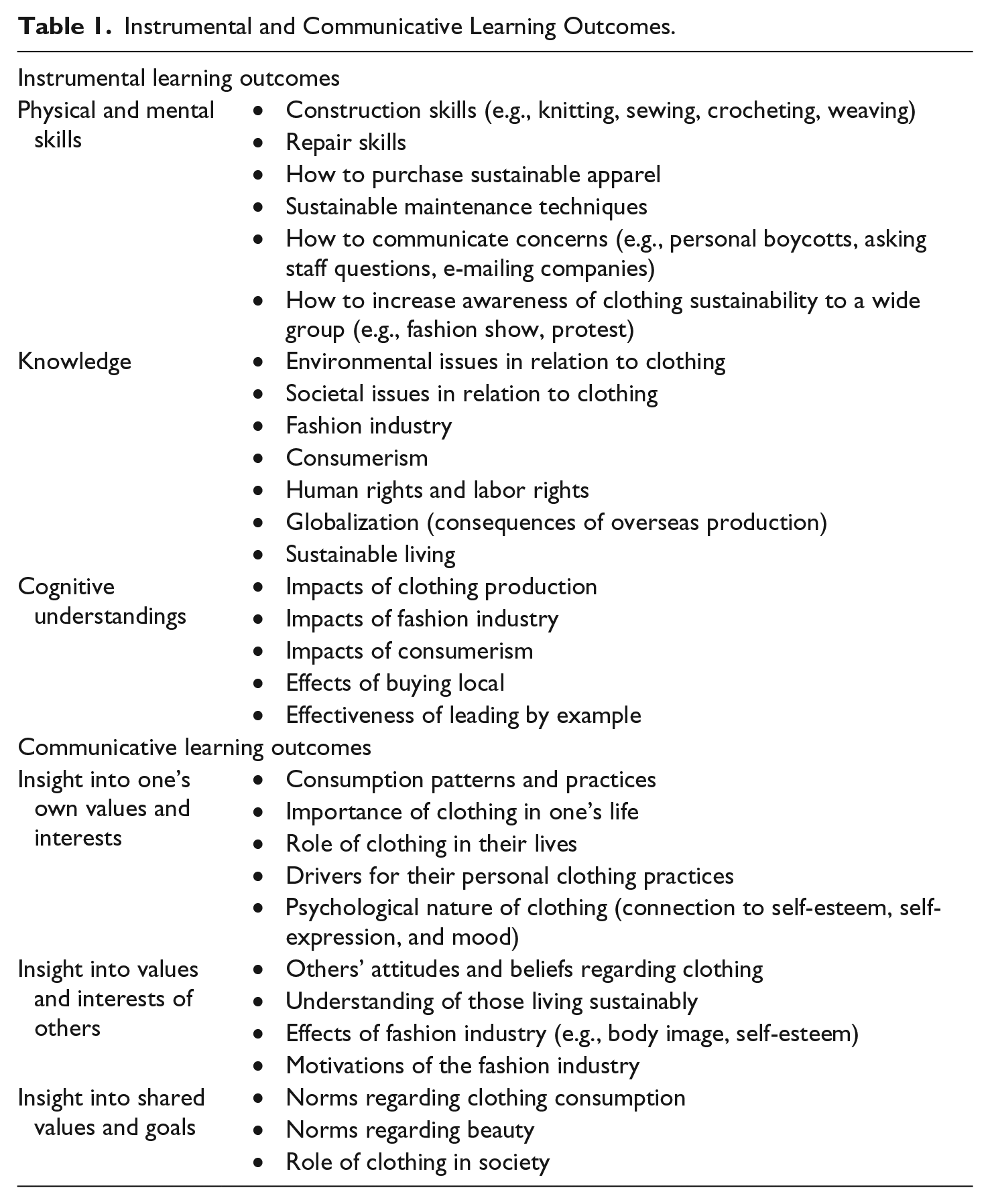
Instrumental and communicative learning outcomes were plentiful, with participants discussing an array of skills, knowledge, understandings, and communicative insights they learned about clothing in their adult years. Table 1 presents examples of these outcomes.
Instrumental and Communicative Learning Outcomes.
Instrumental Learning Outcomes
Each of the three subcategories of instrumental learning identified in Table 1 are discussed below.
Physical and Mental Skills
Construction skills, which encompassed an array of aptitudes related to making textiles, clothing, or accessories, were discussed by a number of participants. Sewing, knitting, and repurposing clothing were the most commonly mentioned construction skills, but there were a small number who mentioned more advanced, specialized skills, including mukluk making, spinning, looming, and processing wool. Proficiencies related to other forms of clothing acquisition were also discussed, such as learning what features to look for when buying apparel. For example, 03F wrote in her journal,
This kind of thinking is becoming entrenched, replacing the common consumer paradigm . . . I am learning to ask, “where was this made? how was this made? how far did it travel? how much energy was required? how badly do I really need it? how long will I need it? etc.”
With regard to collective social action, a few of the skills obtained were related to organizing events or activities, such as sustainable fashion shows, mall protests, and large-scale clothing swaps.
Knowledge
Aside from gaining skills, most of the participants developed a familiarity with issues related to sustainability and clothing. Knowledge of the negative aspects of clothing included an awareness of workers’ rights violations (e.g., unsafe work conditions, poor pay), cotton production practices (e.g., excessive use of pesticides, farmer suicides), the distance clothing travels, and the wide use of chemicals in textile production (e.g., flame retardants). Participants also discussed their knowledge of the actions that could be taken to reduce these adverse effects. This included, for example, a recognition of the need to keep clothes for as long as possible, a grasp of alternative modes of maintaining clothing (e.g., cold water and “green” detergents), an awareness of how to soundly dispose of clothing (e.g., who to call or where to drop off), and a familiarity with Buy Nothing Day.
Cognitive Understandings
Cognitive understandings refer to the linkages that individuals make between different segments of their knowledge, the result of which are new insights and conceptions of phenomena that allow them to draw conclusions and make inferences. Participants demonstrated a wide array of understandings in relation to clothing sustainability. Many had a keen understanding of the effects of our societies’ unsustainable consumption patterns. A large number also noted the influence the fashion industry has on individuals’ body images, the depletion of resources, the generation of waste, and the abuse of disenfranchised workers. For example, 20M stated,
you get the pre-faded jeans, you push them through the washing machine six times and it’s like “oh, I can’t wear these anymore.” You just paid $80.00 for them and they grew the cotton so that they could ruin them before they gave them to you.
Another cognitive understanding discussed by many of the participants was that not all companies were transparent and truthful. For a number of participants, this understanding was the result of discovering that the knowledge they had acted on, with the intention of being more sustainable, was incorrect. For example, one participant learned the production of bamboo fabric, which she had believed was a sustainable material, used harsh chemicals.
I used to look for whatever I thought was sustainable, now I realize that soy and bamboo things are really not that good because of all the chemicals involved in actually processing the items. So, for a while I was like “oh, the eco-stores say this is good, but now I don’t think they really are.”
Communicative Learning Outcomes
Communicative learning outcomes fell into one of three broad categories discussed below and as outlined in Table 1.
Personal Values and Interests
Gaining a greater insight of one’s own values, beliefs, and attitudes is essential to adult learning and transformation (Clark, 1993). Many participants discussed having revelations about the role of clothing in their lives. Specifically, they encountered experiences that compelled them to assess their relationship with clothing, their consumption patterns, their perceptions of the apparel industry, and the environmental and social impacts of their clothing decisions.
Several participants discussed travelling and outdoor activities such as tree planting, and how they served as a catalyst for communicative learning. For instance, being exposed to extreme poverty during their travels made some realize how much they have, especially clothing wise, leading them to reflect on their practices, especially the quantity they purchase and own. Outdoor activities, in particular tree planting, helped some appreciate the importance of the functional aspect of clothing, leading them to question the importance of fashion and the need to replace clothing not yet at the end of its life.
With regard to more overt acts to promote clothing sustainability, there were several examples of participants learning about themselves through social action. Of note was one group of participants (07F, 20M, 24F, 28F) who at one time had been involved in more overt forms of action (e.g., proselytizing, protests, handing out flyers, letter writing) and had come to the realization that they were better suited to “lead by example” rather than advocating and protesting for change. As 24F shared,
I went to the Summit of the Americas in Quebec City . . . I realized at that time that I didn’t like that kind of protest. I don’t really care for that . . . I think that I would rather lead by example and then if people are interested they can ask me.
Values and Interests of Others
Insight into the motives, expectations, and values of friends, family, and colleagues was essential to bettering an understanding of other’s views and beliefs on clothing and sustainability. Learning outcomes surrounding family were raised most often, with participants gaining insights into both sustainable and unsustainable views. For example, 29F shared her initial reactions to her mother’s transformed perspective and behavior:
Here my mom had next to nothing and I was like “oh, how can you—like what’s wrong with you?” I was embarrassed almost, like ashamed, like “come on Mom, don’t you care?” and she’s like “of course, but this is what I care about. Let me show you.” I am like “okay, sure. What do you want to show me?” She’s like “let’s go for a walk in the woods.”
Furthermore, several of the participants mentioned that their experiences had provided them with insight into the values and perspective of corporations, realizations that were predominantly negative. For example, 20M shared his reactions to a section in the book No Logo, “I remember reading about Nike in there and it was studying the sweatshop conditions and things and I was really horrified.” He believed that many corporations were engaged in “cultural manipulation,” noting that “this isn’t all by chance that it came about this way. There are certain people that are trying to manipulate cultural values, because they want certain results out of it.”
Shared Values and Goals
Insights into values and goals (Diduck et al., 2012) were especially relevant to this study since participants’ practices and attitudes were so heavily influenced by social and cultural norms. In the case of clothing sustainability, recognizing the role of clothing in society and the influence of the fashion industry on our shared perspectives were two of the vital insights commonly discussed.
Several participants gained an awareness of the pervasive role clothing plays in our social interactions. 18F commented that she had recently started “noticing the impact that clothing can make on how you are seen.” She and a number of others discussed the role of clothing in the workplace, particularly the expectations to dress in a “professional” manner. They spoke about the restrictiveness of these norms and how they limited one’s ability to dress more sustainably, as used and sustainable clothing often did not always meet these norms. One participant noted that her supervisor had spoken to her about her homemade apparel items, explaining,
Yeah, a couple of times I have been told that maybe I could dress a little bit more business-like. . . . So, they know me now. I have been so consistent—the pressure is not there as much. So, I have to say that I have my own style and they know it. (23F)
Many people also commented on how the fashion industry, through the manipulation of our collective values and norms, has gained a significant influence over clothing consumption and perceptions of beauty. One comment regarding collective views of fashion that captures the sentiment of others was, “I think the overall, ‘you’re not pretty unless you’ve consumed,’ is destructive on a personal level and on the environmental level. I would say that it is tragically flawed” (07F); while another expressed her concern over “the way shopping is promoted as a way to participate in culture and community, when it often results in environments that are harmful to the body” (28F).
Participants further commented on the overarching drive to consume in our society. For example, those who had travelled to impoverished countries discussed becoming more aware of the myths surrounding the North American lifestyle, in particular the notion that one can buy happiness.
Those kids were still happy and they were playing even though they were getting a dozen meds every day and they knew they were sick, but they were still—it seemed like they knew they had to make the best of every day . . . [I] started realizing that you can’t buy happiness. You can be happy no matter how much or how little you have.
Learning Implications
As seen through the examples above, the participants engaged in both instrumental and communicative learning, and displayed learning outcomes related to each. These outcomes shaped their views and abilities, and in turn influenced their actions. As such, instrumental and communicative learning helped guide them on their sustainable clothing journey. As was mentioned above, many other studies in the field of natural resources and environmental management reported participants gaining a wide range of instrumental and communicative learning outcomes (e.g., Diduck & Mitchell, 2003; Kerton & Sinclair, 2010; Moyer et al., 2014; Sims & Sinclair, 2008; Walker et al., 2013). Similar to our work, each of these studies found that instrumental outcomes were plentiful, that this domain of learning played a pivotal role in the overall learning process, and that there was an important relationship between instrumental and communicative learning that needed further study. We unpack these contentions further below.
Instrumental Learning Process: Cumulative Knowledge, Confirmation, and Critical Analysis
Learners receive information from countless sources. In the case of this study, participants discussed gaining facts, figures, explanations, suppositions, and demonstrations from a variety of sources, including discussions, firsthand experiences, formal classes, workshops, websites, blogs, documentaries, observation, books, and products. However, simply obtaining information does not equate with learning. Mezirow (1997b) explains that
[n]ew information is only a resource in the adult learning process. To become meaningful, learning requires that new information be incorporated by the learner into an already well-developed symbolic frame of reference, an active process involving thought, feelings, and disposition. (p. 10)
This statement describes how information is translated into learning, but in its focus on the frame of reference, it does not directly recognize the potential importance of instrumental learning and perhaps overplays the significance of communicative learning. The transformative learning literature has explored in detail how new information is transferred to our frame of reference through a process involving discourse and critical reflection; however, theorists and researchers have said relatively little about the instrumental learning process, specifically how new information is converted into outcomes—that is, skills, knowledge, and cognitive understandings—and is then integrated into our base of knowledge.
Our interview data indicate that the processes underlying instrumental and communicative learning have some similar elements. As stated above, both processes involve participants “assessing claims” regarding a particular aspect of an experience. In some cases, to do so, learners must both verify and evaluate the information attained. Verification in communicative learning is realized through discourse, which entails learners attempting to affirm their interpretations about a particular communicator or a communicative experience by gathering the thoughts and opinions of others. A learner will then attempt to develop a unified opinion or “tentative best judgment” of these amassed ideas, which may be changed at a later date if new information or ideas are brought to the learner’s attention (Mezirow, 1994, 1997a, 2000). Conversely, in instrumental learning, the learner needs to confirm the actual contents of the communication. Is the information accurate, valid, and reliable? Is the skill learned effective, efficient, and valuable? Is the cause and effect relationship that has been identified accurate? For the purposes of discussion, this subprocess will be referred to as confirmation.
Our data indicate that confirming what has been learned can take many forms, including conducting research, carrying out experiments, performing hands-on explorations, or engaging in observation. With respect to research, participants discussed watching documentaries, visiting websites and blogs, reading books, and engaging in conversation with trusted individuals.
Participants also engaged in experimentation or hands-on exploration, to test cause and effect relationships, such as the success of a particular construction technique or the effectiveness of a “green detergent.” For example, 19F, explained how she has expanded her sewing skills:
I’m trying new things. I kind of make up my own patterns . . . I just cut out a skirt yesterday that I liked and I’ll be working on that. I just kind of sew and cut until it fits the way I want it to.
A learner may also confirm an experience through observation. For example, they may watch another person performing a skill to confirm what they already learned. Knitting circles and classes were venues through which this form of confirmation took place.
The other step in “assessing claims” is to critically evaluate the gathered information and opinions in relation to each other and to our personal assumptions and understandings. In communicative learning, this process is referred to as critical reflection and involves contemplating and questioning previously acquired beliefs, values, and assumptions in order to determine whether they still prove valid and useful in the face of new information, occurrences, or events (Mezirow, 1994). Similarly, our data revealed that to achieve the instrumental outcomes identified, participants not only engaged in confirmation they also critically analyzed: the initial information they encountered, the results of the confirmation process, and their existing knowledge related to the information. Our data reveal that it is through this process that the learner assesses details such as their performance, their understanding of a particular concept, and the significance or use of information they found to be true.
We found that critical analysis allowed participants to convert new information into skills, knowledge, and cognitive understandings, such as a consciousness regarding the chemicals used in textile production or an understanding of the relationship between cheap clothes and the abuses of overseas garment workers. Critical analysis was particularly evident when participants discussed evaluating different garment features and companies in their attempt to make wise purchase decisions. For example, 24F explained how she wrestled with the information she knew about some of the companies as she tried to decide where to shop:
I think it just annoys me that MEC has shipped out a lot of their production overseas. . . . But then I know that they look at the labour practices in the factories, companies like Patagonia do that too, and they make a really good high-quality product with good materials and lifetime guarantee. . . . That’s good because it’s encouraging them to make a product that’s going to be long lasting and satisfying. But even though it says like, “Oh yeah we look at the labour practices at the factories,” I don’t know what sort of criteria [are used].
Furthermore, we propose that, as an important aspect of our being, our knowledge and abilities would then be integrated, not only into our frame of reference but also into our cumulative knowledge. Cumulative knowledge is the term we use to describe our amassed mental and physical skills, knowledge, and cognitive understandings. Evidence of the use and advancement of participants’ knowledge and skills—combined with their proven ability to apply knowledge and skills from one subject matter or activity to another—indicate there is a reservoir for their skills, knowledge, and cognitive understandings. For example, 24F, once an avid researcher, explained,
Now, I’m way more passive. I spend more time considering the impact of my actions in my own head and making things up to justify my choices. So I don’t actively go out and back up the information to say this choice is more sustainable than that choice, I’m basing it mostly on previous knowledge and previous experience . . .
Thus, just as communicative learning outcomes shape one’s frame of reference, instrumental learning outcomes shape our cumulative knowledge.
The data further suggest that Mezirow’s ways of learning are equally applicable to cumulative knowledge. Mezirow explains that a communicative learning experience may (a) result in a new meaning scheme (if such an experience had not been encountered before), (b) refine an existing meaning scheme, or (c) transform an existing meaning scheme or a meaning perspective (Mezirow, 1994). Similarly, our data show that as a result of an instrumental learning experience, new skills, knowledge, and cognitive understandings may be formed; existing skills, knowledge and understandings may be refined and strengthened; and previously learned skills, knowledge and cognitive understandings may be transformed. In terms of new additions to participants’ cumulative knowledge, some of the new knowledge and skills discussed included an awareness of where to source sustainable apparel, basic knitting techniques, and an appreciation for product life cycles. The refinement of existing knowledge occurred through a variety of means, including practicing a skill to improve one’s proficiency (e.g., effective secondhand shopping); conducting research to learn more about a particular issue (e.g., different ways to create repurposed clothing); or analyzing existing knowledge to reveal an understanding not previously recognized (e.g., conserving energy by hanging to dry has financial and environmental benefits). Finally, cumulative knowledge may be transformed if a learner is exposed to new information that indicates that their technique is flawed, their existing knowledge is erroneous, or their understanding of a concept or relationship is incorrect. For example, 20M explained that encountering a two-tiered pricing system while clothing shopping altered his concept of the economic system:
in the stores they had where, depending on your income, up to your conscience, there was two prices, and so you could pay more or you could pay the low income price . . . it was a real eye-opener. This is here, this is in Canada. This is right now. This isn’t a potential, it’s happening. It just shows it can happen. It’s not impossible.
The Relationship Between Instrumental and Communicative Learning
Although instrumental and communicative learning have been presented as separate processes thus far in this article, our data have shown that frequently they were both present during a learning experience. The results of this study indicate that instrumental and communicative learning may interact in three ways:
Occurring in a parallel manner
Serving as trigger for the other
Influencing and supporting one another
First, a new experience or piece of factual information may trigger both instrumental and communicative learning at the same time, without the two domains ever interacting or affecting one another (i.e., in a parallel manner). For example, several participants discussed learning that a company regarded for its fair and safe work conditions, as well as its North American production facilities, was also infamous for its negative treatment of women. Exposure to this information urged these participants to seek out evidence in order to allow them to confirm and analyze the anecdotes they had heard (instrumental learning). A number of the participants also concurrently engaged in discourse and critical reflection, specifically examining their attitudes and feelings about this company’s practices, comparing the retailer’s positive practices with their negative ones, and exploring their own personal desires to purchase their garments (communicative learning; Figure 1).
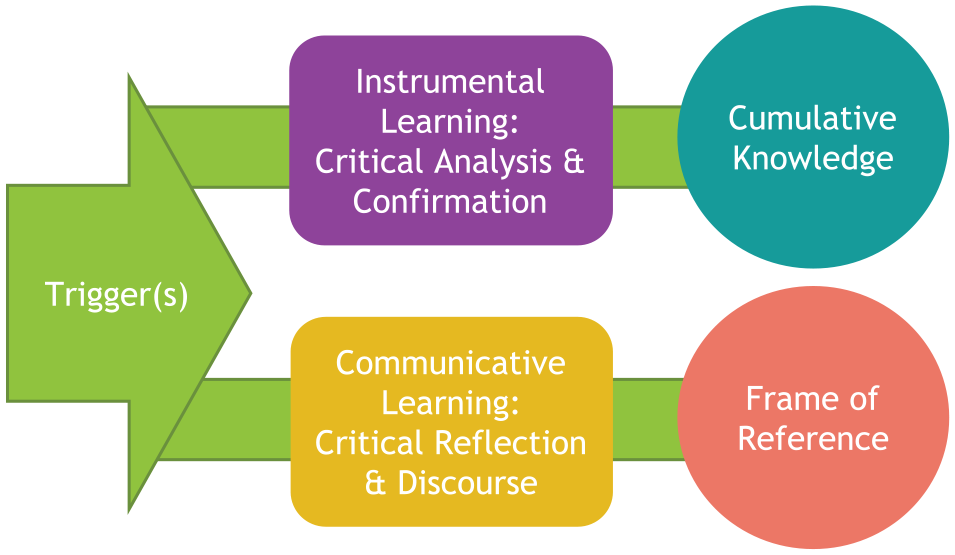
Instrumental and communicative learning as parallel processes.
Second, instrumental learning may serve as a trigger for communicative learning (Figure 2). The confirmation and critical analysis processes may lead a learner to critically reflect on the assumptions underlying their newly incorporated knowledge or understandings. As information is verified and further facts are uncovered, participants may begin to explore what such information means to them, in particular, how it enhances or changes their understanding of themselves, others, or society. Conversely, communicative learning may trigger instrumental learning (Figure 2). Discourse and critical reflection may peak one’s interest in a particular subject matter, which the learner may pursue further through confirmation and critical analysis. An example of this was provided by 03F, who shared that while pregnant, she came across literature on the negative aspects of disposable diapers, information which led her to explore her views about cloth diapers. Her discourse and critical reflections resulted in her decision to use cloth diapers when her child was born, compelling her to engage in an instrumental learning process, which involved researching and assessing information on buying or renting cloth diapers, what features to look for, how to maintain the diapers, and so forth.
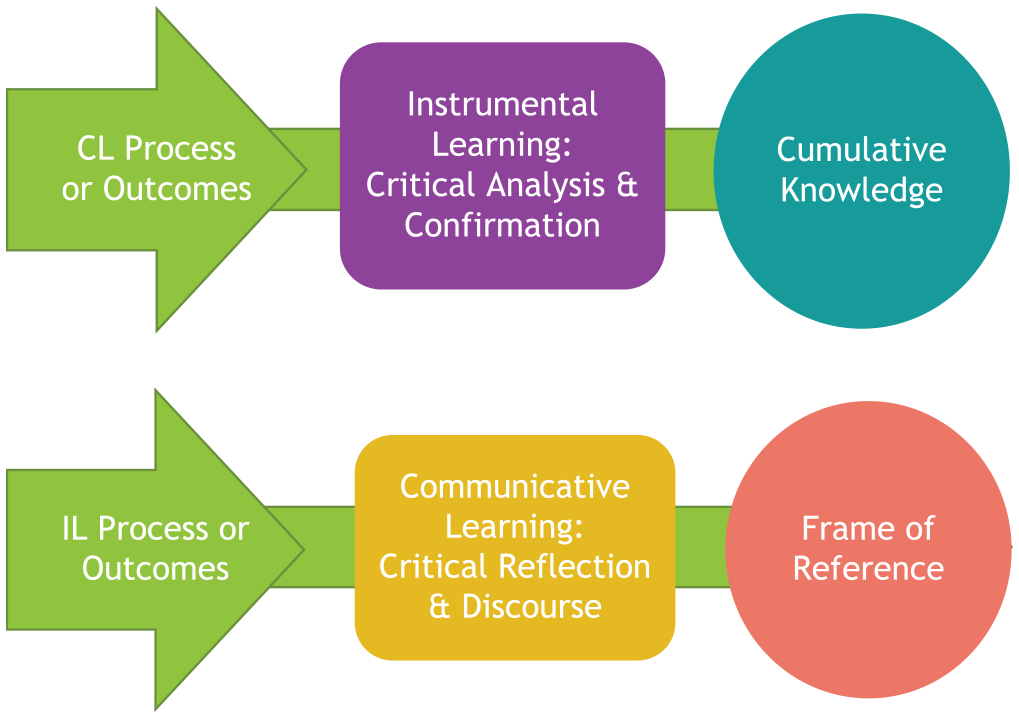
Instrumental and communicative learning as triggers for one another.
Finally, these two forms of learning may interact and support one another, proving difficult to distinguish one from the other (Figure 3). The journals, written by those struggling with their love for clothing and their sustainability ideals, demonstrated that instrumental and communicative learning often occurred simultaneously as captured by participants 34F and 18F.
I have gotten over one hurdle: I finally called J.Crew and asked to have my name removed from their mailing list. I was getting a catalogue in the mail each month. Not only was this a waste of paper, but it would also encourage me to buy more clothes. If I don’t see it, I don’t get sucked in as easily. I have been working on avoiding the website, too. . . . Overall, I am spending more time thinking about my lifestyle and my purchases than I did before. I am trying to research products myself instead of accepting at face value how a company places the product. My goal is to continue further on this path to greater sustainability and simplicity! (34F) My current non-school reading is titled, “When Corporations Rule the World,” by David Korten. . . . This is the type of book that tells you about the hidden story of what you buy, and who gave up their quality of life for your wardrobe. The question I have been having lately is how much money do I need to earn, to buy my green lifestyle? Is it always going to be out of reach, or will I add things as I go. Then I remember that no magical green living miracle is going to alter the course of industrialization, and maybe at some point in the future, we’ll be happy with our 2 suits of clothes again. But why the hypocrisy, why don’t I put it in my budget? (18F)
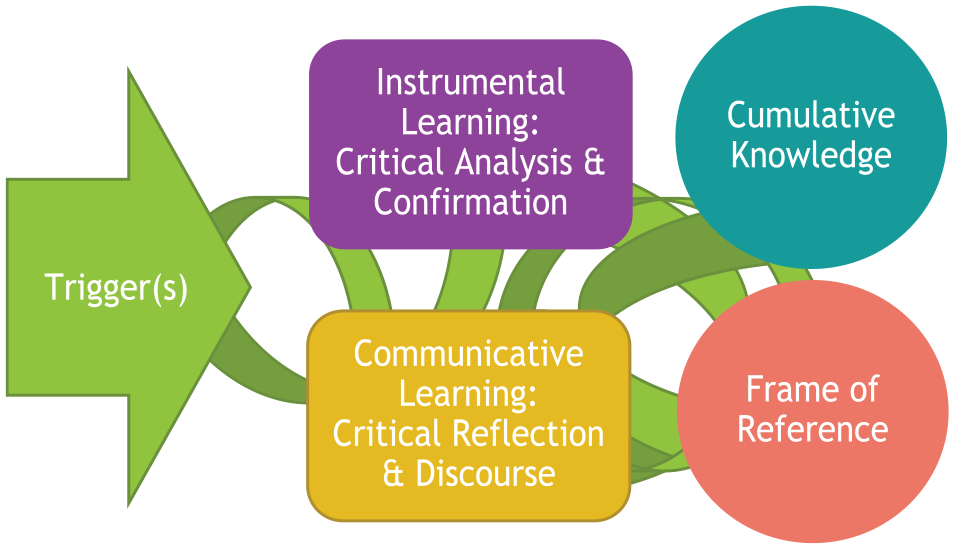
Instrumental and communicative learning interacting and supporting one another.
As participants examined their concerns and what others valued, they also explored what options were available for reducing their impact. At the same time, as they sought to balance their concerns and their desires, they also analyzed the barriers they faced and how they might be overcome.
There were instances when it was impossible to separate these two processes. Participants relied on instrumental learning to verify whether the sources used for confirmation were credible and trustworthy, for example, was the speaker being truthful or were their opinions biased? If the communicator’s intentions or reliability was questionable, the information they were providing may be deemed insufficient for the confirmation process. Similarly, participants relied on instrumental learning to verify what they had learned communicatively. In some cases, instrumental learning supported discourse and critical reflection through gathering and verifying facts on which tentative judgments about experiences or communicators are made. For example, 01F explained,
We went to Cotton Ginny and . . . I got all these things that said organic on them. So, I was curious and I went and looked on their website . . . partly to get information and partly, sort of critically, to see if I thought they were actually doing what they were saying they were doing, or whether they were just sort of greenwashing.
In other words, instrumental learning’s confirmation and critical analysis determined the legitimacy of the content of the message (e.g., Does Cotton Ginny provide information on sustainability on their website? Does this this information appear to be accurate?), while communicative learning allows judgments to be made on who/what is providing the information (e.g., Does the company seem to be trustworthy? Do their motives for promoting sustainability seem legitimate?).
Conclusion
Reducing their personal “clothing footprint” was an aspiration of all the participants in this study. Throughout their journey toward greater clothing sustainability, these individuals encountered diverse learning experiences, thereby acquiring unique combinations of skills, knowledge, understandings, and social insights. They learned where to purchase sustainable apparel, how to knit, and the repercussions of cheap clothing. Many also became aware of matters such as their own relationship with clothing, the attitudes of family members and employers toward secondhand clothing, and the negative effects the drive to be fashionable has on individuals. Some of the participants were taught how to be more environmentally and socially conscious in their daily lives at a young age, while others embarked on their journey to sustainability more recently. In the case of the latter, most of these participants struggled to adopt more sustainable clothing practices as they attempted to balance their love for clothing with their passion for sustainability.
Other studies considering learning outcomes in the context of environmental sustainability found ample evidence of instrumental learning, with learners, for example, gaining knowledge about waste treatment, acquiring the ability to preserve foods, and developing an understanding of the relationship between deforestation and aridity (Blackmore, 2007; Diduck & Mitchell, 2003; Kerton & Sinclair, 2010; Sinclair et al., 2011). Similarly, our research identified many examples of instrumental learning that led us to contend that with respect to living a more sustainable lifestyle or safeguarding our natural resources, individuals must develop the necessary skills, knowledge, and cognitive understandings to supplement communicative learning in order to prepare for, and engage in, social action. Instrumental learning allows individuals to identify problems and solutions and to develop and implement plans of action. As such, instrumental learning is of vital importance to an individual’s transition to a more sustainable way of living.
Our study not only discovered an abundance of evidence to support the presence of instrumental learning it also identified many occurrences of communicative learning. This stands in contrast to the findings of many other sustainability studies where communicative learning was found to be limited (e.g., Kerton & Sinclair, 2010; Sinclair et al., 2011; Walker et al., 2013). This could be due to the fact that most of these studies are concerned with the learning surrounding sustainability programs and resource decision making, while clothing is intimately intertwined with our sense of self, our relationships with others, and society as a whole. For someone who has had a lifelong love of shopping and clothing, increasing his or her knowledge and skill set is necessary to engage in sustainable clothing practices, but if he or she has not reflected on phenomena such as the power of societal attitudes toward consuming and the pressure this creates to “buy, buy, buy,” it is unlikely they will be able to sustain their behavior.
Najjar et al. (2013) and others (e.g., Cranton, 2006; Moyer et al., 2014) have stated that the relationship between instrumental and communicative learning is an underdeveloped aspect of TLT. They proposed that these two domains could act as a trigger for one another or occur concurrently. This study supports this conclusion and takes it one step further by identifying two types of concurrent learning. Specifically, we found that the two domains of learning can occur in a parallel manner (i.e., an event simultaneously triggers both instrumental and communicative learning, and they occur at the same time, yet independently) or that they can interact, both influencing and supporting one another, as an individual seeks to understand an occurrence in a rational and concrete way, as well as in its social context. In such a case, it is difficult to separate the two forms of learning since they are so closely interwoven.
Many theorists and researchers have determined that communicative learning leads to a more discerning individual, one that is less dependent on the perspectives of others (McDonald et al., 1999; Mezirow, 1997b; Moore, 2005). We conclude that not only does communicative learning help shape more independent, critical, and open-minded learners but so too does instrumental learning. There is no single “truth,” even when it comes to skills, knowledge, and cognitive understandings. These concepts are malleable and subject to modification based on the introduction of new information or exposure to different ways of performing a skill. In other words, an individual need not only add and refine skills and knowledge he or she may also question an experience, actively pursue new evidence, and critically assess it, which may in turn lead to building and refining skills, knowledge, and/or cognitive understandings. Such instrumental learning experiences also help establish autonomous, discriminating, open-minded learners.
Our research, and that of Kerton and Sinclair (2010), Diduck et al. (2012), and others, demonstrates that action to enhance sustainability may be achieved by an individual subsequent to engaging in instrumental and communicative learning processes (e.g., buying secondhand clothing or e-mailing concerns to retailers) and that such action does not rely solely on transformation or social learning. Sustainability requires the effort of all players—industry, government, nongovernment organizations, communities, families, and individuals (e.g., Shaw, Hogg, Wilson, Shui, & Hassan, 2006). Without individuals shifting their actions related to sustainability, through attaining the skills and knowledge necessary to change their personal practices, our journey toward sustainability will be unsuccessful. As McDonald (2006), suggests, an environmentally sustainable society can only be realized through substantial individual effort and action.
Footnotes
Acknowledgements
The authors wish to thank participants in this research project for their time and effort.
Declaration of Conflicting Interests
The author(s) declared no potential conflicts of interest with respect to the research, authorship, and/or publication of this article.
Funding
The author(s) disclosed receipt of the following financial support for the research, authorship, and/or publication of this article: The research was supported by the Social Sciences and Humanities Research Council of Canada.