



Abstract
In this article we explore how individual expressions of agency are shaped by structural factors and exercised by Black African girls with child sexual abuse (CSA) histories as they navigate resilience pathways. We employed a qualitative multiple instrumental case study design and purposefully recruited seven Black African girls, between the ages of 15 and 18 years, with a history of CSA. Participants were engaged in a range of participatory methods that included participatory diagramming (time lines), digital stories, and participatory videos. Data were analyzed using inductive thematic analysis. Findings highlight how agency, as a process of resilience, manifested as well as how these agentic expressions were activated, bound, and later reciprocated and sustained by the surrounding social structures.
To date, discussions on the impact of child sexual abuse (CSA) have been dominated by the negative sequelae of sexual abuse including the framing of women and girls who have been sexually abused as victims (Hockett, 2013). From this deficit perspective, those who have experienced sexual abuse are considered passive, vulnerable, powerless, and at risk of short- and long-term behavioral, psychological, physical, interpersonal, sexual, and relational problems (Lalor & McElvaney, 2010; Maniglio, 2009; Miron & Orcutt, 2014). In reframing this discussion, we look to research that suggests that adjusting positively after experiencing sexual abuse is possible, and we explore what enables this variability in a South African context.
Socio-ecological Theory of Resilience (SERT)
To explore pathways to positive adjustment navigated by adolescent African girls in the aftermath of CSA, we draw on the socio-ecological resilience theory (SERT) developed by Ungar (2011). Similar to key figures in the resilience research field, such as Garmezy (1991), Werner (1989), Masten (2007, 2011), and Rutter (2006), Ungar (2011) recognizes the importance of ecological systems in resilience processes. In SERT, the development of resilience happens in terms of, first, the nature of the individual’s context; second, the interaction between the environment and the individual; and, third, the individual’s specific traits (Ungar, 2015). From this perspective, resilience processes are thus activated by agentic individuals engaging with resource-giving ecologies (Wright, Masten, & Narayan, 2013). Both the individual and the social context share in the resilience process—the former to advocate for and accept the support of the ecology and the latter to reciprocate and/or initiate by making resources available in a culturally meaningful manner (Ungar, 2015). While the onus rests with the social ecology to provide resilience-enabling resources to the individual, the individual is also tasked with exercising agency in navigating her way toward the resources (Ungar, 2011).
Current understandings of resilience processes acknowledge the role of cultural relativity, recognize that resilience processes are culturally embedded, and have iterated the need for scholarship to delve into how specific cultures and contexts affect processes of resilience (Ungar, 2015). In situating this study in South Africa, we aim to contribute to contextually and culturally specific understandings of resilience in African girls who have been sexually abused. Previous studies with young Africans have demonstrated that the pathways to resilience among Black African youth are strongly influenced by traditional African cultural practices, as well as by historical and political realities (Theron & Phasha, 2015). Research conducted in the global North thus should not serve as an a priori frame of reference to understanding positive adaptation in African youth (Theron & Theron, 2013). Studies that focus specifically on resilience processes in African girls with CSA experiences are limited however (Phasha, 2010). A scoping review of qualitative studies on resilience in sexually abused adolescents identified only three studies from South Africa (Haffejee & Theron, 2017). In light of the above gaps, and in line with current shifts in research with youth during which researchers working with young people are encouraged to attend to, facilitate, and give voice to their (young people’s) agency (Coffey & Farrugia, 2014), the necessity for this study is apparent.
CSA and Resilience
While the bulk of sexual abuse literature addresses the negative impact of sexual abuse, literature refuting the inevitability of this outcome is available (Collishaw et al., 2007; Fava, Bay-Cheng, Nochajski, Bowker, & Hayes, 2018; McElheran et al., 2012). Studies suggest that between 10% and 53% of CSA survivors exhibit normal levels of functioning (Domhardt, Münzer, Fegert, & Lutz, 2015). Resilience research has identified a number of factors that enable resilience processes in sexually abused adolescents. Suggested factors that may play a role in mediating the negative impact of abuse include biological and genetic factors, and personal factors, such as the presence of coping strategies, higher self-esteem, internal locus of control, and intelligence (Collishaw et al., 2007; Williams & Nelson-Gardell, 2012). The systematic review of 37 articles on resilience in CSA survivors by Domhardt et al. (2015) found the presence of eight empirically supported protective factors that facilitated positive adaptation. These included confidence with regard to academic pursuits, capacity for and increased engagement in educational activities, emotional intelligence and interpersonal competence, a greater sense of empowerment, active coping, and optimism for the future, externalization of blame, supportive relationships with family and peers, and social attachments (Domhardt et al., 2015).
While there is a paucity of African studies on CSA and resilience, there are a number of studies focused on resilience processes in youth exposed to other adversities in South Africa (Van Breda & Theron, 2018; Van Rensburg, Theron, & Rothman, 2015). These studies typically include African participants (including girls) who experience structural violence and who report that personal strengths (including agency), familial resources, and community supports (primarily caring teachers and access to education) enable resilience (Van Breda & Theron, 2018). Available studies that are specifically focused on resilience processes and CSA highlight similar processes; internal resources such as the ability to make meaning of the incident and future orientated beliefs are supported by the availability of external supportive relationships (Archer, 2005; Collings, 2003; Phasha, 2010), which together facilitate resilience processes. As explained next, agency has emerged as salient to the resilience of girls with sexual abuse experiences.
Resilience and Agency
The concept of agency denotes an active rather than a submissive stance and refers to the capacity of individuals to act independently and shape their life circumstances. It also relates to the power that an individual has at a micro level to exercise authority over personal fate and influence her or his social ecology (Van Breda, 2016). This conscious or tactical intentionality is pertinent to this article as we seek to shift the discourse that surrounds survivors of CSA (Lee, 2012). The ability of girls who have been sexually abused to act autonomously negates the commonly held depiction of girls as docile victims who are acted upon (Denov & MacLure, 2006).
Agency often emerges as an enabler of resilience (Lee, 2012; Libório & Ungar, 2014; Seymour, 2012). Masten (2007) describes agency as one of six universally occurring protective mechanisms, tying it in with mastery, self-efficacy, motivation, and self-confidence. These mechanisms are reflective of fundamental adaptive systems that are informed by cultural and biological evolution and are supportive of human development (Masten, 2007; Wright et al., 2013).
In studies focused specifically on resilience and sexual abuse, agency also emerged as a factor that facilitated successful adaptation post-sexual abuse (Gilligan, De Castro, Vanistendael, & Warburton, 2014; Phasha, 2010; Sano, 2012). Agency was exhibited in the resourceful capacity displayed by girls in the ways in which they responded to sexual abuse. In Gilligan et al.’s (2014) three-country study (Nepal, Ethiopia, and Bulgaria), they found that girls who were sexually abused were able to navigate challenging, and sometimes obstructive contexts to act independently; they did this by identifying and recruiting informal networks of support such as employers or community members. In Sano’s (2012) study in Indonesia, accounts from sexually exploited girls show that they did not passively comply with their circumstances but continually worked at taking control by accessing and mobilizing resources, resisting external pressure, and exercising a degree of choice. Similarly, Denov and MacLure’s (2006) study in Sierra Leone showed that within the violent constraints of armed conflict where adolescent girls were subjected to sexual violence, in addition to other forms of abuse, they demonstrated resilience through their capacity to act autonomously by resisting violence and through female companionship. Studies conducted in South Africa showed that this capacity to act independently was facilitated through cognitive reappraisals of the abuse experience, which, in turn, impacted on self-efficacy and the ability to access helping relationships (Collings, 2003; Phasha, 2010).
Denov and MacLure (2006) assert that the girls’ narratives “reveal a spirit of volition and a capacity for independence of action that counters a deterministic and commonly held depiction of girls as supine victims” (p. 81). Sano (2012), however, cautions that focusing exclusively on agency obscures the impact of social structures on the options, decisions, and actions taken by girls. Schoon (2007) echoes this by stating that while the ability of individuals to act recognizes the role of individuals in shaping and forming their lives, seeing such agency as a solely individual act neglects to consider the important role of social structures. This recognition of the interplay between individual-level processes and external or interpersonal processes is in line with SERT (Ungar, 2011), described above. Similar to Ungar (2011, 2012), Schoon (2007) highlights the important role of the ecology in adaptive processes.
Further reflecting the significant role of external structures on an individual’s expression of agency is the idea of bounded agency introduced by Evans (2002), who proposes that “agency is a socially situated process, shaped by experiences of the past, the chances present in the current moment and the perceptions of possible futures” (p. 262). Agency is thus considered as being bound by constraints that are constantly present, impacting on the extent to which personal goals may be accomplished (Evans, 2007). This concept of bounded agency has been used extensively to explain agentic processes of young people in transitional periods, specifically those seeking employment and those leaving care (Evans, 2007; Munford & Sanders, 2015; Schoon, 2007). To our knowledge, this concept of bounded agency has not been used to explain agentic processes in girls with CSA experiences. Given, however, that bounded agency describes processes employed by youth in situations marked by extreme adversity and refers to the ways in which marginalized young people have voice and control over circumstances in which there are limited options and resources, it may be meaningfully employed as a frame to help understand resilience processes of girls in residential care who have been sexually abused (Munford & Sanders, 2015).
Study Context: CSA in South Africa
The extent of CSA in South Africa is pervasive (Mathews, Hendricks, & Abrahams, 2016) with Artz et al. (2016) finding that one in three young people in South Africa experience some form of sexual abuse prior to the age of 17. Meinck, Cluver, Boyes, and Mhlongo (2015) found that in African countries CSA is strongly correlated with single-parent households, living with stepparents, domestic violence, substance abuse in families, and poor mental health. Research suggests that in South Africa vulnerability to CSA is heightened by unequal gender relations and patriarchal constructions of masculinity, which reinforce male dominance over females and which promote male sexual entitlement over females (Lalor, 2005; Mathews, Loots, Sikweyiya, & Jewkes, 2012). Cultural and family practices that include punitive punishment, an unquestioning respect for elders, and the normalization of violence in homes as well as structural and social issues, such as poverty, social inequality, and inadequate legal systems all intersect in negative ways to further create spaces for the perpetration of violence against women and girls (Institute for Security Studies, 2014; Jewkes, Sikweyiya, Morrell, & Dunkle, 2010; Mathews et al., 2012; Seedat, Van Niekerk, Jewkes, Suffla, & Ratele, 2009).
Study Aims and Research Question
The aim of this study is to examine what enables and limits resilience processes of South African girls with CSA experiences. We focus in particular on the way in which agency, as an internal process of resilience, is exercised by adolescent girls as they traverse external, socio-structural contexts that are both challenging and accommodating. The broad question guiding this article is as follows:
Method
To facilitate a more nuanced, in-depth understanding of the intertwined role of agency and socio-structural structures in enabling or disabling resilience processes, we drew on an emancipatory-critical paradigm (Mash, 2014) and adopted a qualitative instrumental case study design (Creswell, 2009). The emancipatory-critical paradigm focuses on creating new knowledge and reflecting critically on what is learnt in the process, with the intent of informing social change (Mash, 2014; Mertens, 2007). This approach suggests that knowledge is bound to power structures within the social fabric and issues, such as empowerment, inequality, and oppression are areas that are typically addressed (Creswell, 2009; Mertens, 2007). Case studies enable exploration of phenomena within a given context using a variety of sources (Stake, 2005). Multiple sources of data included the participants (i.e., girls with CSA histories) as well as key documents from the case files of each of the participants. This review of the case files provided supplementary data and provided a more in-depth understanding of the participants’ experiences. To gather data from the participants, we employed a range of complementary visual participatory methods that included participatory diagramming, digital stories, and participatory video (Mitchell & de Lange, 2011).
Participants
Participants, namely, adolescent girls with a history of CSA, were purposefully recruited by the first author from two child and youth care centers (CYCCs). The first of these, CYCC 1, is based in the eastern suburbs of Gauteng, South Africa. At the time of the study, CYCC 1 accommodated approximately 160 children, both boys and girls, aged 5 to 21 years old. CYCC 1 was selected as it was easily accessed by the first author who served at the CYCC as a consulting therapist. The second organization, CYCC 2, was accessed on the recommendation from CYCC 1 and is situated in the greater Johannesburg district. At the time of the study, it accommodated approximately 33 girls, aged 12 to 18 years old. Both sites had good supportive structures in place; girls resided in secure and contained environments that provided access to on-site therapeutic support services.
Emulating previous studies on resilience processes, and following Theron (2013), we established and consulted with an advisory panel to identify adolescent girls who were deemed resilient. The advisory panel was made up of key role-players from CYCC 1 and included social workers and child care workers. Indicators of resilience established in prior studies in South Africa (Theron, Theron, & Malindi, 2013) and internationally (Masten, 2014) were reviewed and adapted by the advisory panel and were then used to guide the selection of participants. Indicators included:
Characteristics of a resilient personality; specifically, an ability to communicate needs, the appropriate expression of emotions, assertiveness, and self-confidence;
A solution-focused orientation and/or future-oriented outlook, including an interest in education;
The presence of active support systems; and
A positive sense of self that is exhibited through positive behaviors and an absence of negative, self-harming behaviors, such as substance abuse, sexually inappropriate behavior, and sexual risk-taking.
Using these indicators, potential participants were invited to participate in the study by an independent child care worker. The use of an independent child care worker who was not affiliated to the study served to ensure that potential participants were not pressured into participating. If participants expressed an interest in the study, they were approached by the first author who once again explained the nature of the study as well as what would be required of them. The voluntary nature of the study was emphasized. If they were still willing to participate, informed consent was obtained. The first author also obtained consent from the directors at the CYCCs. A total of nine participants were initially identified; one girl did not self-identify as having been sexually abused and another girl, while consenting to participate, exited the care system before data collection was completed. Of the seven girls included in the final sample, four were from CYCC 1 and three from CYCC 2. All participants were in care because they had lost one or both parents and because extended family members were unable or unwilling to provide care. Participants were between the ages of 15 and 18 (see Table 1 for profile of participants).
Profile of Participants.

Note. CYCC = child and youth care center.
Ethics
To proceed with our study, we first obtained ethical clearance from the university’s institutional review board. Following this, and as mentioned above, we gave detailed consent letters to directors at both CYCCs who served as legal guardians for participants in care. Once participants were identified, they, too, were provided with detailed information and asked to sign consent forms. The first author was aware that her position at CYCC 1 could potentially influence participants’ decision with regard to taking part in the study; and as indicated above, this was addressed by an independent care worker informing potential participants about the study. The first author only approached participants if they expressed an interest in the study.
It should also be noted that, at the time of the study, the first author did not have a therapeutic relationship with any of the participants. That participation was voluntary was verbally reiterated throughout the process and participants were advised about the potential for limited anonymity, given the group process and visual activities. To ensure anonymity in the participatory video (described below), participants were given a range of face masks and wigs. Furthermore, throughout the process, pseudonyms chosen by the participants were used.
Following data collection, all participants were required to have at least one debriefing session with a registered mental health care professional not involved in the study. This was arranged by the first author and accessed via the CYCCs. The first author provided each girl with a copy of their transcript to review and they were also informed that they could have access to all materials they had produced in the study.
Data Collection Procedures
Qualitative research establishes the researcher as the data collection instrument (Bourke, 2014). As such, the researcher is involved in prolonged and close interaction with participants and the researcher’s gender, race, class, socioeconomic status, educational background, and age are some of the important variables that may affect the research process (Bourke, 2014; Creswell, 2012). Throughout the process, the first author (who collected the data) was cognizant that her social and cultural positioning (i.e., a mature, professional, Indian South African, with a comfortable socioeconomic standing) could create barriers to how the participants engaged in the research process. The use of visual, participatory methods that are collaborative and that seek to neutralize power imbalances was therefore purposeful. The ease with which the girls engaged in the process as well as the richness of the data generated affirmed that these methods moderated differences in positionality.
In addition to the participatory activities, the first author also conducted a case file review. Prior to every activity, participants were reminded that they could choose not to participate in a given activity should they wish. All participants chose to engage in all of the activities.
Step 1: Individual Interviews Using Participatory Diagramming (Time Lines)
All seven participants were invited to create a time line of significant events that they had experienced over the course of their lives and to situate the sexual abuse on this time line. They were also encouraged to think about what or who had helped them do well during these events. The use of time lines provides a structured, noninvasive way for participants to access memories and experiences (Liebenberg & Theron, 2015). Although loose guidelines were provided, participants were encouraged to describe events, using either images or text.
Step 2: Summaries of Narratives Produced by Participants and the Creation of Digital Stories
Participants were then asked to write or narrate a short story summarizing key events and resilience processes discussed in Step 1. Participants were also asked to include visuals, such as drawings, photographs, and other images to go with the narratives. These narratives and images were then used to create digital stories. Digital stories combine traditional oral storytelling with video and computer production technology and offer a range of possibilities for research and practice (Gubrium, Hill, & Flicker, 2014; Treffry-Goatley et al., 2016). In our study, the digital stories were later shared with the advisory panel and key role-players at the CYCCs.
Step 3: Review of Case Files
Case files were reviewed with the permission of the primary participants. This process entailed a careful review of all included case notes and documented information about the participant. At CYCC 1, all legal documents as well as process notes from social workers and other caregivers captured on an online database were accessed and reviewed. At CYCC 2, hard copies of participants’ files were obtained but information here was less comprehensive. Case files typically included information regarding the reason for placement at a CYCC, health records, notes on scholastic progress, legal court documents, and process notes.
Step 4: Group Meetings and Production of Participatory Video
Participants were then invited to participate in a group process. Two group sessions were held with participants. During this process, participants were engaged in a participatory visual activity, the purpose of which was to provide an opportunity for participants, as a group, to identify and reflect on strengths and enabling resources within themselves and the environment. The output of these group sessions was the production of a participatory video, which was also shared with the advisory panel and other key role-players. The aim of both screenings was to create awareness of the experiences and needs of girls with CSA histories.
Data Analysis
Data from individual interviews, digital stories, case files, and group sessions constituted our data set. All data were transcribed in full by an independent transcriber and closely verified for accuracy by the first author. Data were then subjected to multiple readings by the first author. Once this process was completed, data analysis began and was guided by our research question. The first author used inductive thematic analysis, as outlined by Braun and Clarke (2006), to assign codes. An external independent coder (who had completed a PhD that focused on girls’ resilience) coded data independently. Following this, the first author and the external coder reviewed codes and, in the limited number of instances where differences were noted, consensus discussions were held to reach agreement (Saldana, 2009). The first author then grouped similar codes to form candidate themes and subthemes. The second author reviewed the candidate themes before engaging the first author in consensus discussions (as per Saldana, 2009). These discussions allowed interrogation of the themes and supported their finalization. In the course of this, we (the authors) were attentive to how the themes were supported by a variety of data sources. Following Creswell (2009), we thus ensured trustworthiness through triangulation of data, the use of an independent cocoder, as well as member checking by participants. Member checking entailed all participants receiving hard copies of their individual transcripts. They were asked to assess the accuracy of the transcripts. The first author scheduled individual follow-up sessions with each participant to verify the accuracy of the transcripts (Birt, Scott, Cavers, Campbell, & Walter, 2016). All participants were satisfied that the transcripts documented what they had shared. The final edited digital story was also shared individually with each of the participants and participants were satisfied with the end product. Following initial analysis and guided by Morse (2015), all participants were invited to a collective member checking session. The first author shared the emerging themes with the participants and invited participants to consider how adequately the themes captured their experiences. In the course of doing so, participants also reflected on their shared experiences. This confirmed the themes and generated additional rich data (Birt et al., 2016).
Findings
In exploring what enables resilience processes in adolescent girls who have been sexually abused, we share findings that highlight how agency, as a process of resilience, manifested. We also unpack how these agentic expressions were activated, bound, and later reciprocated and sustained by the surrounding social structures. To do so, we report three themes: limiting ecologies, expressions of agency, and sustaining ecologies.
Limiting Ecologies
Accounts from all seven participants show that the sexual victimization occurred in contexts of adversity that included poverty, neglect, abandonment, bereavement, and other forms of abuse.
Within these contexts, sexual abuse, when witnessed or disclosed, appeared to be minimized or completely ignored. In the cases of both Lumkah and Phindile, their sexual abuse was witnessed by family members and, in both, these incidents were ignored. Speaking of the complicity of her aunt in witnessing the sexual abuse and ignoring it, Lumkah said, “She saw everything but she defended my cousin . . . then I decided to keep this to myself.” Similarly, Phindile’s foster grandmother failed to assist her when she witnessed the sexual abuse and, instead, blamed and shamed her. “One of my friend’s brother raped me and my Granny saw him and she never said anything, she said ‘mos [well] you like it.’”
In Precious’ case, action following the first incident of sexual abuse was initiated after a teacher reported it. However, her mother asked her to forgive the perpetrator. The police also failed to pursue the matter and the perpetrator was released. She recalled, After maybe one week my mother said to me I must—I must talk to that man again then, I didn’t want to talk to him, I hated him. Then my mother say I must forgive him.
This failure, by both her mother and the police, to protect her resulted in Precious’ decision not to disclose further incidents of abuse.
Limitations of health and social welfare systems added additional constraints for some of the girls. Lumkah, suffering from both physical and psychosomatic symptoms as a result of the chronic sexual abuse she endured, was referred to a psychologist. However, her uncle refused to pay, so the therapy was stopped. In this case, lack of free, accessible therapeutic resources within her community meant that Lumkah was reliant on an uncaring and unsupportive family member.
Six of the seven participants requested placement at a care center although this meant moving away from the only family they had known. For Twinky, this was particularly difficult as her decision meant that she had to leave her three younger siblings whom she had cared for since her mother’s death. Understanding that her siblings were at risk, she persistently tried to have them placed with her but continual delays with social services resulted in their separation for more than 3 years. The following excerpt from Twinky’s case files reflects the way in which inaction by social welfare services frustrated her attempts at reunifying her family and caused further distress: “She [siblings’ care giver] refused for the siblings to be moved to [shelter where Twinky is], yet her shelter is not registered. She promised to fight with any social worker who will attempt to remove the children” (Twinky, case file, dated October 2015). A process note from her file a few months later, highlighted her continual desire to be reunited with her siblings: “She informed the social worker that she wanted her siblings to come and visit her” (Twinky, case file, dated February 2016).
Expressions of Agency
In this section, we present findings that show how agency was activated in part by the failures of the ecology. Inadequate responses by family members and justice systems initially resulted in an unwillingness and inability to disclose sexual abuse but later propelled all the girls into acting autonomously to deal with the abuse. Their assertions of agentic action were exercised by activating internal resilience-enabling resources such as belief in the self, cognitive reappraisal of the experience, and a future-oriented focus.
“The Power of Me”
The title of the participatory video, “Believing in yourself,” produced by the participants, captured the central theme of self-efficacy and belief in oneself. For many of the girls, the constraining ecologies described previously meant that there were very few external resources that encouraged a sense of self. Instead, as Keamo said, they had to put themselves first: “I—I thought about myself . . . I thought that I have to change my life and be a different person.” The girls’ own recognition of themselves as valuable fuelled a tenacious willingness to resist giving up. For instance, belief in herself helped Precious to continue persevering: Since I grew up, I never grew up in a good environment and my situation was very bad. . . . and guys I tried . . . it’s been 2 years trying to get help from the social workers . . . it was so difficult you know sometimes I feel like taking my own life ’cos . . . when you need help and people don’t help you, you feel like no one is there for you, you are all alone and all this stuff, but guys everything takes time you know . . . what I learnt is you need to be patient . . . stay strong, and never give up, believe in yourself . . . that’s what kept me going.
Similarly, Jessica acknowledged her power and used this to persevere: Everyone is strong in something, we all have our weaknesses and our strength, you can’t say that you don’t have a strength and you can’t say that you don’t have a weakness so use that strength of yours and come out of something. . . . we get our strength from deep within.
The image (see Figure 1 below) shared by Lumkah from her diary also speaks to the perseverance to move forward. Lumkah was not assisted when her cousin was seen sexually assaulting her and, subsequently, she chose not to disclose the sexual abuse perpetrated by her grandfather. Thereafter, Lumkah actively sought alternate accommodation so that she could remove herself from the abusive environment. Later, when confronted by a third perpetrator, she once again accessed alternate care and entered into the CYCC. Her belief in herself influenced her ability to act autonomously instead of waiting for permission to do so; thus, she actively decided on the course of her life.
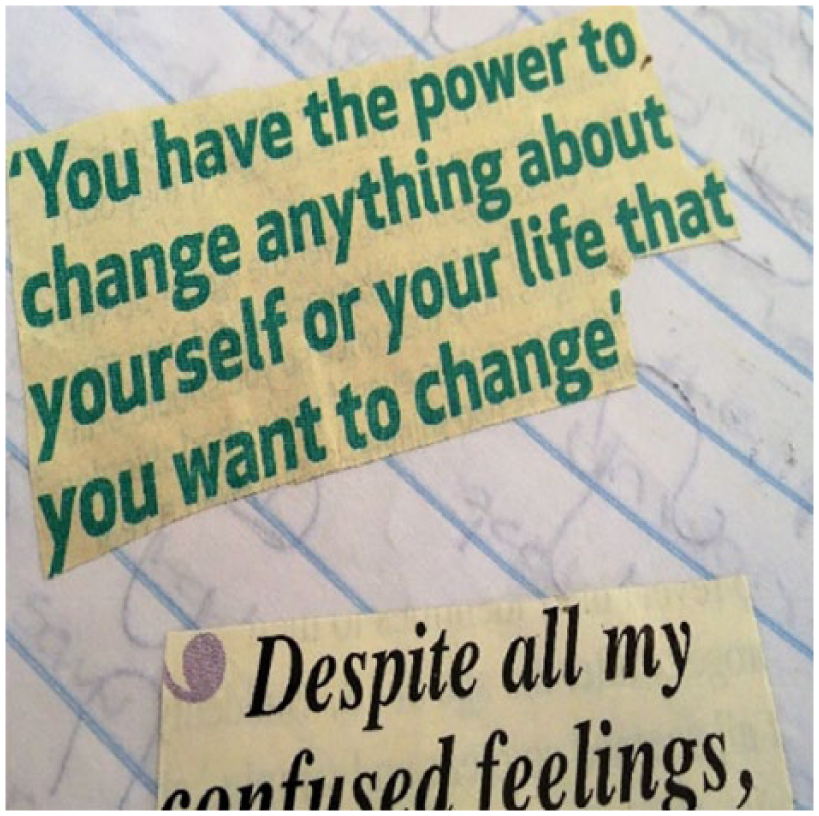
Image from Lumkah’s diary.
Similar to Lumkah, autonomous decisions to leave abusive and or unsafe environments were common for the majority of the participants (six of the seven girls). At approximately 12 years of age, FireBall girl left the care of a foster family she perceived as unwelcoming and by herself sought out an aunt she remembered in another town. After a short period, her aunt passed away and FireBall girl requested placement at a CYCC. FireBall girl was aware that she needed to address what had happened to her and accessed therapeutic resources at the CYCC. She explained, I just asked the social workers to take me to a place that would be safe for me so that I can focus on my studies and get more educated . . . then I started like . . . wanting to know more about myself, trying to remove that thing that I had in my heart.
“It All Happened for a Reason”
Searching for meaning and trying to make sense of the CSA experience/s were present in all the girls’ stories. FireBall girl, orphaned by an alcoholic mother and left with a stepfather who sexually abused her in the months preceding her mother’s death, aptly described her process of trying to understand and reappraise the situation in which she found herself through the following internal dialogue she recounted: You know I couldn’t accept that my mother was gone at first but then I came to a point whereby I got to say . . . your mother is no more here, you’re a big girl now you have to do what’s right you know. . . . So . . . it also gave me that courage that okay I have to accept that my mother is gone she won’t be there for me so I just have to carry on with life I don’t have to be stuck back . . . I just had to accept that okay this journey I’m going to take it, no matter how hard it may be for me but I just have to pick up my . . . socks and just go on.
Most typically, the girls used faith-based explanations to make meaning of their experiences. Lumkah said, “I like to think that this all happened for a reason. Maybe it’s a test from God, maybe it’s part of my journey.” For Phindile, passing such tests, as she saw them, affirmed and augmented her strength. She said, “This is a challenge that God is giving us to see how strong my child is . . . for the next big thing that he or she is going to pass.” Similarly, Twinky’s belief in a higher purpose sustained her. Of her experiences of sexual abuse, poverty, and death, she said, “Kunesisho esithi unkulunkulu lapho athathe khona uphinde anikele futhi” (God takes but gives you more.)
“Rainbow After the Storm”
“Rainbow after the storm” was the title of Jessica’s digital story. It captured the optimism that each of the participants displayed when envisaging their future. All seven participants appeared to be focused on obtaining an education in order to achieve their goals. To quote Precious, “All I can say is having goals and dreams that can also help, know what you want and know what you want to achieve.” In general, the girls’ pursuit of success was non-negotiable, aptly illustrated by Phindile, who said, “When things go wrong I need to stand up and pick up myself I shouldn’t just drag my feet.” For Phindile, self-motivation was less about choice and more about survival. Having been in foster care since she was a toddler and then in a CYCC, she indicated that she had learned self-reliance and self-motivation early on and that it was a necessity.
Determination to succeed appeared to serve many functions. Success would prove naysayers and abusers wrong. For instance, Jessica’s motivation to succeed and her future-oriented focus stemmed in part from her desire to prove her father wrong: Right now I’m focusing on my studies, and it’s going very well. I saw that thinking about him [father] is useless, he won’t take that pride and that talent that I have. He can’t take anything, not even my dignity. He only took a little bit of love that I had for him. I am motivated because I want to show him how far I came. I want him to see my prosperity. . . . So . . . I let my own glory shine . . . making it on myself, just deciding what is it that I want in life . . .
Success would also mean a greater ability to care for younger siblings and protect them from similar experiences. Twinky explained it such as this: For me to overcome all of this I was believing in myself, I have a future and a dream and I have to be an example in the community and I have to support my siblings and make my mum proud wherever she is.
Sustaining Ecologies
Here we present findings that illustrate how self-initiated expressions of agency were facilitated by supportive social ecologies.
“She Was Nice. . . . She Loved Me”
The girls’ self-reliance did not mean that they were not receptive to external support. For example, the group agreed with FireBall girl’s argument that although personal agency was important, it was not enough. She said, If you don’t talk to people or try to get help it’s like you are in a dark, dark room. . . . so, if you start talking to people that’s whereby, you’ll start seeing the light shining through that dark place that you are in.
All the girls could recall at least one experience of support. This included someone siding with them once they had disclosed the abuse. Lumkah’s stepmother’s positive response to her disclosure of sexual abuse and continued positive attachment appeared to keep her hopeful. She said, “My step-mom last year December she came to . . . (CYCC 1), she’s the only person who’s been so supportive to me.” Similarly, Twinky’s disclosure to her brother, and his encouragement of her, was a positive enabling experience in that it encouraged her to persevere, and his positive response also allowed her to disclose the incident to social workers and friends at the CYCC: My brother told me that you can’t say “I am nothing without a mum . . . from now I don’t have a life; I was raped.” My brother told me that you can’t just say that. “Just pick up yourself and dust yourself and tell yourself that ‘you know that you can do it’” and like I took those words from my brother.
For participants who did not find any support in family members, support from peers appeared to reinforce their expressions of agency by assisting them in making sense of their abuse experiences. For them, friends provided succor from the abuse, offering emotional support and physical refuge.
For Phindile, there was “. . . a friend . . . she was the only person I could tell my story every time when we meet.”
For Precious, friends outside the CYCC offered physical shelter and friends inside the CYCC assisted her in coming to terms with her abuse experience: My close friends they told me their stories last year. They used to talk about what happened to them . . . you know. . . . I thought I was the only one but only to find that I’m not the only one. There are also people who been through the same thing but they still coping and they are still healthy and nice. So, I thought that I could forget about this thing.
All seven of the participants mentioned at least one incident where a teacher stepped in and provided practical or emotional support. For example, in offering pragmatic assistance by purchasing school stationery for her and helping her with her school work, Phindile’s teacher showed an interest in her, which motivated her to continue with school: My foster parents wouldn’t buy me school stuff and she was the one who’d buy me school stuff and she would help me with my work before I go home and she would drop me at home and go.
For Keamo, a school teacher provided emotional relief by introducing her to journaling. Through this activity, Keamo learnt how to make sense of her experiences and how to self-regulate. Keamo continued to journal and saw it as a therapeutic resource. She said, “She was a nice teacher for me . . . I was angry I would go to her and talk to her.”
For FireBall girl, it was a teacher who first acknowledged her singing abilities and encouraged her to perform in front of an audience. This confidence with regard to her abilities led FireBall girl to audition for a music scholarship at the CYCC and helped her to view herself more positively. She recalled, “My school choir teacher used to tell me that . . . you can sing, you know.”
In addition to teachers, the CYCCs appeared to have provided protection and, through multiple services and support, facilitated positive adaptation. Case files as well as individual interviews noted attendance at life-skills sessions as well as access to formal therapeutic services, such as psychotherapy. These services, mostly facilitated by social workers and aimed at creating greater self-awareness, reinforced participants’ attempts at meaning making and the development of self-confidence, free of shame. FireBall girl said, “Psychologist, they help me to realize that everything is possible no matter how hard it is.”
Discussion
In this article, we draw on a socio-ecological understanding of resilience. Ungar (2012) states that a social ecological approach to resilience understands that resilience is “as, or more, dependent on the capacity of the individual’s physical and social ecology to potentiate positive development under stress than the capacity of individuals to exercise personal agency during their recovery from risk exposure” (p. 15). Following Ungar (2011), we therefore look at how agency (an internal resource) intersects with socio-structural resources in enabling or disabling resilience processes in adolescent girls who have been sexually abused. Our exploration of agentic processes is framed by the idea of bounded agency, a middle ground approach to understanding agency that recognizes the impact of both the individual as well as structural determinants on the capacity to take action (Coffey & Farrugia, 2014; Evans, 2007), which fits with Ungar’s (2011, 2012) approach. However, as per the discussion of our findings below, we suggest that while both socio-ecological resilience theory and the idea of bounded agency provide a useful explanatory framework, our findings do not fit neatly into either.
Corroborating findings from the literature cited above, which show young people to be “resourceful activists” (Gilligan et al., 2014, p. 23), our findings also consistently reveal that girls were not passive victims or recipients of inputs from the social ecology. Rather, they were active agents. Their activism, however, appeared to emerge partly as a result of constraining, unsupportive ecologies, thus lending credence to the presumption of Silbereisen, Best, and Haase (2007) that challenging times provide a “window of opportunity” (p. 75) for agentic individuals. In this finding, we deviate from SERT; while locating resilience resources in the person-context interaction, in SERT the social ecology is potentially tasked with a greater role. Ungar (2015) maintains that the individual’s own internal resources are useful only if the ecology is amenable to them and facilitates their expression and application. Ungar (2018) asserts that in contexts of greater adversity, ecological factors may be more important to resilience than individual factors. Our findings, however, suggest that in instances of great adversity, such as poverty, parental death, physical abuse, neglect, and CSA, individual agentic expressions were more important to enabling resilience processes. As a response to ecologies that intentionally withheld and/or impeded access to resources (e.g., by ignoring evidence of abuse or failing to access justice), participants activated agentic processes through their self-efficacious beliefs, their independent choices, their capacity to cognitively reappraise the situation and make meaning, as well as their optimism for the future.
In the context of these constraints, agency was not bound, but rather galvanized, in this, deviating slightly from Evans’s (2007) notion of bounded agency. While Evans (2007) holds that the persistent nature of structural constraints means that expressions of agency are bounded, allowing either fewer or more personal goals to be accomplished, our findings suggest that these constraints activated agency by motivating the girls to action. Constraining structures initially cut participants off from necessary resources and had the potential to derail their resilience pathways. However, similar to what Denov and MacLure (2006) found in their study in Sierra Leone, our participants also created different opportunities for themselves despite these constraints. They did so, for example, by choosing to enter CYCCs and accessing services through this avenue.
Consistent with findings presented in the literature, for participants in our study too, expressions of agency were met with support from at least one person from their environment, such as a believing family member, social worker, or a teacher. While displays of perseverance in the face of impediments highlight how agency was championed by the participants, it also highlights the importance of supportive ecologies in co-facilitating this agency. In all the cases presented in this study, the presence of at least one responsive individual in the social ecology who supported the girls and encouraged their agency is highlighted. Without siblings who provided emotional support, as with Twinky, friends who provided pragmatic and emotional support, as in the cases of Phindile and Precious, teachers who encouraged, as with Keamo and FireBall girl, or social workers who responded, as they did in all these cases, resilience may not have been promoted to the extent that it was. These examples also highlight the many ways in which both formal and informal supportive structures are accessed and the importance of these in enabling resilience processes. Kumpulainen, Lipponen, Hilppö, and Mikkola (2013) suggest that supportive relationships scaffold youth’s expressions of agency and S. Mathews et al. (2016) found that support from the social environment following sexual abuse is critical to positive adaptation. In our study, supportive relationships were not confined to traditional nuclear families or structures but included wider networks of support (peers and teachers). Teachers appeared to play a significant role in facilitating expressions of agency in the girls by being attuned to their needs, offering pragmatic and emotional support, and by motivating them. All of the above fits with research, which shows that when the immediate ecology fails to respond, girls actively seek out other support that may take the form of friends, community members, and teachers (Gilligan et al., 2014).
Limitations and Future Research
While the findings from this study make an important contribution to increasing our understanding of the resilience-enabling resources employed by girls with CSA experiences and highlights the particular importance of girls’ expressions of agency, several limitations are noted. In this study, we employed an instrumental case study design and employed a range of in-depth participatory methods to generate data. While allowing for rich, textured information, it also resulted in the inclusion of a small number of participants. In other words, the usefulness of our findings to other researchers and/or practitioners require cautious judgment about the similarities between subsequent research/praxis contexts and our study (Creswell, 2009).
Understanding resilience warrants a developmental approach (Masten, 2014). Given this, a longitudinal approach to understanding resilience processes in girls with CSA histories is required. To address this limitation in our study, we recommend that a longitudinal approach should be considered for future resilience-focused studies with girls with histories of CSA. Even though our exploration focused on an underreported topic (i.e., the resilience processes of Black South African girls with CSA histories), this contribution would be strengthened by future studies comparing the resilience processes of girls across different cultural groups. In addition, the fact that the participants were in secure CYCCs may have affected their adaptation and so it would be useful to conduct a similar study with participants not living in CYCCs.
Conclusion and Implications
In this article, we highlight how agency as an expression of resilience was salient in girls’ accounts of how they adjusted to CSA. This agency was not completely bound by, or dependent on, the girls’ immediate social ecology. Even though their immediate social ecology had placed them at risk and/or contributed minimally (if at all) to the girls’ resilience, we also note how girls with a CSA history drew selectively on social ecological resources to support and facilitate their resilience processes. In other words, we wish to draw attention to the fact that the girls’ required extensive personal capacity to act strategically (Lee, 2012), and that this capacity was supported by select individuals (rather than a supportive social ecology, broadly speaking). As such, we need to be cautious about assuming that at higher levels of risk social ecological resources matter more than personal ones.
However, while the capacity for autonomous action of girls with CSA experiences should be acknowledged, and indeed celebrated, this does not pardon the structural factors that create difficulties and impede adjustment. The agentic capacity displayed by the girls was, in large part, a result of their being abandoned to their own fate with unjust structural factors demanding resilience of them (Hart et al., 2016). Social justice necessitates greater accountability from structural sources and there is a growing call in resilience research to challenge structures that create disadvantages (Bottrell, 2013). We echo this call and, in line with Hart et al. (2016), suggest that while our study found that girls with CSA experiences display strength, resourcefulness, and capability, which may be leveraged to foster positive adjustment, social structures should also be targeted for interventions. Here we concur with Ungar, Ghazinour, and Richter (2013) that child-focused interventions should not be the first or only intervention option but that ideally a closer look at the multiple systems influencing the child should be considered. Luthar and Eisenberg (2017) caution that interventions should take into account “pragmatic, real-world considerations” (p. 346). We add that in these considerations, practitioners and policy makers be cognizant of the resources available across different contexts. For example, low- and middle-income contexts may have limited access to resources (Patel et al., 2013). In line with these considerations, and based on our findings, we offer the following pragmatic leverage points for initiating meaningful, resilience-enabling interventions in a resource-constrained setting such as South Africa, targeting multiple systems.
At the individual level, seeing girls as resourceful and capable of independent action allows for greater engagement with and inclusion of them in the development of intervention programs. In our study, efficacious beliefs, meaning making, and future-focused orientations were pivotal internal resilience-enabling resources. Individuals with high self-efficacy look at difficulties as surmountable; they do this through developing the self and through persistent resolve (Bandura, 2005). Similarly, when girls are able to cognitively reappraise the abuse, they are able to minimize the impact it has on their lives and, if they can think of a better future, they are able to work toward it (Collings, 2003; Daigneault, Tourigny, & Cyr, 2004; Edmond, Auslander, Elze, & Bowland, 2006). Given this, intervention efforts aimed at this level should include psychoeducational and therapeutic programs that foster a positive sense of self and facilitate meaning making and future planning.
At a family level, our findings suggest that family systems need to be strengthened to provide adequate support for girls who are sexually abused and to ensure that disclosure is not met with apathy, blame, and disbelief. Research shows that children do not disclose to caregivers if they fear their reactions could include rejection, disbelief, or a failure to respond (S. Mathews et al., 2016). Family systems can be strengthened through parenting programs, psychoeducational programs, and family supportive counseling (Luthar & Eisenberg, 2017; B. Mathews & Collin-Vézina, 2016). Within the South African context, the traditional role of girls within families could be explored and appropriately challenged. Parenting practices that favor unquestioning obedience could be enhanced with educational programs that encourage greater communication and engagement between parents and children, specifically on issues of sex and abuse. Furthermore, given the importance of the family system, caregiver mental health and well-being should also be attended to and free, accessible mental health services made available (Luthar & Eisenberg, 2017).
Multiple leverage points exist at the institutional level; justice systems, educational systems, and social welfare systems all have a role to play. B. Mathews and Collin-Vézina (2016) suggest that, as a starting point, greater awareness and knowledge capacitation is needed about CSA—what it is, how it presents, the impact, and how to intervene. They emphasize the legal and ethical responsibility of professionals and institutional leaders to report incidences of CSA and suggest that greater public awareness of this should be facilitated through media campaigns. In addition, based on our findings, we add that greater monitoring of the justice system is needed to ensure greater follow-through of reported cases of CSA. Social welfare systems need to be equipped with sufficient resources to ensure that children in foster care are safe from sexual abuse. In South Africa, there are many civil society organizations that are actively involved in creating greater awareness and in monitoring the justice and welfare system (Haffejee & Theron, 2018). These efforts, however, are not enough without the proper implementation of child protection laws and without meaningful structural change (Artz et al., 2016). Continuing advocacy efforts in this regard is thus a necessity.
The potential of the educational system, specifically teachers, in enabling resilience was apparent and has also been demonstrated in previous studies on girls’ resilience (Jefferis & Theron, 2017). Effectively utilizing this resource is necessary; teachers can be educated and supported to identify and report incidences of CSA. Within low- and middle-income countries, such as South Africa, teachers may be equipped with basic counseling and referral skills to better enable them to attend to the emotional needs of girls.
Through pragmatic, emotional, therapeutic, and financial support, CYCCs can also facilitate resilience processes. For girls living in care facilities, this is perhaps one of the most significant relationships and, as such, CYCCs need to be capacitated and supported financially so that they can continue to deliver much needed support.
Findings reported in this article ask that resilience theorists, mental health practitioners, and service providers acknowledge and value agency and accordingly enable and sustain agentic processes in girls with CSA experiences. They also suggest that these same stakeholders work with social ecologies to amplify meaningful supports for girls with CSA experiences. In so doing, the “power” of these girls’ accounts may be expanded.
Footnotes
Acknowledgements
We wish to thank the girls who participated in this study as well as the child and youth centers that provided access.
Declaration of Conflicting Interests
The author(s) declared no potential conflicts of interest with respect to the research, authorship, and/or publication of this article.
Funding
The author(s) disclosed receipt of the following financial support for the research, authorship, and/or publication of this article: We gratefully acknowledge the PhD bursary support provided to the first author by Optentia Research Focus, North West University as well as the Networks of Change and Well-being Project (funded by the International Development Research Center [IDRC]).
Author Biographies
 ). She is lead editor of Youth Resilience and Culture: Complexities and Commonalities (Springer, 2015). She is also an associate journal editor of Child Abuse & Neglect (Elsevier).