




Abstract
Prostitution among female youth has been largely misunderstood, trivialized, or ignored. Increased attention has been directed toward juvenile female delinquency, particularly related to the overlap in their status as victims and offenders. Areas in this research continue to be underinvestigated, however, especially with regard to public perceptions of commercially sexually exploited girls. The current study used survey questionnaires to examine participant perceptions of the blameworthiness of a prostituted minor while considering her victimization history disclosure and race. Results indicate that victimization history disclosure significantly reduced perceptions of blameworthiness and reduced blameworthiness operated similarly for Caucasian and African American females forced into prostitution. Further research directions are discussed.
Keywords
Past scholarship has critiqued the presence of racial disparities in the processing of juveniles. The influence of race on juvenile justice decision making has been well-established (Bishop & Frazier, 1996). Findings have indicated that youth of color are overrepresented in the juvenile justice system, are more likely to be referred to juvenile court, and generally receive harsher punishment than their White counterparts (Bishop & Frazier, 1996; DeJong & Jackson, 1998). It is notable that disparities in the treatment of youth have been more pronounced when juveniles are subjected to the multiplicative effects of gender, race, and class biases (van Wormer & Bartollas, 2010). To be sure, socially marginalized individuals, such as impoverished women of color, are at greater risk for subordination and punitive sanctions upon contact with the criminal justice system (Franklin, 2008).
In addition, the juvenile justice system has traditionally focused on the protection and moral rehabilitation of “promiscuous” juvenile youth (Shelden, 2008). A review of current legislation has revealed that laws protecting and punishing minors are decidedly gender discrepant, such that statutes have lowered the age of capacity for violent crimes and raised the age of sexual consent to 18 (Schaffner, 2005). As a consequence, greater numbers of male youth are waived to adult court, whereas laws have continued to control female sexuality and have disabled girls from making decisions about consensual sexual behavior (Schaffner, 2002, 2005). Accordingly, girls under the control of the juvenile justice system as a result of involvement in commercial sex activity (i.e., exchanging sex for money or other reimbursement) are often labeled “bad” for their deviation from normative sex role behaviors, particularly if they are girls of color.
Scholars have noted that perceptions of girls involved in the sex trade are influenced by media portrayals of young, innocent, and vulnerable children, although these images generally misrepresent the reality of commercial sexual exploitation (Saunders, 2005). Although young children are in fact trafficked into prostitution, the majority of prostituted girls are not of a very young age, nor are they “innocent,” in the traditional normative sense (Saunders, 2005). Research has demonstrated that many prostituted minors are street-savvy adolescents who are knowledgeable about sexual activity and work in general (Lloyd, 2011). Media representations of commercial sexual exploitation as endemic to very young girls, to the exclusion of teen and young adult females, have skewed public perceptions of forced prostitution and limited the degree to which prostituted adolescents are recognized as needing rehabilitative aid (Saunders, 2005). More specifically, these stereotyped portrayals may preclude effective treatment and service delivery for victims of sex trafficking.
In spite of recent attention, the commercial sexual exploitation of juveniles remains an understudied area of scientific inquiry (but see Brawn & Roe-Sepowitz, 2008; Chase & Statham, 2005; Martin, Hearst, & Widome, 2010; Melrose, 2002; Mitchell, Finkelhor, & Wolak, 2010; Mitchell, Jones, Finkelhor, & Wolak, 2011; Rand, 2009; Reid, 2011; Robinson & Paramo, 2007; Twill, Green, & Traylor, 2010; Wilson & Widom, 2010). In particular, peer-reviewed studies are sparse and prevalence estimates have been difficult to establish. In addition, the forced prostitution of minors has remained one of the most hidden forms of victimization, enhancing the difficulty of effectively addressing the complex mental and physical consequences and providing barriers to appropriate health and social service delivery. Further complicating these challenges is the misperception that child victims willingly prostitute themselves in exchange for goods, services, or money. Indeed, findings have shown that, although local U.S. law enforcement officers are likely to be the first officers in contact with victims of commercial sexual exploitation, they have tended to perceive victims as willing “prostitutes” and offenders and have believed that child sex trafficking is a distant concern, salient only to “other” departments or federal authorities (Halter, 2010; Wilson, Walsh, & Kleuber, 2006).
The dearth of research on child sexual exploitation has demonstrated that family-of-origin violence, child sexual abuse, poor school performance, emotional and mental health deficits, and negative family and peer interactions increase a juvenile’s vulnerability to commercial sexual exploitation (Chase & Statham, 2005; Chesney-Lind & Shelden, 2004; Kramer & Berg, 2003; Lebloch & King, 2006; Pedersen & Hegna, 2003; Walker, 2002). Research employing samples from North America has reported that most females’ first experience of commercial sexual exploitation occurs prior to age 18, highlighting the inherent vulnerability of this population (Boxill & Richardson, 2007; National Center for Missing and Exploited Children, 1999). In spite of adverse family and significant victimization histories, public perceptions have tended toward holding children responsible as if they voluntarily exchange sex for valued goods (Menaker & Miller, 2012). In contrast to public blame narratives, researchers, service providers, and child advocates have rightly underscored the context in which “survival sex” is initiated and, in doing so, have drawn attention to the substantial coercion and brainwashing on the part of pimps that keeps young girls in a life plagued by violence and victimization (Rand, 2009, p. 150). In addition, girls of color are often stereotyped as more likely to be commercially sexually exploited as compared to their White counterparts, despite evidence to the contrary (Boxill & Richardson, 2007; see Estes & Weiner, 2001; Rand, 2009, for related discussions).
Consistent with existing research among both adult and juvenile female populations, formal social control mechanisms have often neglected to account for the “blurred boundaries” of victimization and criminality among women and girls (Belknap, 2007; Chesney-Lind & Shelden, 2004; Franklin, 2008). The United States has given considerable recognition to the issue of child sexual exploitation in terms of federal legislation. The Trafficking Victims Protection Act of 2000 and subsequent reauthorizations in 2003, 2005, and 2008 identified individuals younger than age 18 involved in commercial sex acts as victims of trafficking regardless of whether force or coercion can be established. Several states have implemented similar legislation recognizing commercially sexually exploited youth as victims, providing protection and services for these victims, and criminalizing the trafficking of humans for sexual purposes (Center for Women Policy Studies, 2011). There remains, however, a disconnect between federal and state laws in this regard, as minors forced into prostitution are labeled as delinquents and put into the custody of the juvenile justice system in many state and local jurisdictions (Reid & Jones, 2011). This context emphasizes the need for system actors to rethink culpability and blameworthiness and focus efforts toward addressing the myriad of unique needs faced by this population.
To the best of our knowledge, only one published study has investigated culpability attributions directed toward girls forced into the sex trade (Menaker & Miller, 2012). Findings suggested that public perceptions hold girls responsible for their behavior. Specifically, Menaker and Miller reported that victimization history disclosure reduced blameworthiness and endorsement of punitive sanctions and increased the perceived appropriateness of treatment services for girls engaged in paid sex activity. Given the paucity of empirical research on perceptions of commercially sexually exploited girls (CSEG), coupled with pervasive bias about the involvement of girls of color in commercial sexual exploitation (Boxill & Richardson, 2007), as well as historically negative stereotypes about African American women as overtly seductive, hypersexed, and manipulative (West, 1995), important gaps remain in this area of study. First, to what degree does victimization history disclosure reduce blameworthiness attributions targeting CSEG, and second, if reductions are motivated by victimization disclosure, do decreases in blameworthiness vary as a result of the commercially sexually exploited girl’s race? Using a sample of 408 survey questionnaires, the current study tested the effect of victimization history and race disclosure on participants’ assessment of blameworthiness directed toward CSEG.
Blameworthiness and Culpability Attributions
Critiques of the criminal and juvenile justice systems have surmised that the process of law-making (e.g., defining certain behaviors as “crime”) is a mechanism for imposing power and social control on those individuals whom the system exercises authority over. This is particularly the case as it pertains to the normative regulation of sex and sexuality, especially among women and girls and those who are socially marginalized (Chesney-Lind & Shelden, 2004; Shelden, 2008). Within this framework, historically, these systems have required the identification of a party at fault or the person who takes the “blame” for a given event. In doing so, the system names a culprit and “justice” is achieved. Upon consideration of prostitution, mechanisms of social control are directed toward the sale of sex rather than its solicitation (see Franklin, 2008, for in-depth discussion). This control has targeted women and characterized them as offenders, particularly for women of color and those who are economically disadvantaged, despite mitigating circumstances surrounding their entry into prostitution. In spite of these critiques, investigations have attempted to better understand the nature of blame in criminal and juvenile justice contexts and have relied on legal and extra-legal factors to determine how system actors arrive at custody and treatment decisions.
Specifically, criminal justice professionals who interact with juvenile offenders, such as judges and probation officers, evaluate juveniles based on their behavior, the context in which the behavior occurred, risk for recidivism, and potential for rehabilitation. Assessments are used to categorize juvenile offenders based on perceptions of culpability and levels of risk and need. As a consequence, it is necessary to understand factors that influence culpability attributions toward juvenile offenders, particularly as they vary by offender characteristics and have the potential to affect beliefs about appropriate sanctioning and treatment delivery.
Evidence has suggested that perceivers attribute offenders’ behavior to either internal or external causes. Moreover, official responses to criminal acts, whether punitive or rehabilitative, may be influenced by perceptions of blameworthiness and culpability (Bridges & Steen, 1998; Carroll & Payne, 1977; Menaker & Miller, 2012). That is, when behavior is attributed to internal forces—such as personal characteristics like appearance, occupation, or moral values—the actor has been viewed as more responsible for his or her behavior and less suitable for rehabilitation (Carroll & Payne, 1977; Menaker & Miller, 2012). In contrast, when causes of behavior are perceived as environmental or external to the actor (e.g., due to situational threat or duress), the individual has been blamed less for his or her behavior and treated less punitively (Carroll & Payne, 1977; Menaker & Miller, 2012). Thus, information pertaining to a juvenile offender’s personal characteristics, such as race or gender, may influence blameworthiness attributions. Similarly, knowledge of volitional constraints, such as diminished psychological capacities common to juvenile offenders, might mitigate these attributions and increase endorsement of rehabilitative criminal justice responses.
Existing research examines culpability attributions toward juvenile offenders in general (Bridges & Steen, 1998; Mallicoat, 2007), but few studies have investigated blameworthiness toward specific populations of juvenile delinquents. Girls forced into prostitution, in particular, are unique in terms of their motivations for commercial sex activity, as the majority of juvenile females who engage in sex acts for reimbursement have run away from abusive family environments, experienced coercion by pimps, and used sex as a means of survival. Thus, girls forced into prostitution may be seen as less culpable for their circumstances and particularly in need of rehabilitative responses due to mitigating factors that diminish personal control over behaviors and consequences.
One study examining perceptions of CSEG found that perceivers, who were randomly assigned to an experimental condition in which the juvenile’s victimization history was provided, were less likely to find her culpable for her circumstances than participants who did not receive similar victimization history information (Menaker & Miller, 2012). Furthermore, participants aware of the juvenile’s prior victimization were more likely to support restorative criminal justice responses as opposed to the punitive responses endorsed by those in the control condition. These results aid in understanding public perceptions of prostituted minors, however, they are limited by a lack of diversity in terms of the juvenile’s race. That is, in light of research highlighting racial differences in criminal justice processing and response, historically negative stereotypes of women of color (West, 1995), and the misconception that women of color are more likely to be commercially sexually exploited (Boxill & Richardson, 2007), it is important to determine whether factors that may mitigate blameworthiness toward girls forced into prostitution, such as victimization history, are equally influential among African American and Caucasian CSEG.
Racial Stereotypes
In general, the practice of racial and ethnic stereotyping has been well established in empirical literature (Gaertner & McLaughlin, 1983; Graham & Lowery, 2004; Katz & Braly, 1933; Wheeler, Jarvis, & Petty, 2001). Evidence has suggested that stereotypes based on race affect the behavior and beliefs of both the stereotyped individual and the perceiver, and prejudicial attitudes may exist without personal awareness of biased beliefs (West, 1995; Wheeler et al., 2001). Despite greater attention to diversity, research has indicated that racial stereotypes continue to permeate multiracial interactions, including those within therapeutic settings and among criminal justice professionals and the clients they supervise (Jackson, 1983; Lopez & Hernandez, 1987). Considerable evidence has suggested that stereotypes, including those based on race and gender, have affected the processing and treatment of offenders within the criminal (Bishop & Frazier, 1996; Bridges & Steen, 1998; Hurwitz & Peffley, 1997) and juvenile justice systems (Bridges & Steen, 1998). As a result, consideration of racial stereotypes as they influence perceptions of socially marginalized offenders compared to those with majority race status is an important endeavor.
Historically, African American women have been subjected to particular bias based on their dual minority status of being both female and Black (Coltrane & Messineo, 2000; Thomas, Witherspoon, & Speight, 2004; West, 1995). Multiple stereotypes of women of color have pervaded media outlets and, as a consequence, public perception (Baker, 2005; Belknap, 2007; Coltrane & Messineo, 2000; West, 1995). Among African American female offenders, however, the image of the “bad,” sexually promiscuous, and exploitative “Jezebel” is perhaps the most suffuse (West, 1995, p. 462). The Jezebel figure, perceived as seductive, hypersexual, manipulative with men, and exploitative of male weakness, is often accused of provoking or even desiring her own sexual victimization and, thus, is not seen as a true victim (West, 1995).
Indeed, evidence has demonstrated that women whose behaviors do not conform to traditional sex role ideology (i.e., moral, submissive, nonsexual) are blamed more for offending behavior in court settings (Albonetti, 1998; Koons-Witt, 2002; Kruttschnitt, 1984) and when they are sexually victimized, as compared to “traditional” women, regardless of race (Acock & Ireland, 1983; Simonson & Subich, 1999; Viki & Abrams, 2002; Willis, 1992). Related, Rafter (1997) noted that, in the early formation of American reformatories, the control exercised over women varied by race, where White women were punished through the inculcation of domesticity in dormitory-like institutions and women of color were forced to work in chain gangs (see also Franklin, 2008). More recently, research has suggested that African American female victims of rape are attributed greater culpability for their victimization than White female victims (George & Martinez, 2002; Willis, 1992). Moreover, observers have been less likely to label a forced sex encounter as a crime when the victim is Black (Foley, Evanic, Karnik, King, & Parks, 1995), providing some support for adherence to the Jezebel stereotype. As it pertains to criminal justice system processes, in sexual assault cases with an African American female victim, conviction rates have tended to be lower than when the victim is White (LaFree, Reskin, & Visher, 1985), and leniency in sentencing length has been demonstrated among offenders assaulting Black women as compared to their White counterparts (see Crenshaw, 1991). For general offending, when defendants are convicted, sentences have been more punitive for offenders with White victims than for those who victimize people of color (Baumer, Messner, & Felson, 2000; Glaeser & Sacerdote, 2003). To be sure, evidence suggests that Black female victims have been perceived as more blameworthy, and Black female offenders have been regarded more punitively in terms of criminal justice outcome decisions. Thus, African American female offenders accorded the Jezebel stereotype may be at particular risk for harsh criminal justice responses and attributions of blame about past victimization. Accordingly, African American female youth offenders who have engaged in behaviors that affirm Jezebel stereotypes, such as commercial sex acts, may be seen as more culpable for their circumstances and receive more punitive criminal justice responses, despite the circumstances that led to their behavior.
Hypotheses
In light of extant research on blame and culpability attributions toward CSEG and the expansive literature on racial stereotypes, this research tests the following hypotheses:
Hypothesis 1: Information presented to participants concerning the juvenile’s victimization history will decrease participant perceptions of blameworthiness for the commercially sexually exploited girl.
Hypothesis 2: Information presented to participants concerning the juvenile’s victimization history disclosure will differentially reduce blameworthiness for Caucasian and African American CSEG.
Method
Data for the current analysis were derived from a sample of survey responses collected using pencil-and-paper questionnaires in undergraduate criminal justice and psychology courses at a mid-sized Southern university in April 2011. Student participation was solicited through verbal invitations that took place during regularly scheduled class times. Students were assured of the voluntary and anonymous nature of the survey and were offered extra course credit for their participation with an alternate assignment option for those disinterested in participation. 1 Participants were seated apart from one another to ensure distance and privacy in answering questions contained in the survey instrument. Completion of the survey took approximately 30 to 45 minutes. Administration of the survey yielded 408 responses.
Sample demographics demonstrate that the mean age of participants was 21.25 years old with women representing slightly more than half of the sample. Participants were racially diverse to the extent that 54.4% of participants were White. Nearly half of the sample were employed, whereas 11.4% identified themselves as Greek-affiliated and approximately 7% were members of university athletic teams. Participants averaged weekly religious service attendance and a moderately conservative political ideology. Moreover, average pornography consumption among participants was relatively minimal and only 3% reported ever having engaged in paid sex work or soliciting paid sex. The majority of participants were sexually active (82.4%), with an average of 7.72 lifetime sex partners and a mean age of 16 at first intercourse. Table 1 presents the sample characteristics.
Sample Characteristics.

0 = male, 1 = female.
0 = White, 1 = non-White.
0 = not employed, 1 = employed.
0 = no, 1 = yes.
0 = no, 1 = yes.
0 = no, 1 = yes.
0 = no, 1 = yes.
0 = no, 1 = yes.
“Prostitution” vignettes
Participants were randomly assigned to one of four vignettes illustrating a story about a prostituted minor derived from Menaker and Miller (2012). A control condition vignette based on prototypic information about a prostituted minor was administered to participants who were randomly assigned to one of two conditions that varied the race of the juvenile depicted in the vignette. The control conditions each described a 16-year-old runaway who first engaged in commercial sex activity at age 14 and has continued to perform sex acts to earn money for food and shelter and to support a drug habit. Her financial keep by a pimp, living situation with other prostituted girls, and loss of contact with her family were also described. Those participants randomly assigned to one of two experimental conditions received similar information supplemented with pertinent victimization history background. The race of the juvenile female in the experimental condition was also manipulated. Appendices A and B provide the control and experimental condition vignettes, respectively.
Dependent Variable
Blameworthiness was measured using three items that asked the participant to assess the degree to which the prostituted minor described in the vignette was “to blame for her circumstances,” “responsible for her circumstances,” and “the cause of her circumstances” (Menaker & Miller, 2012). Responses were measured on a 5-point Likert-type scale ranging from strongly disagree (coded 1) to strongly agree (coded 6). The three items were summed to create a scale ranging from 3 to 18 with higher numbers representing increased blame (M = 6.670, SD = 4.269; α = .865).
Independent Variables
Victimization history disclosure
Mitigating information about the victimization history of the prostituted minor was provided in the experimental condition vignettes that were randomly assigned to participants. Victimization history disclosure was dummy coded so that participants receiving the control condition were coded 1 (n = 205; 50.2%) and those receiving details surrounding adverse family life and victimization history were coded 0 (n = 203; 49.8%).
Race of the prostituted minor
In each of the four vignettes, the race of the prostituted minor was manipulated. Two of the vignettes (one control and one experimental condition) depicted a Caucasian female named “Hannah” and two vignettes (one control and one experimental condition) described an African American female named “Keisha.” The race of the youth depicted in the vignettes was measured as a dichotomous variable so that African American was coded 1 (n = 203; 49.8%) and Caucasian was coded 0 (n = 205; 50.2%).
Analytic Strategy
The analysis proceeded in three stages. First, to ensure that the process of randomization successfully created equal groups, the analysis examined the demographic and behavioral characteristics of participants in each condition. This was accomplished through the use of independent samples t-tests. To examine Hypothesis 1, mean blameworthiness scores assigned by participants were assessed between the control and experimental conditions. Using ordinary least squares (OLS) regression, blameworthiness was regressed on victimization history disclosure to test for a significant change in blameworthiness attributions between control and experimental conditions while controlling for significant subsample differences. Finally, to examine Hypothesis 2, subsamples were created for participants who received information about a Caucasian prostituted youth and an African American prostituted youth. From here, mean difference scores for participants’ blameworthiness attributions were assessed using independent samples t-tests. Separate OLS regression models were estimated using these subsamples to determine the effect of victimization history disclosure on blameworthiness attributions for individuals exposed to the vignette with a Caucasian prostituted youth and that with an African American prostituted youth, respectively, while controlling for significant subsample differences among participants. 2
Results
Randomization
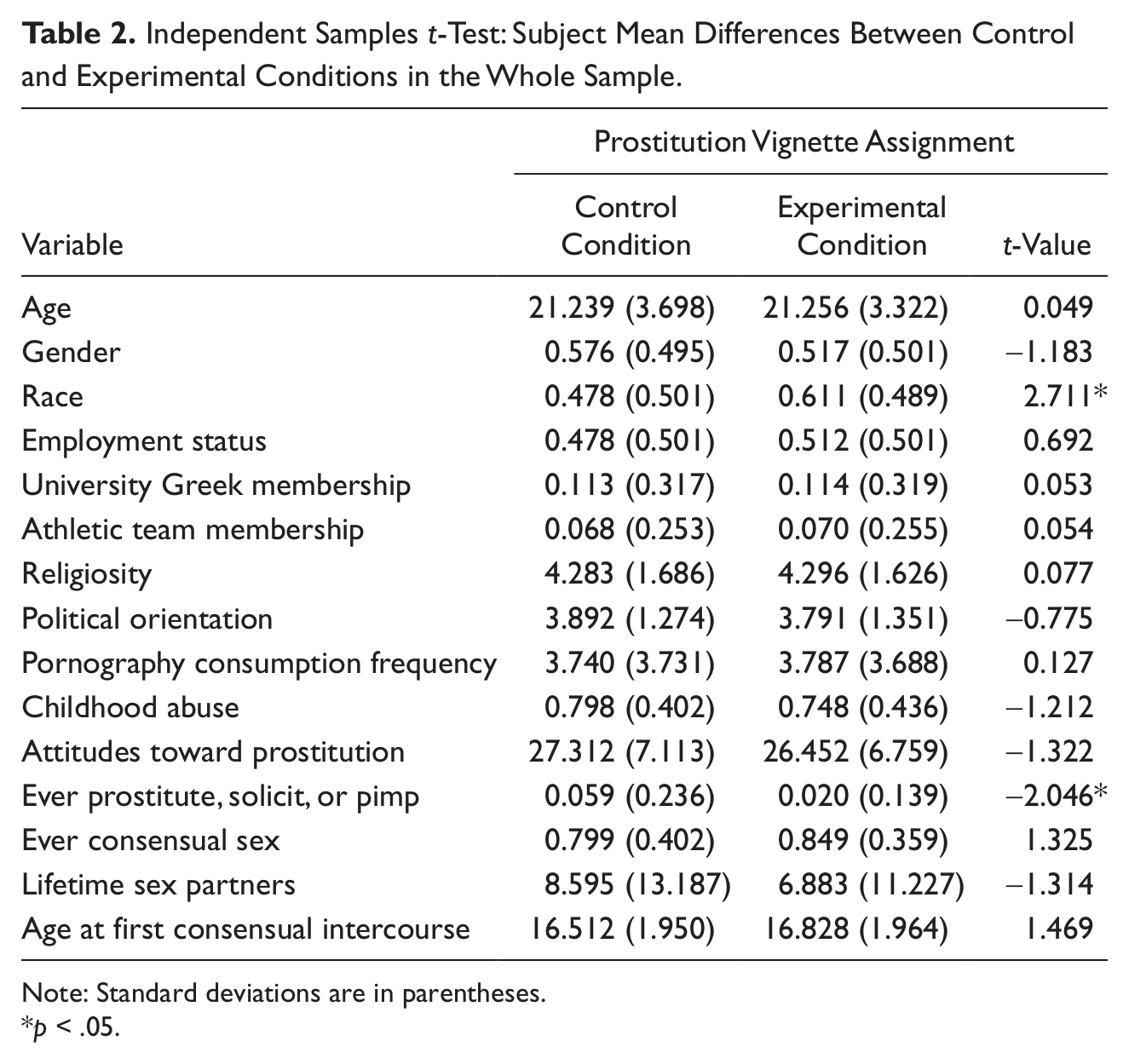
Random assignment of the vignettes produced similarly-situated control and experimental groups in the full sample, with two exceptions. Participant race and participants who reported “ever engaging in prostitution, solicitation, or pimping activity” significantly differed so that the control condition had fewer White respondents (47.8%) as compared to the experimental condition (61.1%) and more reports of paid sex activity (.05%) as compared to the experimental condition (.02%). Table 2 presents the mean differences on demographic and behavioral characteristics between control and experimental conditions for the whole sample.
Independent Samples t-Test: Subject Mean Differences Between Control and Experimental Conditions in the Whole Sample.
Note: Standard deviations are in parentheses.
p < .05.
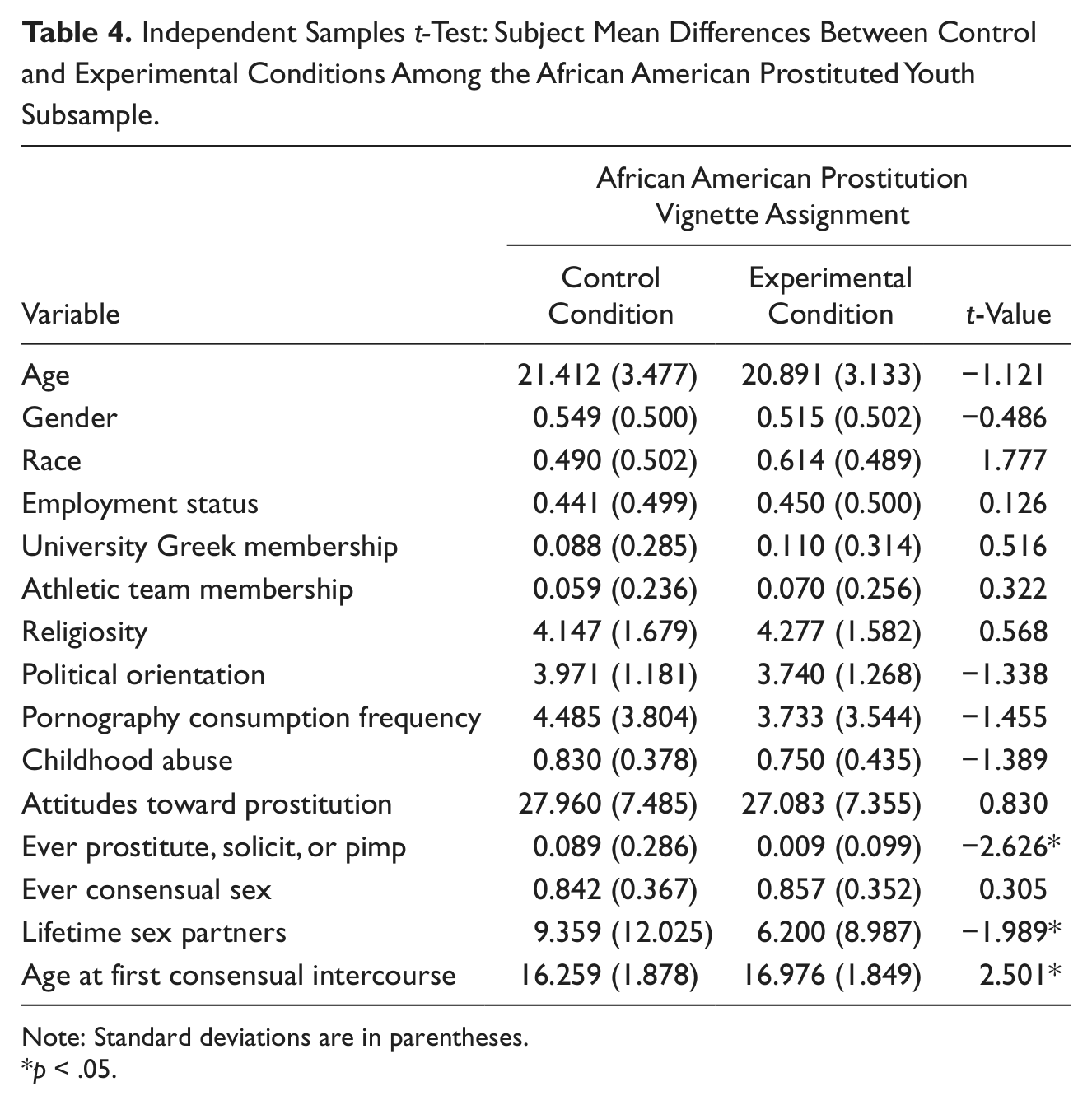
To further ensure that randomization produced similarly-situated groups among the two race conditions, mean differences were assessed. Participants randomly assigned to the vignette depicting a Caucasian female youth significantly differed by participant race where fewer White respondents (46.6%) received the control condition as compared to the experimental condition (60.8%). Participants randomly assigned to the African American female youth vignette also differed on paid sex activity, number of lifetime sex partners, and age at first reported consensual intercourse. Specifically, among the subsample reading a vignette about an African American prostituted youth, those assigned to the control condition reported significantly more paid sex activity (.08%) as compared to the experimental condition (.009%), more lifetime sex partners (M = 9.359, SD = 12.025; M = 6.200, SD = 8.987, respectively), and an earlier age at first intercourse (M = 16.259, SD = 1.878) as compared to those assigned to the experimental condition (M = 16.976, SD = 1.849). Tables 3 and 4 present the mean differences between the control and experimental conditions for the Caucasian and African American vignette subsamples.
Independent Samples t-Test: Subject Mean Differences Between Control and Experimental Conditions Among the Caucasian Prostituted Youth Subsample.

Note: Standard deviations are in parentheses.
p < .05.
Independent Samples t-Test: Subject Mean Differences Between Control and Experimental Conditions Among the African American Prostituted Youth Subsample.
Note: Standard deviations are in parentheses.
p < .05.
The Effect of Victimization History Disclosure on Blameworthiness
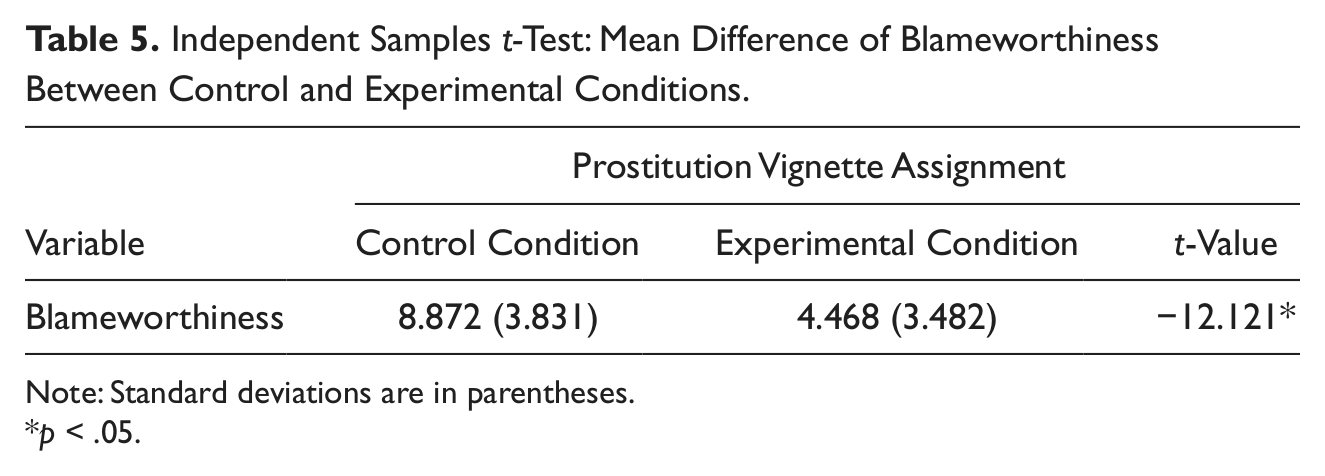
To assess the degree to which blameworthiness attributions decreased when the vignette provided victimization history information, mean differences were estimated between the control and experimental conditions for the whole sample. Table 5 presents the results of the independent samples t-test and demonstrates that participants exposed to the control condition where no personal history/victimization was provided attributed significantly more blame to the girl depicted in the vignette (M = 8.872, SD = 3.831) as compared to those participants who read pertinent victimization history information about the female youth depicted in the vignette (M = 4.468, SD = 3.482).
Independent Samples t-Test: Mean Difference of Blameworthiness Between Control and Experimental Conditions.
Note: Standard deviations are in parentheses.
p < .05.
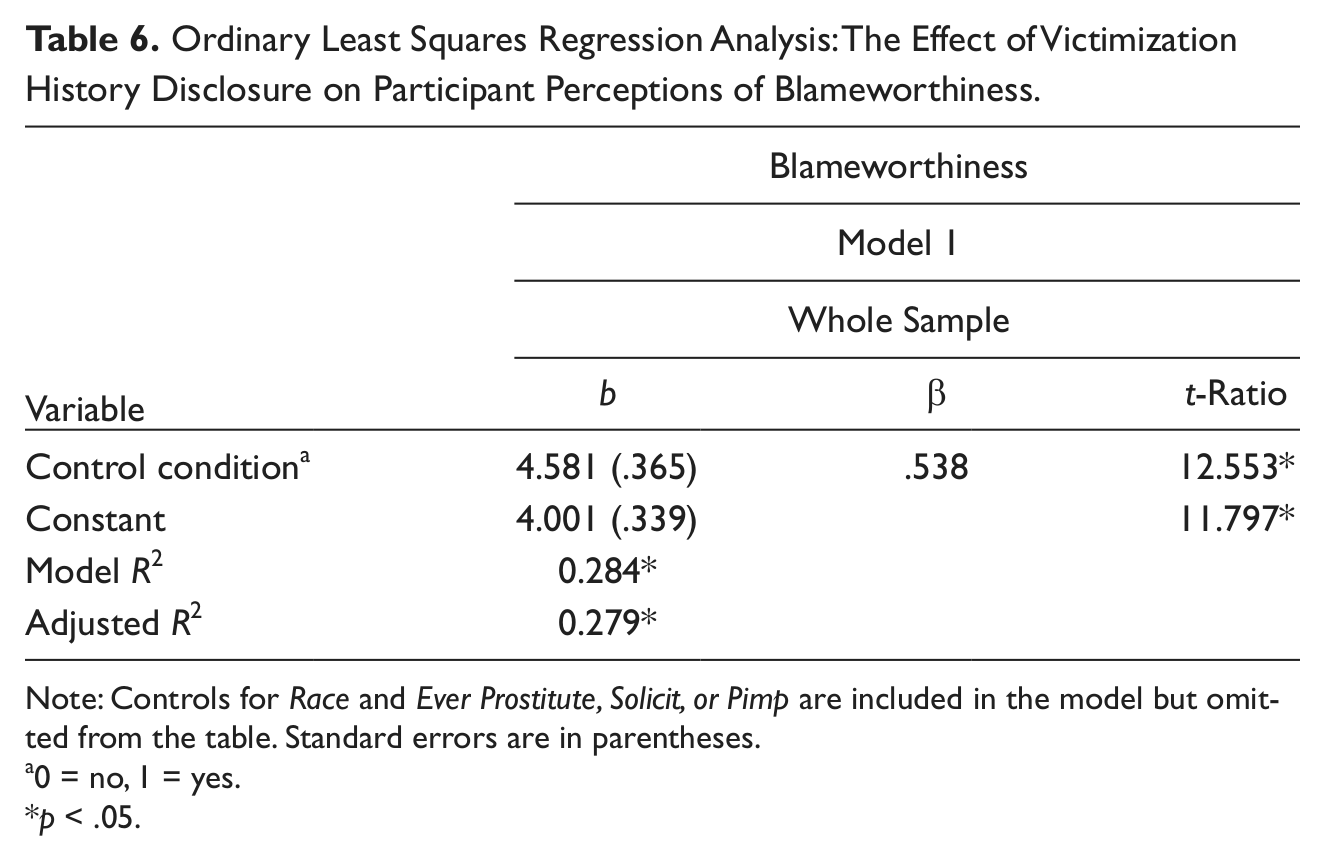
In spite of random assignment, the two subsamples differed by participant race and participant reports of paid sex activity. As a result, a multivariate OLS regression model was estimated to assess the effect of victimization history disclosure provided in the experimental vignette condition on participants’ assignment of blameworthiness, while controlling for these significant between-group differences. Table 6 presents the results of the OLS regression in Model 1 and demonstrates that 27.9% of the variation in the dependent variable was explained. In addition, victimization history disclosure in the vignette produced a significant decrease in participant blameworthiness attribution, providing support for Hypothesis 1 that the juvenile’s past victimization experiences mitigated participants’ perceptions of culpability for prostituted minors among the participants in this sample.
Ordinary Least Squares Regression Analysis: The Effect of Victimization History Disclosure on Participant Perceptions of Blameworthiness.
Note: Controls for Race and Ever Prostitute, Solicit, or Pimp are included in the model but omitted from the table. Standard errors are in parentheses.
0 = no, 1 = yes.
p < .05.
The Effect of Victimization History Disclosure on Blameworthiness by Race of the Prostituted Minor
That participants’ assignment of blameworthiness decreased when they were made aware of the juvenile’s prior victimization history replicates existing research on perceptions of culpability and blame attributions (Menaker & Miller, 2012) and provides important contributions to the study of perceptions of girls forced into the sex trade. To assess if vignette victimization history disclosure varied by the race of the juvenile portrayed in the vignette, mean differences were estimated for the control and experimental conditions between the Caucasian and African American vignette subsamples. Table 7 indicates that, similar to the results presented for the full sample, mean participant blameworthiness scores were significantly higher among the control condition as compared to the experimental condition for both race subsamples. It is important to note that the blameworthiness scores for the control conditions differed for the Caucasian and African American vignette subsamples so that higher levels of culpability were attributed to the Caucasian prostituted youth, although further analyses revealed that this difference was not statistically significant. 3
Independent Samples t-Test: Mean Differences of Blameworthiness by Commercially Sexually Exploited Girls (CSEG) Race Subsamples Between Control and Treatment Conditions.

Note: Standard deviations are in parentheses.
p < .05.
To estimate the change in participants’ assignment of blameworthiness while controlling for subsample differences, two separate OLS regression models were estimated. Model 2 in Table 8 presents the results of the multivariate OLS regression analysis using the Caucasian vignette subsample while controlling for the race of the participant. The analysis revealed that 34.9% of the variation in the dependent variable was explained. Moreover, among those randomly assigned to the vignette depicting a Caucasian youth, reading only prototypic information about her sexual behavior (i.e., engaging in commercial sex acts), financial keep, and living situation increased participants’ assignment of blameworthiness as compared to those who were provided with information about the juvenile’s victimization history in the vignette. Put differently, providing pertinent mitigating family and victimization history information to participants significantly reduced their assessments of blameworthiness by 5.087 points on a 15-point scale.
Ordinary Least Squares Regression Analysis: The Effect of Victimization History Disclosure on Participant Perceptions of Blameworthiness by Race Subsamples.
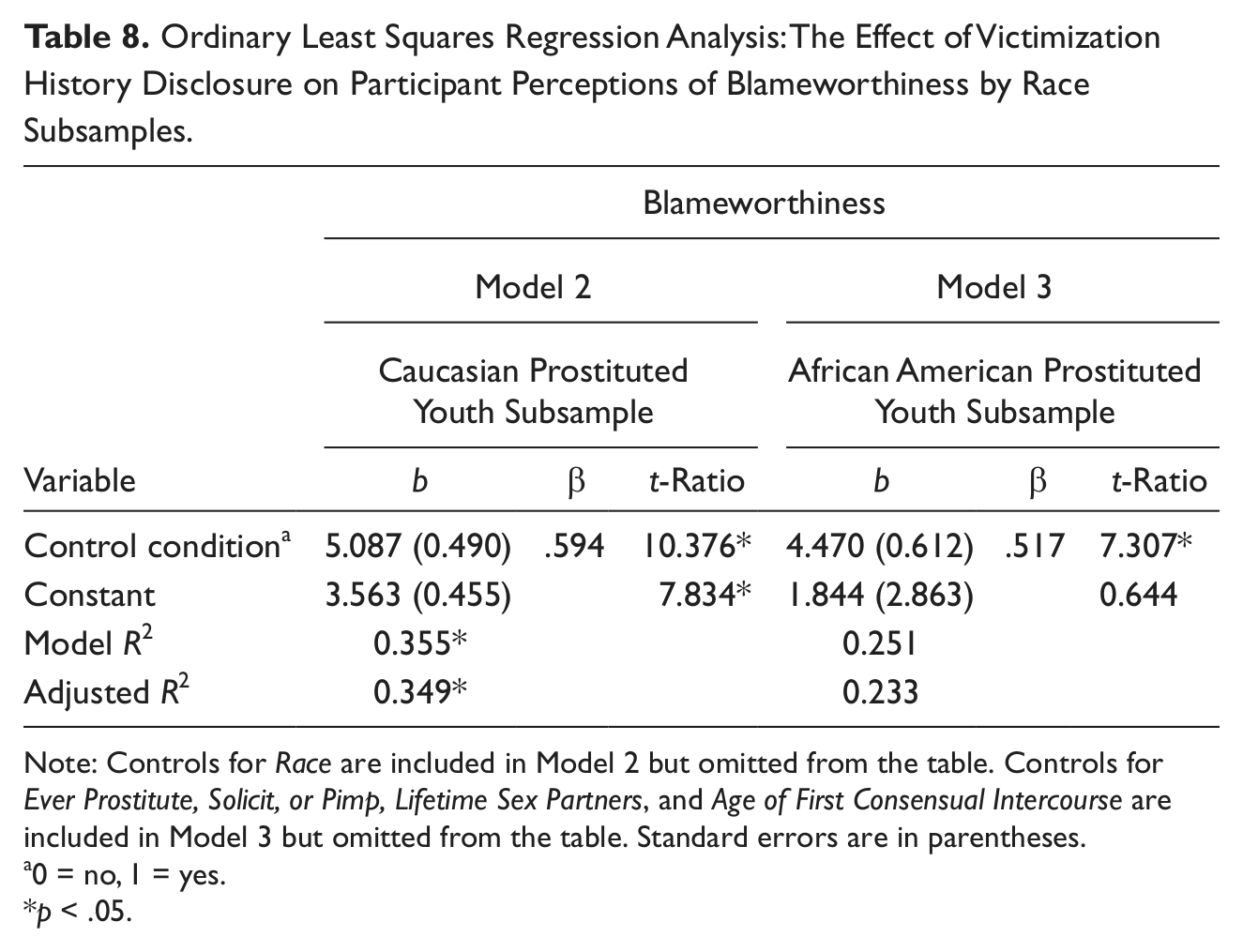
Note: Controls for Race are included in Model 2 but omitted from the table. Controls for Ever Prostitute, Solicit, or Pimp, Lifetime Sex Partners, and Age of First Consensual Intercourse are included in Model 3 but omitted from the table. Standard errors are in parentheses.
0 = no, 1 = yes.
p < .05.
In estimating the effect of victimization history disclosure for the African American vignette subsample while controlling for participants’ paid sex activity, lifetime sex partners, and age of first consensual intercourse, participants’ assignment of blameworthiness was significantly reduced by 4.470 points on a 15-point scale. Model 3 presents the results of the multivariate OLS regression analysis using the subsample that received a vignette about an African American youth. At first glance, it appears as if the African American juvenile depicted in the vignette is given less consideration for her mitigating victimization history information as compared to the Caucasian juvenile (b = 5.087, b = 4.470, respectively). To accurately test for significant differences between these two regression coefficients, Paternoster, Brame, Mazerolle, and Piquero’s (1998) z-test was employed and results indicated no significant differences (see also Clogg, Petkova, & Haritou, 1995). 4 In other words, victimization history disclosure significantly decreased blameworthiness attributed to prostituted minors but did not significantly vary based on the race of the minor presented in the vignette, thus refuting Hypothesis 2.
Discussion
The commercial sexual exploitation of girls has become increasingly recognized as a significant social concern. Criminal justice responses to juveniles involved in the sex trade continue to be punitive in many jurisdictions, however, and the treatment of minors in the juvenile justice system is influenced by the intersection of gender, race, and class. To our knowledge, only one published study (Menaker & Miller, 2012) has examined public perceptions of CSEG. Prior research in this area has focused on issues of blameworthiness and the effect of providing important victimization history information that contextualizes juveniles’ involvement in the sex trade. Although important to understanding culpability attributions toward prostituted minors as a function of perceiver attributes and the victimization histories of CSEG, questions remained concerning juveniles’ personal characteristics, such as race, and how they operate in influencing public attributions of blame. This study extended existing research by examining the effect of victimization history information on participant perceptions of culpability and whether or not culpability varied by the race of the prostituted minor.
The results presented here support prior findings demonstrating that culpability attributions toward girls forced into prostitution are lessened by the provision of victimization history information (Menaker & Miller, 2012). Contrary to Hypothesis 2, and despite research suggesting that African American females are blamed more for their victimization due to racial bias, victimization history provision did not differentially affect attributions of culpability toward a Caucasian female as compared to one who was African American in this study. These findings reveal that, in conjunction with social-cognitive theories of blame (Alicke, 2000), observers initially perceived CSEG as blameworthy when only their personal and professional characteristics are known, and such blame was mitigated by knowledge of circumstances that diminished the juvenile’s mental capacity or volitional control (i.e., victimization and coercion).
Despite the importance of the findings presented above, it should be noted that this study used a sizable student sample that predominantly comprised individuals focusing their studies in psychology and criminal justice—disciplines whose graduates will likely be involved with the treatment and custody of commercially exploited girls. In addition, due to the young average age of participants (M = 21.25), results may not be representative of the general population, and of middle-age adults and senior citizens, in particular. Further research should focus on professionals, such as probation officers and counselors, who are currently working directly with this unique population.
Even so, these results may have important implications for criminal justice professionals who interface with juveniles forced into prostitution. In addition, conclusions presented in this study provide support for the utility of public education about the phenomenon of commercial sexual exploitation. Empirical evidence suggests that the treatment and processing of juvenile offenders is strongly influenced by the perceptions of those who supervise them (Mallicoat, 2007). Present results assert that negative initial reactions toward juveniles forced into prostitution, based on the sexual nature of their offense and personal characteristics such as race, may be mitigated by knowledge of adverse experiences that have precipitated their behavior. This highlights the importance of disclosing victimization history to criminal justice practitioners, such as judges and probation officers, who make decisions concerning sanction appropriateness and the provision of rehabilitative resources for these girls. In addition, greater public education with regard to girls forced into the sex trade and the victimization histories common to this population might decrease the bias and stigma directed toward these youth and produce greater support for initiatives directed toward prevention and intervention with young females at risk for commercial sexual exploitation.
It is important to note that some states have enacted legislation, known as “Safe Harbor” laws, critical to the protection of CSEG. Safe Harbor laws decriminalize prostituted minors and divert youth from juvenile delinquency proceedings and custody to alternatives emphasizing child protection (Polaris Project, 2008). In addition, these laws provide victims with tailored services to address the unique needs and trauma experiences of commercially sexually exploited youth (Polaris Project, 2008). Ultimately, Safe Harbor laws eliminate the need for victimization history disclosure to criminal justice practitioners in order to mitigate blame toward prostituted minors. To date, however, only eight states (New York, Illinois, Minnesota, Tennessee, Vermont, Massachusetts, Connecticut, and Washington) have passed Safe Harbor bills, although other states are considering similar legislation (Polaris Project, 2012). Results of the present study can provide advocates with persuasive evidence to promote continued efforts toward the proliferation of information about the background of prostituted youth, the nature of commercial sexual exploitation, and the importance of legally protecting and empowering survivors. Doing so may compel legislators to introduce and approve Safe Harbor laws in those states currently without such provisions. Federal law has determined that all juveniles in the sex trade industry are considered to be trafficked. Until more states enact Safe Harbor laws, however, the importance of victimization history disclosure to criminal justice authorities responsible for determining outcomes (i.e., punitive or rehabilitative) for sexually exploited youth cannot be overlooked.
In addition, it is imperative that commercially exploited girls are not misperceived as passive victims and vulnerable children whose sexual innocence must be preserved (Saunders, 2005). To the contrary, it is important that service providers and criminal justice practitioners acknowledge the utility of empowerment-based approaches to working with girls involved in the sex trade (Lloyd, 2011; Saunders, 2005). Services should use a human rights model that responds to the unique needs of CSEG (e.g., recognizing and incorporating girls’ perspectives), facilitates girls’ development of self-identity, sexualization, and self-determination, and fosters the acceptance of diversity and social justice (see, for example, the Urban Justice Center of New York and the Young Women’s Empowerment Project) (Saunders, 2005). Moreover, it is critical that a human rights perspective be extended to adult women in the sex trade industry. Many adult women who engage in prostitution began doing so as young teens. The negative effect of prior victimization and coercion on a 17-year-old female in the sex trade does not cease when she reaches the age of majority. Legislation and criminal justice responses should therefore recognize the abuse histories of adult women involved in prostitution and treat them accordingly—not as pathological criminals, but as victimization survivors in need of support services. Results of this analysis suggest that the public would support criminal justice responses that treat these girls and women as victims instead of criminals, although these perceptions may be generalizable only to a select age group.
Further research concerning perceptions of child and adolescent sexual exploitation would benefit from studies that include professionals who interact, or may interact, with prostituted minors. As it is likely that professionals, like psychologists, who work with commercially sexually exploited juveniles are aware of their victimization history, it is important to assess the perceptions of individuals who encounter CSEG in criminal justice contexts (e.g., police officers) but lack specialized training with regard to traumatized female youth and commercial sexual exploitation. Recently, research has underscored police officers’ perceptions of victims, and female victims of rape in particular. Evidence reveals that officers’ sexist attitudes toward women predicted endorsement of rape myths and negatively affected police officer perceptions of victim credibility (Page, 2008). These findings highlight the need for investigation into police perceptions of other female victim types, particularly prostituted minors, who are traditionally labeled as offenders by law enforcement officials but are in significant need of victimization-related service provisions. Given the accumulation of research that underscores abuse histories of prostituted youth and federal legislation recognizing CSEG as victims of trafficking, it is necessary for professionals in contact with prostituted minors to have appropriate training to work with trauma-exposed and prostituted youth. For effective intervention, professionals must possess an understanding of the life histories of CSEG and reasons for their involvement in commercial sex activity. Additional research examining perceptions of CSEG among police officers and other social service workers may inform efforts to provide meaningful training and education about the commercial sex trade for these professionals and, consequently, affect the classification and treatment of child victims of sexual exploitation.
Footnotes
Appendix A
Appendix B
Acknowledgements
The authors would like to thank Dr. Travis W. Franklin for his helpful comments on earlier drafts of this article.
Authors’ Note
An earlier version of this article was presented at the 2011 annual meeting of the American Society of Criminology in Washington, D.C.
Declaration of Conflicting Interests
The author(s) declared no potential conflicts of interest with respect to the research, authorship, and/or publication of this article.
Funding
The author(s) received no financial support for the research, authorship, and/or publication of this article.