



Abstract
The current study aimed to test the clinical effectiveness of a cognitive-behavioral therapy (CBT) program for battered women in a community setting and to find out whether effectiveness of individual therapy can be improved in conjunction with group therapy. One hundred sixteen treatment-seeking battered women were assigned either to CBT on an individual basis or an individual and group basis. Psychological treatment, focused on post-traumatic stress disorder (PTSD), emotional discomfort, and impaired functioning, comprised a 17-session program, including emotional expression, psychoeducation, trauma re-exposure, coping skills, and problem-solving training. Although most treated patients in both groups improved in all variables (PTSD, emotional discomfort, and impaired functioning) at all assessments, the combined individual and group therapy did better than the individual therapy regarding PTSD symptoms and impaired functioning at follow-up assessments. These findings partially support the beneficial effects of group CBT as adjunctive therapy to individual CBT. Implications of this study for clinical practice and future research in this field are commented on.
Keywords
Introduction
Intimate partner violence (IPV) is a serious problem that can result in physical injury and psychological problems. Data from nationally representative surveys in Spain suggest that 1 of every 10 women above 18 years (more than 2 million women) have experienced at least one incident of IPV at some time in their lives (Spanish Ministry of Health, Social Policy and Equality, 2011). In turn, many of the estimated 4 to 6 million women in the United States who experience domestic violence within an intimate relationship develop depression, suicidality, post-traumatic stress disorder (PTSD), and alcohol-use disorders (McNamara, 2010).
Domestic abuse is a chronic and extreme traumatic stressor and involves physical violence, sexual violence, and psychological abuse, which can include verbal/emotional abuse, social isolation, and threats of further abuse, such as threats to kill or injure the battered woman or her children. Psychological abuse is highly prevalent among violent couples and has a negative impact on battered women. In addition, this kind of abuse may precede or predict physical aggression (Echeburúa, Fernández-Montalvo, Corral, & López-Goñi, 2009).
Psychological sequelae of traumatic experiences related to IPV are many and varied. They can include psychological symptoms, such as PTSD, anxiety, depression, lowered self-esteem, somatic complaints, and impaired functioning in occupational and other social roles (e.g., difficulties with trusting and intimacy). PTSD involves increased arousal, avoidance responses, numbing of general responsiveness, and re-experiencing of the trauma, as well as perception of life threat (Holtzworth-Munroe, Smutzler, Jouriles, & Norwood, 1998; Picó-Alfonso et al., 2006).
Across different samples and using different measures of PTSD, the reported rates of PTSD among battered women range from 40% to 60% (Saunders, 1994). In some studies (Sarasua, Zubizarreta, Echeburúa, & Corral, 2007), the prevalence rate of PTSD among battered women was higher in victims with less than 30 years (42%) than in the 30 years or older (27%).
Severity of exposure to violence and prior victimization experiences (e.g., childhood abuse, prior rape), as well as the recency of the domestic abuse, are positively related to PTSD symptomatology (Holtzworth-Munroe et al., 1998). About 50% of battered women experience high levels of depression and lower self-esteem. The severity and frequency of the aggression are related to increases in depression. Sometimes victim blaming or failure of law enforcement to provide protection, as well as lack of social support or of adequate assistance from therapists, may result in a possible source of additional stress to the battered woman (Dutton, 1992; Picó-Alfonso, Echeburúa, & Martínez, 2008).
Clinical intervention with battered women is focused on careful safety planning, choice making, and post-traumatic reactions to prior abuse even after leaving the abusive relationship. Although resources to counteract the effects of the violence are sometimes available, the post-trauma sequelae may prevent access by those in need because they feel hopeless even to seek therapeutic help (Perez & Johnson, 2008).
Trauma-related therapy with battered women must be tailored to their special needs. Safety planning aims at helping to protect them from further abuse and includes to provide them with basic information about resources available in their community. Choice making as a goal refers to decision making and problem solving about some concerns, such as the decision to leave, stay in or return to the abusive relationship, to move away from the abuser’s community or how to provide for care of the children (Dutton, 1992). However, despite the high incidence of domestic violence, empirical evidence about the effectiveness of practice with battered women is scant (Abel, 2000; Macy, Rizo, Johns, & Ermentrout, 2013).
Psychological treatment for PTSD has been described consistently as involving two phases as follows: re-exposure to the trauma and management of related distress (Foa, Steketee, & Rothbaum, 1989). In particular, the focus of the treatment on PTSD is re-experiencing the traumatic events to reduce the trauma-related intrusive thoughts, images, and nightmares; managing the subsequent stress with relaxation techniques; facilitating expression of emotion (including shame, rage, and grief) in a safe environment; and finding meaning from the victimization to re-establish in the battered woman a sense of controllability and predictability in her life (Dutton, 1992). In addition, cognitive interventions can be used to modify biased cognitions about the violence, to re-attribute responsibility for abuse to the one who initiates it, to increase the perception of viable alternatives within available resources, and to cope with dissociation (Resick, Suvak, Johnides, Mitchell, & Iverson, 2012).
Other therapeutic approaches, such as the dialectical behavioral therapy, have been proposed in the last years. Most have been tested in a relatively small number of patients. Preliminary findings support the possible utility of dialectical behavior therapy in a group format for enhancing psychological and social well-being in female victims of domestic abuse (Iverson, Shenk, & Fruzetti, 2009).
Anyway, the main focus of the psychological intervention with battered women has been on the PTSD in a group format (Kubany, Hill, & Owens, 2003). However, many battered women do not have PTSD, but suffer from anxiety and depression symptoms, lowered self-esteem, and impaired functioning in occupational and other social roles. However, little research has addressed this specific issue. On the other hand, many programs have been carried out in residents of battered women’s shelters (Johnson & Zlotnick, 2006; Johnson, Zlotnick, & Perez, 2011), but these results cannot generalize to women living by themselves in a community setting.
There are no studies in which group and individual therapy are compared with only individual therapy for the treatment of non-sheltered battered women. Anyway, there is one study where women with PTSD and histories of child abuse received individual and group therapy and showed significant improvements over time, whereas the control group did not. Effect sizes were large (Chard, 2005).
Therefore, this article has two main goals as follows: (a) to test a multimodal cognitive-behavioral therapy (CBT) approach with battered women that addresses relevant clinical issues within which the treatment of PTSD is embedded for battered women living by themselves in a community setting and (b) to find out whether effectiveness of individual therapy can be improved in conjunction with group therapy.
Method
Participants
The sample for this study consisted of 116 participants who sought psychological treatment at a Mental Health Center for battered women in Álava (Spain) between 2009 and 2010. The criteria for the inclusion to the study were the following: (a) women aged 18 to 65 years; (b) being in treatment for emotional symptoms related to the male intimate partner violence; (c) not living any longer with the abusive partner; (d) not suffering from a severe mental disorder, after being interviewed with the Structured Clinical Interview for DSM-IV (SCID); and (e) taking part in the study voluntarily, after having been properly informed of its characteristics.
After screening the 258 women who came to the therapeutic program for battered women, the sample was reduced to 116 subjects, according to the inclusion criteria. Excluded subjects (142; 55.04%) did not meet the criteria for admission because they stayed in the abusive relationship (94; 36.4%), they were suffering from a severe mental disorder (major depression/bipolar disorder or substance dependence; 3; 1.1%) or they refused or dropped out of treatment (45; 17.4%).
Experimental Design
A two-group experimental design with independent measures in the treatment factor and with multiple and repeated measures of assessment (pre-treatment, post-treatment, and 1-, 3-, 6-, and 12-month follow-up) was used. Following the assessment phase, participants were consecutively assigned to one of the two groups. Thus, the resulting modalities were the following: (a) combined treatment group (n = 57)—CBT for battered women with emotional disorders on an individual and group basis and (b) individual treatment group (n = 59)—CBT for battered women with emotional disorders on an individual basis. For ethical reasons, there is not a waiting-list control group.
Assessment Measures
Variables related to the intimate partner violence
The SCID is an instrument designed with the objective of assessing, in an initial interview, the history of victimization and the recent IPV (including perceived threat to life), as well as some relevant additional information of the victims: demographics, psychopathological antecedents, health state, coping skills, and legal and social support. The data on interrater reliability obtained with this interview in this study were satisfactory (κ = .91).
The Severe Intimate Violence Partner Risk Prediction Scale–Revised (EPV-R; (Echeburúa, Amor, Loinaz, & Corral, 2010) is an easy-to-use 20-item tool, which appears to be suitable to the requirements of criminal justice professionals and is intended for use in safety planning. Psychometric properties of reliability (Cronbach’s α = .85) and validity were rather good. Cutoff scores, ranging from 0 to 48 (low risk: 0-9; moderate risk: 10-23; and high risk: 24-48) have been proposed according to sensitivity and specificity.
Psychopathological variables
The Severity of Symptoms Scale of Posttraumatic Stress Disorder (EGS; Echeburúa, Corral, Amor, Zubizarreta, & Sarasua, 1997) was used to measure severity of PTSD symptoms. This 17-item structured interview is based on Diagnostic and Statistical Manual of Mental Disorders (4th ed.; DSM-IV; American Psychiatric Association, 1994) diagnostic criteria. Respondents are rated on a 4-point scale depending on the frequency and severity of symptoms in each item. The scale ranges from 0 to 51. The cutoff point is 15. This measure has good psychometric properties. The data on interrater reliability obtained with this interview in this study were satisfactory (κ = .94).
The State Anxiety Inventory (STAI-S; Spielberger, Gorsuch, & Lushene, 1970; Spanish version of TEA, 1982) consists of 20 items related to the anxiety state. In our study, the internal consistency is .92. The range of scores is from 0 to 60. The cutoff point is 24 (the 60th percentile in the Spanish version).
The Beck Depression Inventory (BDI; Beck, Rush, Shaw, & Emery, 1979; Spanish version of Vázquez & Sanz, 1997) consists of 21 items and measures the severity of depression symptoms. The cutoff point is 18. In our study, the internal consistency is .84. The range of scores is from 0 to 63.
The Rosenberg Self-Esteem Scale (Rosenberg, 1965; Spanish version by Fernández-Montalvo & Echeburúa, 1997) was used to measure self-esteem. This 10-item self-report measure asks respondents how they feel about themselves on a 4-point scale ranging from strongly agree to strongly disagree. Higher scores indicate higher levels of self-esteem (range = 10-40). The cutoff point for the adult population is 29 points. Test–retest reliability is .85, and the internal consistency alpha coefficient is .92. Convergent validity and discriminant validity are likewise satisfactory.
The Maladjustment Scale (MS; Echeburúa, Corral, & Fernández-Montalvo, 2000) reflects the extent to which the subject’s partner violence problems affect to the maladjustment in everyday life (social, work, leisure, couple, and family). This six-item self-report measure, based on a 5-point scale, ranges from 0 to 30, but for this research only the item related to global maladjustment to everyday life (“to what extent my normal life has been affected because of the problems with my partner?”), which is the most relevant in our prior study, has been used (range = 0-5). The cutoff point is 3. In our study, the internal consistency is .90. These measures have been extensively used in research and clinical practice, and there is substantial evidence to support their psychometric properties in the field of battered women (Picó-Alfonso et al., 2008; Picó-Alfonso et al., 2006).
Therapeutic Modalities
Individual treatment group (CBT for battered women with emotional disorders on an individual basis)
There are five phases involved in this weekly 17-session treatment approach: (a) facilitating expression of emotion (including shame, rage, and grief) and identification of her thoughts and feelings (1st-4th sessions); (b) psychoeducative explanations about typical post-traumatic reactions, which can “normalize” these responses, and about the nature and the features of the fears, including the development of the cycle of violence (5th-6th sessions); (c) re-exposure to the trauma and management of related stress and cognitive intervention focused on re-attributing responsibility for the abuse only to the perpetrator, attributing personal responsibility for her own safety and well-being, improving her self-esteem, and increasing perception of viable alternatives within available resources (7th-11th sessions); (d) coping skills just after leaving the abusive relationship (risk assessment and management, care of the children, increasing independent living skills; 12th-14th sessions); and (e) specific coping skills to deal with the new situation (supportive counseling, relaxation training, social skills, and problem solving training), which provide a useful framework focused on goals of choice making (15th-17th sessions).
Combined treatment group (CBT for battered women with emotional disorders on an individual and group basis)
This is a 17-session treatment approach, with the same content as in the individual treatment group. In this group, the above described intervention was carried out on an individual basis in phases (a), (b), and (d) (nine sessions) and on group basis in phases (c) and (e) (eight sessions). The distribution of the sessions is displayed in Table 1.
Combined Individual and Group Therapy.
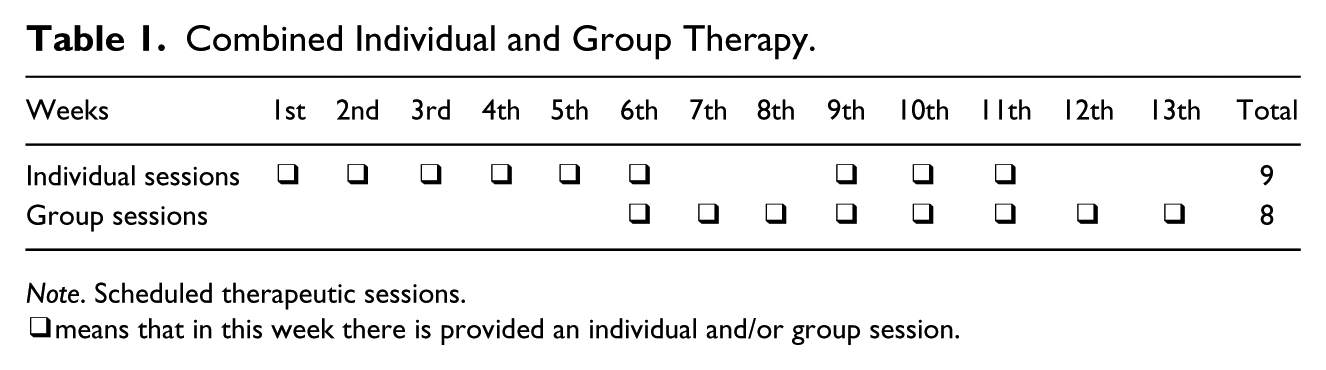
Note. Scheduled therapeutic sessions.
❑means that in this week there is provided an individual and/or group session.
The CBT used in this research was based on the manualized therapist’s guide included in Echeburúa and Corral (1998). This psychological intervention program consisted of 17 weekly sessions lasting 60 min each, led by a clinical psychologist.
Procedure
Assessment
For subjects entering the study, consent was obtained after they had been given a verbal description of the study. Participants were assessed individually using a semi-structured interview that focused on different aspects of their abusive relationship. The EPV-R and EGS were administered as interview schedules. The patients filled in the self-reports (STAI-S, BDI, Self-Esteem Scale, and MS) individually. Following the assessment phase, the patients were assigned to one of the two modalities. The evaluations—always in the format of a personal interview—took place in pre-treatment, post-treatment, and 1-, 3-, 6-, and 12-month follow-up in both groups. All the assessments were conducted by an independent assessor who was unaware of the therapeutic modality in which the patient was involved.
Treatment
The treatment program was conducted on an outpatient basis at no charge by a clinical psychologist with more than 10 years of experience in cognitive-behavioral treatment for battered women. The same therapist led both groups (individual and combined) over the 17 sessions. Group size in the group sessions ranged from four to six patients. The study was approved by the University Ethics Committee.
Data Analysis
Analyses were carried out through the SPSS version 19.0 for Windows. Differences between the two groups were tested for significance with Pearson’s chi-square test for dichotomous variables (e.g., about the disappearance of PTSD symptoms or about the overcoming of significant emotional discomfort) and t-tests for quantitative psychological features (e.g., about the PTSD, anxiety, or depression severity). Within-group comparisons over time in psychopathological variables were tested showing F and t contrasts. Effect sizes based on Cohen’s d for t-tests estimated the clinical differences.
Results
Demographic Factors and Intimate Partner Violence in Both Therapeutic Groups at Pre-Treatment Assessment
The characteristics of the participants allocated to each of the two interventions are displayed in Table 2. In the full sample, the average age of participants was 41.77. Most of them were Spanish (84.5%), had children (85.3%), and family support was available for them (75.9%). Most had not suffered victimization in childhood (83.6%). As regards characteristics of intimate partner violence, the average duration of IPV was 14.7 years. Most of the victims had suffered physical aggression (59.5%), even with serious injuries.
Variables Related to the Victim and to IPV.
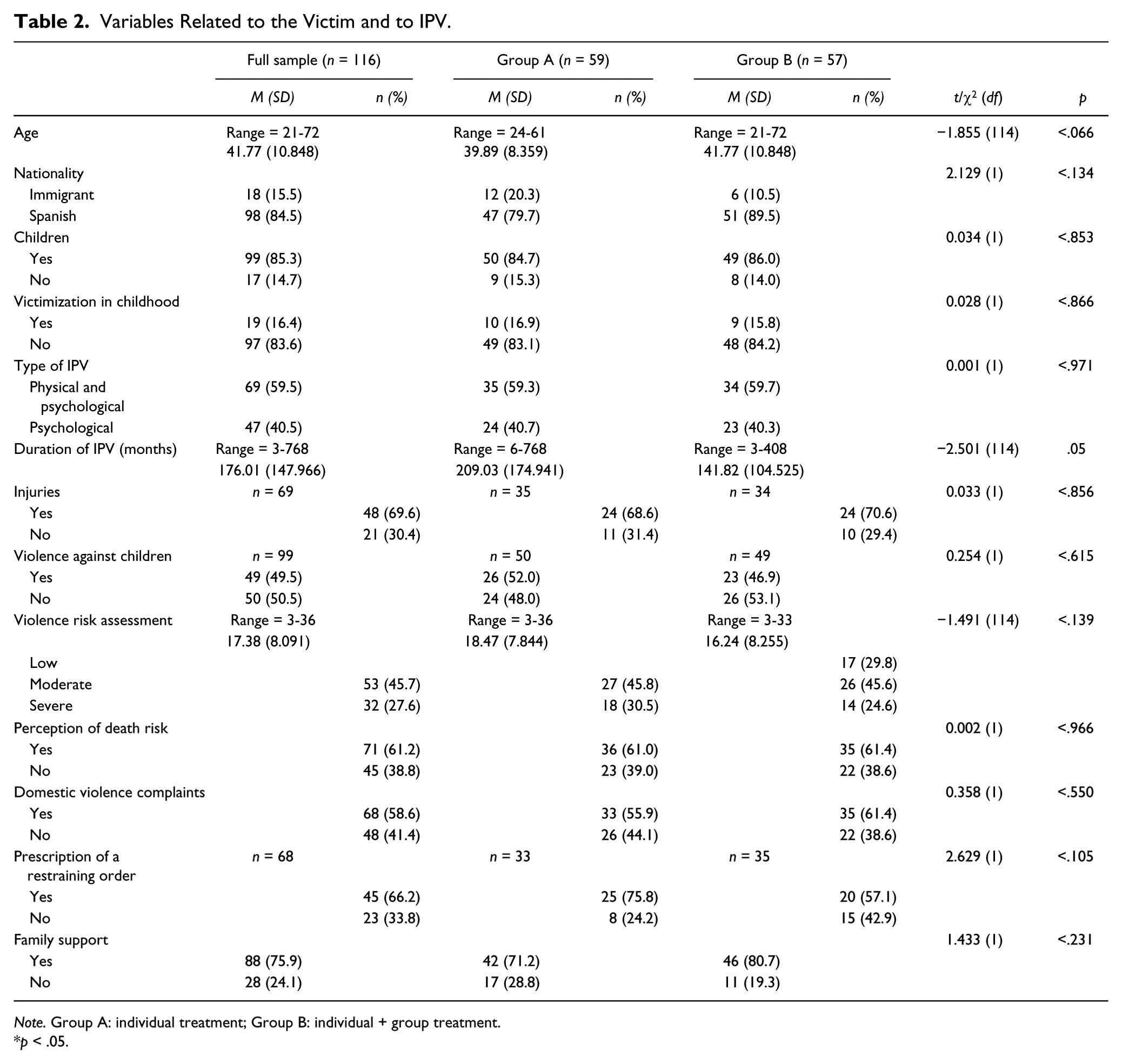
Note. Group A: individual treatment; Group B: individual + group treatment.
p < .05.
The two groups were homogeneous regarding demographic variables, specifically in age, nationality, childhood victimization, and family support. There were not either any statistically significant differences in other variables related to intimate partner violence, such as types of domestic violence, existence of injuries, violence against children, severe violence risk assessment, victim’s perception at risk of death, domestic violence complaints, or prescription of a restraining order (taken into account this variable only in the cases of victims who reported IPV to the court). However, there were statistically significant differences in duration of IPV. Anyway, both groups of victims were suffering from chronic IPV for more than 10 years.
Psychopathological Symptoms at Pre-Treatment Assessment
At the pre-treatment assessment, 31% of victims were suffering from PTSD. Victims with PTSD had a high EGS score, but there were not any statistically significant differences between both groups. Regarding other psychopathological symptoms, 90.5% of victims were suffering from emotional discomfort, that is, they had high levels of anxiety and depression and low levels of self-esteem, as well as showed difficulties of adaptation to everyday life. There were not any statistically significant differences in all these variables between both groups (see Table 3).
Frequency and Severity of Psychopathological Variables at the Pre-Treatment Assessment.
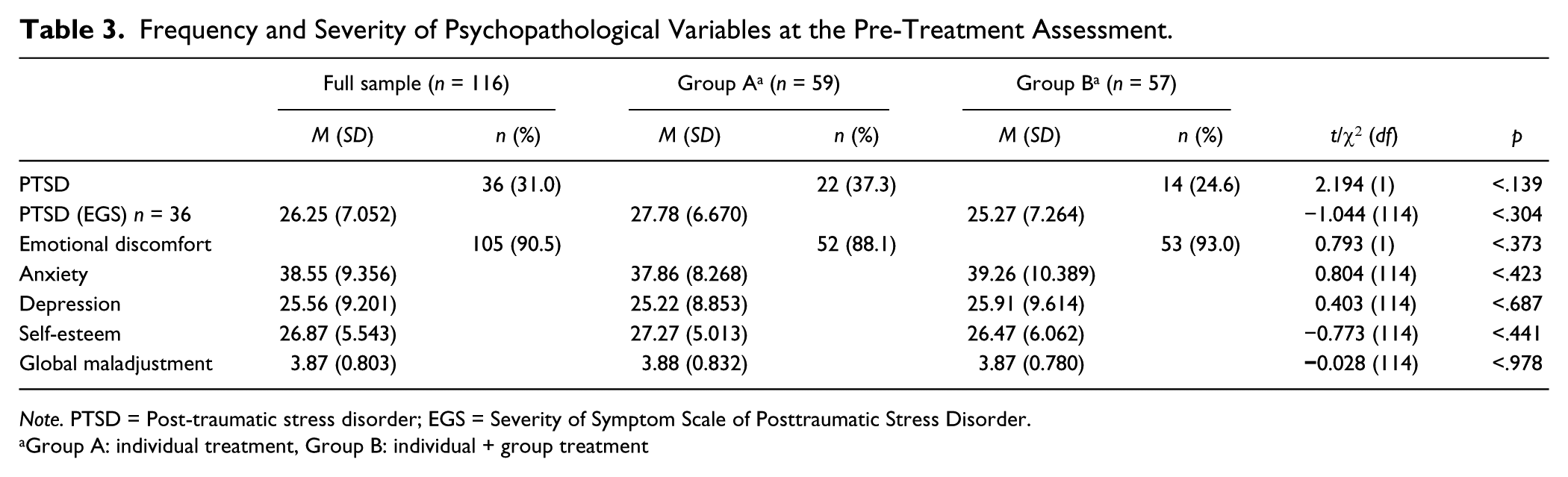
Note. PTSD = Post-traumatic stress disorder; EGS = Severity of Symptom Scale of Posttraumatic Stress Disorder.
Group A: individual treatment, Group B: individual + group treatment
Rates of Improvement After Treatment
With regard to therapeutic success, two different indicators have been used in this study: (a) the overcoming of clinically significant emotional discomfort (a score below 24 on the STAI-S, below 18 on the BDI, and below 3 on the MS) and the recovery of the self-esteem and (b) the disappearance of PTSD symptoms (a score below 15 on the EGS).
As regard the emotional discomfort (n = 105), at the post-treatment assessment, the victims treated in the full sample showed a rate of success of 79% (n = 83). However, success rates even improved over time: At 1-month follow-up, 89.5% (n = 94); at 3-month follow-up, 94.3% (n = 99); at 6-month follow-up, 97.1% (n = 102); and, last, at 12-month follow-up, 99% (n = 104). There were not any statistically significant differences between both groups either at the post-treatment assessment (Group A: n = 39; 75.0%; Group B: n = 44; 83.0%); χ2(1) = 1.019, p < .313 or at 1-month follow-up (Group A: n = 45; 86.5%; Group B: n = 49; 92.5%); χ2(1) = .979, p < .322; 3-month follow-up (Group A: n = 48; 92.3%; Group B: n = 51; 96.2%); χ2(1) = .748, p < .387; 6-month follow-up (Group A: n = 49; 94.2%; Group B: n = 53; 100%); χ2(1) = 3.148, p < .076; and 12-month follow-up (Group A: n = 51; 98.1%; Group B: n = 53; 100%); χ2(1) = 1.029, p < .310.
Regarding the PTSD (n = 34), at the post-treatment assessment, the victims treated in the full sample showed a rate of success of 94.4% (n = 32). There were not any statistically significant differences between both groups either at the post-treatment assessment (Group A: n = 21; 95.5%; Group B: n = 13; 92.9%); χ2(1) = .110, p < .740 or at 1-, 3-, 6-, and 12-month follow-up, where the rate of success for both groups was of 100% in all periods of follow-up.
From a dimensional perspective, means and standard deviations of all measures used at assessments for the full sample and for both groups, as well as the values for F and t and for effect size (d), are shown in Tables 4 and 5. In the full sample and in both groups, a marked improvement between pre- and post-treatment can be seen, which tends to remain stable over time between the post- and 12-month follow-up. However, the improvement of combined treatment group (Group B) is stronger than individual treatment group (Group A) regarding post-traumatic symptoms and adaptation to everyday life at follow-up assessments. The effect size is medium.
Means (and Standard Deviations) and t Values in Psychopathological Variables in Both Groups.
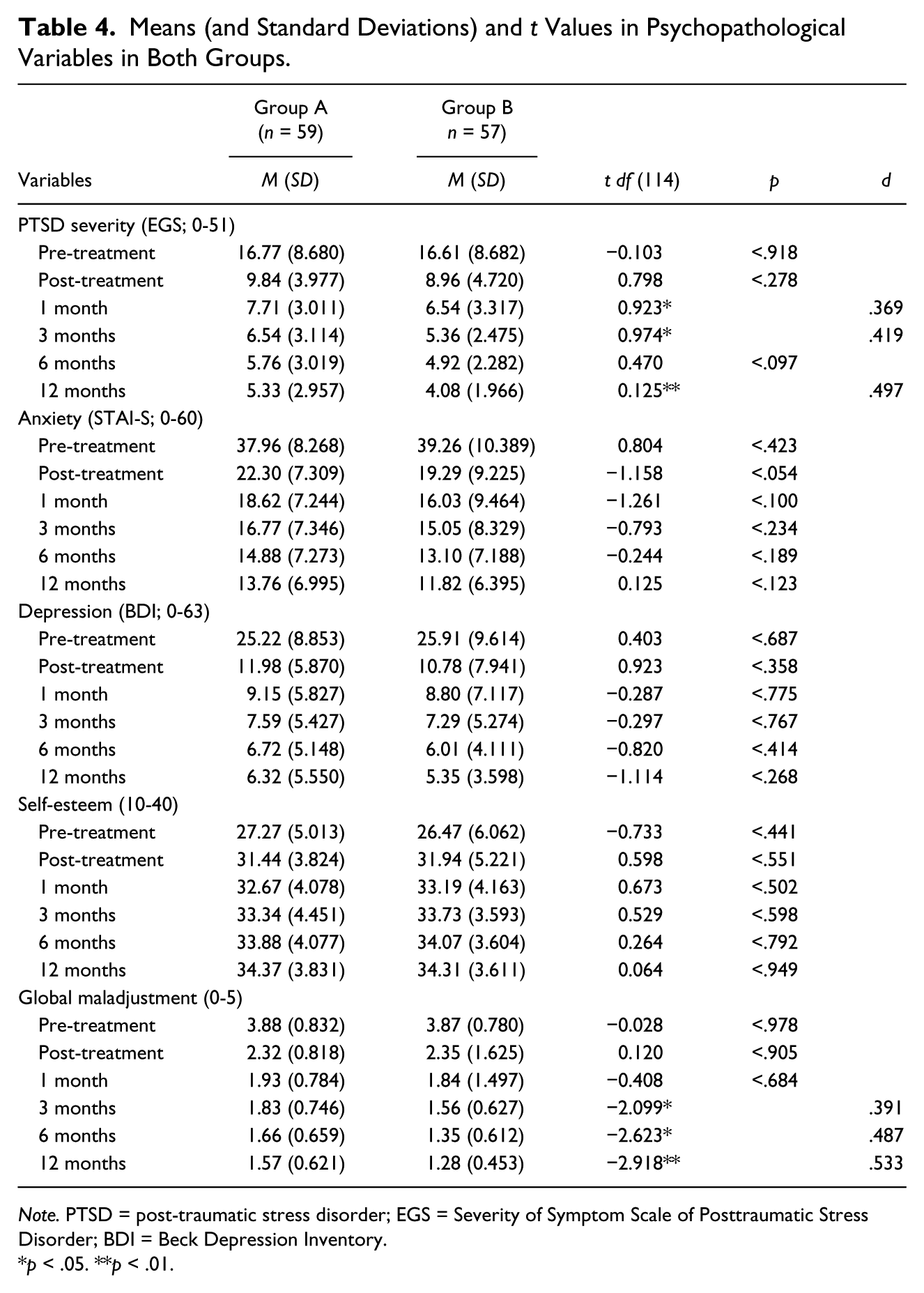
Note. PTSD = post-traumatic stress disorder; EGS = Severity of Symptom Scale of Posttraumatic Stress Disorder; BDI = Beck Depression Inventory.
p < .05. **p < .01.
Within-Group Comparisons (F and t values) in Psychopathological Variables in Both Groups.
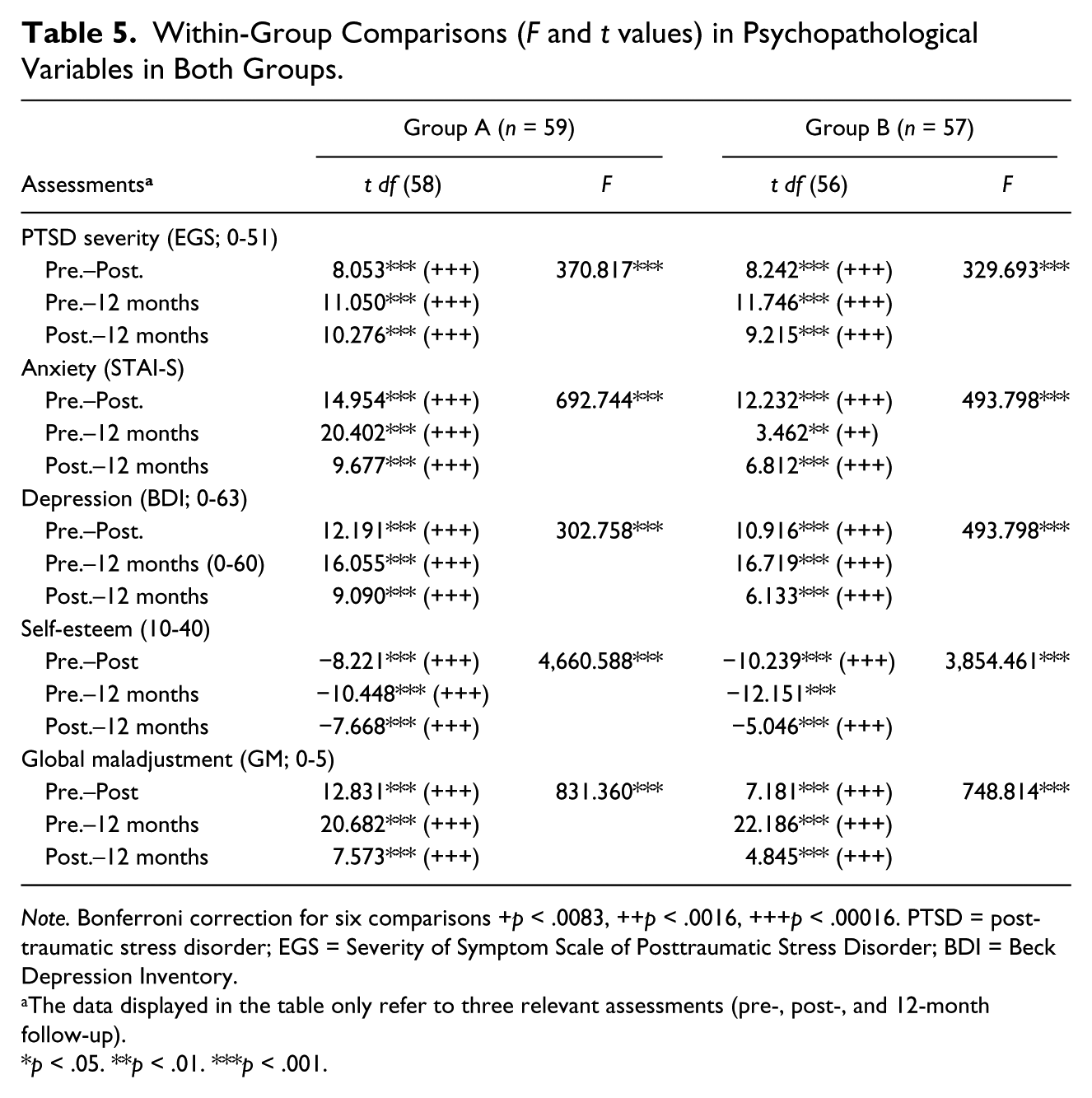
Note. Bonferroni correction for six comparisons +p < .0083, ++p < .0016, +++p < .00016. PTSD = post-traumatic stress disorder; EGS = Severity of Symptom Scale of Posttraumatic Stress Disorder; BDI = Beck Depression Inventory.
The data displayed in the table only refer to three relevant assessments (pre-, post-, and 12-month follow-up).
p < .05. **p < .01. ***p < .001.
Discussion
Battered women struggle with self-confidence, ongoing abuse, and concern for themselves and their children. Very often, safety, economic, and legal needs are likely to take precedence over therapy. However, as battered women obtain an abuse-free life, they may wish to focus on the psychological sequelae of the trauma they have endured (Kubany & Watson, 2002; McNamara, 2010).
This is one of the first controlled clinical trials to examine whether effectiveness of individual CBT can be improved in conjunction with group therapy. Most of the victims included in this study were suffering from a prolonged physical aggression, even with severe injuries and feeling at risk of death. In many cases, the violence had spread to children. Participants in this study were no longer living with their abusive partner and did not return to their partners at every follow-up assessments, so the treatment was exclusively focused on the sequelae of the trauma, which can not only be restricted to PTSD but also to emotional discomfort (anxiety and depressive symptoms, low self-esteem) and impaired functioning in occupational and other social roles (Sarasua et al., 2007).
Cognitive-behavioral strategies are an empirically supported intervention with high rates of positive outcomes in the management of clinical problems (most of all, PTSD) in battered women (Dutton, 1992). In this study, victims diagnosed with PTSD, emotional discomfort, or impaired functioning in everyday life have benefited from CBT. Unlike other studies (Johnson et al., 2011; Kubany et al., 2003), this approach has proven to be effective to cope not only with PTSD but also with emotional discomfort and impaired functioning in everyday life. The success rates even improved over time from post-treatment to the last follow-up (12 months). Therefore, this approach was effective to cope with trauma derived from IPV when victims were no longer living with the abusive partner.
Regarding the differential efficacy of the therapeutic modalities, both approaches have proven to be effective, but consistent differences in the variables measured between the two conditions have not been found. However, individual CBT in conjunction with group therapy obtained better outcome than individual CBT at follow-up assessments when coping with PTSD symptoms and with impaired functioning in everyday life. However, the effect size of the differences was moderate. Adjunctive group therapy to individual CBT may be a good option. Superiority of combined therapy to individual therapy for battered women in those areas can be explained by different factors, such as social support provided by group members, enhanced motivation for change and learning of better coping skills (Macy et al., 2013). Anyway, if differences between the two groups are only apparent at follow-up assessments (but not at post-treatment assessment), further research should focus on other variables not considered in this study, such as income differences, re-victimization, or length of time since women left abusive partner).
Anyway, the best therapeutic format (individual or individual and group therapy) for battered women should be adapted to their specific needs. It is necessary to work with each victim to identify her specific needs and tailor therapy as appropriate. For example, there are battered women who do not want to share their problems with others because they feel even worse in a therapeutic group or they have some difficulties to adapt to the scheduled group sessions.
An important conclusion of the treatment proposed in this study refers to its cost-effectiveness in a community setting. External validity can be regarded as a primary strength of the study. The possibility of implementing this rather brief (17 sessions and 13 weeks in the case of individual and group therapy) and successful intervention for battered women, with a long history of IPV, could lead to a considerable cost saving, especially in public Women Health Centers, which are currently very often overwhelmed by the number of victims in search of treatment. Further research could focus on testing whether group therapy can be as effective as individual therapy.
This study has some limitations, so several questions remain to be answered in further research. The experimental design could improve if we include a third group that had individual therapy for the same length of time (in terms of weeks) as the individual plus group therapy condition. Likewise, it would be possible to include, as an additional group, an individual treatment condition with a “placebo” social group to know whether the positive interaction depends on the group treatment or on the group itself. In this trial, studied women are seeking help and have left their abusive partner. Whether such findings will generalize to victims living with the abusive partner has not been extensively examined. Battered women have been considered as an only group, but some typology studies suggest that this kind of victims is a heterogeneous group in terms of severity, frequency, and chronicity of the violence and in terms of prior satisfaction of their relationships (Bender & Roberts, 2007). In addition, there is a need to understand resiliency among this kind of victims and to study the strengths of battered women who do not experience psychological sequelae. Future researchers need to address such questions. Finally, future research should be concerned about the statistical power of the studies, take into account the control of non-specific treatment effects, implement motivational strategies for victims reluctant to seeking therapeutic help and design measures to study treatment fidelity in the CBT groups.
Footnotes
Declaration of Conflicting Interests
The author(s) declared no potential conflicts of interest with respect to the research, authorship, and/or publication of this article.
Funding
The author(s) received no financial support for the research, authorship, and/or publication of this article.