



Abstract
Young men who have sex with men (YMSM) continue to experience higher rates of HIV infection than other populations. Recently, there have been recommendations to consider HIV prevention at the dyadic or couple level. Using a dyadic approach to HIV prevention would also address an unaddressed concern related to intimate partner violence (IPV) among YMSM. Although research on IPV among YMSM is still in its infancy, great strides have been made in the past 10 years to describe the prevalence and related correlates of IPV within older adult same-sex relationships. These studies have found rates of IPV among MSM to be similar to rates among heterosexual women, and to be on the rise. The present study is designed to provide insight into how power is conceptualized within YMSM relationships and the role it may play in relationship challenges. This study draws from qualitative data collected from 11 focus groups with 86 YMSM and 26 individual semi-structured interviews to understand relationship challenges and the experiences of YMSM involved in partner violence. YMSM described relationship power as stemming from numerous sources including sexual positioning, gender roles, education, income, prior relationship experiences, and internalized homophobia. The findings have a number of implications for service providers and program design. Interventionists and other researchers need to consider power dynamics and other contextual elements of IPV before effective interventions can be developed for YMSM and other sexual minority populations.
Introduction
Young men who have sex with men (YMSM) have been disproportionately affected by the AIDS epidemic, accounting for the largest percentage of new HIV infections in the United States, despite substantial investments in community-based interventions targeted to this population (Centers for Disease Control, 2008). Recently, there have been recommendations in the literature to consider HIV prevention at the dyadic or couple level (Mustanski, Newcomb, & Clerkin, 2011). This approach would make sense given that research indicates that the majority of unprotected intercourse occurs within primary partner relationships, (Davidovich, de Wit, & Stroebe, 2000) and recent studies suggest that HIV infection happens most frequently within such relationships (Sullivan, Salazar, Buchbinder, & Sanchez, 2009). In addition, there is evidence that the “syndemic” described for older MSM—which posits that the additive effects of psychosocial health problems, such as intimate partner violence (IPV), drug use, depression, and childhood sexual abuse, increase one’s vulnerability for HIV/AIDS—is also relevant for YMSM (Mustanski, Garofalo, Herrick, & Donenberg, 2007; Stall et al., 2003).
Using a dyadic approach to HIV prevention also has the potential to address IPV, a relatively unaddressed concern among YMSM. Although research on IPV among YMSM is still in its infancy, great strides have been made in the past 10 years to describe the prevalence and related correlates of IPV within older adult same-sex relationships (Coker, Smith, McKeown, & King, 2000; Davidovich et al., 2000; Halpern, Young, Waller, Martin, & Kupper, 2004; Houston & McKirnan, 2007; Relf, Huang, Campbell, & Catania, 2004; Valleroy et al., 2000). These studies have found rates of IPV among MSM to be similar to heterosexual women, and to be on the rise. National data indicate that same-sex partner violence increased 25% since 1991 and 23% between the years 1998 and 1999 (Greenwood et al., 2002). A recent study using the population-based California Health Interview Survey found that lifetime and 1-year IPV prevalence was higher among gay men compared with heterosexual individuals (Goldberg & Meyer, 2013). Among younger sexual minority groups, data from the Youth Risk Behavior Survey found that male adolescents endorsing a gay or other same-sex identity have 2.2 greater odds of being involved in IPV than heterosexual males (Tharp, Feijun, & Stone, 2013).
YMSM may be at particularly high risk of IPV, and there is evidence to suggest that YMSM experience higher rates of IPV than their older counterparts (Freedner, Freed, Yang, & Ausin, 2002; Halpern et al., 2004). Research conducted with YMSM aged 18 to 24 suggests that as much as 41% of YMSM experience emotional abuse, 23% experience physical abuse, 18% experience sexual abuse, and 12% perpetrate physical violence within their intimate relationships (Wong, Weiss, Ayala, & Kipke, 2010). In spite of the relatively high prevalence of IPV within YMSM relationships, no evidence-based prevention interventions have been developed to address this issue.
IPV among MSM and YMSM has been linked to substance use, HIV-risk behaviors, and mental health issues (Arnett, 2000; Davidovich et al., 2000; Xiridou, Geskus, de Wit, Coutinho, & Kretzschmar, 2003). IPV has also been called the third largest problem facing gay men, right after AIDS and substance abuse (Island & Letellier, 1991). Although not well-documented for YMSM, we know that older MSM involved in violent intimate relationships are more likely to report a range of physical health problems, such as obesity, high blood pressure, and heart disease (Burke & Follingstad, 1999; Craft & Serovich, 2005; Cruz & Firestone, 1998; Island & Letellier, 1991; Shelton et al., 2005). Given these relationships, it is startling that IPV has been virtually ignored within sexual minority populations. From an HIV prevention perspective, this is surprising given that safe sex negotiation has been identified as particularly challenging for both heterosexual women and MSM victims of sexual, emotional, and physical abuse (Heintz & Melendez, 2006) and that unprotected intercourse remains the most common mode of HIV transmission.
At this time, most research investigating IPV within YMSM relationships has been limited to descriptive studies that describe the prevalence and rates of IPV in YMSM populations (Freedner et al., 2002; Halpern et al., 2004). A recent systematic review of the literature identified 28 studies that describe IPV in MSM relationships and found that the majority of studies rely on convenience samples of MSM, use multiple recall periods, and have varied definitions of partner violence. In spite of these methodological issues, all of the studies documented rates of IPV that were similar to or higher than the rates of IPV observed in populations of women (Finneran & Stephenson, 2013). Finneran and Stephenson acknowledge that apart from identifying the magnitude of the issue, there is little that one can conclude about the phenomenon of IPV among MSM and YMSM.
These prior studies are important to demonstrate the scope of the issue. However, to develop effective prevention programs for YMSM, we must fill many critical gaps in our knowledge about the challenges YMSM experience in their relationships including the role that power, internalized homophobia, and gender roles/expectations play in IPV. The present study will begin to fill in these gaps and is designed to provide insight into how power is conceptualized within YMSM relationships and the role it may play in relationship challenges.
IPV and Power
Research has continued to find that one of the most significant predictors of relationship violence stems from relationship dynamics and more specifically, those dynamics reflecting power. For example, in relationships in which couples do not share power and decision making, significantly greater levels of dating violence take place (Felson & Messner, 2000). Typically, power has been conceptualized from a feminist perspective, in which traditional patriarchal values may influence men’s aggression toward women as a way to enforce and maintain their social advantage over women (Bograd, 1988; R. E. Dobash & Dobash, 1979). In addition, power has been related to resource theory in which theorists posit that relationship power is derived from the presence or lack of resources, wherein when one partner lacks resources such as educational or financial, violence is used to maintain and restore a sense of power in the relationship (Allen & Straus, 1980; Gelles & Pedrick-Cornell, 1990).
How power may be conceptualized in same-sex relationships is not as clear; limited research does provide some hints as to how power may be related to relationship quality and conflicts. For example, while differences in physical size and strength in many heterosexual relationships may put female partners at a power differential, research has found that due to similarities in physical size, this aspect of power may not be as clear cut in same-sex relationships (Rohrbaugh, 2006). In addition, internalized homophobia, stemming from heterosexist societal attitudes, has been linked to several negative outcomes in lesbian, gay, bisexual, transgender (LGBT) relationships. Internalized homophobia is related to shame, anxiety, and the devaluation of LGBT people and one’s self, and has been found to contribute to lower relationship quality, greater number of relationship problems, and ability to maintain long-term relationships (Frost & Meyer, 2009; Gaines et al., 2005; Meyer & Dean, 1998; Ross & Simon Rosser, 1996). In lesbian relationships, internalized homophobia has also been linked to IPV (Balsam & Szymanski, 2005).
Societal attitudes that contribute to internalized homophobia have also been linked to gender role socialization in determining who can and cannot be a victim of IPV (Brown, 2008). Given that the majority of reported instances of IPV involve a female victim and male perpetrator, the disproportionate exposure of these power imbalances may have contributed to IPV among same-sex partners. Among gay males, this may perpetuate beliefs such as “boys will be boys,” that males cannot be victims of IPV, and that men may be reticent to talk about being victims of IPV for fear of being feminized and struggling with what it means to be a man in their culture (Island & Letellier, 1991; Walsh, 1996). Qualitative research with sexual minority youth also found that among the most common perceived reasons for IPV to occur in same-sex relationships were societal and internalized homophobia as well as negotiating socially prescribed gender roles (Gillum & DiFulvio, 2012).
The current field has identified IPV as a major public health issue among YMSM. What is lacking is more in-depth information that explores the context and dynamics in which IPV occurs in same-sex, particularly YMSM, relationships. This is necessary to develop effective interventions that are based on conceptual models that build on our theoretical and empirical understanding of how IPV is experienced in young men’s relationships. The current study seeks to provide an overview of how power is conceptualized in YMSM’s relationships and how power may be related to perpetration and victimization of IPV.
Methods
The Young Men’s Relationships (YMR) Study consisted of two phases and was completed between March and December 2012. The first phase included the facilitation of 11 focus groups with 86 total participants. Focus group discussions revolved around relationship issues such as communication, conflict resolution, and power dynamics among couples. To qualify to participate in Phase 1, a participant needed to (a) be 18 to 25 years of age, (b) be biologically male, (c) identify as gay/bisexual or report having sex with a man, and (d) have been in a “primary partner relationship” within the past 12 months. Participants were recruited using purposive sampling techniques from gay-identified venues including service agencies, bars, clubs, and community events. The focus group discussion guide was designed to gather in-depth information on young men’s intimate relationships including sources and meaning of power, relationship expectations, and challenges. Each focus group lasted 1.5 to 2 hr and was digitally recorded and professionally transcribed. Ten focus groups were conducted in the project offices, and one was conducted at a service agency office. Focus groups were stratified by race (Latino, White, African American/Black, Asian/Pacific Islander). Informed consent for focus group participants was obtained prior to beginning the study activities. The informed consent was explained to participating young men in a group setting and the study team checked with each participant individually to address questions or concerns.
Following each focus group, participants completed a brief computer-assisted, self-interviewing survey consisting of demographic items, sexual behavior, sexual identity and attraction, experiences of racism and homophobia, substance use, and a partner violence scale (Conflict Tactics Scale or CTS). A total of 101 surveys were completed. Respondents were provided a US$50 incentive for completing the focus group and survey.
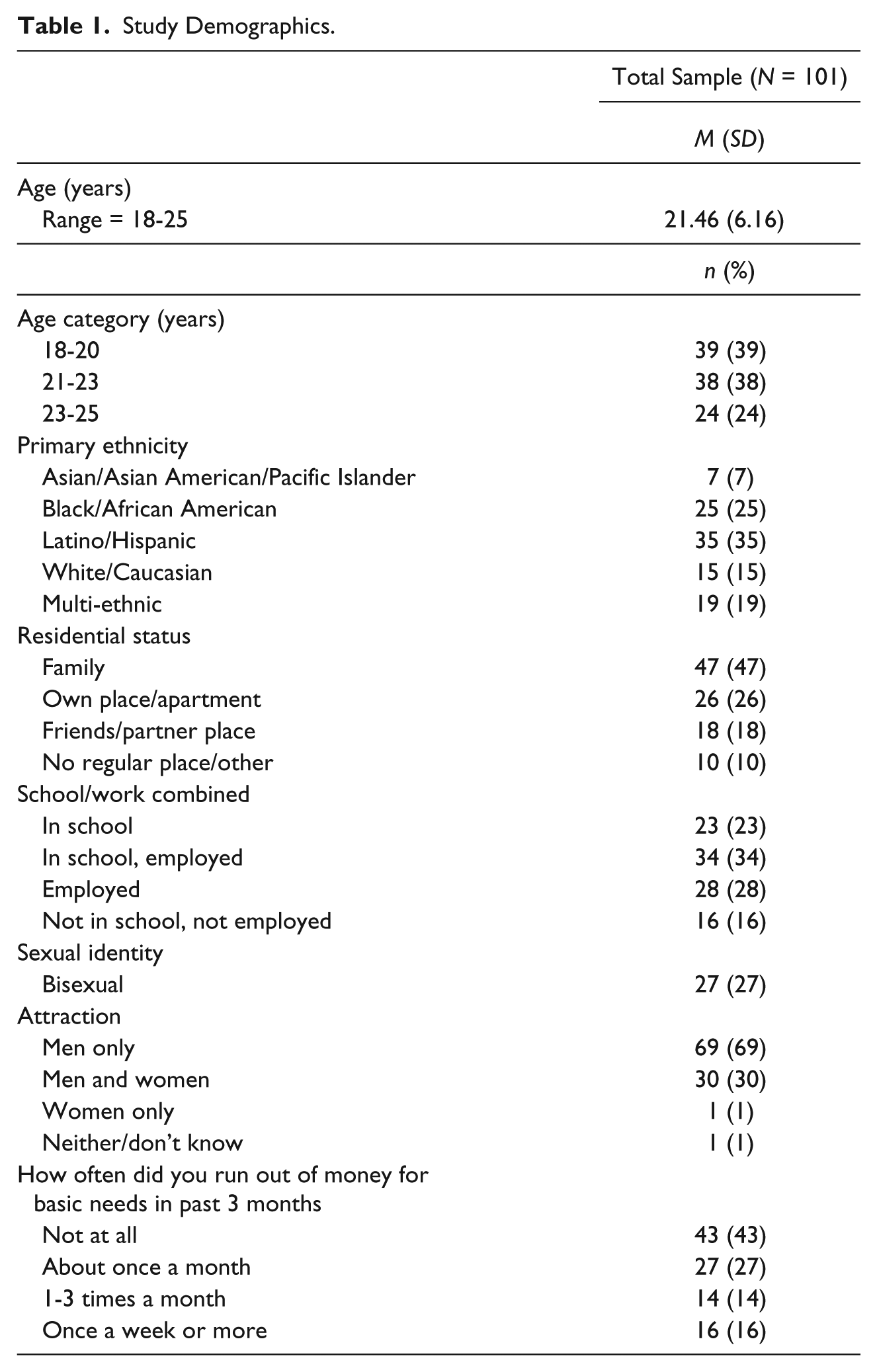
Table 1 presents demographic information for the study sample. The mean age was 21.5 years of age. About half of the respondents (47%) reported living at home with family members. About a third (34%) reported being in school and being employed; about 16% were neither in school nor employed. Most (72%) identified as gay or some other same-sex identity with an additional 27% identifying as bisexual. A little less than half (43%) had not run out of money for basic needs in the past 3 months.
Study Demographics.
Phase 2 consisted of 26 semi-structured qualitative interviews to better understand the experiences of young men who have been involved in partner violence. Phase 2 participants were recruited based on responses to key survey items. When completing the quantitative survey, if a respondent reported that he had experienced physical partner violence (as assessed by the CTS), but was not in a current relationship, a programmed message appeared on the computer screen explaining that he was eligible for an additional part of the study. Participants who were currently in a verbally or emotionally abusive relationship were also eligible to participate in the interview. The exclusion of participants who were currently in physically violent relationships was made for participant safety considerations. Project team members explained the individual interview to the participant, and if he was interested, a qualitative interview was scheduled.
The interview discussion guide was designed to obtain in-depth data on the following questions: (a) How do young men describe the history and onset of IPV and other violence in their lives? (b) What is the relationship of HIV-risk behaviors (e.g., drug use, unprotected sex) with IPV in YMSM relationships? (c) What are perceived causes for IPV in YMSM relationships? (d) What are the help-seeking behaviors of YMSM involved in IPV? (e) How is internalized homophobia related to IPV in YMSM intimate relationships? and (f) What are the intervention opportunities and strategies that might be pursued to reduce IPV and HIV risk in YMSM relationships? A separate informed consent was obtained prior to conducting the one-on-one interview.
Each interview lasted 1 to 2 hr and was digitally recorded and professionally transcribed. All interviews were conducted in the project offices or a location convenient to the respondent (e.g., café, park). Respondents were provided a US$35 incentive for completing the Phase 2 interview. All study procedures were approved by the Institutional Review Board at Children’s Hospital Los Angeles.
Analysis
The qualitative analysis for this article utilized a “constant comparative” approach, an aspect of grounded theory that entails the simultaneous process of data collection, analysis, and description. In this process, data are analyzed for patterns and themes to discover the most salient categories, as well as any emergent theoretical implications (Strauss & Corbin, 1990). As the data are collected, they are immediately analyzed for patterns and themes, with a primary objective of discovering theory implicit in the data. Interview and focus group transcripts were included in the analysis. Atlas.ti was used for coding and analysis of relationships between and within text segments.
Members of the research team reviewed an initial sample of 10% transcripts to identify key themes, which formed the basis of the project codebook. Codes focusing on a range of topics were identified and defined based on the key constructs included in the discussion guide. The codebook was modified as needed, and once finalized, three members of the research team were responsible for coding the interviews. To establish the coding system, 15% of the transcripts were double-coded. Differences in coding were discussed and resolved by the team. The open coding process included refining codes based on the data. Codes related to power dynamics, gender roles, internalized homophobia, and relationship expectations were included in the current analysis. This process led to the structure of the present study that provides a description of how power is conceptualized within young men’s relationships and its association with partner violence. The article then discusses how societal influences may also affect young men’s sense of power, contributing to a variety of relationship challenges.
Results
Sexual Behavior
Power dynamics in intimate relationships can be conceptualized in a number of ways. To better understand how young men conceptualize power in their relationships, and ultimately how power may contribute to relationship violence, young men were asked to consider how one determined who had more power in their intimate relationships. By far, sexual positioning was one of the most commonly heard responses. Specifically, young men expressed that taking on the receptive role in anal intercourse, or the “bottom,” often meant that this partner was in a less powerful position in the relationship. Young men described this position as being more “submissive,” “weaker,” and the “female” in the relationship. This less powerful position seemed to have less control in sexual decision making as well, with some feeling that the “bottom” may have a stronger emotional attachment in the relationship, thereby making him potentially more vulnerable:
I think like hypothetically if the bottom wanted to use a condom, the top would be like no, fuck that, and then you know, then the bottom would just deal with it, if they didn’t walk away from it. [I: Why do you think they would just deal with it?]. Because they have emotional, ’cause they’re mostly like attached to that person . . . It’s hard for people to leave relationships that are actually like not good for them.
Sexual positioning in young men’s relationships was often compared with heterosexual relationships, with the “bottom” taking on the “female” role in the relationship. These gendered comparisons were frequently made throughout the study, as respondents seemed to lack their own language to characterize the roles young men take on in gay relationships. Perhaps more importantly, these comparisons played out in other ways as young men described their relationships. Those perceived as more “flamboyant” or feminine were, at times, described as bringing less to the relationship than the partner perceived as more masculine. In some instances, being the “bottom” was seen as the less desirable position, unless you “really enjoy it.” One focus group discussed this view, saying that if two men are “versatile” (e.g., have no preference being the insertive or receptive partner), it may seem random which position one takes and this often led to misperceptions among straight friends or family:
Like personally, like I’ll top or bottom any time. They [people] kind of wonder like how, so do you guys just like rock, paper, scissors? They’re just wondering, how do you come to the conclusion, ’cause they think it’s, they think it’s almost like losing if you’re on, if you’re a bottom.
“Tops” were seen as the provider in the relationship, thereby taking on the more traditional male role. This is exemplified by one young man who felt that as the insertive partner or “top,” he should take on this more traditional male role in his relationship—seeing this as “taking care” of his partner by driving him places and taking him out. When he felt that this was not being fully appreciated by his partner, he would resort to violence:
He would just, he made me feel like what I was doing wasn’t enough. . . . Not only am I doing what I have to do but I’m picking you up from school, I take you to work and pick you up from work when I can, and take him out whenever I could . . . I think like tradition, if I’m gonna be here topping you, I’m gonna take care of you and it wasn’t good enough for him. So I would slap him, you know, shut up. But it was never really like something really bad, where he had to be seen medically. It was like a slap in the face, like you know like shut up bitch, or something like that.
In addition to viewing sexual positioning as a means of determining power in intimate relationships, young men also spoke more generally about how either partner could use sex as a source of power in their relationships. This typically took the form of respondents describing how they or their partner would withhold sex to get something from the other partner:
So, I stopped letting him top me for the past week and half, two weeks. And he just keeps wondering why. . . . But all week I’ve been asking for him to give me, shoot me money for dance classes. He said he’d been broke. But yet this weekend, all of a sudden after I give him some, he has all this money. So, it’s kind of like, to me that was like testing my waters, and I was like, Oh so he wants to act up when I’m not giving it up. But then like afterwards he wants to be all oh I brought you some roses, I-I’m cooking again for you . . . I’m like wow, that’s some real like, I didn’t know how much power I had there.
Ideas of Masculinity and Femininity
When asked what being masculine meant, young men typically described it as “taking care” of one’s partner, being “independent” and mature. They described someone who was muscular, spoke in a deep voice, and “doesn’t mind getting a little dirty.” Generally, they felt that boys were socialized to be more aggressive than girls, making it hard to be submissive in a relationship. Some respondents felt that masculinity was partially constructed by one’s race or ethnicity, relating that one could dress in “booty shorts and a tank top” in certain cultures such as Asian and some Caucasian communities—“a little surfer guy or a little hippie guy”—and still be perceived as masculine. However, this would not be considered masculine in Latino or Black communities.
Conversely, femininity was described as being “catty,” “soft spoken,” and sweet and doing things a “normal” man would not such as being a “bottom.” Some young men expressed that these partners oftentimes wanted to feel more submissive and feminine, and this could lead to dangerous power differentials in the relationships, as illustrated by this respondent: “Especially in the gay world, [some] think it’s masculine for a guy to put his hands on you, and it makes him feel more submissive.” This description was not necessarily the norm, as respondents were often quick to point out that violence does “not make you a man”; rather, masculinity was usually more about how one carries himself and not exerting power over another.
As described previously, young men often held some very traditional and somewhat patriarchal views about gender roles. While they often expressed their discomfort about their friends’ and families’ lack of understanding of same-sex relationships, disdainfully describing how they would ask “who’s the girl” in the relationship, young men tended to use this same vocabulary, perhaps due to lack of any other terminology. Respondents often said that someone had to take on the feminine role in a relationship, and as described above, that generally meant a more submissive role. In several instances, young men commented that developing and sustaining a gay relationship was challenging in the absence of real role models. Thus, the way they described and spoke about their relationships is very similar to what is seen in traditional heterosexual relationships:
Just because I feel like even though you are in a gay relationship you still go by a straight relationship—like the way if there is a guy and there is a girl, it’s just, you just have to go with that flow. It’s always going to—I am not saying be a complete female but there has be someone that’s more masculine and in control than someone that’s not.
For some, being “the man” in the relationship was equated with having more power. One respondent reported that the reason he has “so much power” is because he would “just take it.” When asked to explain that further, he elaborated that he would always be the one to initiate intimacy such as holding hands, kissing, and sex and that these actions allowed him to “just basically be the man.”
While not the norm, a smaller number of participants held very patriarchal views of women—which seemed to extend to the “feminine” role in their relationships. One respondent reported that he “can’t stand it when a female . . . wants to put herself in a man’s shoes” explaining that it is not her place to “control” and “overpower.” Another respondent compared being in a relationship with a totem pole, with the male at the top of the pole. When asked how that would look in a same-sex relationship, he felt that someone with “financial authority” or some other type of authority would then call the shots:
Like, if women were the lesser, men would be the superior, I guess, in that sense. At least that’s what I was taught. Just that you don’t—if somebody has authority over you in any way or another, you don’t get out of line, you don’t bite the hand that feeds you. So if the littler person or the smaller person—if the female gets, or starts nit-picking at the male, and he retaliates then, that’s the beginning of conflict. Somebody has to start it. And it’s usually, with me, the smaller version of the person . . . they’re gonna be the reason or they’re gonna be the cause of the conflict.
In spite of what young men seemed to describe as more typical in their own and other gay relationships, respondents largely seemed to desire more egalitarian relationships—noting that the ideal is for both partners to share power equally: “I rather it be equal 100%, 50-50, than one person feeling like they can take it, almost like taking advantage of the other person.” This would be achieved through not conforming to the more traditional gender roles seen in some heterosexual relationships: “We already discussed in our relationship that we’re pretty equal. So there is no girl in the relationship, there is no man in the relationship. It’s pretty 50/50.”
Maturity and Relationship Experience
In addition to gender roles and sexual positioning, another facet of relationships that related to power was the maturity and relationship experiences of both partners. This seemed to be particularly salient for these young men as many had very limited dating or relationship experience given their age and their perception of having limited options for romantic relationships as young gay men. In a focus group discussion, respondents discussed how one has to “grow up and mature” to be able to assert oneself in a relationship, otherwise one is able to be easily controlled or manipulated by a partner.
Beliefs that gay men jump into sexual relationships too soon were commonly held—with one young man feeling that having sex too soon can cause “destruction in relationships”—particularly conflicts. Thus, respondents stressed that being ready for a relationship and knowing how to maintain and grow a romantic relationship was one of the biggest challenges for young sexual minority men:
Knowing if you are ready for a relationship. A big one . . . knowing how to live a gay lifestyle. And live in a straight world. Yeah, I pretty much have to have a same-sex relationship in a straight world.
Not being ready for an intimate relationship was seen as challenging for our respondents. When thinking about power, young men felt that in their first relationships, they were at a power disadvantage—mainly because they were not aware of how to “deal with things and how to handle conflicts.” Generally, respondents felt “you just have to like grow a little in order to actually be able to like sustain a healthy relationship.” In an interview, one young man related how his first relationship included physical, sexual, and emotional violence. He remained in this relationship for some time, feeling that he “couldn’t do any better” because he felt very “insecure with low self-esteem.” As he reflected on this experience, he indicated that if he was in that position at this point in his life, he “would just leave” because he felt that he had:
changed a lot. After being with [ex-boyfriend], I got to experience a lot more different men and as I grew older, I grew into my looks and I got a lot more opportunities. So, I feel like now I don’t feel like . . . that’s the only person that will love me and that will be attracted to me.
Several described how it was common for a young gay man who was first entering the “gay community” to become involved with an older man. This scenario was seen as having a number of issues that could contribute to power differentials in the relationship including the older partner being better off financially, more settled into his career, and perhaps most importantly, for many respondents, having more relationship experiences to draw on. This allowed the older partner to better navigate the relationship and negotiate for what he wanted. One young man described one of his earlier relationships with an older man that ended up having elements of emotional and psychological abuse (e.g., dismissive, controlling behaviors). He related that even in the beginning, he felt that these differences in relationship experiences could be problematic:
Even going into the thing, even though I let it get to that place, going into the relationship I knew—you see this is what astonishes me—[I knew] he is older than me and he has had three past relationships. So, I went in very cautious knowing those pieces of information and sort of being very, just cautious about myself, and telling myself not to fuck it up. I even asked him, “Is my novice-ness—this being my first relationship, does that bother you? Is that a source of conflict for him?”
Breach in Trust
Young men spoke at length about trust in their relationships and the challenges they have experienced in building and maintaining trust. They felt that this was related to the perception many people, both gay and straight, have that gay relationships are not as permanent as heterosexual ones. Respondents felt that this perception often creates challenges in their relationships and may have an effect on the power dynamics.
When asked to consider gay relationships more generally, young men seemed to be in agreement that one of the things that most defined gay relationships compared with heterosexual relationships is the perception that gay relationships “tend to be more sexual” and less permanent than heterosexual ones. Thus, the idea of long-term or more permanent relationships was not seen as a realistic goal, “I think it’s harder to find substantial relationships. I feel people in the homosexual community, it’s not so monogamous, so it kind of comes and goes. It’s hard to find a keeper.”
Respondents discussed how trust in relationships can be associated with power dynamics. More generally, young men attempted to secure power in their relationships by controlling their partner’s communications with others as well as their comings and goings. This was seen as being related to jealousy and trust, with the more powerful partner trying to maintain trust in the relationship through force and control. When trust is broken in a relationship, the power structure within the relationship may change depending on the specific situation. Generally, when instances of infidelity occur, the partner who feels “wronged” in this situation may be able to gain more power in the relation. One respondent described this situation when he discovered that his boyfriend had cheated on him. Initially he tried to put this partner on “lockdown.” When this did not work, he lost control and ended up reacting violently in an effort to control the situation:
I just couldn’t trust him anymore. So, I made it worse to the point that I ended up messing up the relationship at the end because I just couldn’t trust him. And him telling me that he wanted to go out and all this stuff, it just made me be like, “You know what, you are not going to do shit. You are not leaving this fucking house.” I am all, “You are just going to stay in lock down basically.” I mean, I can be like the sweetest person in the world but once you just lose my trust you are never going to get it back, ever. So, it just got to the point that he went out. I went to his house and tried to talk to him and he just told me shit and I just lost it. I grabbed him from his bed and I threw him on the floor and I just started telling him shit like to the point that I just couldn’t stop.
Money and Education
Money in general was seen as something that caused conflicts in relationships, particularly when thinking about power and control. As one young man reported, “money is power.” This was seen by respondents who reported that when a partner bought them a phone or computer, the partner felt that because he bought it, he could go through it and see emails and text message exchanges. The influence of money on power was commonly discussed, and one respondent reported that he is very aware of the influence money can have on someone’s ability to control their partner because he was raised that way, “My mom has raised me the same way she has been raised, that you don’t ever let a man make more money than you.”
In addition to often having more relationship experiences, older partners oftentimes are more secure from a financial and educational standpoint. From the young men’s perspectives, they felt this could put them at a disadvantage because they were often dependent on their partner. This was seen in different ways such as being dependent on a partner for transportation, housing, education, and other costs such as phones and computers. One respondent who worked at a McDonald’s related that his partner, who worked in an office environment, would constantly put him down for his job to the point where he felt “fucking worthless . . . I [was] perfectly fine when he is not around but when he is around . . . I feel like oh my God, I need to do something with my life because I am a fucking loser.” Another respondent described a “controlling” relationship he had when he was younger. His partner at the time was more successful and used his success to control the respondent’s communications and his ability to see other friends. In retrospect, the young man realized this was not a healthy relationship and explained why he remained in this situation:
I think the fact that he felt that he had his life together, you know, he just, he was very educated. He came from a family with a lot of money. I felt that he was like the best I could ever do. And it’s almost like he knew it. Like the way, he was very cocky, very secure in his own skin . . . I looked up to him a lot. I looked up to his education and I saw a lot of what I wanted to be in him.
A less common but important issue related to money and power was an example of a young man who had not “come out” to some of his family members for fear of being cut off financially. He described his relationship at the time as being “tit for tat” with regard to the partner violence that included mutual perpetration. His partner at the time used this knowledge about his family to his advantage to control the respondent by attempting to “out” him to his family:
He used to do that or he used to call my house and tell my grandparents the reason I don’t want to come out to them is because I’m scared they gonna cut me off.
Being Open About Relationships
One of the biggest challenges that young men described in their intimate relationships is the extent to which they feel comfortable and are able to be “out.” This inability to be open about important aspects of their lives led to some young men feeling disempowered and ashamed of their relationships. Family in particular was important, especially given that 47% of the sample still lived at home. For these young men, it was important to maintain family relationships as they depended on the family for many of their basic needs. Young men described this as being “insecure” and that these insecurities and feelings of powerlessness often led to conflicts in their relationships. In one focus group, a respondent described how in his last relationship he could not be “very open” because his dad was “very old school.” Therefore, this young man felt he had to hide his relationships because he had been told once before “if one of you guys turns out to be gay, I will disown you from the family.”
In addition to hiding their relationships from family, some young men described a hesitation to show affection with their partners in public, fearing that they would receive negative reactions from other people. These perspectives varied in intensity, with some young men expressing aspects of internalized homophobia, such as this respondent who stated that “it’s wrong for them [kids] to see two guys or two girls kissing or holding hands in public because they are going to get the wrong idea in their heads.” One young man described this “insecurity” within the larger context of not being fully accepted in society: “You have to put up with one knowing the fact that you feel insecure ’cause you’re not really accepted.” This could lead to conflicts within a relationship, particularly if one partner was more guarded about their sexual identity than the other:
When I was in a relationship, my partner really wanted to show public displays of affection. And it made me kind of uncomfortable . . . he would try to like hold my hand or something, in public. And uh, I felt really uncomfortable about it. And it usually creates like an awkward atmosphere between the both of us… And then, it usually ends up in a fight. ’cause he, he felt very unwanted, rejected, and stuff like that.
Perspectives on YMSM Relationships
To better understand the dynamics of young men’s relationships, we also explored how young men characterize their intimate relationships with regard to how they may differ from heterosexual relationships. The most common response was related to how open young gay men can be in their relationships. Most respondents felt that the limitations society has put on gay relationships were to blame for some of the ambivalence that seemed to exist about gay relationships. Young men felt that because they could not openly “bond” with each other, this limited their abilities to develop relationships in the same way as heterosexual couples. This in turn affected their power dynamics, with some young men feeling disempowered within their intimate relationships. These issues seem important to discuss as they seemed to contribute to YMSM’s conceptualization and sense of relationship power as shown in Figure 1.
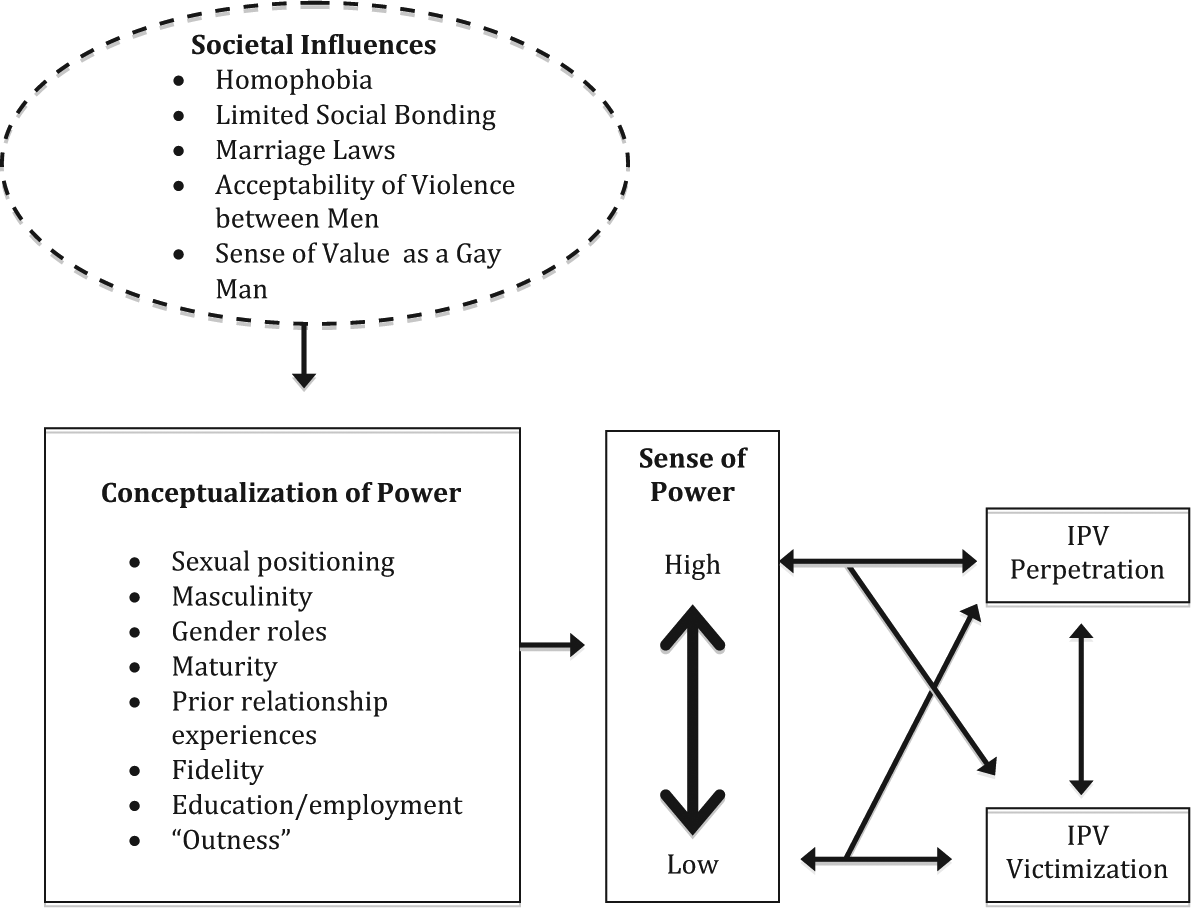
Power conceptualization and its relationship to intimate partner violence among young men who have sex with men.
For example, in one focus group discussion, a participant explained that:
Not being socially accepted, how can we socially bond if we have to hide ourselves from the world. We can’t go out and date, we can’t socialize in groups and converse and learn about each other truly unless it’s behind closed doors.
Importantly, the current political climate was often considered during these discussions, with young men pointing out that “there is almost . . . an unwritten rule that if you enter a marriage or relationship in the straight world, you try to make that work.” The lack of “social binding” for gay men was believed to lead to being less “committed to each other”:
Also marriage. Uh, that’s a big difference. You don’t really know like how long your relationship’s going to go, ’cause you don’t, you don’t have the opportunity to get married. So it’s like, what are we doing, you know, how long is this going to go?
Finally, when thinking about the traditional gender roles that young men described in their relationships, another salient feature of gay men’s relationships is the idea that violence is going to be much more common in men’s relationships because there is a “biological instinct” for men to fight given the high levels of testosterone that was often blamed for violence:
I feel like the capacity for violence is a lot higher by default just based on the excessive testosterone in a male-male relationship . . . Also if possible, I feel like it’s more possible for both partners to be violent and both partners to be simultaneously perpetrators and victims. Because they’re both, I mean, they’re both men, they’re both capable of being violent and both capable of fighting …have that desire to fight each other and to prove their points and to be, to have the power, I guess you can say.
This need to be right and to have the power was also considered when discussing conflict resolution. Discussing problems and coming up with solutions that may work for both partners was seen as a challenge for any relationship. When considering two men, it was an even bigger challenge:
Okay, we are both men. Let’s work it out. I sort of—it may come off sometimes as being submissive and being like, “I am sorry that I am yelling at you. Let’s talk about it.” So, it’s a tough balance where you do want to be sort of the bigger man. Being the bigger man by itself is an extreme challenge just because you want to be right and you kind of want to make your point heard. But at the same time, it’s a challenge sort of being the bigger man but not appearing submissive.
Impact of Internalized and Societal Homophobia on Intimate Relationships
Importantly, in some instances respondents felt that the insecurity that some young gay men experienced could put them in physical harm as well. Several discussions emerged that focused on the overall societal oppression that sexual minority populations face (e.g., marriage laws, hate crimes, general homophobia). Many respondents felt that these issues contributed to insecurities and reticence to be open about their relationships. These perceptions of not being fully valued in the larger society may ultimately influence young men’s sense of security and power more generally, with some feeling powerless in their situations. Thus, when conflicts escalated to violence, they felt that some young men may not be comfortable speaking up or seeking help:
With a gay relationship, I feel like there is a lot of insecurity that happens. So, when it comes to abusive relationship, some guys I feel like they would back down and just take it because they don’t want to add another flaw on top of them.
This idea was echoed in part when asked about how society might view violence between two gay men. In general, respondents themselves reported having greater concern for IPV between a man and a woman than between two people of the same gender. Some felt that the label “domestic violence” or “partner violence” was not relevant for this phenomenon, instead viewing it simply as “two guys fighting.” They felt that this was similar to how society would view the issue, seeing it as not really a problem that required a great deal of attention:
A lot of people don’t even think that gay people should even exist, you know. So I think that they would kind of just be like, oh it’s just two fags hitting each other. That’s what I kind of think of it. Or they just like laugh at the issue or something like that.
When discussing young men’s insecurities and how that might play in their relationships, one of the most common responses was that self-esteem and maturity are integral to building strong and healthy relationships. This was seen a real issue in the gay community, with one respondent expressing a desire to help people in this area because “self-esteem and self-confidence [is] broken at such a young age for gay people.” Most importantly when thinking about self-esteem in the context of relationships, is how this may be related to violence. When thinking about programs that could be developed to help young men develop healthy and secure intimate relationships, one respondent expressed the need to help gay men deal with their anger in more healthful ways in an effort to help young men deal with societal oppressions and conflicts:
I want to discuss sex, safe sex, communication, and violence. Cause the gay person seems so angry . . . I don’t know why they so angry. But they [sic] angry. Because it’s the world judging them. They got to go through that on a daily basis, so when we get around each other at a club, that’s why we always fighting each other. Because they gotta go through it on a daily basis. They gotta deal with their family turning their backs on them. They got a deal with all those things.
Discussion
This study is among the first to fully describe how relationship power is conceptualized and described in YMSM’s relationships. Prior research has been limited to describing the prevalence of this public health issue. In the absence of more concrete descriptions of how young men perceive and explain power and violence in their relationships, effective prevention programs cannot be developed and evaluated. In general, young men seemed to view violence as relatively common within gay men’s relationships, believing that this was less important an issue than it would be in heterosexual relationships where females are more likely to be the victim. Most respondents did not feel that labels such as domestic violence or IPV were relevant for what occurs in same-sex relationships, instead seeing it as relatively normalized and using the adage “boys will be boys” as others have reported in the literature (Island & Letellier, 1991). There is some irony in young men’s perception that the label “intimate partner violence” is not relevant for the types of violence that occurs within gay men’s relationships as this term was developed in part to be more inclusive of different relationship types and status than the original term domestic violence.
In many ways, young men’s minimizing of the violence in their relationships is reflective of what they perceive to be the point of view of larger society. They described feeling the intolerance and disapproval from their surrounding communities, and felt that because of this attitude, many would not be concerned about violence between two male partners. This is similar to what others have reported for lesbian couples wherein women report that traditional gender roles and perceptions of femininity preclude involvement in partner violence (Hassouneh & Glass, 2008). This perception is important to overcome, as there are important implications for service providers, law enforcement, and others in recognizing that partner violence occurs within same-sex couples and should be recognized as important issues within the LGBT communities. Young men in this study also expressed a reticence to label these conflicts as IPV or domestic violence because it would be one more “flaw” that society could put on gay men. This perception suggests that education is needed within the LGBT communities as well as larger society to combat these stereotypes and increase awareness of IPV within same-sex relationships.
While the data presented here show some similarities with research among heterosexual couples with regard to how power is constructed within intimate relationships (e.g., financial, education), there are some unique factors that emerged from these discussions. For example, young men’s discussions on how sexual positioning often contributes to the relationship’s power dynamics is a unique contribution to the literature. In particular, the parallels that young men drew between heterosexual couples and how they determined the “female” and the “male” in their own relationships suggests a limited vocabulary and reference points for describing their own relationships. The heteronormative language used to reference one partner being “weaker” or more “submissive” is particularly troubling as the discussions implied an inherent power structure within the relationships. These discussions support previously asserted ideas that when studying IPV, one cannot reduce gender to a “unitary phenomenon” that can be reduced to self-reported sex (Anderson, 2005). Understanding how gender is viewed and constructed within specific populations is essential to address IPV. While most respondents reported preferring an egalitarian structure within their relationships, this was not typically the reality. Interventions addressing IPV within YMSM relationships should include a focus on helping young men develop new language and paradigms to describe their relationships that remove the gendered and potentially disempowering language that is currently used.
Participants reported feeling that one of the most striking differences between gay and heterosexual relationships was the perceived lack of permanency in gay relationships and the sense that gay relationships are based more so on sex rather than love and commitment. With this pervasive perception that gay relationships are primarily based on sex and power being so closely associated with sexual positions in YMSM relationships, it would seem that relationship power is essentially interwoven with sexual behavior. This becomes increasingly important when considering HIV prevention messages for this population. Given that the majority of sexual risk behaviors occur within primary partner relationships (Mustanski et al., 2011), understanding these power dynamics and how to intervene is critical to decelerate the HIV transmission rates among YMSM. In addition, interventions should include a focus on how YMSM can maintain and grow healthy intimate relationships through providing positive role models and similar strategies.
Another factor unique to sexual minority populations is how internalized homophobia may contribute to power dynamics within intimate relationships. Young men in this study reported that their comfort level in being “out” in public and to family contributed to conflicts in their relationships. They described the feelings of shame and fear in terms of being less than others and that this may put them in a vulnerable position with their partners—particularly if their partners threatened to “out” them to family or employers. Prior research has found that internalized homophobia can affect relationship quality (Balsam & Szymanski, 2005; Frost & Meyer, 2009). This is important as research with heterosexual populations, including adolescent and young adults, has found a strong association between perceived relationship quality and IPV (Bentley, Galliher, & Ferguson, 2007; Kaura & Allen, 2004). Future studies should extend this research to YMSM and other sexual minority groups to understand how these factors relate to each other and may be associated with IPV.
Finally, young men also reported that maturity and self-esteem are also important factors to consider within intimate relationships. Research with heterosexual couples has also pointed to how self-esteem may influence involvement in IPV (Zlotnick, Johnson, & Kohn, 2006). However, YMSM may receive negative messages about their sexuality and their relationships from a variety of sources, contributing to low levels of self-esteem and high levels of internalized homophobia. Respondents described gay men as “angry” as a result of the world “judging them.” Developing effective models to address this anger and build YMSM’s self-esteem may be critical to providing them the necessary tools to develop and maintain healthy relationships. Interventions addressing IPV within YMSM’s relationships should address how societal and familial stigma may contribute to low self-esteem and how young men can proactively work to build their self-confidence.
Taken together, this study clearly identifies that power dynamics do exist in same-sex relationships. As with heterosexual relationships, these dynamics are not created in a vacuum within a relationship. Rather, they are highly influenced by societal factors such as homophobia, policies, and the perceived acceptability of violence among men among other factors. It should also be noted that these power dynamics are oftentimes very complex and may shift under different circumstances and with different partners. Understanding the complexity of these power dynamics within young men’s relationships is important when considering HIV and/or violence prevention programs. Interventions targeted toward women oftentimes are developed with a framework that focuses on gender and power. Similar frameworks should be integrated into interventions for YMSM and other sexual minority populations. The model presented here may be a good starting point for such development.
There are a number of limitations to this study which should be acknowledged. These analyses are based on perceptions of young men recruited in Los Angeles. Although various recruitment methods were used, the majority of young men in our sample were recruited from gay-identified venues (e.g., bars, clubs, and service providers). The experiences of our participants may not be reflective of men outside of Los Angeles and/or young men who do not patronize gay venues. For prevention efforts, future studies should include data collected in other cities and communities. Because this was largely a qualitative analysis, the data reported were derived from a small sample; therefore, attempts at generalizability cannot be made. In addition, the findings rely on respondents’ self-reported behaviors, which cannot be independently verified. In addition, the data reported here are cross-sectional and therefore do not contain information about the trajectory of their IPV perceptions over time. The developmental stage in which these young men currently reside, emerging adulthood, involves many changes and transitions, and it is unclear how these perceptions may develop with age (Arnett, 2000). We encourage others to further explore these areas to better understand the temporal relationships. Finally, while we were successful overall in recruiting the targeted number of young men for participation, response rates significantly differed across ethnic groups. Identifying young men interested in participating in the study was more challenging with some ethnic groups. Scheduling focus groups was also more challenging in some communities than others. As a result, our response rates may have reflected important self-selection biases and did not provide enough information across the different ethnic/racial groups to clearly delineate differences in experiences across groups.
In spite of these limitations, the data presented here provide a number of recommendations for service providers and researchers to develop effective IPV prevention programs for YMSM. In spite of the high prevalence of IPV among YMSM and its associated risk, no evidence-based prevention programs addressing IPV and healthy relationship development have been developed for YMSM. The research presented here provides some initial insight into the factors that such programs should address. Subsequent research should continue to better understand the contexts in which IPV exists in young men’s relationships so that we can develop theoretically sound models to address this pressing public health issue.
Footnotes
Acknowledgements
The authors would also like to acknowledge the insightful and practical commentary of the members of the Community Advisory Board: Noel Alumit, Asian Pacific AIDS Intervention Team; Chi-Wai Au, LA County Dept. of Health Services; Mary Case, LA Gay and Lesbian Center; Matt Harwood, AIDS Project Los Angeles; Dustin Kerrone, LA Gay and Lesbian Center; Miguel Martinez, Division of Adolescent Medicine, CHLA; Ricki Rosales, City of LA, AIDS Coordinator’s Office. We are especially grateful to all of the young men who participated in this study and were willing to share their diverse personal experiences.
Authors’ Note
The content is solely the responsibility of the authors and does not necessarily represent the official views of the California HIV/AIDS Research Program.
Declaration of Conflicting Interests
The author(s) declared no potential conflicts of interest with respect to the research, authorship, and/or publication of this article.
Funding
The author(s) disclosed receipt of the following financial support for the research, authorship, and/or publication of this article: This study was funded by the California HIV/AIDS Research Program (ID10-CHLA-048).