



Abstract
We examined the hypothesis that exposure to childhood maltreatment increases the vulnerability to Adult Victimization (AV) in a homeless population (N = 500). We also investigated the effects of specific types (emotional, physical, and sexual) and cumulative experience of childhood maltreatment on AV, and whether gender moderates these relationships. All three groups with AV experience (emotional, physical, and sexual) indicated higher exposure to childhood abuse and cumulative maltreatment, and those who were sexually victimized as an adult showed higher exposure to childhood neglect. In addition, exposure to childhood maltreatment had type-specific and cumulative effects on AV. Exposure to all types of childhood abuse maintained a strong direct association with AV, regardless of demographic characteristics, including age, ethnicity, marital status, education level, and housing situation. In addition, exposure to physical neglect showed a significant relationship with Adult Sexual Victimization. Cumulative experience of childhood maltreatment was consistently associated with cumulative risk of experiencing AV. Gender had no significant effect on these relationships. Findings suggest that intervention programs in homeless population should consider the history of childhood maltreatment and its characteristics to increase the effectiveness of intervention strategies for AV in this population.
Introduction
Homeless individuals are exposed to high levels of violence, victimization, trauma, and physical and sexual assaults (Kushel, Evans, Perry, Robertson, & Moss, 2003; Tyler, Hoyt, Whitbeck, & Cauce, 2001; Tyler, Melander, & Almazan, 2010; Whitbeck & Hoyt, 1999). Various negative consequences have been related to the experience of repeated victimization, including higher rates of depression (Cloitre, Scarvalone, & Difede, 1997; Tunnard et al., 2014), posttraumatic traumatic stress disorder (Banyard, Williams, & Siegel, 2001; Whitbeck, Hoyt, Johnson, & Chen, 2007), anxiety and dissociative disorders (Cloitre et al., 1997), substance use disorders (Walsh et al., 2014) and engagement in risky behaviors (Melander & Tyler, 2010).
Research investigating the experience of trauma and victimization among homeless populations revealed a strong association between current victimization and experiences of maltreatment in childhood (Kaufman & Widom, 1999; Tyler & Johnson, 2006) called revictimization. Many homeless individuals have been the victims of several childhood maltreatment and traumas, including exposure to neglect, physical and sexual abuse, and poor relationship with parents prior to homelessness (e.g., Chen, Tyler, Whitbeck, & Hoyt, 2004; Koegel, Melamid, & Burnam, 1995; Nyamathi, Longshore, Keenan, Lesser, & Leake, 2001; Ryan, Kilmer, Cauce, Watanabe, & Hoyt, 2000; Tucker, Wenzel, Straus, Ryan, & Golinelli, 2005).
Several studies have investigated different pathways that connect the experience of childhood maltreatment to increased risk of revictimization among homeless population (Kaufman & Widom, 1999; Tyler & Johnson, 2006). Running away from home at early ages plays a key role in the relationship between childhood maltreatment and revictimization (Kim, Tajima, Herrenkohl, & Huang, 2009; McIntyre & Widom, 2011; Tyler & Johnson, 2006). Exposure to childhood abuse and neglect increases the risk of running away from home at early ages and places one at risk of later victimization (Thrane, Hoyt, Whitbeck, & Yoder, 2006). For example, a longitudinal study by Tyler and Johnson (2006) indicated that exposure to maltreatment before the age of 14 predicts running away assessed 12 months later and victimization measured after 36 months. Exposure to childhood maltreatment may also result in lower mental health functioning (Rattelade, Farrell, Aubry, & Klodawsky, 2014), as continued exposure to victimization may hinder adequate recovering from past trauma symptoms in homeless individuals (McManus & Thompson, 2008).
Few studies have investigated the characteristics of revictimization, such as type-specific and cumulative effects of childhood maltreatment on Adult Victimization (AV) in a homeless population. Prior studies in non-homeless populations have generally focused on the negative consequences of childhood sexual abuse on revictimization as an adult (Loeb, Gaines, Wyatt, Zhang, & Liu, 2011; Messman-Moore & Long, 2003). In this context, a review of 90 studies on different aspects of sexual victimization (Classen, Palesh, & Aggarwal, 2005) suggested that childhood sexual abuse and its severity are the best predictors of sexual revictimization, and that two of three individuals who were sexually abused as a child experience revictimization at some points later in their life. Limited studies have been conducted to explain the effect of childhood emotional and physical abuse and neglect on the risk of revictimization (Coid et al., 2001; Schaaf & McCanne, 1998; Widom, Czaja, & Dutton, 2008). More recently, Widom and associates (2008) compared histories of lifetime victimization and trauma in those exposed to childhood neglect and abuse (physical and sexual) with a control group. Results indicated that similar to childhood physical and sexual abuse, exposure to childhood neglect increases the likelihood of lifetime revictimization and trauma. With regard to the cumulative effects of maltreatment during childhood on risk of later victimization, Taylor and colleagues (2008) found that cumulative exposure to violence during childhood creates additive risk of experience of more violence in a sample of high-risk urban youth. In another study by Whitfield, Anda, Dube, and Felitti (2003), exposure to multiple childhood maltreatment was related to a higher rate of intimate partner violence during adulthood. They also found some gender differences, in that, exposure to maltreatment increased the odds of victimization in women and perpetration in men.
Limited number of studies has explored gender differences by the type and consequences of exposure to maltreatment. Similar to the general population, childhood sexual abuse appeared to be more prevalent in homeless females than males (Rew, Taylor-Seehafer, & Fitzgerald, 2001; Stewart et al., 2004), which may raise the risk of later sexual victimization (Messman-Moore & Long, 2000; Tyler et al., 2001). Other studies have indicated that homeless men also report high rates of childhood neglect and abuse (Hartwell, 2003). Findings from a study of adult men under treatment for substance abuse with the current or past history of homelessness showed that exposure to multiple stressful life events are common experiences in the sample. Particularly, exposure to violence or threats of violence is prominent in homeless men (Kim & Arnold, 2004). In addition, other factors may influence these relationships. For example, in a study by Dietz and Wright (2005), no gender differences were found by assault type in older homeless individuals, although female youth were more prone to sexual assaults and male youth reported higher rates of physical assaults. Despite numerous studies that investigated victimization in women, few have explored the effect of childhood maltreatment on AV in homeless men.
There is little information available concerning the type-specific and cumulative effects of childhood maltreatment on AV in homeless populations. Particularly, the relationship between childhood emotional abuse and neglect and emotional victimization during adulthood has not been studied among homeless individuals. Yet, there is a need to study cumulative effects of childhood maltreatment (exposure to multiple types) on AV, as most individuals who were exposed to one type of maltreatment also suffered from other types (Dong et al., 2004; Finkelhor, Ormrod, & Turner, 2007). Based on the gap in literature, the aim of present study was to determine the effects of specific types and cumulative exposure of childhood maltreatment on AV and explore the effect of gender on this relationship in an adult homeless population. In the present study, childhood maltreatment was referred to the experience of abuse (emotional, physical, and sexual) and neglect (emotional and physical) during childhood. We sought to answer three main questions: (a) Do victimized groups differ from non-victimized ones in the rate and type of childhood maltreatment? (b) Does exposure to childhood maltreatment have type-specific and cumulative effects on AV? (c) Does gender moderate the relationship between childhood maltreatment and AV? Due to the high prevalence of revictimization in homeless population, these questions are particularly important to explore within this high-risk population.
Method
Participants and Procedure
This study was part of the British Columbia Health of the Homeless Survey completed between May and September 2009. Participants recruited from the homeless population of multiple sites in three cities in British Columbia, including Vancouver (n = 250), Victoria (n = 150), and Prince George (n = 100). To be included in this study, participants had to be at least 19 years old, be homeless during the month before study entry, be literate in English, understand the purpose of the study, and be able to give informed consent. Individuals were considered homeless if they lived on the street or in a shelter. Purposive sampling was utilized to recruit a significant percentage of Aboriginal, women, and young (aged 19-25) participants.
Trained research assistants walked along the streets, in which homeless people were known to frequent in three cities, and recruited the participants. Participants were also recruited from shelters and drop-in centers. Individuals interested in participation were screened, and those eligible signed a written consent to take part in a one-session structured interview with one of eight trained research assistants. Most interviews were conducted in a research office, and some were administered in shelters or drop-in centers where participants felt comfortable. All participants received CAD$30 for their participation after completing the interview. This study was approved by the Behavioral Research Ethics Board of the University of British Columbia and the Providence Health Care Research Institute.
Measures
Childhood maltreatment
Childhood Trauma Questionnaire (CTQ; Bernstein & Fink, 1998) was used to assess childhood abuse (emotional, physical, or sexual) and neglect (physical or emotional). This questionnaire is a 28-item self-report measure that examines retrospective experiences of childhood abuse and neglect. The scoring is based on a 5-point Likert-type scale (“never” to “frequently”). Scores on each of the CTQ subscales range from 5 to 25 with the higher score presenting a greater severity of the maltreatment. To calculate the cumulative maltreatment score, first we calculated the severity of the childhood maltreatment by ±1 standard deviations from the mean and labeled none, mild, moderate, and severe. Then, CTQ subscale scores were dichotomized based on their cutoffs indicative of “moderate” to “severe” levels of maltreatment. Dichotomized variables were summed to create a cumulative maltreatment score varied from 0 (no maltreatment) to 5 (experience of all maltreatment types). In our sample, internal consistency (Cronbach’s α) was estimated as follows: Emotional Abuse = .85, Physical Abuse = .88, Sexual Abuse = .94, Emotional Neglect = .86, and Physical Neglect = .71.
Adult victimization
Experience of victimization as an adult was measured through a structured interview using single questions for each type of victimization included that by the family, friends, or any other person (stranger/acquaintances). Participants were asked directly about the experience of three types of victimization:
“As an adult, did any family, friends or any other (stranger/acquaintances) abuse you:
Emotionally (make you feel bad through harsh words)
Physically (cause you physical harm)
Sexually (rape, forced sexual advances or non-consensual sexual acts).”
Participants answered to these questions with “yes,” “No,” or “N/R.” Three types of victimization variables (Adult Emotional Victimization [AEV], Adult Physical Victimization [APV], and Adult Sexual Victimization [ASV]) were coded dichotomously (i.e., either having experienced the specific type of victimization or not). To create an Adult Cumulative Victimization (ACV) score, we summed three dichotomized victimization variables. This score varies from 0 (no victimization) to 3 (experience of all victimization types).
The demographic information included age, ethnicity, sex, marital status, education level, and housing situation.
Data Analyses
All statistical analyses were conducted using SPSS for Windows, V21.0. One-way ANOVA or cross-tabulations with chi-square tests were utilized to indicate demographic and background characteristics between victimized and non-victimized groups and for the total study participants. Three steps were used to answer the questions of the study: In the first step, one-way ANOVAs were used to compare victimized and non-victimized groups in the rate and type of childhood maltreatment experienced. In the second step, binary logistic regression was administered to examine the relationship between multiple types of childhood maltreatment and each type of AV. Then, univariate regression analysis was used to examine the cumulative childhood maltreatment as predictor of ACV. In the final stage, separate binary logistic analyses were utilized to test the moderation effect of gender on the relationship between childhood maltreatment and AV, adjusting for possible confounding factors, including age, ethnicity, marital status, education level, and housing situation.
Results
Five hundred homeless participants (39.2% female) were included in the analysis. Of all sample, 94% participants reported exposure to at least 1 type of childhood maltreatment at any level, whereas 57.4% experienced more than 3 types of maltreatment at moderate to severe levels. The percentages of participants who reported experience of AEV, APV, and ASV were 80.7, 68.4, and 29.3, respectively. Sociodemographic characteristics and childhood maltreatment history for the total sample and by the experience of any level of AV are presented in Table 1. Using CTQ subscales, 61.5% of the participants reported histories of emotional abuse, 57% physical abuse, 45.3% sexual abuse, 54% emotional neglect, and 62% physical neglect, at moderate to severe levels. Based on the analysis, those victimized as adults were not significantly different from others in demographic characteristics and the experience of childhood neglect (emotional and physical); however, they significantly experienced higher percentages of (moderate to severe) childhood abuse of any type.
Demographic and Background Characteristics of Study Participants.
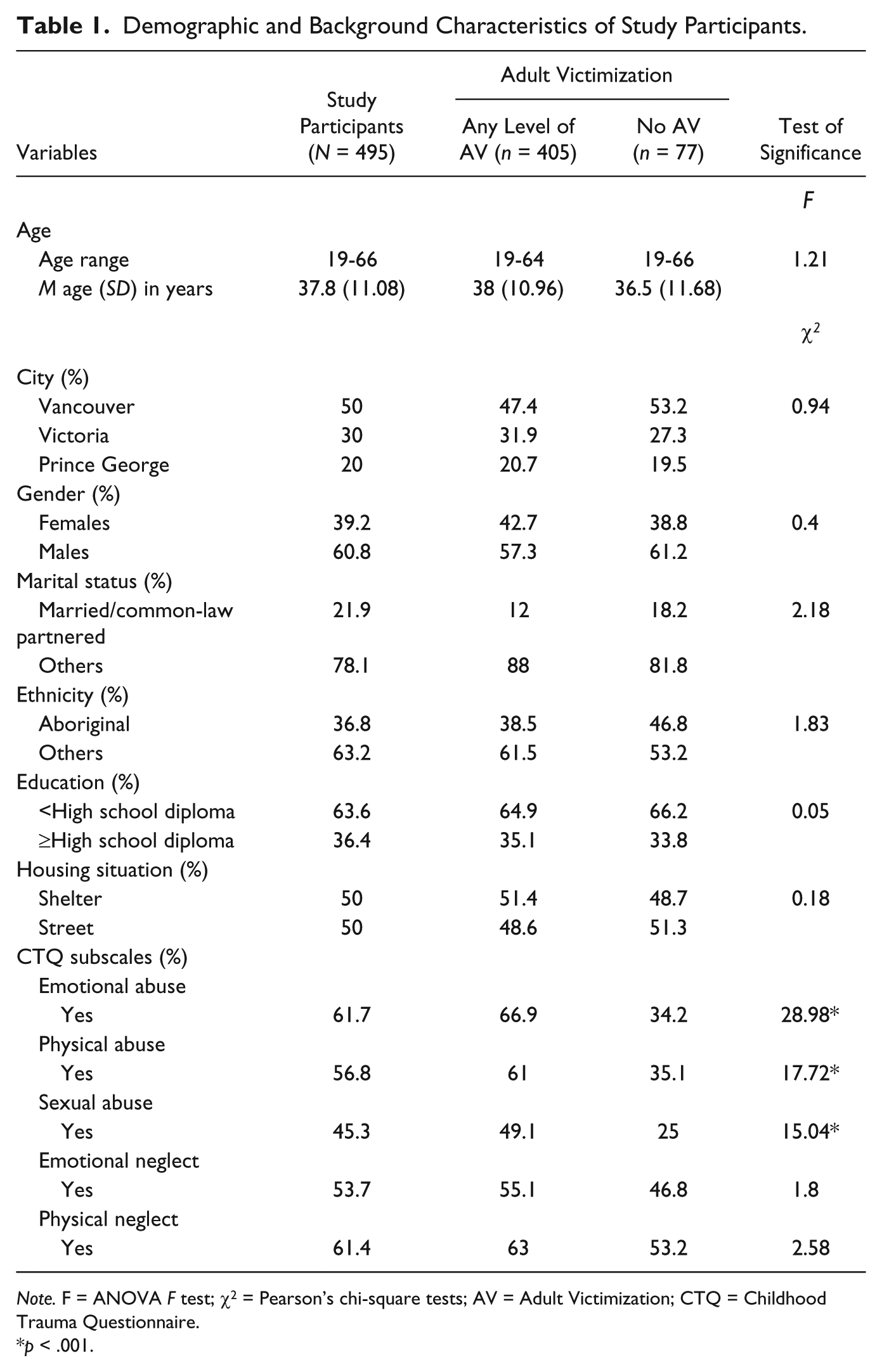
Note. F = ANOVA F test; χ2 = Pearson’s chi-square tests; AV = Adult Victimization; CTQ = Childhood Trauma Questionnaire.
p < .001.
Table 2 represents the exploratory overview of differences in the mean of maltreatment subtypes and cumulative childhood maltreatment between victimized and non-victimized groups. Results of ANOVA indicated that AEV group experience higher rates of emotional, physical, and sexual abuse, F(1, 446) = 26.34, p < .001; F(1, 459) = 14.48, p < .001; F(1, 453) = 21.33, p < .001, respectively, and cumulative childhood maltreatment, F(1, 484) = 29.44, p < .001, compared with those who did not experience AEV. Similar results were found between those in APV group and non-APV groups, in that APV group indicated higher scores of emotional, physical, and sexual abuse, F(1, 444) = 17.98, p < .001; F(1, 457) = 23.06, p < .001; F(1, 451) = 11.27, p < .01, respectively, and cumulative childhood maltreatment, F(1, 482) = 29.41, p < .001, compared with other group. Those who were sexually victimized as adults (ASV group) reported greater scores of emotional, F(1, 444) = 34.82, p < .001; physical, F(1, 457) = 17.98, p < .001; and sexual, F(1, 451) = 85.73, p < .001, abuse; and emotional, F(1, 452) = 7.41, p < .01, and physical, F(1, 452) = 10.51, p < .01, neglect, in addition to higher cumulative childhood maltreatment, F(1, 482) = 39.48, p < .001, compared with individuals in non-ASV group.
Differences Between Victimized and Non-Victimized Groups for Each Type of CTQ Subscales and Cumulative Maltreatment.
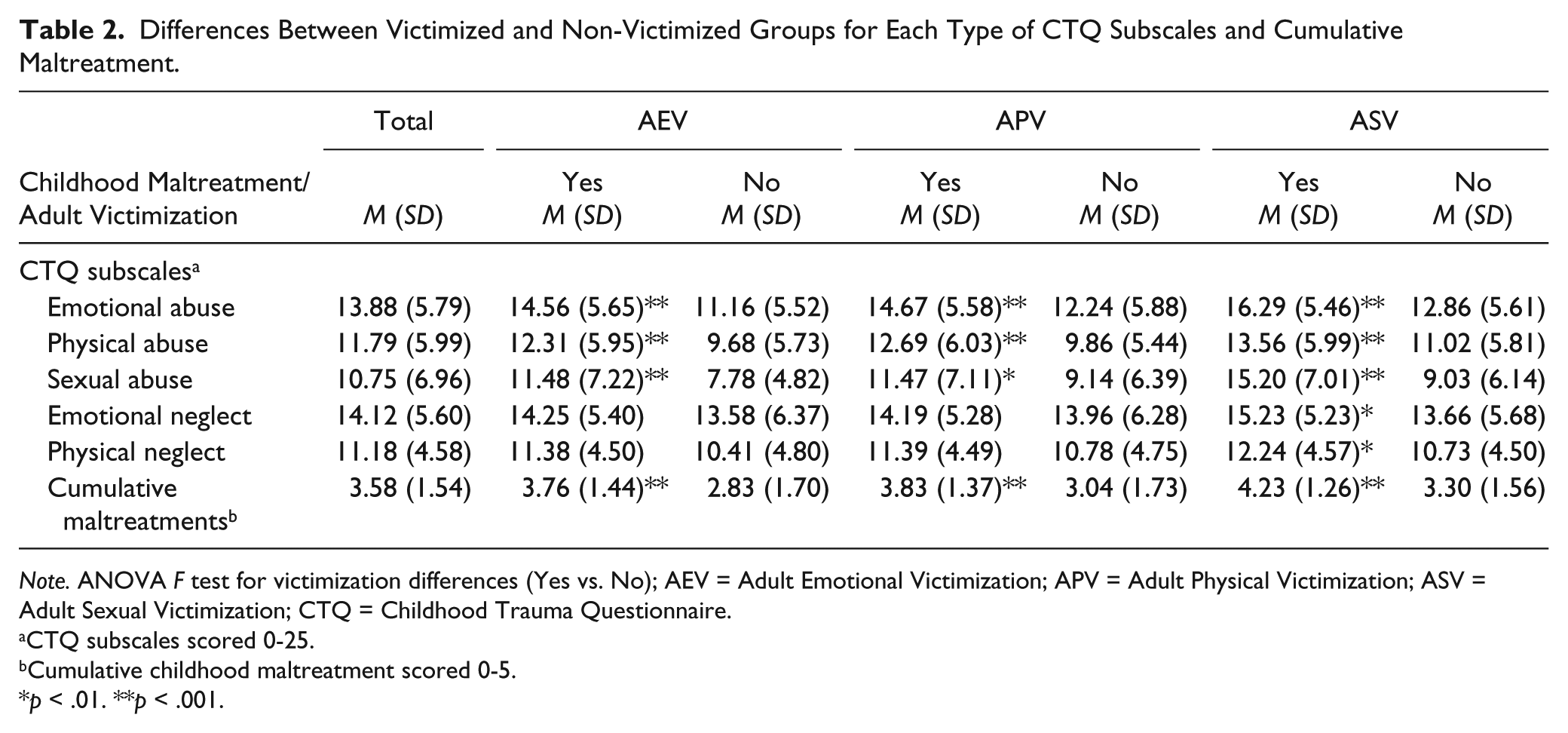
Note. ANOVA F test for victimization differences (Yes vs. No); AEV = Adult Emotional Victimization; APV = Adult Physical Victimization; ASV = Adult Sexual Victimization; CTQ = Childhood Trauma Questionnaire.
CTQ subscales scored 0-25.
Cumulative childhood maltreatment scored 0-5.
p < .01. **p < .001.
Table 3 indicates the results of three logistic regression models for each type of AV when all subscales of CTQ entered simultaneously. In the first model, emotional abuse and sexual abuse emerged as significant predictors of AEV over and above the other childhood maltreatment subscales, χ2(1) = 7.52, p < .01, and χ2(1) = 6.54, p < .05, respectively; however, the effect of emotional abuse was stronger (odds ratio [OR] =1.11 vs. 1.07). In the second model, physical abuse emerged as a significant predictor of APV over and above the other maltreatment subscales, χ2(1) = 5.83, p < .05. In the third model, sexual abuse strongly predicted ASV over and above the other maltreatment types, χ2(1) = 38.65, p < .001. Results of the regression model for the effect of cumulative childhood maltreatment on ACV are represented in Table 4. As indicated, experience of multiple types of childhood maltreatment was strongly associated with the greater likelihood of more victimization (ACV) exposure as an adult.
Logistic Regression Models for the Relationship Between Type of Childhood Maltreatment and Type of Adult Victimization.
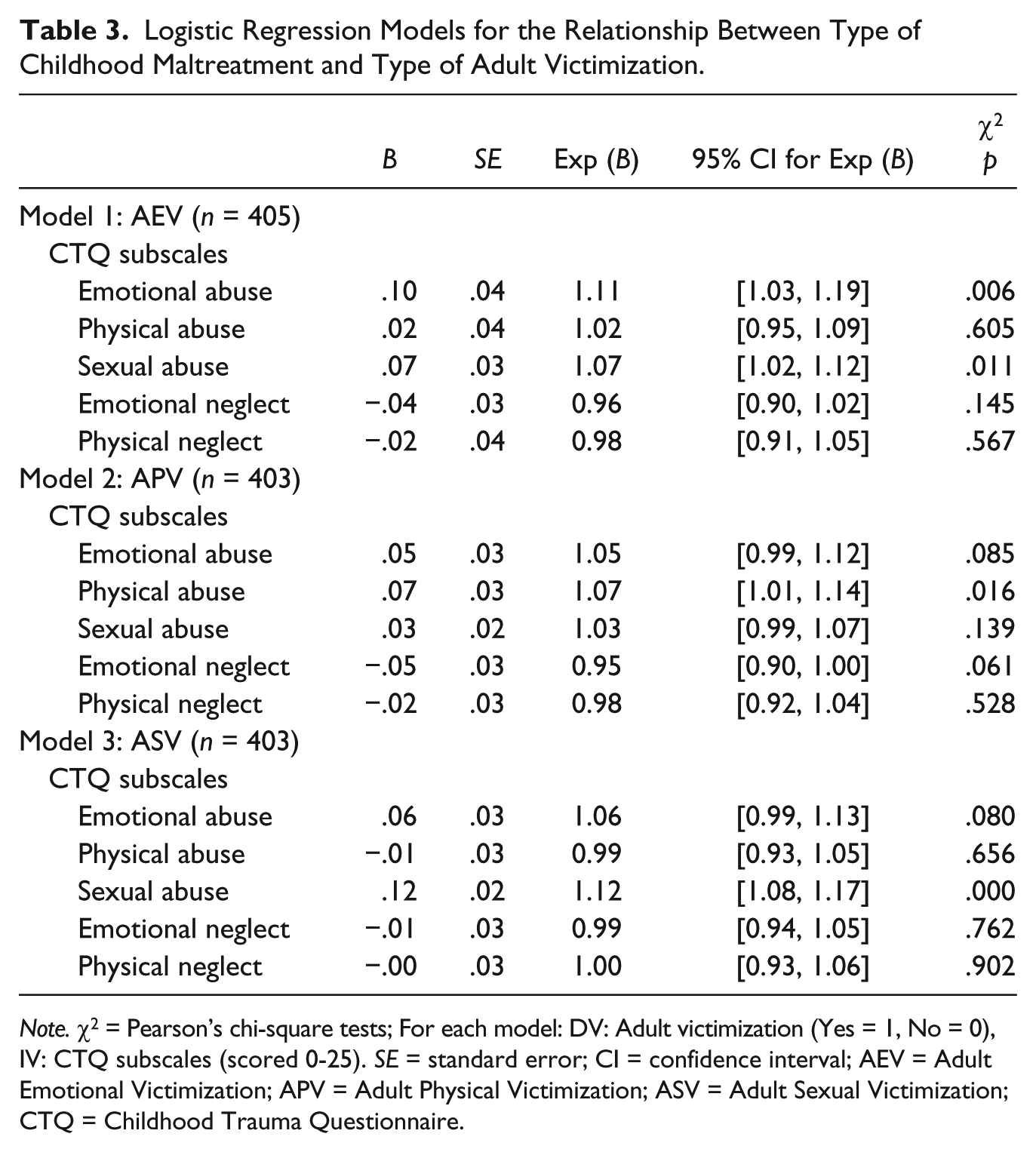
Note. χ2 = Pearson’s chi-square tests; For each model: DV: Adult victimization (Yes = 1, No = 0), IV: CTQ subscales (scored 0-25). SE = standard error; CI = confidence interval; AEV = Adult Emotional Victimization; APV = Adult Physical Victimization; ASV = Adult Sexual Victimization; CTQ = Childhood Trauma Questionnaire.
Univariate Regression Model for the Relationship Between Cumulative Childhood Maltreatment and Cumulative Adult Victimization (n = 480).
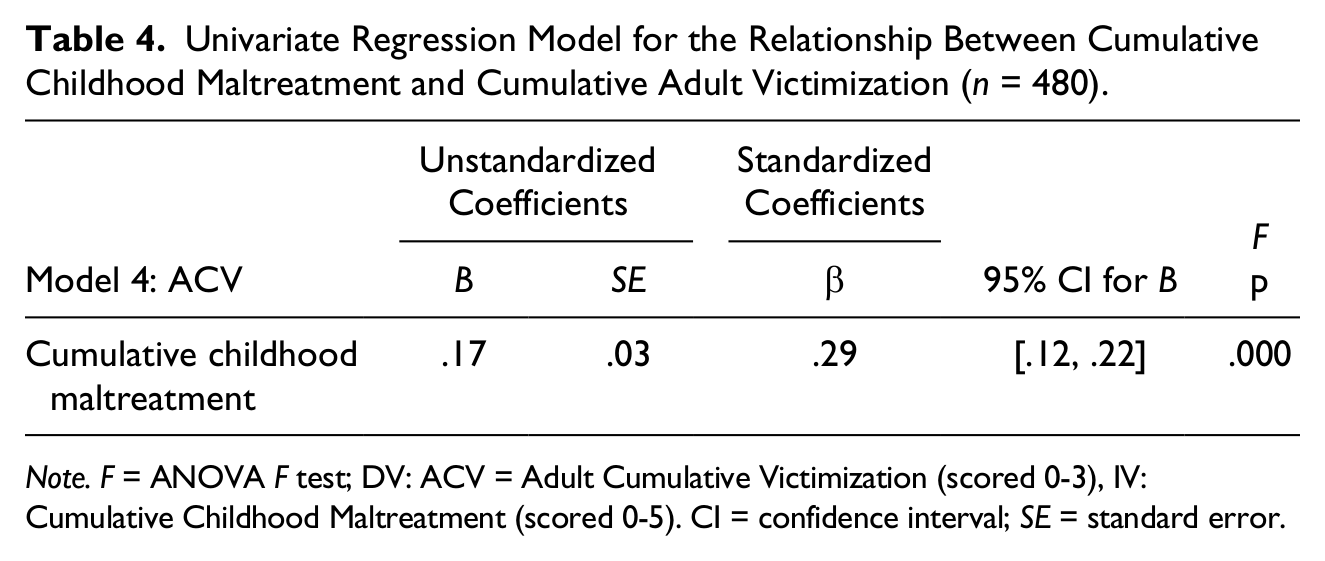
Note. F = ANOVA F test; DV: ACV = Adult Cumulative Victimization (scored 0-3), IV: Cumulative Childhood Maltreatment (scored 0-5). CI = confidence interval; SE = standard error.
Table 5 represents the logistic regression models that examined direct and interactive effects of childhood maltreatment and gender on AV. For all models, we adjusted for age, ethnicity, marital status, education level, and housing situation. A binary variable indicating presence or absence of AV was the dependent variable. The primary predictor variables were CTQ maltreatment score, female gender, and the CTQ score × Female gender interaction effect. Age in years, ethnicity, marital status, education level, and housing situation were entered as covariates. Results of binary logistic regression analyses for separate models indicated a strong association between exposure to childhood abuse and AVs. These relationships were significant for all types of childhood abuse (emotional, physical, and sexual) and AVs (AEV, APV, and ASV). Exposure to abuse maintained a strong direct relationship with AVs regardless of other factors, including age, ethnicity, marital status, education level, and housing situation. History of childhood neglect (emotional or physical) did not show any significant effect on AV, except for the effect of physical neglect on ASV. In all logistic regression models, the interaction between childhood maltreatment and gender was not significant, in that the correlation between childhood maltreatment and AV indicated no difference between men and women. In addition, exposure to cumulative maltreatment was significantly associated with an increased likelihood of victimization as an adult, in that exposure to each additional type of maltreatment was associated with increased odds of AV; however, the interaction between cumulative childhood maltreatment and gender on ACV was not significant (Table 6).
Logistic Regression Models: Odds of Adult Victimization for Childhood Maltreatments Experience, Gender, and Their Interaction.

Note. Adjusted odds ratios (AOR) for the effects of childhood maltreatment (scored 0-25), gender (female = 1, male = 0), and interaction of gender and CTQ subscales are derived from logistic regression models adjusted for age (years), ethnicity (Aboriginal = 1, Others = 0), marital status (married = 1, not married = 0), education level (<high school diploma = 1, ≥high school diploma = 0), and housing situation (street = 1, shelter = 0). Separate models were fit for each of the five types of maltreatments measured by the Childhood Trauma Questionnaire. Adult victimization (Yes/No) was the dependent variable. CI = confidence interval; AEV = Adult Emotional Victimization; APV = Adult Physical Victimization; ASV = Adult Sexual Victimization.
p < .05. **p < .01. ***p < .001.
Univariate Regression Model: Coefficient of Adult Cumulative Victimization for Cumulative Childhood Maltreatments, Gender, and Their Interaction.
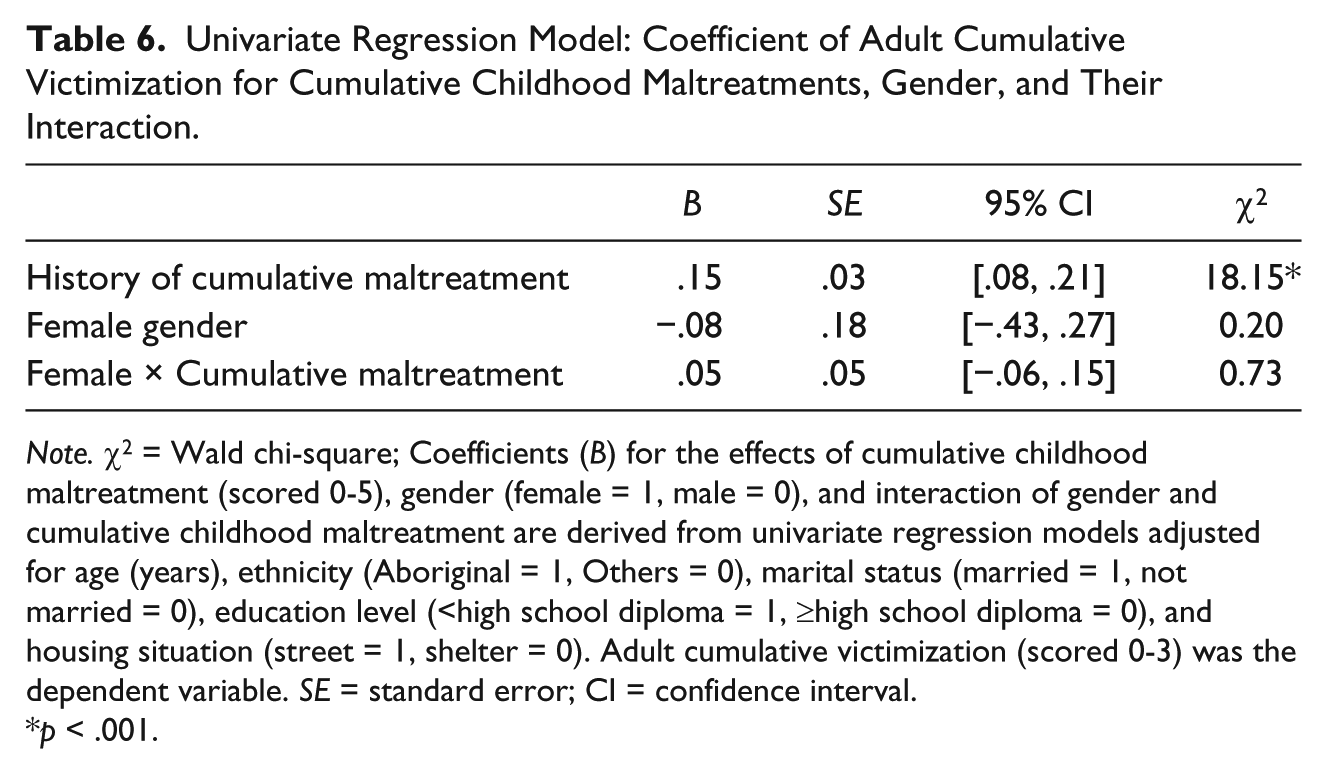
Note. χ2 = Wald chi-square; Coefficients (B) for the effects of cumulative childhood maltreatment (scored 0-5), gender (female = 1, male = 0), and interaction of gender and cumulative childhood maltreatment are derived from univariate regression models adjusted for age (years), ethnicity (Aboriginal = 1, Others = 0), marital status (married = 1, not married = 0), education level (<high school diploma = 1, ≥high school diploma = 0), and housing situation (street = 1, shelter = 0). Adult cumulative victimization (scored 0-3) was the dependent variable. SE = standard error; CI = confidence interval.
p < .001.
Discussion
The present study highlights some important characteristics of the relationship between childhood maltreatment and AV in a high-risk population. In line with previous studies of homeless population (Kushel et al., 2003; Maclean, Embry, & Cauce, 1999; Tyler et al., 2001; Tyler et al., 2010; Wolfe, Toro, & McCaskill, 1999), participants of this study were exposed to quite high rates of both childhood maltreatment and AV.
Our findings are consistent with previous studies that indicated a higher prevalence of childhood abuse and experience of cumulative maltreatment in those victimized as an adult compared with non-victimized ones (e.g., Barnes, Noll, Putnam, & Trickett, 2009; Himelein, Vogel, & Wachowiak, 1994; Widom et al., 2008). Although the rate of ASV was much lower than other types of AV in the total sample, individuals in this group showed higher scores in each type of abuse and cumulative maltreatment than any other group in this study. They were also the only victimized group that experienced higher scores of childhood emotional and physical neglect compared with their non-victimized counterparts, suggesting a more problematic history of stressful events in this group.
Our findings underscore type-specific and cumulative effects of childhood maltreatment on later revictimization, which is in line with previous studies concerning experience of violence in childhood and later exposure to violence as adults (Taylor et al., 2008; Whitfield et al., 2003). The relationship between childhood sexual abuse and sexual revictimization has been well established in previous studies (e.g., Classen et al., 2005; Loeb et al., 2011; Messman-Moore & Long, 2003). Nevertheless, limited studies have examined specific effects of childhood emotional and physical abuse on the later risk of revictimization (Coid et al., 2001; Schaaf & McCanne, 1998; Widom et al., 2008). Some studies have found different negative consequences associated with each type of childhood maltreatment that may increase vulnerability to specific types of victimization in adulthood. For instance, Briere and Runtz (1990) indicated that the experience of childhood emotional and psychological abuse was specifically associated with lower self-esteem, whereas childhood physical abuse was related to more aggression, and childhood sexual abuse was uniquely related to more sexual behavior problems later in life. Other studies have indicated similar results (Petrenko, Friend, Garrido, Taussig, & Culhane, 2012; for a review, see Myers, 2011). The implication of these findings is that over and above other types, each type of childhood maltreatment may result in development of specific patterns of problematic behaviors. Experience of such consequences associated with each type of maltreatment (e.g., aggression) may be then assumed as normal or appropriate by child, which can be generalized to adulthood dysfunctional relationships (Briere & Runtz, 1990) and may increase the risk of a specific type of AV later in life. It is notable to mention that some negative consequences of maltreatment are common experiences among all types of childhood maltreatment and show less specificity (Mullen, Martin, Anderson, Romans, & Herbison, 1996).
Experience of multiple types of childhood maltreatment was strongly associated with the greater likelihood of more victimization experience as an adult. Previous studies have indicated a similar cumulative effect in non-homeless populations. For example, exposure to additional types of maltreatment (e.g., four vs. three, and two vs. one) was associated with more trauma symptoms and greater psychopathology later in life (Clemmons, DiLillo, Martinez, DeGue, & Jeffcott, 2003; Lang, Stein, Kennedy, & Foy, 2004). Similar results were reported by Taylor and colleagues (2008) on the cumulative effect of violence in childhood and increased exposure to violence among homeless youth. In general, exposure to multiple types of maltreatment during childhood is associated with poor adjustment (Arata, Langinrichsen-Rohling, Bowers, & Farrill-Swails, 2005; Turner, Finkelhor, & Ormrod, 2006) and increased psychopathology (Boxer & Terranova, 2008), which can be the result of additive negative consequences associated with each singly type of maltreatment.
Consistent with previous studies (Thompson, 2004; Widom et al., 2008), a strong association was found between exposure to childhood abuse (emotional, physical, and sexual) and AV (AEV, APV, and ASV), regardless of other factors, including age, ethnicity, marital status, education level, and housing situation. In addition, exposure to cumulative maltreatment was significantly associated with an increased likelihood of victimization during adult life (ACV). The direct impact of childhood maltreatment on revictimization has been previously shown in homeless population. For instance, Lee and Schreck (2005) indicated that experience of childhood maltreatment (neglect or abuse) directly influences the experience of victimization in homeless individuals.
In our sample, only physical neglect was related to ASV. This finding is in contrast with the findings of Widom and associates (2008) that indicated childhood neglect has similar effects as physical or sexual abuse on later revictimization and trauma experience. However, previous studies have shown that some types of maltreatment are associated with worse consequences than others (see Ney, Fung, & Wickett, 1994). For example, those types of maltreatment that are more active and disrupt social norms, such as sexual abuse, are more damaging than passive ones, such as emotional neglect (Lau et al., 2005; Toth & Cicchetti, 1996). Although we did not find a relationship between emotional neglect and none of the AV types, and also between physical neglect and AEV and APV, our results further showed that AV is not only limited to individuals who were exposed to childhood sexual abuse but also extends to those who have experienced physical and emotional abuse, in addition to physical neglect in childhood.
Surprisingly, gender did not have any significant effect on AV. In addition, the interaction between childhood maltreatment and gender was not significant in any model. Contrary to the previous findings that indicated maltreated women, specifically sexually abused ones, were more vulnerable to revictimization (Widom et al., 2008), our findings indicated that abused and neglected men were also subject to high rates of victimization as an adult. We need to consider that the social context is different for homeless population, compared with the household or clinical populations, which have been studied more often. Living on the street in a poor socioeconomic situation and engaging in risky behaviors (e.g., drug use, drug dealing, and prostitution) extensively increase the risk of AV among both homeless men and women. Yet, there are very limited studies that examined revictimization by gender differences in homeless population.
Although our findings have provided information about the relationship between childhood maltreatment and revictimization in homeless population, several limitations should be considered. First, the findings of present study are based on cross-sectional data and self-report measures, and the causal relationship between childhood maltreatment and AV cannot be determined. Second, the assessment of AV was based on three dichotomous variables, which only indicated absence or presence of victimization during adulthood. We did not ask for other aspects of AV, including severity, duration, and time of occurrence. We were also unable to differentiate more specific aspects of AV (e.g., sexual acts such as forced oral or anal sex). Therefore, AV experience might have been underreported or misreported. Yet, the nature of these experiences is highly sensitive. For more clear results, future studies will benefit from using standardized measures that assess different aspects of AV experience. Finally, mechanisms linking childhood maltreatment and AV still need to be determined. It is possible that other factors influenced AV experience in homeless individuals. For example, prostitution and panhandling (Tyler & Beal, 2010), frequent moving from city to city (Bender, Ferguson, Thompson, Komlo, & Pollio, 2010), drug dealing, shoplifting, and sex work (Baron, 2003; Whitbeck, Johnson, Hoyt, & Cauce, 2004), and substance use and dependence (Wenzel, Anderson, Gifford, & Gelberg, 2001; Whitbeck, Hoyt, & Bao, 2000) appeared to increase the likelihood of exposure to victimization and trauma in homeless population.
Although we did not examine the underlying mechanisms, our data strongly supported the relationship between childhood maltreatment and AV in a homeless population. This study contributes to revictimization research: The current study indicates that homeless individuals who were abused during childhood are at greater risk of revictimization compared with those without such histories, and that this relationship can be characterized by specific types and cumulative exposure. Furthermore, most previous studies were focused only on homeless individuals using services for serious mental disorders or/and substance use treatment. The current study assessed a broader homeless population that included those disconnected from the social or health services.
The findings of this study may be useful for development of targeted prevention and treatment strategies in homeless population with a focus on the importance of revictimization to increase the effectiveness of intervention programs in this high-risk population. Services that provide support for homeless population should ensure that maltreated individuals receive adequate interventions to reduce current stress and to cope with previous experience of maltreatment. In addition, our results suggest that the impact of childhood maltreatment on AV is equally harmful for both genders. However, previous studies were exclusively focused on the treatment of maltreated women, and intervention programs targeting histories of maltreatment and trauma have received almost no attention in research with men (Pettus-Davis, 2014). Given the high rates of AV in homeless men, more research is needed to elucidate the experience of revictimization and other health problems in this population.
Footnotes
Acknowledgements
The authors wish to acknowledge the dedication of Sindi Addorisio, Adam Clarkson, Rose Henry, Nancy LaLiberte, Kurt Lock, Sharon Springer, Vicky Thomas, and Amanda Wood in conducting the interviews. The authors also wish to acknowledge and thank the Health of the Homeless Survey participants.
Declaration of Conflicting Interests
The author(s) declared no potential conflicts of interest with respect to the research, authorship, and/or publication of this article.
Funding
The author(s) disclosed receipt of the following financial support for the research, authorship, and/or publication of this article: This research was supported by British Columbia Mental Health and Addiction Services (BCMHAS), a department within the Provincial Health Services Authority of British Columbia (Grant 20R 45028).