




Abstract
In this study, we used data from life histories of 424 non-incarcerated (n = 266) and incarcerated (n = 158) women to examine the extent to which women are exposed to multiple forms of victimization, including child abuse, intimate partner violence, sexual assault, and traumatic life events. We assessed the effects of polyvictimization (e.g., multiple victimizations) on women’s health-related outcomes (e.g., attempted suicide, drug and alcohol problems) as well as whether the prevalence rates and effects of victimization were significantly different between the subsamples of women. Results indicate that incarcerated women experience significantly more victimization than non-incarcerated women, and while polyvictimization was associated with a higher likelihood of alcohol problems, drug problems, and attempted suicide among non-incarcerated women, it was only marginally associated with an increased likelihood of alcohol problems among incarcerated women. Finally, low levels of polyvictimization affected alcohol and drug problems among incarcerated and non-incarcerated women differently.
Introduction
Much recent attention has been devoted to “polyvictimization” (Finkelhor, Ormond, & Turner, 2007b), or multiple victimizations, among youth (Finkelhor, Ormond, & Turner, 2007a, 2007b, 2009; Finkelhor, Ormond, Turner, & Hamby, 2005; Richmond, Elliott, Pierce, Aspelmeier, & Alexander, 2009). However, very little research has examined polyvictimization among adult women, specifically, with most research on women’s victimization primarily focusing on separate, individual, or limited forms of violence, such as child abuse or intimate partner violence (IPV; for example, Seedat, Stein, & Forde, 2005) or “gendered” forms of victimization (e.g., sexual assault and IPV), but neglecting other types of traumatic events to which adult women might be exposed (e.g., witnessing a violent crime). Furthermore, polyvictimization has rarely been compared between incarcerated and non-incarcerated women. Taken together, it is currently unknown to what degree these women are “polyvictims” and what effects polyvictimization might have on various outcomes, such as their internalizing problems (i.e., alcohol and drug abuse, attempted suicide). We wish to expand these lines of research to adult incarcerated and non-incarcerated women to understand the degree to which polyvictimization affects women’s lives as well as whether it affects incarcerated and non-incarcerated women differently.
Victimization Among Women Offenders and Non-Offenders
Studies on victimization among adult women are often concentrated on “gendered” types of victimization, such as IPV, rape, sexual assault, and stalking, all of which females are more likely to be victims (Catalano, Smith, Snyder, & Rand, 2009). For instance, four out of five victims of IPV are women (Catalano, 2012). Women are also more frequently the targets of rape and sexual assault crimes: Basile, Chen, Black, and Saltzman (2007) estimated that 2.5% of women and 0.9% of men in the United States have experienced unwanted sexual activity in the past year, with over 10% of women (vs. 2% of males) having been forced to have sex against their will during their lifetime. Furthermore, the majority (78%) of stalking victims are also female, with a high percentage (59%) of these victimizations perpetrated by intimate partners (e.g., spouse, boyfriend, former date; Tjaden & Thoennes, 1998).
Unfortunately, victimization at one point in time is associated with future victimization, and many victimized women report being victimized during childhood as well (Messman & Long, 1996; Noll, Horowitz, Bonanno, Trickett, & Putman, 2003; Parks, Kim, Day, Garza, & Larkby, 2011). In fact, childhood abuse is a risk factor for adult victimization among females (Noll et al., 2003; Parks et al., 2011; Valdez, Lim, & Lilly, 2013)—Parks and colleagues (2011) found that women who had reported some form of child maltreatment (e.g., physical/sexual/emotional abuse, neglect) were twice as likely to experience a violent victimization (e.g., physical assault, sexual assault) as an adult compared with women who did not report a childhood victimization.
Comparatively, less victimization research has focused on traumatic life events that occur within a woman’s lifetime. The majority of this research focuses on criminal justice-based incidents (i.e., witnessing violence, being threatened with a weapon) with minimal attention given to non-criminal justice-related events such as the loss of a friend or relative, experiencing life-threatening illnesses and accidents, or involvement in disasters. Yet these kinds of trauma are potentially widespread among females. Eitle and Turner (2002) reported that 10.7% of young adult females in their sample had lost their home to a natural disaster, 11.9% had experienced a serious accident/injury/illness, and 37.3% had witnessed a serious accident/disaster where someone was injured or killed. Furthermore, their findings indicated that almost a quarter (24.5%) of the women had witnessed their mother or another female relative regularly abused either physically or emotionally.
The victimization histories of incarcerated and non-incarcerated females have not thoroughly been compared, as most research has focused only on one particular (e.g., general, incarcerated) population (Bachman & Saltzman, 1995; DeHart, 2008; DeMaris & Kaukinen, 2005; McDaniels-Wilson & Belknap, 2008). Although they are not often directly compared, it has been suggested that female offenders experience higher rates of victimization than women in the general population (Belknap, 2001); several studies conducted with female offenders have indeed reported very high levels of victimization (Browne, Miller, & Maguin, 1999; Chesney-Lind & Pasko, 2012; DeHart, 2008; McDaniels-Wilson & Belknap, 2008). Harlow (1999) indicated that 39% of female state prison inmates, 22.8% of female federal prison inmates, and 37.2% of female jail inmates had experienced some type of abuse prior to their current sentence, and female offenders were more likely to have been abused as children compared with female non-offenders. Examinations of female offender life histories have also shown that they experience high levels of sexual victimization and IPV prior to incarceration. McDaniels-Wilson and Belknap (2008) reported that 70% of incarcerated women had experienced some form of sexual abuse that “in most states would qualify as rape or the most serious sexual assaults” (p. 1120). Findings from a study by Browne and colleagues (1999) illustrated that 75% of the female offenders interviewed had experienced some form of physical violence by their intimate partner.
The extent to which female offenders, especially when compared with non-offenders, experience other types of traumatic events, however, is less well understood. Research on women offenders generally follows the patterns of research on women’s victimization overall, in focusing primarily on IPV, sexual assault, and child abuse. To the degree that female offenders’ lives are characterized by disorganization, marginalization, and stressful life events (Owen & Bloom, 1995), it is reasonable to expect that they would also experience other types of traumatic life events. Yet, less scholarly attention has explored this issue.
Polyvictimization Among Adult Women
The research on women’s victimization patterns cited above suggests that both incarcerated and non-incarcerated women are likely to be “polyvictims” (Finkelhor et al., 2007a; Finkelhor et al., 2005) or victims of multiple forms of crime and traumatic events. Coexisted forms of female victimization (i.e., polyvictimization) have been examined within specific contexts (e.g., familial), such as the link between child abuse and IPV (Bensley, Van Eenwyk, & Wynkoop Simmons, 2003; Renner & Shook Slack, 2006), but most studies have explored polyvictimization among children and adolescents (Finkelhor et al., 2007a, 2007b, 2009; Finkelhor et al., 2005). Very little research has examined polyvictimization among adult incarcerated and non-incarcerated women (Johnson Listwan, Daigle, Hartman, & Guastaferro, 2014). Further-more, polyvictimization research specifically on adult women has tended to exclude traumatic life events as forms of victimization, such as being a victim of an armed robbery or witnessing a violent crime (e.g., Richmond et al., 2009). Experiencing a traumatic event like the death of a loved one or a life-threatening illness could certainly elicit negative outcomes similar to those experienced by victims of crime and abuse, such as mental health problems and/or drug use, discussed below.
Victimization and Internalizing Problems Among Incarcerated and Non-Incarcerated Women
Those who experience multiple types of victimization can encounter a variety of problems, even years later (Silver & Wortman, 1980). Several studies have documented an association between gendered victimization and mental health problems (Anumba, DeMatteo, & Heilbrun, 2012; Finkelhor, 1994; Kilpatrick, Amstadter, Resnick, & Ruggiero, 2007; Sullivan, Meese, Swan, Mazure, & Snow, 2005). In some instances, victimization can result in suicidal ideology and/or attempted suicide among victims (Joiner et al., 2007; Seedat et al., 2005; Tyler, 2002). For example, Briere and Zaidi (1989) noted that female victims of child abuse were significantly more likely than non-victims to engage in self-harm, suicidal ideation, and suicidal attempts. Pico-Alfonso and colleagues’ (2006) also found that women who had experienced psychological and physical IPV reported higher rates of suicidal thoughts than non-victimized women. As many as one in four rape victims report at least one suicidal act, and rape victims attempt suicidal acts 5 times more than non-victims (Stepakoff, 1998).
It has been suggested that women who experience victimization may use alcohol and/or drugs to cope with the trauma in the aftermath of their victimization (Najdowski & Ullman, 2009; Schneider, Timko, Moos, & Moos, 2011; Taylor, 2011). In fact, as many as 40% of adult females with a history of child sexual abuse may demonstrate substance abuse problems (Simpson & Miller, 2002). In addition, childhood physical abuse has not only been linked to more drug (e.g., prescription medication, cocaine, heroin, LSD) and alcohol use than non-victims, but also facilitates earlier use than non-victims, and predicts future drug use as well (Duncan, Saunders, Kilpatrick, Hanson, & Resnick, 1996). Victims of IPV as well as sexual assault have also been found to engage in increased drug and alcohol use after their victimizations (Coker et al., 2002; Kilpatrick, Acierno, Resnick, Saunders, & Best, 1997). Thus, as the preceding paragraphs demonstrate, trauma is strongly associated with a range of negative behavioral and internalizing outcomes among women.
The impact of victimization on substance use and mental health outcomes may be similar for incarcerated and non-incarcerated women: incarcerated women may suffer from various mental health problems as a result of their experiences and, in turn, engage in alcohol and drug use or think about or attempt suicide, just as non-incarcerated women do. However, the relationship between victimization and negative outcomes may be stronger among incarcerated women, as victimization does seem to be intrinsically linked to their patterns of criminal behavior. For instance, almost 80% of female state prison inmates who had been abused prior to their incarceration had engaged in regular illegal drug use at some point in their lives, and more than 50% had regularly consumed alcohol at some point (Harlow, 1999). In addition, in a study on drugs and criminality, Mullings, Pollock, and Crouch (2002) reported that female offenders with drug abuse problems were more likely to experience childhood and adult violent victimizations compared with non-drug abusing offenders. The “pathways perspective,” which examines women’s life histories leading up to her criminal behavior, suggests that victimization is a core component of women’s misbehavior (see Belknap, 2001; Bloom, Owen, & Covington, 2003; Chesney-Lind & Pasko, 2004). Salisbury and Van Voorhis (2009) identified five pathways from child abuse to female offending and noted that involvement in substance abuse after childhood victimization had a direct link to incarceration. In addition, Chesney-Lind and colleagues (e.g., Chesney-Lind & Pasko, 2004; Chesney-Lind & Rodriguez, 1983; Chesney-Lind & Shelden, 1992) have argued that a young woman may initially run away to escape victimization at home and may have to resort to a life of crime (e.g., drug use, gangs, and prostitution) to survive. In short, not only does victimization have the potential to lead to negative consequences among women in general, but this may also be particularly pronounced among female offenders. Similarly, it is possible being a polyvictim may also be particularly detrimental among female offenders.
In the present study, we seek to understand polyvictimization among incarcerated and non-incarcerated women and to examine its impact on internalizing problems among these groups. We examine face-to-face interview data from 424 incarcerated and non-incarcerated women and address three research questions:
Method
Data for this study originated from the “Exploring Women’s Histories of Survival of Violence and Victimization in a Midwestern State” project, 1 which consisted of 424 face-to-face interviews with women gathered from a women’s correctional facility and the community 2 from March 2004 through March 2005. The final sample for this study was comprised of 157 incarcerated women and 248 non-incarcerated women.3,4 Women were recruited through the use of flyers and word-of-mouth convenience and snowball sampling techniques. The intent of the original data collection was to gather information regarding women’s victimization experiences, consequences of victimization (i.e., health), and social services utilized post-victimization.
Measures
Dependent variables
Three internalizing problem outcomes were used in this study. All were self-reported and coded as dichotomous variables (0 = no, 1 = yes). Alcohol problem indicated that the woman believed she had an alcohol problem at the time of the interview. Drug problem denoted that the woman believed she had a current drug problem, and attempted suicide indicated that she had attempted suicide at any point in her lifetime. 5
Independent variables
Several additional variables were created to examine the various forms of victimization that women had been exposed to, as well as to account for their demographic and background characteristics. All variables were self-reported by women during their interview.
Child abuse
Two child abuse measures were created using questions adapted from Briere’s (1992) Childhood Maltreatment Interview Schedule. Child physical abuse was measured with a single (0 = no, 1 = yes) question: “Before age 17, did a parent, step-parent, foster-parent, or other adult in charge of you as a child ever do something to you on purpose (e.g., hit or punch or cut you, or push you down) that made you bleed or gave you bruises or scratches, or that broke bones or teeth?” Child sexual abuse indicated that a respondent answered affirmatively (0 = no, 1 = yes) to either of the following two questions: “Before age 17, did anyone ever kiss you in a sexual way, or touch your body in a sexual way, or make you touch their sexual parts without your consent?” and “Before age 17, did anyone ever have oral, anal, or vaginal intercourse with you, or insert a finger or object in your anus or vagina without your consent?” Child abuse total denoted the total number of child abuse victimization types that a woman experienced (this variable ranged from zero to two types of victimizations).
IPV
Four IPV measures were created using questions from Shepard and Campbell’s (1992) Abusive Behavior Inventory (ABI). The ABI was designed to measure the frequency of abusive behaviors using a 5-point Likert-type scale (1 = never, 2 = rarely, 3 = sometimes, 4 = often, 5 = very often). To create each of our four separate IPV measures, each IPV subscale was totaled and then divided by the number of questions within each scale to assess the average frequency of abusive behavior (Shepard & Campbell, 1992). For the purposes of our study, an average frequency of 2 (rarely) or more (sometimes, often, very often) indicated a “yes” response (0 = no, 1 = yes) that the victimization occurred. 6 Physical IPV was assessed with six items, indicative of whether the woman’s partner pushed, grabbed, or shoved her; slapped, hit, or punched her; kicked her; threw her around; choked or strangled her; or used a knife, gun, or other weapon against her (α = .93). A woman was considered to have experienced physical IPV if these behaviors, on average, happened rarely, sometimes, often, or very often (coded as 0 = no, 1 = yes). Sexual IPV was measured with three items (α = .88) and indicated that the woman’s partner pressured her to have sex in a way that she did not like or want, physically forced her to have sex, or physically attacked the sexual parts of her body “rarely” to “very often” on average (0 = no, 1 = yes). Controlling IPV was assessed with seven items (α = .90) comprised of whether the woman’s partner tried to keep her from doing something she wanted to do (e.g., going out with friends); prevented her from having personal money; used her children to threaten her; said things to scare her (e.g., threatened suicide); checked up on her; threatened her with a knife, gun, or other weapon; or attempted to stop or stopped her from attending work or school. A woman who responded on average to having experienced controlling IPV behaviors “rarely” to “very often” resulted in a “yes” (0 = no, 1 = yes) response that controlling IPV was experienced. Emotional IPV was measured with nine items (α = .93), including whether a woman’s partner did the following: called her a name and/or criticized her, gave angry stares or looks, ended a discussion and made the decision himself, put down family and friends, accused her of paying too much attention to someone or something else, became upset because something was done not when asked (e.g., dinner, laundry), made her do something humiliating or degrading, refused to do housework or child care, or told her she was a bad person. A woman was considered to have experienced emotional IPV if these behaviors, on average, happened rarely, sometimes, often, or very often (coded as 0 = no, 1 = yes). IPV total denoted the total number of different types of IPV victimization (none to all four types) that a woman experienced.
Rape/sexual assault
Dichotomous measures related to rape were derived from Koss and Oros’s (1982) Sexual Experiences Survey (SES). Attempted rape indicated that (0 = no, 1 = yes) someone had ever threatened to use physical force (e.g., twisting the woman’s arm, holding her down, etc.) to get the woman to have sexual intercourse against her will or had ever used some degree of physical force to get her to have sexual intercourse against her will. Rape denoted that a woman answered “yes” to any of the following four situations: had sexual intercourse with someone against her will because the person threatened to use physical force (twisting arm, holding down, etc.) if she did not cooperate, had sexual intercourse with someone against her will because the person used some degree of physical force, been in a situation where someone obtained sexual acts with her (i.e., anal or oral intercourse) against her will by using threats or physical force, or she had ever been raped. Rape/sexual assault total indicated the total number of different rape and sexual assault victimizations (none to two types) that a woman experienced.
Traumatic life events
Six dichotomous (0 = no, 1 = yes) traumatic life event variables were created. Other violent experiences denoted whether or not a woman had ever been robbed or mugged, been kidnapped or held hostage, witnessed violence (e.g., been present when another person was killed, seriously injured, or sexually or physically assaulted), or been threatened with a weapon. Life-threatening illness reflected whether or not a woman had ever had a life-threatening illness, and life-threatening accident indicated whether or not she had ever been in a life-threatening accident. Sudden death of a close person denoted that the woman had “an immediate family member, romantic partner, or very close friend” die as a result of an accident or sudden death. A woman was coded as having been involved in natural disaster if she had ever been involved in a major natural disaster, such as a devastating flood, hurricane, tornado, or earthquake, and involved in man-made disaster if she had ever been involved in a man-made disaster, such as “a fire started by a cigarette, or a bomb explosion.” Traumatic life events total reflected the total number of different traumatic life events (none to six) a woman experienced.
Polyvictimization
Following previous research on polyvictimization (e.g., Finkelhor et al., 2007a, 2007b, 2009; Finkelhor et al., 2005), we identified “polyvictims” as those respondents who scored one or more above the average of the entire sample (incarcerated and non-incarcerated women combined) in total victimization types. 7 Total victimization represented the number of total victimizations (none to 14) a woman experienced. The average total number of victimization types experienced for the pooled sample was 7; therefore, women who experienced 8 or more victimization types were classified as polyvictims. Polyvictimization was further divided into two sub-categories. The top third of polyvictims were defined as experiencing high polyvictimization (10-14 victimization types), and the remaining were defined as experiencing low polyvictimization (8-9 victimization types; Finkelhor et al., 2007b).
Demographics
The women also reported on their demographic and background characteristics. Age was measured in years. Race/ethnicity was captured by four separate dichotomous variables: Caucasian, African American, Hispanic, and Other, with Caucasian serving as the reference category. Average annual personal income was a four-category ordinal variable (1 = US$0-US$10,000; 2 = US$10,001-US$15,000; 3 = US$15,001-US$25,000; and 4 = US$25,001 and above), where higher values reflect higher incomes. Education was also an ordinal variable (1 = less than a high school diploma, 2 = high school diploma, 3 = higher education). Support/self-help group denoted that a woman had attended a support or self-help group at some point for past child or adult abuse she had experienced (0 = no, 1 = yes). Professional counseling indicated that a woman had participated in professional counseling for past child or adult abuse at some point in her past (0 = no, 1 = yes). The number of children a woman had was measured as a count variable (0-9 children).
Analytic Strategy
We conducted several analyses to assess the effects of polyvictimization on the women’s self-identified internalizing problems. First, to examine whether the means of victimization and background variables differed between the two subsamples of incarcerated and non-incarcerated women, chi-square analyses were conducted for dichotomous variables and independent-samples t tests were used for metric variables. Next, to determine the relationship between polyvictimization and the three dependent variables (alcohol problem, drug problem, attempted suicide), three separate binary logistic regressions (including the control variables) were conducted for each of the sub-samples. 8 Missing values on the variables of interest resulted in a final sample size for logistic regression analyses of 405. Last, the equality of coefficients test developed by Clogg, Petkova, and Haritou (1995) was conducted to compare the strength of coefficients between the two subsamples for each of the regression analyses.
Results
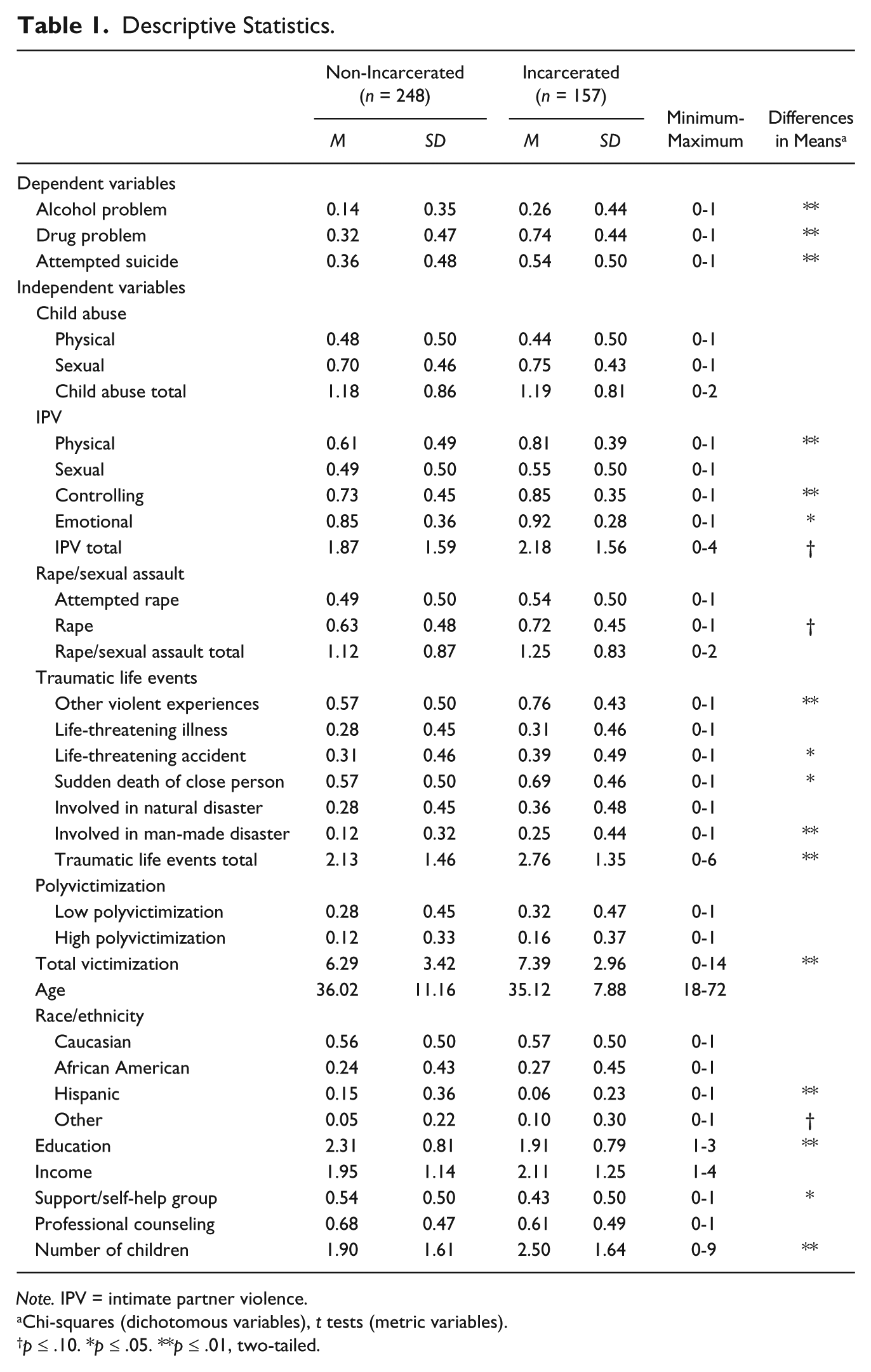
The sample descriptives are reported in Table 1. The average age for women in our sample was roughly 35 years and ranged from 18 to 72. The majority of the sample was Caucasian (56% of the non-incarcerated, 57% of the incarcerated), which was expected due to the Midwestern region in which the study took place. African Americans accounted for roughly a quarter of each subsample (24% of the non-incarcerated; 27% of the incarcerated), and Hispanics represented significantly more (15%) of the non-incarcerated sample than the incarcerated sample (6%). Women who identified with a race or ethnicity other than Caucasian, African American, or Hispanic accounted for 5% of the non-incarcerated sample and 10% of the incarcerated sample (a marginally significant difference). The average education level attained for non-incarcerated women was a high school diploma, which was significantly higher than the average education level (less than a high school diploma) earned by the incarcerated sample. The average annual personal income of a non-incarcerated woman was US$0 to US$10,000, whereas the average annual personal income for an incarcerated woman was US$10,001 to US$15,000. On average, non-incarcerated women had two children, which was significantly less than the three children the average incarcerated woman had. The majority of the sample (68% of the non-incarcerated; 61% of the incarcerated) had attended professional counseling at some point in their life as a result of experiencing child and/or adult abuse. Fifty-four percent of the non-incarcerated women and 43% of the incarcerated women (a significant difference) had attended a support or self-help group for her child and/or adult abuse experiences at some point in her life.
Descriptive Statistics.
Note. IPV = intimate partner violence.
Chi-squares (dichotomous variables), t tests (metric variables).
p ≤ .10. *p ≤ .05. **p ≤ .01, two-tailed.
Results related to our research questions are found in Tables 1 and 2. As indicated in Table 1, the average number of victimizations experienced by the non-incarcerated sample was six and the incarcerated sample was seven. This statistically significant difference in victimization experiences between the two subsamples revealed that incarcerated women, on average, experience higher levels of victimization than non-incarcerated women. With the exception of physical child abuse, incarcerated women experienced more of all other forms of victimization compared with non-incarcerated women, although not all of these differences were statistically significant. Significant differences between the two subsamples were found for physical IPV, controlling IPV, emotional IPV, rape, other violent experiences, life-threatening accidents, a sudden death of a close person, and involvement in a man-made disaster. In addition, the incarcerated women reported significantly higher prevalence rates for all three of the dependent variables (alcohol problem, drug problem, attempted suicide) when compared with the non-incarcerated sample.
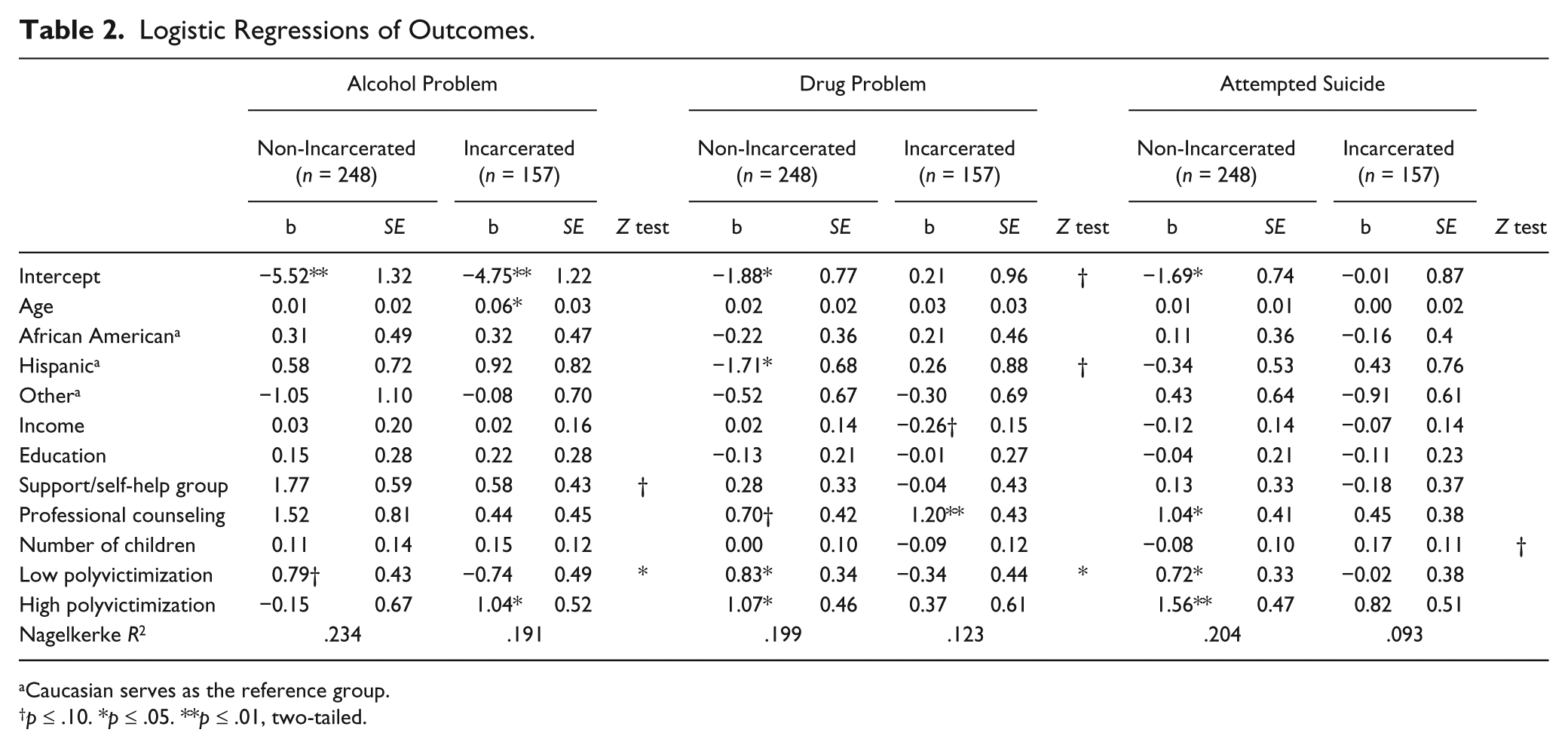
Logistic Regressions of Outcomes.
Caucasian serves as the reference group.
p ≤ .10. *p ≤ .05. **p ≤ .01, two-tailed.
Regarding the extent of polyvictimization (low/high) between the two subsamples, 28% of the non-incarcerated sample and 32% of the incarcerated sample experienced low polyvictimization. In addition, 12% of the non-incarcerated sample and 16% of the incarcerated sample were identified as having experienced high polyvictimization. However, the differences in means between the two subsamples were not statistically significant.
Turning to our second research question, we examined the impact of low and high polyvictimization on women’s internalizing problems. The findings presented in Table 2 indicate that non-incarcerated, low polyvictimized women were more likely than non-polyvictimized, non-incarcerated women to report an alcohol problem, a drug problem, and have attempted suicide. High polyvictimization was associated with an increased likelihood of drug problems and suicide attempts among non-incarcerated women, as well as alcohol problems among the incarcerated sample. In relation to Caucasians, non-incarcerated Hispanic women were significantly less likely to have a drug problem. For incarcerated women, as age increased, the likelihood of having experienced an alcohol problem also increased, while the likelihood of experiencing a drug problem decreased (marginally) with higher incomes. In addition, both incarcerated and non-incarcerated women who had attended professional counseling at some point in their past as a result of their child and/or adult victimization(s) were significantly more likely to have a drug problem compared with those women who did not attend professional counseling. Non-incarcerated women who had attended professional counseling (versus those who had not attended counseling) were also more likely to report having attempted suicide.
Finally, we examined whether different levels of polyvictimization (high/low) elicited significantly different effects for internalizing problems among incarcerated versus non-incarcerated women. The effect of low polyvictimization on alcohol and drug problems was stronger for non-incarcerated women than for incarcerated women. These results indicate that non-incarcerated women who experienced low polyvictimization were more likely to report alcohol problems and drug problems than incarcerated women who had also experienced low polyvictimization. There were no other significant differences in the effects of polyvictimization among incarcerated and non-incarcerated women. We did find, however, that non-incarcerated Hispanic women were less likely than incarcerated Hispanic women to report a drug use problem. In addition, non-incarcerated women who had attended a support or self-help group at some point in their lifetime were significantly more likely to report an alcohol problem than incarcerated women who had attended a support or self-help group. Finally, the impact of the number of children a woman had on attempted suicide was marginally different across the subsamples of women.
Discussion
This study examined the relationship between polyvictimization and the internalizing behaviors of alcohol and drug problems, as well as attempted suicide, among incarcerated and non-incarcerated women. Our study advances knowledge in polyvictimization research by focusing on adult females, including traumatic life events, which have largely been excluded in prior studies, and comparing the impact of polyvictimization among incarcerated and non-incarcerated adult women.
Our study examined three research questions: The intent of our first research question was to examine the extent of polyvictimization between the incarcerated and non-incarcerated women and to identify whether differences between the two groups existed. We found that incarcerated and non-incarcerated women were indeed polyvictims. Consistent with prior findings, our results support the notion that incarcerated women experience higher rates of victimization compared with women in the general population (Belknap, 2001). Average prevalence rates of victimization were generally higher for incarcerated women than non-incarcerated women, with significant differences existing for a range of victimization types (e.g., sexual child abuse, physical IPV, rape, and several traumatic life events). In addition, we found that incarcerated women were more likely to experience substance use problems and to have attempted suicide than non-incarcerated women. Our results, therefore, add to a somewhat limited body of research (e.g., Belknap, 2001) directly comparing incarcerated and non-incarcerated women and confirm assertions that incarcerated women’s lives are characterized by more violence, trauma, and internalizing problems than women who do not come to the attention of the criminal justice system.
Our second research question sought to assess the impact of low and high polyvictimization on women’s alcohol use, drug use, and attempted suicide. The results indicated that low polyvictimization, compared with no polyvictimization, was associated with an increased likelihood of all outcomes (alcohol problem, drug problem, and attempted suicide) for non-incarcerated women. Furthermore, compared with no polyvictimization, high polyvictimization was associated with higher likelihoods of drug problems and attempted suicide for non-incarcerated women as well. These results are consistent with previous research that has demonstrated links between victimization among women in the community and problematic outcomes (e.g., Golding, 1999). However, our study extended this literature by examining a broad spectrum of victimization types, including gendered, non-gendered, and traumatic life event experiences. Polyvictimization, however, did not appear to be salient for incarcerated women’s internalizing problems. Our findings suggested that low polyvictimization was not associated with any internalizing problems among incarcerated women, but high polyvictimization was related to an increased likelihood of reporting an alcohol problem. Thus, being a victim of high polyvictimization is a risk factor for alcohol problems among women who come to the attention of the criminal justice system. These findings are consistent with prior arguments (e.g., Anumba et al., 2012; Salisbury & Van Voorhis, 2009) that victimization among women offenders is associated with substance use problems.
Leading into our third research question, the association between low polyvictimization and alcohol problems among non-incarcerated women (a marginally significant positive relationship) was statistically stronger than among incarcerated women (a non-significant association). In addition, the relationships between low polyvictimization and drug problems for non-incarcerated women were stronger than among incarcerated women. Given the plethora of research that suggests victimization is a core causal mechanism in women’s offending (e.g., Chesney-Lind & Pasko, 2004, 2012), we did not necessarily expect to find low polyvictimization to be a stronger risk factor among non-incarcerated women than incarcerated women, nor did we expect null relationships between low polyvictimization and substance use or suicide attempts among incarcerated women. Based on previous victimization research, we did anticipate the significant relationship between high polyvictimization and drug use for incarcerated women. A potential, albeit speculative, explanation for these somewhat surprising findings could be that low levels of polyvictimization are more influential to non-incarcerated women who experience lower levels of victimization in general compared with incarcerated women. That is, perhaps low polyvictimization is not as influential among incarcerated women, given their high average exposure to victimization. Perhaps victimization is so normative for incarcerated women that being a “low” polyvictim fails to make as significant of an impact on their internalizing problems as it would among non-incarcerated women (McDaniels-Wilson & Belknap, 2008). The high prevalence rates among incarcerated women for nearly all types of victimizations as well as the null relationships between their low polyvictimization and substance use and suicide attempts lend credence to such a supposition. It is also possible that the effect of low polyvictimization on incarcerated women’s outcomes are mediated by other factors, such as depression or anxiety, which we did not assess (Salisbury & Van Voorhis, 2009). Indeed, the interrelationships between trauma, victimization, substance use, and mental health problems are likely complex and potentially non-linear. It remains unclear as to why low polyvictimization was not important for incarcerated women or why high polyvictimization largely did not impact the two subgroups differently; therefore, we recommend that future research continue to explore polyvictimization patterns among both incarcerated and non-incarcerated women.
Limitations and Research Implications
As with any research, this study is not without limitations. First, our data were from a Midwestern location, and non-incarcerated women were gathered from what might be considered a high-risk sample, as some of these women were recruited from local shelters and social service agencies. Therefore, the results may not be generalizable to general population of women from other parts of the United States or who do not seek help for their victimization. Second, our definition and measurement of polyvictimization followed previous research that was based on a nationally representative sample. However, because our sample was limited to one Midwestern state, our definition of polyvictimization and its effect may not be generalizable to the general population of women within the United States. Third, access to control variables within the data set was limited, and this may have resulted in our missing of relevant correlates. It is recommended that future research studies include additional control variables such as prior drug and alcohol use when examining the relationship between polyvictimization and internalizing problems among women. Fourth, due to the cross-sectional nature of the data, there is a lack of temporal ordering that hinders us from drawing causal conclusions regarding polyvictimization and internalizing behaviors. Because women reported experiencing a “current” drug or alcohol problem, one might reasonably infer that many of her victimization experiences, such as child abuse, occurred before any alcohol and drug problems, but this is complicated by the fact that many questions also asked women whether they “ever” experienced problems (e.g., attempted suicide) or victimization (e.g., rape). Thus, no causal linkages can be drawn from our study. Finally, potential for memory recall problems was a possibility; while this is an inherent issue in all self-reporting, it is a particularly salient issue with sensitive topics such as recalling personal victimization experiences.
Some research and treatment implications can be drawn from our findings. First, before too many implications can be recommended, it is suggested that researchers need to develop a more standardized measure of polyvictimization. With a more standardized measure, polyvictimization research results will be more generalizable. Second, treatment for both incarcerated and non-incarcerated women should recognize that these women have likely been exposed to multiple types of trauma and victimization and, as such, should address the effects of polyvictimization on multiple health outcomes, such as those addressed in this study. Third, perhaps interventions in the community are needed to address polyvictimization among women who are not incarcerated, as our measures of polyvictimization were significantly related to all outcomes among this subsample of women. Last, more research is needed on the effects of polyvictimization among incarcerated women. Given the high prevalence of abuse and victimization indicated by our results, exposure to violence and victimization is clearly problematic among incarcerated women. However, the lack of significant effects of polyvictimization on the various health outcomes examined here suggests that the impact of victimization, and particularly polyvictimization, among incarcerated women is understudied and complex.
Conclusion
Overall, results from our study indicated that polyvictimization is important to consider among women, as it may be associated with high-risk behaviors and internalizing outcomes. More specifically, our findings suggest that low polyvictimization influences incarcerated and non-incarcerated women differently, substantially increasing the risk of internalizing problems among non-incarcerated women. The findings also indicate that while incarcerated women seem to be at a higher risk for most victimization types compared with non-incarcerated women, this does not necessarily mean that being a polyvictim is more detrimental to their internalizing behaviors. Further research is warranted to better understand for whom polyvictimization is most relevant, for what outcomes, and why.
Footnotes
Declaration of Conflicting Interests
The author(s) declared no potential conflicts of interest with respect to the research, authorship, and/or publication of this article.
Funding
The author(s) disclosed receipt of the following financial support for the research, authorship, and/or publication of this article: The authors wish to thank the School of Criminology and Criminal Justice at the University of Nebraska at Omaha for the funding of this research.