




Abstract
New technology has made pornography increasingly accessible to young people, and a growing evidence base has identified a relationship between viewing pornography and violent or abusive behavior in young men. This article reports findings from a large survey of 4,564 young people aged 14 to 17 in five European countries which illuminate the relationship between regular viewing of online pornography, sexual coercion and abuse and the sending and receiving of sexual images and messages, known as “sexting.” In addition to the survey, which was completed in schools, 91 interviews were undertaken with young people who had direct experience of interpersonal violence and abuse in their own relationships. Rates for regularly viewing online pornography were very much higher among boys and most had chosen to watch pornography. Boys’ perpetration of sexual coercion and abuse was significantly associated with regular viewing of online pornography. Viewing online pornography was also associated with a significantly increased probability of having sent sexual images/messages for boys in nearly all countries. In addition, boys who regularly watched online pornography were significantly more likely to hold negative gender attitudes. The qualitative interviews illustrated that, although sexting is normalized and perceived positively by most young people, it has the potential to reproduce sexist features of pornography such as control and humiliation. Sex and relationships education should aim to promote a critical understanding of pornography among young people that recognizes its abusive and gendered values.
Keywords
Introduction
The Internet has provided opportunities for young people to access and generate information without the mediation of adults and has exposed them to material that was previously subject to greater control and regulation when confined to printed and other formats. Sexual images including pornography are one such type of information, and new technologies both allow anonymous and private access to this material and have the potential for it to be widely distributed, so rupturing privacy and intimacy. Hand-held devices, particularly smart phones, are a key medium through which private information and images can be transformed into public knowledge. As the widespread nature of young people’s exposure to pornography has become apparent, research that examines the impact of pornography on young people’s behavior and attitudes has developed. A number of studies have interrogated the relationship between viewing pornography and sexually aggressive attitudes or behavior in young people, and although some of these studies have been carried out on offender populations, others have involved young people in the general population. This research builds on this body of evidence. Undertaken with young people in schools in five European countries, it examines the relationship between regular use of online pornography and sexually abusive behavior in intimate relationships, and the analysis takes account of both gender and gender attitudes. The study also considers how these behaviors link to the sending and receiving of sexual images by young people and draws on findings from qualitative interviews to enrich understanding of quantitative data.
Current Debates and Evidence
Debates about pornography are rarely value-free, and Smith (2013) notes how contrasting attitudes have informed research and policy on pornography and sex education in the United States where sexual conservatism has dominated the public arena and in Scandinavia where sexual liberalism is predominant. Researchers such as Brown and L’Engle (2009) and Ybarra, Strasburger, and Mitchell (2014) argue that in the United States, conservative values have resulted in a decade of federally funded abstinence-only sex education, which has led to the Internet becoming a major source of information about sexual behavior for young people. However, a drive toward gender equality has focused attention on violence toward women and girls, and these two themes cut across such debates and emphasize the need to prioritize the prevention of coercion and violence in intimate relationships.
Adolescence has been the target for much of the prevention work addressing violence and abuse in intimate relationships, and schools are the main setting for delivering such initiatives with interpersonal violence addressed within sex education, in the form of dating violence programs (in the United States and Canada) or in the context of personal, social, and health education (PSHE) in the United Kingdom (Stanley, Ellis, Farrelly, Hollinghurst & Downe, 2015). These classes can also be harnessed for research purposes. Yet, research that has aimed to elucidate the relationship between young people’s exposure to pornography and violence and abuse in their own interpersonal relationships is fraught with challenges. Studies have struggled to keep pace with technological developments, and although there is now a developing body of research that addresses the role of mobile phones and social media in interpersonal abuse (Dake, Price, Maziarz, & Ward, 2012; Rice et al., 2012; Ringrose, Gill, Livingstone, & Harvey, 2012; Zweig, Dank, Lachman, & Yanner, 2013), there is little that examines how and whether this form of abuse might be associated with use of pornography. The media through which pornography are delivered and consumed have also changed rapidly with mobile phones now playing a significant role so that young people can watch pornography in school and other public places as well as in the more private setting of the home or bedroom (Rothman, Kaczmarsky, Burke, Jansen, & Baughman, 2015). Again, research has only recently begun to address this increasing normalization of pornography and its impact on young people’s relationships. Much of the research on the effects of pornography has been undertaken with college students (Carroll et al., 2008; Morgan, 2011; Simons, Simons, Lei, & Sutton, 2012) with studies that focus on the associations between exposure to pornography and sexually aggressive behavior being more likely to utilize offender populations (Alexy, Burgess, & Prentky, 2009; Burton, Leibowitz, & Howard, 2010; Hunter, Figueredo, & Malamuth, 2010). However, a handful of studies, including some European studies, have utilized samples of adolescents drawn from the general population, and these are discussed below.
A few non-systematic reviews exploring the impact of pornography on children and adolescents are available. Flood’s (2009) review argued that pornography is particularly damaging for young people’s attitudes and behavior because its content is “sexist and hostile towards women” (p. 387). He identified associations between frequent use or use of violent pornography and sexually aggressive attitudes among adolescent boys and argued for more research on young people’s use of pornography including their production and exchange of sexualized images by mobile phone. Owens, Behun, Manning and Reid’s (2012) review noted the mainstreaming of pornography and emphasized the increasing range and mobility of the means used to access it. They suggested that aspects of brain development in adolescence together with limited experience of intimate relationships may render young people particularly susceptible to adverse effects. A recent U.K. review (Horvath, Alys, Massey, Pina, Scalley, & Adler, 2013) discovered more evidence linking pornography use to perpetration of sexual aggression than was identified for a relationship between pornography and experience of victimization. The reviewers found an association between exposure and access to pornography and aggressive behavior in children and young people but concluded that the evidence was insufficiently strong to infer the direction of causality in this relationship.
Some large-scale studies of young people in the general population have examined the impact of pornography on coercive or abusive behavior, and these provide a useful context for this study. Bonino, Ciairano, Rabaglietti and Cattelino’s (2006) survey of 14- to 19-year-olds in Italian schools found that young people who used pornography were likely to establish relationships with their peers characterized by greater tolerance toward unwanted sexual behavior. They reported a significant association between viewing pornographic films and videos and active harassment and perpetration of forced sex. Correlations were also found between viewing pornographic films and videos and having been sexually harassed or forced to have sex, especially for young women and younger adolescents. However, the survey completion rate seems to have been particularly low for boys, and this study was undertaken before proliferation of smart phones made for widespread access to pornography via the Internet.
Brown and L’Engle’s (2009) longitudinal survey of nearly 1,000 young people in the southeast of the United States who had an average age of 13.6 years at the first survey point and 15.6 years at follow-up achieved a better gender balance in terms of response rates. When this study was undertaken, boys were likely to view sexually explicit material on the Internet whereas girls were more likely to access it through X-rated films. They found that use of sexually explicit material did not predict gender attitudes among young men at follow-up although it was related to less progressive attitudes among young women. Importantly, sexually explicit media use was found to be significantly related to perpetration of sexual harassment by young men at follow-up.
Data from a national U.S. survey of media use, which included 1,058 young people aged 14 to 21, showed that rates of experiencing sexual harassment, coercion, and rape were very much higher among young people reporting greater exposure to sexual material (Ybarra et al., 2014). The analysis distinguished between the different types of media used to access sexual material and the researchers reported a lack of association between exposure to sexual material via the Internet and experience of sexual coercion. However, this may be explained by their focus on victims’ experiences rather than perpetration of coercion or abuse and the absence of a gendered analysis in their account of interpersonal violence.
Large-scale surveys undertaken with an older group of young people (average age 18) in Norway and Sweden confirm this picture of an association between frequent use of pornography and sexually coercive behavior. Kjellgren, Priebe, Svedin, and Langstrom (2010) found that young Swedish men who used sexually coercive behavior and those who had conduct problems were more likely to have watched pornography frequently or to prefer violent pornography than the control group. Young women from Sweden and Norway who used sexually coercive behavior had also watched violent pornography significantly more than the control group. They were more likely to have sold sex and to have peers who watched violent pornography (Kjellgren, Priebe, Svedin, Mossige, & Langstrom, 2011).
Another European study aimed to identify the mechanisms underpinning the relationship between intentionally viewing pornography and negative attitudes toward sex. Peter and Valkenburg (2010) draw on data from their three-stage study of 2,341 Dutch young people aged 13 to 20 to develop a model that sought to understand whether young people’s perceptions of pornography as realistic and useful contributed to them developing instrumental attitudes to sex (i.e., an understanding of sex as primarily physical and casual rather than affectionate and relational). They found that frequent use of pornography led to perceptions of pornography as more realistic and socially useful and that these perceptions contributed to more instrumental attitudes toward sex. Instrumental attitudes to sex are not synonymous with abusive behavior, but this research is helpful in highlighting how young people’s perceptions of the realism and value of pornography may contribute to its effects.
The study reported here was funded by the European Commission’s Directorate General Justice Daphne III Programme. Building on earlier U.K. research that found that new technologies could act to extend and intensify interpersonal violence and abuse (IPVA) in young people’s relationships (Barter, McCarry, Berridge & Evans, 2009; Wood, Barter, & Berridge, 2010), the Safeguarding Teenage Intimate Relationships (STIR) study aimed to explore young people’s online and face-to-face experiences of IPVA in five European countries: Bulgaria, Cyprus, England, Italy, and Norway. These countries were selected to provide a wide geographical and policy spread and to offer diversity in their levels of gender equality (see European Institute for Gender Equality, 2013) as well as variations in young people’s use of new technologies (Livingstone, Haddon, Görzig, & Olafsson, 2011). Study objectives included exploring the incidence and impact of online and offline physical, emotional and sexual forms of violence and abuse in young relationships, and these findings are reported in depth elsewhere (Barter, Stanley, Wood, Aghtaie, Larkins, Øverlien, et al., 2015). Here, we aim to explore whether regular viewing of online pornography represents a risk factor for perpetration of sexual coercion and abuse in young people’s intimate relationships. We also examine whether use of pornography is associated with the sending and receiving of sexual images and messages between intimate partners (known as “sexting”). Qualitative findings are used to illuminate the relationship between sexting and pornography.
Method
The study took a mixed-methods approach and included a school-based survey and individual interviews with young people in all five countries. We aimed to achieve a mixed sample of schools serving more and less affluent populations and to exclude single-sex schools. Recruitment was not straightforward, and although in most countries recruitment was consistent with the framework established, a single-sex boys’ school was included in one country. We were, however, unable to achieve a random sample due to the difficulties in obtaining agreement from schools to participate. For example, in Norway, more than 100 schools were approached but only 10 agreed. In Italy and Bulgaria, similar issues were faced. A young people’s advisory group was convened in each country to comment on all aspects of the study, and these groups assisted with the design and wording of the survey and interview schedule and helped devise the vignettes, which were used to stimulate discussion in the interviews (all material was translated into the appropriate language for each country). The schools included in the study wrote to parents requesting consent for young people to participate in the study, and this was provided on an opt-out or opt-in basis according to the country where the survey was being completed. Young people gave their written and informed consent before completing the survey, and an appropriately formatted leaflet made it clear that participation was voluntary, anonymous and confidential. The measures were included in a single paper survey that was professionally translated into the required languages. Care was taken to ensure that the language was consistent between the countries, and the young people’s group in each country assisted in ensuring that the layout, length, and wording of the survey were young people friendly. Researchers administered the paper survey in 45 schools in the five countries, and care was taken to ensure that students worked on the questionnaires individually and without being overseen. Those young people who chose not to complete the survey were given an alternative activity, which was undertaken in the same place at the same time. Efforts were made to protect the confidentiality of these students and ensure that other students were not aware that they were completing an alternative activity. Ethical scrutiny and approval were provided by the University of Bristol, School for Policy Studies Ethics Committee.
The survey incorporated questions about experiences of both perpetration and victimization in relation to different forms of IPVA and their impacts. The measures used were based on previous studies of young people’s experiences of IPVA (Barter et al., 2009; Radford, Corral, Bradley, Fisher, Bassett, Howat & Collishaw, 2011) and were developed in collaboration with the young people’s advisory groups. The same measures, professionally translated and checked for idioms with the relevant young people’s advisory group, were used in all five countries. Both face-to-face and online forms of coercion and abuse were addressed with a range of questions used to measure each form of abuse, and responses were combined to produce an overall measure for each form of abuse; below, we detail the measures relevant to the analysis presented here.
Sexual Coercion and Abuse
To explore experience of sexual coercion and abuse, young people were asked the following questions: whether any of their partners had ever pressured them into kissing, touching, or something else; whether they had been physically forced into kissing, touching, or something else; and whether they had been pressured into having sexual intercourse or physically forced into having sexual intercourse. Perpetration was measured using the same set of behaviors but by asking whether the young person had ever done these things to a partner. Questions were answered on a 4-point scale: never, once, a few times, and often. Pressure was defined to include their partner saying things such as “if you loved me, you would do it” or threatening to end the relationship if they refused. Responses were combined to give an incidence rate for each country, so a range of coercive and abusive behaviors are included in the overall rates reported.
Experiences of Sending and Receiving Sexual Images/Messages or “Sexting”
The survey asked respondents whether they had ever sent a sexual message or picture to a partner/ex-partner by text, phone, or via social networking sites; answers were provided on the 4-point scale described above. Closed questions were asked to discover why they did this, how it made them feel, and whether the picture had been shared, and, if so, how that had made them feel. Questions were asked in respect of whether they had received a sexual message or picture from an ex-partner, and in addition to measuring frequency on the 4-point scale, respondents were asked whether they had requested the message/picture, whether it had been shared with others, and why.
Gender Equality
Three statementswere designed to measure attitudes to gender equality:
For the most important job, it is better to choose a man instead of women.
Women lead men on sexually and then complain about the attention they get.
It is sometimes acceptable for a man to hit a woman if she has been unfaithful.
Respondents indicated their level of agreement on a 5-point Likert-type scale and were allocated a score reflecting their levels of agreement with these statements; the higher the score, the more negative the gender attitude. Total scores were categorized into three groups to obtain groups that were sufficiently large to enable further analysis while providing a good representation of the data: Group 1 (scored 3-6), Group 2 (scored 6-9), and Group 3 (scored 10-15). Group 1 held the least negative attitudes (i.e., strongly disagreed with all three statements) and Group 3 the most negative gendered attitudes (i.e., agreed with at least one statement).
Use of Pornography
Two questions using simple yes/no answers addressed use of pornography. The first asked whether the young person regularly watched online pornography and, the second, whether they had ever been pressurized into watching online pornography by a partner. This was a lengthy survey, and the time available in class for completion was limited so it was not possible to provide respondents with a detailed definition of the term “pornography”; consequently, their responses utilize a self-defined concept of pornography. However, consultations with the young people’s groups in all countries on the survey design and wording revealed that young people had common understandings of what constituted online pornography.
Analysis
Data entry was undertaken by the research team in each country using SPSS, and the data sets were brought together for analysis. Descriptive statistics including cross-tabulations were run for each country. It was not possible to construct a random sample, which therefore limits our ability to extrapolate our findings to the general population of young people in each country. However, this is the first large-scale comparative survey that has collected information on IPVA in young people’s relationships and therefore constitutes a unique and important source of information despite its limitations. Chi-square tests were used to identify gender effects in each country, and standardized residuals were checked and are reported where relevant (see Table 6). We used multivariate analyses to explore further the relationship between boys’ use of sexual coercion and its relationship to regular viewing of pornography, and the findings are reported below in Table 7. This analysis was confined to boys’ use of sexual coercion because less than 8% of girls in all countries reported using sexually coercive behavior. Logistic regression includes known predictors of sexual coercion (Barter, 2009; Maxwell, Robinson, & Post, 2003), along with watching pornography and sending and receiving text messages.
Qualitative Interviews
We aimed to recruit interview participants who had experience of IPVA in their own relationships. Young people were identified for interview from counseling services in schools, from youth camps and workshops for young people, or from specialist services including those working with IPVA. Some of those interviewed may also have completed the survey. A semi-structured interview schedule that included the opportunity to discuss and comment on short vignettes was utilized, and the interviews were recorded and transcribed with participants’ consent. Although a total of 100 interviews were completed across all five countries, 91 of these interviews were included in the analysis as not all those recruited proved to have had direct experience of IPVA. A framework approach (Spencer, Ritchie, & O’Connor, 2003) was used for data analysis to ensure that comparable issues were identified and understood in context. This involved constructing a framework of main themes and sub-themes derived from previous research in this field (Barter et al., 2009), coding interviews against these themes, and entering relevant passages of text from each interview into the framework.
The Survey Sample
In total, 4,564 young people aged 14 to 17 completed the survey across the five countries. Mean ages of the respondent groups did not differ greatly by country and ranged from 14.73 years in England to 15.29 years in Italy.
The majority (72%) reported having had a boyfriend or girlfriend, and the likelihood of this increased with age. Most young people (96%) had had a partner of the opposite sex and 4% (n = 124) had had a same-sex partner. The findings reported here are based on the 3,299 young people who said they had been in a relationship. Table 1 shows these respondents by country, gender and age. Fewer participants were recruited in Cyprus reflecting the country’s smaller population.
Sample of Young People in Five Countries Who Had Had a Relationship by Gender and Age.

Findings
Viewing and Being Pressured Into Watching Online Pornography
As shown in Table 2, regular viewing of online pornography was reported by between 19% and 30% of young people across all five countries. However, in line with other research findings in this field (Horvath et al., 2013), boys reported very much higher rates of exposure. There was some variation in rates between countries with the lowest rate for boys found in England (39%) and the highest in Cyprus (59%). The questionnaire asked about regular viewing of online pornography, and this may be a partial explanation for the very low rates among girls, which ranged from 3% in Cyprus and England to 8% in Bulgaria. However, given the ubiquity and accessibility of online pornography, viewing that is frequent and therefore presumably intentional and sustained seems more likely to interact with attitudes and behavior than that which is occasional and perhaps unintentional and brief.
Young People Regularly Watching Online Pornography by Country and Gender.

χ2(1) = 150.888, p < .001.
χ2(1) = 242.714, p < .001.
χ2(1) = 167.086, p < .001.
χ2(1) = 202.576, p < .001.
χ2(1) = 220.974, p < .001.
Livingstone et al.’s (2011) European survey of 9- to 16-year-olds found that older children were very much more likely to have viewed pornography than the youngest children; however, some young people we interviewed reported that their interest in watching pornography reduced once they were themselves engaged in sexual relationships and that this was something younger adolescents did. The survey data only showed significant differences by age for boys in Italy and Norway (no young people above 16 completed the survey in England). In Italy, there was a discernible pattern of the proportions of boys in each age group who regularly viewed online pornography reducing from 35% of 14-year-olds to 20% of 17-year-olds. In contrast in Norway, the proportion of boys watching pornography online increased from 21.5% at age 14 to 31% at age 16 and then fell sharply away to 9% at age 17 although the small sample size for this subgroup (31) demands caution in interpreting this result.
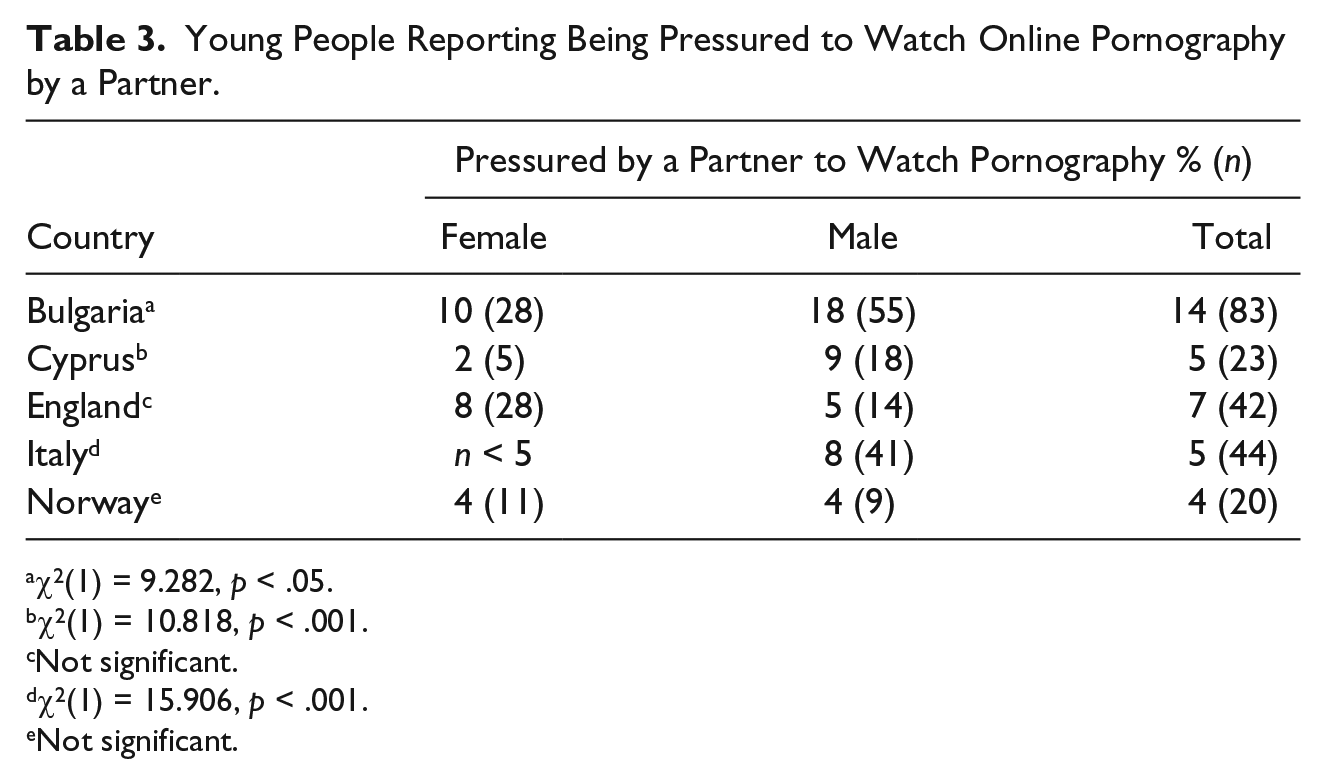
Survey participants were also asked whether they had ever been pressured to watch online pornography by their partner. Table 3 shows that the numbers reporting this form of pressure were low in most countries but were somewhat higher in Bulgaria. In Bulgaria, Cyprus and Italy, boys consistently reported higher rates than girls. This unexpected finding may be a consequence of the way in which gender relations are conceptualized in these countries, which are rated low on European gender equality scales (European Institute for Gender Equality, 2013). It is possible that in these countries, boys may be more likely to resort to traditional gender scripts and to claim that they were “forced” to watch pornography by a partner’s refusal to engage in sexual activity. Boys and girls in Bulgaria and boys in Italy who watched pornography regularly were more likely to say they had been pressured to do so by partners (p < .001), but no significant association was found for other countries.
Young People Reporting Being Pressured to Watch Online Pornography by a Partner.
χ2(1) = 9.282, p < .05.
χ2(1) = 10.818, p < .001.
Not significant.
χ2(1) = 15.906, p < .001.
Not significant.
Experiences of Sexual Coercion and Abuse and Association With Pornography
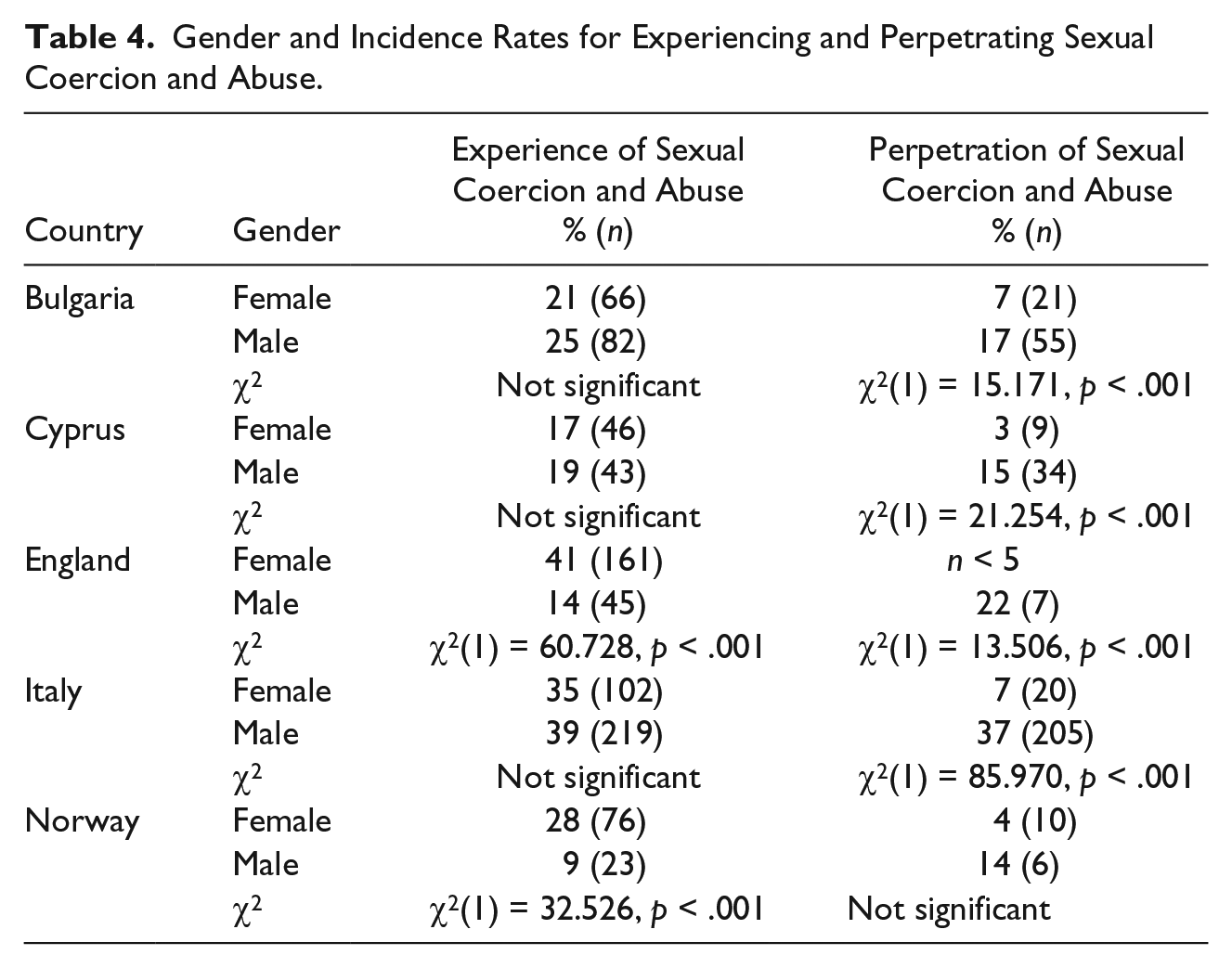
Table 4 shows particularly high rates of experience of sexual coercion and abuse for girls in England, Italy and Norway with most of this taking the form of being pressured into intimate touching or sexual intercourse rather than being physically forced. Rates for experiencing sexual coercion and abuse were higher for boys than for girls in Italy, Bulgaria and Cyprus, but this needs to be understood in the context of a discernible overlap between victimization and perpetration for these groups of boys: half of male sexual victims in Bulgaria (54%) and Cyprus (51%) and nearly three quarters in Italy (70%) also reported using sexual violence against a partner (for further discussion, see Barter et al., 2015). Perpetration of sexual coercion and abuse was considerably higher among boys with rates being particularly high in England and Italy, a picture that was consistent with that reported by victims. Again, boys were more likely to report using pressure rather than force, but it was noticeable that rates for both types of sexual coercion and abuse were particularly high in Italy where 34% of boys acknowledged that they had pressured a partner into kissing, intimate touching, or intercourse and 17% of boys admitted to forcing a partner into kissing, intimate touching, or intercourse.
Gender and Incidence Rates for Experiencing and Perpetrating Sexual Coercion and Abuse.
Sending and Receiving Sexual Images and Association With Pornography
Sexting is a relatively recent and therefore under-researched phenomenon among young people, and we were interested to explore its overlap with IPVA and pornography. Although there was little difference in young people’s access to mobile phones, substantial variations existed between countries in relation to sending and receiving sexual images and messages. Between 6% and 44% of young women and 15% and 32% of young men said they had sent a sexual image/message (defined as naked or nearly naked pictures or messages which talked about having sex) to a partner. Similar proportions of young women (between 9% and 49%) and a slightly higher proportion of young men (20% to 47%) reported receiving a sexual image/message from a partner. In all countries, this was often a reciprocal activity, as approximately two thirds of young people who had sent an image/message had also received one. The highest rates for both sending and receiving were in England and the lowest in Cyprus. This is interesting in light of the finding reported above that England had the lowest rates of boys reporting that they regularly watched online pornography, whereas Cyprus had the highest. Those young people who had experienced IPVA were twice as likely to have sent or received a sexual image/message as those who had not experienced IPVA (p < .001 in all countries).
All young people were asked to identify how they felt about sending or receiving a sexual image/message and were offered a series of options where they could select more than one of the following: upset/unhappy, scared/frightened, bad about yourself, angry, loved/wanted/fancied, humiliated, or no effect. Many participants (41% to 87% of young women and 75% to 91% of young men) reported only an affirmative impact. Girls in England and Norway were more likely to report a negative impact, and this was likely to be associated with the message or image having been shared with other people. Sixty-one percent of girls in England and 47% in Norway who reported a negative impact of sending a sexual image/message said that the message was shared. This compared with 21% of girls in England and 15% in Norway of those who reported an affirmative-only impact and who said that the sexual image/message was shared (p < .001; for a fuller discussion, see Wood, Barter, Stanley, Aghtaie, & Larkins, 2015).
Table 5 reports on the percentage of young people who had sent or received a sexual image according to whether they had regularly consumed pornography. This confirms that regular viewing of online pornography was associated with a significantly increased probability of having sent sexual images/messages for boys in all countries except Cyprus where sexting was generally limited and for girls in Bulgaria and Norway (numbers were too low in other countries to report significance). Because most of those young people who reported sending sexual images/messages also received them, it is not surprising that viewing online pornography was also significantly associated with receiving sexual images/messages for boys in all countries but Cyprus. For girls, viewing online pornography was significantly associated with receiving sexual images/messages in Bulgaria, England, and Italy.
Regular Use of Online Pornography and Sending and Receiving Sexual Images or Messages.

There was also a significant relationship between being pressured by a partner to watch online pornography and sending and receiving online images or messages for boys (p < .001) and girls (p < .05) in Bulgaria and for boys (sending p < .05; receiving p < .001) and girls (sending p < .001; receiving p < .001) in England, for boys in Italy (p < .001), for boys and girls sending images or messages in Norway (p < .05), and for Norwegian boys only in respect of receiving messages or images (p < .001). In other countries, numbers were too small to achieve significance.
Young People’s Views and Experiences
The qualitative interviews completed with 67 young women and 24 young men aged between 13 and 19 years, who were selected on the grounds that they had experienced abuse in their interpersonal relationships, were useful in understanding the association between regular use of pornography and sending sexual images. These interviews often involved allowing the young person to tell his or her own story of experiences of abuse, and this meant that questions were not always asked consistently across the five countries. In reporting findings, we have therefore identified key themes relevant to the issue of sexting and pornography rather than providing exact counts of respondents.
Several young people identified similarities between pornography and sexting and described them as interchangeable experiences. Sexting was described as “normal” by many of those interviewed and was, like pornography, argued to be a “safe” means of relieving sexual tension. When asked why people like to look at naked pictures on their phones, this young woman replied,
Sexual frustration . . . or they can’t get a girlfriend and they’re bored of watching porn. (Bethany, 15, United Kingdom)
Another young woman drew parallels between sending a sexual image and participating in a pornographic photo shoot:
. . . unless I want to go on the cover of Playboy next year, I would never send a picture like that to my boyfriend. (Sophia, 18, Bulgaria)
A number of participants emphasized that sending sexual pictures was “common” and “normal,” even when such transactions had gone wrong for them:
It’s just a game . . . many people do it . . . I liked it but thought it was going to stay secret! I would never have thought he would use it against my will. (Serena, 17, Italy)
As with pornography, exchanging sexual images was seen as a form of flirting or sexual stimulation: “to feel sexy” (female, 16). It was also, like pornography, described as a safe substitute for sex:
It shouldn’t be a problem if you do it [sex] via Skype for example, but if you do it for real . . . well, that’s another story . . . you could get pregnant . . . and you have to find the place (laughs). (Laura, 17, Italy)
However, it was also evident that the exchange of sexual images was understood as reproducing negative features of pornography including control and, when images were shared, humiliation:
A boy would want a naked photo of a girl to prove something to himself (or others), for example, that she was in a way under his control and there was nothing she would not do for him. (Asya, 18, Bulgaria) To punish someone or get even in some inappropriate way—for example, a guy can try to punish a girl for breaking up with him by sharing her naked photos. (Nadia, 18, Bulgaria)
The gendered nature of the harm inflicted on reputation by sharing photos was clearly articulated and was described as particularly damaging in more traditional or religious communities:
If a naked picture of mine goes around the web, no problem . . . for a girl it is different . . . her reputation would be in trouble . . . (Carlo, 17, Italy)
Pornography and Gender Attitudes
Young people’s gender attitudes were measured using three questions with respondents’ level of agreement recorded on a 5-point scale. The three questions addressed equality in the workplace, sexual behavior and IPVA. Respondents were allocated a score that reflected their levels of agreement with these statements and their scores were categorized into three groups: positive, neutral and negative attitudes. In all countries, boys were significantly more likely than girls to hold more negative gender attitudes. Because gender appears to play a key role in mediating use of pornography and pornography tends to depict sexist attitudes, we were interested to explore the relationship between its use and gender attitudes. The number of girls regularly watching online pornography was too small in most countries for a meaningful exploration of the relationship between exposure to pornography and gender attitudes in girls, but Table 6 shows that, in all five countries, boys who regularly watched online pornography were significantly more likely to hold negative gender attitudes, as evidenced by standardized residuals. It was particularly notable that boys who watched pornography regularly were very much more likely than those who did not do so to agree with the attitudes statement on sexual violence which was worded: “Women lead men on sexually and then complain about the attention they get.”
Boys’ Regular Use of Online Pornography and Gender Attitudes.

χ2(2) = 15.497, p < .001.
χ2(2) = 20.257, p < .001.
χ2(2) = 25.870, p < .001.
χ2(2) = 49.085, p < .001.
χ2(2) = 20.935, p < .001.
p < .05.
Pornography, Sexual Coercion, and Sexual Images
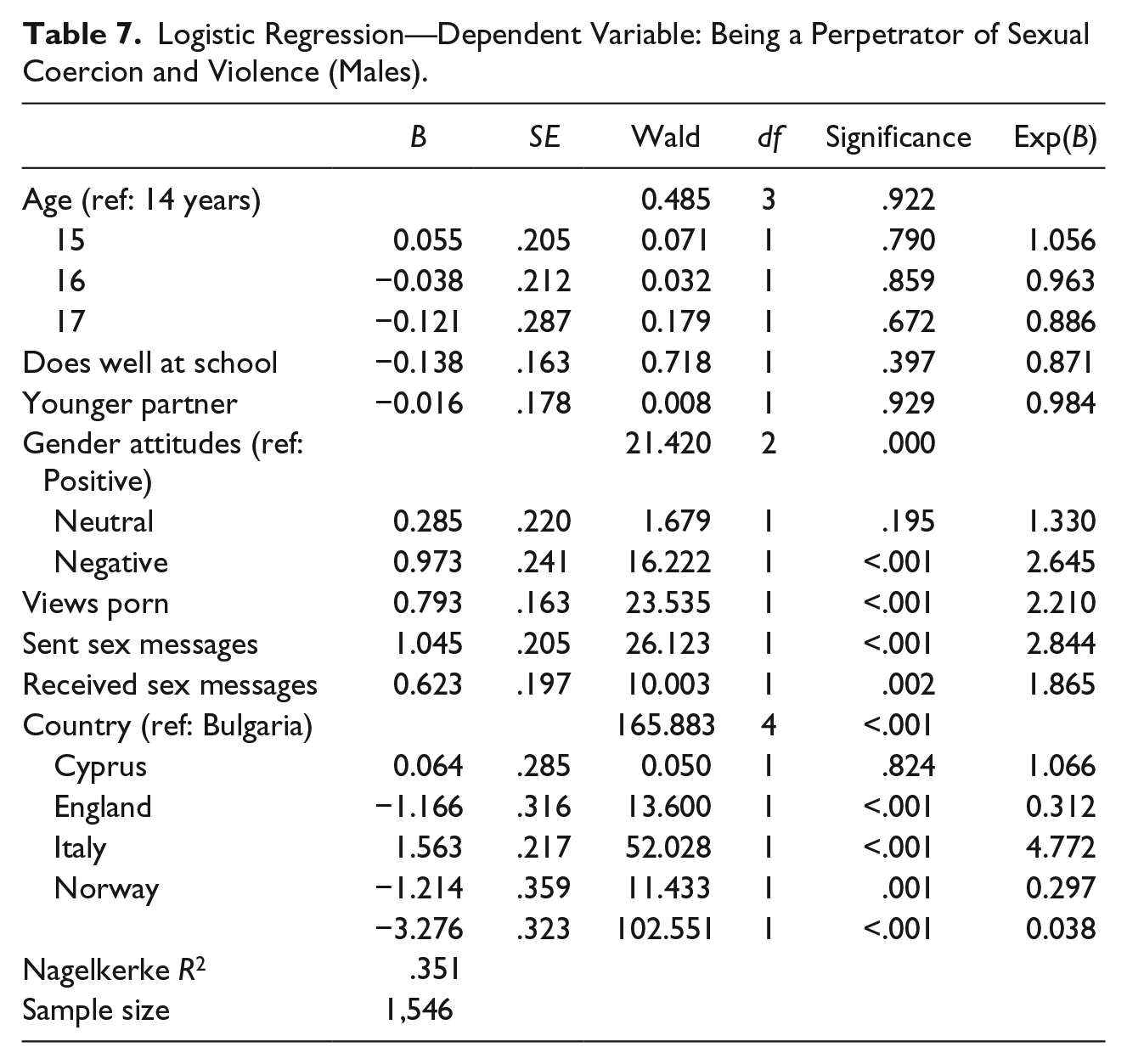
The relationship between boys’ consumption of pornography and sexual coercion and abuse was examined using logistic regression. The results are reported in Table 7. Logistic regression included known predictors of sexual coercion, along with watching pornography and sending and receiving sexual images. In the regressions, age, doing well at school (protective factor), and having a younger partner (risk factor) were included, reflecting previous findings on mediating factors for IPVA (Barter, 2009). They were not statistically significant in the model but were retained as controls. To maximize sample size, the regression was run on a pooled sample and country dummies introduced as controls. Previous analyses indicated that the predictors of sexual violence did not substantially vary across countries. Results are presented as odds ratios (OR), values above 1 indicate the variable is associated with increased risk of being a perpetrator of sexual coercion, whereas values below 1 indicate the opposite. Both regularly watching pornography (OR = 2.2) and sending (OR = 2.8) or receiving (OR = 1.9) sexual images or messages were associated with increased probability of being a perpetrator of sexual coercion. Negative gender attitudes were also positively associated with sexual coercion among boys.
Logistic Regression—Dependent Variable: Being a Perpetrator of Sexual Coercion and Violence (Males).
Discussion
This research has some limitations. It was not possible to construct a random sample in each country, and the cross-sectional design of the study restricts our ability to identify causal relationships. Designing a survey that met cultural expectations of research in schools across five different European states meant that we were not able to collect comparable data on race, religion and ethnicity in all countries. Moreover, the limited space and time available for survey completion in schools meant that we were unable to explore the frequency or nature of regular viewing of online pornography in the survey and there may have been considerable variation in the type and amount of viewing subsumed in the category “regularly viewed online pornography.” However, to our knowledge, this is the first large European survey to explore the relationship between pornography, sexual coercion and abuse and sexting in young people.
The picture that emerges from the data is complex, but it is reinforced by the emerging body of research evidence in this field. First, this study was in line with other research in finding that among this pan-European group of adolescents aged 14 to 17, it was predominantly boys who were viewing online pornography on a regular basis. Horvath et al. (2013) have suggested that girls’ viewing of pornography may increase as they get older, but the number of girls who reported regularly using pornography was too small for us to compare rates between age groups for girls.
Most young people were not coerced into viewing pornography by their partners, and it therefore seems that these regular viewers of pornography were in the main choosing to do so. Other research has found that, when asked directly, adolescents, particularly boys, normalize their viewing of pornography and report positive benefits including access to information about sexual performance and sexual stimulation (Lofgren-Mårtenson & Månsson, 2010; Rothman et al., 2015). However, although boys might focus on the benefits, this research identified a clear association between regular viewing of online pornography and perpetration of sexual coercion and abuse by boys. Although we lack evidence concerning the direction of causality in this relationship, this is consistent with the picture that is developing from research with young people in the general population (Flood, 2009; Kjellgren et al., 2010; Kjellgren et al., 2011).
Viewing pornography was also associated with sending and receiving sexual images and messages and, because both girls and boys engage in “sexting,” in some countries in our study, this was true of girls as well as boys. Few other studies have explored this association, but Romito and Beltramini’s (2015) survey of more than 700 older Italian teenagers found that both young men and young women who took or took part in sexual photos were significantly more likely to be exposed to violent or degrading pornography. “Sexting” can be conceptualized as a process whereby young people produce their own pornography, and some of the young people interviewed perceived a commonality between sending sexual images and online pornography. Although sexting was associated with regular viewing of pornography in some countries, it was also notable that rates of sexting were very low in Cyprus, which had the highest rates for boys’ regular use of pornography, whereas high rates of sexting were found in England, which had the lowest rates for boys regularly using pornography. This suggests that sexting may have the potential to replace pornography viewing among boys, and it may be that sexual images that are personalized and where young men feel that they have played a part in generating them and can claim some ownership have greater value.
Although sexting, like pornography, was normalized, young people interviewed were also able to identify ways in which the exchange of sexual messages and images could be informed by some of the abusive values and attitudes that underpin pornography. Sexting also appeared to be associated with perpetration of sexual coercion and violence, and where it is used to exert control or abuse (Wood et al., 2015), it may constitute a means whereby those young people who use sexual violence in face-to-face relationships extend this behavior into the online realm. Sexual relations have always been a site where abuse and harm can be experienced, but new technologies have provided platforms where sexual activity takes place in real time and is then recorded. The risks for young women’s reputations are heightened when sexual activity is performed online because the Internet constitutes a permeable barrier between public and private space and because perceptions of public displays of sexual behavior are heavily gendered. However, in a context where pornographic images have entered the mainstream through advertising, pop music, and entertainment, sexting is normalized and not associated with adverse effects for many young people in the general population. Approaches and interventions that seek to prevent the harms associated with the exchange of sexual images and messages need to take account of this.
Negative gender attitudes among boys overlapped with regular use of online pornography, and we would argue that pornography is both underpinned by and perpetuates gender inequality. Preventive interventions in IPVA need to address this potent relationship between pornography, gender attitudes, and abusive behavior in boys. Increasingly, boys are being identified as a key target for IPVA prevention (see Katz, Heisterkamp, & Fleming, 2011; Miller et al., 2012). Stanley et al. (2015) review of preventative interventions in IPVA, which focused on school-based dating violence programs, reported strong arguments from experts involved in developing and evaluating these programs for targeting work on boys as the main perpetrators of IPVA.
Conclusion
The relationships identified by this large-scale European survey between regular exposure to online pornography and abusive behavior in intimate relationships support Livingstone et al.’s (2011) conclusion that encountering pornography online constitutes a common but serious risk for young people. Although some researchers and young people themselves have argued that viewing pornography offers an approach to learning about sex that assists their own sexual performance and that this is not addressed by formal sex education (Rothman et al., 2015; Smith, 2013), pornography’s value as a tool for sex education is undermined by its sexism and misogyny, which have the potential to inform sexually coercive and abusive behavior in young men. Although most young people described their experience of sexting as affirmative, there was also some evidence from interviews with young people who had experienced IPVA that sexual images and messages could be used to inflict humiliation and control in ways that reproduced the values of pornography.
Attempts to regulate and restrict children’s and young people’s exposure to pornography are likely to have limited effectiveness in view of the widespread normalization of pornography and the ease of access that new technologies provide (Bryant, 2009). Rather, sex and relationships education should be attempting to foster critical approaches, aiming at promoting an understanding of pornography, which acknowledges its lack of congruence with lived experience and the gendered attitudes that inform its scripts. This is particularly important in the light of Peter and Valkenburg’s (2010) finding that the perceived realism of pornography mediates its impact on sexual behavior. Young people are informed and active consumers of a wide range of media, and both IPVA prevention and sex education should draw on that expertise to encourage analytic and gendered understandings of pornography and its uses.
Footnotes
Acknowledgements
Thanks to all the European partners who contributed to the research including Georgi Apostolov and Luiza Shahbazyan from the Applied Research and Communications Fund, Bulgaria; Susana Pavlou and Stalo Lesta from the Mediterranean Institute of Gender Studies, Cyprus; Noemi De Luca and Gianna Cappello, CESIE, Italy; and Per Moum Hellevik, Norwegian Centre for Violence and Traumatic Stress Studies, Norway.
Declaration of Conflicting Interests
The author(s) declared no potential conflicts of interest with respect to the research, authorship, and/or publication of this article.
Funding
The author(s) disclosed receipt of the following financial support for the research, authorship, and/or publication of this article: This research (ref no. JUST/2011/DAP/AG/3330) was funded by the DAPHNE III Programme of the European Commission.