



Abstract
Intimate partner violence (IPV) is a major social and public health problem affecting people from different cultures and societies. Much research has been undertaken to understand the phenomenon, its determinants, and its consequences in numerous countries. However, there is a paucity of research on IPV in many areas of the world including Pakistan. The present study aimed to develop a theory of the meaning and process of IPV from the perspective of Pakistani men and women living in and outside Pakistan.
Keywords
The study used a constructivist grounded theory approach. Using the community setting, data were collected from Karachi, Pakistan, and the Pakistani diaspora in Sheffield, United Kingdom. Forty-one participants, including 20 from Pakistan and 21 from the United Kingdom participated in the study. Twenty-six interviews were undertaken in Urdu and this required detailed attention to translation.
From the perspectives of the interviewees, marital life in a Pakistani context is about managing expectations of not only each other as husband and wife but also of their respective families. Family members as well as the couple have expectations, which may be in conflict, thus making it difficult for a husband and wife to meet all expectations. The husband or wife may have to prioritize expectations, meeting some expectations and ignoring others. Interviewees described IPV as escalating from conflict between husband and wife over daily life issues and these unmet expectations. This led to the development of the theory that when a husband and wife do not manage each other expectation, it can lead to IPV. This has implications for policy aimed at reducing the occurrence of IPV in Pakistan or the Pakistani diaspora. Policies need to focus on helping couples to manage expectations, or recognize that the belief that not managing expectations is the cause of IPV is at play when developing other prevention strategies.
Introduction
Intimate partner violence (IPV) refers to violence or a pattern of abusive “‘behaviours within an intimate relationship that causes physical, sexual or psychological harm, including acts of physical aggression, sexual coercion, psychological abuse and controlling behaviours” (World Health Organization [WHO], 2010, p. 11). Various other terms used to describe IPV include domestic violence, domestic abuse, intrafamily violence, wife abuse, spousal abuse, wife battering, courtship violence, battering, violence against women, and intimate partner abuse. IPV is the most current term used to describe violence between intimate partners. IPV typically starts in adolescence and early adulthood, most often in the context of marriage or cohabitation. It can occur in heterosexual or same-sex relationships and is perpetrated by men and women. Although women can perpetrate violence against their male partners (Anderson, 2002; Archer, 2000, 2002; Brown, 2004; Capaldi, Kim, & Shortt, 2007; Capaldi & Owen, 2001; Hamberger & Potente, 1994; Straus & Gelles, 1986), the number of women abused by men appears to be far greater (Archer, 2000; Tjaden & Thoennes, 2000; Whitaker et al., 2007). In addition, the number of women sustaining physical injuries and losing life remains higher compared with men (Olive, 2007; Phelan et al., 2005).
Many theories have been proposed to explain IPV (P. A. Ali & Naylor, 2013a, 2013b). For instance, the biological perspective considers IPV as being secondary to aggression resulting from structural and chemical changes in the brain due, for example, to trauma or head injury (P. A. Ali & Naylor, 2013a; Cunningham et al., 1998; H. Johnson, 1996). Psychopathological theories posit that IPV results from psychopathology, attachment problems, deficiency in various skills and abilities (e.g., self-regulation, assertiveness, communication, self-esteem), and substance use (P. A. Ali & Naylor, 2013a, 2013b). The feminist perspective highlights the patriarchal structure of societies, power and control issues, and learned helplessness (Bograd, 1988; Dobash & Dobash, 1979; Schecter, 1982). The sociological perspective considers violence in the family of origin, differences in the possession of tangible and intangible resources in the marital relationship, conflict in the family, and stresses explanatory factors research (Bandura, 1977). The nested ecological framework includes factors at various levels in the family, community, and society to explain violence in marital or intimate relationships (Heise, 1998; Heise & Garcia-Moreno, 2002). It is likely that no single theory or factor can fully explain IPV and “it is futile to attempt to demonstrate that one or two theories are correct, whereas others are wrong, when there are factors at many levels that play a causal role in domestic violence” (Carlson, 1984, p. 571).
IPV is a major public health problem affecting millions of people globally (P. A. Ali, Naylor, Croot, & O’Cathain, 2015; Clark, Silverman, & Shahrouri, 2010). The WHO estimates that more than 30% of women worldwide have experienced either physical or sexual IPV (Devries et al., 2013; Stöckl et al., 2013). The percentage is similar or greater in developing countries such as Pakistan (Aslam, Zaheer, & Shafique, 2015). IPV in Pakistan is considered a private matter, as it occurs in the family and, therefore, not an appropriate focus for assessment, intervention, or policy changes (Andersson et al., 2009; Fikree & Bhatti, 1999). It “is generally part of the patterns of abusive behaviour and control rather than an isolated act of physical aggression” (Niaz, 2004, p. 61). To understand IPV in Pakistani context, it is important to recognize the sociocultural context in which IPV occurs.
Pakistan is a patriarchal and patrilineal society, which values a strong family system. People generally live in joint or extended families with two or three generations living together. Joint families comprise
. . . the wives and children of the adult males, their parents and younger siblings and not usually, their first cousins, nephews and nieces. A common residence, common property, common worship, a common kitchen and system of mutual obligations [is a distinct characteristic of a joint family]. (Wasim, Herani, Farooqui, & Qureshi, 2008, p. 30)
In an extended family, however, several nuclear families (families of siblings) live together in the same homestead. Each unit of such an extended family is usually economically independent but is subjected to “ . . . control over members behavior [sic] regarding marriage, divorce, observance of purdah and women’s participation in development programmes” (Wasim et al., 2008, p. 31). Nuclear families and subnuclear families are becoming increasingly common, especially in urban areas of the country (Taqui, Itrat, Qidwai, & Qadri, 2007). Whatever the family system people live in, they still relate to each other very closely and have a strong influence on each others’ life-related decisions, especially those related to marriage and divorce. Older members of the family, regardless of gender, usually hold an authoritative position and are approached and consulted for all major decisions in the family. They usually live with and are cared for by their children or grandchildren, most often male children (Itrat, Taqui, Qazi, & Qidwai, 2007; Taqui et al., 2007). The average household size ranges between 6.1 people in Urban Sindh to 7.6 people in Urban Balochistan, with an average of 6.5 members per household in the country (Government of Pakistan, 2010). Marriage is the only socially acceptable way for two adults to live in an intimate relationship in Pakistan. It is considered to be a relationship not only of two people but also of two families (Hamid, Johansson, & Rubenson, 2010; Korson, 1969). Traditionally and practically, the majority of marriages are arranged by parents or other elder members of the family (F. Ali, Israr, Ali, & Janjua, 2009; Hamid, Stephenson, & Rubenson, 2011). Marriages are preferably arranged within the extended family, tribe, or ethnic group (Donnan, 1985, 1988; Shaw & Charsley, 2006), though various factors such as socioeconomic status, family background, education, and daily life habits of the girl and boy are taken into consideration to ensure the best possible match between the husband and wife (Shaw & Charsley, 2006). After marriage, generally, the bride resides with her husband and his family (Hamid, Johansson, & Rubenson, 2009). From childhood, girls are socialized to be silent, patient, and submissive to become a selfless person who is pleased to keep her husband and her in-laws, especially the mother-in-law, happy (Hamid et al., 2010; Hussain, 1999; Winkvist & Akhtar, 2000).
As mentioned previously, IPV is considered a significant issue in Pakistan. The Demographic Health Survey of Pakistan (2012) reported that 38% of women aged 15 to 49 years experience physical violence at least once in their lifetime (National Institute of Population Studies & ICF International, 2013). Women generally tend to prefer to stay in an abusive relationship due to real or imagined fear of harm by their husbands and in-laws, lack of financial support, concern for their children’s safety and future, stigmatization, emotional dependence, lack of support from family and friends, and finally, false hopes that their husband will change his behavior (Andersson et al., 2009; Niaz, 2004). The empirical evidence on IPV in Pakistan is relatively limited. A recent systematic review could identify only 23 studies published between 1999 to 2012 (P. A. Ali et al., 2015). The review reported a wide variation in the prevalence of verbal (31%-100%), psychological (42%-84%), physical (28%-35%), and sexual (1%-77%) IPV. Such discrepancy may have resulted from variation in the aims and objectives of the study, definitions of IPV, sample selection procedure, the type of sample studied, data collection instrument, and procedures (P. A. Ali et al., 2015). The review highlighted that the majority of studies were conducted in hospital environments, employed quantitative approaches (through survey questionnaires) using definitions of IPV from other countries and cultures assuming that the definition is understood by respondents, and is aligned with their own definitions (P. A. Ali et al., 2015). The review stressed a need to understand the phenomenon of IPV from the perspective of Pakistani people.
To date, no study has been conducted to explore the perspective of Pakistani men and women about the process through which IPV occurs in households. There is a lack of research exploring perspective of men about IPV and how it develops. Though mother-in-law is often identified as a contributor to IPV between a husband and wife, no research is conducted to explore her perspective about the issue. We felt it was important to explore this issue from the perspective of the general public who may or may not have experienced IPV as research, generally, tends to focus on vulnerable groups such as victims of IPV who are a very small proportion of the population. Understanding the perceptions, experiences, and perspectives of victims of violence is crucial. Given the close knit family structure in the country and close family relationships, those who may not have experienced IPV in their own relationship may still have observed it in their family. Nevertheless, examining what happens in the homes of ordinary people is crucial too, and may help in developing culturally specific instruments for further exploration of IPV. Such understanding may help with the identification and development of culturally sensitive strategies to increase awareness of IPV in the Pakistani population. Considering this, we used a constructivist grounded theory approach to explore the social process underpinning the phenomenon of IPV from the perspective of Pakistani people. The study aimed to generate a theory-grounded in data-to explain perceived causes of IPV and how IPV against women is perpetrated in ordinary Pakistani households.
Method
For this qualitative study, a constructivist grounded theory approach (Charmaz, 2006) was used. This approach seeks to ascertain the knowledge of subjective experiences and observations of people from their perspective and assumes that people give meaning to their own experiences and construct their own realities; the researcher’s job is to interpret reality from the participants’ perspectives. The approach acknowledges the role of the researcher in the construction of reality and the development of a theory that explains the phenomenon. We felt that this approach was suitable for the present study, as it provides the researcher with a “set of tools”—guidelines, principles, and strategies—that can be used to “tell stories about people, social processes and situations” (Charmaz, 2000, p. 522).
Setting
Data were collected from Pakistan (Karachi) and United Kingdom (Sheffield), in recognition that Pakistani people live in and outside Pakistan and that there might be differences between these two groups in terms of their beliefs about IPV. We felt that inclusion of participants from inside and outside Pakistan would contribute to the variation of the sample and thus may help in developing a theory that accounts for considerable depth and variation. Table 1 provides a brief overview of the study settings. To ensure access to a diverse population, participants were recruited from community organizations, mosques, and Asian shops in Sheffield, and in the outpatient departments of hospitals in Karachi. Flyers inviting people to participate in the study were placed on the notice boards and the staff (receptionists, nurses, shopkeepers, Imams) helped with identification and recruitment of participants. People who showed an interest in the flyer by reading and inquiring about the study (to staff working in the setting who noted their names and telephone numbers) were approached and invited to participate in the study.
Karachi and Sheffield at a Glance.

Sampling
As we wanted to understand what happens in the homes of ordinary people, the initial sampling frame included any men and women (at least 18 years of age) who may or may not have experienced violence in their own intimate relationships. However, as mentioned previously, these individuals may have observed intimate relationships and IPV in their respective families. At the beginning of the study, participants were selected purposely on the basis of these predetermined characteristics. Decisions about further sampling were made on the basis of provisional theoretical ideas as they emerged during simultaneous data collection and analysis (McCann & Clark, 2003; Patton, 1990). For instance, participants living in joint families stated that spending time together and living in joint family affects the development of understanding between husband and wife. To analyze this proposition, interviews were conducted with participants living in nuclear families. Likewise, after obtaining data from participants who had an arranged marriage, it was considered important to interview someone who had a love marriage. Sampling continued until theoretical saturation was achieved (Creswell, 1994).
Participants were 15 males and 26 females (N = 41); 20 participants were from Karachi, Pakistan (called Pakistani hereafter) and 21 were from Sheffield, United Kingdom (called British Pakistani hereafter). Participants were aged between 20 and 62 years. At the time of the interview, 26 participants were married and most had an arranged marriage. Years of marriage ranged from 1 to 45 years. Among Pakistani participants, one female participant had been married 3 times and another was the second wife of her husband whose first wife had died. One male participant had more than one wife at the time of interview. Among British Pakistanis, only one was married to a British-born Pakistani, whereas the remaining 20 participants’ spouses came from Pakistan. Participants varied in terms of languages spoken, education, employment, socioeconomic status, and family structure.
Data Collection
Data were collected using individual face-to-face interviews. A semi structured interview guide was developed using the three-phase approach to in-depth interviewing proposed by Seidman (2006) to ensure logical flow of discussion from general to specific and sensitive questions. For instance, initial questions focused on asking details about the respondents, their children, and their marital status. The next few questions were about exploring participants’ perceptions of marriage and marital relationship followed by questions about violence in the marital relationship and the factors influencing it. With the progress of data collection, questions were added or deleted to explore each emergent category to ensure saturation. For instance, the initial interview schedule did not explore participants’ definitions of “happy marital life.” During the first two interviews, it became apparent that to help participants discuss their views on IPV, it was important to explore their perceptions of a happy/unhappy marriage and so questions related to this were added. Depending on participants’ preferences, interviews were conducted in Urdu or English by the first author, who is a Pakistani bilingual married female. Each interview lasted 60 to 90 min and was audio recorded. Following each interview, detailed notes describing setting, participant’s nonverbal behavior, any interruptions or any other significant events during the interview were written. A reflexive diary was maintained throughout by the first author to help her analyze her own feelings, values, and beliefs related to IPV. In line with grounded theory, methodology, these notes and reflexive diary were also coded and used in the data analysis (Charmaz, 2006).
Data Translation and Transcription
Data collected in English (n = 15) were transcribed verbatim by the first author. Data collected in Urdu (n = 26) were first transcribed in Roman Urdu, “a common method of handling Urdu words in English text . . . ” (Halai, 2007, p. 348). This text was then translated into English. The accuracy of the translation was assured by randomly selecting small excerpts from 12 interviews, having them translated by an independent translator and comparing the translations.
Ethics
Ethical approval was obtained from the ethics review committees of the universities involved in United Kingdom and Pakistan. Permission to access study sites was also obtained from relevant organizations and officials in both settings. Potential participants were provided with an information sheet—in English or Urdu, depending on preference—explaining the aims and objectives of the study. Written consent was obtained from each participant before the interview. Only one participant per family was included in the study to ensure a participant’s spouse and family would not know what the participant disclosed. We also hoped this approach would help build rapport and trust with the participants and facilitate their openness in responding to questions (Ellsberg & Heise, 2002; Ellsberg, Heise, Pena, Agurto, & Winkvist, 2001). Every effort was made to ensure that participants were approached and interviewed in a culturally sensitive manner. Confidentiality and anonymity of all participants was continually ensured.
Rigor
For a study to be ethical, it has to be rigorous and trustworthy (Denzin & Lincoln, 1998). According to Charmaz (2006), a constructivist grounded theory should be credible (demonstrate intimate familiarity with the setting or topic, use of systematic comparison, and adequate sufficient grounding of the claims made by the researcher in the data), original (offer new insight into and conceptual rendering of the data, and the developed theory challenges, extends, or refines current ideas, concepts and practices), resonant (demonstrate the fullness of the studied experience, revealing unstable taken-for-granted meanings, and present deeper insight about the lives and worlds of the participants in relation to the phenomenon of interest), and useful (offer interpretations that people can utilize in their everyday lives, presenting generic processes and their tacit implications, identifying areas of further research in other substantive areas, and contributing to knowledge and improvement in society). To ensure the study was rigorous, various strategies, including member checking, peer debriefing, negative case analysis, theoretical sampling, reflection, validating emerging concepts were used.
Data Analysis
In line with grounded theory methodology, constant comparison was used during data analysis (Charmaz, 2006). Using Charmaz’s multilayered coding approach (initial, focused, and theoretical coding), the comparison was performed at three levels: (a) within one interview, (b) within the same group, and (c) between different groups. Initially, comparison was conducted within one interview. Each interview was studied line-by-line to determine what was said and to label each line. The aim of this was to understand the interview content, read each line and label it with appropriate codes, and to develop categories. This resulted in a summary of each interview, a list of provisional codes, a conceptual profile and memos that described the analytical process. The same process was followed each time a new interview was conducted. After reviewing and labeling five interviews and developing a code list for each interview, similar codes were clustered together using focused coding to form categories. The next step was to compare the data from people with similar experiences. In this study, single, married, and divorced men and women participated. Data were compared within each of these groups. Codes from each interview were compared with each other to determine whether they had similar meanings. The aim of this step was to expand the code list where codes had divergent meanings, to define a concept or category, and to identify and specify its characteristics and dimensions according to the nuances developing between data. The third stage involved comparison between different groups with the aim of completing the picture already obtained and to confirm the story among various participants and groups by exploring similarities and differences in themes between different groups (single, married, and divorced men and women, living in a joint or nuclear family). This step resulted in new memos and contributed to deepening insights into the dimensions of the different categories. Use of theoretical coding helped us explore and specify the relationship between categories and move beyond description. This was a continuous, iterative cycle that continued during data collection and analysis. Memos were kept throughout the period of data collection and analysis to note thoughts and ideas which were used to clarify concepts and the developing theory.
The analysis resulted in the development of eight categories: definitions and attitudes toward IPV, relationship dynamics, personal characteristics, conflict management practices, role fulfillment, role of family, socioeconomic factors, and cultural factors. Table 2 provides an overview of these categories. Identification of a core category is not compulsory in a constructive grounded theory approach. Indeed, Charmaz (2006) maintains that no single concept can explain the whole phenomenon of interest. However, Charmaz highlights the significance of showing relationships between categories. A careful analysis of initial codes, categories, and theoretical memos identified three important features that participants discussed as contributing significantly to marital conflict and subsequent IPV: relationship dynamics, role expectations, and the family influence. These categories seemed to influence and overlap each other significantly and meeting expectations was the thread that joined them. The importance of not meeting expectations was relevant to all three categories and was identified as the main social process contributing to IPV.
An Overview of Various Categories Identified in the Study.
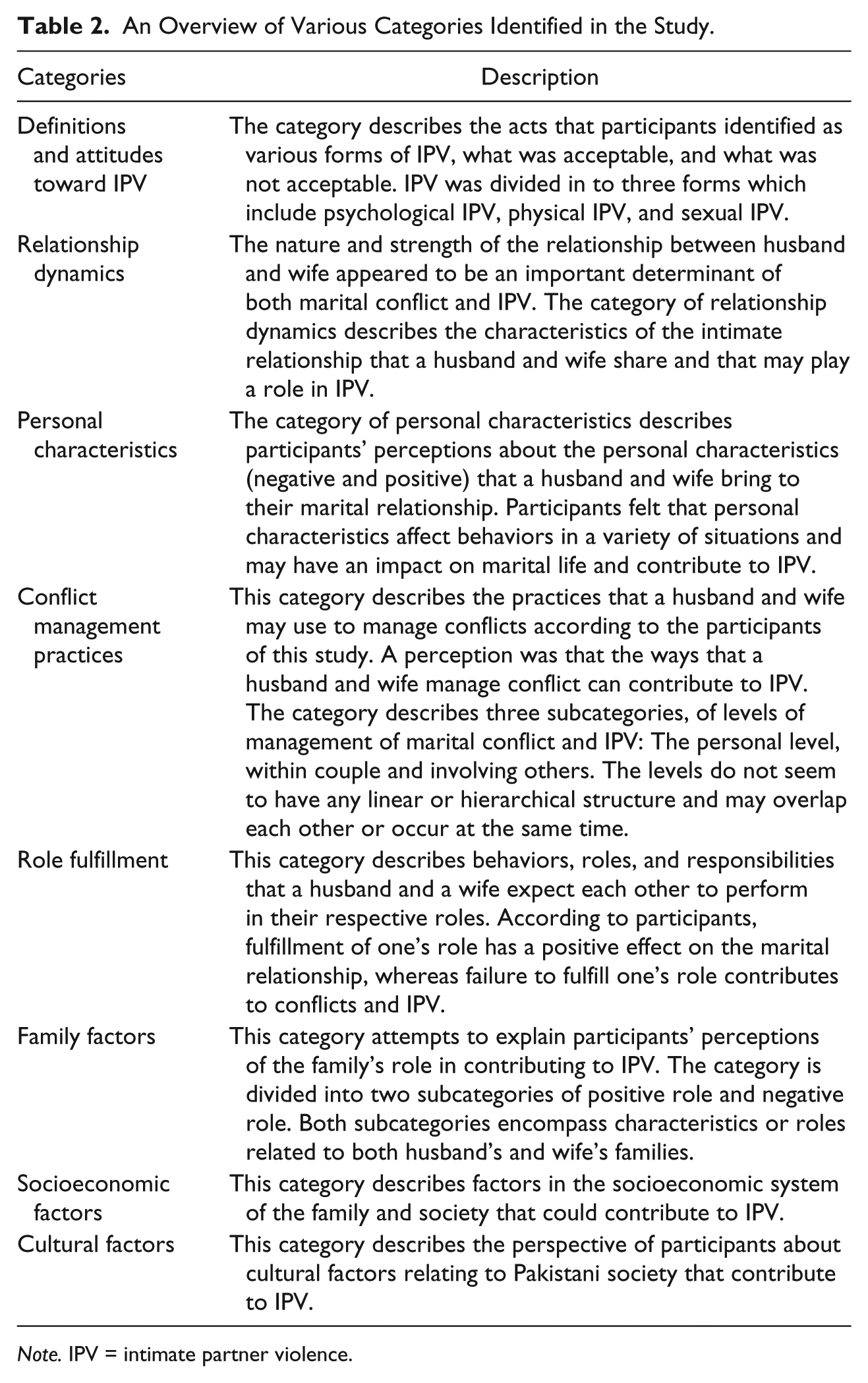
Note. IPV = intimate partner violence.
Findings
According to the study participants, IPV in Pakistani society develops from conflict between husband and wife. It stems from arguments, disagreements, and conflicts about daily family life situations and issues. Such disagreements and conflicts are a normal part of any relationship but can result in IPV when partners are not able to manage conflict constructively:
It’s probably when arguments just get out of hand, both of them can’t control each other, and they probably don’t have an understanding of why one is getting upset over something or where the argument has started from . . . Violence then probably starts as of the arguments and then if the arguments get really heated and if there is no one to intervene or none of them is backing down. Then it’s probably going to lead to violence. (Faheem, British Pakistani male)
In the following, the three core categories are presented. Following this, the theory of managing or not managing expectation is presented.
Relationship Dynamics—Understanding Between Husband and Wife
The nature and strength of the relationship between a husband and wife was perceived as an important determinant of both marital conflict and IPV. According to the participant, the husband and wife expect each other to love, understand, trust, and respect each other. They expect to give time to each other and to communicate with each other. Fulfillment of these expectations facilitates development of understanding between husband and wife that in turn makes their marital relationship effective from their point of view. Below, both Faiza and Raheem—of different genders and from different countries—describe the importance of understanding between partners and how its presence prevents IPV. Faiza (British Pakistani female) stated, “If you understand each other then you aren’t going to kind of rub each other up the wrong way. Are you? It’s like, you know, understanding that person personally, what makes them tick, what makes them angry, things like that.” Raheem (Pakistani male) mentioned,
If husband and wife know each other and they are mentally compatible to each other. Both of them are usually aware of each other’s preferences, likes, and dislikes. The husband knows about the likes and dislikes of his wife and the wife knows about the likes and dislikes of her husband. So in that relationship, I think conflicts or violence cannot occur.
On the contrary, an ineffective relationship was characterized by lack of communication, sharing, knowledge of each other’s likes/dislikes and preferences, acceptance and accommodation of individual differences, respect, compatibility, trust, and understanding. Such a relationship meant that the husband and wife were not meeting each others’ expectations. Participants believed that an ineffective relationship, in the presence of other factors such as negative family influence and unmet role expectations (see below), enhanced the possibility of disagreements, conflicts and subsequent IPV.
Role Expectations
Role expectations referred to behaviors, roles, and responsibilities that a husband and a wife expect from each other. Participants mentioned that a husband expects his wife to take care of his needs, look after his children and family, respect his parents, culture and traditions of the family and live in accordance with the norms of the family and society, as Asim (British Pakistani male) explicated here:
Well, obviously she’s there to look after everyone, to look after my sister, my mum, this and that. She should respect my family and then if they tell her to do something, then she should listen, do whatever they say because obviously, if my dad wants a glass of water, he should be able to ask my wife: “Can you fetch me a glass of water please?” My wife shouldn’t say anything, she should just go get it and that’s how it should be, I think.
A wife, on the contrary, expected her husband to provide for her needs and her children’s needs as Beena (Pakistani female) mentioned. “The man is responsible for the needs of his wife and family, as per Islamic teachings, and he should fulfill his responsibilities. The wife is his responsibility and he should take care of her needs.” A husband was expected to act as a link between his wife and other family members and to maintain a balance between them. A perception was that, on one hand, his family members—especially his mother—may find it difficult to share her son with another woman. On the other hand, for a wife, her husband is the only person she is related to in the marital home. Such tension is evident in the account of Shazia (Pakistani female):
The mother . . . thinks that she has more rights to her son, whereas, the wife thinks that because she is the wife so she has more rights on her husband . . . This makes the situation difficult for the husband, taking mother‘s side makes wife unhappy and taking the wife’s side makes the mother unhappy. So eventually, this could become a reason for marital violence and obviously, the husband can be violent, the wife cannot be.
The husband and wife are also expected to play many different roles in the family. Pakistani culture expects a man to not only take care of his wife and children but also to provide for his parents, to take care of them in old age, and to support other siblings. The expectations of a marital relationship and the expectation of family can be challenging and sometimes conflicting, and may put a lot of pressure on the individual.
Participants believed that not meeting expectations of various roles leads to the development of arguments, disagreements, and conflict between husband and wife. If not managed appropriately, such conflicts, then lead to IPV.
Family Influences
The role of the family was another very important and interacting factors that—participants believed—strongly affects the marital life of a couple and may contribute to conflicts and IPV. Close knit family structure and social and cultural expectations from people in the Pakistani society inevitably make the role of extended family important. Participants felt that families—of both husband and wife—play a significant role in IPV. A positive role of the family was seen as reducing the likelihood of conflicts and IPV, whereas a negative role of the families increases the likelihood of conflict between husband and wife that may escalate to IPV. In this respect, the role of the husband’s family appeared to be more prominent. Participants believed that a husband’s family can play a positive role by facilitating development of understanding between husband and wife, and helping the daughter-in-law to get adjusted in the new family. For instance, Naseeban (British Pakistani mother-in-law) stated,
Those who fear Allah, who are thoughtful, they try to not to cause any problems and if there are conflicts and problems in their son and daughter in-law’s life, they try to solve it. Such mother-in-law thinks that no issue can be solved by conflicts.
On the contrary, the family may contribute to the development of conflict and subsequent IPV by various negative acts such as instigating problems between husband and wife, or blaming or complaining about a wife to her husband. Naureen (British Pakistani female) illustrated this very effectively:
I think what they do behind the wife’s back, they talk about the wife to their son, she has been doing this, she has been doing that, she has been saying this, why is she doing that. They will basically fill his ears and fill his head and he then comes home and takes it out on the wife . . . They do underhand tactics. And they will get their son, why is she wearing this, why is she going here, what is she doing and then that all goes into his head and then he goes home and will take that out in violence. Where were you today, what did you do today.
Participants believed that a wife’s family can also play a positive role by giving time and space to their daughter to settle in with her husband and in-laws. They can play a negative role by supporting their daughter in situations where she might be wrong as Pari (Pakistani female) mentioned:
A girl’s parents can contribute to marital violence between their daughter and her husband by giving her wrong information about her husband and supporting her wrong expectation of her husband, not helping her recognize her mistakes. Girl’s parents should teach the girl to be nice with her husband and in-laws. So they shouldn’t spoil their daughter’s home, but should help her build a trusting relationship with her husband and in-laws.
A positive role of the families was seen by the participants as reducing the likelihood of conflicts and IPV, whereas a negative role of the families increases the likelihood of conflict between husband and wife that may escalate to IPV.
Managing or Not Managing Expectations: A Grounded Theory
The theory presented here proposes that IPV in Pakistani society results from a constant and complex interplay of many different factors and processes. The three categories of relationship dynamics, role expectations, and family influence together explicate the processes of IPV from the perspectives of Pakistani men and women. The common thread intersecting these three categories focuses on expectations. The ability to meet each others’ expectations minimizes the likelihood of marital conflicts and IPV, whereas an inability to meet expectations may contribute to conflict and/or IPV between husband and wife. The “fine line” between meeting or not meeting expectations is the ability to manage expectations of not only one’s partner but also the families. It is about,
The ability to understand expectations and to maintain an effective and balanced relationship with one’s partner and other family members
Keeping a balance between every role and relationship rather than giving importance to one relationship over the other
Managing expectations because at one given time, a husband and wife as individuals have to work on several different people’s expectations that may conflict with each other, thus making it difficult for them to meet all expectations.
The individual may have to prioritize expectations to meet or accept one and ignore the other. For instance, a husband who is expected to live in a nuclear family by his wife and at the same time his parents expect him to live with the joint family may decide to live in a nuclear family or vice versa after assessing the consequence of fulfilling one set of expectations and failing to meet the other. He may also have to consider the relationship between his wife and his parents, his financial situation, and his own ability to give time to two families instead of one before making any decision.
Analysis reveals that the relationship dynamics between husband and wife are influenced by personal characteristics, attitudes toward IPV, and conflict management abilities of both husband and wife as individuals. In addition, socioeconomic factors and cultural factors influence the life of people as individuals, families and communities as depicted in Figure 1 which demonstrates the interrelationship of various categories with the core categories identified in this study. The factors that facilitate or inhibit conflict and IPV can be placed into four groups or levels, that is, individual level, couple level, family level, and societal level (Figure 2).
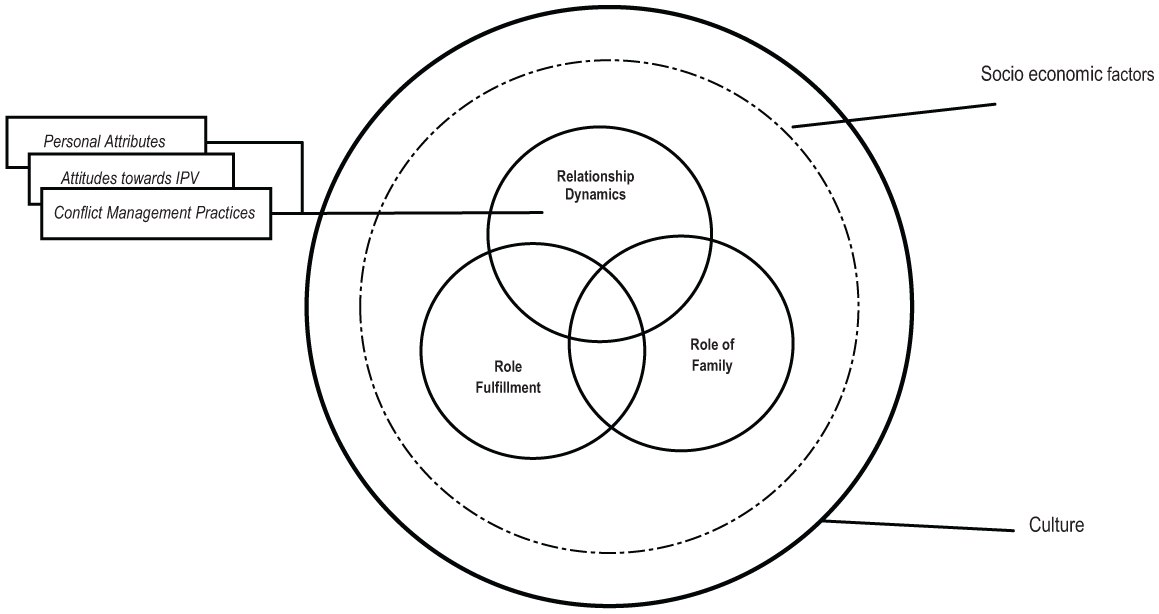
Core categories and their relationship with other categories.

Factors influencing conflicts and IPV between husband and wife: Theory of managing or not managing expectations.
Individual Level
The theory suggests that individual level constitutes husband’s and wife’s personal characteristics, conflict management practices that they use to cope with conflicts individually, and their attitudes toward IPV. First, personal characteristics refer to the personal habits and characteristics of a person that are part of his personality and which husband and wife as individuals bring to their marriage. These attributes could be positive or negative. Positive attributes are those which help in minimizing the risk of conflicts and IPV and may include intelligence, ability to analyze and control challenging situations, ability to make decisions, ability to manage finances, ability maintain a balance between family members, ability to compromise, the ability to accept criticism, obedience, and patience. Personal characteristics can be negative as well. Negative attributes may include being suspicious, careless, irresponsible, authoritative, domineering, aggressive, argumentative, irrational, and inconsiderate:
I think your attributes influence your marriage a lot, if you are going to be a suspicious person and suspect everything that is going to cause conflict. If you are an aggressive person, it is going to cause conflicts and problems. (Naureen, British Pakistani female)
Second, personal attitudes toward IPV are another feature that husband and wife, as individuals, bring to the marital relationship. Attitudes toward IPV determine an individual’s definition of IPV and influence an individual’s behavior toward acceptance or rejection of IPV. An accepting attitude toward IPV increases the likelihood of perpetration and acceptance of IPV. A husband’s accepting attitude toward IPV make him more likely to use IPV against his wife and a wife’s accepting attitude toward IPV make her more vulnerable and more likely to accept IPV and remain in a violent relationship. Third, the conflict management or reconciliation abilities and practices is another characteristic that are individual to husband and wife. Behaviors that husband and wife display at the time of conflict, their reaction to conflict, and various strategies that they use to manage and deal with conflict may contribute to the escalation of conflict in to IPV. Personal characteristics and attitudes toward IPV influence the conflict management between husband and wife. All three elements are related to husband and wife as individuals and may greatly influence the dynamics of their relationship and the likelihood of IPV.
Couple Level
The theory proposes that the dynamics of the marital relationship and role expectations are two important couple level factors. As described previously, relationship dynamics refers to the characteristics of intimate relationship between husband and wife. It refers to the degree of understanding, compatibility, sharing and communication, respect, love, trust, commitment, and knowledge about each other. The presence of these characteristics makes the relationship effective and minimizes the risk of conflicts and IPV, whereas an absence of these characteristics results in an ineffective relationship which is prone to conflicts and IPV. The individual-level factors mentioned above play an important role in shaping the relationship dynamics between a husband and wife. Another very important aspect of marital life is the ability to fulfill the role expected by the spouse. Husband and wife are required to fulfill various role expectations of each other as discussed above.
Family Level
The theory proposes that to understand the phenomenon of IPV in the Pakistani community, it is important to consider the influence of husband and wife’s respective families. Families can play a positive as well as a negative role and may influence the relationship dynamics between husband and wife. The positive role of family facilitates development of relationship and negative role of the family may contribute to problems and conflicts and/or IPV between husband and wife. Role of the family can influence the relationship dynamics between husband and wife. In addition, role expectations and husband’s and wife’s abilities to meet these expectations can influence the impact of the family and vice versa.
Societal Level
The theory proposes that, at the societal level, role of socioeconomic factors and cultural factors are significant. Socioeconomic factors such as finances and education of the husband, wife, and their families play a very important role and may influence the management of conflicts and IPV between husband and wife. Financial issues were identified as a major cause of conflict between husband and wife. As mentioned previously, as the husband is expected to provide for his family’s needs, his inability to meet this expectation can contribute to conflicts. Rania’s (British Pakistani female) experience reflected this:
I think the main disagreement with him was financial support. He wasn’t willing to support me. He wasn’t willing to support me financially because he believed that what he earned, his parents had a right over, so I was working, he was working, and my money was for housekeeping, for bills, for buying the food, whereas his money, he felt he had, humm his brothers had a right over it and his parents had a right over it. So he was, humm, for that first year, I accepted it, so he was earning and sending that away. I was earning and proving for the house, so it was financial reasons, other than that we never had a problem which is a great shame. He was directed to support family back home, whereas, I wanted him to stay with me and settle down together. He was earning and he was supporting his family. I was earning and I was supporting me and him. As a man he should be supporting me, we should be supporting each other. We should be planning our life together, that’s your earnings, and this is my earning.
Education, on the contrary, enhances the possibilities of better jobs, thus enhances the ability to meet financial demands of the family. In addition, education also helps in understanding the rights and responsibilities of husband and wife as individuals. Participants felt that education makes people aware of their rights and helps them understand appropriate behaviors and help them distinguish between acceptable and unacceptable behaviors. Education also influences an individual’s attitudes toward life, marital relationships, and IPV and helps the individual to learn positive coping strategies and conflict management abilities as Beena (Pakistani female): “I think that if husband and wife are educated, conscientious and broadminded then they will be able to live a harmonious life. If this is not the situation, then a problem can arise, I think.”
Similarly, the culture of a society affects the life of its people. Culture shapes the behaviors of people and the expectations that people have of each other in various relationships, and circumstances. Findings of this study suggest that various cultural factors such as the joint family system, the practice of arranged and consanguineous marriages, male dominant/patriarchal culture, and an acceptance of interferences from friends, relatives, or neighbors in someone’s life and family issues affect the marital relationship between husband and wife and may contribute to conflicts and IPV. Like socioeconomic factors, culture also affects individuals, couples, families, and communities living in it. The participants did not say that culture expects a husband to be violent toward his wife, but they did describe how culture gives power to men as a husband and at the same time, it requires a woman in the role of a wife to accept the superiority of her husband:
Since the culture of our Pakistan and the traditions are such that parents say it to their daughter at the time of their marriage that you are going to a new home after this marriage and you should only leave that home when you die. They usually teach her how to live in in-laws, to be obedient and to serve her mother in-law and father in-law, husband and to others. (Kainaat, Pakistani female)
This was also apparent within the British Pakistani participants, despite being born and raised in a western society and having the influence of western culture. Finally, the culture expects a husband and wife to stay in the marital relationship and to work on the relationship to make it successful and this may contribute to women continuing with their marital relationship and not reacting to IPV:
I think a western marriage is about them two people and if they have made that decision well they don’t have to deal with them kind of issues, so in a way it is kind of easier for them if they wanted to kind of split up or something like that, they could make that decision and it is an acceptable norm in this country and society to do that, whereas within our culture you have got a hundred obstacles that you have to consider every step. You kind of thrown back and thrown back [from the idea of getting separated or divorce, by the advice you are given and thus feel forced to stay in the relationship] and if you are going to get out of that marriage it is not easy I think. You have to fight your way through it. (Faiza, British Pakistani female)
Socioeconomic and cultural factors are the societal level factors that affect all other aspects mentioned in individual, couple, and family level above, and thus are important to understand marital life, marital conflicts, and IPV.
To prevent IPV, it is important to either avoid conflict or to manage conflict constructively. To avoid conflict in marital relationship and thus to avoid IPV, it is important to manage all expectations, of not only each other as husband and wife but of other family members as well successfully.
Discussion
The present study explored the social process underpinning the phenomenon of IPV from the perspective of Pakistani people. The study aimed to generate a theory to explain how IPV against women is perpetrated in ordinary Pakistani households. IPV, in the light of the findings of this study and previous research conducted in Pakistan, is perceived to develop from conflict between a husband and wife. It stems from arguments or disagreements about in/significant daily family life situations (T. S. Ali & Bustamante-Gavino, 2007; Chaudhry, 2004; Farid, Saleem, Karim, & Hatcher, 2008; Fikree & Bhatti, 1999; Fikree, Jafarey, Korejo, Afshan, & Durocher, 2006; Fikree, Razzak, & Durocher, 2005; Zareen, Majid, Naqvi, Saboohi, & Fatima, 2009). This type of violence is classified as Situational Couple Violence (M. P. Johnson, 2006) and Male Controlling Interactive Violence (Johnston & Campbell, 1993), the most common type of violence experienced in intimate relationships that escalates from verbal arguments and conflicts (Kelly & Johnson, 2008). The experiences of people in an extreme, abusive relationship may be different.
Findings suggest that the degree of understanding, trust, respect, sharing, and communication between a husband and wife affects their ability to talk and discuss their problems and issues. Poor understanding between a husband and wife has been identified as a reason for divorce (Chaudhry, 2004; Lavner & Bradbury, 2012). Consistent with previous research, the present study found that conflicts and IPV are less likely to be experienced in intimates who maintain good communication and make joint decisions (B. S. Ali et al., 2002; Kazi et al., 2006) and are satisfied with their marital relationship (Ayub et al., 2009; Naeem, Irfan, Zaidi, Kingdon, & Ayub, 2008).
As stated in the introduction, many theories have been proposed to explain IPV and each theory, except the nested ecological framework, tried to identify a single cause of IPV. Some of these factors such as substance abuse (psychological theories) and patriarchy (feminist theories) were identified in the findings from the present study as well. Each single cause mentioned in each theory is important and explains the phenomenon of IPV to some degree. However, the nested ecological framework is the only theory that encompasses the perceptions of the Pakistani people that factors affecting IPV do not stem from one source, but from multiple sources that include individual, relationship, community, and society (Heise, 1998; Heise & Garcia-Moreno, 2002). Consistent with the ecological framework (Heise, 1998; Heise & Garcia-Moreno, 2002), the theory maintains that IPV results from a complex interplay of many different factors. The present theory goes a step further by highlighting the importance of relationship dynamics and understanding between husband and wife that influence the development of conflicts which may escalate to IPV. The study also highlights the role of extended families and stresses the importance of understanding their role and contribution to IPV.
A major difference between the two models is that the nested ecological framework is presented to address the issue of violence against women (VAW) and is applied to IPV as well, whereas the grounded theory of managing or not managing expectations is specifically designed to understand the phenomenon of IPV in the Pakistani community. The nested ecological framework was developed with the help of international and cross-cultural research literature and data obtained from North American Social Science (Heise, 1998), whereas the grounded theory of managing or not managing expectation is grounded in the data collected from Pakistani men and women about IPV from their perspective. A closer examination of both of these models suggests that the theory of managing or not managing expectations goes a step further in explaining the phenomenon of IPV from the perspective of Pakistani men and women. It incorporates almost all points covered in the nested ecological framework implicitly and explicitly and highlights other factors that are not covered by the nested ecological framework. For instance, factors presented in individual level (Heise, 1998; Heise & Garcia-Moreno, 2002) of nested ecological framework (being male, witnessing marital violence as a child, absent or rejecting father, being abused as a child, and alcohol use) may influence the personal characteristics of an individual from the perspective of the theory of managing or not managing expectations. In addition, the theory maintains that conflict management practices, and attitudes toward IPV are important aspects of an individual that may contribute to IPV. Unlike nested ecological framework (Heise, 1998; Heise & Garcia-Moreno, 2002), the grounded theory of IPV developed from this study identifies relationship dynamics between husband and wife, role fulfillments and role of extended families as important factors contributing to conflict and IPV between a husband and wife. The theory of managing or not managing expectations identifies the relationship between husband and wife and the extended family as central in understanding the issue of IPV, whereas nested ecological framework only identifies marital conflict and male control of wealth as factors at the relationship level. Considering the relationship dynamic, role fulfillment and role of the family is of utmost importance for understanding IPV in Pakistan due to several distinct cultural practices, preference for arranged marriages, expectation to maintain marital relationship and taboo nature of separation and divorce, importance of family life and joint and extended family system. Evidence suggests that these practices are not limited to Pakistan and that other Asian and Middle East countries appear to value the same practices (Clark et al., 2010). Other factors of the nested ecological framework described in the community and society levels are also covered in the societal level of the grounded theory of managing or not managing expectations.
It is the first study to explore the meaning of IPV from the perspective of Pakistani and British Pakistan people while considering the influence of their culture. The study presents only a substantive theory about IPV from the perspective of people who may not necessarily had experienced violence in their relationship. Further research is needed to test the relevance of this theory in other settings in and outside Pakistan. The relevance and applicability of the theory to the situations of men and women who have been subjected to extreme forms of IPV, such as women living in shelters should be explored.
Implications for Practice
The findings of the research study have several implications for practice. Educational and awareness programs can be developed and delivered to educate people about IPV, its consequences, the various factors that contribute to it and possible strategies to minimize IPV. In addition, such strategies may also help in reducing the stigma that prevents victims of violence from acknowledging and disclosing their experiences to someone else. This can be done through the use of television and radio programs that are popular among people especially women. The message can also be conveyed through daily television soaps and magazines that play an important role educating people and are usually popular in women in Pakistani communities. Through such strategies and programs, awareness about the importance of managing expectations can be raised and people can be encouraged to communicate openly about their expectations of each other not only in the role of husband and wife but in other roles as well. One campaign can be to de-stigmatize IPV among victims to encourage women to discuss IPV and social process giving rise to it without worrying about adverse consequences. Considering the complex nature of the issue, it may not be easy or even possible for women to disclose their own experiences. Therefore, use of hypothetical (or actual) vignettes can help facilitate such discussion in a nonthreatening and supportive environment. The campaign raises awareness of the harm caused by IPV to target women in the extended family, possibly using mother-in-laws and sister-in-laws to publicize the campaign and educate women about the harm it can do and strategies to avoid conflict developing to IPV. Nevertheless, it needs to be recognized that any possible strategy or solution will require long-term commitment, coordination, and shared decision making among various stakeholders and groups.
The grounded theory of IPV presented in this article, developed in this study, describes the process of IPV in Pakistani culture from the perspective of Pakistani people in Pakistan and in Diaspora living in a Northern city in the United Kingdom. Findings from the study suggest that IPV in Pakistani culture escalates from conflict between husband and wife over various daily life issues and unmet expectations. It results from a continuous and complex interplay of many different factors and processes. The success of the husband and wife in meeting each other’s expectations minimizes the likelihood of conflicts and thus IPV. A failure to meet expectations contributes to the development of conflict that may escalate into IPV due to various factors such as personal attributes, conflict management abilities, attitudes toward IPV, and negative role of the family. Findings from the study resulted in the construction of a grounded theory of managing or not managing expectations that explicate the phenomenon of IPV from Pakistani participants. The discussion demonstrates that the theory of managing or not managing expectations is supported by the body of knowledge on IPV goes further than current evidence, builds on existing theories, and enhance our understanding of IPV in a country like Pakistan. The methods used for the study were sufficient to identify a grounded theory, but further testing is needed to establish applicability beyond the sample in this study.
Footnotes
Declaration of Conflicting Interests
The author(s) declared no potential conflicts of interest with respect to the research, authorship, and/or publication of this article.
Funding
The author(s) received no financial support for the research, authorship, and/or publication of this article.