



Abstract
Throughout history, those who have participated in political violence have predominantly been male young adults. At the same time, we know that most young men will not use violence for political protest. So what distinguishes those who do from those who do not? In this article, we link psychological research on the intergenerational effects of violence in the family to violence in the political arena. We ask to what extent experiences of violence as a child are associated with participation in political violence as an adult. Our overarching argument is that family-of-origin violence may not only have serious negative, intergenerational effects on health and well-being but also on future spirals of violence for the individual. Family-of-origin violence may also lead to an increased risk of using violence for political purposes due to the diffusion of violence norms, whereby violence is seen as a just and appropriate response to conflict. We test this claim using micro-level data from the Survey on Gender, Politics, and Violence in Thailand, conducted in 2012-2013. For our analyses, we zoom in on men from a specific cluster sample of the survey: 200 political activist interviewees—100 Red Shirts and 100 Yellow Shirts. The results support our claim. We find that experiences of family violence as a child increase the risk of participating in political violence as an adult among male political activists in Thailand. Our study suggests one imperative policy implication: Violence prevention measures at the individual level—against corporal punishment of children or violence against women—may have critical implications also for decreasing the risk for and prevalence of political violence and armed conflict in society.
Keywords
Even in the most severe cases of devastating political violence, the number of people who actually use violence is surprisingly small. The knowledge of who uses violence in political protests is critical for violence prevention. However, despite the urgency of this question, very little systematic research has been conducted at the individual level. To date, most research on political violence has been conducted at a macro level, studying countries or opposition movements, for example. Therefore, most explanations for political violence are also at a macro level, pointing to issues such as poverty, semi-democratic or corrupt governance, or economic dependency on natural resources, for example (Blattman & Miguel, 2010; Wimmer, 2015).
Recently, however, a small stream of research has begun investigating the causes of political violence by comparing individuals who have engaged in violence with those who have not. The main findings here indicate that those who participate in political violence are predominantly young men (McDoom, 2013). Although being male is one of the most important predictors of political violence, it is far from sufficient; most young men will not use violence in political protests. So what, apart from gender, distinguishes those who use violence in political protests from those who do not? To answer this question, we need a more fine-grained individual-level analysis on men in particular. We draw on the rich psychological literature on intergenerational violence and the cultural spillover effects of violence to address the question of whether the risk of using violence in political protests is higher among those men who experienced family violence as young boys. 1
Over the past 50 years, psychological research has established the so-called intergenerational transmission of violence in the family, demonstrating how violence spreads vertically, from parent to child. Childhood experiences of violence in the family—of being subjected to physical or sexual abuse as a child or witnessing intimate partner violence (IPV) between parents—increase the risk of violence in adulthood. Indeed, there is a graded relationship between the number of violent experiences as a child and IPV as an adult, in which increased exposure to family violence as a child is linked to an increased risk of family violence as an adult (Whitfield, Anda, Dube, & Felitti, 2003). Research has further shown that exposure to violence in childhood has differential effects on girls and boys, thus, different long-term consequences for women and men. Girls who are exposed to violence during their childhood are more likely to be victims of IPV in adulthood, whereas boys are more likely to become perpetrators of such violence themselves (Heise, 2011; LoCascio et al., 2021; Whitfield et al., 2003). In this way, violence trickles down through generations, from parent to child, its effects mediated by the gendered patterns of violence among the parents and by the child’s gender.
However, not only does violence trickle down in gendered generational channels, it also spreads horizontally. Patterns of violence are often found throughout a society or culture. Research shows that societies with one type of violence are often burdened with other types of violence as well, known as the cultural spillover theory of violence (Baron, Straus, & Jaffee, 1988). Indeed, in countries where corporal punishment of children is frequent, there is a higher acceptance and endorsement of violence at the societal level, including warfare (Lansford & Dodge, 2008). Individuals are more likely to use violence—for culturally legitimate or criminal purposes—if violence is seen as a legitimate method for child rearing or punishment of criminals in their society (Baron et al., 1988). The family is an important arena for behavior modeling and norm dissemination between the parent and the child (Bandura, 1973). If boys are taught to interpret violence as a legitimate masculine way of dealing with conflict, it is likely to have consequences beyond the realm of the family. In this way, violence spills over from the family to society and vice versa.
In this article, these findings of gendered intergenerational violence and its cultural spillover effects are brought to the arena of political violence. Because political violence is primarily perpetrated by men, and the consequences of experiencing violence as a child are gendered, the question posed is as follows: To what extent is family-of-origin violence among boys associated with participation in political violence among adult men? This issue is investigated using micro-level data from the Survey on Gender, Politics, and Violence in Thailand. Furthermore, we argue that one key reason for why boyhood experiences of family-of-origin violence lead to adult participation in political violence is because such experiences foster a masculine honor ideology, justifying violent behavior and norms.
Intergenerational Violence and Gender
Psychological research has established that violence is transmitted intergenerationally, worldwide (Coker, Smith, McKeown, & King, 2000; Ehrensaft et al., 2003; Fehringer & Hindin, 2009; Heise, 2011; Kalmuss, 1984; Straus, 1996, 2001; Whitfield et al., 2003). Beginning in the 1970s with Murray A. Straus’s finding that people are much more likely to be physically injured by family members than by criminals, perceptions of violence, its causes and connections to future violence changed fundamentally (Straus, 1976). Since then, research has repeatedly demonstrated how various types of childhood experiences of violence in the family setting have lasting emotional and developmental effects, reinforcing normative claims that people who misbehave should be hit, and encouraging the use of violence as a legitimate and effective means of reaching a desired end. Exposure to violence in childhood has clear predicative effects on both future psychological ill-health and on IPV in adulthood (Caykoylu, Ibiloglu, Taner, Potas, & Taner, 2011; LoCascio et al., 2021; Schneider et al., 2020). A recent, growing, body of neuropsychological research suggests that there are changes in the right brain function after traumatic violence exposure in the family as a child (Siegel, 2013). This research suggests that overwhelming traumatic experiences of intimate violence in childhood may disturb functions of the right brain. As the right brain regulates emotional affect, disturbances may lead to emotional outbursts or withdrawal later in life (Siegel, 2013). Thus, childhood trauma of family violence may lead to incapacity to manage the escalation of conflict and emotions, which—together with a lack of skills in dealing with conflict nonviolently—leads to further violence.
Straus found that corporal punishment of children—even what was then considered to be mild forms such as spanking—made children predisposed to using violence in their own families as adults (Straus, 1996, 2001, 2004). In his seminal piece “Spanking and the making of a violent society,” Straus (1996) demonstrated that the more corporal punishment a person experienced as a child, the more likely he or she would be to agree to statements on the need or the justification for the use of corporal punishment, and to have hit his or her partner in the previous 12 months.
Longitudinal studies have confirmed the intergenerational transmission of violence. Ehrensaft and colleagues (2003) followed 545 children over 20 years to study the effects of parenting, domestic violence, substance abuse, and other factors on the risk of intimate violence in adulthood. They found that childhood experiences of corporal punishment and exposure to violence between parents significantly increased the risk that violence would subsequently be used as a means of family conflict resolution in adulthood (Ehrensaft et al., 2003).
Other longitudinal studies indicate gendered transmission patterns. Whereas women with adverse childhood experiences are overrepresented among victims of IPV, men with the same experience run a greater risk of becoming perpetrators (Whitfield et al., 2003). Causes of female IPV victimization and of male IPV perpetration are often very similar, including childhood experiences of being beaten as well as witnessing parental violence (Heise, 2011). The same adverse experiences, thus, seem to lead to different responses and long-term consequences for boys and girls. To predict perpetration of violence, several studies have focused on the experiences of boys and have demonstrated relationships between boys witnessing their mother being beaten and themselves engaging in partner abuse as adults (for a review, see Heise, 1998). Multigenerational studies on boys becoming men have found that harsh parenting made boys aggressive in childhood, antisocial during adolescence, and violent in their own families as fathers (Capaldi & Clark, 1998; Capaldi, Pears, Patterson, & Owen, 2003). 2
Social learning theory suggests that violent behavior becomes intergenerational through two mechanisms: behavior modeling and norm dissemination (Bandura, 1973). All kinds of behaviors and norms are modeled by parents 3 and learned by children. Children do as their parents do. Through their parents, children learn what behavioral responses are appropriate for different situations. Hence, violence as a response to conflict teaches children, first, that violence is the appropriate behavioral response to unwanted behavior (leading to behavior modeling or imitation), and second, that to quell unwanted behavior by the other through violence is appropriate (norm diffusion). In this way, violence becomes normalized, in both behavior and attitudes. Also, in criminology, there is a consensus that antisocial behaviors, to a large extent, are learnt in our closest institutions such as families. At the interpersonal level, the family is fundamental for the fostering of violent behavior (Kalmuss, 1984; Krug, Mercy, Dahlberg, & Zwi, 2002).
It took time before these associations between childhood experiences of violence and later consequences in life were found through psychological research. The time lag between childhood experiences of violence to onset of adulthood disorders probably delayed the development of these insights (Straus, 1996). The same may be true for the relationship between childhood experiences of violence and political violence in adulthood; the time lag makes the connections more difficult to observe and involves factors at a different level of analysis than typically studied. Our study begins to bridge this gap.
Violence in the Family, Violence in Society
In 1941, anthropologist Ashley Montague argued, “Spanking the baby may be the psychological seed of war” (Boston Sunday Globe, January 5, 1941, as quoted in Straus, 1996). Early ethnographic research, beginning in the early 1900s, demonstrated that corporal punishment of children varies significantly across countries and cultures. Ember and Ember (2005, p. 609) describe how at the “high-frequency end” some societies used corporal punishment of children as the first response, for example, among the Rwala Bedouin people in south central Syria and northeastern Jordan in the 1910s. At the “low-frequency end,” also in the 1910s, there are, for example, the Copper Inuit people, among whom children had much freedom and verbal or physical threats were seldom used (Ember & Ember, 2005, p. 610). More recently, global studies on the prevalence of corporal punishment of children find ranges from 1% of parents in Kazakhstan to 44% in Yemen (Heise, 2011).
Given that also levels of societal violence—and indeed war—vary across countries and cultures, researchers, a few decades later, began asking if there might be a connection between violence in families and violence in society. They found this to be true. Often, if one form of aggression is prevalent, then other forms of violence are prevalent as well (Straus, 2001, 2004). The cultural spillover theory of violence (Baron et al., 1988) holds that “violence in one [societal] domain tends to generalize, or spill over, into other domains” (Lansford & Dodge, 2008, p. 259). Hence, in cultures where aggression is more of a societal norm, different forms of aggression exist, making up a stronger culture of violence. Indeed, some societies that have been subjected to historical trauma—where trauma has been inflicted on a group of people based on their shared ethnicity, culture, or religion—suffer from some of the highest rates of interpersonal violence and child abuse (Evans-Campbell, 2008).
Research shows that in settings where corporal punishment toward children in the family or at school is frequent, other types of violence are more widely accepted as well (Baron & Straus, 1987; Baron et al., 1988; Straus, 2001, 2004). Similarly, states in the United States in which there was a higher social acceptance of violence in general demonstrated higher rates of criminal violence, such as rape and murder (Baron & Straus, 1987; Baron et al., 1988). Along the same lines, Ember and Ember (1994) found that more war is correlated with more societal violence, such as assault, homicide, and capital punishment and that corporal punishment is a significant predictor of aggression in children—and of war.
More recently, with new kinds of data, studies have found further evidence for the relationship between individual-level violence and societal-level violence. Using data from the Standard Cross-Cultural Sample of Anthropological records, which includes 186 cultural groups, Lansford and Dodge (2008) found that higher levels of corporal punishment of children were related to higher rates of violence and the endorsement of violence in society in general. Similarly, using data from the Uppsala Conflict Data Program (UCDP) on intrastate armed conflict and data from the Global Initiative to End All Corporal Punishment of Children on corporal punishment throughout the world, Findley, Beck, Noyes, and Van Alfen (2013) found, in an unpublished paper, that corporal punishment in schools is associated with higher levels of violent armed conflict (Findley et al., 2013).
Finally, in a study of the effects of world culture, Velitchkova (2015) uses Afrobarometer data from 15 sub-Saharan countries in Africa to study the relationship between what she calls micro-institutionalization and participation in political violence. Her focus was not on the experience of violence in childhood, but on the prevalence of violent conflict in the family. Her study found that persons from violent families were more likely to participate in political violence, and the same was true for persons who justified domestic violence.
Violent Behavior, Violent Norms
The causes of violence within families and societies are multidimensional and complex. By linking existing knowledge on intergenerational violence and its gendered patterns, with knowledge about cultural spillover effects, we can begin to understand the process through which political violence remains a predominately male practice, but only carried out by certain men, with certain experiences, learnt behavior, and norms. As mentioned above, a large number of studies demonstrate how boyhood experiences of family violence lead to violent adult men. Both cultural spillover theory and feminist theory argue that family behavior is reproduced outside of the home. As violence begets violence, and through distinct gendered pathways, it is of no surprise that adult men are perpetrators of the vast majority of all forms of physical violence worldwide—domestic violence, criminal violence, and organized violence (Pinker, 2011).
Research on masculinities seeks to understand the gendered process of becoming a man, and how different ideals of masculinity inform societal behavior and norms. Research on militarized masculinities, in particular, has demonstrated a process by which being a man becomes strongly associated with strength and violence, and where violent acts are both justified and glorified. Femininity is seen as the opposite, that is, a subordinate, contrasting category—associated with weakness and caring (Bjarnegård & Melander, 2011; Goldstein, 2001; Theidon, 2009).
Building on the extensive research on masculinities, Bjarnegård, Brounéus, and Melander (2017) empirically demonstrated the links between a masculine honor ideology and violence. They defined honor ideology as consisting of patriarchal values (i.e., honor as male societal privilege and control over female sexuality) and ideals of masculine toughness (i.e., the perceived necessity for men to be fierce and respond to affronts with violence to preserve status). In analyzing the survey data collected in Thailand, they found that honor ideology strongly and robustly predicts a higher likelihood of participating in political violence among male political activists.
The present article builds on these findings. Using the same data, we extend the inquiry concerning the importance of norms as drivers of political violence. However, we expand the analysis and here study the links between childhood experiences and later politically motivated violent behavior. To do so, we are guided by the literature on psychology as mentioned above, to begin bridging the empirical gap between the personal and the political. Accordingly, we see the connections, how the micro, individual level and the macro, national level may be linked, how violence may filter down through families, and out across cultures—possibly also increasing the risk of political violence. Our aim is therefore to explicitly look at one specific important aspect of this relationship: whether the risk of using violence in political protests is higher among those who experienced intimate family violence as children. We thus hypothesize that the risk of participation in political violence is higher among men who experienced violence in the family as boys.
Research Design and Method
The Case: Thailand
In this article, we analyze survey responses from two groups of political activists in Thailand. The data are drawn from the Survey on Gender, Politics, and Violence in Thailand (Bjarnegård et al., 2017). The reason for focusing on political activists is that it gives us data with some variation, in what is otherwise a very rare phenomenon: participation in political violence, our dependent variable.
Thailand has experienced a politically turbulent decade, with two groups of political activists alternating as socially disturbing forces, until the military took power through a coup in 2014. The two groups were commonly called by the color of their shirts: the “Red Shirts” and the “Yellow Shirts.” The protestors, dressed in red shirts, were largely affiliated with the “United Front for Democracy against Dictatorship” (UDD) and tended to support the two Shinawatra ex-prime ministers, who were both ousted by military coups. 4 The Yellow Shirts were instead associated with the “People’s Alliance for Democracy,” (PAD) who opposed any rule associated with the Shinawatras.
The protests resulted in outbreaks of violence, now and then. Deaths and injuries started to accumulate when the police acted against the Yellow Shirts occupying the government complex in 2008, and especially when the military dislodged the Red Shirts that were occupying entire blocks of central Bangkok in 2010. Despite the fact that most demonstrators were nonviolent, buildings and property worth billions of baht were destroyed; moreover, around 100 people were killed in the 2010 events, most by the military (e.g., Dalpino, 2011; Montesano, Chachavalpongpun, & Chongvilaivan, 2012; Prasirtsuk, 2009, 2010).
Neither the Red Shirts nor the Yellow Shirts were armed rebel groups. Their official and primary purpose was peaceful demonstration and disruption of order, rather than the use of violence. There are no signs that political activists in our sample were forced to use violent means in their political struggle—yet, there were evidently numerous individuals prepared to use violence in both groups. Thus, bringing a weapon to a political demonstration, destroying infrastructure, or using violence against another person during demonstrations were largely voluntary actions. We believe that the survey of political activists in Thailand helps us capture our dependent variable in a valid and reliable manner; the violence perpetrated by Red Shirts and Yellow Shirts was politically motivated, physical in nature, widespread, and severe. Yet, it was an individual decision whether or not to partake in violent acts.
Thailand is also a suitable case with regard to our independent variables, measuring experiences of violence during childhood. Many children grow up in violent homes in Thailand, experiencing corporal punishment themselves as well as witnessing parental IPV. It is important that the survey questions about violent experiences ask about severe corporal punishment rather than spanking or slapping children, as the latter is both legal and socially accepted in Thailand. 5 Some studies have indicated that although all forms of corporal punishment in all contexts lead to more aggression and anxiety in children, this effect is moderated and somewhat decreased in contexts where corporal punishment was perceived as a cultural norm (Lansford et al., 2010).
IPV is also common in Thailand. In a study conducted by the World Health Organization (WHO), 41% of urban and 47% of rural ever-partnered women in Thailand had experienced physical or sexual violence, and the majority of these violent acts were committed by an intimate partner. The most common act of violence experienced by women was being slapped, followed by being struck with a fist. The study also showed that these acts of violence were rarely isolated incidents but that the vast majority of women who had experienced violence had done so more than once and often frequently. More than half of the women who had experienced a violent act in the past year had done so more than once (Garcia-Moreno, Jansen, Ellsberg, Heise, & Watts, 2006). The fact that both corporal punishment and IPV are rather widespread in Thailand makes it likely that the survey questions will help us distinguish between respondents having grown up in a culture of violence and respondents who have not.
The Survey and Sampling 6
The Survey on Gender, Politics, and Violence in Thailand was carried out between November 2012 and February 2013, 1.5 years before the 2014 military coup. Our analyses are based on a cluster survey of 200 respondents who were politically active as either Red Shirts or Yellow Shirts. The 200 political activist interviewees—100 Red Shirts and 100 Yellow Shirts—were chosen by purposive sampling, with 20 interviewees per district in 10 districts that were considered to be either red or yellow strongholds. In total, 200 activists in 10 districts were thus interviewed, which ascertains a quite general and broad picture of political activists, despite the relatively small number. In each province, the local survey coordinator contacted active Red Shirts or Yellow Shirts in the province, and snowball sampling was used to contact the interviewees. Thus, there were 10 different starting points in a chain of referral for the Yellow Shirt activists, and 10 for the Red Shirt activists, thereby reducing the risk that any particular referral in the chains of referrals would become decisive for the resultant sample. Out of the 200 surveyed activists, this study focuses on the 113 males, for the theoretical reasons stated above.
To protect the integrity of the interviewee and to minimize social desirability bias (i.e., the tendency of survey respondents to answer in a socially favorable manner), sensitive questions regarding personal experiences of violence and the personal use of violence were asked in a self-administered section of the survey. For these sensitive questions, the interviewee filled out the questionnaire himself or herself, after which this numbered and removable part of the survey was placed into an envelope, which was sealed and placed in a closed box. The response style, social desirability responding usually refers to the tendency for people to underreport socially undesirable attitudes or behaviors; however, in certain contexts where the decision to use violence may be seen as honorable and brave, over-reporting the use of violence could also be a potential problem. Self-administration of sensitive parts of the questionnaire should mitigate the effects of social desirability in either direction. One reason for using a self-administered part of the survey was also to reduce the potential problem of missing data due to item nonresponse. It was believed that respondents would be less uncomfortable about admitting to having participated in political violence if the enumerator did not know the answer to these questions. This strategy seems to have been successful because 95% or more of the respondents answered the questions about their use of violence.
Dependent Variable
Our dependent variable, participation in political violence, was measured using three questions: (a) “Have you ever carried a weapon (e.g., a gun, bomb, knife, or club) during a political protest?” (b) “Have you ever used a weapon during a political protest?” (c) “Have you ever caused damage (to a building, car, or infrastructure, or assaulted others) during a political protest?” Responding “yes” to any of these three questions yielded a code 1 on the dichotomous dependent variable participation in political violence. We also used the three-pronged variable to test different specifications, by focusing solely on planned or actual violence (excluding “causing damage”) as well as the strictest version where we only included those who had used a weapon (excluding both “causing damage” and “carry weapon”). The way this variable was measured, it implied that we were not only measuring voluntary violence but also premeditated violence. In other words, we were not merely asking whether certain people were more likely to react aggressively when provoked, but also—or rather—whether certain people were more likely to be prepared and willing to use violence in their political struggles.
Independent Variables
In terms of measures of our independent variables, there were two questions in the survey that addressed experiences of violence in childhood. They were as follows: (a) “Before the age of 18 years, did you see or hear your mother being beaten by her spouse or boyfriend?” (b) “Before the age of 18 years, were you violently beaten at home?” Responding “Sometimes,” “Often,” or “Very Often” was coded as 1 for the dichotomous independent variables Beaten in Childhood and Mother Beaten. These two situations are two of the most common childhood experiences of violence. Together, these two questions aimed to capture if there was a violent family culture.
Two further independent variables were included in this study, which together made up Bjarnegård et al.’s (2017) concept of honor ideology: Patriarchal Values and Ideals of Masculine Toughness. The variable Patriarchal Values, an index composed of nine questions (Bjarnegård et al., 2017), measured the view of appropriate roles for men and women in different spheres of life, including the family, education, working-life, and politics. The variable Ideals of Masculine Toughness (shortened to Masculine Toughness) was captured by two statements derived from previous theory (Barnes, Brown, & Osterman, 2012; Brezina, Agnew, Cullen, & Wright, 2004; Nisbett & Cohen, 1996) and by adding the answers to these two survey items. The first item was a dichotomous indicator that reflects whether or not the respondent agrees with the statement “A man shouldn’t show emotions and weakness.” The second item was likewise a dichotomous indicator that reflects whether or not the respondent agrees with the statement “It is fair for a man to assault anyone who has spread a rumor that he is a coward.” We also used the interaction term Patriarchal Values × Masculine Toughness by multiplying the index Patriarchal Values with the indicator for Masculine Toughness, as done by Bjarnegård et al. (2017).
Control variables were also taken from the Survey on Gender, Politics, and Violence in Thailand. We were able to control for age, marital status, level of education, income, and perceived economic status of respondents: All these are factors that are commonly viewed as affecting the likelihood of being exposed to violence as well as using violence. We were also able to control for which activist group the respondent belonged to (Red Shirt or Yellow Shirt), how important politics and religion were to the respondent, and whether or not the respondent had served in the armed forces—these variables could be seen as influencing the propensity of an individual to use violence for political means.
Findings
Table 1 shows the relationship between having been beaten in one’s boyhood, Beaten in Childhood, and participation in political violence among male activists.
Cross-Tabulation Between Experiences of Being Beaten in Childhood and Participation in Political Violence Among Male Activists.
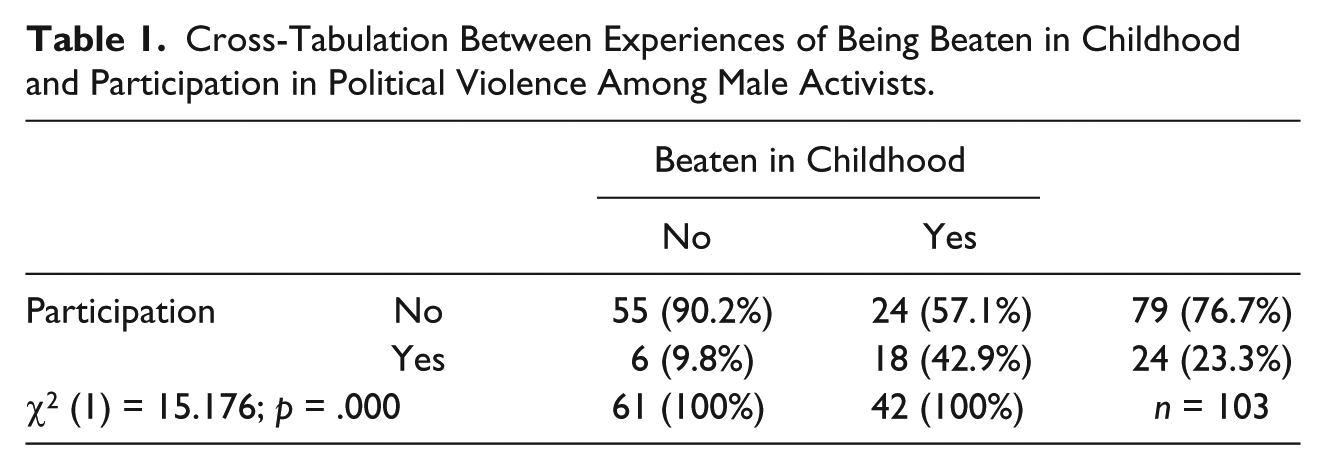
In total, 103 male activists answered the question as to whether they were beaten in their childhood as well as the questions on participation in political violence. Out of these 103 men, 24 reported having participated in political violence. Table 1 shows a strong relationship between Beaten in Childhood and Participation; 9.8% of the male activists who had not been beaten in their childhood participated in political violence compared with 42.9% of those who had been beaten (χ2 = 15.176, p < .000). Table 2 shows the relationship between having seen one’s mother being beaten by her spouse or boyfriend, Mother Beaten, and participation in political violence among male activists.
Cross-Tabulation Between Seeing One’s Mother Being Beaten and Participation in Political Violence Among Male Activists.

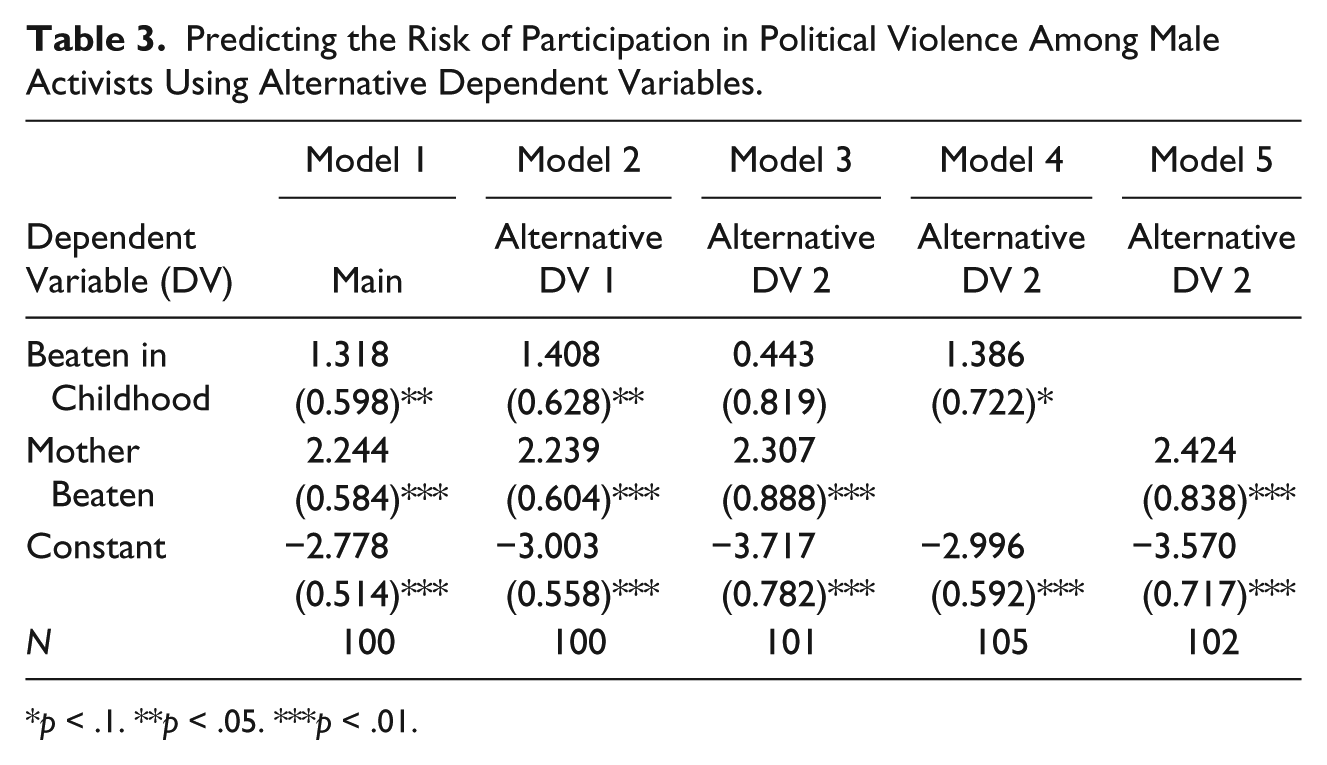
Table 2 also shows a strong association (9.6% compared with 60.7%, χ2 = 29.199, p < .000). Next, we moved on to multiple logistic regression analysis to assess the effect of both variants of violent childhood experiences at the same time, as well as control variables (Table 3).
Predicting the Risk of Participation in Political Violence Among Male Activists Using Alternative Dependent Variables.
p < .1. **p < .05. ***p < .01.
There was some correlation between Beaten in Childhood and Mother Beaten (r = .28); nevertheless, each variable had a statistically significant and strong effect in Model 1. We also tested for an interaction effect between Beaten in Childhood and Mother Beaten, but the interaction was not significant (not shown); thus, it appears that the effects of the two forms of violent experiences are additive, supporting previous research on the cumulative effects of violence. Models 2 to 5 use two alternative dependent variables, with more strict definitions of what behavior counts as participation in political violence. In Model 2, causing material damage no longer counted as participation; thus, instead of 24 men who participated in political violence, we had 22. Yet, the results were very similar to Model 1. Model 3 used the strictest dependent variable, wherein only admitting to using a weapon in a political protest counted as participation. The number of participants in political violence was now down to nine men. With so little variation in the dependent variable, and given the correlation between the two types of violent experiences, it was not surprising that the variable with the weaker effect, Beaten as Child, was no longer significant in Model 3. However, if entered alone (Model 4) Beaten as Child approached significance (p = .055). If Mother Beaten was entered on its own (Model 5), the variable was strongly significant (p = .004). So far, we could conclude that both forms of violent experiences in childhood seem to increase the propensity of male activists to participate in political violence.
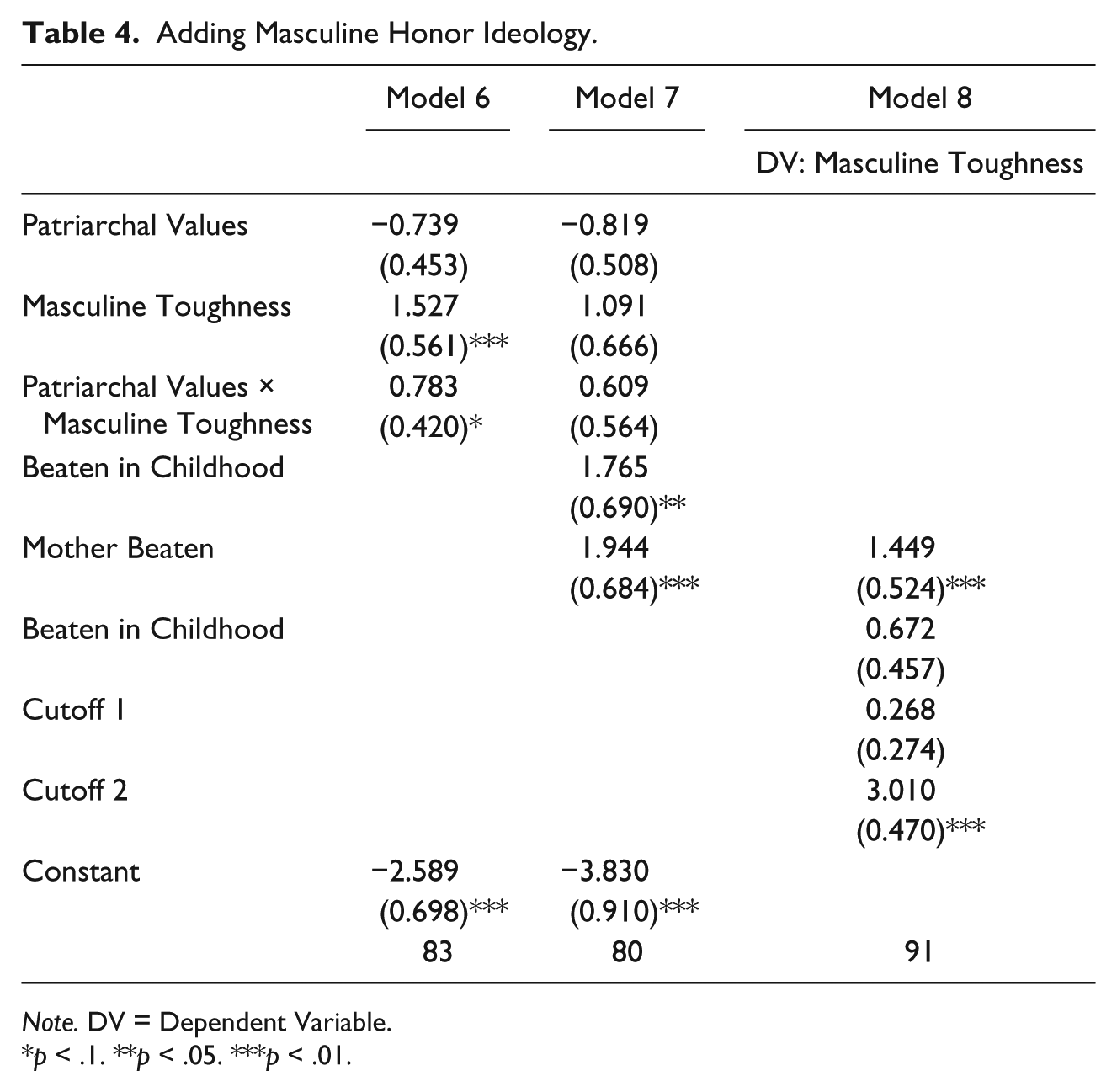
As mentioned, previous research using data from the same survey has demonstrated that adherence to masculine honor ideology strongly and robustly predicts participation in political violence among male political activists in Thailand (Bjarnegård et al., 2017). We propose that part of the effect of experiencing family violence as a boy influences adult participation in political violence goes through the mechanism of embracing masculine honor ideology, which in turn drives participation. To investigate this, we added the measures of masculine honor ideology developed by Bjarnegård et al. to the study (Table 4). Model 6 is an exact replication of the baseline model in Bjarnegård et al. (2017), with a strong interactive effect between the variables Patriarchal Values and Masculine Toughness, in line with the argument about masculine honor ideology in that article. The dependent variable was the same in Models 6 and 7 as in Model 1. Model 7 was based on Model 1 but with the measures for masculine honor ideology added. In Model 7, the effects of experiencing violence in the family as a child were similar in magnitude and significance as in Model 1. Also, the variables capturing the effects of masculine honor ideology had roughly similar coefficients and standard errors (compared with Model 6), but the magnitudes of the coefficients shrank, while the size of the standard errors increased for the component variable Masculine Toughness and for the interaction term Patriarchal Values × Masculine Toughness. This means that the influence of masculine honor ideology was not as strong in the presence of the variables capturing the experience of violence in the family as a child, Beaten as Child and Mother Beaten. Although there are still strong direct effects of Beaten as Child and Mother Beaten, increasing the likelihood of participating in political violence, the weakening of the results for masculine honor ideology is in line with the notion that experiencing violence in the family as a boy spurs adherence to masculine honor ideology as a man, which in turn drives participation in political violence. To investigate this further, we ran several tests with either Patriarchal Values or Masculine Toughness as the dependent variable, and Beaten as Child and Mother Beaten as the independent variables. We found no significant results for Patriarchal Values (not shown), but Model 8 shows that seeing one’s mother being beaten as a boy strongly predicts embracing Masculine Toughness as an adult man. 7
Adding Masculine Honor Ideology.
Note. DV = Dependent Variable.
p < .1. **p < .05. ***p < .01.
Although this causal mechanism needs to be investigated further in future research, a reasonable interpretation at this stage is that a boy who sees his mother being beaten becomes more likely to embrace gendered norms about masculine toughness, which in turn makes him more likely as an adult political activist to participate in political violence (in line with the findings on masculine honor ideology in Bjarnegård et al., 2017). This seems to be one mechanism through which experiencing violence in the family as a boy increases the likelihood of participating in political violence as an adult man. It is important to underscore that strong direct effects remain, and that other mechanisms must be operating as well.
The effects of violent experiences in childhood are very strong in substantial terms. Predicted risks of participation in political values were calculated on the basis of Model 1, using the simulation software Clarify (King, Tomz, & Wittenberg, 2000; Tomz, Wittenberg, & King, 2003). Figure 1 shows these predicted risks with approximated confidence intervals, obtained by sorting 10,000 simulated values for each of the four scenarios representing different experiences of violence in childhood. First differences comparing each of the three scenarios with the baseline scenario of no experience of violence in childhood were also calculated and found to be statistically significant.

Predicted risks with 95% confidence bands given experience of violence in boyhood.
The baseline predicted probability of participating in political violence for a male activist who had been spared both forms of experiences of violence in childhood (Beaten as Child = 0 and Mother Beaten = 0) was .065. Someone who had been beaten but not seen his mother being beaten (Beaten as Child = 1 and Mother Beaten = 0) had a predicted risk of .20. An activist who saw his mother being beaten, but who was not himself beaten (Beaten as Child = 0 and Mother Beaten = 1) had a risk of .38. Finally, for an activist who had experienced both forms of violence in childhood (Beaten as Child = 1 and Mother Beaten = 1), the predicted probability of participation was .68. We, thus, conclude that a male activist is substantially more likely to participate in political violence if he was beaten in his childhood, or if he saw his mother being beaten in his childhood, and much more likely to participate if he experienced both forms of violence in his childhood. It is striking that these effects of violent experiences in childhood are both strong and robust, and that no alternative explanations that we tested (as reported in the appendix) had any additional explanatory leverage. In sum, we find strong support for our hypothesis that the risk of participation in political violence is higher among men who experienced violence in the family as boys.
Conclusion
Throughout history, young men have been the most likely participants in political violence. In this article, we sought to understand what distinguishes those men who participate in political violence from those men who do not. Building on psychological research on the gendered intergenerational effects of violence in the family, we asked the following question: “To what extent is experience of family violence as a boy associated with participation in political violence as an adult man?” Using micro-level data from the Survey on Gender, Politics, and Violence in Thailand, we investigated this issue. We found that the negative effects of family-of-origin violence may spread to the political arena. Family-of-origin violence may lead to an increased risk of participating in political violence due to the diffusion of masculine honor ideology and violence norms, whereby violence is seen as a just, appropriate, and masculine response to conflict.
In our study, the male political activists who were beaten or who saw their mother being beaten during childhood were much more likely to use violence for political purposes. We thereby find evidence at the individual level that family violence is associated with political violence. This finding lends support to the cultural spillover theory of violence, which states that violence spreads across different spheres of life, within a given society. Ember and Ember (1994) proposed that “socialization for aggression” was a consequence of war—that parents socialized boys for aggression, to be ready for war. We believe that research over the past 20 years, including our study, suggests that the link may also go the other way, that is, violence in the family increases the risk of political violence, particularly for boys. Legislation against corporal punishment of children, when combined with intensive information campaigns, has been successful in decreasing child abuse (Heise, 2011). The trend toward more humanistic values over time has been accompanied by fewer, and smaller, wars (Pinker, 2011).
This gives hope. It is evident that parental programs for violence reduction work well for decreasing child abuse, and for creating positive parenting skills and parent–child attachment. As mentioned, though women also perpetrate violence toward their children and husbands, in the overwhelming majority of cases, the perpetrators of physical violence—in families, in society, in war—are men. Unequal gender norms, that is, societal beliefs that emphasize the superiority of men and the lesser value of women, have been shown to increase the risk of violence in the family (Fulu, Jewkes, Roselli, & Garcia-Moreno, 2013; Heise, 2011) and in society (Caprioli, 2005; Hudson, Caprioli, Ballif-Spanvill, McDermott, & Emmett, 2008/2009; Melander, 2005). It is also evident that norm change—from patriarchal to gender equal—brings reductions in IPV (Heise, 2011). Our study thereby holds one imperative policy implication: That violence prevention measures at the individual and interpersonal level—against corporal punishment of children or violence against women—have critical implications also for decreasing the risk for and prevalence of political violence and armed conflict in society. Such violence prevention policies need to take into account the gendered effects of exposure to violence in childhood. The association between boys seeing their mothers being beaten and adherence to masculine honor ideology and violence perpetration in adulthood is particularly important in light of our findings. At the same time, the role of women and femininities in this context needs further research.
Our study, thus, gives rise to several questions that should be addressed in future studies. For example, are the pathways from family violence to political violence different for men and women? Research shows that violence may transmit in a same-gender modeling pattern, in which the risk of men perpetrating violence is increased if their father was violent against their mother, and vice versa, that is, the risk of women perpetrating violence is increased if their mother was violent against their father (Heyman & Smith Slep, 2002). It would be interesting in future research to look into what implications such same-gender modeling patterns have for political violence. Finally, to what extent are the results of this study found in other contexts? Theoretically, we have reason to believe that our findings of the links between experiences of violence in the family as a boy and participating in political violence as an adult man are generalizable. Patterns of family-of-origin violence as well as patterns of participation in political violence are gendered in similar ways everywhere; therefore, we expect that our findings apply to other settings as well. However, this needs to be validated in future research by extending this important research agenda to other empirical settings.
Footnotes
Appendix
Declaration of Conflicting Interests
The author(s) declared no potential conflicts of interest with respect to the research, authorship, and/or publication of this article.
Funding
The author(s) disclosed receipt of the following financial support for the research, authorship, and/or publication of this article: This work was supported by Riksbankens Jubileumsfond (Grant Number M10-0100:1), the East Asian Peace Program.
