



Abstract
Hooking-up among college students presents an increased risk of sexual victimization, perhaps due to increased contact with potential perpetrators in a risky context. However, little work has examined factors that might increase the risk of victimization associated with hooking-up, and few studies examine victimization among both men and women. To address this gap in the literature, we utilize data from 702 college women and 677 college men to explore childhood sexual abuse, family violence, sexual minority (SM) status, and problematic alcohol use as potential moderators of the association between hooking-up and three forms of sexual victimization: coerced, incapacitated, and forced. Results of regression analyses indicate several significant interactions and significant main effects. For example, SM men and women were each at an increased risk of forced and incapacitated victimization when hook-up frequency was high compared with non-SM students.
Campus sexual assault is recognized as a major societal issue given its high prevalence and negative consequences among college students. Researchers have argued that college campuses remain “hot spots” for sexual victimization because of frequent contact between potential perpetrators and suitable victims, little supervision from older adults, and lifestyle behaviors such as binge drinking (Mustaine & Tewksbury, 2002; Schwartz & Pitts, 1995). Recent studies show that between 25% and 60% of college women have experienced sexual assault (Ford & Soto-Marquez, 2016; Martin, Fisher, Warner, Krebs, & Lindquist, 2011; Ray, Tyler, & Simons, 2018), defined as any unwanted sexual contact by coercion, intimidation, incapacitation, threat of force, or force that ranges from fondling to completed intercourse (National Institute of Justice, 2017; Rape, Abuse, & Incest National Network, 2019). Sexual minority women, or those who are sometimes or exclusively attracted to individuals of the same sex, are at an even higher risk of experiencing sexual victimization (Ford & Soto-Marquez, 2016; Martin et al., 2011), with 71.2% of sexual minority women in one study reporting adult sexual victimization (Hequembourg, Livingston, & Parks, 2013).
While research has documented women’s experience with campus sexual assault, there is less focus on men. Although the broader society’s rape culture and the relative size of men compared with women likely contribute to the gender disparity in sexual assault (Armstrong, Hamilton, & Sweeney, 2006; Finkelhor & Asdigian, 1996; Hines, Armstrong, Reed, & Cameron, 2012), there is still a need to examine sexual victimization among men. For example, between 7% and 24% of college men have experienced some form of sexual victimization (Edwards et al., 2015; Ford & Soto-Marquez, 2016; Ray et al., 2018), and sexual minority men consistently report even higher rates, ranging from 16% to 60% depending on the type of victimization (Balsam, Rothblum, & Beauchaine, 2005; Ford & Soto-Marquez, 2016; Hequembourg, Parks, Collins, & Hughes, 2015).
Furthermore, sexual victimization experiences are linked to several negative consequences for both men and women, including suicidality, interpersonal difficulties, psychological distress, and substance use (Abbey, BeShears, Clinton-Sherrod, & McAuslan, 2004; Balsam, Lehavot, & Beadnell, 2011; Choudhary, Coben, & Bossarte, 2009; Turchik, 2012). A few studies indicate the presence of mental health consequences among victims does not vary by sex (Balsam et al., 2011). Given the prevalence of and negative consequences associated with sexual victimization on campus, the purpose of the current study was to investigate risk factors for three forms of sexual victimization (i.e., coerced, incapacitated, forced) among college men and women.
Researchers have demonstrated that several behavioral or lifestyle factors (e.g., alcohol use, Greek involvement, risky sexual behavior) are associated with sexual victimization during the collegiate experience (Franklin, 2010; Krahé & Berger, 2017; Mohler-Kuo, Dowdall, Koss, & Wechsler, 2004). More recently, researchers have found that engagement in the college hook-up culture is a risk factor for the occurrence of sexual victimization, even accounting for other established covariates (Ford, 2017; Paul & Hayes, 2002; Sutton & Simons, 2016). For example, Flack et al. (2016) reported that 78% of sexual assaults among their sample of college students had occurred during hook-ups. A hook-up has been defined as “a physically intimate encounter. . . that occurs without the expectation of future physical encounters or a committed relationship’’ (Owen, Rhoades, Stanley, & Fincham, 2010, p. 653), and around 70% to 85% of college men and women have ever hooked up (Flack et al., 2016; Paul & Hayes, 2002; Sutton & Simons, 2016). It has been posited that the connection between hooking-up and sexual victimization is due to the fact that hook-ups are often unplanned, occur alongside binge drinking, involve acquaintances, and begin at parties or bars (Flack et al., 2016; Ford & Soto-Marquez, 2016; Paul & Hayes, 2002). Others have argued that the hook-up culture is a manifestation of a rape culture as it supports male domination and objectification of women through casual sex, alcohol use, male control of leisure spaces, rape myth acceptance, and expected norms of sociosexuality (Armstrong et al., 2006; Sutton & Simons, 2016).
Still, there are several gaps in the literature on hooking-up and sexual victimization that need to be addressed. First, given evidence of significant victimization rates among men, especially sexual minority men, more work is needed on both men’s and women’s experiences of sexual victimization.
Second, studies generally combine several types of sexual victimization into a single outcome measure, but some researchers have demonstrated that risks may vary by the perpetrator’s tactic of assault. Tyler, Hoyt, and Whitbeck (1998), in an early step toward addressing this gap, found that alcohol use was uniquely related to incapacitated sexual assault, frequency of sexual activity predicted verbal coercion and incapacitated coercion, and sorority membership was related to incapacitated coercion and forced assault. More recent research has also found that risks for victimization vary by perpetrator tactic (Abbey et al., 2004; Franklin, 2010; Mohler-Kuo et al., 2004; Testa, Vanzile-Tamsen, Livingston, & Koss, 2004). Thus, in this study, we examine three forms of sexual victimization: verbal coercion, incapacitation, and force.
Finally, there is evidence of variability in victimization risk among college students generally and among high-risk groups, such as female or sexual minority students (Franklin & Menaker, 2018; Mustaine & Tewksbury, 2002). Researchers, however, have often overlooked factors that might account for such variability. Moreover, Finkelhor and Asdigian (1996) criticize a focus on victim lifestyle factors and call for more work on other target-related processes and vulnerabilities that might increase risk of victimization. Thus, although we certainly do not blame victims for their own experiences of sexual violence, research is best served by identifying several possible points for prevention, including precursors to assault. To partly address this gap in the literature, we utilize a routine activities perspective to examine background and behavioral factors that might moderate the effect of involvement in hooking-up on sexual victimization. Specifically, we propose that childhood sexual abuse, exposure to inter-caregiver violence, physically abusive parenting, alcohol use, and sexual minority status will interact with hooking-up to increase risk of three forms of sexual victimization (i.e., coerced, incapacitated, forced).
A Routine Activities Theory Perspective of Campus Sexual Assault
In Cohen and Felson’s (1979) original version of routine activities theory, three factors were posited to predict the occurrence of crime in a given location: a lack of guardianship, the presence of suitable targets, and the presence of motivated offenders. More recent versions of this perspective can help explicate the connection between hooking-up and sexual victimization on campus. For one, researchers have discussed the need to expand our understanding of a motivated offender from strangers to known individuals (i.e., acquaintances, friends) in the context of personal crimes such as sexual violence (Finkelhor & Asdigian, 1996; Flack et al., 2016; Ford, 2017; Schwartz & Pitts, 1995). Researchers applying routine activities theories to sexual victimization have also discussed casual sex as increasing one’s risk, and indicators of casual sex involvement consistently emerge as predictors of sexual victimization (Ford & Soto-Marquez, 2016; Franklin & Menaker, 2018; Hequembourg et al., 2013; Krahé, Scheinberger-Olwig, & Schütze, 2001; Tyler et al., 1998). Based on such work, frequent hooking-up partly carries risk of sexual assault because it increases one’s likelihood of coming into contact with a potentially aggressive offender. Hooking-up also tends to combine casual sex with unsafe environments and risky activities that have been linked to campus sexual assault, including frequent contact with male peers and binge drinking (Flack et al., 2016; Mustaine & Tewksbury, 2002; Schwartz & Pitts, 1995). These unsafe contexts, moreover, are encapsulated within a rape-supportive American culture (Mustaine & Tewksbury, 2002; Schwartz & Pitts, 1995). Research supports that hooking-up elevates one’s risk of sexual victimization on campuses (Flack et al., 2016; Paul & Hayes, 2002; Sutton & Simons, 2016), but no study to our knowledge has examined victim-related factors that might exacerbate the risk associated with college hook-ups.
In the current study, we utilize Finkelhor and Asdigian’s (1996) concept of “target congruence” as a heuristic guide for selecting potential moderating factors. Target congruence is meant to capture the process whereby offenders select or are drawn to certain victims based on their level of susceptibility to harm (p. 6). Furthermore, this concept avoids the potential risk of blaming the victim that can sometimes accompany a focus of victims’ lifestyles. Finkelhor and Asdigian (1996) further delineate this concept into three components (p. 6). First, target vulnerability encompasses “characteristics that affect an individual’s ability to resist or deter their victimization.” In the current study, we examine childhood sexual abuse, two forms of family violence, and alcohol use problems. Next, target antagonism factors are individual characteristics that increase risk because “they arouse anger or jealousy in potential offenders.” In the current study, sexual minority status falls into this category. We are unable to incorporate the last aspect of target congruence, target gratifiability (i.e., “some quality or attribute an offender wishes to use or manipulate”), given a lack of relevant data. However, it should be noted these classifications are not mutually exclusive. For example, sexual minority status may also be classified as a gratifiability factor in cases where the offender also identifies as a sexual minority, consistent with arguments that female sex acts as a gratifiability factor when perpetrators are straight males (Finkelhor & Asdigian, 1996; Schwartz & Pitts, 1995).
Factors Related to Target Congruence for Sexual Victimization
Childhood Sexual Abuse
Sexual abuse in childhood and/or adolescence is a well-documented predictor of adulthood sexual assault among both women and men and among straight and sexual minority adults (Krahé & Berger, 2017; Ray et al., 2018; Walsh, DiLillo, Klanecky, & McChargue, 2013; Werner et al., 2016). Researchers have hypothesized that sexual revictimization can be explained by several factors, including ineffective risk perception, reduced sexual assertiveness and self-esteem, and engagement in negative coping behaviors (Bramsen et al., 2013; Krahé & Berger, 2017; Relyea & Ullman, 2017; Walsh et al., 2013). In the context of hook-ups, a lack of sexual assertiveness, compromised risk perception, and even intoxication may be evident in early interactions between the potential offender and potential victim. Thus, hooking-up may carry additional risk of sexual victimization among college students with a history of early sexual abuse as they are more likely to be perceived of as vulnerable (Finkelhor & Asdigian, 1996).
Experiences of Family Violence
The role of family violence has been widely overlooked as a potential correlate of sexual victimization among collegiate adults. Still, there is evidence that various forms of family violence, including physical abuse and witnessing violence between caregivers, increase risk of women’s and men’s sexual assault (Ports, Ford, & Merrick, 2016; Simons, Simons, Lei, & Sutton, 2012; Sutton & Simons, 2016; Symons, Heldemans, Van Houtte, & Vermeersch, 2016; Werner et al., 2016). According to social learning explanations, individuals exposed to family violence internalize the belief that violence and aggression are normal and are acceptable methods of handling interpersonal difficulties (Simons et al., 2012; Straus, Douglas, & Medeiros, 2014; Sutton & Simons, 2016). In the context of a hook-up, those exposed to family violence may struggle to distinguish a safe hook-up partner from a potential offender (Franklin, 2010; Symons et al., 2016). As typical hook-ups tend to begin quickly (Paul & Hayes, 2002), there is already little information from which to base judgments of risk. And, if one perceives psychological and physical violence as “normal,” others who engage in such behaviors may not be evaluated as a sexual partner one should avoid. As a result, individuals who have experienced family violence may not engage in protective behaviors, and potential offenders may pick up on their compromised ability to evaluate risk.
Alcohol Use Problems
One of the most consistent findings related to campus sexual assault is that alcohol use greatly increases risk of sexual assault among men and women (Mustaine & Tewksbury, 2002; Schwartz & Pitts, 1995; Tewksbury & Mustaine, 2001; Tyler, Schmitz, & Adams, 2015). Explanations for the link between alcohol use and sexual victimization include a reduced ability to evaluate risk and engage in protective behaviors and a decreased ability to ward off unwanted advances (Abbey, 2002; Ford, 2017). Alcohol use can also provide perpetrators with an opportunity to engage in coercive sexual behavior without the use of force (Abbey, 2002; Ford, 2017; Paul & Hayes, 2002; Testa et al., 2004). It has also been widely documented that drinking to excess is a common feature of hooking-up among college students (Ford, 2017; Paul & Hayes, 2002). However, it is possible hooking-up will be risky regardless of a victim’s problems with alcohol given several other features of hooking-up (i.e., perpetrator’s own drinking, presence at bars). Or, it may be problematic drinking behaviors combined with the typical situation that characterizes a hook-up that carries the risk for assault. For example, Ford (2017) found that, within a hook-up event, only very heavy drinking (nine or more drinks) increased a woman’s risk of forced intercourse.
Sexual Minority Status
Existing research has documented a greatly increased risk of sexual victimization among sexual minority men and women in college (Balsam et al., 2005; Edwards et al., 2015; Ford & Soto-Marquez, 2016; Hines et al., 2012; Martin et al., 2011; Ray et al., 2018). Few explanations, however, have been provided for the association between sexual minority status and sexual victimization. Consistent with Finkelhor and Asdigian’s (1996) idea of target antagonism, these students may be specifically targeted by perpetrators who want to harm sexual minority individuals (Edwards et al., 2015). It is also possible that sexual minority students may be viewed as “appropriate” targets for sexual victimization due to stereotypes of promiscuity and eroticism (Hequembourg & Brallier, 2009; Ford, 2017). We expect sexual minority students will be at a heightened risk of sexual victimization if they also hook-up frequently for several reasons. First, the stereotypical perception that sexual minority individuals are promiscuous may be heightened during a casual sex encounter. This may result in plying a victim with alcohol, increased verbal pressure, or the use of force by a perpetrator. Second, sexual minority individuals are unlikely to have consistent social contact with someone who views their sexuality as deserving of anger or ire. However, within a hook-up, a potential victim may not realize that their sexual partner holds homophobic attitudes until it is too late to avoid sexual victimization. It is also possible that, with a hook-up partner, negotiations of sexual behavior may occur alongside disclosures of sexual orientation or previous same-sex behavior. Thus, a potential offender may be angered or surprised by the other individual’s sexual minority status, and a situation that was originally consensual may quickly turn violent.
In sum, we expect that hooking-up as well as childhood sexual abuse, physically abusive parenting, alcohol use problems, and sexual minority status will all exert direct effects on sexual victimization, consistent with the literature reviewed here. However, as described above, we also hypothesize that each of the target congruence variables will interact with hooking-up to increase college women’s and men’s vulnerability to sexual victimization.
Method
Sample and Procedure
In Fall 2014, data were collected from students enrolled in social science courses at two large universities, one in the South (n = 778) and one in the Midwest (n = 704). The study was approved by the institutional review board of each university. During a normal class period, participants answered a pencil-and-paper survey covering topics related to family history, sexual and dating behavior, and risk behaviors. Respondents were offered extra credit for participating in the study but had the option of completing an alternative assignment for extra credit if they did not wish to participate. Almost all (98%) students in attendance chose to participate in the survey, and others completed the extra credit assignment. The survey was proctored like an exam to ensure privacy, and no identifying information was collected. Thus, participation was voluntary and anonymous.
After removing missing data (n = 103) the final sample included 702 women and 677 men. The participants were about equally split between the campus locations (54.2% at the Southern campus). Most respondents in the final sample identified as non-Hispanic White (80.5%). The remaining participants identified as Black/African American (6.7%), Hispanic/Latino (3.6%), Asian/Pacific Islander/Native Hawaiian (6.8%), or “Other” (2.3%). Students tended to be from families with married parent (72.5%) that were relatively affluent (51.5% reported family incomes above US$100,000/year). Almost half (48.7%) of the sample reported they were single/not dating at the time of data collection. Although data on age were not collected, 95% of all students attending the universities from which data were collected are between the ages of 18 and 24 (National Center for Education Statistics, 2018).
Measures
Hook-up frequency
Before respondents were asked questions about their hook-up behavior, they were provided with the following definition for hooking-up: “an event in which two people are physically intimate outside of a committed relationship without the expectation of future encounters.” Then, participants were asked, “How many times in the past 12 months have you hooked up?” Response categories ranged from 0 = none to 4 = 10 or more times.
Childhood sexual abuse
Childhood sexual abuse was measured using a single, dichotomous item. Specifically, participants were asked, “Before the age of 18, did any adult or someone at least 5 years older than you ever touch you sexually or have you touch them sexually?” (1 = yes).
Family violence
Two forms of family violence were included as independent variables: (a) physically abusive parenting and (b) exposure to inter-caregiver violence. For physically abusive parenting, participants indicated how often their parent/caregiver had ever engaged in four acts of physical aggression against them, including throwing something at them in anger, pushing/shoving, slapping/spanking, or hitting them with an object. These items were adapted from the Parent–Child Conflict Tactics Scale (PC-CTS; Straus, Hamby, Finkelhor, Moore, & Runyan, 1998). Response categories ranged from 0 = never to 4 = frequently/always. Items were standardized and summed to form the final scale (α for women = .81; α for men = .81). For exposure to inter-caregiver violence, respondents were prompted to think about their experiences while growing up at home. Then, they were asked how often they experienced either of their parents/caregivers engage in four acts of physical aggression against the other parent/caregiver, including throwing an object at or hitting/punching the other person (adapted from the Revised Conflict Tactics Scale [CTS2]; Straus, Hamby, Boney-McCoy, & Sugarman, 1996). Response categories ranged from 0 = never to 4 = frequently/always. Items were standardized and summed to form the final scale (α for women = .92; α for men = .89).
Alcohol use problems
Participants were asked to indicate how often eight problematic behaviors had occurred as a result of their drinking in the last year. These items were adapted from the Personality Assessment Inventory (Morey, 1991). For example, students indicated how often they had gotten into a fight because of drinking, went to work/school drunk, or kept drinking when you promised yourself not to. Response categories ranged from 0 = never to 4 = 5 or more times. Items were standardized and summed for the final scale (α for women = .80; α for men = .82).
Sexual minority status
Participants were asked, “When you have romantic or sexual feelings toward another person, the person is. . .,” and response categories included always male, usually male but sometimes female, equally likely to be male or female, usually female but sometimes male, and always female. Along with this item, participant’s sex (male or female) was used to determine an individual’s sexual minority status. Male students who responded they were at least sometimes attracted to other men and female students who responded they were at least sometimes attracted to other women were categorized as sexual minority (1 = sexual minority, 0 = straight). This measure is consistent with that used in several other studies (e.g., Edwards et al., 2015; Ray et al., 2018). Research also shows that attitudes and behaviors are important aspects of sexual orientation (Starks, Gilbert, Fischer, Weston, & DiLalla, 2009). Furthermore, given the fluidity of sexual identity and individual differences in perceptions of what sexual identity labels mean (Mereish, Katz-Wise, & Woulfe, 2017; Starks et al., 2009), measures of sexual preference may have more fully captured the lived experiences of individuals.
Outcome: Sexual assault victimization
Using the Revised Sexual Experiences Scale (Testa et al., 2004), we examine three tactics of sexual assault. Specifically, men and women reported (a) how often anyone “overwhelmed you with arguments about sex or continual pressure for sex to. . .” (verbal coercion); (b) “when you were incapacitated (e.g., by drugs or alcohol) and unable to consent, how often has anyone. . .” (incapacitation); and (c) how often anyone “threatened to physically harm you or used physical force (such as holding you down) to. . .?” (force). For each tactic, respondents were asked the following four questions: (a) fondle, kiss, or touch you sexually; (b) try to have sexual intercourse with you (but it did not happed); (c) succeed in making you have sexual intercourse; and (d) make you have oral or anal sex or penetrate you with a finger or object when you indicated you did not want to? Responses ranged from 0 = never to 4 = more than 4 times. To account for skewness, the responses to each of these questions were dichotomously coded and then summed separately for each tactic of victimization (i.e., verbal coercion, incapacitation, force.).
Control variables
Based on their association with sexual victimization, we account for several additional variables: (a) family income (1 = less than US$50,000 to 5 = more than US$125,000), (b) family structure (1 = married, two-parent family), (c) self-reported race (1 = African American), (d) campus location (1 = Midwest), (e) Greek memberships (1 = pledge/active member/inactive member), (f) risky sexual behavior (i.e., number of oral sex partners, number of sexual intercourse partners, condom nonuse), (g) religiosity (i.e., frequency of religious attendance, influence of religion on daily life), and (h) relationship status (1 = committed romantic relationship). The decision to include these variables was based on existing empirical work. For instance, Abbey et al. (2004) found that women who experienced forced victimization had lower incomes than women who experienced coercion. Tewksbury and Mustaine (2001) found that certain family structures increased sexual victimization among men. Some studies show no racial/ethnic difference in risk of sexual victimization (Franklin, 2010), but others demonstrate an increased risk for non-White college students (Tewksbury & Mustaine, 2001). Despite higher rates of general crime in the South, some research on college students demonstrates an increased risk of sexual assault among those living in the Midwest compared with other regions (Ray et al., 2018; Sinozich & Langton, 2014). Both Greek membership (Franklin, 2010; Tyler et al., 1998) and risky sexual behavior (Krahé & Berger, 2017) are established covariates of sexual victimization. Involvement in a serious romantic relationship may be a protective factor in relation to sexual victimization (Franklin, 2010; Tewksbury & Mustaine, 2001). Finally, little work has explored the impact of religiosity on sexual victimization. However, given that religiosity is related to lower alcohol use (Wells, 2010) and less engagement in hooking-up (Penhollow, Young, & Bailey, 2007), it is possible that religiosity will act as a protective factor.
Analytic Strategy
Bivariate analysis and descriptives are performed in SPSS Version 24. Multivariate analyses were performed in Mplus Version 7 using ordinary least-squares regression (Muthén & Muthén, 2010). Interactions terms were computed by (a) mean centering predictor and moderator variables, (b) creating a product term between predictor and moderator variables, and (c) standardizing the product term (Aiken & West, 1991). When interactions were significant, post hoc simple slopes analysis was performed in SPSS.
Results
Descriptives and Prevalence Rates
All significant correlations between continuous variables are in the expected direction (see the appendix). Descriptive statistics for demographic variables, control, and study variables for women and men are shown in Table 1. Almost 10% of women and 8.3% of men had experienced childhood sexual abuse, and sexual minority status was reported by 9.4% of women and 7.2% of men. Continuous items were standardized and then summed to form scales, so each continuous scale has a mean of 0 and a standard deviation of 1. However, 24.6% of women and 19.6% of men reported any physical abuse, 9.7% of women and 8.6% of men reported any inter-caregiver violence, and 14.5% of women and 11.7% of men reported any problematic alcohol use behavior. Over one half of women and about one third of men had experienced any sexual victimization. Among women, 43.3% had experienced coercion, 33.6% had experienced incapacitation, and 7.1% had experienced forced sexual victimization. According to chi-square tests (not shown), men were significantly less likely to report having experienced any of these tactics of sexual victimization—25.7% reported verbal coercion, 19.1% reported incapacitated victimization, and 4.6% had experienced forced sexual victimization. Significantly more men than women reported hooking-up in the past year (64.3% of men vs. 48.4% of women). About one fifth of all women and one fourth of all men had hooked up 3 to 5 times in the last year. Almost 30% of men had hooked up 6 or more times in the past year, but only about 12% of women had hooked up that frequently.
Descriptive Statistics for Variables Among Women and Men.
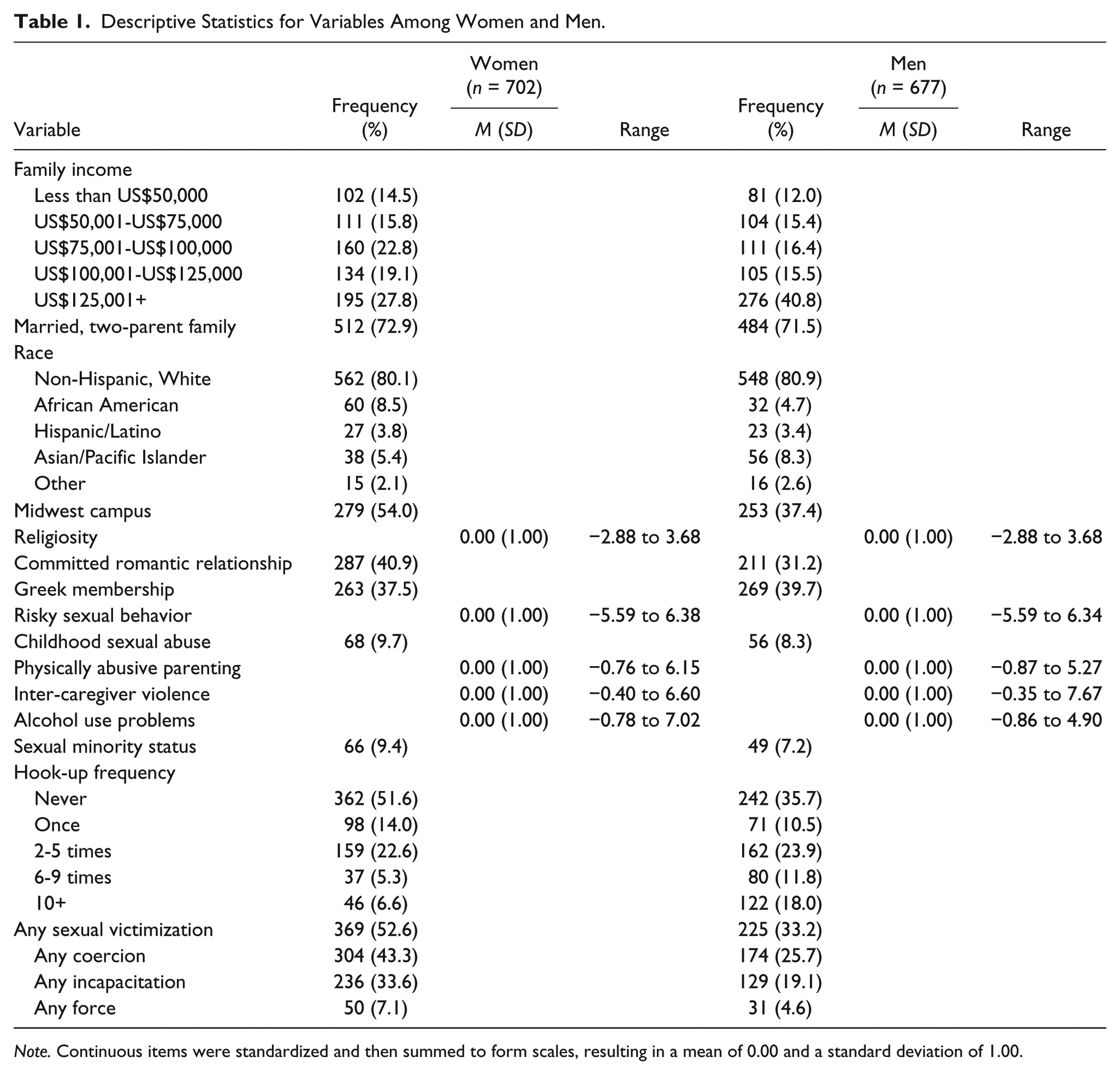
Note. Continuous items were standardized and then summed to form scales, resulting in a mean of 0.00 and a standard deviation of 1.00.
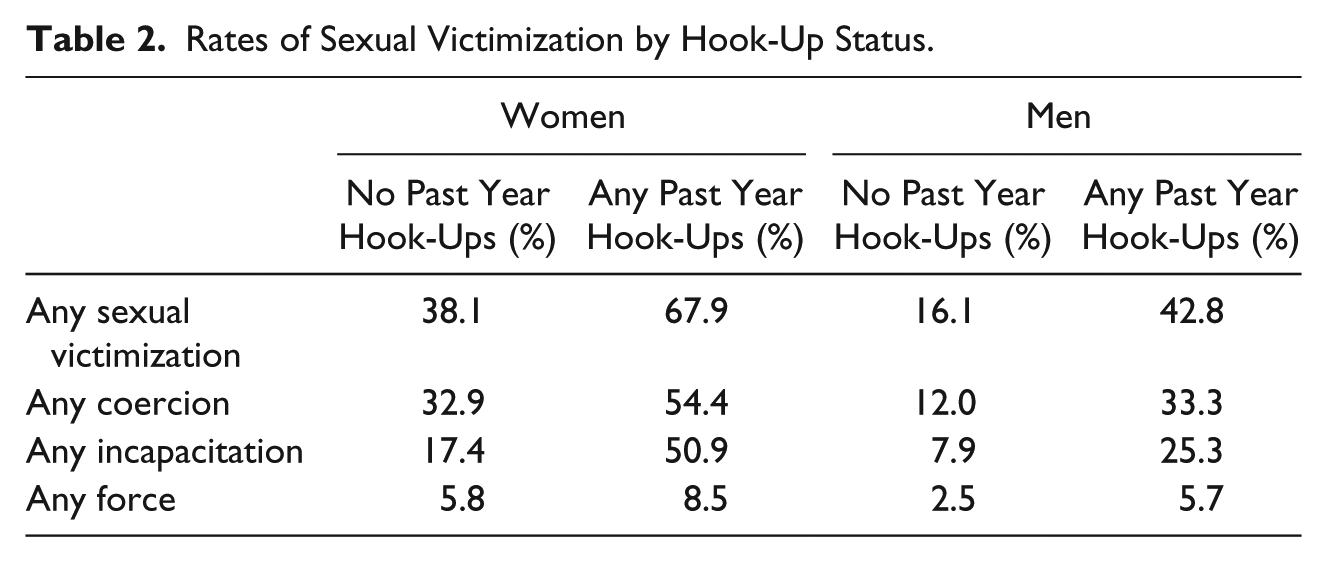
Rates of sexual victimization by hook-up status are shown in Table 2. A higher percentage of men and women who had hooked up in the past year reported each tactic of sexual victimization compared with those who had not hooked up. For instance, among women, 67.9% who had hooked up in the past year had experienced any sexual victimization compared with 38.1% who had not hooked up. Among men, 42.8% of those who had hooked up were also sexually victimized compared with 16.1% of those who had not hooked up.
Rates of Sexual Victimization by Hook-Up Status.
Multivariate Analysis
For all multivariate analyses, models were first run including only the main study variables and control variables. Then, each interaction term was added to the original model one at a time (not shown). In other words, five separate models were run to test the significance of each interaction term. This was done to reduce multicollinearity between the various interaction variables. Last, the final models that are presented include only interactions that emerged as significant in the prior analysis. Analyses were also performed separately for each tactic of sexual victimization.
Women’s results are presented in Models 1 to 3 (see Table 3 for standardized coefficients). In the base models (i.e., no interaction terms included), there were some similar findings across the three forms of sexual victimization. Hook-up frequency exerted a main effect on college women’s verbally coerced (β = .12) and incapacitated victimization (β = .19). Alcohol use problems were also related to these two forms of victimization (verbally coerced: β = .08; incapacitated: β = .28), but were unrelated to forced victimization. Alcohol use had a much larger effect on incapacitated compared with verbally coerced victimization. Both childhood sexual abuse and physically abusive parenting were significantly related to verbal coercion (β = .10 and β = .11) and forced contact and assault (β = .18 and β = .16) among female students. Physically abusive parenting also approached significance in relation to incapacitated assault (β = .07). Unexpectedly, neither exposure to inter-caregiver violence or sexual minority status exerted a significant main effect in any models.
Multivariate Results for College Women’s and Men’s Sexual Victimization.
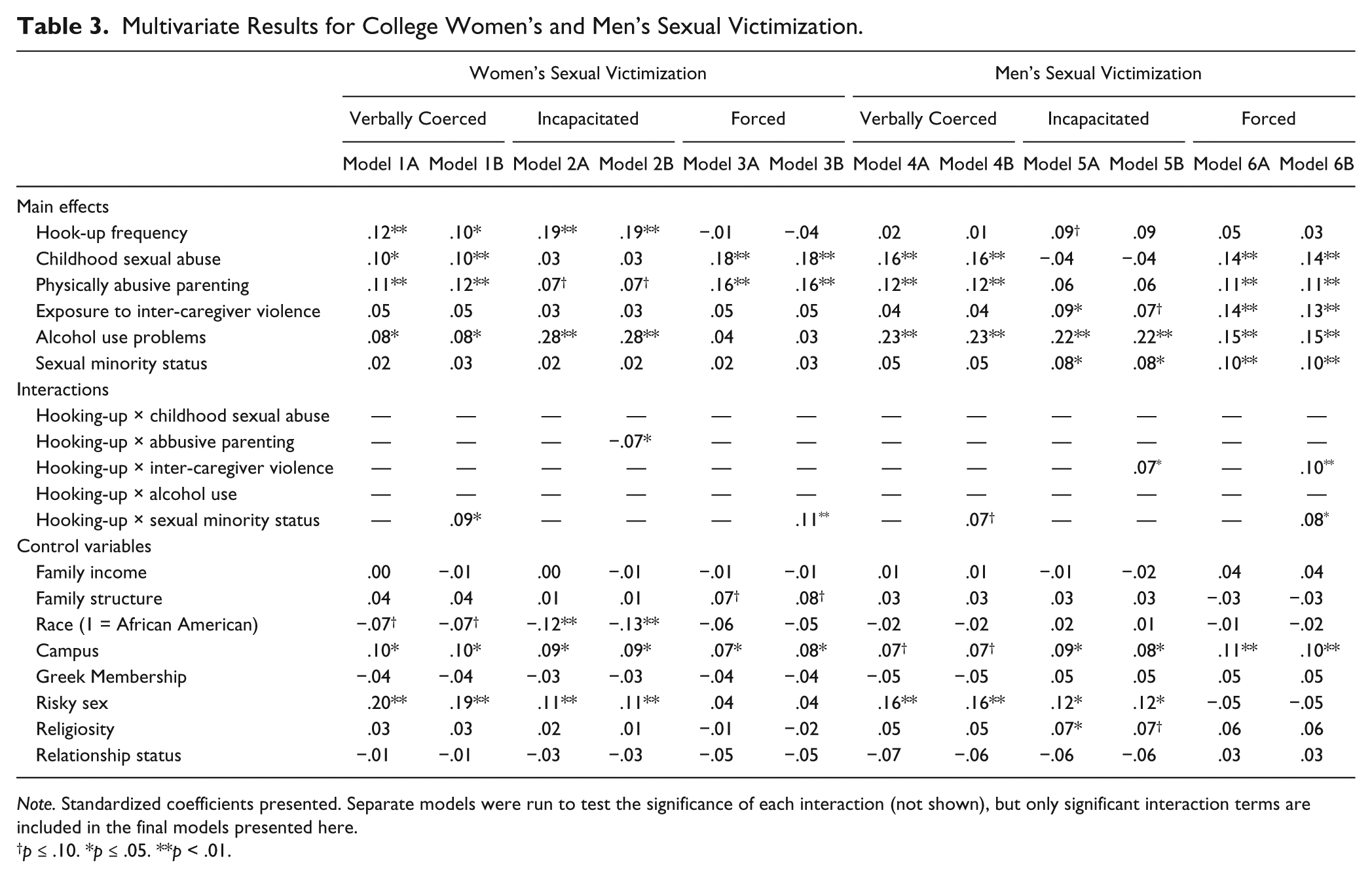
Note. Standardized coefficients presented. Separate models were run to test the significance of each interaction (not shown), but only significant interaction terms are included in the final models presented here.
p ≤ .10. *p ≤ .05. **p < .01.
In subsequent analyses adding in each interaction term one at a time (not shown), one of the potential five interaction terms emerged as significant for each tactic. For verbally coerced victimization (see Model 1B), sexual minority status moderated the effect of hooking-up (β = .09). Consistent with expectations, the combination of frequent hook-ups and sexual minority status appears to be especially risky in terms of women’s verbal coercion victimization (see Figure 1a). Post hoc tests of the simple slopes indicated that while hook-up frequency is significantly related to coercion for both straight (β = .09, p = .04) and sexual minority women (β = .41, p = .00), the relation is much stronger for sexual minority college women. This is consistent with a main effect of hooking-up and a significant interaction between hooking-up and sexual minority status.
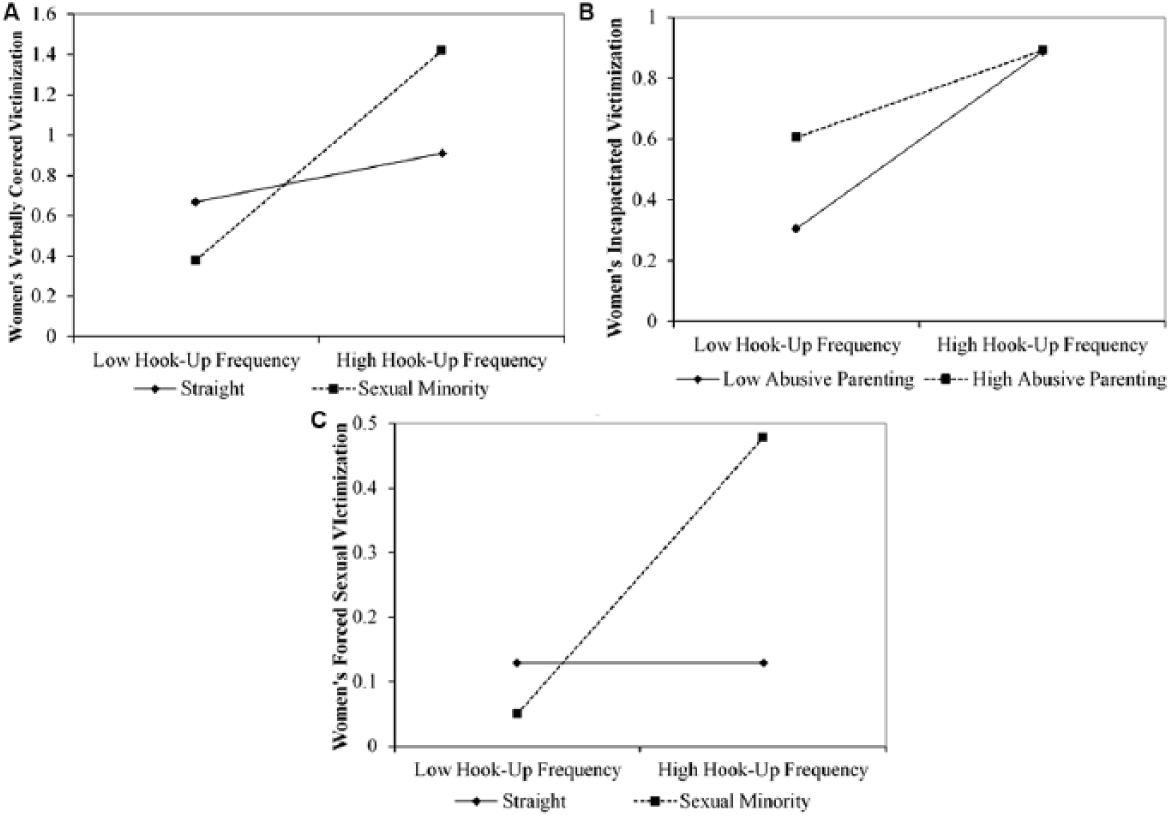
Interactions between hooking-up and study variables among women. (a) Hooking-up & sexual minority status on coerced victimization; (b) Hooking-up and abusive parenting on incapacitated victimization; and (c) Hooking-up and sexual minority status on forced victimziation.
Abusive parenting moderated the effect of hooking-up on incapacitated sexual victimization (β = –.07), but the pattern of this influence was contrary to expectations (Model 2B). Women who experienced abusive parenting are at an increased risk of incapacitated victimization compared with other women, but only when hook-up frequency was low (see Figure 1b). Indeed, simple slopes analysis indicated that there is a steeper slope for the relation between hooking-up and incapacitated assault for women who had not experienced physically abusive parenting (β = .25, p = .00) compared with those who had (β = .13, p = .02).
Turning to forced victimization (see Model 3B), sexual minority status moderated the effect of hook-up frequency (β = .11). Sexual minority college women, compared with other women, were at an increased risk when they frequently engaged in hooking-up. However, hooking-up appears to have little influence on forced sexual victimization among straight women (see Figure 1c). According to simple slopes analysis, there is a significant association between hooking-up and forced sexual victimization for sexual minority women (β = .37, p = .00) but not for straight women (β = .04, p = .44).
Men’s results are presented in Models 4 to 6 (see Table 3). In base models (4A, 5A, 6A), hook-up frequency did not exert a main effect in any model, but it did approach significance in predicting college men’s incapacitated victimization (β = .09). Similar to women’s results, childhood sexual abuse and physically abusive parenting were each significantly related to both verbally coerced (β = .16 and β = .12) and forced victimization (β = .14 and β = .11). Moreover, inter-caregiver violence was related to both incapacitated (β = .09) and forced victimization (β = .14) among male students. Alcohol use problems exerted a relatively strong effect on all forms of sexual assault among men (verbally coerced: β = .23; incapacitated: β = .22; forced: β = .15). Last, sexual minority status was a significantly related to men’s incapacitated (β = .08) and forced (β = .10), but not verbally coerced, victimization.
Among men, several of the five interaction terms were significant when included in separate models (not shown). These interactions were then included in the final models shown in Table 3. For one (see Model 4B), sexual minority status moderated the effect of hooking-up on men’s coercion (β = .07). This association approached significance (p = .06). As seen in Figure 2a, sexual minority men who hook-up frequently are especially at risk for verbally coerced victimization, but hooking-up does not seem to affect victimization risk for other men. Simple slopes analysis indicated that hook-up frequency was related to an increased risk of verbally coerced victimization for sexual minority men (β = .28, p = .06) but not for straight men (β = .01, p = .86).

Interactions between hooking-up and study variables among men. (a)Hooking-up & sexual minority status on coerced vicitization; (b) Hooking-up and inter-caregiver violence on incapacitated victimization; (c) Hooking-up and inter-caregiver violence on forced victimization, and (d) Hooking-up and sexual minority status on forced victimization.
For incapacitated sexual victimization (see Model 5B), there was a significant interaction between hooking-up and exposure to inter-caregiver violence (β = .07). As seen in Figure 2b, risk of sexual victimization does not seem to differ based on exposure to inter-caregiver violence when hooking-up is infrequent; however, as hook-up frequency increases, men exposed to high inter-caregiver violence exhibit greater risk of incapacitated victimization than men exposed to low levels of inter-caregiver violence. Simple slopes analysis supports this interpretation as there is a significant association between hooking-up and incapacitated sexual victimization when exposure to inter-caregiver violence is high (β = .16, p = .01) but not low (β = .02, p = .76).
Two interaction terms emerged as significant for men’s forced victimization (Model 6B). As shown in Figure 2c, hooking-up was associated with forced victimization among men when exposure to inter-caregiver violence was high (high exposure: β = .16, p =.01) but not when exposure was low (β = –.07, p = .29). Second, sexual minority men were at especially heightened risk of forced sexual victimization when hook-up frequency was high but not low, but the frequency at which straight men hooked up seemed to have little bearing on their forced victimization (see Figure 2d). Similar to the results for men’s coercion, the slope between hook-up frequency and forced sexual victimization was significant for sexual minority men (β = .43, p = .00) but not straight men (β = .03, p = .54).
Discussion
A small body of work demonstrates a strong connection between hooking-up and sexual victimization (Ford, 2017; Paul & Hayes, 2002; Sutton & Simons, 2016), but little is known about risk factors that may increase one’s vulnerability to assault while hooking-up. The goal of the current study was to address this gap by examining moderators of risk that might help further explain this connection among male and female college students. This study is also a response to calls by routine activities researchers for more work examining victim-related characteristics and background factors that might explain variability in victimization experiences (Finkelhor & Asdigian, 1996; Franklin & Menaker, 2018; Schwartz & Pitts, 1995). Using Finkelhor and Asdigian’s (1996) concept of target congruence as a guide, we hypothesized that, in addition to main effects, five variables of interest would interact with hooking-up to shape sexual victimization risk: childhood sexual abuse, exposure to inter-caregiver violence, abusive parenting, problematic alcohol use, and sexual minority status. Importantly, we examined different models for three tactics of sexual victimization: verbal coercion, incapacitation, and force. Overall, we found support for our hypotheses.
Hooking-up exerted a main effect among women only, increasing the likelihood of experiencing verbally coerced and incapacitated, but not forced, victimization. For men, the effect of hooking-up approached significance for incapacitated sexual victimization. These gender differences support arguments that the hook-up culture is a form of rape culture that permeates campus (Armstrong et al., 2006; Hines et al., 2012). In other words, hooking-up and the cultural norms surrounding it present opportunities for men to dominate and objectify their female peers, even accounting for other important victim characteristics (Flack et al., 2016; Ford & Soto-Marquez, 2016; Sutton & Simons, 2016). These gender differences also imply that hooking-up represents a general risk of sexual victimization for women but not men. However, there is also evidence of significant interactions between hooking-up and several target-related factors for men and women. Together, these results suggest that certain factors are likely to increase the general risk associated with hooking-up for women and that hooking-up is only risky under certain conditions for men. Importantly, other variables did exert main effects on men’s, as well as women’s, victimization.
Neither alcohol use or childhood sexual abuse moderated the effect of hooking-up on sexual victimization, but each variable exerted a main effect among men and women. This implies that these risk factors increase risk of sexual victimization more generally, across contexts and different types of sexual encounters, and that the risk associated with each is not dependent on involvement in hooking-up. Childhood sexual abuse increased both men’s and women’s risk of experiencing verbal coercion or force, consistent with previous work on sexual revictimization (Krahé & Berger, 2017; Ray et al., 2018; Tyler et al., 2015; Walsh et al., 2013). Based on previous studies, it is likely that the effect of childhood sexual abuse on later victimization is complex, resulting from maladaptive sexual behavior, compromised risk perception, reduced sexual assertiveness, and negative coping behaviors (Bramsen et al., 2013; Krahé & Berger, 2017; Relyea & Ullman, 2017).
Alcohol use did not uniformly affect men’s and women’s sexual victimization. Although alcohol use problems influenced women’s verbally coerced victimization, family and childhood factors that are often ignored in work on sexual victimization exerted even stronger effects. Thus, it may be that the ability to negotiate sexual relationships or perceive risk is also an important factor associated with women’s coerced victimization (Krahé & Berger, 2017; Relyea & Ullman, 2017). Unsurprisingly and consistent with a large body of previous work (e.g., Abbey et al., 2004; Mohler-Kuo et al., 2004; Tyler et al., 1998), alcohol use problems are especially important in determining women’s risk of incapacitated assault. This may be due to a predatory men’s propensity for seeking out intoxicated women to victimize combined with the decreased ability among intoxicated individuals to resist or recognize danger (Ford, 2017; Testa et al., 2004). Problematic alcohol use exerted a more uniform influence among men and had the largest effect of any variable across all victimization types. Interestingly, alcohol use had an impact on men’s forced victimization but was unrelated to this outcome among women. This supports propositions that, due to women’s smaller stature, sexually predatory men will rely on women’s incapacitation rather than using force if possible (Ford, 2017; Testa et al., 2004). Among men, perpetrators may still have to resort to force even if the male victim is intoxicated.
Indicators of family violence exerted main effects and interacted with hooking-up in determining risk of sexual victimization. As a whole, these results are consistent with Finkelhor and Asdigian’s (1996) concept of target vulnerability, in which certain individuals possess characteristics that affect their ability to resist or deter victimization (Finkelhor & Asdigian, 1996). For both men and women, physically abusive parenting was directly related to verbal coercion and forced sexual victimization. This may be explained by social learning processes (Simons et al., 2012; Straus et al., 2014) whereby individuals who are exposed to abusive and aggressive parenting fail to learn positive communication skills and accept violence as a normal part of an intimate encounters. From a routine activities perspective, the inability to negotiate sexual situations and the perception that a violent partner is “normal” rather than risky may partly explain the increased victimization risk among college students who have experienced abusive parenting.
For women, there was also a significant interaction related to physically abusive parenting, but the direction of results was unexpected: Physically abusive parenting increased incapacitated victimization risk only when hook-up frequency was low. This result indicates the powerful force that hooking-up plays in incapacitated sexual assault among college women, overriding the negative effects of abusive parenting. These results, again, seem to support arguments that the hook-up culture is a manifestation of the broader society’s rape culture (Armstrong et al., 2006; Ford & Soto-Marquez, 2016; Schwartz & Pitts, 1995; Sutton & Simons, 2016). Although not directly tested here, it is possible that women who do not hook-up often but have experienced abusive parenting are sexually victimized in the context of a committed intimate relationship, consistent with the intergenerational transmission of violence (Simons et al., 2012; Sutton & Simons, 2016).
Furthermore, among men, exposure to inter-caregiver violence increased risk of both incapacitated and forced sexual victimization. For each outcome, exposure to inter-caregiver violence increased men’s risk of victimization only when hook-up frequency was high. As previously discussed, hook-ups tend to begin quickly, occur without much planning, and involve acquaintances (Paul & Hayes, 2002). When such a situation is combined with the tendency to perceive psychological and physical violence as a normal aspect of intimate or sexual relationships, those who have experienced family violence may fail to avoid a potentially dangerous or coercive sexual partner. For men, it appears that it is the combination of past violence and a casual sexual encounter that is important in determining risk of sexual victimization, supporting our conclusion that hooking-up only increases men’s victimization under certain circumstances.
It is interesting that exposure to inter-caregiver violence only influenced men’s risk of victimization. It is possible that this is related to differences in parental contact and parental socialization practices among male and female offspring. Specifically, young women, compared with young men, are supervised more closely by parents and, at the same time, are tasked with attending more closely to the emotional and interpersonal needs of family members (Kroneman, Loeber, Hipwell, & Koot, 2009). Thus, for women, direct experiences with parents may be more relevant for learning about intimate relationships than observations. Given men’s lesser direct involvement in the family’s emotional and social environment, observations of others may act as an important avenue for learning about intimate partnerships, for better or worse.
Consistent with previous work (Ford & Soto-Marquez, 2016; Hines et al., 2012; Ray et al., 2018), sexual minority status exerted main effects on men’s incapacitated and forced sexual victimization. These results imply that, across contexts and types of sexual encounters, sexual minority men are more likely to experience sexual assault than straight men. These results may also highlight the danger associated with having male sexual partners as previous research indicates that sexual minority men are most likely to be sexually victimized by other men (Balsam et al., 2005; Hequembourg et al., 2015). Taking other important predictors into account, sexual minority status was not directly related to women’s victimization. It is possible that other factors examined here (i.e., abusive parenting) may mediate the effect of sexual minority status on victimization among women. It is also possible that, on college campuses, the risk associated with being a woman is more salient than the risk associated with sexual orientation.
For both men and women, sexual minority status interacted with hook-up frequency to increase risk of verbally coerced and forced sexual contact and assault. One explanation is that sexual minority individuals are perceived as sexually promiscuous, and, as a result, sexual partners may feel entitled to sexual contact or may view such individuals as lacking respectability (Ford, 2017; Hequembourg & Brallier, 2009). Such stereotypes may be especially relevant within a hook-up, a context that may heightened feelings of entitlement to sex among potential perpetrators. These results also provide preliminary support for the application of Finkelhor and Asdigian’s notion of target antagonism to sexual victimization among sexual minority young adults. Specifically, the findings support our suggestion that sexual minority individuals may be at an increased risk of making contact with a sexual partner who would view them with anger or ire during a casual sexual encounter. It is possible that disclosure of or even hinting at one’s sexual orientation may surprise a sexual partner who, in turn, may react aggressively. Other perpetrators may specifically seek out an individual they perceive to be a sexual minority to coerce or hurt them (Edwards et al., 2015), and the anonymity of a hook-up may be used as a guise to express homophobia and hatred.
Our study also shows the importance of examining tactics of perpetration in separate models. For instance, women’s verbal coercion was affected by a combination of behavioral and background factors, but their forced victimization seems to be most affected by childhood and family trauma. Among men, both verbal coercion and forced victimization were affected by background variables and personal vulnerabilities. Thus, compared with women, risks may have a more uniform effect on men’s victimization across perpetrator tactics. Last, for both men and women, incapacitated sexual assault was mostly affected by characteristics of the typical college experience and environment (i.e., problematic alcohol use, hooking-up), although family violence variables did moderate the impact of hooking-up on incapacitated assault.
There are some limitations that must be mentioned. For one, the data used in the current study are cross-sectional and reports of childhood sexual abuse and inter-caregiver violence are retrospective. Thus, we cannot make claims about causal ordering, and participant’s perceptions of their childhoods might be influenced by current well-being. Similarly, self-report data are used, and due to the nature of the topic, some participants may have underreported their victimization. Third, a single item was used to measure childhood sexual abuse. A validated scale consisting of several items would better capture the range of sexually abusive experiences that might occur during childhood. Fourth, participants were not asked to indicate the gender of the perpetrator(s) of sexual violence. Such work may help highlight the role of masculinity in sexual violence as previous work demonstrates that straight women (Hines et al., 2012), sexual minority men (Balsam et al., 2005), and sexual minority women (Hequembourg et al., 2013) are all more likely to be victimized by men than women. Fifth, sexual minority status was determined using a measure of sexual preference rather than an identity-based measure, so it is possible we have classified some participants as sexual minority who would not necessarily classify themselves in such a way. Still, given fluidity in sexual identity and varying perceptions of sexual identity labels, there may be some benefit to utilizing measures of sexual preference (Mereish et al., 2017; Starks et al., 2009). Finally, data on the age of participants were not collected, so it is possible that our sample includes a few nontraditional students. However, it is likely that the vast majority (95%) of the sample consists of traditional students between the ages of 18 and 24 (National Center for Education, 2018).
Despite limitations, our findings have several practical implications. As argued by Armstrong et al. (2006), universities should make efforts to provide spaces for social interaction between students that do not center on hook-up culture activities. Still, students will undoubtedly continue to engage in hooking-up at high rates, and our findings have implications for addressing the needs of those most at risk of sexual violence in the context of a hook-up. For one, it is imperative that campus officials take steps to protect sexual minority students from sexual assault and take into account their unique needs. Campuses should fund LGBTQ centers, which aim to increase feelings of safety and legitimacy (Self & Hudson, 2015). These centers could provide alternatives to the party scene and could also offer culturally sensitive victim services. Furthermore, our study demonstrates that students with a history of family violence may need trauma-informed services, including counseling, to cope with the aftermath of past experiences with family violence. Our results show that the goals of such services should be gender-sensitive. Men exposed to interparental violence may struggle to identify signs a partner may be dangerous (Symons et al., 2016). So, educational programs that cover how to recognize tactics used by potential perpetrators, including coercion, may be useful (Armstrong et al., 2006). During a hook-up, such skills may help male students avoid predatory hook-up partners. On the contrary, although not directly tested here, female students who have experienced abusive parenting may need skills and resources to leave sexually abusive committed relationships. Last, bystander intervention programs may also be effective in reducing victimization for women in general as well as sexual minority individuals or those with a history of family violence (e.g., Potter, Fountain, & Stapelton, 2012; Senn & Forrest, 2015). Such programming could include information on the risks associated with hooking-up and could offer advice on how to intervene if an impending hook-up may be unsafe.
This study adds to a small but growing body of literature concerning the role the hook-up culture plays in the epidemic of sexual violence on American campuses. This work demonstrates the importance of including target congruence factors in studies on campus sexual assault, as well as the importance of studying both women’s and men’s victimization. For example, our findings suggest that researchers studying campus sexual victimization should make a greater effort to incorporate variables related to childhood and family trauma. Such factors are often overlooked. Moreover, future work may explore how other early life factors, such as parental neglect or parental substance abuse, may confer risk of sexual victimization or increase the risk associated with hooking-up. Future studies could also explore mechanisms or mediators that account for the increased risk of victimization among sexual minority individuals and survivors of childhood violence who also engage in the hook-up culture. Given differences in patterns of significance, our results also indicate the importance of separating types of victimization experiences in future studies. Overall, our results demonstrate that behaviors (i.e., hooking-up), previous traumatic experiences (i.e., childhood sexual abuse, family violence), and other personal vulnerabilities (i.e., sexual minority status, alcohol use problems) are all important factors associated with sexual violence on campus.
Footnotes
Appendix
Correlations and Descriptives for Study Variables Among College Women (n = 702) and Men (N = 677).
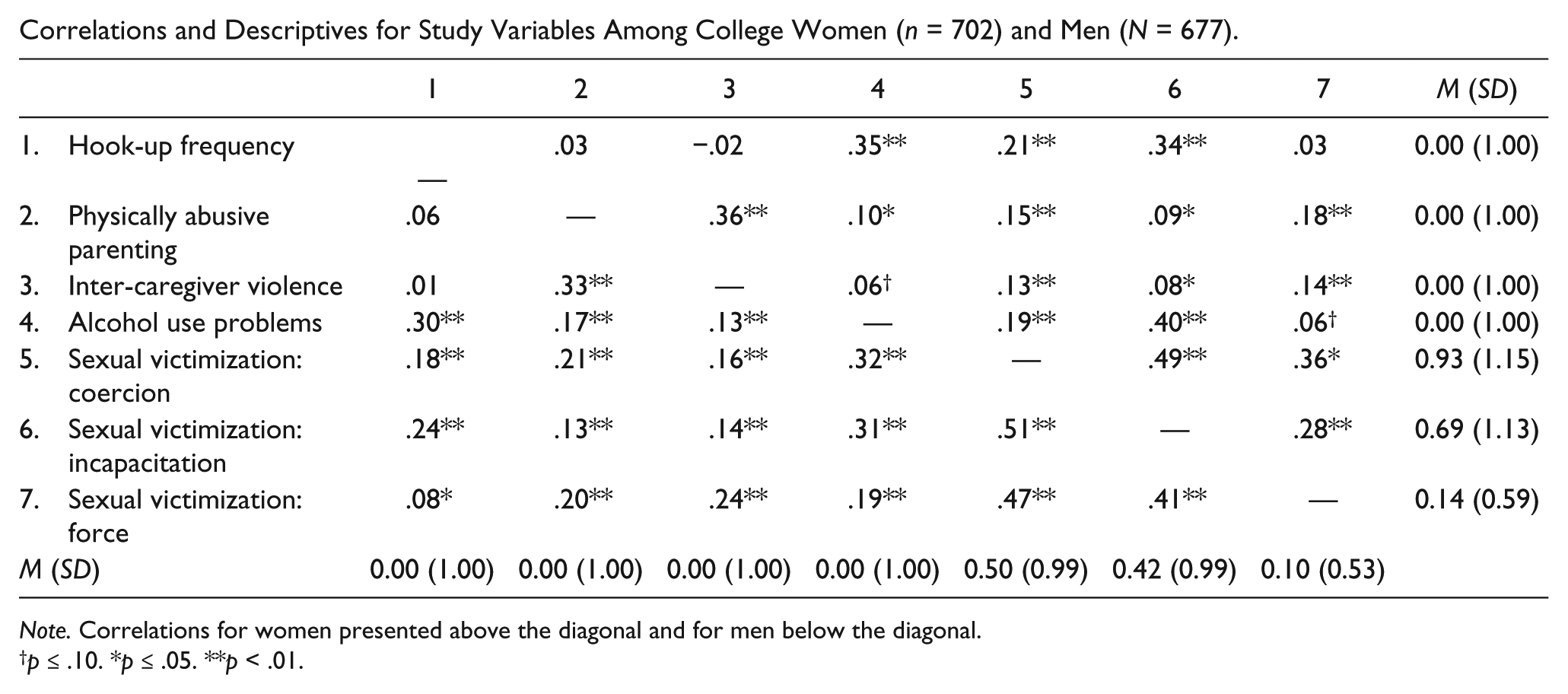
| 1 | 2 | 3 | 4 | 5 | 6 | 7 | M (SD) | |
|---|---|---|---|---|---|---|---|---|
| 1. Hook-up frequency | — |
.03 | −.02 | .35** | .21** | .34** | .03 | 0.00 (1.00) |
| 2. Physically abusive parenting | .06 | — | .36** | .10* | .15** | .09* | .18** | 0.00 (1.00) |
| 3. Inter-caregiver violence | .01 | .33** | — | .06 † | .13** | .08* | .14** | 0.00 (1.00) |
| 4. Alcohol use problems | .30** | .17** | .13** | — | .19** | .40** | .06 † | 0.00 (1.00) |
| 5. Sexual victimization: coercion | .18** | .21** | .16** | .32** | — | .49** | .36* | 0.93 (1.15) |
| 6. Sexual victimization: incapacitation | .24** | .13** | .14** | .31** | .51** | — | .28** | 0.69 (1.13) |
| 7. Sexual victimization: force | .08* | .20** | .24** | .19** | .47** | .41** | — | 0.14 (0.59) |
| M (SD) | 0.00 (1.00) | 0.00 (1.00) | 0.00 (1.00) | 0.00 (1.00) | 0.50 (0.99) | 0.42 (0.99) | 0.10 (0.53) |
Note. Correlations for women presented above the diagonal and for men below the diagonal.
p ≤ .10. *p ≤ .05. **p < .01.
Declaration of Conflicting Interests
The author(s) declared no potential conflicts of interest with respect to the research, authorship, and/or publication of this article.
Funding
The author(s) received no financial support for the research, authorship, and/or publication of this article.
