



Abstract
Sexual assault is a highly underreported crime with even fewer cases proceeding to the point of charges and prosecution, suggesting that sexual assault victims have less opportunity for legal justice than other crime victims. Case attrition may, in part, be due to negative attitudes and rape myth acceptance (RMA) in police decision making. Yet, little attention has been paid to examining the evidentiary and extralegal factors surrounding the case that contribute to police decision making and case outcomes through examination of police case files. This examination is necessary to address the issue of differential processing of sexual assault cases in the criminal justice system. This study uses police data of sexual assault case files from 1999 to 2014 (N = 23,525) to examine the assault, victim, and detective characteristics that contribute to case outcomes of unfounded, cleared, and exceptionally cleared through arrest and victim refusal to prosecute. Logistic regression models tested 15 years of reported sexual assault data from one large police department and found that elements that correspond with RMA were predictive of unfounded, cleared, and exceptionally cleared case decisions, providing further indication that officers consider evidentiary but also extralegal factors in decision making. Overall, results support previous contentions that sexual assault victims have unequal access to legal justice, particularly victims possessing demographic and assault characteristics that do not align with stereotypical notions of rape. Implications for future research and policing practices are discussed.
Keywords
Sexual assault is a highly underreported crime (Bachman, 1998) with even fewer cases proceeding to the point of charges and prosecution (Alderden & Ullman, 2012). Research on sexual assault case attrition suggests that sexual assault is treated differently by the criminal justice system than other violent crimes (Lonsway & Archambault, 2012). This differential treatment in part has been attributed to a prevalence of negative police attitudes toward sexual assault and victims, as well as false beliefs about the crime (Ask, 2010; Feldman-Summers & Palmer, 1980; Kerstetter, 1990; Mennicke, Anderson, Oehme, & Kennedy, 2014; Venema, 2016). Less attention has been paid to examining the case characteristics that contribute to case attrition and decision making by officers. This is an important area of study, as understanding the factors that play a role in officer decision making is a necessary step to take in addressing the issue of differential processing of sexual assault cases in the criminal justice system. This study uses police data of sexual assault case files from 1999 to 2014 to examine the assault incident, victim, and detective characteristics that contribute to case decisions and outcomes.
Literature Review
Research indicates that sexual assault cases often progress differently through the criminal justice system than other violent crimes (Campbell, 2008). Sexual assault is a highly underreported crime, with only about one third of sexual assaults being reported to the police (Bachman, 1998; Ullman & Filipas, 2001), and only about 9% of cases resulting in charges (Alderden & Ullman, 2012). This high attrition rate is noteworthy, given that only 2% to 10% of sexual assault reports are found to be false (see National Sexual Violence Resource Center, 2012, for review; Spohn, White, & Tellis, 2014) and therefore, there are other factors to be considered in examining sexual assault case progression. It is well understood that police officers serve as gatekeepers to justice for crime victims (LaFree, 1981), essentially tasked with deciding if a crime occurred in the eyes of the criminal justice system (Frazier & Haney, 1996). Officers can choose whether to take a report, how much time to dedicate to the investigation, whether the event constitutes a legitimate assault, and whether a suspect should be arrested (Alderden & Ullman, 2012). The decisions officers make can ultimately affect how the case progresses (Alderden & Ullman, 2012). In the case of sexual assault, there are factors beyond the evidentiary characteristics of the case that play a role in officer decision making and case attrition.
Sexual Assault Case Attrition
The police response and subsequent processing of sexual assault reports is likely shaped by factors such as the attitudes and focal concerns of the legal organization (Martin, 2005). Research and theory suggest that case attrition may be an outcome of overarching societal views about rape, which orient police and prosecutors to move cases forward that would be considered legitimate and serious by societal standards. Case attrition may also be a result of the volume of reports received, such that police officers lack resources to thoroughly investigate all reports, and therefore must develop strategies for efficiently discriminating between cases that warrant investigation and use of resources and those that do not.
Martin and Powell (1994) argue that legal organizations, such as law enforcement agencies, are influenced by societal views regarding rape. Specifically, it is the state and community that shape the legal organizations’ processing, policies, and goals. Martin and Powell (1994) suggest that there is a trickle effect of attitudes through the hierarchy of the criminal justice system whereby the societal attitude toward rape influences how the criminal justice system and system personnel (police, prosecutors) socially construct rape and respond to victims. Thus, a societal culture that is accepting of rape myths (i.e., false beliefs about rape and rape victims that typically follow the narrative of the stereotypical rape scenario 1 ; Burt, 1980) and engages in victim blaming attitudes and behavior (i.e., attributing culpability to the victim rather than the perpetrator) will orient officers and other legal personnel to follow this model in their response and processing of cases. Following Martin and Powell’s (1994) argument, it would stand that stereotypical assault cases (i.e., female victim, stranger perpetrator, involving force, resulting in injury; Feldman-Summers & Ashworth, 1981) will be those that progress through the system, resulting in outcomes such as arrest of the suspect.
Focal concerns theory lends explanation to the decision making of criminal justice system practitioners, including police officers. Steffensmeier, Ulmer, and Kramer (1998) suggest that criminal justice system personnel have three focal concerns when making sentencing decisions: (a) suspect blameworthiness and harm done to the victim, (b) protecting the community, and (c) the practicality of the sentence imposed. Consideration of these concerns results in a “perceptual shorthand” when making decisions (Steffensmeier et al., 1998). This shorthand is based on readily available physical attributes, often stereotypical to groups, but also with consideration of legally relevant factors. Police officers have their own “perceptual shorthand” in which they determine whether reported crimes would be considered legitimate by the prosecutor and therefore worth the use of resources to investigate. Frohmann (1997) described this as “downstream orientation” by which prosecutors forecast the likelihood that a case would proceed through the criminal justice system. Consequently, police officers use the prosecutor’s shorthand and past decision making to predict which cases would result in charges. Thus, police and prosecutors focus on cases that are “winnable,” which are often a reflection of the societal attitudes and beliefs about rape (i.e., rape myths and the stereotypical rape scenario) rather than legally relevant factors alone.
Sexual Assault Case Processing
Factors influencing different case outcomes
A variety of factors contribute to police decision making in reported sexual assaults, leading to different case outcomes. Police and criminal justice practitioners are armed with the laws that provide guidelines indicating what actions are illegal and the level of evidence needed to prove beyond a reasonable doubt that the crime occurred. These factors are considered evidence-based. Evidence-based factors demonstrate material proof (e.g., forensic evidence, physical injury, witness, weapon use) that the crime occurred by an alleged suspect. However, there are also perceptions, myths, organizational factors, and stereotypes that influence how police interpret and respond to the case. These factors are known to be extralegal. Extralegal factors reflect other aspects of the assault beyond the material evidence (e.g., victim credibility, victim–offender relationship, victim characteristics, suspect characteristics). Police may rely on both legally relevant information and extralegal factors that reflect stereotypes and rape myths when making case processing decisions.
Sexual assault case outcomes
There are several potential outcomes in case processing decisions. When a case is no longer being actively investigated, it is considered “cleared,” though cases can be cleared in multiple ways, including cleared through arrest, cleared through an unfounding decision, and cleared by exceptional means (Federal Bureau of Investigation: Uniform Crime Reporting [FBI: UCR], 2010). Cases that are considered unfounded are those determined to be baseless claims; in other words, a responding officer determined that the reported incident does not constitute a criminal sexual assault (CSA) as defined by state statute. Baseless and false complaints are not interchangeable concepts (Spohn et al., 2014). A complaint may be considered baseless if the police uncover no forensic or other evidence to suggest that the crime was committed, but this does not mean the complaint was false. This distinction is important to note, as the false reporting rate for sexual assault is low, yet the categorization of cases as unfounded is quite commonly used (Spohn et al., 2014). Research suggests that sexual assault complaints are unfounded inappropriately, such as when the victim had engaged in risky behavior prior to the assault, if the complainant was unwilling to cooperate, if the statement was inconsistent or contradictory, and if the victim delayed reporting (Kerstetter, 1990; Konradi, 2007). The Globe and Mail conducted a 20-month investigation into 92% of Canadian law enforcement agencies’ unfounding decisions, discovering that one in every five sexual assault investigations in Canada is dismissed as baseless and subsequently unfounded (Doolittle, 2017). In consideration of the low false reporting rate, this finding suggests that Canadian police are closing a disproportionate number of sexual assault cases as unfounded, ultimately distorting the country’s crime statistics and revealing deeper systemic flaws, including inadequate training and/or rape myth acceptance (RMA) among officers (Doolittle, 2017). Spohn and colleagues (2014) examined unfounded cases by the Los Angeles Police Department (LAPD) and found that officers most often appropriately categorized cases as unfounded, but their findings revealed that, along with victim recanting (despite evidence that a crime did occur), factors related to the victim characteristics and circumstances of the crime also predicted unfounding decisions. For example, cases were more likely to be unfounded if the victim reported that they were assaulted by a stranger than if they reported that they were assaulted by an intimate partner, as detectives in this study indicated that false reports are more likely to include a stranger perpetrator. Unfounding decisions were 10 times more likely if the victim had a mental illness or mental health issue that called their credibility into question, and 3 times more likely if the victim’s character or reputation was questionable (Spohn et al., 2014). Spohn and colleagues (2014) also discovered that unfounding was less likely if the victim was injured and if there was physical evidence, as the presence of these factors can corroborate the victim’s story. Yet, these findings also play into the stereotypes of “real rape” whereby victims are viewed as more credible if they suffer injury and have “good moral character.” This suggests that there is potential bias related to the victim and assault characteristics that may affect the unfounding decision, which is unfortunate to the processing of reports, as cases that are considered unfounded are essentially closed before any investigation or case follow-up can occur, leaving legitimate victims without the opportunity for legal justice or tangible support.
According to the UCR, cases cleared by arrest must meet one of three conditions: a person has been arrested, a person has been charged with the commission of the offense, or a person has been turned over to the court for prosecution (FBI: UCR, 2010). Research suggests that both legal and extralegal factors play a role in arrest decision making in sexual assault cases (Frohmann, 1991; Spohn & Horney, 1992; Tasca, Rodriguez, Spohn, & Koss, 2013). Tasca and colleagues (2013) found that stranger cases and cases where forensic evidence was available (including whether the victim was willing to have forensic evidence collected) were more likely to result in arrest. In contrast, cases in which the victim delayed reporting and was not perceived to be credible were associated with failure to arrest, after controlling for suspect identification.
There is also the option for cases to be cleared through exceptional means (i.e., exceptionally cleared; FBI: UCR, 2010; Spohn & Tellis, 2011; Spohn et al., 2014). Cases exceptionally cleared are those in which a suspect could be identified, and the location of the suspect is known, however, the case is closed and not further pursued. A variety of reasons could be used to determine a case outcome as cleared by exceptional means. One such reason may be that the victim refused to prosecute or the case was not strong enough to move forward with prosecution, and therefore, the case was closed by exceptional means. As Spohn and Tellis (2011) found, a considerable number of cases are cleared exceptionally because they are declined by the prosecutor at the pre-arrest stage through a secondary or concurrent screening of cases. In their study of rapes and attempted rapes reported to the LAPD between 2005 and 2009, 33.5% were cleared by exceptional means. Their findings revealed 10 factors that led to cases cleared through exceptional means, both legally relevant and extralegal factors related to the case (e.g., victim–perpetrator relationship, lack of physical evidence, identification of suspect, lack of witness) and the victim (delayed reporting, victim behavior prior to the assault, consistency in statements), some of which are in clear contradiction with one another (Spohn & Tellis, 2011). Overall, their findings highlight issues in application of the exceptional clearance categorization, particularly in the inconsistency in justification for exceptional clearance. It may also be that the victim decided that they did not want the suspect to be prosecuted, something that has been shown to occur in about one third of cases (Murphy, Edwards, Bennett, Bibeau, & Sichelstiel, 2014). While this may be interpreted as recanting due to a false allegation, most commonly, victims refuse to prosecute for reasons such as fear of retaliation from the perpetrator, pressure from the suspect or family to withdraw the complaint, or simply a lack of interest in pursuing prosecution (Murphy et al., 2014; Spohn et al., 2014). Victims may also cease participation in the legal process to avoid revictimization by the system and police or because they feel that their case was not being taken seriously (Lorenz, 2017). Murphy and colleagues (2014) discovered that officers often fail to provide information as to why the victim decided not to prosecute, but the reasons that were given focused on the victim’s credibility. Other research has tied the decision to withdraw from the legal process to assault characteristics such as pre-assault alcohol/drug use (Kelley & Campbell, 2013). While the authors cannot determine whether this is due to encouragement by officers to drop, other research has shown that officers may encourage victims to drop the case for reasons related to victim credibility and the strength of the case (Campbell & Raja, 2005; Greenberg & Ruback, 1992; Murphy et al., 2014). Again, this suggests the consideration of extralegal factors in case processing.
The influence of case characteristics and rape myths on case processing
Research to date examining the processing of sexual assault cases has focused extensively on the influence of rape myths and stereotypes about rape. These common misconceptions and stereotypes about sexual assault can lead to incorrect conceptualizations of sexual assault as a crime, what types of women (or men) can be assaulted, and which sexual assault allegations are “real” and should be legally pursued. While it is important to differentiate between stereotypes about rape (e.g., stranger perpetrator, a weapon was involved) and rape myths (i.e., commonly held misconceptions about rape and rape victims; for example, men and prostitutes cannot be raped, true victims will report right away), the stereotypes and myths are often overlapping in one’s attitudes toward rape and rape victims. The police response and processing of sexual assault cases may be influenced by police officers’ individual attitudes about rape, including stereotypes and rape myth acceptance (RMA) (Campbell & Johnson, 1997; Page, 2008, 2010).
Police officers expect assaults to align with the stereotypical rape scenario and have similarly been shown to adhere to rape myths (Jordan, 2004). Research suggests that officers make judgments of victims’ credibility based on the characteristics of the assault and victim (Page, 2008, 2010; Rich & Seffrin, 2012). Police are less likely to perceive a victim as credible if they delayed reporting or engaged in substance use prior to the assault (Jordan, 2004), which aligns with the rape myths that victims will report right away and that if they were under the influence then they were “asking for it”, and are also extralegal factors to the case. Officers in one study stated that they would be reluctant to believe certain victims including married women raped by their spouse, prostitutes, and male victims, but would believe a virgin or professional woman (Page, 2008).
Although inconsistent, research suggests that officers consider the age and race of victims in processing decisions. Younger victims are more likely to have their cases moved forward (Beichner & Spohn, 2005; Du Mont & Myhr, 2000; Spohn, Beichner, & Davis-Frenzel, 2001). Research is mixed regarding the case outcomes considering victim race, with some studies finding that cases involving White victims are more likely to result in charges (Spohn & Holleran, 2001) and others finding White victims are less likely to result in charges than victims of color (Spohn & Horney, 1993). Outcomes of cases with consideration of race may suggest adherence to cultural stereotypes about African American women as “jezebels,” meaning sexual and promiscuous individuals, rendering them “unrapeable.” While research is inconsistent regarding the case processing outcomes related to age and race, overall research suggests that officers consider the characteristics of the individual making the report, including the race, age, and socioeconomic status (Frohmann, 1991).
Officers have also been shown to consider the characteristics of the assault in decision making. While some characteristics of the assault are considered legally relevant factors, there is evidence to suggest that officers adhere to rape myths and stereotypes in considering these factors when deciding victim credibility (i.e., did the assault actually occur?) and decision making. One such factor is the presence of injury. Victim injury can provide visual confirmation that the allegations are true, which may prompt officers to thoroughly investigate the allegations and move the case forward to prosecution. Studies have found that cases are more likely to proceed through the criminal justice system when victim injuries are present (Beichner & Spohn, 2005; Frazier & Haney, 1996; Kerstetter, 1990) or when the victim actively resisted assault (Du Mont & Myhr, 2000). Another such example would be the presence of weapons. Like physical injury, the presence of a weapon suggests to police officers the seriousness of the incident and that the victim was assaulted against his or her will, and therefore a “real” victim. Research supports this contention, with studies revealing that the presence of a weapon increases the likelihood of arrest and charging of suspects in sexual assault cases (LaFree, 1981; Spohn et al., 2001). Yet, these findings are problematic, as it is well documented that not all assaults involve physical injury and weapon presence, especially those that involve pre-assault alcohol use (see Lorenz & Ullman, 2016, for review). Therefore, judging the credibility of the victim and the assault in consideration of these factors suggests adherence to rape myths and differential processing of cases based on these beliefs of what constitutes “real” assault. The same is true for presence of witnesses. Having a witness present can assist in corroborating victims’ stories, thus building credibility, but witnesses to sexual assault cases are uncommon relative to other crimes, as sexual assault often occurs behind closed doors. Yet, the presence of a witness in a sexual assault case increases the likelihood that a suspect will be identified and questioned, charged, and convicted (Beichner & Spohn, 2005; Frazier & Haney, 1996; Spears & Spohn, 1996). Thus, the research on the consideration of legally relevant factors suggests a bias in processing of cases, perhaps due to RMA of officers and/or the downstream orientation by prosecutors to only accept “winnable” cases.
In contrast, officers may consider assault characteristics that are considered extralegal, such as victim–perpetrator relationship. Officers participating in research on attitudes toward sexual assault victims, including judgments of credibility and internalization of stereotypes in decision making, have indicated they would be less likely to believe a married woman who was assaulted by a spouse or someone who knew their perpetrator (Jordan, 2004; Page, 2008). This perception suggests adherence to the stereotype of the stranger perpetrator and myth that women are only raped by strangers and is reflected in police decision making. For example, officers have been shown less likely to question a suspect when the victim and perpetrator were acquaintances (Frazier & Haney, 1996).
Not all officers adhere to rape myths in the same way. Individual-level characteristics of police officers may influence officer RMA and general attitudes toward victims, and subsequently case processing decisions. Research is generally mixed regarding how officer gender, education, and experience in the field influence attitudes toward sexual assault victims and subsequent case progression. For example, some research indicates positive attitudes toward victims (e.g., recognizing that false reporting is low and therefore not treating victims automatically with skepticism) and low RMA among female officers (Rich & Seffrin, 2012), educated officers (Page, 2008), and officers with more experience (Rich & Seffrin, 2012), but other studies contradict these findings. Campbell and Johnson (1997) did not find any differences in RMA based on gender, race, or education, but found differences based on rank, training received, experience, and attitudes toward women in general. Regardless, officer characteristics may play a role in case processing via attitudes toward rape and therefore should be considered in research.
This Study
While the influence of legal and extralegal factors in police decision making and processing may appear inconsequential, the consideration of these factors contribute to unequal processing of sexual assault cases based on certain victim or assault characteristics due to the high discretion accorded to police. As such, it is necessary to examine the influence of such factors, particularly in police agencies that receive a high volume of sexual assault reports, to determine if there are problematic patterns in case processing decisions. Yet, this is not something routinely studied using police case files. This study examined the case processing decisions of all CSA cases reported to a large Midwestern police department between 1999 and 2014. This study seeks to explain the factors that predict police categorization of case outcomes as: (a) unfounded, (b) case cleared, and (c) cleared by exceptional means. The analysis then looks more closely at (a) case cleared due to arrest and (b) case cleared by exceptional means: victim refused to prosecute.
This study examines factors included in the police department’s electronic system, particularly case characteristics, victim characteristics, incident characteristics, and detective characteristics that may influence the case outcomes specified above. This study analyzes the factors that predict or explain these different decisions in case processing, leading to different case outcomes. Because there are many variables included in the multivariate analyses, the hypotheses are summarized as follows. Case characteristics, victim characteristics, incident characteristics, and detective characteristics will explain decisions to unfound, clear, or exceptionally clear cases. Because research is mixed regarding the effect of detective demographic characteristics on case decision making, these hypotheses are non-directional. Older cases, those not reported within 72 hr, and those with incident characteristics inconsistent with stereotypical notions of “real rape” (i.e., victim drinking, no weapon use, no injury, non-stranger relationship) will predict higher likelihood of both the unfounding decision and the cleared by exceptional means decision, specifically the “refused to prosecute” outcome. Newer cases, those reported within 72 hr, and those with characteristics consistent with “real rape” stereotypes will predict higher likelihood of the decision to clear a case and result in a decision to make an arrest.
Method
Sample
The study sample consisted of 23,525 CSA cases reported to a large Midwestern police department between 1999 and 2014 that involved only one victim, both male and female, aged 13 years and older. Only victims 13 years and older were included because of relevant state statutes that treat cases with victims under 13 differently. CSA involves instances in which there is sexual penetration when the victim is unable to consent or when there is sexual penetration by use of force or threat of force. All data were extracted from electronic files used by this police department. These data were extracted as text files, converted to Excel, and then imported into SPSS for data analysis. The extracted files included primarily data with pre-selected response options for each field with no need for narrative coding.
Measures
Several categories of independent variables were included: case, victim, incident, and detective characteristics. Case characteristics include incident year and reporting time (calculated as the number of days between the date of the incident and the date of the responding officer’s initial report).
Victim characteristics include victim sex and victim race. Sex was dummy coded (0 = female, 1 = male). Race was dummy coded into three variables: White (0 = non-White, 1 = White), Black (0 = non-Black, 1 = Black), and Hispanic (0 = non-Hispanic, 1 = Hispanic), with White used as the reference category in multivariate analyses.
Incident characteristics include victim drinking, victim injury, whether there was a witness, whether or not a weapon was used, and the relationship between the suspect and victim. Victim drinking was recoded (0 = had not been drinking, 1 = had been drinking or intoxicated). In addition, because there were many cases with missing/unknown data on the victim drinking variable, a dummy variable of victim drinking missingness was also included in the analysis to determine whether a lack of information on this incident characteristic had an effect on case outcomes. Victim injury was computed by adding up the number of different types of injuries that were noted in the case files (including abrasion/bruise, general assault, blunt trauma, burnt, choked, fractured, gunshot wound, stabbed, unconscious, and other). This variable was dummy coded into two categories (0 = no injury, 1 = any injury). Weapon use was computed by adding up the number of different types of weapons used that were noted in the case file (including blunt instrument, body, drugs, firearm, knife, and other). This variable was dummy coded into two categories (0 = no weapon used, 1 = weapon used). Witness was coded as two categories (0 = no witness, 1 = presence of a witness). Victim-suspect relationship was dummy coded into three variables: (a) acquaintance (0 = no, 1 = yes), (b) romantic partner (current or former) (0 = no, 1 = yes), and (c) stranger (0 = no, 1 = yes), with stranger serving as the reference category in multivariate analyses.
Detective characteristics include detective sex, detective race, and years at the police department. Detective sex was dummy coded into two categories (0 = female, 1 = male). Detective race was dummy coded into three variables: White (0 = non-White, 1 = White), Black (0 = non-Black, 1 = Black), and Hispanic (0 = non-Hispanic, 1 = Hispanic), with White serving as the reference category in the multivariate analyses. Detective age (at the time of the police report) is a continuous variable calculated as the years between the detective date of birth and the date of the responding officer’s report. Years at the police department is a continuous variable calculated as the years between the detective start date and the date of the responding officer’s report.
There are five dependent variables in this study, all of which were dummy coded. The first is unfounded (0 = not unfounded, 1 = unfounded), referring to cases that are determined to be a baseless claim; in other words, a responding officer determined that the reported incident does not constitute a CSA as defined by state statute. Second, case cleared (0 = not cleared, 1 = cleared) refers to cases in which an outcome has been determined and there is no longer an active investigation. The third dependent variable is case cleared by exceptional means (0 = not exceptionally cleared, 1 = exceptionally cleared). In this study, when a case was cleared or exceptionally cleared, the dataset included more specific outcomes regarding the case cleared status or rationale for that status. These specific outcomes include, fourth, case cleared due to arrest (0 = not cleared due to arrest, 1 = cleared due to arrest) and, fifth, case exceptionally cleared due to refused to prosecute (0 = not exceptionally cleared, victim refused to prosecute, 1 = exceptionally cleared, victim refused to prosecute). This variable indicates that the case was cleared by exceptional means (i.e., closed even though a suspect could be identified), with the rationale being that the case could not move forward to prosecution. It should be noted that the meaning of this variable could be that the victim decided that they did not want to go through with prosecution, or it could mean that the prosecutor suggested that the case was not strong enough to move forward with prosecution and therefore the case was closed, and an arrest of the suspect was not made (see Spohn & Tellis, 2011). The dataset included two other possible case statuses or outcomes: open and suspended, which are not included in the following analysis. Cases that were suspended are no longer being investigated but they have not been cleared—this can happen, for instance, when all investigative efforts have been expended without a clear suspect identified.
Analysis
First, the bivariate relationships between all independent variables and all dependent variables were tested. When testing the relationship between categorical independent variables and the categorical dependent variables, the chi-square test of independence was used. When testing the relationship between continuous independent variables and the dichotomous dependent variables, a correlation test was used.
Second, five multivariate hierarchical logistic regression analyses were used to test the relationship between the independent variables and the dependent variables. Independent variables were entered in blocks, following the outline of independent variables above: case characteristics, detective characteristics, victim characteristics, and incident characteristics. Only the independent variables with a significant relationship to the dependent variables in the bivariate analyses were included in the regression models.
Results
Descriptive Results: Case Outcomes
As displayed in Table 1, there were 23,525 cases reported that involved one victim who was at least 13 years old, and whose case was labeled a CSA between 1999 and 2014. The majority (80%) of cases were reported within 72 hr; however, the average length of time between the date of occurrence and the date of the report was 65.5 days due to a range of 0 to 5,479 reported in the police case files. Most detectives listed first on the case were male; however, 40% of detectives were women. Detectives were 46 years old on average; 65.6% were White, 24.1% were Black, and 8.8% were Hispanic. On average, detectives had been at this police department for 17.93 years (SD = 6.5). Victims were predominantly female (95.2%), Black (64.1%), and 25.53 years old on average (SD = 11.46). Regarding incident characteristics, 8.3% of cases indicated that the victim had been drinking or was intoxicated. It should be noted that 71% of cases either had missing data or indicated that victim drinking was unknown. About one quarter (27.5%) of incidents involved victim injury, 14.2% involved the use of a weapon, and 17.3% indicated the presence of a witness. In terms of victim–suspect relationship, 28.1% of cases involved an acquaintance, 25.5% involved a stranger, and 12.1% involved a former or current romantic partner.
Descriptive Statistics for the Independent Variables (N = 23,525).
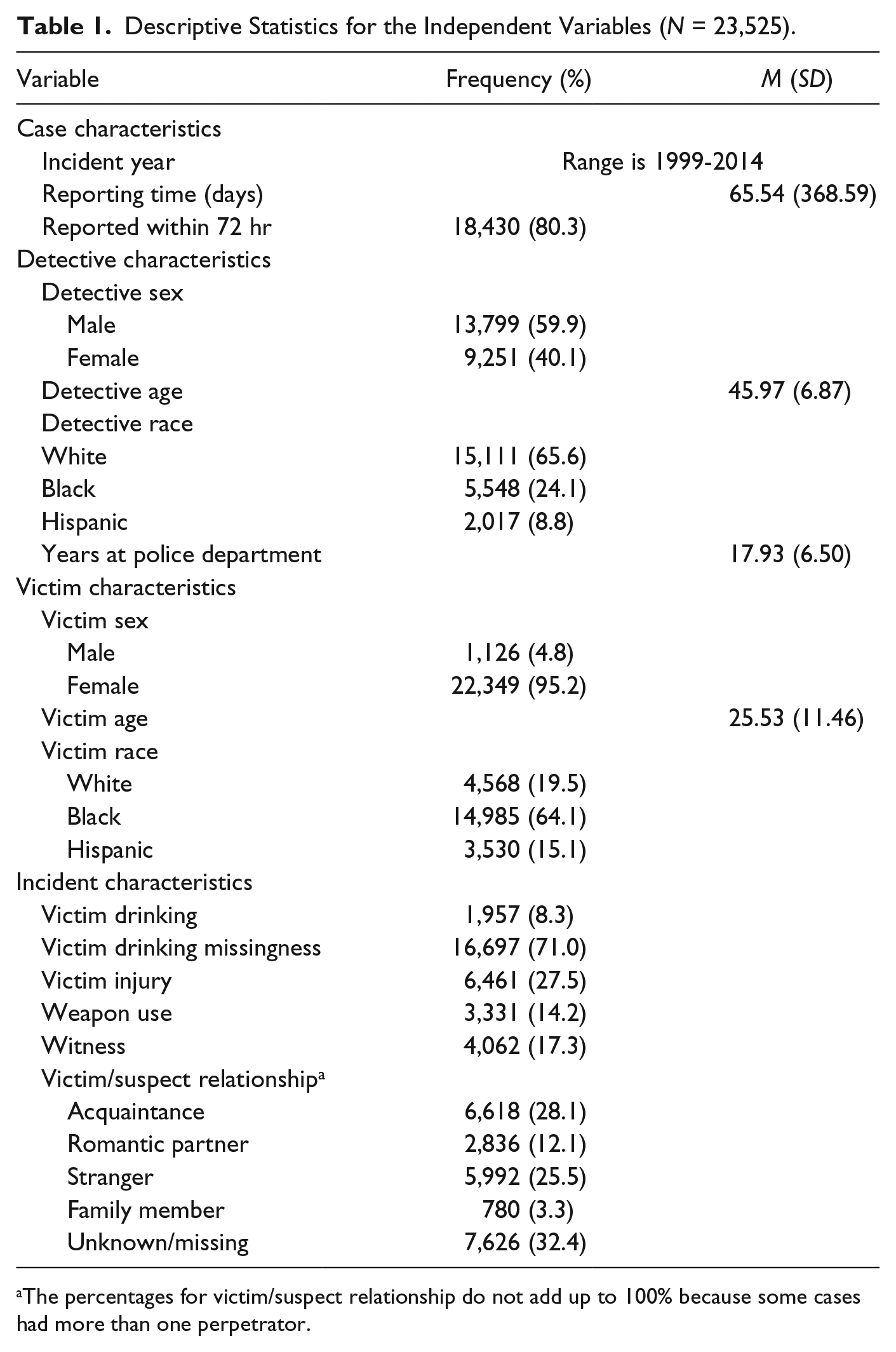
The percentages for victim/suspect relationship do not add up to 100% because some cases had more than one perpetrator.
Of the 23,525 cases included in the sample, 830 (3.5%) were open at the time of data extraction, 10,004 (46.1%) were suspended, and 30 (0.1%) were coded as “other.” Of those that were closed, 15.9% were unfounded, 13.2% were labeled as case cleared, and 24.8% were labeled as exceptionally cleared. Most cases that were cleared resulted in arrest and prosecution. The majority of those that were exceptionally cleared were labeled as “refused to prosecute.” Figure 1 presents the flow of the 23,525 sexual assault cases through different police officer decisions. The variables in boldface are the subject of this paper’s analysis.
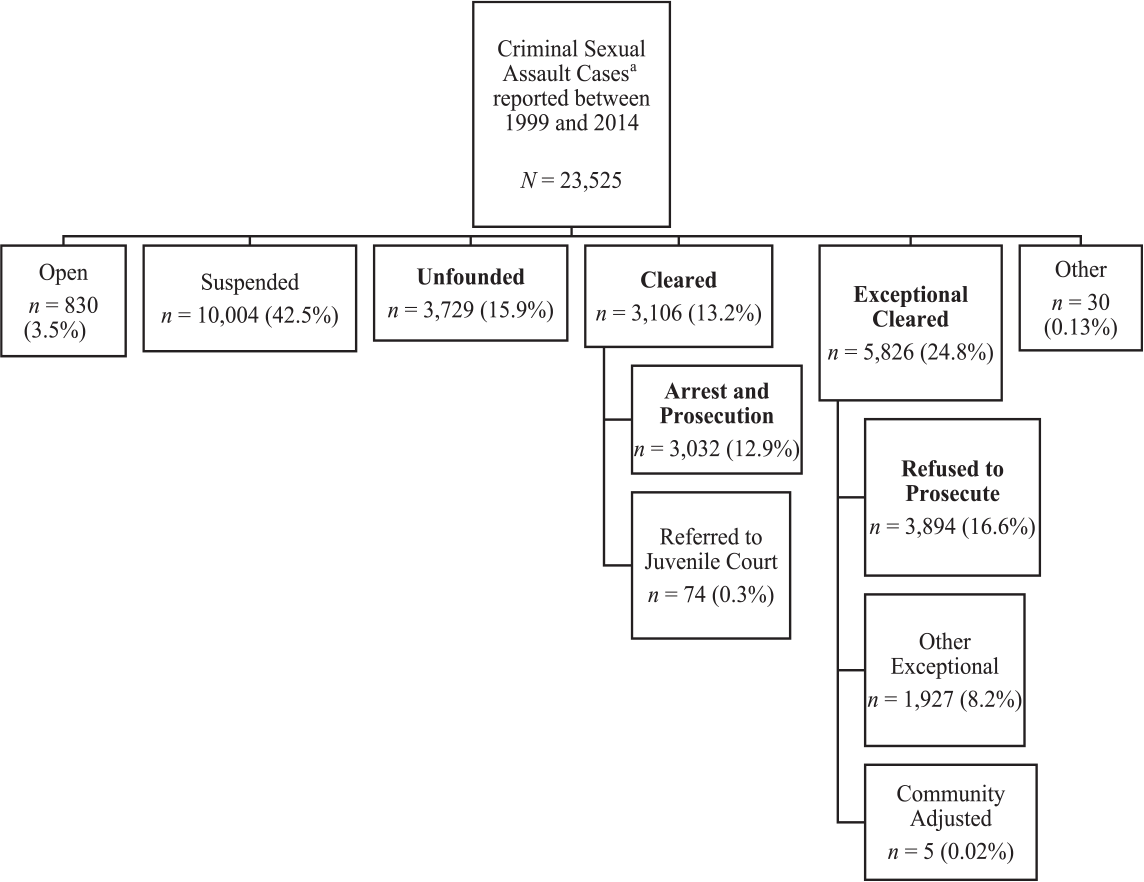
Sexual assault case processing from 1999 to 2014.
Multivariate Results: Factors Predicting Case Outcomes
Hypotheses were supported regarding characteristics that predict the case unfounding decision, see Table 2; χ2 (39) = 1,568.228, p <.001. In summary, a case had higher odds of being unfounded if the case was more recent, if the victim did not report within 72 hr, if the detective was female, if the detective was not Black, if the victim was male, and as victim age increased. Incident characteristics predicting the unfounded decision included having missing data on whether the victim had been drinking, not having an injury, not involving a weapon, not having a witness, and the victim/suspect relationship being something other than an acquaintance or former/current romantic partner.
Logistic Regression Results for Unfounded, Cleared, and Exceptional Cleared Case Outcomes.
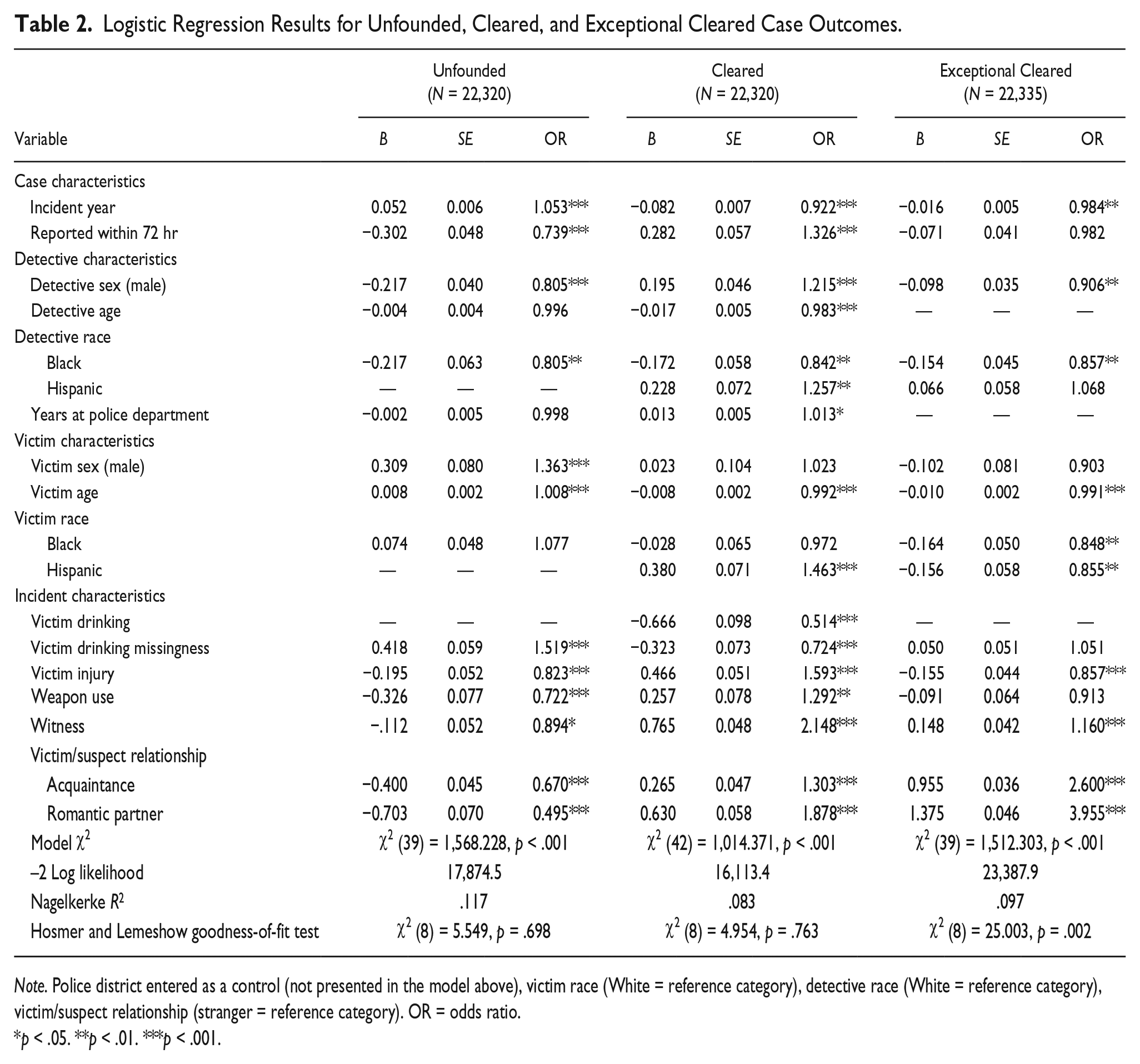
Note. Police district entered as a control (not presented in the model above), victim race (White = reference category), detective race (White = reference category), victim/suspect relationship (stranger = reference category). OR = odds ratio.
p < .05. **p < .01. ***p < .001.
Overall, the model predicting case clearance is significant, χ2 (42) = 1,014.371, p <.001. A case had higher odds of being cleared if it was older, if it was reported within 72 hr, if the detective was male, if the detective was younger, if the detective was not Black, if the detective was Hispanic, and if the detective had been at the police department more years. Victim characteristics predicted case clearance, such that younger victims and Hispanic victims increased the odds of case clearance. Victim drinking and victim drinking missingness lowered the odds of case clearance. In addition, victim injury, weapon use, presence of a witness, and victim/suspect relationship being either acquaintance or former/current romantic partner increased the odds of case clearance.
Overall, the model predicting exceptional clearance was significant, χ2 (39) = 1,512.303, p <.001. Older cases were more likely to be exceptionally cleared. In addition, cases with a female detective and a non-Black detective were more likely to be exceptionally cleared. Cases with a younger, non-Black, or non-Hispanic victim were more likely to be exceptionally cleared. Regarding incident characteristics, those without victim injury had higher odds of exceptional clearance. Those with a witness, and those involving an acquaintance or former/current romantic partner, had higher odds of exceptional clearance.
Table 3 presents the results that analyze two specific outcomes within the “case cleared” and “cleared by exceptional means” case outcomes: case cleared due to arrest and case exceptionally cleared due to “refused to prosecute” (see Table 3).
Logistic Regression Results for Cases Cleared Due to Arrest and Exceptionally Cleared Due to Refused to Prosecute.
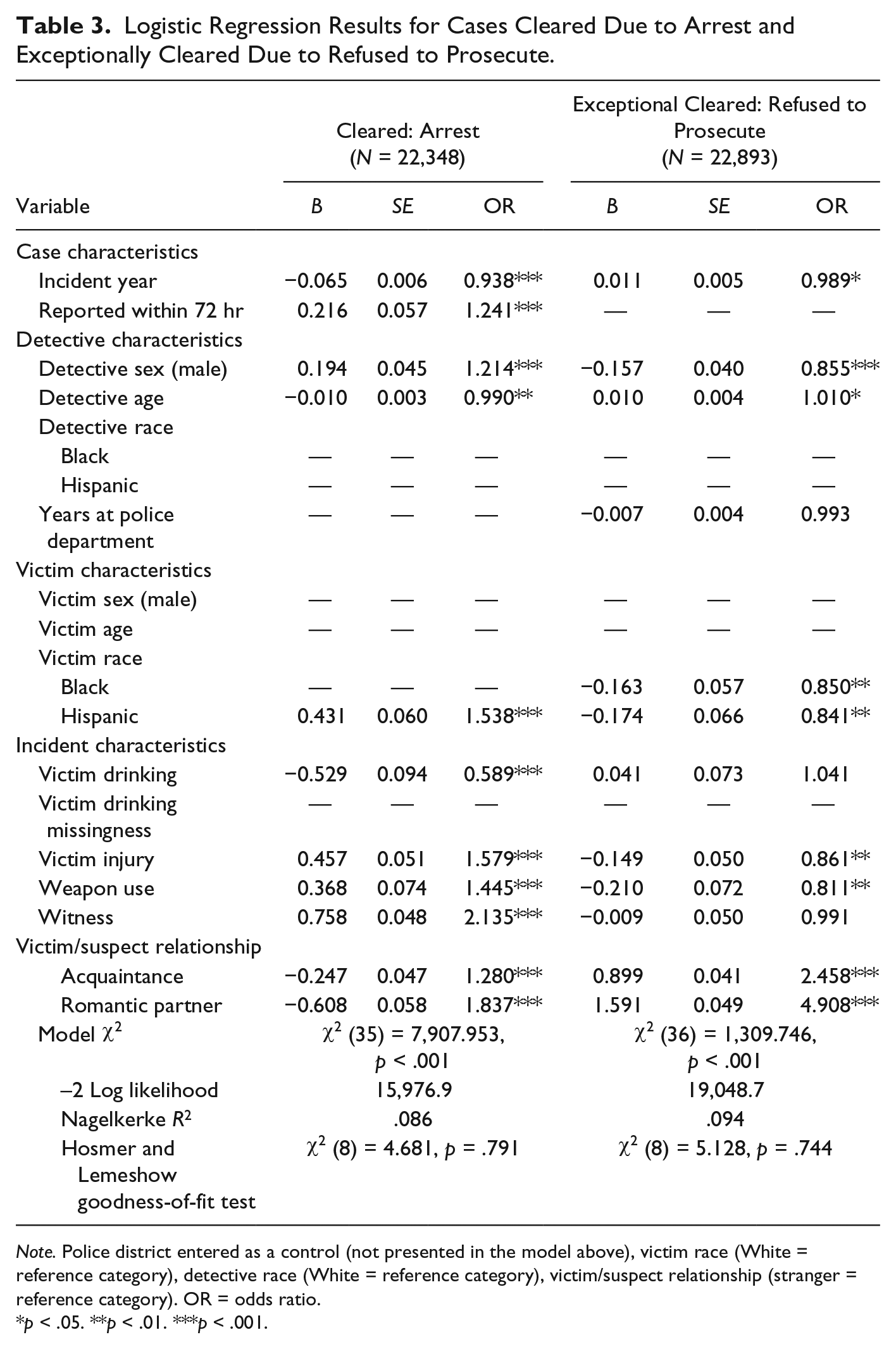
Note. Police district entered as a control (not presented in the model above), victim race (White = reference category), detective race (White = reference category), victim/suspect relationship (stranger = reference category). OR = odds ratio.
p < .05. **p < .01. ***p < .001.
The model predicting case clearance due to arrest was significant, χ2 (35) = 7,907.953, p <.001. More recent cases were slightly less likely to result in arrest. Cases that were reported within 72 hours had higher odds of resulting in arrest. Cases with a male detective, a younger detective, and a Hispanic victim had higher odds of arrest. Cases in which a victim was not drinking, where there was victim injury, weapon use, or a witness had higher odds of resulting in arrest. Cases in which a suspect was not an acquaintance or not a former/current romantic partner had higher odds of resulting in arrest.
The model predicting exceptional clearance due to refused to prosecute was significant, see Table 3; χ2 (36) = 1,309.746, p <.001. More recent cases, those with a female detective and older detectives, were more likely to result in cleared by exceptional means due to refused to prosecute. Cases with non-Black or non-Hispanic victims were more likely to result in this case outcome. Incidents with victim injury, weapon use, and a witness were less likely to result in cleared by exceptional means due to refused to prosecute. Cases involving a suspect who was an acquaintance, or a former/current romantic partner, were much more likely to result in exceptional clearance due to refused to prosecute.
Discussion
Analysis of 15 years of reported sexual assault case data in one large police department showed low case clearance rates. In this dataset, only 13.2% of cases were cleared, with 12.9% resulting in arrest. Instead, the most common case outcomes were suspended (42.5%) or exceptionally cleared (24.8%). This compares with Campbell’s (2008) review of data collected from a wide range of sources, which found that 7% to 27% of the sexual assaults that are initially reported to law enforcement eventually result in charges being filed, and of those, 3% to 26% resulting in some type of conviction. In fact, of those that proceed to arrest and prosecution, only 1 in 2 sexual assault cases result in a felony conviction (Bureau of Justice Statistics, 2008). In this study, less than 12.9% of cases resulted in a charge; therefore, one could estimate that less than 6% to 7% resulted in a felony conviction. These findings can also be compared with Spohn and Tellis’ (2011) study of LAPD data from 2005 to 2009 that found 34.7% of sexual assault cases cleared by arrest, 54.2% of cases cleared by exceptional means, and 1% unfounded. With about 1 in 4 cases in this study being cleared by exceptional means, this study seems to confirm what Lonsway and Archambault (2012) hypothesize: There is also the possibility that a decreasing percentage of cases are being formally referred to the prosecutor’s office, with more cases presented informally to prosecutors by law enforcement investigators. Cases could thus be rejected on the basis of a single conversation, and these referrals may not be counted in any formal statistics because no arrest was made (p. 152).
About 16% of cases were unfounded, with no indication that the use of the unfounded case classification decreased from 1999 to 2014. The results demonstrate that a variety of case characteristics, detective characteristics, victim characteristics, and incident characteristics predict case outcomes as classified by the police.
Summary and Implications of Results by Case Outcome
Study results provide further evidence that police officers adhere to rape myths and consider stereotypes of “real rape” to process sexual assault reports and determine case outcomes (Page, 2008, 2010; Rich & Seffrin, 2012). Extralegal factors including victim characteristics, such as victim sex, age, and race, influenced case outcomes. Incident characteristics, including victim drinking, victim injury, use of a weapon, presence of a witness, and relationship between the suspect and victim, appear the most predictive of various case outcomes, even though detective and victim characteristics explain some differences in the likelihood of various case outcomes.
Elements that correspond with RMA were found to predict the unfounding decision, such that male victims and incidents without stereotypical elements of rape (e.g., injury, weapon use) were more likely to be unfounded. A case had higher odds of being unfounded if the case was more recent, if the victim did not report within 72 hr, if the detective was female, if the detective was not Black, if the victim was male, and as victim age increased. The influence of victim sex on the unfounding decision is consistent with Page’s (2008) research. Incident characteristics predicting the unfounded decision included having missing data on whether the victim had been drinking, not having an injury, not involving a weapon, not having a witness, and the victim/suspect relationship being something other than an acquaintance or former/current romantic partner. Similar to what was documented by The Globe and Mail, our findings suggest regular use of the unfounded case outcome, with extralegal factors and RMA influencing this decision (Doolittle, 2017). However, The Globe and Mail report was able to demonstrate wide variations in unfounding rates by city, pointing to the discretion used when responding to sexual assault cases. The use of unfounding as a case outcome, as it implies a baseless claim to a crime, may relate to the remaining high estimates of false reporting among law enforcement (McMillan, 2018; Venema, 2018). McMillan (2018) found that officers believe that their training allows them to “just know” who is telling the truth or not, allowing room for biases and RMA to potentially impact case progression.
The factors that influenced case clearance are very similar to the factors that influence case clearance due to arrest, as arrest is the most common reason for case clearance. In both models examining case clearance, a case had higher odds of being cleared and cleared by arrest if it was older, if it was reported within 72 hr, if the detective was male, and if the detective was younger. Victim characteristics predicted case clearance and case clearance through arrest, such that younger victims and Hispanic victims increased the odds of case clearance and arrest. Victim drinking and victim drinking missingness lowered the likelihood of case clearance and case clearance through arrest. In addition, victim injury, weapon use, presence of a witness, and victim/suspect relationship being either acquaintance or former/current romantic partner were more likely to be cleared and result in arrest. Variables predictive of case clearance but not case clearance due to arrest include non-Black, non-Hispanic detectives, and more years at the police department. The finding on late reporting is consistent with previous research that has shown police are more likely to perceive a victim as credible if they reported immediately (Jordan, 2004). The finding on age is consistent with previous research that has showed that younger victims are more likely to have their cases moved forward (Beichner & Spohn, 2005; Du Mont & Myhr, 2000; Spohn et al., 2001).
The factors that influenced cleared due to exceptional means are similar to the factors that influenced cleared by exceptional means/refused to prosecute, as the “refused to prosecute” outcome is the most common reason for exceptional clearance. Older cases and those with a female detective were more likely to be exceptionally cleared and labeled as “refused to prosecute.” Cases with a non-Black or non-Hispanic victim were more likely to be exceptionally cleared and labeled as “refused to prosecute,” adding to the body of research that has previously shown mixed results regarding the effect of victim race on case outcomes (Spohn & Holleran, 2001; Spohn & Horney, 1993). Regarding incident characteristics, those without victim injury, those with a witness, and those involving an acquaintance or former/current romantic partner were more likely to be cleared by exceptional means and labeled as “refused to prosecute.” Having a non-Black and younger detective were predictive of cleared by exceptional means but not “refused to prosecute.” Detective age and weapon use were associated with the outcome of cleared by exceptional means due to refused to prosecute but not the use of exceptional clearance in general. These findings are consistent with Pattavina, Morabito, and Williams (2016) who found that incident-level factors, such as incidents involving an acquaintance, have higher odds of exceptional clearance compared to those involving strangers. For instance, Murphy and colleagues (2014) examined 125 cases in which the officer reported that the victim chose to drop the case. Of the 125 cases, only 41 police reports explicitly stated that the victim chose to drop the case, with only 13 of those including specific reasons stated by the victim. Therefore, it is unknown what “refused to prosecute” and even “victim refused to prosecute” really means—and the extent to which victims may be encouraged by police to drop the case, or decide on their own due to negative interactions with police, as other research would suggest this is certainly a possibility (Campbell & Raja, 2005; Greenberg & Ruback, 1992; Lorenz, 2017).
Summary and Implications of Results by Case Characteristics
Characteristics of the incident, some potentially related to evidentiary concerns and some related more to perceptions of victim credibility or perceived “case seriousness,” explained different case outcomes. Two such examples of extralegal factors include victim drinking and relationship between the victim and suspect. If it was recorded in the case file that the victim had been drinking, the odds of case clearance and arrest decreased. When a victim had been drinking, the likelihood of exceptional clearance/refused to prosecute was more likely. These findings are consistent with Schuller and Stewart (2000) who found that police officers viewed victims more negatively the more intoxicated they were perceived to be. Yet, this is concerning because in the state where this research was conducted, individuals cannot legally provide consent when under the influence since the relationship between alcohol and sexual assault victimization is well established (see Lorenz & Ullman, 2016, for review). Interestingly, when a case did not indicate anything regarding the victim’s drinking or intoxication prior to the incident, the odds of unfounding also increased, and the odds of case clearance decreased. This suggests that even if a case does not have an indication that the victim had been drinking or was intoxicated, the lack of information regarding this (i.e., the lack of indication that the victim was sober), also influenced the case to less rigorous investigation. Thus it is clear that there is still a stigma for victim drinking prior to the assault and that officers may be giving preferential treatment for “good” victims whose demeanor and actions align with the stereotypical perception of rape victims (Campbell, 1998; Madigan & Gamble, 1991).
Cases involving an acquaintance were more likely to result in case clearance and almost 3 times as likely to result in case clearance by exceptional means. This finding is not surprising given that the suspect is more easily identified; however, officers were less likely to believe that a legitimate crime took place (Jordan, 2004; Page, 2008). Cases involving an acquaintance were less likely to result in arrest and less likely to be unfounded, consistent with Frazier and Haney’s (1996) finding that officers were less likely to arrest the suspect if the suspect was an acquaintance. Yet, it is unclear whether this is due to victims dropping the charges (cases with an acquaintance were 2.5 times more likely to be classified as cleared by exceptional means: refused to prosecute) or officers’ adherence to the myth that “real” rapes are stranger-perpetrated. Cases involving a former or current romantic partner decreased the odds of unfounding and the odds of arrest. Cases involving a former or current romantic partner were more likely to be cleared, 4 times more likely to be cleared by exceptional means, and 5 times more likely to be cleared by exceptional means due to refusal to prosecute. These findings may be related to issues of pursuing charges against an intimate partner. This may be indicative of issues related to intimate partner violence, where victims are reluctant to pursue prosecution due to fear of reprisal from the perpetrator who may be a current or former romantic partner (e.g., sharing a home, having children together, currently involved in a romantic relationship; Liang, Goodman, Tummala-Narra, & Weintraub, 2005). Overall, the findings on victim–suspect relationship are consistent with previous research, with research suggesting more likely case clearance and arrest when the suspect is a stranger (Tasca et al., 2013).
Victim injury, weapon use, and the presence of a witness, all potentially legally relevant variables, were significant predictors throughout all five models predicting different case outcomes. Studies have found that cases are more likely to proceed through the criminal justice system when victim injuries are present (Beichner & Spohn, 2005; Frazier & Haney, 1996; Kerstetter, 1990). Consistent to previous research, victim injury decreased the odds of unfounding, exceptional clearance, and exceptional clearance due to refusal to prosecute. The presence of victim injury made the outcomes of case clearance and arrest more likely. Weapon use decreased the odds of unfounding and exceptional clearance. Consistent with previous research, weapon use made case clearance and arrest more likely (LaFree, 1981; Spohn et al., 2001). Presence of a witness made a case 89% less likely to be unfounded. Consistent with previous research, a witness made a case 2 times more likely to result in case clearance, as well as more likely to result in arrest and exceptional clearance (Beichner & Spohn, 2005; Frazier & Haney, 1996; Spears & Spohn, 1996).
Interestingly, recency of the case (measured by incident year) was significant in all models, but in an unexpected direction. More recent cases were more likely to be unfounded, and older cases were more likely to be cleared. It is possible that older cases were more likely to be cleared due to additional time for investigation. It is also plausible that standards for evidence have increased so that cases are less likely to be cleared in recent years. This is an important finding to explore, because one might expect increased attention and training related to police response to correspond to different case outcomes in more recent years.
Detective characteristics were also significant predictors of case outcomes. The results demonstrated that male detectives were less likely to unfound, more likely to clear a case, and less likely to use exceptional clearance. Male detectives were more likely to make an arrest and less likely to use exceptional clearance due to refused to prosecute. Regarding exceptional clearance due to refused to prosecute, this may be that male officers are more apt to encourage victims to drop the case, though this cannot be concluded from the present research, but reiterates the need for better record keeping in documenting victims’ refusal to prosecute and the need for additional research examining victims’ reasons for not pursuing cases. This finding also demonstrates that it is not a best practice to routinely assign sexual assault cases to female officers, as our findings suggest that male officers are effective in clearing cases and making arrests. Detective age and years at the police department were significant predictors in several models; however, the odds ratios did not demonstrate meaningful influence. These findings add to a mixed body of research regarding case processing and attitudes toward rape based on officer gender and experience (Rich & Seffrin, 2012; Sleath & Bull, 2012). There were different outcomes by detective race, such that Black detectives were less likely to unfound, less likely to clear a case, and less likely to use exceptional clearance. Hispanic detectives were more likely to clear a case.
Overall, analyses revealed that both extralegal and legally relevant factors are used in case processing decisions. Consistent with “focal concerns” theory, officers consider the culpability of the suspect, seriousness of the harm done, and protection of the community in decision making (Alderden, 2008; Steffensmeier et al., 1998), but also use extralegal factors in decision making, showing support for the notion of “downstream orientation” by which officers weed out cases that would not be perceived as “winnable” by prosecutors (Frohmann, 1991). This study highlights the importance of victim, officer, and assault characteristics in case processing and reiterates that sexual assault victims face additional barriers to receiving legal justice than other crime victims, where certain victims face unique barriers (e.g., male victims, racial or ethnic minority victims). As such, continued research exposing differences in case processing decisions is needed, as are new initiatives in training and organizational policy to bridge gaps in opportunities for legal justice and support for sexual assault victims.
Limitations
While this study makes a noteworthy contribution to existing research, it is not without limitations. First, this study relied on secondary data sources. As such, we are limited by the gaps in information that exist both as data not collected as part of the police report and data that was either not received or not clear due to poor record keeping or changes in record keeping over multiple years. As an example of the latter, we did not receive complete information related to victim intoxication, as much of this information was simply not provided.
Given the secondary nature of this data, we are unable to provide further details regarding the victim refusal to prosecute variable to determine whether victims were encouraged by law enforcement not to pursue charges (either directly or indirectly via mistreatment by officers), whether law enforcement chose this classification based on Prosecutor input, or if victims withdrew of their own volition. We not only encourage future researchers to explore this but encourage law enforcement agencies to keep record of these decisions.
In line with organizational goals and downstream orientation, we are also limited by our inability to determine the role of supervisors in making final case decisions. Although detectives are responsible for documenting case elements and decision making regarding the legitimacy of the allegation, these decisions are ultimately reviewed and approved by supervising sergeants and therefore findings may not be simply attributed to detective decision making but also their sergeants, and subsequently be indicative of the larger organizational culture.
Implications for Practice and Directions for Further Research
The study results suggest implications related to police training, the interaction between law enforcement and the Prosecutor’s Office, and further research. Overall, these findings highlight a clear need for training to dispel rape myths and stereotypes regarding victim typology, as well as training on appropriately classifying case outcomes. For instance, some case characteristics may be legally relevant in establishing the crime; however, other case characteristics may be interpreted as decreasing a victim’s credibility. Police officers should receive training specifically on typical elements of the crimes of sexual assault, such as late reporting, perpetration by a known person, and a lack of extensive injury and weapon use as the norm. Regarding late reporting, victims may simply not interpret the event as a reportable sexual assault immediately after the crime (Littleton, Axsom, Breitkopf, & Berenson, 2006) and may not make the decision to report to the police immediately (Lorenz, 2017). Thus, training that dispels the myth that victims are lying if they do not report immediately and educates officers on the prevalence of delayed response to sexual assault is also needed. Similarly, police officers should receive training to dispel myths that men cannot be sexually assaulted.
Looking at both detective and victim race, the research suggests the need to continue studying the influence of these variable on case outcomes. There is clearly some variation in the opportunity for legal justice based on victim race/ethnicity, especially given the high proportion of racial minorities in this study who reported sexual assault to the police. Our study reveals differences between White, Black, and Hispanic victims, reiterating the need to not only study victim race, but study victim race outside the White/Non-White binary. Our study was limited in that we did not have the data related to suspect race, but this may lend some explanation to findings regarding officer race, as officers may internalize stereotypes related to the suspect race. Research that has examined suspect gender has found this to be influential in case processing (Alderden, 2008). Additional research in this area should be used to inform policing practices regarding racial/ethnic bias in case processing to reduce the “justice gap” for victims of color.
Research needs to continue to explore and explain the use of different outcomes within police decision making, and this research should inform training on appropriately classifying cases. Given the recent attention and legislation related to the processing of rape kits, it is important to evaluate changes in the outcome of arrest and prosecution in sexual assault cases moving forward (Corrigan, 2013; Patterson & Campbell, 2012). Future research should also explore the use of the “cleared by exceptional means” category, including the rationale for its use. Spohn and Tellis (2011) explain that the UCR handbook suggests the use of “cleared by exceptional means” only when law enforcement has conducted an investigation, exhausted all leads, and identified a suspect but are nonetheless unable to clear an offense by arrest. It provides further instruction that victim non-cooperation alone does not justify an exceptional clearance (FBI: UCR, 2010; Spohn and Tellis, 2011). Research has connected the “victim refused to prosecute” outcome to interactions between victims and police and incident characteristics such as victim alcohol use; however, officers fail to include reasons for this case classification and when they do, often describe victim credibility based on extralegal characteristics of the assault and victim (Kelley & Campbell, 2013; Murphy et al., 2014; Page, 2008, 2010; Rich & Seffrin, 2012).
Further research should continue to evaluate the effectiveness of police training on trauma-informed response to sexual assault to understand how this training is translating to policing practices during interactions with victims and how these interactions influence case outcomes. Our research highlights not only the need for police departments to better document decision making and outcomes but also for research to examine this documentation. There is not only value in analyzing police case files but also opportunities to build on this research including the addition of a qualitative method to better understand the process involved in case decision making.
Footnotes
Acknowledgements
The authors would like to acknowledge Dennis Rosenbaum, Robert Boehmer, Megan Alderden, William McCarty, Steven Taylor, and Shannon Harper for assistance with data collection. The authors would also like to acknowledge Laura Luchies at the Calvin Center for Social Research, the McGregor Fellowship program, and the Office of the Provost at Calvin University for supporting this research.
Declaration of Conflicting Interests
The author(s) declared no potential conflicts of interest with respect to the research, authorship, and/or publication of this article.
Funding
The author(s) disclosed receipt of the following financial support for the research, authorship, and/or publication of this article: This work was supported by the Illinois Criminal Justice Information Authority (ICJIA) under grant [539002] to the University of Illinois at Chicago to support the Center for Excellence in Homicide and Sexual Assault Investigations. Points of view or opinions contained within this document are those of the authors and do not necessarily represent the official position or policies of the State of Illinois, the ICJIA, or the Center for Excellence in Homicide and Sexual Assault Investigations.
