



Abstract
Law enforcement officials and prosecutors have been called “gatekeepers” of the criminal justice system, as their discretionary decisions determine case outcomes. Using the focal concerns perspective as our theoretical foundation, we explore the factors that influence arrest and charging decisions in intimate partner sexual assaults (IPSA) reported to Los Angeles law enforcement in 2008. Quantitative findings are supplemented with qualitative examples from Los Angeles Police Department (LAPD) detectives interviewed in 2010 and charge evaluation sheets from complaints referred to Los Angeles prosecution in 2008. Attempting to expand its theoretical relevance, we develop an alternative conceptualization and operationalization of the focal concerns perspective that is more appropriate to IPSA cases. Findings suggest that arrest decisions are motivated by suspect blameworthiness, community protection, and practical constraints and organizational consequences. In addition, charging decisions are influenced by community protection and practical constraints. Extralegal factors did not influence decision making. Directions for future research are discussed.
Keywords
Introduction
Police officers and prosecutors both play central roles in determining whether persons who are accused of intimate partner sexual assault (IPSA) will continue through the criminal justice system. Both police officers and prosecutors have been called “gatekeepers” of the criminal justice system (Kernstetter, 1990; LaFree, 1989) and have responsibilities that determine the outcome of a case. The police decide whether to take an incident report, how much effort will be spent investigating a case, if an arrest will be made, the charges to formally record, and if a case will be forwarded to the prosecutor for filing consideration. The prosecutor controls who will be charged and what charges will be filed, and, in some cases, can suggest a sentence for the offender. Some scholars consider the prosecutor’s preliminary filing decision to be the most critical discretionary stage (Spohn & Holleran, 2001). Prosecutors have nearly unconditional discretionary power at this phase of the process. In most jurisdictions, there are no official guidelines regarding charging and a decision to reject a case is usually exempt from review (Spohn & Tellis, 2008). Conversely, other researchers argue that focusing solely on prosecutorial decision making and failing to examine arrest decisions hinders one’s ability to fully understand the factors that affect processing of these cases (Alderden & Ullman, 2012a). Despite the established importance of both stages of the criminal justice decision-making process, few—if any—studies have used police reports to examine arrest and filing decisions in IPSA cases.
The focal concerns perspective has become the primary theoretical framework for explaining decision making among court actors, especially judges (Hartley, Maddan, & Spohn, 2007). This perspective maintains that court actors consider specific contextual factors when making case processing decisions. These “focal concerns” include the culpability of the suspect/offender, protection of the community, and practical constraints that affect system case processing efficacy (Steffensmeier, Ulmer, & Kramer, 1998). Focal concerns theorists encourage extending the perspective beyond judicial sentencing (Kramer & Ulmer, 2002; Ulmer & Johnson, 2004). Prior intimate partner violence (IPV) and sexual assault decision-making research have identified variables which are consistent with the focal concerns perspective (e.g., crime seriousness, weapon use, criminal history); however, there is no research specifically applying this perspective to IPSA. The current study addresses this gap by examining law enforcement and prosecutorial decision making in IPSA cases using a focal concerns perspective. In addition, research investigating the criminal justice system response to violence against women has traditionally dichotomized sexual assault and IPV. 1 This is problematic, as research suggests that sexual assault is often central to victims’ experiences of IPV (Sack, 2010). In addition, findings indicate that between 7% and 14% of women who marry or cohabitate will be sexually assaulted by their partners on at least one occasion (Finkelhor & Yllo, 1985; Tjaden & Thoennes, 1998), highlighting an important nexus between IPV and sexual assault.
Criminal Justice Decision Making
The body of literature dedicated to the study of case attrition has focused on the process generally (Albonetti, 1986; Albonetti & Hepburn, 1996; Forst, Lucianovic, & Cox, 1977; Myers & Hagan, 1979) or on sexual assault specifically (Frohmann, 1991; Kingsnorth, MacIntosh, & Wentworth, 1999). Despite two decades of legal reforms designed to enhance the likelihood of arrest and prosecution in sexual assault cases, research consistently finds that attrition in these types of cases remains a problem in the criminal justice system. Studies have found that only one fourth to one third of sexual assault cases reported to law enforcement will end in an arrest (Alderden & Ullman, 2012a, 2012b; Feder, 1998; Spohn & Tellis, 2014). Of those cases presented to the prosecutor for filing consideration, fewer than half will result in felony charges (Alderden & Ullman, 2012a). Similar patterns of attrition have been found in IPV research. One study found that approximately 26% of IPV cases reported to law enforcement resulted in arrest (Hester, 2005); of those cases ending in arrest, 27% resulted in prosecutorial charges (Hester, 2005).
Successful prosecution of sexual assault and IPV cases results from a combination of factors, including victim characteristics, such as indicators of credibility, and case factors, such as the strength of evidence. Police officials and prosecutors consider numerous legal and extralegal factors when deciding whether to arrest or charge sexual assault or IPV suspects and defendants (Alderden & Ullman, 2012a, 2012b; Feder, 1998; Henning & Feder, 2005; LaFree, 1981; Lally & DeMaris, 2012; Robinson & Chandek, 2000; Spohn & Holleran, 2001; Spohn & Spears, 1996; Tellis & Spohn, 2008). Whereas legal factors are those expected to influence decision making, such as crime seriousness and evidentiary strength, extralegal factors include legally irrelevant characteristics, such as victim risk-taking behavior and the character or reputation of the victim. The discussion below has two parts. The first section identifies the legal and extralegal factors that have been found to influence police arrest decision making in sexual assault and IPV cases. Section two discusses prosecutorial decision making in sexual assault and IPV cases.
Police Decision Making
Various studies have investigated the legal factors that shape arrest decisions in sexual assault and IPV cases (Alderden & Ullman, 2012a, 2012b; Feder, 1998; Lally & DeMaris, 2012; O’Neal, Beckman, & Spohn, 2016; Robinson & Chandek, 2000). As noted above, research tends to dichotomize sexual assault and IPV and examine them individually (Tellis, 2010); therefore, this article will consider decision making in both bodies of literature. Legal factors that increase the likelihood of arrest in sexual assault cases include witness presence, victim resistance, the victim’s willingness to cooperate, and the suspect’s use of a weapon (Alderden & Ullman, 2012a, 2012b; Bouffard, 2000; Dawson & Dinovitzer, 2001; Kernstetter, 1990; LaFree, 1981, 1989; Spohn & Tellis, 2014). Recently, Alderden and Ullman (2012b) examined arrest decisions in sexual assault cases. They found that the presence of a witness was significantly related to arrest in sexual assault cases. Consistent with prior research, Spohn and Tellis (2014) found that arrest decisions were affected by indicators of case seriousness and by several measures of the strength of evidence in the case. In incidents of IPV, legal factors that influence arrest decisions include suspect weapon use and victim injuries (Feder, 1998; Lally & DeMaris, 2012). Mirroring the sexual assault arrest literature, Lally and DeMaris (2012) found that weapon use increased the likelihood of arrest in IPV cases. In addition, Lally and DeMaris found that law enforcement officers were more likely to arrest IPV suspects if the offense was a felony and the victim suffered injuries. Recently, McLaughry and colleagues (2013) found that trauma severity increased the likelihood of arrest in IPV cases.
Extralegal factors that have been found to influence police arrest decisions in sexual assault and IPV cases include whether the victim engaged in behavior that could be interpreted as damaging to her credibility (e.g., alcohol consumption), the victim/suspect relationship, the victim/suspect living arrangement, detective gender, forensic examination refusal, the suspect’s demeanor toward police, the suspect’s alcohol and drug use, and victim preference (Alderden & Ullman, 2012b; Bouffard, 2000; Feder, 1998; LaFree, 1981; Lally & DeMaris, 2012; O’Neal, et al., 2016). Recently, Alderden and Ullman (2012b) examined the police decision to arrest in sexual assault cases and found that the likelihood of arrest decreased by 57% in cases where victims refused to undergo a forensic medical exam. In addition, the authors found that male law enforcement officials were more likely to arrest in sexual assault cases, with the odds of arrest increasing in cases involving intimate partners, relatives, or acquaintances. Finally, Alderden and Ullman (2012b) found that arrest was more likely in cases that involved victims who had questionable moral character, a finding inconsistent with prior sexual assault case processing research. For example, LaFree (1981)—a seminal sexual assault case processing study—found that suspects were less likely to be arrested if the victim engaged in “credibility-damaging” behavior, such as delayed-reporting, or “risk-taking” behavior, such as being at a bar alone. Regarding IPV, Lally and DeMaris (2012) found that illicit substance use by the victim and/or suspect influenced the likelihood of arrest. Whereas police were more likely to arrest in cases involving a suspect who had been using alcohol or drugs, they were less likely to arrest in cases where the victim was under the influence of these substances (Lally & DeMaris, 2012).
Prosecutorial Decision Making
Research suggests that prosecutors use a convictability standard and file charges in cases that are likely to result in conviction at trial (Frohmann, 1991). Sexual assault and IPV cases are not immune from this type of screening: Research has identified numerous legal and extralegal factors that prosecutors consider when making charging decisions (O’Neal, Tellis, & Spohn, 2015; Reskin & Visher, 2006; Spohn & Holleran, 2001).
Legal factors that have been found to increase the likelihood of filing in sexual assault and IPV cases include physical evidence, strength of evidence, the suspect’s criminal history, the nature of the charge, the seriousness of the crime, the type of arrest, weapon use by the suspect, and victim injuries (Alderden & Ullman, 2012a; Fraizer & Haney, 1996; Henning & Feder, 2005; Kingsnorth et al., 1999; O’Neal et al., 2015; Spohn & Holleran, 2001; Spohn & Spears, 1996; Tellis & Spohn, 2008). Research suggests that the strength of evidence in a case offers the primary motivation to file charges in both sexual assault and IPV cases (Henning & Feder, 2005; Spohn & Holleran, 2001). For example, Spohn and Holleran (2001) examined sexual assault cases and found that charging was more likely in cases involving defendants arrested on felony charges or if the victim’s testimony was corroborated by physical evidence. Henning and Feder’s (2005) study of decision making in IPV cases found that the type of arrest and the nature of the charge were the primary factors influencing the prosecutor’s decision to file charges. Specifically, charging was more likely in cases that involved the arrest of a single suspect or a felony charge. Henning and Feder also found that weapon use by the suspect and victim injuries were positively associated with prosecutorial decision making. Dawson and Dinovitzer (2001) examined the prosecution of IPV in a specialized court intended to reduce dependence on victim cooperation. They found that, even in this specialized court, prosecutors relied heavily on victim cooperation when making decisions. Prosecutors were 7 times more likely to pursue cases involving cooperative victims (Dawson & Dinovitzer, 2001). Similarly, Spohn and Tellis (2012b) found that victim cooperation affected whether the prosecutor would file charges in sexual assault cases (cases screened before and after arrest).
Turning to extralegal factors influencing the decision to file charges, prosecutors unanimously cite the salience of victim credibility in sexual assault cases (Lievore, 2004; Spohn & Tellis, 2014). 2 Consistent with this, research indicates that the victim’s use of alcohol and/or illicit substances influences prosecutorial decision making (Campbell, 1998; Campbell, Patterson, Bybee, & Dworkin, 2009; Spohn & Holleran, 2001). This type of victim credibility screening has even been found in jurisdictions with units that specialize in sexual assault. Beichner and Spohn (2005) found that prosecutors working in this type of unit were less likely to file charges if it appeared the victim was engaging in “risk-taking” behavior before or during the assault. More recent research has arrived at similar conclusions. Spohn and Tellis (2008) found that prosecutors were more likely to file charges if the case involved what they defined as credible victims. Alderden and Ullman (2012a) found that cases involving victims with questionable moral character who engaged in risk-taking behavior were marginally less likely to result in filing of charges. Regarding IPV, studies suggest that the defendant’s use of alcohol and illicit substances is positively associated with the decision to charge (Schmidt & Hochstedler Steury, 1989).
Overall, research examining the criminal justice response to violence against women has traditionally dichotomized sexual assault and IPV. Spohn and Tellis (2012a) have argued that this has resulted in a dearth of research examining the criminal justice system’s response to IPSA. Studies of sexual assault and IPV case processing generally focus on the prosecutor’s decision to file charges, consequently neglecting to account for the attrition that occurs at prior decision-making stages. In addition, few studies investigating violence against women (i.e., IPV and sexual assault) have examined arrest and charging decisions simultaneously (see Alderden & Ullman, 2012a, for one exception).
Focal Concerns Perspective
The focal concerns perspective has become the primary theory guiding research on discretionary decision making in the criminal justice system (Hartley et al., 2007). This perspective suggests that court actors’ decisions are motivated by three focal concerns (Steffensmeier et al., 1998): (a) the suspect’s culpability or blameworthiness, (b) the desire to protect the community through specific and general deterrence, and (c) the practical constraints and consequences associated with system functions (Hartley et al., 2007; Steffensmeier & Demuth, 2001; Steffensmeier et al., 1998).
The first focal concern, blameworthiness, is conceptualized as the degree to which the suspect is considered responsible or guilty (Steffensmeier et al., 1998). This focal concern has been identified as the most salient factor within the perspective (Steffensmeier et al., 1998). Interpretations of blameworthiness, which reflects the retributive philosophy of punishment, are primarily shaped by the severity of the crime (Steffensmeier & Demuth, 2001). Retributivists assert that legal punishments, as prescribed by law, are imposed on offenders because they deserve such punishment (Gibbs, 1978) and that the punishment should fit the crime.
The second focal concern, community protection, is associated with deterrence; it reflects both the need to incapacitate the offender and the goal of generally deterring potential offenders (Steffensmeier & Demuth, 2001). Views of community protection are influenced by offender characteristics, such as dangerousness (e.g., prior criminal record), and by the nature of the offense (e.g., violent crime, weapon use). This focal concern is associated with the utilitarian philosophy of punishment (Hartley et al., 2007). Utilitarians consider the consequences of punishment, with the primary concern geared toward a reduction in deviance by the offender and others in general (Murphy & Coleman, 1990). Finally, decisions concerning practical consequences and organizational constraints rely on system resources and are associated with ensuring efficient case flow through the system and preserving relationships among members of the courtroom work group (Hartley et al., 2007; Steffensmeier et al., 1998).
Determining the offender’s culpability and dangerousness requires detailed information about the crime and the offender. However, in a system in which most defendants plead guilty, the information available to the prosecutor and judge is limited. Therefore, the focal concerns perspective maintains that criminal justice actors develop a “perceptual shorthand” based on stereotypes linked to offenders, victims, and case characteristics (Hawkins, 1981; Steffensmeier et al., 1998). In sexual assault cases, these stereotypes reflect decision makers’ views of “real rapes” (Estrich, 1987) and “genuine victims” (LaFree, 1989). LaFree (1989), for example, has asserted that nontraditional women or women who engage in some type of risk-taking behavior are less likely to be viewed as victims who are deserving of protection under the law. Frohmann (1991) similarly maintained that the victim’s allegations will be discredited if they conflict with decision makers’ “repertoire of knowledge” about the characteristics of sexual assault incidents and the behavior of sexual assault victims.
Although the focal concerns perspective remains the prominent theoretical framework for explaining the decisions of criminal justice officials, it has shortcomings. First, much of the research applying the focal concerns perspective has relied on sentencing data from the Pennsylvania Sentencing Commission, which limits the generalizability of findings (Hartley et al., 2007; for examples using these data, see Kurlychek & Johnson, 2004; Steffensmeier & Demuth, 2001; Steffensmeier et al., 1998; Ulmer & Johnson, 2004; Ulmer, Kurlychek, & Kramer, 2007). Second, there are very few empirical examinations of the core components of the focal concerns perspective, and focal concerns theorists have neglected to address the potential problems associated with interrelated variables (Hartley et al., 2007). For example, a suspect’s prior record can be conceptualized as an indicator for community safety as well as culpability (Hartley et al., 2007). Focal concerns theorists admit that the interactions between focal concerns are complex (Steffensmeier & Demuth, 2001); however, the discussion ends there. Third, the operationalization of the key components of focal concerns is inconsistent across studies (Pierce, 2012), and the conceptualization of practical constraints and organizational consequences is underdeveloped (Hartley et al., 2007). Hartley and colleagues (2007) have argued that this focal concern remains relatively unmeasured, which has resulted in an “empirical hole in the focal concerns perspective” (p. 63). We address these limitations and provide an alternative test of the focal concerns perspective, further expanding its theoretical relevance and generalizability.
Current Study
This study responds to the recent call for research examining the criminal justice response to IPSA (Spohn & Tellis, 2012a). Our goal is to identify the factors that influence law enforcement arrest decisions and prosecutors’ initial filing decisions in IPSA cases. Specifically, we seek to advance understanding of the factors that influence arrest and charging decisions and prevent the full prosecution of these cases. Our work improves on prior research in a number of important ways. First, we use detailed police and prosecutorial data from one of the largest cities in the United States (Los Angeles) in an effort to develop an analytic strategy that includes variables specific to criminal justice decision making in IPSA cases. We address a gap in the sexual assault and IPV case processing research and test the focal concerns perspective by providing an analytic strategy specific to IPSA. Extant IPV and sexual assault research has confirmed that variables which are consistent with the focal concerns perspective influence case outcomes (e.g., crime seriousness, weapon use, criminal history). However, there are no studies specifically applying this perspective to IPSA. The current study addresses this gap in the literature by investigating law enforcement and prosecutorial decision making in IPSA cases using a focal concerns perspective. In contrast to prior work, which uses vary few variables to assess the effects of the complex concepts that make up the focal concerns perspective, we include a multitude of variables specific to decision making in IPSA. Second, using these data and following Hartley and colleagues (2007), we develop an alternative conceptualization and operationalization of the focal concerns perspective. Our study addresses two issues: (a) the influence of legal factors on police and prosecutorial decision making, and (b) the effects of extralegal case factors on police and prosecutorial decision making.
Method
Quantitative Data
This study uses data from 161 IPSA incidents reported to the Los Angeles Police Department (LAPD) and the Los Angeles County Sherriff’s Department (LASD) in 2008. This study defines intimate partner sexual assault as a sexual assault incident involving a suspect and victim who are married, cohabitating, dating, legally separated or divorced, or who have children together. These data come from a larger study of policing and prosecuting sexual assault in Los Angeles city and county. For that study, the complete case files were obtained for sexual assaults reported in 2008; the LAPD and the LASD redacted all information that could be used to identify the victims, suspects, witnesses, and law enforcement officials assigned to investigate the case. From the LASD, case files were collected for all reports that met the selection criteria (female complainant over the age of 12, male suspect; N = 543). Due to the large number of cases reported to the LAPD in 2008, a stratified random sample of cases was selected (N = 401). The sample was stratified by LAPD division and, within each division, by the type of case clearance (see Spohn & Tellis, 2014, for more information about case files).
Although studies of IPV and sexual assault that rely on police reports are limited because they reflect only those cases that become known to law enforcement, focusing on these cases is justified given that our study examines police and prosecutorial decision making in IPSA cases that are reported to law enforcement. Police reports are an appropriate source of data because they provide detailed information regarding offender, victim, assault, and case processing characteristics—information necessary for the present study. In addition, such data are appropriate for identifying the focal concerns that affect decision making by legal actors.
Development of the coding system and data analysis
Case files were coded for more than 350 variables based on several readings of the case narratives. Victims were interviewed by police personnel using uniform report documents; however, each interview was distinct in the type of information provided. The coding system was developed by examining the narratives and identifying contextual themes. Cases were coded for phenomena relating to victim and suspect characteristics, assault characteristics, the victim’s experiences of IPSA, the characteristics of the relationship between the victim and suspect, the victim’s experiences with the criminal justice system, and the combined influences of characteristics that result in an activation of law enforcement response. 3 Detailed summaries were written during the coding stage to ensure reliability, resulting in almost 200 pages of notes. Notes included information related to incident narratives, post-assault dynamics, victim and suspect characteristics, precipitating events, threats, suspect interviews, witness interviews, and victim interviews. Given the objectives of this study as outlined earlier, the emphasis in coding was on highlighting situational characteristics and consequences of IPSA and on gaining an understanding of how these cases are processed through the criminal justice system. Descriptive data are used to identify themes and examine the contextual factors associated with IPSA. Logistic regression analysis is used to examine decision making in relation to focal concerns. Qualitative data are also examined to supplement quantitative findings.
Qualitative Data
We use qualitative data from two sources to supplement our quantitative analyses: LAPD detective interviews and Los Angeles District Attorney charge evaluation sheets.
The interview data come from 52 LAPD detective interviews. Participants were interviewed using a semi-structured format, which includes an enhanced layout that standardizes or assists the interviewer in determining what questions will be asked (Campion, Palmer, & Campion, 1998). Semi-structured interviews deviate from the structured format in that they allow new concepts or topics to be brought up during the interview based on participant dialog (Wengraf, 2001). Overall, this methodology combines the flexibility of an open-ended format with the directionality of a survey format (Schensul, Schensul, & LeCompte, 1999). Research suggests that semi-structured interviews are superior to the structured format because they allow the interviewer to engage in model-building, model-testing, theory-construction, and theory-verification within the same interview session (Wengraf, 2001). Importantly, research suggests that this method increases reliability and validity and enhances interpretation (Campion et al., 1998). Detailed notes were taken during each interview, which resulted in 194 single-spaced pages of information. Note taking during interviews is ideal because it allows the interviewer to rely less on memory recall and helps avoid problems associated with memory ratings (e.g., memories are often clearer during interview stages that occur early or late in the sequence; Campion et al., 1998).
We use detailed qualitative data from prosecutor charge evaluation worksheets to supplement quantitative findings regarding the factors that influence prosecutorial decision making in IPSA cases. Charge evaluation sheets included prosecutor notes detailing the specific reasons a case was filed or rejected. For the larger study and during the initial coding stage, we employed the systematic methods of Glaser and Strauss’ (1967) grounded theory approach to qualitative analysis. We thoroughly and systematically read each IPSA case file (including the charge evaluations sheets) in full and performed a line-by-line text analysis of the various reports. Charge evaluation sheets were coded for phenomena relating to victim and suspect characteristics, assault characteristics, the victim’s experiences of IPSA, relationship characteristics between the victim and suspect, and the victim’s experiences with the criminal justice system. Notes (126 pages) were written during the coding process to ensure reliability.
Dependent Variables: The Decisions to Arrest and Charge
We analyze two decision points. The first is whether the police arrested the suspect (1 = yes; 0 = no). It is important to point out that our determination of whether the suspect was arrested or not is not based on whether the case was cleared by arrest for Uniform Crime Reporting (UCR) purposes. This reflects the fact that Spohn and Tellis (2014) found that official data on cases that were “cleared by arrest” were misleading due to the fact that both the LASD and (especially) the LAPD changed the case clearance from cleared by arrest to cleared by exceptional means when the district attorney refused to file charges. Our measure of arrest thus differentiates between cases in which the police made an arrest (regardless of how the case was cleared) and cases in which a suspect was not arrested. The second dependent variable is whether the prosecutor filed charges (1 = yes; 0 = no), either before the police made an arrest or following the arrest of the suspect. This measure of the charging decision differs from the more traditional one—that is, the police made an arrest and presented the case to the prosecutor for filing. Again this reflects the fact that Spohn and Tellis (2014) found that there was a “pre-arrest screening process” in which Los Angeles law enforcement officials present “problematic” cases to the district attorney prior to making an arrest; if the district attorney reviewing the case declines to file charges, the suspect is not arrested and the case is cleared by exceptional means.
As shown in Table 1, which presents descriptive statistics for the outcome variables of interest, the majority of IPSA cases in this sample resulted in the arrest of the suspect (53.4%, n = 86). Most cases were referred to the district attorney for filing consideration either before or after the arrest of the suspect. Of 161 total cases, 112 (69.6%) were referred to the district attorney or the city attorney. Charges were filed in only 35 (31.3%) of the cases referred to the district attorney or city attorney.
Descriptive Statistics: Dependent Variables (n = 161).
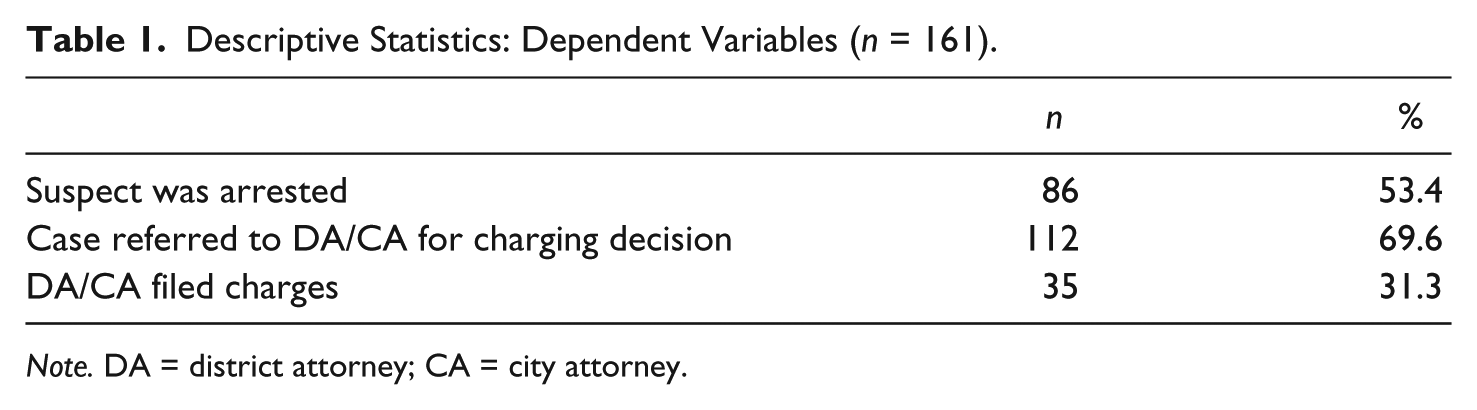
Note. DA = district attorney; CA = city attorney.
Independent Variables: Measures of Focal Concerns
Given the paucity of research investigating IPSA case processing, this study uses independent variables which prior research has identified as relevant to case processing in sexual assault and/or IPV cases. This study departs from previous research, however, by identifying—a priori—the variables that measure key components of the focal concerns perspective: blameworthiness, protection of the community, and practical constraints and organizational consequences. In what follows, we explain how we operationalize these concepts and we discuss the descriptive statistics (see Table 2) for the variables of interest. First, we discuss measures of suspect blameworthiness, followed by measures that tap into protection of the community and practical constraints/organizational consequences. Finally, we describe the extralegal factors that serve as indicators of the perceptual shorthand used by police and prosecutors in making decisions in these types of cases.
Descriptive Statistics: Independent Variables (n = 161).

Suspect blameworthiness
The first focal concern, blameworthiness, is associated with the culpability of the suspect and the seriousness of the crime. We use two indicators of suspect culpability and three measures of crime seriousness. Culpability is commonly measured using indicators of criminal history (Hartley et al., 2007; Ulmer et al., 2007). Therefore, the first two indicators are whether the suspect had previously sexually assaulted or physically assaulted the victim. For both variables, cases are coded 1 if the suspect previously assaulted the victim. In this sample, approximately one third (27.3%, n = 44) of the suspects previously sexually assaulted the victim and almost one half (45.3%, n = 73) previously physically assaulted the victim. The three measures of crime seriousness include whether the victim suffered some type of collateral injury (1 = injury; 0 = no injury), whether the suspect physically as well as sexually assaulted the victim at the time of the incident (1 = yes; 0 = no), and whether the victim verbally or physically resisted (resisted = 1; no resistance = 0). Resistance is used as a measure of crime seriousness due to its historical link to aggravated rape (Wrobleski & Hess, 1986) and the argument that aggravated rape is considered “real rape” by criminal justice actors (Estrich, 1987). In this sample, more than half of the victims suffered some type of collateral injury (58.4%, n = 94). This makes sense, as approximately three fourths (76.4%, n = 123) of the suspects in this sample physically as well as sexually assaulted the victim at the time of the incident. Victims resisted physically and/or verbally in more than three quarters of the cases (82.6%, n = 133).
Protection of the community
A desire to protect the community from dangerous repeat offenders is the second focal concern. We use the following variable to measure this focal concern: whether the suspect used a weapon at the time of the assault (weapon used/threatened = 1; no weapon used/threatened = 0). Suspect weapon use is included in the model to tap into suspect dangerousness (see Hartley et al., 2007). In this sample, 15 (9.3%) suspects used some type of weapon during the assault. Research suggests that suspect dangerousness—which affects community protection—is a factor influencing decision making (Schlesinger, 2005; Steffensmeier et al., 1998).
Practical constraints and organizational consequences
The final focal concern includes practical constraints and organizational consequences, which we conceptualize as factors that enhance the likelihood of successful prosecution of the suspect. We argue that both police and prosecutors are concerned about the likelihood of successful prosecution and that this emphasis on convictability leads to a focus on evidentiary strength and victim credibility. We use five variables to tap into this construct. The first indicator of the strength of evidence in the case includes whether there was any type of physical evidence collected from the scene of the incident or from the victim or suspect. A composite measure of evidence was included that was coded 1 if any of the following types of evidence were collected: clothing, semen, skin, fingerprints, blood, hair, or bedding. In this sample, evidence was collected in 67 cases (41.6%). We also include variables that measure whether the suspect and victim were willing to participate in the investigation, including whether the suspect was interviewed by the police (yes = 1; no = 0), and whether the victim was willing to cooperate in the prosecution of the suspect (yes = 1; no = 0). Suspects were interviewed in approximately half of the cases (55.3%, n = 89) and victims cooperated with the investigation in 107 cases (66.5%). A dichotomous measure was also included that indicated whether there were witnesses to the incident (witnesses = 1; no witnesses = 0). One or more witnesses were present in one third of the cases in this sample (33.5%, n = 54). Whether the victim made a prompt report was included; this was defined as a report within 1 hr of the incident (1 hr = 1; more than 1 hr = 0). Victims made prompt reports in approximately one fourth of the cases in this sample (24.8%, n = 40). Finally, whether the suspect and victim have children is included to signify offender characteristics that are linked to practicality, a concept considered when assessing practical constraints and organizational consequences (Hartley et al., 2007). Steffensmeier (1980) has argued that parents sent to prison will put additional burdens on the system in the form of resource draining. Incarcerating parents may result in children being placed in juvenile protective agencies (Hartley et al., 2007) or heavier reliance on government assistance by the partner of the incarcerated. Almost half of the intimate partners in this sample have children (41.0%, n = 66). These variables signify the degree to which the system can operate efficiently and ensure certainty of conviction, two primary foci of practical constraints (Ulmer et al., 2007). For example, the likelihood of conviction is enhanced when victims make prompt reports and are willing to cooperate, when evidence has been collected, and when there are witnesses who can corroborate the victim’s allegations.
Perceptual shorthand
The focal concerns perspective maintains that criminal justice actors also consider extralegal factors when making decisions. These factors come into play as a result of the limited information that criminal justice officials have about cases. As a result, they develop a perceptual shorthand that encompasses stereotypes about sexual assault and sexual assault victims and suspects. The current study uses the following six variables to measure perceptual shorthand: suspect race, victim race, suspect alcohol use, victim alcohol use, whether the victim had a motive to lie, and the marital status of the suspect and victim. We include suspect and victim race as prior research has argued that the perceptual shorthand used by prosecutors and judges may include the race/ethnicity of the victim and suspect (Steffensmeier et al., 1998). Suspect race was coded 1 if the suspect was non-White and 0 if the suspect was White. Victim race is similarly measured. Research suggests that law enforcement personnel believe that racial minorities are less likely to be rehabilitated and pose a greater threat to the community (Kramer & Steffensmeier, 1993; Spohn & Holleran, 2001; Steffensmeier & Demuth, 2001). In this sample, the majority of victims and suspects are non-White (suspect: 77.6%, n = 125; victim: 80.7%, n = 130). Suspect alcohol use was coded 1 if the suspect consumed alcohol before or at the time of the assault (0 = no alcohol use). Victim alcohol use is similarly measured. Prior research has identified substance use as a common extralegal factor influencing criminal justice decision making in sexual assault and IPV cases (Campbell, 1998; Campbell et al., 2009; Lally & DeMaris, 2012; Schmidt & Hochstedler Steury, 1989; Spohn & Holleran, 2001). In this sample, 18 victims (11.2%) and 45 suspects (28.0%) consumed alcohol before or at the time of the incident. Cases were coded as 1 if the victim had a motive to lie (e.g., missing curfew, covering up an affair, a child custody dispute, trying to acquire medical attention). Thirty cases (18.6%) involved victims who had a motive to lie. Finally, cases were coded 1 if the suspect and victim were married. Criminal justice personnel may consider the marital status of the individuals involved in efforts to predict cooperation of the victim; victims who are married to suspects might be viewed as less likely to cooperate as the case moves forward, thus decreasing the likelihood of arrest and charging. One fifth of couples in this sample were married.
Results: Correlates of Case Outcomes
The Decision to Arrest
We see about 3-4 [intimate partner rapes] a year but I haven’t seen a credible one in a long time. Again, it’s the victim’s point of view if she felt compelled to have sex with this guy every night for the last 6 years. Why haven’t you done something about it or reported it. I haven’t seen anything worth filing on in a long time. (LAPD Detective)
Some detectives explicitly acknowledged the role of the suspect/victim relationship in shaping detective views on sexual assault. For example, one detective said, “To tell the truth, some of the guys [male sex crime detectives] are kind of cynical about those kinds of cases [dating and intimate partner].”
The results of the analysis of the decision to arrest are presented in Table 3. As these data indicate, arrest decisions in IPSA cases were influenced by one or more indicators of suspect blameworthiness, protection of the community, and practical constraints and organizational consequences. By contrast, none of the extralegal factors had an effect on the likelihood that the suspect would be arrested. First, the decision to arrest was positively related to whether the suspect physically assaulted the victim at the time of incident. Law enforcement officers were almost 4 times more likely to arrest the suspect in cases where the suspect physically as well as sexually assaulted the victim (p = .045). Interviews with Los Angeles detectives confirm the importance of physical assault when making a decision to arrest a suspect. For example, when asked, “What are the ‘decision rules’ that you follow in deciding whether to make an arrest or not?” one detective replied,
Police Decision to Arrest in Intimate Partner Sexual Assault: Results of the Logistic Regression Analysis.
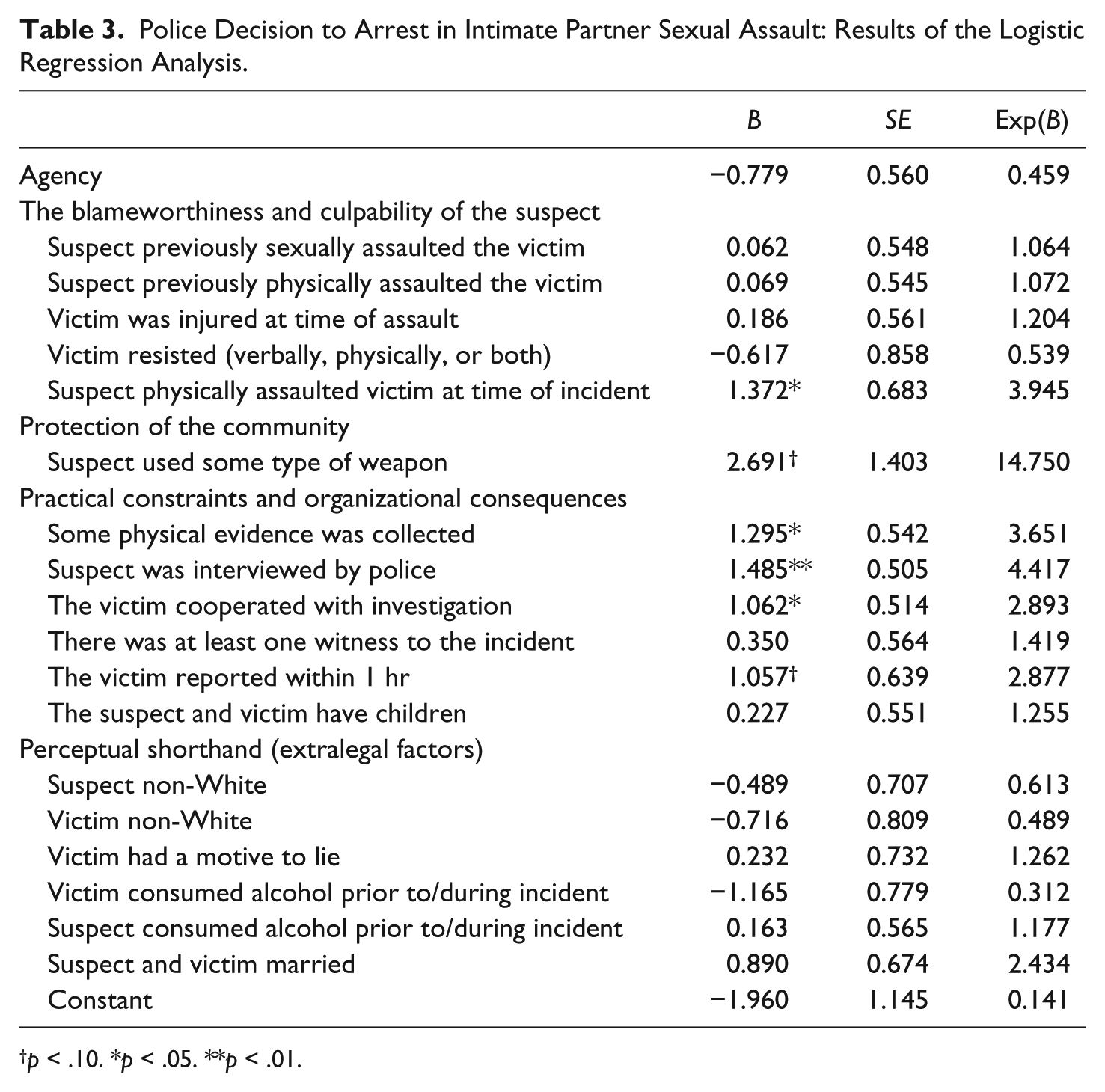
p < .10. *p < .05. **p < .01.
I had a case [involving dating partners], excuse my French, where the victim got the shit beat out of her [i.e., physical assault]. Her face was punched in. She was bruised all over and you could tell she fought him off her. She did not report right away because she did not really know the guy. He walked her home and she said he was a really nice guy. She invited him in and he immediately excused himself to the bathroom and then he exited without a shirt.
Regarding the protection of the community, the police were 14.8 times more likely to arrest the suspect in cases in which the suspect used or threatened to use a weapon (p = .055). One officer noted that making an arrest “take[s] more than suspect id[entification . . . ]—weapon or independent witnesses, something to corroborate victim’s allegations.” Not surprisingly, the likelihood of arrest was affected by four indicators of the likelihood of conviction, which we suggest is directly linked to officials’ assessments of the practical constraints on and consequences of their decisions: whether some type of evidence was collected, whether the suspect was interviewed by the police, whether the victim cooperated with the investigation, and if the victim reported the incident to law enforcement within 1 hr. Interview data support the finding that officers consider the likelihood of conviction in IPSA cases and operate in a downstream orientation (Frohmann, 1991). One detective said, “I would assume that jurors are suspicious because actually I am kind of suspicious about these cases [intimate partner sexual assault] as well”; “Sometimes victims have a good explanation as to why they would talk to someone or see them after he has supposedly raped her. The credibility is out the door.” Another detective said, “Some [jury members] believe that a husband cannot rape his wife . . . ” Overall, regarding practical constraints, the police were 3.7 times more likely to arrest the suspect if some type of physical evidence was collected (p = .017), 4.4 times more likely to arrest if the suspect was interviewed (p = .003), and almost 3 times more likely to arrest in cases in which the victim was cooperating with the investigation (p = .039). Police also were 2.9 times more likely to arrest in cases where the victim reported the incident within 1 hr (p = .098). One detective summed up the importance of these factors:
Every victim is different. But, delayed reporting results in lack of evidence. Good cases are those with a cooperative [victim], witnesses who notifies the police in a timely manner so that the evidence is preserved. [If a] victim does not report right away, [because she is] confused and mulls it over—potential evidence is now gone. Timely reporting makes it a lot easier to investigate.
The Decision to File Charges
It [intimate partner rape] is the most frustrating sexual assault to investigate because of lack of prosecution by the DA’s [district attorney] office. There seems to be a sense of if you have had numerous sexual encounters with someone then you should be expected to have sex with them whether you want to or not. . . . Isn’t rape the most violent of all assaults? If a women acquiesces because children are in the next room and [she] doesn’t want to wake them we as a community look and say we are not going to prosecute it. (LAPD Detective)
The results of the analysis of the decision to file charges in IPSA cases are presented in Table 4. As these data indicate, prosecution decisions were based on measures of community protection and practical constraints and organizational consequences. By contrast, none of the variables measuring suspect blameworthiness/culpability and none of the extralegal factors affected the decision to file charges or not. Prosecutors were 6 times more likely to file charges in cases in which the suspect used or threatened to use a weapon (p = .044). Not surprisingly, the victim’s willingness to cooperate with the investigation of the crime had a significant effect on the likelihood of charging. The prosecutor was nearly 13 times more likely to file charges in cases where the victim was cooperative (p = .026).
Prosecutor Decision to File Charges in Intimate Partner Sexual Assault: Results of the Logistic Regression Analysis.
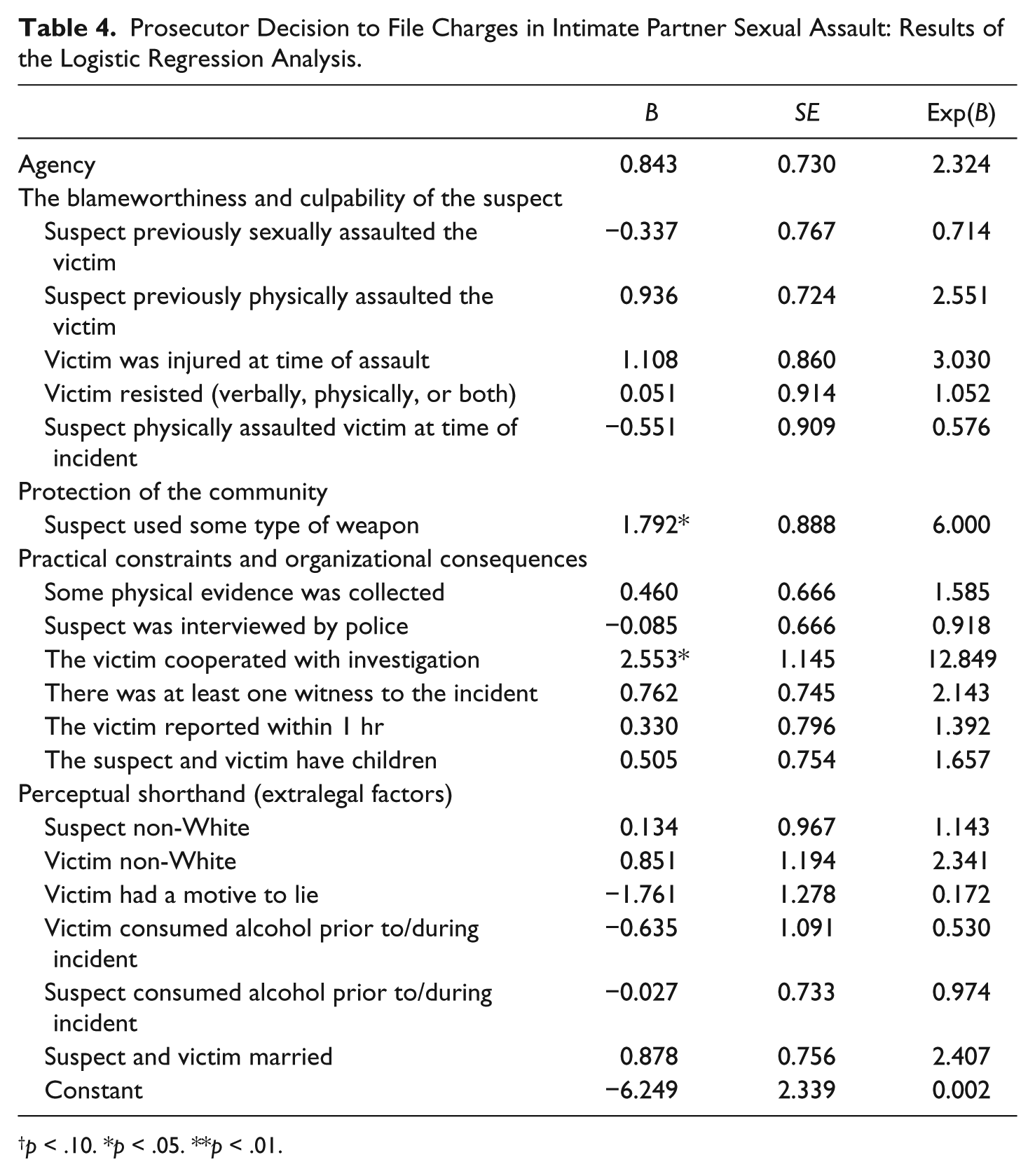
p < .10. *p < .05. **p < .01.
Qualitative information from the charge evaluation sheets confirms the importance of victim cooperation in cases involving intimate partners. According to one district attorney,
Defendant and victim are cohabitants with two children in common. Defendant awakens victim while sleeping, calls her names and placed his finger in her vagina. Victim tells defendant to stop and he does so. She later calls the police, but hangs up before reporting. Officers respond to call and victim tells them she called because she was angry over the defendant taking such an action without her permission. She confirms that defendant immediately stopped when told to do so. Victim contacted by IO says she will not cooperate [emphasis added] with prosecution and will not come to DA’s office for interview.
It should be noted that, although victim cooperation was found to predict the likelihood of filing charges, qualitative data revealed that some district attorneys do not rely on victim cooperation when making filing decisions. One district attorney noted in a charge evaluation sheet:
Defendant and victim married 3 years and separating. Defendant choked, hits and rapes victim. She refuses to cooperate. He has two other similar assaults on her: one in 2005, one in . . . 2008. If [investigating officer] gets photo [identification] of suspect, I believe PC 273.5 should be filed as well as the two separate assaults which occurred in Hawthorne.
In this case, the district attorney filed two counts of domestic violence and one count of assault with a deadly weapon after the investigating officer completed the follow-up investigation. This case conflicts with the quantitative findings regarding victim cooperation but supports findings regarding weapon use and charging decisions.
Discussion
This study addressed a gap in the sexual assault and IPV case processing research while testing the focal concerns perspective. We also address limitations to provide an analytic strategy specific to IPSA, further expanding the perspective’s theoretical relevance and generalizability. As the majority of the work on focal concerns uses very few variables to assess the effect of complex concepts, the current study attempted to overcome methodological problems by including variables specific to IPSA criminal justice decision making. As noted above, this study responded to the recent call for research examining the criminal justice system response to IPSA (Spohn & Tellis, 2012a). This study contributes to prior research on criminal justice decision making in several important ways. First, there are no quantitative studies that solely focus on law enforcement and prosecutorial decision making in IPSA cases. Second, this study provides an application of a general perspective to a unique crime using relevant, crime-specific measures of focal concerns. Third, the current study focuses on two stages of criminal justice decision making, which in and of itself is an important contribution given most tests of the focal concerns perspective focus exclusively on court actors. Numerous legal and extralegal variables were collected on each case. It is clear from this study that law enforcement and prosecutors consider various factors when making the decision to arrest and the initial decision to file charges in IPSA cases. These findings shed important light on the complex nature of arrest and charging decisions. Accordingly, given the results presented here, three issues warrant further discussion.
First, this study suggests that law enforcement officers consider each focal concern: suspect blameworthiness, protection of the community, and practical constraints and organizational consequences when making arrest decisions in IPSA cases. They do not, however, use perceptual shorthand when making arrest decisions in IPSA cases. These findings can be interpreted in two ways. First, they provide support for the focal concerns perspective. Second, these findings contradict previous studies of sexual assault and IPV case processing research which suggests that law enforcement consider extralegal factors (i.e., perceptual shorthand) when making arrest decisions (Alderden & Ullman, 2012b; Bouffard, 2000; Feder, 1998; LaFree, 1981; Lally & DeMaris, 2012). Like arrest decisions, prosecutorial decisions do not seem to be influenced by extralegal factors. This finding contradicts previous sexual assault and IPV case processing research which indicates that prosecutors consider extralegal factors when making charging decisions (Campbell, 1998; Campbell et al., 2009; Spohn & Holleran, 2001). These competing results suggest the need to (a) situate IPSA case processing research in the focal concerns perspective and (b) replicate this study to determine the factors that influence legal decisions at all stages of IPSA case processing. It seems likely that the same factors influencing sexual assault and IPV case processing would influence IPSA decision making. This study, however, is the first to focus on IPSA; therefore, replication is required before firm conclusions can be reached.
Second, this study found partial support for the focal concerns perspective at the prosecutorial level. Factors found to be relevant in this sample include victim cooperation (practical constraints) and suspect weapon use (community protection). Due to the salience of victim cooperation in the prosecutor’s decision to file charges, it is important to examine the circumstances that surround refusal to cooperate (see Kaiser, O’Neal, & Spohn, 2017, for a recent study investigating victim cooperation in sexual assault cases). In this sample, victims most often reported refusing to prosecute because they were not interested in continuing with the criminal justice process, followed by the victim blaming herself for the assault or making excuses for the suspect’s behavior. Future research should examine the reasons victims refuse to cooperate (specifically in IPSA cases). This effort may help to inform/guide law enforcement and prosecutors to develop protocol to retain victim cooperation at all stages of case processing.
A third key conclusion of this research study relates to policies and practices when working with victims of sexual assault, primarily perceptions of victim/suspect relationships and defining “real rape.” The detective interviews, coupled with prior research indicating that victims who are assaulted by acquaintances are more likely to stop cooperating with the criminal justice system (Holmstrom & Burgess, 1978), suggest that law enforcement officers need to treat non-stranger rape as real rape. Doing so may facilitate victim cooperation, a factor found to influence both of the stages of criminal justice decision making examined in this study (see also Spohn, Beichner, & Davis-Frenzel, 2001). Although criminal justice officials cannot prevent the initial trauma caused by sexual victimization, they can prevent the “second rape” by treating victims with compassion and by not raising unreasonable questions about their credibility. Treating victims in this manner will not only facilitate victim healing, but it may also facilitate victim cooperation in these cases. Undoubtedly, sexual assault victims will be more willing to cooperate with legal actors if they feel they are being treated with respect.
The above-mentioned contributions notwithstanding, this study is not without limitations. It is important to note that the present study relied on a small number of IPSA cases that were reported to two agencies in the same location; therefore, it is exploratory in nature. Also, for this reason, these cases are not necessarily representative of all IPSA incidents reported in the same time frame, limiting generalizability. These findings do not represent IPSA that did not come to the attention of the legal system. A final limitation of the present study includes the inability to verify the accuracy of the information in each case file. Although the LAPD and LASD provided redacted copies of each case, it cannot be known if the information provided by the investigating officer accurately represents the victim’s, suspect’s, and witnesses’ experiences.
In conclusion, this article highlights the complexity of the criminal justice system at two stages of the decision-making process, the law enforcement and prosecutorial levels. This research works to further conceptualize the focal concerns perspective. Overall, support was found for the focal concerns perspective as a whole; however, findings suggest the need for future research. There are numerous possible paths for future research based on the findings of the present study. First, the ideas surrounding all three focal concerns are underdeveloped (Hartley et al., 2007). Therefore, efforts must be made to further conceptualize measures of blameworthiness, community protection, and practical constraints and test the perspective using different data sources. Expanding the conceptualization of the variables used to measure focal concerns will enhance the perspective’s explanatory power and extend generalizability. Second, subsequent replication studies need to examine which factors are entering into the arrest and charging decision-making processes in IPSA cases. The current study has provided the groundwork for such research, but replication is necessary to move closer to making solid causal claims. Third, comparative studies should focus on how IPSA case processing might differ from IPV and sexual assault case processing and why such differences occur (e.g., relationship between the suspect and offender). This will provide a supplement to the existing literature in two areas: case processing and the limited—but growing—body of IPSA literature.
Footnotes
Acknowledgements
The authors wish to express their gratitude to the Los Angeles Police Department and the Los Angeles County Sherriff’s Department, both of which provided the redacted case files used for this study.
Declaration of Conflicting Interests
The author(s) declared no potential conflicts of interest with respect to the research, authorship, and/or publication of this article.
Funding
The author(s) disclosed receipt of the following financial support for the research, authorship, and/or publication of this article: This project was supported by the National Institute of Justice, Office of Justice Programs, U.S. Department of Justice [2009-WG-BX-009].