




Abstract
This study examined the phenomenon of sibling violence in Singapore. The underlying mechanisms through which maternal authoritativeness and maladaptive coping influenced psychological adjustment following sibling violence were also investigated. Questionnaires were administered to 287 female and 128 male Singaporean college students between the ages of 18 to 27. Results showed that lifetime and past-year prevalence estimates of sibling violence in college students in Singapore were 89.9% and 62.0%, respectively. Lifetime psychological sibling violence involvement and past-year sibling violence involvement (both physical and psychological) were significantly related to maladaptive coping and overall psychological adjustment; lifetime sibling violence involvement was significantly related to maternal authoritativeness, anxiety, and depression only. Maladaptive coping was found to be a significant mediator between past-year physical and psychological sibling violence involvement and two measures of psychological adjustment, anxiety and depression. Maternal authoritativeness functioned as a moderator only for the relationship between past-year psychological sibling violence exposure and psychological adjustment. At low but not high levels of maternal authoritativeness, past-year psychological violence involvement was significantly related to higher levels of anxiety and depression, and lower levels of self-esteem. These findings show that sibling violence is a pervasive problem in Asian countries as well, such as in Singapore. There is a need to educate both the public and the relevant authorities so that steps can be taken to protect those who have experienced or are at risk of experiencing such violence. Through elucidating the role of maternal authoritativeness and maladaptive coping, the present study also suggests new avenues for interventions to reduce the adverse effects of sibling violence. Limitations and future directions are also discussed.
Introduction
The dark side of sibling relationships is the existence of sibling violence, which is in fact the most common type of familial violence (Button & Gealt, 2010; Kiselica & Morrill-Richards, 2007; Lepistö et al., 2011). Sibling violence can be categorized into physical, psychological or sexual violence. While sibling sexual violence is gaining more attention in research (Hardy, 2001), less is known about physical or psychological sibling violence. Existing research in the United States and Europe has found high prevalence estimates of about 75% for physical and psychological violence (Hardy et al., 2010; Kettrey & Emery, 2006; Relva et al., 2013), with a slightly higher rate of psychological violence as compared with physical violence (Mackey et al., 2010; Wiehe, 1997). These rates are startling, especially when compared with the prevalence estimates for other forms of familial violence such as child abuse (9.1%; U.S. Department of Health and Human Services, Administration for Children and Families, 2016), or even intimate partner violence (IPV; 30%; Devries et al., 2013).
Despite its pervasiveness, sibling violence continues to be overlooked (Button & Gealt, 2010; Wiehe, 1997). Perhaps this oversight is understandable, as the dominant discourse in society downplays the seriousness of sibling violence (Kettrey & Emery, 2006). Violence and conflict between siblings are often viewed as a part of the normative development of children (Khan & Rogers, 2015; Kiselica & Morrill-Richards, 2007; Reese-Weber, 2008; Wiehe, 1997), resulting in a disregard of both the frequency and severity of sibling violence. Even those in a prime position to intervene, such as parents themselves, tend to overlook sibling violence (Wiehe, 1997; Wolke et al., 2015). This may be due to the belief that sibling violence is harmless, or even beneficial for development (Krienert & Walsh, 2011). However, this is not true.
Contrary to public perception, current literature has shown that sibling violence occurring in the past year was associated with poorer psychological adjustment for both perpetrators and victims, regardless of the severity or the number of types of violence experienced (Tucker et al., 2013). Longitudinal studies have also corroborated this association and strongly suggested a causal relationship—it is likely that sibling violence negatively affects one’s current and future psychological adjustment (Bowes et al., 2014; Buist et al., 2014; Wolke et al., 2015). Indeed, research has shown that high levels of depression and anxiety were found even in young adults with a history of sibling violence (Buist & Vermande, 2014; Mackey et al., 2010; Mathis & Mueller, 2015). A dose–response relationship between sibling violence and later psychological functioning was also identified, such that greater exposure to sibling violence was associated with a higher likelihood of mental health problems (Bowes et al., 2014; Wolke et al., 2015).
Violence between siblings tends to be mutual (Hardy et al., 2010; Kettrey & Emery, 2006; Kiselica & Morrill-Richards, 2007), and this only compounds the problem. Siblings who were both perpetrators and victims were found to be at a higher risk of behavioral problems as compared with those who were either only victims (Wolke et al., 2015) or bullies (Wolke & Skew, 2011). Yet, mutual sibling violence tends not to be viewed as problematic behavior, but as fights or conflicts (Perkins & Shadik, 2018) which are normal in sibling relationships (Eriksen & Jensen, 2006). If research continually shows that sibling violence contributes to adverse outcomes, it is hard to make a claim that such a phenomenon is developmentally normal. Thus, if the specific pathways through which sibling violence leads to poorer psychological functioning can be elucidated, perhaps it would be possible to alleviate the detrimental outcomes of sibling violence. The present study thus aimed to identify the underlying factors or mechanisms that may influence psychological adjustment in the context of sibling violence. In particular, the roles of maladaptive coping of siblings and maternal parenting styles were explored.
Furthermore, majority of the studies on sibling violence have been conducted with Western populations. This only highlights the gross lack of knowledge regarding sibling violence in Asian countries. As such, this study also aimed to gain a better understanding of the occurrence of sibling violence in Singapore, an Asian country.
Coping Styles
Experiences of sibling violence are inherently stressful. Unfortunately, violence at home tends to be associated with maladaptive coping (Flannery et al., 1998; Wadsworth, 2015). While coping is a largely contextual process (Folkman & Moskowitz, 2004), research has shown that maladaptive coping in the context of familial violence includes avoidance coping, where individuals purposefully withdraw from stressors, self-blame, denial, and disengagement. These forms of coping tend to be associated with poorer psychological outcomes. For instance, research regarding other forms of recurrent familial violence such as IPV and child sexual abuse showed that self-blame and disengagement were significant predictors of depressive symptoms and low self-esteem (Lewis et al., 2006; O’Neill & Kerig, 2000; Reich et al., 2015). Avoidance coping and denial were also associated with higher levels of depressive symptoms (Flicker et al., 2012; Waldrop & Resick, 2004). Coping has thus consistently been shown to contribute toward one’s later psychological adjustment in the face of sibling violence, but little has actually been done to elucidate the specific role that it plays.
Based on the existing literature on family violence, maladaptive coping has mostly been pigeonholed into the role of a mediator. For instance, avoidance coping and self-blame have been identified as mediators in different populations exposed to violence, such as child abuse survivors (Kim et al., 2008; Swannell et al., 2012; Wright, 2007). In these situations, it is postulated that the appraisals and emotions elicited by these violent experiences influence coping processes, later leading to changes in emotions which affects psychological adjustment (Folkman & Lazarus, 1988). Others have suggested a moderator effect, where exposure to violence was significantly associated with poorer psychological functioning, but only at high levels of maladaptive coping. For example, self-blame moderated the relationship between physical violence and later psychological adjustment in IPV (O’Neill & Kerig, 2000; Reich et al., 2015).
Parenting Styles
Family plays an important role in children’s lives as one of their greatest sources of influence. In particular, the manner through which parents interact with their children, or their parenting style, have been found to influence a child’s psychological and social functioning. An authoritative parenting style refers to high parental affection and warmth, while maintaining high control via the use of both reason and power (Baumrind, 1978).
Research has shown that maternal authoritative parenting is generally associated with better psychological adjustment, such as fewer internalizing symptoms in both childhood (Milevsky et al., 2007) and adolescence (Betts et al., 2009; Lamborn et al., 1991). Other researchers have broken down authoritative parenting into dimensions of warmth and acceptance, and found that higher levels of maternal acceptance predicted lower levels of depression and anxiety in young adults (Jones et al., 2000). Similar associations were also replicated in different populations (Bowie et al., 2013; Li et al., 2010; Piko & Balázs, 2012), suggesting that this form of parenting is beneficial across different cultures.
Parenting styles have been associated with sibling relationship quality, where authoritative parenting was related to sibling warmth and support (Milevsky et al., 2011; Yu & Gamble, 2008). However, despite the high prevalence of sibling violence, the role of authoritative parenting in the context of sibling violence specifically has not been examined. In the face of other forms of violence and conflict, authoritative parenting was associated with better functioning (Greeson et al., 2014; Rossman & Rea, 2005). This is corroborated by other findings that maternal warmth was associated with resilience to bullying victimization in school, resulting in lower levels of both externalizing and internalizing problems (Bowes et al., 2010). These associations may be due to the fact that authoritative parenting is associated with higher psychosocial competence of children (Lamborn et al., 1991), which is in turn related to resilience (Masten, 2001). Thus, children with authoritative parents may be better able to cope with stress, being less affected emotionally by the violence that they see or experience. When put into the context of sibling violence, individuals who experience maternal authoritative parenting may be better able to cope with the experience of violence, alleviating the adverse outcomes of sibling violence.
Purposes and Hypothesis of the Present Study
Singapore is a highly urbanized island country with six million people, with almost 80% being ethnic Chinese. It is essentially an Asian country with features of collectivism, interdependence, and familism (House et al., 2004; Realo et al., 2008). Research conducted in Singapore showed that mothers are warm though still controlling (Stright & Yeo, 2014), signifying that an authoritative parenting style is still used. Authoritative parenting also seems to be used more than the other two parenting styles of authoritarian and permissive parenting (Ang, 2006). Hence, it is appropriate to examine the influence of maternal authoritative parenting in Singapore in the context of sibling violence.
Due to the attitudes that Singaporeans hold toward aggression, sibling violence may be more problematic in Singapore as compared with the West. Physical and verbal aggression as forms of child punishment are viewed favorably, and commonly used in Singapore (Ramirez et al., 2007). For example, caning and constant criticism are largely considered as acceptable forms of child discipline (Elliott et al., 1997; Lui et al., 2019). With Singaporean parents’ propensity to use physical and psychological violence as discipline methods, children may eventually learn to use such behaviors to resolve conflicts as a result of social learning (Eriksen & Jensen, 2006). At the same time, this greater tolerance of violence may also contribute to a greater normalization of sibling violence. Singaporean parents may be less likely to view violence as problematic when their children use it during conflicts with each other.
Thus, this study attempts to address the gaps in the literature. The first aim of this study was to investigate the prevalence of sibling violence in a sample of college students in Singapore. Second, this study also aimed to investigate the role of maladaptive coping and maternal authoritativeness in the relationship between involvement in sibling violence and later psychological adjustment. Specific hypotheses of this study included the following:
Hypotheses will be examined for both physical and psychological sibling violence separately.
Method
Participants
Participants were 424 Singaporean college students between the ages of 18 to 27 (M = 21.29), consisting of 290 females and 134 males. All participants had at least one biological sibling with the same biological mother and father, and have lived with this sibling for most of their lives. These participants were either recruited from the university’s Research Participation (RP) program, 1our, a research recruitment website, or through convenience sampling where students within the university were approached and invited to participate. Seventy-four students refused to participate either when approached, or by not completing the online survey, leading to a response rate of 85.1%. Course credits and S$5 cash vouchers were given to participants recruited through the RP program and 1our, respectively.
Procedure
Participants were informed that the study aimed to investigate the relationship between sibling conflict and subsequent psychological functioning, as well as factors that could possibly affect this relationship. No deception was involved, and confidentiality was protected by assigning a participant code to every participant at the earliest possible stage of research. Personal identifiable information was only collected for the purposes of reimbursement where required.
The study questionnaire was administered online and took about 20 min to complete. This questionnaire included measures on sibling violence, psychological adjustment, coping styles, and parenting styles. Demographic data were also collected from participants, such as their age, gender, birth order, and living arrangement.
Measures
Involvement in lifetime and past-year sibling violence
In this study, involvement in sibling violence is defined as being either the perpetrator or the victim of sibling violence. The Conflict Tactics Scales 2 Short Form (CTS2S; Douglas, 2004) was modified slightly and used to assess involvement in lifetime and past-year sibling violence. For example, the statement “I insulted or swore or shouted or yelled at my partner” was modified to “I insulted or swore or shouted or yelled at my sibling.” Involvement in physical and psychological sibling violence were also examined.
Prevalence of physical sibling violence involvement was determined by examining the Physical Assault and Injury subscales, while the Psychological Aggression subscale was used to determine the prevalence of psychological violence. The variables of lifetime and past-year sibling violence involvement were keyed as 1 if the participant had ever perpetrated or experienced either physical or psychological violence in each particular timeframe. Otherwise, they were keyed as 0. While reliability scores cannot be computed for the CTS2S, the CTS2S has good construct validity. It also has good concurrent validity with the Conflict Tactics Scales 2 (Douglas, 2004), which the CTS2S was derived from.
Psychological adjustment
Psychological adjustment was measured through three outcome measures of depression, anxiety, and self-esteem.
Anxiety and depression
Anxiety and depression were measured by the anxiety and depression subscales of the Depression Anxiety Stress Scales-21 (DASS-21), the 21-item shortened form of the DASS (Lovibond & Lovibond, 1995). The DASS-21 is rated on a 4-point Likert-type scale, with “0” as “never” and “3” as “almost always.” Higher scores indicate higher levels of anxiety and depression. Similar to the DASS, the DASS-21 also exhibits good convergent and discriminant validity (e.g., Henry & Crawford, 2005; Lovibond & Lovibond, 1995). High internal reliabilities have been reported, ranging from 0.82 to 0.88 for the subscales (Henry & Crawford, 2005). In this study, Cronbach’s alpha for both the anxiety and depression subscale was comparable to these other studies, at 0.80 and 0.89, respectively.
Self-esteem
The Rosenberg self-esteem scale (RSES; Rosenberg, 1965) measures self-esteem through ten items, on a 4-point Likert-type scale where “0” signifies “strongly disagree” and “3” signifies “strongly agree.” Higher scores signify higher self-esteem. The mean internal reliability of the RSES across 53 countries was high, at 0.81 (Schmitt & Allik, 2005). Likewise, internal reliability in this study was also high at 0.90.
Maladaptive coping
Coping strategies were assessed with the Brief COPE (Carver, 1997). Fourteen different coping strategies were assessed through 28 items measured on a 4-point Likert-type scale, where “1” corresponds to “I haven’t been doing this at all” and “4” corresponds to “I’ve been doing this a lot.” The Brief COPE is both reliable and valid, with an acceptable Cronbach’s alpha ranging from 0.50 to 1.00 for most of the scales (Yusoff et al., 2010). For the present study, an exploratory factor analysis was conducted. Through visualization of the scree plot, a 3-factor solution was obtained, of active coping, social support, and maladaptive coping. Only the maladaptive coping subscale was used in this present study, and the internal reliability of this subscale was 0.84. This factor of maladaptive coping consisted of subscales of avoidance coping (behavioral disengagement, denial, and substance use), along with the subscales of venting and self-blame.
Maternal authoritativeness
The authoritativeness subscale of the Parental Authority Questionnaire (PAQ; Buri, 1991) was used to measure participants’ perception of maternal authoritativeness. Participants were asked to rate 10 statements on a 5-point Likert-type scale with reference to their mother, with “1” signifying “strongly disagree” to “5” signifying “strongly agree.” Higher scores indicated higher levels of maternal authoritativeness. The PAQ demonstrates good discriminant-related and criterion-related validity, and does not seem vulnerable to social desirability response biases (Buri, 1991). Internal reliability was high, ranging from 0.73 to 0.92 for previous studies (e.g., Furnham & Cheng, 2000; Timpano et al., 2010), and was 0.89 for the present study.
Statistical Analyses
Statistical analyses were conducted with SPSS v23 software. Descriptive statistics between major variables were calculated. The associations among sibling violence, maternal authoritativeness, maladaptive coping, and psychological adjustment were determined by bivariate correlations. The mediation effects of maladaptive coping between sibling violence involvement and psychological adjustment were examined by mediation using the PROCESS macro for SPSS by Hayes (2012). The PROCESS macro (Hayes, 2012) was also used to conduct moderation analyses to examine the moderation effects of maternal authoritativeness and maladaptive coping.
Results
Prevalence of Sibling Violence
Prevalence of sibling violence in this sample of college students is shown in Table 1. For all forms of sibling violence, the lifetime prevalence was 89.9% and the past-year prevalence was 62%. Psychological violence was more common than physical violence, whether measured only in the past year or across one’s lifetime. Violence was mutual in 93.7% of siblings who reported lifetime sibling violence involvement.
Lifetime and Past-Year Prevalence of Sibling Violence.
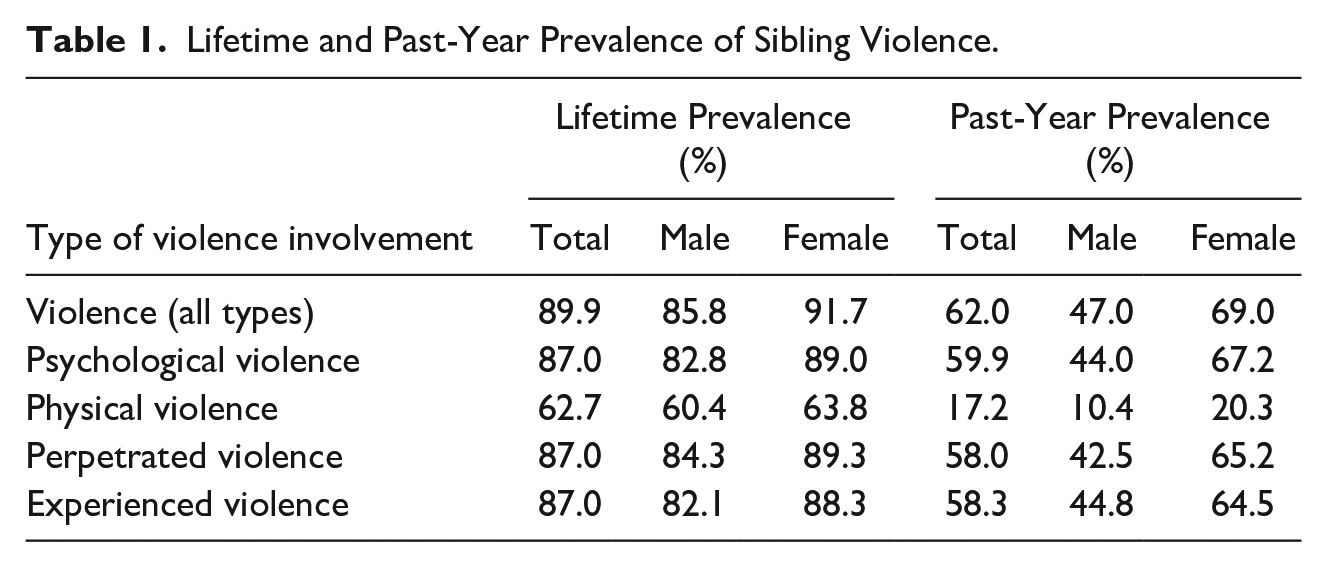
Chi-square tests were performed to determine whether prevalence of sibling violence differed depending on gender. Results showed that females were more likely to be involved in overall past-year violence (χ2 = 18.75, p < .001), past-year psychological violence (χ2 = 20.56, p < .001), and past-year physical violence (χ2 = 6.30, p = .012). Females were also more likely to perpetrate violence in the past year (χ2 = 19.28, p < .001), and to be victimized both in the past-year (χ2 = 14.64, p < .001) and in their lifetime (χ2 = 4.23, p = .04).
Preliminary Analyses
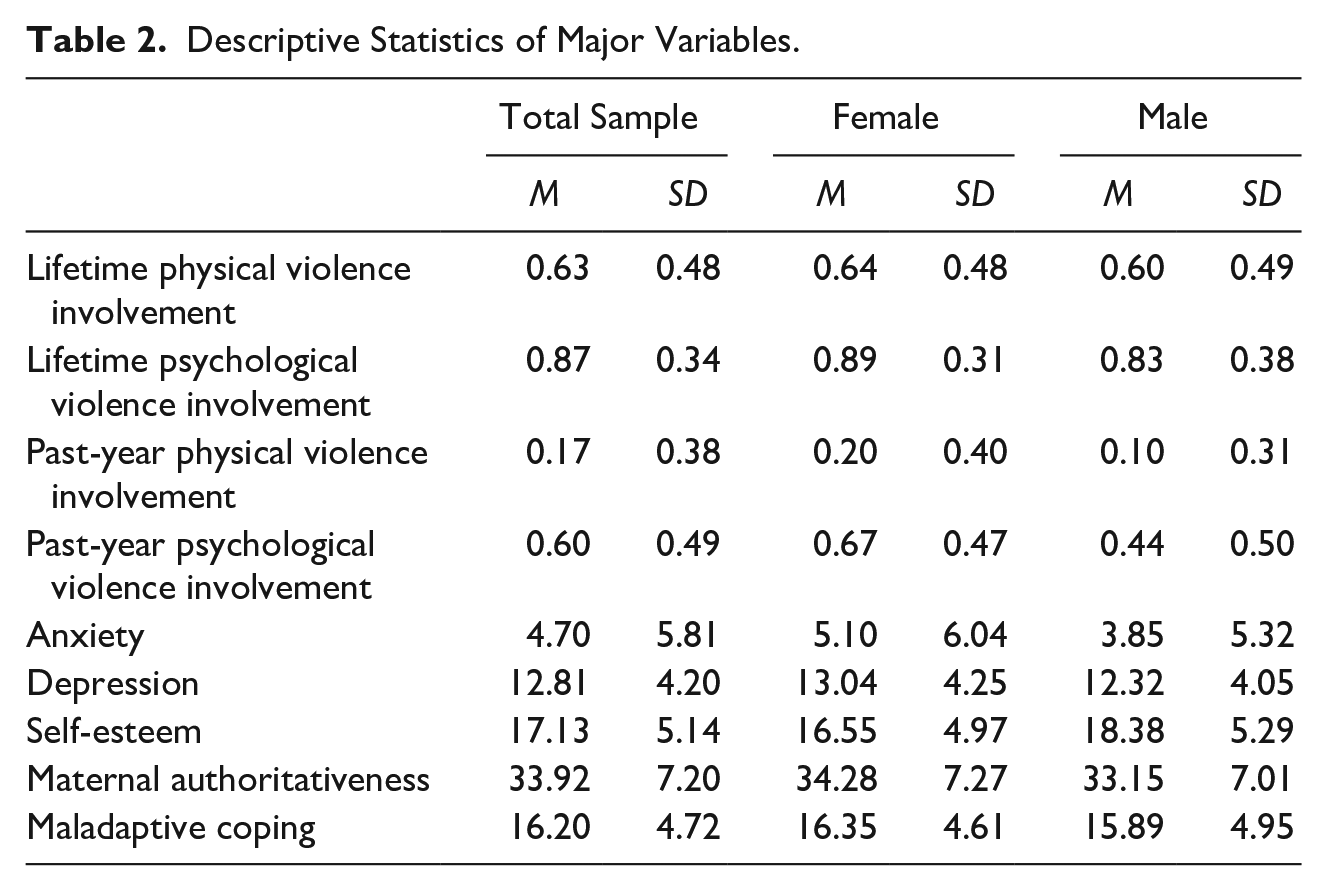
Table 2 shows the descriptive statistics of major variables. The mean scores of anxiety and depression on the DASS-21 in the sample was 4.70 and 5.81, respectively, which falls within the range of scores considered to be normal (Ronk et al., 2013). Independent t tests showed a significant gender difference for involvement in past-year physical violence (t = −2.78, p < .00), past-year psychological violence (t = −4.54, p < .00), anxiety (t = -3.67, p < .00), and self-esteem (t = 3.45, p < .001). As a result, sex was keyed in as a covariate for subsequent mediation and moderation analyses.
Descriptive Statistics of Major Variables.
Bivariate correlation analyses in Table 3 showed that involvement in lifetime physical sibling violence was significantly related to only anxiety, depression, and maternal authoritativeness (all p < .05). Involvement in lifetime psychological sibling violence and past-year sibling violence (both physical and psychological) was significantly related to all variables (all p < .05), except maternal authoritativeness. Both maladaptive coping and maternal authoritativeness were significantly related to psychological adjustment as defined by the three variables of anxiety, depression, and self-esteem (all p < .001). All three outcome variables of psychological adjustment (anxiety, depression, and self-esteem) were related to each other (all p < .001).
Bivariate Correlations Among Major Variables (n = 424).
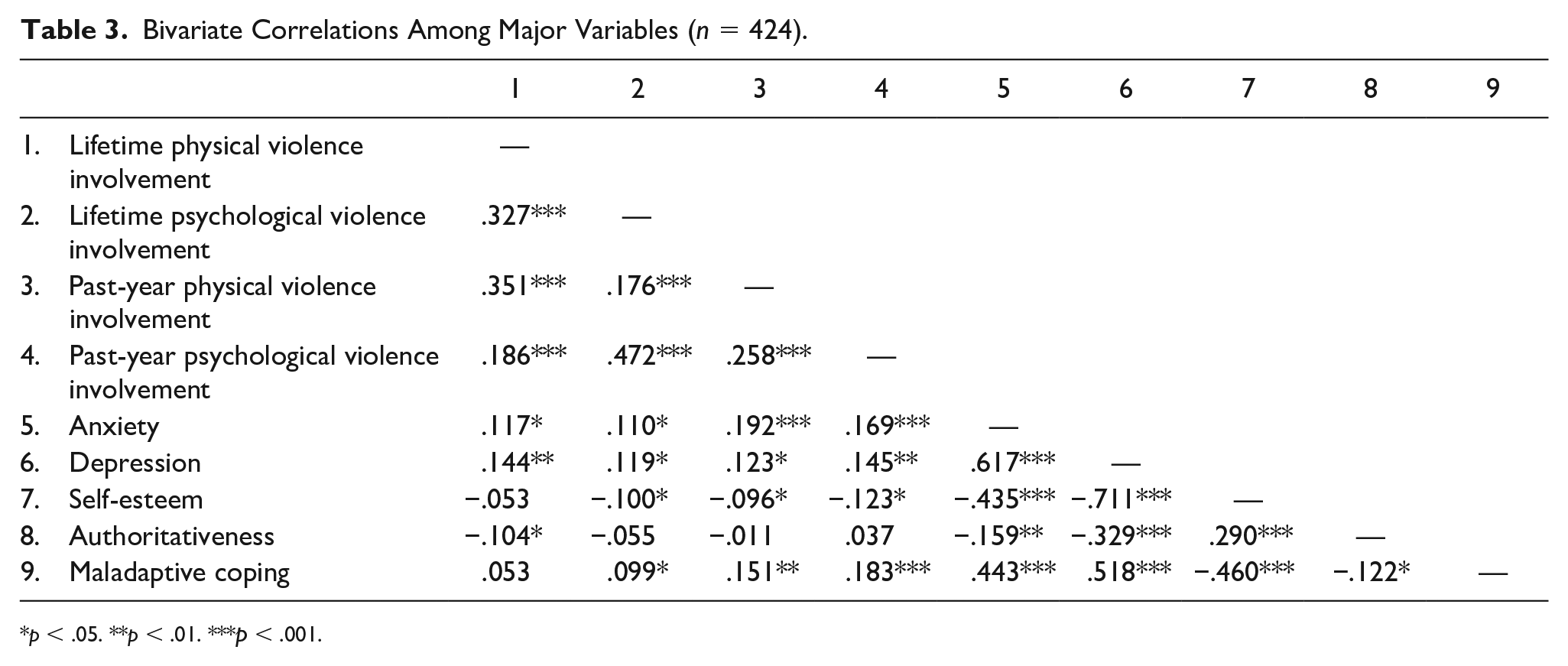
p < .05. **p < .01. ***p < .001.
Mediation Analyses
There was no significant correlation between lifetime physical sibling violence involvement and maladaptive coping; hence, maladaptive coping was an insignificant mediator between lifetime physical sibling violence involvement and psychological adjustment. Maladaptive coping was also an insignificant mediator between lifetime psychological violence involvement and psychological adjustment.
However, maladaptive coping was a significant mediator between past-year physical violence involvement and two measures of psychological adjustment, anxiety and depression. As shown in Figure 1, maladaptive coping partially mediated the relationship of past-year physical violence involvement on anxiety. This indirect effect through maladaptive coping was significant, with an estimated effect of .06, and a 95% CI of 0.02 to 0.11. Maladaptive coping also fully mediated the relationship between past-year physical violence involvement and depression, as shown in Figure 2. This indirect effect of past-year physical violence involvement on depression through maladaptive coping was significant, with an estimated effect of .08, and a 95% CI of 0.03 to 0.13.
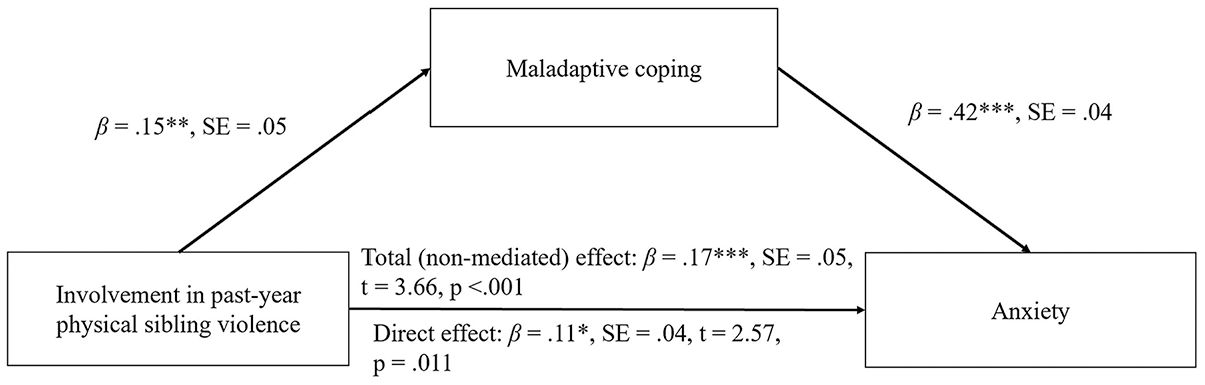
Mediating effect of maladaptive coping (MC) between past-year physical violence involvement (PPhVI) and anxiety.

Mediating effect of maladaptive coping (MC) between past-year physical violence involvement (PPhVI) and depression.
Similarly, maladaptive coping was a significant mediator between past-year psychological violence involvement and psychological adjustment. As shown in Figure 3, maladaptive coping fully mediated the relationship of past-year psychological violence involvement on anxiety. This indirect effect on anxiety through maladaptive coping was significant, with an estimated effect of .08, and a 95% CI of 0.04 to 0.12. Maladaptive coping also fully mediated the relationship between past-year psychological violence involvement and depression as shown in Figure 4. This indirect effect of past-year psychological violence involvement on depression through maladaptive coping was significant, with an estimated effect of .09, and a 95% CI of 0.05 to 0.15.
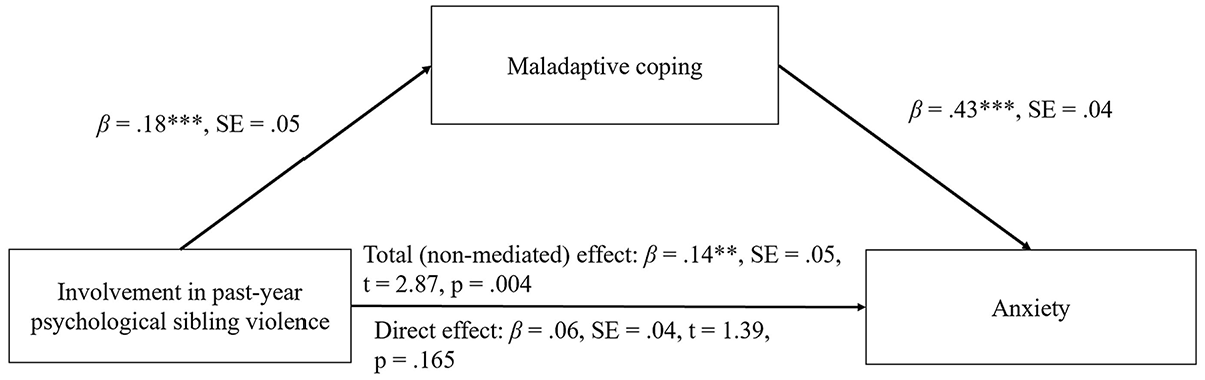
Mediating effect of maladaptive coping (MC) between past-year psychological violence involvement (PPsVI) and anxiety.
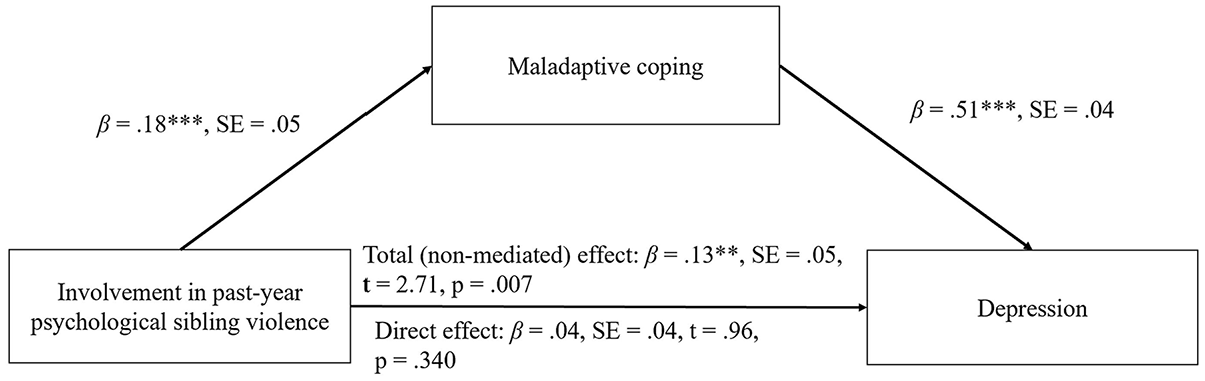
Mediating effect of maladaptive coping (MC) between past-year psychological violence involvement (PPsVI) and depression.
Based on the above findings, maladaptive coping was a significant mediator for only the relationship between past-year sibling violence involvement (both physical and psychological) and psychological adjustment (anxiety and depression only), but not for the relationship between lifetime violence involvement and psychological adjustment.
Moderation Analyses
Maternal authoritativeness was found to be a significant moderator of only the relationship between past-year psychological sibling violence involvement and all three outcomes of anxiety (b = −0.138, 95% CI [−0.235, −0.041], t = −2.79, p = .006), depression (b = −0.156, 95% CI [−0.277, −0.035], t = −2.53, p = .012), and self-esteem (b = 0.197, 95% CI [0.051, 0.342], t = 2.66, p = .008). Post hoc analyses indicated that when maternal authoritativeness was low, past-year psychological violence involvement was significantly associated with high levels of anxiety and depression, and low self-esteem, as shown, respectively, in Figures 5 to 7. However, when levels of maternal authoritativeness were high, there was no significant relationship between past-year psychological violence involvement and psychological adjustment.
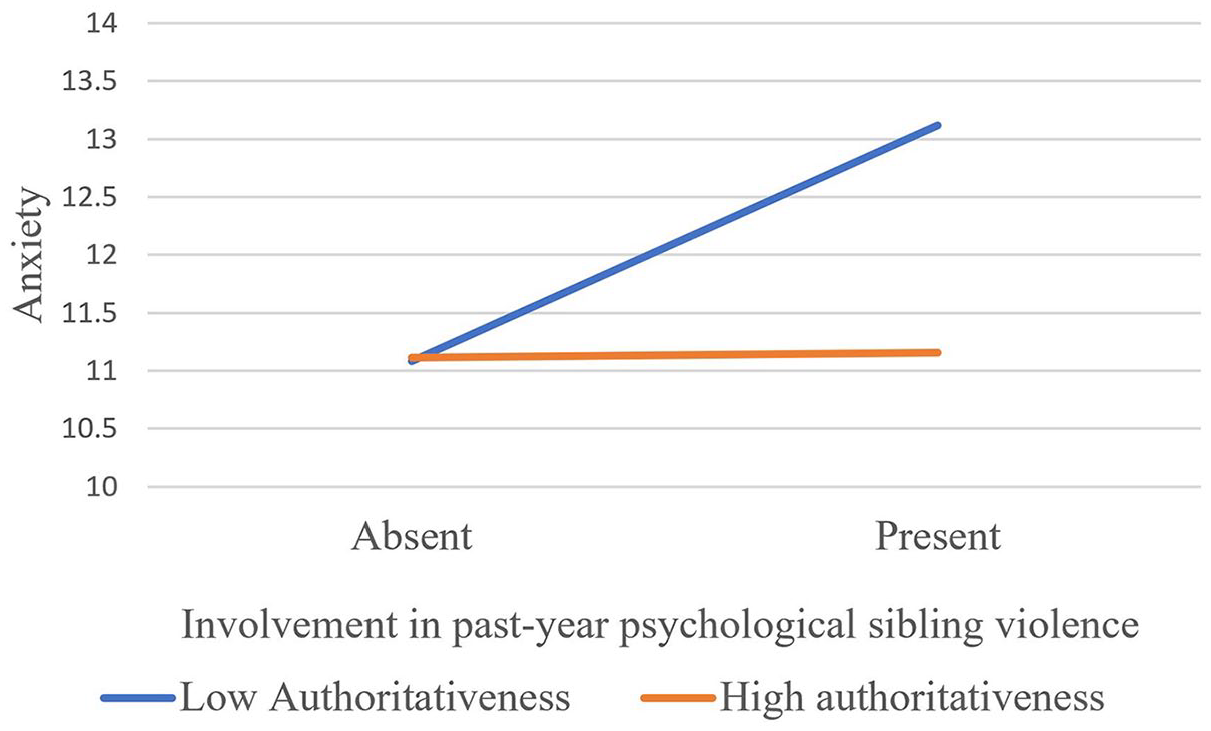
Moderating effect of maternal authoritativeness (MA) on past-year psychological violence involvement (PPsVI) and anxiety.
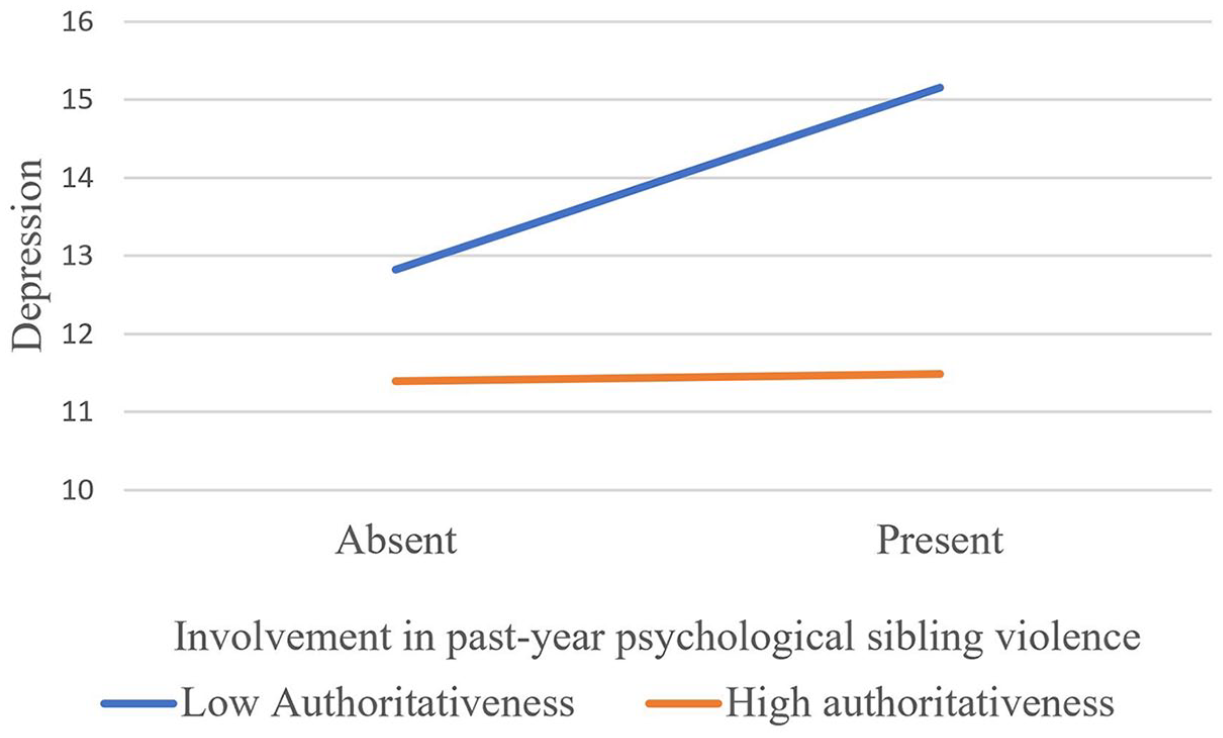
Moderating effect of maternal authoritativeness (MA) on past-year psychological violence involvement (PPsVI) and depression.
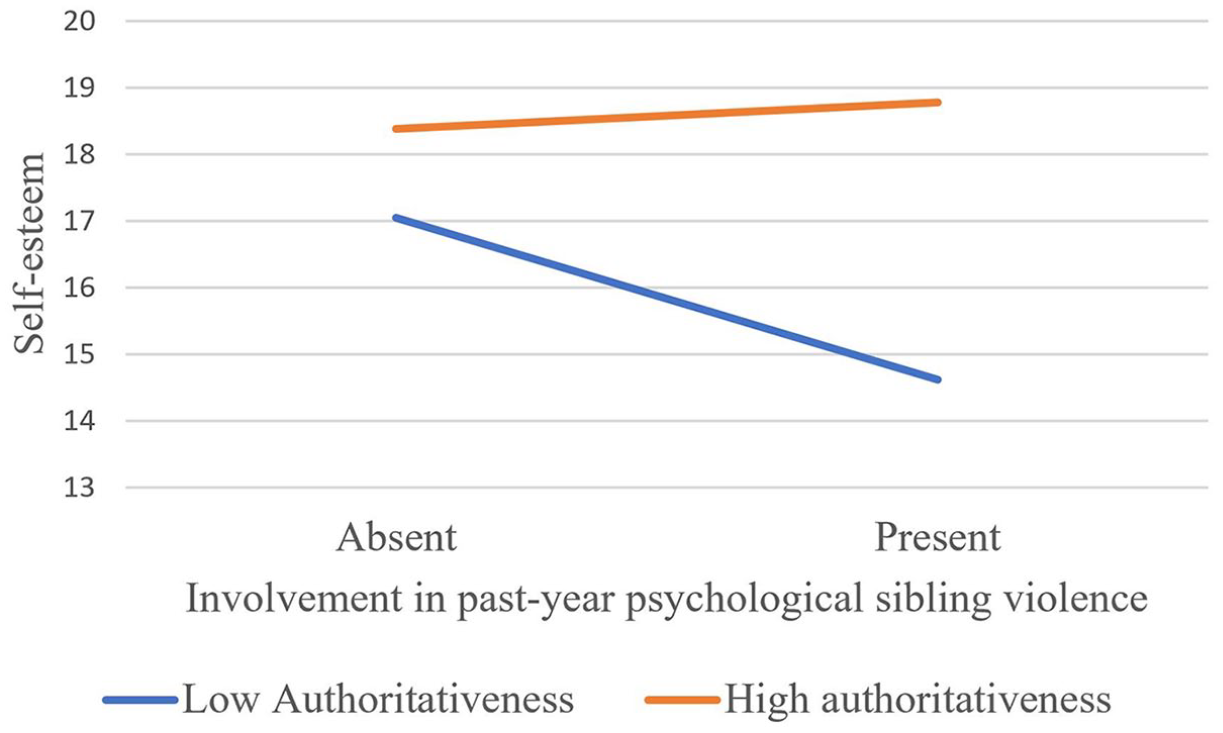
Moderating effect of maternal authoritativeness (MA) on past-year psychological violence involvement (PPsVE) and self-esteem.
Maladaptive coping was not a significant moderator of the relationship between sibling violence involvement and psychological adjustment. Thus, only maternal authoritativeness acted as a moderator between past-year psychological violence involvement and psychological adjustment.
Discussion
Prevalence and Correlates of Sibling Violence
The present results showed that a significant proportion of participants (89.9%) have either experienced or perpetrated sibling violence in their life, with 62.7% being involved in physical sibling violence, and 87% of participants having been involved in psychological sibling violence. These rates are similar to majority of the existing studies conducted in the United States and in the West (e.g., Hardy et al., 2010; Kettrey & Emery, 2006; Khan & Rogers, 2015; Mackey et al., 2010). Sibling violence was also mutual in 93.7% of sibling dyads where violence was present, consistent with data from the United States (Kettrey & Emery, 2006; Mathis & Mueller, 2015).
In the present study, about 60% of college students were still involved in psychological violence, while only 17.2% were still involved in physical violence in the past year. Compared with the lifetime prevalence rate of this sample, there was a significantly lower past-year prevalence rate for physical sibling violence (17.2% vs. 62.7%). This suggests that occurrences of physical violence may decrease faster than psychological violence. Unfortunately, comparison with existing studies cannot be made as none of these studies has examined the sibling violence in college students in the past year.
Interestingly, females generally had a higher rate of sibling violence than males, which is contrary to existing literature conducted on Western populations, especially regarding the higher rates of violence perpetration (Eriksen & Jensen, 2006; Relva et al., 2013). However, this may be a result of different populations examined, as past studies tended to investigate violence during childhood or adolescence while the present study focused on young adulthood. In addition, today’s society tends to accept violence from women, but not from men (Berns, 2001). This form of socialization could have resulted in higher rates of violence for young adult females in this study, leading to higher rates of sibling violence from females as compared with males.
Similar to research in the United States, the present results showed that generally, both lifetime and past-year sibling violence involvement was significantly related to anxiety, depression, and self-esteem (e.g., Bowes et al., 2014; Buist et al., 2014; Buist & Vermande, 2014; Mathis & Mueller, 2015; Wolke et al., 2015). Also as expected, low maternal authoritativeness and maladaptive coping were significantly associated with depression, anxiety, and low self-esteem. However, only lifetime physical violence involvement was not significantly related to low self-esteem. This could possibly be due to the normalization of sibling violence, such that self-esteem was not affected by sibling violence. Still, more research should be conducted in this area, given both the dearth of studies examining self-esteem in relation to sibling violence and the finding that lifetime physical sibling violence involvement was still significantly related to both depression and anxiety.
Maladaptive Coping as a Mediator
The present study showed that maladaptive coping mediated the influence of past-year sibling violence involvement (both physical and psychological) on anxiety and depression. This is consistent with prior studies investigating maladaptive coping in other forms of familial violence, where avoidance coping and self-blame functioned as mediators (Kim et al., 2008; Swannell et al., 2012; Wright, 2007). According to the present findings, involvement in physical and psychological sibling violence in the past year was related to higher levels of maladaptive coping, which is in turn linked to poorer psychological adjustment. This higher utilization of maladaptive coping may be understood through the nature of the sibling relationship. As one cannot choose their siblings as they do with their peers (Wolke et al., 2015), dissolution of the sibling relationship is very unlikely (Reese-Weber, 2008). Hence, when sibling violence occurs, individuals may not feel the need to reconcile with their siblings. Coupled with the ubiquity of sibling violence, seeking help from parents or friends may not solve the problem either if these parental or peer figures believe that violence among siblings is normal. Thus, individuals may just ignore or deny the presence of violence without resolving the underlying issues and conflicts.
However, the study found that maladaptive coping was not a mediator between lifetime violence involvement (both physical and psychological) and psychological adjustment. Again, this may be due to the normalization of sibling violence, such that even young adults themselves may believe aggression to be the norm in sibling relationships (Kettrey & Emery, 2006; Reese-Weber, 2008), especially when they are young. Thus, while sibling violence may cause distress in the short term, it is eventually forgotten as time passes. As a result, maladaptive coping may only be associated with past-year sibling violence involvement, but not with lifetime sibling violence exposure.
Maladaptive Coping as a Moderator
Maladaptive coping was not found to be a significant moderator of involvement in sibling violence on psychological functioning. This highlights the fact that coping is a dynamic, context-dependent process—different stressors may elicit different coping strategies (Folkman & Moskowitz, 2004). Given that sibling violence is one of the most normalized forms of violence, the manner through which individuals cope with sibling violence may differ significantly from how they cope with other forms of stress.
Maternal Authoritativeness as a Moderator
Results indicated that maternal authoritativeness moderated the relationship between past-year sibling violence involvement and psychological adjustment, but only for past-year psychological violence involvement. This is in line with Bowes et al. (2010)’s findings that maternal authoritativeness buffered the psychological effects of bullying victimization. As violence tends to decrease with age (Eriksen & Jensen, 2006), psychological sibling violence occurring in college-aged children may be more alarming, prompting intervention from mothers. Authoritative mothers may thus be more capable of guiding siblings toward conflict resolution through reasoning, being warm yet firm (Baumrind, 1978). Higher levels of authoritativeness would then result in better psychological functioning. On the other hand, physical sibling violence seems to be more accepted and normalized when the individuals are young, but is frowned upon especially when one is already in college. These young adults may be aware of this distinction, and thus keep instances of physical violence to themselves. As a result, if mothers do not know that violence has occurred, there would be no intervention from them, and thus, no effect of maternal authoritativeness.
However, the results also indicated that maternal authoritativeness did not moderate the relationship between lifetime sibling violence involvement (both physical and psychological) and later psychological adjustment. This may be due to that fact that mothers tend not to intervene in response to sibling conflict (Kramer et al., 1999; McHale et al., 2000). However, this ignorance of sibling violence only results in more violence (Kramer et al., 1999), which later contributes to poorer psychological adjustment independent of a mother’s authoritativeness levels. Furthermore, this study was conducted on college students. These students were transitioning from adolescents into young adults, and this transition may bring about changes in the parent–child relationship, such that parenting approaches previously used may change (Nelson et al., 2011). For example, mothers may become more anxious, and thus, more controlling. Hence, this may lead to a semi-temporary increase in authoritativeness that helps with experiences of recent violence, but not if sibling violence occurred further back in the past.
As a whole, the findings on maternal authoritativeness pointed toward parenting styles as an important factor in predicting individuals’ psychological adjustment. While more research is required for a better understanding of the role of parenting styles, what is clear is the fact that parents play an important role especially when sibling violence is involved.
Limitations and Future Directions
The present study was an exploratory study, investigating two psychosocial factors which may be related to the phenomenon of sibling violence. Thus, all the results obtained here were preliminary. Second, certain investigated variables were relatively correlated with each other, such as anxiety and depression or physical and psychological violence. These variables were also used in a number of analyses, without the presence of a control group. Hence, caution is required in the interpretation of these results.
As only college students were surveyed, findings of this study may not generalize to teenagers, adolescents, and young adults who do not attend universities. Future studies should aim to replicate this study in different populations, either across the world or across the lifespan to determine whether the present findings can be generalized. Furthermore, as this current study was a retrospective study, not every instance of sibling violence may be remembered. In addition, this study was based solely on self-report measures, without any objective verification process to validate the responses given. There was also no information on antecedents or factors such as other family violence that may have triggered the sibling violence, nor information on the outcome of sibling violence such as parental responses. Finally, data were not collected for other sources of familial violence, such as interparental conflict. The presence of these other forms of violence may affect the portrayal of sibling violence and parenting style.
Conclusion
Despite the above limitations, results of this study have significant implications. By elucidating the role that maternal authoritativeness and maladaptive coping play, this study contributes to a better understanding of the underlying factors that influence the impact of sibling violence on subsequent psychological functioning. The current study also opens up new avenues of investigation as to how interventions should be conducted to reduce the adverse effects of sibling violence. The present findings showed that parenting style plays an important role in individuals’ psychological adjustment to sibling violence. As such, it is suggested that parents should take a more active role in mediating conflicts between siblings. Rather than allowing siblings to resolve conflicts among themselves most of the time, parents may step in and coach siblings toward conflict resolution, by giving advice or explaining the other party’s feelings. In addition, siblings can be taught to use active coping strategies to resolve disputes and conflicts, such as problem-solving and learning assertive skills.
The pervasiveness and long-term consequences of sibling violence clearly warrant intervention and more research. Both governing authorities and the public should be educated about sibling violence for better decisions and interventions to be made to target this neglected problem. Even if sibling violence may never be eradicated, the goal is to at least reduce the detrimental effects of sibling violence and improve the well-being of individuals.
Footnotes
Declaration of Conflicting Interests
The author(s) declared no potential conflicts of interest with respect to the research, authorship, and/or publication of this article.
Funding
The author(s) received no financial support for the research, authorship, and/or publication of this article.
