




Abstract
According to recent international studies, most of the adolescent victims of physical dating violence remain satisfied and committed toward their abusive relationship, giving way to long-term relationships in which the abuse tends to persist and increase in frequency and severity. The objective of this study is to contribute to the understanding of the stay/leave decision of the adolescent victims of physical dating violence. A structural equation model was estimated to explain the direct and indirect contribution of the level of satisfaction, commitment, justification of the aggression, relationship duration, psychological coercion toward commitment, and the consequences of the abuse on the victims’ decision to continue in the abusive relationship. The sample was 456 Latinx adolescents aged between 12 and 18 years. The results corroborate that the decision to leave a physically abusive dating relationship is a complex phenomenon related to subjective variables such as (a) the level of satisfaction, (b) cognitive evaluation of the aggression (especially in those couples who have been together for a long time), and (c) the exposure to psychological pressures toward commitment. Future preventive strategies must incorporate actions to help the youngest to evaluate in a more objective and adequate way, the real quality of their first relationships, and aim to modify the justification of the aggression, the recognition of the potential harm, and to foster an adequate balance between the benefits and harm of staying in the abusive relationship.
Keywords
Currently, physical dating violence is a widely recognized health problem that has led to a significant number of scientific studies. These studies have been aimed at the analysis of this violence and, especially its prevention throughout different populations and contexts (De La Rue et al., 2017; Edwards & Hinsz, 2014; Levesque et al., 2016; Negash et al., 2016; Sánchez-Jiménez et al., 2018; Vivolo-Kantor et al., 2021).
Despite these efforts, and after more than a decade of study, the results concerning the current prevalence of this phenomenon and the efficacy of long-term intervention programs are still not very encouraging. The studies indicate that although young people are more aware than 10 years ago of the problem and consequently tend to dissolve their abusive relationships (McLeod et al., 2015; Negash et al., 2016; Taylor et al., 2013), many other adolescents continue to maintain them, giving way to long-term relationships in which the attacks tend to persist and increase in frequency and severity (Ybarra et al., 2016). In these cases, it has been proven that the negative consequences for the health of the victims increases, as does the probability of these violent patterns to remain in later relationships during adult life (Foshee & Reyes, 2011; McNaughton et al., 2019; Orpinas et al., 2017; Young & Furman, 2013).
It is surprising and worrying that, according to recent international studies, 80% of the adolescent and young adult victims of physical dating violence express their conviction to remain in their abusive relationships; many of them even intend to marry their current partner (Copp et al., 2015; Edwards et al., 2012; Katz et al., 2012; Soller et al., 2020). In Spain, data provided by the Government Delegation of Gender Violence (2019) follows the same direction and indicates that the youngest victims, i.e., those under 18 years of age, tend to stay in their violent relationships an average of 3.5 years before either reporting the abuse, going to a specialized care service, or breaking up their relationship. Some of these relationships last up to 8 years. Meanwhile in Mexico, according to the Women’s National Institute 66.5% of the adolescents had been victims of some physical aggression in their relationship and only one out of ten of the victims will ever report the abuse (Instituto Nacional de las Mujeres, 2016).
Given these alarming numbers, examining the variables associated with the decision of the young victims to stay or leave their abusive dating relationship is an area of special interest. The unique perception, interpretation, and response of the adolescent victims to their abusive situations may be the key to generating truly effective action and prevention strategies (Pugh et al., 2018).
Recent studies have focused on the stay/leave decision of the victims, in particular the investment model has gained attention for its ability to predict an adult woman’s decision to stay in a violent relationship. These studies state that two of the main factors associated with the stay/leave decision in a violent relationship are (a) the general satisfaction of the victims regarding the quality of the relationship, (b) the commitment the victim has established toward the relationship despite being a victim of different types of aggression, and (c) greater feelings of investment toward the relationship, e.g. the duration of the relationship (Edwards and Hinsz, 2014, Edwards et al., 2018; Helm et al., 2017; Toplu-Demirtaş et al., 2013). There are not, however, many details that shed light on the variables that can explain substantial aspects about the victims’ stay/leave decisions, such as (a) the maintenance of high levels of satisfaction and commitment by the victims of physical violence despite the emotional distress and its physical consequences, (b) the effect of the type, severity, and frequency of the attacks on the stay/leave decision, and (c) the study of this phenomenon in the adolescent population. The stay/leave decision has traditionally been analyzed in the young adult population, to whom other variables such as economic dependency between members, parenting etc. have special relevance when terminating or continuing a relationship (Garrido-Macías et al., 2017; Le et al., 2010; Vanderdrift et al., 2009; Young & Furman, 2013).
Based on the foregoing, the purpose of this study was to contribute to the understanding of the stay/leave decision in an abusive dating relationship despite victimization by physical violence (Katz et al., 2006, 2012; Rhatigan et al., 2006). We took as a basis the existing investment model propositions, the recent findings on the relationship between the level of satisfaction, commitment, intention to leave an abusive relationship, as well as other associated factors identified by prior studies of the development and maintenance of physical aggression in dating relationships (Edwards and Hinsz, 2014, Edwards et al., 2018; Helm et al., 2017).
We included in our analysis the presence of simultaneous psychological abuse in addition to physical aggression due to the documented relationship of psychological abuse to the decrease in levels of satisfaction with relationships (Edwards et al., 2011; Godbout et al., 2016; Toplu-Demirtaş et al., 2013). The victim’s possible cognitive justification of the physical assaults could minimize the perception of danger or harm and therefore, could be related to their willingness to continue with their partners and to maintain high levels of commitment in their relationships (Capaldi et al., 2018; Connolly et al., 2015; Fernandez-Gonzalez et al., 2013; Frías, 2016; Gonzalez-Mendez & Hernandez-Cabrera, 2009). Finally, we analyzed the physical consequences of the assaults, taking into consideration what has been seen in the adult population, that there is a greater probability that victims want to leave their relationships when they are exposed to greater attacks and injuries (Katerndahl et al., 2019; McDonough, 2010).
Method
Participants
The sample was 456 Latinx adolescents of which 204 were Spaniards, and 252 were Mexicans, aged between 12 and 18 years (M = 15.79, SD = 1.19) who reported having been victims of physical aggression in their current relationships. Of the participants, 57.7% were girls and 42.3% boys. The participants were selected from a larger study about the prevalence of dating violence in Spain and Mexico. The original data base comprised a convenience sample of 3593 adolescents recruited from 20 secondary and middle education institutions from the Autonomous Community of Madrid (Spain) and Xalapa city (Veracruz, México). Only the adolescents that were currently dating (37.6%) and were victims of physical aggression (34.3%) were included in the analyses. after invitation to collaborate in the study. Response rate for the original study was over 98% since only 57 adolescents decline the collaboration.
Instruments
A sociodemographic questionnaire was designed ad hoc for the study. This questionnaire was used to collect sociodemographic data and information about the dating relationship. It included the duration of the abusive relationship, the level of satisfaction with the relationship (rated from 1 “not satisfied at all” to 10 “very satisfied”), the level of commitment (rated from 1 “new relationship” up to 4 “engaged”), and the expectations of breaking or continuing in the relationship (What do you expect to happen with the relationship? 0 “we will break up” 1 “we will stay together”).
Modified Conflict Tactics Scale (M-CTS; Cascardi et al., 1999). Spanish Validation (Muñoz-Rivas et al., 2007). A Likert-type scale with five response options from: 0 “never” to 4 “very often,” was used to measure the frequency of verbal (5 items) and physical victimization (10 items). The scale obtained satisfactory reliability scores with Cronbach´s alpha coefficients of α = 0.71, 95% CI [0.68–0.73] for verbal victimization and α = 0.76, 95% CI [0.73–0.79] for physical victimization.
Questionnaire on the consequences and justification for the physical aggression (Fernandez-Gonzalez et al., 2013). After answering the MCTS, the participants were asked through a multiple choice question with an opened-ended final option to indicate the reasons that had justified the physical aggression (“Has your girlfriend/boyfriend ever caused you any physical harm?” Check all that apply”), as well as the physical consequences of the attacks (“For which reasons has your boyfriend/girlfriend grabbed, pushed, slapped, or kicked you? Check all that apply”). Answer options about the justification included: he/she was jealous, he/she hit me because I hit him/her first, she/he was angry and hit me first, he/she was nervous, we were joking/playing, and other reasons. While answer options for the consequences included: minor cuts or contusions, severe cuts or contusions, broken nose or black eye, broken bone, requiring medical assistance or hospitalization, and other injuries. “Other reasons” and “other injuries” were analyzed and categorized based on theory and content similarities observed by the research team.
Questionnaire on psychological coercion toward commitment, ad hoc. A Likert-type scale made up of six items with five response options ranging from: 0 “never” to 4 “always.” The questionnaire included the following items: (a) my partner makes me feel that I should be grateful to him/her to stay in the relationship; (b) my partner periodically questions my dedication to the relationship, so I try to show him/her that I am really dedicated; (c) in the case of any doubt about how to act, or what to think, I am supposed to consult with my partner; (d) my partner encourages me to believe that life is meaningless outside of the relationship; (e) my partner makes me feel that if I leave the relationship, everyone will believe that my decision is wrong; and (f) given the intimacy that my partner makes me feel that we have, it is difficult for me to leave the relationship. Coercion toward commitment was defined as a strategic form of psychological oppression in which the central notion is the idea of compliance with the demands or expectations of dedication toward the significant other. A threatened negative outcome is involved if the victim fails to comply with their partner’s demand (Dutton & Godman, 2005). The instrument proved to have a single factor structure and showed an adequate fit to the data (χ2(9) = 29.81, p < .001, CFI = 0.962, TLI = 928, RMSEA = 0.05, and SRMR= 0.037). The scale produced satisfactory reliability scores, with a Cronbach´s alpha coefficient equivalent to 0.74, 95% CI [0.71–0.78], and significantly correlated with other forms of psychological aggression such as the verbal aggression subscale of the MCTS (.103, p < .05).
Procedure
The evaluation took place at 13 public secondary education centers belonging to the Community of Madrid, Spain and seven secondary and middle education institutions in the City of Xalapa, Veracruz, Mexico. The participation of the students was voluntary and anonymous after receiving the informed consent of the school orientation cabinet, and the Associations of Mothers and Parents of Students (AMPA) of each school. After the schools’ participation in the study, the schools’ orientation cabinets were provided with guidelines and recommendations for the implementation of a healthy relationships program. The Research Ethics Committee of the Autonomous University of Madrid (CEI-85-1576) approved all the procedures in this study.
Data Analysis
At first, the reliability of each questionnaire was analyzed using Cronbach’s alpha; then, descriptive statics for the sociodemographic and victimization measures were calculated. Subsequently, the correlation matrix between the study variables was analyzed, and then a theoretical model was estimated using SEM analysis. The findings of these analyses were used to explain the direct and indirect contributions of the levels of satisfaction, commitment, justification of the aggression, duration of the relationship, type of abuse, and consequences of the abuse on the victims´ decision to continue in the abusive relationships.
To estimate the SEM, the expectation of breaking off (0) or staying in (1) the relationship was used as the dependent variable. The predictive variables are as follows: (a) the levels of satisfaction, (b) commitment, (c) the frequency of psychological coercion toward commitment, (d) verbal aggression, (e) justification of the aggression, (f) consequences of the physical aggression, and (g) the duration of the relationship. The Full Information Maximum Likelihood (FIML) was used to manage the missing values resulting from the lack of response to the items. The model fit was estimated using the following as indices and references values: Root Mean Square Error of Approximation (good fit, 0 ≥ RMSEA ≤ 0.05); Standardized Root Mean Square Residual (good fit, SRMR ≥ 0.08), Comparative Fit Index (acceptable fit = CFI ≥ 0.9), Tucker Lewis Index (acceptable fit = TLI ≥ 0.9) and the Goodness Fit Index (acceptable fit = GFI ≥ 0.9; Jöreskog, 2001).
All the analyses were performed using the statistical package R version 3.6.2. The Lavaan package version 0.6-6 was used to manage the missing values and perform the SEM analyses.
Results
All of the participants were victims of physical aggression, 62.5% of the adolescents valued their relationship as stable or serious and had some contact with their partner at least three times a week. The median duration of the dating relationships was 6 months (M = 9.29, SD = 10.59). The descriptive analyses of the victimization measures revealed that that majority of the participants had been exposed mostly to mild aggressive behavior such as being punched or held tightly by their partner (72.5%), being kicked or bitten (31.1%), or having been hit with the fist or slapped (24.4%). By contrast, more serious aggression was less frequent, such as being beaten (2.2%), being strangled (2%), or being attacked with a knife or weapon (1.1%).
Despite being victims of physical aggression, more than 80.6% of the adolescents rated their relationship as highly satisfactory, and 79.8% expressed their intention to stay in the abusive relationship. Only 2.2% of the participants had tried to end the relationship, and the vast majority tended to justify the assaults by considering them as part of a game or joke (65.3%). The descriptive statistics for the variables included in the model can be found in Table 1, the bivariate correlations and Pearson’s level of significance can be found in Table 2.
Correlation Matrix Among Variables.
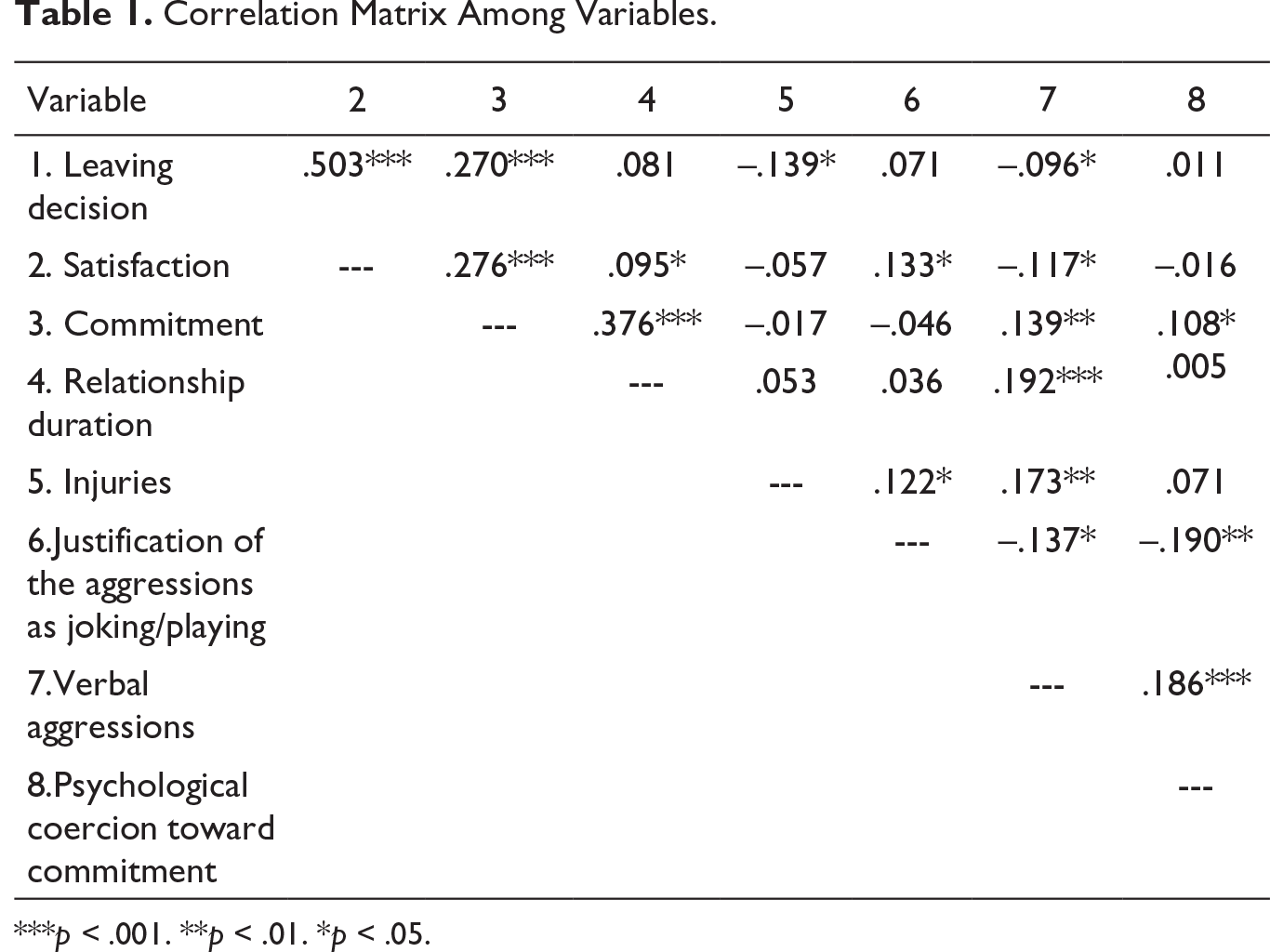
***p < .001. **p < .01. *p < .05.
Descriptive Statics for Continuous and Categorical Variables of Interest.
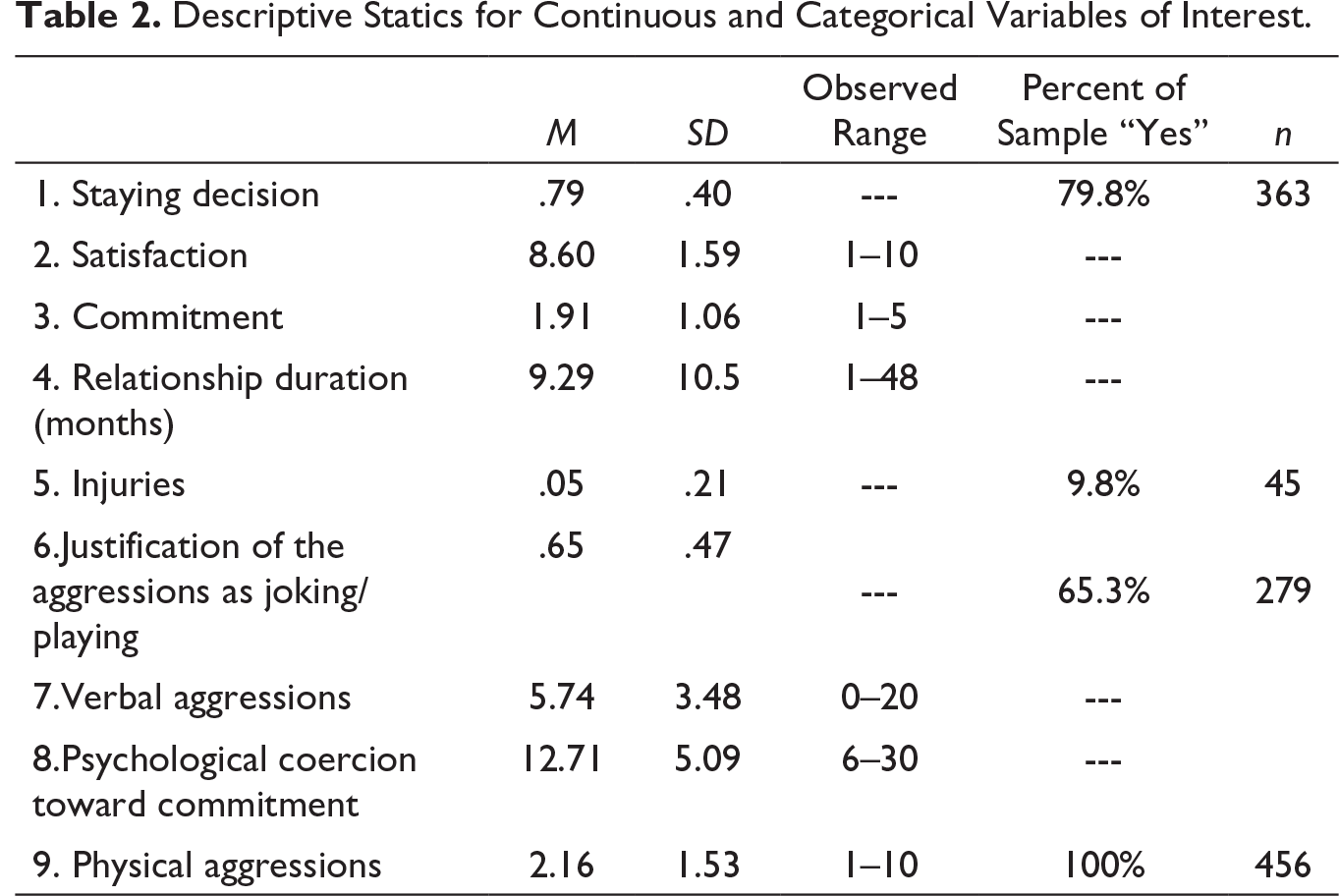
When analyzing differences by country of origin, the participants from Mexico and Spain obtained similar scores in most of the variables of the study, except for the levels of satisfaction, t(454) = 3.41 p < .01, d = .31, and justification of the aggression, t(454) = 4.46 p < .001, d = .46, where the Mexicans obtained higher scores, and more frequent victimization through psychological coercion toward commitment, t(454) = 2.35 p < .05, d = .22, than the Spanish adolescents. When analyzing the differences by gender, both girls and boys showed similar scores for every measurement except for the frequency of victimization by coercion toward commitment, where the boys suffered more coercive psychological aggression toward commitment, t(454) = 3.51 p < .001, d = .34.
Explanatory Model for the Decision to Stay in a Physically Abusive Dating Relationship
The proposed SEM model confirmed the relationship between the decision to stay in a physically violent relationship and the high levels of satisfaction and commitment toward the relationship of the victims (Figure 1). Furthermore, it demonstrated the explanatory value of the justification of the abuse, duration of the dating relationship, and the psychological coercion toward the commitment exerted by the aggressor, on the high levels of satisfaction and commitment maintained by the victims despite the aggression. The analyses and estimation showed an adequate fit to the data (X 2[109] = 203.99, p < .001, CFI = .920, TLI = 901, GFI = .991, RMSEA = .044, and, SRMR = .058), as well as the ability to explain 28% of the total variance regarding the victims´ decision to stay in the violent relationships.
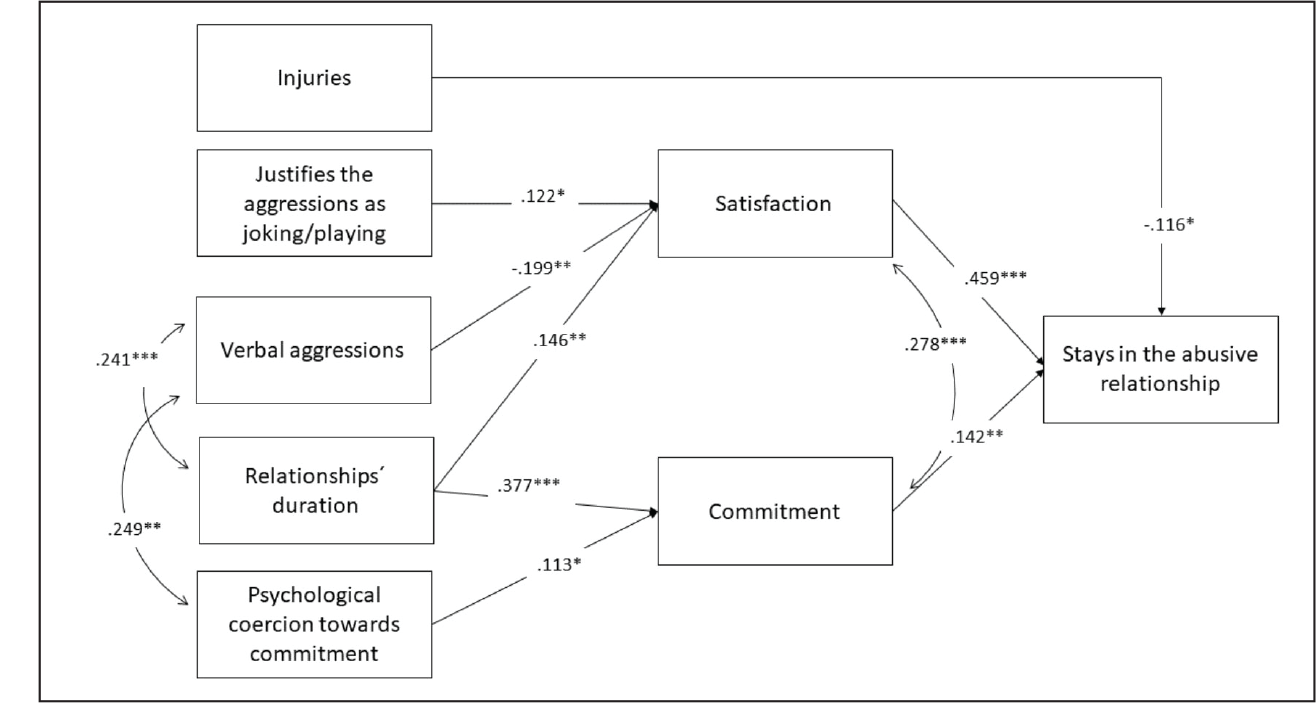
Explanatory model for the decision to stay in a physically abusive dating relationship. Notes. Estimated standardized beta coefficients are shown. Figure illustrates the simplified model, the original one includes the 6 items of psychological coercion scale and the 5 items of the verbal aggression scale. All of the participants were victims of physical aggressions. *p < .05, **p < .01, ***p < .001.
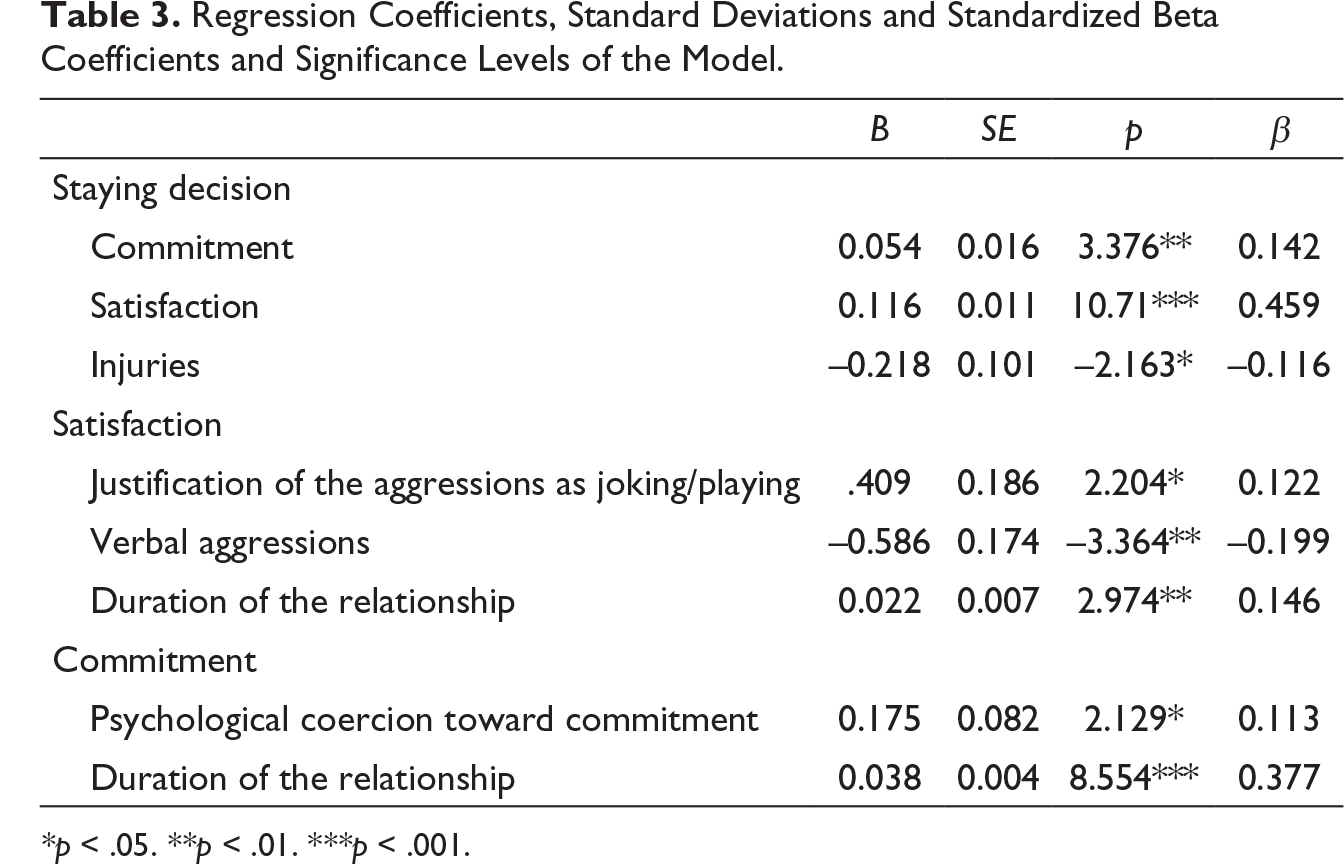
The regression coefficients of the estimated model (Table 3) enabled the identification of the relationships between the variables studied. Those adolescents who made a subjective global assessment of their relationships as satisfactory (β = .46, p < .001) and maintained high levels of commitment toward their partners (β = .14, p < .01) tended to remain convinced of wanting to stay in the abusive relationship. By contrast, the fact that there were evident injuries as a result of the aggression, e.g. scratches, bruises, or visible wounds, was more directly related to the desire to leave the relationship (β = –.11, p < .05).
When analyzing the variables associated with the subjective satisfaction levels of the victims, we found that the levels of satisfaction were higher for the victims who justified the aggression within the context of joke or play (β = .12, p < .05) and for those victims who were in longer relationships (β = .15, p < .01). However, we identified that the satisfaction levels decreased when the victims, in addition to being physically assaulted, were attacked through verbal aggression, such as insults or threats (β = –.20, p < .01).
Regarding the relationship between the levels of commitment and the characteristics of the abuse, the results identified that the adolescents tended to feel more committed to their relationship when they were psychologically coerced toward commitment by their partners, e.g. being frequently questioned about their dedication to the relationship or being convinced that leaving the relationship was a wrong decision; β = .11, p < .05). In addition, a clear trend toward increased commitment was identified in those victims who had stayed longer in their relationships (β = .38, p < .001).
Regression Coefficients, Standard Deviations and Standardized Beta Coefficients and Significance Levels of the Model.
*p < .05. **p < .01. ***p < .001.
Partial and Total Indirect Effects
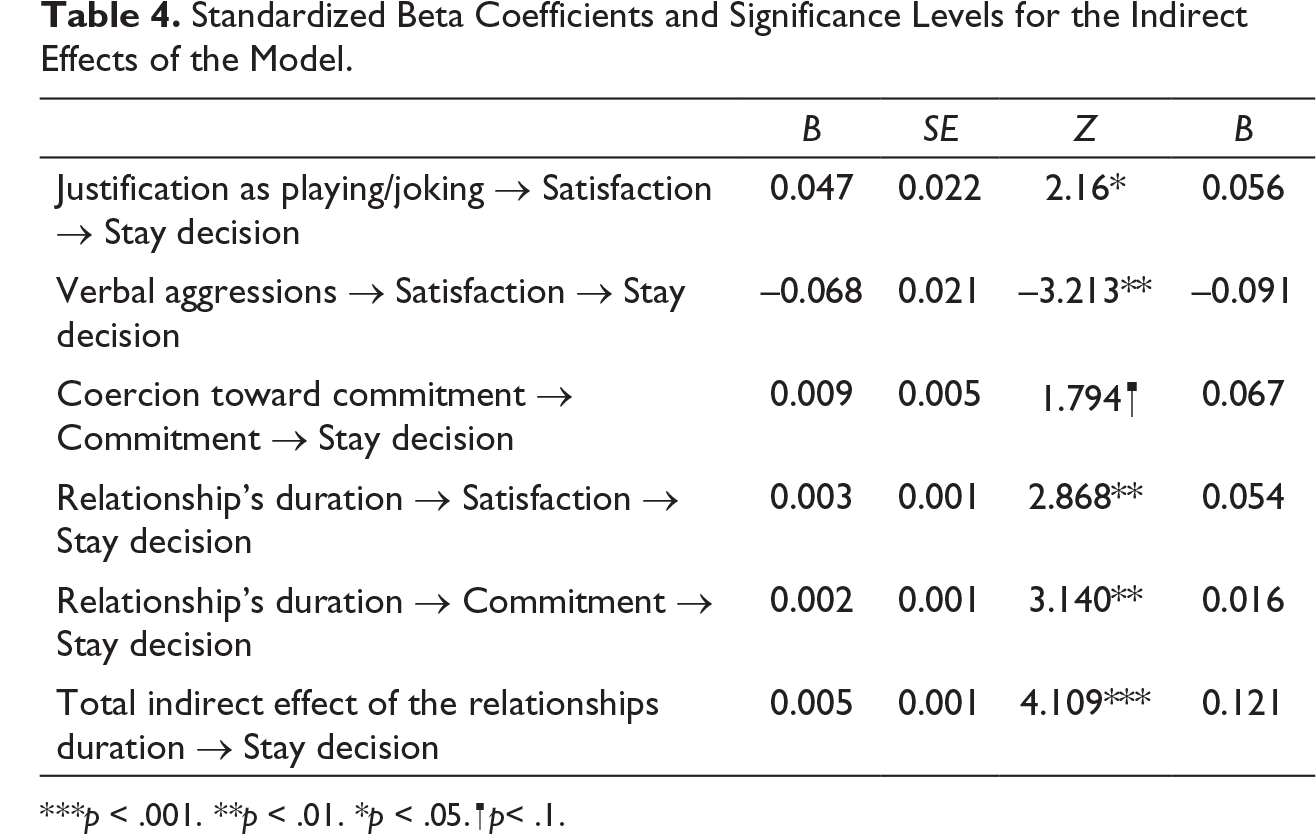
When analyzing the indirect effects between the predictive variables and the stay/leave decision of the adolescent victims (Table 4). It was revealed that the duration of the relationship, the justification of the aggression, and being a victim of psychological coercion toward commitment had a significant indirect effect over the relationship maintenance. Victims who were in longer relationships tended to be more satisfied and committed to their partners and to be willing to stay in the abusive relationship (β = .054, p < .01, and β = .016, p < .1, respectively). Meanwhile, the justification of the physical aggression as a joke or play had a significant indirect effect over the decision to stay in the relationship through greater levels of satisfaction (β = .056, p < .05). It was also identified that adolescents who were psychologically coerced toward commitment, tended to be more committed to their partners and to be willing to continue in the abusive relationship (β = .067, p < .01). Finally, only the adolescents who were abused through physical aggressions and through frequent verbal aggression, had a greater chance of wanting to leave the relationship, this relationship was significant regardless of the overall subjective satisfaction about the relationship (β = .091, p < .01).
Standardized Beta Coefficients and Significance Levels for the Indirect Effects of the Model.
***p < .001. **p < .01. *p < .05. p< .1.
Discussion
The results obtained in this study showed that more than two-thirds of the adolescent victims had a firm intention to continue in their abusive relationships, corroborating that physical dating victimization is not by itself the only, nor the main reason that drives young people to end those violent relationships (Katz et al., 2012; Soller et al., 2020). It seems instead, that the stay/leave decision is strongly mediated by the cognitive and contextual factors such as the interpretations of the victims about the assaults and the presence of other simultaneous types of aggression, e.g. psychological pressures, that can explain not only their willingness to stay but also the prior documented findings about the high levels of victim´s satisfaction and commitment toward their abusive relationships (Copp et al., 2015; Edwards et al., 2012).
Our findings confirm the current need to overcome the understanding of the length of the adolescent violent dating relations as a mere result of the presence/absence of aggressive behaviors, but as a complex multifactorial experience in such developmental stage. While prior research on adult population suggest that in adult victims, the weight of the cost of leaving their abusive relationship has more to do with their economic dependence, the co-parenting of their children, and the desire to keep the family together (Robinson et al., 2020; Storer et al., 2018). The victimization longevity in adolescent population, proved to be related in our data with some other typical conditions of this developmental stage such as the lack of skills and maturity to assess adequately the quality of the relationship, the severity of the aggression, and the inadequate interpretation of the nature of the violent behavior (Edwards et al., 2012, 2017; Gonzalez-Mendez & Hernandez-Cabrera, 2009).
In this sense, our explanatory model has allowed us to identify that the subjective and global assessments made by the teenage victims about their relationships is an important factor to consider when analyzing their decision to stay in their abusive relationships, and that such assessment is also related to the maintenance of high levels of satisfaction and commitment toward their partner despite the physical aggression that they suffered. These results are similar to those found in older samples, in which the high levels of satisfaction and commitment toward the relationship have been shown to play a significant predictive role in the conviction of the adult victims to remain in their abusive relationships, even when severe physical or sexual abuse has occurred (Garrido-Macías et al., 2017; Toplu-Demitras et al., 2013, Young & Furman, 2013). This trend highlights the need to address the adolescents leave/stay decision as a percussive experience of later patterns of adult victimization, which may shed some light onto the length of the violent relationships in subsequent developmental stages.
Additionally, our study enabled us to identify that in the adolescent population, the continuity in the abusive relationship is also influenced by the justification and minimization of the attacks, probably because, in most of the cases there were no serious injuries. In our study, more than 65% of the sample considered that the attacks left no significant injurie and that the physical victimization executed by their partners occurred in a joking/playful context. Only in those cases in which the aggressions resulted in visible physical injuries, such as bruises or scratches, did the adolescent victims view such behavior as a relevant reason to end the relationship (Helm et al., 2017). This data point to the current need for the development of intervention strategies to promote the adequate recognition of the aggressions and its potential harmful value in order to avoid the continuity of the victimization and subsequent escalate of the aggressions over time into more severe patterns of violent dynamics (Capaldi et al., 2018; Frías, 2016).
In addition to the aforementioned, our results have proved that adolescent victims tend to maintain higher levels of commitment toward their partners the longer the relationship lasts, i.e. the longer the time they have invested in it, suggesting that teenage population may be experiencing difficulties to assess of the costs and benefits of leaving or staying in a physically abusive relationship due to the lack of experiences or knowledge of the resources to face the ending of the relation (Godbout et al., 2016; Katz et al., 2012; Le et al., 2010). Regarding the presence of different types of abuse, our findings indicate that although being a victim of verbal aggression was not directly related to the decision to leave an abusive relationship, it was indirectly associated with the leaving decision through a decrease in the level of satisfaction toward the relationship (Edwards et al., 2011; Toplu-Demitras et al., 2013). However, when the psychological violence became more subtle and was executed through psychological coercion toward commitment, the victims tended to become more committed and willing to stay in the relationship instead of feeling dissatisfied. These results reiterate the relevance of psychological coercion tactics in maintaining violent relationships, especially for adolescents, who are at a developmental stage characterized by having fewer resources to identify the subtle or covert tactics displayed by their partners (Alves et al., 2017; Crossman & Hardesty, 2018; Vivolo-Kantor et al., 2021).
Despite the fact that in the adolescent population, the physical consequences of remaining in an abusive relationship are usually not as serious as they tend to be in the adult population (Katerndahl et al., 2019; Marcos et al., 2020; McDonough, 2010; Orpinas et al., 2017; Storer et al., 2018), the high prevalence rates of psychological and mild physical aggressions is still a good indicator of the need to alert young people about the importance of recognizing minor violent behaviors. Future intervention programs must include strategies adapted strategies to the actual adolescent experiences: the youngest populations may not be identifying their selves as the victims presented in the prevalent media and preventing programs, which usually show survivors of more server forms of aggressions and injuries.
One of the strengths of this study is that it was developed in a solely Hispano Latinx sample, which is why our findings in addition to summarizing the general knowledge about an adolescent’s decision to leave an abusive relationship, give a first-hand description of the victimization experiences and the leave/stay decision made by adolescent’s from Hispano Latinx cultures. It is important that further studies consider the stay/leave decision as a multifactorial process, which involves not only personal variables, but sociocultural variables as well. In particular, when analyzing Hispano Latinx cultures, further research must pay attention to the impact of factors such as familismo or machismo that had been related to the establishment, dynamics and attitudes about dating relationships (Malhotra et al., 2015; Marcos et al., 2020; Terrazas-Carrillo & Chiara, 2020).
This study has certain limitations, given that the adolescents were recruited from schools, there is a possibility that some of the teenagers were dating one another, and thus there could be a dependency within the data. Further studies must consider the analysis of couple behavior and include the analysis of perpetration (or bidirectionality) of the violence as well, which is common among adolescents, and may be an important consideration of whether and adolescent remains in a violent relationship or not.
Given the cross-sectional nature of the study, the relationships drawn in the explanatory model must be understood as atemporal associations in-between variables. These atemporal associations give valuable information when accounting for the shared relationship of the cognitive evaluation of the aggression, satisfaction and commitment toward the aggressive partner over the leave/stay decision of the victims of physical dating violence in Hispano Latinx cultures. Further studies using longitudinal data are needed in order to strengthen the findings of this study.
A third limitation of this study is the lack of adapted instruments to measure victimization and dating experiences within Latinx populations (López-Cepero et al., 2015; Ronzón-Tirado et al., 2019). This factor has justified the development of the specific instruments used in this study such as the coercion toward commitment scale. Although the coercion scale proved to have adequate statistical properties further analyses of the scale are required in order to strengthen its qualities. Future research must focus on the adaptation and development of culturally adapted instruments, in order to have a common theoretical and measurement base to better understand and address the needs of Hispano Latinx adolescents.
In conclusion, our results corroborate that the decision to end a physically abusive dating relationship is a complex phenomenon closely related to subjective and cognitive variables that temper the stay/leave decision. Variables such as the level of satisfaction or cognitive evaluation of the aggression, especially in those couples that stay together longer, play a special role in the staying decision, as do other factors such as their exposure to psychological pressures toward maintaining high levels of commitment to their aggressors. In order to properly address the adolescent’s victimization experiences, research should move one step forward from the traditional understanding of the satay/leave decision through the investment model (Edwards and Hinsz, 2014; Edwards et al., 2018; Helm et al., 2017; Toplu-Demirtaş et al., 2013) to a more complex model that could potentially enrich the understanding of the development of maintained victimization experiences. Furthermore, future preventive strategies must, incorporate actions to help the younger victims to be able to evaluate in a more objective and adequate way the actual quality of their first relationships and aim to modify the justification of the aggression, promote the recognition of the potential damage of the violent behavior, and foster an adequate balance between the benefits and harm of staying in the abusive relationship.
Footnotes
Declaration of Conflicting Interests
The author(s) declared no potential conflicts of interest with respect to the research, authorship, and/or publication of this article.
Funding
The author(s) received no financial support for the research, authorship, and/or publication of this article.
