




Abstract
Dating violence is a public health problem affecting people worldwide. This study evaluated the occurrence of different types of adolescent dating violence using a mixed analysis of each data source. The present study addresses the following research questions: does the occurrence of the types of violence analyzed in the quantitative phase match with the narratives obtained in the qualitative phase? and does the additional information obtained in the qualitative phase improve the understanding of the analyzed phenomenon?
In the quantitative phase, 410 participants (aged 13 to 19 years) answered a questionnaire based on the Modified Conflict Tactics Scale, while in the qualitative phase, 26 participated in two focus groups. Data were collected from May to June 2019. Written informed consent was obtained from the parents or legal guardians of those who had agreed to participate. The present research was approved by the Human Research Ethics Committee of the Pontifical Catholic University of Ecuador. The results were divided on: prevalence of dating violence based on age groups and gender, management and resolution of dating conflicts, victimization and perpetration of intimate partner violence, factors favoring intimate partner violence and acceptance of abuse. The results were analyzed via triangulation and indicated that adolescents were involved in the perpetration and victimization of psychological as well as mild and severe physical violence. An analysis of the contributing factors revealed a strong tendency toward the acceptance of the traditional gender model. Challenging these models is crucial to deconstruct hierarchical models, develop conflict resolution skills, and promptly identify abusive behaviors that affect emotional development. The combination of different methodological approaches improved the understanding of the phenomenon studied.
Introduction
Relationship violence is a type of interpersonal violence and a public health problem that affects people worldwide (Exner-Cortens, 2014). Intimate partner violence is not limited to adults. It is increasingly starting out earlier, with adolescence being a key phase in the creation of new relationships (Díaz-Aguado et al., 2011). As such, these abusive behaviors may become evident in adolescent dating relationships, sometimes with manifestations of severe violence (Flores Palacios et al., 2015; Temple et al., 2016).
Types of Intimate Partner Violence and Their Health Consequences
Different types of abuse are manifested in relationship violence, including physical, sexual, emotional, spiritual, and social violence (Gonzalez-Guarda et al., 2016; Wincentak et al., 2017). However, we have limited the scope of the present study to the analysis of the typology addressed in the Modified Conflict Tactics Scale (M-CTS) (Muñoz-Rivas et al., 2007). The M-CTS scale differentiates psychological/verbal aggression from both mild and severe physical aggression. Specifically, the former refers to insults, arguing, and threats, while mild aggression represents acts with the absence of injury or alteration to the partner’s physical integrity and severe aggression includes acts that have a physical impact on the victimized partner (Muñoz-Rivas et al., 2007).
A recent systematic review of observational studies demonstrated that dating violence was a serious social problem that affected global health and victims’ interpersonal functioning (Rubio-Garay et al., 2017). In addition to the physical consequences of more serious forms of aggression, experiencing violence in adolescent dating relationships can have a major impact on individuals, affecting their academic adjustment and performance, as well as their general behavior and risk behaviors (Datta et al., 2020). At the educational level, its consequences include academic difficulties, lack of security, poor academic performance, lower educational achievement, abandonment of studies, and absenteeism (Datta et al., 2020; Rubio-Garay et al., 2017): On a psychosocial level, dating violence leads to depression and anxiety, unhealthy behaviors (consumption of tobacco, alcohol, and other drugs), antisocial behaviors, and suicidal ideation (Datta et al., 2020; Nahapetyan et al., 2014; Vagi et al., 2013). Additionally, victims of violence have been found to exhibit lower self-esteem and a high level of emotional dependence (de la Villa Moral et al., 2017).
Intimate Partner Violence by the Numbers
Data on perpetration and victimization rates for violent behaviors in young couples vary greatly. The numbers range between 3% to 70% for victimization, and between 31% and 50% for perpetration (Dosil et al., 2020). Although this variability exists, verbal and emotional violence stands out as a more frequent subtype, regardless of sex (Gómez et al., 2014), while physical aggression decreases and sexual aggression increases with age (Gómez et al., 2014). Despite a lower prevalence and severity of consequences during the adolescent stage, normalization of these behaviors can lead to their repetition during adulthood (Zarate et al., 2017). As the literature indicates, relationship violence precedes physical violence (Schwartz et al., 2004).
In Latin America, the most common behaviors in psychological and emotional violence are psychological control and the use of nicknames to humiliate, and there is consensus about both sexes being the perpetrators and recipients of these types of violence (Flores Palacios et al., 2015). A study indicated that verbal and emotional violence have the highest rates of perpetration and victimization among adolescents, and 22.5% of the participants reported experiencing or perpetrating physical violence (Brancaglioni & Fonseca, 2016).
Regardless of the prevalence figures, adolescent dating violence, whether unidirectional or reciprocal, can potentially predict intimate partner violence in adulthood, with a tendency to develop increasingly severe forms of aggression (Jouriles et al., 2017). Any adolescent or young adult can become a victim of dating violence, and an excellent form of prevention is identifying abusive behaviors through diagnostic studies.
Main Causes of Intimate Partner Violence
Intimate partner violence in adults and adolescents is a multicausal phenomenon in which individual and interpersonal variables converge (Riggs & O’Leary, 2016). Underscored among interpersonal variables are parenting styles (Moreno-Ruiz et al., 2018), families supporting or blaming victims (Gonzalez-Guarda et al., 2016), social acceptance and tolerance of abusive relationships, intergenerational transmission of aggressive patterns (repeated witnessing of intimate partner or spousal violence by children and youth) and poor management of emotions (Cortes-Ayala et al., 2015; Exner-Cortens, 2014).
On the other hand, the literature highlights distorted ideas about love as one of the main causes of this type of violence. Specifically, such ideas may create dissatisfaction in dating relationships, leading to negative behaviors that regularly cause internal conflicts, jealousy, disappointment, anxiety, depression, and even abuse (Algovia et al., 2017; Reidy et al., 2016; Reyes et al., 2016; Rome & Miller, 2020). As such, attitudes that develop during the first romantic relationship are linked to social norms that are learned during the early years of development. In many cases, this knowledge is obtained from messages in the media and from observing relationship behaviors in the socio-familial nucleus (Prothrow-Stith & Weissman, 1991). According to Park and Kim (2018), and Tenkorang and Owusu (2018), witnessing violence between parents is one of the main vulnerability and victimization factors in teen relationships. In this regard, Livingston et al. (2021) include maternal acceptance as a protective factor related to intimate partner violence.
Other predictive factors for victimization in adolescent relationships a series of psychosocial issues, such as problems with self-esteem (Dosil et al., 2020; Smith et al., 2018) and anxiety (Moreno-Méndez et al., 2019), problems in social relationships (Dosil et al., 2020), and alcohol use (Moreno-Méndez et al., 2019).
Objective
Therefore, this study aimed to identify the prevalence and directionality (victimization vs perpetration) of violent situations in teen dating relationships, and to establish a possible correlation between sex and age variables (Quantitative Phase). Moreover, it aimed to further examine this phenomenon through an analysis of the factors favoring its development in the adolescent population using a mixed methods approach (Qualitative Phase).
Methods
The present research followed a mixed, concurrent study design (Schoonenboom & Johnson, 2017). QUANT → QUAL (equal weight in the execution and application of simultaneous methods). Both approaches had the same level of importance and were executed simultaneously to obtain contextual explanations that allowed a deeper understanding of the phenomenon using the gender perspective as a theoretical framework. This article presents the preliminary results of a research project titled “Violence in dating relationships: A mixed study among adolescents from the city of Quito, Ecuador,” funded by Ecuador’s Pontifical Catholic University.
The eligibility criteria were as follows: aged between 14 and 19 years, current or previous dating relationships, legal representative’s signed informed consent (in the case of minors), and enrollment in selected educational institutions. The exclusion criteria were (a) cohabiting with a partner or being married, as these characteristics are predefined in Ecuador as domestic violence, and (b) never having had a dating relationship.
Quantitative Phase
This phase focused on determining how violence manifested in dating relationships among adolescents. The study population included 1,300 students enrolled in two private educational institutions in Quito, Ecuador, in the academic year 2018–2019. Elementary (ninth and tenth grades) and high-school students were included.
Two-stage random sampling was used in this research project, with random selection of educational institutions in the urban area of Quito. The target institutions included all public or private educational institutions. In the second stage, a random sample was drawn from the target population of adolescents who matriculated in the selected institutions. The sample size of n = 485 adolescents was calculated based on 95% confidence level, p = 0.5, which assumed maximum heterogeneity because the proportion of the population was unknown and d = 5%. During recruitment, we excluded 19 participants who did not provide their legal representative’s signed informed consent and 56 participants who had never had a dating relationship. We obtained a final sample of 410 students (31.5%).
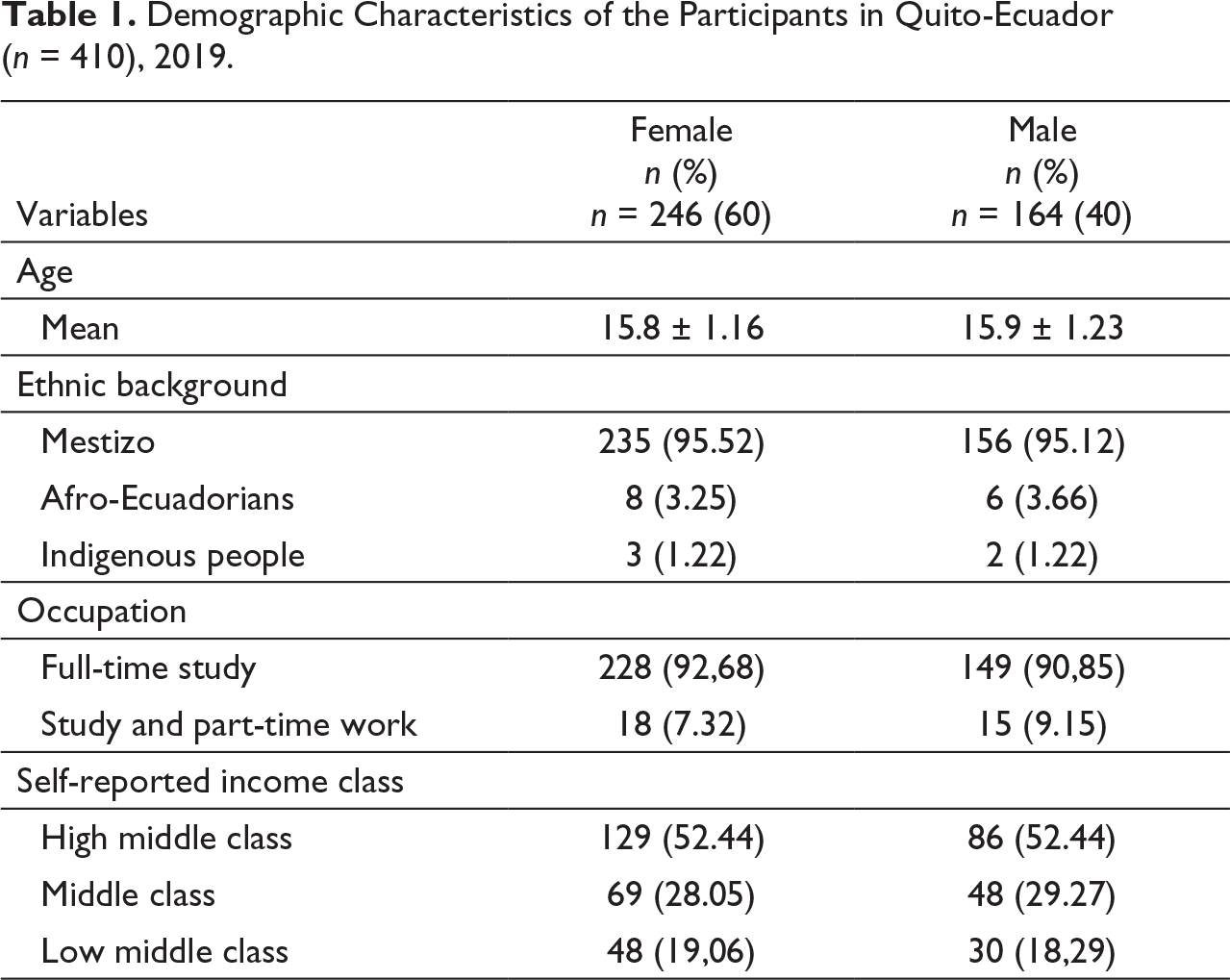
The sample’s mean age was 15.8 ± 1.19 years, with more than half participants being female. Both female and male participants self-identified their ethnic background more often as Mestizos. The self-reported income class of the sample was classified as high middle class in the same proportion for female and male participants, while regarding occupation, male adolescents reported being simultaneously engaged in study and work more often than females (Table 1).
Demographic Characteristics of the Participants in Quito-Ecuador (n = 410), 2019.
The M-CTS (Muñoz-Rivas et al., 2007) was used for data collection. This tool assesses the behaviors used by respondents and their partners to deal with relationship conflicts. The instrument is divided into the following 4 subscales: “Reasoning,” which includes 3 items about the respondent’s use of negotiation to resolve conflicts and 3 items on their partner’s actions; “Psychological violence,” which includes verbal and behavioral events such as nonverbal aggressive acts, humiliation, yelling, and threats, with 5 items involving the respondent as the perpetrator and 5 on their partner’s actions; “Mild physical violence,” which assesses the respondent’s attempt to commit physical harm or assault (7 items) and their partner’s attempt to do so (7 items); and “Severe physical violence,” which includes acts that cause injury, with 3 items on the respondent’s behavior and 3 on their partner’s actions. All items are scored on a Likert scale ranging from 1 (“never”) to 5 (“always”). The validation process is available in Muñoz-Rivas et al. (2007).
Data were collected from May to June 2019, after receiving authorization from the Ministry of Education in Ecuador and from principals of educational institutions where the project was presented. The schedule, students’ list, and access were facilitated by the middle management of educational institutions during school hours (in the morning). Then, the research team invited adolescents into the classroom to participate in the study and teachers supported the process. The aim, study purpose, and terms of data use were communicated to potential participants. Adolescents received information about the project, a written invitation, and a form with the Informed Consent Terms that was signed by the parent or a representative for minor participants. On the next day, the research team contacted minor potential participants’ legal representative to seek their signed informed consent. Participants without this authorization were excluded from the study. Adolescents who wanted to participate in the study signed the Informed Assent Terms (minor adolescents) and the Informed Consent Terms. Finally, the questionnaire was provided to participants, who completed them through self-report.
Descriptive statistics were calculated for the collected data. The point prevalence was determined, assuming that all the participating adolescents were at risk of experiencing dating violence. The point prevalence was obtained by dividing the number of self-reported cases of students who experienced one or more types of violence (Nc) by the total number of participants in the study (Np). This measurement was complemented by applying the Z-test for comparison of proportions. Moreover, the correlations between the reasoning, psychological violence, mild physical violence, severe physical violence, and sociodemographic variables (age group and gender) were evaluated using the Phi coefficient. The relative risk (RR) was estimated by the odds ratio (OR) at a confidence interval (CI) of 95%.
Qualitative Phase
Focus groups were created in the qualitative phase to further investigate the personal, family, social, and cultural factors that favored dating violence. We included individuals of the same sample in this phase to provide an in-depth description and overview of adolescents’ perceptions. Twenty-six adolescents were distributed into two focus groups, each belonging to one of the selected educational institutions. The participants were chosen using convenience sampling after receiving their and their parent’s voluntary consent. Subsequently, the research team attempted to understand the meaning of teen dating violence from participants’ views. Therefore, it was important to select a technique that allowed them to achieve depth in thoughts, opinions, and feelings of respondents. They were informed that, in case of discomfort, they could discontinue their participation at any time during the study period. The following guiding questions were used in the focus groups: “What is the meaning of teen dating violence in educational institutions?” and “What are the social, cultural, and familial factors that favor teen dating violence?”
The theoretical saturation point was obtained in situ with the validation of the samples that formed the focus groups, given that new themes did not emerge in each phase of the discussion. This stage involved the participation of a moderator, who led the discussions using a semi-structured questionnaire, as well as a non-participating observer, who made relevant notes to be used in the subsequent analysis. The discussions lasted around 40 to 49 minutes; they were recorded and transcribed for the analysis.
A deductive framework was adopted to facilitate qualitative analysis and data coding. However, inductive data were also analyzed. Accordingly, the analysis commenced with a pre-coding phase based on the theoretical concepts related to intimate partner violence. Subsequently, we incorporated the emerging categories, modifying, expanding, and reducing the categories until we reached the final structure. The narratives were organized with the ATLAS.Ti8 software version 8.4, mainly used for locating citations and notes, as well as creating analytical categories and structural networks. Initially, data were analyzed by two researchers separately, and, later on, the results were discussed with a third researcher until a consensus was reached in the triangulation process.
Mixed Phase
After evaluating each data source separately, according to their respective methodological paradigms, the findings of each source were integrated to complement the analysis of the studied phenomenon (Johnson, 2014). The selected validation strategies were data triangulation, the creation of new analytical categories, and new triangulations. This approach allowed identifying meta-inferences that represented the results obtained during triangulation, and this procedure ensured the quality of the theorizing process.
Ethical Aspects
The participants were informed of the research objectives as well as the study’s voluntary and confidential nature. Written informed consent was obtained from the parents or legal guardians of those who had agreed to participate. The study protocols conformed to the ethical guidelines of the Declaration of Helsinki. The present research was approved by the Human Research Ethics Committee of the Pontifical Catholic University of Ecuador under Protocol No. 2018-52-EO.
Results
Quantitative Phase
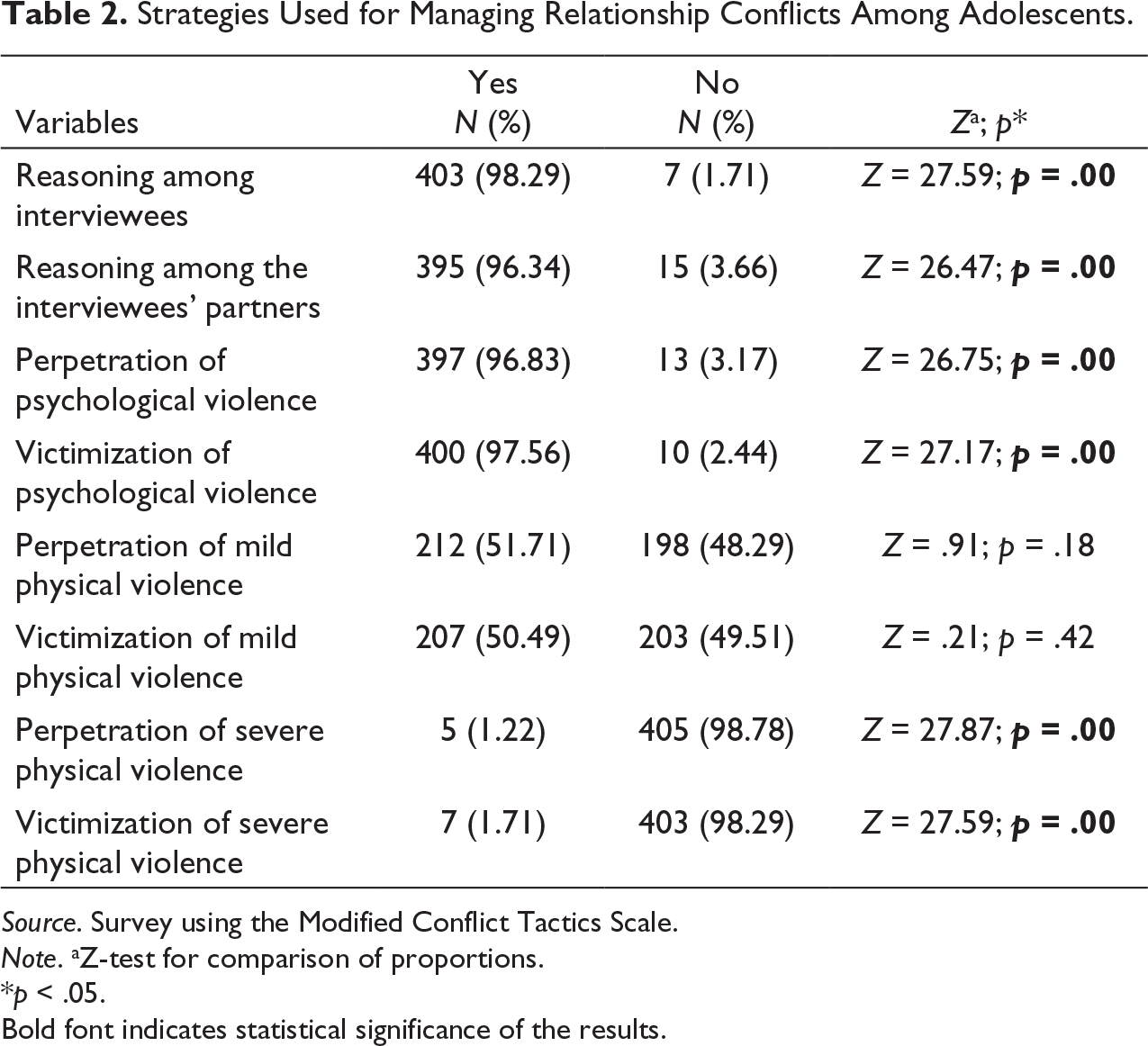
Strategies Used for Managing Relationship Conflicts Among Adolescents.
Source. Survey using the Modified Conflict Tactics Scale.
Note. aZ-test for comparison of proportions.
*p < .05.
Bold font indicates statistical significance of the results.
Prevalence of Dating Violence Based on Age Groups and Gender
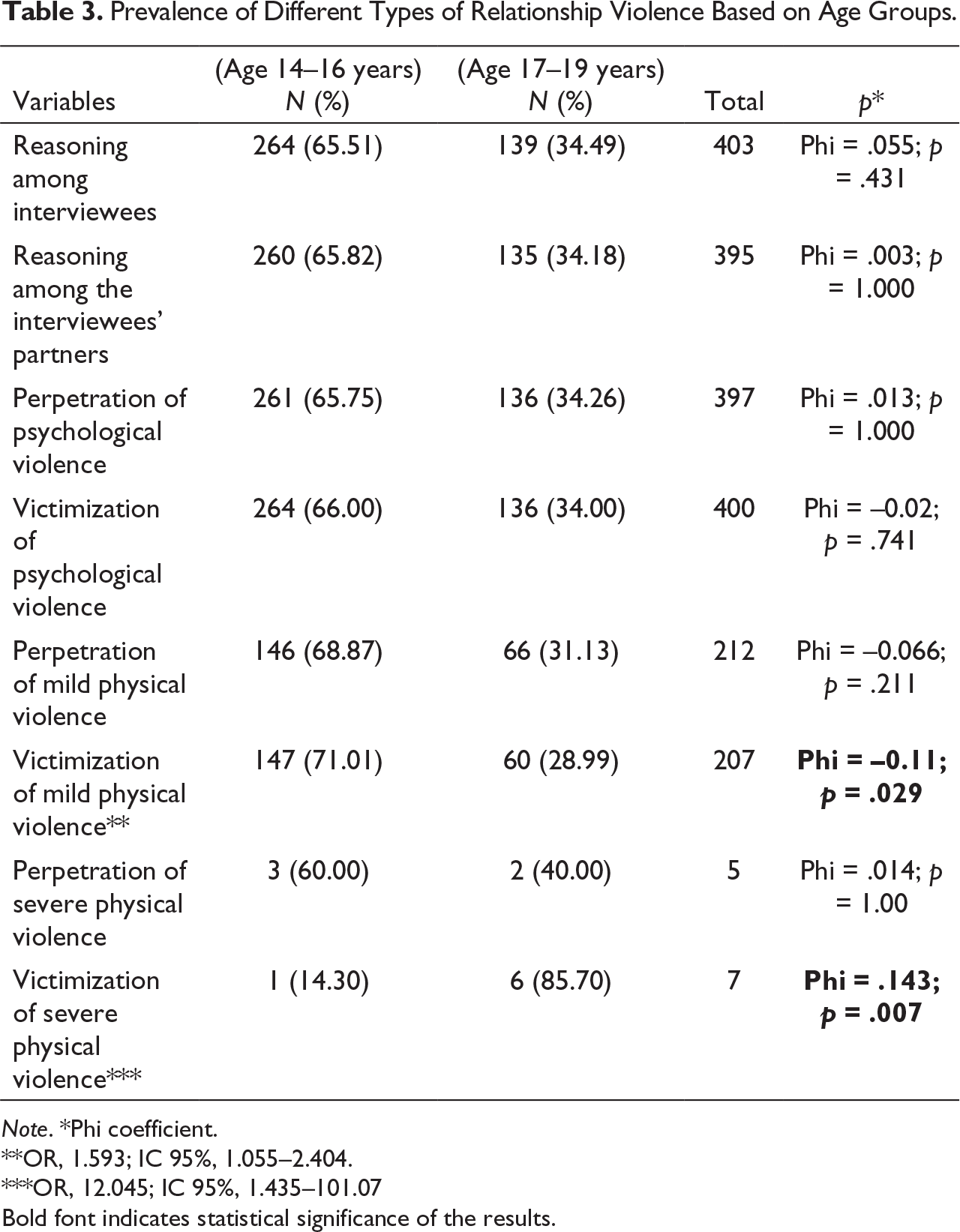
Prevalence of Different Types of Relationship Violence Based on Age Groups.
Note. *Phi coefficient.
**OR, 1.593; IC 95%, 1.055–2.404.
***OR, 12.045; IC 95%, 1.435–101.07
Bold font indicates statistical significance of the results.
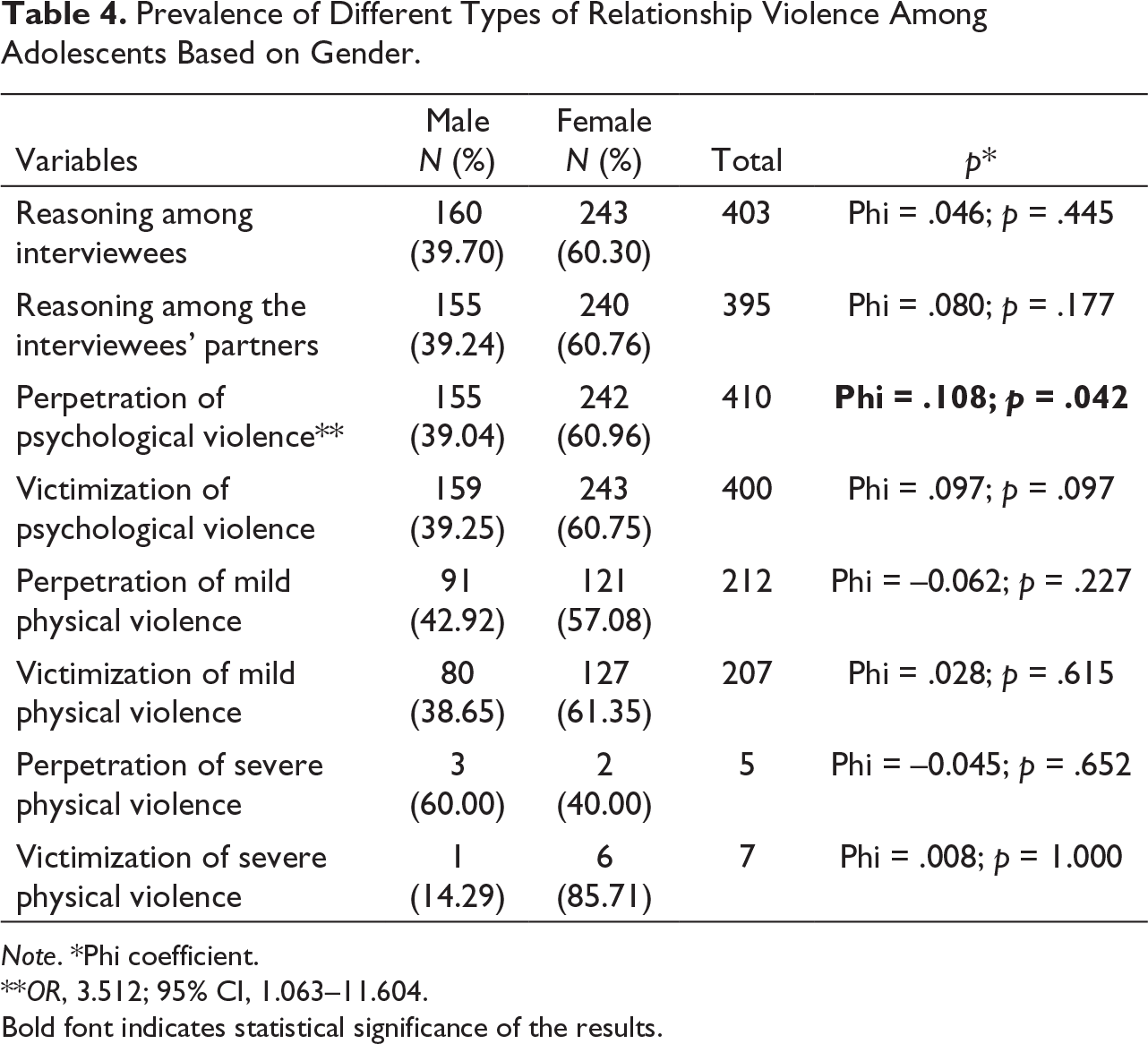
Prevalence of Different Types of Relationship Violence Among Adolescents Based on Gender.
Note. *Phi coefficient.
**OR, 3.512; 95% CI, 1.063–11.604.
Bold font indicates statistical significance of the results.
Qualitative Phase
Management and resolution of dating conflicts.
Both age groups expressed their lack of experience and difficulty in identifying the first signs of intimate partner violence. In that sense, the critical analysis of the narratives demonstrated the participants’ limited ability to manage this type of situation:
I am ashamed because it was the first time and I would have liked to have more information about how to manage this situation. (D2-12)
Despite the lack of information, both groups agreed that communication and trust were essential for conflict resolution:
I think that, rather than talking on the phone or chatting, talking in person is the best way to solve conflicts. (D1-P9)
When the degree of violence surpassed the adolescents’ ability to manage conflicts, some adolescents reported that they approached third parties:
If you cannot manage conflicts with your partner by yourself, you can request help from a psychologist or a school counselor. (D1-P1)
The adolescents’ choices regarding the individual to whom they would ask for help varied between the groups. For instance, some participants reported seeking the help of relatives:
Well, if the problem involves family or friends, you should consult your parents. (D1-P5)
However, individuals outside the family should be consulted when trust in the family members is low:
It is unreasonable to seek the help of parents to address a problem involving your intimate partner. (D1-P2)
Another resource that students sought outside the family environment was the school teachers:
We have confidence in our teachers and we to talk to them so they can guide us to avoid intimate partner violence before it escalates. (D1-P1)
Moreover, students who had the opportunity and confidence to communicate violence-related problems received the guidance and support of educational institutions to manage or resolve conflicts:
An orientation … I requested help from a school counselor when I had a problem with my boyfriend, and they guided me; it helped me a lot. (D1-P13)
Victimization and perpetration of intimate partner violence.
Among the discussion groups, a consensus was reached that typically, women were the victims in intimate partner violence, while men were the most common aggressors:
Men exercise authority in most cases. (D2-P4) Women are controlled by their partners in most relationships. (D2-P2)
However, two male participants reported that the level of perpetration of violence was similar between the genders, alluding to women as perpetrators of psychological violence.
In my opinion, both men and women are victims because, in some situations, the male partner is manipulated by the female partner. Then, it seems that the two parties are equally harmed. (D1-P9) Only female abuse and gender violence are taken into account, but it is evident that men suffer violence in some cases. (D1-P5)
Types of Violence in Adolescent Dating Relationships.
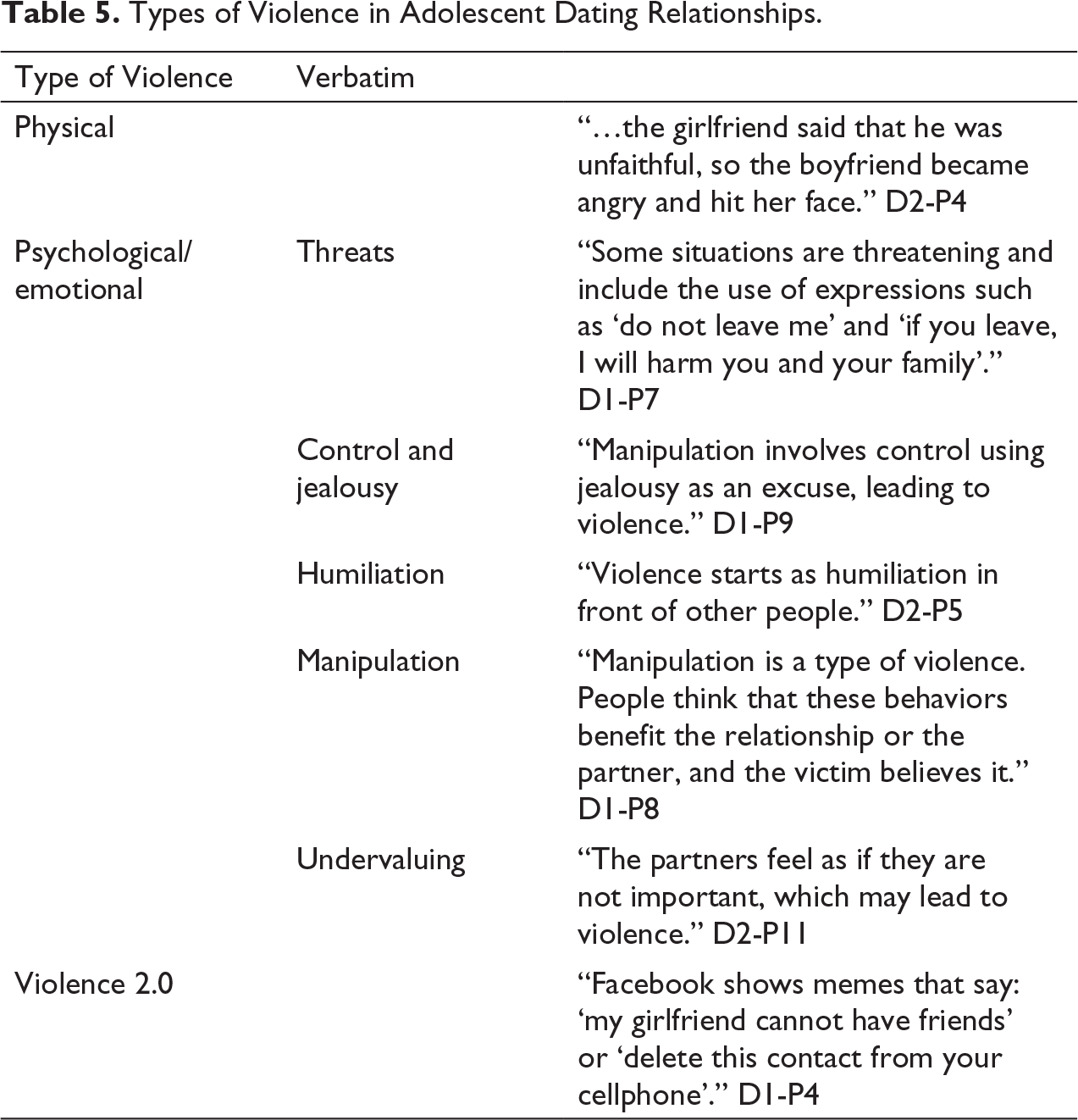
Factors favoring intimate partner violence.
Cultural factors stimulate the replication of the sex/gender system in dating relationships and are believed to promote violence. The participants reported the existence of inequitable relations of dominance-submission between the sexes:
I think it involves the superiority of one person over the other. I interpret it as wanting to be superior to the other person. (D1-P1)
These relationships, in turn, create stereotypes and preconceived ideas about the social roles assigned to each gender, resulting in gender inequalities.
We live in a world that still believes that women are housewives and nothing more. (D1-P10) In a sexist home, the wife usually takes care of the household chores and children. Many families do not even allow men to wash their own dishes, and dating violence is normalized in the home. (D1-P7)
These stereotypes or behavioral norms lead to attitudes and behaviors associated with control and violence as a tool for maintaining unhealthy relationships:
A person controls the partner physically or psychologically in an attempt to earn respect, so to speak. (D1-P4)
The internalized belief of the superiority of men over women and the maintenance of gender stereotypes become normalized during the process of socialization. These interactions that begin in childhood expose individuals to discriminatory messages and behaviors that maintain stereotypes and violence in public and private environments later on.
If a community believes that men work outside the home and women work as homemakers, families in that community are going to accept that as the right thing to do, given that it is considered politically correct in the community, and those who deviate are criticized because the rest of the people do not see it that way. (D1-P9)
As a consequence of cultural factors, social and family values also favor violence. Social and family factors abet exposure to, and perpetration of, violence in the social environment and/or exposure to domestic violence in the family or relationships:
I believe that people who follow traditional stereotypes are violent … sexist men are accustomed to causing or witnessing abuse in their families. (D1-P8) When you see your parents fight, insult each other, and use physical violence, you believe that these behaviors are normal in a relationship, and then some people do the same in their dating relationships because they believe it is normal. (D2-P5)
Witnessing violence, together with the lack of experience in conflict resolution in adolescence, may lead to the development of toxic relationships:
I think it is difficult for individuals who are in a relationship for the first time to experience violence. First love is unique, beautiful, makes you feel complete, and so, you want to keep it that way. But, some people inadvertently experience violence in relationships and believe it is normal and get accustomed to it, which makes them relate to other people with the same violent behaviors. They have no other perspectives because they have no other experiences. (D2-P1)
Acceptance of abuse.
The socialization of hierarchical relations between men and women, together with exposure to different types and degrees of violence, causes tolerance to, or acceptance of, intimate partner violence.
We have become accustomed to ill treatment. For example, because we are in a relationship, we may push or pull each other as a joke in the course of our relationship, and these acts are routine and may be interpreted as play. But this happens every day, and it’s difficult to know for sure whether the other person is feeling bad, because one gets accustomed to it and sees it as normal. (D1-P3)
Tools and/or Arguments Used for the Acceptance of Abuse.
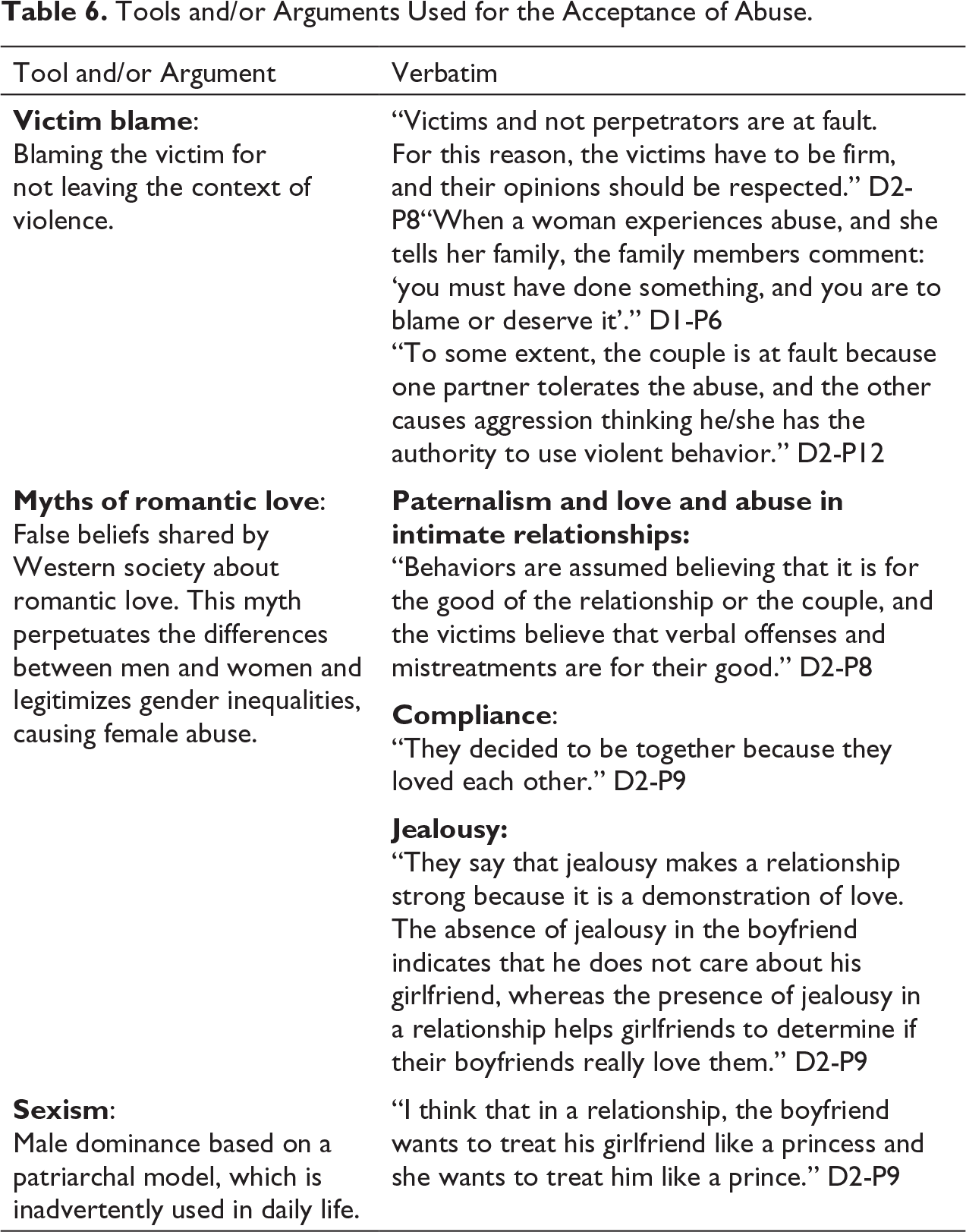
The participants recognized that violent behaviors appeared gradually in a relationship, which contributed to their normalization. In this respect, the aggressor begins to practice violence using strategies that are less obvious or more difficult to detect, such as psychological violence. Then, the degree of violence increases as the victim accepts these behaviors as normal in the relationship.
Violence does not happen overnight, and the victim should realize that violence escalates. At first, the behaviors are subtle and then become more severe until they reach physical violence. (D1-P5) Violence starts as a joke, and both the victim and the perpetrator accept these behaviors and get accustomed to them. (D2-P7)
Integration of Results
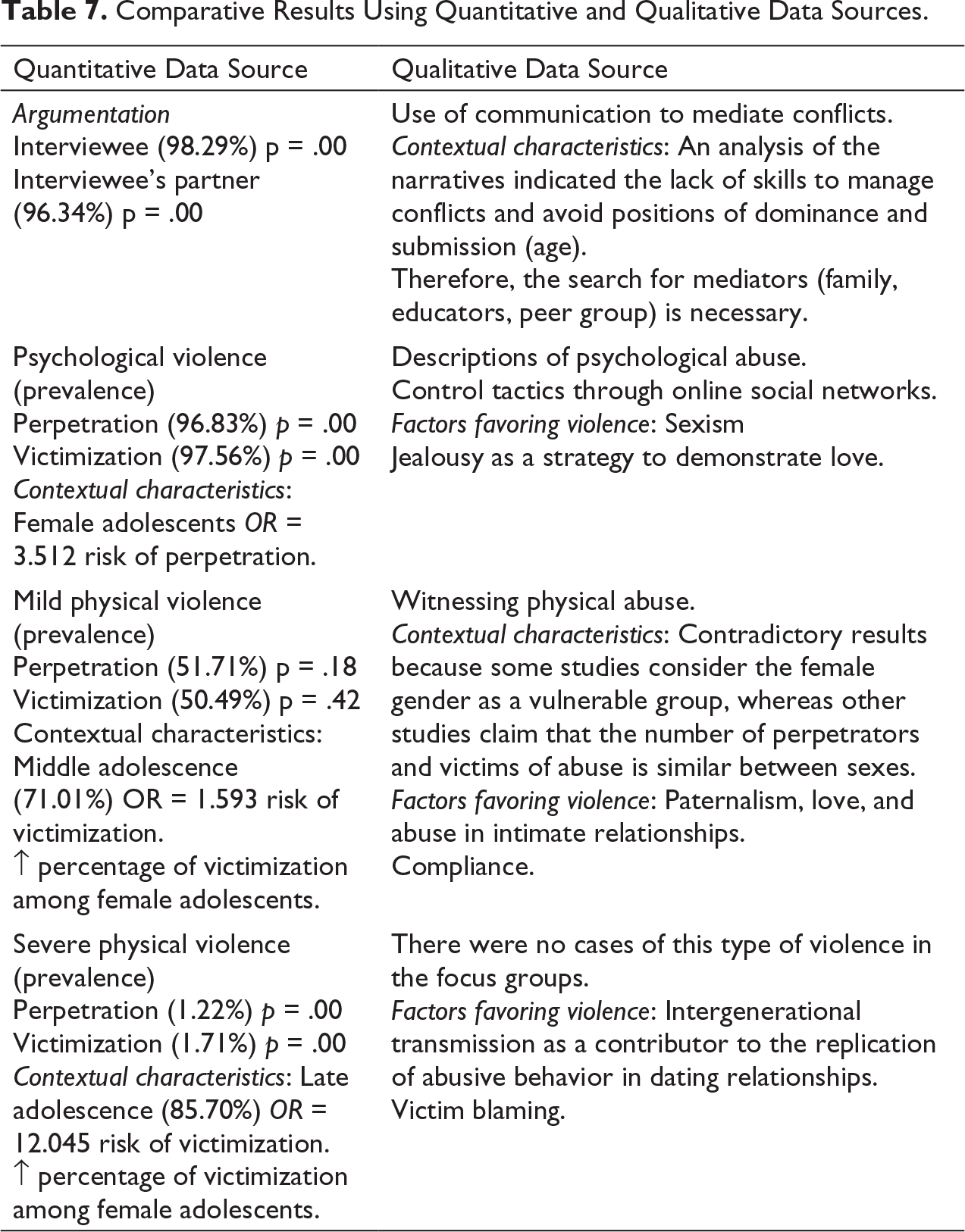
This study’s purpose was to validate the results using different data sources and improve the understanding of the phenomenon in question by analyzing the factors favoring adolescent dating violence. The analysis was oriented by elements obtained from the dynamic systems theory (Capaldi et al., 2012). The survey data and the experiences narrated in the focus groups allowed creating the first meta-inference: acknowledgment of violence; the results indicated that the most common types of violence in adolescents’ dating relationships were the perpetration/victimization of psychological violence, followed by mild and severe physical violence.
The second meta-inference refers to the factors contributing to violence, integrating contextual characteristics (age and gender) and cultural norms that explained the occurrence of the phenomenon through the perceptions of the focus groups’ participants. The strategy most commonly used to manage relationship conflicts in the QUANT-QUAL approach was reasoning. However, the lack of experience, gender stereotypes, and beliefs regarding romantic relationships coupled with family and social models were also moderating factors that played a critical role in the development of hostile attitudes in adolescent relationships, thus increasing the risk of severe physical violence in the 17 to 19 age group.
Comparative Results Using Quantitative and Qualitative Data Sources.
Discussion
The main objective of the present research was to integrate the survey and focus groups’ results to increase knowledge about the experience of adolescent dating violence. As in other mixed studies that incorporated the gender perspective, the comparative analysis facilitated the creating of meta-inferences (Bacchus et al., 2018), and the methodology improved the analysis and the identification of factors that contributed to abusive behaviors.
The results of the quantitative phase showed that the tactics most commonly used to manage relationship conflicts in adolescent dating were reasoning and negotiation. The results of the qualitative analysis expanded on this finding, indicating that the central elements for the peaceful resolution of disagreements in adolescent dating were trust and communication. Moreover, the narrative analysis revealed the different individuals whom adolescents consulted to solve relationship conflicts, highlighting the important role of educational institutions as providers of guidance and support during these circumstances.
Nonetheless, the survey results revealed that adolescents suffered and perpetrated psychological as well as mild physical violence in dating relationships, with the frequency of these types of violence being high. Similarly, a previous study reported that 92.7% and 54.5% of young people were victims of verbal and mild physical violence, respectively; while 90% of adolescents perpetrated verbal aggression, and 47.2% perpetrated mild physical violence (Delgado, 2016).
In line with previous exploratory studies, our findings indicated that female as well as male adolescents were both victims and perpetrators of intimate partner violence. This corroborated previous studies’ results in which the rates of victimization and perpetration of violence were similar between sexes (Alegría del Ángel & Rodríguez Barraza, 2015; Brancaglioni & Fonseca, 2016; Flores Palacios et al., 2015).
It is important to mention the cases of severe physical violence that were anonymously reported by the participants in the survey, which indicated that female adolescents were the most affected population, although this finding was not statistically significant. However, none of the participants reported having experienced this type of violence in the focus groups. This might be explained by the severity of the situation and the characteristics of the technique (focus groups) which might make it difficult to reveal severe experiences of abusive behavior.
The application of the survey allowed us to identify the severe physical violence cases and showed that adolescents aged 17 to 19 years were more likely to become victims of this form of abuse. Another study confirmed that older teens are more often involved in dating violence (Dosil et al., 2020). The quantitative results were corroborated by the results of the narrative analysis, demonstrating that the rate of perpetration of mild psychological violence and physical violence was similar between sexes (Arbach et al., 2015; Rubia & Rosales, 2013; Rubio-Garay et al., 2019).
The majority of the abusive behaviors reported by the participants in the focus groups coincided with the items regarding psychological violence and mild physical violence included in the survey. However, the analysis of the participants’ experiences using their narratives contributed some new elements regarding psychological violence that were not considered in the original instrument (M-CTS) such as humiliation, emotional manipulation, control, jealousy, and the use of social media for perpetrating abuse.
The use of focus groups in the qualitative phase facilitated the understanding of the factors favoring aggressive behaviors in dating relationships, and the results agree with the theoretical explanatory models and empirical evidence (Giordano et al., 2010). The results of the qualitative analysis demonstrated the existence of gender inequalities with a clear discrimination toward women, asymmetric intimate relationships, acceptance of violence influenced by social norms, victim blaming, romantic love, and sexism (Gracia-Leiva et al., 2019). Culture, sex, and age influence the persistence of gender inequalities via sexism (Marqués & Mestre, 2019). Sexism is associated with violence in adolescent relationships, and it was found that, higher the levels of sexism in a culture, the greater is the likelihood of perpetrating violence (Dosil et al., 2020). Another intersectional perspective study linked violence in adolescent couples to gender discrimination in addition to teens being discriminated against for being of Latin American origin (Roberts et al., 2018). Likewise, the acceptance of violence and traditional behaviors in gender roles is associated with the perpetration of violence (Reyes et al., 2016).
As evidenced in the qualitative phase, the narratives supporting traditional patriarchal norms were predominant, which facilitated the interpretations of the results based on the unidirectional model (Medina-Maldonado, 2014; Medina-Maldonado et al., 2015; Puente-Martínez et al., 2016). However, it is impossible to ignore the results of the quantitative analysis, which demonstrated a marked tendency to the reciprocal violence in intimate relationships. This could be attributed to the cultural factors that favor conflict resolution through interpersonal violence and the discourses that support the traditional gender model that are present in females and males, inadvertently perpetuating gender inequalities.
The findings of the present research have important implications for the public health field. For instance, the need to expand health care services to address intimate partner violence among adolescents is critical. Moreover, our study revealed the existence of coercive behaviors among the adolescent population similar to those perpetrated by adults (Shorey et al., 2015; Vivolo-Kantor et al., 2016). According to previous research, adolescent dating violence posits a risk to this population given that the abusive patterns might become a habit if they are poorly managed and can escalate to more severe forms of aggression (Meneghel et al., 2017; Vagi et al., 2013). The algorithms used in a recent longitudinal study on adolescents of both sexes adequately distinguished between perpetrators and non-perpetrators using self-reported measures on dating relationship violence and associated risk factors, and the findings showed that adolescents who suffered violence were more than twice as likely to perpetrate violence over a six-year period (Cohen et al., 2018).
These results should be considered when designing preventive programs targeting the affected segment. These interventions should integrate gender sensitivity (Medina-Maldonado et al., 2015) as a critical element to address inequality, taking into account how specific personal and cultural factors intersect with gender to guide these programs towards combating patriarchal norms, sexism, or violence-justifying attitudes. Perspectives and realities that provide opportunities for the study sample to reach its full health and development potential should also be considered in approaching and preventing intimate partner violence in adolescents.
The use of focus groups as a triangulation technique was not the most appropriate. The nature and extent of dating violence allowed constructing subjective narratives of the studied phenomenon in the focus groups but limited the analysis to specific types of violence. Cases of perpetration and experiences of partner violence were discussed in isolation and outside the focus groups. This bias can be prevented by using an individual approach based on experiential analysis. This approach involves developing protocols to support this segment in case of emotional stress and ethical guidelines because follow-up would depend on the consent of parents or legal guardians.
Conclusions
The aforementioned findings highlight the usefulness of mixed methods to investigate dating violence. The adopted method facilitated validating the occurrence of psychological violence, mild physical violence, and severe physical violence using quantitative and qualitative data, and the combination of different methodological approaches improved the understanding of the studied phenomenon. Latin American studies on dating violence among females and males showed that the rates of perpetration and experiences of violence were similar between the sexes. In our sample, the quantitative results demonstrated that the rates of perpetration and experiences of violence were similar between the sexes but were not in line with qualitative results, in which there was a marked tendency toward the acceptance of the traditional gender model. Cultural factors favor violence in adolescent dating relationships, and the perpetuation of social models dictate the behaviors of adolescents. Challenging these models is crucial to deconstruct hierarchical models, develop conflict resolution skills, and promptly identify abusive behaviors that affect emotional development.
Footnotes
Acknowledgments
The authors acknowledge the participation of students and schools in the evaluation of Adolescent Dating Violence. We also would like to acknowledge the support of Ministry of Education in Ecuador.
Authors’ Note
VMM conceptualized and designed the study, collected data, performed the analysis, and wrote the paper. MPB contributed to the data analysis and interpretation as well as the critical revision. EV collected the data, contributed to data analysis and interpretation, and critical revision. JF contributed to data analysis and interpretation as well as the critical revision. IJR contributed to the analysis tools, performed the analysis, and wrote the paper.
Declaration of Conflicting Interests
Funding
The author(s) disclosed receipt of the following financial support for the research, authorship, and/or publication of this article: Funding for the entire study was provided by the Pontificia Universidad Católica del Ecuador.
