



Abstract
Digital media offer ample possibilities for individuals to control and monitor their dating or romantic partner and to make hurtful comments. Although online psychological intimate partner violence has received increased research attention over the past few years, much remains unknown about its nature and its association with offline psychological intimate partner violence, especially among the adult population. Previous research remains inconclusive regarding the gendered nature of online intimate partner violence, and differences among various age groups have yet to be examined. The present study is intended to address these gaps in the literature by assessing the co-occurrence of psychological intimate partner violence victimization and perpetration, and the overlap between offline and online forms thereof. We conducted a large-scale survey study among a representative sample of 1,587 adults between the ages of 18 and 94 (M = 48.1, SD = 18.6), of which 1,144 (Mage = 47.7 years, 51.3% female) were in relationships at the time of data collection (2019). Our study findings indicate that experiences of online and offline psychological intimate partner violence tend to co-occur, as do victimization and perpetration experiences. Furthermore, we found that men were more often victims of both online and offline psychological partner violence than women, and women were more often perpetrators of both forms of psychological intimate partner violence than men. Younger age groups reported more victimization and perpetration of online and offline psychological intimate partner violence than older respondents. The results of our study underscore the need for age-appropriate intimate partner violence prevention.
Keywords
Digital media provide people with ample possibilities to control and monitor their romantic partner’s behaviors, for example by checking their partner’s phone or closely monitoring their activities on social media (Burke et al., 2011; Van Ouytsel et al., 2019). When individuals use the internet and technological applications to express excessive controlling and monitoring behaviors or verbal aggression towards their romantic partners, it is called cyber dating abuse (Van Ouytsel et al., 2020). Although cyber dating abuse encompasses various harmful behaviors through differing online means, the present study specifically focuses on the controlling aspect of cyber dating abuse and the comparison of these behaviors to offline psychological intimate partner violence (PIPV). As such, we describe these online controlling behaviors as “online PIPV.”
Although online PIPV has received increased research attention over the past few years (for systematic reviews of the online intimate partner violence literature, see Taylor & Xia, 2018 or Caridade & Braga, 2020), much remains unknown about its nature and how it relates to offline PIPV. Offline PIPV refers to excessive controlling behaviors (e.g., isolating one’s partner from their friends or family) and verbal aggression (e.g., insults) towards a partner in an offline setting (Follingstad, 2009). Previous research among a convenience sample of college students found that experiences with online and offline PIPV may co-occur (Sargent et al., 2016), but this relationship has rarely been examined in a representative adult sample. Furthermore, previous studies that assessed differences between men and women in PIPV perpetration and victimization rates present inconclusive findings. Although some studies have found that men are more often the perpetrators of psychological partner violence and women more often the victims (e.g., Dick et al., 2014), others have revealed the inverse (e.g., Burke et al., 2011; Zweig et al., 2013), or found no sex differences at all (e.g., Curry & Zavala, 2020). Similarly, differences between men and women have been found in terms of victimization, with some studies finding higher victimization rates among men (e.g., Bennett et al., 2011), while other studies have found higher victimization rates among women (e.g., Zweig et al., 2013). Differences between sample age groups (adolescents vs. college students), sample composition (e.g., educational background, cultural differences), and researchers’ conceptualizations—and consequent operationalizations—of what constitutes online PIPV may contribute to these differences across studies (Taylor & Xia, 2018).
In their systematic review on online intimate partner violence, Taylor and Xia (2018) highlighted that almost all studies on this issue make use of convenience samples and suggest that future work should employ random sampling to increase the generalizability of their findings. Furthermore, only four of the 37 studies in Taylor and Xia’s (2018) systematic review were conducted among (convenience samples of) adults. Their systematic search of the literature showed that until now, most studies on electronic forms of intimate partner violence have focused on adolescents and university students, rendering our knowledge on the occurrence of online PIPV in older age groups limited. This raises a question about the prevalence of digital forms of intimate partner violence among older adults, especially at a time when rates of technology use are high among all age groups (Pew Research Center, 2019).
The present study is intended to address these knowledge gaps concerning the occurrence of online PIPV and its co-occurrence with offline PIPV. More specifically, the first aim of this study is to assess the co-occurrence of online PIPV victimization and perpetration experiences and their interaction with offline PIPV experiences, improving our understanding about these two phenomena. The second aim is to assess differences between men and women and between various age groups (ranging from 18 to 65+ years) in the prevalence of online and offline victimization and perpetration of PIPV among a representative sample of adults, thereby yielding a broader age range than prior research. The findings of our study will provide valuable insights into the nature and dynamics of online and offline PIPV among the adult population.
Method
Data
The data in this study were collected via a cross-sectional survey, which was administered via face-to-face interviews in autumn of 2019. Using a representative sampling technique, citizens of Ghent, Belgium, were randomly selected to participate in the study. The selected respondents were visited by trained interviewees, who provided them laptops or tablets through which they could access the online survey hosted by Qualtrics. Ethical approval for this study was provided by the IRB of the faculty of political and social sciences at Ghent University. For a more detailed description of the study protocol, see Hardyns et al., 2019.
Sample
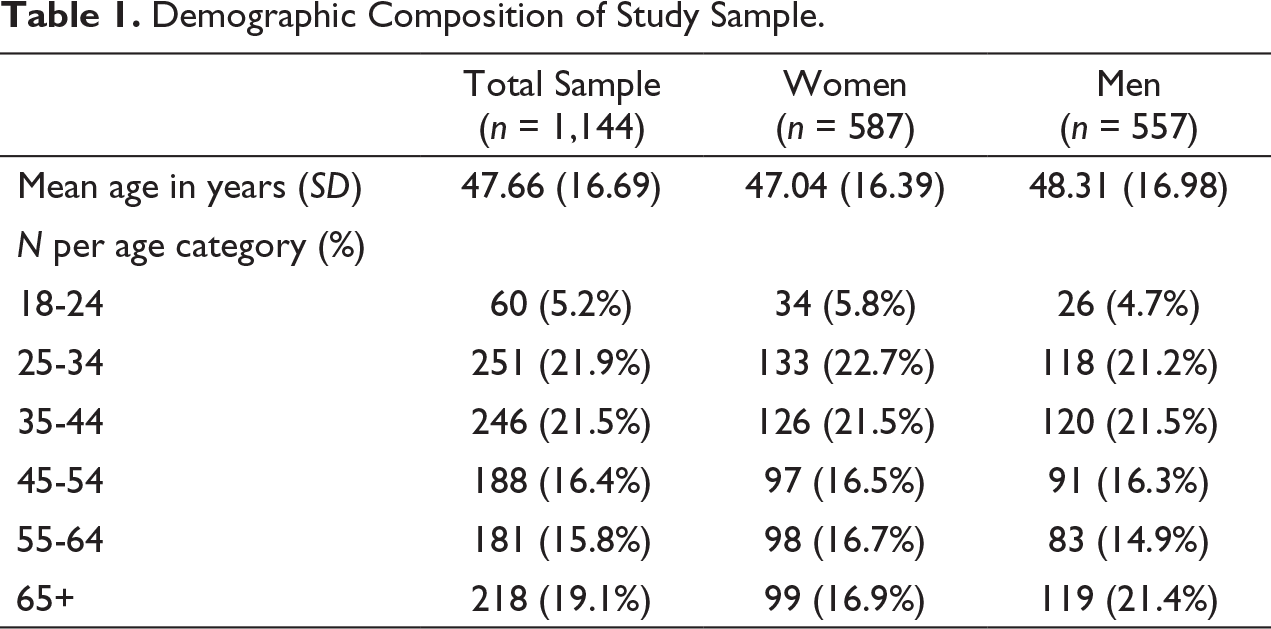
As specified above, the sample in our study was derived from a representative sampling technique. The sample was representative in regard to sex (male vs. female), and age (18-24, 25-34, 35-44, 45-54, 55-64, and 65+). Respondents were deemed eligible for participation if they had sufficient knowledge of the Dutch language and did not reside in an institutional setting.
Demographic Composition of Study Sample.
Measures
In the survey, respondents were asked about their perpetration and victimization experiences in the past 12 months concerning online and offline PIPV with their current partner.
Online PIPV was measured with an abbreviated scale adapted from the Cyber Dating Abuse Questionnaire (Borrajo et al., 2015), as previously used by Van Ouytsel et al. (2016). The scale consists of three items that assess the occurrence of three online controlling behaviors, namely (1) excessive texting to check who the partner was with and what they were doing, (2) excessive calling to check who the partner was with and what they were doing, and (3) examining the content of emails, texts, and social media account(s) without permission. We assessed victimization (M = 1.39, SD = 0.60, Cronbach’s α = .64) and perpetration (M = 1.34, SD = 0.54, Cronbach’s α = .69) of these behaviors separately, using a 5-point Likert scale ranging from 1 = never to 5 = very often.
Offline PIPV was measured with an abbreviated version of the Multidimensional Measure of Emotional Abuse (Murphy & Hoover, 1999), resulting in seven items measuring controlling behaviors and hurtful remarks from or towards a partner. Examples of items are “[I / My partner] tried to make [my partner / me] feel guilty about spending time with others” and “[I / My partner] called [my partner / me] worthless.” We assessed victimization (M = 1.34, SD = 0.46, Cronbach’s α = .81) and perpetration (M = 1.22, SD = 0.33, Cronbach’s α = .75) of these behaviors separately, using a 5-point Likert scale ranging from 1 = never to 5 = very often. Again, to determine prevalence rates, the variables for offline PIPV were recoded from continuous into dichotomous variables, distinguishing between occurrences of never (=0) versus at least once (=1).
Grouping variables. Sex was measured as a dichotomous variable that was dummy coded as 0 = “female” and 1 = “male.” Age was measured on a continuous scale and later converted into age categories, specifically 18-24, 25-34, 35-44, 45-54, 55-64, and 65+. The 10-year range of almost every category allows for a more detailed insight into differences between age groups than broader categories would.
Analytic Strategy
All analyses were conducted in SPSS (version 26, IBM Corp, Armonk, NY). Statistical significance was set at p ≤ .01.
First, we assessed prevalence rates for victimization and perpetration experiences of online and offline PIPV. To do so, we recoded all four PIPV variables from continuous into dichotomous variables, distinguishing between respondents who experienced PIPV never (=0) versus at least once (=1). The statistical analyses described below, however, were conducted for the continuous variables (i.e., mean frequency of occurrence) of the various partner violence experiences.
Second, we assessed Pearson bivariate associations to examine the relation between victimization and perpetration experiences of online and offline PIPV. Additionally, we conducted partial correlation analyses to control for the role of sex and age in the associations between online and offline PIPV victimization and perpetration.
Third, to examine sex and age differences in online and offline PIPV victimization and perpetration, we set out to conduct two MANOVA analyses. However, assumption testing revealed that critical assumptions concerning homogeneity of (co)variances were violated. Box’s M test statistics were 100.19 for sex and 452.31 for age groups at p = .000, and Levene’s tests were significant for all four dependent variables. As such, we conducted multivariate Kruskal-Wallis H tests (KWH test; Kruskal & Wallis, 1952) to examine differences in online and offline PIPV victimization and perpetration experiences between (1) men and women and (2) age groups. The KWH test is considered a nonparametric alternative to one-way analyses of variance, but instead of using raw data points it uses the ranks of data values in its estimation. Thus, the KWH test determines whether group medians are different, instead of group means. As the KWH test is an omnibus test, Dunn’s tests (1964) with Bonferroni adjustments for multiple comparisons were conducted post hoc to unravel which particular age groups differed significantly in their partner violence experiences.
Results
Prevalence of Online and Offline PIPV
Prevalence of Victimization and Perpetration of Online and Offline PIPV.

Note. PIPV = psychological intimate partner violence. Presented prevalence rates indicate the amount and percentage of people who experienced PIPV at least once.
Bivariate Associations Between Online and Offline PIPV Victimization and Perpetration
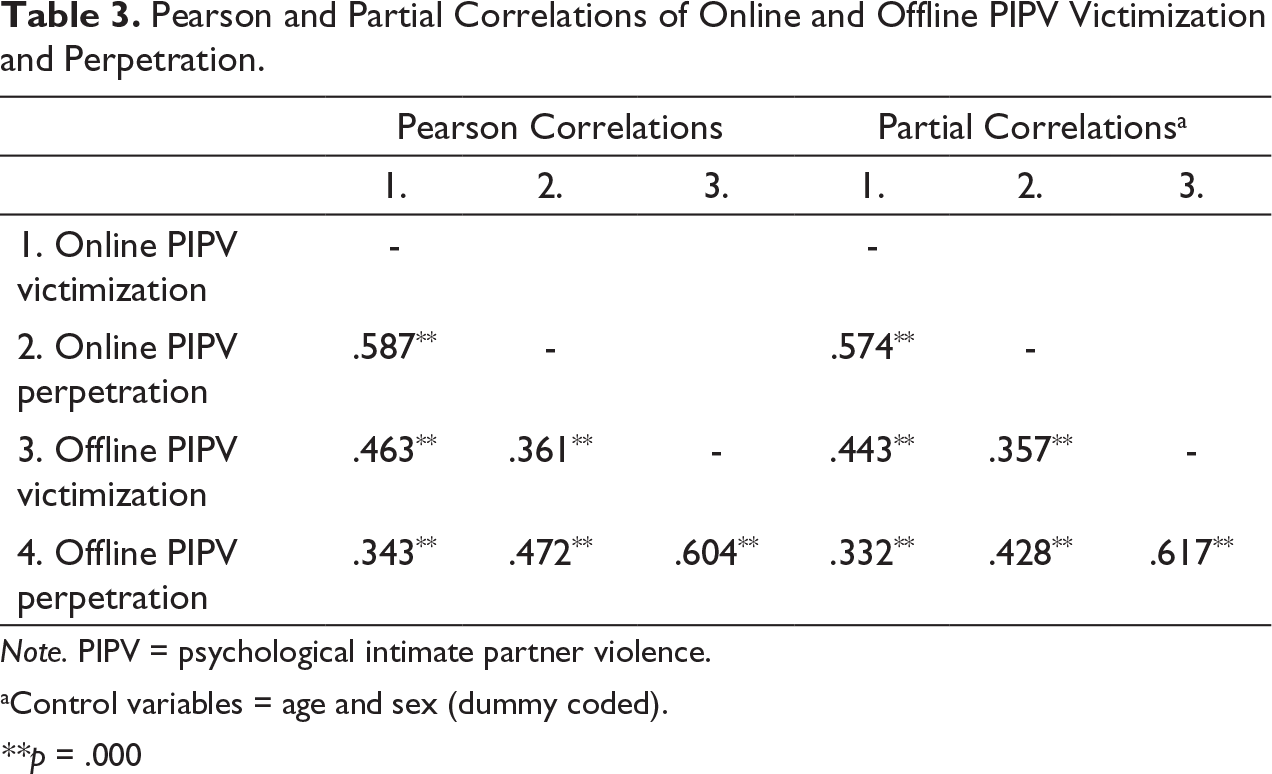
To assess the relationship between online and offline PIPV, we conducted Pearson correlation analyses. To control for the roles of sex and age within these associations, we additionally conducted partial correlation analyses. Here, we controlled for age as a continuous variable rather than a categorical one. The results are presented in Table 3.
Pearson and Partial Correlations of Online and Offline PIPV Victimization and Perpetration.
Note. PIPV = psychological intimate partner violence.
aControl variables = age and sex (dummy coded).
**p = .000
Group Differences in Online and Offline PIPV Victimization and Perpetration
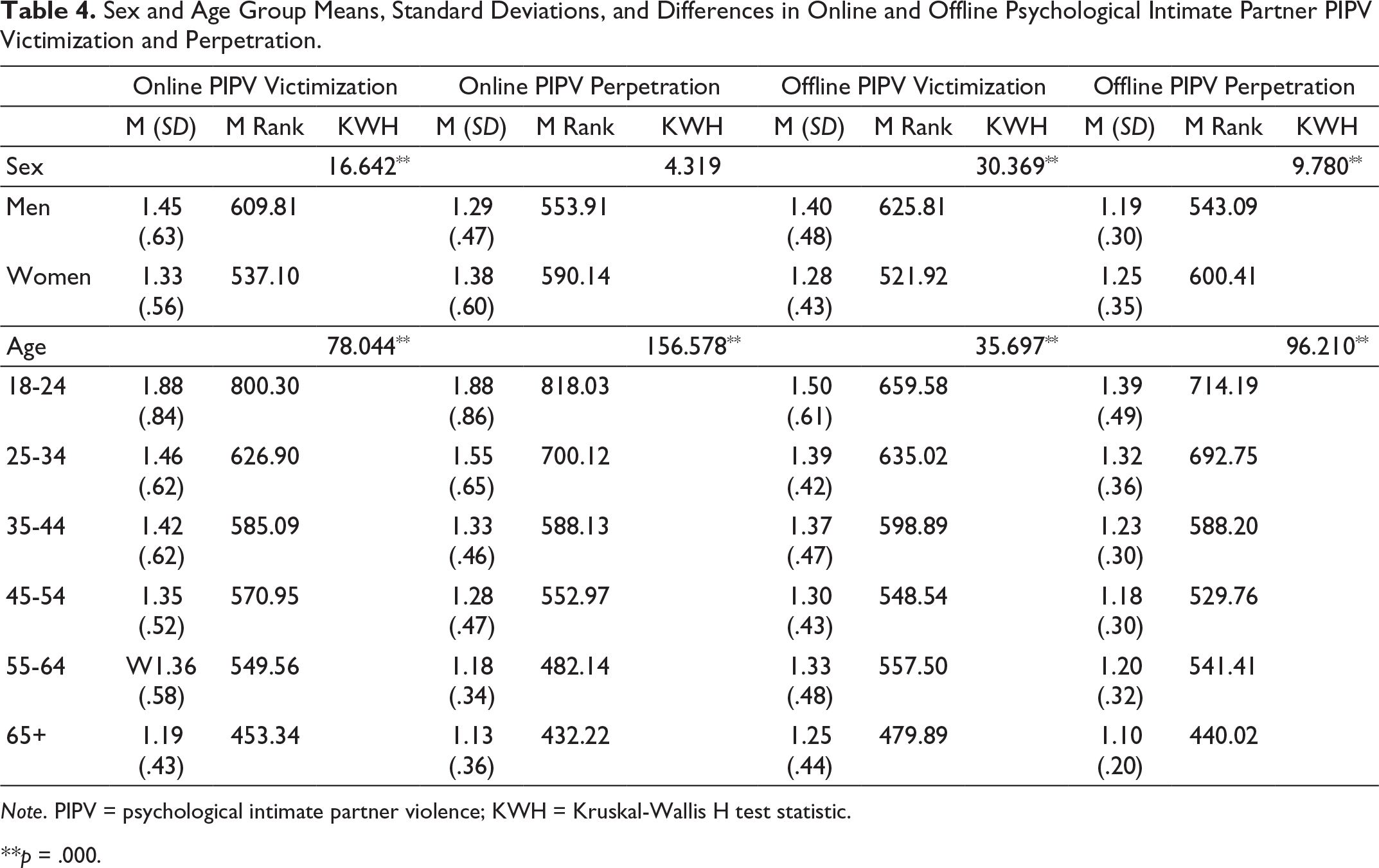
We conducted multiple multivariate KWH tests to examine whether there were differences in victimization and perpetration experiences of online and offline PIPV based on sex (1) and age (2). These group differences were examined in two separate multivariate KWH tests. The results of these two KWH tests are shown in Table 4.
Sex
Sex and Age Group Means, Standard Deviations, and Differences in Online and Offline Psychological Intimate Partner PIPV Victimization and Perpetration.
Note. PIPV = psychological intimate partner violence; KWH = Kruskal-Wallis H test statistic.
**p = .000.
Age
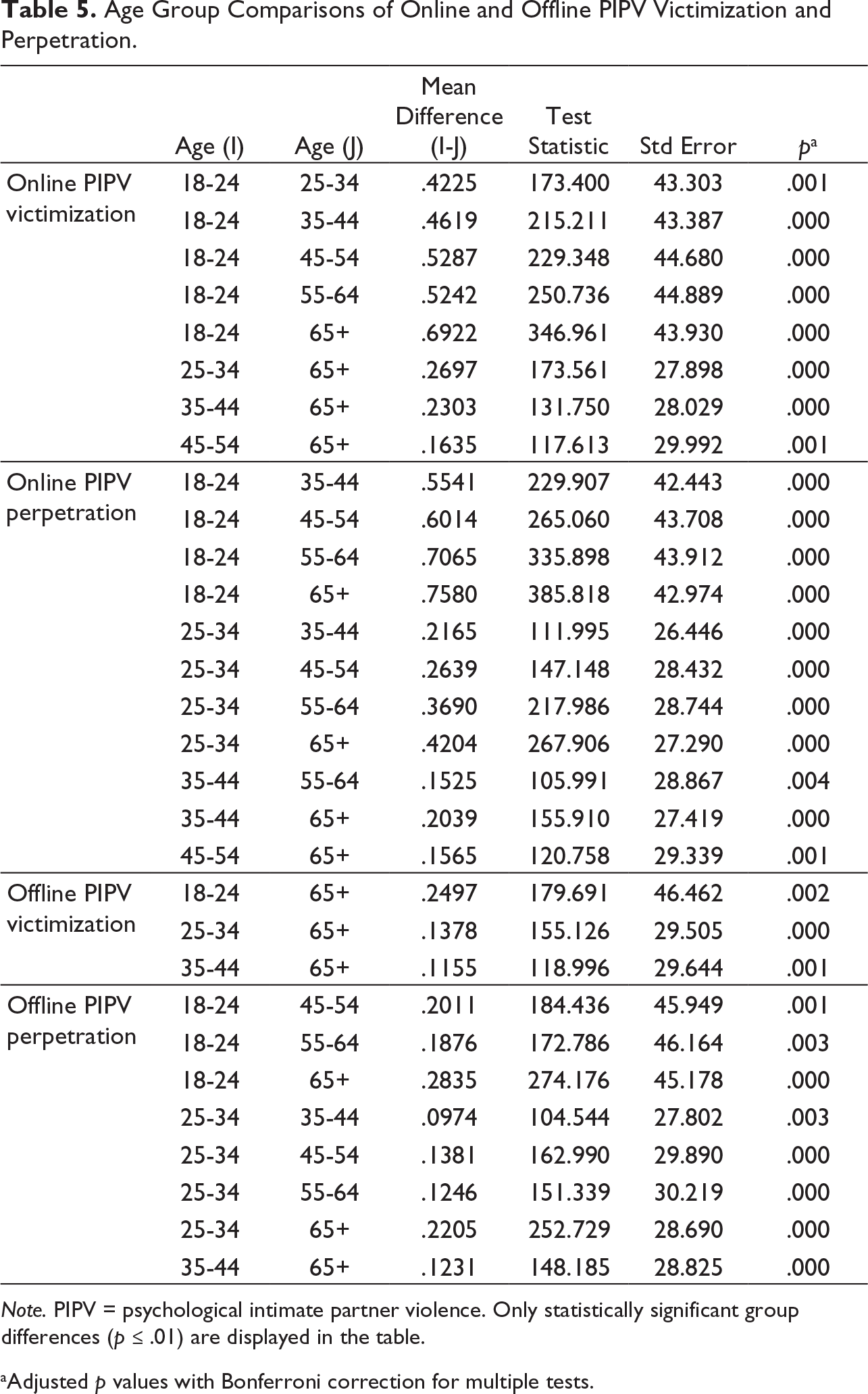
For age differences, the results presented in Table 4 revealed that there were significant differences between age groups in victimization and perpetration experiences of online and offline PIPV. To determine which age groups differ in their PIPV experiences, we conducted post hoc Dunn tests with Bonferroni adjustments. Table 5 displays all significant differences between age groups that resulted from these post hoc Dunn tests. Most of the significant comparisons show that people from any of the younger age groups experienced significantly more psychological partner violence than those aged 65+. Vulnerability at a younger age particularly applied to online forms of PIPV, as we found that people from younger age groups (18-24 year olds and 25-34 year olds) experienced significantly more victimization (18-24 year olds) and perpetration (both 18-24 year olds and 25-34 year olds) than any of the older age groups. For offline PIPV, we also found that 18-24 year olds and 25-34 year-olds reported more perpetration experiences than most of the older age groups. For offline PIPV victimization, however, we found very few significant age differences between younger and older age groups, and only for people aged 65+. This implies that, contrary to what seems to be the case for the other PIPV experiences, victimization of offline PIPV does not necessarily diminish with age.
Age Group Comparisons of Online and Offline PIPV Victimization and Perpetration.
Note. PIPV = psychological intimate partner violence. Only statistically significant group differences (p ≤ .01) are displayed in the table.
aAdjusted p values with Bonferroni correction for multiple tests.
Discussion
The present study addressed several knowledge gaps with regard to online PIPV and its relation to offline PIPV. We examined the association between online and offline PIPV victimization and perpetration. Our results indicated that all experiences of online and offline PIPV were interrelated, especially victimization and perpetration experiences of the same form (online or offline) of partner violence. This underscores the importance of considering the offline context in which online forms of intimate partner violence occur, especially when conducting research on the causes or consequences of these behaviors, as the co-occurrence of offline and online abuse may have an even more severe impact on the victims (Sargent et al., 2016). Additionally, we found that these relationships did not depend on the respondent’s sex and/or age. Furthermore, we found that the associations were particularly strong for experiences of the same form of PIPV (online or offline), and were considerably weaker between experiences of online versus offline PIPV. This may suggest that although online and offline PIPV experiences tend to co-occur, there are also important differences to be identified between these forms of PIPV. Future research could further examine which mechanisms underlie these online and offline phenomena and how they differ from each other.
Furthermore, we examined whether sex and age differences existed in victimization and perpetration experiences of online and offline PIPV. We found that men reported significantly more victimization of both online and offline PIPV, and women reported higher rates of perpetration for offline PIPV. These findings are in line with prior research that found that men may be equally or more vulnerable to some forms of psychological violence than women (Coker et al., 2002; Randle & Graham, 2011). The findings also echo the results of a study by Leisring and Giumetti (2014) that found that male undergraduate students were more likely than female students to report lifetime online PIPV and victimization by severe forms of online PIPV. The finding that women only perpetrated more PIPV than men in the offline (not the online) context further implies that, regardless of the high correlation between online and offline PIPV perpetration, different mechanisms underlie and operate in the perpetration of online PIPV compared to offline PIPV. Future research is warranted to investigate the contexts in which men and women engage in online forms of PIPV, and whether there are differences in motivations between men and women (Reed et al., 2016). Additionally, future work could investigate differences in perceptions of severity and appropriateness for digital intimate partner violence perpetration by men and women.
In regard to PIPV experiences among different age groups, we found that younger people (aged 18-24 and 25-34 years) reported more vulnerable to victimization and perpetration experiences of online PIPV than people from any of the older age groups. These findings seemingly provide strong justification for a primary focus on younger samples in cyber dating abuse research and prevention and intervention efforts (Taylor & Xia, 2018). However, regardless of the high prevalence of online PIPV among younger people, adolescents have indicated that they actually often do not perceive their partner’s online controlling and monitoring behaviors as abusive or violent (Lucero et al., 2014). This indicates that behaviors that may be defined as abusive by researchers may in fact be perceived as normal or harmless by those involved. Thus far, it remains unclear whether the same is true for older age groups. As such, researchers should further evaluate whether the employed conceptualization of online PIPV aligns with perceptions within the population of which online behaviors should be seen as worrisome. For offline PIPV, we also found that younger people (aged 18-24 and 25-34 years) reported more perpetration experiences than people from any of the older age groups. For victimization of offline PIPV, however, we barely found any differences between younger and older age groups, and only for those over the age of 65. This implies that contrary to what appears to be the case for other PIPV experiences, the occurrence of offline PIPV victimization does not necessarily diminish with age. Additionally, the finding that younger age groups report more online PIPV victimization and perpetration and offline PIPV perpetration than older age groups does not necessarily mean that these forms of partner violence are unproblematic for older age groups (Taylor & Xia, 2018). The difference in prevalence between age groups may be explained by the fact that reports of intimate partner violence decrease in midlife and late life (Roberto et al., 2013), or that older adults may have different digital literacy skills. Nonetheless, as we found only minimal age differences in experiences of offline PIPV victimization, and as considerable prevalence rates of PIPV experiences for all age groups were found in our study, our results indicate that a sizeable group of older adults is in fact affected by online PIPV. As, almost nothing is known about how this age group experiences these abusive behaviors, future, research should further examine the nature and underlying dimensions of online PIPV vulnerability in older age groups.
Although our study is one of the first to provide insights into the nature and dynamics of online and offline forms of PIPV among a representative sample of adults, several limitations should be taken into consideration when interpreting the results of our study. First, as is typical for survey-based research, we relied on respondents’ self-reports on their victimization and perpetration experiences during the past 12 months, making the data susceptible to individual biases such as recall bias and social desirability bias. We were also not able to collect additional contextual information about how the respondents perceived the behaviors that we studied. As previously mentioned, it is plausible that some respondents may not recognize the behaviors under study as violent or abusive. Future research is warranted to more deeply investigate whether the ability to recognize forms of online PIPV differ according to age or cross-cultural differences. Furthermore, we were not able to collect information from both members of couples, so we were unable to assess to what extent these forms of violence were bidirectional. Another limitation is the cross-sectional design of our study, which made it impossible to assess the causal direction of the relationship between online and offline forms of PIPV. Future research is warranted to assess the relationships between these variables in the long term. Another limitation is that our representative sample was drawn from the population of one city; future cross-cultural and cross-national research is warranted. A final limitation is the fact that we did not collect information on the sexual orientation or gender identity of the respondents. Future research should include measures that allow us to assess the PIPV experiences of LGBTQ+ individuals.
Despite these limitations, the findings of our study offer valuable information for researchers, policy makers and practitioners. First, our results suggest that it is important to approach cyber dating abuse and other forms of partner violence from both victimization and perpetration perspectives simultaneously, as these experiences appear to often co-occur. Also, the finding that partner violence may co-occur across offline and online contexts provides an important basis for the development of theories intended to unravel the dynamics of partner violence while accounting for the role of our digital environments. With regard to societal implications, as we found that men are more often victims of online and offline PIPV than women, health services and organizations that aim to support victims of partner violence should also tailor their efforts towards this demographic, for example, by setting up group counselling programs specifically for male victims. These findings also further underscore the need for prevention and education efforts to focus on perpetration by both women and men (Taylor & Xia, 2018). Furthermore, our findings indicate that online forms of PIPV are prevalent in all age groups. Current relationship education efforts usually target younger age groups (such as adolescents and college students). However, it is important to develop age-appropriate education about digital forms of intimate partner violence for individuals of all generations, for example, by disseminating information through various platforms that are most relevant to specific age groups.
Footnotes
Declaration of Conflicting Interests
Funding
The author(s) disclosed receipt of the following financial support for the research, authorship, and/or publication of this article: The work of Janneke M. Schokkenbroek is supported by the Research Foundation—Flanders (FWO) (11K5421N). The work of Joris Van Ouytsel is also supported by FWO (12J8719N).
