



Abstract
Previous studies have verified the roles of big five personalities in cyberbullying perpetration (CP). The Big Five model has been revised to include an additional dimension, called Honesty-Humility (HH). It is not clear whether HH would be associated with CP. Thus, the effect of HH on CP was examined. To further explore this influencing mechanism, materialism was examined as a mediator, and parental psychological control (PPC) was examined as a moderator in the relationship between HH and CP. A total of 1,004 Chinese adolescents (M = 12.95, SD =1.12) participated in this study using a cross-sectional design and multiple questionnaires, namely, the Honesty-Humility subscale of the 24-item Brief HEXACO Inventory, the Revised Cyber Bullying Inventory, the Material Values Scale for Children, and the Parental Control Questionnaire. Correlation analyses indicated that CP, materialism, and PPC were significantly and positively correlated with each other, and were significantly and negatively associated with HH. The mediation model revealed that materialism played a mediating role in the relationship between HH and CP. The moderated mediation model revealed that stronger PPC strengthened the direct associations of HH with materialism and CP, and further strengthened the indirect relationship between HH and CP. Specifically, Chinese adolescents with lower levels of HH were more likely to build material values and further engaged in cyberbullying perpetration, when they perceived stronger PPC.
Keywords
Introduction
Cyberbullying perpetration (CP) has emerged as a common phenomenon, defined as “using information and communication technologies to repeatedly and intentionally harm, harass, hurt, and/or embarrass a target” (Peter & Petermann, 2018, p. 358). With the widespread of the internet and mobile phones among adolescents, cyberbullying has become a major issue with high frequency for Chinese adolescents (Wang, Yang, et al., 2019). Due to the availability, anonymity, and disinhibition of the internet, cyberbullying may cause much more damage than traditional bullying (Carter & Wilson, 2015). Most importantly, cyberbullying can make significant and harmful impacts on the physical and psychological health of both perpetrators and victims (Wang, Xie, et al., 2019). Consequently, it is pressingly needed to explore the risk and protective factors of CP to provide empirical support for the prevention and intervention of CP.
The social-ecological conceptual framework of cyberbullying (SECF-C) emphasizes the roles of individual personalities in CP (Cross et al., 2015). Many researchers have tested the associations of CP with Big Five factors (Balakrishnan et al., 2019). Five-Factor Model is the dominant model for characterizing people’s basic personality structure (McCrae & Costa, 2008). However, some evidence has indicated that there is a pressing need to revise the Big Five model to include an additional dimension called honesty-humility (HH), which results in the HEXACO Model of Personality (Ashton & Lee, 2008; De Vries, 2013). However, to our knowledge, little empirical research has explored the predictive role of HH on CP. Thus, this study aimed to test the relationship between HH and CP. To know how and when HH would be associated with CP, we explored the mediating effect of materialism and the moderating effect of parental psychological control (PPC) in this relationship.
A Review of the Literature
HH and CP
HH is defined as “the tendency to be fair and genuine in dealing with others, in the sense of cooperating with others, even when one might exploit them without suffering retaliation” (Ashton & Lee, 2007, p. 156). HH is particularly crucial for predicting social behavior (Ashton & Lee, 2008; Hilbig et al., 2014). Specifically, it includes four facets, namely sincerity, fairness, greed avoidance, and modesty (De Vries, 2013). Moreover, HH has been considered to represent an absence of dark traits that can increase the risk of CP (Hodson et al., 2018). Accordingly, some researchers consider HH as a crucial factor of antisocial behavior (e. g., Allgaier et al., 2015; Thielmann & Hilbig, 2018). That is, individuals low in HH are more likely to conduct deviant behaviors to achieve their aims. Moreover, many studies have found the significant associations of HEXACO personality traits with traditional bullying (Farrell et al., 2014) and internet deviant behaviors (e.g., such as sexting) (Morelli et al., 2020). More importantly, HH has been verified as a primary predictor of bullying perpetration over and above all the other HEXACO factors (Book et al., 2012; Volk et al., 2018), and bullying perpetration is the strongest predictor of CP (Antoniadou et al., 2016). Therefore, HH may be negatively associated with CP.
Materialism as a Mediator
Materialism refers to “individual differences in people’s long-term endorsement of values, goals, and associated beliefs that centre on the importance of acquiring money and possessions that convey status” (Dittmar et al., 2014, p. 880). According to McCrae and Costa’s (2008) model, personality relates to basic regulatory mechanisms underlying individual values (Górnik-Durose & Pilch, 2016). More importantly, empirical evidence has indicated that personalities create a foundation for materialistic value (e.g., Hong et al., 2012; Watson, 2014). In relation to materialism, HEXACO has stronger predictive validity than the Big Five model, mainly due to HH, which is more strongly correlated with materialism than other personality traits (Górnik-Durose & Pilch, 2016). That is, HH can be a crucial and negative predictor of materialism.
The relationship between materialism and CP has been theoretically and empirically supported. Based on values conflict theory (Burroughs & Rindfleisch, 2002), materialistic values conflict with self-transcendence values (e.g., prosocial values) that are negatively associated with CP. Accordingly, materialistic adolescents pursue sensual pleasure and acquire possessions, rather than consider the welfare of others beyond their own interests (Kasser, 2016). Thus, materialistic adolescents may be more likely to conduct antisocial behaviors (e.g., cyberbullying). Previous empirical studies have supported this view. For example, materialism is related to poor interpersonal relationship, anxiety, low life satisfaction, and even depression (Dittmar et al., 2014), which are risk factors of CP (Kowalski et al., 2014). More importantly, materialism has been directly verified to be positively associated with CP from an evolutionary perspective (Wang, Wang, et al., 2021).
Based on the relationship between HH and materialism and the relationship between materialism and CP, we concentrated on the mediating effect of materialism between HH and CP. Some researchers have focused on the explanation mechanism of materialism in the effects of personality traits on social behaviors, rather than the simple relationships between personality traits and materialism (Kasser, 2016). Previous evidence has supported this view. For example, some researchers view materialism as a mediator in the models that explain the associations of personalities with particular types of social behavior, such as excessive buying (Otero-López & Villardefrancos, 2013) and compulsive buying (Harnish & Bridges, 2014). Accordingly, materialism may mediate the relationship between HH and adolescents’ CP.
PPC as a Moderator
PPC involves “attempts to control the child through psychological tactics that encourage dependency, inhibit individuation, and invalidate the child’s sense of self” (Scharf & Goldner, 2018, p. 358). The SECF-C considers CP as an outcome of the interactions of individual personalities with environmental factors (especially parental factors) (Cross et al., 2015). Accordingly, PPC may interact with HH on CP. More importantly, PPC frustrates children’s basic needs (Soenens & Vansteenkiste, 2010), which further induces children’s aggressive behaviors, including CP (He et al., 2019). According to the Situation-Trait-Outcome-Activation (STOA) Model, the situation activation mechanism of personality suggests that situation activation factors would increase the behavior difference of individuals with different levels of HH (De Vries et al., 2016). In another word, behavior differences of individuals with different levels of HH are most likely to be activated in some specific situations (Barends et al., 2019). Therefore, we expected that PPC would moderate the relationship between HH and CP.
Some studies have directly supported the interaction of HH with a situational factor on CP. For instance, situational characteristics have greater influences on antisocial behaviors among students low (versus high) in HH (Allgaier et al., 2015). More importantly, poor parenting behaviors, such as poorer mother knowledge, increase the adverse effect of low HH on bullying perpetration (Farrell et al., 2017). Specifically, adolescents low in HH show more bullying perpetration in families with poorer mother knowledge than in families with high mother knowledge; however, those high in HH show less bullying perpetration in general. Accordingly, stronger PPC creates an environment inducing a sense of insecurity (Soenens & Vansteenkiste, 2010), which increases CP among adolescents low in HH than those high in HH. That is, stronger PPC would exacerbate the adverse effect of low HH on CP.
According to the STOA Model, some stressful situations can activate individual differences in HH (Barends et al., 2019; De Vries et al., 2016). In family environments with stronger PPC, children’s relatedness/closeness and secure needs are frustrated (Soenens & Vansteenkiste, 2010), thereby children would pursue materialistic goals to obtain approval and closeness (Ching & Wu, 2018). However, people tend to use different self-regulatory strategies to attain desired states and avoid undesired states (Ozimek et al., 2017). Moreover, some researchers have concentrated on the interaction of stressful environmental factors (e.g., student-student relationships) with personalities (e.g., narcissism) in shaping materialistic values (Ouyang et al., 2020). Based on the description of HH, adolescents high in HH place less value on power, money, and wealth (Lee et al., 2013), and would adopt other effective coping attempts to cope with stress and insecurity (Chirumbolo, 2014). By contrast, adolescents low in HH are described as boastful, deceitful, or greedy (Ashton & Lee, 2008), and adopt self-serving coping attempts to cope with insecurity (Chirumbolo, 2014). Accordingly, compared to adolescents high in HH, those low in HH are more likely to pursue materialistic goals and further conduct more CP to cope with insecurity induced by stronger PPC. That is, increasing PPC would exacerbate the adverse effect of low HH on materialism, which in turn would trigger CP.
The Current Study
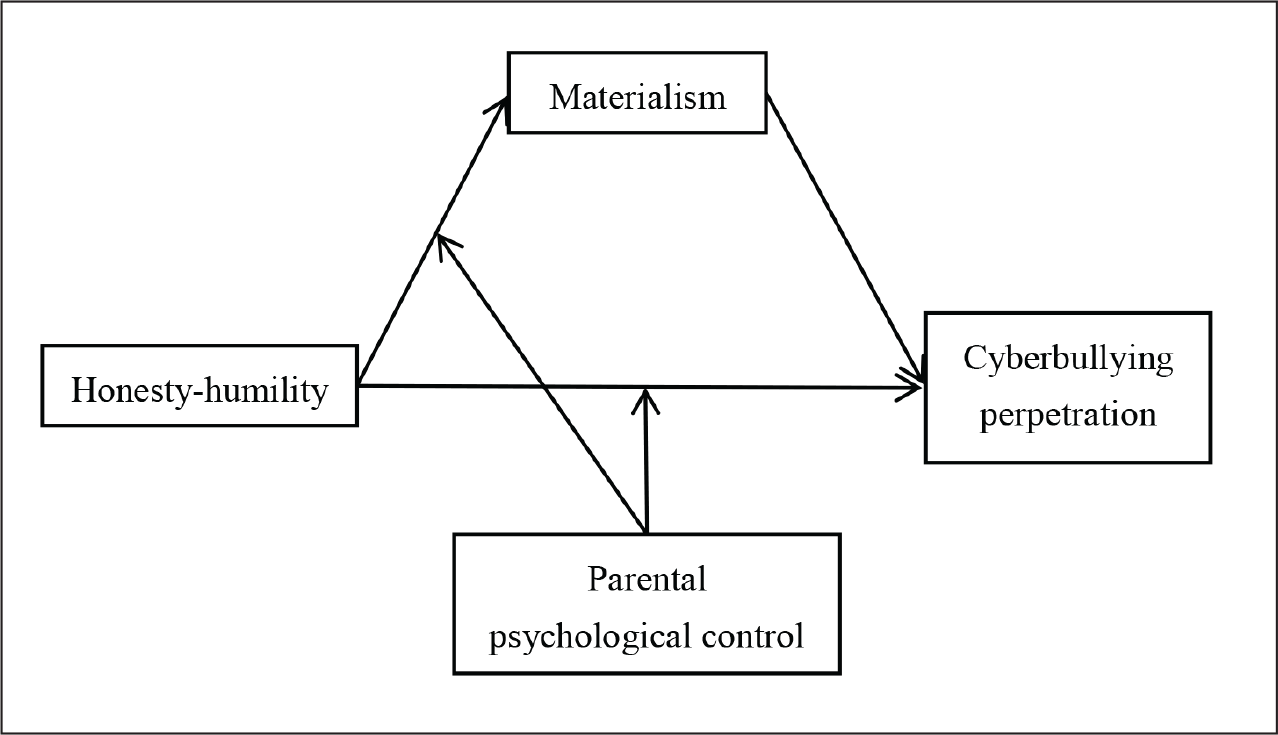
Based on previous empirical evidence, the current study aimed to examine the relationship between HH and CP and further explore how and when HH is related to CP. According to values conflict theory (Burroughs & Rindfleisch, 2002), STOA Model (De Vries et al., 2016), and previous empirical evidence, we proposed the moderated mediating model (Figure 1) to test our hypotheses as follow, which indicated how (mediation) and when (moderation) HH would be associated with CP.
The Assumptive Mediated Moderation Model.
Methods
Participants
The first author contacted the school administrators of two junior high schools of Zibo city and Jinan city in Shandong province. Then, the current study was approved by the local ethics committee of schools and got informed consent. With their approval, the first author issued questionnaires to 1,010 students in these schools, and it was ensured that each of them had owned and used a mobile phone or a computer to connect to the internet in the past year. They completed the questionnaires using their time for individual study. Finally, excluding the students who have not completed questionnaires or answered the questions regularly, 1,002 Chinese adolescents (479 boys and 523 girls) aged 10–16 years (M = 12.95 years, SD = 1.12 years, 17 adolescents did not report their age) volunteered to complete an anonymous self-report questionnaire including their demographic information and all questionnaire items.
Measures
Statistical Analyses
First, all data collected was recorded and processed preliminarily using SPSS 18.0. The outliers and missing data (< .1%) were handled with the mean imputation, which replaced the missing data with the mean of the score of the item to which the missing data belonged. Second, referring to previous studies (e.g., Geng et al., 2018), factor analysis was used to test common method biases. After principal component analysis, 21 eigenvalues > 1 were extracted, and the first factor explained 18.26% of the variance, demonstrating this study did not have significant issues with common method biases (Podsakoff et al., 2003). Third, demographic variables and research variables were analyzed by descriptive statistics, t-tests, and correlation analysis. The fourth step used Model 4 of the PROCESS macro v3.0 for SPSS (Hayes, 2013) to test the total effect of HH on CP and the mediation effect of materialism. Finally, Model 59 of PROCESS macro was used to evaluate the moderating effect of PPC and the hypothetical moderated mediation model.
Results
Descriptive Statistics and Correlation Analysis
Descriptive Statistics and Correlation Matrix of All Variables.
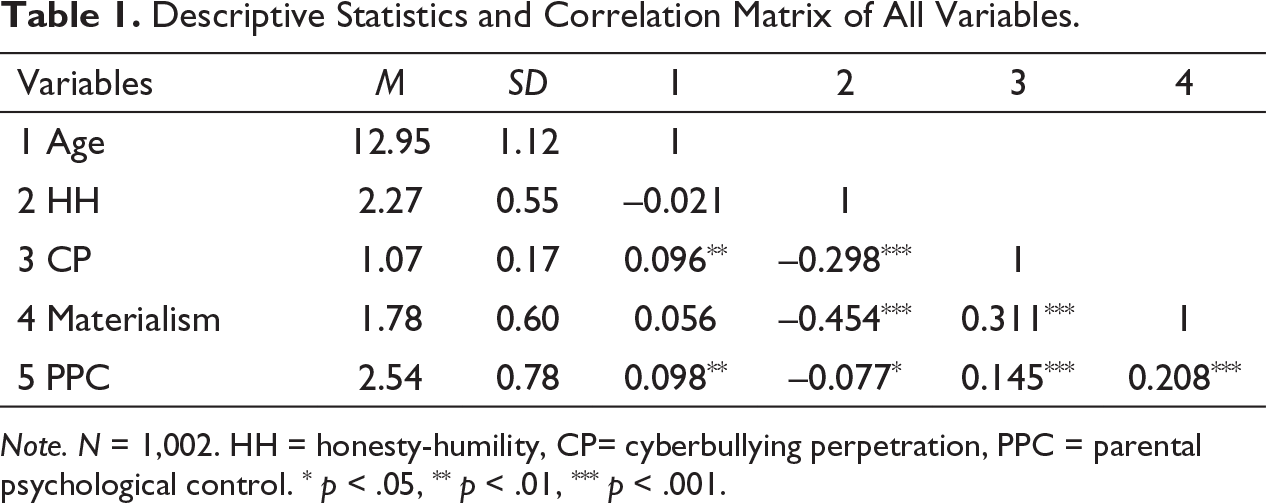
Note. N = 1,002. HH = honesty-humility, CP= cyberbullying perpetration, PPC = parental psychological control. * p < .05, ** p < .01, *** p < .001.
The results of bivariate correlation analyses showed that CP, materialism, and PPC were significantly and positively correlated with each other (p < .001), and they were significantly and negatively correlated with HH (p < .05).
Testing for the Mediating Effect of Materialism
Testing the Mediation Effect in the Relation between HH and CP.
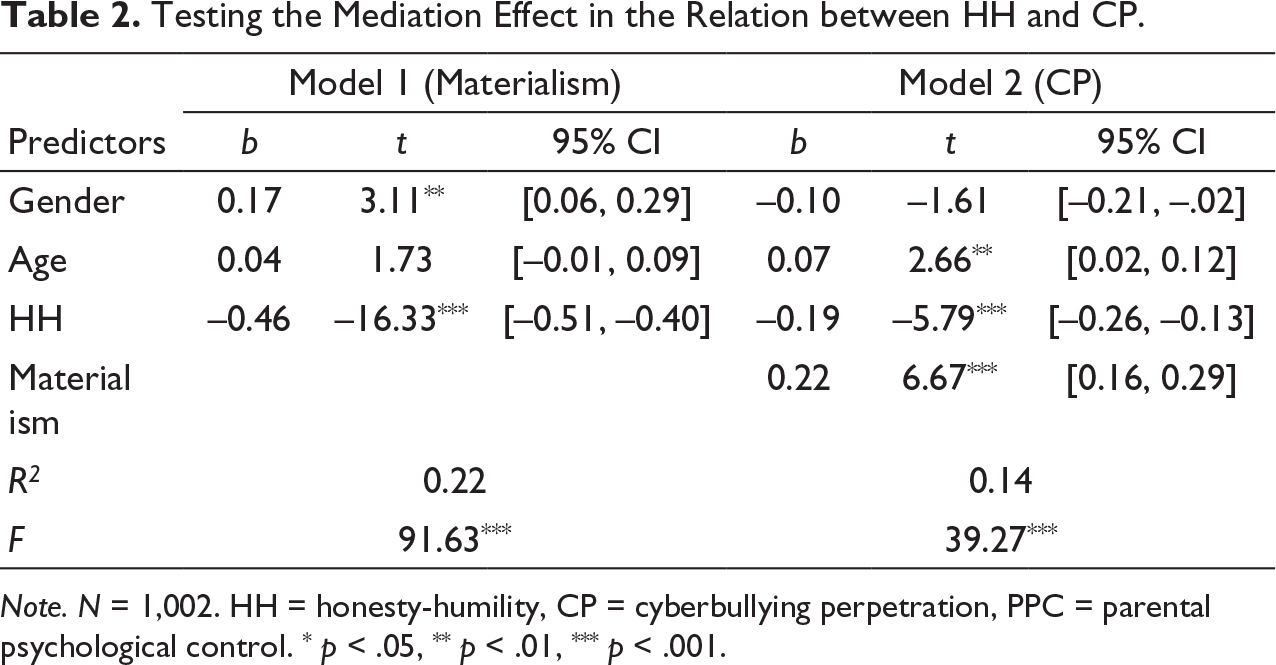
Note. N = 1,002. HH = honesty-humility, CP = cyberbullying perpetration, PPC = parental psychological control. * p < .05, ** p < .01, *** p < .001.
Testing for the Moderating Effect of PPC
Testing the Moderated Mediation Effect in the Relation between HH and CP.
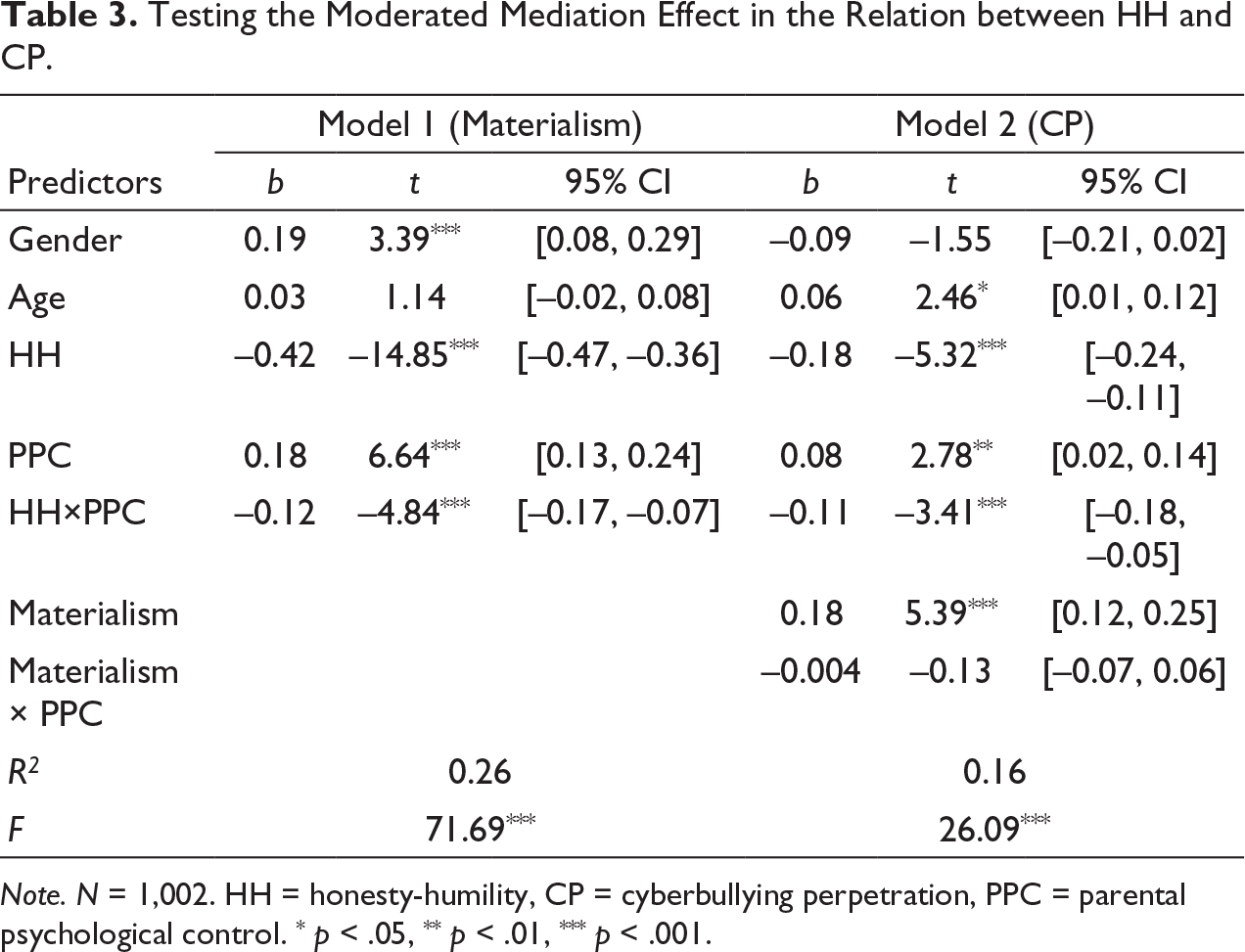
Note. N = 1,002. HH = honesty-humility, CP = cyberbullying perpetration, PPC = parental psychological control. * p < .05, ** p < .01, *** p < .001.
As Table 3 illustrates, HH significantly interacted with PPC on materialism (b = –0.12, p < .001) and CP (b = –0.11, p < .001). Besides, materialism non-significantly interacted with PPC on CP (b = –0.004, p > .05). Thus, the moderated mediation model was supported. Considering that some participants have never cyberbullied others in the last year, we tested the moderated mediation model using the participants who have ever cyberbullied others within the last year. The results indicated that the moderated mediation model was also supported.
The results of simple slope analyses are shown in Figure 2 and Figure 3. The negative and direct associations of HH with materialism and CP were stronger with the increase of PPC. Specifically, for the former, if PPC = M – 1SD, then b = –0.29, p < .001; if PPC = M, then b = –0.40, p < .001; if PPC = M + 1SD, then b = –0.55, p < .001; and for the later, if PPC = M – 1SD, then b = –0.06, p > .05; if PPC = M, then b = –0.17, p < .001; if PPC = M + 1SD, then b = –0.30, p < .001.
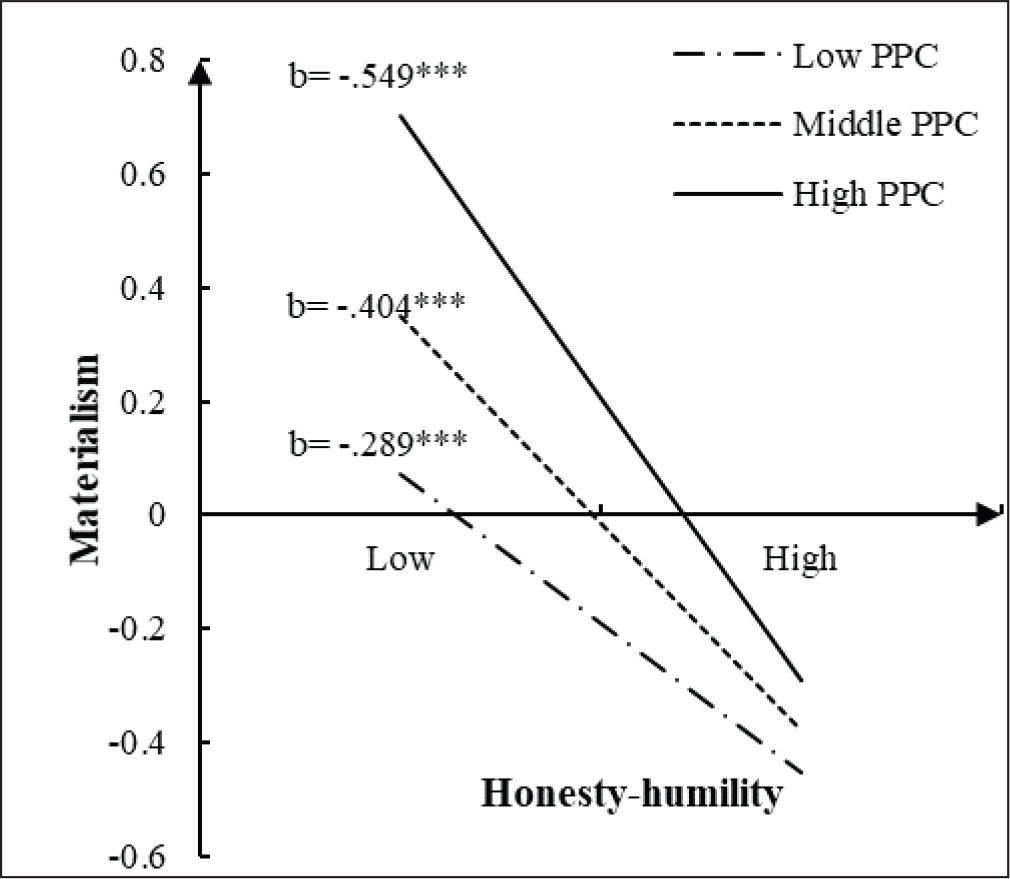
Note. PPC = parental psychological control. *** p < .001.
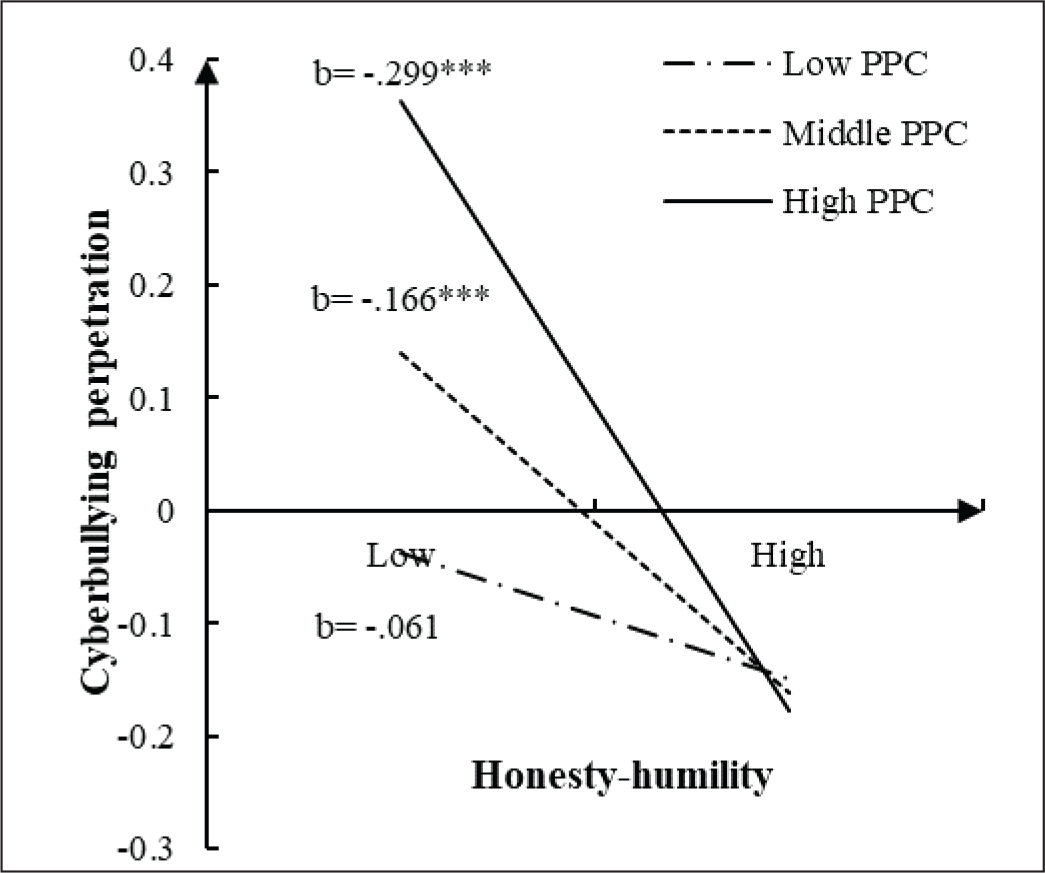
Note. PPC = parental psychological control. *** p < .001.
The results showed the indirect relationship between HH and CP became stronger, with the level of PPC increasing. Specifically, when PPC = M – 1SD, the indirect effect was –0.055 (95% CI = between –0.117 and –0.011), when PPC = M, the indirect effect was –0.075 (95% CI = between –0.138 and –0.025), and when PPC = M + 1SD, the indirect effect was –0.099 (95% CI = between –0.175 and –0.025). Thus, PPC exacerbated the direct and indirect associations between HH and CP.
Discussion
Although the protective effect of HH on traditional bullying perpetration has been found (Book et al., 2012; Volk et al., 2018), much less is known about whether, how, and when HH protects adolescents from engaging in CP. To uncover these puzzles, the total model, mediation model, and moderated mediation model were established and tested. The total model indicated that HH was negatively associated with CP. The mediation model explained how HH was negatively associated with adolescents’ CP. That is, HH decreased the likelihood of CP via decreasing materialism. The moderated mediation model explained when HH decreased the likelihood of CP. That is, when adolescents perceived stronger PPC, low HH was associated with more CP.
HH and CP
We first verified the negative association of HH with CP. That is, adolescents low in HH were more likely to bully others online, which supported Hypothesis 1. This result was consistent with the conclusions of some studies exploring the association of HH with traditional bullying (Book et al., 2012; Farrell et al., 2014; Volk et al., 2018) and internet deviant behavior (e.g., sexting) (Morelli et al., 2020). Low HH has been verified to be positively related to unethical tendencies, including cheating, sexual harassment, unethical business decision making, and deviant behaviors at work (Hershfield et al., 2012; Lee et al., 2003, 2008). Moreover, people low in HH are more likely to engage in criminal activities (Gelder & Vries, 2012). Thereby, individuals low in HH tend to utilize moral disengagement tactics to minimize feelings of guilt and avoid self-sanctions (Ogunfowora & Bourdage, 2014), which in turn increases the risk of CP (Chen et al., 2016). Consequently, adolescents low in HH are more likely to engage in CP.
Mediating Role of Materialism
We expected that materialism would mediate the relationship between HH and CP, which was supported by the results. The results also supported McCrae and Costa’s (2008) model and values conflict theory (Burroughs & Rindfleisch, 2002), inferring that personalities create a foundation for materialistic values, and materialistic values conflict with prosocial values, which may reduce the likelihood of CP. The current study innovatively integrated these theories to explain why adolescents low in HH are more likely to engage in CP. Moreover, these results also supported the explanation mechanism of materialism in the association of a personality trait (HH) with online antisocial behavior (CP), consistent with the models that explain particular types of social behaviors (Harnish & Bridges, 2014; Otero-López & Villardefrancos, 2013). It could be explained that individuals with low levels of HH are more likely to be attracted by luxury goods, prestige, or high social status, and further tend to conduct deviant behaviors (e.g., CP) to achieve their aims (Allgaier et al., 2015).
In addition to the overall mediation results, results of the individual relationships analyzed in our study are also noteworthy. The mediation model reflected that HH was negatively associated with materialism, which was in turn positively related to CP. For the first part of the mediating process, adolescents low in HH tended to endorse materialistic values. This result supported the model of McCrae and Costa (2008) and was consistent with conclusions of previous studies exploring the relationship between HH and materialism (Górnik-Durose & Pilch, 2016; Pilch & Górnik-Durose, 2016). Individuals high in HH tend to “be fair and genuine in dealing with others, in the sense of cooperating with others” (Ashton & Lee, 2007, p. 156), and place less value on power, money, and wealth (Lee et al., 2013). Thus, adolescents low in HH are more likely to endorse materialistic values and strive for money.
For the latter part of the mediation process, adolescents pursuing materialistic goals were more likely to bully others online. This result supported values conflict theory (Burroughs & Rindfleisch, 2002). It was also consistent with the conclusion of a study that explained the positive relationship between materialism and CP from an evolutionary perspective (Wang, Wang, et al., 2021), and the results of studies on antisocial behaviors (Kasser, 2016). Materialistic adolescents tend to make up excuses, remove responsibility, and self-handicap to protect their threatened self-image (Christopher & Schlenker, 2005), thus, they often experience feelings of social anxiety (Christopher et al., 2007), which has been verified to be positively related to CP among Chinese adolescents (Wang, Xie, et al., 2019). Considering the risk effect of materialism on CP and the growing materialistic values among adolescents (Chaplin et al., 2018), it is pressingly needed to make efforts to intervene the materialistic values among adolescents low in HH.
Moderating Role of PPC
To know when HH is related to CP, the current study explored the moderating effect of PPC. The results supported the hypothetical moderated mediation model and indicated that PPC moderated the direct associations of HH with materialism and CP, and the indirect association of HH with CP, supporting Hypotheses 3 and 4.
First, the moderated mediation model indicated that increased PPC exacerbated the direct effect of HH on CP. This study was the first to explore the interaction of HH with a parental factor on CP. Specifically, stronger PPC increased CP among adolescents low in HH, rather than those high in HH. This result supported the STOA Model (De Vries et al., 2016), inferring that some situational factors (e.g., PPC) would increase the differences in behavioral outcomes among adolescents with different levels of HH (Barends et al., 2019). This study expanded the STOA Model to explain the formation of online antisocial behaviors (i.e., CP). This result was also consistent with the studies that found the interaction of HH with situational characteristics on prosocial and antisocial behaviors (Allgaier et al., 2015; Farrell et al., 2017). Based on the description of HH, people high in HH would behave socially desirable irrespective of the situational circumstances, in contrast, those low in HH might behave depending on situational characteristics (Allgaier et al., 2015). PPC frustrates people’s basic needs (Soenens & Vansteenkiste, 2010) which further induces people’s aggression (He et al., 2019). More importantly, even though all individuals were exposed to the same stressor (stronger PPC), individuals low (versus high) in HH were more affected by it (Allgaier et al., 2015). Thus, the adverse effect of PPC on cyberbullying behavior only occurred among adolescents low in HH. It may be explained that adolescents high in HH may think or use other kinds of responses to cope with stressors rather than engage in antisocial behaviors (Allgaier et al., 2015).
Second, the moderated mediation model indicated that increased PPC exacerbated the direct effect of HH on materialism, which further exacerbated the indirect effect of HH on CP. Specifically, adolescents low in HH engaged in stronger materialistic pursuit when they coped with stronger PPC, but those high in HH showed low levels of materialism in general. This result supported the STOA Model (De Vries et al., 2016), inferring that stronger PPC would induce the individual differences of adolescents with different levels of HH. The result was also in line with a study regarding the interaction between student-student relationship and narcissism in shaping materialistic values (Ouyang et al., 2020). The current study extended previous knowledge by testing the interaction of a new trait with a new stressful environmental factor. Adolescents react differently to the same stressor due to different personalities (Bolger & Zuckerman, 1995). It could be plausible that individuals low in HH originally pursue materialistic goals (Górnik-Durose & Pilch, 2016). When exposed to stronger PPC, individuals low in HH tend to pursue materialistic goals to cope with stress and insecurity usefully and effectively before thinking or using other kinds of responses. By contrast, individuals high in HH may give priority to other coping attempts to copy with stressors.
Limitations and Implications
This study contributed to the understanding of how low levels of HH increase the risk of CP and when adolescents low in HH are more likely to conduct CP across different levels of PPC. However, several limitations should be addressed. First, self-report measures of PPC adopted in this study may be influenced by individual factors of adolescents. Thus, future studies could use multiple informants (mothers, fathers, and children) and objective measures of PPC (observations of parent-child interactions, interviews) to assess PPC, and test the moderating effect of objective PPC on the association of HH with CP. Second, the conclusion was tested only in a group of Chinese young adolescents (aged 10–16 years), which limited the generalization of our conclusions. China is a collectivist society that emphasizes parent-child relationship, thereby the parental behaviors are more likely to affect adolescents’ psychological status and behaviors in Chinese society than in individualistic societies (Wang et al., 2020). Moreover, the relationship between materialism and CP may be different across different cultural contexts (Li & Guo, 2008). Thereby, the conclusions of this study should be verified across different cultural contexts in future. Third, our sample was only recruited from junior high schools and the sample size was relatively small, indicating poor representativeness. Thus, a future study could increase the sample size, investigate elementary school students, senior high school students, and even college students, so as to analyze the relationship between HH and CP in different age groups. Fourth, the current analyses examined the relationships among the research variables with a small number of CP occurring. Thereby, the conclusion should be further tested using groups in which individuals report higher rates of CP within the past year. Finally, a correlational method was adopted in the current study, limiting the possibility of drawing causal conclusions. Thus, a longitudinal design could be used to test our conclusions in future.
Despite the aforesaid limitations, the results of this study had some important practical and theoretical implications. From the perspective of practical value, three practical implications are addressed. First, the current study revealed adolescents low in HH were more likely to perpetrate cyberbullying, which reminds parents, schools, and intervenors to pay more attention to adolescents low in HH. We should develop targeted interventions especially for those low in HH. Personality education is an effective strategy to cultivate the HH trait and further alleviate CP (Zhao et al., 2019). Second, low HH increases the risk of CP via strengthening adolescents’ materialism. Thereby, effective CP psychological interventions of adolescents low in HH should aim at decreasing materialism, which could include blocking materialistic messages from the environment, increasing felt personal security, and encouraging intrinsic/self-transcendent values/goals (Kasser, 2016). Third, the current study indicated that stronger PPC could increase the risk of CP among adolescents low in HH, reminding intervenors to intervene in parenting behaviors and reducing PPC in the CP intervention programs. Specifically, trainers could lead parents to give children unconditional love and support, and to adopt democratic and adaptive parenting behaviors. Due to parents’ beliefs that “my child is my report card”, improving Chinese parents’ self-worth and helping them to realize their child’s independence may be effective in decreasing PPC and CP (Geng et al., 2022). Given the reciprocal nature of PPC and adolescent behaviors (Scharf & Goldner, 2018), helping adolescents low in HH improve their behavior through cognitive-behavioral strategies such as problem-solving skills may also decrease PPC and CP.
From the perspective of theoretical value, the current study revealed that the interaction of a new personality (HH) with a new parental moderator (PPC) in shaping adolescents’ CP, which enriched the content of the SECF-C (Cross et al., 2015) and the research achievements of social behavioral outcomes of HH. Moreover, this model can help researchers understand the adverse effect of low HH on adolescents’ CP. Specifically, PPC is a key risk factor that exacerbates the adverse effect of low HH on materialism and CP. These results can motivate future studies to further explore the underlying relationship mechanism between HH and CP such as exploring the moderating effects of other family-related factors and situational factors. Finally, despite the limited generalization, conducting this study in China has important cultural implications. Chinese people place importance on preserving the integrity of their group and evaluations by others. Thereby, students who are afraid of being caught in traditional bullying may be more likely to engage in cyberbullying (Choi & Kruis, 2019). In fact, the prevalence of adolescents’ CP in China was higher than in other countries (Brochado et al., 2017). Previous studies have highlighted the value and importance of examining bullying and cyberbullying trajectories within a collectivist cultural context (Cho & Lee, 2020; Choi & Kruis, 2019). Thus, examining the cyberbullying trajectories using Chinese adolescent participants can provide a full explanation of cyberbullying. Besides, although HH is a universal trait, it has a special meaning in the Chinese culture. HH is the personality of a gentleman who shows a greater ability to balance interests between themselves and the collective, and effectively regulates emotional reaction and psychological wellness in traditional Chinese culture (Lin et al., 2020). Thus, HH may play a more important role in CP among Chinese people. Chinese culture emphasizes parent-child relationships, therefore, parental behaviors (e.g., PPC) are more likely to affect adolescents’ psychological status and behaviors in the Chinese society than in individualistic societies (Geng et al., 2022). Thereby, the current study has important cultural implications.
Footnotes
Declaration of Conflicting Interests
Funding
The author(s) declared the following financial support for the research and/or authorship of this article: The present study was supported by the Fundamental Research Funds for the Central Universities, and the Research Funds of Renmin University of China (21XNH092).

Author Biographies
Jingyu Geng is a PhD student at the Department of Psychology in Renmin University of China. Her research takes on cyberbullying, internet addiction, smart phone addiction, personality, and parenting.
Pengcheng Wang is a PhD at the School of Education in Renmin University of China. His research takes on cyberbullying, internet addiction, smart phone addiction, phubbing, personality, and parenting.
Pan Zeng is a PhD student at the Department of Psychology in Renmin University of China. His research interest is cyber psychology.
Ke Liu is a PhD student at the Department of Psychology in Renmin University of China. Her research interest is cyber psychology.
Li Lei is a Professor at the School of Education in Renmin University of China. His research experiences have focused on developmental psychology and cyber psychology.