



Abstract
Sexual violence (SV) is common among college students, but the vast majority of these experiences are not formally reported to institutions of higher education (IHEs). While it is well known that alcohol and drug use is highly associated with SV, little is known about whether policies and procedures regarding substance use (SU) at IHEs may contribute to low rates of reporting. This study describes the association between SU violations and SV reporting at IHE campuses in the US and examines whether SU amnesty policies are associated with more SV reporting. Linear regression was used to estimate the association between SU violations and SV reporting and assess differences between IHE campuses by amnesty policy status. Around 50% of campuses between 2001 and 2018 document neither SV reports nor SU violations. IHE campuses with amnesty policies have more SV reports. On average, IHEs with amnesty policies have 2.7 SV reports per 1000 students and an additional 0.02 SV reports for each SU violation per 1000 students. Amnesty policies that reduce the potential costs of reporting like facing disciplinary action for alcohol or drug use are positively associated with both the level and rate of SV reporting. Institutions of higher education administrators interested in making reporting an option for more SV survivors should examine how their policies, especially those related to alcohol, may play in creating barriers to SV reporting.
Introduction
Sexual violence (SV), any sexual activity without consent or under coercion including rape, sexual assault, unwanted touching, sexual harassment, exploitation, stalking, and surveillance (Basile et al., 2016; Centers for Disease Control, 2020), is prevalent among US college and university students (Cantor et al., 2017, 2020; Howard et al., 2019; Kimble et al., 2008; Krebs et al., 2007; Smith et al., 2018; Voth Schrag & Edmond, 2018), and formal reporting to institutions of higher education (IHE) is uncommon (Cantor et al., 2020; Fisher et al., 2000; Sabina & Ho, 2014). While it is well known that alcohol and drug use is highly associated with SV, little is known about whether policies and procedures regarding substance use at IHEs may contribute to low rates of reporting. This study advances the literature on SV and substance use by characterizing the association between substance use violations and SV reporting at IHEs across the US. Specifically, this study quantifies differences between IHEs with documented substance use amnesty policies and those without these amnesty policies.
Sexual Violence and Reporting to IHEs
Overall, 13% of students experience SV since enrolling at their current IHE (Cantor et al., 2020). There are substantially higher prevalence rates among subgroups of students; 25.9% for women undergraduates and 22.8% for transgender, non-binary, and genderqueer undergraduate students (Cantor et al., 2020). Unwanted sexual experiences are also common among students who attend community college. Nearly a quarter of community college students reported multiple SV experiences since enrolling in their current institution (Howard et al., 2019). However, prior research estimates that SV is reported to official authorities (e.g., law enforcement, campus police, Title IX) at alarmingly low rates among college students, between 0% and 13% (Cantor et al., 2020; Fisher et al., 2000; Sabina & Ho, 2014). Campus-level policies can play a role in reporting decisions. Relevant policies include the availability of anonymous reporting, survivor advocacy (e.g., access to confidential and trained support staff, housing and class accommodations), and others. The availability of anonymous reporting reduces the potential costs associated with SV reporting (e.g., time participating in investigation and/or hearing, loss of privacy). Trained survivor advocates are not available on all campuses, but research shows that positive and helpful responses to informal disclosures increase the likelihood that a person will formally report (Orchowski et al., 2013). Thus, formal SV reports best characterize the SV experiences of those who make the choice to report and who are able to bear the costs of reporting, but may not be generalizable to all SV experiences. Therefore, campus safety and crime data are best described as a proxy for campus climate towards SV instead of an accurate measure of SV prevalence (Palmer & Alda, 2016). Prior studies find that additional funding and additional audits are both associated with higher rates of SV reporting (Palmer & Alda, 2016; Yung, 2015), suggesting that campus safety and crime data best reflect whether or not a particular campus’ climate adequately addresses student needs to report SV.
Alcohol and Drug Use and SV Reporting
Both alcohol and drug use are risk factors for experiencing SV, but alcohol is the most frequently used substance (Anderson et al., 2017) and has the most prominent connection to SV (Abbey, 2011; Abbey et al., 1996, 2004; Littleton et al., 2009; Testa, 2002; 2004; Testa et al., 2003; Testa & Livingston, 2009). Over half of sexual assaults involve alcohol use by the victim, perpetrator, or both (Abbey et al., 2001). Previous work has evaluated whether the use of alcohol by the offender or the victim influences SV reporting among female college students at four- and two-year institutions (Fisher et al., 2003). They found that alcohol use by either party is associated with decreased formal reporting to police and campus authorities (Fisher et al., 2003). Individuals who were drinking at the time of SV tend to have high levels of distress and self-blame (Abbey et al., 2001; Littleton et al., 2009; Pitts & Schwartz, 1993; Testa & Livingston, 2009; Ullman & Najdowski, 2010). Alcohol and the alcohol policy environment at IHEs both play a role in influencing SV reporting. Recent work suggests that the focus should be on IHE environments and the way that policies, procedures, and institution norms factor into the prevalence of alcohol, drug use, and SV and also how IHE policies and procedures may encourage or deter SV reporting (Krause et al., 2019; Moylan & Javorka, 2020). While individual incident characteristics play a large role in reporting, the extent to which campus policies influence the reporting decision is not well studied despite campus administrators expressing concerns about that their own policies and procedures may have on reporting. Around 50% of college campus administrators believe their alcohol and/or drug policies are a barrier to reporting SV (Karjane et al., 2002), but there is little to no empirical evidence to support or contradict these concerns.
The Current Study: Alcohol and Drug Use Amnesty and SV Reporting
In the early 2000s, the Campus Sexual Assault Policy Study summarized SV-related policies among a nationally representative sample of Title IX eligible IHEs (Karjane et al., 2002). More recently, Richards (2019) examined changes to SV-related policies over the years that followed (2002–2015). Not all recommended policies have been widely or consistently adopted at all IHEs (Richards, 2019). As of 2015, alcohol and drug use amnesty policies, policies which provide amnesty or immunity to either survivors or bystanders who report SV and were using drugs and/or alcohol when the violence occurred, have not been widely implemented. Only 15% of all sampled IHEs had a substance use amnesty policy in 2015, with the highest rates of documented policy among public 4-year IHEs (40%), 4-year private IHEs (35%), historically black college or university (HBCU; 26%), and substantially lower rates at all other IHE types (0–7%). Richards (2019) suggests that amnesty policies impact SV reporting through two primary pathways. First, they encourage individuals who experience SV who may fear facing campus disciplinary action to report SV anyway by reducing the risk that reporting leads to punishment or sanctions. Second, they remove a potential deterrent for witnesses and/or bystanders who may consider intervening in or reporting SV but “are dissuaded by fear that they will be penalized” because of alcohol or drug use (Richards, 2019). This study seeks to understand whether IHE alcohol or drug use amnesty policies play a role in SV reporting. Specifically, this evaluation quantifies the difference in the association between alcohol/substance use violations and SV reporting among IHE campuses with documented alcohol/drug use amnesty policies and those without this policy. These objectives will provide IHE administrators with more information about the role of their substance use policies on SV reporting and enhance our understanding of IHE-level barriers to reporting.
Methods
Study Population and Data Sources
The population of interest for this study was all IHEs in the United States who participated in Title IV. This included research universities, state colleges and universities, private religious and liberal arts colleges, for-profit colleges, and many community colleges. This study used data from three primary sources. First, data on SV and substance use violations from 2001 to 2018 was obtained from the Campus Safety and Security Survey (CSS), administered by the US Department of Education (US Department of Education, 2021). Each annual survey collected campus-level data for the previous three calendar years and allowed institutions to correct previously submitted data in a subsequent collection year. Therefore, the most recent year of data available with corrected reports was 2018. Second, campus-level characteristics were obtained from the Integrated Postsecondary Education Data System (IPEDS) of the National Center for Education Statistics at the Institute of Education Sciences. Both IPEDS and CSS are federal data programs that are mandatory for IHEs who participate in or are applicants for any federal student financial aid program (such as Pell grants and federal student loans authorized by Title IV of the Higher Education Act of 1965, as amended (20 USC 1094, Section 487(a)(17) and 34 CFR 668.14(b)(19)). Not all IHE campuses recorded in IPEDS had populated CSS data between 2001 and 2018, largely because they did not participate in Title IV and were not required to submit incidents to CSS. Lastly, data from Richards (2019) was used to characterize both SV and alcohol and drug use amnesty policies as of 2015 from a random sample of Title IV participating IHE campuses. There were 4531 unique IHE campuses included in the sample in this study, and 540 unique IHE campuses used in analyses examining alcohol and drug use amnesty policies. Figure 1 shows how these three data sources were combined and how the availability of CSS data and amnesty policy information restricted our sample. IRB approval was not required as the use of publicly available, institution-level data was not considered human subjects research. Data source availability and combination.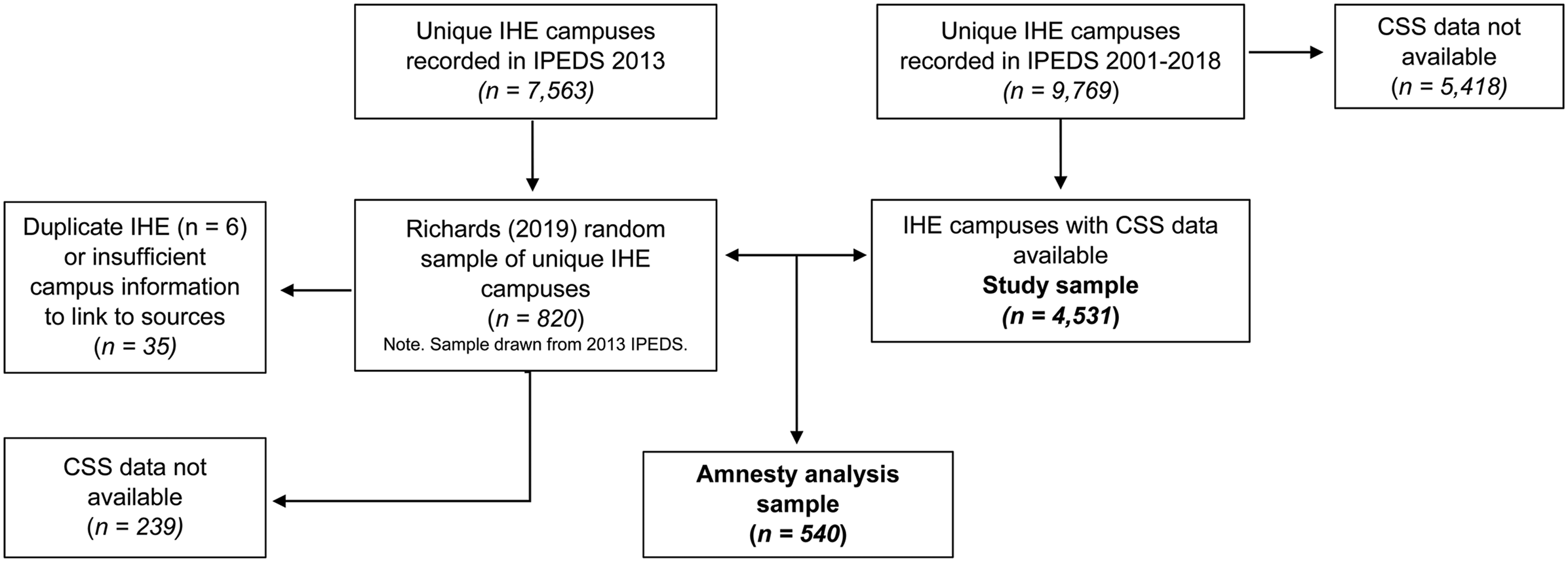
Measures
Student enrollment
We measured the enrollment of both undergraduate and graduate students at each institution over a 3-year period. This included both full-time and part-time students at each campus for each institution. Student enrollment was used to create rates of alcohol violations, drug violations, and SV reports per 1000 enrolled students and was obtained from IPEDS.
Alcohol violations
The number and rate of alcohol violations per 1000 students enrolled was calculated using the count of violations of state or local laws or ordinances prohibiting various actions involving alcohol and liquor as reported by each IHE campus to CSS over a 3-year period. According to CSS, these violations included possessing, furnishing, selling, transporting, and manufacturing liquor, maintaining unlawful drinking locations, and bootlegging or attempting to do so. It also included furnishing alcohol to a minor, underage possession, using a vehicle for transportation of alcohol, and drinking on public transportation. It did not include driving under the influence and public drunkenness.
Drug violations
The number of drug violations and rate of drug violations per 1000 students enrolled was calculated using the count of violations of state or local laws prohibiting the production, distribution, and/or use of certain controlled substances and the equipment or devices utilized in their preparation and/or use reported by each IHE campus to CSS over a 3-year period. These violations included the cultivation, manufacture, distribution, sale, purchase, use, possession, transportation, or importation of any controlled drug or narcotic substance. It also included arrests for violations of state and local laws pertaining to controlled substances. Controlled substances included opium, cocaine, and its derivatives (morphine, heroin, and codeine), marijuana/cannabis, synthetic narcotics (e.g., methadone), and dangerous nonnarcotic drugs (e.g., barbiturates).
Sexual violence reports
The number of SV reports and rate of SV reports per 1000 students enrolled was calculated using the count of SV reports over a 3-year period as documented by each IHE campus to CSS. SV reporting changed during the study period. In the data prior to 2014, SV reports were separated into two categories, non-forcible and forcible sex offenses. Sex offenses (non-forcible) included incest defined as sexual intercourse between persons who are related to each other within the degrees wherein marriage is prohibited by law, and statutory rape defined as non-forcible sexual intercourse with a person who is under the statutory age of consent. Sex offenses (forcible) included any sexual act directed against another person, forcibly and/or against that person’s will or where the person was incapable of giving consent. This category included rape, sodomy, sexual assault, and fondling. The number of reports from these two categories were added together to create the total number of SV reports between 2001 and 2013. Starting in 2014, SV reporting was decomposed into four categories, incest, statutory rape, rape, and fondling. The number of reports from these four categories were added together to create the total number of SV reports between 2014 and 2018. Reports on domestic violence, dating violence, and stalking were also available in CSS data starting in 2014 but are not included in these analyses to keep the classification of SV consistent across time.
Alcohol and drug use amnesty policy
This policy reduces the risk that someone reporting SV (e.g., the person who experiences it, a bystander) will face disciplinary action for alcohol and drug use violations. Amnesty policies varied by institution, but in general they stated that those who report SV will not be disciplined or university officials have the option to not use disciplinary action for involved substance use violations. This measure was a binary variable coded as a one if the IHE campus has the policy as of 2015 and a zero if they do not. Information on these policies was obtained from Richards (2019) and was only available for a random sample of IHEs. Policy information was not available for 3991 of the 4531 IHE campuses in our sample. Institutions of higher education campuses without amnesty policy status were excluded from the amnesty policy analyses.
Institutional characteristics
Several campus-level characteristics were obtained from IPEDS including IHE region (e.g., Mid-East, Southwest, Rocky Mountains, and Far West), IHE level (e.g., 4 years or more, less than 2 years), and IHE control (e.g., public, private—for profit, and private—not for profit). We also obtained whether an IHE was a HBCU or a tribal IHE. Region, IHE level, and IHE control were all categorical variables. Historically black college or university and tribal status were both coded as binary variables (one yes, zero no).
Other SV reporting policies
In sensitivity analyses, other SV reporting policies were considered including, (1) the ability to report anonymously, (2) on campus advocacy availability, (3) documented procedures students should follow after SV, and (4) having a dedicated Title IX coordinator. Each of these policies may have an impact on SV reporting at IHE campuses and confound the relationship between amnesty policies and SV reporting. Each of these policy measures was a binary variable coded as a one if the IHE campus had the policy/infrastructure as of 2015 and a zero if not. Information on these other SV reporting policies was also obtained from Richards (2019) and was only available for a random sample of IHE campuses.
Statistical Analyses
All campus-specific counts of alcohol and drug violations and SV reports were aggregated to IHE campus-level counts over a 3-year period. Rates of SV reporting and alcohol and drug violations per 1000 enrolled students were calculated by dividing the 3-year count of SV reports at each IHE campus and the number of alcohol violations and drug violations over a 3-year period at each IHE campus by the average student enrollment at that institution across the 3-year period. Descriptive statistics, numbers and percentages, were calculated for all institutional characteristics for two groups, degree-granting IHEs and non-degree granting, primarily post-secondary IHEs. Means and standard deviations were also calculated for those two groups for total student enrollment, the count and rate of SV reports per 1000 students, the count and rate of alcohol violations per 1000 students, and the count and rate of drug violations per 1000 students. These statistics were also calculated by amnesty policy status for the smaller sample of campuses with this information available (n = 540).
The prevalence of IHE campuses reporting SV and/or alcohol violations in each 3-year period was calculated for the full sample (n = 4531) over the study period, 2001–2018. These prevalence rates were calculated for four mutually exclusive groups: (1) IHE campuses reporting no SV, (2) IHE campuses reporting no alcohol violations, (3) IHE campuses reporting neither SV nor alcohol violations, and (4) IHE campuses reporting both SV and alcohol violations.
Alcohol and drug use amnesty policy status as of 2015 was available from Richards (2019) for a random sample of IHE campuses. This reflects the year the policies were identified, not when the policies were introduced or implemented. The sample from Richards (2019) was drawn based on the 2013 IPEDS survey and uses a two-stage sampling methodology. For an institution to be included in the Richards (2019) sampling frame, the IHE had to meet the following criteria: (1) U.S. institution, (2) provides at least some instruction on a physical campus, and (3) receives or participates in Title IV federal funding that requires IHEs to comply with federal legislation. The two-stage sampling strategy resulted in a nationally representative sample of all IHE sector types as well as the total population of HBCU and Tribal institutions. The sampling methodology is described in further detail in Richards (2019). The policy status dates ranged from February 2015 to June 2015. Both amnesty policy status and CSS data were available for 540 IHE campuses. Because the sampling strategy from (Richards, 2019) generated a nationally representative random sample of IHEs across institution types, the combined sample from Richards and the CSS data can be considered representative of IHEs participating in Title IV funding.
Linear regression was used to estimate the association between substance use environments, measured as alcohol and drug use violations per 1000 students in each 3-year period, and SV reporting, measured as SV reports per 1000 students in each 3-year period among the random sample of 540 IHE campuses for whom amnesty policy status was available. Each model included an intercept, which represents the number of SV reports per 1000 students when no alcohol and/or drug use violations were reported. An unadjusted model of the association between alcohol and drug use violations and SV reporting was estimated to describe the first objective. Several additional regressions were used to quantify the differences in SV reporting across IHEs with an alcohol and drug use amnesty policy. A model adjusting for the amnesty policy status was estimated. This specification measures both the association described in the first objective while assessing whether or not there were level differences in SV reporting at IHEs with an amnesty policy compared to IHEs without an amnesty policy. In addition, a model was estimated with both the intercept and the association between alcohol and drug use violations and SV reports to differ by the amnesty policy status. This allowed both level and rate differences in SV reporting to be estimated at IHEs with an amnesty policy compared to IHEs without an amnesty policy.
Sensitivity Analyses
Several sensitivity analyses were conducted. First, the sensitivity of results to the inclusion/exclusion of outliers was assessed. Second, results were adjusted for other SV IHE policies described previously that may have a direct impact on SV reporting. Lastly, results were also adjusted for institutional characteristics (e.g., US region, 2-year or 4-year, public or private, HBCU status, and tribal status). All statistical analyses were performed using RStudio version 1.3.
Results
Institutions of Higher Education sample characteristics
Characteristics of Institutions of Higher Education (IHEs), 2001–2018.

Note. IHEs = Institutions of higher education; HBCU = historically black college or university.
Summary Statistics, Alcohol and Drug Use Violations and SV Reports
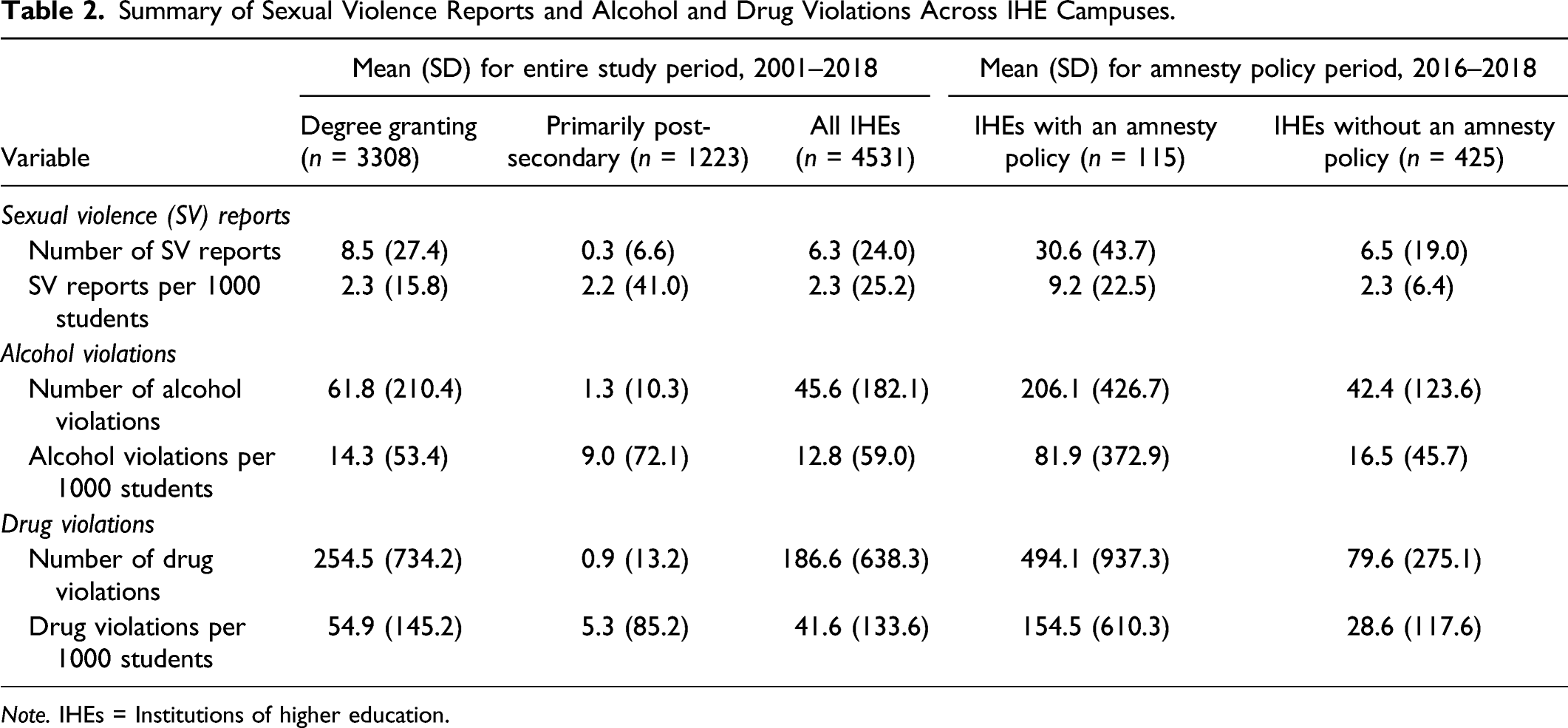
Summary of Sexual Violence Reports and Alcohol and Drug Violations Across IHE Campuses.
Note. IHEs = Institutions of higher education.
Changes in Alcohol Violations and SV Reports Over Time, 2001–2018
Number and Percent of IHE Campuses Reporting SV and/or Alcohol Violations by Time Period, 2001–2018.

Note. IHEs = Institutions of higher education; SV = Sexual violence.
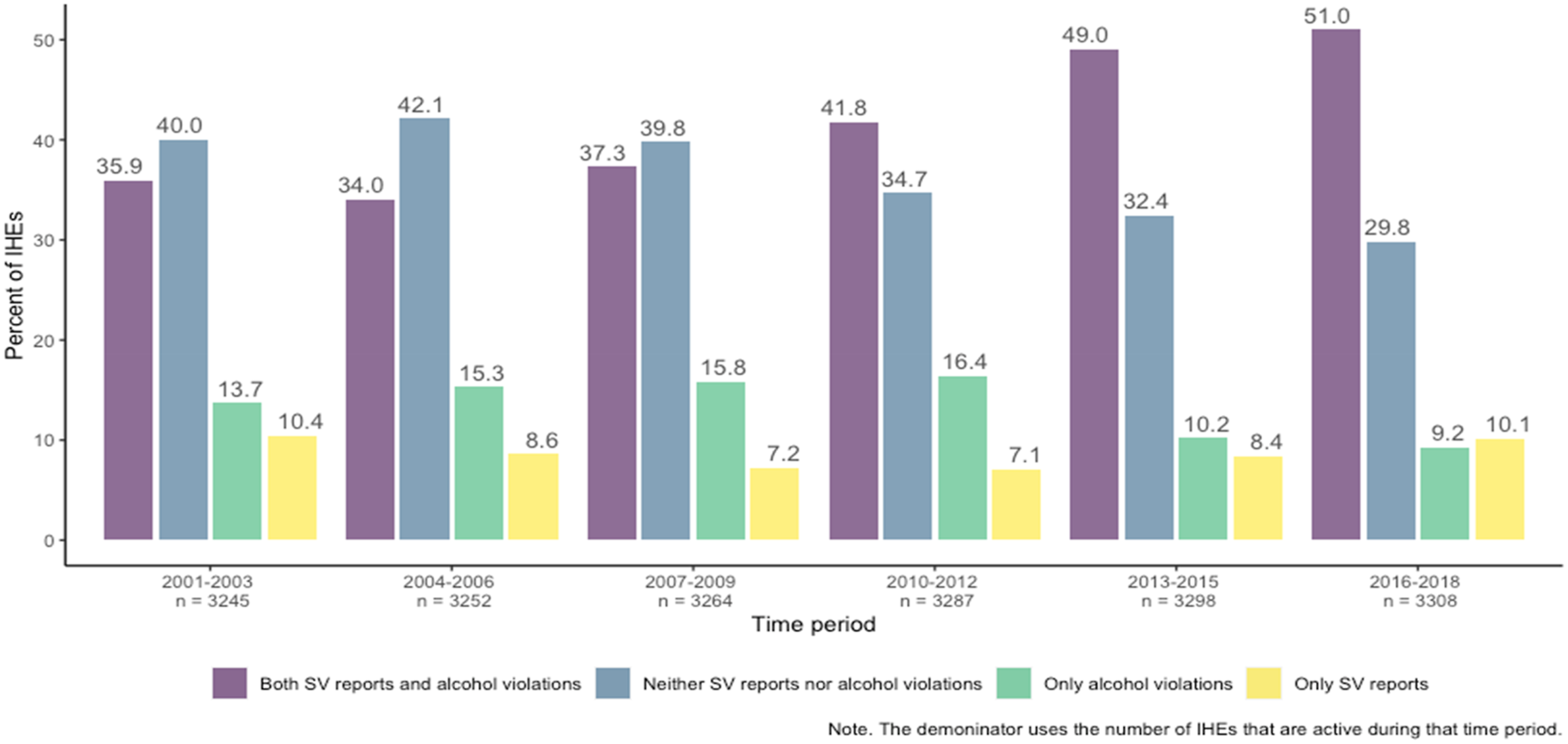
Degree-granting IHEs reporting SV and/or alcohol violations by time period, 2001–2018. IHEs = Institutions of higher education; SV = Sexual violence.
Association of Alcohol and Drug Use Violations and SV Reporting
Association Between Alcohol and Drug Violations and SV Reporting at IHEs.

Note. IHEs = Institutions of higher education; SV = Sexual violence.
Notes. All models are estimated using ordinary least squares (OLS) where SV reports per 1000 students enrolled is the dependent variable. All p-values are denoted by stars and are reported for two-way t-tests examining the null hypothesis that each coefficient is equal to zero. p-values indicate a rejection of the null hypothesis at the following levels for alpha:
*** p < 0.001, ** p < 0.01, * p < 0.05.
Alcohol and Drug Use Amnesty Policy
Table 4 also presents the estimated changes in the association between substance use violations and SV reports by amnesty policy status. IHEs with an amnesty policy have an average 2.66 SV reports per 1000 students compared to IHEs without an amnesty policy who have an average 1.26 SV reports per 1000 students (Column 2). IHEs with amnesty policies have more SV reports on average with a similar positive relationship between alcohol and drug use violations and SV reporting. On average, IHEs with amnesty policies have 3.00 SV reports per 1000 students when no alcohol and drug use violations are reported, and an additional 0.02 SV reports for each additional alcohol and/or drug use violation per 1000 students (Column 3). IHEs without amnesty policies have less SV reports and a similar relationship between alcohol and drug violations and SV reporting. On average, IHEs without an amnesty policy have 1.03 SV reports per 1000 students when no alcohol and drug use violations are reported, and an additional 0.03 SV reports for each additional alcohol and/or drug use violation per 1000 students. This suggests that amnesty policies are related to both the level of SV reporting and the rate of SV reporting especially on campuses with higher alcohol and/or drug use violations. These results show that while there are large differences in SV reporting on average between schools with and without amnesty policies (Table 2), the size of these differences in SV reporting also depends on the rate of alcohol & drug violations across institutions (Table 4).
Sensitivity Analyses
Description of IHE Campuses Omitted From Amnesty Analyses.

Note. IHE = Institutions of higher education; CSS = Campus Safety and Security Survey.
Discussion and Conclusion
The results in this study show stark differences in SV reporting between degree granting and non-degree granting IHE campuses and also demonstrate how alcohol and drug use amnesty policies are associated with more SV reporting at IHE campuses. These results also illustrate the potential and the capacity of IHE policies and infrastructure, specifically alcohol and drug use policies, to enable SV reporting. Taken together, our findings suggest that IHE policy can increase both the average level of SV reporting and the rate of SV reporting, especially for policies that reduce the potential costs of reporting SV like facing disciplinary action for alcohol or drug use. However, substantially more work is needed to meet SV survivors needs and revise reporting systems and processes to align with survivor preferences.
Prior work consistently estimates that those who inflict SV on others are likely to recidivate including those who are incarcerated and those who are never detected (Knight & Thornton, 2007; Lisak & Miller, 2002; Rabe-Hemp & Braithwaite, 2013). Among college men who endorse committing at least one act of sexual coercion and/or sexual assault, 68% engage in repeated sexual coercion and/or assault and around a third increase the severity of violence in repeated events (Zinzow & Thompson, 2015). All of these studies suggest that repeated SV offenses are likely more common than estimated because of exceptionally low rates of SV reporting. Because of these high rates of recurrence, it is a necessary but not sufficient component for reducing incidence of SV that reporting be a viable option for survivors. Improved rates of reporting must be paired with effective and evidence-based intervention programs that reduce rates of recidivism after a report is filed. Our findings suggest that IHE policies play a role in SV reporting and should be studied further to better understand their impact on both SV prevalence and SV reporting. More research is needed to identify additional policies or the key implementation components of policies like amnesty policies that may help enable reporting.
Furthermore, this study demonstrates stark differences in support structures across IHE types. In this study, non-degree granting primarily post-secondary IHEs were much more likely to document no SV reports, despite studies documenting high rates of SV at some of these IHEs (Howard et al., 2019). Community colleges and other primarily post-secondary IHEs often have substantially less funding or resources for SV prevention, reporting, support, and healthcare services that are available to students at degree granting, and/or 4 year colleges/universities (Palmer & Alda, 2016). Given high rates of SV and intimate partner violence studied recently (Howard et al., 2019; Voth Schrag & Edmond, 2018), it is critical that resources be appropriately directed to these IHEs to support both the health and educational needs of students experiencing interpersonal violence and to support the viability of having the option to report. Some of these IHEs may have insufficient structure including Title IX personnel and funding to support SV services that their students may require.
Limitations and Future Directions
There are several limitations of the study. Because CSS data includes only incidents of SV that are reported, the results of this study should not be generalized to incidents of SV overall. In addition, alcohol violations from CSS exclude driving under the influence and public drunkenness. These violations are relevant and may better represent the association between substance use and SV. Future work should aim to obtain more information on relevant substance use. Further, the number and proportion of IHEs documenting neither SV reporting nor alcohol and/or drug use violations in addition to the number and proportion of IHEs not available in CSS data altogether is a limitation.
We were unable to examine intra-institution differences in SV reporting over time because the amnesty policy information was only available at a snap-shot in time, 2015, when the policies were reviewed. This limitation is prohibitive for understanding the relationship between amnesty policy and SV reporting. In addition, alcohol and drug use amnesty policies vary across IHEs. Future work should consider to what extent the exact framing and implementation of these policies can influence SV reporting. For example, The University of Washington’s policy reads “A conduct officer may elect not to initiate a conduct proceeding regarding alcohol or other drug violations against a student who, while in the course of helping another student seek medical assistance, admits to the unlawful possession or use of alcohol or drugs, provided that the possession was for personal consumption and the use did not place the health or safety of any other person at risk. The University may initiate an assessment or educational discussion or pursue other non-disciplinary options regarding alcohol or other drug use” (Student Conduct Policy for Discriminatory and Sexual Harassment, Intimate Partner Violence, Sexual Misconduct, Stalking, and Retaliation, 2021). This stated policy does not provide amnesty or immunity explicitly, and without further research it is difficult to know how this policy is implemented in practice. The wording from Indiana University is considerably clearer. “The university strongly encourages students to report instances of discrimination, harassment and/or sexual misconduct. Therefore, students who report an incident pursuant to this policy will not be disciplined by the university for violations of the Code of Students Rights, Responsibilities & Conduct related to their drug and/or alcohol consumption in connection with the reported incident. Students are also afforded immunity against certain charges for alcohol-related crimes under Indiana’s Lifeline Law in connection with a report of a medical emergency, so long as they cooperate with law enforcement at the scene” (Discrimination, Harassment, and Sexual Misconduct, 2021). In this study, both types of policies, implied and more explicit, were considered amnesty policies. Thus, additional research describing and documenting the implementation procedures surrounding alcohol and/or drug use amnesty policies will be critical to understanding exactly what components of these policies are acceptable, feasible, and sustainable for IHEs serving different study populations in different jurisdictions and legal environments.
Importantly, the institution-level data used in this study prohibited us from examining differential trends or associations of alcohol and drug use amnesty policies among students from diverse backgrounds. Both SV and alcohol and substance use disorders disproportionately harm students of color, and racism continues to perpetuate additional harms both in the course of reporting SV and in seeking help and treatment for substance use. One key challenge for alcohol and drug use amnesty policies is whether and how racism may contribute to differential implementation of these policies for students from different groups. Further work is needed to examine and inform equitable implementation of these policies.
Overall, our findings demonstrate that amnesty policies are associated with more SV reporting to IHEs and there are sizable differences in SV reporting across different IHE types. These findings suggest that IHE policy and infrastructure can either inhibit or enable SV reporting. Campus administrators should consider how their alcohol and SV policies may influence whether or not their campus provides a climate that gives SV survivors the option to report. The prevalence of SV on college campuses has remained high and mostly unchanged since the 1980s (Muehlenhard et al., 2017), but there is limited rigorous evidence on policies, programs, or interventions can prevent SV (Basile et al., 2016). Institutions of higher education administrators interested in SV prevention can provide additional details about their campus policies and procedures for further research. Collaborations between researchers and IHE campus administrators could lead to meaningful new solutions to eliminating this long-standing problem.
Footnotes
Acknowledgments
The authors would like to sincerely thank Dr Tara Richards for sharing her prior work and dataset on sexual violence policies. Dr Bedard-Gilligan is supported by National Institute of Alcohol Abuse and Alcoholism (NIAAA) (R01AA027499, PI: Bedard-Gilligan). The funder did not participate in the study concept and design, data collection and analysis, interpretation of results, the drafting of the manuscript, or the decision to submit the manuscript for publication.
Declaration of Conflicting Interests
The author(s) declared no potential conflicts of interest with respect to the research, authorship, and/or publication of this article.
Funding
The author(s) disclosed receipt of the following financial support for the research, authorship, and/or publication of this article: This work was supported by National Institute on Alcohol Abuse and Alcoholism.

Appendix
Association Between Alcohol Violations and SV Reporting at IHEs. Notes. All models are estimated using ordinary least squares (OLS) where SV reports per 1000 students enrolled is the dependent variable. All p-values denoted by stars and are reported for two-way t-tests examining the null hypothesis that each coefficient is equal to zero. p-values indicate a rejection of the null hypothesis at the following levels for alpha. *** p < 0.001, ** p < 0.01, * p < 0.05.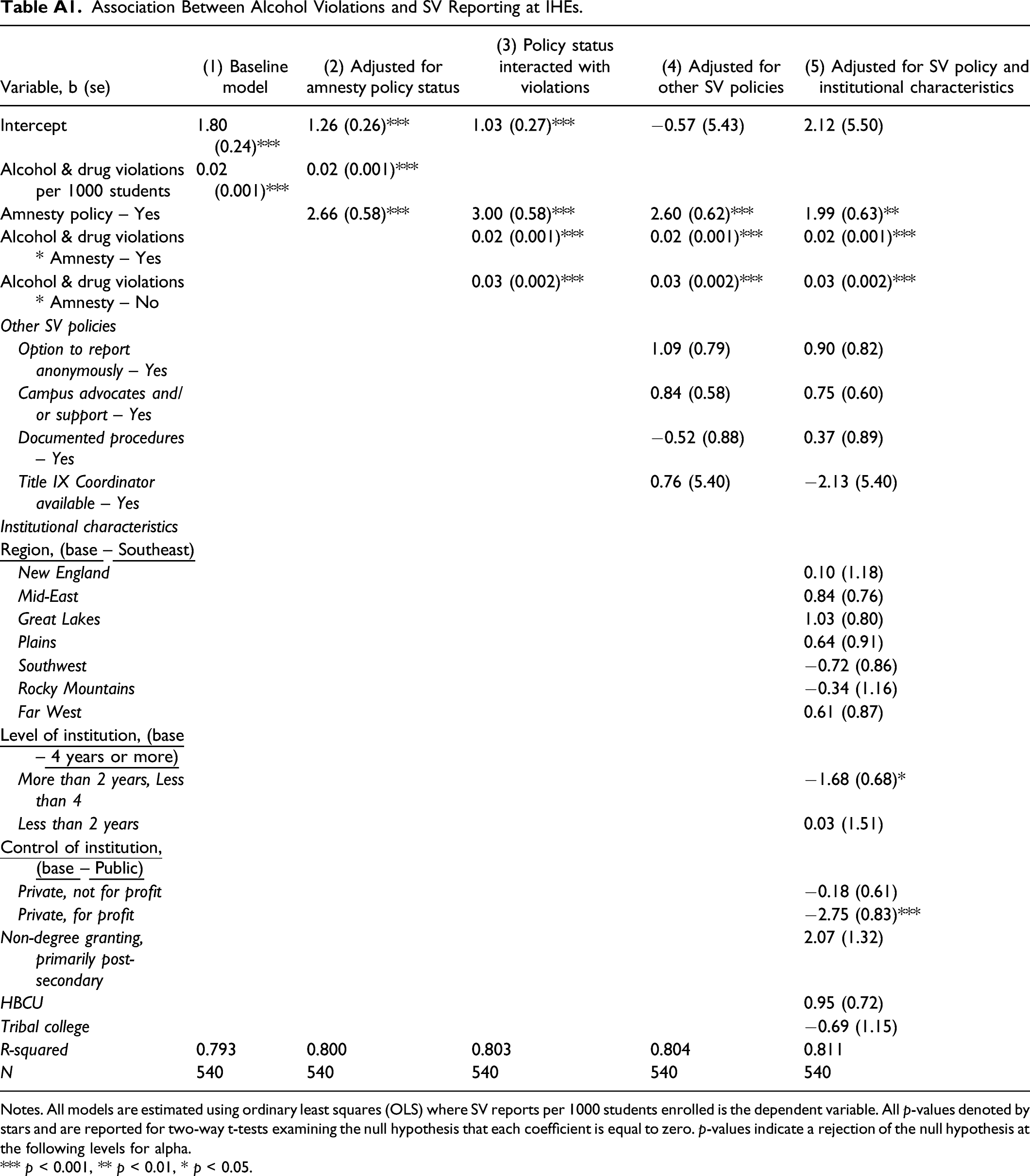
Variable, b (se)
(1) Baseline model
(2) Adjusted for amnesty policy status
(3) Policy status interacted with violations
(4) Adjusted for other SV policies
(5) Adjusted for SV policy and institutional characteristics
Intercept
1.80 (0.24)***
1.26 (0.26)***
1.03 (0.27)***
−0.57 (5.43)
2.12 (5.50)
Alcohol & drug violations per 1000 students
0.02 (0.001)***
0.02 (0.001)***
Amnesty policy – Yes
2.66 (0.58)***
3.00 (0.58)***
2.60 (0.62)***
1.99 (0.63)**
Alcohol & drug violations * Amnesty – Yes
0.02 (0.001)***
0.02 (0.001)***
0.02 (0.001)***
Alcohol & drug violations * Amnesty – No
0.03 (0.002)***
0.03 (0.002)***
0.03 (0.002)***
Other SV policies
Option to report anonymously – Yes
1.09 (0.79)
0.90 (0.82)
Campus advocates and/or support – Yes
0.84 (0.58)
0.75 (0.60)
Documented procedures – Yes
−0.52 (0.88)
0.37 (0.89)
Title IX Coordinator available – Yes
0.76 (5.40)
−2.13 (5.40)
Institutional characteristics
New England
0.10 (1.18)
Mid-East
0.84 (0.76)
Great Lakes
1.03 (0.80)
Plains
0.64 (0.91)
Southwest
−0.72 (0.86)
Rocky Mountains
−0.34 (1.16)
Far West
0.61 (0.87)
More than 2 years, Less than 4
−1.68 (0.68)*
Less than 2 years
0.03 (1.51)
Private, not for profit
−0.18 (0.61)
Private, for profit
−2.75 (0.83)***
Non-degree granting, primarily post-secondary
2.07 (1.32)
HBCU
0.95 (0.72)
Tribal college
−0.69 (1.15)
R-squared
0.793
0.800
0.803
0.804
0.811
N
540
540
540
540
540