



Abstract
Exceptionally high rates of partner violence perpetration are evident among men returning from prison. Two bodies of scholarship, one on family stress and another on exposure to state violence, each suggest that criminal legal system exposure could promote partner violence perpetration via changes in men’s behavioral health and interpersonal approach and in couples’ conflict dynamics. Such relationships have not been tested in quantitative research. Structural equation models were fitted to longitudinal, couples-based survey data from the Multi-site Family Study on Incarceration, Parenting, and Partnering. Participants included men returning from a state prison term in five U.S. states (N = 1112) and their committed intimate or co-parenting partners (N = 1112). Models tested hypothesized pathways from three dimensions of criminal legal system exposure to later partner violence perpetration. In fitted models, men’s childhood criminal legal system exposure predicts their post-prison partner violence perpetration via adult post-traumatic stress symptoms, reactivity, avoidance, and dysfunctional couple conflict dynamics. Men’s cumulative criminal legal system exposure in adulthood predicts their post-prison partner violence perpetration via addiction and dysfunctional couple conflict. These initial results suggest that mass-scale incarceration could worsen partner violence via men’s psychological and interpersonal adaptations to criminal legal system contact, particularly when such contact is sustained or occurs at a developmentally significant period in the life course.
Keywords
Introduction
Partner assault is more common than any other form of violence, affecting almost one in five Americans (Breiding, 2015; Sumner et al., 2015). Women who partner or parent with returning prisoners appear to be at exceptionally high risk for intimate partner violence (IPV) victimization: Several large studies find rates five to 10 times those seen in the general-population (McKay et al., 2018; Western, 2004; Wildeman, 2012). In a time of mass incarceration, 22% of American women (including 30% of Black women) report partnering with someone with a history of incarceration (Enns et al., 2019). In major American cities, 44% of unmarried new mothers report that the father of their child was recently in jail or prison (Jones, 2013). Yet research on the relationship between incarceration or other criminal justice system exposure and IPV remains very limited (Stansfield, Semenza, et al., 2020), representing “the most disappointing gap” in scholarship on mass incarceration’s collateral consequences (Wildeman et al., 2019, p. 18S; Wildeman & Lee, 2021).
The current study applies structural equation modeling (SEM) with longitudinal data from the Multi-site Family Study on Incarceration, Parenting and Partnering to begin to address this gap. In the fitted models, CJS exposure that is developmentally significant or intensive increases the likelihood of future IPV perpetration. Model results suggest that psychological and interpersonal adaptations to CJS contact may help to explain this association.
Mass Incarceration as Family Stress
For more than four decades, the United States has mounted a historically and internationally exceptional campaign of state force in the name of crime control (Drakulich et al., 2012; Wildeman, 2016). Americans are incarcerated at four times the rate of Britons and more than 10 times the rate of those in Northern European democracies such as Denmark, Sweden, and the Netherlands (Pettit & Gutierrez, 2018). Though imprisonment rates have now declined slightly from their 2008 peak, the number of formerly incarcerated Americans continues to rise, and one in three Black men is living with a felony conviction record (Shannon et al., 2017).
Scholars of family stress suggest that criminal justice system (CJS) contact places prolonged, multi-dimensional strain on the family system (Arditti, 2012). The stress of incarceration, among the most serious and well-studied forms of CJS contact, appears to proliferate from affected individuals to their children, partners, and households (Arditti, 2016; Poehlmann-Tynan & Arditti, 2018; Turney, 2014b; Turney & Sugie, 2021). As a major family stressor, incarceration is associated with a host of negative changes in partner and parenting relationships, including the dissolution of committed intimate partnerships (Khan et al., 2011; Uggen, 2016; Western & McLanahan, 2000) as well as harsh parenting and maltreatment of children (Austin, 2016; Turney, 2014a; Wakefield, 2015).
Research on other major extrafamilial stressors, such as financial hardship and acculturation, demonstrates that such stressors can promote IPV (e.g., Caetano et al., 2007; Matjasko et al., 2012). Family stress research also highlights changes in behavioral health and interparental conflict as broadly important mechanisms linking family stressors to other negative family outcomes (e.g., Conger et al., 1994; Ponnet, 2014). Consistent with the family stress perspective, extensive evidence indicates that the stress of CJS contact tends to erode behavioral health among already vulnerable individuals (Massoglia & Pridemore, 2015; Schnittker et al., 2012; Sewell & Jefferson, 2016; Sugie & Turney, 2017; Turney et al., 2013). Behavioral health conditions are, in turn, strongly and consistently associated with partner violence perpetration (Barrett et al., 2014; Breet et al., 2019; Crane et al., 2014; Hahn et al., 2015; Reingle et al., 2014). Further, qualitative research suggests that the stress of CJS contact could promote partner violence perpetration via changes in men’s interpersonal approach that make dysfunctional conflict (and ultimately, the use of violence against a partner) more likely (Bobbit et al., 2011; Comfort, Krieger, et al., 2018; Hairston & Oliver, 2006, 2011; Oliver & Hairston, 2008).
Typological research, too, highlights the role of family stress processes in most IPV, typically classified as situational couple violence. Unlike classic battering (“coercive controlling violence”), which represents a systematic effort by one partner to control the other, most IPV is heavily situational: exacerbated by extrafamilial strains, behavioral health issues, and dysfunctional approaches to conflict (Johnson, 1995, 2008). Latent class analysis of IPV reports suggests that most IPV in the households of returning prisoners is also situational: it occurs in the context of escalated conflict rather than as a tool of systematic control (McKay et al., 2020). Yet very little research has examined whether, and by what processes, the family stress of CJS contact might promote IPV (Stansfield, Semenza, et al., 2020).
Mass Incarceration as State Violence
Incarceration and reentry are fundamentally violent processes. Arrest, detention, and ongoing confinement are each accomplished through the routine use of force (Seigel, 2018). Expected uses of force by police and jail personnel are accompanied by other, non-routine forms of victimization (Grosholz & Semenza, 2021; Kramer & Remster, 2018). For those sent to prison, sexual assault by correctional officers and other inmates is a serious threat (Beck, Berzofsky, et al., 2013; Beck, Cantor, et al., 2013; Beck et al., 2010). In addition, although representative estimates of non-sexual violence against prisoners do not exist, prisoners appear also to be regularly exposed to injuries from physical assault (Bierie, 2012). Reentry, too, is fraught with violence. People returning from prison often reside in high-violence neighborhoods (Johnson & Kane, 2016; Morenoff & Harding, 2014)—and even within disadvantaged communities, released prisoners are more likely than their peers to be targeted for street violence, evident in high rates of homicide (Binswanger et al., 2007; Willoughby et al., 2020).
Thus, various forms of CJS contact may be considered as exposures to violence. Exposure to violence is a robust predictor of violence perpetration: Witnessing violence and being a victim of violence each promote the later use of violence against a partner in the general population (Costa et al., 2015; Schumacher et al., 2001) and among men involved in the CJS (Wagers et al., 2021). Exposure to violence produces complex neuroendocrine changes in youth and adults, with cascading implications for later family behavior (Keeshin et al., 2012).
The violence of CJS contact in the mass incarceration era represents more than the sum of its parts, however. The authoritarian control such violence effects in poor, Black communities (Hinton, 2016; Hinton & Cook, 2021) was not a policy mistake nor a “grand social experiment” (Frost & Clear, 2009, p. 159). It was, and is, classic state violence: the use of force by a power-holding group to suppress or eliminate the power of another (Weingarten, 2004). In the United States, such force and its racialized application have been normalized as an ordinary and necessary part of government operations (Seigel, 2018). But it may also be uniquely harmful: Research with state violence survivors finds that violence sustained in “a context in which one group has the power to decide and enact what is to be validated as ‘real’ for all other groups” inflicts especially deep and enduring damage (Hernández, 2002, p. 17).
State violence survivors experience a distinctive set of physiological, psychological, and cultural disruptions that have been linked to long-term harm (Eyerman, 2001; Kellerman, 2001; Brave Heart, 2000; Brave Heart et al., 2011). Ethnographic research among indigenous women suggests that mass-scale state violence exposure promotes IPV perpetration (Burnette, 2015). Studies with refugees of the Rwandan and Sudanese genocides and Lebanese survivors of the Israeli-Hezbollah War offer preliminary support for this connection: They find that state violence exposure in the context of war and genocide boosts post-traumatic stress, which (in turn) is linked to IPV perpetration (Meffert & Marmar, 2009; Usta et al., 2008; Verduin et al., 2013). Research with combat veterans also finds extremely high rates of IPV perpetration after exposure to wartime violence (Heyman & Neidig, 1999; Marshall et al., 2005), with post-traumatic stress appearing as a likely pathway from exposure to IPV perpetration (Birkley et al., 2016).
Like the family stress literature, state violence research highlights behavioral health as an important potential mechanism connecting CJS exposure to IPV perpetration. In addition, the state violence literature highlights the possibility that effects of CJS exposure in a time of mass incarceration are not reducible to sum of stressful individual or family experiences. Rather, state violence research suggests that those exposed to multiple or developmentally significant CJS contacts may become habituated to a sense of constant and inescapable threat. This habituated sense of being in hostile territory could alter survivors’ approaches to familial relationships as well. Indeed, research with combat veterans finds that deployment-related trauma exposure promotes reactivity (a tendency to respond impulsively to stimuli) and avoidance in familial interactions (Brockman et al., 2016). Research with returning prisoners suggests that incarceration also appears to promote reactivity (Haney, 2003; McCorkle, 1992; Wildeman et al., 2014). Reactivity and avoidance, in turn, promote IPV perpetration in the general population (Birkley et al., 2016; Caetano et al., 2008; Romero-Martínez et al., 2019; Schafer et al., 2004; Shorey et al., 2011; Velotti et al., 2020; Yakubovich et al., 2018).
Dimensions of Criminal Justice System Contact in the Mass Incarceration Era
Research on family stress in households affected by incarceration suggests that incarceration demands intensive, disruptive adaptations in the family unit and has far-reaching negative consequences for family members. From this perspective, a single incarceration event could promote violence in the family via family stress pathways (Stansfield, Semenza, et al., 2020). Even within a single incarceration experience, however, much potential variation exists. From a family stress perspective, differences in duration or conditions of confinement could be highly salient in relationships between the incarcerated and their partners (Uggen, 2016). Such variation is rarely captured in research on the consequences of incarceration (Wildeman et al., 2018) and has been little studied in relation to post-prison partner violence. However, one study finds that the duration of a prison term predicts change in partner violence from pre-to post-incarceration (Stansfield, Mowen, et al., 2020). Whether the characteristics of a recent incarceration experience make IPV perpetration more likely remains unknown.
Research on the sequelae of state violence exposure points to the importance of looking beyond the effects of a single incarceration to the repeated, encompassing nature of CJS contact that members of racially targeted communities experience over a lifetime. Studies with survivors of state violence in the context of armed conflict find that those exposed to state violence as children experience uniquely “pervasive and sustained” impacts on later-life coping and well-being, likely due to the developmental timing of the neuroendocrine changes they experience (Kadir et al., 2019, p. 24). The accumulation of such contacts in adulthood may matter as well. Arrest, conviction, and incarceration have contingent and cumulative effects over the life course (Kurlychek & Johnson, 2019; Patterson & Wildeman, 2015) and preliminary evidence suggests that this accumulation (captured as lifetime convictions) does shape post-prison partner violence (Stansfield, Mowen, et al., 2020). Still, little research has examined to what extent early-life CJS exposures or accumulated CJS exposures during adulthood might influence IPV perpetration, net of any effects of the most recent incarceration experience.
Criminal Justice System Contact, IPV, and the Propensity to Use Violence
Psychological theories of IPV suggest an alternate explanation for high rates of IPV perpetration among those in heavy contact with the CJS. Some individuals may have a generalized propensity for violence, using violence against their partners and also against those outside the family (Holtzworth-Munroe & Stuart, 1994). Those who commit severe violence against their partners do tend to be more violent outside the home, including engaging in violent crime (Hamberger et al., 1996; Holtzworth-Munroe et al., 2000; Waltz et al., 2000). Since over half (55%) of state prisoners are serving time for violent crimes (Bronson & Carson, 2019), the association between CJS exposure and later IPV perpetration could be a spurious one, driven by the underlying propensity (or lack of propensity) to use violence.
Current Study Contribution
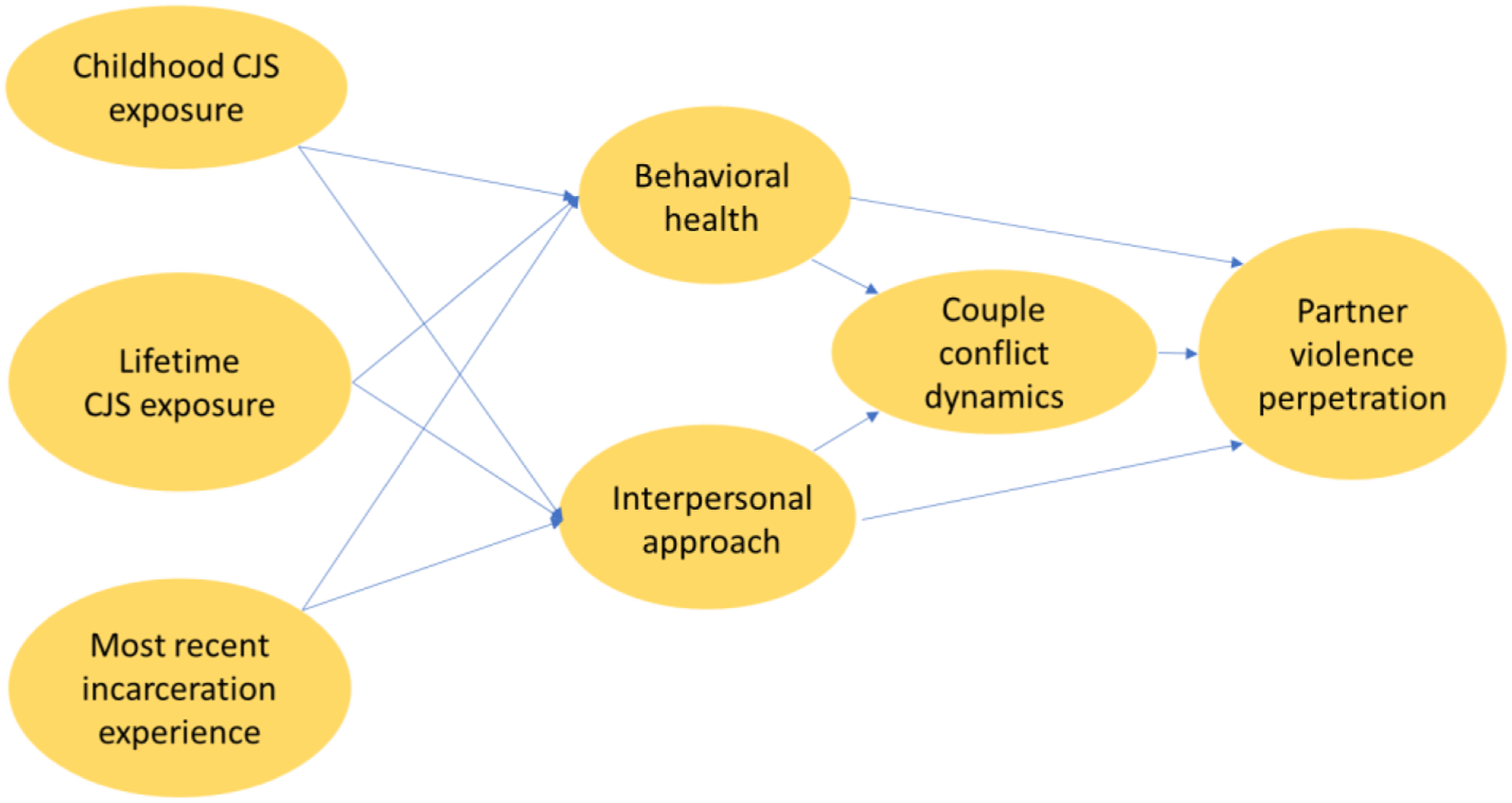
Family stress theories, applied to families affected by incarceration, propose that incarceration promotes later IPV via changes in men’s behavioral health and in couple conflict dynamics. State violence literature, too, points to behavioral health as a key mediating factor that could connect CJS exposure to IPV. The state violence perspective also points to changes in men’s interpersonal approach to their family relationships, particularly avoidance and reactivity, as potential mediating factors. These bodies of scholarship inform two hypotheses (see Figure 1): 1. Men’s CJS exposure predicts behavioral health problems, which predicts later partner violence directly and indirectly (via couple conflict dynamics). 2. Men’s CJS exposure promotes an “institutionalized” interpersonal style, which predicts later partner violence directly and indirectly (via couple conflict dynamics). Pathways from CJS contact to intimate partner violence perpetration.
Alternatively, it is possible that an underlying propensity for violence could make some individuals more likely to come into contact with the CJS and also more likely to use IPV.
The current study investigates these relationships by applying SEM with data from the Multi-site Family Study on Incarceration, Parenting and Partnering. It tests the two study hypotheses while partially controlling for the alternative possibility that the male partner’s propensity for violence independently influences his CJS contact and IPV perpetration.
Multi-site Family Study data contain paired longitudinal reports from both partners regarding men’s behavioral health and interpersonal approach, conflict within the couple, and partner violence as well as reports of the conditions of the male partner’s most recent incarceration, his childhood CJS exposures, and his cumulative contact with the CJS in adulthood. The study makes a unique contribution by testing how these three dimensions of CJS exposure influence later partner violence (net of each of the other dimensions) and examining potential mediating factors suggested by scholarship on family stress and state violence.
Method
Data Source
The Multi-site Family Study on Incarceration, Parenting and Partnering (“Multi-site Family Study”) recruited 1991 incarcerated men and 1482 of their intimate or co-parenting partners from five states. Eligible men were incarcerated in state prison at the time of enrollment and had to identify as being in a committed intimate or co-parenting relationship with a different-sex partner (see Lindquist, Steffey et al., 2018 for further detail). Each couple member was interviewed separately at baseline and again 9, 18, and (in the largest two study sites) 34 months later; most male participants were released at some point during study follow-up. Surveys lasted approximately 90 minutes and covered participants' family lives and involvement with the CJS; sensitive questions, including those about partner violence, were answered via audio computer-assisted self-interviewing. Response rates for returning prisoners and their partners was generally at least 75% for each interview wave. Protocols were approved by the United States Office for Human Research Protections, state departments of correction, and an Institutional Review Board at RTI International. The current study, which used deidentified survey and qualitative interview data, was determined not to constitute research with human subjects per the United States Code of Federal Regulations (45 CFR 46, 102).
Measures
Criminal justice system exposure
Three dimensions of men’s CJS contact were measured using self-report items: childhood CJS exposure (including age at first arrest; number of parents, parent figures, or grandparents arrested; and number of stays in juvenile detention); lifetime CJS exposure (including lifetime number of arrests, convictions, and adult prison or jail incarcerations); and conditions of confinement (including duration, number of transfers, and days spent in solitary confinement). In the study sample, comprised entirely of individuals with substantial CJS contact, indicators of the different dimensions of CJS exposure were correlated weakly enough to be modeled in distinct constructs; correlation coefficients did not exceed .1 (see Table A1). Variables with large ranges were standardized.
Behavioral health
Men’s self-reported post-traumatic stress symptoms were captured using a composite based on the four-item Primary Care PTSD Screen (Prins et al., 2004) and two individual items on fearfulness and preoccupation. For all three variables, higher values indicated worse symptoms. Self-reported addiction problems were measured with two composites based on the CAGE 5-item problem drinking questionnaire and 4-item problem drug use questionnaire (Mayfield et al., 1974) and a single item indicating how often the respondent experienced anger problems when drinking or using drugs. Higher values on these items indicated greater problems.
Interpersonal approach
Two dimensions of interpersonal approach were measured. Reactivity was measured using three self-report, Likert-type items (such as, “You often respond quickly and emotionally when something happens”). An avoidant, uncooperative approach was measured with three Likert-type items (such as, “People involved with you have to learn how to do things your way”). Higher values indicated greater reactivity or avoidance/uncooperativeness.
Couple conflict dynamics
Couple conflict dynamics were measured using five self-report survey items that captured how often the couple was able to manage conflict in non-destructive ways (for example, maintaining a sense of humor when arguing, not letting small issues escalate), with higher values indicating healthier conflicts. Both couple members’ reports, for a total of 10 variables, were included.
Physical partner violence perpetration
Men’s physical violence perpetration with their study partners was measured at each post-release wave using items on physical violence from the Revised Conflict Tactics Scale (Straus et al., 1996). Both couple members were asked separately about their own and their partner’s use of violence, including how many times one partner shoved, hit, slapped, grabbed, threw something at, strangled, slammed, kicked, burned, or beat the other; used a knife or gun on the other; or forced the other to have sex by hitting, holding down, or using a weapon. A standardized variable representing incidents of physical IPV by the male partner across post-release interview waves was constructed from both partners’ reports.
Analytic Approach
To test the study hypotheses, a set of SEMs was constructed using Stata 15.1 (StataCorp, 2018). Models were estimated using a fixed-effects approach that treats the within-individual clustering of observations over time as non-random and potentially correlated with the variables of interest (Andersen, 2019). This approach presents two key advantages. First, given significant ethical and logistical challenges to experimental research on the study hypotheses, it supports preliminary analysis of a potential causal pathway in nonexperimental data (Tarka, 2018). Second, given the complexity of the constructs of interest and a lack of formally validated measures for CJS contact, the latent variable approach embedded in SEM provides empirical feedback on the measurement strategy and accounts for measurement error when estimating the strength of the hypothesized relationships (Kaplan, 2009).
For computational feasibility and ease of interpretation, hypotheses were tested in four structural equation models. Each model was tested in the basic form suggested by the hypotheses. Adjustments to the models focused on achieving convergence (e.g., adjusting starting values); additional controls or other parameters were not added to improve fit. Models took advantage of multiple waves of Multi-site Family Study data; constructs in each model were operationalized in a manner that reflected their temporal position in the hypothesized sequence of events (see Table A2 and Figure 1, below). Each model controlled for whether the male partner had been incarcerated for a violent crime. Models also controlled for the age of each couple member, as IPV perpetration and victimization are strongly correlated with younger age (Yakubovich et al., 2018). Full information maximum likelihood procedures (Arbuckle et al., 1996) were used, retaining all available observations. Standard errors were estimated using the observed information matrix method. A review of histograms indicated that several indicators of couple conflict dynamics violated the assumption of multivariate normality. Re-estimating with a Satorra-Bentler correction, robust to non-normality, produced similar results (see Allison, 1987).
Model fit was assessed using the root mean squared error of approximation, which is stable across sample sizes and estimation methods (Fan et al., 1999) and preferred for confirmatory modeling and larger samples (Rigdon, 2009). Comparative Fit Index (CFI) and Tucker-Lewis Fit Index (TLI) were also examined. All approximate statistics were compared to empirically based cutoffs (Hu & Bentler, 1999). Chi squared estimates, and p-values for those estimates, were also examined as indicators of absolute model fit. However, the chi squared test can be expected to reject the null hypothesis with samples of more than 200 cases (as in the current study) even with well-fitting models.
Sample Characteristics
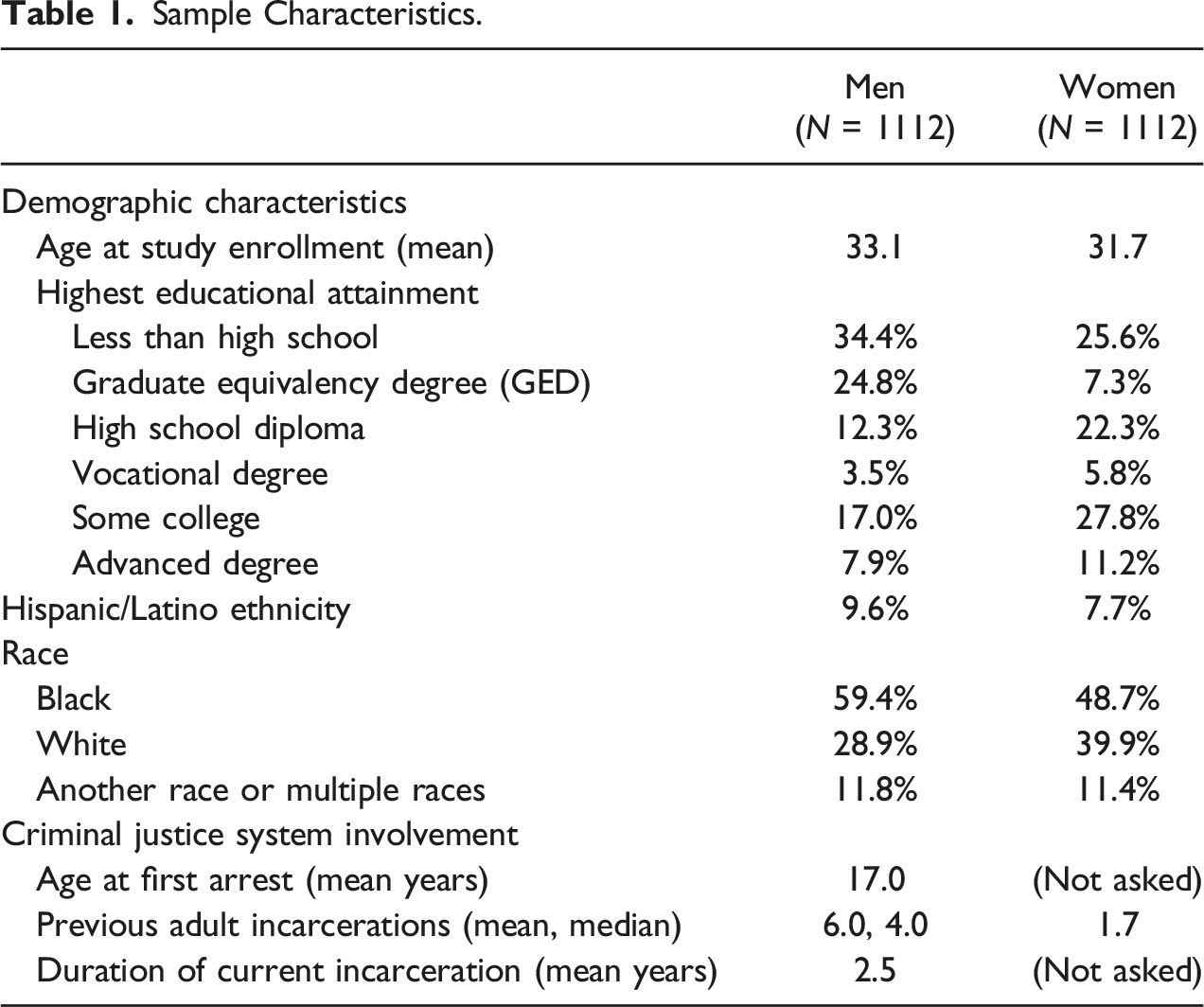
Sample Characteristics.
Results
Measurement Model Results and Model Fit Statistics
All indicator variables loaded well on the expected constructs (See Table A2 for full measurement model results and descriptive statistics for all variables.). Variable loadings indicated that age at first arrest was a much stronger indicator of childhood CJS exposure than were its counterparts, and needing to have things one’s own way was a much stronger indicator of an avoidant and non-cooperative interpersonal approach than were its counterparts. Prior adult incarcerations appeared relatively unimportant as an indicator of CJS exposure in adulthood and number of facility transfers appeared relatively unimportant as an indicator of the most recent incarceration experience. As expected given the sample size, chi squared values for each model were statistically significant. RMSEA values for all models were just above the recommended cutoff of 0.06, indicating a mediocre fit. CFI and TLI were below the recommended minimum of 0.95. (See Table A3 for exact and approximate fit statistics.)
Structural Model Results: Hypothesis 1
To test the first hypothesis, two structural equation models were constructed for pathways from CJS exposure to IPV perpetration via behavioral health and couple conflict dynamics. Models tested whether each of the three measured dimensions of CJS exposure predicted later physical partner assault via two aspects of behavioral health: post-traumatic stress symptoms (Model 1) and addiction problems (Model 2), each of which was treated as an endogenous latent variable. Models tested whether behavioral health predicted IPV perpetration directly and via couple conflict dynamics (an endogenous latent variable).
In Model 1, childhood CJS exposure predicted adult post-traumatic stress symptoms, which predicted later IPV perpetration via (poorer) couple conflict dynamics (Figure 2). The direction of each of these relationships was as hypothesized. Other aspects of CJS exposure did not predict post-traumatic stress, and post-traumatic stress did not directly predict IPV perpetration. The variance in incidents of post-release IPV perpetration that was accounted for by CJS exposure in Model 1 was 0.982. CJS exposure predicts intimate partner violence via post-traumatic stress.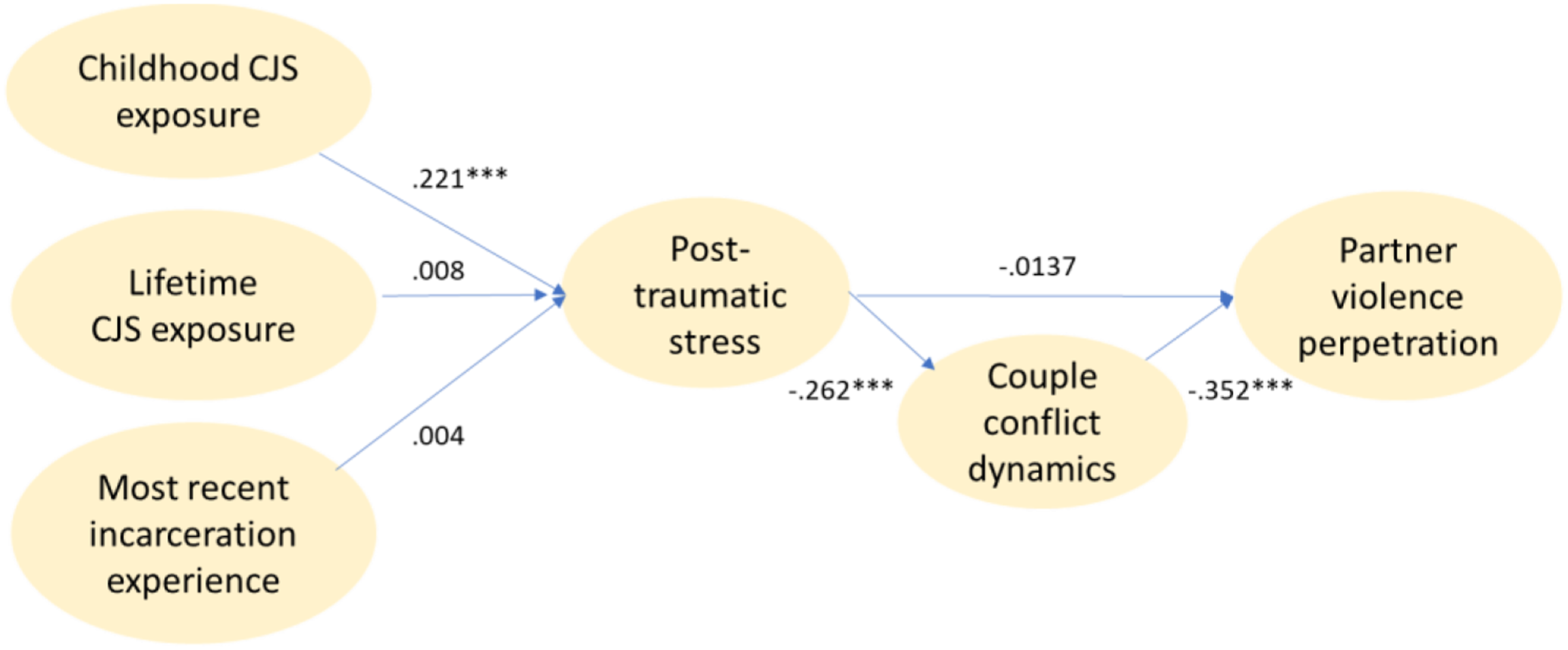
Estimating Model 1 using listwise deletion did not generally change the direction or strength of the observed relationships; however, it weakened one observed correlation (between childhood CJS exposure and post-traumatic stress, coefficient .043) to statistical non-significance.
In Model 2, lifetime CJS exposure predicted addiction problems, which predicted later IPV perpetration directly and via (poorer) couple conflict dynamics. The direction of each of these relationships was as hypothesized. Other aspects of CJS exposure did not predict addiction problems. The variance in IPV perpetration at follow-up that was accounted for by CJS exposure at baseline in Model 2 was 0.980 (Figure 3). CJS exposure predicts intimate partner violence via addiction.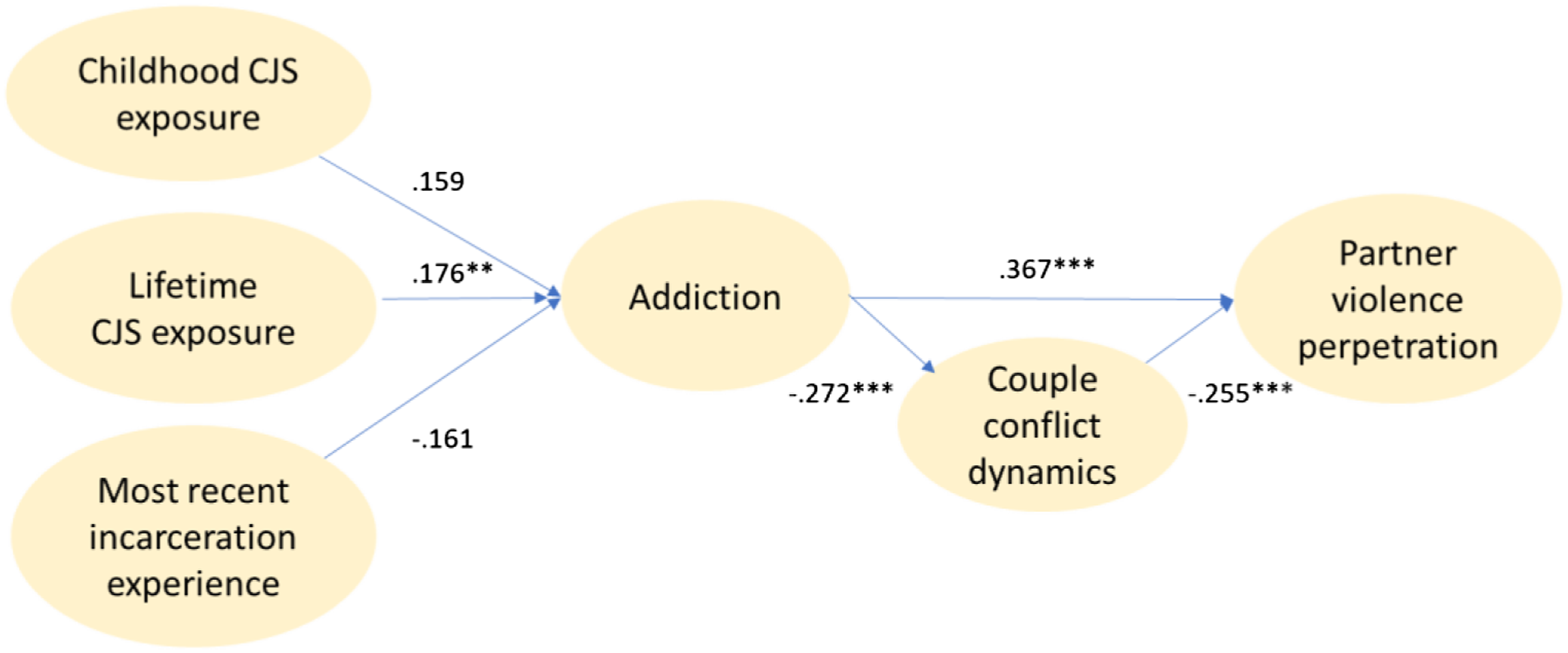
Due to convergence problems, an alternate version of Model 2 using listwise deletion could not be computed. 1
Structural Model Results: Hypothesis 2
To test hypothesis two, two structural equation models were constructed for pathways from CJS exposure to IPV perpetration via interpersonal approach and couple conflict dynamics. Models tested whether three dimensions of CJS exposure predicted later partner assault via reactivity (Model 3) or an avoidant/uncooperative approach (Model 4), each of which was included as an endogenous latent variable. Models tested whether reactivity and avoidance predicted IPV perpetration directly and via couple conflict dynamics.
In Model 3, men’s childhood CJS exposure predicted their reactivity, which predicted later partner assault perpetration directly and via (poorer) couple conflict dynamics (Figure 4). The direction of each of these relationships was as hypothesized. Other aspects of CJS exposure did not predict reactivity. The variance in later IPV perpetration that was accounted for by CJS exposure in Model 3 was 0.983. CJS exposure predicts intimate partner violence via reactivity.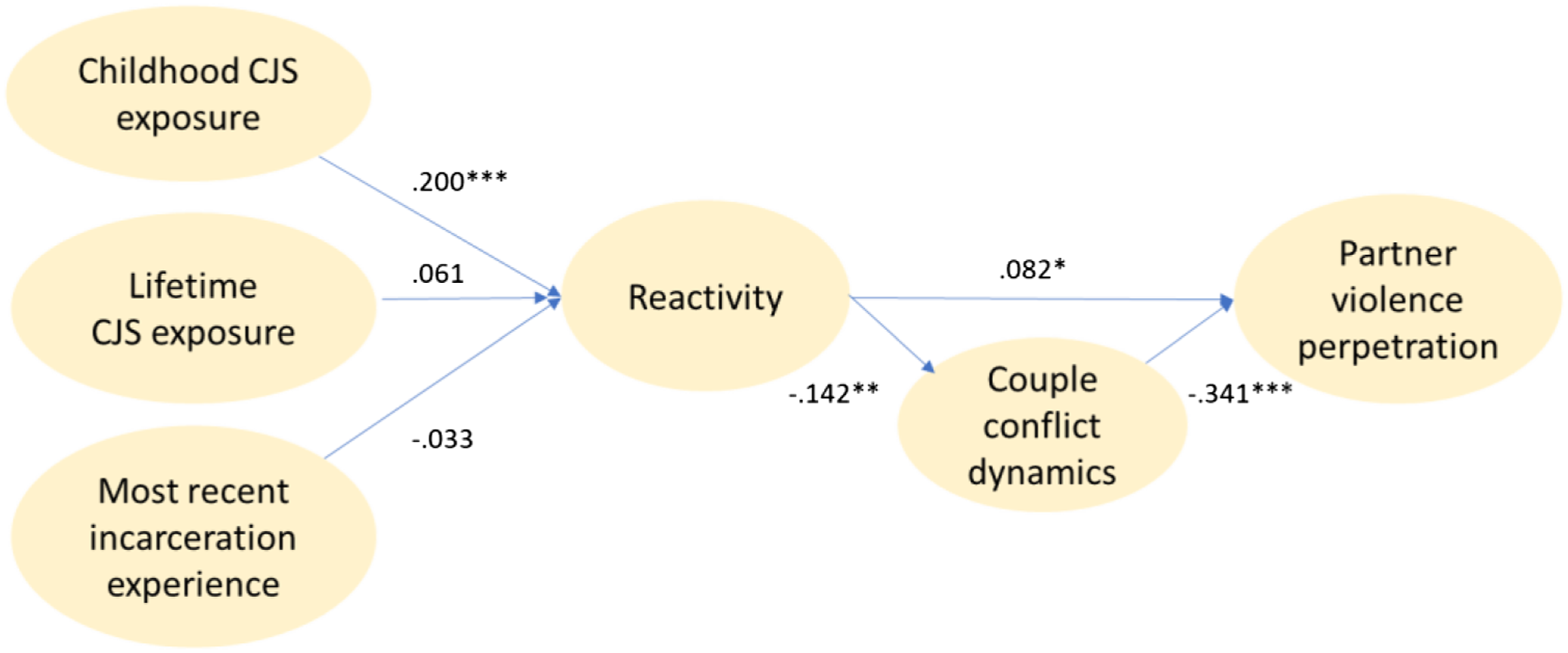
Estimating Model 3 using listwise deletion did not significantly alter the observed relationships between lifetime CJS exposure and reactivity, between the most recent incarceration experience and reactivity, between reactivity and IPV perpetration, and between couple conflict dynamics and IPV perpetration. However, the correlations between childhood CJS exposure and reactivity and between reactivity and couple conflict dynamics weakened to non-significance.
In Model 4, childhood CJS exposure predicted avoidance, which predicted partner assault perpetration via (poorer) couple conflict dynamics (Figure 5). The direction of each of these relationships was as hypothesized. Other aspects of CJS exposure did not predict avoidance and avoidance did not directly predict later IPV perpetration. The variance in later IPV perpetration that was accounted for by CJS exposure in Model 4 was 0.983. CJS exposure predicts intimate partner violence via avoidance.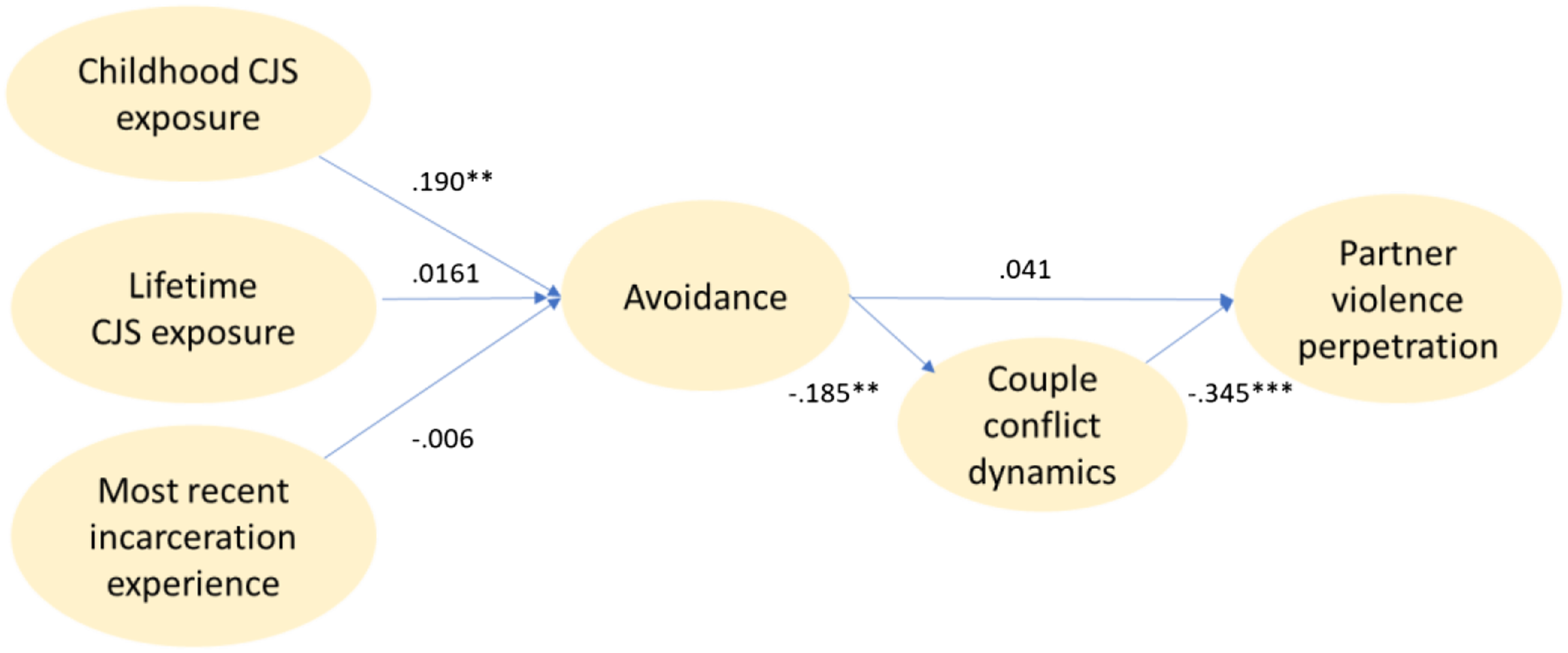
Estimating Model 4 with listwise deletion did not affect the statistical significance of any of the observed relationships in the hypothesized pathway.
Supplemental Analyses
Two supplemental analyses were conducted to inform interpretation of SEM results. As a sensitivity test, SEMs were re-run with a subsample of individuals with fewer than four prior incarcerations. This produced steep increases in the regression coefficients leading from the most recent incarceration experience to behavioral health: for example, an 18-fold increase in the structural regression coefficient for the influence of the most recent incarceration experience on post-traumatic stress. These relationships remained non-significant, however.
In addition, two-sample t-tests were performed to explore whether violent criminal conviction was correlated with the extent of CJS contact or with later IPV perpetration. With regard to childhood CJS exposure, respondents who had been convicted of violent crimes did not differ from their peers in the number of their parent figures who had been incarcerated nor in their age at (their own) first arrest. Those who had been convicted of violent crimes (M = −.0559, SD = .8871) were somewhat more likely to have served time in juvenile detention than those convicted of non-violent crimes (M = −.0559, SD = .8871); t(1104) = −2.3546, p = .0187. With regard to lifetime CJS exposure, those convicted of violent crimes reported somewhat fewer lifetime arrests (t = 1.9971, p = .0461), convictions (t = 2.0725, p = .0385), and stays of incarceration (t = 3.5788, p = .0004) than those convicted of non-violent crimes. There was no significant difference in later IPV perpetration scores between men who had been convicted of violent crimes (M = .2576, SD = .3320) and those who had been convicted of non-violent crimes (M = .2913, SD = .3279); t(677) = 1.181, p = .2382.
Discussion
Key Findings
Scholarship on family stress and on the family-level sequelae of state violence exposure each suggest that heavy CJS contact could promote IPV perpetration. The current study used SEM with data from returning prisoners and their partners to explore how CJS exposure might promote the physical assault of an intimate or co-parenting partner. It exploited the paired, longitudinal structure of the Multi-site Family Study on Incarceration, Parenting and Partnering data, which also offered a broad panel of indicator and control variables. Results suggest that mass incarceration could promote IPV via men’s psychological and interpersonal adaptations to CJS contact, particularly when CJS contact is developmentally significant or intensive.
The study extends IPV research in two key ways. First, results identify pathways from CJS exposure to IPV that are consistent with both family stress and state violence scholarship. Variation in CJS exposure predicts later IPV perpetration via men’s behavioral health, including their post-traumatic stress and addiction. Dysfunctional couple conflict dynamics mediate the predictive relationship between behavioral health and IPV, as does men’s interpersonal style—including patterns of reactivity and avoidance similar to those observed in combat veterans.
Second, consistent with a state violence perspective, results suggest that developmental timing and accumulation of CJS exposures are more salient for later IPV than the discrete stressor of a recent incarceration experience. Characteristics of a singular incarceration, it seems, may assume lesser importance when other aspects of CJS exposure over the life course are taken into account. Results of sensitivity analysis further suggest that the correlation between the most recent incarceration experience and IPV perpetration may be attenuated for those with extensive histories of CJS contact, who comprise the majority of the carceral population (Shibata, 2021). This suggests that research focusing on the fallout of singular incarceration events, as most studies in these areas have (Stansfield, Semenza, et al., 2020), may grossly underestimate the global effect of mass incarceration on IPV.
Limitations
The current study used observational data from a large, non-probability-based sample and did not include a counterfactual strategy. As such, the possibility that the relationships demonstrated here result from unobserved confounding factors cannot be eliminated. Prior convictions for domestic violence, for example, could well be correlated with the incarcerated partner’s history of CJS exposure as well as his likelihood of assaulting his partner after release. This concern is mitigated by the inclusion of violent criminal conviction as a control variable in the SEMs and also partially allayed by the results of supplemental analyses, which indicate that violent conviction was not a driver of the extent of respondents’ CJS exposure nor did it predict later IPV perpetration. Without data on prior domestic violence convictions, however, this concern cannot be fully allayed, and it must be emphasized that the observed pathways from CJS exposure to IPV represent conditional correlations, not evidence for causal effects.
Attrition from the study cohort and item non-response mean that the observed influences could also be an artefact of differences between those who did and did not participate in post-release follow-up interviews or answer the focal survey items. Given respondents’ variable terms of incarceration and the complexity and nature of the hypothesized pathways, sample for some post-release observations was limited. Imputation was used to preserve all available observations, but it is unlikely that data were missing purely at random. While most of the estimated relationships remained stable in alternate models using listwise deletion, several did not. Estimated pathways from childhood CJS exposure to adult post-traumatic stress and reactivity, as well as from reactivity to couple conflict dynamics, were not robust to listwise deletion. This suggests that the experiences of respondents whose data were missing due to (item or survey wave) non-response may have differed in some meaningful way from those whose data were non-missing for the same variables. These relationships thus require further investigation.
Measurement challenges also constrain interpretation of the results. Men’s interpersonal approach and CJS exposure were each operationalized using sets of survey items that have not been psychometrically validated for that purpose. The “number of adult incarcerations” variable combined jail and prison stays, despite evidence for their distinct consequences (Harrington, 2008; Jahn et al., 2020; Turney & Conner, 2019). Most importantly, the study operationalized IPV only as physical assaults, though prior work indicates that physical IPV differs in its etiology and consequences depending on the extent of controlling behavior that accompanies it, with “situational couple violence” reflecting little or no controlling behavior and “coercive controlling violence” reflecting highly controlling behavior (Johnson, 2008). Initial research points to the relevance of Johnson’s types for understanding IPV in couples affected by incarceration (McKay et al., 2020); this is a crucial direction for future research.
Finally, response error in survey items intended to capture CJS exposure is likely exacerbated by the cognitive demand of recalling such experiences in a population with heavy CJS exposure (compared to among members of the general population for whom each CJS contact might be highly salient, memorable, and easy to parse). SEM partially mitigates this challenge by providing feedback on the measurement strategy (with factor loadings indicating strong measurement models for each construct) and adjusting for measurement error when estimating the strength of structural relationships. Yet the mediocre fit indicated by approximate fit statistics points to a need for refined models as well as better measures.
Implications for Future Research and Practice
Findings from the current study highlight the importance of future research on the link between CJS exposure and IPV perpetration in the mass incarceration era. Such research would ideally begin to assess to what extent the pathways estimated in the current study represent causal relationships. Future research is also needed to better illuminate the influence of childhood CJS exposure on reactivity and post-traumatic stress in adulthood.
Its exploratory nature notwithstanding, study results suggest that the hyper-carceral policies of the contemporary United States—despite the violence-protection rhetoric surrounding their expansion (Campbell, 2015; Campbell et al., 2015; Cheliotis, 2013; Kraska, 2007; Simon, 2001, 2007)—could promote the form of violence to which Americans are most vulnerable. These findings add weight to existing calls to reduce the harms of mass incarceration, particularly for children and families. Reversing the harsh adult sentencing practices (Tonry, 2014) that contribute to heavy lifetime exposures to incarceration (and high rates of parental incarceration) is critical. Eliminating exclusionary school discipline practices (Skiba et al., 2014), ending the disproportionate arrest of students of color for in-school offenses by removing school resource officers (Owens, 2016) and implementing school-based restorative justice (Wadhwa, 2015), and addressing the underlying mental health needs (e.g., Moody, 2016) and community-level disadvantages (Haskins & Jacobsen, 2017; Haskins & McCauley, 2019; Mizel et al., 2016) that funnel disadvantaged children into CJS contact are important first steps.
The current study did not investigate the effects of particular IPV treatment strategies for couples affected by CJS exposure; however, it suggests promising directions for future practice and intervention research. For those already affected by CJS exposure, low-cost, trauma-informed, individual and couples counseling appears urgently needed—and a critical alternative to punishment-based behavioral health care (Kerrison, 2017). The limited availability of IPV services in disadvantaged communities (Iyengar & Sabik, 2009) must also be remedied. Promising, non-punitive strategies for treating returning prisoners who use violence against their partners include restorative justice approaches (Mills & Barocas, 2019; Mills et al., 2019), the Institute on Domestic Violence in the African American Community’s Building Bridges curriculum, and culturally responsive counseling designed to address the trauma associated with CJS contact (e.g., Gondolf & Williams, 2001). Rigorous evaluation and scaling of such interventions will be crucial to efforts to end IPV perpetration among male survivors of CJS contact. Viewing their trauma as a casualty of state violence sharpens the imperative of publicly supported repair and reparation (Gump, 2014; King & Page, 2018).
Footnotes
Acknowledgments
I am indebted to Jonathan Jackson, Leonidas Cheliotis, and Christopher Wildeman for guidance on all aspects of this work. I am grateful to John Laub for excellent feedback on an earlier draft of the manuscript, to Justin Landwehr for dataset preparation, to Stephen Tueller for early analytic suggestions, and to the rest of the Multi-site Family Study research team (especially Christine Lindquist, Anupa Bir, Megan Comfort, and Erin Kennedy) and participants for making this work possible.
Declaration of Conflicting Interests
The author(s) declared no potential conflicts of interest with respect to the research, authorship, and/or publication of this article.
Funding
The author(s) disclosed receipt of the following financial support for the research, authorship, and/or publication of this article: This work was funded in part by grant 2004270 from the National Science Foundation and grant 2016-VF-GX-0010 from the National Institute of Justice in the U.S. Department of Justice. The original Multi-site Family Study data collection was funded by contract HHSP2332006290YC from the Office of the Assistant Secretary for Planning and Evaluation and Office of Family Assistance in the U.S. Department of Health and Human Services.

Note
Appendix
Correlations Among Indicators of Criminal Justice System Exposure.
Age at 1st Arrest
Childhood Arrests
Parent/Grand-Parent Arrests
Lifetime Arrests
Lifetime Convic-Tions
Lifetime Incarcera-Tions
Duration
Days in Solitary
Number of Facility Transfers
Age at 1st arrest
1.000
Childhood arrests
0.302
1.000
Parent/grandparent arrests
0.112
0.053
1.000
Lifetime arrests
0.117
0.101
0.137
1.000
Lifetime convictions
0.092
0.027
0.149
0.804
1.000
Lifetime incarcerations
0.195
0.162
0.019
0.204
0.189
1.000
Duration
−0.034
0.030
−0.061
−0.047
−0.061
−0.092
1.000
Days in solitary
0.099
0.028
−0.091
−0.052
−0.073
−0.050
0.360
1.000
Number of facility transfers
0.036
0.043
−0.047
−0.096
−0.082
0.040
0.158
0.318
1.000
Measurement Model Results and Descriptive Statistics.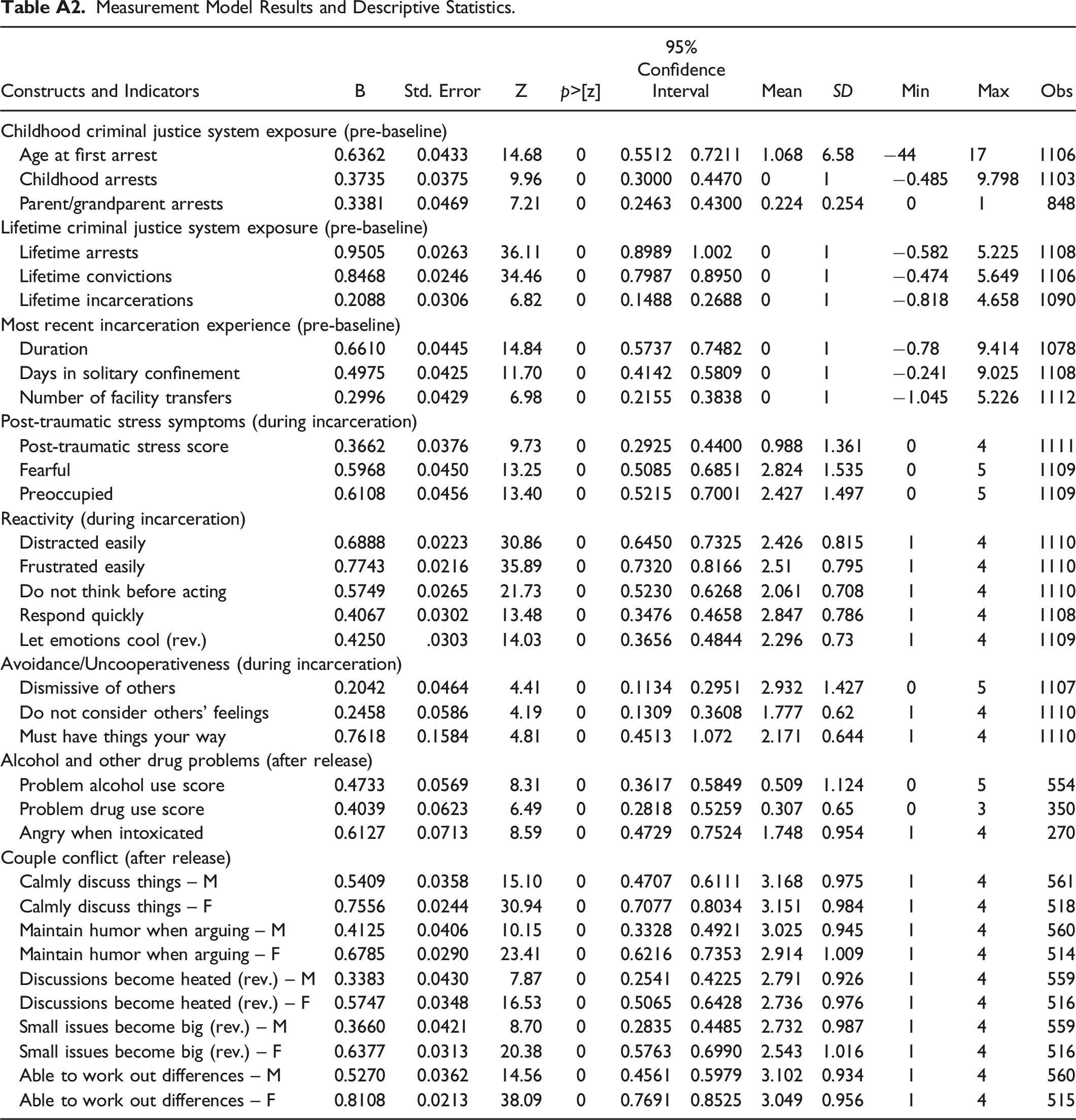
Constructs and Indicators
B
Std. Error
Z
p>[z]
95% Confidence Interval
Mean
SD
Min
Max
Obs
Childhood criminal justice system exposure (pre-baseline)
Age at first arrest
0.6362
0.0433
14.68
0
0.5512
0.7211
1.068
6.58
−44
17
1106
Childhood arrests
0.3735
0.0375
9.96
0
0.3000
0.4470
0
1
−0.485
9.798
1103
Parent/grandparent arrests
0.3381
0.0469
7.21
0
0.2463
0.4300
0.224
0.254
0
1
848
Lifetime criminal justice system exposure (pre-baseline)
Lifetime arrests
0.9505
0.0263
36.11
0
0.8989
1.002
0
1
−0.582
5.225
1108
Lifetime convictions
0.8468
0.0246
34.46
0
0.7987
0.8950
0
1
−0.474
5.649
1106
Lifetime incarcerations
0.2088
0.0306
6.82
0
0.1488
0.2688
0
1
−0.818
4.658
1090
Most recent incarceration experience (pre-baseline)
Duration
0.6610
0.0445
14.84
0
0.5737
0.7482
0
1
−0.78
9.414
1078
Days in solitary confinement
0.4975
0.0425
11.70
0
0.4142
0.5809
0
1
−0.241
9.025
1108
Number of facility transfers
0.2996
0.0429
6.98
0
0.2155
0.3838
0
1
−1.045
5.226
1112
Post-traumatic stress symptoms (during incarceration)
Post-traumatic stress score
0.3662
0.0376
9.73
0
0.2925
0.4400
0.988
1.361
0
4
1111
Fearful
0.5968
0.0450
13.25
0
0.5085
0.6851
2.824
1.535
0
5
1109
Preoccupied
0.6108
0.0456
13.40
0
0.5215
0.7001
2.427
1.497
0
5
1109
Reactivity (during incarceration)
Distracted easily
0.6888
0.0223
30.86
0
0.6450
0.7325
2.426
0.815
1
4
1110
Frustrated easily
0.7743
0.0216
35.89
0
0.7320
0.8166
2.51
0.795
1
4
1110
Do not think before acting
0.5749
0.0265
21.73
0
0.5230
0.6268
2.061
0.708
1
4
1110
Respond quickly
0.4067
0.0302
13.48
0
0.3476
0.4658
2.847
0.786
1
4
1108
Let emotions cool (rev.)
0.4250
.0303
14.03
0
0.3656
0.4844
2.296
0.73
1
4
1109
Avoidance/Uncooperativeness (during incarceration)
Dismissive of others
0.2042
0.0464
4.41
0
0.1134
0.2951
2.932
1.427
0
5
1107
Do not consider others’ feelings
0.2458
0.0586
4.19
0
0.1309
0.3608
1.777
0.62
1
4
1110
Must have things your way
0.7618
0.1584
4.81
0
0.4513
1.072
2.171
0.644
1
4
1110
Alcohol and other drug problems (after release)
Problem alcohol use score
0.4733
0.0569
8.31
0
0.3617
0.5849
0.509
1.124
0
5
554
Problem drug use score
0.4039
0.0623
6.49
0
0.2818
0.5259
0.307
0.65
0
3
350
Angry when intoxicated
0.6127
0.0713
8.59
0
0.4729
0.7524
1.748
0.954
1
4
270
Couple conflict (after release)
Calmly discuss things – M
0.5409
0.0358
15.10
0
0.4707
0.6111
3.168
0.975
1
4
561
Calmly discuss things – F
0.7556
0.0244
30.94
0
0.7077
0.8034
3.151
0.984
1
4
518
Maintain humor when arguing – M
0.4125
0.0406
10.15
0
0.3328
0.4921
3.025
0.945
1
4
560
Maintain humor when arguing – F
0.6785
0.0290
23.41
0
0.6216
0.7353
2.914
1.009
1
4
514
Discussions become heated (rev.) – M
0.3383
0.0430
7.87
0
0.2541
0.4225
2.791
0.926
1
4
559
Discussions become heated (rev.) – F
0.5747
0.0348
16.53
0
0.5065
0.6428
2.736
0.976
1
4
516
Small issues become big (rev.) – M
0.3660
0.0421
8.70
0
0.2835
0.4485
2.732
0.987
1
4
559
Small issues become big (rev.) – F
0.6377
0.0313
20.38
0
0.5763
0.6990
2.543
1.016
1
4
516
Able to work out differences – M
0.5270
0.0362
14.56
0
0.4561
0.5979
3.102
0.934
1
4
560
Able to work out differences – F
0.8108
0.0213
38.09
0
0.7691
0.8525
3.049
0.956
1
4
515
Exact and Approximate Fit Statistics.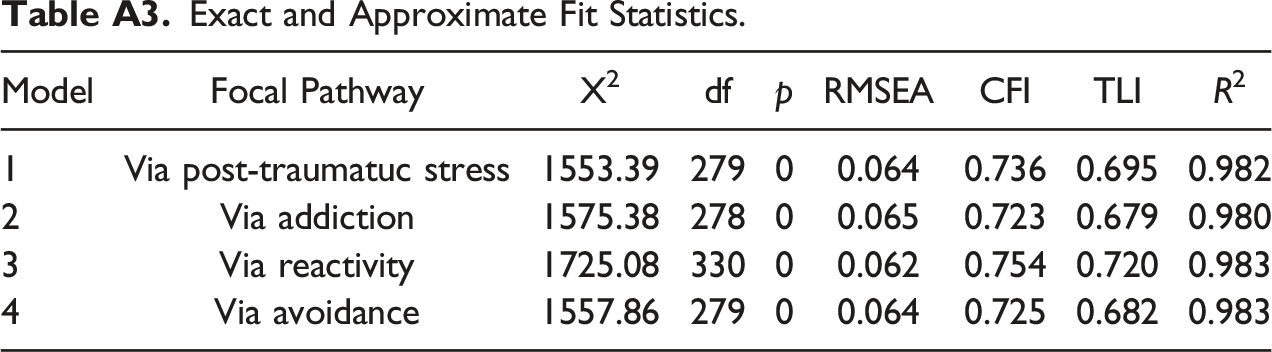
Model
Focal Pathway
X2
df
p
RMSEA
CFI
TLI
R
2
1
Via post-traumatuc stress
1553.39
279
0
0.064
0.736
0.695
0.982
2
Via addiction
1575.38
278
0
0.065
0.723
0.679
0.980
3
Via reactivity
1725.08
330
0
0.062
0.754
0.720
0.983
4
Via avoidance
1557.86
279
0
0.064
0.725
0.682
0.983