




Abstract
With the increasing development of science and technology, the Internet has become an essential part of people’s daily lives providing great convenience. However, the Internet also leads to problematic Internet use (PIU) among adolescents, which has attracted increasing attention from the academic community. Peer victimization is a pervasive stressor among adolescents and has been proven to lead to a series of mental health challenges. Although the association between peer victimization and PIU has been well documented, the underlying mechanism remains unclear. This study aimed to understand how and when peer victimization increases the risk of PIU among adolescents. Building on Agnew’s general strain theory, this study hypothesized that depression mediates the relationship between peer victimization and PIU and humor moderates the mediating model. To examine these hypotheses, 469 middle school students were recruited to complete a series of questionnaires on peer victimization, depression, humor, and PIU. The results showed that depression partially mediated the relationship between peer victimization and PIU. A moderated mediation analysis indicated that humor moderated the indirect pathway, consistent with the reverse stress-buffering model, the relationship between peer victimization and depression was stronger for adolescents with high humor. However, the relationship between depression and PIU was weaker in adolescents with high humor, which is in line with the stress-buffering model. These findings could be of significance in understanding the underlying mechanism of PIU associated with peer victimization and provide a new perspective for preventing PIU among adolescents, especially those experiencing peer victimization. The limitations and considerations for future research are discussed.
Introduction
With the increasing development of science and technology, the Internet has become an essential part of people’s daily lives providing us with great convenience. However, excessive uncontrolled Internet use negatively influences individuals’ mental health (Özaslan et al., 2021), academic performance (Kumar et al., 2018), and sleep quality (Yang et al., 2018). Problematic Internet use (PIU), also known as Internet addiction (Young, 1998), defined as the “use of the Internet that creates psychological, social, school and/or work difficulties in a person’s life” (Beard & Wolf, 2001), has attracted increasing attention from researchers. Compared to other age groups, adolescents are especially susceptible to PIU due to their immature personalities and a broad range of physical and mental transformations (Grant et al., 2010). PIU has become a serious public health concern worldwide, and East Asians have a higher prevalence of Internet addiction than other regions (Kuss et al., 2014). A systematic literature review showed that East Asian countries, typically China and Japan, exhibited a high prevalence of Internet addiction (Kuss et al., 2021). For example, a survey conducted among Chinese adolescents showed that the overall prevalence of Internet addiction was as high as 26.50% (Xin et al., 2018). Thus, there is a critical need to further investigate the mechanism underlying PIU in East Asia.
Prior research indicated that peer relationships have an increasingly important impact on developmental outcomes in adolescence, which might even gradually exceed the effect of the family (Asher & Coie, 1990; Yu et al., 2017). This finding emphasizes the important influence of peer relationships on adolescents. Adolescence is a developmental period characterized by physiological and psychological transitions during which adolescents experience various stressful events (Hashmi, 2013). Peer victimization, which refers to the negative experiences of being bullied by peers in multiple forms, such as verbal abuse or physical harm, characterized by repetition, power imbalance, and intention to harm (Smith et al., 1999), is a pervasive stressor among adolescents (Chester et al., 2015; Spiekerman et al., 2021) and has been proven to lead to a series of mental health challenges (Swearer & Hymel, 2015). In recent years, researchers have increasingly focused on the association between peer victimization and addictive behaviors (Boniel-Nissim & Sasson, 2018; Hsieh et al., 2019), and have found that adolescents experiencing more peer victimization have a higher risk of PIU (Guo et al., 2022; Jia et al., 2018).
Although there is evidence of a positive association between peer victimization and adolescent PIU, the underlying mechanism (how and when peer victimization is correlated with adolescent PIU) of this association remains unclear. China has a typical collectivist culture that emphasizes the importance of interpersonal relationships (Sundararajan, 2015); thus, peer victimization, a negative interpersonal relationship, might result in greater damage to the development of Chinese adolescents. Accordingly, this study was designed to explore how and when peer victimization increases the risk of PIU in the Chinese context and to provide a basis for effective interventions to reduce adolescent PIU.
Mediating Role of Depression
Agnew’s (1992) general strain theory (GST) can serve as a persuasive theoretical framework for understanding the association between peer victimization and PIU among adolescents. GST initially provided a theoretical basis for comprehending individual crime, asserting that individuals are likely to engage in deviant behaviors if they are exposed to stressful circumstances in which “others are not treating the individual as he or she would like to be treated” (Agnew, 1992; Agnew et al., 2002). Recently, GST has received empirical support in accounting for the relationship between strain and undesirable outcomes, including delinquency (Song, 2020), substance use (Peck et al., 2018), and Internet addiction (Jun & Choi, 2015). Furthermore, GST holds that strains not only directly lead to deviant coping but also trigger deviance indirectly through negative emotional states (Agnew, 1992, 2013).
According to the GST, individuals tend to choose deviant behaviors to alleviate negative moods derived from strains. Previous empirical evidence has found that strains could lead to negative emotions and affect subsequent addictive behaviors (Peck et al., 2018; Unnever & Cornell, 2003). Individuals experiencing peer victimization experience negative emotions (Stapinski et al., 2015; Wei et al., 2022). For example, a meta-analytic review showed that peer victimization is more strongly associated with depression than other types of psychological distress (Hawker et al., 2000). Additionally, a longitudinal study found that bullying victimization could significantly predict subsequent depressive symptoms in children (Zhong et al., 2021). This evidence indicates that those experiencing peer victimization are more likely to experience depression.
To alleviate negative emotions, individuals with depression are likely to choose the Internet as a shelter to temporarily escape stress in real life (Brunet et al., 2014; Zheng et al., 2020). They immerse themselves in online activities, such as online interaction, playing video games, and shopping, to cope with their depressed mood (Liang et al., 2016). These online activities satisfy their need for emotion regulation, which leads them to gradually become immersed in the Internet, eventually leading to PIU. Therefore, this study proposes that peer victimization could affect adolescent PIU indirectly through depression (Hypothesis 1).
Moderating Role of Humor
Although peer victimization might affect adolescent PIU through depression (Agnew & White, 1992; Agnew et al., 2002), this is not always true. GST posits that individuals could cognitively reinterpret strains in positive ways that minimize the influence of strains, thereby leading them to non-delinquent responses (Agnew, 1992; Agnew & White, 1992). Namely, cognitive coping abilities could moderate the effect of strains on deviant behaviors (Agnew, 1992, 2001).
Humor has been shown to have a significant stress-buffering effect and is viewed as an effective cognitive coping ability for traumatic or stressful events (G.-H. Chen & Martin, 2007; Martin & Lefcourt, 1983; Wu et al., 2021). Thus, humor might moderate the relationship between risk factors and negative outcomes, and there might exist two moderation models according to prior research (Li et al., 2018; Peng et al., 2019; Wang et al., 2018). The one is the stress-buffering model, maintaining that protective factors can attenuate the association between stress and negative outcomes (Li et al., 2018; Peng et al., 2019). The other is the reverse stress-buffering model. According to previous studies (Li et al., 2018; Wang et al., 2018), the reverse stress-buffering model holds that the effect of protective factors is so limited that they only buffer the negative effects of risk factors under low stress conditions.
Previous studies have found that the cognitive component of humor is related to cognitive flexibility (Holmes, 2007; Ohlsson, 1992; Z. Zhou et al., 2021), which is defined as a person’s ability to be aware of alternative solutions to stressful situations and adapt to new situations in a flexible way (Martin & Rubin, 1995). Humor also facilitates greater cognitive flexibility through positive emotions (Buiting et al., 2020; Fredrickson, 1998), helping individuals to view stress from a flexible perspective. Many studies have demonstrated the positive effects of humor on cognitive flexibility (Berk, 2001; Buiting et al., 2020; Esterhuyse et al., 2013; Martin & Ford, 2018). Following this logic, when experiencing peer victimization, adolescents could utilize their humor, their cognitive coping ability, to change their perspective to reappraise such negative experiences. They might view stressful events as positive challenges or less threatening, which facilitates the exploration of alternative perspectives to strains, subsequently protecting them from the detrimental effect of peer victimization and further decreasing the tendency for PIU. Thus, consistent with the stress-buffering model, which hypothesizes that the relationship between peer victimization and depression weakens with increasing levels of humor, humor might act as a stress buffer in this situation (Figure 1a).
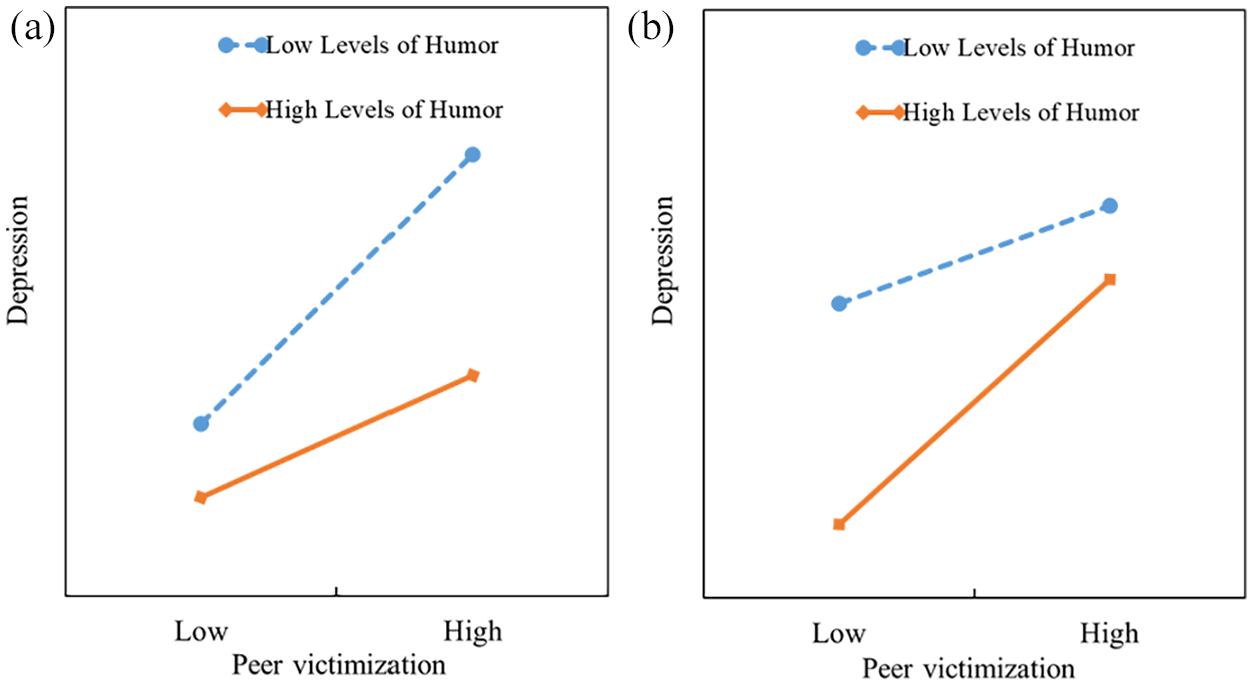
Two different moderating models of humor on the relationship between peer victimization and depression: (a) stress-buffering model and (b) reverse stress-buffering model.
However, with an increase in stress levels, protective factors might gradually lose their effect. Previous studies have shown that peer victimization could pose significant threats to adolescents’ psychosocial development, including negative emotions and externalizing behavior (Pan et al., 2020; Swearer & Hymel, 2015), which is difficult for adolescents to handle. Furthermore, it is challenging and requires earnest effort for individuals to utilize humor to confront stressful situations (Braniecka et al., 2019). Therefore, even when adolescents view stressful events positively through humor, harm from peer victimization might have already taken place. Humor alone cannot protect adolescents from such events, especially when peer victimization is high; that is, the protective effect of humor is diminished and even disappears, which is in line with the reverse stress-buffering model (Figure 1b). In summary, humor might act as the moderator on the association between peer victimization and adolescent depression, which might fit one of the above models (Hypothesis 2).
Humor might also moderate the relationship between depression and adolescent PIU. According to GST, humor can be viewed as a cognitive coping ability that might facilitate individuals to positively reassess their emotional state instead of ruminating over negative thoughts (Nolen-Hoeksema et al., 2008), thereby reducing the possibility of depression driving people to use the Internet to relieve negative feelings (Ceyhan & Ceyhan, 2008; Liu et al., 2021). According to this logic, higher humor could decrease the motivation to use the Internet for emotion regulation among adolescents with depression. In other words, it could attenuate the association between depression and PIU, which is consistent with the stress-buffering model (Figure 2a).
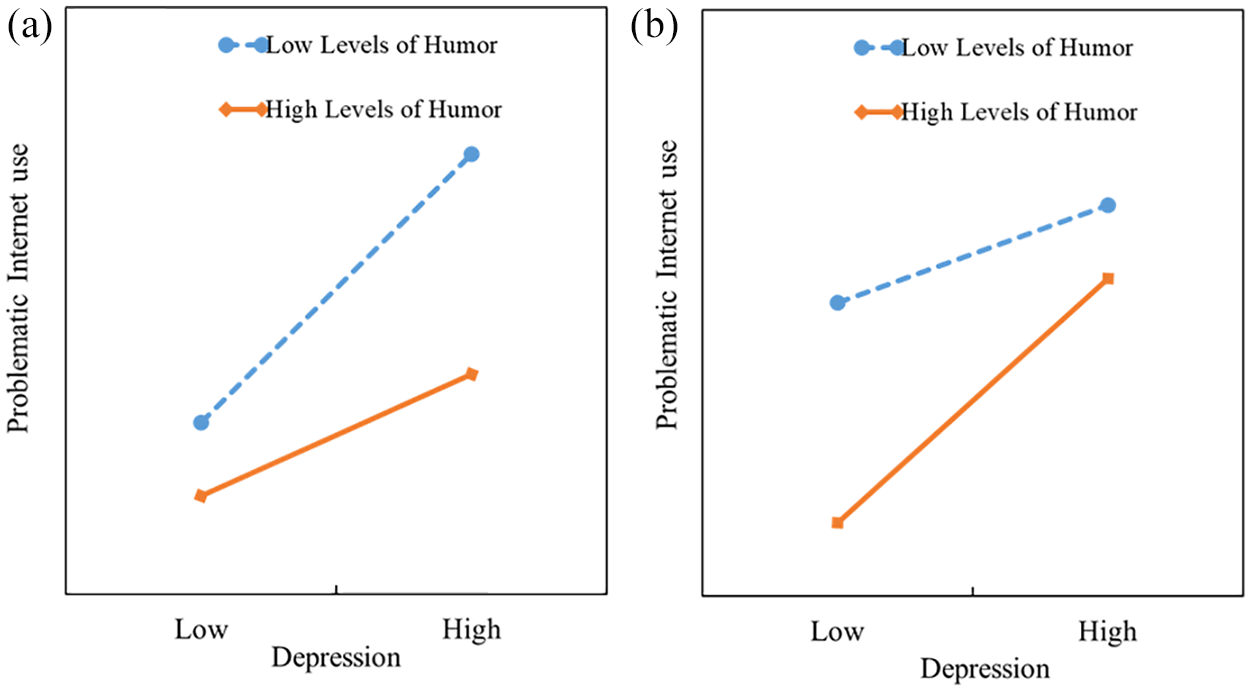
Two different moderating models of humor on the relationship between depression and problematic Internet use: (a) stress-buffering model and (b) reverse stress-buffering model.
However, if adolescent depression reaches a high level, humor may gradually lose its protective effects. As a form of cognitive coping, humor undoubtedly requires considerable cognitive resources in stressful situations (Strick et al., 2009), which is commonly recognized as challenging (Samson & Gross, 2012), especially for depressed individuals because they might have difficulty engaging in cognitive tasks requiring significant effort (Ellis, 1988; Kircanski et al., 2012). Therefore, in this context, humor might fail to counteract a depressed mood when individuals feel extremely depressed, which is in line with the reverse stress-buffering model (Figure 2b).
Based on the above review, humor might act as the moderator on the association between depression and adolescent PIU, which might fit one of the above models (Hypothesis 3).
The Present Study
To explore the underlying mechanism of adolescent PIU with peer victimization in China, a self-report method was adopted. Based on the literature review, the conceptual model is illustrated in Figure 3, and the hypotheses were posited as follows.
Hypothesis 1: Depression might serve as a mediator in the association between peer victimization and adolescent PIU.
Hypothesis 2: Humor might moderate the association between peer victimization and adolescent depression and this moderation might fit the stress-buffering model.
Hypothesis 3: Humor might moderate the association between depression and adolescent PIU and this moderation might fit the stress-buffering model or the reverse stress-buffering model.
Previous studies found sex differences in risk factors for PIU (Durkee et al., 2012; Kilic et al., 2016; Nakayama et al., 2020). For example, previous research revealed that males show higher PIU than females because of their impulsive and curious nature (Durkee et al., 2012). Research has also indicated that older adolescents are more assertive and become more rebellious than younger adolescents (Okwaraji et al., 2015), with the former being at a higher risk of PIU (Nakayama et al., 2020; Yu et al., 2018). Therefore, age is also associated with adolescent PIU (Yu et al., 2017). Furthermore, previous studies have suggested that individuals’ childhood environment (e.g., childhood socioeconomic status) could affect their addictive behaviors (Mishra et al., 2017; Tifferet et al., 2011) through life history strategies (Griskevicius et al., 2013). Therefore, this study considered adolescents’ sex, age, and childhood socioeconomic status as covariates.
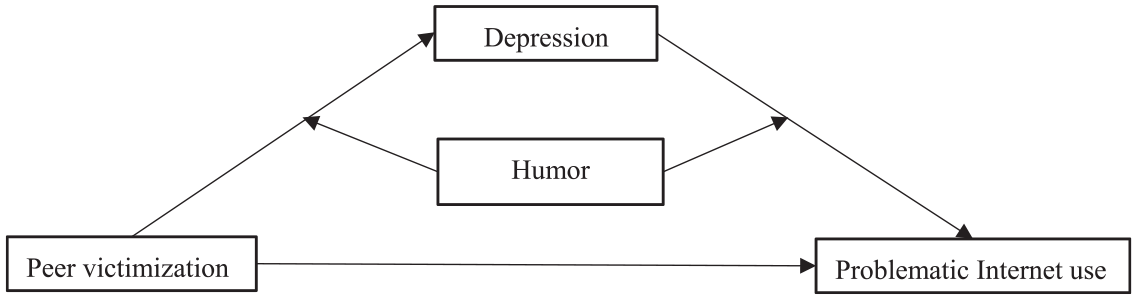
Mediating effect of depression and moderating effect of humor on the relationship between peer victimization and problematic Internet use.
Methods
Participants
This study used a convenient sampling method to recruit participants from Guangdong, Jiangsu, and Hubei provinces in China. The three provinces are in southern China, eastern China, and central China, respectively, where the economy is at a developed state. Adolescents in these regions have more access to the Internet (Zhang et al., 2019). Therefore, the representativeness has been increased to a certain extent since the participants are recruited from the three most economically active regions in China. A total of 484 questionnaires were collected from the online communities. Fifteen questionnaires with extreme values in the data (defined as cases with values greater or less than 3 SD) were removed, including eight questionnaires on peer victimization, five questionnaires on depression, and two questionnaires on humor. A total of 469 middle school students (222 males) were included in the final analyses. The average age was 14.19 years (SD = 0.98 years). Of the participants, 219 were in seventh grade (117 males), 147 in eighth grade (67 males), and 103 in ninth grade (38 males).
Measures
Peer victimization
This study used the Olweus Bully/Victim Questionnaire revised by Zhang et al. (1999) and its victim subscale to measure peer victimization. This scale has been widely used in China (Cao et al., 2021; Y. Zhou et al., 2022). The subscale includes six items measuring how often adolescents have been victims of physical, verbal, and relational forms of bullying (e.g., “My classmates excluded me from their friends or asked their friends to ignore me completely”). Participants responded to these items on a 5-point Likert scale ranging from 1 (never) to 5 (several times a week). Scores were averaged to represent peer victimization, with higher scores indicating more severe victimization. In the present study, Cronbach’s α was .78 and split-half reliability was .71.
Depression
The Self-Rating Depression Scale was used to assess adolescent depression in the past week (Zung, 1965). This scale comprises 20 items, with a typical item being “I feel tired for no reason.” The participants responded to these items using a 4-point scale ranging from 1 (no or little time) to 4 (most or all the time). The mean depression score was computed, with higher scores indicating higher depression levels. This scale has been shown to be reliable and valid in the Chinese context (Wang et al., 2019; Zheng et al., 2020). In the current study, Cronbach’s α was .72 and the split-half reliability was .78.
Humor
This study employed the Coping Humor Scale developed by Martin and Lefcourt (1983). The Chinese version of the scale was revised by G.-H. Chen and Martin (2005). This scale has been widely used in the Chinese context and has proven to be reliable and valid (Y. Chen & Li, 2019; G.-H. Chen & Martin, 2007). It includes seven items (e.g., “I think life would be easier if I had more sense of humor”). Participants were instructed to rate their level of agreement on a 4-point Likert scale ranging from 1 (totally disagree) to 4 (totally agree). The scores were averaged to form the Coping Humor Index. In the present study, Cronbach’s α was .73 and split-half reliability was .73.
Problematic Internet use
Young’s Internet Addiction Diagnostic Questionnaire was used to measure adolescent PIU (Young, 1998). This scale was found to have a good reliability in Chinese samples (Yu et al., 2017). It contains eight items (e.g., “Do you feel the need to use the Internet for increasing amounts of time in order to achieve satisfaction?,” “Do you use the Internet as a way to escape from problems and deal with negative emotions?,” etc.). Dichotomous responses were measured (“yes” or “no”) for each item. Participants who answered “yes” to five or more of the eight items were classified as “PIUs.” Based on previous studies (Yu et al., 2017; Zheng et al., 2020), to better interpret and explore the relationships among variables, we considered Internet addiction to be a continuous variable and averaged all items as an indicator of PIU, with higher scores indicating a stronger tendency toward PIU. In the present study, Cronbach’s α was .82 and the split-half reliability was .78.
Covariates
Demographic information, including sex, age, and childhood socioeconomic status, was collected. We dummy coded adolescents’ sex (1 = “male,” 2 = “female”). In addition, childhood socioeconomic status was assessed using a three-item scale (Griskevicius et al., 2011; 2013): “My family usually had enough money for things when I was growing up,” “I grew up in a wealthy neighborhood,” and “I felt relatively wealthy compared to the other kids in my school.” Participants responded to the items on a 7-point scale ranging from 1 (strongly disagree) to 7 (strongly agree). The mean score for childhood socioeconomic status was computed, with higher scores indicating a better economic situation.
Procedure
We first obtained consent from middle school teachers and trained them as research assistants to standardize the data collection process. Second, the teachers explained the purpose of the study to students. Informed consent was obtained from all participants prior to the assessment. Third, teachers invited student participants to complete the questionnaire through online communities, WeChat groups, or QQ groups. The questionnaire took participants 10 to 15 minutes to complete. Finally, we collected and processed the data to test the hypotheses.
Data Analysis
The data were analyzed using SPSS 25.0 and PROCESS 3.2. However, several aspects of the analysis should be noted. First, as this study used only a self-report method to collect data, a common method bias effect might exist. Therefore, Harman’s single-factor test (Podsakoff et al., 2003) was used to solve the possible impact of the common method bias problem. The results indicated that there were five factors with initial eigenvalues greater than one, and a single factor explained 26.30% of the total variance, which is lower than 40%, thus indicating that common method bias was not serious in this study. Second, descriptive statistics (mean and standard deviation) were calculated to reflect the overall characteristics of the sample.
Finally, SPSS PROCESS Macro was used to test the hypotheses. Specifically, PROCESS Macro Model 4 was adopted to test the mediation of depression between peer victimization and PIU, and PROCESS Macro Model 58 was used to explore the moderated mediation model. A bias-corrected bootstrapping procedure was used to estimate the indirect effect and confidence intervals (CI); if the 95% CI did not include 0, the mediation effect was considered significant.
Results
Preliminary Analyses
Descriptive statistics and correlation matrices are presented in Table 1. The results showed that peer victimization was positively associated with depression (r = .22, p < .001) and PIU (r = .20, p < .001). Moreover, peer victimization was negatively associated with humor (r = −.18, p < .001) while depression was positively associated with PIU (r = .33, p < .001). Finally, depression was negatively associated with humor (r = −.30, p < .001) and humor was negatively associated with PIU (r = −.19, p < .001).
Descriptive Statistics and Correlations for all Study Variables (N = 469).
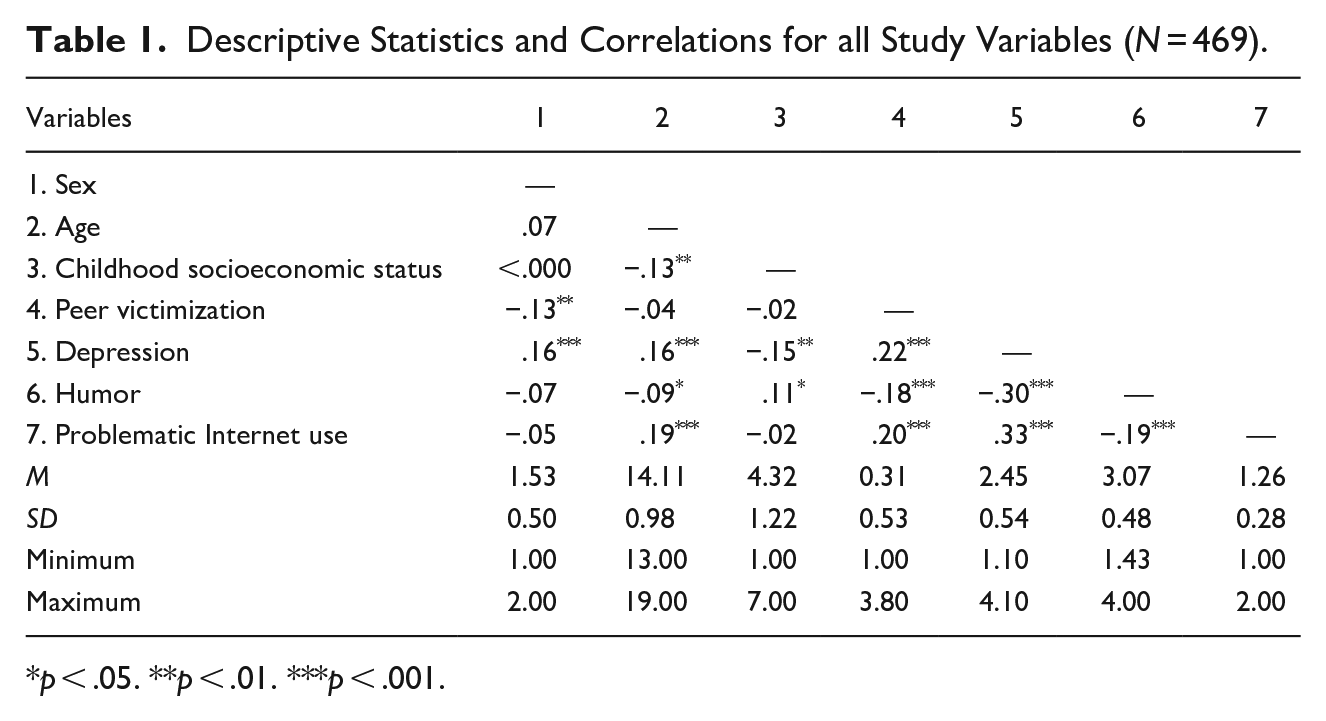
p < .05. **p < .01. ***p < .001.
Mediating Role of Depression
Model 4 of the PROCESS Macro (Hayes, 2013) was used to test the mediating role of depression in peer victimization on adolescent PIU. We considered peer victimization, depression, and PIU as the independent, mediating, and dependent variables, respectively. The results are shown in Figure 4. After controlling for adolescents’ sex, age, and childhood socioeconomic status, the total effect of peer victimization on PIU was significant (B = 0.11, SE = 0.02, t = 4.60, p < .001). The results showed that, after adding depression, peer victimization was positively related to depression (B = 0.25, SE = 0.04, t = 5.70, p < .001), which in turn had a significant effect on PIU (B = 0.16, SE = 0.02, t = 6.43, p < .001). The positive association between peer victimization and PIU was also significant (B = 0.07, SE = 0.02, t = 2.99, p < .01). These results suggest that depression partially mediated the relationship between peer victimization and PIU. Furthermore, the bias-corrected percentile bootstrap procedure showed that peer victimization had a significant indirect effect on PIU through depression (ab = 0.04, SE = 0.01, 95% CI [0.02, 0.06], excluding 0). The indirect effect accounted for 35.53% of the total effect. Peer victimization was associated with PIU through depression, thus supporting Hypothesis 1.
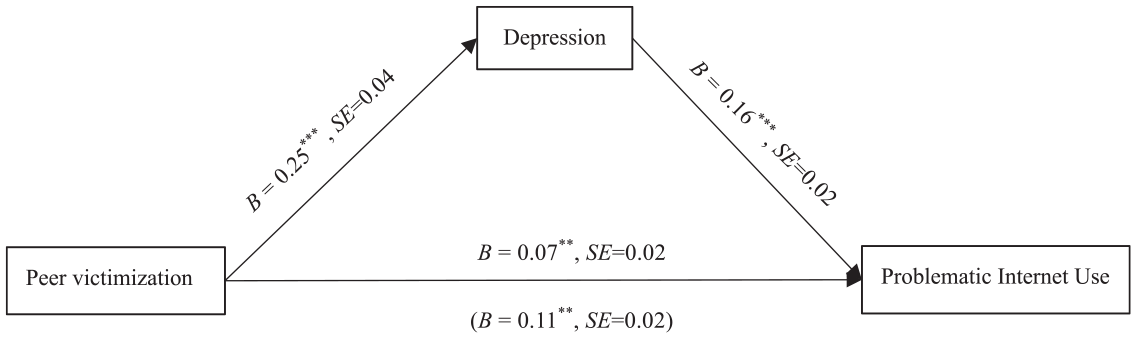
Mediating effect of depression between peer victimization and problematic Internet use in the whole sample.
Moderating Role of Humor
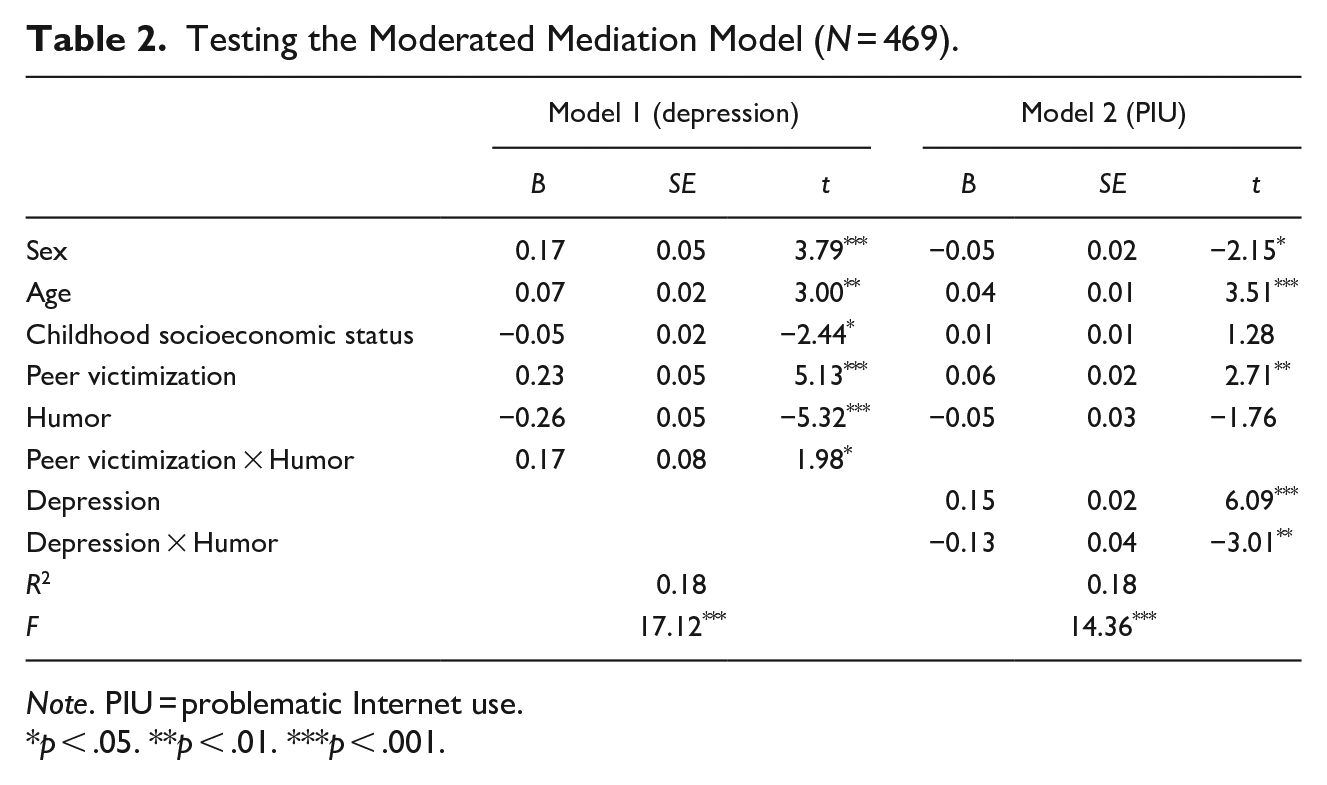
To test the moderating role of humor in the relationship between peer victimization, depression, and adolescent PIU, we used Model 58 of the PROCESS Macro to analyze the data. We considered peer victimization, depression, and PIU as the independent, mediating, and dependent variables, respectively, and humor as the moderating variable. Sex, age, and childhood socioeconomic status were controlled during the analysis. As shown in Table 2, Model 1 suggests that the interaction effect of peer victimization and humor on depression was significant (B = 0.17, SE = 0.08, t = 1.98, p < .05). To further reveal the nature of this moderation, the association between peer victimization and depression was plotted across different moderator values, as shown in Figure 5. The results suggested that the association between peer victimization and depression was stronger (B = 0.31, SE = 0.07, t = 4.57, p < .001) for adolescents with higher levels of humor (1 SD above the mean); however, for those with lower levels of humor (1 SD below the mean), the positive association between peer victimization and depression was weaker (B = 0.15, SE = 0.05, t = 2.95, p < .01). Thus, the association between peer victimization and depression became stronger as the level of humor increased, which is consistent with the reverse risk-buffering model. Model 2 shows that depression and humor interacted to affect PIU (B = −0.13, SE = 0.04, t = −3.01, p < .01), indicating that humor could moderate the relationship between depression and PIU. Simple slope analysis was also conducted (Figure 6), the results of which suggested that the association between depression and PIU was stronger (B = 0.21, SE = 0.03, t = 6.36, p < .001) for adolescents with lower levels of humor (1 SD below the mean). However, for those with higher levels of humor (1 SD above the mean), the positive association between depression and PIU was weaker (B = 0.09, SE = 0.03, t = 2.80, p < .01). These results indicate that the positive correlation between depression and PIU was stronger for adolescents who used less humor, which is consistent with the risk-buffering model.
Testing the Moderated Mediation Model (N = 469).
Note. PIU = problematic Internet use.
p < .05. **p < .01. ***p < .001.
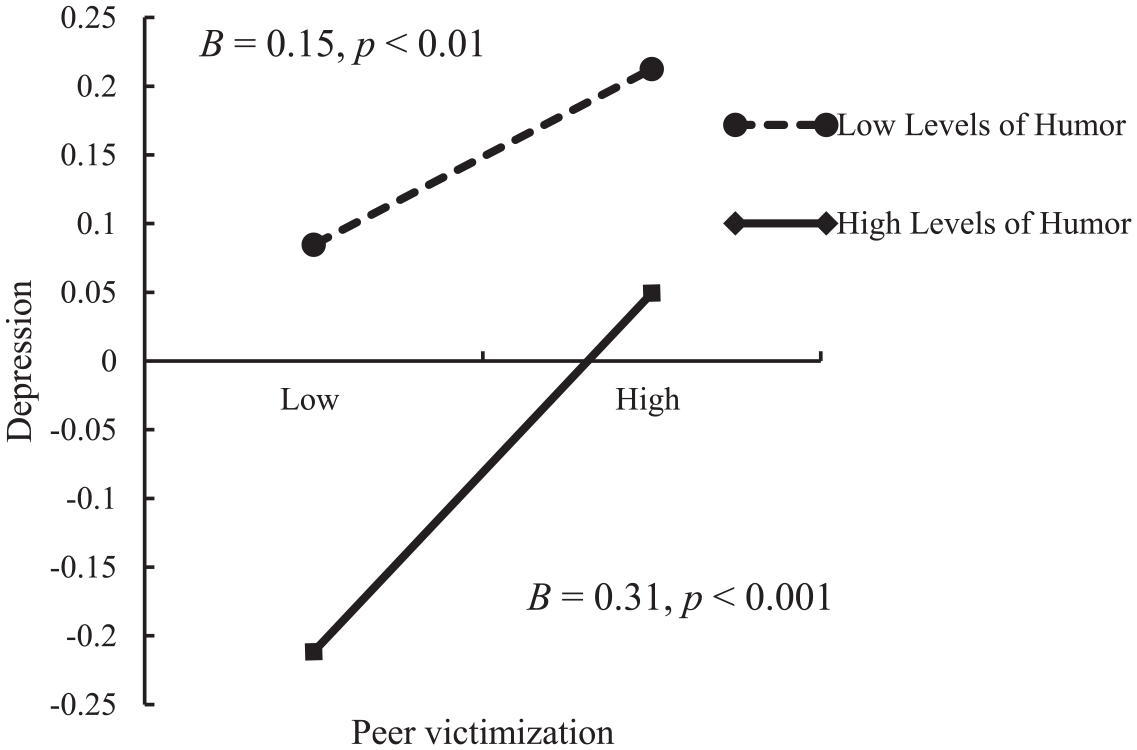
Moderating effect of humor in the relationship between peer victimization and depression.
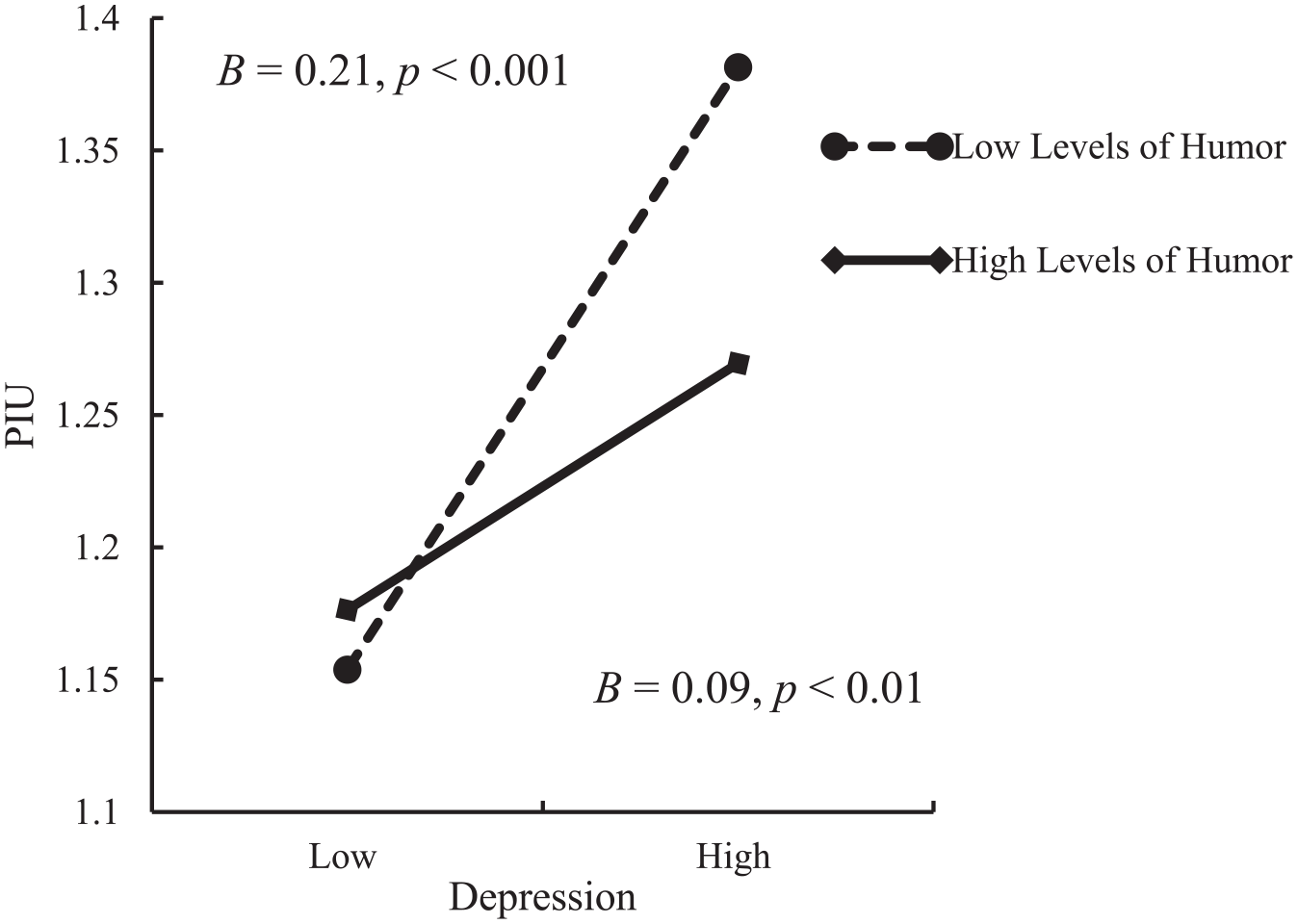
Moderating effect of humor in the relationship between depression and PIU.
To further examine the moderated mediation effect, indirect effect analysis was performed at different levels of moderation. As shown in Figure 7, for adolescents with low humor, the relationship between peer victimization and depression was significant (B = 0.15, SE = 0.05, p < .01), as was the relationship between depression and PIU (B = 0.21, SE = 0.03, p < .001). Similarly, for adolescents with high humor, the relationship between peer victimization and depression was significant (B = 0.31, SE = 0.07, p < .001), as was the relationship between depression and PIU (B = 0.09, SE = 0.03, p < .01). Although the conditional indirect effect was always significant, it was stronger for adolescents with lower humor (ab = 0.032, SE = 0.01, 95% CI [0.02, 0.05]) than for those with higher humor (ab = 0.027, SE = 0.01, [0.01, 0.05]).
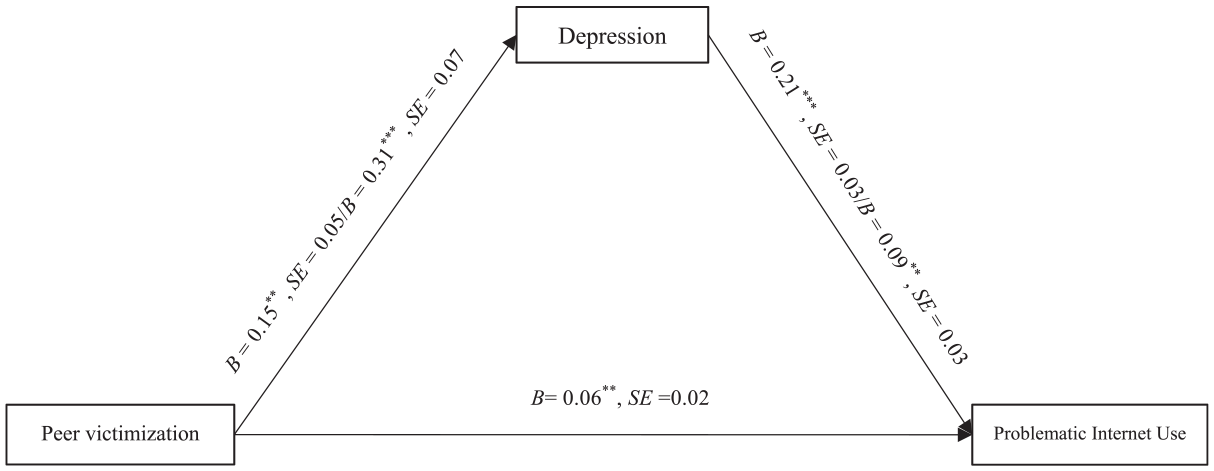
Mediating effect of depression between peer victimization and problematic Internet use.
Discussion
Based on GST, this study constructed a moderated mediation model in the Chinese context that values interpersonal relationships, suggesting that peer victimization could significantly and positively affect adolescent PIU, which is consistent with the findings of previous studies (Hsieh et al., 2019; Jia et al., 2018). Furthermore, this study’s findings indicate that depression mediated the relationship between peer victimization and PIU, and humor moderated this effect. These results could be significant for understanding the underlying mechanism of PIU associated with peer victimization.
Mediating Role of Depression
This study found that depression was a crucial factor linking strains (such as negative interpersonal experiences) with deviant behaviors, which not only supported GST but also further expanded this theory to the field of PIU. Specifically, this study found that peer victimization was positively associated with adolescent depression, which is consistent with the findings of previous studies (Earnshaw et al., 2017; Zhong et al., 2021). Agnew (1992) classified strains into three types, one of which is exposure to negative stimuli. Undoubtedly, peer victimization, negative experience of repeated exposure to intentional harm, easily leads to negative emotions, such as depression, especially during adolescence when the influence of peer relationships exceeds that of family relationships (Asher & Coie, 1990). In addition, adolescence is a critical period for brain development and a time when the brain regions involved in emotion regulation are still developing; consequently, adolescents are highly susceptible to external stressors (Spear, 2009), leading to negative emotions. Taken together, adolescents with peer victimization often experience depression.
In addition, this study found that negative emotions derived from strains lead to deviant behaviors. Adolescents’ immaturity in personality and self-control means that they tend to utilize maladaptive coping strategies to alleviate negative emotions (Ehlers et al., 2000). With the increasing popularity of the Internet, adolescents, especially those experiencing traumatic events, are likely to engage in online activities to satisfy their sense of belonging and acquire a sense of acceptance through online interactions. If adolescents link their mood improvement to the Internet, they are likely to develop PIU greatly. Meanwhile, the findings also support the compensatory Internet use theory (Kardefelt-Winther, 2014), which states that when experiencing stressful situations, individuals tend to adopt dysfunctional coping strategies, such as excessive Internet use, to avoid immersion in a depressed atmosphere (Ehlers et al., 2000), thus increasing the risk of developing PIU.
Moderating Effect of Humor
This study found that humor moderated the indirect association between peer victimization and adolescent PIU, indicating that the moderation of humor manifested different moderating models on different pathways; these differences warrant further discussion. More specifically, the moderating effect of humor on the relationship between peer victimization and depression was in line with the reverse stress-buffering model. Humor could help individuals view stress from a new perspective, serving as a buffer against peer victimization. However, as the degree of peer victimization increases, adolescents exhibit the same developmental outcome (the same level of depression), regardless of the level of humor. One explanation might be that peer victimization is an extremely difficult life experience with serious developmental outcomes that persist into adulthood (Arseneault, 2018; McDougall & Vaillancourt, 2015). Thus, peer victimization, a type of negative interpersonal experience, should be treated as a severe problem in adolescents. It is difficult for humor to attenuate the association between peer victimization and depression among adolescents. From another perspective, adolescence is a developmental period in which individuals increasingly depend on peer relationships (Azar et al., 2020), especially in the Chinese context, which emphasizes interpersonal relationships; thus, the negative effect of peer victimization is naturally more pronounced. In the face of such exhausting strain, the protective effect of humor is clearly far from sufficient.
Furthermore, humor moderated the relationship between depression and adolescent PIU as a buffer, which is consistent with the stress-buffering model. This finding showed that humor could protect adolescents from depressive emotions, further reducing the tendency to addictively indulge in the Internet. Humor, as an effective emotion regulation strategy, could help individuals with depression disengage from ruminative thoughts, which could, in turn, facilitate recovery from negative emotions (Braniecka et al., 2019). Moreover, the positive emotions that accompany the experience of humor could “undo” negative ones (Fredrickson & Levenson, 1998; Wu et al., 2021), which might make adolescents with depressive moods less likely to choose Internet activities to regulate emotions and further reduce the likelihood of PIU. Thus, humor could attenuate the association between depression and PIU among adolescents.
This study extends the scope of the literature regarding the effect of peer victimization on PIU, revealing the underlying mechanism of PIU by examining depression as a mediator and humor as a moderator. In particular, this study provides empirical evidence for the significance of cognitive coping abilities (e.g., humor) in reducing the probability of adolescent PIU in the Chinese cultural context.
Effects of Socio-Demographic Characteristics on PIU
This study demonstrated that PIU was significantly higher in males than in females, which is consistent with the results of previous studies (Van Den Eijnden et al., 2018; Zheng et al., 2020). One explanation is that males have difficulty controlling their behaviors and then easily indulge in the Internet because of their higher impulsiveness compared to females (Durkee et al., 2012). Another possibility might be that females have a higher level of agreeableness than males (Lippa, 2010); thus, females are more likely to seek and receive social support from others instead of engaging in online activities, which reduces the likelihood of female Internet addiction.
In terms of age, consistent with previous studies, this study found that adolescent PIU scores increased with age (Yu et al., 2017; Zheng et al., 2020). An explanation for this is that older adolescents are more assertive and might engage in online activities, ignoring their parents’ supervision (Okwaraji et al., 2015). Thus, older adolescents may more easily depend on the Internet than their younger counterparts.
Additionally, there was no significant association between childhood socioeconomic status and adolescent PIU, which is inconsistent with previous studies of addictive behaviors (Gauffin et al., 2013; Mishra et al., 2017; Tifferet et al., 2011). This result might be due to the small sample size of this study; thus, future studies should explore this finding further.
Practical Implications
This study provides recommendations for the prevention of PIU. First, given the negative effect of peer victimization on adolescent PIU, efforts should be made to reduce peer victimization from multiple sources (Card & Hodges, 2008; Kaufman et al., 2020). Specifically, teachers should attempt to create a harmonious atmosphere for students to reduce peer victimization, and adolescents should strive to establish good relationships with their peers, which could reduce its occurrence. Second, this study found that depression was a crucial factor linking peer victimization and adolescent PIU, indicating that adolescents use the Internet for emotion regulation. Therefore, practitioners should guide adolescents, especially those experiencing peer victimization, to improve their depressed mood in positive coping instead of indulging in the virtual world. Third, this study revealed the unique role of humor in the indirect relationship between peer victimization and PIU in the Chinese context, which could benefit policy decision-makers in taking specific interventions on adolescent PIU; for instance, an emphasis on the improvement of humor. More specifically, parents should cultivate children’s humor; teachers and practitioners could develop curriculum on improving humor, which can help adolescents cope better with stress and reap more positive developmental outcomes. Finally, this study viewed peer victimization as a general concept, without distinguishing sub-types of peer victimization. However, some scholars argued that peer victimization includes many sub-types, such as physical victimization, verbal victimization, and relational victimization (Forbes et al., 2020; Kennedy, 2020). And many studies demonstrated that different types of peer victimization are associated with particular domains of internalizing or externalizing problems (Casper & Card, 2017; Moore et al., 2017). For example, relational victimization had stronger relationship with psychopathology and developmental outcomes (Casper & Card, 2017; Kawabata & Tseng, 2019), physical victimization was more related to psychological distress and poor emotional wellbeing (Thomas et al., 2016), and verbal victimization was associated with anxiety (Yuchang et al., 2019). Therefore, future study should focus more attention on the relationship between different types of peer victimization and related outcomes, which could facilitate the validity of interventions for specific types.
Limitations and Future Directions
Although this study provides empirical support for our hypotheses, it has several limitations that merit further discussion.
First, with the increasing penetration rate of the Internet over the last decade, in addition to traditional peer victimization, increasing attention has been paid to a new form of peer victimization, namely cyber victimization (Gini et al., 2019; Meng et al., 2022). Research indicated a significant overlap between traditional victimization and cyber victimization (Gini et al., 2018; Modecki et al., 2014). Individuals experiencing cyber victimization also tend to use the Internet as a maladaptive coping strategy for emotion regulation, leading to dependence (Peláez-Fernández et al., 2021; Sanmartín Feijóo et al., 2021). Therefore, future studies should explore whether different sub-types of victimization have different influences on individual development, particularly PIU.
Second, owing to the cross-sectional nature of the study design, we could not infer a causal relationship between depression and PIU among adolescents. However, previous studies have indicated that a bidirectional relationship may exist between the two (Lau et al., 2018; Morita et al., 2021). Future studies should adopt longitudinal research paradigms to examine this relationship.
Third, research indicates that adolescents have an increasing need for peer relationships as they grow (Brown & Larson, 2009; Yu et al., 2017); therefore, peer victimization might exert varying influences on adolescents of different age groups. However, our sample comprised a homogeneous group, namely middle school students, which might limit the generalizability of the findings. Therefore, future studies should recruit participants at different developmental stages to improve the generalizability of the results.
Finally, this study adopted a convenient sampling method to recruit participants, which might have limited the representativeness of the sample. Therefore, future studies could use a systematic sampling method to recruit participants from China to further verify the results of this study. In addition, future research should recruit participants from other cultures to further validate these findings.
Conclusion
This study explored the underlying mechanism of adolescent PIU based on GST within the Chinese cultural context and showed that peer victimization was positively correlated with addictive behaviors through depression among adolescents. It is noteworthy that humor moderated the indirect relationship between peer victimization and PIU, proving the GST’s claim that cognitive coping abilities could act as an adaptive coping mechanism to help individuals to better cope with strains in a positive way instead of addiction to the Internet. This study provides valuable information on prevention and intervention strategies for adolescent PIU.
Footnotes
Acknowledgements
We would like to thank all of the adolescents who participated in this study and school teachers who assisted our study.
Declaration of Conflicting Interests
The author(s) declared no potential conflicts of interests with respect to the authorship and/or publication of this article.
Data Availability
The datasets generated and/or analyzed during the present study are available from the corresponding author upon reasonable request.
Funding
The author(s) disclosed receipt of the following financial support for the research and/or authorship of this article: This work was supported by a grant from the Research Program Funds of the Collaborative Innovation Center of Assessment Toward Basic Education Quality (2019-04-020BZPK01), a grant from Fund of Key Laboratory of Modern Teaching Technology, Ministry of Education, P.R. China (No. SYSK202102), a grant from the Postdoctoral Science Foundation of China (2019M652679), a grant from Philosophy and Social Science Research of Henan Province (2019CJY032), a grant from Research on early warning and intervention of adolescent psychological crisis from the perspective of positive psychology, Shanghai Key Laboratory of Mental Health and Psychological Crisis Intervention (20dz2260300).
Informed Consent
All procedures followed were in accordance with the ethical standards of the responsible committee on human experimentation (institutional and national) and with the Helsinki Declaration of 1975, as revised in 2000 (5). Informed consent was obtained from all participants for being included in the study.
